Have a personal or library account? Click to login
Application of the Kuka Kube Test-Bed for the Hardware-in-the-Loop Validation of the Space Manipulator Control System Cover

Application of the Kuka Kube Test-Bed for the Hardware-in-the-Loop Validation of the Space Manipulator Control System

Open Access
|Dec 2023

Figures & Tables

Figure 1.

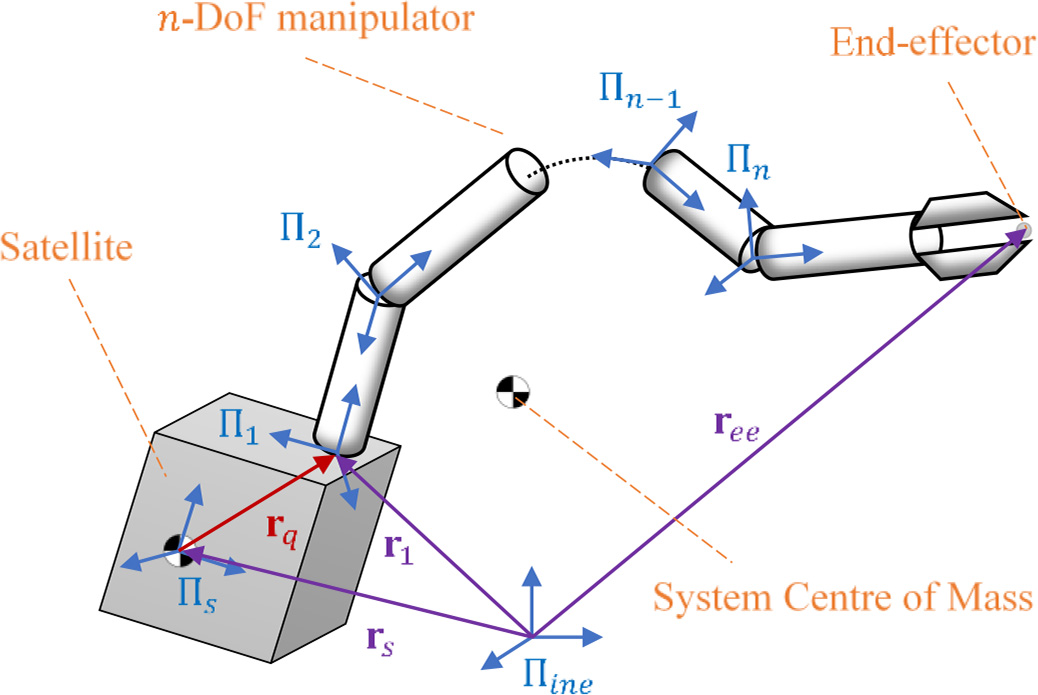
Schematic view of the n-DoF space manipulator

Figure 2.

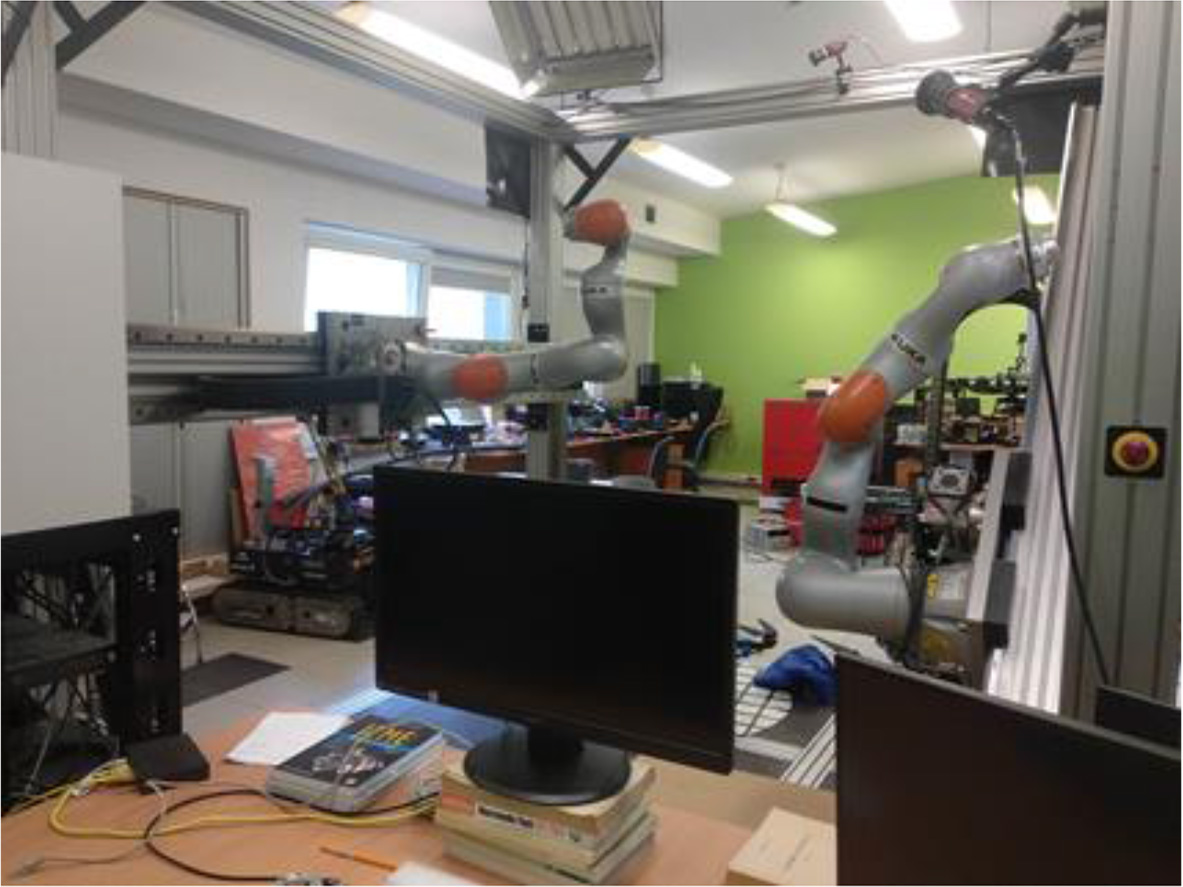
KUKA KUBE test-bed
KUKA KUBE test-bed

Figure 3.

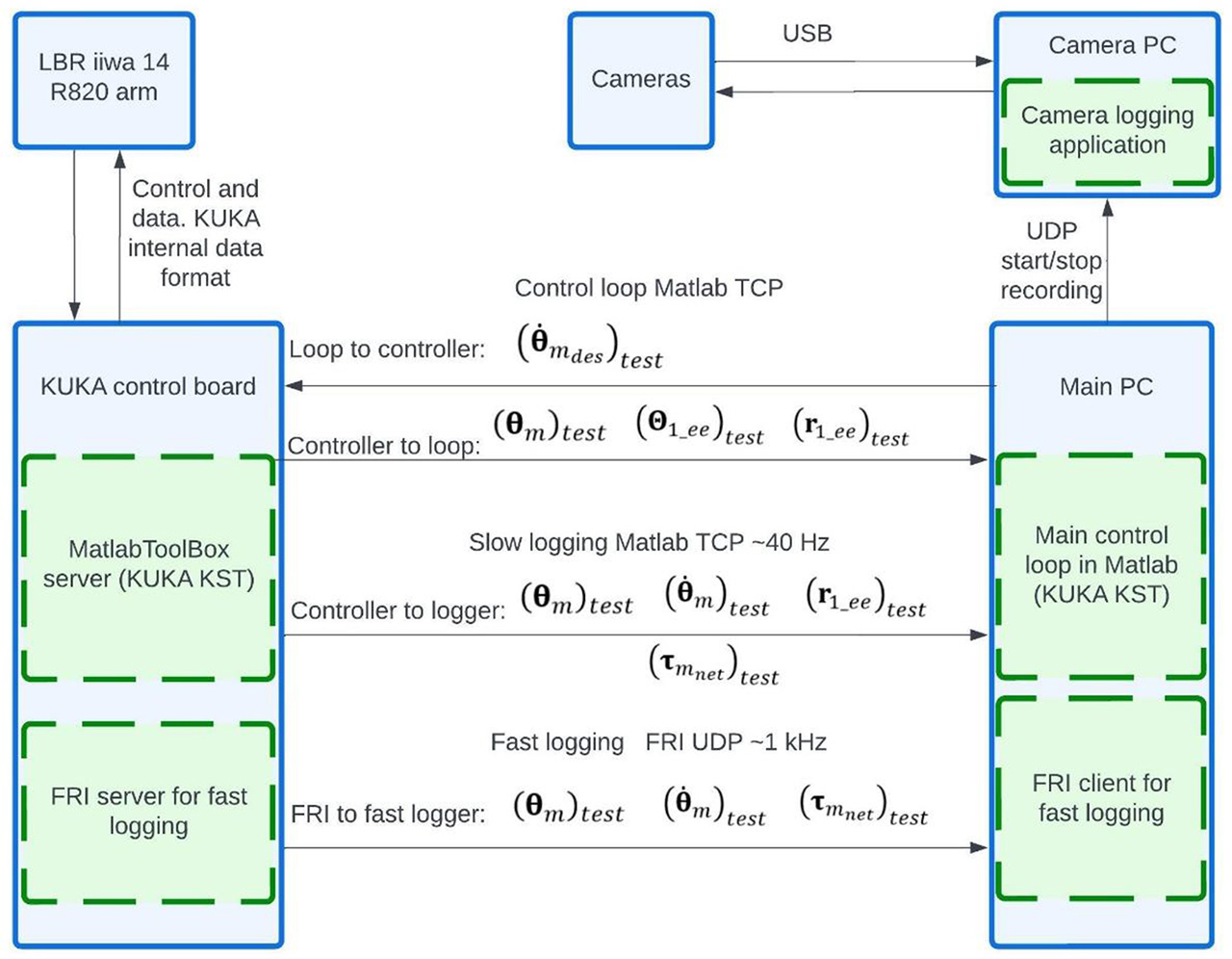
Communication diagram for KUKA KUBE test-bed hardware-in-the-loop experiments. Blue rectangles with continuous borders represent hardware components. Green, inner rectangles with dashed borders represent software components that were created or modified to perform the experiment. Brackets around parameters are added to improve subscript readability
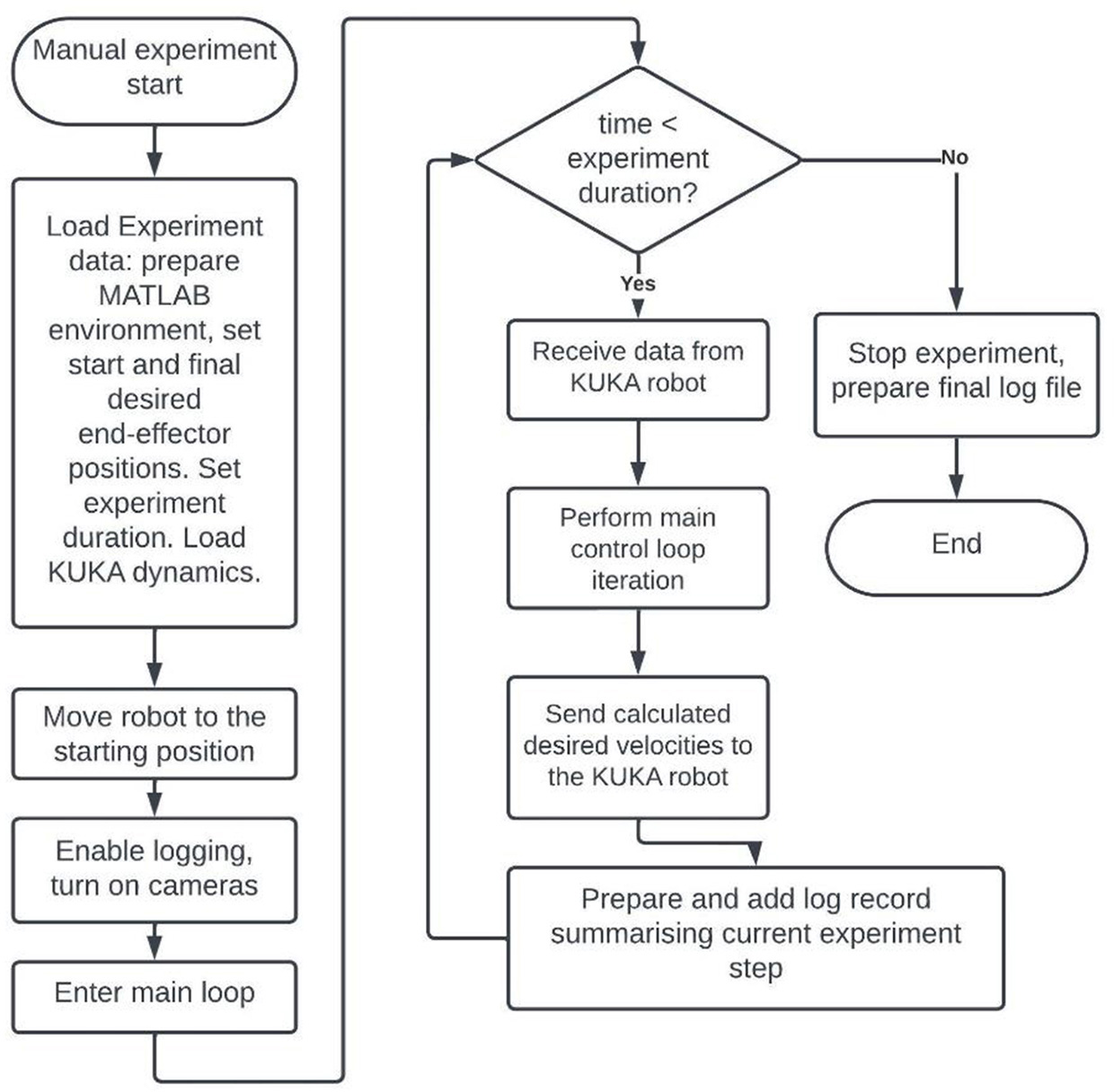

Figure 4.

Logical diagram for KUKA KUBE test-bed hardware-in-the-loop experiments
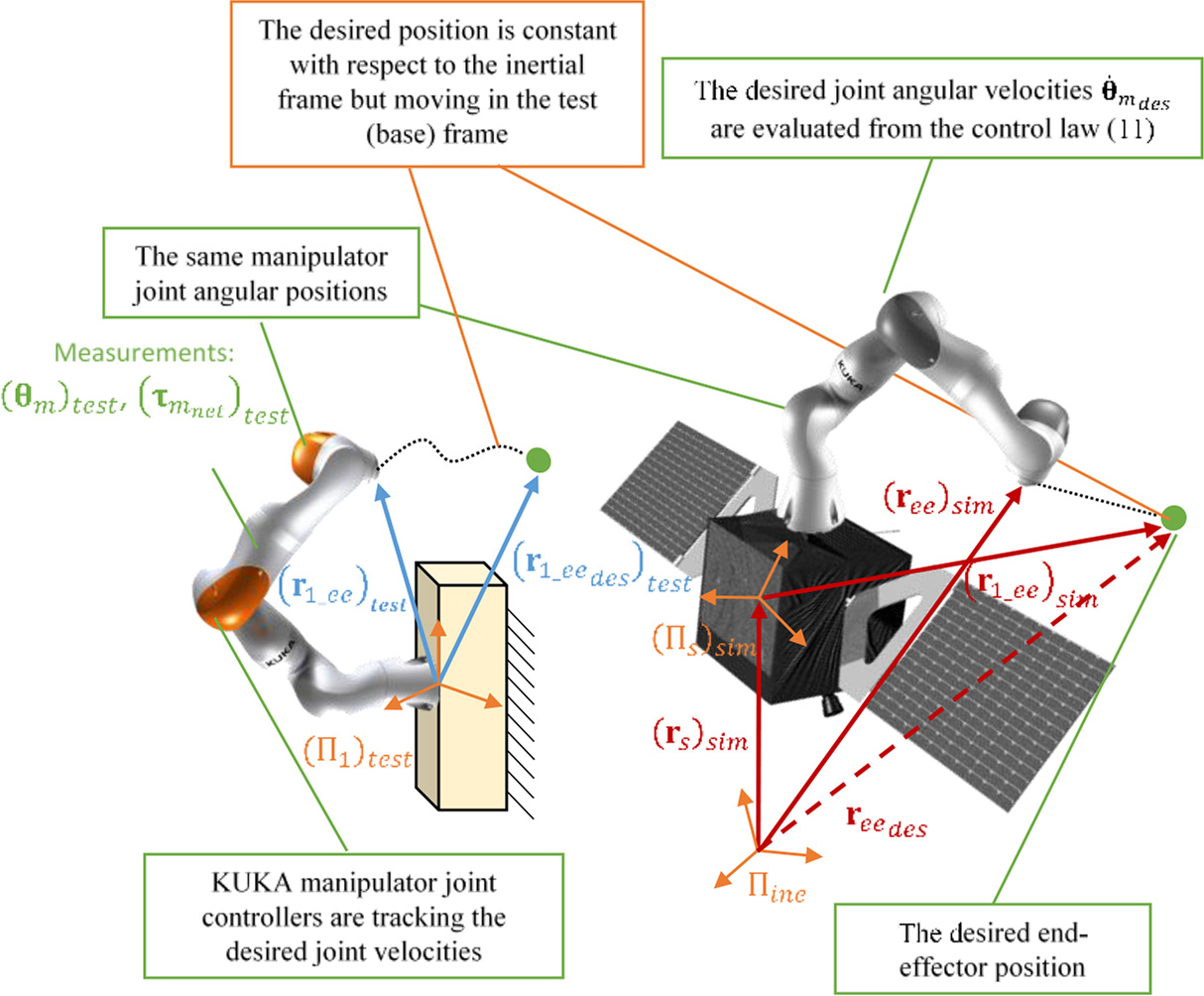

Figure 5.

Schematic representation of the performed experiment
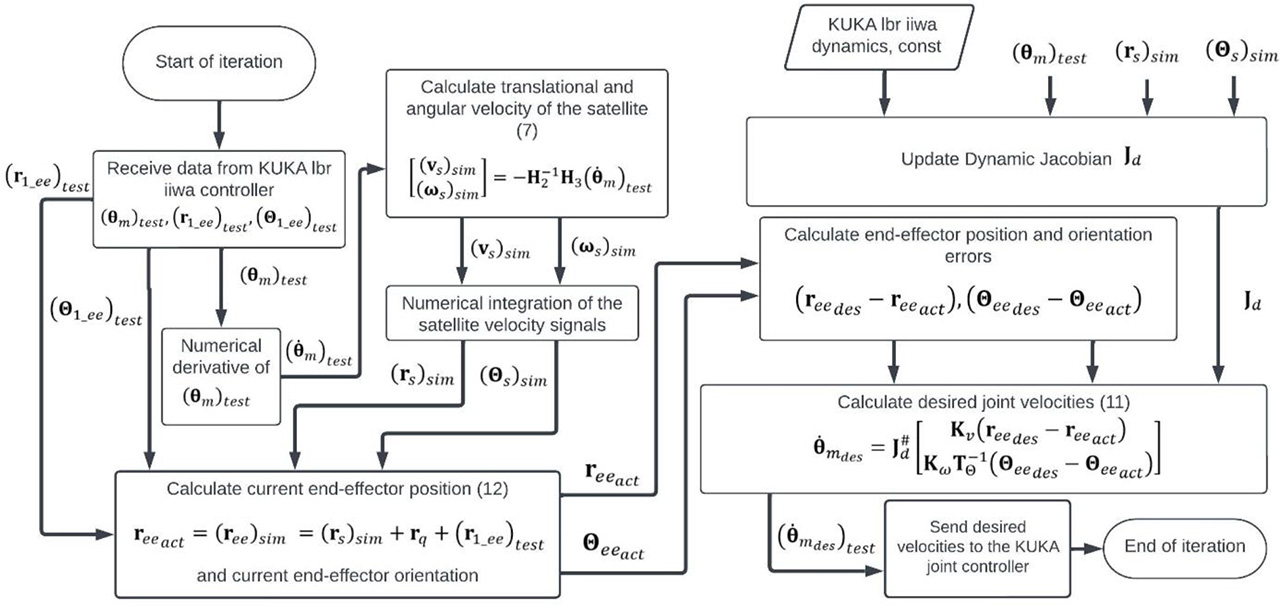

Figure 6.

Diagrammatic description of a single control loop iteration
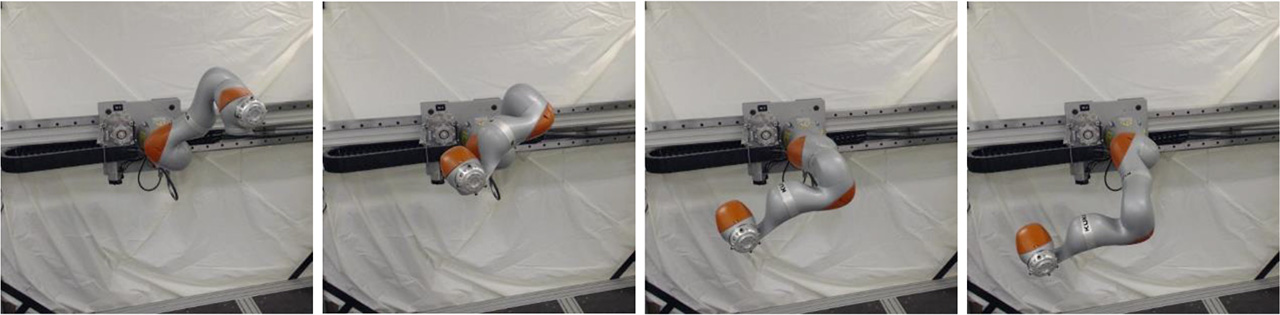

Figure 7.

Frames captured by the camera mounted inside the KUKA KUBE test-bed that show the KUKA manipulator during experiments.From left to right: t = 0 (initial configuration), t = 6.6s, t = 13.3 s, t = 20 s (final configuration)
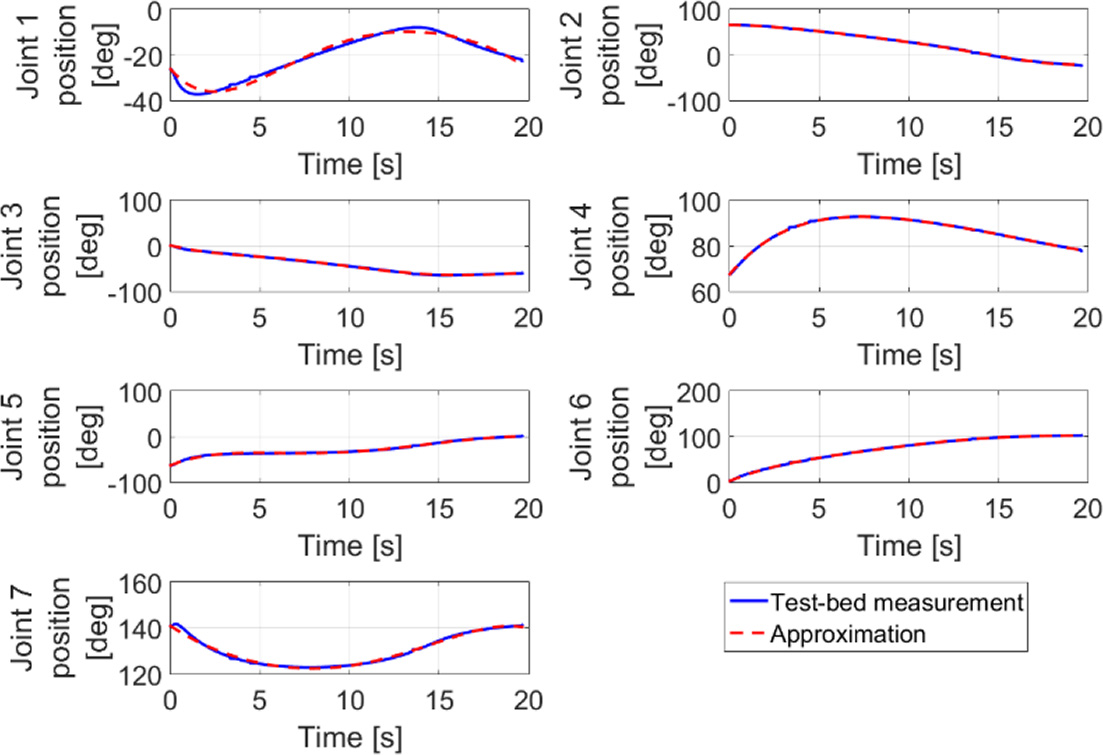

Figure 8.

Manipulator joint angular positions measured in the experiment and signal approximation for the comparison simulation
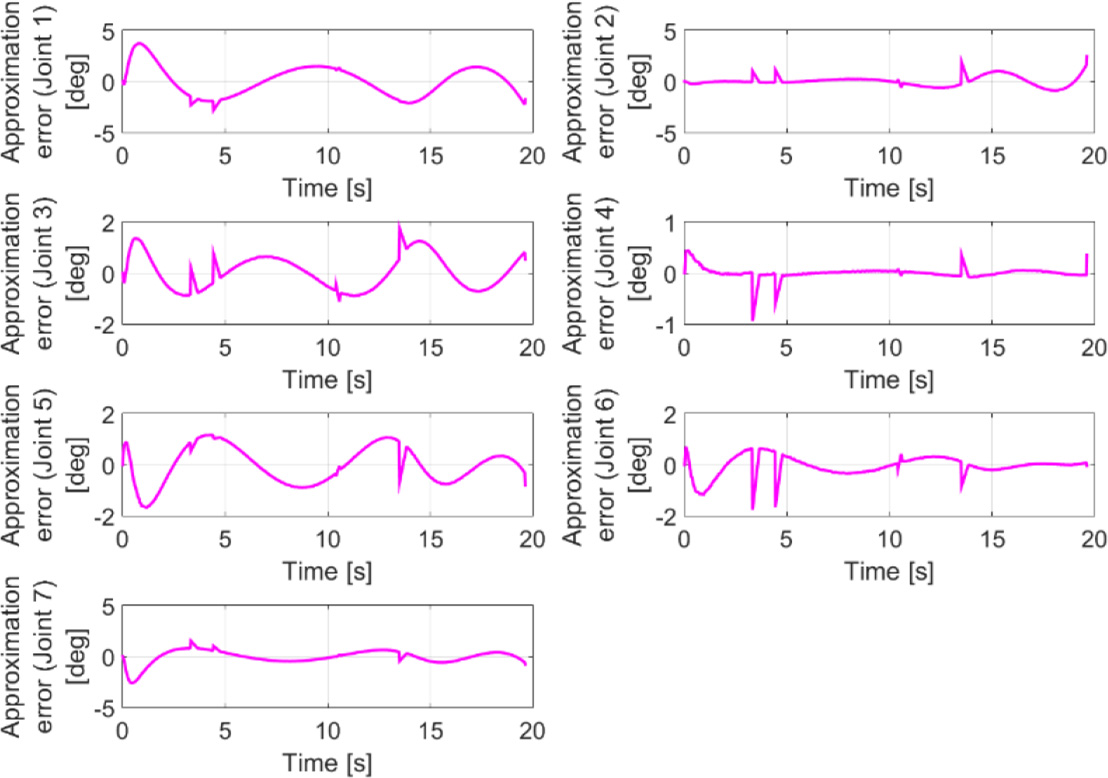

Figure 9.

The approximation error for joint angular positions measured in the experiment
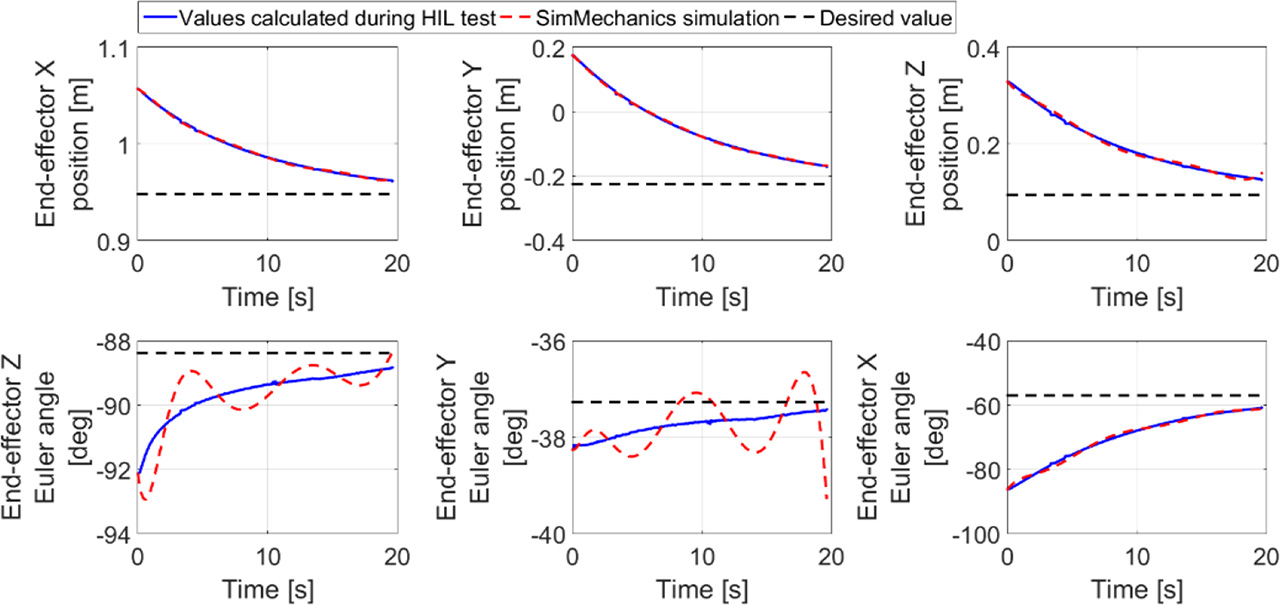

Figure 10.

Manipulator end-effector position and orientation with respect to the simulated inertial frame Πine – comparison with the simulation results
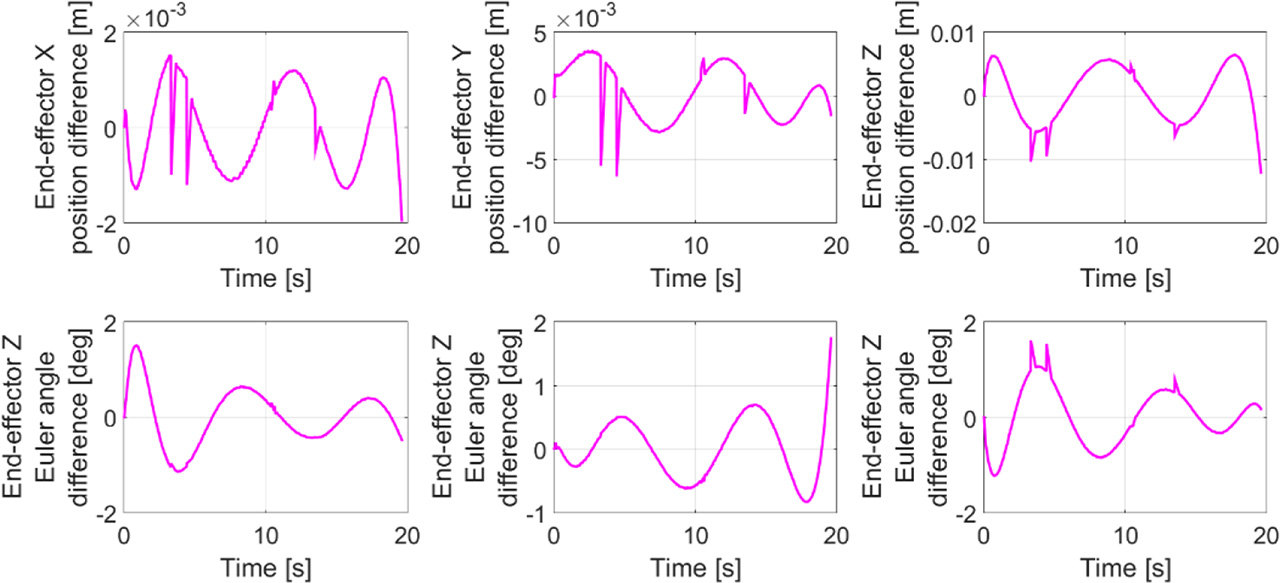

Figure 11.

Difference in manipulator end-effector position and orientation with respect to the simulated inertial frame Πine between the experimental and simulation results
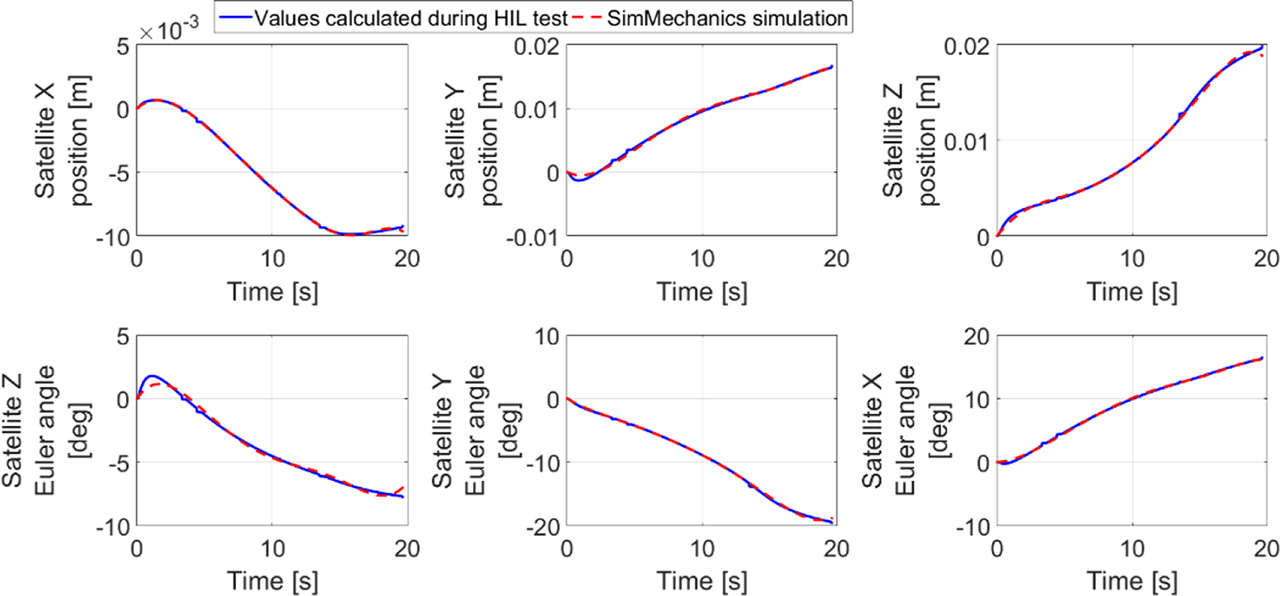

Figure 12.

Satellite position and attitude with respect to the simulated inertial frame Πine – comparison with the simulation results
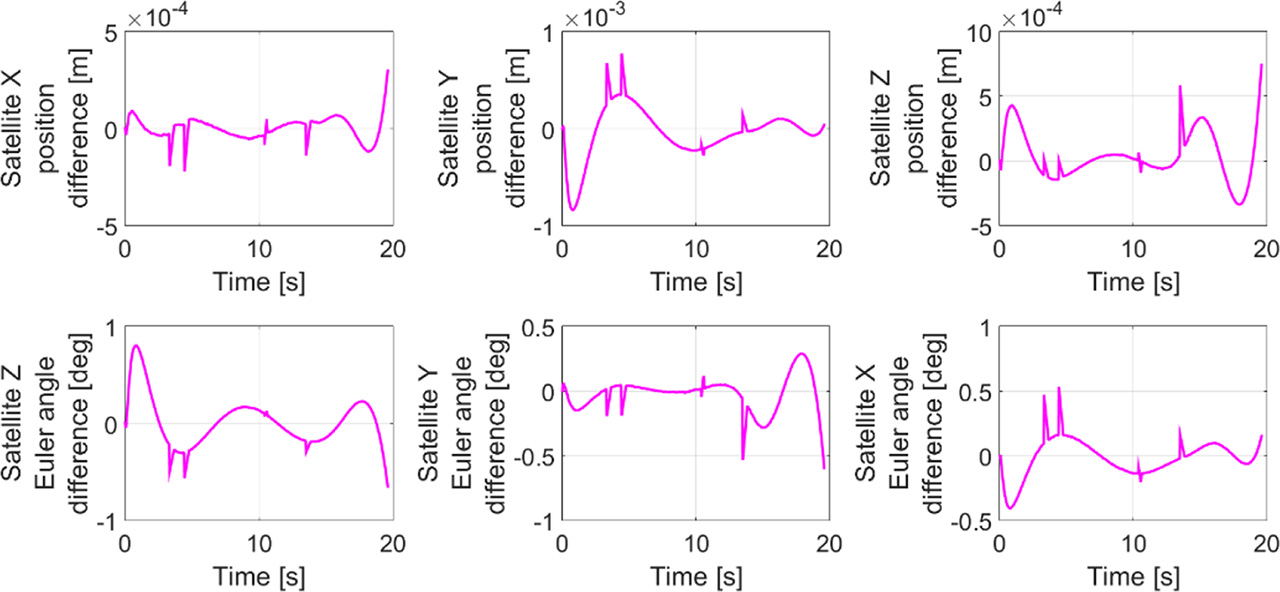

Figure 13.

Difference in satellite position and attitude with respect to the simulated inertial frame Πine between experimental and simulation results
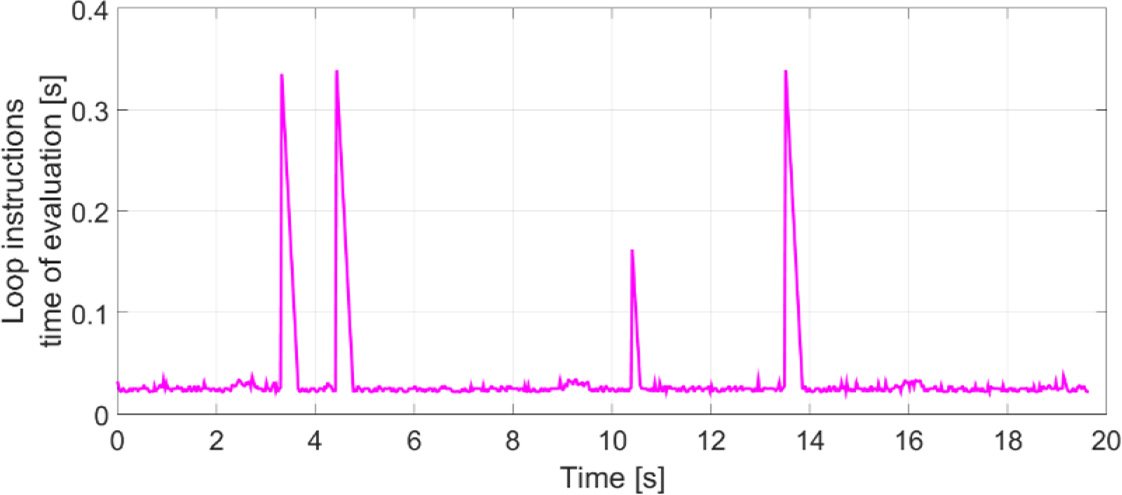

Figure 14.

Time of evaluation for each iteration of the MATLAB loop
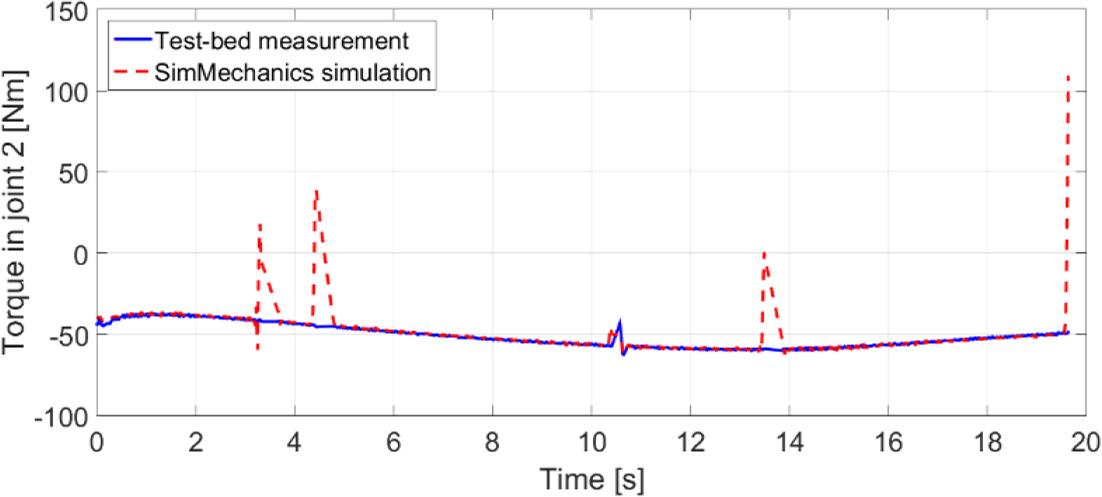

Figure 15.

The net torque acting on the second manipulator joint – comparison with the simulation
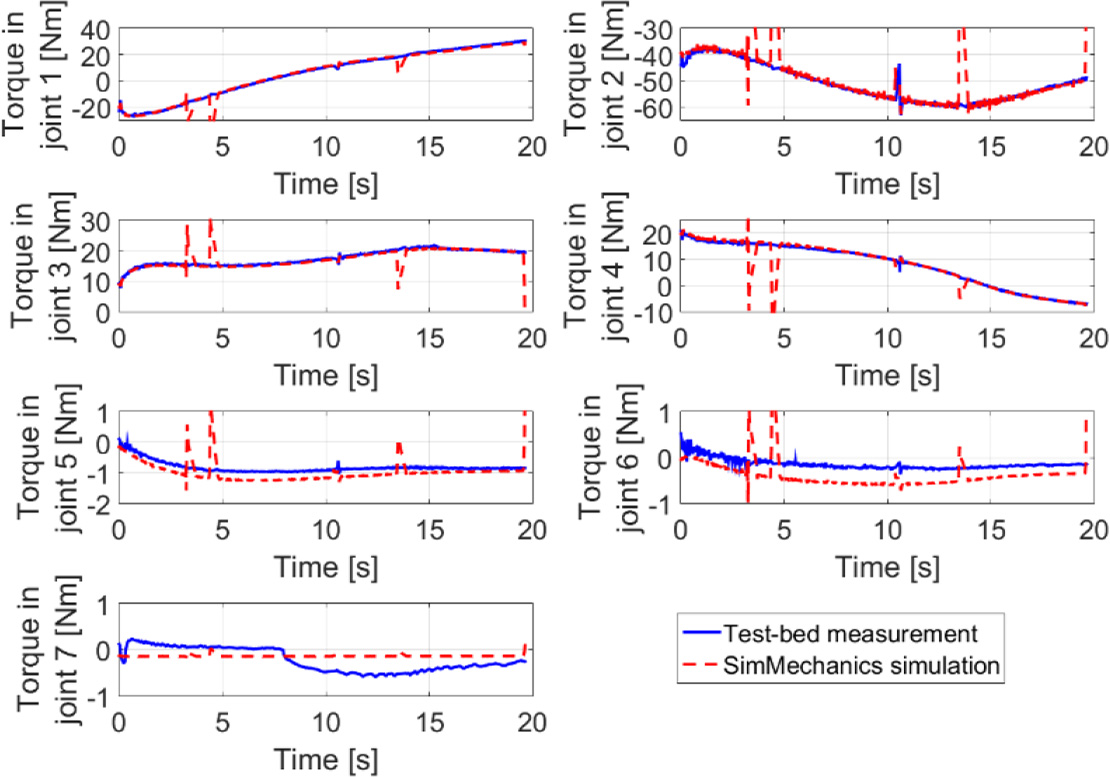

Figure 16.

The net torque acting on each manipulator joint – comparison with the simulation
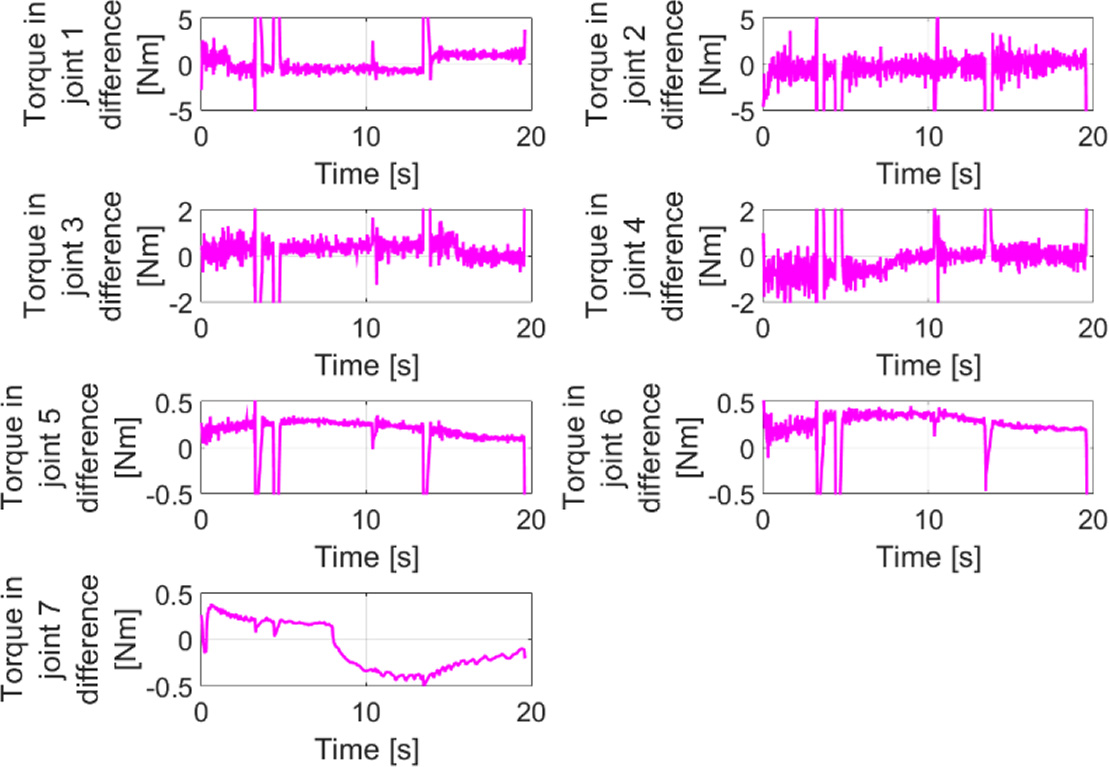

Figure 17.

The difference in net torque acting on each manipulator joint between the experimental and simulation results

KUKA LBR iiwa 14 R820 DH table

iαi [deg]θmi [deg]ai [m]di [m]
190θm100.360
2−90θm200
3−90θm300.420
490θm400
590θm500.400
6−90θm600
70θm7 + 18000.126
DOI: https://doi.org/10.2478/arsa-2023-0025 | Journal eISSN: 2083-6104 | Journal ISSN: 1509-3859
Language: English
Page range: 230 - 248
Submitted on: Dec 14, 2022
Accepted on: Aug 17, 2023
Published on: Dec 29, 2023
Published by: Polish Academy of Sciences, Space Research Centre
In partnership with: Paradigm Publishing Services
Publication frequency: 4 issues per year

© 2023 Mateusz Wojtunik, Piotr Łuczak, Tomasz Rybus, Grzegorz Granosik, published by Polish Academy of Sciences, Space Research Centre
This work is licensed under the Creative Commons Attribution 4.0 License.