
1. Introduction
Climate change has intensified the frequency and duration of heat events, thereby increasing welfare concerns and economic losses in poultry production systems worldwide. Heat stress remains one of the most critical environmental challenges affecting poultry production, particularly in tropical and arid regions where ambient temperature and humidity frequently exceed the thermoregulatory capacity of birds (Onagbesan et al., 2023; Oni et al., 2024a, b). Exposure to elevated environmental temperatures disrupts physiological homeostasis and leads to reduced feed intake, impaired growth performance, oxidative stress, immune dysfunction, reduced reproductive efficiency, and increased mortality (Rostagno, 2020; Uyanga et al., 2022; Eletu et al., 2026).
Traditionally, heat stress research in poultry has focused primarily on organ-specific alterations, including intestinal damage, endocrine dysfunction, and metabolic disturbances (Hai et al., 2000; Mahmoud et al., 2014). However, accumulating evidence suggests that heat stress induces coordinated systemic responses involving neuroendocrine, immune, metabolic, and microbial pathways (Smith & Vale, 2006; Quinteiro-Filho et al., 2010). Activation of stress-responsive pathways, particularly the hypothalamic–pituitary–adrenal (HPA) axis, stimulates corticosterone release and contributes to immune suppression, oxidative imbalance, and metabolic dysregulation (Renaudeau et al., 2012; Bohler et al., 2020). These observations highlight the limitations of isolated organ-level models and support the view that heat stress should be considered as a whole-organism disturbance involving complex physiological cross-talk (Nawaz et al., 2021).
Recent advances in microbiome research, neuroendocrine physiology, and stress biology have further strengthened interest in integrative frameworks linking gut health, brain signalling, and cellular metabolism (Cryan et al., 2019). In poultry, heat stress compromises intestinal epithelial integrity, increases gut permeability, and promotes microbial dysbiosis, often characterised by reductions in beneficial microbial populations (Quinteiro-Filho et al., 2017; Oke et al., 2025b). These alterations may influence systemic physiology through the microbiota–gut–brain axis, a bidirectional communication network involving microbial metabolites, vagal pathways, enteric signalling, and neuroendocrine responses (Cryan & Dinan, 2012). Under heat stress conditions, elevated corticosterone concentrations, inflammatory cytokines, and oxidative stress collectively exacerbate intestinal dysfunction and systemic inflammatory responses (Quinteiro-Filho et al., 2010; Scanes, 2016).
Within this integrative framework, mitochondrial function has emerged as a critical mediator linking gut integrity, neuroendocrine regulation, and cellular energy metabolism during thermal stress. Heat stress impairs mitochondrial oxidative phosphorylation, increases reactive oxygen species (ROS) production, and disrupts ATP synthesis, thereby contributing to oxidative damage and reduced cellular efficiency (Zaboli et al., 2019). Because mitochondria play essential roles in epithelial barrier maintenance, immune regulation, and neuronal signalling, mitochondrial dysfunction may represent an important mechanistic link connecting gut and brain responses during heat exposure (Oke et al., 2025a). Collectively, these interactions support the emerging concept of a gut–brain–mitochondria axis (GBMA) that regulates physiological resilience and thermotolerance in poultry. Therefore, this review critically examines current evidence regarding the role of the GBMA in the physiological and metabolic responses of poultry to heat stress. Particular emphasis is placed on mechanistic interactions among gut microbiota, neuroendocrine signalling, mitochondrial dysfunction, oxidative stress, and systemic inflammation, as well as emerging directions for improving resilience under heat stress conditions.
2. Gut–brain–mitochondria axis
2.1. Conceptual basis of the gut–brain–mitochondria axis
The GBMA represents an integrated communication network linking the gastrointestinal tract, enteric nervous system, central nervous system (CNS), immune system, and mitochondrial metabolism through neural, endocrine, immune, and metabolic pathways (Forsythe & Kunze, 2013; Cryan et al., 2019; Yassin et al., 2025). Rather than functioning as isolated systems, these components interact dynamically to coordinate energy metabolism, stress adaptation, immune regulation, and physiological homeostasis. Growing evidence suggests that stressors such as heat exposure simultaneously disrupt these interconnected pathways, leading to intestinal dysfunction, neuroendocrine imbalance, oxidative stress, and impaired mitochondrial bioenergetics (Zhang et al., 2024).
Within this framework, the gut microbiota functions as a major regulatory interface by producing metabolites, neuroactive compounds, and signalling molecules that influence host physiology locally and systemically. Alterations in microbial composition and metabolite production during dysbiosis have been associated with impaired intestinal barrier integrity, neuroinflammation, altered blood–brain barrier permeability, and behavioural disturbances in both humans and animals (Braniste et al., 2014; Yassin et al., 2025). Bidirectional signalling between the gut and brain occurs through vagal pathways, neuroendocrine responses, immune mediators, and microbial metabolites that collectively influence stress responsiveness, appetite regulation, immune activity, and metabolic function (Rhee et al., 2009; Carabotti et al., 2015).
Although mitochondria are not traditionally considered a structural component of the microbiota–gut–brain axis, mitochondrial metabolism is increasingly recognised as a critical downstream integrator of gut-derived and neuroendocrine signals (Picard et al., 2018; Margineanu et al., 2020). Mitochondria regulate ATP production, oxidative phosphorylation, ROS generation, redox signalling, and apoptosis, all of which are highly sensitive to inflammatory and metabolic disturbances induced during heat stress. Consequently, mitochondrial dysfunction may represent a mechanistic link connecting gut dysbiosis, systemic inflammation, oxidative stress, and neuroendocrine dysregulation within the GBMA framework.
Figure 1 presents a conceptual overview of the GBMA in poultry and illustrates the bidirectional communication among intestinal, neuroendocrine, and mitochondrial systems under heat stress conditions. The figure highlights how heat stress alters gut microbiota composition, intestinal barrier integrity, neuroendocrine signalling, and mitochondrial function through immune, metabolic, and hormonal pathways. It further demonstrates the role of microbial metabolites, cytokines, neurotransmitters, and oxidative stress in mediating cross-talk among these systems, ultimately contributing to impaired growth performance, immune dysfunction, metabolic disturbances, and reduced poultry productivity.
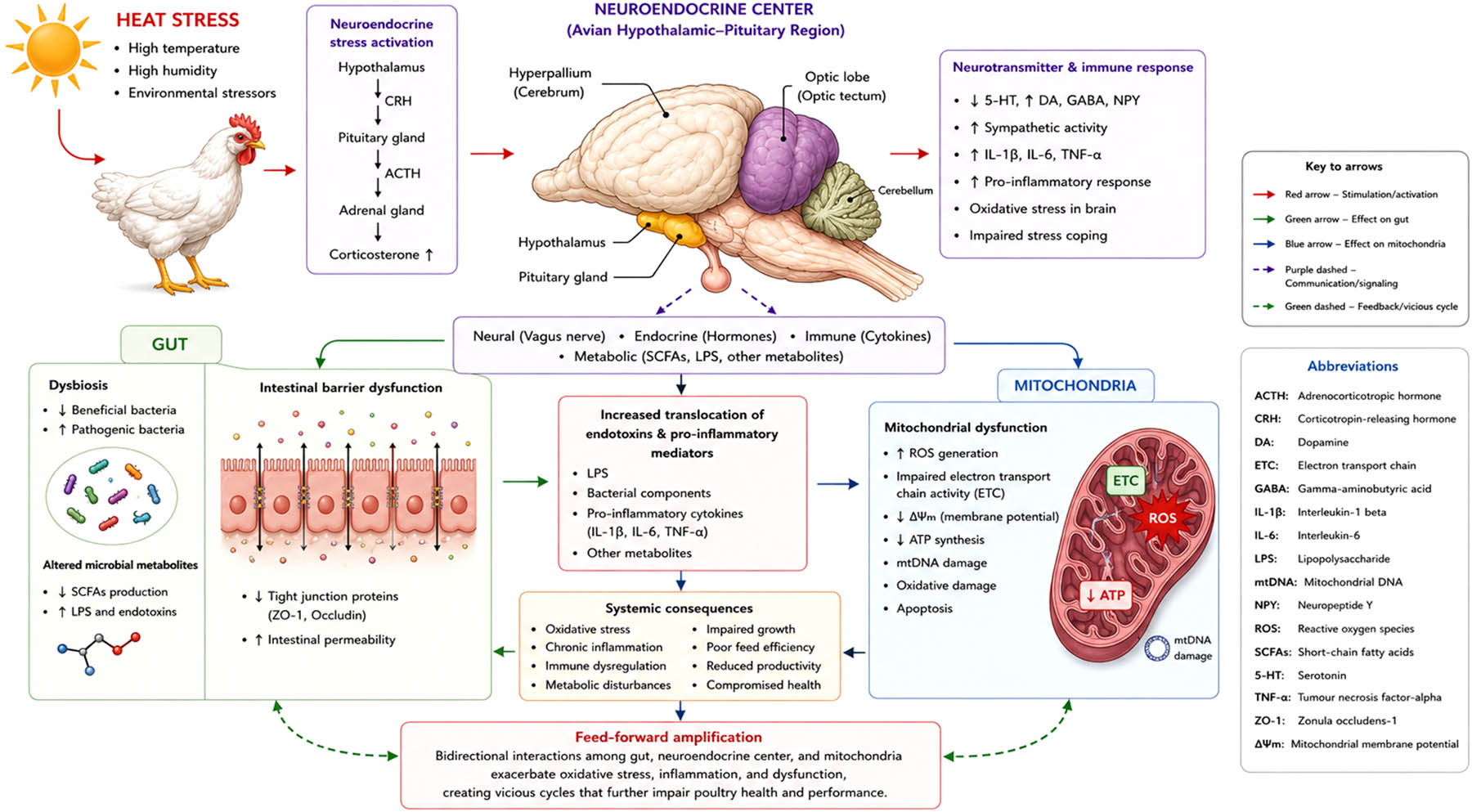
Figure 1
Schematic representation of the gut–brain–mitochondria axis in poultry under heat stress conditions. Heat stress disrupts intestinal homeostasis by altering gut microbiota composition, increasing intestinal permeability, and modifying microbial metabolite production. These alterations stimulate neuroendocrine and immune signalling pathways involving the hypothalamic–pituitary–adrenal axis, neurotransmitters, cytokines, and circulating hormones. Concurrently, mitochondrial dysfunction, characterised by impaired electron transport activity, oxidative stress, reduced ATP production, and cellular damage, further amplifies systemic stress responses. Bidirectional communication among the gut, brain, and mitochondria occurs through neural, endocrine, immune, and metabolic pathways, creating feed-forward loops that contribute to impaired growth performance, immune suppression, metabolic disturbances, and reduced productivity in poultry.
2.2. Major communication pathways within the GBMA
2.2.1. Neural pathways
Neural communication between the gut and the brain is primarily mediated by the vagus nerve and the enteric nervous system. Approximately 80% of vagal fibres are afferent, transmitting sensory information from the gastrointestinal tract to the brain, including signals derived from microbial metabolites, inflammatory mediators, and gut hormones (Lyte et al., 1998). Experimental evidence demonstrating that vagotomy abolishes microbiota-associated behavioural effects further supports the importance of vagal signalling in gut–brain communication. Through these neural pathways, alterations in intestinal microbial activity can influence central stress responses, appetite regulation, and behavioural adaptation during thermal stress.
2.2.2. Endocrine pathways
Endocrine signalling represents another major component of GBMA communication. Heat stress activates both the sympatho–adrenal–medullary system and the HPA axis, resulting in the rapid release of catecholamines followed by glucocorticoids such as corticosterone (Burokas et al., 2017; Cryan et al., 2019; Cao et al., 2021). Elevated stress hormone concentrations influence gut permeability, immune activity, microbial composition, and nutrient metabolism. In parallel, enteroendocrine cells release signalling peptides such as serotonin and glucagon-like peptide-1, which regulate gastrointestinal motility, appetite, and CNS activity (Holzer (2002); Aresti Sanz & El Aidy, 2019). These endocrine pathways therefore provide an important mechanistic link between thermal stress, gut function, and neuroendocrine regulation.
2.2.3. Immune pathways
Immune signalling plays a central role in coordinating communication between intestinal and neural systems. Microbial products, such as lipopolysaccharides (LPS), stimulate immune cells to release pro-inflammatory cytokines that can influence brain function and blood–brain barrier integrity (Cryan & Dinan, 2012; Hsiao et al., 2013). Sustained systemic inflammation has been associated with altered neuroendocrine regulation, oxidative stress, and behavioural disturbances, indicating that immune activation may contribute substantially to stress-induced dysfunction within the GBMA network (Dowlati et al., 2010).
2.2.4. Metabolic and redox signalling
Microbial metabolites, including short-chain fatty acids (SCFAs), catecholamines, and neurotransmitter precursors, also contribute to GBMA communication by regulating cellular metabolism and redox balance (Kraimi et al., 2019; Margineanu et al., 2020). These metabolites influence mitochondrial function, oxidative stress responses, epithelial barrier integrity, and neuronal activity. Disruption of these signalling pathways during heat stress may impair neuroplasticity, immune regulation, and cellular energy metabolism, thereby contributing to systemic physiological dysfunction (Yassin et al., 2025).
2.3. Gastrointestinal alterations within the GBMA during heat stress
The gastrointestinal tract constitutes a major functional component of the GBMA because it integrates microbial, immune, metabolic, and neuroendocrine signals. The avian gut microbiota consists primarily of bacteria belonging to Firmicutes, Bacteroidota, Proteobacteria, and Actinobacteria, with regional variation across the gastrointestinal tract (Videnska et al., 2014; Ducatelle et al., 2023). Beneficial microbial metabolites, particularly SCFAs such as acetate, propionate, and butyrate, contribute to epithelial integrity, immune regulation, and intestinal homeostasis through receptor-mediated signalling pathways (Sommer & Bäckhed, 2013).
Heat stress profoundly disrupts gastrointestinal structure and function. Reduced splanchnic blood flow, oxidative stress, and hypoxia impair epithelial integrity and promote villus atrophy, epithelial erosion, and reduced crypt development (Fouad et al., 2016; Nanto-Hara et al., 2020). These structural alterations compromise nutrient absorption and intestinal barrier function. Concurrently, heat stress disrupts tight junction proteins, including occludin, claudins, and ZO-1, thereby increasing intestinal permeability and promoting the development of a “leaky gut” phenotype (Wu et al., 2018; Hu et al., 2022). Although multiple studies consistently report heat stress-induced dysbiosis and barrier dysfunction, most evidence remains associative, and relatively few studies have simultaneously evaluated microbial, neuroendocrine, and mitochondrial endpoints in vivo (Oke et al., 2025b).
Microbial dysbiosis is another consistent consequence of heat stress exposure. Beneficial bacterial populations such as Lactobacillus and Bifidobacterium decline, whereas opportunistic pathogens, including Escherichia coli, Clostridium perfringens (Sohail et al., 2010), and Salmonella (Shi et al., 2019), increase in abundance. These alterations may further amplify intestinal inflammation, impair epithelial repair, and reduce SCFA production, thereby perpetuating barrier dysfunction and systemic inflammatory activation (Kamada et al., 2013). Shi et al. (2019) demonstrated increased Enterobacteriaceae abundance during chronic heat exposure, whereas Ahmad et al. (2022) linked these microbial shifts to impaired immune function.
Barrier disruption facilitates the translocation of endotoxins, such as LPS, into the systemic circulation, thereby activating Toll-like receptor 4 (TLR4)-mediated inflammatory pathways and increasing circulating concentrations of pro-inflammatory cytokines, including tumor necrosis factor-alpha (TNF-α) and Interleukin (IL)-6 (Quinteiro-Filho et al., 2012; Alhenaky et al., 2017). These inflammatory responses contribute to oxidative stress, metabolic reprogramming, muscle proteolysis, and impaired growth performance (Frost & Lang, 2008).
At the cellular level, intestinal heat stress is closely associated with mitochondrial dysfunction and redox imbalance. Excessive ROS production, impaired ATP synthesis, and activation of nuclear factor (NF)-κB and mitogen-activated protein kinase (MAPK) signalling pathways exacerbate epithelial injury and inflammatory responses (Kikusato & Toyomizu, 2013; Wang et al., 2019; Liu et al., 2021). Although heat shock proteins such as HSP70 and HSP90 are upregulated as protective responses, prolonged heat exposure may overwhelm these adaptive mechanisms, leading to persistent mitochondrial and epithelial dysfunction (Zayani et al., 2025).
2.4. Neuroendocrine responses and brain alterations during heat stress
The brain coordinates thermal adaptation through hypothalamic thermosensory pathways, autonomic regulation, and activation of the HPA axis. Heat exposure stimulates behavioural and physiological responses, including panting, vasodilation, reduced locomotion, and decreased feed intake, in order to facilitate heat dissipation (Yahav et al., 2004; Lara & Rostagno, 2013). However, these adaptive responses also reduce intestinal perfusion and alter nutrient availability, thereby linking central thermoregulation with gastrointestinal dysfunction (Lambert, 2009; Gonzalez-Rivas et al., 2020; Mazzoni et al., 2022).
Activation of the HPA axis increases circulating corticosterone concentrations, which influence metabolism, immune competence, intestinal permeability, and microbial composition (Star et al., 2008; Quinteiro-Filho et al., 2012). Chronic corticosterone elevation promotes muscle catabolism, suppresses lymphoid tissue development, alters leukocyte profiles, and exacerbates oxidative stress and intestinal dysfunction (Shini et al., 2008; Patra & Kar, 2021).
Heat stress has also been associated with neuroinflammation and oxidative damage in hypothalamic and midbrain regions involved in appetite regulation and stress responsiveness (Beckford et al., 2020). Altered concentrations of neurotransmitters such as serotonin, dopamine, norepinephrine, and epinephrine may further impair neuroplasticity and behavioural adaptation during prolonged heat exposure (Calefi et al., 2019). These neuroendocrine disturbances contribute to suppression of appetite-regulating neuropeptides, including NPY and AGRP, while promoting anorexigenic signalling pathways involving corticotropin-releasing hormone (CRH), GLP-1, and leptin (Beckford et al., 2020; Nanto-Hara et al., 2020).
2.5. Mitochondrial dysfunction as a central integrator of heat stress responses
Mitochondria function as major downstream mediators of GBMA signalling because they integrate metabolic, inflammatory, and oxidative inputs from both gut and neuroendocrine pathways (Picard et al., 2018; Margineanu et al., 2020). Heat stress increases mitochondrial ROS production through electron leakage from electron transport chain complexes I and III, particularly in skeletal muscle and intestinal tissues (Mujahid et al., 2006, 2007; Yang et al., 2010; Akbarian et al., 2016). Excessive ROS generation overwhelms endogenous antioxidant systems, leading to lipid peroxidation, protein oxidation, DNA damage, and impaired cellular homeostasis (Huang et al., 2015; Surai et al., 2019).
Oxidative damage to electron transport chain components decreases oxidative phosphorylation efficiency, reduces ATP synthesis, and increases proton leakage across the mitochondrial membrane (Yang et al., 2010; Liao et al., 2022). Simultaneously, chronic heat exposure disrupts mitochondrial biogenesis, fusion-fission dynamics, and mitophagy, thereby promoting the accumulation of dysfunctional mitochondria and persistent oxidative stress (de Oliveira et al., 2015; Zhang et al., 2016; Ouyang et al., 2022).
Mitochondrial DNA is particularly susceptible to oxidative injury due to its proximity to the electron transport chain and the limited protective histone structures (Surai et al., 2019; Zhang et al., 2022). Combined effects of oxidative stress, inflammatory cytokines, dysbiosis, and corticosterone further amplify mitochondrial dysfunction and contribute to metabolic inefficiency, impaired neurogenesis, and tissue injury during chronic heat stress.
2.6. Integrated interactions within the GBMA during heat stress
Current evidence suggests that heat stress disrupts the GBMA through interconnected feedback mechanisms involving gut dysbiosis, systemic inflammation, neuroendocrine activation, and mitochondrial dysfunction. Heat-induced microbial dysbiosis reduces beneficial SCFA-producing bacteria while increasing pathogenic taxa, thereby promoting inflammatory cytokine production and impairing mitochondrial energy metabolism (Shi et al., 2019). Simultaneously, disruption of intestinal tight junctions increases endotoxin translocation into circulation, activating innate immune pathways and stimulating the HPA axis (Alhenaky et al., 2017). Elevated corticosterone concentrations then exacerbate oxidative stress, impair immune function, and further compromise intestinal integrity, thereby reinforcing gut–brain dysfunction. The major microbiome, neuroendocrine, and mitochondrial pathways affected by heat stress, together with their underlying mechanisms and physiological consequences, are summarised in Table 1.
Table 1
Microbiome, neuroendocrine, and mitochondrial pathways affected by heat stress
| Component | Pathway/subcategory | Effects of heat stress | Mechanisms | Consequences | References |
|---|---|---|---|---|---|
| Microbiome (gut) | Morphological alterations | Villus atrophy, crypt depth changes, epithelial erosion, reduced goblet cells | Hypoxia, oxidative injury, reduced blood flow | ↓ Absorptive surface, impaired renewal | Santos et al. (2015) |
| Tight junction disruption | Occludin, claudins, ZO-1, JAM-A disruption | Hypoxia, oxidative stress, and corticosterone elevation | Leaky gut, ↑ permeability (FITC-dextran confirmed) | Lambert (2009); Song et al. (2014); Ruff et al. (2020) | |
| Dysbiosis | ↓ Lactobacillus, Bifidobacterium; ↑ E. coli, Clostridium, Salmonella | Altered motility, mucus, immunity, nutrients | Inflammation, delayed repair, self-amplifying damage | Lan et al. (2004); Shi et al. (2019) | |
| Endotoxin translocation | ↑ Plasma LPS (24–72 h), TLR4/NF-κB activation | Barrier failure | ↑ TNF-α, IL-2; pathogen dissemination to organs | Quinteiro-Filho et al. (2010, 2012); Nanto-Hara et al. (2020) | |
| Nutrient absorption | ↓ Enzyme activity (trypsin, amylase), ↓ transporters | Villus atrophy, inflammation, dysbiosis | ↓ Feed efficiency, body weight gain | Mitchell and Carlisle (1992); Emami et al. (2021) | |
| Gut redox/mitochondrial | ↑ ROS, lipid peroxidation, ↓ ATP | Hypoperfusion, hypoxia | NF-κB/MAPK activation, barrier failure | Kikusato and Toyomizu (2013); Liu et al. (2021) | |
| Neuroendocrine (brain) | Hypothalamic sensing | Panting, vasodilation, ↓ and feed intake | Thermosensitive neurons | Splanchnic hypoxia, gut disturbances | Yahav et al. (2004); Lambert (2009) |
| HPA axis activation | ↑ CRH, ACTH, corticosterone | Chronic stress response | Gut permeability ↑, immune suppression, dysbiosis | Star et al. (2008); Quinteiro-Filho et al. (2012) | |
| Stress hormones | Muscle proteolysis, gluconeogenesis | Corticosterone-mediated catabolism | ↓ Growth, immune resilience, carcass yield | Geraert et al. (1996); Shini et al. (2008) | |
| Neuroinflammation | ↑ Cytokines to the brain, monoamine disruption | LPS translocation | Appetite dysregulation, impaired neuroplasticity | Calefi et al. (2019); Beckford et al. (2020) | |
| Feed intake regulation | ↓ NPY/AGRP, ↑ POMC/CRH | Neuropeptide imbalance | Anorexia, negative energy balance | Nanto-Hara et al. (2020) | |
| Gut–brain signalling | ↓ Vagal tone, sympathetic imbalance | Autonomic dysregulation | ↓ Motility/secretion, dysbiosis feedback | Rostagno (2020) | |
| Mitochondrial | ROS generation | ↑ ETC leakage (complexes I/III) | Substrate-independent surge | Lipid/protein/DNA damage | Mujahid et al. (2006); Akbarian et al. (2016) |
| OXPHOS/ATP disruption | ↓ MMP, proton leak, avUCP downregulation | ROS damage to ETC | Glycolysis reliance, energy deficits | Yang et al. (2010); Liao et al. (2022) | |
| Biogenesis/fusion/fission | ↓ PGC-1α, mitophagy impairment | SCFA deficits from dysbiosis | Mitochondrial fragmentation, apoptosis | Zhang et al. (2016); Hu et al. (2020) | |
| mtDNA damage | ↑ 8-OHdG lesions | ROS proximity, no histones | Respiratory gene failure, ROS vicious cycle | Surai et al. (2019) | |
| Proteotoxicity/UPR | Protein denaturation, HSP60/70 activation | Oxidation/carbonylation | Chronic apoptosis, ATP synthesis failure | Saracila et al. (2023) | |
| Tissue specific | Gut: barrier ROSBrain: neuroinflammationLiver: lipid peroxidationMuscle: protein catabolism | Tissue metabolic demands | Performance/welfare decline | Mujahid et al. (2007); Ouyang et al. (2022) | |
| Interconnections | Dysbiosis → Inflammation → Mitochondria | ↓ SCFA, ↑ pathogens/cytokines | Barrier dysfunction | Systemic ROS, energy failure | Song et al. (2014) |
| Leaky Gut → LPS → HPA | TJ protein loss | Circulating LPS | Corticosterone surge, immune suppression | Alhenaky et al. (2017) | |
| Brain → Gut motility | Neuropeptide/autonomic changes | Vagal tone reduction | Dysbiosis amplification | Cryan and Dinan (2012); Bohler et al. (2020) | |
| ROS → Neuroimmune | NF-κB/MAPK activation | Redox signalling | Neuroinflammation, apoptosis | Ganesan et al. (2017); Chen et al. (2023) | |
| Feedback loops | Dysbiosis–LPS–HPA–ROS cycles | Self-reinforcing | Metabolic inefficiency, catabolism | Akbarian et al. (2016); Kikusato and Toyomizu (2013) | |
| Performance impacts | Anorexia, malabsorption, immunosuppression | Axis breakdown | ↓ Growth, welfare, disease resistance | Lara and Rostagno (2013); Wen et al. (2021) |
Mitochondrial ROS production also activates redox-sensitive inflammatory pathways, including NF-κB and MAPK, contributing to neuroinflammation, impaired neurogenesis, and reduced stress resilience (Prince et al., 2004; Ganesan et al., 2017; Chen et al., 2023). These processes collectively impair feed intake, nutrient utilisation, immune competence, growth performance, meat quality, and overall welfare in poultry exposed to prolonged heat stress (Lara & Rostagno, 2013; Hillerer and Gimsa, 2024).
Figure 2 illustrates the mechanistic disruption of the GBMA in poultry during heat stress. The figure demonstrates how thermal stress activates neuroendocrine pathways, induces intestinal barrier dysfunction and dysbiosis, and impairs mitochondrial function through oxidative and inflammatory processes. It further highlights the bidirectional signalling and feed-forward interactions among the gut, brain, and mitochondria mediated by microbial metabolites, cytokines, neuropeptides, and ROS, ultimately contributing to compromised poultry health and performance.
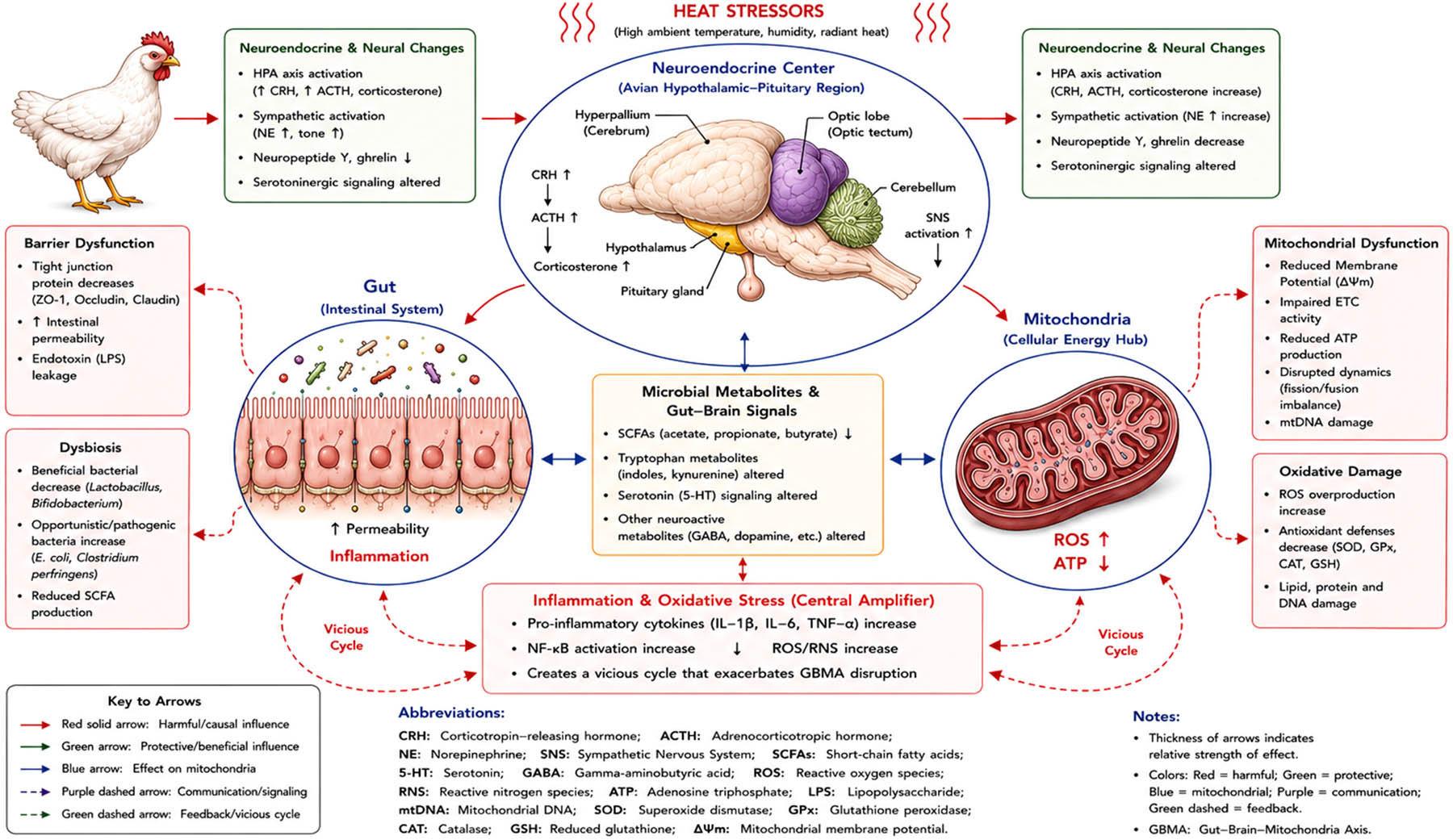
Figure 2
Mechanistic illustration of heat stress-induced disruption of the gut–brain–mitochondria axis in poultry. Heat stress activates neuroendocrine stress pathways, including the hypothalamic–pituitary–adrenal axis and sympathetic nervous system, leading to altered neurotransmitter release, corticosterone secretion, and inflammatory responses. Simultaneously, intestinal barrier dysfunction and dysbiosis increase gut permeability and modify microbial metabolite production, resulting in elevated translocation of endotoxins and pro-inflammatory mediators. These alterations contribute to mitochondrial dysfunction through excessive reactive oxygen species (ROS) generation, impaired electron transport chain activity, reduced ATP synthesis, and oxidative cellular damage. Bidirectional interactions among the gut, brain, and mitochondria are mediated through neural, endocrine, immune, and metabolic signalling pathways, generating feed-forward cycles that exacerbate oxidative stress, inflammation, and physiological dysfunction, ultimately compromising poultry health and performance.
3. Nutritional interventions targeting the gut–brain–mitochondria axis
Nutritional strategies that modulate the gut microbiota, oxidative balance, neuroendocrine responses, and mitochondrial function have attracted increasing attention as supportive approaches for alleviating heat stress in poultry. Rather than acting independently, many of these interventions exert interconnected effects across the GBMA by preserving intestinal barrier integrity, reducing systemic inflammation, attenuating oxidative stress, and supporting cellular energy metabolism. Major nutritional and early-life interventions targeting the GBMA during heat stress are summarised in Table 2.
Table 2
Interventions targeting the gut–brain–mitochondria axis in heat-stressed poultry
| Interventions | Types | Key interventions | Mechanisms and benefits | References |
|---|---|---|---|---|
| Nutritional interventions | Probiotics, prebiotics, synbiotics | Lactobacillus, Bifidobacterium, galactooligosaccharides, synbiotics | Enhance intestinal morphology, tight junctions, SCFA production, and reduce pathogens/oxidative stress/corticosterone | Quinteiro-Filho et al. (2012); Cao et al. (2021); Hu et al. (2020) |
| Phytogenics and essential oils | Peppermint, fenugreek, thymol, carvacrol, cinnamaldehyde | Antimicrobial, antioxidant, anti-inflammatory; improve barrier function, HPA axis regulation | Abbass and Abid (2023); Akbarian et al. (2016); Madkour et al. (2025) | |
| BSFL | Antimicrobial peptides, bioactive lipids | Favourable microbiota shifts, antioxidant defences, mitochondrial redox balance | Giller et al. (2021); Beldowska et al. (2023); Sjofjan et al. (2025) | |
| Functional amino acids | Glutamine, tryptophan, methionine, taurine, arginine | Gut barrier maintenance, serotonin/melatonin synthesis, glutathione production, osmoprotection | Chalvon Demersay et al. (2021); Wang et al. (2015); Yue et al. (2017) | |
| Antioxidants | Vitamins E/C, selenium, zinc, polyphenols | Preserve mitochondrial integrity, activate Nrf2, reduce ROS/malondialdehyde | Surai et al. (2019); Olayiwola and Adedokun (2025) | |
| Environmental and management | Cooling and ventilation | Tunnel ventilation, evaporative cooling, fogging, and reduced stocking density | Lower thermal load, HPA axis attenuation, preserve gut/mitochondrial function | Bhadauria (2017); Cuadrado and Dridi (2024); Renaudeau et al. (2012) |
| Early-life thermal conditioning | Mild heat exposure during development | Long-term thermotolerance, antioxidant capacity, gut–brain stability | Yahav et al. (2004); Saeed et al. (2019) | |
| Stocking density, lighting, enrichment | Optimised density, low-intensity lighting, perches/pecking substrates | Reduce HPA activation, improve ventilation/feed intake, and behavioural thermoregulation | Parvin et al. (2014); Bilal et al. (2021) | |
| Precision livestock farming | Wearable sensors and microclimate | Body temperature, respiration, activity monitoring | Early heat stress detection to prevent gut/mitochondrial damage | Bohler et al. (2020); Kennedy et al. (2022); |
| Predictive modelling | Climate + physiology integration | Proactive nutritional/environmental management | Ma et al. (2021); St-Pierre et al. (2003); Karl et al. (2018) | |
| Real-time biomarkers | Corticosterone, cytokines, SCFAs, H/L ratio | Precision intervention targeting axis health | Zaytsoff et al. (2020) | |
| Targeted therapies | SCFA-enhancing strategies | Fibre enrichment, butyrate producers (Ruminococcaceae) | Tight junctions, anti-inflammation, mitochondrial ATP synthesis | Wong et al. (2006); Hu et al. (2020) |
| Emerging mitochondrial stabilisers | Nrf2 activators, uncoupling protein regulators | Reduce ROS, preserve oxidative phosphorylation | Mishra and Jha (2019); Uyanga et al. (2022) | |
| Postbiotics and metabolites | Organic acids, peptides, bacteriocins, and indole derivatives | Gut barrier, neuroimmune signalling, metabolic stability | Arnal and Lallès (2016); Ahmad et al. (2022) |
3.1. Microbiota-targeted nutritional strategies
Among the most extensively investigated interventions are probiotics, prebiotics, and synbiotics, primarily because heat stress consistently induces intestinal dysbiosis, barrier dysfunction, and endotoxin translocation (Quinteiro-Filho et al., 2012). Supplementation with probiotic organisms, particularly Lactobacillus and Bifidobacterium species, has been associated with improved intestinal morphology, reduced pathogenic bacterial colonisation, and enhanced immune stability during thermal stress. Prebiotics and synbiotics further support these responses by selectively stimulating beneficial microbial populations and increasing the production of SCFAs, particularly butyrate, which supports epithelial integrity and mitochondrial ATP production (Cryan & Dinan, 2012; Hu et al., 2020).
Experimental studies have shown that synbiotic supplementation promotes microbial communities enriched with Lactobacillus and Ruminococcaceae while reducing opportunistic taxa such as Escherichia and Clostridium under heat stress conditions (Heida et al., 2016). These microbial shifts are associated with reduced intestinal inflammation and improved gut barrier function, suggesting that microbiota modulation may indirectly attenuate HPA-axis activation and systemic oxidative stress. Similarly, early-life interventions such as in ovo administration of galactooligosaccharides have been reported to enhance mucosal defence through increased goblet cell density and mucin expression, thereby improving intestinal resilience later in life (Alemka et al., 2012; Calefi et al., 2016). Collectively, these findings support the concept that microbiota-directed nutritional strategies contribute to GBMA stability by limiting endotoxin leakage, preserving immune homeostasis, and maintaining metabolic balance during heat exposure (Abdelqader et al., 2017; Alhenaky et al., 2017).
3.2. Phytogenics and functional bioactive compounds
Phytogenic feed additives and essential oils have also received attention because of their antioxidant, anti-inflammatory, and antimicrobial properties (Oyelola et al., 2024). Several phytogenic compounds, including black seed, peppermint, fenugreek, and curcumin, have demonstrated protective effects against heat stress by reducing oxidative injury and improving gut health and mitochondrial function (Oke et al., 2021; Abbass & Abid, 2023). Polyphenol-rich compounds may additionally modulate cytokine production and microbial diversity, thereby influencing neuroimmune signalling and mitochondrial redox balance (Akbarian et al., 2016; Chen & Vitetta, 2020).
Essential oils containing thymol, carvacrol, and cinnamaldehyde have similarly been associated with improved intestinal barrier integrity and reduced pathogenic bacterial load in heat-stressed poultry (Madkour et al., 2025). Although evidence directly linking phytogenics to GBMA regulation remains limited, available studies suggest that these compounds may indirectly modulate neuroendocrine stress responses by reducing systemic inflammation and oxidative stress, thereby supporting mitochondrial function during thermal challenge (Zaboli et al., 2019; Saracila et al., 2023).
Black soldier fly larvae (BSFL) meal has emerged as another promising functional ingredient because of its antimicrobial peptides, bioactive lipids, and immunomodulatory compounds (Giller et al., 2021; Aruwa et al., 2021). Studies indicate that BSFL supplementation can improve antioxidant status, immune responses, and microbial composition under stressful conditions (Beldowska et al., 2023; Sjofjan et al., 2025). However, mechanistic evidence specifically connecting BSFL supplementation to integrated GBMA regulation remains scarce, highlighting an important area for future investigation.
3.3. Functional amino acids and mitochondrial regulation
Functional amino acids play important roles beyond protein synthesis by participating in antioxidant defence, intestinal integrity, immune modulation, and neuroendocrine regulation during heat stress (Chalvon-Demersay et al., 2021; Lee et al., 2022; Ajayi et al., 2024). Among these, l-citrulline has attracted considerable interest because of its thermoregulatory and antioxidant properties. Experimental evidence demonstrates that l-citrulline supplementation improves thermotolerance, attenuates oxidative stress, enhances antioxidant enzyme activity, and supports mitochondrial energetics during heat exposure (Uyanga et al., 2022). In addition, its role in maintaining intestinal integrity and modulating gut microbial composition suggests potential relevance within the GBMA framework (Ma et al., 2025).
Glutamine has similarly been shown to preserve intestinal barrier function by enhancing tight junction integrity, supporting villus morphology, and contributing to glutathione synthesis under heat stress conditions (Wang et al., 2015; Rao & Samak, 2012). Tryptophan, as a precursor of serotonin and melatonin, may influence appetite regulation, stress responsiveness, and neuroendocrine signalling while also modulating gut microbial balance and mitochondrial homeostasis (Cryan & Dinan, 2012; Yue et al., 2017; Beldowska et al., 2023).
Methionine, betaine, and taurine further contribute to antioxidant protection and mitochondrial stability through their involvement in methylation reactions, glutathione synthesis, osmoregulation, and membrane stabilisation (Yang et al., 2010; Mishra & Jha, 2019; Abd El-Ghany & Babazadeh, 2022). Nevertheless, excessive dietary protein or imbalanced amino acid supplementation may increase microbial fermentation of undigested substrates and generate harmful metabolites, indicating that nutritional interventions targeting the GBMA require careful dietary formulation (Smith & Macfarlane, 1998).
3.4. Antioxidant strategies and redox homeostasis
Oxidative stress represents one of the central mechanisms linking heat stress to mitochondrial dysfunction and GBMA disruption. Consequently, antioxidant supplementation has been widely investigated as a strategy to preserve mitochondrial integrity and cellular homeostasis. Vitamins E and C, selenium, zinc, and related micronutrients have been shown to improve antioxidant enzyme activity, growth performance, and survivability in heat-stressed poultry (Oke et al., 2017; Oke, 2018; Olayiwola & Adedokun, 2025). These compounds help stabilise mitochondrial membranes and reduce lipid and protein oxidation by supporting endogenous antioxidant systems, including superoxide dismutase, catalase, and glutathione peroxidase (Akbarian et al., 2016; Oni et al., 2024a, Oni & Oke, 2025).
Additional evidence suggests that phytochemical antioxidants and dietary polyphenols may also contribute to gut microbial stability and modulation of inflammatory signalling pathways, thereby indirectly supporting gut–brain communication and mitochondrial function (Surai et al., 2019; Chen et al., 2023; Oni et al., 2025). Despite promising experimental findings, many antioxidant studies remain focused on isolated physiological outcomes, and relatively few have comprehensively evaluated integrated GBMA responses under heat stress conditions.
4. Environmental and management interventions relevant to GBMA stability
Although environmental and management interventions are not direct modulators of the GBMA, they substantially influence the physiological pathways involved in GBMA disruption during heat stress. By reducing thermal load and limiting neuroendocrine activation, these strategies indirectly preserve intestinal integrity, mitochondrial function, immune stability, and metabolic homeostasis.
4.1. Environmental cooling and ventilation
Environmental cooling remains one of the most effective approaches for reducing the physiological burden of heat stress in poultry production systems. Tunnel ventilation, evaporative cooling systems, exhaust fans, fogging devices, and climate-controlled housing reduce ambient temperature and humidity while improving evaporative heat dissipation (Bhadauria, 2017; Cuadrado & Dridi, 2024). These interventions reduce excessive HPA-axis activation and corticosterone secretion, thereby limiting oxidative stress and inflammatory responses that contribute to gut barrier dysfunction and mitochondrial injury (Lin et al., 2006).
In tropical and subtropical production systems, housing designs that maximise natural ventilation and airflow are particularly important where mechanical cooling is economically limited (Oloyo & Ojerinde, 2020; Gitau Gicheha, 2021). Improved airflow reduces heat-induced hypoxia and endotoxemia, thereby indirectly supporting intestinal integrity and microbial homeostasis (Rostagno, 2020). Additional management practices, including reduced stocking density and optimisation of drinking water temperature, further help lower thermal load and preserve physiological stability during periods of elevated environmental temperature (Renaudeau et al., 2012).
4.2. Early-life thermal conditioning
Early-life thermal conditioning has been proposed as a developmental strategy for improving thermotolerance later in life. Exposure of chicks to controlled thermal challenges during early developmental stages may induce adaptive responses involving thermoregulation, neuroendocrine signalling, and mitochondrial metabolism (Yahav et al., 2004). Experimental studies indicate that thermally conditioned birds exhibit reduced physiological stress responses and improved tolerance to subsequent heat exposure (Saeed et al., 2019).
Although the precise mechanisms remain incompletely understood, these adaptive responses may involve long-term modulation of stress signalling pathways, mitochondrial efficiency, and gut integrity. However, the extent to which early-life thermal conditioning directly alters GBMA function remains insufficiently characterised and requires further mechanistic investigation.
4.3. Stocking density, lighting, and environmental enrichment
Management conditions influencing bird behaviour and stress responsiveness can also affect physiological pathways associated with GBMA stability. Reduced stocking density improves airflow, decreases competition and aggression, and lowers physiological stress under high ambient temperatures (Parvin et al., 2014; Abbas et al., 2021). These improvements may indirectly attenuate HPA-axis activation, oxidative stress, and intestinal dysfunction during thermal challenge (Quinteiro-Filho et al., 2010).
Lighting programmes additionally influence feeding behaviour, activity patterns, and stress physiology. Manipulation of photoperiod and light intensity may improve feed intake and reduce stress-associated heterophil-to-lymphocyte ratios during hot periods by encouraging feeding during cooler hours of the day (Wu et al., 2022). Environmental enrichment strategies, including perches and pecking substrates, may also improve behavioural adaptation and reduce stress-related behaviours, although direct evidence linking enrichment practices to modulation of GBMA remains limited (Bilal et al., 2021; Beldowska et al., 2023).
4.4. Precision livestock farming and predictive technologies
Precision livestock farming technologies offer opportunities for earlier detection and management of heat stress before severe physiological disruption occurs. Continuous monitoring systems capable of assessing body temperature, respiration rate, activity, and environmental conditions provide real-time indicators of thermal stress and associated physiological disturbances (Bohler et al., 2020; Kennedy et al., 2022). These technologies may help identify early alterations associated with oxidative stress, behavioural dysfunction, or intestinal disturbance before irreversible damage develops (Pollock et al., 2021).
Predictive modelling approaches integrating climatic, behavioural, and physiological data may further improve preparedness for heat stress events and facilitate targeted nutritional or environmental interventions (St-Pierre et al., 2003; Kennedy et al., 2022; Oke et al., 2025c). Nevertheless, current applications remain largely focused on production and welfare monitoring rather than direct assessment of GBMA function.
Recent advances in biosensing technologies may enable real-time evaluation of biomarkers associated with oxidative stress, immune activation, and intestinal integrity, including corticosterone, inflammatory cytokines, antioxidant enzyme activity, and microbial metabolites (Quinteiro-Filho et al., 2012; Santos et al., 2015; Zaytsoff et al., 2020). However, the integration of these biomarkers into practical predictive systems for monitoring GBMA disruption in poultry is still at an early stage and requires substantial validation under commercial production conditions.
5. Insights from omics and systems biology targeting the gut–brain–mitochondria axis
5.1. Microbiome shifts and metabolomics
The gastrointestinal tract of chickens harbours a complex microbial community, including Firmicutes, Bacteroidetes, and Proteobacteria, while the ceca are the primary sites of microbial fermentation and SCFA production (Józefiak et al., 2004; Choi et al., 2015). Metagenomic analyses have shown that a large proportion of microbial genes are involved in carbohydrate metabolism, thereby underscoring the importance of the microbiome in energy harvesting and nitrogen utilisation (Danzeisen et al., 2011).
Microbial homeostasis is affected by thermal stress, which reduces beneficial taxa and alters SCFA profiles, thereby impairing nutrient absorption, feed efficiency, and immune competence (Alhenaky et al., 2017; Ahmad et al., 2022). Metabolomic studies consistently show that thermal stress shifts carbohydrate, protein, and lipid metabolism toward increased fat deposition and reduced protein synthesis, accompanied by elevated ROS and oxidative damage in intestinal and muscle tissues (Kikusato & Toyomizu, 2023). Conversely, diets enriched with fermentable fibres and polyphenols restore SCFA production and limit the production of toxic metabolites such as ammonia and indole derivatives, thereby reinforcing gut and metabolic homeostasis (Agus et al., 2021; Whitman et al., 2024).
5.2. Neurotransmitter-related transcriptomic changes
Microbial metabolites play a major role in regulating host neuroendocrine and immune signalling. SCFAs serve as energy sources while regulating epithelial proliferation and villus architecture. The butyrate produced improves intestinal integrity through its anti-inflammatory properties and stimulation of glucagon-like peptide-2 (Panda et al., 2009; Eeckhaut et al., 2011; Liu et al., 2021). SCFAs influence central appetite regulation by stimulating the secretion of GLP-1 and peptide YY, as well as acetate, which can cross the blood–brain barrier to alter hypothalamic neuropeptide expression (Frost et al., 2014; Zhang et al., 2022). The inflammatory response induced by dysbiosis, mediated by LPS and pro-inflammatory cytokines, obstructs signalling pathways and impairs gut–brain communication (Abd El-Hack et al., 2022; Salahi et al., 2025).
Transcriptomic studies reveal downregulation of thyroid hormone (T3 and T4) levels and changes in the expression of stress-responsive genes, which may reflect adaptive reductions in metabolic heat production, protein synthesis, and reproductive performance (Del Vesco et al., 2016; Juiputta et al., 2023). Transcript profiling also identifies functional pathways enriched during heat stress, such as corticosteroid release, feeding behaviour, and the inflammatory response, along with their associated candidate genes, providing deeper insights into the molecular regulation of thermoregulation in poultry (Uyanga et al., 2023; Majekodunmi et al., 2025).
5.3. Mitochondrial proteomics and metabolic fingerprints
Through proteomic analysis, chronic heat stress has been shown to consistently cause oxidative damage to all the major mitochondrial components, such as proteins, lipids, and DNA, with a decrease in the activity of the antioxidant enzymes like superoxide dismutase, catalase, and glutathione peroxidase (Akbarian et al., 2016; Song et al., 2018). In addition, reduced thyroid hormone activity decreases metabolic heat production, whereas elevated corticosterone levels facilitate fat storage, both of which contribute to alterations in mitochondrial energy balance (Del Vesco et al., 2016; Kikusato & Toyomizu, 2023).
The composition of gut microbiota has a significant impact on mitochondrial metabolism. Comparative analyses of fat and lean chicken lines found that higher abundances of Fusobacteria and Proteobacteria characterise fatty chicken lines. In contrast, lean chicken lines are dominated by Bacteroidetes (Ding et al., 2016). The relative scarcity of butyrate- and propionate-producing bacteria among the birds makes them more susceptible to inflammation, oxidative stress, and metabolic dysfunction, while, on the contrary, the presence of SCFAs strengthens mitochondrial antioxidant capacity and the oxidative phosphorylation process (Tong et al., 2016; Costa et al., 2017; Cheng et al., 2018; Chen & Vitetta, 2020).
5.4. Multi-omics integration for gut–brain–mitochondria axis mapping
By integrating metagenomic, transcriptomic, proteomic, and metabolomic data, researchers can develop a comprehensive picture of the interactions between the gut microbiota and the host. Functional characterisations of these metatranscriptome, metagenome, proteome, and metabolome datasets, as well as dietary manipulation and antibiotics used for growth promotion, have changed the composition of the gut microbiota and improved how effectively energy is gained through harvesting biomass and utilisation of nutrients through the host animal (Danzeisen et al., 2011; Costa et al., 2017).
Multi-omics strategies also support the genetic selection of birds for thermotolerance and feed efficiency. The merging of SNP data with the profiles of genes expression and proteins abundance shows the presence of signalling pathways like IGF/PI3K/Akt, ribosomal biogenesis, and mitochondrial oxidative phosphorylation that help to segregate the resilient and high-efficiency birds from those with a susceptible phenotype (Zhou et al., 2015; Juiputta et al., 2023). Collectively, these findings reveal coordinated interactions among the gut microbiota, neuroendocrine regulation, and mitochondrial metabolism in the GBMA.
5.5. Emerging biomarkers and therapies for understanding the gut–brain–mitochondria axis
Biomarkers, whether physiological or molecular, provide insights into overall stress and gut health. This includes heterophil-to-lymphocyte ratios, corticosterone concentrations, thyroid hormones, stress-responsive genes, and tight junction proteins, which provide insights into systemic stress and gut integrity (Du et al., 2016; Juiputta et al., 2023).
Research based on omics technologies has identified some biomarkers that could be used to monitor the GBMA function and stress resilience. Microbiome indicators include a high proportion of SCFA-producing taxa such as Lachnospiraceae, Ruminococcaceae, Faecalibacterium, and Ruminococcus, and the related increase in Enterobacteriaceae that occurs during dysbiosis (Torok et al., 2008; Stanley et al., 2014). Using different methods, the metabolic markers such as SCFA ratios, bile acid profiles, ROS levels, and antioxidant enzyme activity were identified (Li et al., 2018; Cheng et al., 2018). Also, neuroendocrine signals such as GLP-1, PYY, and serotonin link appetite control, energy expenditure, and microbial metabolism (Frost et al., 2014; Yu et al., 2024). The synergistic action of these biomarkers provides effective methods for assessing GBMA interactions and improving resilience in poultry production systems. Some GBMA targeted therapies include the following.
5.5.1. SCFA-enhancing strategies
Beneficial gut bacteria that produce SCFAs help maintain intestinal integrity, modulate the immune system, and manage energy metabolism. There are several ways to increase SCFA production, especially butyrate, to help maintain the intestinal barrier, reduce inflammation, and support mitochondrial ATP production (the energy source in our cells) under heat stress (Wong et al., 2006). The abundance of butyrate-producing bacteria such as Ruminococcaceae, Lachnospiraceae, Faecalibacterium prausnitzii, and particular Clostridium species has been shown to improve the intestinal barrier, reduce inflammatory signals, and regulate appetite through GLP-1 and leptin pathways (Eeckhaut et al., 2011; Abdelqader et al., 2017; Beldowska et al., 2023).
Enriching the diet with fibres and manipulating intestinal microbes are both effective methods to increase the production of SCFA, which can strengthen gut-mitochondrial communication and improve metabolic resilience during thermal stress (Hu et al., 2020; Wu et al., 2014). The use of complementary strategies that focus on the production of mitochondrial ROS and the enhancement of antioxidant defences would preserve oxidative phosphorylation and maintain cellular energy balance (Mujahid et al., 2006; Akbarian et al., 2016).
5.5.2. Emerging mitochondrial stabilisers
Nutritional and phytochemical interventions aimed at stabilising mitochondrial membranes and improving electron transport chain function are becoming major strategies for managing heat-induced cellular dysfunction. For instance, compounds that mitigate ROS production, activate the Nrf2 pathway, and modulate mitochondrial uncoupling proteins can maintain energy production and minimise oxidative damage during thermal stress (Mishra & Jha, 2019; Surai et al., 2019). Newly emerging mitochondrial-directed agents are likely to protect the redox balance and preserve mitochondrial bioenergetics under high ambient temperatures (Uyanga et al., 2022).
5.5.3. Postbiotics and functional metabolites
The use of postbiotics, such as organic acids, peptides, indole derivatives, bacteriocins, and neurotransmitters produced by bacteria, represents a novel approach to modulating immune and metabolic pathways without requiring microorganisms. These metabolic products have direct effects on gut barrier integrity, appetite control, neuroimmune communication, and mitochondrial energy metabolism, thereby eliminating inconsistencies in probiotic viability (Cryan & Dinan, 2012; El Aidy et al., 2016; Zhu et al., 2019). The inclusion of bioactive microbial metabolites will improve epithelial cell integrity, increase the stability of gut–brain–liver communication, and enhance the body’s overall ability to withstand heat stress (Arnal & Lallès, 2016; Wang et al., 2020).
5.6. Artificial intelligence, systems biology, and predictive modelling in GBMA research
The increasing complexity of heat stress biology in poultry has highlighted the need for integrative analytical approaches that can simultaneously evaluate microbiome dynamics, neuroendocrine responses, immune regulation, and mitochondrial function. Because the GBMA involves highly interconnected pathways operating across multiple biological scales, conventional single-variable analyses are often insufficient to explain the systemic responses associated with thermal stress. Consequently, systems biology, multi-omics integration, and artificial intelligence (AI)-driven modelling are emerging as valuable tools for advancing GBMA research.
Recent advances in transcriptomics, metabolomics, proteomics, metagenomics, and epigenomics now permit simultaneous characterisation of microbial composition, host gene expression, mitochondrial activity, inflammatory signalling, and metabolic adaptation during heat stress (Bohler et al., 2020; Beldowska et al., 2023). Integrating these datasets through systems biology approaches may facilitate the identification of coordinated molecular pathways linking intestinal dysbiosis, neuroendocrine activation, oxidative stress, and mitochondrial dysfunction. Such approaches may also help distinguish adaptive from maladaptive responses during acute and chronic heat exposure.
Artificial intelligence and machine learning approaches offer additional opportunities for analysing these large and multidimensional datasets. For example, machine learning algorithms can be trained to identify microbial dysbiosis signatures associated with reduced thermotolerance, impaired feed efficiency, or elevated inflammatory responses. Predictive models integrating microbiome composition, cytokine profiles, corticosterone levels, antioxidant status, and mitochondrial biomarkers may help classify birds into heat stress susceptibility or resilience categories (Karl et al., 2018; Kennedy et al., 2022).
AI-assisted modelling may also improve the prediction of mitochondrial dysfunction during heat stress by integrating physiological and molecular indicators, including ROS generation, ATP depletion, mitochondrial membrane potential, and expression of oxidative stress-related genes. These predictive frameworks could support earlier detection of subclinical thermal injury before severe declines in productivity or welfare occur. In addition, network-based modelling approaches may help identify key regulatory nodes within the GBMA, thereby improving understanding of how alterations in gut microbial metabolites, neuroendocrine signalling, and mitochondrial energetics interact under heat stress conditions.
Another promising application involves integrating environmental and physiological datasets into thermal resilience models. Combining climatic variables, behavioural indicators, gut microbiota profiles, and metabolic biomarkers using AI-driven platforms may improve heat stress response forecasting under commercial production conditions. Such predictive systems could facilitate precision nutrition and targeted management interventions designed to preserve intestinal integrity, mitochondrial function, and neuroendocrine stability during thermal challenge.
Despite these promising developments, the application of AI and predictive modelling in GBMA research remains in its early stages. Many current studies rely on relatively small experimental datasets, limiting the robustness and generalisability of predictive algorithms. Furthermore, the lack of standardised biomarkers and harmonised experimental protocols complicates cross-study comparisons and model validation. Future studies should therefore prioritise large-scale longitudinal datasets, standardised phenotyping approaches, and integrative multi-omics platforms to improve the reliability and practical applicability of AI-driven GBMA research in poultry production systems.
6. Research gaps and future directions
Despite significant advances in omics technologies, nutritional interventions, and genetic approaches, several gaps remain in our understanding and management of GBMA under poultry heat stress. Addressing these gaps will be critical for developing sustainable strategies that enhance resilience, productivity, and welfare.
6.1. Need for integrative in vivo studies on the gut–brain–mitochondria axis
Most studies to date have investigated alterations in the gut microbiota, neuroendocrine responses, or mitochondrial dysfunction under heat stress as independent processes. Although the association between intestinal dysbiosis and increased intestinal permeability has been linked to the development of systemic inflammation and HPA dysregulation (Quinteiro-Filho et al., 2012; He et al., 2019), mitochondrial oxidative stress has been demonstrated to decrease the efficiency and viability of cells’ metabolism (Rhoads et al., 2013; Surai et al., 2019). These types of experimental analyses are typically evaluated separately and therefore do not provide sufficient data to determine how the microbial, neuroendocrine, and mitochondrial systems function concurrently when animals are subjected to heat stress.
Hence, there is a need for integrative in vivo experimental designs that simultaneously evaluate gut microbial composition and metabolites, central and peripheral neuroendocrine signals, and mitochondrial bioenergetics. Comprehensive studies of the GBMA in poultry remain limited, particularly under heat stress, although the possibility that microbial metabolites might influence hypothalamic signalling and mitochondrial dynamics through this triad communication pathway is attracting increasing attention (Picard et al., 2018; Dalile et al., 2019). Innovative experimental approaches, such as gnotobiotic or microbiota-manipulated chickens subjected to controlled heat stress, can elucidate these interactions and provide means to overcome the limitations of ex vivo or single-component studies (Stanley et al., 2014; Diaz Carrasco et al., 2019). Future studies can develop a mechanistically informed understanding of the regulation of this axis by using microbiome profiling, transcriptomics of neurotransmitter-related genes, and proteomics of mitochondrial proteins under defined stress or pathogen challenges. These approaches will allow researchers to better capture the dynamic nature of heat stress-related physiology at the systems level and identify key regulatory points that contribute to the development of resilience in poultry (Wen et al., 2021; Salahi et al., 2025).
6.2. Biomarker standardisation for monitoring the gut–brain–mitochondria axis
One major hindrance to meaningful comparisons across studies is the lack of standardised biomarkers to evaluate GBMA function under heat stress. Researchers use various indicators in their studies, including plasma corticosterone, tight junction proteins, heat shock proteins (HSP70, HSP90), antioxidant enzymes, mitochondrial DNA copy number, and inflammatory mediators. However, they also differ in several aspects, including the types of tissues sampled, the time range, and the thresholds used for analysis (Rhoads et al., 2013; Surai et al., 2019). Differences in methods thus lead to low reproducibility and ultimately weaken conclusions regarding the severity of stress or the effectiveness of the intervention. While emerging biomarkers like SCFAs, brain-derived neurotrophic factor, cytokine profiles (IL-6, IL-17, TNF-α), intestinal barrier proteins, and mitochondrial ROS levels are promising as integrated indicators of axis health, no consensus has been reached on their use in poultry systems (Cao et al., 2021; Beldowska et al., 2023).
Omics-based methods such as metabolomics and transcriptomics are particularly effective for uncovering conserved, functionally relevant biomarkers, but their effectiveness depends on coordinated protocols and cross-validation across breeds, ages, stressors, and production environments (Wen et al., 2021; An et al., 2025). Creating standardised biomarker panels, with agreed sampling strategies and assay validation, will be important for reliable monitoring of axis perturbations and resilience in commercial flocks (Quinteiro-Filho et al., 2012; Lavelle & Sokol, 2020).
6.3. Genomic selection for gut–brain–mitochondria resilience
Genomic selection has become a common tool for improving traits such as growth, feed efficiency, and thermotolerance in poultry. However, breeding methods that focus on resilient GBMA functionality are yet to be developed. There is growing evidence that host genetics determines the composition of the gut microbiota, the stress response, and mitochondrial activity. Moreover, specific genomic regions related to heat tolerance and cellular energetics have been identified (Van Goor et al., 2016). On the other hand, the selection indices currently used rarely account for characteristics associated with microbiome stability, neuroendocrine control, or mitochondrial efficiency.
Future breeding programmes could use SNP markers associated with SCFA-producing taxa, stress hormone regulation, mitochondrial oxidative phosphorylation pathways, or uncoupling protein variants to redirect selection toward physiological robustness under heat stress (Mignon-Grasteau et al., 2015; Xu et al., 2025). Implementing microbiome heritability and axis-related quantitative trait loci into multi-trait genomic models would enable increases in thermotolerance without a decline in productivity (Mignon-Grasteau et al., 2015; Juiputta et al., 2023). These methods would complement nutritional and management interventions to mitigate heat stress in poultry.
6.4. Early-life programming
The application of early-life interventions provides an opportunity to enhance the GBMA’s resistance to heat stress. The practices of in ovo feeding, thermal conditioning, and early probiotic administration have been shown to have a long-lasting impact on the gut, immune system, and temperature tolerance in chickens (Uni and Ferket, 2004; Saeed et al., 2019; Eletu et al., 2025). Nevertheless, how these practices affect neuroendocrine regulation and the ability of cells to produce energy via respiration under heat stress remains unexplored.
There is evidence that early microbial colonisation and nutritional signals can epigenetically influence axis development; however, linking neonatal microbiota profiles to adult mitochondrial efficiency and stress resilience in longitudinal poultry studies remains rare (Romano et al., 2021). It is necessary to conduct controlled growth-based experiments that monitor birds from embryo development through production cycles to determine whether early-life programming results in stable bacterial configurations, enduring epigenetic changes, and persistent mitochondrial adaptations. The ability to reveal such developmental plasticity will be an important factor in the development of preventive, rather than reactive, approaches to heat stress and enteric disease (Wen et al., 2021; Salahi et al., 2025).
6.5. Opportunities for AI-driven modelling
The nonlinear interactions among the microbiota, neuroendocrine pathways, and mitochondrial metabolism are beyond the scope of conventional analytical frameworks. Recently, artificial intelligence and machine learning have become powerful means for integrating high-dimensional datasets from genomics, microbiomics, metabolomics, physiological measurements, and environmental sensors. For instance, AI-derived models have demonstrated utility in predicting animal performance and stress responses in precision livestock systems (Karl et al., 2018; Naeem et al., 2025).
In heat stress physiology, such methods could be used to theoretically model dysregulation of the GBMA, identify central regulatory nodes, and test nutritional or genetic interventions in silico before on-farm implementation (Karl et al., 2018; Kennedy et al., 2022). Recent methods, such as graph neural networks, may be beneficial for unravelling the complex, rapid interactions among microbe–neuron–mitochondria and for predicting thermal tolerance or heat stress resilience under different heat conditions (Zampiga et al., 2018; Videla Rodriguez et al., 2024). To achieve high-quality, standards-based datasets, animal scientists, physiologists, and data scientists will work closely together, with AI becoming climate-smart and precision poultry production being installed (Pollock et al., 2021).
7. Conclusions
With rising global temperatures, heat stress imposes a significant burden on poultry producers, particularly in tropical and subtropical climates. Heat stress in poultry does not affect birds’ physiology through a single pathway. On the contrary, heat stress operates through a highly interconnected GBMA, in which intestinal dysbiosis, neuroendocrine activation, and mitochondrial dysfunction reinforce one another through forward signalling and feedback mechanisms. Mitochondrial dysfunction appears to represent an important integrative mechanism linking intestinal, neuroendocrine, and metabolic responses during heat stress. When heat stress induces mitochondrial dysfunction, a hallmark is the overproduction of ROS and reduced ATP levels. Changes within mitochondria disrupt cellular signalling mechanisms that normally maintain intestinal barrier function and immune homeostasis. The central positioning of mitochondria underscores the crucial role of mitochondrial resilience in determining the whole-animal system’s response to thermal stress.
Using a gut–brain–mitochondria framework to understand heat stress broadens the scope for interventions beyond conventional management strategies. Nutritional modulation of the gut microbiota, early-life programming strategies, and genomic selection for thermotolerance and mitochondrial efficiency are novel, complementary, and thus promising ways of enhancing resilience, productivity, and disease resistance in poultry. These strategies are becoming increasingly relevant as climate change intensifies heat stress. Moving forward, climate-smart research should adopt a systems-biology perspective. In vivo experiments, combined with multi-omics technologies, standardised biomarkers, and AI models, will play a significant role in understanding heat stress physiology and in generating mechanistic insights that could lead to the development of scalable solutions. This comprehensive framework would facilitate the poultry industry’s transition to sustainable production systems that protect the health and performance of birds.
Heat stress disrupts gut, brain, and mitochondrial function in poultry, with immune, hormonal, and metabolic signals reinforcing systemic dysfunction.
Heat stress triggers gut barrier failure, dysbiosis, neuroendocrine changes, and mitochondrial damage, creating feedback loops that impair poultry health.
Funding information
Authors state no funding involved.
Author contributions
Conceptualisation: O.E.O., T.A.E., V.A.U., O.M.O.; Funding acquisition: O.E.O., T.A.E., V.A.U., O.M.O.; Methodology: O.E.O., T.A.E., V.A.U., O.M.O.; Project Administration: O.E.O.; Resources: O.E.O., T.A.E.; Supervision: O.E.O., O.M.O.; Writing - Original Draft Preparation: O.E.O., T.A.E., V.A.U., O.M.O.; Writing - Review and Editing: O.E.O., T.A.E., V.A.U., O.M.O.
Conflict of interest statement
Authors state no conflict of interest.