
As the global population continues to grow, the demand for sustainable and efficient animal protein production has become a pressing concern. Traditional protein sources for poultry, such as soybean meal and fishmeal, present significant environmental challenges, including deforestation, biodiversity loss, and overfishing (Makkar et al., 2014; Sogari et al., 2019). Unconventional protein sources, like algae and single-cell proteins, have shown promise, offering comparable amino acid profiles and digestibility to conventional feeds (Bajić et al., 2023; Becker, 2007). Other alternatives such as insect-derived proteins, including insect meals and dried larvae, are also gaining attention due to their lower environmental impact, high nutritional value, and ability to be produced from organic waste (Belluco et al., 2013; Rumpold and Schlüter, 2013; van Huis, 2013; Nowakowski et al., 2022). These innovative feed ingredients are being increasingly explored for their potential to improve the sustainability of animal agriculture while maintaining or enhancing animal health and performance.
Insects such as black soldier fly (Hermetia illucens) larvae, mealworms (Tenebrio molitor), houseflies, grasshoppers (Orthoptera), silkworms, and earthworms have been primarily used in poultry feeding, especially for broilers and laying hens, with positive effects on growth and feed conversion efficiency (Fu et al., 2024; Veldkamp and Bosch, 2015). Adding insect meals to poultry diets has demonstrated improvements in growth performance, feed efficiency, gut health, and immunity while reducing reliance on resource-intensive soybean and fishmeal (Bellezza Oddon et al., 2021; de Souza Vilela et al., 2021). Additionally, studies suggest that incorporating insect meal into poultry diets can modify the quantity and quality of animal products. Research on broiler chickens demonstrated a higher proportion of saturated fatty acids in the pectoral muscles of birds fed with Hermetia illucens larvae meal (Popova et al., 2020)
Bone health is a critical aspect of poultry welfare and productivity, influencing mobility, egg production, and susceptibility to fractures (Bello et al., 2020; Whitehead, 2004). The avian skeleton, characterized by its light weight and high strength, relies on optimal mineralization and structural integrity to support the physical demands of birds (Kim et al., 2012). Nutritional factors, particularly dietary protein, calcium, and phosphorus levels, play important role in bone development and maintenance (Rath et al., 2000). Adequate protein intake supports collagen synthesis, a major component of bone matrix, while specific amino acids such as lysine and methionine are vital for bone growth and repair (Bello et al., 2020). Inadequate or imbalanced protein can lead to reduced bone density, compromised strength, and increased susceptibility to skeletal disorders (Dijkslag et al., 2021).
The tibia and femur are frequently selected for biomechanical studies as representative long bones because their structural and functional characteristics provide valuable insights into overall bone health in birds. These bones serve distinct purposes within the avian skeleton: the femur is hollow, an adaptation that reduces weight while maintaining strength, essential for avian locomotion and flight efficiency, whereas the tibia contains bone marrow, playing a critical role in hematopoiesis and providing additional structural support. Analyzing these two bones together allows for a comprehensive evaluation of both weight-saving adaptations and functional robustness, offering broader conclusions about skeletal health and the effects of various factors, such as diet, on bone development (Dumont, 2010; Osiak-Wicha et al., 2024). Measurements of geometric parameters, mineral content, and mechanical properties such as stiffness, strength, and elasticity provide insights into the effects of dietary interventions (Rath et al., 2000). Additionally, parameters such as sternum crest height and sternum length are valuable for assessing overall skeletal development, given the sternum’s role in flight and respiration (Osiak-Wicha et al., 2024; Rath et al., 2000). These metrics enable comprehensive evaluations of how dietary modifications, including the incorporation of alternative protein sources, impact the skeletal system.
In this study, the effects of insect-based protein diets on the bone biomechanics and skeletal measurements of female common pheasants (Phasianus colchicus) were investigated. The dietary treatments involved the partial and complete replacement of soybean meal with either insect meal or dried larvae. These alternative protein sources were selected due to their high protein content, favorable amino acid profile, and digestibility, which have been shown to be comparable to or exceed those of soybean meal and fishmeal (Becker, 2007). Previous studies have highlighted the high nutrient bioavailability and balanced composition of insect-based proteins, such as black soldier fly larvae and mealworms, making them promising candidates for poultry feed (Shah et al., 2022). However, the potential for subtle adverse effects – such as imbalances in calcium and phosphorus metabolism or unexpected impacts on bone mineral density – necessitates further investigation. While the use of insect protein in poultry diets has been primarily associated with improvements in growth performance, feed efficiency, and immune function, there remains a lack of comprehensive research into how these alternative protein sources affect bone development, mineralization, and mechanical properties. This gap is particularly relevant for species like pheasants, where skeletal integrity is essential not only for welfare but also for economic and practical reasons.
We hypothesize that the replacement of soybean meal with insect-based proteins is a viable alternative that will not negatively affect bone strength, mineralization, or overall skeletal quality in pheasants. Furthermore, we expect that insect-based proteins, due to their high bioavailability and rich amino acid profile, may improve bone strength and mineralization compared to soybean meal. This research may be significant in addressing the ecological need for sustainable feed solutions while aiming to optimize poultry health and productivity. The findings are expected to provide valuable insights into the effects of alternative dietary proteins on avian skeletal systems, contributing to the development of improved feed formulations in sustainable agriculture.
Material and methods
Animals and experimental design
This study involved 50 female common pheasants, housed under experimental conditions at a pheasant farm located in Stara Kiszewa, Pomerania (18°10’E, 53°59’N), Poland. The birds were kept in aviaries measuring 8.5 m long × 5.0 m wide × 3.5 m high, providing ample space for natural movement and ensuring their welfare. The experiment represented the first phase of a broader study on pheasants and spanned from March 14, 2024, to December 1, 2024, with the first part, focusing on hens, concluding on July 30, 2024, when the birds were slaughtered. At the time of slaughter, the birds were 4 months old.
The pheasants were randomly assigned to one control group and two experimental groups, with each group further divided into subgroups based on the type of insect-derived protein. Each group consisted of ten birds (n = 10). Thus, the experimental structure included the following groups: Group I (control), Group II E1, Group II E2, Group III E1, and Group III E2. The control group, housed in Aviary 1, received a basal diet where 100% of the protein content was derived from soybean meal. In the experimental groups, Group II included birds fed diets where 50% of the soybean meal protein was replaced with insect-derived protein. Subgroup II E1 received insect meal, and II E2 received dried larvae. In Group III, 100% of the soybean meal protein was replaced with insect-derived protein, with III E1 receiving insect meal and III E2 receiving dried larvae. Both the insect meal and dried larvae were sourced from Black Soldier Fly and provided by HiProMine S.A., a certified supplier located in Robakowo, Poland.
The pheasants were fed ad libitum throughout the study, with unrestricted access to water. Feed intake was monitored daily by weighing the feed provided to the feeders and recording any leftovers to determine consumption rates. The experimental diets used in this study were formulated based on previously established nutritional recommendations and feed composition studies (Whiteside et al., 2015; Wise and Ewins, 1980). Environmental conditions were carefully regulated, maintaining a stable temperature of 19±2°C, relative humidity between 50% and 60%, and a consistent lighting schedule of 16 hours of light and 8 hours of darkness (16L:8D), supplemented with artificial lighting when necessary. The composition of the experimental diets, including metabolizable energy (11.43–11.47 MJ/kg) and crude protein levels (175–178 g/kg), was formulated to ensure comparable energy and protein intake across all groups. Table 1 provides the detailed composition of each diet. Feed ingredients and chemical composition were determined in accordance with EU Commission Regulation 152/2009 (Commission Regulation (EC) No 152/2009). Analyses included dry matter, crude protein, crude fat, crude fiber, and ash content following Annex III, points A, C, H, I, and M, respectively. Total phosphorus content was assessed in line with Annex III, point P, and calcium content was measured using flame atomic absorption spectrometry in accordance with ISO 6869:2000 standards (ISO 6869, 2000). The crude protein (CP) content was calculated based on nitrogen (N) analysis using the Kjeldahl method. In line with standard practice, a general N-to-protein conversion factor of 6.25 was applied for conventional protein sources. However, for diets containing Hermetia illucens meal, CP was recalculated using a species-specific conversion factor of 4.67, as recommended by Janssen et al. (2017), to account for the high non-protein nitrogen contribution from chitin (Janssen et al., 2017). The amino acid profile of the experimental diets was estimated based on the known inclusion levels of each ingredient and published values for their average amino acid composition (De Marco et al., 2015; Makkar et al., 2014). Crude protein contents were assumed to be 44% for soybean meal and 55% for insect meal (Hermetia illucens), consistent with values reported in standard feed databases and literature. Amino acid concentrations (g per 100 g of protein) for lysine, methionine, threonine, tryptophan, valine, and arginine were obtained from established references. The contribution of each amino acid was calculated by multiplying its concentration per gram of protein by the total protein supplied by each ingredient in the diet (g/kg).
Table 1.
Composition and nutrient analysis of experimental diets (g/kg)
| Ingredient | Group I (control) | Group II | Group III |
|---|---|---|---|
| Wheat meal | 280 | 295 | 310 |
| Wheat bran | 100 | 100 | 100 |
| Corn meal | 150 | 150 | 150 |
| Sorghum meal | 100 | 100 | 100 |
| Dried greens | 50 | 50 | 50 |
| Soybean meal (extract) | 140 | 70 | 0 |
| Sunflower cake | 100 | 100 | 100 |
| Insect meal/larvae | 0 | 60 | 120 |
| Soy oil | 10 | 5 | 0 |
| Mineral-vitamin premix1 | 20 | 20 | 20 |
| Limestone | 50 | 50 | 50 |
| Nutrient composition | |||
| Crude protein | 175 | 176 | 178 |
| Crude fat | 15 | 12 | 10 |
| Crude fiber | 100 | 100 | 100 |
| Ash | 45 | 46 | 46 |
| Calcium | 35 | 35 | 35 |
| Total phosphorus | 5.5 | 5.4 | 5.3 |
| Chitin | 0 | 3.9 | 7.8 |
| Lysine | 3.88 | 3.75 | 3.63 |
| Methionine | 0.86 | 0.95 | 1.05 |
| Threonine | 2.40 | 2.52 | 2.64 |
| Tryptophan | 0.80 | 0.66 | 0.52 |
| Valine | 2.58 | 2.74 | 2.90 |
| Arginine | 4.68 | 3.95 | 3.23 |
| Metabolizable energy2 (MJ/kg) | 11.43 | 11.45 | 11.47 |
1 Each 1 kilogram of the vitamin–mineral premix contained the following: 10,000 IU of vitamin A (retinol), 2,500 IU of vitamin D, 20 mg of vitamin E (α-tocopherol), 0.5 mg of thiamine, 5.0 mg of riboflavin, 20.0 mg of niacinamide, 1.0 mg of pyridoxine, 0.02 mg of cobalamin, 0.5 mg of folic acid, 7.0 mg of pantothenic acid, 2.5 mg of menadione, 300 mg of choline chloride, 45 mg of iron (Fe), 60 mg of manganese (Mg), 50 mg of zinc (Zn), 0.25 mg of selenium (Se), and 1.3 mg of iodine (I). IM refers to insect meal.
At specific time points (weeks 4, 8, and 16), all pheasants were weighed to monitor growth performance. At the end of the experiment, when the pheasants reached 16 weeks of age, they were weighed again, decapitated, and re-weighed after exsanguination. Carcasses were then plucked, eviscerated, and weighed to determine carcass mass. Samples were collected and stored in a refrigerator at 4°C until further chemical analyses were performed.
Throughout the trial, the birds were closely monitored to assess their health and behavior, ensuring their welfare under the experimental conditions. This study was conducted in accordance with ethical standards, with approval granted by the Local Ethical Committee for Animal Experiments in Lublin (Resolution No. 8/2024, issued on January 29, 2024).
Sample collection
Immediately after euthanasia, the tibia and femur were carefully dissected from each pheasant. The bones were thoroughly cleaned of any remaining muscle, tendons, and connective tissue using blunt dissection tools to preserve their structural integrity. Each bone was individually wrapped in sterile gauze moistened with 0.9% saline solution to prevent dehydration and then placed in labeled plastic bags. The samples were stored at −20°C to maintain their biomechanical and material properties until further analysis. Prior to any measurements or testing, the bones were thawed overnight at 7°C in a refrigerator to ensure uniform restoration of their physical state.
Bone analysis
Measurements of bone mineral density (BMD) and bone mineral content (BMC) were performed after thawing the bones overnight at 7°C using a Lunar densitometer (GE, Madison, WI) with the dual-energy X-ray absorptiometry (DXA) method. The entire length of each tibia and femur was scanned, and BMD and BMC values were recorded for further analysis. Following the DXA measurements, the bones were immediately prepared for mechanical testing. A three-point bending test was conducted to assess the mechanical properties of the tibia and femur. The test was performed using a Zwick Z010 universal testing machine (Zwick-Roell GmbH & Co., Ulm, Germany) with a span distance set to accommodate the bone length and a loading rate of 10 mm/min. Each bone was positioned horizontally on two supports, with the mid-diaphysis selected as the loading site. Load-displacement curves were recorded during the tests to determine mechanical parameters, including yield load (Fyield; the force at which permanent deformation begins), fracture load (Fmax; the maximum force sustained before fracture), stiffness (the slope of the elastic portion of the curve), elastic work (Wyield; the energy absorbed during elastic deformation), and work to fracture (Fmax; the total energy absorbed up to the point of fracture). These parameters were calculated using Origin software (v. 2022, OriginLab, Northampton, MA). After the mechanical testing, the bones were sectioned transversely at the mid-diaphysis using an MBS 240/E diamond bandsaw (Proxxon GmbH, Foehren, Germany). Cross-sectional diameters of the cortical bone were measured with a digital caliper, including: transversal outer diameter (Hout), transversal inner diameter (Hinn), anterioposterior outer diameter (Vout) and anterioposterior inner diameter (Vinn). Moreover, geometric parameters such as cross-sectional area (CSA), cortical index (CI), mean relative wall thickness (MRWT), and cross-sectional moment of inertia were calculated (Ix). Finally, based on the recorded load-deformation curves and cross-sectional geometric measurements, material properties of the bones, including yield strain (Ɛyield), breaking strain (Ɛmax), Young’s modulus, yield stress (σyield), and breaking stress (σmax), were determined using standard beam-theory equations. All procedures and calculations followed previously described methodologies (Osiak-Wicha et al., 2023)
Statistical analysis
The statistical analysis was performed to assess the effects of dietary treatments on the biomechanical and densitometric properties of the bones across the experimental groups. One-way analysis of variance (ANOVA) was conducted to compare the means between groups. Normality of the data was tested using the Shapiro-Wilk test, and homogeneity of variances was assessed with Levene’s test. For datasets that did not meet the assumption of homogeneity, Welch’s ANOVA was applied. Post hoc comparisons were performed using Tukey’s honest significant difference (HSD) test to evaluate pairwise differences between group means.
The statistical model included the parameter of interest as the dependent variable, the dietary treatment as a fixed effect, and residual error as the random component. This model allowed for a clear distinction of the effects of the dietary treatments on bone parameters, independent of other potential sources of variability. All statistical tests were conducted using GraphPad Prism version 10.4.0 for Windows (GraphPad Software, San Diego, CA, USA). Results were expressed as mean values with their corresponding standard deviations (SD). A significance threshold of P<0.05 was applied for all analyses.
Results
Production performance properties
No significant differences were observed in body weight between the groups at any of the measured time points (weeks 4, 8, and 16) (Figure 1 A–C). However, significant differences were found in both absolute body weight gain (BWG) and daily body weight gain (Figure 1 D–E). The highest weight gain was recorded in the group with 100% insect meal substitution (Group III E1), which was significantly higher than in the control group (Group I, P<0.01). Among the groups receiving dried larvae, the 100% substitution group (Group III E2) also showed significantly higher weight gain compared to the control (P<0.05). Additionally, in the 50% substitution groups (Group II), weight gain was significantly greater in the group receiving insect meal (E1) compared to the group receiving dried larvae (E2) (P<0.01). No significant differences were observed in daily feed intake between the groups (Figure 1 F). However, significant differences were found in the feed conversion ratio (FCR) (Figure 1 G). The control group (Group I) exhibited a significantly lower FCR compared to the groups with 100% substitution using insect meal (Group III E1, P<0.01) and dried larvae (Group III E2, P<0.01). Furthermore, in the 50% substitution groups, the FCR was significantly higher in the group receiving dried larvae (Group II E2) compared to the group receiving insect meal (Group II E1, P<0.01).
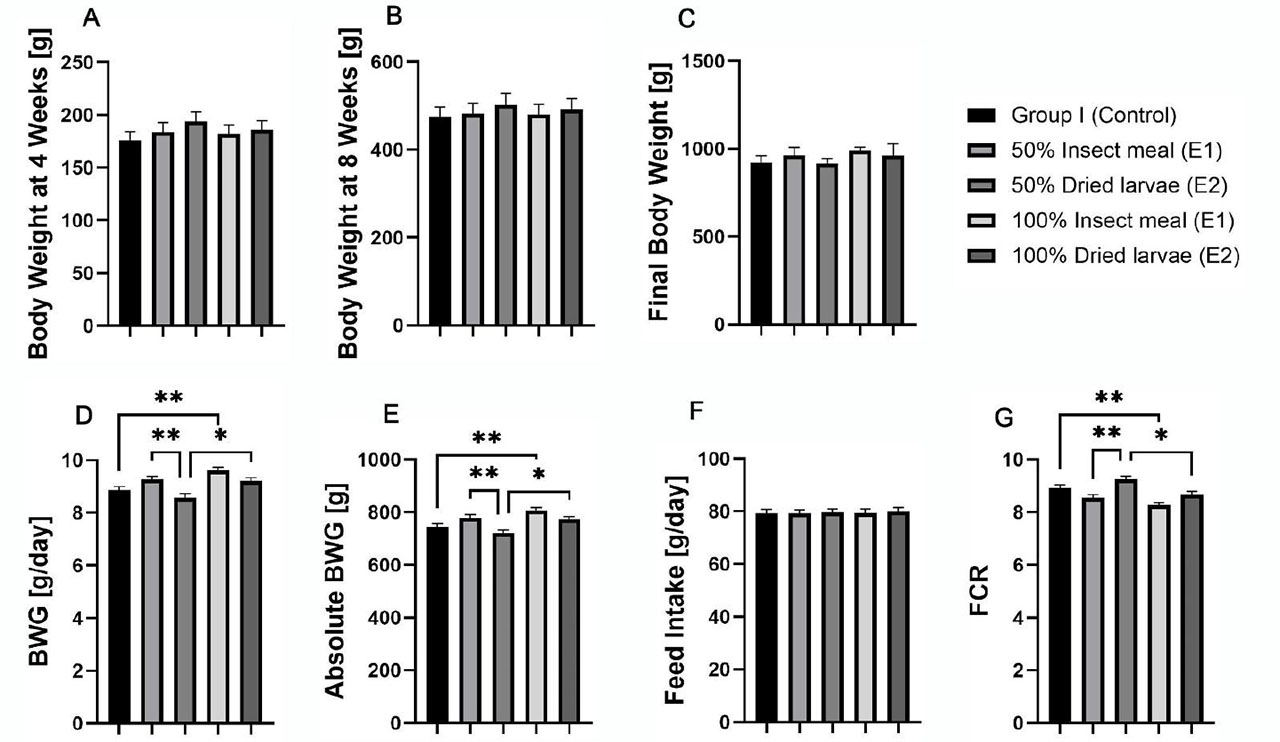
Figure 1.
Analysis of differences in production performance parameters of female common pheasant at 16 weeks of age between the control group (group I), group II (E1-50% insect meal, E1-100% dried larvae) and group III (E2-50% insect meal, E2-100% dried larvae): (A) body weight at 4 weeks age, (B) body weight at 8 weeks of age, (C) final body weight at 16 weeks of age, (D) daily body weight gain, (E) absolute body weight gain at 16 weeks of age, (F) daily feed intake, (G) feed conversion ratio. Asterisks (*) indicate significant differences between groups (*P<0.05, **P<0.01)
Bone properties
Significant differences were observed in BMC between the groups. The tibia of the control group (Group I) exhibited significantly higher BMC compared to the group with 50% substitution using insect meal (Group II E2, P<0.05) and the groups with 100% substitution using insect meal (Group III E1, P<0.01) and dried larvae (Group III E2, P<0.01) (Figure 2 E). No significant differences were found between the groups for bone weight, RBW, bone length, BMD, Seedor index or sternal crest height/length ratio (Figure 2 A–D, F, H).
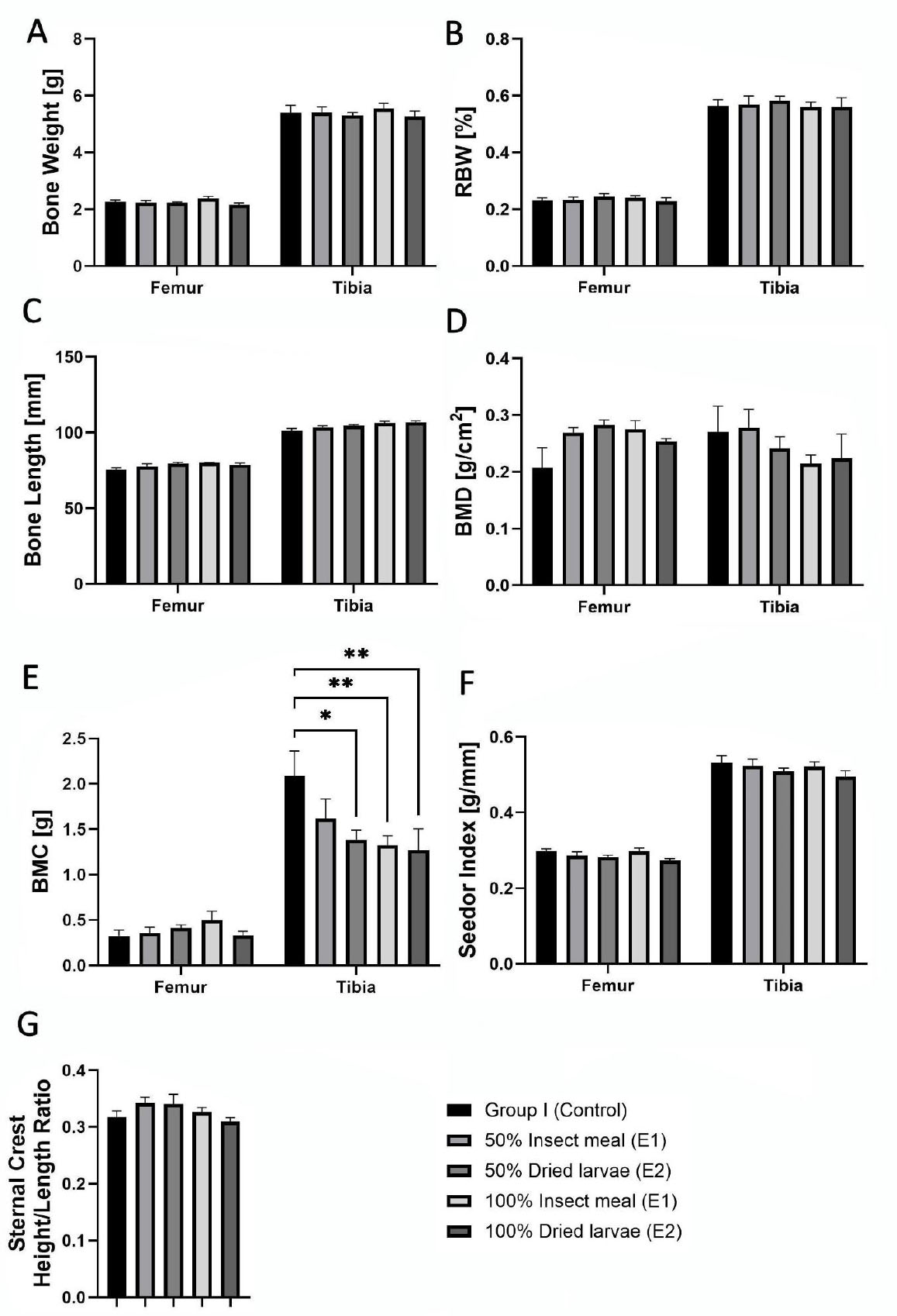
Figure 2.
Analysis of differences in femur and tibia bone properties of female common pheasant at 16 weeks of age between the control group (group I), group II (E1-50% insect meal, E1-100% dried larvae) and group III (E2-50% insect meal, E2-100% dried larvae):(A) bone weight, (B) relative bone weight, (C) bone length, (D) bone mineral density, (E) bone mineral content, (F) Seedor index, (G) sternal crest height to sternum length ratio. Asterisks (*) indicate significant differences between groups (*P<0.05, **P<0.01)
Geometrical properties
Significant differences were observed in several geometrical properties between the groups. For Hinn of the femur, Group III E1-100% exhibited significantly higher values compared to the control group (P<0.05). In the tibia, Group III E2-100% showed significantly higher Hinn compared to Group II E1-50% (P<0.05) (Figure 3B). For Vout of the femur, Group II E1-50% exhibited significantly higher values compared to the control group and Group II E2-50% (P<0.01) (Figure 3C). The CSA of the femur in Group II E1-50% was significantly greater compared to Group II E2-50%, Group III E1-100%, and Group III E2-100% (P<0.001; P<0.01; P<0.05, respectively) (Figure 3 E), while in tibia it was lower in Group III E2-100% when compared to control group. For MRWT of the tibia, the control group and Group II E2-50% showed significantly higher values compared to Group III E1-100%, and Group III E2-100% (P<0.05; P<0.01; P<0.001, respectively) (Figure 3 F). The CI of the femur in the control group was significantly higher compared to Group III E1-100% (P<0.05). Additionally, for the tibia, the control group and Group II E1-50% had significantly higher CI values compared to Group III E2-100% (P<0.05) (Figure 3 G). For the Ix of the femur, Group II E1-50% exhibited significantly higher values compared to the control group, Group III E1-100%, and Group III E2-100% (P<0.05; P<0.001; P<0.01 respectively) (Figure 3 H). No other significant differences were observed for external height (Hout) or internal width (Vinn) (Figure 3 A, D).
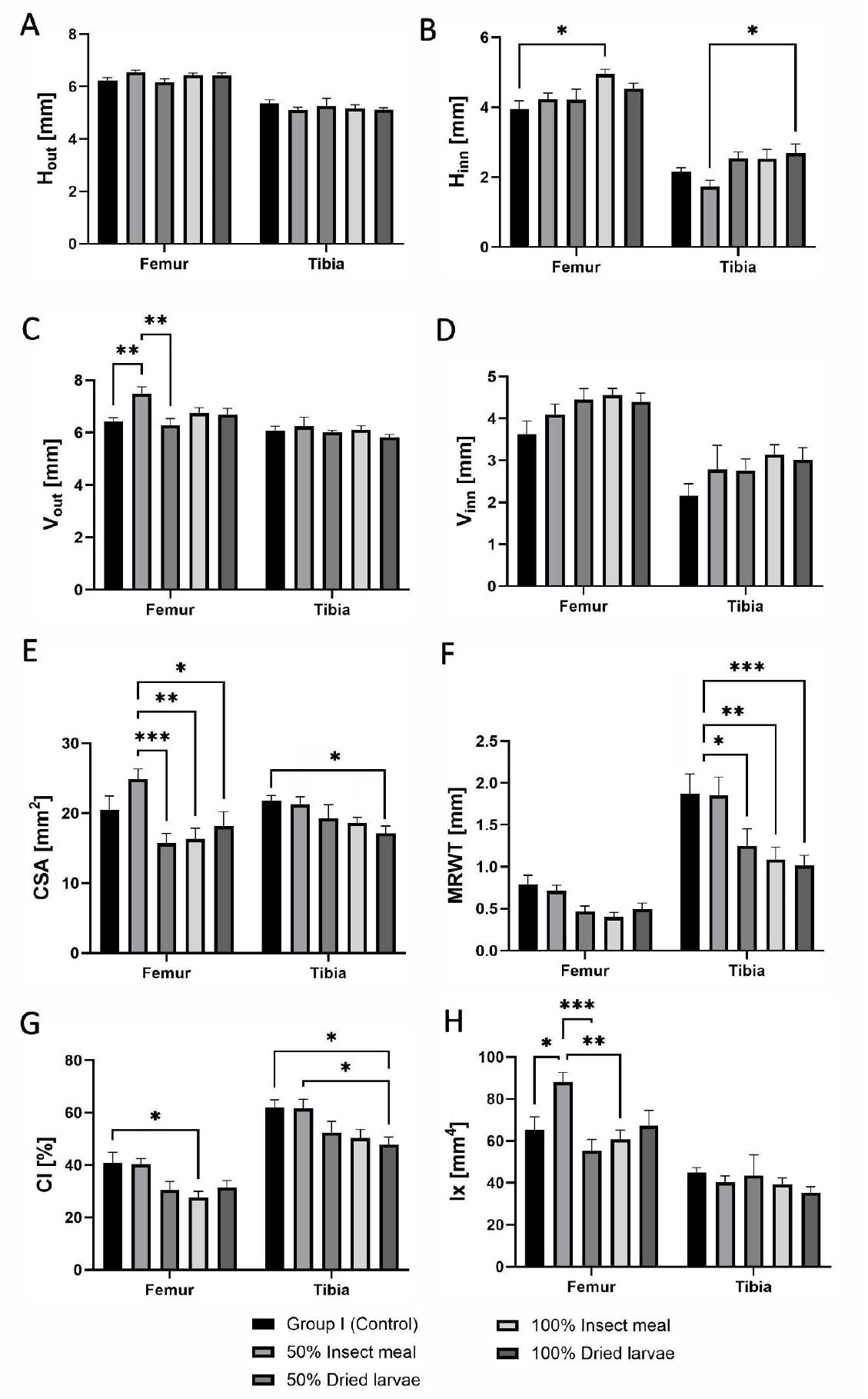
Figure 3.
Analysis of differences in femur and tibia geometrical properties of female common pheasant at 16 weeks of age between the control group (group I), group II (E1-50% insect meal, E1-100% dried larvae) and group III (E2-50% insect meal, E2-100% dried larvae): (A) transversal outer diameter, (B) transversal inner diameter, (C) anteroposterior outer diameter, (D) anteroposterior inner diameter, (E) mid-diaphysis cross-sectional area, (F) mean relative wall thickness, (G) cortical index, (H) cross-sectional moment of inertia. Asterisks (*) indicate significant differences between groups (*P<0.05, **P<0.01, ***P<0.001)
Mechanical properties
Significant differences were observed in the mechanical properties of the bones between the groups. For yield force (Fyield) of the tibia, the control group exhibited significantly higher values compared to Group II E1-50%, Group III E1-100%, and Group III E2-100% (P<0.01 for all) (Figure 4 A). For maximum force (Fmax) of the tibia, the control group showed significantly higher values compared to Group III E1-100% and Group III E2-100% (P<0.05 for both) (Figure 4 C). In terms of stiffness, the femur of Group III E2-100% exhibited significantly higher values compared to Group II E1-50% (P<0.01) and Group II E2-50% (P<0.05) (Figure 4 E). For the tibia, the control group demonstrated significantly higher stiffness compared to all other groups, with P<0.001 for most comparisons and P<0.01 for Group III E1-100% (Figure 4 E).
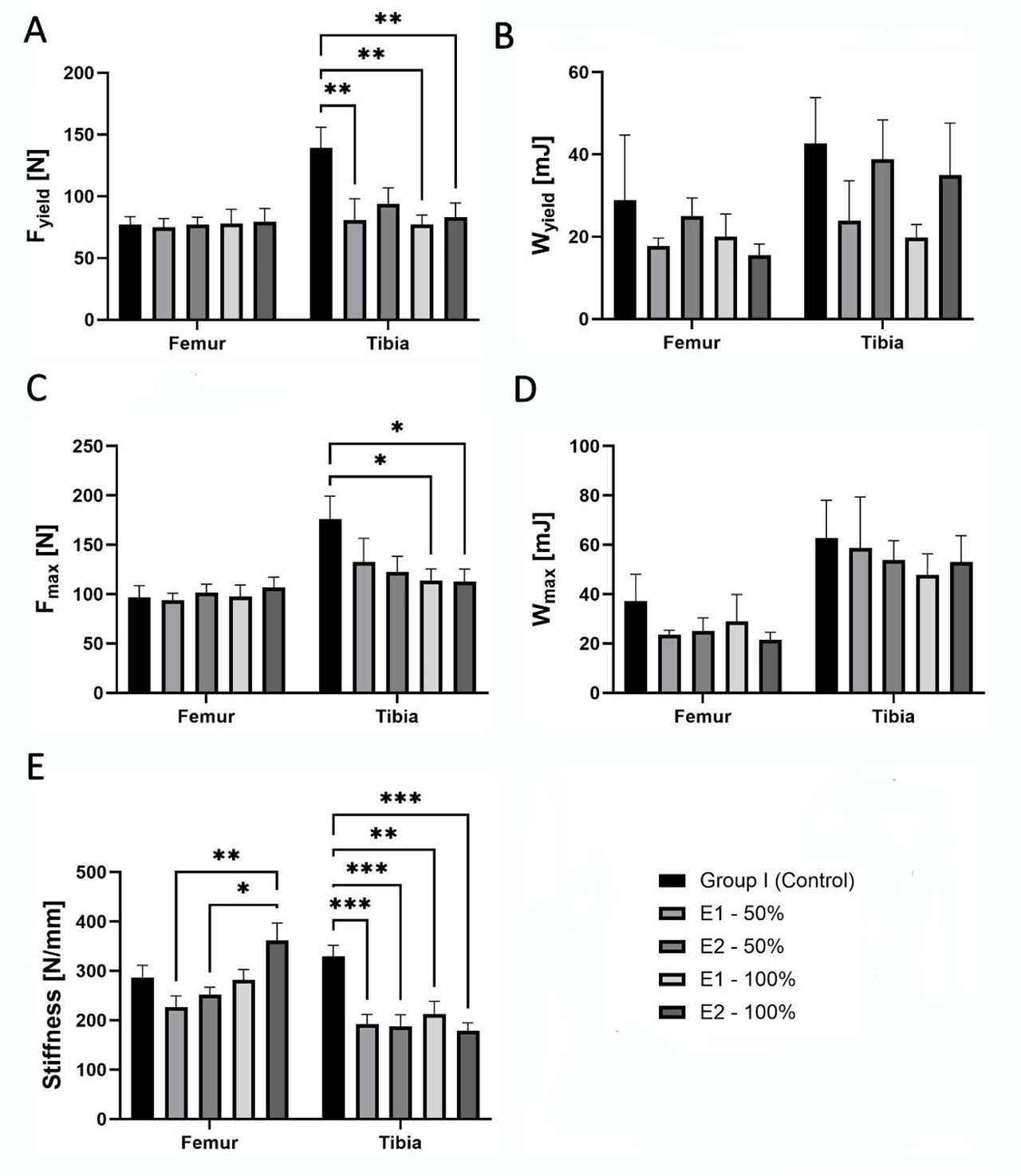
Figure 4.
Analysis of differences in femur and tibia mechanical properties of female common pheasant at 16 weeks of age between the control group (group I), group II (E1-50% insect meal, E1-100% dried larvae) and group III (E2-50% insect meal, E2-100% dried larvae): (A) yield force, (B) elastic work, (C) breaking force, (D) breaking work, (E) stiffness. Asterisks (*) indicate significant differences between groups (*P<0.05, **P<0.01, ***P<0.001)
Bone material properties
A significant difference was observed in Young’s modulus for the tibia. The control group exhibited significantly higher values compared to Group II E1-50% (P<0.05) (Figure 5 E). No significant differences were found in any other material properties.
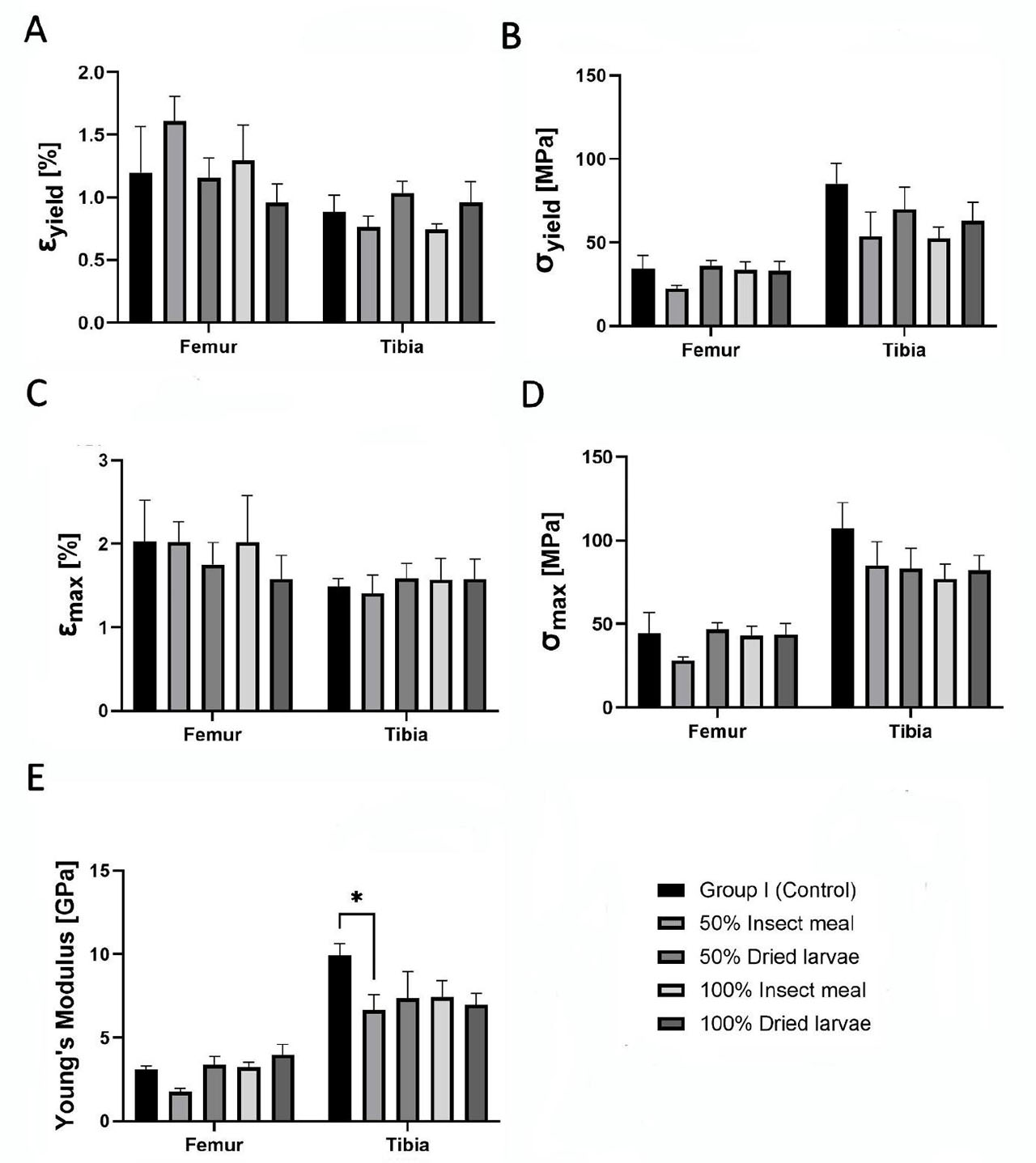
Figure 5.
Analysis of differences in femur and tibia bone material properties of female common pheasant at 16 weeks of age between the control group (group I), group II (E1-50% insect meal, E1-100% dried larvae) and group III (E2-50% insect meal, E2-100% dried larvae): (A) yield strain, (B) yield stress, (C) breaking strain, (D) breaking stress, (E) Young’s modulus. Asterisks (*) indicate significant differences between groups (*P<0.05)
Discussion
This study assessed the effects of replacing soybean meal with insect-derived proteins, specifically insect meal and dried larvae, on bone biomechanical, geometrical, and mineral properties in female pheasants. Results showed significant variations in key parameters, such as BMC, CSA, and mechanical properties like yield force and stiffness, highlighting both the potential and challenges associated with insect-based diets as sustainable protein alternatives.
The greatest weight gain was observed in birds receiving a complete replacement of soybean meal with insect meal (Group III E1), followed by those receiving 100% dried larvae (Group III E2), indicating a potential advantage of full insect protein substitution in supporting more efficient growth trajectories. The improved BWG in these groups may reflect enhanced nutrient digestibility, particularly of essential amino acids and bioavailable lipids abundant in Hermetia illucens-derived meals, as previously reported in poultry studies (De Marco et al., 2015; Makkar et al., 2014). Interestingly, these differences in growth dynamics did not translate into significant variations in body mass at different (including final) time points. This may be attributed to the relatively short duration of the feeding period and the subtle nature of early growth shifts in pheasants. It is plausible that longer-term studies extending into the reproductive or post-slaughter phase might reveal more pronounced divergences in body weight or carcass yield. The lack of significant difference in feed intake further supports the notion that nutrient utilization, rather than intake volume, drove the observed differences in weight gain. FCR values mirrored the BWG trends, with less favorable ratios in the groups that achieved higher gains, particularly those with 100% insect protein inclusion. While this suggests that higher BWG was achieved at the cost of greater feed input, the biological efficiency of growth remains high, and may be further optimized by adjusting protein balance or processing methods of the insect-derived ingredients. In contrast, the 50% dried larvae group demonstrated both lower BWG and higher FCR, indicating that partial substitution with dried larvae may not support growth as effectively as either complete replacement or insect meal forms.
Bone mineral content was significantly lower in the experimental groups compared to the control, which may reflect the impact of the nutritional composition of insect-derived proteins. Studies have shown that insect meals, such as black soldier fly larvae, are rich in protein and fat but may have a lower bioavailable phosphorus content than soybean meal (Ellawidana et al., 2023; Rath et al., 2000). This imbalance in calcium-to-phosphorus ratios may hinder optimal mineralization, which is critical for bone strength and resilience (da-Silva et al., 2024; Khan et al., 2024). Chitin, a major structural component of insect exoskeletons, is another potential factor influencing mineralization, as it has been shown to reduce mineral digestibility in poultry (Belhadj Slimen et al., 2023; Salahuddin et al., 2024). This finding is consistent with other studies that have reported reduced BMD and mineral content when non-traditional protein sources are used in poultry diets (Muszyński et al., 2018).
Despite the lower BMC in experimental groups, bone mineral density did not significantly differ between groups, suggesting that while mineral content was affected, the density remained relatively stable. This discrepancy may be explained by differences in bone geometry, particularly the CSA, which influences the total mineral load a bone can accommodate. In our study, the CSA of the femur was significantly higher in some experimental groups, potentially distributing mineralization over a larger surface area while maintaining a stable density. Conversely, the tibia exhibited a lower CSA in some groups, which may have led to a reduction in total mineral content without affecting BMD due to its inherently smaller structural size. These findings suggest that dietary differences influenced bone modeling, leading to structural adaptations rather than direct mineral depletion. A similar phenomenon has been observed in poultry studies, where dietary modifications altered bone size and shape, leading to variations in mineral content without significantly impacting BMD (Tatara et al., 2006). This result aligns with findings from Belhadj Slimen et al. (2023), who reported that insect-based diets maintained baseline bone density in poultry but required optimization for enhanced outcomes. Additionally, other studies have suggested that insect-derived proteins can support bone health when used as part of a balanced diet, though they may not necessarily outperform traditional protein sources like soybean meal (Khan, 2018; Moniello et al., 2019).
For MRWT and CI, both Group II E2-50% and the control group showed similar and significantly higher values compared to other experimental groups. This again may indicate that partial replacement maintains cortical thickness and relative wall strength, which are critical for bone rigidity and mechanical performance. Such similarities suggest that diets with moderate levels of insect protein can preserve cortical bone quality while maintaining structural integrity. These results are consistent with findings from Muszyński et al. (2018), who noted that soybean-based diets effectively supported cortical development in broiler chickens. Furthermore, Novodworski et al. (2023) found that partial inclusion of insect meal positively influenced cortical parameters and bone geometry in poultry. The differences observed in Ix and CSA may suggest that partial replacement of soybean meal allows for enhanced load distribution and structural stability, while extreme modifications, such as complete replacement, may negatively impact these parameters. The ability of partially replaced diets to maintain or improve key geometric parameters may be attributed to the bioavailability of nutrients and amino acids in a balanced diet, as previously discussed by Rath et al. (2000) and Belhadj Slimen et al. (2023).
Mechanical properties such as yield force and stiffness were significantly affected by the dietary treatments. The control group exhibited superior yield force in tibia compared to all experimental groups, reflecting the mechanical advantage of traditional soybean meal diets. This finding is supported by Rath et al. (2000), who reported that diets rich in soybean meal promoted better collagen crosslinking and mineralization, enhancing bone mechanical properties (Rath et al., 2000). Conversely, the lower stiffness observed in experimental groups may be linked to the high chitin content in insect meals, which has been shown to interfere with collagen synthesis and crosslinking in other studies (Liu et al., 2004). While chitin is known to be indigestible in some monogastric animals, recent studies indicate that poultry possess chitinase activity, which can partially degrade chitin and allow some nutrient absorption (Tabata et al., 2017). However, the extent to which this process influences bone health remains unclear. Another possible explanation is that insect-based diets may affect collagen maturation indirectly through alterations in amino acid availability. Poultry collagen synthesis relies on specific amino acids such as glycine, proline, and hydroxyproline, which are abundant in traditional protein sources like soybean meal but may be present in different proportions in insect meals (Liu and Kim, 2023). Studies have shown that dietary modifications impacting these amino acids can influence collagen integrity and mechanical properties in poultry bones (Paschalis et al., 2011). Furthermore, variations in dietary lipid profiles between soybean and insect-based proteins could contribute to changes in bone mechanical properties, as long-term dietary lipid alterations have been shown to affect collagen crosslinking and bone strength in poultry (Liu et al., 2004).
Interestingly, the differences in bone properties between experimental groups with partial and complete replacement of soybean meal highlight a dose-dependent response to insect protein supplementation. Partial replacement, particularly in groups where 50% of the soybean meal protein was substituted with insect-derived proteins, appears to achieve a balance between maintaining bone quality and promoting sustainability. This observation is significant, as it suggests that moderate inclusion levels of insect meal can preserve critical bone properties, such as mineralization, cortical thickness, and mechanical strength, while avoiding potential nutrient imbalances that may arise with complete substitution. The improved outcomes observed with partial substitution may be linked to the nutrient composition and digestibility of insect proteins at these inclusion levels. Insects such as black soldier fly larvae are rich in bioavailable proteins and essential amino acids like lysine and methionine, which are crucial for collagen synthesis and bone matrix development (Khan, 2018). However, higher inclusion levels may introduce excessive amounts of chitin, an indigestible polysaccharide, which has been shown to interfere with nutrient absorption and reduce the availability of calcium and phosphorus for bone mineralization (Chodová and Tůmová, 2020). This balance between beneficial bioactive compounds and anti-nutritional factors likely explains the superior results observed in groups with partial substitution.
The implications of this study extend beyond the immediate context of pheasant farming. As insect-derived proteins gain traction as sustainable alternatives to conventional feed ingredients, their broader impacts on animal health and product quality must be carefully evaluated. While this study may provide some insights, it also highlights the need for further research to address unanswered questions. For instance, the long-term effects of insect-based diets on skeletal health, particularly in high-production environments, remain underexplored. Studies examining the bioavailability of minerals and the impact of dietary interventions on collagen synthesis and crosslinking could provide a more comprehensive understanding of the mechanisms underlying these observations (Yuan and Kitts, 1992).
Insect-based diets present promising sustainability and nutritional advantages; however, their implementation also poses several challenges. One of the primary concerns is the economic viability of large-scale insect farming compared to conventional crops like soybeans. Soybean farming benefits from decades of industrial optimization, resulting in cost efficiency and high yields, whereas insect farming, despite its lower environmental impact, requires significant investment in technology and infrastructure to scale production. This disparity can make insect meals less cost-competitive in the current market (Makkar et al., 2014). Additionally, the need for specialized rearing environments, feed substrates, and processing methods for insects such as black soldier fly larvae further adds to production costs (Hubert, 2019). From a health perspective, potential risks associated with insect-based diets include microbial contamination, bioaccumulation of harmful substances, and the presence of chitin – a component of insect exoskeletons that may affect nutrient digestibility and mineral absorption (Belhadj Slimen et al., 2023). Studies suggest that the nutritional quality of insect protein can vary depending on the substrate used for insect farming. For instance, insects reared on organic waste may carry pathogens or heavy metals, necessitating stringent quality control measures to ensure feed safety (Cadinu et al., 2020). Furthermore, while insects are generally rich in proteins and essential amino acids, some species may lack critical nutrients such as calcium or lysine, which could impact bone health and overall animal growth if not supplemented adequately (Makkar et al., 2014).