
Intramuscular fat (IMF) is a mixture of lipids, such as triglycerides, phospholipids, and cholesterol (Tian et al., 2021; Cui et al., 2022). Meat products are the primary source of fat in the human diet. IMF content is a key indicator of meat quality as it influences the tenderness, juiciness, flavor, and nutritional value of meat (Choi et al., 2019; Wang et al., 2020 b; Gong et al., 2023) and serves as a carrier of essential fat-soluble vitamins (Frank et al., 2016; Li et al., 2021). In addition, the IMF content is an important parameter in consumers’ assessment of meat quality. Consumer preferences vary, and Western consumers tend to prefer meat with less visible fat than their Asian counterparts (Frank et al., 2016; San et al., 2021; Jiang et al., 2022; Dou et al., 2023 b).
The main visual aspect of meat is its marbling and color. IMF affects meat color through its quantity and marbling (Zhang et al., 2020 b, 2022 d; Ma et al., 2023). Both color and marbling are essential indicators in consumers’ choice of meat products (Frank et al., 2016; Gong et al., 2023). Nutritional and genetic factors influence the IMF content of meat (Zhang et al., 2019 a; Xiao et al., 2021). The higher the IMF content, the more tender the meat, as fat decreases adhesion between muscle fibers (Li et al., 2019 b); conversely, a low IMF content results in tougher meat (Choi et al., 2019).
Studies indicate that IMF deposition is associated with long non-coding RNAs (lncRNAs) (Wang et al., 2021; Yu et al., 2023; Li et al., 2024; Shi et al. 2024). LncRNAs regulate many biological processes in organisms, such as cell proliferation, lipid development, and metabolism, including adipogenesis. LncRNAs affect the regulation of adipogenesis through multiple mechanisms (Zhang et al., 2023). More and more studies are emerging on the role of lncRNAs in IMF deposition in animals, but knowledge of the precise mechanisms is still limited (Miao et al., 2018; Jiang et al., 2022; Dou et al., 2023 b; Ma et al., 2023; Zhao et al., 2023).
In this review, we present current research on the role of lncRNAs during the IMF deposition process and its impact on the quality of meat from livestock such as cattle, pigs, sheep, and poultry. This work will provide vital information on meat quality improvement to aid the meat industry.
Characteristics and functions of lncRNAs
LncRNAs are a type of RNA with a length of more than 200 nucleotides. In the past, they were considered transcriptional “noise,” but with the development of sequencing technology, it has become possible to study the role of lncRNAs in detail (Miao et al., 2018; Tianyi et al., 2022; Zhang et al., 2022 b). LncRNAs were first identified by sequencing full-length cDNA libraries from mouse cells (Zhang et al., 2019 b). There are several types of lncRNAs, such as sense lncRNAs, anti-sense lncRNAs, long intergenic ncRNAs (lincRNAs), enhancer-associated lncRNAs, circular lncRNAs, and intronic lncRNAs (Bakhtiarizadeh et al., 2019; Wang et al., 2021). LncRNAs were previously considered to lack the ability to encode proteins due to a lack of open reading frames (ORFs) (Zhang et al., 2019 b). However, recent studies have shown that some lncRNAs had small open reading frames (sORFs) to encode proteins and small peptides (Singh et al., 2019; Sandmann et al., 2023).
LncRNAs play vital roles in diverse physiological and pathological processes (Suarez-Vega et al., 2018; Zhang et al., 2019 b, 2022 b). The intracellular localization of lncRNAs provides key information regarding their biological function. LncRNAs can be present in various cellular areas, such as the nucleus, cytoplasm, chromatin, or exosomes (Gudenas et al., 2018). The localization of lncRNAs is assumed to depend on their sequence (Bridges et al., 2021). Nuclear lncRNAs are involved in the regulation of transcriptional programs and influence the spatial organization of the nucleus. By contrast, lncRNAs located in the cytoplasm regulate mRNA translation, stabilization and degradation and mediate signal transduction pathways (Zhang et al., 2019 b; Bridges et al., 2021). LncRNAs regulate gene expression at the epigenetic, transcriptional, and post-transcriptional levels (Zhao et al., 2020; Cai et al., 2022; Dou et al., 2023 a). At the level of epigenetic control, lncRNAs can regulate the state of DNA/RNA methylation, chromosome structure and epigenetic modification to control the expression of correlated genes. In the case of transcriptional regulation, individual lncRNAs function as ligands that bind transcription factors (Zhao et al., 2020), thus forming complexes that control the transcriptional activity of genes. At the level of post-transcriptional regulation, some lncRNAs are directly involved in the processes of cleavage, RNA editing, protein translocation, and translation. Another aspect of post-transcriptional regulation is the control of miRNA (microRNA) expression, which enables lncRNAs to influence the expression of a target gene (Zhao et al., 2020).
LncRNA function can be divided into four broad categories: i) regulation of gene transcription by acting as cell- and tissue-specific molecular signals (Wang et al., 2021); ii) direct competition with mRNAs to communicate and bind to transcription factors. Such lncRNAs have been named competitive endogenous RNAs (ceRNAs) (Zhang et al., 2019 a; Wang et al., 2021); iii) simultaneous binding to multiple effectors, made possible by diverse binding domains for different effector molecules. They make it possible to induce activation and inhibit transcription at different times and places (Wang et al., 2021); iv) acting as protein-binding guides, directing ribonucleoprotein complexes to specific sites. This type of transcriptional regulation can take the form of cis or trans regulation (Hou et al., 2021; Wang et al., 2021; Bao et al., 2022). Cis-acting regulatory lncRNAs affect gene expression and the chromatin state in their immediate vicinity. The lncRNA locus regulates gene expression and chromatin by three potential mechanisms: i) attracting regulatory factors to its locus and modifying their function; ii) conferring RNA-sequence-independent regulatory function on the genome through transcription and lncRNA splicing; and iii) cis regulation, which depends solely on DNA elements within the lncRNA promoter or gene locus and is completely independent of coding (Kopp and Mendell, 2018). Trans-acting lncRNAs play a role in diverse processes distant from their transcription site. Such lncRNAs can be divided into three key subcategories. These are lncRNAs that affect chromatin activity and gene expression at regions distant from their transcription site, lncRNAs that interact with and regulate the function of proteins and other RNA molecules, and lncRNAs that modify nuclear organization and structure (Kopp and Mendell, 2018).
Similar to messenger RNAs (mRNAs), lncRNAs are transcribed by RNA polymerase II (Pol II) (Bakhtiarizadeh et al., 2019; Zhang et al., 2019 b; Li et al., 2020). LncRNAs are difficult to distinguish from mRNAs because of their biochemical and structural similarities; however, they have no open reading frame (Wang et al., 2021). LncRNAs have a methylguanosine cap at the 5′ end and a poly-A tail at the 3′ end (Bakhtiarizadeh et al., 2019; Zhang et al., 2019 b). For some lncRNAs, differences have been noted, such as the presence of introns, lack of polyadenylation, and bidirectional transcription (Wang et al., 2021). The expression of lncRNAs is unique to cells, tissues, and developmental stages compared to mRNA expression. Consequently, lncRNA expression is more precisely regulated than the expression of protein-coding genes (Wang et al., 2021). Due to this feature, as well as their stable chemical and physical properties, lncRNAs have greater diagnostic and prognostic value. Thus, lncRNAs can be used as diagnostic and prognostic biomarkers of many diseases (Zhang et al., 2019 b). Undoubtedly, lncRNAs play a key role in many biological processes, such as growth and development, cell differentiation, and the cell cycle. LncRNAs have also been linked to various diseases, including cancers and viral infections (Wang et al., 2018; Zhang et al., 2020 a; Bridges et al., 2021). In addition, studies suggest the involvement of lncRNAs in regulating the development and maintenance of endocrine organs, as well as hormonal signaling (Wang et al., 2021; Cantile et al., 2024). Other research shows that lncRNAs play an important role in adipose tissue accumulation by influencing adipocyte differentiation and lipid metabolism.
Despite advances in the study of the role of lncRNAs in adipogenesis, knowledge is still limited, and there is a need for further research in this area (Zhang et al., 2019 a; Wang et al., 2021).
The role of lncRNAs in intramuscular fat deposition – current research
Pigs
LncRNAs play a major role in IMF deposition by regulating adipogenesis and lipid accumulation in muscle cells. Studies indicate a potential role for individual lncRNAs in the development of intramuscular fat in pigs through involvement in signaling pathways associated with fat deposition and lipid metabolism (Poklukar et al., 2020). These include the mitogen-activated protein kinase (MAPK) pathway, the Ras and peroxisome proliferator-activated receptor (PPAR) signaling pathway, and the phosphatidylinositol3-kinase/protein kinase B (PI3K/Akt) signaling pathway (Miao et al., 2018). The MAPK signaling pathway has a key function in cell proliferation and differentiation. In mammalian cells, four MAPK subgroups have been identified that play an important role in adipocyte differentiation and regulation of proliferation (Huang et al., 2018). Four lncRNAs, named TCONS_00163943, TCONS_00180222, TCONS_00124156 and TCONS_00109510, were identified to be involved in the MAPK signaling pathway. The results of this study indicate that lncRNAs have an important function in the deposition of intramuscular fat in pigs (Miao et al., 2018).
For some lncRNA target genes, enrichment in the AMPK (adenosine monophosphate-activated protein kinase; IRS1 – insulin receptor substrate 1, LEPR – leptin receptor) and adipocytokine signaling pathway (IRS1, LEPR) was observed. These pathways have been found to play important roles in regulating lipid deposition and muscle development, suggesting that lncRNAs may regulate meat quality traits in pigs (Zhang et al., 2022 a).
Seventeen lncRNAs have been identified that influence the regulation of eight genes associated with the PPAR signaling pathway, which is important for fatty acid and sterol metabolism, as well as adipocyte differentiation in pigs (Hu et al., 2022).
It has been shown that lncRNAs can also regulate the wingless/Int-1 signaling pathway (Wnt). The Wnt pathway is important in the regulation of intramuscular adipogenesis in pigs. It has been found that the lncRNAs TCONS_00006525, TCONS_00046551, and TCONS_00000528 can inhibit adipogenesis by controlling genes related to the Wnt pathway (Feng et al., 2023).
In pigs, individual lncRNAs are associated with the enzyme stearoyl-CoA desaturase (SCD), which is involved in the PPAR signaling pathway. The SCD enzyme is important for converting saturated fatty acid to oleic acid, regulating the biosynthesis of unsaturated fatty acids. The SCD gene also plays a key role in intramuscular fat deposition and modification of fatty acid composition in muscle (Huang et al., 2018; Hu et al., 2022). LncRNAs such as XLOC_025238, XLOC_027632, and XLOC_062192 were identified that showed an association with SCD gene expression. Pig breeds with a high IMF content showed high levels of SCD gene expression. Compared to meat-type pigs, fat-type pigs have higher levels of IMF, saturated fatty acids (SFA), and monounsaturated fatty acids (MUFA). These data suggest that lncRNAs may play an important role in regulating SCD gene expression (Huang et al., 2018).
It has also been shown that lncIMF4 plays an important role in many biological processes, such as cell differentiation, proliferation, and autophagy. These processes can affect fat deposition in adipocytes, indicating that lncIMF4 can affect lipid synthesis in intramuscular adipocytes in pigs. A reduction in lncIMF4 levels was found to lead to increased lipogenesis and impaired lipolysis by inhibiting autophagy in porcine intramuscular adipocytes. In addition, lncIMF4 is present in the nucleus and cytoplasm, suggesting a complex role for lncIMF4 (Sun et al., 2020).
By contrast, lncRNAs MSTRG.426159 and MSTRG.604206 are correlated with lipid metabolism and may interact with the FASN (fatty acid synthase) and GPAT4 (glycerol-3-phosphate acyltransferase 4) genes, which play an important role in fat metabolism in pigs. The levels of lncRNAs MSTRG.426159 and MSTRG.604206, as well as their target mRNAs, have been shown to decrease in intramuscular adipose tissue (Liu et al., 2019). According to Xing et al. (2019), lncRNA MSTRG.2479.1 affects the expression of the very low-density lipoprotein receptor (VLDLR) gene, which is involved in lipid metabolism in pigs. Based on these results, it can be concluded that these lncRNAs may affect the deposition of intramuscular adipose tissue in pigs (Liu et al., 2019).
In addition, lncRNA-LTCONS_00073280 was found to be associated with IMF content in pigs by affecting the TAGLN (transgelin) gene. Moreover, four lncRNAs, LTCONS_00101781, LTCONS_00037879, LTCONS_00088260, and LTCONS-00128343, have been identified that may have a significant impact on the regulation of meat quality traits in pigs as mediators of backfat thickness (Yang et al., 2021). LncRNAs, such as TCON_00165259 and TCON_00138738, which vary in their expression levels, can potentially interact with the PCK1 (phosphoenolpyruvate carboxykinase 1) gene, thus being considered key influencers of IMF deposition in pigs (Li et al., 2022).
It was observed that the level of a lncRNA named lnc_000368 increases during the process of intramuscular adipogenesis. On this basis, it was concluded that lnc_000368 can stimulate the differentiation of intramuscular adipocytes in pigs. In addition, it has been shown that reducing the expression of lnc_000368 leads to a decrease in lipid accumulation and can also reduce the expression of genes related to adipogenesis (Yue et al., 2023). By contrast, lnc_000414 negatively regulates intramuscular adipocyte proliferation in pigs (Sun et al., 2018).
The deposition of IMF in pigs varies by breed. The analysis of lncRNA expression levels in the IMF of Laiwu and Large White pigs with significant differences in fat deposition showed that 55 lncRNAs were differentially expressed. Finally, five lncRNAs (XLOC_046142, XLOC_064871, XLOC_004398, XLOC_011001, and XLOC_025238) were identified, which can target mRNA involved in PPAR and MAPK signal pathways and may play a key regulatory role in fat accumulation and differentiation (Huang et al., 2018).
LncRNAs can also act as ceRNAs and compete with mRNAs for binding to miRNAs, subsequently affecting mRNA expression. The lncRNAs MSTRG.4269.1 and MSTRG.7983.2 regulate the expression of lipid metabolism-related target genes, including lipase c beta 1 (PLCB1), BCL2-associated agonist of cell death (BAD), and growth arrest and DNA damage-inducible gamma (GADD45G), by binding to miRNAs. MSTRG.4269.1 regulates its targets PLCB1 and BAD via miRNA 2_4068, and MSTRG.7983.2 regulates its target GADD45G via miR-7134-3p (Jin et al., 2024). Another example of a lncRNA acting as a ceRNA is ADNCR, which plays a role in inhibiting adipocyte differentiation. LncRNAADNCR acts as a competitive RNA for miR-204, which affects the regulation of the target gene SIRT1 (sirtuin 1). This gene can suppress PPARγ (peroxisome proliferator-activated receptor gamma) activity and inhibit adipocyte differentiation. As a result, lncRNA-ADNCR affects the process of adipocyte differentiation by regulating the level of miR-204 (Ding et al., 2022; Wang et al., 2019, 2017).
Wang et al. (2023) found that lncPLAAT3-AS increases PLAAT3 (phospholipase A and acyltransferase 3) gene expression by absorbing miR-503-5p to promote the differentiation of porcine primary preadipocytes. The study shows that overexpression of miR-381-3p inhibits intramuscular fat deposition in pigs, through inhibition of the expression of the fatty acid binding protein 3 (FABP3) gene, while overexpressing lncRNA4789 attenuated the effect of miR-381-3p on FABP3 by sponging miR-381-3p (Jiang et al., 2022).
Through sequence comparisons between pig breeds, lncRNA-IMFlnc1 was identified (Wang et al., 2021). It has been shown that lncRNA-IMFlnc1, through interaction with miR-199a-5p, increases the level of the caveolin-1 (CAV-1) gene, promoting adipogenesis in intramuscular adipocytes in pigs (Wang et al., 2020 a, 2022; Ding et al., 2022; Liu et al., 2023). In addition, lncIMF2 was found to act on miR-217 and regulate miR-217 target gene expression. Thus, lncIMF2 promotes the differentiation of precursor intramuscular adipocytes in pigs (Yi et al., 2023).
The antisense lncRNA PU.1 (PU.1 AS lncRNA) has been identified as an important regulator of adipogenesis in pigs. The lncRNA-PU.1 SA can form a sense-antisense RNA duplex with PU.1 mRNA, leading to inhibition of its translation and promoting the process of preadipocyte differentiation into adipocytes (Hu et al., 2022).
Furthermore, it was observed that lncRNAs such as XLOC_064871, XLOC_004398, XLOC_011001, and XLOC_015408 could trans-regulate the TRIB3 (tribbles pseudokinase 3), NR1D2 (nuclear receptor subfamily 1 group D member 2), BRCA1 (breast cancer 1), and AKR1C4 (aldo-keto reductase family 1 member C4) genes (Huang et al., 2018; Tan et al., 2022). Additionally, TRIB3 is expressed in pig adipose tissue and skeletal muscle, which correlates with meat quality. Therefore, lncRNA XLOC_064871 may regulate TRIB3 and play an important role in adipocyte differentiation and fatty acid metabolism in pigs. Studies suggest that NR1D2 may stimulate adipocyte differentiation in pigs, while lncRNA XLOC_004398 may affect intramuscular fat accumulation by interacting with NR1D2 (Huang et al., 2018).
The LPIN1 (lipin 1) gene was found to be cis-regulated by lncRNAs MSTRG.13115.1 and MSTRG.13120.1 and trans-regulated by lncRNAs MSTRG.20210.1, MSTRG.10885.1, and MSTRG.19948.1. The LPIN1 gene is involved in the synthesis of triglycerides and phospholipids, and its expression is crucial for adipocyte differentiation. In addition, absence of the LPIN1 gene results in significantly reduced adipose tissue quality and abnormal expression of adipogenesis-related genes. It can be inferred that LPIN1 and related lncRNAs, such as MSTRG.19948.1, MSTRG.13120.1, and MSTRG.20210.1, play an important role in regulating IMF deposition (Zhao et al., 2023).
In summary, it can be concluded that lncRNAs play a vital role in the process of IMF deposition in pigs, regulating gene expression at the different molecular levels (Wang et al., 2021). Further studies will provide a more detailed understanding of the role of lncRNAs in this process and provide a better understanding of these mechanisms, which is of potential importance in the context of pig breeding (Sun et al., 2020).
Cattle
The IMF content of bovine meat is an important economic characteristic (Zhang et al., 2023). IMF influences the tenderness, juiciness, and palatability of beef, but excess fat results in deterioration of meat product quality (Jiang et al., 2020; Zhang et al., 2022 c). It has been shown that lncRNAs are associated with IMF deposition in cattle. However, the exact mechanism of this relationship is unknown, so it is important to study in detail the regulatory processes of lncRNAs in IMF accumulation in cattle (Zhang et al., 2023). Studies on the role of lncRNAs in IMF content in cattle provide essential information on this topic.
Shi et al. (2024) revealed that a number of lncRNAs and their target genes play a significant role in regulating fat metabolism via various related pathways and provided a new perspective for investigating the regulatory mechanism of marbling phenotype formation in cattle. Transcriptome sequencing identified 487 and 283 differentially expressed mRNAs and lncRNAs, respectively, between the high-marbling (Angus) and low-marbling (Nanyang) cattle muscles. Twenty-seven pairs of differentially expressed lncRNAs-mRNAs, including 18 lncRNAs and eleven target genes, were found to be involved in fat deposition and lipid metabolism.
Through comparative analysis of muscle and adipose tissue, the PCK1 (phosphoenolpyruvate carboxykinase 1) gene was found to play a key role in the deposition of IMF in cattle. Related to this gene is lncRNA_595.1 (Muniz et al., 2022). Another lncRNA that may play a role in regulating adipocyte development is lncRNAFAM200B. The expression of lncRNA-FAM200B in cattle showed a positive correlation with that of CCAAT/enhancer binding proteins (C/EBPα) (Zhang et al., 2021). Among the adipose tissue-specific lncRNAs, lncRNALOC100847835 stood out for its high activity in adipose tissue. It is speculated that LOC100847835 may be associated with the regulation of the C/EBPß gene, which is an important transcription factor in the process of adipose tissue development in cattle (Zhang et al., 2022 c). Furthermore, lncRNA called PSXV-9 inhibits adipogenesis in cattle by interacting with C/EBPα (Li et al., 2018).
LncRNA involved in intramuscular adipogenesis in cattle is also BIANCR. Knockdown of BIANCR has been shown to inhibit proliferation and intramuscular adipogenesis by regulating the ERK1/2 (extracellular signal-regulated kinase 1/2) signaling pathway, as well as promoting apoptosis of intramuscular preadipocytes (Ma et al., 2023). Furthermore, lncRNAs named BADLNCR1 have been discovered in bovine adipocytes. BADLNCR1, by inhibiting the expression of the GLRX5 (glutaredoxin 5) gene, negatively regulates the adipocyte differentiation process in cattle (Cai et al., 2020). Reduced expression of another lncRNA, MIR221HG, can significantly increase the expression of adipogenesis marker genes (PPARγ, C/EBPα, and FABP4). On this basis, it can be concluded that MIR221HG plays a key regulatory role in adipocyte differentiation in cattle (Li et al., 2019 a).
Zhang et al. (2023) observed that lncRNA, BNIP3 (lncBNIP3), plays a pivotal role in the deposition of IMF in cattle and can affect adipocyte proliferation through cell cycle regulation. In addition, lncBNIP3 may inhibit the proliferation of intramuscular preadipocytes by interacting with the CDC6 (cell division cycle 6) gene, but the mechanism remains unclear (Zhang et al., 2023). Zhang et al. (2024 b) found that lncBNIP3 regulates bovine intramuscular preadipocyte differentiation by mediating the PI3K/Akt and PPAR signaling pathways. These authors identified a substantial lncRNA with functional roles in IMF accumulation and revealed new strategies to improve beef quality.
A novel lncRNA, SERPINE1AS2, plays a crucial role in the proliferation and adipogenesis of bovine intramuscular adipocytes. SERPINE1AS2, by complementary pairing with plasminogen activator inhibitor-1 (PAI1), enhances adipogenesis by regulating the protein expression level of PAI1 (Figure 1). Moreover, SERPINE1AS2 regulates adipogenesis by engaging in the MAPK, Wnt, and mammalian target of rapamycin (mTOR) signaling pathways (Zhang et al., 2024 a).
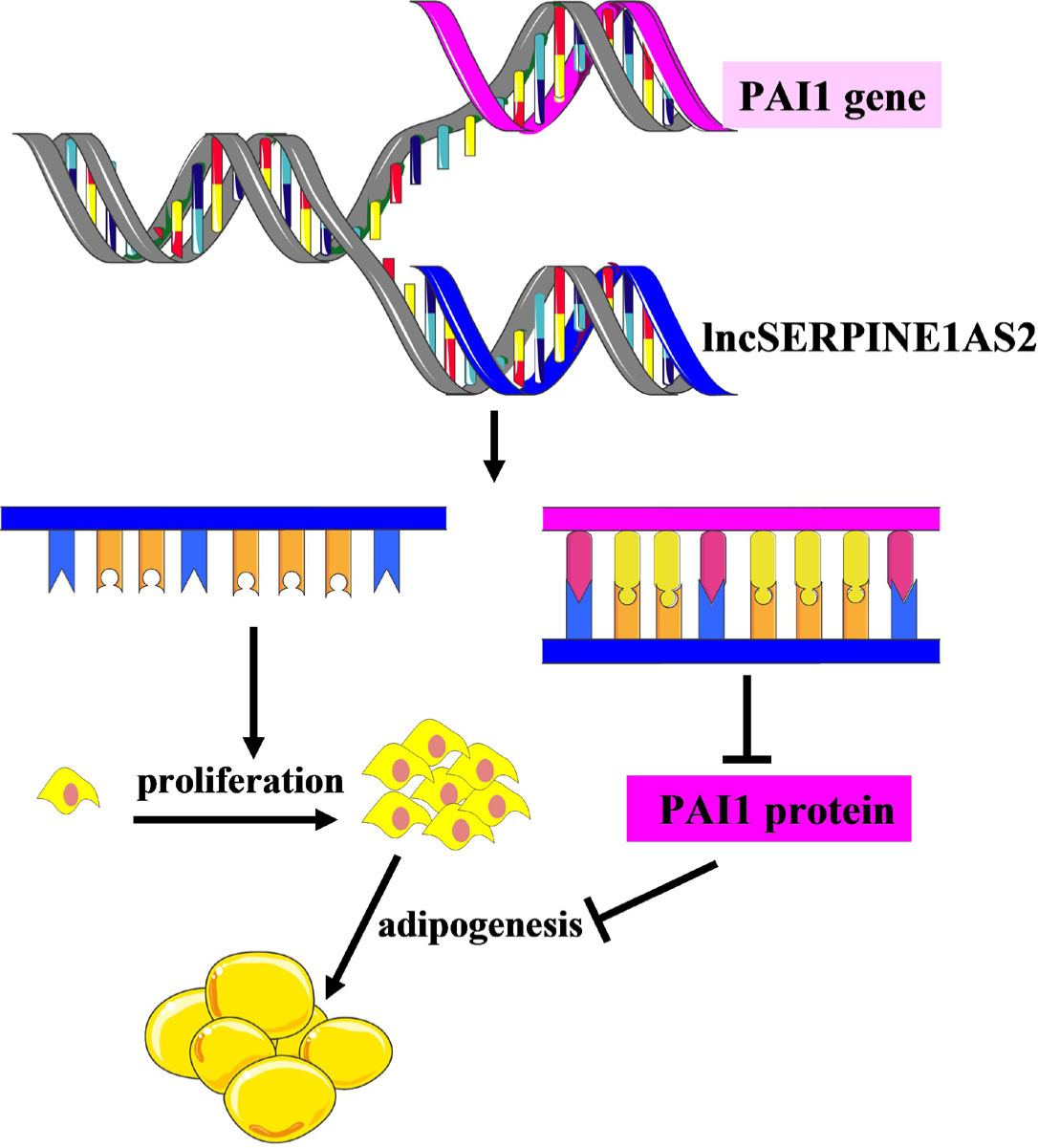
Figure 1.
LncSERPINE1AS2 enhanced the proliferation of intramuscular preadipocytes, and inhibited the expression of PAI1 protein by complementary base pairing with a sequence in the PAI1 gene, thereby promoting adipogenesis. PAI1 – plasminogen activator inhibitor-1; Arrows – stimulation; T-shaped lines – inhibition (modified from Zhang et al., 2024 a)
One of the key lncRNAs in IMF deposition is also lncRNA-ADNCR. It is strongly associated with the negative regulation of adipocyte differentiation and inhibits the process of adipogenic differentiation in cattle by affecting miR-204 (Li et al., 2016).
Additionally, lncRNAs play an important role in IMF deposition in cattle by regulating feed efficiency and energy metabolism. The lncRNAs TCONS_00119451 and TCONS_00119463 have been identified and linked to eleven quantitative trait loci (QTL) associated with fat deposition traits. Furthermore, lncRNAs TCONS_00119451 and TCONS_00119463 are linked to QTLs associated with RFI (residual feed intake) as an indicator of feed efficiency (Hu et al., 2022).
It can be concluded that lncRNAs play a major role in the deposition of IMF in cattle (Wang et al., 2021). With further research, it will be possible to understand these processes better and provide information relevant to cattle breeders and the meat industry (Wei et al., 2019).
Sheep
Through studies in livestock such as pigs and cattle, lncRNAs have been shown to play a vital role in IMF deposition (Wang et al., 2021). By contrast, studies on the role of lncRNAs in IMF deposition in sheep are in the early stages (Han et al., 2021). The study found that, as in cattle, individual lncRNAs are also associated with feed efficiency in sheep. Ten lncRNAs were identified that differ in expression in sheep with high and low RFI (an indicator of feed efficiency) (Hu et al., 2022). They also identified 7 lncRNAs potentially involved in the regulation of lipid deposition. A lncRNA-mRNA co-expression network was established, which included MSTRG.4051.3-FZD4, MSTRG.16157.3-ULK1, MSTRG.21053.3-PAQR3, MSTRG.19941.2-TPI1, MSTRG.12864.1-FHL1, MSTRG.2469.2-EXOC6, and MSTRG.21381.1-NCOA1. It is believed that the target genes of these lncRNAs, such as FZD4 (frizzled class receptor 4), ULK1 (unc-51-like autophagy activating kinase 1), PAQR3 (progestin and adipoQ receptor family member 3), TPI1 (triosephosphate isomerase 1), FHL1 (four and a half LIM domains 1), EXOC6 (exocyst complex component 6), and NCOA1 (nuclear receptor coactivator 1), may be involved in lipid deposition in sheep muscle (Han et al., 2021). The FZD4 gene was found to be highly expressed during fat production, and the ULK1 gene is involved in lipid metabolism. The PAQR3 gene, on the other hand, plays a role in energy metabolism and leptin signaling, among other things. TPI1 is a glycol-catalytic enzyme and may affect lipid metabolism. It has been suggested that the TPI1 gene may be a potential biomarker for IMF. The FHL1 gene is important in fat deposition, and EXOC6 is involved in GLUT4 (glucose transporter type 4) protein translocation in adipocytes. The NCOA1 gene plays a central role in adipogenesis and may also affect lipid metabolism. These findings provide essential information on the regulation of IMF deposition in sheep (Han et al., 2021).
Moreover, identified were lncRNAs such as MSTRG.13347.2, MSTRG.16157.3, MSTRG.11343.1, MSTRG.11343.4, and MSTRG.10678.1, which showed high expression levels in younger sheep, which may inhibit lipid deposition. On the other hand, lncRNAs named MSTRG.3004.3, MSTRG.21053.3, MSTRG.14887.1, MSTRG.790.1, and MSTRG.10518.3 showed high expression levels in older sheep, and it was concluded that these lncRNAs could promote lipid deposition (Han et al., 2021).
Differentially expressed lncRNAs (TCONS_ 00372767, TCONS_00171926, TCONS_00054953, and TCONS_00373007) were also detected. The target genes were ATP6 (mitochondrially encoded ATP synthase membrane subunit 6), ATP8 (mitochondrially encoded ATP synthase membrane subunit 8), COXIII (cytochrome c oxidase subunit III), COXl (cytochrome c oxidase subunit I), COX2 (cytochrome c oxidase subunit II), FHL1 (four and a half LIM domains 1), SLC24A2 (solute carrier family 24 member 2), ALDOA (aldolase A), and ND1 (NADH dehydrogenase subunit 1). The ATP gene plays an essential role in adipocytes by controlling the balance between ATP and ADP (adenosine diphosphate), involving the enzyme AMP-activated protein kinase (AMPK, adenosine monophosphate-activated protein kinase). AMPK can inhibit lipolysis and maintain the conversion rate of ATP to ADP, with important implications for fat metabolism and accumulation (Ma et al., 2018).
Hao et al. (2024) described the lncRNA expression profiles of ovine preadipocytes at three stages of differentiation. A total of 3455 lncRNAs were expressed at all three stages of preadipocyte differentiation. Among the co-expressed lncRNAs, the most abundant was the novel lncRNA MSTRG.65945.1, and target gene prediction analysis suggested that MSTRG.65945.1 would trans-regulate FASN gene, the perilipin 2 gene (PLIN2), and the Krüppel-like factor 4 gene (KLF4). Moreover, differentially expressed lncRNAs were enriched in signaling pathways related to ovine preadipocyte differentiation, such as the MAPK pathway, PI3K/Akt pathway, and the transforming growth factor beta (TGF-β) pathway.
While studies indicate that lncRNAs are involved in regulating lipid deposition, only a few studies have described their role in IMF deposition in sheep (Han et al., 2021).
Poultry
Research on the role of lncRNAs in IMF deposition in poultry has mainly focused on the effect of IMF on poultry meat quality. IMF plays an essential role in the tenderness, juiciness, and flavor of poultry meat (Cui et al., 2022). An increasing number of studies are focusing on the role of lncRNAs in adipocyte differentiation, but the current state of knowledge in this area is limited (Zhang et al., 2019 a).
Jing et al. (2022) observed that the antisense lncRNA-XR_003077610.1 is located near the FGF1 (fibro-blast growth factor 1) gene. The expression of this gene was positively correlated with the IMF content in the thigh muscles of males, while a negative correlation was found in females. According to Chen et al. (2023), lncRNA-46546 promotes chicken IMF deposition by regulating the potential gene AGPAT2 (1-acylglycerol-3-phosphate O-acyltransferase 2). By contrast, lncRNAPRDM16 has been shown to inhibit adipocyte proliferation in chickens (Chen et al., 2022).
It was also observed that seven lncRNAs showed differential expression during the differentiation process of intramuscular preadipocytes. They were found to play a vital role in these cells (Hu et al., 2022). By contrast, two lncRNAs, named NONGGAT009025.2 and NONGGAT000272.2, showed increased expression levels during intramuscular adipogenesis. These results suggest that these lncRNAs may have a crucial function in adipose tissue deposition in poultry (Zhang et al., 2020 a).
Furthermore, lncRNAs may affect the differentiation of intramuscular preadipocytes in chickens by regulating neighboring or complementary target genes. Examples are lncRNAs XLOC_054724 and XLOC_054725. By affecting the expression of the IGFBP2 (insulin-like growth factor binding protein 2) target gene, they are involved in the differentiation of intramuscular preadipocytes (Zhang et al., 2017). According to Li et al. (2019 b), the LPIN1 gene is associated with the regulation of meat tenderness in chickens, and the related lncRNAALDBGALG599 has a similar function. So, both the LPIN1 gene and lncRNA-ALDBGALG599 affect meat quality. Ma et al. (2024) found that LNC6302 promotes the differentiation of chicken adipocytes by regulating the expression of the SLC22A16 (solute carrier family 22 member 16) gene.
Zhai et al. (2021) established regulatory networks that consider the interactions between lncRNAs with different expression and their mRNA and miRNA target genes. They demonstrated the presence of several genes linked to metabolism and fat deposition in chickens. These included the genes ACSBG2 (acyl-CoA synthetase bubblegum family member 2), ACOX1 (acyl-CoA oxidase 1), PPARD (peroxisome proliferator-activated receptor delta), ADIPOQ (adiponectin, C1Q and collagen domain containing), CPT1A (carnitine palmitoyltransferase 1A), ACSL4 (acyl-CoA synthetase long-chain family member 4), PLIN2, LPL, FABP3, and FABP5 (fatty acid binding protein 5). The CPT1A gene affects intramuscular fat accumulation, contributing to chicken muscle tissue growth.
Chen et al. (2019) suggested that lncRNAs TCONS_00026544, and TCONS_00055280, by inhibiting the expression of gga-miR-128-1-5p and ggamiR-135a-5p act to stimulate adipogenic differentiation of preadipocytes. By contrast, lncRNAs, such as TCONS_00057272 and TCONS_00057242 act as ceRNAs on gga-miR-146a-3p and gga-miR-6615-3p and inhibit preadipocyte differentiation in chickens. Li et al. (2016) found that lncRNA-ADNCR regulates adipogenesis by acting as a ceRNA for miR-204, thus increasing the expression of the miR-204 target gene SIRT1, which inhibits adipocyte differentiation and adipogenic gene expression by docking with co-repressor proteins (NCoR, nuclear receptor corepressor; SMART, silencing mediator for retinoic acid and thyroid hormone receptors) to inhibit PPARγ activity (Figure 2). IMF-associated lncRNA-IMFNCRs have also been discovered (Zhang et al., 2019 a). IMFNCR has been shown to promote intramuscular adipocyte differentiation in chickens by binding miR-128-3p and miR-27b-3p and increasing PPARG protein expression (Zhang et al., 2019 a; Wang et al., 2021).
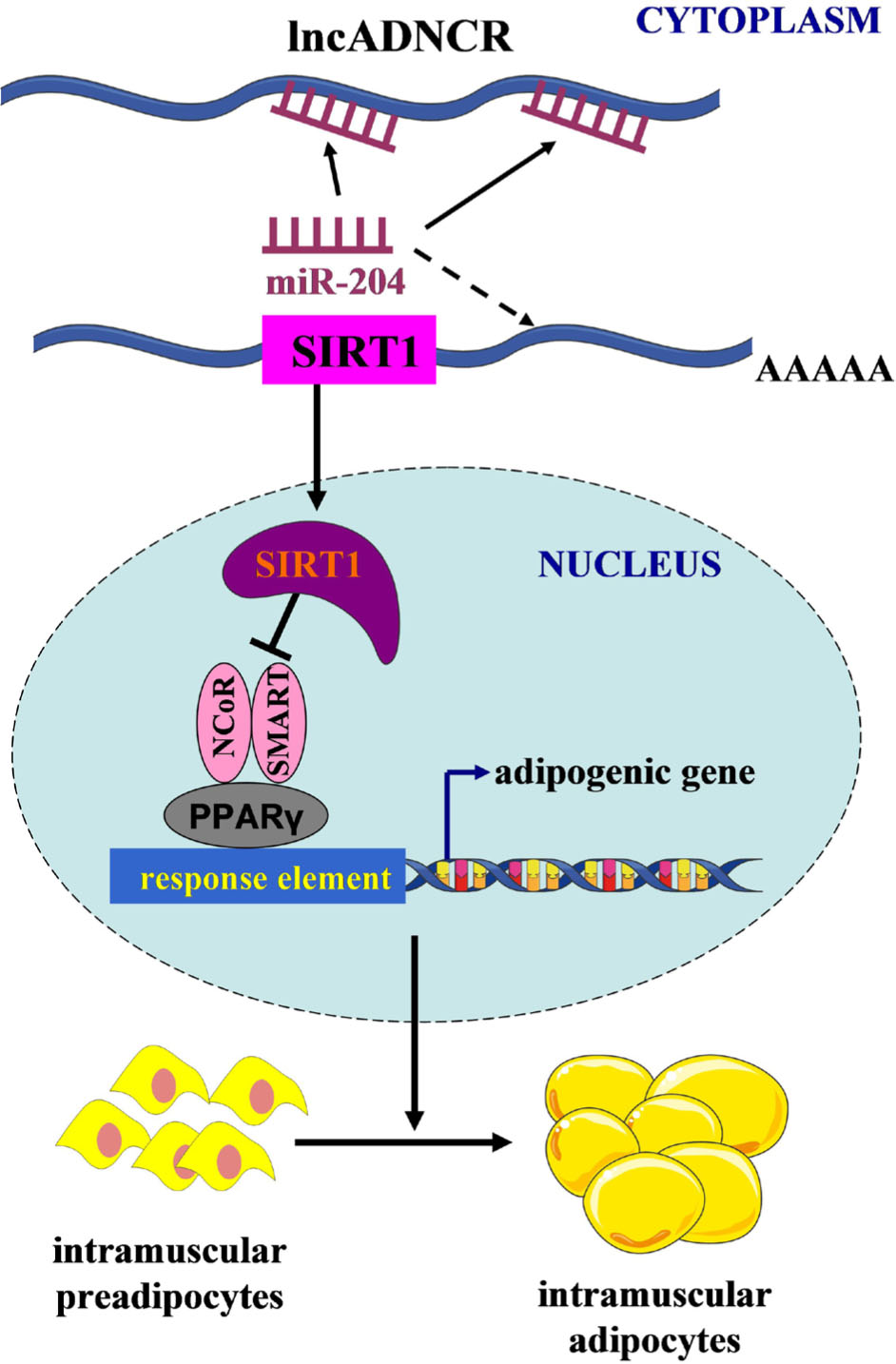
Figure 2.
LncADNCR regulates adipogenesis by acting as a ceRNA for miR-204, thus increasing the expression of the miR-204 target gene SIRT1, which inhibits adipocyte differentiation and adipogenic gene expression by docking with co-repressor proteins (NCoR and SMART) to inhibit PPARγ activity. SIRT1 – sirtuin 1; PPARγ – peroxisome proliferator-activated receptor gamma; NCoR – nuclear receptor corepressor; SMART – silencing mediator for retinoic acid and thyroid hormone receptors; Arrows – stimulation; T-shaped lines – inhibition (modified from Li et al., 2016)
Tian et al. (2022) identified 14 key lncRNAs related to adipogenesis in chickens. Of these, MSTRG.25116.1 is associated with the regulation of preadipocyte adipogenic differentiation by acting as a transcriptional trans-regulator of FAAH (fatty acid amide hydrolase) gene expression and/or a ceRNA that post-transcriptionally mediates FAAH gene expression by sponging gga-miR-1635.
Another important lncRNA is lncAD. It has been shown that blocking lncAD leads to inhibition of TXNRD (thioredoxin reductase 1) gene expression in a cis-regulatory manner. As a result, the adipogenic differentiation of intramuscular preadipocytes is decreased, while overexpression of lncAD produced the opposite effect (Figure 3) (Zhang et al., 2020 a).
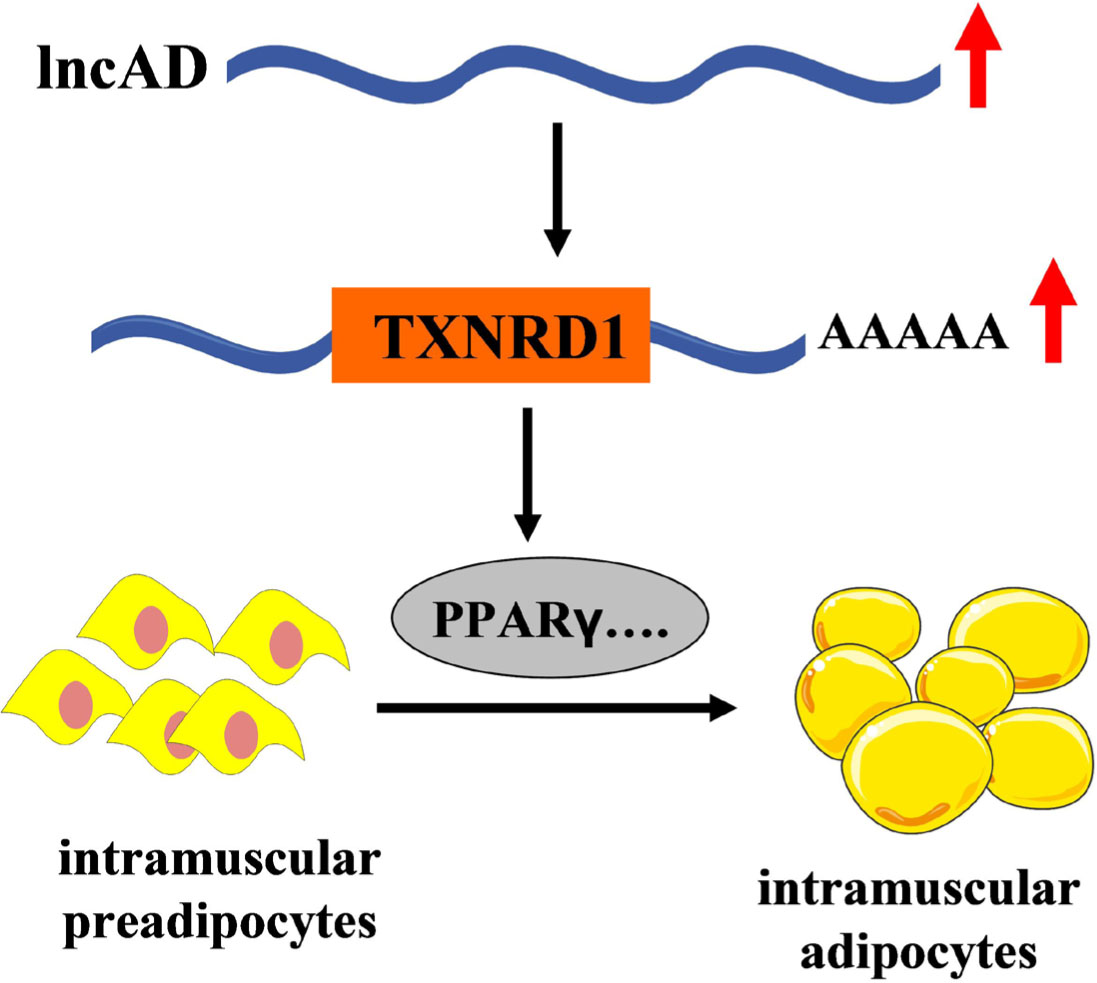
Figure 3.
LncAD regulates intramuscular adipocytes differentiation by cis-acting regulation of TXNRD1, which stimulates target genes such as PPARγ. TXNRD1 – thioredoxin reductase 1; PPARγ – peroxisome proliferator-activated receptor gamma; Red arrow – upregulated expression (modified from Zhang et al., 2020 a)
LncRNAs play a key regulatory role in diverse biological processes. Research has identified potential lncRNAs associated with IMF deposition in poultry, but the precise mechanisms require further study (Yu et al., 2023).
Examples of lncRNAs involved in the regulation of IMF deposition in livestock described in this article are listed in Table 1.
Table 1.
Examples of lncRNAs involved in the regulation of IMF deposition in livestock
| Species | LncRNA | Functions | References |
|---|---|---|---|
| 1 | 2 | 3 | 4 |
| Pig | TCONS_00163943, TCONS_00180222, TCONS_00124156, TCONS_00109510 | Involved in the MAPK signaling pathway related to fat deposition and lipid metabolism | Miao et al., 2018 |
| 17 lncRNAs | Affect adipocyte differentiation by regulating eight genes associated with the PPAR signaling pathway | Hu et al., 2022 | |
| TCONS_00006525, TCONS_00046551, TCONS_00000528 | Inhibit adipogenesis by controlling genes related to the Wnt pathway | Feng et al., 2023 | |
| XLOC_025238, XLOC_027632, XLOC_062192 | Regulate SCD gene expression, which plays a key role in intramuscular fat deposition | Huang et al., 2018 | |
| lncIMF4 | Affects lipid synthesis in intramuscular adipocytes | Sun et al., 2020 | |
| MSTRG.426159, MSTRG.604206 | Correlated with fat metabolism | Liu et al., 2019 | |
| MSTRG.2479.1 | Affects the deposition of IMF by regulating VLDLR gene expression | Xing et al. 2019 | |
| LTCONS_00073280, | Associated with IMF content by affecting the TAGLN gene | Yang et al., 2021 | |
| LTCONS_00101781, LTCONS_00037879, LTCONS_00088260, LTCONS-00128343 | Involved in backfat thickness and IMF accumulation | Yang et al., 2021 | |
| TCON_00165259, TCON_00138738 | Involved in IMF deposition-related processes | Li et al., 2022 | |
| lnc_000368 | Stimulates the differentiation of adipocytes; reduces the expression of genes related to adipogenesis | Yue et al., 2023 | |
| lnc_000414 | Negatively regulates intramuscular adipocyte proliferation | Sun et al., 2018 | |
| XLOC_046142, XLOC_064871, XLOC_004398, XLOC_011001, XLOC_025238 | Target mRNA involved in PPAR and MAPK signal pathways and play a key regulatory role in fat accumulation and differentiation | Huang et al., 2018 | |
| MSTRG.4269.1, MSTRG.7983.2 | Act as ceRNAs, regulate the expression of lipid metabolism-related target genes (PLCB1, BAD, GADD45G) | Jin et al., 2024 | |
| ADNCR | Inhibits adipocyte differentiation, by acting as ceRNAs for miR-204 | Ding et al., 2022; Wang et al., 2019 | |
| PLAAT3-AS | Increases PLAAT3 gene expression by absorbing miR-503-5p to promote the differentiation of primary preadipocytes | Wang et al., 2023 | |
| Lnc_4789 | Overexpression lnc4789 attenuated the effect of miR-381-3p on FABP3 gene by sponging miR-381-3p | Jiang et al., 2022 | |
| IMFlnc1 | Increases the level of CAV-1 gene by interaction with miR-199a-5p, promotes adipogenesis in intramuscular adipocytes | Wang et al., 2021; Wang et al., 2020 a; Ding et al., 2022; Wang et al., 2022; Liu et al., 2023 | |
| lncIMF2 | Acts on miR-217 and regulates miR-217 target gene expression, promotes the differentiation of precursor intramuscular adipocytes | Yi et al., 2023 | |
| PU.1 SA | Promotes adipogenesis by forming a sense-antisense RNA duplex with PU.1 mRNA | Hu et al., 2022 | |
| XLOC_064871, XLOC_004398, XLOC_011001, XLOC_015408 | Play a role in adipocyte differentiation and fatty acid metabolism by trans-regulating TRIB3, NR1D2, BRCA1 and AKR1C4 genes | Huang et al., 2018; Tan et al., 2022 | |
| MSTRG.13115.1, MSTRG.13120.1, MSTRG.20210.1, MSTRG.10885.1 MSTRG.19948.1 | Affect intramuscular fat accumulation by cis- and trans-regulation of the LPIN1 gene | Zhao et al., 2023 | |
| Cattle | 18 lncRNAs | Regulate fat metabolism via various related pathways | Shi et al., 2024 |
| lnc_595.1 | Related to PCK1 gene, which plays an important role in the deposition of IMF | Muniz et al., 2022 | |
| FAM200B | Inhibits preadipocyte proliferation | Zhang et al., 2021 | |
| LOC100847835 | Regulates C/EBPß gene, which is an important transcription factor in adipose tissue development | Zhang et al., 2022 c | |
| PSXV-9 | Inhibits adipogenesis by interacting with C/EBPα | Li et al., 2018 | |
| BIANCR | Knockdown of BIANCR inhibits adipogenesis by regulating the ERK1/2 signaling pathway, promoting apoptosis of intramuscular preadipocytes | Ma et al., 2023 | |
| BADLNCR1 | Inhibits adipocyte differentiation by inhibiting the expression of the GLRX5 gene | Cai et al., 2020 | |
| MIR221HG | Affects adipocyte differentiation by regulating the expression of adipogenesis markers genes (PPARγ, C/EBPα, and FABP4) | Li et al., 2019 a | |
| LNCBNIP3 | Inhibits preadipocyte proliferation by regulating the cell cycle, and CDC6 gene expression Regulates preadipocyte differentiation by mediating the PI3K/Akt and PPAR signaling pathways | Zhang et al., 2023 Zhang et al., 2024 b | |
| SERPINE1AS2 | Regulates adipogenesis by inhibiting PAI1 protein expression, and by engaging in the MAPK, Wnt, and mTOR signaling pathways | Zhang et al., 2024 a | |
| ADNCR | Inhibits adipocyte differentiation by affecting miR-204 and regulating SIRT1 | Li et al., 2016 | |
| TCONS_00119451, TCONS_00119463 | Linked to eleven quantitative trait loci (QTL) associated with fat deposition traits; role in IMF deposition by regulating feed efficiency and energy metabolism | Hu et al., 2022 | |
| Sheep | MSTRG.4051.3, MSTRG.16157.3, MSTRG.21053.3, MSTRG.19941.2, MSTRG.12864.1, MSTRG.2469.2, MSTRG.21381.1 | Regulate target genes (FZD4, ULK1, PAQR3, TPI1, FHL1, EXOC6 and NCOA1) involved in lipid deposition | Han et al., 2021 |
| MSTRG.13347.2, MSTRG.16157.3, MSTRG.11343.1, MSTRG.11343.4, MSTRG.10678.1 | Inhibit lipid deposition in younger sheep and promote lipid deposition in older sheep | Han et al., 2021 | |
| MSTRG.3004.3, MSTRG.21053.3, MSTRG.14887.1, MSTRG.790.1, MSTRG.10518.3 | |||
| TCONS_00372767, TCONS_00171926, TCONS_00054953, TCONS_00373007 | Regulate target genes (ATP6, ATP8, COXIII, COXl, COX2, FHL1, SLC24A2, ALDOA, ND1) related to fat metabolism and accumulation | Ma et al., 2018 | |
| MSTRG.65945.1 | Involved in preadipocyte differentiation by trans-regulating FASN, PLIN2, KLF4 genes | Hao et al., 2024 | |
| Poultry | XR_003077610.1 | Located near the FGF1 gene, whose expression is positively correlated with IMF content in males, and negatively in females | Jing et al., 2022 |
| lnc46546 | Promotes IMF deposition by increasing the expression of AGPAT2 gene | Chen et al., 2023 | |
| lncPRDM16 | Inhibits adipocyte proliferation | Chen et al., 2022 | |
| 7 lncRNAs | Involved in the differentiation process of intramuscular preadipocytes | Hu et al., 2022 | |
| NONGGAT009025.2, NONG-GAT000272.2 | Upregulated during adipogenic differentiation | Zhang et al., 2020 a | |
| XLOC_054724, XLOC_054725 | Regulate differentiation of preadipocytes by affecting the expression of IGFBP2 target gene | Zhang et al., 2017 | |
| ALDBGALG599 | Regulates lipid metabolism by affecting LPIN1 gene | Li et al., 2019 b | |
| lnc6302 | Promotes adipocytes differentiation by regulating the expression of SLC22A16 gene | Ma et al., 2024 | |
| TCONS_00057272, TCONS_00057242, TCONS_00026544, TCONS_00055280 | Inhibit preadipocyte differentiation by acting as ceRNAs for gga-miR-146a-3p and gga-miR-6615-3p and stimulate adipogenic differentiation of preadipocytes by inhibiting the expression of gga-miR-128-1-5p and gga-miR-135a-5p | Chen et al., 2019 | |
| ADNCR | Regulates adipogenesis by acting as a ceRNA for miR-204 and increasing SIRT1 gene expression | Li et al., 2016 | |
| IMFNCR | Promotes intramuscular adipocyte differentiation by binding miR-128-3p and miR-27b-3p and increasing PPARG protein expression | Zhang et al., 2019 a Wang et al., 2021 | |
| MSTRG.25116.1 | Regulates preadipocyte adipogenic differentiation by acting as a transcriptional trans-regulator of FAAH gene expression and/or a ceRNA that post-transcriptionally mediates FAAH gene expression by sponging gga-miR-1635 | Tian et al., 2022 | |
| lncAD | Promotes the differentiation and inhibits the proliferation of intramuscular adipocytes by affecting the expression of TXNRD gene in a cis-regulatory manner | Zhang et al., 2020 a |
Future perspectives
Meat products are a major component of the human diet, and a valuable indicator of meat quality is IMF. Studies have shown that lncRNAs play a key role in IMF accumulation in animals and are involved in many important biological processes and signaling pathways related to lipid metabolism and deposition. This review provides new information on the role of lncRNAs in IMF deposition, which may contribute to a better understanding of the regulatory network and the functions of lncRNAs in the accumulation of IMF. Despite advances in research on the role of lncRNAs in adipogenesis, knowledge is still limited, and further research is needed in this area. Future research should focus on comprehensive functional studies to uncover roles for lncRNA in various biological processes, including IMF-related mechanisms. Research on the functions of lncRNAs in adipogenesis will require advanced technologies, such as single-cell RNA sequencing, and editing tools such as CRISPR-Cas systems. Furthermore, omics technologies such as genomics, transcriptomics, epigenomics, proteomics, and metabolomics will enable future research to explore the intricate interplay among the various factors, increase understanding of the mechanisms of adipogenesis, and provide new prospects for manipulating fat accumulation and thus improving meat quality, which is a priority among consumers and the meat industry. The analysis of omics data offers enormous possibilities for applications in biomarker discovery. LncRNAs as biomarkers for IMF deposition offer prospects for livestock breeding. Furthermore, in complex omics data analysis, it will be possible to use machine learning, a novel analytical method based on big data. Big data analysis makes it possible to select proper lncRNAs that can be used for validation based on large data sets. Fully exploiting genetic information contributes to enhance the meat quality and economic efficiency.