
Table 1.
Amounts of L-carnitine occurring naturally in various feed ingredients
| Different feed | (mg/kg−1 feed) |
|---|---|
| Corn gluten | 5 |
| Wheat gluten | 5 |
| Soybean meal | 12 |
| Bone meal | 10 |
| Feather meal (64% crude protein) | 120 |
| Fish meal (64% crude protein) | 120 |
| Meat meal (62% crude protein) | 150 |
| Meat bone meal (40% crude protein) | 100 |
| Poultry by-products meal | 120 |
[i] Source: Ozório (2009).
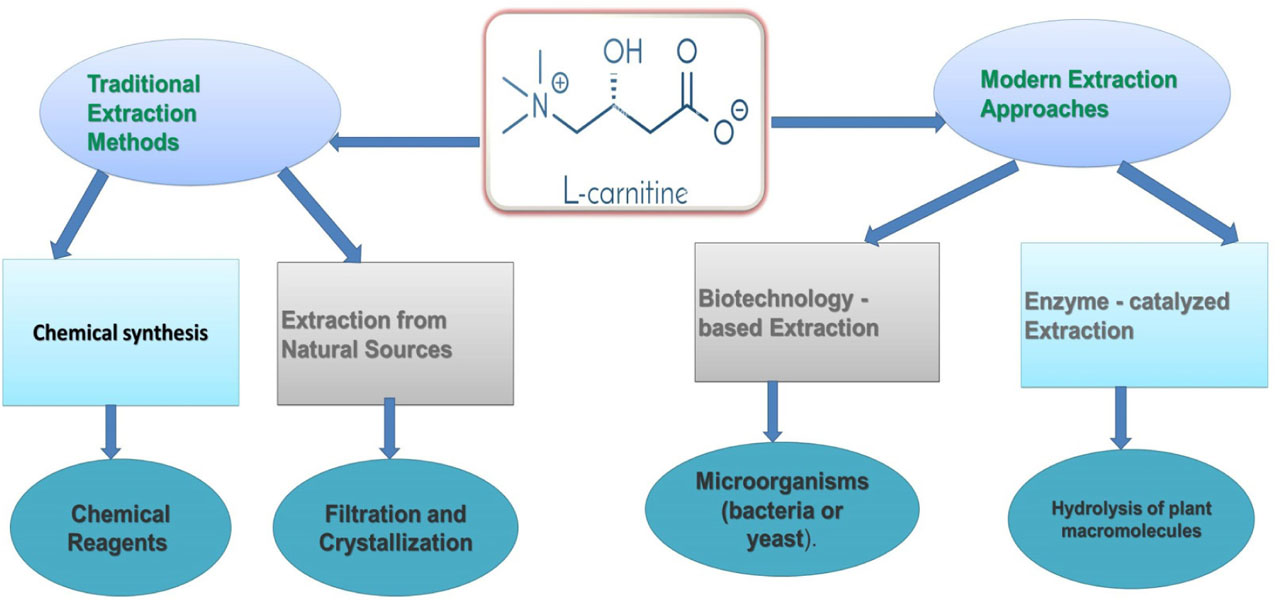
Figure 1.
Diverse methods available for the production of L-carnitine, each with its unique advantages and applications
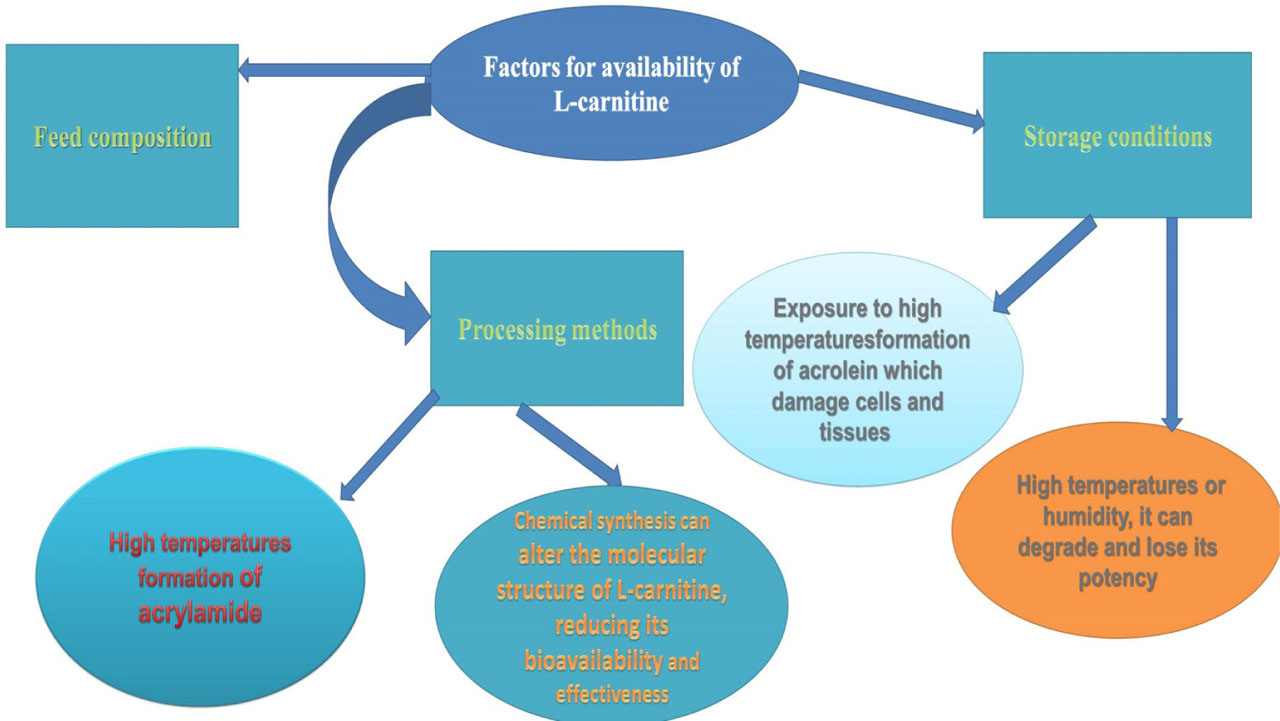
Figure 2.
Factors influencing the availability of L-carnitine in feed
Table 2.
The impact of L-carnitine on fish growth and metabolism
| Species names | Amount of L-carnitine | Effects in growth | Effects on lipid metabolism | References |
|---|---|---|---|---|
| Large yellow croaker (Larimichthys crocea) | 0.31 g kg−1 LC | Higher FBW and WG | – | (Victor et al., 2025) |
| Hybrid grouper (♀Epinephelus fuscoguttatus × ♂Epinephelus lanceolatus) | 0.2 mg kg−1 LC | Higher FBW, WG and CF | Significantly greater pparα mRNA expression (gene related to lipid metabolism) | (Gyan et al., 2024) |
| Golden pompano (Trachinotus ovatus) | 0.02% | Higher FBW, WG, SGR and FI | Promoted lipid hydrolysis, improving cholesterol transport and antioxidant capacity | (Chen et al., 2022) |
| Rhynchocypris lagowskii | 400 mg/kg | Highest WGR, SGR and FE | – | (Wang et al., 2022) |
| Largemouth bass, Micropterus salmoides | 0.02% | FBW and WG | Improved lipid metabolism and liver health of fish | (Chen et al., 2020) |
| Asian catfish (Clarias batrachus) | 0.50 g/kg | WGR, SGR and FE | Reduced lipid deposition in the tissue | (Desai et al., 2010) |
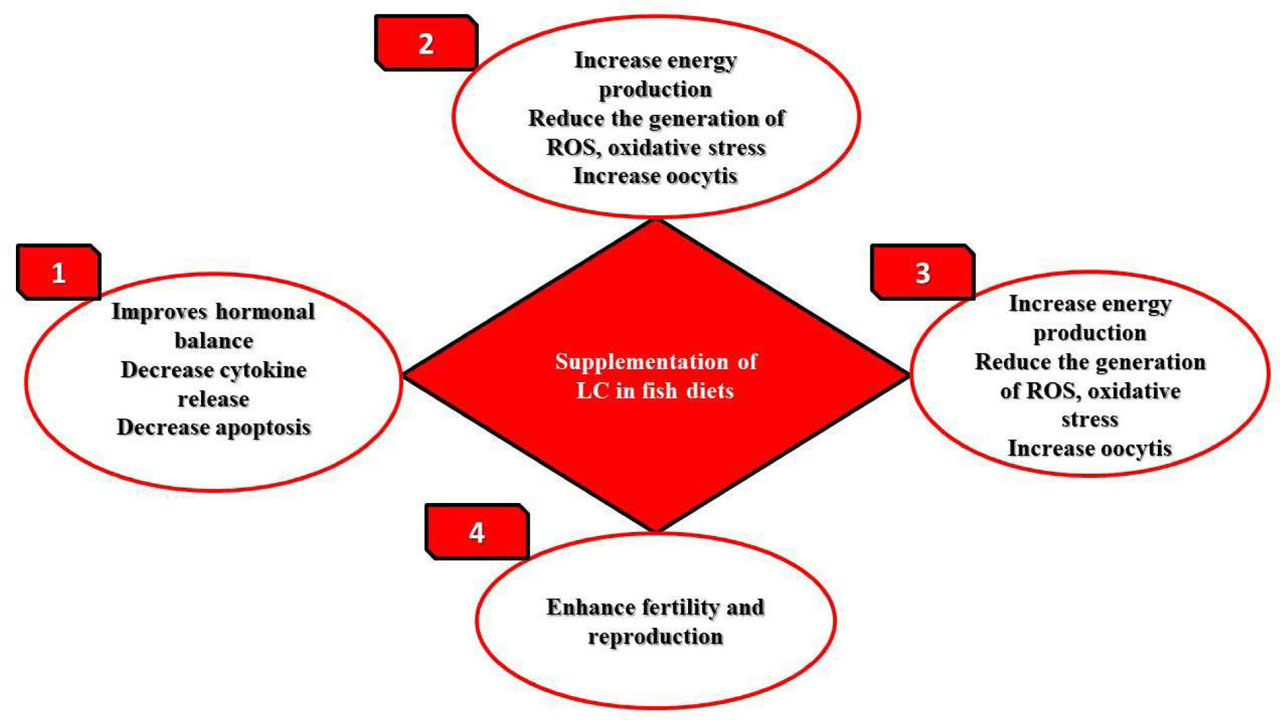
Figure 3.
Mechanism of L-carnitine action on improving reproduction in female animals