
The demand for seafood is rising, making the efficiency and sustainability of aquaculture production more important than ever (Ahmad et al., 2021). With the world’s population expected to increase significantly, feeding everyone is daunting and requires the collaboration of millions of farmers, researchers, technical experts, and leaders worldwide. It is widely recognized that healthy fish populations are essential for successful fish farms, just as top-notch animal facilities depend on the well-being of their livestock (AlatwinusaYohana et al., 2023). Poor welfare conditions can negatively impact fish survival and growth, prompting fish farmers to prioritize the health and well-being of their aquatic livestock. Like all vertebrates, fish must constantly navigate and adapt to dangerous situations to survive (Van Doan et al., 2023). When a fish’s health is threatened, a physiological chain reaction is triggered to help the organism respond to and recover from stressful situations (Yohana et al., 2024 b). Recent studies have been conducted to explore effective strategies for managing stress in aquaculture (Herrera et al., 2019: Yohana et al., 2024 a). One promising method identified is the dietary interventional approach, which involves supplementing fish with nutritional and non-nutritional compounds (Herrera et al., 2019: Ciji, 2021).
One compound that has shown potential in stress mitigation is L-carnitine (4-N-trimethylammonium-3-hydroxybutyric acid), which is found in plants, animals, and microbes. L-carnitine is produced by converting lysine and methionine with the help of coenzymes and cofactors (Li et al., 2019). Interestingly, L-carnitine was previously thought to be a vitamin and was referred to as vitamin BT due to its vitamin-like properties in mealworms (Hossain et al., 2019). L-carnitine, which primarily includes facilitating the transfer of long-chain fatty acids and fatty acid β-oxidation, controlling the acyl ratio in the mitochondria, and maintaining plasma membrane stability, is crucial for the body (Yu et al., 2020 a). L-carnitine aids in transporting long-chain fatty acids into the mitochondria, decreasing lipid accumulation and improving fatty acid oxidation. This supplementation is expected to help counteract the negative effects of lipid oxides in fish (Roseiro and Santos, 2019). Moreover, using L-carnitine is being explored as a potential source of antioxidants to shield tissues from damage caused by an overabundance of reactive oxygen species. While animals can naturally produce L-carnitine, young fish cannot do so (AlatwinusaYohana et al., 2023). L-carnitine can be obtained from dietary sources or biosynthesized within the body using lysine and methionine. Due to its beneficial effects on fish development, immunity, and growth, L-carnitine has garnered attention as a potential feed additive in aquaculture (Focken et al., 1997: Soltan et al., 2016). L-carnitine can reduce stress caused by extreme water temperatures, enhance adaptation to temperature fluctuations, and improve reproduction by protecting cells from the harmful effects of ammonia and removing organic acids and xenobiotics from the mitochondrion (Wang et al., 2016: Gao et al., 2021). In cases where fish do not receive enough L-carnitine from their diet, dietary supplements may be necessary to meet their nutritional requirements, especially when consuming high-fat meals or diets rich in plant protein sources (Ozório et al., 2012: Ray et al., 2024: Wang et al., 2024).
Various farmed fish species have been extensively researched to investigate the impact of L-carnitine supplementation on fish nutrition and aquaculture practices. While some studies have shown promising outcomes, others have produced conflicting results, highlighting the need to delve deeper into the underlying reasons for these discrepancies. This review also delves into the sources of L-carnitine, its role in fat metabolism, its influence on fish growth and development, and its ability to protect against ammonia toxicity and high temperatures. Given our limited knowledge of fish physiology, it is imperative to conduct further research to unravel the mechanisms through which L-carnitine operates in stress alleviation.
L-carnitine sources
Within the body, reserves of carnitine are made up of nonesterified molecules (free carnitine) and multiple acylcarnitine esters linked to different fatty acids. The best sources of carnitine are fish, poultry, and milk-derived compounds, providing 16 to 64 mg/kg, followed by red meats containing 500 to 1200 mg/kg (Roseiro and Santos, 2018). Vegetables, fruits, grains, and other plant sources contain minimal levels of carnitine, typically below 0.5 mg/kg. Refer to Table 1 below for the specific amounts of carnitine in various feedstuffs.
Table 1.
Amounts of L-carnitine occurring naturally in various feed ingredients
| Different feed | (mg/kg−1 feed) |
|---|---|
| Corn gluten | 5 |
| Wheat gluten | 5 |
| Soybean meal | 12 |
| Bone meal | 10 |
| Feather meal (64% crude protein) | 120 |
| Fish meal (64% crude protein) | 120 |
| Meat meal (62% crude protein) | 150 |
| Meat bone meal (40% crude protein) | 100 |
| Poultry by-products meal | 120 |
[i] Source: Ozório (2009).
Production of L-carnitine
The necessary amino acids lysine and methionine are transformed into L-carnitine with the assistance of vitamin C and other secondary chemicals in the body (Alhasaniah, 2023). The global demand for L-carnitine is rising due to its versatile applications in pharmaceuticals, nutraceuticals, and livestock and aquatic animal feed additives. Consequently, more efficient production methods need to be developed. Different biological pathways have been discovered to produce L-carnitine (Arense et al., 2013). Figure 1 displays a comprehensive overview of the different methods used for the production of L-carnitine, a vital compound that plays a crucial role in energy metabolism. One of the methods depicted in the figure is chemical synthesis, which involves the use of specific chemical reactions to produce L-carnitine. This method is frequently employed in industrial settings due to its efficiency and cost-effectiveness. Chemical synthesis allows for large-scale production of L-carnitine, making it an attractive option for manufacturers looking to meet the increasing demand for this compound. Another method is microbial fermentation, which involves the use of microorganisms to biosynthesize L-carnitine. Crotonobetaine or D-carnitine can be converted into L-carnitine using different cell states of enterobacteria (Bernal et al., 2007). This method is popular amongst biotechnologists due to its environmentally friendly nature and ability to produce high-purity L-carnitine. Microbial fermentation is a sustainable approach to L-carnitine production that offers significant advantages over traditional chemical synthesis methods. By harnessing the power of microorganisms, manufacturers can produce L-carnitine in a more sustainable and eco-friendly manner. Lastly, enzymatic synthesis involves the use of enzymes to catalyze specific reactions that result in the production of L-carnitine. Enzymatic synthesis is a highly efficient and selective method that can produce L-carnitine with high purity and yield. This method offers advantages such as mild reaction conditions, reduced environmental impact, and the ability to produce enantiomerically pure L-carnitine. Enzymatic synthesis is gaining popularity in the field of biocatalysis and holds great promise for the future of L-carnitine production.
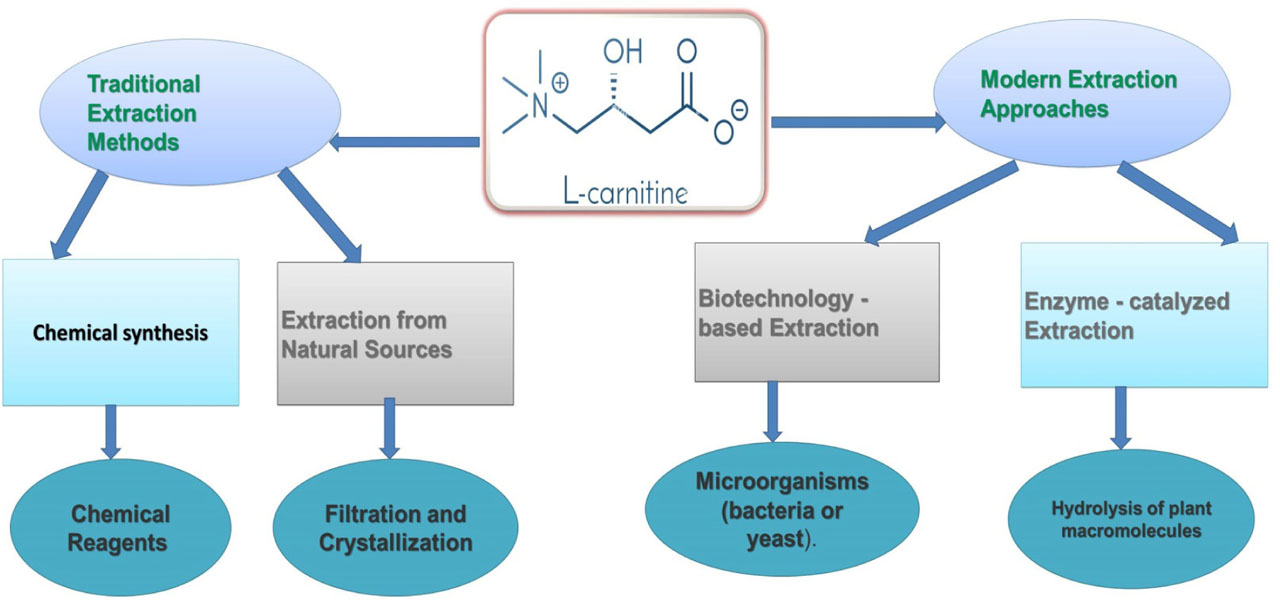
Figure 1.
Diverse methods available for the production of L-carnitine, each with its unique advantages and applications
Factors that influence the availability of L-carnitine in aquatic feed
Various factors, including feed composition, processing methods, storage conditions, and the type of fish species being fed, can impact the bioavailability of L-carnitine in aquafeed. Research by Li et al. (2020) has shown that certain amino acids, particularly lysine and methionine, in the diet can impact the endogenous synthesis of L-carnitine in fish. Additionally, certain minerals like calcium or magnesium can form complexes with L-carnitine, reducing its availability for absorption. This highlights the importance of considering the overall composition of the feed and how different nutrients interact to affect L-carnitine bioavailability. Furthermore, the processing and storage of feed can also play a significant role in the stability and bioavailability of L-carnitine. Studies by Fattah et al. (2017) have demonstrated that high-temperature processing and prolonged storage can lead to the degradation of L-carnitine. It is crucial to carefully manage these factors to ensure the optimal retention of L-carnitine in aqua-feed. Moreover, the efficiency of L-carnitine absorption and utilization can vary among different fish species and life stages, as highlighted by research conducted by Durazzo et al. (2020). Understanding these variations is essential for formulating effective aquafeed that meets the specific needs of different fish species at various stages of development. By considering all of these factors, aquafeed producers can optimize the bioavailability of L-carnitine and ultimately enhance the health and performance of the fish being fed. Figure 2 below illustrates the factors that influence the availability of L-carnitine in aquafeed.
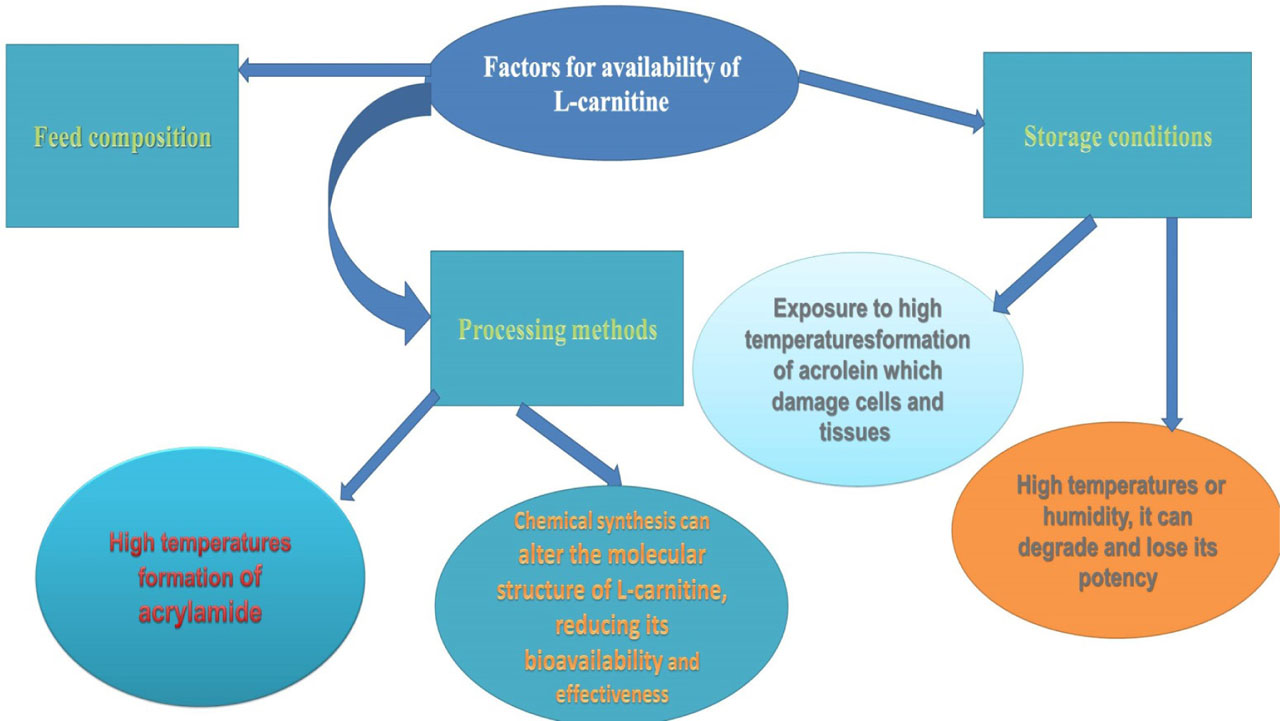
Figure 2.
Factors influencing the availability of L-carnitine in feed
The impact of L-carnitine on the regulation of fish metabolites
Omics technologies provide a new and comprehensive understanding of biological systems at the genetic, transcriptomic, proteomic, and metabolomic levels (Roques et al., 2020). Nutrigenomics, which studies the relationship between nutrients and gene expression, has gained importance over time. For example, research has shown that plant-based diets can control genes related to protein, lipid, and carbohydrate metabolism in fish (Yohana et al., 2023). However, nutrigenomics and transcriptomic methods are limited as they do not study post-transcriptional modifications and protein activities. On the other hand, metabolomics focuses on the entire collection of metabolites in a biological system, providing insights into metabolic processes. Combining metabolomic analyses with feeding trials can offer new perspectives on the effects of feed and nutrients. Due to the increasing cost and scarcity of fish feed protein, high-fat diets are commonly used for aquatic animals. However, high-fat diets in farmed fish often lead to lipid accumulation in the liver and metabolic disruptions.
L-carnitine is crucial for metabolic processes, and dietary L-carnitine has been shown to reduce fat accumulation in the liver. A study by Li et al. (2019 b) demonstrated that L-carnitine benefits fish metabolism, while D-carnitine can induce lipotoxicity and is not recommended for use in farmed animals. The effects of L-carnitine on nutrient metabolism in various fish species have been studied extensively (Desai et al., 2010; Sharifzadeh et al., 2017). Almost all tissues that use fatty acids for energy metabolism require L-carnitine for proper functioning. L-carnitine helps buffer extra acyl residues and modifies mitochondrial acetyl-CoA/CoA ratios through transesterification from CoA and the subsequent removal of acylcarnitine esters. Once synthesized, L-carnitine must be transferred to other tissues (Li et al., 2019 a, 2020). Li et al. (2019 b) found that lack of L-carnitine leads to harmful acetyl-CoA metabolites building up in mitochondria, negatively impacting processes like the citrate cycle, gluconeogenesis, and fatty acid β-oxidation. However, L-carnitine can improve lipid metabolism, enhance protein synthesis, and reduce glucose usage (Li et al., 2017; Choi et al., 2020). In a study by Sharifzadeh et al. (2017), it was observed that the control group had higher lipid levels compared to the group treated with L-carnitine and vitamin C. L-carnitine also helps remove short-chain organic acids from mitochondria, allowing coenzyme A to participate in important metabolic pathways (Sharma and Black, 2009). It serves as a substrate for enzymes like carnitine palmitoyltransferase I and II and carnitine acetyltransferase, which regulates fatty acid consumption (Qu et al., 2016). Ji (1996) studied the effects of L-carnitine supplementation on fat metabolism in Atlantic salmon and found changes in metabolism and reduced tissue lipid levels. Liver cells showed increased palmitate oxidation and glucose production from lactate. Higher methionine levels were also detected. The authors suggest that L-carnitine influences gluconeogenesis, nitrogen, and fat metabolism through increased protein synthesis. By activating Nrf2/Keap1 and inhibiting NF-κB signaling in R. lagowskii, L-carnitine supplementation may reduce oxidative stress and inflammation caused by a low-level fish oil diet (Wang et al., 2022). The antioxidant properties of L-carnitine have been shown to reduce lipid peroxidation products in fish, including Oreochromis niloticus (Pradhan et al., 2021). Feeding largemouth bass with 160 g/kg of dietary lipid content reduces oxidative stress by promoting antioxidant mechanisms and lipid breakdown (Victor et al., 2024). Oxidized fish oil (OFO) reduced the amount of lipids in Rhynchocypris lagowskii muscle and hepatopancreas. The decrease in lipid content in the hepatopancreas and muscles may be due to the down-regulation of lipogenic genes mRNA levels (fatty acid synthesis and acetyl-CoA carboxylase α), the down-regulation of lipogenic enzyme activities, and the up-regulation of lipolytic genes mRNA levels (Yu et al., 2020 a). Therefore, L-carnitine supplementation in dietary OFO affected lipid deposition through a tissue-specific mechanism. This mechanism likely resulted from different lipid metabolic strategies arising from competition between lipolysis and lipogenesis and between the import and export of lipids from various tissues.
Glucose homeostasis refers to the animal body’s ability to control proteins, fats, and carbohydrates to stabilize glucose levels. A study found that giving juvenile hybrid groupers 200 mg/kg L-carnitine supplements can help regulate protein digestion, glycolysis/gluconeogenesis pathways, and fat digestion (Gyan et al., 2024). This leads to reduced fat storage, increased energy production, and improved immunity in fish. Another study showed that adding L-carnitine to the diet of R. lagowskii fish increased the expression of genes related to gluconeogenesis, including glucose-6-phosphatase and phosphoenolpyruvate carboxykinase under dietary lipid sources (Wang et al., 2024). Analyzing the metabolomics of fish given L-carnitine can provide valuable insights into the metabolic changes caused by this supplement. Researchers can better understand how L-carnitine affects fish fatty acid metabolism and overall health by studying changes in important metabolites like acylcarnitines. This knowledge could improve fish nutrition and aquaculture practices by developing more effective dietary interventions.
The impact of L-carnitine on fish growth
Improving growth performance in fish culture requires careful attention to feed quality and quantity, feeding rates, stocking density, and water quality. Research using L-carnitine to enhance growth and reduce tissue lipid concentrations in various fish species has produced conflicting results. Given the importance of growth performance to fish farmers, L-carnitine supplementation deserves special consideration. The growth-promoting effects of L-carnitine supplementation in fish diets are thought to be linked to increased energy consumption resulting from enhanced fatty acid oxidation by mitochondria (Twibell and Brown, 2000). A study on silver perch found positive effects on growth performance, body composition, and biochemical indices with L-carnitine supplementation (Yang et al., 2012). Conversely, low levels of L-carnitine have been shown to improve growth performance and reduce feed conversion ratio in fish (Zheng et al., 2014). However, high levels of L-carnitine supplementation in fish diets have been found to have a negative impact on growth performance. Excessive excretion of acylcarnitine may lead to a loss of energy, resulting in reduced growth performance in fish (Harpaz, 2005). Adding 0.02% L-carnitine to a high-fat diet has been shown to enhance growth performance and overall health in T. ovatus (Chen et al., 2022). Research has shown that adding L-carnitine to the diet of black sea bream can enhance growth performance, with the optimal level being 0.284 g kg−1 (Ma et al., 2008). It was discovered that incorporating L-carnitine at a concentration of 0.1% into diets containing 44% protein and 12% fat led to improved growth performance and antioxidant response in L. calcarifer (Liu et al., 2020). Similarly, El-Sayed et al. (2010) found that feeding Nile tilapia (Oreochromis niloticus) fingerlings 450 mg kg−1 of L-carnitine resulted in a decreased protein requirement from 30% to 20%. In a study conducted by Mohseni and Ozório (2014) using polynomial regression analysis, it was determined that the ideal level of dietary L-carnitine for beluga raised in intensive culture conditions is 480 mg kg−1. However, Dias et al. (2001) found no significant effect of L-carnitine supplementation on growth in European sea bass. Studies on fish fed with various levels of L-carnitine have produced conflicting results. For example, tilapia were fed diets supplemented with different levels of L-carnitine for eight weeks, with authors observing no significant difference among the fish fed diets supplemented with L-carnitine (Li et al., 2020). The authors further suggested that the remarkable effects of L-carnitine on nutrient metabolism are linearly correlated with many individual macronutrients. Research conducted by Victor et al. (2024) found that while L-carnitine dietary supplements did alter lipid metabolism in the liver of cultured fish, they did not significantly affect growth performance or feed efficiency. Factors such as the growth stages of the fish, the composition of their feed, as well as environmental conditions such as temperature and water quality may all play a role in the contradictory findings (Chen et al., 2022).
Unlike other farmed animals, fish have a greater need for protein in their diet. Most fish use protein for energy rather than growth. Still, the price tag on the protein portion is quite substantial. Across the previous years, there has been an increasing need to lower the quantity of fish meal in fish diets and integrate alternative protein sources like plant proteins. Many carnivorous fish rely on high-energy feeds to boost their fat intake, which can sometimes reach or exceed 35%. The alteration was implemented to decrease the need for fish meal and accomplish protein efficiency. The elevated fat levels in the fish have optimized its ability to exploit high-energy diets fully. The relationship between heightened levels of carnitine in fish diets and fat metabolism has been extensively investigated through numerous studies, highlighting the crucial role of carnitine in this process (Santulli and D’Amelio, 1986). Fat oxidation is efficient and cost-effective in terms of energy output per unit weight of dietary components. The enhancement of fat oxidation by carnitine was hypothesized to amplify the protein-sparing impact of fats in a fish diet, ultimately resulting in superior growth on low-protein diets. European sea bass (Santulli and D’Amelio, 1986) have demonstrated faster growth and lower body fat when fed supplemental L-carnitine diets. The research conducted by Burtle and Liu (1994) showed no significant difference in growth when introducing L-carnitine at a dose of 1000 mg/kg to the diet of fingerling channel catfish at varying dietary lysine levels. An important consideration to keep in mind is the cost-effectiveness of L-carnitine in aquafeed. While L-carnitine has been shown to offer significant benefits, the expense of this chemical may outweigh the gains in growth. Becker et al. (1999) highlighted this concern by demonstrating that adding 150 mg/kg of carnitine to hybrid tilapia diets improved growth due to a lower feed conversion ratio (FCR). They recommended adding L-carnitine to the diet, potentially leading to a 13% decrease in feed needed to reach the desired weight and ultimately helping the farmer despite the carnitine’s high price. Previous research revealed that the FCR was notably greater in the control group when compared to the L-carnitine 300 and L-carnitine 600 groups. Adding L-carnitine to the diets reduced costs, with the control diet having the highest economic conversion ratio (ECR) at 2.71 US$ kg−1. The L-carnitine 300 group had the lowest at 2.21 US.$ kg−1. Fish fed 300 mg kg−1 L-carnitine had the highest economic profit index (EPI), showing a larger profit margin than those fed the control diet. However, many studies have shown that higher levels of L-carnitine supplementation, exceeding 150 mg/kg, may be necessary to achieve optimal benefits. Research on the effects of L-carnitine supplementation in aquafeed and its cost-benefit analysis is limited, suggesting further investigation. Conducting more studies on L-carnitine supplementation in aquafeed could lead to improved growth performance and immunity in fish, making it a worthwhile area of research. Table 2 below illustrates the impact of L-carnitine on the growth and metabolism of fish.
Table 2.
The impact of L-carnitine on fish growth and metabolism
| Species names | Amount of L-carnitine | Effects in growth | Effects on lipid metabolism | References |
|---|---|---|---|---|
| Large yellow croaker (Larimichthys crocea) | 0.31 g kg−1 LC | Higher FBW and WG | – | (Victor et al., 2025) |
| Hybrid grouper (♀Epinephelus fuscoguttatus × ♂Epinephelus lanceolatus) | 0.2 mg kg−1 LC | Higher FBW, WG and CF | Significantly greater pparα mRNA expression (gene related to lipid metabolism) | (Gyan et al., 2024) |
| Golden pompano (Trachinotus ovatus) | 0.02% | Higher FBW, WG, SGR and FI | Promoted lipid hydrolysis, improving cholesterol transport and antioxidant capacity | (Chen et al., 2022) |
| Rhynchocypris lagowskii | 400 mg/kg | Highest WGR, SGR and FE | – | (Wang et al., 2022) |
| Largemouth bass, Micropterus salmoides | 0.02% | FBW and WG | Improved lipid metabolism and liver health of fish | (Chen et al., 2020) |
| Asian catfish (Clarias batrachus) | 0.50 g/kg | WGR, SGR and FE | Reduced lipid deposition in the tissue | (Desai et al., 2010) |
Significance of L-carnitine in managing temperature stress within the realm of fish farming
Environmental adaptations refer to how an organism responds to external stimuli. One of the primary reasons for the decrease in biological immunity and disease resistance is environmental changes. Studies have shown that contrary to popular belief that stress is always negative, it can lead to lower levels of eustress (Yohana et al., 2024 a). Eustress is a beneficial response that assists an organism in adapting to new situations or surroundings. In healthy organisms, stress-response defensive mechanisms can be regulated and triggered by preventive interventions such as diet (Rossnerova et al., 2020). L-carnitine is obtained through endogenous biosynthesis and diet as part of normal metabolism in fish tissues. The immune-boosting and antioxidant properties of L-carnitine supplementation have recently attracted significant attention due to its potential to protect fish from various abiotic and biological stresses. L-carnitine plays a vital role in various metabolic processes, including adenosine triphosphate (ATP) synthesis, fatty acid metabolism, and mitochondrial functions. Additionally, it is essential for cell membrane stabilization, cellular detoxification, and the regulation of glucogenesis and ketogenesis (Virmani and Cirulli, 2022).
A study conducted by Wang et al. (2022) demonstrated that incorporating L-carnitine into the diet of zebrafish resulted in decreased fat accumulation in their tissues and increased expression of both pro- and anti-inflammatory factors. Additionally, certain mitochondrial enzymes, such as citrate synthase and carnitine palmitoyltransferase, are activated by cold acclimation and acclimatization, as shown by Hunter-Manseau et al. (2019). Contrary to a gradual shift, rapid temperature fluctuations are more common in fish culture. Temperature plays a crucial role in ectotherms due to its significant impact on metabolic processes. Temperature changes can disrupt the balance between the production and breakdown of biological structures, altering metabolic needs. Fish have developed various biochemical mechanisms to cope with these temperature fluctuations. When faced with environmental challenges, animals and fish utilize their antistatic response mechanism to regulate lipid metabolism and temperature stress. During muscle activity, fatty acids undergo mobilization, transportation, and oxidation, triggering regulatory points in both functional and anatomical stages in response to different stimuli. Upcoming research will concentrate on determining which specific factors play a role in controlling the fatty acid process and how they affect overall lipid oxidation and animal performance. Additional investigation is required to determine a link between genetic activity and bodily function, particularly in the face of external pressures (Morash et al., 2008).
Fish living in temperate zones experience a wide range of temperatures throughout the year. Many organisms modify their biochemical and physiological characteristics to adapt to these fluctuations. This issue has been extensively explored in the literature. In regions with cold weather, fish typically boost their skeletal muscle aerobic capacity in reaction to the low temperatures. As fish adapt to cold temperatures, their tissues undergo changes that lead to higher mitochondrial volume density and enzyme activities. These adaptations improve the ability of fish skeletal muscle mitochondria to metabolize pyruvate and acylcarnitines, as well as enhance the polyunsaturation of mitochondrial phospholipids. Various L-carnitine supplements were administered to the P. pulcher species of ornamental cichlids in warm water settings. Fish administered with L-carnitine notably reduced cold shock fatalities associated with stress. Fish fed with diets containing L-carnitine showed a greater survival rate when faced with severe cold shock compared to the control group. Several genetic and non-genetic factors, such as allosteric inhibition, transcriptional regulation of enzyme content, and mitochondrial membrane composition, play a crucial role in regulating carnitine palmitoyltransferase (CPT 1) (Morash et al., 2008). The researchers further suggested that changes in the mitochondrial membrane could potentially influence the sensitivity of CPT I and its regulator (Morash et al., 2008). In a study conducted by Rodnick and Sidell (1994), the impact of temperature acclimatization on the activity of carnitine palmitoyltransferase (CPT I) was investigated. The researchers measured the amount of this rate-limiting enzyme for beta-oxidation of long-chain fatty acids in the oxidative red muscle of striped bass acclimated at 5 or 25°C. They found that cold acclimation increased citrate synthase activity by 1.6-fold, overall CPT activity by 2-fold, free carnitine by 62%, and CPT I specific activity in mitochondria by 2-fold. However, thermal acclimation did not affect CPT I’s thermal sensitivity or preference for various long-chain fatty acyl-CoA substrates (16:1-CoA = 16:0-CoA > 18:1-CoA). Furthermore, Rodnick and Sidell (1994) examined how temperature acclimatization impacted the ultrastructure of cardiac myocytes and the maximum activity of metabolic enzymes in striped bass cardiac tissue. They found that under warm conditions (25°C), ventricular mass and ventricular mass divided by body weight increased substantially by 29% and 40%, respectively. Interestingly, ventricular enlargement did not significantly affect mitochondrial volume density, myofibril volume density, protein concentration, or citrate synthase activity.
In cold-blooded animals, the volume of mitochondria and myofibrils increases proportionally to heart mass. Enhanced aerobic capacity and positive compensation are the outcomes of utilizing glucose and fatty acids for energy production. During swimming, striped bass ventricular enlargement and increased ATP generation capacity can assist in surpassing kinetic restrictions in cold temperatures while also providing circulation support for the oxidative axial musculature. In a study by Sephton and Driedzic (1995), a two-fold increase in long-chain acyl-CoA synthetase was found in the hearts of rainbow trout after acclimatization to low temperatures. Buyse et al. (2001) conducted a study examining the effects of adding 100 mg L-carnitine/kg to basal starter and finisher diets on performance. While there was a decrease in belly fat content in one group of treated hens, overall dietary L-carnitine supplementation did not significantly impact any of the production indices. In 1991, Tullis conducted a study to determine the metabolic substrates responsible for heat generation in heater organs and the actions of necessary metabolic enzymes. They examined the metabolic enzymes in the brain and eye of five different scombroid fish species in vitro. The results revealed that the majority of the fish tested had a remarkably high oxidative capacity. Citrate synthase activity, a well-known indicator of oxidative metabolism, was found to be at record levels for vertebrate tissue. Furthermore, the levels of carnitine palmitoyltransferase and 3-hydroxy acyl-CoA dehydrogenase were exceptionally elevated, with carnitine palmitoyltransferase levels reaching some of the highest recorded in vertebrates. The data indicates that the heating process could be achieved by utilizing lipid or carbohydrate metabolism in an aerobic environment (Tullis, 1991). Fish hailing from the chilly Mediterranean waters showcased a superior aerobic ability and, thus, a heightened capacity for producing heat when juxtaposed with fish originating from the balmy Pacific oceans. Nonetheless, the difference in size between the fish tested in the Mediterranean and the Pacific may be due to variations in their habitats, suggesting that fish size plays a bigger role than temperature discrepancies. The involvement of fatty acids in the energy consumption process of fish living in freezing waters may shed further light on the potential role of carnitine. In a related study, Crockett and Sidell (1993) investigated hepatic mitochondrial and peroxisomal beta-oxidation in Notothenia gibberifrons, an Antarctic marine teleost. The researchers found that mitochondria displayed a strong preference for monounsaturated substrate oxidation. Studies have shown that the activities of carnitine palmitoyltransferase with palmitoyl-CoA (C16:1) are 2.4 times greater than those with palmitoyl-CoA (C16:0). Additionally, the polyunsaturated fatty acids eicosapentaenoic acid (C20:5) and docosahexaenoic acid (C22:6), found in high levels in Antarctic fishes, have the potential to serve as fuels to enhance aerobic energy metabolism. A recent study conducted by AlatwinusaYohana et al. (2023) suggested that supplementing with 400 mg/kg of L-carnitine was effective in reducing thermal stress impacts and preventing gene expression and oxidative activities in hybrid grouper. Carnitine plays a crucial role in temperature acclimatization by participating in lipid metabolism, offering protection to fish in aquaculture environments. Overall, these studies highlight the importance of understanding how fish in temperate zones adapt to changing temperatures and the potential benefits of nutritional supplementation in enhancing their resilience to environmental stressors.
The impact of L-carnitine on ammonia toxicity prevention
Disorders in humans and animals are primarily associated with ammonia toxicity. Many fish species are affected by this challenge in the aquaculture industry. One of the most frequent stresses in fish culture is ammonia toxicity. Fish are protected against acute ammonia poisoning by carnitine. Tremblay and Bradley (1992) present one example of conflicting findings on the role of L-carnitine as a protective agent against the harmful effects of ammonia toxicity. Tremblay and Bradley (1992) studied young chinook salmon (Oncorhynchus tshawytscha) and discovered that L-carnitine administered at a dosage of 10–16 mmol/kg body weight protected the fish against a subsequent ammonium acetate injection of 10.75 mmol/kg. According to their findings, 98% of the untreated fish showed symptoms of ammonia poisoning. In comparison, only 33% of the L-carnitine-injected fish did. The carnitine-injected fish died at a rate of 4%, whereas the control (mannitol-injected fish) died at 69%. Following a disagreement between O’Connor et al. (1984) and Jiao et al. (2017), they conducted an experimental study in fish in 1988. Jiao et al. (2017) found that other quaternary amines offer comparable protection, suggesting that the mechanism of action may be different from that proposed by O’Connor et al. (1984).
In contrast, betaine and choline were harmful to young Oncorhynchus tshawytscha. In the event of fish being faced with substantial amounts of this stress, elevated levels of L-carnitine within the fish bloodstream could serve as a shield for them. However, simulating carnitine’s function in the fish by injecting it at high doses (equal to 1600–2600 mg/kg) is not the same as providing a meal enriched with carnitine at such doses. Researchers should be mindful of whether test chemicals are injected or consumed when designing and carrying out studies (Tremblay and Bradley, 1992). In experiments where fish are under severe stress, higher levels of carnitine appear to improve their ability to cope with stress and promote better growth. To more accurately assess the experimental results, which showed a benefit from adding carnitine to the diet, it is necessary to confirm that the fish were not stressed during the study due to an episode of severe oxygen depletion or a transient state of elevated ammonia/nitrite levels. However, the mechanism of action on how L-carnitine protects fish from ammonia toxicity and lipid metabolism has not yet been determined. Hence, we propose that more studies be done in this area. The findings of the research by Harpaz (2004) using hybrid tilapia are intriguing. Halfway through the experiment, an accident happened, resulting in a massive quantity of food being dumped into the pond where the experimental fish were kept. This resulted in a significant loss of oxygen and an increase in ammonia levels in the rearing water. Previous research has demonstrated that L-carnitine protects against high amounts of ammonia exposure (Santulli and D’Amello, 1986; Tremblay and Bradley, 1992). There was no evidence that L-carnitine treatments (150 and 450 mg/kg added to the diet) impacted the fish’s growth or survival compared to the control group (Schlechtriem et al., 2004). Their findings revealed that fish treated with L-carnitine (150 mg/kg) were more resistant to xenobiotics (Schlechtriem et al., 2004). It is conceivable that the experiment’s short length (just 31 days after the stressful stage) did not allow for the positive benefits of carnitine to emerge. Further studies for an extended period are recommended for future studies.
Supplementation of L-carnitine for reproduction enhancement
In animals, including humans, it has been reported that L-carnitine has immense functional capabilities to enhance the female reproductive system by regulating oxidative and metabolic status. Jayaprakas et al. (1996) investigated the effects of dietary L-carnitine supplementation at four doses (300, 500, 700, and 900 mg/kg) on male Mozambique tilapia growth and reproduction. The experiment used juveniles (2.2 g fish) cultured in open concrete tanks for 252 days on an experimental diet given at a level of 5% of the fish biomass. Their findings revealed that carnitine supplementation impacted the fish’s development and reproduction, and this effect was linked to the amount of carnitine supplementation (Jayaprakas et al., 1996). The diet supplemented with a 900 mg L-carnitine/kg diet had the most significant results (net weight gain of 91.83±3.91 g compared with 75.83±2.31 g in the control group with no L-carnitine supplementation) (Jayaprakas et al., 1996). The amount of additional carnitine in the diet had a favorable effect on food intake after one month of feeding (11.01 g in the control group compared to 16.69 in the group given 900 mg carnitine/kg diet). The authors also discovered that L-carnitine supplementation improved the fish’s reproductive function, boosting testis weight (0.45 g in the 900 mg/kg group compared to 0.1 g in the control) and sperm cell concentration per ml (39.66109 in the 900 mg/kg group compared 24.4109) in control (Jayaprakas et al., 1996). However, since Chao et al. (1987) found a direct correlation between feed quality and sperm viability in tilapia, the better reproductive performance could be attributed to the better growth of fish fed a high-quality diet rich in carnitine and not necessarily to a direct influence of L-carnitine on reproduction.
Furthermore, Matalliotakis et al. (2000) observed variations in L-carnitine concentrations in fertile and infertile human males, pointing to a possible connection between L-carnitine and semen quality. They found a significant difference in L-carnitine levels between controls and infertile patients (P<0.0001) (Matalliotakis et al., 2000). The regular spermiogram group had a mean L-carnitine value of 478.4, whereas the defective spermiogram group had just 100.58. They also discovered a statistically significant link between L-carnitine and the number of spermatozoa, the percentage of motile spermatozoa, and the standard forms (Matalliotakis et al., 2000). This is because the fertilization rate is affected by the vigorousness of sperm. The vigorousness is related to energy production, so active lipid oxidation might take place in the sperm of fish fed a high dosage of carnitine. It was also reported that energy production is mainly done by L-carnitine’s role in the mitochondria, which helps transport long-chain fatty acids by the inner mitochondrial membrane to the mitochondrial matrix (Ringseis et al., 2018).
According to Dzikowski (2001), the combination of temperature and diets enriched with 1100 mg L-carnitine/kg food significantly influenced the brood size and brood interval of female live-bearer guppy fish. These findings contradict Schreiber (1997), who found that adding 1100 mg/kg of L-carnitine to the food of guppy fish maintained at a temperature range of 26–32°C resulted in a substantially larger average brood size per female. This beneficial impact of L-carnitine was observed only during the summer in Schreiber’s (1997) research and no effect was seen during the winter. Similarly, adding 50 mg L-carnitine/l to the drinking water of laying hens maintained in a heat stress setting (35–37°C) for eight weeks impacted egg quality, resulting in a substantial increase in relative reproduction and albumen weight (Çelik et al., 2004). The mechanism of action in improving fertility includes maintaining hormonal balance and enhancing energy production (Agarwal et al., 2018). Figure 3 below details the processes that L-carnitine follows to affect reproduction in animals.
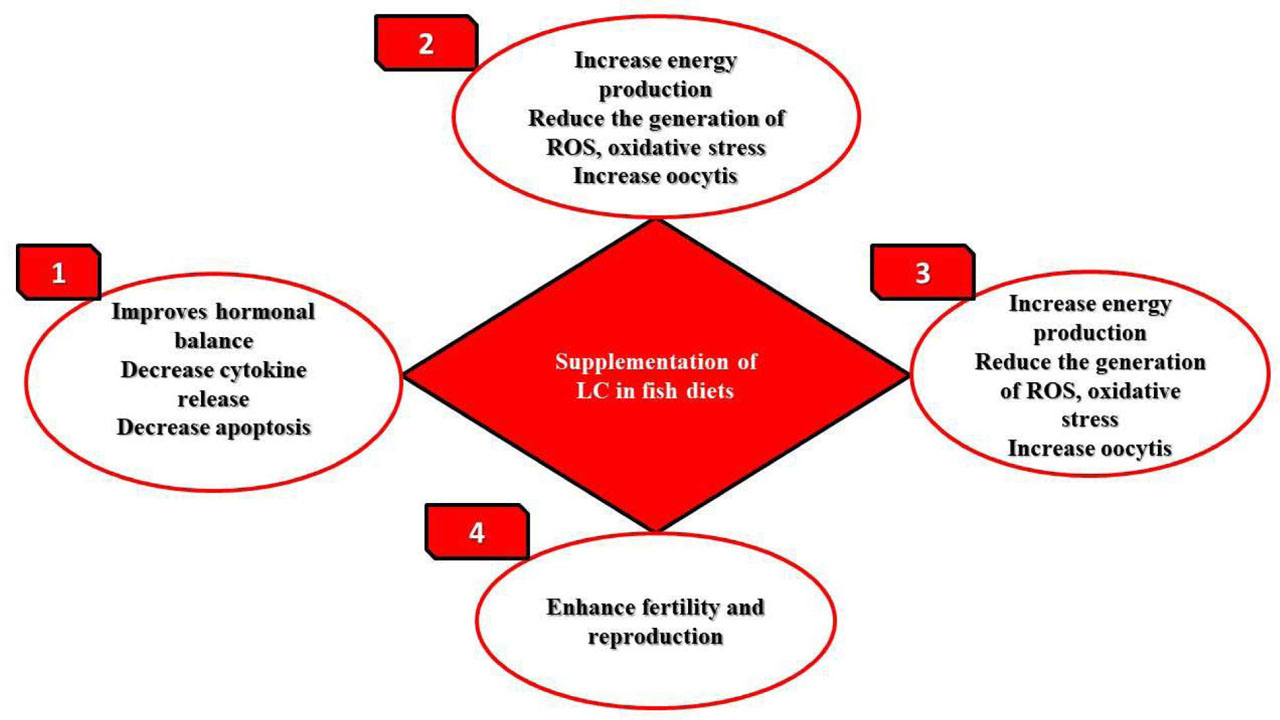
Figure 3.
Mechanism of L-carnitine action on improving reproduction in female animals
Conflicting results in research findings on L-carnitine supplementation
In some aquatic animals, L-carnitine has been shown to boost growth and fat utilization rates. In other animals, however, dietary L-carnitine has modest or no positive effects. It is important to figure out why the data on L-carnitine functions in aquatic animals are so contradictory (Li et al., 2019). The effects of varying lysine levels in the diet on rainbow trout development and carnitine concentrations were studied by Walton et al. (1984). The food given to these 5 g trout over 84 days contained varying amounts of lysine. The lysine dietary requirement was determined to be 19 grams per kilogram of diet, according to the growth results. It was discovered through their findings that fish fed different dietary plans did not show significant discrepancies in the amounts of total lipid and carnitine present in their livers. The research conducted by Schuhmacher and Gropp (1998) looked into the effects of adding 450 mg/kg L-carnitine to diets containing varying levels of lysine and sulfur amino acids on the growth and feed efficiency of rainbow trout fingerlings. Their research showed that incorporating L-carnitine into fish fed diets that lack lysine and methionine resulted in a 4% increase in specific growth rate and an 8% improvement in feed efficiency.
Despite this, L-carnitine supplementation did not have a substantial effect on body weight, weight gain, or feed consumption. These findings are remarkably similar to those Schuhmacher and Gropp (1998) reported in research involving young pigs and quail chicks. The results indicate that carnitine’s lysine-sparing impact is confined to situations when the limiting amino acid is just slightly inadequate. On the other hand, when the amount of lysine falls far short of the fish’s requirements, supplementing with carnitine does not produce any results. This was also shown in the results of research conducted with red sea bream fingerlings. An evaluation was conducted on the impact of adding 2000 mg/kg L-carnitine alongside two levels of dietary lysine (10 and 14 g/kg). Carnitine enhanced growth in fish given a 14 g/kg lysine-rich diet but had no impact on fish fed a lysine-deficient (10 g/kg) diet (Chatzifotis et al., 1996). An earlier study examined the effects of adding 1000 mg/kg of L-carnitine to a fingerling channel cat-fish diet (which contains 30% protein) at three different levels of dietary lysine (1.1%, 1.4%, and 1.7%) (Burtle and Liu, 1994). According to their findings, carnitine had no impact on development, but it did substantially decrease muscle and liver fat levels (Burtle and Liu, 1994).
The differences in L-carnitine supplementation results could be attributed to the various components in the diet, specifically the levels of lysine and methionine, crucial amino acids that fish may use to produce their L-carnitine needs. In humans, the relationship between carnitine levels and methionine and lysine consumption was investigated (Krajčovičová-Kudláčková, 2000). Researchers analyzed plasma carnitine levels in two distinct dietary groups: strict vegetarians and lacto-ovo vegetarians, who consume some animal products like milk and eggs. The results were contrasted with a randomly selected group of people following a diverse diet (omnivores). Since meat has the greatest carnitine content, carnitine levels were linked to consuming essential amino acids, methionine, and lysine (as substrates for its endogenous synthesis). In contrast, milk products have the lowest, and fruits, grains, and vegetables have little or no carnitine. The alternative nutrition groups showed a significant correlation between carnitine levels and the consumption of methionine and lysine, suggesting that the body’s natural production can fulfill most of its carnitine needs. Exogenous sources provide about two-thirds of carnitine requirements in omnivores. The crucial roles of methionine and lysine, essential amino acids, in the absorption and synthesis of carnitine, are emphasized by these results, especially in diets with low levels of carnitine.
Secondly, the duration of the experiments could also affect the potency of L-carnitine in fish. Various studies showing conflicting results may be due to the fact that those with positive outcomes lasted for more than 120 days and were conducted in settings with fluctuating temperatures based on natural light. As a result, the temperature range in the hybrid tilapia research was 22–28°C. (Becker et al., 1999). The temperature fluctuated between 12 and 21°C research with European sea bass (Santulli and D’Amello, 1986). In contrast, the temperature fluctuated between 23.5 and 34.0°C in a study with rohu fingerlings (Keshavanath and Renuka, 1998). When the food was supplemented with 900 mg L-carnitine/kg, Jayaprakas et al. (1996) experimented with Oreochromis mossambicus kept in outdoor settings for 252 days. They observed a beneficial impact on the fish development as well as other variables. They did not specify the temperature at which the fish were maintained. Still, because the experimental apparatus and the location where the experiment was carried out were comparable to those used by Keshavanath and Renuka (1998), it is probably fair to infer it was in the 23–34°C range as well. The fluctuations in temperature, in addition to the extended exposure of the fish to stressors during the study, may give the L-carnitine-treated fish an edge that they would not have had if they were kept under stricter conditions.
Thirdly, the size of the fish could also affect the utilization of L-carnitine in the fish. Unexpectedly, the inclusion of L-carnitine in their diet benefited some of the fish that were limited to a specific concentration within the tested range. On the flip side, the remaining concentrations examined failed to produce similar results. Following a trial with hybrid tilapia, it was found that a small amount of 150 mg L-carnitine/kg supplement led to positive growth enhancements, but a higher dosage of 300 mg/kg did not produce the same results (Becker et al., 1999). Only the 900 mg/kg level of supplementation showed substantial growth improvement in Oreochromis mossambicus (Jayaprakas et al., 1996), out of the following tested range: 150, 300, 500, 700, and 900 mg/kg supplementation. A previous study by Yang et al. (2012) found that only the 400 mg/kg levels of supplementation resulted in substantially improved development for juvenile silver perch (Bidyanus bidyanus). For a total of 25 days, beluga sturgeon (Huso huso) juveniles with an average weight of 8.4 g were given a meal comprising 40% protein and just 16% fat supplied with 0 (control), 300, 600, 900, and 1200 mg kg−1 L-carnitine in their diets (Mohseni and Ozório, 2014). Surprisingly, only the 600 mg/kg dose had a positive effect on the growth performance of the fish. This group (which reached a final weight of 192 g) had a considerably higher final weight than the other diet supplementation groups (which reached a final weight of 159–161 g). Research findings indicate that there were no significant differences in flesh characteristics between the fish fed a standard diet and those provided with varying levels of L-carnitine supplementation. Twibell and Brown (2000) investigated the effects of carnitine on hybrid striped bass diets. Their basic diet consisted of 34.6% crude protein and 6.0% fat. L-carnitine concentrations in the four dietary regimens were 2.1, 41.0, 212.0, or 369.7 mg/kg diet. Dietary treatments were given to fish weighing 13.5 g twice daily until they seemed satiated. The growth performance of fish given a 369.7 mg carnitine/kg diet improved compared to that of fish fed the control diet (Twibell and Brown, 2000). The presence of carnitine in the diet did not impact feed efficiency, liver lipid levels, fat distribution within the body cavity, or the muscle and carcass composition (Twibell and Brown, 2000). The contents of total and free carnitine and carnitine esters in the blood of fish given any of the diets were not substantially different. The study suggests that moderate levels of dietary carnitine could slightly improve hybrid striped bass growth, though not body composition. No growth enhancement was observed when a significantly higher amount of carnitine supplement was administered in a separate experiment within the same species. Gaylord and Gatlin (2000) supplemented the food of young (2.5 g) hybrid striped bass maintained in 5‰ brackish water with 3000 mg carnitine/kg. After a previous study with low (5–10%) lipid levels and supplementation of 500 and 1000 mg/kg found no positive effect of carnitine supplementation on growth, the fish were fed at four different dietary lipid levels (5%, 10%, 15%, and 20%) to investigate the effect on growth and body lipid levels at higher lipid levels (Gaylord and Gatlin, 2000). The research findings indicated that greater lipid content had a beneficial impact (growth on a diet containing 10% lipid was significantly higher than the 5% lipid level). The findings of the second research revealed that carnitine supplementation had no impact on growth. The primary predictor of development, at a remarkably high level of 3000 mg/kg, was the presence of L-carnitine supplementation in the food rather than the quantity of lipids consumed. Santulli and D’Amello (1986) were the sole researchers to address altering carnitine levels in fish diets during growth stages by adjusting pellet carnitine levels based on consumption by administering a daily dosage of 250 mg carnitine/kg wet fish weight. Variations in food consumption levels may be responsible for certain inconsistencies observed in experiments. Several trials involving L-carnitine supplementation demonstrated notable growth enhancements in juvenile fish or fingerlings. Because growth (as a percentage of body mass) decreases as fish expand in size, the initial size of the examined fish has a significant impact on the result of the growth. It is easier to identify a lack of carnitine in small fish, who also have a higher food requirement based on their weight. This may explain why Torreele et al. (1993) found favorable growth effects in young African catfish with a 5 g starting weight, while Ozório et al. (2012) found no such impact in the same fish species with a 23 g initial weight. Santulli and D’Amelio (1986), who investigated the effects of L-carnitine supplementation on the development of European sea bass, published one of the earliest studies on the beneficial effects of L-carnitine supplementation on fish growth. Even when hatchery-reared, many fish species have a wide range of sizes. When looking at the growth data (Santulli and D’Amelio, 1986), it is clear that the experimental groups had different starting weights: the L-carnitine treatment group began at 35.5±6.7 g, the D-carnitine treated group at 29.4±6.7 g and the control group at 32.0±9.0 g. Although the findings indicate positive weight increment slope values (0.1, 0.06, and 0.08 for the L-carnitine, D-carnitine, and control, respectively), this may be due to the L-carnitine-treated fish having a superior head start.
Water stability and nutrient leaching in diets supplemented with l-carnitine
In animal digestion, L-carnitine is an imperative compound, and it is referred to as “restrictively fundamental” (Jawahar and Jubie, 2019). This is because some animals at a young age are unable to utilize it efficiently. However, to efficiently utilize its inclusion in aquafeed, it is better to pelletize it when it has been supplemented to avoid leaching. The retention of the physical integrity of the diet with little disintegration and nutrient leaching while in water until eaten by the fish is known as high pellet water stability (Obaldo et al., 2002). A previous study has reported that a fish fed pelleted diet grows faster compared to an extrusion diet (Stone et al., 2005). Therefore, in supplementing L-carnitine in fish diets, pelleting the diet may be efficient for the fish and may also improve its utilization in the fish. L-carnitine was often added to fish diets after the pellets had been produced or pellets that had not been extruded or coated. Because L-carnitine is readily soluble in water and has a low molecular weight, it is conceivable that a significant part of the supplemented carnitine leached into the water, and only a tiny portion reached the fish. This may explain why fish need far higher amounts of carnitine supplementation than terrestrial mammals.
Potential chemoattractant function in L-carnitine
Positioning and interactions between tissues, trafficking of immune cells such as neutrophils between tissues are primarily regulated by chemoattractants (Miyabe et al., 2016). Carnitine (3-hydroxy-4-N-trimethyl-ammoniobutanoate) has a structure that is comparable to quaternary ammonium compounds like betaine and tri-methyl amine (TMA), which are known to attract fish and crustaceans (Harpaz, 1997). The fishy odor syndrome linked with TMA or TMA oxide may be caused by an excess of carnitine in the human diet. Trimethylaminuria (fish odor syndrome) is a metabolic condition characterized by aberrant trimethylamine excretion in the breath, urine, perspiration, and saliva. Trimethylamine is formed when meals high in carnitine and choline are degraded by microorganisms in the intestine. The liver converts it to odorless trimethylamine N-oxide, which is subsequently eliminated in the urine (Yu et al., 2020 b). The fish odor syndrome is believed to be caused by a defect in trimethylamine oxidation, which is responsible for the stench of decaying fish. Certain meals high in carnitine or choline aggravate the disease, whereas dietary changes decrease trimethylamine excretion (Messenger et al., 2013). Niizeki et al. (2002) studied the process of production of trimethylamine oxide (TMAO) from dietary precursors in Nile tilapia. They used quaternary ammonium choline, carnitine, glycine, betaine, or phosphatidylcholine in their meals. Only choline caused significant increases in TMAO levels in the muscle. Under freshwater circumstances, tilapia may generate TMAO from choline, which is linked to intestinal bacteria and tissue monooxygenase. The presence of a strong attractant such as TMA or TMAO in the environment has been demonstrated to cause intensive food-seeking (Harpaz, 1997). Consequently, crustaceans consume more food, resulting in substantially improved development (Harpaz, 1997). It is conceivable that the high amounts of L-carnitine in the experimental diets resulted in large levels of TMA and TMAO being excreted into the environment, which then functioned as chemostimulants, boosting the fish’s intake and utilization of the food. This impact would be more apparent in diets that included small fish meals or did not have enough natural attractants.
Conclusions and future directions
Similar to other animals, L-carnitine plays an essential role in improving growth performance and immunity in fish. It supports the transport of long-chain fatty acids from cytosol to the mitochondrial matrix, helps to modulate the acyl-CoA/CoA ratio, and stores energy as acetylcarnitine in fish. Supplementing fish diets with dietary L-carnitine improves fish development, including juvenile fish. Furthermore, adding L-carnitine to a fish’s diet may protect fish from acute cold stress, heat stress, and high and stressful levels of ammonia. However, there are significant differences in the L-carnitine levels that are beneficial in enhancing fish performance. These variations may be seen across the numerous species examined and between different research organizations studying the same species. Additionally, we suggest further studies to assess the effects of supplemented L-carnitine on immune health functions in fish for an extended period.
Acknowledgments
National Key Research and Development Program (2022YFD2401200), the Natural Science Foundation of Guangdong Province (2023A1515011095), and the Correspondent for Science and Technology of Guangdong Province (GDKTP2021048400).