
Table 1.
Primer sequences
| Gene | Sequences (5′-3′) |
|---|---|
| RBM15 (Human) | F: GCCTTCCCACCTTGTGAGTT |
| R: TCAACCAGTTTTGCACGGAC | |
| RBM15 (Mouse) | F: TGCCAACCGGACACTTTTCT |
| R: GCCATAGGTACTGGTCTGGC | |
| circFGFR3 (Human) | F: TGGGCGCCTGCACGCAGGGCG |
| R: GGTCCTTGTCAGTGGCATCGT | |
| circFGFR3 (Mouse) | F: GATGACGAAGATGGGGAGGAC |
| R: GTCCCCACTGCCGAAGGCCAC | |
| FGFR3 (Human) | F: GGAGTTCCACTGCAAGGTGT |
| R: TCCTTGTCGGTGGTGTTAGC | |
| EIF4A3 (Human) | F: CAGCAACGAGCAATCAAGCA |
| R: GAGCAAGCAGCCCCTGAATA | |
| JAK2 (Human) | F: CCACCCAACCATGTCTTCCA |
| R: CCATGCCGATAGGCTCTGTT | |
| STAT3 (Human) | F: GGTGCCTGTGGGAAGAATCA |
| R: GACATCCTGAAGGTGCTGCT | |
| STAT5 (Human) | F: CCTGTGGTTGTCATCGTCCA |
| R: CACAGCACTTTGTCAGGCAC | |
| GAPDH (Human) | F: GTCAAGGCTGAGAACGGGAA |
| R: TCGCCCCACTTGATTTTGGA | |
| GAPDH (Mouse) | F: GGTCCCAGCTTAGGTTCATCA |
| R: AATCCGTTCACACCGACCTT |
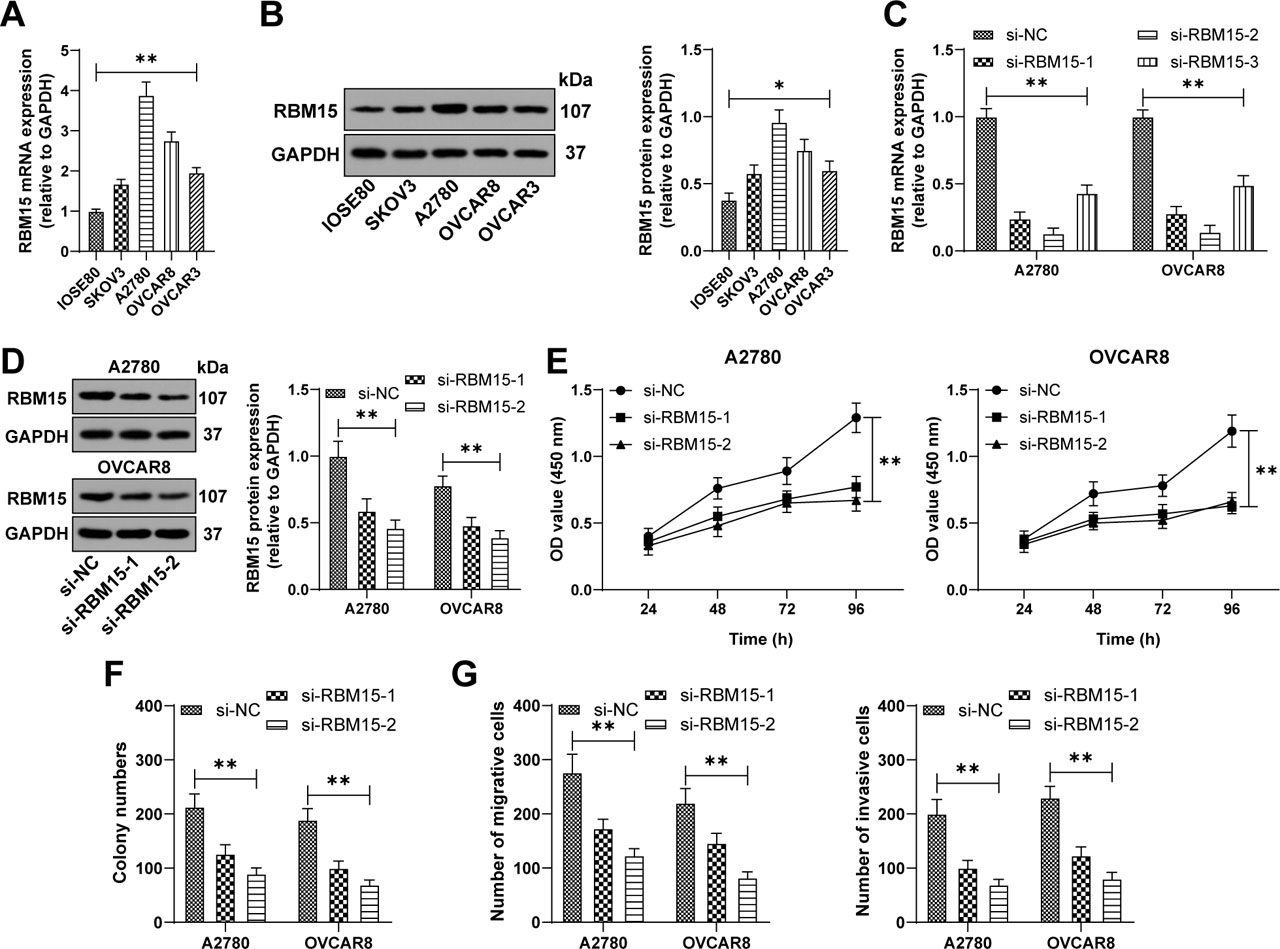
Fig 1.
RBM15 is upregulated in OC cells and promotes cell proliferation, migration, and invasion. (A,B): The expression of RBM15 in each cell was detected by RT-qPCR and Western blot. si-RBM15 was transfected into A2780 and OVCAR8 cells, with si-NC transfection used as a negative control. (C,D): The expression of RBM15 in cells was detected by RT-qPCR and Western blot. (E,F): Cell proliferation was detected by CCK-8 and colony formation assays. (G) Cell migration and invasion were detected by Transwell. Three independent repeated tests were carried out, and the data were expressed as mean ± standard deviation. One-way ANOVA was used for data comparison among multiple groups in panels (A,B), and two-way ANOVA was used for data comparison among multiple groups in panels (C–G). Tukey's multiple comparisons test was used for post hoc test. *p < 0.05, and **p < 0.01. ANOVA, analysis of variance; CCK-8, cell counting kit-8; OC, ovarian cancer; RBM15, RNA binding motif protein 15; RT-qPCR, real-time quantitative polymerase chain reaction; si-RBM15, small interfering RNAs targeting RBM15.
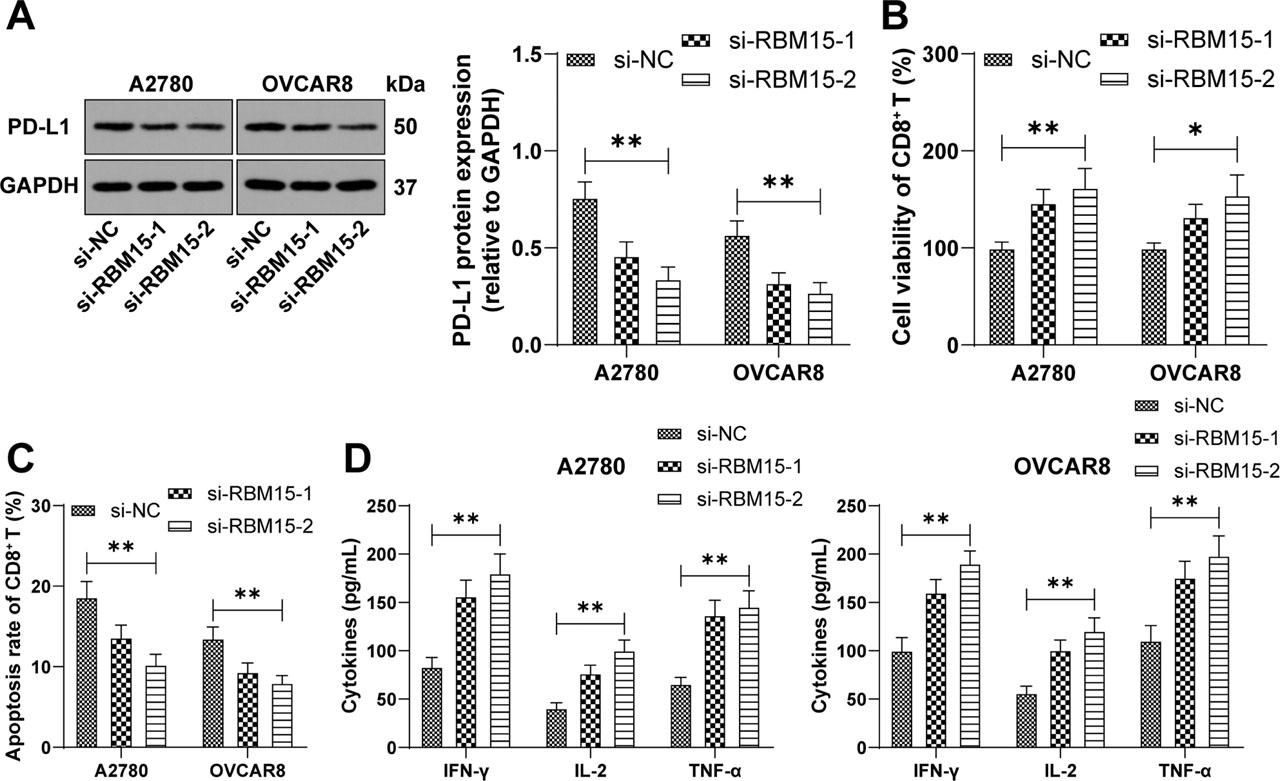
Fig 2.
Downregulation of RBM15 inhibits PD-L1-mediated immune escape of OC cells. (A) The expression of PD-L1 in cells was detected by Western blot. A2780 and OVCAR8 cells in each group were co-cultured with CD8+ T cells. (B) CD8+ T cell viability was determined by the CCK-8 method. (C) Apoptosis of CD8+ T cells was detected by flow cytometry. (D) The secretion of cytokines was detected by the ELISA method. Three independent repeated tests were carried out, and the data were expressed as mean ± standard deviation. Two-way ANOVA was used for data comparison among multiple groups in panels (A–D), and Tukey's multiple comparisons test was used for post hoc test. *p < 0.05, and **p < 0.01. ANOVA, analysis of variance; CCK-8, cell counting kit-8; ELISA, enzyme-linked immunosorbent assay; OC, ovarian cancer; PD-L1, programmed death-ligand 1; RBM15, RNA binding motif protein 15.
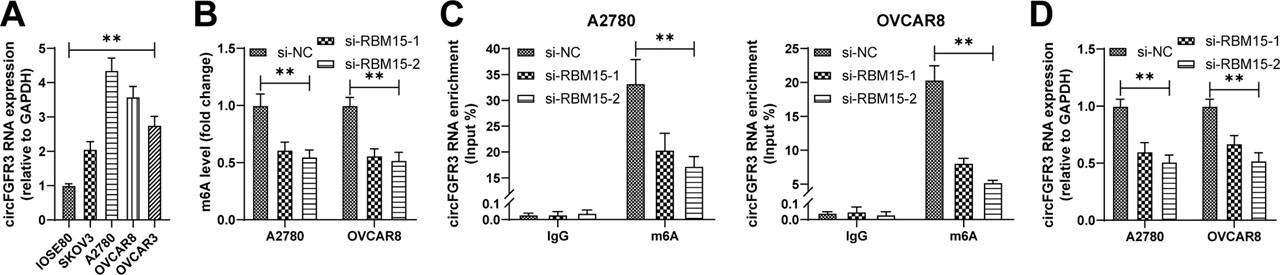
Fig 3.
RBM15 upregulates circFGFR3 expression through m6A modification. (A) The expression of circFGFR3 in each cell was detected by RT-qPCR. (B) The m6A level in cells was analyzed by m6A quantification. (C) The m6A enrichment of circFGFR3 in cells was analyzed by MeRIP. (D) The expression of circFGFR3 in cells was detected by RT-qPCR. Three independent repeated tests were carried out, and the data were expressed as mean ± standard deviation. One-way ANOVA was used for data comparison among multiple groups in panel (A), and two-way ANOVA was used for data comparison among multiple groups in panels (B–D). Tukey's multiple comparisons test was used for post hoc test. **p < 0.01. ANOVA, analysis of variance; circFGFR3, circRNA fibroblast growth factor receptor 3; MeRIP, methylated RNA immunoprecipitation; RBM15, RNA binding motif protein 15; RT-qPCR, real-time quantitative polymerase chain reaction.
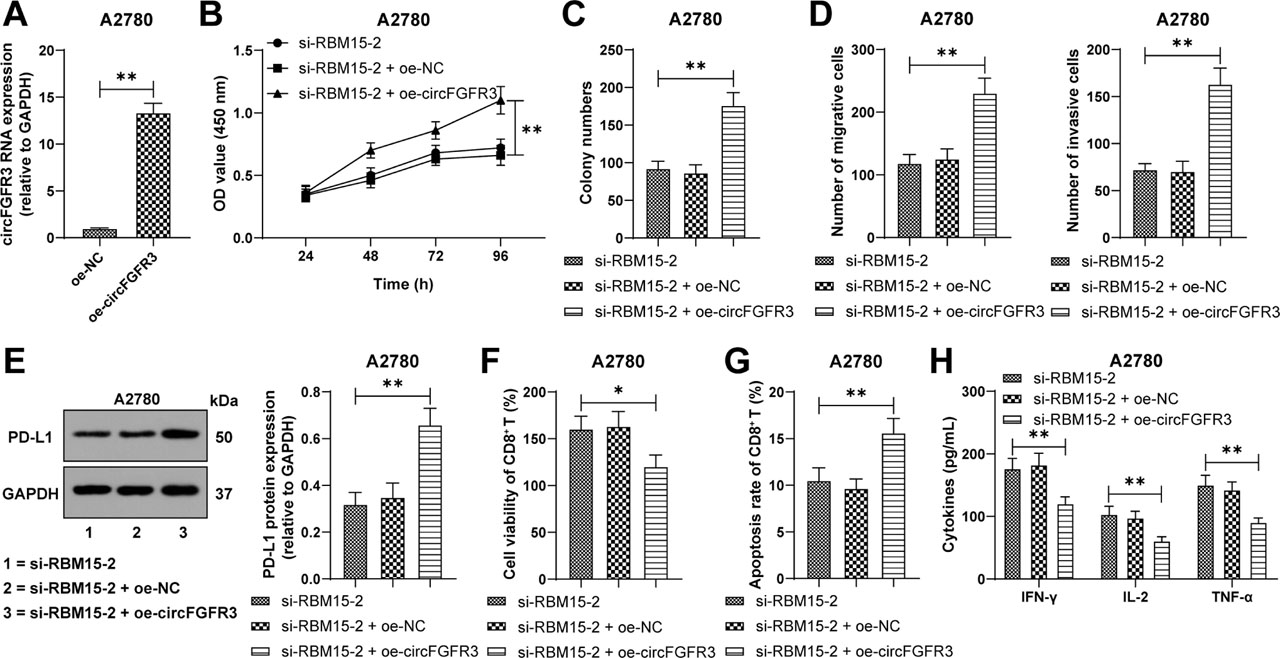
Fig 4.
CircFGFR3 overexpression promotes immune escape and alleviates the inhibitory effect of RBM15 downregulation on OC cell progression. oe-circFGFR3 was transfected into A2780 cells, with over-expression negative control (oe-NC) transfection used as a negative control. (A) The transfection efficiency of circFGFR3 in cells was detected by RT-qPCR. (B,C) Cell proliferation was detected by CCK-8 and colony formation assays. (D) Cell migration and invasion were detected by Transwell. (E) The expression of PD-L1 in cells was detected by Western blot. A2780 cells in each group were co-cultured with CD8+ T cells. (F) The viability of CD8+ T cells was determined by the CCK-8 method. (G) Apoptosis of CD8+ T cells was detected by flow cytometry. (H) The secretion of cytokines was detected by the ELISA method. Three independent repeated tests were carried out, and the data were expressed as mean ± standard deviation. The t-test was used for data comparison between two groups in panel (A). One-way ANOVA was used for data comparison among multiple groups in panels (C–G), and two-way ANOVA was used for data comparison among multiple groups in panels (B) and (H). Tukey's multiple comparisons test was used for post hoc test. *p < 0.05, and **p < 0.01. ANOVA, analysis of variance; CCK-8, cell counting kit-8; circFGFR3; circRNA fibroblast growth factor receptor 3; ELISA, enzyme-linked immunosorbent assay; OC, ovarian cancer; PD-L1, programmed death-ligand 1; RBM15, RNA binding motif protein 15; RT-qPCR, real-time quantitative polymerase chain reaction.
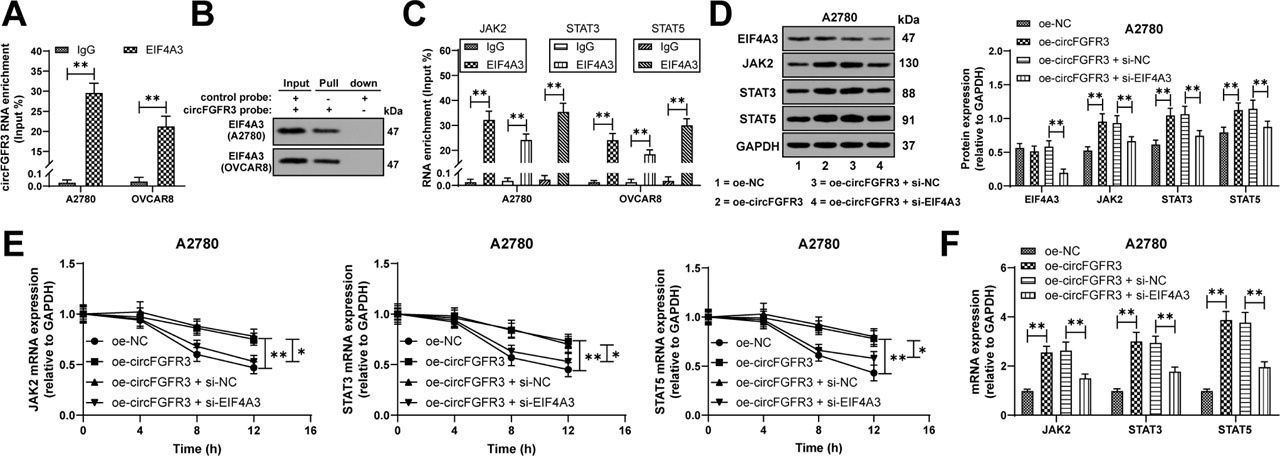
Fig 5.
RBM15 upregulates circFGFR3 to activate the JAK2/STAT3/STAT5 signaling pathway. (A,B) The binding of circFGFR3 and EIF4A3 was analyzed by RIP or RNA pull-down assay. (C) The binding of EIF4A3 and proteins related to the JAK/STAT pathway was analyzed by RIP. (D) The expression of EIF4A3 and proteins related to the JAK/STAT pathway in cells was detected by Western blot. (E) After actinomycin D treatment, the mRNA stability of proteins related to the JAK/STAT pathway was detected by RT-qPCR. (F) The expression of proteins related to the JAK/STAT pathway was detected by RT-qPCR. Three independent repeated tests were carried out, and the data were expressed as mean ± standard deviation. Two-way ANOVA was used for data comparison among multiple groups in panels (A,C,D–F). Tukey's multiple comparisons test was used for post hoc test. *p < 0.05, and **p < 0.01. ANOVA, analysis of variance; circFGFR3, circRNA fibroblast growth factor receptor 3; JAK/STAT, Janus kinase-signal transducer and activator of transcription; RBM15, RNA binding motif protein 15; RIP, RNA immunoprecipitation; RT-qPCR, real-time quantitative polymerase chain reaction.
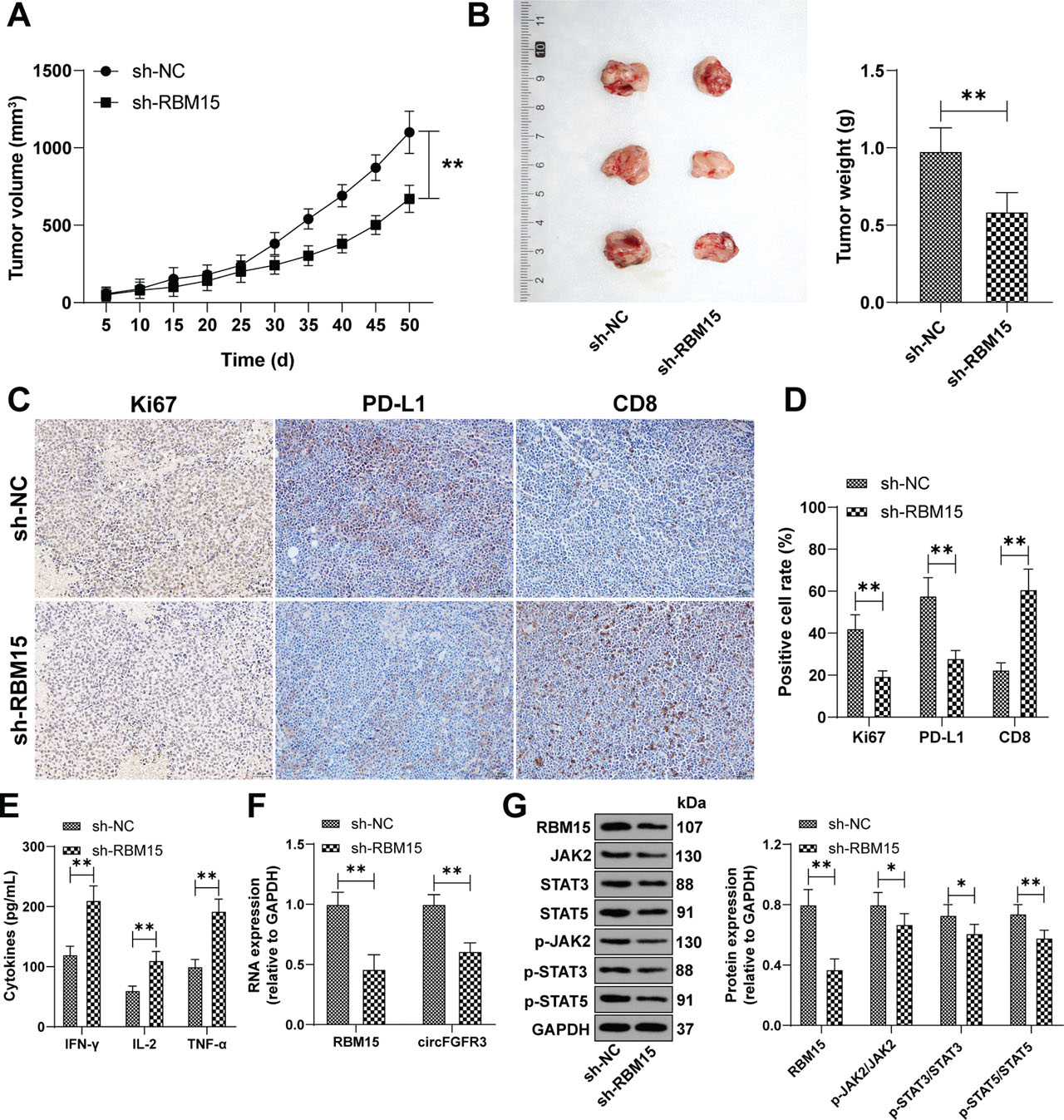
Fig 6.
RBM15 activates the JAK/STAT signaling pathway via circFGFR3 to promote PD-L1-mediated immune escape in OC. (A) The volume of the tumor was recorded every 5 days. (B) After euthanizing the nude mice on the 50th day, the tumor tissues were collected, weighed, and representative photos were taken. (C,D) The positive rates of Ki67, PD-L1 and CD8 in the tissues were detected by immunohistochemistry. (E) The secretion of cytokines was detected by ELISA. (F) The expression of RBM15 and circFGFR3 was detected by RT-qPCR. (G) The expression of RBM15 and proteins related to the JAK/STAT pathway was detected by Western blot. N = 6, and the data were expressed as mean ± standard deviation. The t-test was used for data comparison between two groups in panel (B). Two-way ANOVA was used for data comparison among multiple groups in panels (A,D–G). Tukey's multiple comparisons test was used for post hoc test. *p < 0.05, and **p < 0.01. ANOVA, analysis of variance; circFGFR3, circRNA fibroblast growth factor receptor 3; ELISA, enzyme-linked immunosorbent assay; JAK/STAT, Janus kinase-signal transducer and activator of transcription; OC, ovarian cancer; PD-L1, programmed death-ligand 1; RBM15, RNA binding motif protein 15; RT-qPCR, real-time quantitative polymerase chain reaction.
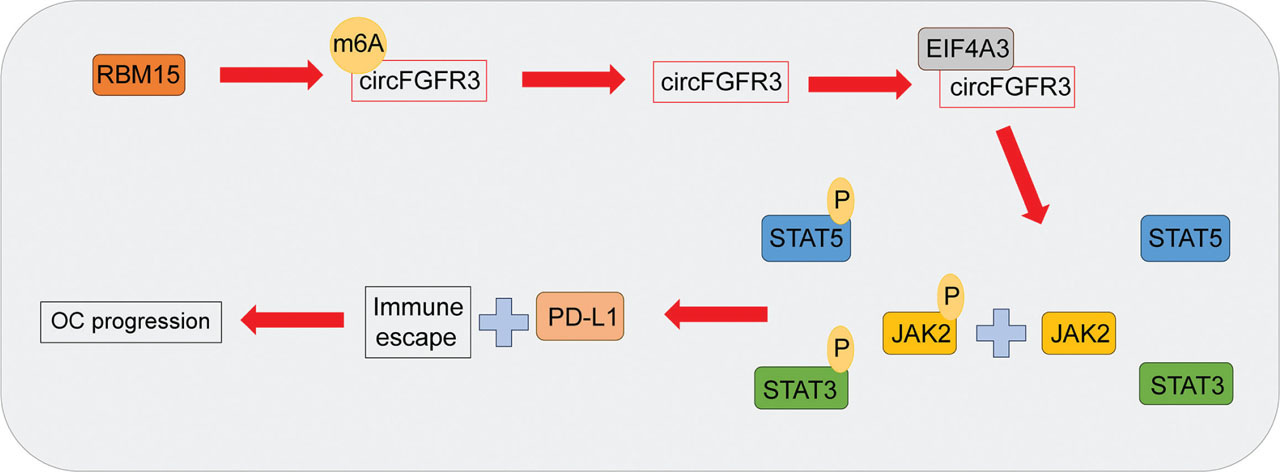
Fig 7.
The mechanism of RBM15 in promoting PD-L1-mediated immune escape of OC. RBM15 upregulates the expression of circFGFR3 through m6A modification. circFGFR3 binds to EIF4A3, enhances the mRNA stability of JAK2, STAT3, and STAT5, activates the JAK/STAT signaling pathway, promotes PD-L1-mediated immune escape, and thus accelerates the progression of OC. circFGFR3, circRNA fibroblast growth factor receptor 3; JAK/STAT, Janus kinase-signal transducer and activator of transcription; OC, ovarian cancer; PD-L1, programmed death-ligand 1; RBM15, RNA binding motif protein 15.
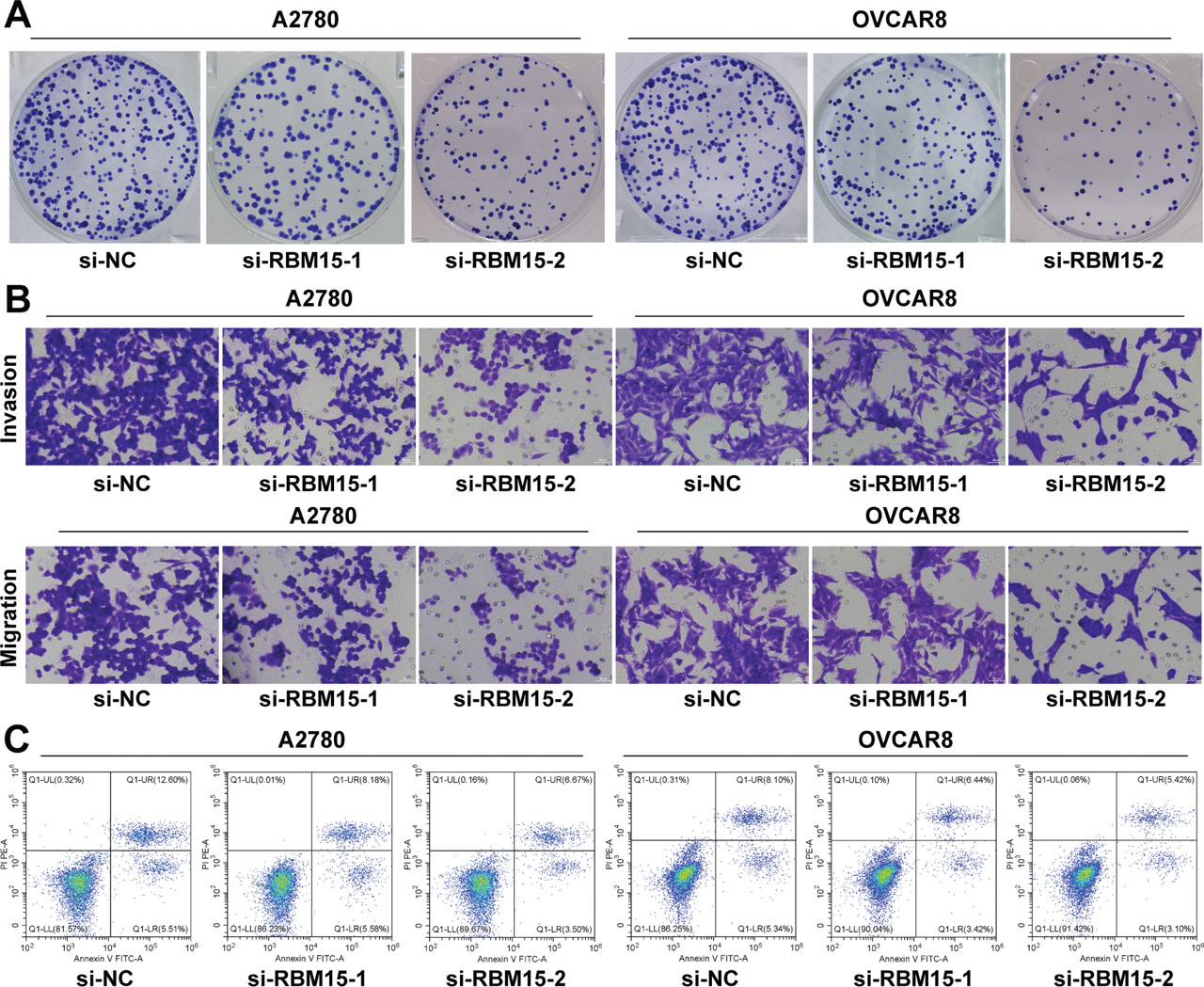
Fig S1.
Downregulation of RBM15 inhibits proliferation, migration, invasion, and immune escape of OC cells. (A) Colony formation assay and representative images. (B) Transwell migration and invasion assays and representative images. (C) Flow cytometry and representative images. OC, ovarian cancer; RBM15, RNA-binding motif protein 15.
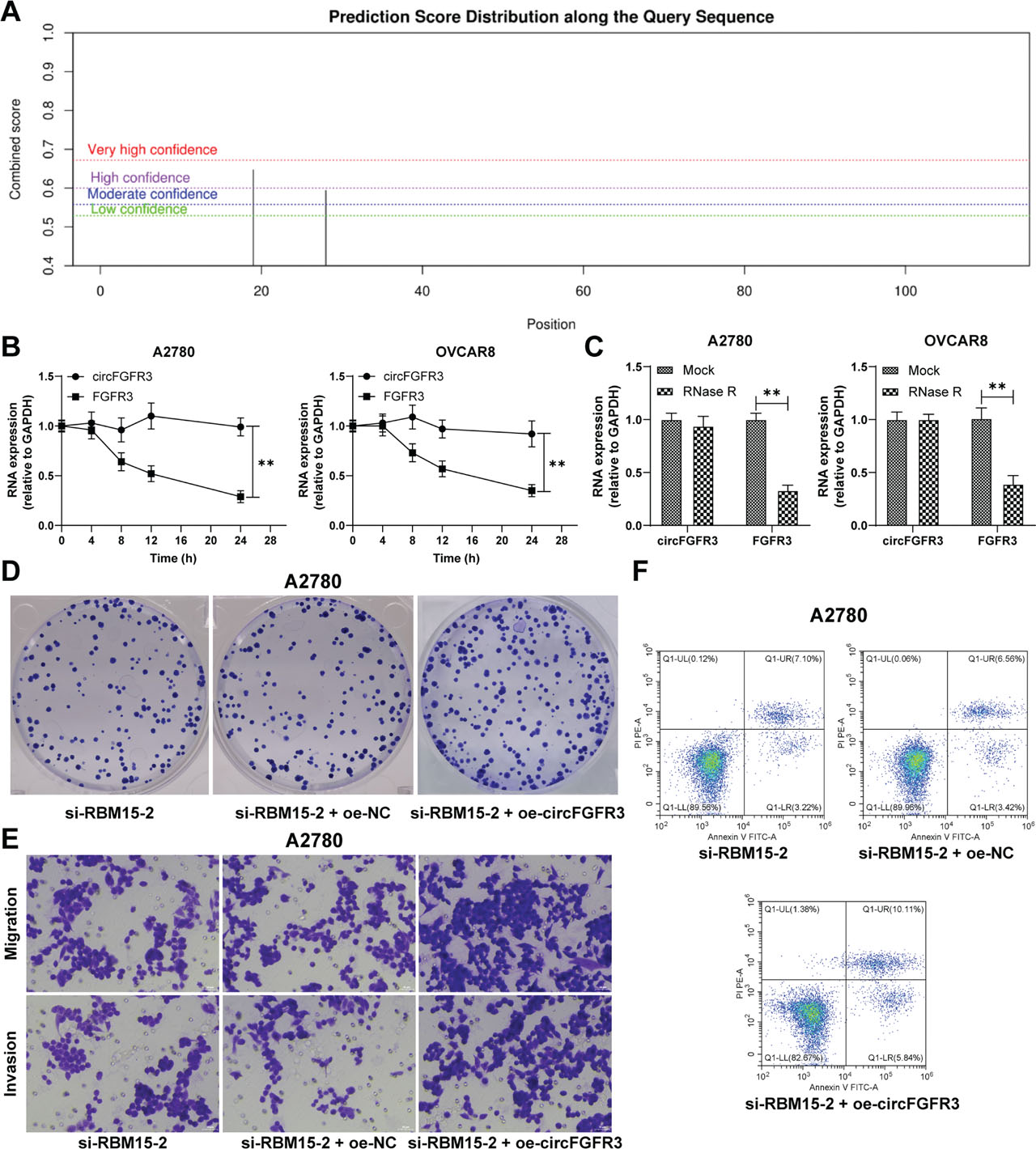
Fig S2.
RBM15 upregulates circFGFR3 to promote proliferation, migration, invasion, and immune escape of OC cells. (A) SRAMP database predicts the m6A modification status of circFGFR3. (B,C) After treatment with Actinomycin D or RNase R, RT-qPCR was used to detect the stability of circFGFR3 and FGFR3. (D) Colony formation assay and representative images. (E) Transwell migration and invasion assays and representative images. (F) Flow cytometry and representative images. Three independent repeated tests were carried out, and data are presented as mean ± standard deviation. Two-way ANOVA was used for comparisons among multiple groups in b,c, followed by Tukey's multiple comparisons test. **p < 0.01. ANOVA, analysis of variance; circFGFR3, circRNA fibroblast growth factor receptor 3; OC, ovarian cancer; RBM15, RNA binding motif protein 15; RT-qPCR, real-time quantitative polymerase chain reaction.
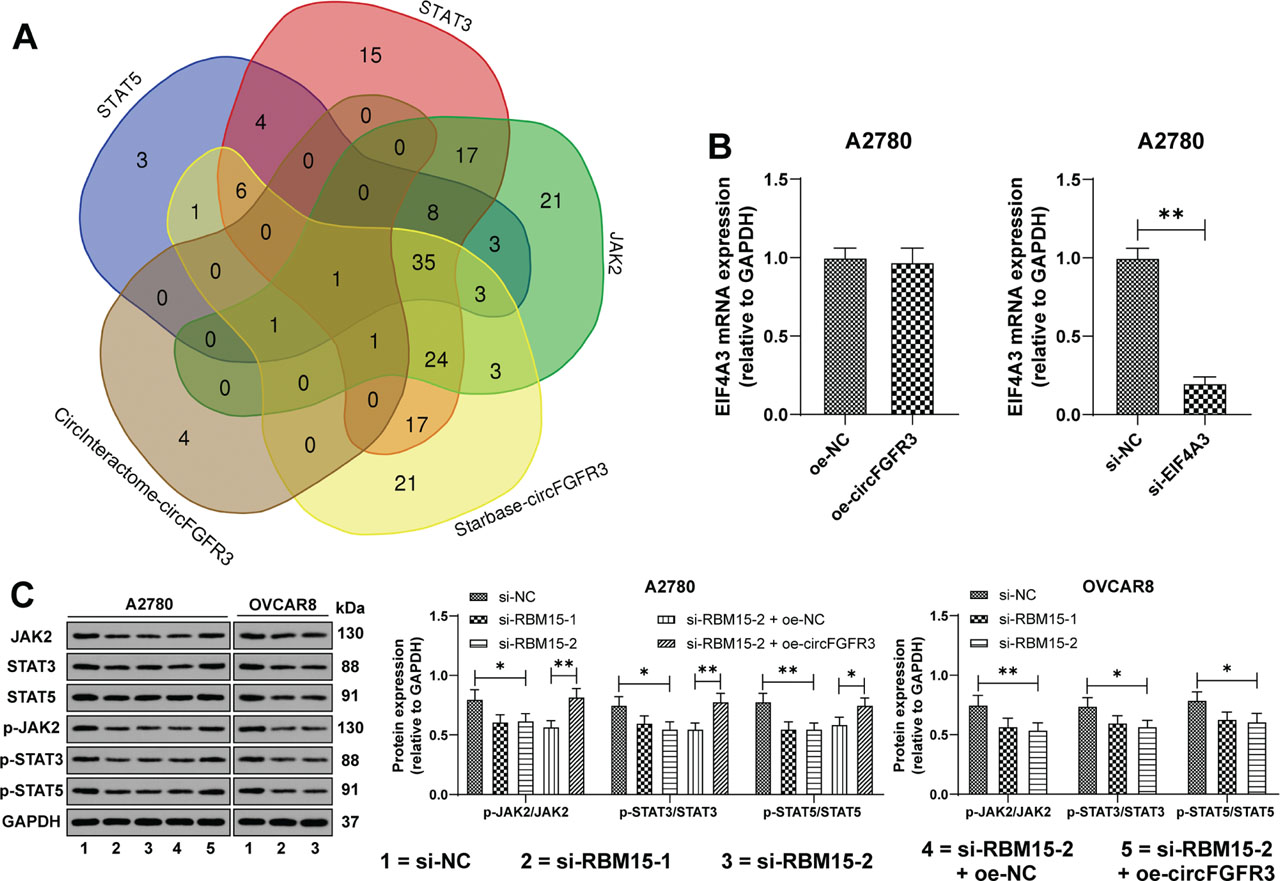
Fig S3.
RBM15 activates the JAK2/STAT3/STAT5 signaling pathway. (A) Databases predict RNA-binding proteins that interact with circFGFR3 and JAK/STAT pathway-related proteins, and take the intersection. (B) RT-qPCR detects the expression of EIF4A3 in various cells. (C) Western blot detects the expression of JAK/STAT pathway-related proteins. Three independent repeated tests were carried out, and data are presented as mean ± standard deviation. The t-test was used for comparison between two groups in panel (B). Two-way ANOVA was used for comparisons among multiple groups in panel (C), followed by Tukey's multiple comparisons test. *p < 0.05, **p < 0.01. ANOVA, analysis of variance; circFGFR3, circRNA fibroblast growth factor receptor 3; JAK/STAT, Janus kinase-signal transducer and activator of transcription; RBM15, RNA binding motif protein 15;RT-qPCR, real-time quantitative polymerase chain reaction.