
1. Introduction
Ovarian cancer (OC) persists as one of the most prevalent and lethal gynecologic malignancies in women, with a steadily increasing global incidence (Webb and Jordan 2024). Characterized by non-specific early symptoms, OC is frequently diagnosed at advanced stages, resulting in challenges for curative treatment and poor survival outcomes in metastatic cases (Stewart et al. 2019). While surgery and platinum-based chemotherapy remain frontline therapies, recurrence and chemoresistance plague the majority of patients (Kuroki and Guntupalli 2020). Emerging immunotherapies, particularly immune checkpoint inhibitors, have shown potential in augmenting antitumor immunity by disrupting programmed cell death protein 1/programmed death-ligand 1 (PD-1/PD-L1) interactions, thereby reactivating exhausted tumor-infiltrating lymphocytes (Morand et al. 2021; Peng et al. 2023). Nevertheless, the immune microenvironment can suppress both innate and adaptive immunity, aid to the immune escape of tumor cells, and impaire the effectiveness of immunotherapy (Liu et al. 2025). Elucidating the molecular drivers of PD-L1 dysregulation and immune evasion thus represents a critical step toward optimizing OC immunotherapy.
RNA binding motif protein 15 (RBM15), a crucial cofactor of the N6-methyladenosine (m6A) writer complex, facilitates RNA target recognition and methylation processes (Jiang et al. 2021). Functioning as a key m6A regulator, RBM15 mainly drives tumor progression in malignancies, including laryngeal cancer (Wang et al. 2021), breast cancer (Park et al. 2024), and gastric cancer (Cai et al. 2025). Notably, upregulated RBM15 is observed in OC cell lines and OC tissues, correlating with unfavorable clinical outcomes in OC patients (Yuan et al. 2023). RBM15 enhances immune evasion in breast cancer cells through m6A methylation and boosting PD-L1 expression (Wang et al. 2025). However, there are no relevant reports on the mechanisms related to RBM15-mediated immune escape.
Circular RNAs (CircRNAs) are single-stranded non-coding RNAs that form a circular conformation through atypical splicing or back-splicing events and exhibit dysregulated expression across multiple cancers (Chen and Shan 2021). Accumulating studies have demonstrated that circRNAs can be regulated by m6A modification and serve as key regulatory molecules in the oncogenesis of OC (Zhao et al. 2020; Tian et al. 2023; Li et al. 2024). Notably, circRNA fibroblast growth factor receptor 3 (circFGFR3) is upregulated in OC and drives the progression of cancer cells and associated with a lower survival rate and a higher recurrence rate (Zhou et al. 2020). Bioinformatic analyses predict the existence of m6A modification in circFGFR3, but the role of RBM15-mediated m6A modification on circFGFR3 remains to be elucidated.
Janus kinase-signal transducer and activator of transcription (JAK/STAT) pathway is a transmembrane signal-transduction mechanism closely related to immune regulation and cancer progression (Xue et al. 2023). The JAK family (JAK1-3 and TYK2) can correspondingly activate the members of the STAT family (STAT1, STAT2, STAT3, STAT4, STAT5A, STAT5B, and STAT6) to regulate gene transcription (Hu et al. 2023). The activation of the JAK/STAT signaling pathway may lead to cancer cell proliferation, survival, and tumorigenesis (Rah et al. 2022). Importantly, the JAK/STAT pathway promotes immune escape by mediating the expression of PD-1/PD-L1 (Hu et al. 2021). The JAK/STAT pathway is activated in OC and thus participates in the malignancy of cancer cells (Zhang et al. 2023). A recent report has shown that circRNA can activate the JAK/STAT pathway and increase PD-L1 expression, leading to the immune escape of OC (Wang et al. 2023). Therefore, we hypothesize that circFGFR3 may interact with the JAK/STAT pathway-related proteins and be involved in the immune escape of OC cells.
In this study, we explored the mechanism of RBM15 in regulating PD-L1-mediated immune escape through the JAK2/STAT3/STAT5 pathway during the progression of OC, aiming to provide new theoretical knowledge for the immunotherapy of OC.
2. Methods
2.1. Ethics approval
All animal experimental protocols were approved by the Ethics Committee of Affiliated Hospital of North Sichuan Medical College, and the experimental operations were carried out in accordance with the Guidelines for the Care and Use of Laboratory Animals.
2.2. Cell culture
The human ovarian epithelial cell line (IOSE80) and human OC cell lines (SKOV3, A2780, OVCAR8, OVCAR3) were sourced from the Cell Bank of the Chinese Academy of Sciences (Shanghai, China). The mouse OC cell line (ID8) was purchased from Shanghai Jihe Biotechnology Co., Ltd. (Shanghai, China) CD8+ T cells were purchased from the American Type Culture Collection (Manassas, VA, USA). Human-derived cells (cultured in RPMI-1640 medium, Gibco, Grand Island, NY, USA) and ID8 and CD8+ T cells (cultured in Dulbecco's Modified Eagle's Medium) were incubated at 37°C in a 5% CO2 incubator. All culture media contained10% fetal bovine serum (FBS) and 1% 100 U/mL penicillin and 100 μg/mL streptomycin (Gibco).
2.3. Cell treatment
Small interfering RNAs targeting RBM15 (si-RBM15) and EIF4A3 (si-EIF4A3) were designed and synthesized by RiboBio (Guangzhou, China). The pcDNA3.1 vector targeting circFGFR3 (overexpressed-circFGFR3, oe-circFGFR3) was synthesized by GenePharma (Shanghai, China). OC cells were transfected employing Lipofectamine 3000 transfection reagent (Invitrogen, Carlsbad, CA, USA) according to the manufacturer's instructions. Cells were harvested 48 h post-transfection for downstream experiments.
RBM15 shRNA (sh-RBM15) and negative control shRNA (sh-NC) were synthesized by Genewiz (South Plainfield, NJ, USA) and cloned into lentiviral shRNA-overexpression plasmids (Hanbio Biotechnology Co., Ltd., Shanghai, China). ID8 cells were seeded in 12-well plates, infected with the supernatants of LV-sh-RBM15 or LV-sh-NC at 37°C for 48 h, and then used for subsequent experiments.
2.4. Cell counting kit-8 (CCK-8) method
CCK-8 method was used to measure cell viability (Yeasen, Shanghai, China). OC cells and CD8+ T cells were seeded in 96-well plates (1000 cells per well). At the specified time points, 10 μL of CCK-8 reagent was added to each well for a 3-h incubation. The absorbance at 450 nm was measured using an Infinite M200 (Tecan, Switzerland).
2.5. Colony formation assay
Cells were seeded into 6-well plates (500 cells per well) and cultured for approximately 2 weeks. When the cell colonies reached the optimal confluence, they were fixed with 4% paraformaldehyde at room temperature for 30 min. The colonies were then stained with a 1% crystal violet solution (Sigma, St. Louis, MO, USA) at room temperature for 30 min. The cell colonies were counted using ImageJ software (version 1.46r; National Institutes of Health, Bethesda, MD, USA). The images are shown in supplementary figures.
2.6. Transwell assay
Transwell inserts (with an 8 μm pore size, Corning, NY, USA) were used to measure the migration and invasion of OC cells. Subsequently, 600 μL of medium containing 20% FBS was added to the lower chamber of the Transwell, either without or with a reconstituted polycarbonate membrane (coated with Matrigel). Afterwards, 5 × 10⁵ OC cells were seeded into the upper chamber and cultured at 37°C with 5% CO2 for 24 h. The migrated or invaded cells were fixed with 4% paraformaldehyde for 30 min, then stained with 0.1% crystal violet. Photographs were taken, and the cells were quantified under an inverted microscope (IX73, Olympus, Tokyo, Japan). The images are shown in supplementary figures.
2.7. Detection of CD8+ T cell apoptosis
OC cells were seeded into 6-well plates at a density of 2 × 10⁵ cells per well. CD8+ T cells were co-cultured with OC cells for 24 h. A single-cell suspension was generated and incubated with a CD8 fluorescent antibody (PE; ab28017, Abcam, Cambridge, MA, USA) at 4°C in the dark for 45 min. Apoptosis of CD8+ T cells was detected by Annexin-V/PI staining and analyzed using CytExpert software (Beckman Coulter, Miami, FL, USA). The images are shown in supplementary figures.
2.8. Enzyme-linked immunosorbent assay (ELISA)
The cell mixtures and the digested tumor tissues were centrifuged at 1500 g for 5 min, and the supernatants were collected. The concentrations of interferon (IFN)-γ (ab46025/ab282874), interleukin (IL)-2 (ab100566/ab46096), and tumor necrosis factor (TNF)-α (ab181421/ab46105) were measured using ELISA kits (Abcam) according to the manufacturer's instructions.
2.9. RNA stability assay
Total RNA (1 μg) from OC cells was treated with 3 U of RNase R (Epicentre Technologies, Madison, WI, USA) for 15 min, and the products were analyzed by real-time quantitative polymerase chain reaction (RT-qPCR). OC cells were incubated with 2 μg/mL actinomycin D (Sigma), and then detected at different time points (0 h, 4 h, 8 h, 12 h, or 24 h). Data are shown in supplementary figures.
2.10. m6A quantitative analysis
The m6A RNA methylation quantification kit (Abcam) was used to determine the RNA m6A levels in OC cells. First, the RNA was incubated in the experimental wells at 37°C for 90 min. Then, the capture antibody, detection antibody, and enhancer solution were added. After adding the colorimetric chromogenic solution, the absorbance at 450 nm wavelength in each well was measured using a microplate reader to determine the RNA m6A levels.
2.11. Methylated RNA immunoprecipitation (MeRIP) and RNA immunoprecipitation (RIP)
RIP was performed utilizing the Magna RIP RNA-binding protein immunoprecipitation (IP) kit (Millipore, Cambridge, MA, USA) following the manufacturer's protocol. OC cells were collected and lysed in IP lysis buffer, and then mechanically sheared using a homogenizer. Antibodies against the specified proteins (EIF4A3: ab180573, Abcam and m6A: ab208577; Abcam) and the negative control immunoglobulin G (ab170190; Abcam) were incubated with the cell lysates overnight at 4°C. After washing three times, streptavidin-coated magnetic beads were added and incubated for 2 h. The extracted RNA was detected and analyzed by RT-qPCR.
2.12. RNA pull-down assay
The expression of RNA in OC cells was detected using 50 nM biotin-labeled circFGFR3. The cells were harvested and washed with phosphate-buffered saline (PBS) and incubated in lysis buffer for 10 min. Then, streptavidin-coated agarose beads (Invitrogen) were added and further incubated at room temperature for 1 h. After washing with PBS, the proteins were collected and subjected to Western blot analysis.
2.13. Mouse xenograft tumor model
Female C57BL/6 mice (4 weeks old, 20–22 g weight) were housed with free access to food and water, a constant humidity of 45%–50%, and a constant temperature of 25–27°C. ID8 cells (5 × 10⁶) were subcutaneously injected into the right side of C57BL/6 mice after being mixed with Matrigel and PBS at a ratio of 1:1. When the tumors grew to be palpable (approximately 50 mm3), the tumor volume was evaluated every 5 days. Fifty days later, the mice were euthanized by intraperitoneal injection of 150 mg/kg sodium pentobarbital. The tumors were harvested, weighed, and subjected to further examination.
2.14. Immunohistochemistry
Tissue sections were blocked with 5% bovine serum albumin (BSA) and incubated with primary antibodies against Ki67 (ab15580; Abcam), PD-L1 (ab213480; Abcam), and CD8 (ab217344; Abcam) at room temperature, followed by incubation with the secondary antibody (ab205718; Abcam) for 1 h at room temperature and staining with diaminobenzidine. The sections were counterstained with Mayer's hematoxylin, dehydrated, cleared, and mounted. Each section was observed under an optical microscope (Zeiss, Shanghai, China). The results were independently analyzed by two experienced pathologists (double-blind manner).
2.15. Database prediction analysis
The m6A modification status of circFGFR3 was predicted according to the sequence-based RNA adenosine methylation site predictor (SRAMP) database (http://www.cuilab.cn/m6asiteapp/old) (Zhou et al. 2016). RNA binding proteins that bind to circFGFR3, JAK2, STAT3, and STAT5 were predicted according to the Starbase database (http://starbase.sysu.edu.cn/index.php) (Li et al. 2014) and the CircInteractome database (https://circinteractome.nia.nih.gov/mirna_target_sites.html) (Dudekula et al. 2016), and the intersection was taken. Results of the prediction are shown in supplementary figures.
2.16. RT-qPCR
Total RNA was extracted according to the instructions provided by the Trizol kit (Invitrogen). Then, the extracted RNA was reverse-transcribed into complementary DNA (cDNA) according to the manufacturer's instructions of the Prime Script RT kit (Takara, Dalian, China). The obtained cDNA was stored at −80°C for subsequent experimental use. Real-time PCR analysis was performed using SYBR Premix Ex Taq II (Takara) on an ABI 7500 real-time PCR system (Applied Biosystems, Foster City, CA, USA). Glyceraldehyde 3-phosphate dehydrogenase (GAPDH) was used as an internal reference. The relative expression levels were calculated by the 2−ΔΔCt method (Livak and Schmittgen 2001). The primers are shown in Table 1. Some data are shown in supplementary figures.
Table 1.
Primer sequences
| Gene | Sequences (5′-3′) |
|---|---|
| RBM15 (Human) | F: GCCTTCCCACCTTGTGAGTT |
| R: TCAACCAGTTTTGCACGGAC | |
| RBM15 (Mouse) | F: TGCCAACCGGACACTTTTCT |
| R: GCCATAGGTACTGGTCTGGC | |
| circFGFR3 (Human) | F: TGGGCGCCTGCACGCAGGGCG |
| R: GGTCCTTGTCAGTGGCATCGT | |
| circFGFR3 (Mouse) | F: GATGACGAAGATGGGGAGGAC |
| R: GTCCCCACTGCCGAAGGCCAC | |
| FGFR3 (Human) | F: GGAGTTCCACTGCAAGGTGT |
| R: TCCTTGTCGGTGGTGTTAGC | |
| EIF4A3 (Human) | F: CAGCAACGAGCAATCAAGCA |
| R: GAGCAAGCAGCCCCTGAATA | |
| JAK2 (Human) | F: CCACCCAACCATGTCTTCCA |
| R: CCATGCCGATAGGCTCTGTT | |
| STAT3 (Human) | F: GGTGCCTGTGGGAAGAATCA |
| R: GACATCCTGAAGGTGCTGCT | |
| STAT5 (Human) | F: CCTGTGGTTGTCATCGTCCA |
| R: CACAGCACTTTGTCAGGCAC | |
| GAPDH (Human) | F: GTCAAGGCTGAGAACGGGAA |
| R: TCGCCCCACTTGATTTTGGA | |
| GAPDH (Mouse) | F: GGTCCCAGCTTAGGTTCATCA |
| R: AATCCGTTCACACCGACCTT |
2.17. Western blot
Proteins were extracted using radioimmunoprecipitation assay lysis buffer (Beijing Solarbio Science & Technology Co., Ltd., Beijing, China) containing phenylmethylsulfonyl fluoride, and then the protein concentration was measured using a bicinchoninic acid kit (Wuhan Boster Biological Technology Co., Ltd., Wuhan, Hubei, China). Subsequently, the proteins were separated by 10% sodium dodecyl sulfate polyacrylamide gel electrophoresis and transferred onto a polyvinylidene fluoride membrane (Sigma-Aldrich). Then, the membrane was blocked with 5% BSA and incubated at room temperature for 1 h. After that, the membrane was incubated with diluted primary antibodies overnight at 4°C as follows: RBM15 (1:1000, ab96544), PD-L1 (1:1000, ab228415/ab213480), EIF4A3 (1:1000, ab180573), JAK2 (1:5000, ab108596), STAT3 (1:1000, ab68153), STAT5 (1:1000, ab230670), p-JAK2 (1:1000, ab32101), p-STAT3 (1:2000, ab76315), p-STAT5 (1:1000, ab278764), and GAPDH (1:2500, ab9485). All the above antibodies were purchased from Abcam. The next day, the membrane was washed three times with Tris-buffered saline with Tween-20 (TBST) (5 min each time), and then incubated with the corresponding secondary antibody (1:2000, ab205718/ab205719; Abcam) at room temperature for 1 h. After rinsing three times in TBST (5 min each time), the immunocomplexes on the membrane were visualized using enhanced chemiluminescence reagents and a gel imager (Gel Doc EZ Imager; Bio-Rad Laboratories, Hercules, CA, USA). GAPDH was used as an internal reference, and the relative expression of the protein was presented as the ratio of the gray value of the target protein to that of the internal reference. The gray value intensity of the target protein bands was analyzed using ImageJ software. Some images are shown in supplementary figures.
2.18. Statistical methods
All data were statistically analyzed and plotted using SPSS 21.0 statistical software (IBM SPSS Statistics, Chicago, IL, USA) and GraphPad Prism 8.0 software (GraphPad Software Inc., San Diego, CA, USA). Initially, normality and homogeneity of variance tests were performed, and the data were verified to be normally distributed with homogeneous variances. One-way or two-way analysis of variance (ANOVA) was used for data comparison among multiple groups, and Tukey's multiple comparisons test was applied for post hoc testing. p < 0.05 was considered to indicate a statistically significant difference.
3. Results
3.1. RBM15 is upregulated in OC cells and promotes cell proliferation, migration, and invasion
To elucidate the impact of RBM15 on the progression of OC cells, RBM15 expression in cultured cells was detected. RBM15 was highly expressed in OC cell lines (p < 0.05; Figures 1a,b). Subsequently, siRBM15 was transfected into A2780 and OVCAR8 cells with relatively high RBM15 expression (p < 0.01; Figures 1c,d), and two siRNAs with better transfection efficiency were selected for subsequent detection. After the downregulation of RBM15, the proliferation and colony formation of the two OC cell lines were decreased (p < 0.01; Figures 1e,f; Figure 1a in Supplementary Material). Compared with the small interfering RNA negative control (si-NC) group, migrated and invaded OC cells in the si-RBM15 group were reduced (p < 0.01; Figure 1g; Figure 1b in Supplementary Material). In conclusion, RBM15 is elevated in OC cell lines, while silencing RBM15 inhibits the proliferation, migration, and invasion of OC cells.
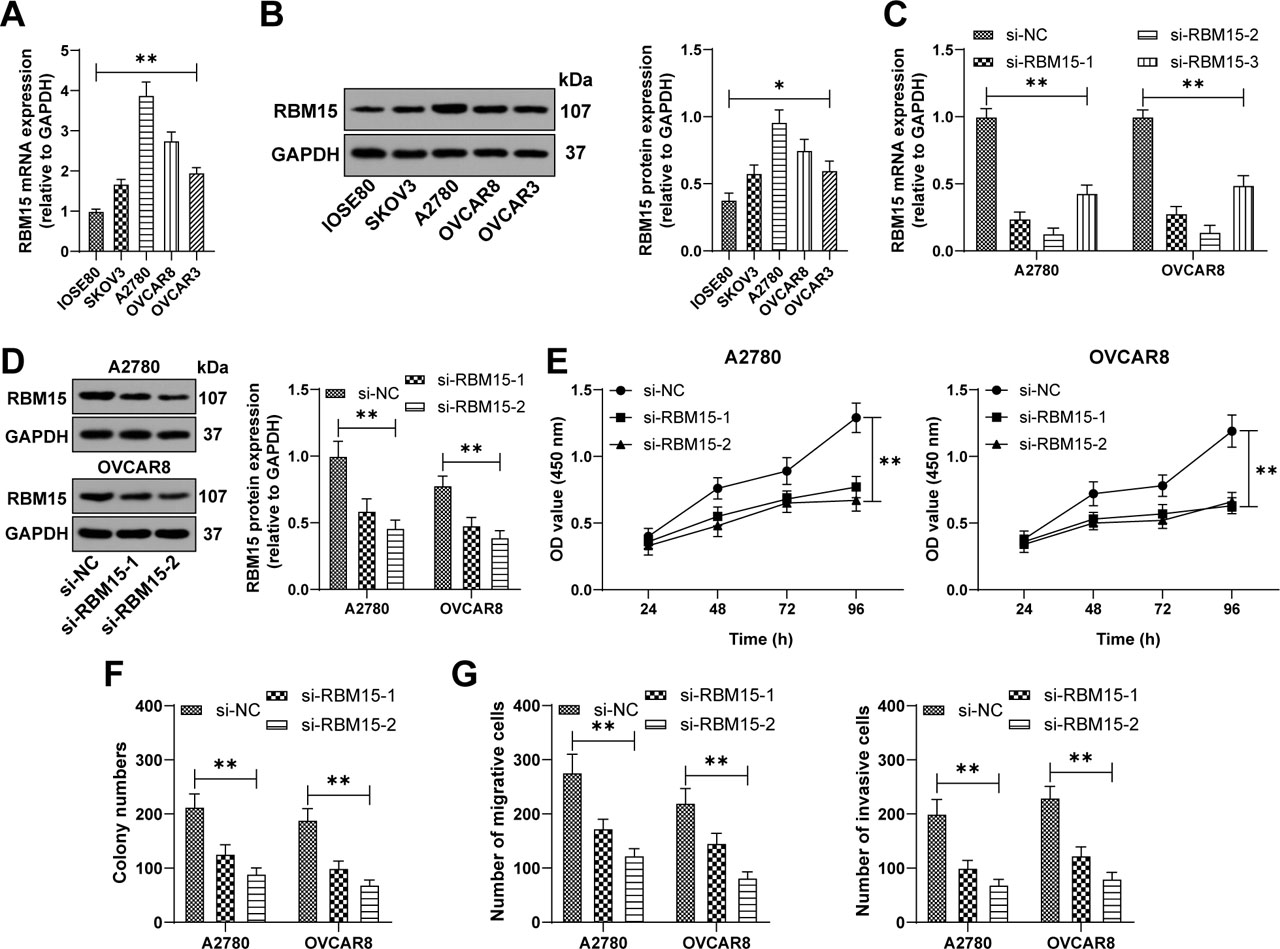
Fig 1.
RBM15 is upregulated in OC cells and promotes cell proliferation, migration, and invasion. (A,B): The expression of RBM15 in each cell was detected by RT-qPCR and Western blot. si-RBM15 was transfected into A2780 and OVCAR8 cells, with si-NC transfection used as a negative control. (C,D): The expression of RBM15 in cells was detected by RT-qPCR and Western blot. (E,F): Cell proliferation was detected by CCK-8 and colony formation assays. (G) Cell migration and invasion were detected by Transwell. Three independent repeated tests were carried out, and the data were expressed as mean ± standard deviation. One-way ANOVA was used for data comparison among multiple groups in panels (A,B), and two-way ANOVA was used for data comparison among multiple groups in panels (C–G). Tukey's multiple comparisons test was used for post hoc test. *p < 0.05, and **p < 0.01. ANOVA, analysis of variance; CCK-8, cell counting kit-8; OC, ovarian cancer; RBM15, RNA binding motif protein 15; RT-qPCR, real-time quantitative polymerase chain reaction; si-RBM15, small interfering RNAs targeting RBM15.
3.2. Downregulation of RBM15 inhibits PD-L1-mediated immune escape of OC cells
The impact of RBM15 on the immune escape of OC cells remains unclear. Compared with the si-NC group, PD-L1 expression in the si-RBM15 group was remarkably decreased (p < 0.01; Figure 2a). Subsequently, we co-cultured the si-RBM15-transfected OC cells with CD8+ T cells. After RBM15 downregulation, CD8+ T cell activity was increased, apoptosis was decreased (p < 0.05; Figure 2b,c; Figure 1c in Supplementary Material), and the concentrations of IFN-γ, IL-2, and TNF-α in the supernatant were upregulated (p < 0.01; Figure 2d). These results suggest that RBM15 downregulation inhibits PD-L1-mediated immune escape of OC cells.
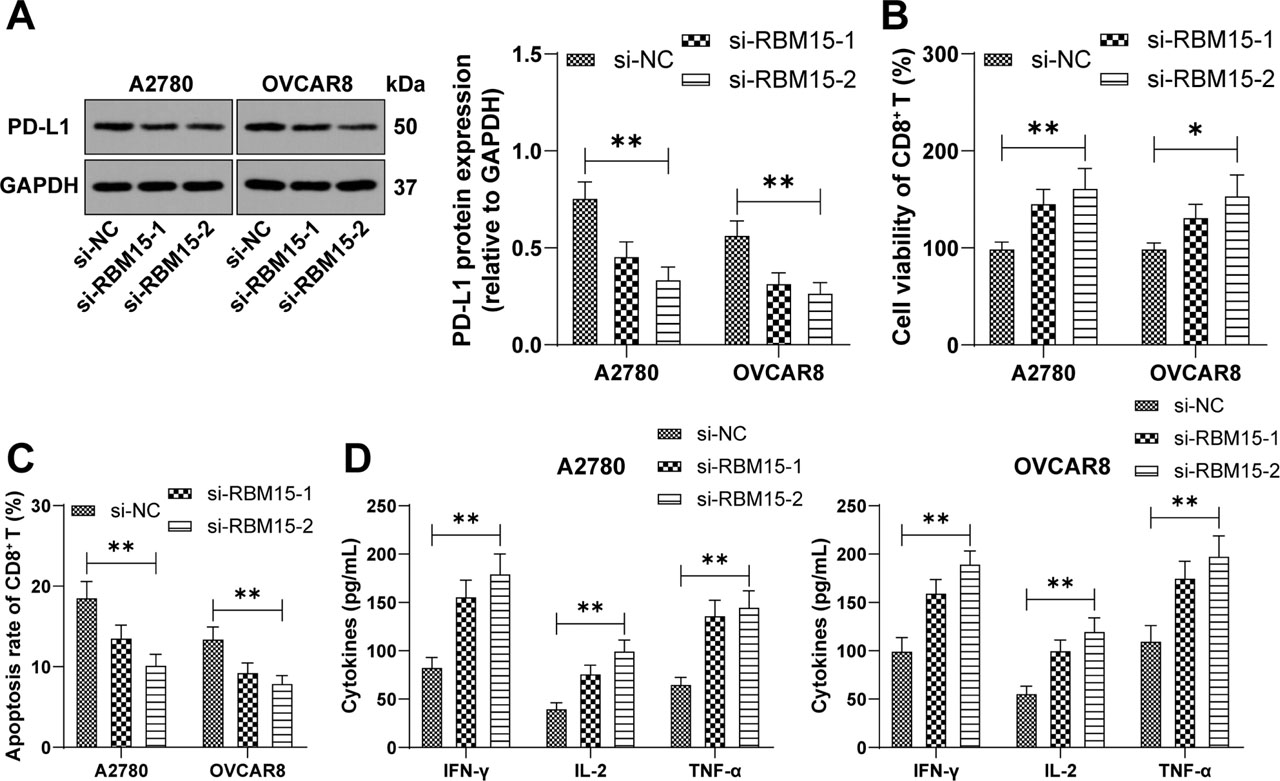
Fig 2.
Downregulation of RBM15 inhibits PD-L1-mediated immune escape of OC cells. (A) The expression of PD-L1 in cells was detected by Western blot. A2780 and OVCAR8 cells in each group were co-cultured with CD8+ T cells. (B) CD8+ T cell viability was determined by the CCK-8 method. (C) Apoptosis of CD8+ T cells was detected by flow cytometry. (D) The secretion of cytokines was detected by the ELISA method. Three independent repeated tests were carried out, and the data were expressed as mean ± standard deviation. Two-way ANOVA was used for data comparison among multiple groups in panels (A–D), and Tukey's multiple comparisons test was used for post hoc test. *p < 0.05, and **p < 0.01. ANOVA, analysis of variance; CCK-8, cell counting kit-8; ELISA, enzyme-linked immunosorbent assay; OC, ovarian cancer; PD-L1, programmed death-ligand 1; RBM15, RNA binding motif protein 15.
3.3. RBM15 upregulates circFGFR3 expression through m6A modification
The database prediction indicated that circFGFR3 has m6A modification (Figure 2a in Supplementary Material). CircFGFR3 is upregulated in OC (Zhou et al. 2020). However, the relationship between circFGFR3 and RBM15 remains unclear. Firstly, circFGFR3 was upregulated in OC cell lines (p < 0.01; Figure 3a), and further experiments verified the stability of circFGFR3 in OC cell lines (p < 0.01; Figure 2b,c in Supplementary Material). Additionally, the m6A level was decreased with the reduction of RBM15 expression (p < 0.01; Figure 3b). MeRIP showed that after the downregulation of RBM15, the m6A enrichment on circFGFR3 was decreased (p < 0.01; Figure 3c). Moreover, compared with the si-NC group, circFGFR3 expression in the si-RBM15 group was decreased (p < 0.01; Figure 3d). In conclusion, RBM15 upregulates circFGFR3 expression through m6A modification.
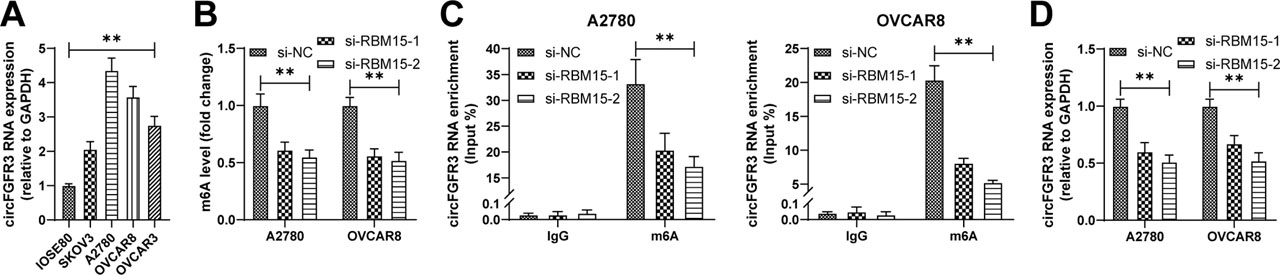
Fig 3.
RBM15 upregulates circFGFR3 expression through m6A modification. (A) The expression of circFGFR3 in each cell was detected by RT-qPCR. (B) The m6A level in cells was analyzed by m6A quantification. (C) The m6A enrichment of circFGFR3 in cells was analyzed by MeRIP. (D) The expression of circFGFR3 in cells was detected by RT-qPCR. Three independent repeated tests were carried out, and the data were expressed as mean ± standard deviation. One-way ANOVA was used for data comparison among multiple groups in panel (A), and two-way ANOVA was used for data comparison among multiple groups in panels (B–D). Tukey's multiple comparisons test was used for post hoc test. **p < 0.01. ANOVA, analysis of variance; circFGFR3, circRNA fibroblast growth factor receptor 3; MeRIP, methylated RNA immunoprecipitation; RBM15, RNA binding motif protein 15; RT-qPCR, real-time quantitative polymerase chain reaction.
3.4. CircFGFR3 overexpression promotes immune escape and alleviates the inhibitory effect of RBM15 downregulation on OC cell progression
Subsequently, circFGFR3 expression was upregulated in A2780 cells (p < 0.01; Figure 4a) and combined with si-RBM15-2. After overexpressing circFGFR3, the cell proliferation and colony formation were increased (p < 0.01; Figure 4b,c; Figure 2d in Supplementary Material), and migrated and invaded cells were elevated (p < 0.01; Figure 4d; Figure 2e in Supplementary Material). In addition, circFGFR3 overexpression upregulated PD-L1 expression (p < 0.01; Figure 4e). The A2780 cells with combined treatment were co-cultured with CD8+ T cells. The results showed that the activity of CD8+ T cells was reduced and apoptosis was enhanced (p < 0.05; Figure 4f,g; Figure 2f in Supplementary Material). ELISA demonstrated that overexpression of circFGFR3 decreased the concentrations of IFN-γ, IL-2, and TNF-α (p < 0.01; Figure 4h). The above results indicate that overexpression of circFGFR3 promotes immune escape and attenuates the inhibitory effect of RBM15 knockdown on the progression of OC cells.
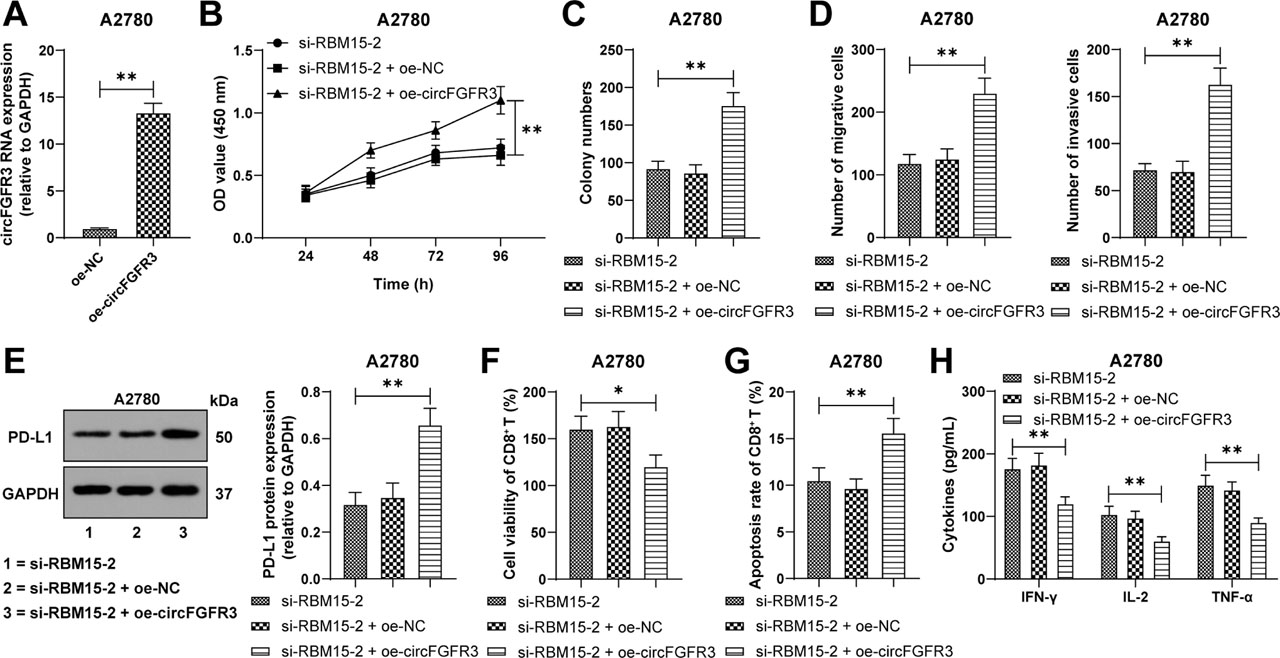
Fig 4.
CircFGFR3 overexpression promotes immune escape and alleviates the inhibitory effect of RBM15 downregulation on OC cell progression. oe-circFGFR3 was transfected into A2780 cells, with over-expression negative control (oe-NC) transfection used as a negative control. (A) The transfection efficiency of circFGFR3 in cells was detected by RT-qPCR. (B,C) Cell proliferation was detected by CCK-8 and colony formation assays. (D) Cell migration and invasion were detected by Transwell. (E) The expression of PD-L1 in cells was detected by Western blot. A2780 cells in each group were co-cultured with CD8+ T cells. (F) The viability of CD8+ T cells was determined by the CCK-8 method. (G) Apoptosis of CD8+ T cells was detected by flow cytometry. (H) The secretion of cytokines was detected by the ELISA method. Three independent repeated tests were carried out, and the data were expressed as mean ± standard deviation. The t-test was used for data comparison between two groups in panel (A). One-way ANOVA was used for data comparison among multiple groups in panels (C–G), and two-way ANOVA was used for data comparison among multiple groups in panels (B) and (H). Tukey's multiple comparisons test was used for post hoc test. *p < 0.05, and **p < 0.01. ANOVA, analysis of variance; CCK-8, cell counting kit-8; circFGFR3; circRNA fibroblast growth factor receptor 3; ELISA, enzyme-linked immunosorbent assay; OC, ovarian cancer; PD-L1, programmed death-ligand 1; RBM15, RNA binding motif protein 15; RT-qPCR, real-time quantitative polymerase chain reaction.
3.5. RBM15 upregulates circFGFR3 to activate the JAK2/STAT3/STAT5 signaling pathway
RNA-binding proteins that could bind to circFGFR3, JAK2, STAT3, and STAT5 (proteins related to the JAK/STAT pathway) were predicted through the Starbase and CircInteractome databases. After taking the intersection, we obtained EIF4A3 (Figure 3a in Supplementary Material). RIP and RNA pull-down showed that circFGFR3 could bind to EIF4A3 (p < 0.01; Figures 5a,b). The RIP results demonstrated that circFGFR3 could bind to JAK2, STAT3, and STAT5 (p < 0.01; Figure 5c). In addition, circFGFR3 did not affect the expression of EIF4A3 (p > 0.05; Figure 5d; Figure 3b in Supplementary Material). Overexpression of circFGFR3 stabilized the mRNAs of JAK2, STAT3, and STAT5 (p < 0.01; Figure 5e), but after downregulating EIF4A3 expression (p < 0.01; Figure 5d; Figure 3b in Supplementary Material), their messenger RNA (mRNA) stabilities were decreased (p < 0.05; Figure 5e). The expression of JAK2, STAT3, and STAT5 was increased after circFGFR3 upregulation, but was decreased after EIF4A3 downregulation (p < 0.01; Figures 5d,f). Moreover, after downregulating RBM15, the levels of p-JAK2/JAK2, p-STAT3/STAT3, and p-STAT5/STAT5 were decreased, which were reversed upon circFGFR3 overexpression (p < 0.05; Figure 3c in Supplementary Material). In conclusion, RBM15 upregulates circFGFR3 to activate the JAK2/STAT3/STAT5 signaling pathway.
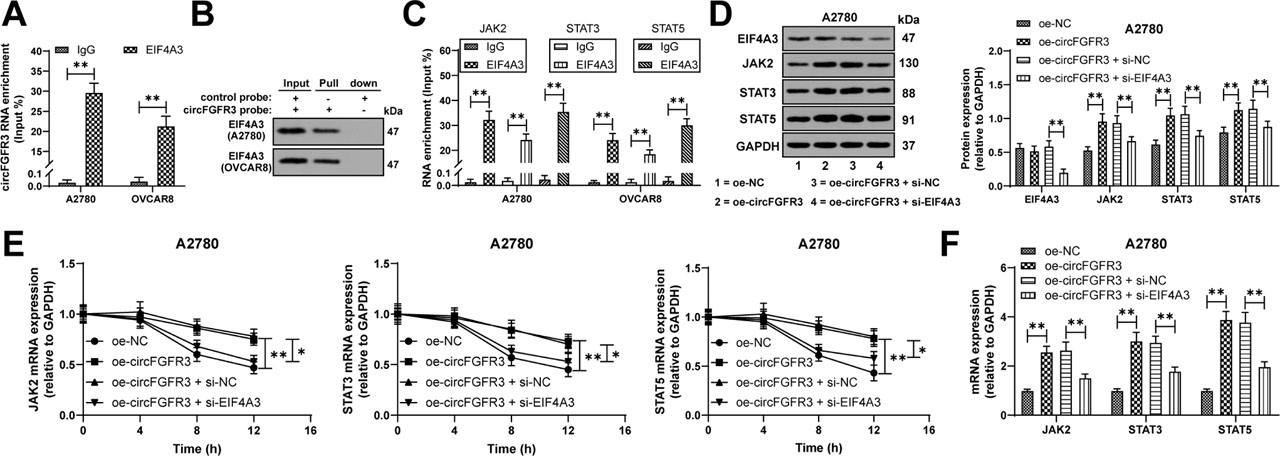
Fig 5.
RBM15 upregulates circFGFR3 to activate the JAK2/STAT3/STAT5 signaling pathway. (A,B) The binding of circFGFR3 and EIF4A3 was analyzed by RIP or RNA pull-down assay. (C) The binding of EIF4A3 and proteins related to the JAK/STAT pathway was analyzed by RIP. (D) The expression of EIF4A3 and proteins related to the JAK/STAT pathway in cells was detected by Western blot. (E) After actinomycin D treatment, the mRNA stability of proteins related to the JAK/STAT pathway was detected by RT-qPCR. (F) The expression of proteins related to the JAK/STAT pathway was detected by RT-qPCR. Three independent repeated tests were carried out, and the data were expressed as mean ± standard deviation. Two-way ANOVA was used for data comparison among multiple groups in panels (A,C,D–F). Tukey's multiple comparisons test was used for post hoc test. *p < 0.05, and **p < 0.01. ANOVA, analysis of variance; circFGFR3, circRNA fibroblast growth factor receptor 3; JAK/STAT, Janus kinase-signal transducer and activator of transcription; RBM15, RNA binding motif protein 15; RIP, RNA immunoprecipitation; RT-qPCR, real-time quantitative polymerase chain reaction.
3.6. RBM15 activates the JAK/STAT signaling pathway via circFGFR3 to promote PD-L1-mediated immune escape in OC
Finally, we established a mouse xenograft tumor model using ID8 cells. RBM15 downregulation reduced the volume and weight of the tumors (p < 0.01; Figures 6a,b). Compared with the sh-NC group, the positive rates of Ki67 and PD-L1 in the sh-RBM15 group were decreased, while the positive rate of CD8 was increased (p < 0.01; Figures 6c,d). ELISA revealed that after downregulating RBM15, the concentrations of IFN-γ, IL-2, and TNF-α were elevated (p < 0.01; Figure 6e). Silencing RBM15 led to the reduction of circFGFR3, p-JAK2/JAK2, p-STAT3/STAT3, and p-STAT5/STAT5 (p < 0.05; Figures 6f,g). These results indicate that RBM15 downregulation suppresses the JAK/STAT signaling pathway by downregulating circFGFR3, thereby inhibiting PD-L1-mediated immune escape and reducing the proliferation of OC cells.
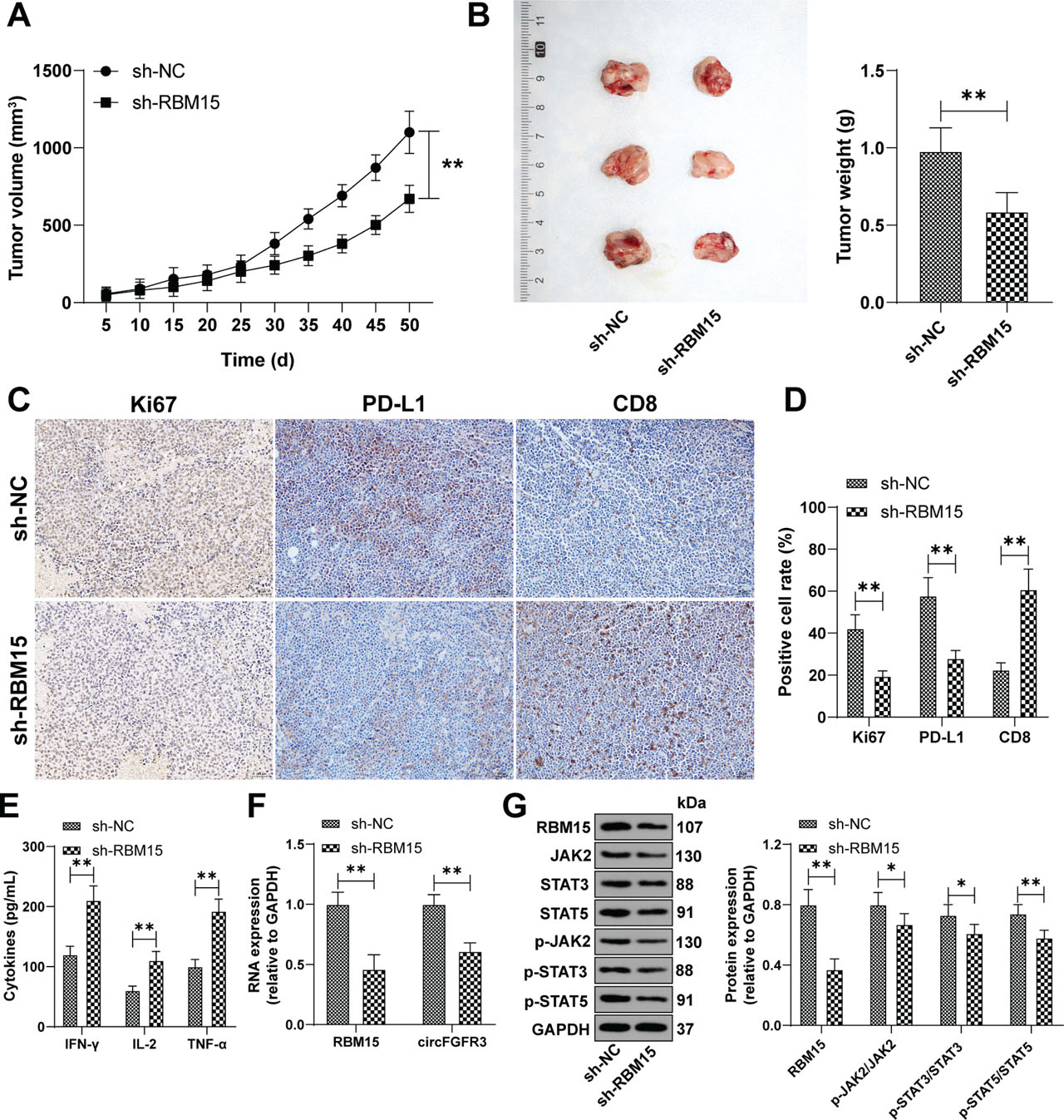
Fig 6.
RBM15 activates the JAK/STAT signaling pathway via circFGFR3 to promote PD-L1-mediated immune escape in OC. (A) The volume of the tumor was recorded every 5 days. (B) After euthanizing the nude mice on the 50th day, the tumor tissues were collected, weighed, and representative photos were taken. (C,D) The positive rates of Ki67, PD-L1 and CD8 in the tissues were detected by immunohistochemistry. (E) The secretion of cytokines was detected by ELISA. (F) The expression of RBM15 and circFGFR3 was detected by RT-qPCR. (G) The expression of RBM15 and proteins related to the JAK/STAT pathway was detected by Western blot. N = 6, and the data were expressed as mean ± standard deviation. The t-test was used for data comparison between two groups in panel (B). Two-way ANOVA was used for data comparison among multiple groups in panels (A,D–G). Tukey's multiple comparisons test was used for post hoc test. *p < 0.05, and **p < 0.01. ANOVA, analysis of variance; circFGFR3, circRNA fibroblast growth factor receptor 3; ELISA, enzyme-linked immunosorbent assay; JAK/STAT, Janus kinase-signal transducer and activator of transcription; OC, ovarian cancer; PD-L1, programmed death-ligand 1; RBM15, RNA binding motif protein 15; RT-qPCR, real-time quantitative polymerase chain reaction.
4. Discussion
Immunotherapy has demonstrated promising therapeutic effects in OC treatment, particularly anti-PD-L1/PD-1 therapies (Peng et al. 2023). Nevertheless, the low response rate to PD-L1 inhibition in OC, as well as immune tolerance and resistance, still pose significant challenges to treatment (Chardin and Leary 2021). In this study, we uncovered a mechanism by which RBM15 promotes PD-L1-mediated immune evasion in OC. RBM15 upregulates circFGFR3 expression through m6A modification, and circFGFR3 recruits EIF4A3 to enhance the stability of JAK2, STAT3, and STAT5 mRNAs, thereby activating the JAK/STAT pathway, ultimately driving PD-L1-mediated immune evasion and OC progression (Figure 7).
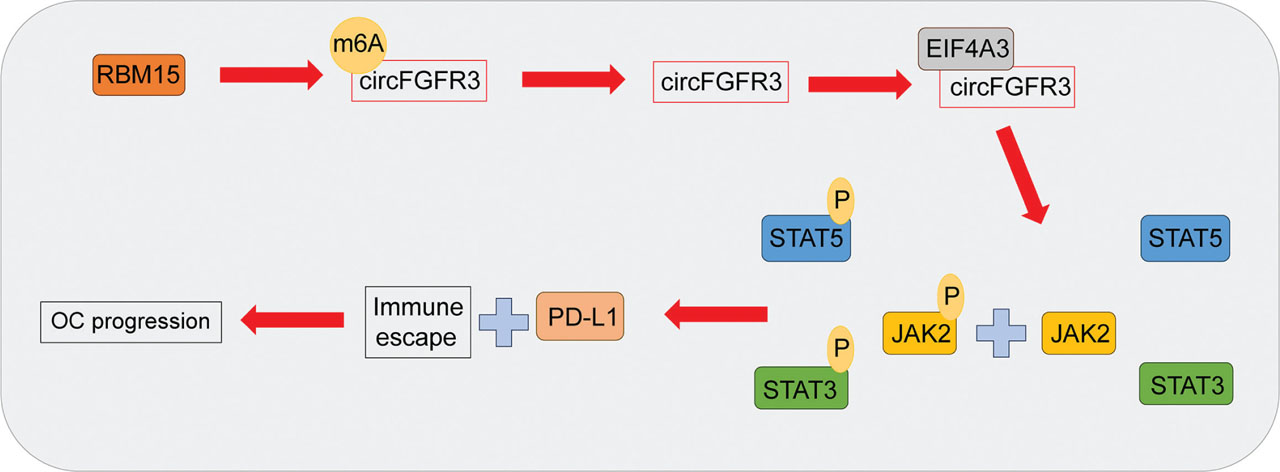
Fig 7.
The mechanism of RBM15 in promoting PD-L1-mediated immune escape of OC. RBM15 upregulates the expression of circFGFR3 through m6A modification. circFGFR3 binds to EIF4A3, enhances the mRNA stability of JAK2, STAT3, and STAT5, activates the JAK/STAT signaling pathway, promotes PD-L1-mediated immune escape, and thus accelerates the progression of OC. circFGFR3, circRNA fibroblast growth factor receptor 3; JAK/STAT, Janus kinase-signal transducer and activator of transcription; OC, ovarian cancer; PD-L1, programmed death-ligand 1; RBM15, RNA binding motif protein 15.
RBM15 was highly expressed in OC cells. Silencing RBM15 restricted OC cell migration and invasion, and attenuated tumor growth in xenograft models. Previous reports have indicated that RBM15 promotes various aspects of cancer progression in an m6A-dependent manner. In gastric cancer, RBM15 drives lipogenesis by promoting ATP citrate lyase activation through m6A modification, thereby enhancing cancer cell proliferation and invasion (Cai et al. 2025). RBM15-mediated m6A modification of OTUB2 activates the AKT/mTOR signaling pathway to promote malignant phenotypes in cervical cancer (Song and Wu 2023). RBM15 enhances m6A modification of SPOCK1 to activate epithelial-mesenchymal transition, leading to osimertinib resistance of lung cancer (Li et al. 2025). Notably, RBM15 can serve as a potential therapeutic target for cancer immunotherapy by regulating the immune microenvironment and PD-L1 expression (Deng et al. 2023; Dong et al. 2023). For instance, RBM15 promotes PD-L1 expression by stabilizing KPNA2, which binds to PD-1 on CD8+ T cells to inhibit immune cell activity and establish an immunosuppressive microenvironment for breast cancer immune evasion (Wang et al. 2025). Herein, knockdown of RBM15 in OC cells resulted in reduced PD-L1 expression, enhanced CD8+ T cell activity, suppressed immune evasion and tumorigenesis, and increased concentrations of IFN-γ, IL-2, and TNF-α. IFN-γ/IL-2/TNF-α are key anti-tumor factors that drive immune surveillance (Lin et al. 2017). In conclusion, RBM15 knockdown suppresses PD-L1-mediated immune evasion in OC cells, which may provide novel theoretical insights for clinical practice in OC immunotherapy.
Furthermore, RBM15 upregulated circFGFR3 expression through m6A modification, resulting in increased proliferation, migration, and invasion of OC cells. A recent study indicates that circFGFR3 induces malignant progression of OC by sponging miR-29a-3p to upregulate E2F1 expression (Zhou et al. 2020). Dysregulated expression of circRNAs is a crucial factor in the activation of the JAK/STAT signaling pathway during tumorigenesis and cancer development. Among them, circSMA4 exerts oncogenic effects in gastrointestinal stromal tumors by targeting miR-494-3p via the ceRNA mechanism, upregulating KIT expression, and activating the JAK/STAT signaling pathway (Zou et al. 2024). CircCHD7 stabilizes PDGFRB expression to activate the JAK/STAT signaling pathway, thereby promoting endometrial cancer cell proliferation (Shi et al. 2024). Additionally, circRNAs can directly drive PD-L1 phosphorylation via the ceRNA mechanism to prevent PD-L1 degradation and restore PD-L1 expression, inactivate CD8+ T cells, and impair cancer immune responses (Miao et al. 2023). Here, we found that circFGFR3 upregulated JAK2, STAT3, and STAT5, activating the JAK/STAT signaling pathway and leading to PD-L1-mediated immune evasion in OC. Therefore, we hypothesize that circFGFR3 may regulate the JAK/STAT signaling pathway by sponging miRNAs to affect the mRNA stability of downstream factors, thus modulating PD-L1 expression, which requires further validation in future studies.
JAK kinases (JAK1/2/3) activate STAT family members (STAT1-6) through phosphorylation, which form dimers and translocate to the nucleus to regulate gene expression (Erdogan et al. 2022). STAT3/5, the most frequently aberrantly activated members, act as oncogenes to promote cell proliferation, survival, invasion, and immune evasion (Groner and von Manstein 2017). Another study has found that knockdown of OTX1 in OC cells decreased protein levels of p-JAK2/JAK2 and p-STAT3/STAT3, suppressed JAK/STAT signaling, and attenuated cancer cell proliferation (Zhang et al. 2023). Inducing a reduction in phosphorylated JAK2 and STAT5 proteins blocks the JAK/STAT signaling pathway, thereby suppressing c-Myc expression, inhibiting OC cell proliferation, and triggering apoptosis (Bagratuni et al. 2020). Consistently, RT-qPCR and western blot analysis revealed that knockdown of RBM15 suppressed circFGFR3, concomitantly reducing the levels of p-JAK2/JAK2, p-STAT3/STAT3, and p-STAT5/STAT5, finally suppressing PD-L1 expression and reducing OC cell proliferation. Activation of the JAK/STAT signaling pathway in breast cancer increases phosphorylation levels of JAK1 and STAT3, thereby promoting PD-L1 expression (Xu et al. 2023). Importantly, the combination of PD-1/PD-L1 inhibitors and targeted JAK/STAT inhibitors has demonstrated promising clinical therapeutic potential (Chen and Wang 2024). Therefore, our study proposed that RBM15 promoted PD-L1-mediated immune evasion in OC by activating the JAK/STAT signaling pathway through circFGFR3, which may provide novel theoretical insights for OC immunotherapy.
Our study still has several limitations. The m6A reader proteins (YTHDF1/2/3) through which RBM15 regulates circFGFR3 remain unclear. The ceRNA mechanism of circFGFR3 awaits further investigation. The upstream regulatory mechanisms of RBM15 are unknown. The effects of RBM15 on pyroptosis and ferroptosis in OC cells were not examined. In the future, we plan to validate the impacts of RBM15 on pyroptosis and ferroptosis in OC cells, explore the upstream regulatory mechanisms of RBM15, and investigate the downstream ceRNA regulatory mechanism of circFGFR3 to identify novel therapeutic targets for OC.
In conclusion, our study is the first to report the role of RBM15 in OC immune escape and proposes a novel mechanism, revealing that RBM15 upregulates circFGFR3 expression through m6A modification and circFGFR3 binds to EIF4A3 to enhance the mRNA stability of JAK2, STAT3, and STAT5, activating the JAK/STAT signaling pathway and promoting PD-L1-mediated immune evasion, thereby accelerating OC progression. These findings may provide novel research directions for OC immunotherapy.
Acknowledgments
Not applicable.
Notes
[2] Ethics Approval
All animal experimental protocols were approved by the Ethics Committee of Affiliated Hospital of North Sichuan Medical College, and the experimental operations were carried out in accordance with the Guidelines for the Care and Use of Laboratory Animals.
[3] Contributed by Author Contribution
Chengju Zhang, Tiantian Feng, and Yuesong Wang conceived and designed the project, Hu Wang analyzed and interpreted the data, Deng He, Xi Wang, and Shangqi Ni completed the experiments and wrote the paper, Chengju Zhang and Yuesong Wang revised the manuscript. All authors have read and approved the manuscript.
Notes
Supplementary Figures
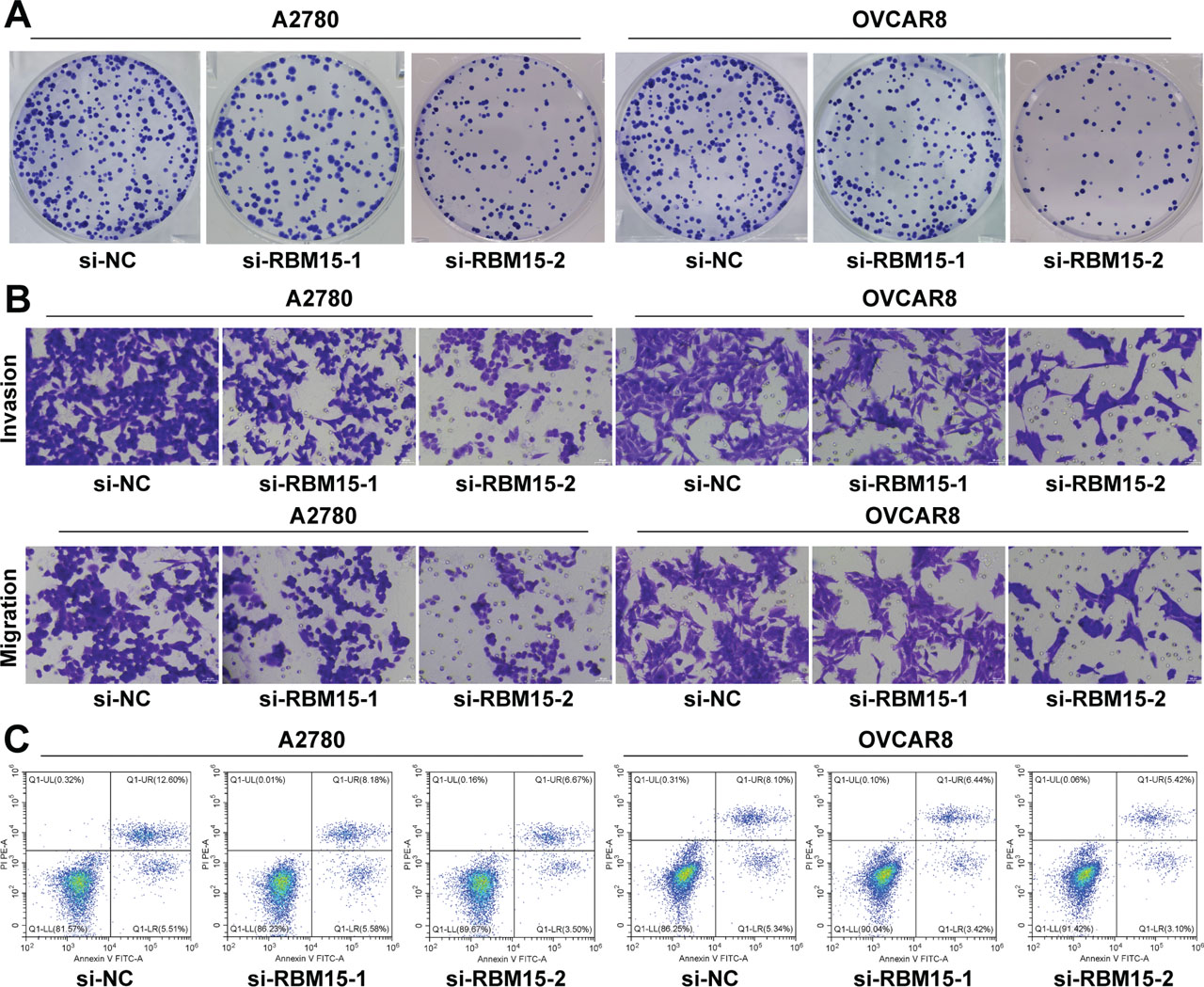
Fig S1.
Downregulation of RBM15 inhibits proliferation, migration, invasion, and immune escape of OC cells. (A) Colony formation assay and representative images. (B) Transwell migration and invasion assays and representative images. (C) Flow cytometry and representative images. OC, ovarian cancer; RBM15, RNA-binding motif protein 15.
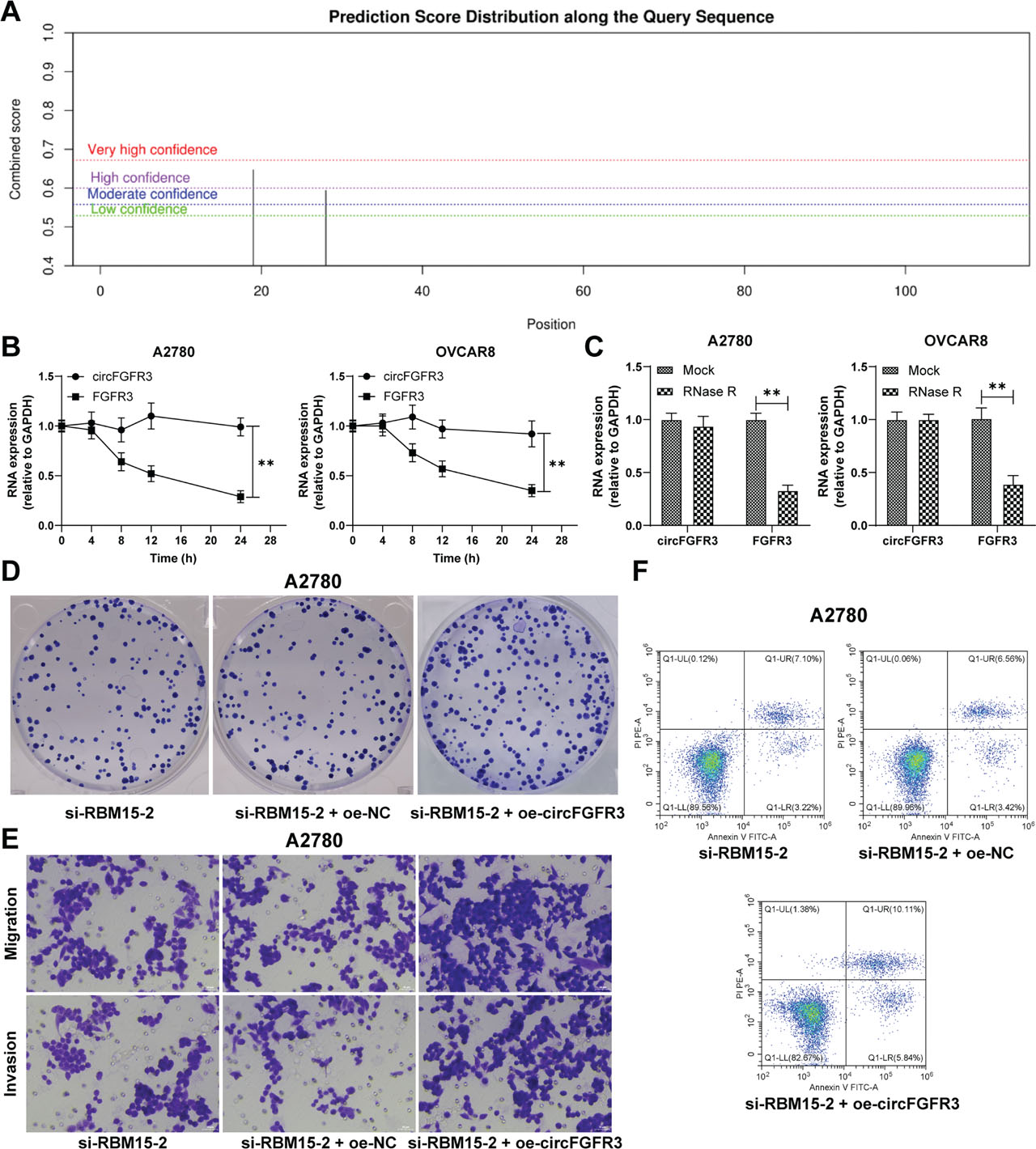
Fig S2.
RBM15 upregulates circFGFR3 to promote proliferation, migration, invasion, and immune escape of OC cells. (A) SRAMP database predicts the m6A modification status of circFGFR3. (B,C) After treatment with Actinomycin D or RNase R, RT-qPCR was used to detect the stability of circFGFR3 and FGFR3. (D) Colony formation assay and representative images. (E) Transwell migration and invasion assays and representative images. (F) Flow cytometry and representative images. Three independent repeated tests were carried out, and data are presented as mean ± standard deviation. Two-way ANOVA was used for comparisons among multiple groups in b,c, followed by Tukey's multiple comparisons test. **p < 0.01. ANOVA, analysis of variance; circFGFR3, circRNA fibroblast growth factor receptor 3; OC, ovarian cancer; RBM15, RNA binding motif protein 15; RT-qPCR, real-time quantitative polymerase chain reaction.
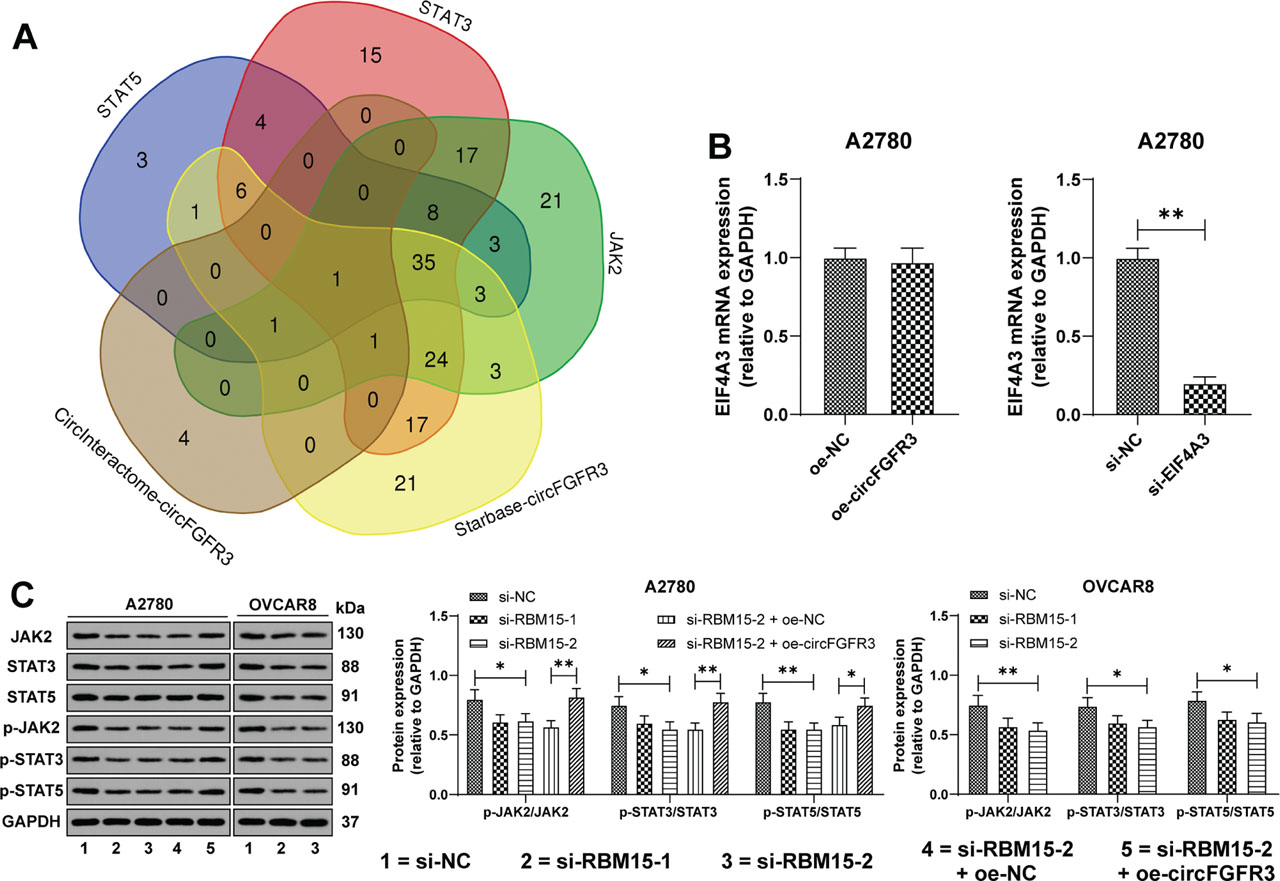
Fig S3.
RBM15 activates the JAK2/STAT3/STAT5 signaling pathway. (A) Databases predict RNA-binding proteins that interact with circFGFR3 and JAK/STAT pathway-related proteins, and take the intersection. (B) RT-qPCR detects the expression of EIF4A3 in various cells. (C) Western blot detects the expression of JAK/STAT pathway-related proteins. Three independent repeated tests were carried out, and data are presented as mean ± standard deviation. The t-test was used for comparison between two groups in panel (B). Two-way ANOVA was used for comparisons among multiple groups in panel (C), followed by Tukey's multiple comparisons test. *p < 0.05, **p < 0.01. ANOVA, analysis of variance; circFGFR3, circRNA fibroblast growth factor receptor 3; JAK/STAT, Janus kinase-signal transducer and activator of transcription; RBM15, RNA binding motif protein 15;RT-qPCR, real-time quantitative polymerase chain reaction.