Have a personal or library account? Click to login
Diphenyl Disulfide Exerts Dual Cytotoxic Effects by Inducing Ferroptosis and Apoptosis in Melanoma Cells Cover

Diphenyl Disulfide Exerts Dual Cytotoxic Effects by Inducing Ferroptosis and Apoptosis in Melanoma Cells

Open Access
|Dec 2025

Figures & Tables

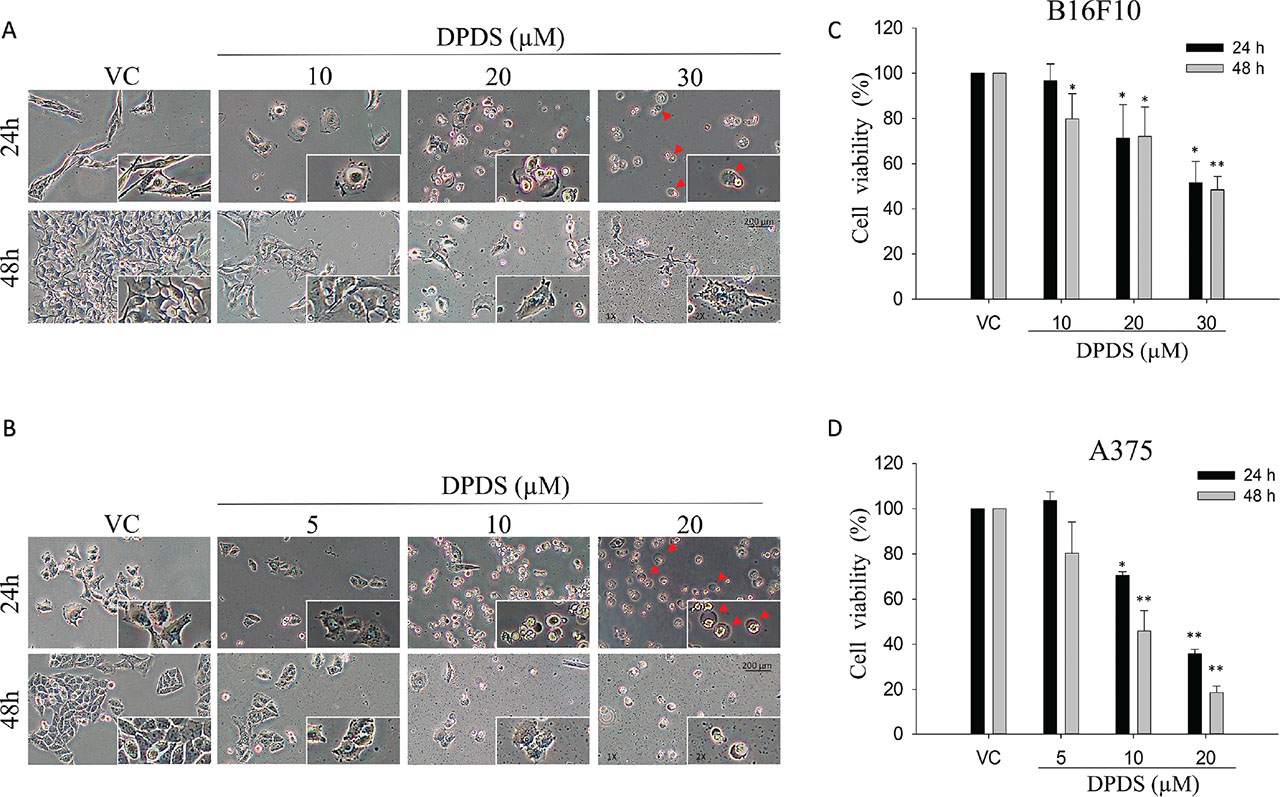
Fig 1.

DPDS induced changes in the viability and morphology of melanoma cells. Morphological changes in B16F10 cells (A) and A375 cells (B) treated with DPDS for 24 and 48 h were observed with a microscope. The red arrow indicates the ballooning phenotype. The viability of B16F10 and A375 cells was determined via a CCK-8 assay 24 and 48 h after DPDS treatment (C, D), respectively. * Indicates a significant difference from the controls. *p <0.05, **p <0.01. VC indicates the vehicle control.
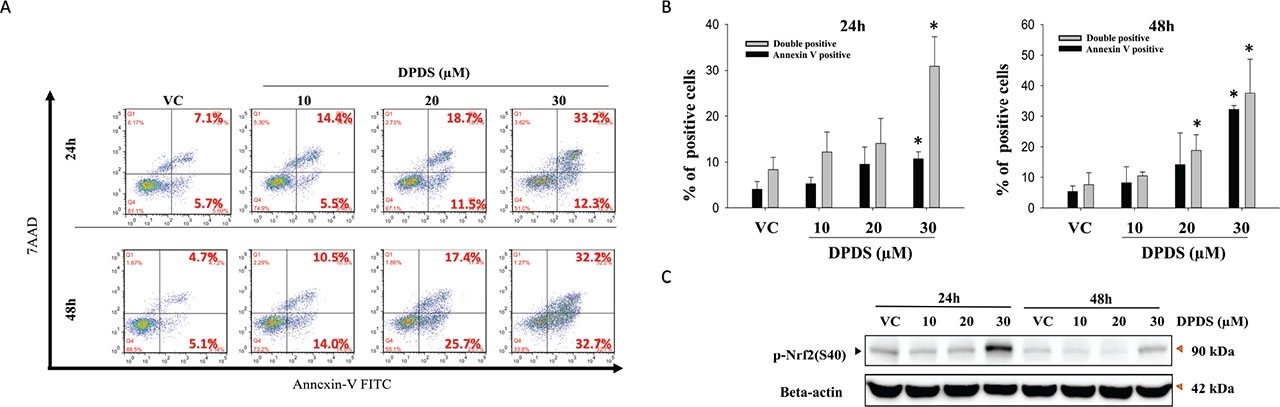

Fig 2.

DPDS induced both apoptotic and non-apoptotic cell death in B16F10 melanoma cells. (A) Annexin-V-FITC/7-AAD dual-staining flow cytometry was used to distinguish between apoptotic and non-apoptotic cells. (B) Statistical analysis of the data in (A). The cells were treated with DPDS for the indicated durations, and the proportions of cells in the first and fourth quadrants were quantified. The effects of DPDS on both the Annexin-V-positive and the Annexin-V/7-AAD double-positive melanoma cell populations were subsequently analyzed. Western blotting was conducted to evaluate the levels of phosphorylated NRF2 at 24 h and 48 h posttreatment (C). The asterisk * indicates a significant difference from the controls. *p < 0.05, **p < 0.01, ***p < 0.001. DPDS, diphenyl disulfide; VC, vehicle control.
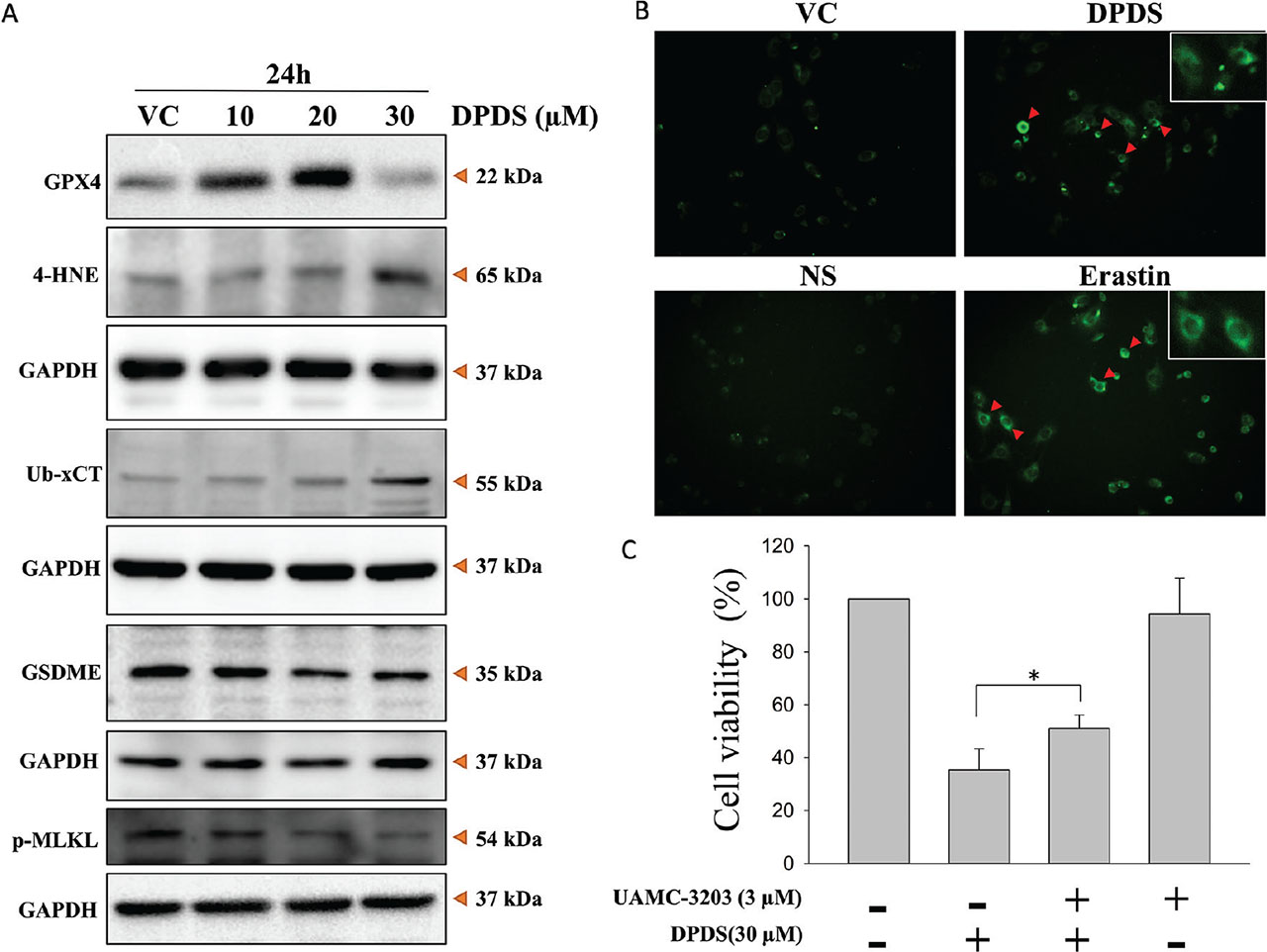

Fig 3.

DPDS induces ferroptosis in melanoma cells. (A) Western blotting was used to measure the levels of ferroptosis-, pyroptosis-, and necroptosis-related proteins. (B) Liperfluo was used to detect lipid peroxidation. The red arrows indicate lipid peroxidation (green fluorescence). NS without Liperfluo staining was used as the negative control. Erastin was used as a positive control. (C) Cell viability was assessed with a CCK-8 assay. CCK-8, cell counting kit-8; DPDS, diphenyl disulfide; VC, vehicle control.
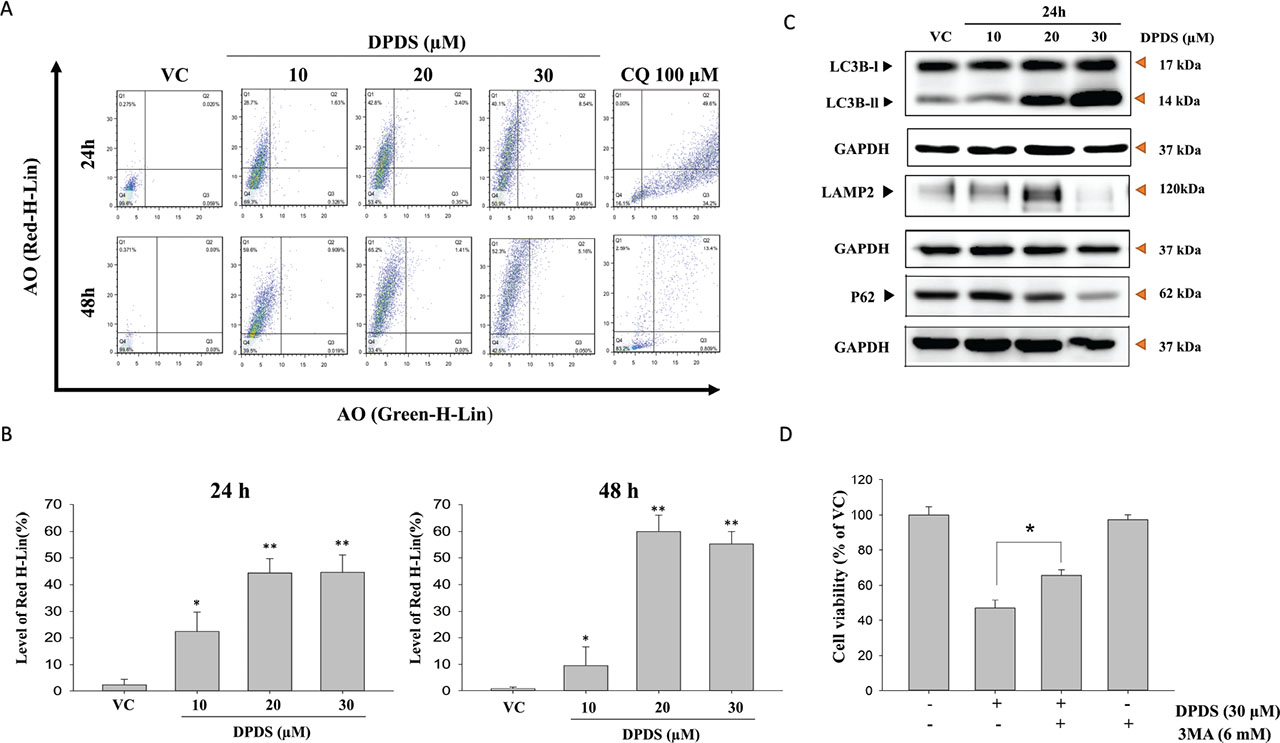

Fig 4.

DPDS induces autophagy in the B16F10 melanoma cell line. (A) Flow cytometry analysis revealed that DPDS increased the number of AO-positive B16F10 cells (red fluorescence) at 24 h and 48 h. (B) Statistical analysis of the data in (A). (C) Western blotting analysis of the expression of the autophagy-related proteins LC3B-II, LAMP2, and P62 in B16F10 cells. (D) Cotreatment with DPDS and the autophagy inhibitor 3-MA. After 24 h of treatment, cell viability was determined via a CCK-8 assay. *p < 0.05 and **p < 0.01. 3-MA, 3-methyladenine; AO, acridine orange; CCK-8, cell counting kit-8; DPDS, diphenyl disulfide; VC, vehicle control.
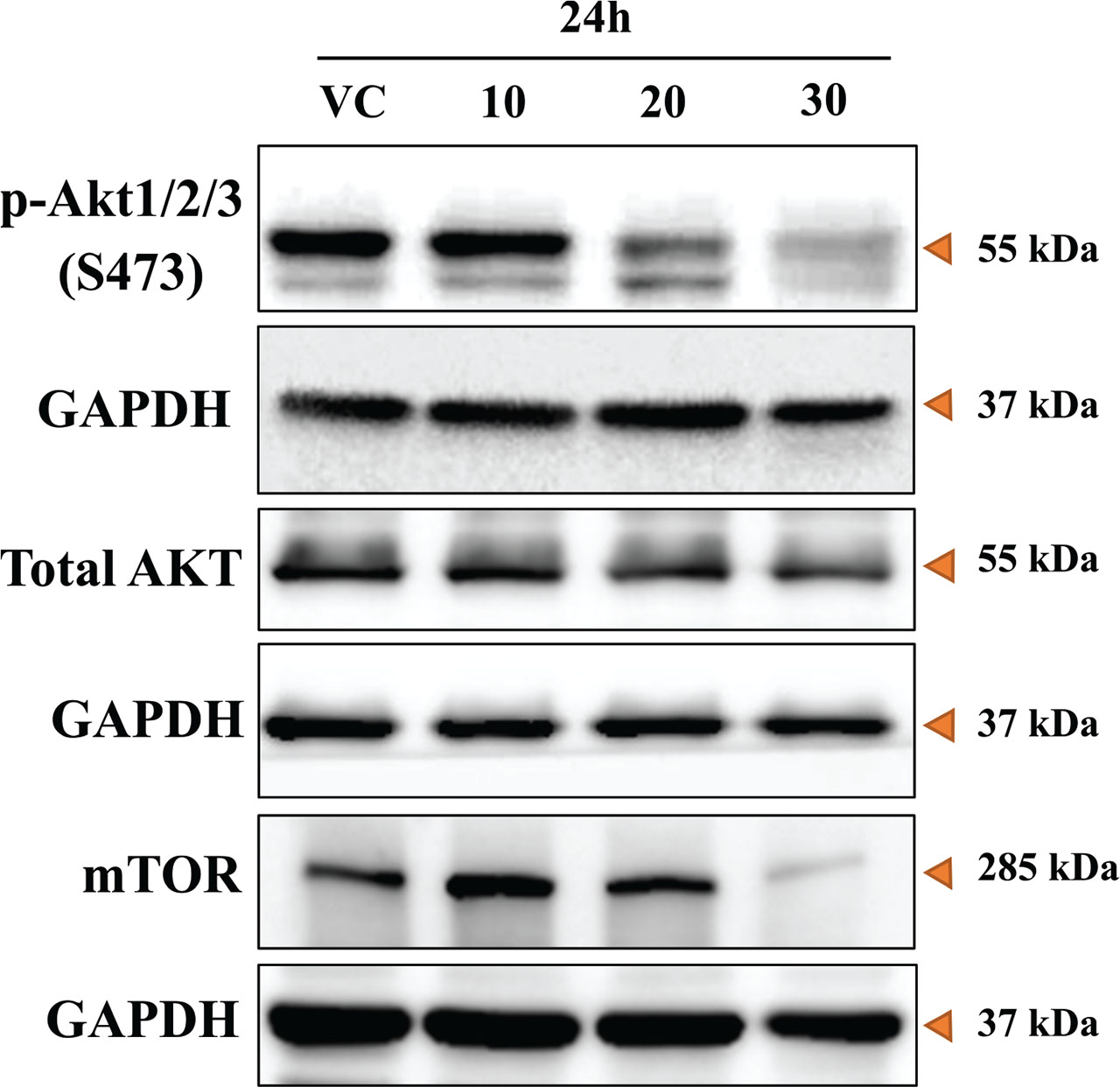

Fig 5.

DPDS inhibited the PI3K/AKT/mTOR signaling pathway in melanoma cells. B16F10 cells were treated with the indicated concentrations of DPDS for 24 h, after which the levels of phosphorylated AKT1/2/3 (Ser473) and mTOR were measured via Western blotting. DPDS, diphenyl disulfide; VC, vehicle control.
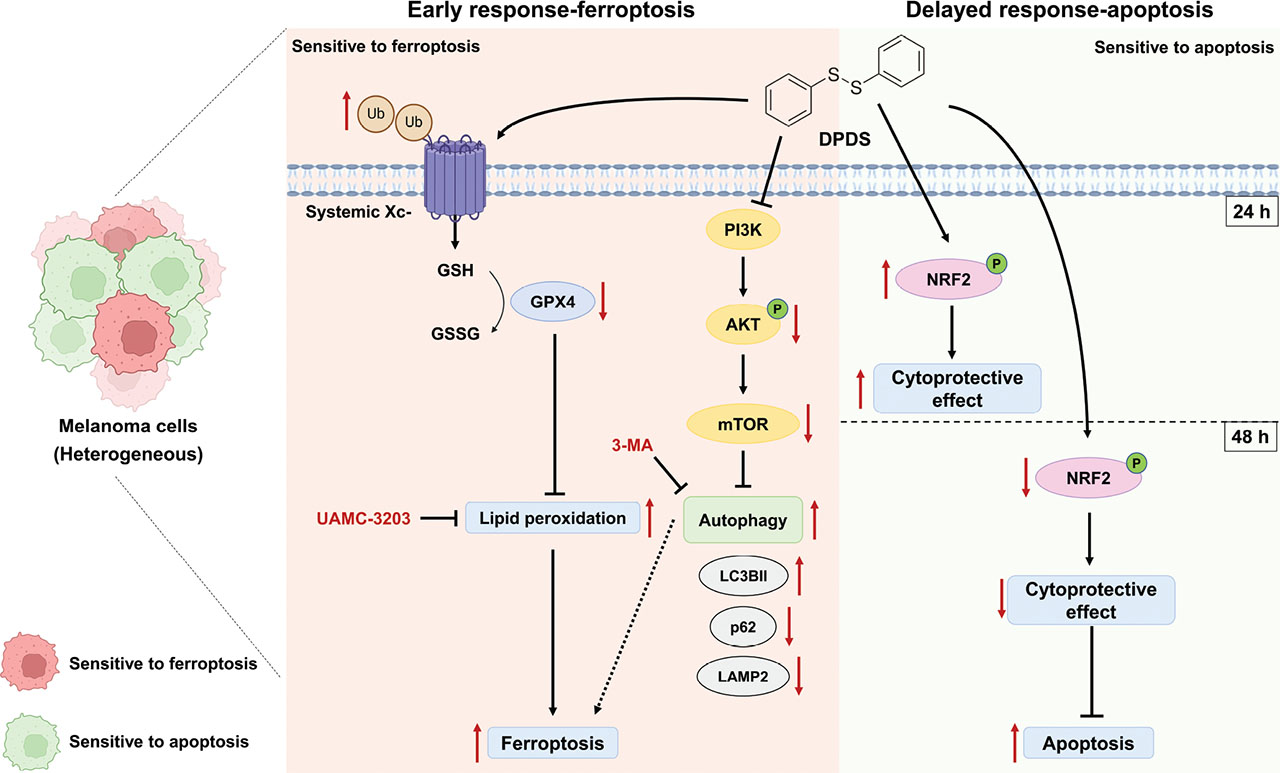

Fig 6.

The proposed model of DPDS-induced ferroptosis and apoptosis in heterogeneous melanoma cells. Melanoma cells exhibit heterogeneous sensitivity to ferroptosis and apoptosis. DPDS treatment induces distinct cell death pathways depending on cellular susceptibility. In ferroptosis-sensitive melanoma cells (left, pink background), DPDS promotes xCT ubiquitination, downregulates GPX4, and induces lipid peroxidation, ultimately leading to ferroptosis. Additionally, DPDS inhibits the PI3K/AKT/mTOR signaling pathway, triggering autophagy, which further contributes to ferroptotic cell death. In apoptosis-sensitive melanoma cells (right, green background), NRF2 activation initially exerts a cytoprotective effect, preventing ferroptosis and apoptosis. However, after 48 h of DPDS treatment, NRF2 phosphorylation was inhibited, leading to the loss of its protective function and the subsequent induction of apoptosis. Therefore, DPDS induces both ferroptosis and apoptosis, which may improve treatment outcomes for patients with treatment-resistant melanoma. DPDS, diphenyl disulfide.
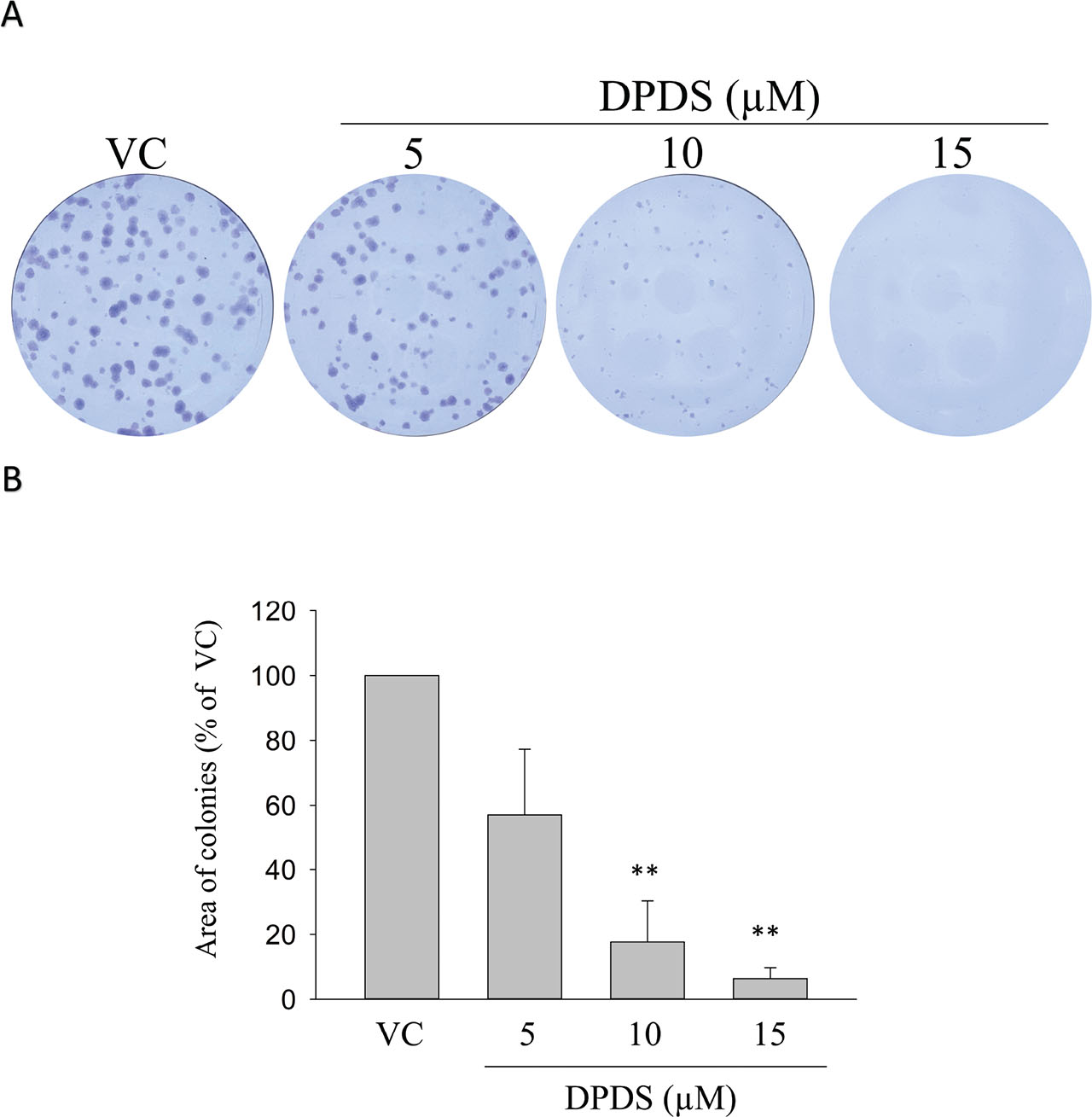

Fig S1.

The inhibitory effect of DPDS on the long-term proliferation of B16F10 cells. The melanoma cell line B16F10 was treated with the indicated concentrations (0.5–15 μM) of DPDS for 72 h, after which the medium was replaced with fresh medium, and the cells were incubated for 4 days. The cells were subsequently fixed with 4% paraformaldehyde and stained with Giemsa solution. (A) Colony formation ability of B16F10 cells after DPDS treatment. (B) Quantitative analysis of the data in (A). The data were statistically analyzed via p values, VC vs. DPDS treatments. DPDS, diphenyl disulfide; VC, vehicle control.
Language: English
Submitted on: Jun 20, 2025
Accepted on: Nov 6, 2025
Published on: Dec 20, 2025
Published by: Hirszfeld Institute of Immunology and Experimental Therapy
In partnership with: Paradigm Publishing Services
Publication frequency: 1 issue per year

© 2025 Sheng-Yuan Chen, En-De Shu, Jiann-Jyh Huang, Yen-Chun Chen, Sheng-Kai Hsu, Wen-Tsan Chang, I-Ling Lin, Chia-Hung Kuo, Ming-Fong Tsai, Zhi-Hong Wen, Chien-Chih Chiu, published by Hirszfeld Institute of Immunology and Experimental Therapy
This work is licensed under the Creative Commons Attribution-NonCommercial-NoDerivatives 4.0 License.