
Radiation processing is the use of high doses of ionising radiation to alter the biological, physical, or chemical properties of irradiated substances. It is not a new field; the idea to use high energy X-rays to sterilise medical devices dates back to the 1960s and has been implemented since the 1990s. Shortly afterwards, radiation processing became very important in health and environmental protection, because it can replace different sterilisation, disinfection, and disinfestation procedures using toxic and carcinogenic chemicals. It also enables sterilisation or decontamination of different products and materials that cannot be processed otherwise. Nowadays, many products are radiation compatible and many manufacturers opt for this method thanks to its speed, cost efficiency, penetrative abilities, and product material compatibility (1, 2).
The importance of radiation processing in our day-to-day lives is large, and there are many examples of its successful application, such as sterilisation of syringes, catheters, or implants in hospitals, decontamination of dried herbs, spices, and egg powder, or crosslinking wires in motor vehicles (Table 1). There are so many applications of radiation processing that it is impossible to cover all aspects in detail.
Table 1
Typical applications of radiation processing
| Product | Effect | Dose range (kGy) | Ref. |
|---|---|---|---|
| Healthcare products; medical devices (implants syringes, needles, scalpels, blades, aspirators, etc.) | Sterilisation | 15−30 | 3 |
| Active ingredients in medicinal and medical cosmetic products | Sterilisation | 25–50 | 4 |
| Food components and ingredients (spices, fillers, herbs, herb teas, etc.) | Killing a variety of microorganisms and insects | 1−10 | 2, 5, 6 |
| Raw materials for pharmaceutical industry (starch, plant extracts, etc.) | Enhanced functional properties (solubility, viscosity), sterilisation, enhanced extraction of beneficial compounds | 5−30 | 5, 6 |
| Polymers | Crosslinking, grafting | 5−1000 | 7 |
| Bone allografts | Sterilisation | 25−50 | 8 |
| Wastewater treatment | Killing pathogenic microorganisms for safe release of the sludge into the environment, degradation of organic pollutants | 1−10 | 2, 9 |
| Cultural heritage objects | Killing insects, moulds, and fungi | 0.5−20 | 10 |
Therefore, this article will focus on explaining decontamination and sterilisation methods and present an overview of related activities in Croatia to complement the available, yet scarce literature covering this topic for our country. Our aim is to provide valuable information on practices and challenges in light of food safety and public health.
Radiation processing at the Ruđer Bošković Institute
The Radiation Chemistry and Dosimetry Laboratory (RCDL) at the Ruđer Bošković Institute (RBI) has a long-standing experience in radiation processing and maintaining and operating a 60Co panoramic gamma irradiator, designed and built at RBI. RCDL is the only facility of its kind in Croatia and the neighbouring countries used for research, development, and industrial services in various aspects of irradiation technologies (11).
The facility has a panoramic batch-type dry storage irradiator built in 1962 for an activity of up to 5.55 TBq (150 kCi). At first, it was designed and mainly used for scientific purposes, but since 1983, it has also been used for semi-industrial purposes. The facility is unique in that it can be used for both radiation processing and scientific research (12, 13).
Its current activity (as of January 2025) is 1.036 TBq (28 kCi), and the maximum dose rate is 3.5 Gy/s. The sources of gamma radiation are 60Co radionuclides (half-life 5.27 years, mean photon energy 1.25 MeV), which are housed in 24 guide tubes in a cylindrical source rack that can be moved between the safe and the working position. In the working position, the highest dose rate is achieved at a height of 72 cm. By changing the height or increasing the distance from the source, the dose rate decreases, allowing for a wide range of possible dose rates (three orders of magnitude or more, if attenuators are used) and doses (Gy–MGy). This wide dose range makes our irradiation facility suitable for a broad scope of scientific investigations and applications in radiobiology (dose range measured in Gy), radiation chemistry, material sciences, and radiation processing (dose range measured in kGy), and testing the radiation hardness of detectors and electronic components (dose range measured in MGy).
The most important parameter in irradiating various products is the absorbed dose (i.e., energy deposited by radiation per unit mass of a material; hereinafter the “dose”). How much dose is required depends on contamination, the goal of irradiation, and the sensitivity of materials and unwanted organisms to radiation. This is determined with dosimetry and takes several stages: planning, validation, processing, and control. At the RCDL facility, dosimetry measurements are performed using the ethanol-chlorobenzene (ECB) system developed by Igor Dvornik in 1966 that consists of liquid chemical dosimeters used both as a reference standard and routine dosimeters in radiation processing. It is a simple and reliable system for high dose dosimetry (0.1–1000 kGy) accepted as an ISO/ASTM standard (14) and also recognised and supported by the International Atomic Energy Agency (IAEA). The ECB dosimetry system has been routinely applied for radiation processing in more than 30 countries worldwide (15).
The dosimeters take the form of ampoules filled with an ECB solution that produces hydrochloric acid (HCl) under ionising radiation. The obtained HCl concentration correlates linearly to the dose absorbed by the solution, allowing easy calculation of the absorbed dose (16, 17, 18).
Advantages of the ECB dosimetry system are several: dosimeters are simple to prepare, use, and analyse; they are suitable for X-ray, gamma, and electron radiation in a wide dose range independent of the dose rate and are not affected by ambient humidity and temperature during irradiation (14, 15).
DECONTAMINATION METHODS
The last two decades have seen a shift in consumer preferences towards healthy foods containing herbs and spices. Herbs and spices contain compounds with antioxidant, anti-inflammatory, anti-fungal, anti-bacterial, anti-atherosclerotic, and even anti-tumour properties ( 19, 20,21,22,23,24). Dried herbs and spices are usually contaminated with a variety of microorganisms, such as bacteria (Staphylococcus aureus, Salmonella, Pseudomonas aeruginosa, Clostridium, Enterococcus, Staphylococcus, Enterobacteriaceae, Bacilli, Clostridia) and fungi (Candida, Rhodotorula, Aspergillus, Rhizopus, and Mucor), which can cause a disease, spoil food, or produce toxins. Bacillus cereus stands out due to its spores that can survive drying and heating treatments. This bacterium is often implicated in foodborne illness outbreaks linked to spices (25, 26). Another notable spice contaminant is Salmonella spp., as it persists even in environments typical of dried products (27, 28) as well as toxin-producing Clostridium perfringens (28, 29). Furthermore, many spices are contaminated with yeasts and moulds at levels exceeding acceptable limits, often due to improper handling and storage practices (30, 31).
Selection of a proper decontamination method is crucial to eliminate or minimise food pathogens and spoilage microorganisms and at the same time preserve its sensory and nutritional properties ( 32, 33,34,35). Steam treatment and irradiation are the most common methods applied on industrial scale. High-temperature steam treatment (100–200 °C) is particularly effective in decontaminating surfaces of microbes and moulds (36) but can affect food quality by removing aromatic volatile compounds, changing flavour and aroma, and degrading nutrients (37). Besides, it may not be as effective in eliminating pathogens resistant to thermal processing (38).
Another decontamination method is fumigation with ethylene oxide (EtO). This method is highly effective against bacteria, spores, and viruses (32) but also removes bioactive compounds such as alkaloids and glycosides and can produce carcinogenic substances such as ethylene glycol and 2-chloroethanol, which can persist in food for many months after processing. The treated product must be stored in open containers to allow EtO to outgas. This not only increases the cost but, more importantly, increases the risk of re-contamination. For these reasons EtO has been banned in the European Union.
As a non-thermal alternative, ionising radiation has been gaining momentum thanks to its effectiveness in reducing microbial contamination while preserving the organoleptic and physicochemical properties of food (39, 40). Research shows that ionising radiation can effectively eliminate pathogens and mycotoxins, increase food safety, and extend shelf life (41, 42). Gamma irradiation is particularly successful in eliminating fungal contamination in spices without compromising their nutritional value (43). Moreover, ionising radiation can increase the antioxidant activity of certain foods and contribute to their health benefits (44). Another main advantage over steaming and fumigation is that it penetrates food deeply and decontaminates it uniformly without chemical changes. This property makes it particularly effective for treating loose and packaged food products (45). Even though the method is gaining momentum, it faces some resistance from EU consumers who prefer non-irradiated products (46).
Ionising radiation interacts with microorganisms by forming free radicals, electrons, and ions, which cause the degradation of nucleic acids. Microorganisms are primarily destroyed by the hydroxyl radicals which react with the base and sugar components of DNA, in some cases leading to the breakage of sugar-phosphate bonds and loss of replication function. The result is cell death. Organisms with a more complex genome are more resistant to irradiation, which is why viruses are typically treated with lower doses of radiation than bacteria.
Gamma irradiation is generally divided into three categories based on specific targets. Low doses (<1 kGy) are used to delay insect infestation, inhibit sprouting, and inactivate certain foodborne parasites. Moderate doses (1–10 kGy) are applied for microbial decontamination by inactivating foodborne pathogens to improve the quality and extend the shelf life of food. High doses (>10 kGy) are used for commercial sterilisation (47, 48).
Food irradiation
Food irradiation is considered a safe and effective technology by the World Health Organization (WHO) (49), the Food and Agriculture Organization (FAO) (50), and the International Atomic Energy Agency (IAEA) (51). The foundation for food irradiation was laid with the adoption of the General Standard for Irradiated Foods in 1983, followed by a comprehensive revision in 2003 (52). This standard specifies that the intended technological purpose should be accomplished with the minimum absorbed dose, while the maximum dose should not exceed levels that could jeopardise consumer safety or adversely affect the structural integrity, functional properties, or sensory characteristics of the treated food. In general, the maximum dose should not exceed 10 kGy, unless this is necessary for a legitimate technological purpose. The standard also requires irradiated food to be labelled in accordance with the General Standard for the Labelling of Pre-packaged Foods (52).
It is very important to make the producers, suppliers, consumers, and general public aware that radiation-processed food does not become radioactive through effective evidence-based communication about the safety and benefits of irradiated food to overcome persistent misconceptions among the producers, suppliers, and general public. It is because of such misconceptions and regulatory challenges that food radiation processing in the EU has a downward trend (53). In 2020 and 2021, slightly over five kilotonnes of food was treated with ionising radiation across the EU member states, mostly frog legs, poultry, and spices (53). In Croatia, the amount of radiation-processed food – namely aromatic herbs, spices, and vegetable seasonings – varied between 2020 and 2024 as follows: 8.5 t in 2020, 21.1 t in 2021, 6.4 t in 2022, 9.1 t in 2023, and 19.2 t in 2024 (RCDL facility records).
Since Croatia uses gamma radiation mainly to decontaminate dried herbs, teas, and spices, we will give a brief overview of its effects on bioactive components contained in them, namely phenolic compounds, alkaloids, tannins and sulphur-containing compounds.
The effects of food radiation processing on bioactive compounds
Gamma radiation can have both beneficial and detrimental effects (6, 54, 55). As mentioned above, the maximum permitted dose for dry herbs is 10 kGy, but a lower dose is usually applied to preserve colour, taste, and beneficial bioactive substances with antioxidant, anti-inflammatory, antimicrobial, anti-cancer, and immunomodulatory effects.
Phytochemicals, such as phenolic compounds, flavonoids, and essential oils are crucial for the health benefits associated with herbs and spices. Research indicates that low to moderate doses of gamma irradiation can enhance the extraction of these bioactive compounds by breaking down cell walls and increasing phytochemical solubility (56). Extraction of these bioactive compounds from plants has gained a lot of interest from food science and biotechnology, as radiation processing finds its way into the production of plant-based in pharmaceuticals, functional foods, and healthcare products, giving them added value.
However, excessive irradiation can lower total phenolic content and antioxidant capacity (57). A case in point is a study by Pereira et al. (58), who have shown that low doses of gamma irradiation can enhance the levels of certain phenolic compounds and antioxidant activity in both thyme (Thymus vulgaris) and peppermint (Mentha piperita), while doses exceeding 10 kGy can reduce their levels significantly. Another example is parsley, whose vitamin C content dropped at 2.7 kGy, while total polyphenols increased at doses below 2.0 kGy (59). In sage (Salvia officinalis), 2 and 4 kGy irradiation resulted lowered antioxidant and polyphenol content by 30 % and 45 %, respectively (60). In turmeric (Curcuma longa), low to moderate doses of gamma irradiation (up to 10 kGy) enhanced antioxidant activity by increasing the availability of bioactive compounds, curcumin in particular (61).
Black pepper, paprika (Capsicum annuum), cumin, and turmeric are mostly imported into the EU and Croatia from India, Morocco, Turkey, and China. In these semi-tropical countries, they are subject to microbial contamination due to the hot and humid climate and poor hygienic conditions during harvesting, storage, and handling (62). The most common natural contaminants are mesophylic, sporogenic, and asporogenic bacteria, hyphomycetes, and faecal coliforms. Most contamination is effectively removed by irradiation doses of 5–10 kGy, and its effectiveness is further enhanced in combination with modified atmosphere packaging (MAP), as it limits oxygen availability (61, 63).
Gamma irradiation can also affect volatile compounds responsible for flavour and aroma. The degradation of these compounds can lead to off-flavours or undesirable odours that can affect the overall sensory experience. For example, lipid degradation products in irradiated rice has been associated with unpleasant odours, suggesting that irradiation may alter the sensory profile of the food (64). All this research underlines the importance of optimising irradiation doses to achieve a balance between microbial safety and the preservation of beneficial phytochemicals in food.
Decontamination and food irradiation in Croatia
In Croatia, the use of radiation technology for decontamination is subject to national and international regulations to ensure safety and compliance with the EU standards allowing only the irradiation of dried aromatic herbs, spices, and vegetable seasonings (65, 66). Besides these, Croatian legislation allows radiation processing of teas, dried fruits and vegetables, gum arabic, and egg powder, and the highest permissible dose is 10 kGy.
Our RCDL irradiation facility is one of the 24 certified facilities in Europe that uses ionising radiation to decontaminate food and has over 40 years of experience in decontaminating spices, fillers, herbs, herbal teas, and raw materials for the pharmaceutical industry. Most often, we irradiate dry herbs such as fennel, sage and nettle leaves, camomile blossoms, marigold blossoms, and saffron. In our experience, the most common contaminants in these products, are Enterobacteriaceae, Escherichia coli, aerobic mesophilic bacteria, sulphite-reducing bacteria, moulds, and fungi.
STERILISATION METHODS
Gamma sterilisation of medical devices
Radiation processing has been widely adopted by pharmaceutical and medical device industries for sterilisation of their products and banked tissues for over 60 years (3). Additional boost came with the regulatory shift away from EtO due to increasing awareness of safety risks associated with this gas. Unlike other sterilisation methods, this technology allows sterilisation of the final packaged product, which removes aseptic room packaging as a requirement. Table 2 lists numerous advantages of radiation over chemical or heat-based sterilisation.
Table 2
Advantages and disadvantages of radiation-based sterilisation
| Advantages | Ref. | |
|---|---|---|
| Terminal processing | Due to the penetration depth of ionising radiation, products can be processed in their fully sealed, final packaging. This limits risk of contamination following sterilisation | 3 |
| Temperature independence | Temperature increases during treatment are minimal. Radiation sterilisation is efficient at both ambient and sub-zero temperatures. It can be used to treat thermolabile and frozen materials at any temperature and any pressure | 3 |
| Chemical independence | No volatile or toxic chemicals are needed. The only parameter is radiation dose | 3 |
| No residue | Radiation leaves no residue on the sterilised product | 3 |
| Flexibility | Radiation can sterilise gaseous, liquid, or solid materials of variable density and size, homogeneous and heterogeneous alike | 3 |
| Sterility assurance level (SAL) | Radiation treatment can yield a high SAL of 10−6 or better, ensuring that less than one out of a million microorganisms survive the sterilisation | 67 |
| Ease of use | Only a single variable, exposure dose/time, must be monitored | 3 |
| Disadvantages | ||
| Instrumentation | Capital costs are high and specialised facilities are needed | 2, 68 |
| Product degradation | Radiation-based methods are not compatible with all materials and can break down the packaging material and/or product | 69 |
| Radioactive source | Handling and disposal of radioactive source material requires special, highly regulated care and may involve high cost | 68 |
In contrast to decontamination, radiation sterilisation of a product means the complete destruction of all living organisms (mainly microorganisms) in a product by ionising radiation. Medical devices and pharmaceuticals can be contaminated with a variety of bacteria, moulds, and yeasts. the probability of survival of microorganisms depends on the number and type (species) of microorganisms (bioburden) in the product, the lethality of the sterilisation method, and the environment in which sterilisation is performed. A way to calculate this probability is the sterility assurance level (SAL). SAL is normally expressed as 10−3 or 10−6 to denote lower or higher assurance of sterility, respectively. Higher SAL of 10−6 often implies complete sterilisation of medical devices.
Bioburden, its radioresistance, and SAL serve as the basis to calculate a radiation dose limit for sterilisation of a specific medical product. The minimum dose should suffice to achieve the desired level of sterility, and the maximum dose indicates the upper limit beyond which a product may lose its integrity and functionality. The most common dose used to effectively sterilise medical devices without affecting their intended properties is 25 kGy (70).
Gamma sterilisation and microbiology aspects are guided by the internationally recognised International Organization for Standardization (ISO) standards 11137 (67, 70, 71,72), which detail the procedures necessary to meet radiation sterilisation requirements and include validation and routine control of the sterilisation process for medical devices. Although their scope is limited to medical devices, they often include all healthcare products sterilised by gamma radiation when there are no other applicable standards.
Products that are most often treated with gamma irradiation include single-use medical devices, implants, hydrogels, laboratory supplies, and certain pharmaceuticals. Single-use medical devices treated are syringes, catheters, surgical gloves, and wound care products. The most common materials used in their production are polyethylene, polypropylene, PVC, and thermoplastic elastomers (72).
However, not all plastic materials are suitable for or can withstand the dose required for effective sterilisation (often in the range of 25 kGy to over 50 kGy) (73, 74). In polymers, ionising radiation can generate free radicals and chain scission (change in molecular weight) or changes in cross-linking which can render them brittle, discoloured (due to surface oxidation), malodorous (due to released volatile compounds) or non-functional (due to reduced tensile strength). The typical dose range for the sterilisation of plastic materials is 15–25 kGy, and 25 kGy is the most common sterilisation dose. Once the product is sterilised, it remains sterile as long as the outer packaging remains intact.
Radiation sterilisation in Croatia
Figure 1 shows some of the products we sterilise at our RCDL facility. They can be divided in two categories: a) disposable medical equipment and accessories that come into direct contact with the patient (endoprostheses, scalpels, lancets, hypodermic needles, hypodermic syringes, aspirators, catheters, brachytherapy applicators, wound dressings, umbilical cord clamps, swabs, gloves, bags, bed linen, gowns) and those that do not (laboratory glassware, plasticware, supplies, covers, and masks) and b) pharmaceuticals (from raw materials and excipients to finished products and packaging, including antibiotics in powder, hard gelatine capsules, ointments, droppers for eye drops, lactose, cellulose, starch, plant extracts, tubes, and applicators).
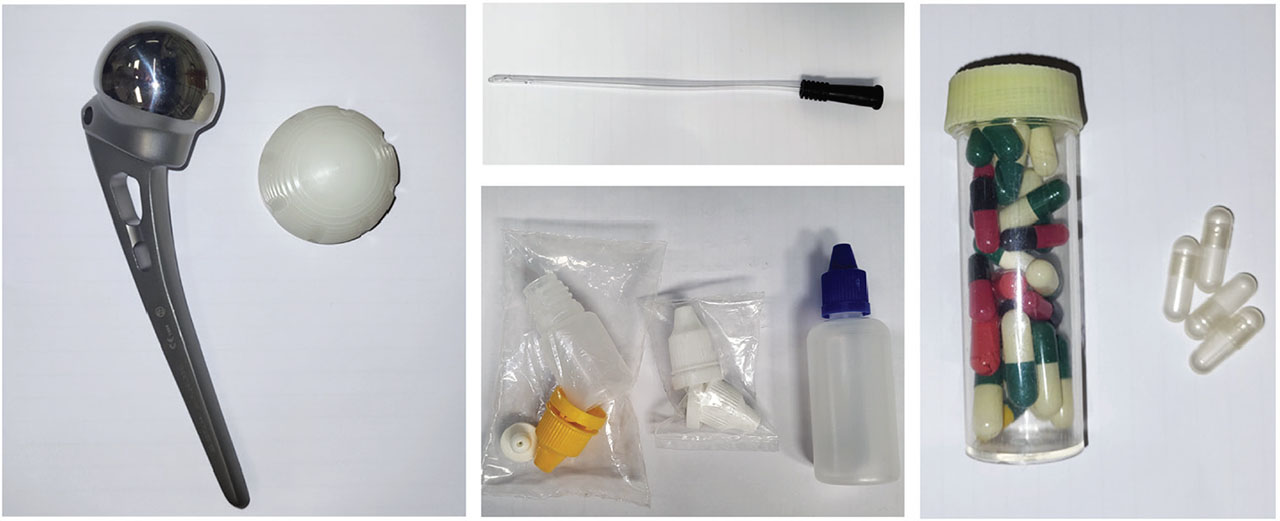
Figure 1
Examples of products sterilised with gamma radiation at RCDL. Left to right: artificial hip, catheter, plastic bottles with caps, and hard gelatine capsules)
In addition, RCDL provides research and development support and expertise to pharmaceutical companies. Since 2021, RCDL is ISO 11137 (70,71,72) and ISO 13485 (75) certified for sterilisation by gamma irradiation. We see a growing customer interest for radiation sterilisation of medical devices and healthcare products thanks to the growing recognition of the method’s efficacy, versatility, and regulatory compliance ensuring the safety of medical devices and pharmaceutical products in Croatia. As the demand increases, we expect irradiation assume a key position in ensuring the safety and efficacy of medical devices and healthcare products.
CONCLUSIONS
Radiation processing continues to provide superior services to a variety of industries, ranging from medical device manufacturers, pharmaceutical, cosmetics, and toiletries industries to food producers and processors. The demand for sterilised and decontaminated products is expected to continue growing, driven by advancements in healthcare and the ongoing need for safe medical devices.
Our gamma irradiation facility at RBI continues to play an important role as the only facility of its kind in Croatia providing not only sterilisation and decontamination but also consultancy services in the application of ever evolving radiation technology.
Despite the promising developments, however, challenges by the public perception remain. Many consumers and producers associate radiation with “nuclear technology”. Addressing these fears through transparent communication and education regarding the benefits, safety, and efficacy is therefore essential to build trust in radiation technologies.