
Introduction
National studies have shown a concerning trend of consistently increasing mental health challenges for undergraduate students that exceed the general population (Auerbach et al., 2018; Dattani et al., 2023). Student distress approximately doubled from 2009 to 2019 (Abelson et al., 2021) and has continued to steadily worsen (Lipson et al., 2022). Engineering undergraduate students rated comparatively low on measures of flourishing when compared to other majors (The Healthy Minds Network, 2023), and they also were among the least likely to seek help (Hargis et al., 2021; Lipson et al., 2016; Whitwer et al., 2025). Because engineering undergraduate students report increasing mental health challenges, it is critical that we identify stressors and understand the impacts of corresponding systems and structures. More clearly and thoroughly understanding the conditions that negatively impact mental health will help identify actions to best support student mental health (Foster-Fishman et al., 2007).
Literature Review
This study explores how systems and structures within undergraduate engineering programs become stressors, or sources of stress, and how students’ perceptions of a sense of control over these stressors impact their mental health and well-being. To better understand our participants’ intrinsically emotional experiences regarding stress and control, the first author used a novel, arts-based memoing approach. Arts-based methods engage art as part of the research process. In this manuscript, the first author created visual art immediately after the interview, and the team included this art in the analysis process. To provide additional context for how arts-based methodologies can increase comprehension and emotional intelligence in researchers, we also review these methods.
Mental Health and Stress Research in Engineering Education
Studies within engineering education have examined the trend of diminished mental health for students, as well as the help-seeking and coping mechanisms in which they engage. These studies confirm that many engineering students experience diminished mental health (e.g., Asghar et al., 2023a; Danowitz & Beddoes, 2018; Danowitz & Beddoes, 2020; Danowitz & Beddoes, 2022; Deziel et al., 2013; Posselt & Lipson, 2016). For example, Danowitz and Beddoes (2022) found that half of their national survey of over 900 undergraduate engineering respondents screened positively for a mental health condition, but only sixteen percent reported receiving a mental health condition diagnosis. Recognizing the need for an increased understanding of mental health in engineering education, researchers have examined engineering student coping and help-seeking (e.g., Wilson et al., 2022; Hsieh et al., 2012; Jiang et al., 2023; Miller et al., 2022; Sallai et al., 2022; Wilson et al., 2024). Wilson et al. (2024) reported that less than half of the students surveyed shared they would likely not seek help if experiencing mental health distress. Recent work has included institutional personnel (e.g., faculty and staff) perceptions of supporting student mental health and wellness (Asghar et al., 2023b, 2023c; Sanders et al., 2023). When examining systemic factors that impact student mental health, prior work has focused on systemic barriers to seeking professional mental health support. For example, several studies have found that factors such as overloaded schedules and unavailability of appointments limit time to access counselors (Jensen et al., 2023c; Wright et al., 2023).
Concerningly, chronic stress is an early indicator of risk for diminished mental health (Acharya et al., 2018). It is therefore important to deeply understand students’ experiences of stress and stressors. Several studies have identified stressors that engineering undergraduate and graduate students experience (Ban et al., 2022; Cromley et al., 2023; Jensen et al., 2022; Jensen et al., 2023a; Marquez & Garcia, 2023; Mirabelli et al., 2024; Sallai et al., 2022; Schneider, 2007). Studies on engineering undergraduate students (e.g., Ban et al., 2022; Jensen et al., 2023c) as well as engineering faculty perceptions of engineering undergraduate students (e.g., Sanders et al., 2024) identified the engineering workload as a primary stressor that students experience. Other recent studies identified engineering disciplinary culture as impacting students’ experiences of stress (Ban et al., 2023; Beddoes & Danowitz, 2022; Jensen & Cross, 2021; Posselt & Lipson, 2016; Sanders et al., 2023). This has led to calls for engineering culture to shift towards a culture of wellness (Jensen, 2021; Johnson et al., 2024). To build this culture of wellness, we must thoroughly understand the structural mechanisms that promote chronic stressors, especially for undergraduate engineering students; however, research in this area is still nascent.
Arts-based Methodologies Increasing Interviewer Emotional Intelligence in Mental Health Research
It is important for researchers to critically examine how their lived experiences and emotions interact with and support the research with which they engage. This critical reflection supports quality (Walther et al., 2013, 2017) and is often represented as a positionality statement in journal articles (Hampton et al., 2021; Martin et al., 2022; Secules et al., 2021). Understanding our emotional responses to research is important because emotions are a valuable and integral part of this reasoning process (Zembylas, 2016). Emotions “provide us with the imaginary power that we need to…. take part in other people’s perspectives” (Roeser, 2012, p. 106). However, methodically engaging with the complexity of emotions can be challenging (Lönngren et al., 2023).
Arts-based methodologies provide an avenue for engaging with the complexities of emotions, which results in a more complete understanding of the data. Arts-based methodologies include engaging with art as part of the research process and can include music, performance, visual art, film, and other creative media (Leavy, 2016, 2022). Arts-based methods have also been used in engineering education research to center participants’ experiences (Burnard et al., 2018; Jennings et al., 2021; Katz-Buonincontro, 2018; Laduca et al., 2017), including supporting ethics of care and mental health (Figard, 2024; Jennings, 2023; Robert & Leydens, 2023).
Arts-based methodologies allow for the exploration of human experiences in ways that illuminate beyond the limitations of language (Boroditsky, 2011; Dewey, 1986; Greene, 2000; Root-Bernstein & Root-Bernstein, 2001). While language provides a limited number of words to describe any situation, creative expression through art provides a wider spectrum of options and thus an increased vocabulary. For example, the available vocabulary in visual art can span a spectrum of shapes, colors, textures, sizes, positions, motions, materials, etc. This increase in available vocabulary provides a much broader range of options for expressing experiences and emotions than words alone. Art can thus be used as a tool that allows a person to organize, contain, and mirror internal feelings and relationships (Carla, 2022; Malchiodi, 2011; Messenger, 2016). For example, visual journaling is the analytic process of drawing to process these internal aspects (Messenger, 2016; Shields, 2016).
When art is used as a tool to allow a person to organize, contain, and mirror their internal feelings and relationships, this process effectively increases the person’s own emotional intelligence. We have supported this claim by applying Salovey et al.’s (2008) four-component definition of emotional intelligence to our work. In doing so, we identified that visual journaling increases researcher “vocabulary” to: (1) perceive, appraise, and express emotions. Once this data is tangibly represented, more people can engage with the data. This enables researchers to (2) use emotions to facilitate cognitive activities, such as interview analysis, as a team. Tangibly represented arts-based data similarly supports researchers to (3) understand, analyze, and identify relationships between emotions; and (4) manage emotions in themself and others.
In this paper, we used art created by the interviewer (first author) to enable additional dimensions of analysis, which included the organization and mirroring of internal feelings as visual memos. Supporting the emotional intelligence of researchers enabled more complete engagement with the subject matter.
Framework: Job-Hindrance-Control-Support Model
The job-hindrance-control-support (JHCS) model guided the design of one interview question and informed the analysis of our study. The model is a modified form of an organizational model of workplace stress, the job-demand-control-support (JDCS) model (Dawson et al., 2016; Karasek, 1979). The JDCS incorporates both job control, or freedom for a worker to decide how they will meet their job requirements, and job demands, which traditionally refers to workloads (Dewe, 2017; Karasek, 1990). Support in the model primarily refers to social support. Cavanaugh et al., (2000) proposed that demands can be viewed as both challenges and hindrances, the difference being that hindrances were typically associated with less job satisfaction. More recently, Gerich and Weber (2020) demonstrated that job demands considered as hindrances are more positively associated with burnout than challenge-type job demands. Gerich and Webber’s findings support adapting the JDCS to the JHCS when examining student stressors and supports. The JHCS (Figure 1) has been leveraged in prior engineering education research to examine graduate engineering student stress (Jensen et al., 2023b; Mirabelli, 2023; Mirabelli et al., 2023a), but not to study undergraduate engineering experiences.
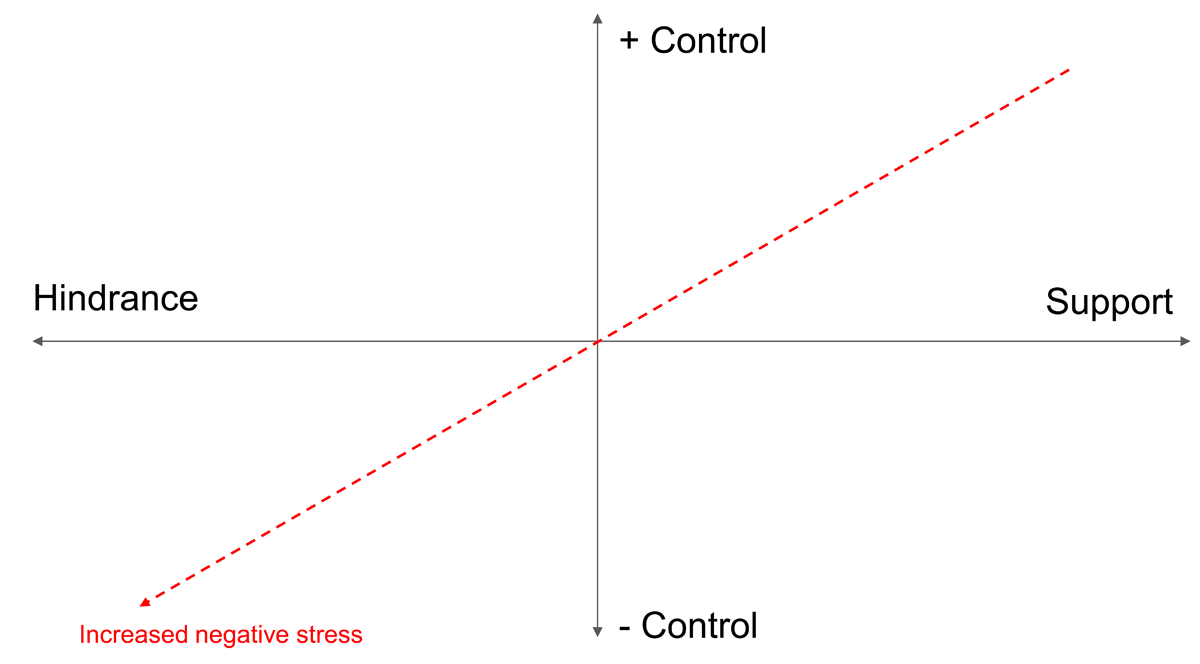
Figure 1
JHCS Model (Dawson et al., 2016) adapted and modified from (Mirabelli, 2023).
In Figure 1, the vertical axis represents more or less control, and the horizontal axis represents a hindrance to support continuum. In our use of this model, we described that hindrances and support can be either systemic or personal. As an experience moves further left and down, stress increases, as shown by the red dashed line; this increase in stress aligns with the previously reported JHCS model.
This model influenced protocol development through the addition of the question, “When you [give examples of stresses that a participant shared earlier in the interview], how does that relate or not relate to feeling in control?” When students described their feelings of control as directly linked to their experiences with stress (e.g., lower control correlated with higher stress), we included the JHCS during analysis. Student composites were mapped onto the JHCS model to further illustrate the interrelated components of hindrances, control, and support.
Research Questions
In this manuscript, we focused our results on actionable findings that can increase students’ sense of control and support. We focused on actionable findings by suggesting potential structural improvement in undergraduate engineering programs. Our operationalized definition of structural elements comprises policies and policy-like practices that impact individuals differently, following frameworks of structural power in education (Bilge & Collins, 2016; Collins & Bilge, 2020; Kellam et al., 2021). In this study, we answered the following overarching research questions:
RQ1: How do narratives of undergraduate engineering student stressors and supports help us understand how stress is impacted by control, support, and hindrances?
RQ2: What structural elements impact undergraduate engineering students’ experiences of their identified hindrance stressors, control, and support?
Methods
We present two composite narratives based on 14 interviews with undergraduate engineering students that were conducted in the spring of 2023 at a large, primarily residential, R2 university in the northeastern United States. These interviews were part of a larger, mixed-methods study examining engineering culture and its impacts on student mental health and wellness. These results described experiences of engineering undergraduates pertaining to their stress and how they find support. The following subsections detail the methods used by researchers, including an arts-based memoing method. This research was approved by our institution’s Institutional Review Board (HUM00226692).
Positionality
In this section, we share some of our lived experiences that impacted how we engaged with this project (Hampton et al., 2021; Martin et al., 2022; Secules et al., 2021). All authors describe themselves as White and have backgrounds in engineering or physics, and they work together studying engineering student experiences around stress and mental health in the field of engineering education.
Authors include people who have been both first-generation and continuing-generation students, some from low-income backgrounds. Some authors have experience being primarily funded through scholarships, grants, and other types of financial aid in college. During their undergraduate time, all authors lived on-campus or off-campus with peers, which is dissimilar to some participants’ experiences. Authors resonated with the at-a-distance feeling expressed by commuter students through shared experiences after their undergraduate time of commuting during graduate school and working remotely with in-person teams.
Given the authors’ experiences, we expected to find that time management might be a stressor, in addition to finances. We also expected to find tension between balancing coursework demands and job work demands, which was contrasted through our participants sharing that schoolwork was often a higher stressor than their other work.
Finally, the first author found that her identity as an engineer felt at odds with her position of creating art to be analyzed for this study. Since creating the art was originally intended as an experimental, private tool for self-reflection, she still does not identify as an artist. She does, however, identify as a “person who is willing to try a technique if it is potentially useful,” which embodies the essence of practicality and efficiency in engineering.
Participants
Participants (N = 14) were undergraduate engineering students at the focal institution and were recruited starting in April 2023 through email invitations sent by the engineering program, word of mouth, and listservs at the institution. Participant demographics were collected via survey when they responded to join the study. All participants who responded were invited to join the study, and their demographic data is presented in the supplementary materials. We invited participants from a single institution with plans to share results back to university faculty, staff, and administrators to increase the impact of these findings. It was important that we collected experiences from multiple majors and years to preserve participant anonymity. Participant counts for students’ major and demographic information are aggregated to maintain participant anonymity. Given the small number of participant responses, no demographic or programmatic inclusion criteria were considered. We concluded email advertisement as final examination dates approached so as not to interfere with students’ studying.
Student participants were primarily White, cisgender 18–21 years old people who resided in-state and began attending the focal institution directly after high school. All students attended full-time. Participants were approximately evenly split between identifying as women and men, first-generation and continuing-generation students, living in an on-campus or off-campus home, speaking English as their first language, and identifying as LGBTQ+ (lesbian, gay, bisexual, transgender, queer, and other non-heterosexual, non-cisgender, non-hetero-romantic identities). Approximately half of the participants did not identify as neurodivergent, with a few identifying or unsure if they identified as neurodivergent. Most student participants did not identify as having a disability, a veteran, or a primary caretaker, though these identities were all present in our interview participants.
Student majors included biomedical engineering, civil engineering, computer engineering, computer science, and mechanical engineering, which represented over 60% of engineering majors offered at the institution. Participants were not intentionally stratified by engineering discipline. Off-campus students traveled 5 to 30 minutes to reach campus, and commuter students traveled 40 to 60 minutes.
Racial demographics of participants approximately matched aggregate demographic information of the college of engineering. There is an approximately 10% Hispanic population in the focal institution’s department of engineering, which did not match the participants as a group. Most participants identified as White, with some identifying as Asian, Black or African American, Indian or Indian Subcontinent, and Middle Eastern or North African. Our student participants were generally younger than the focal institution’s average population. Other reported demographics for the focal institution of in-state residency, first-generation student identity, and on-campus living location are similar to the students we interviewed. We share this information to situate the students’ experiences, not to claim that our reported data is representative. The purpose of this paper is to enhance our understanding of potential relationships between student stress, control, supports, and hindrances, and not to identify significant differences between groups within engineering. Data presented in this study is composited to further maintain participant anonymity while clearly sharing their stories.
Data Collection
The first author conducted interviews with all participants between April and June of 2023. The interview protocol is shared in the supplementary materials. The interview protocol consisted of semi-structured prompts that focused on the students’ experiences with stress, how they navigated these experiences, and where they found support. This protocol was informed by prior research (Jensen et al., 2023b) as well as by a framework that describes undergraduate engineering culture (Godfrey & Parker, 2010). One interview question tied closely to the JHCS framework, and the full protocol was used in analysis.
Our theoretical framework originated from an ethnographic study of engineering culture in academia (Godfrey & Parker, 2010). Godfrey and Parker implemented Schein’s framework of organizational culture (Schein, 1985, 2010) to describe the shared beliefs and norms of engineers at a university in New Zealand. They described six dimensions of engineering culture, tabulated in the supplementary materials. Prior research has leveraged this framework to examine differences within engineering disciplines (Godfrey et al., 2014) as well as engineering culture during the COVID-19 pandemic lockdown period (Deters & Paretti, 2021). This framework has also been used to examine stress and wellness culture within engineering academia (Jensen et al., 2023b; Jensen & Cross, 2021; Miller et al., 2023; Sanders et al., 2023; Sanders et al., 2024). We used these dimensions to guide the overall study focus and the interview protocol development, but we found the JHCS conceptual framework to be more relevant for analyzing and discussing this data. We chose to emphasize the JHCS framework over Godfrey and Parker’s dimensions of engineering culture for two reasons: first, Godfrey and Parker’s work does not focus on mental health and well-being, nor does it clearly articulate the feelings of engineers into its framework; second, because students frequently compared stressors to a sense of control, the JHCS lens helped crystalize the data into results clearly tied to actionable implications that could benefit the study site and other institutions with comparable student experiences.
To mitigate self-selection biasing, interview advertising did not specify that the interview would center on stress experiences, instead asking about “engineering student experiences.” Students were interviewed once through Zoom. The interview was designed to last approximately 60 minutes, and students were asked to reserve 90 minutes. Interviews organically resulted in a duration of 30–90 minutes. We allowed students to respond for as long as they desired within the maximum 90-minute scheduled time, and we asked probing questions to uncover new information. Most participants had their cameras on during the interview, but only audio was recorded. Participants chose or approved a randomly generated pseudonym at the beginning of the interview, which was used during the recorded portion of the interview and in all ensuing data analysis. After the interviews, we used a HIPAA-compliant audio transcription service (Rev.com, n.d.) to generate transcripts from the audio files, and the first author reviewed the resulting transcripts for clarity and accuracy. Identifying information such as name and major were pseudonymized (Pawley, 2013).
During each interview, the interviewer took extensive notes, and the interviewer concluded each interview by encouraging the participant to engage in movement to release stress that may have resulted from the interview (Nagoski & Nagoski, 2020). After the interview, the first author memoed via two methods. The first was a standard notes document where she recorded thoughts, observations, questions, and ideas for future analysis (Saldaña, 2021).
In the second method, the interviewer engaged in an arts-based memoing process directly after each interview. After completing initial record-keeping, she moved to a separate table and spent 5–15 minutes painting a watercolor sketch. The initial motivation for this method was a fun, quick, structured form of emotional processing. The interviewer found unstructured sketching useful for processing emotions in prior life experience, and this sketching was originally planned as a method of self-care after engaging with potentially stressful interviews (Trenshaw, 2018). As the interviews were conducted, we found additional unexpected benefits of these arts memos. One benefit was that these memos were useful in analysis, which is described in more detail in the following section. The second unexpected benefit was that this method allowed the interviewer to communicate participant experiences while maintaining participant anonymity. Figure 2 shows an arts-based memo from an interview where the student’s feelings of strong stress were prevalent throughout their interview. The process of painting this image was helpful for the interviewer, and it enabled her to share preliminary results without risk of revealing confidential participant information. This allowed for social-emotional regulation in which others acknowledged the interview experience and its impacts. Both making the painting and talking about it were helpful in supporting the interviewer’s well-being, and we recommend this arts-based memoing method for researchers who are engaging with potentially stressful topics.
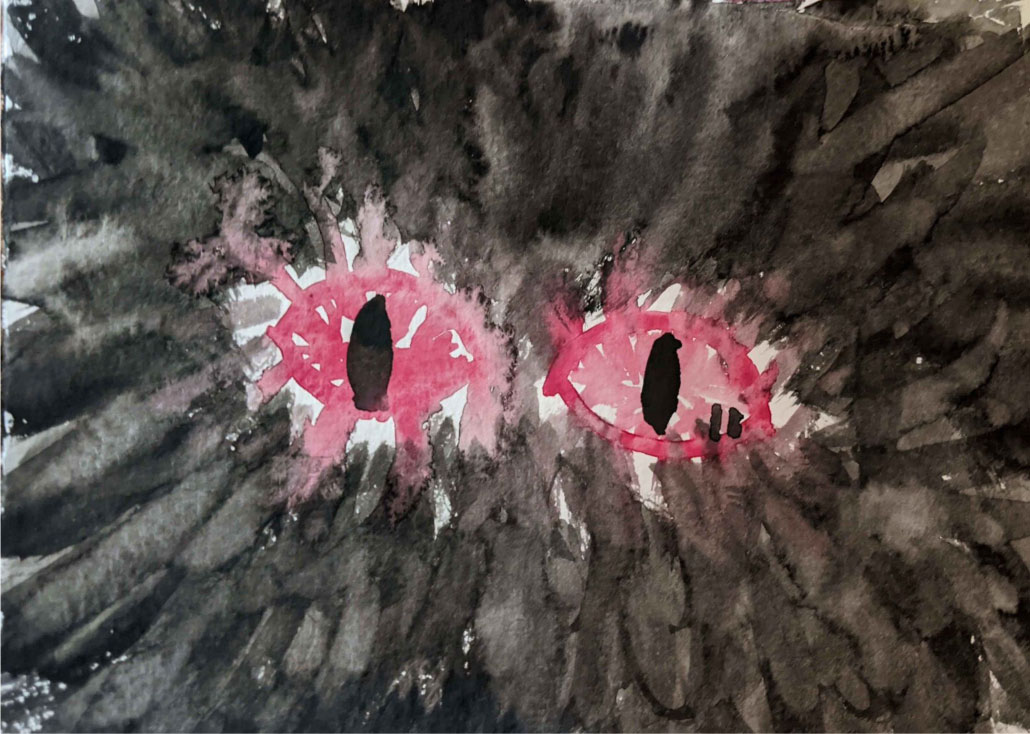
Figure 2
An arts-based memo created after an interview (participant 11).
An important note for researchers planning to use this method is that it is critical that any arts-based memoing process is a low-stakes method for the individual to engage and process their experience. If the focus of generating these memos is to produce data, the interviewer may feel self-conscious and be less able to engage with their prior experiences and emotions. We recommend that sharing all arts-based memos be fully optional to increase the interviewers’ sense of safety and thus allow them to more fully engage in this process.
After data analysis, we returned the composited narratives to participants for a round of member checking (Carlson, 2010) and to confirm the anonymity of the composited narratives. Over half (n = 9) of the participants completed member checking. The narratives were created by integrating interview text across all participants; thus, each person who participated in member checking was given all of Geroge’s and Maya’s narratives to review, regardless of the extent to which their responses influenced either narrative. When we shared the composited narratives with participants, we asked them to highlight sections that strongly resonated with or did not resonate with their experience. All participants resonated with many of the quotes from both George and Maya. In the results, we describe alignment with our member-checking process for each presented quote from the narratives.
Data Analysis
The following subsection describes a three-pronged approach to generating the two composite narratives represented in this manuscript. Composite narratives are stories that result from combining aspects from multiple interviews (Berdanier & Sallai, 2023; Figard, 2024; Sajadi et al., 2023; Wertz et al., 2011; Willis, 2019). These resulting stories allow us to highlight collective experiences that have complex interrelations along with the influences of context. Since humans often tend to retain narrative information, presenting compelling stories of common experiences also increases the impact of these results for readers (Haven, 2007). Additionally, since every narrative is composed of quotes from multiple participants, anonymity of participants can be maintained. This is particularly important when discussing sensitive topics. Detailed notes were maintained throughout this prong of analysis. Each strand of narrative within a subsection was described by at least two participants, and between four and eight participants’ stories are echoed in each of the six composite sections presented below. Some small edits were made for reader clarity, but these were removed from the narratives presented to more clearly highlight the students’ voices (Polkinghorne, 1995; Shanachilubwa & Berdanier, 2023). An example of a narrative with edits included is included in the supplementary materials.
The first method of analysis in creating these narratives was thematic analysis (Braun & Clarke, 2006) using a rapid analysis approach (Hamilton, 2013, 2021; Gale et al., 2019; Hamilton et al., 2017; Nevedal et al., 2021). During this review, the first author filled out a summary template (Hamilton, 2021) of key information collected from the interview in a consistent manner. Information in this summary was then transferred to a spreadsheet for cross-participant analysis and synthesis. The spreadsheet summary highlighted similarities and differences between students’ responses, including comparisons across and between demographic groups and lived experiences. This spreadsheet was expanded in the second method of analysis.
The second method of analysis involved a review of the 14 generated paintings for similarities and differences. The first three authors engaged in this method and identified similar elements in these paintings through several rounds of conversation. They then engaged in discussion and review of the transcripts to identify possible meanings of these symbols. Often, once the symbols were mapped to the interviews and examined in aggregate (e.g., participants A and B both had symbol Y), it was quickly apparent to the first author what the symbols may represent. Some of these elements included stress (black lines), financial need (yellow circles), social community and networks (clusters of objects), isolation (disparate clustering), elements of well-being (spirals, wavy lines), and mental health struggles (sharp lines). Notably, these elements were not pre-planned and organically arose from the arts-based memos created by the first author after each interview. The first author did not create an a-priori codebook of symbols and meanings, but consistency naturally arose from the created images. This is likely due to arts-based methodologies increasing the vocabulary available to the interviewer, as described in the literature review section. Indeed, it is likely that creating an a-priori codebook of symbols and their meanings would have significantly hampered the value of this process because it would have limited the creativity available to the interviewer. For example, the yellow circles representing financial need likely originated from the first author’s correlations with (1) yellow as a color associated with stress and (2) gold coins (yellow circles) associated with greed and money-related power differentials. These meanings are subjective in that they emerged from the first author’s prior experiences and would not directly transfer to another interviewer, since everyone has a unique lived experience. These elements also reappeared consistently enough to provide valuable insights during analysis.
The authors agreed through consensus on four resulting groupings informed by our topic of interest, students’ experiences with stress. Each grouping is described in Appendix 1. These groupings were cross-tabulated with the summary table from rapid analysis as well as participant demographics, and possible narrative strands as well as experiences to composite, were drafted. These memos-generated groupings were not used as exclusionary requirements, but they provided helpful signposting. As an example, financial need was more salient in the composite narratives of George, and yellow circles were correspondingly present in the arts-based memos of participants whose stories more closely aligned with George’s narrative. As another example, elements of interconnected clusters and disparate clusters were two of the other apparent memo-based groups, and these translated to parts of the social support portion of the narratives.
Special consideration was given to align our participants’ identities with the identities of our composite students. Demographic identities of George and Maya were decided based on the demographic identities of the participants who contributed to the respective narratives along with the identities they referenced in their interviews. For example, at least five of the participants who comprised Maya’s narrative were women, with several of them being women of color. These narratives are not generalizable to all women of color, but we felt it important to reflect the identities of participant voices. As another example, George’s experience of being unable to relate college experiences to his parents was directly tied to his experience as a first-generation student, and so he is described as a first-generation student in his introduction description. Additional demographic identities (e.g., LGBTQ+, veteran, etc.) were not as clearly salient in the interviews, so these identities were not specified for Maya and George.
This arts-based prong of analysis was engaging for the researchers and allowed for emotion-centric analysis. Created sketches also provided quick reminders of each participant and their interview. The process of engaging with the analysis of these memos encouraged the first author to engage in another round of reflection and further self-awareness. For example, we found that when there was more paint in the image (i.e., less white space), this correlated with the interviewer being more mentally and emotionally present with the participant. This presence sometimes occurred because the interviewer connected through shared interests. Other times, the interviewer felt particularly present through comprehending a participant’s complex narrative or engaging with participants’ processing of stressful experiences. This direct translation allowed the interviewer to mindfully engage and question how her prior experiences shaped both the interviews and the following analysis.
The final prong of analysis included components of a “Sort and Sift, Think and Shift” qualitative data approach, identifying powerful quotations that clearly expressed the participants’ experiences (Maietta et al., 2021, p. 2046). They succinctly captured key elements of the participants’ perspectives and felt emotionally powerful to the interviewer. These quotes were identified concurrently with filling out the previously described summary template. These quotes were then mapped onto the potentially drafted narrative strands from the prior two prongs to validate the themes and demographic influences identified previously. This reiteration of powerful quotes back onto themes provided grounding of the results in the participant’s voice. Once these powerful quotes had been grouped into themes to check for congruence among experiences, these quotes were combined and narratively arranged to create the composite stories.
All authors read these composite memos to compare their own lived experiences. Notably, while the first author was a continuing-generation student, two of the team were or are first-generation students whose lived experiences more closely aligned with the first-generation story told here. These narratives were then shared with the student participants themselves, and they were asked to check for alignment with their experiences and to confirm that any potentially harmful personally identifying information was not present. The participants highlighted sections they felt did and did not mirror their experiences. Some also provided comments and thoughts, which are presented in the results below.
One of the emergent results was that almost all students found control to directly relate to their experiences of stress. Based on this result, we identified our analytic framework (JCHS), and the composite narratives were then mapped onto this framework to more clearly describe how elements of control emerged in participants’ narratives. To our knowledge, this mapping is a novel use of the JHCS, and we found it to be helpful in identifying movement actions, or the instances where forces of change may be present. This allowed us to further group and analyze these narratives to answer RQ2.
Quality
When considering the various lenses of validation (theoretical, procedural, communicative, pragmatic, ethical, and process) (Walther et al., 2013, 2017), procedural validation and process reliability were two that were clearly present in our process. Process-wise, the application of these arts-based memos (in addition to written memos) after every interview provided consistent and reliable data for later analysis. The arts-based and composite narratives also supported deeply understanding the social reality under investigation and improved this fit with underlying theory. This improved fit resulted from the increased available vocabulary provided by artistic media. The post-interview addition of this aspect meant this analysis provided the most insight into the interviewers’ perspective of the interview rather than including the participants’ perspective. If repeating this method of memoing, we would include participant artmaking in the process but also keep the interviewer’s art.
Findings: Narratives
We present composited narratives of two students, George and Maya. After a brief introduction, three topics are described by the composite students, using participant students’ own voices. These topics include: what students found stressful and how they navigated it, who they rely on for social support, and how career planning impacts their stress. To encourage a more comprehensive perspective, we elaborate on these narratives and discuss connections to the broader literature on these topics.
George’s Narrative
George is a first-generation, White, third-year mechanical engineering student who is a man. He described himself as neurotypical and mostly financially independent from his parents (i.e., responsible for tuition, food, and transportation costs), unlike many of his peers who still rely on their families for financial support. George lives 10 minutes away from campus with his parents and siblings. Mini-paintings corresponding to some of the participants’ stories who are part of George’s composites are included below (Figure 3).
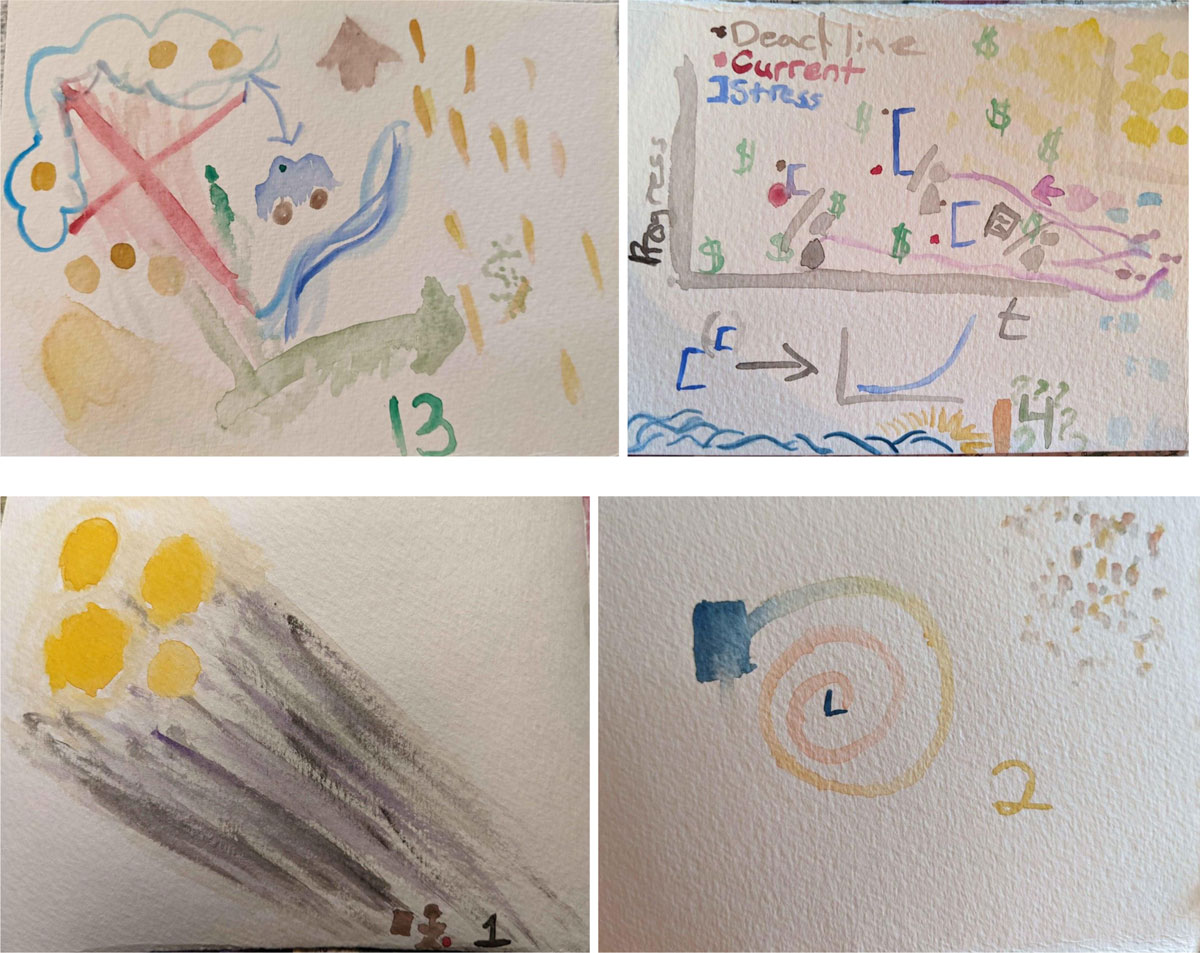
Figure 3
Arts-based memos of the first author after interviewing some of the participants (participants 1, 2, 4, and 13) whose quotes are present in George’s narrative.
When discussing what he found stressful and how he navigated stress, George shared:
I feel like I have to get really good grades. I don’t have to have a 4.0 to get financial support, but I’m treating it like I do, because I don’t want to accidentally fall behind. As a result, I’m doing better than most people in terms of academics. But, I’m definitely more stressed, I think, than most people. I also started having panic attacks. One time it happened just before finals. I’d be lying in bed, and my heart started racing, outta nowhere. And I was like, “What the fuck?” I said, “Holy shit; how am I gonna do all this?” It was like, how am I gonna do anything? Thinking you’re gonna fail everything at once. They eventually went away, as the exams passed, but it was terrifying.
I would say financial stress is a really big part of my life. I’m working two part-time jobs right now, and I’m also a TA for two classes. I’m also hunting for scholarships. I’m continuously going out talking to people, doing interviews, writing really long essays for applications. Scholarships never completely cover what I need them to. So I have everything: scholarships, loans, financial aid. And then, I will still have a remaining balance that I still have to pay off, and I’m just like, okay, well the next couple of months or whatever, I’m just gonna be grinding, saving all my money. Trying to save up. Trying to make sure I have enough food to go around sometimes, too. That can be a challenge.
I am proactive with stress. I know what’s gonna make me stressed out. So, I start by planning everything out. I don’t leave any room for the unknown to happen. Every single day, I write down everything that I’ve been assigned in the entire upcoming future as a to-do list for one day. And I do that for every single day. So then, when I actually flip through it, I’m like, “Wow, I’m so productive.” I think using the planner makes me feel a lot in control, because I know when everything’s due. I’m choosing what days I’m gonna work on what. And so because of that, the deadline doesn’t affect me that much because like I’m setting my own deadlines.
George felt pressure to achieve high exam scores because his financial support was dependent on his grades, which is also reported in prior research (Marquez & Garcia, 2020, 2023; Singh & Jha, 2013; Vitasari et al., 2010). He viewed using his planner as a way to increase control and thus decrease stress associated with tasks that are required of him. During member checking, almost all students felt that the two paragraphs on using a planner aligned with their experience, and research supports time management as an effective stress-reduction technique for college students (Adams & Blair, 2019; Groen et al., 2019). This connection with his planner and well-being is exemplified by the blue rectangle connected to a spiral, depicted in Figure 3.
George also described having several panic attacks characterized by a sudden increase in heart rate. This description of an unexpectedly elevated heart rate was considered resonant with over half of the participants that performed member checking with these composite narratives, suggesting that students are periodically experiencing physiological reactions to high stress levels. Some of our students who described similar experiences expressed confusion about what was happening to them, indicating a lack of consistency in defining or describing mental health terminology (Mirabelli et al., 2020). One student also explicitly did not want to label their experience as a panic attack, potentially due to mental-health stigma (Jensen et al., 2023b; Parcesepe & Cabassa, 2013; Stebleton et al., 2014). This high stress experienced by students appeared as black streaks in the bottom-left picture in Figure 3 and also in the shading in the dots in the bottom-right picture in Figure 3.
Financial stress was also salient for George, who had some support from living with his parents. Even though he had support in the form of housing, he was still responsible for finding money for food and other essential needs. This financial independence meant George was working multiple jobs and while constantly “hunting” for financial aid, which required additional time. Literature has echoed financial stress as significant for some students (Britt et al., 2017; Hicks, 2021; Vaughn, 2013). This stress around finances was shown as gold circles in some of the images in Figure 3. Of important note, there were also students in our interview sample who did not have support from caregivers, sharing “I am doing everything on my own,” and “I don’t have a backup.”
Next, George shared his experiences with social support when he felt stressed:
I don’t really turn to my family for support just because a lot of them don’t understand college, so it becomes more of a labor to explain. I have an amazing advisor, and I connect with her pretty much every couple weeks. She’s like my school mother; she always makes me feel so relieved. She has kids that she put through college, and she says “They were as stressed as you, and they’re okay. You’re gonna be okay.” That always helps me for sure.
I’m only traveling 10 minutes to drive from home to campus, but I’m still separated from that quote-unquote “campus life.” Sometimes, I feel like a little bit of an outcast in my major just because a lot of other students know each other from living on campus. When we break off into partners or small groups in classes, everybody has a group already. I’m one of the only a couple that are still trying to look around and find a group. We normally only talk about what we’re doing in class and what the professors are like and whatnot. I’m not involved in as many clubs as I would like. A lot of students are involved in clubs. They’re too late at night for me to make it very convenient for me, [but] they’re highly convenient if you live on campus. I don’t have a meal plan either, so I couldn’t just grab food on campus unless I was paying for it myself.
[I have good friends who are not in my major.] I tend to start isolating myself from my friends when I’m stressed. Even though I normally slowly talk to my friends through my phone, when I’m stressed, I’ll avoid checking my phone. I’ll avoid talking to them, even though I know talking to them makes me feel better. I feel bad relying on them ‘cause I know that they are also in school and going through their own thing.
Taken as a whole, George found some support from peers, but this support was more distant and reduced in times of stress. George’s experience living off-campus, though “only” 10 minutes away, prohibited him from connecting more fully with other on-campus friends and resources through activities such as clubs. This will be contrasted with Maya’s narrative, where she found significant support from her peers. In Figure 3, images of people are represented by a circle (head) stacked on top of a long oval (body). All of the images in Figure 3 have disparate connections between the people in the images, demonstrating some of the disconnect George felt.
As a first-generation student, George felt that his parents were not able to provide support related to his college stressors due to a lack of lived experience as a college student. George’s advisor provided a valuable source of social capital to provide support. He connected regularly with his advisor, who provided support that his family did not. Interestingly, George’s connection with his advisor was an experience that students in member checking often marked as very similar or very different, meaning that participants tended to feel more polarized on advisors as an avenue of support. Also of relevance is that we use advisor here as a stand-in for one of several positions, which were most commonly staff positions. Some students described a very close relationship with staff while also experiencing more hostile interactions with their faculty advisors. Literature on first-generation student experiences has highlighted and supported the importance of first-generation students connecting with peer groups and institutional support during college (Martin, 2015; Martin et al., 2013, 2020; Pfirman et al., 2014).
George described his career after college as countering the financial stresses he felt:
I’m probably one of the people that chose engineering because they saw the word engineering and they thought that makes more money. I know I have financial stresses now, but the reason that I can get through all of my academic stress and fight through it is because I know one day everything will pay off. I will be okay. I can pay off my loans with my income, and I won’t be in debt. That is what keeps me faithful for the future.
Just the process of figuring out what you want to do and even if your major is right for you, the pressure is very, very hard also on first-gen students. One good thing is that in engineering, we’re all pretty much guaranteed a job, so we’re not directly competing with each other.
Many students described choosing engineering because of the potential for future financial stability. Even students who did not feel that this matched their experience described this as common among their friends, which aligns with national (Jagacinski et al., 1985) and international (Abe & Chikoko, 2020; Achim et al., 2019) literature. Additionally, despite the potential financial security, the uncertainty of “figuring out what you want to do” was particularly hard for George and other first-generation students that he knew. Education literature has reported challenges that first-generation students experience navigating career decisions (Cho, 2022; Rivas, 2023; Toyokawa, & DeWald, (2020).
Maya’s Narrative
Maya is a Black, continuing-generation woman who is in her second year as a biomedical engineering student. Maya described herself as having ADHD (Hours et al., 2022), and she lives on campus. Mini-paintings are included below for some participants whose experiences appear in Maya’s narratives below (Figure 4).
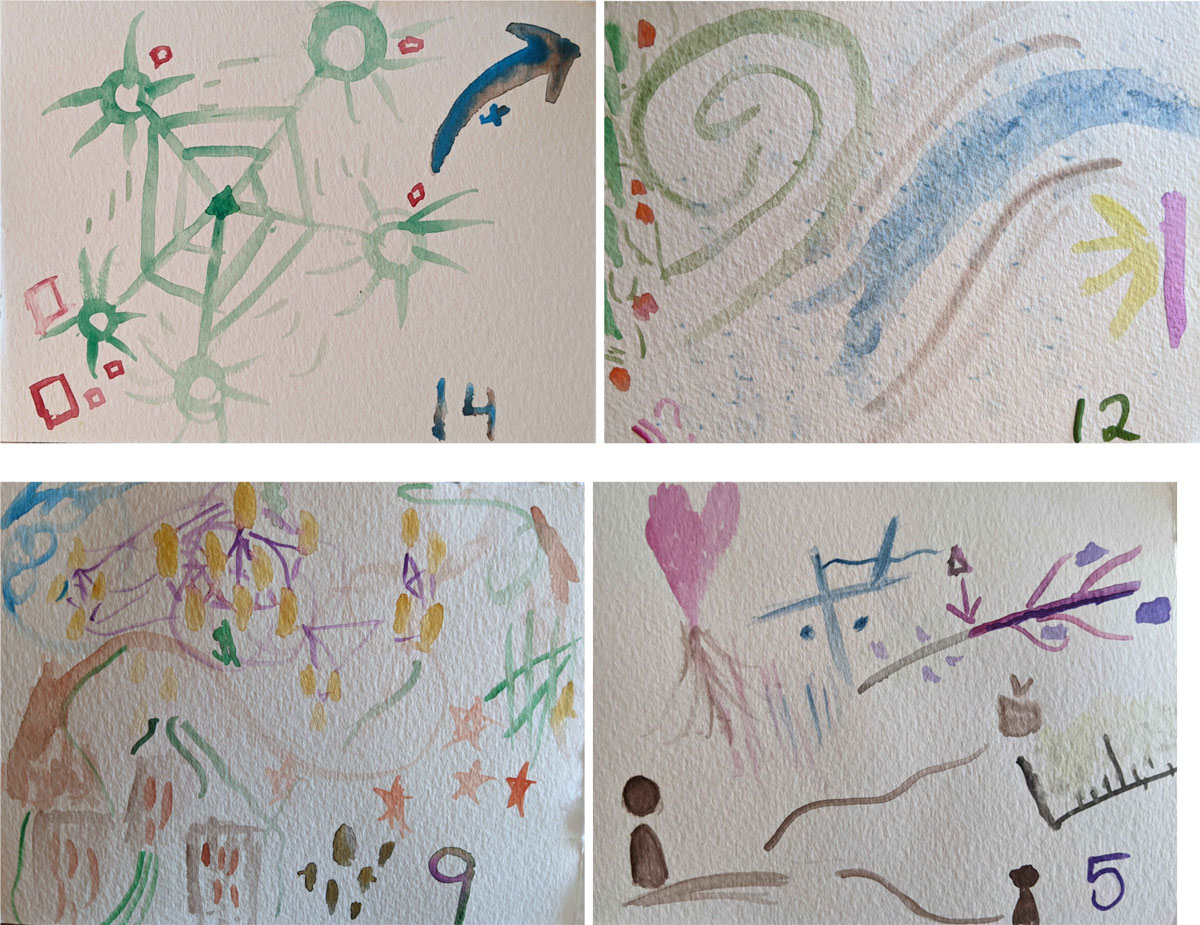
Figure 4
Arts-based memos of the first author after interviewing with some of the participants (participants 5, 9, 12, and 14) whose quotes are present in Maya’s narrative.
First, we examined Maya’s experience navigating stress:
I don’t know why stress is so intense for me, but it might be the ADHD thing. I feel like there’s at least one point in the week where either like all of my assignments are due the following day or like I have a big project due. I see it’s very complex and might just take all of my time, and I can’t do everything else that I need to do. I get this overthinking and all that stuff and all this stress and then boom, I’m done. You get that stress overload or like just a big block of feeling of stress hits you, and hits your brain, and then hits your body, and then you get that whole emotion taking over. I’ll just totally give up on the situation. That happens probably once a week during the school year.
Maya described regularly feeling overwhelmed in correlation to her assignment deadlines. This feeling of overwhelm prohibited her from fully engaging with her assignments, and it was a regular occurrence throughout the school year. An example of these feelings of being scattered and overwhelmed was in the small blue dots splattered over the top right image in Figure 4. Similarly to George’s experience of a panic attack, Maya’s description resonated wholly or in part with over half of the students who member checked these stories. Only one of the nine respondents found Maya’s description of stress to be completely different from their own experience.
In contrast to George, Maya did not describe list-making as one of her support strategies. Through member checking, many students partially or fully felt that both of George’s paragraphs describing planning matched their experiences. All of the students whose experiences did not align with these two paragraphs self-identified as having ADHD. This aligns with literature describing “ADHD paralysis” as interfering with task completion (Badiozaman et al., 2023, p. 73; Enright, 2021), which may align with Maya’s definition of feeling overwhelmed above.
Maya primarily relied on her peers for social support:
Sometimes, I’ll just knock on my roommate’s door and be like, hey or can you talk right now? A rant for 10, 20 minutes definitely helps. Either that or I just don’t even think about how stressed I am. My friend will come and be like, “Yo, you wanna play some video games?” and I’ll be like, “Yeah, let’s do that.” I would probably say support-wise everyone seems to have that kind of connection. Everyone in our classes has groups that they’re able to rely on for different things. So I guess in that respect, everyone kind of has someone.
Maya’s friends are her primary source of support. They are readily available to her, unlike George who is physically separated by distance. As a result, Maya’s close relationships were able to offer support even when she is stressed but doesn’t realize it. Engineering literature on stress has cited peer interaction as a key source of support (Jensen et al., 2023c); however, literature on student commuters describe their social relationships as often classroom-based, leading to connections that dissolve after a class ends (Barnhart, 2023; Clark, 2006; Krause, 2007; Thomas & Jones, 2017). Notably, during member checking, every participant who marked themselves as involved with clubs to a satisfactory amount (i.e., expressed dissonance with George’s vignette about clubs) also described having a roommate’s door to knock on (i.e., expressed resonance with Maya’s experience with her roommate). Every other person in member checking (i.e., those less involved in clubs) answered differently for both stories. Interconnectedness with peers is illustrated in the two left pictures in Figure 4, with the green web (top image) and orange ovals interconnected by purple lines (bottom image).
We also perceived a disconnect between on- and off-campus students’ awareness of each other’s experiences. During member checking, a student who lived on-campus described not understanding why George felt such a disconnect when attending clubs. They elaborated that they know “lots” of commuters in clubs who “pack meals for campus,” suggesting that there is a gap in how students understand each other’s experiences. This was also echoed by Maya, who observed that everyone in her classes seemed to have a supportive connection with other people. We share this dissonance to illuminate the varying perceptions that arise from different lived experiences.
Maya also described her experiences with career planning:
I feel like I don’t know how to network at all. I feel like I’m on the less social side. So, the whole interviewing and networking part has been pretty stressful. I’ve seen my peers be more ambitious with getting those interviews, getting those jobs. I feel like they’re pretty confident in that skill.
Maya’s description of stress around job networking or connecting socially with others for the purpose of finding a job, was the most commonly agreed-upon vignette among participants who participated in member checking. Support around job networking may be an opportunity to help students like Maya and many of our participants, who find this to be stressful (Badoer et al., 2021; Erickson, 2007; Martin et al., 2020).
Findings: Structural Synthesis
After creating the composite narratives of George and Maya’s stories, we used the JHCS to map their experiences with stress. Each situation was placed in a box, and actions that impacted this situation were placed next to an arrow indicating whether the action was acting to increase or decrease support (right or left movement) or decrease or increase a hindrance demand (up or down movement). We include the diagrams in the following section along with a comparison of George and Maya’s experiences. The composited narratives, their described analysis, and the mapped JHCS diagrams answer RQ1, “How do narratives of undergraduate engineering student stressors and supports help us understand how stress is impacted by control, support, and hindrances?”
After mapping narratives to the JHCS, we then extracted the actions that were described along each arrow and grouped them based on the emergent groupings of physical proximity to resources (friends, food, locations of interest), money, support for time management, and support for social-emotional regulation. These emergent groups served to answer RQ2, “What structural elements impact undergraduate engineering students’ experiences of their identified hindrance stressors, control, and support?”
Mapping Narratives to the JHCS
When we mapped George’s experience with stress on the JHCS (Figure 5), many of the experiences were on the hindrance side of the map. This aligned with the trajectory where stress is already currently perceived as a hindrance, and we explored George’s experiences managing this already-present stress. Shown as arrows on the map, the two stress-reduction techniques explicit in George’s story were using a planner and saving his money, in addition to a more implicit “high achieving” mindset. We also noticed that one stress experience with no associated coping was George’s description of a panic attack.
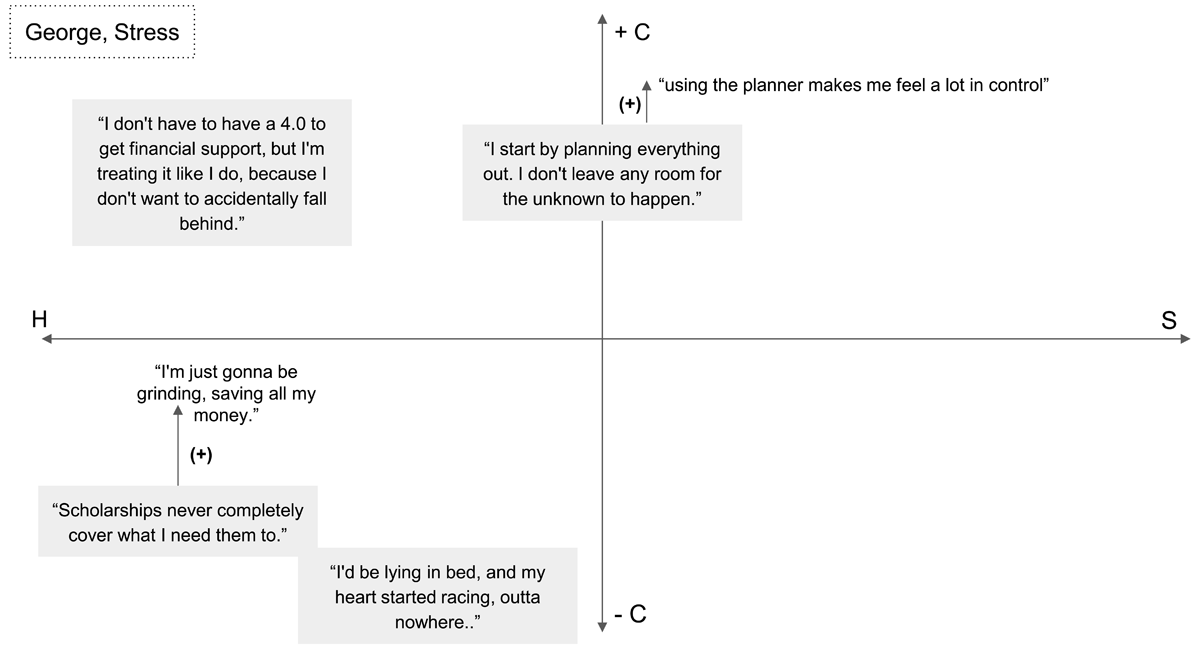
Figure 5
George’s experiences with stress mapped onto the JHCS.
When compared to George’s JHCS mapping (Figure 5), Maya’s map (Figure 6) shows how her “overthinking and all that stuff” and stress reduced her feeling of control over completing her assignments. We also noted that George described multiple mechanisms for managing his stress, whereas Maya felt overwhelmed, which prevented her from engaging in the stress-reduction strategies that George used.
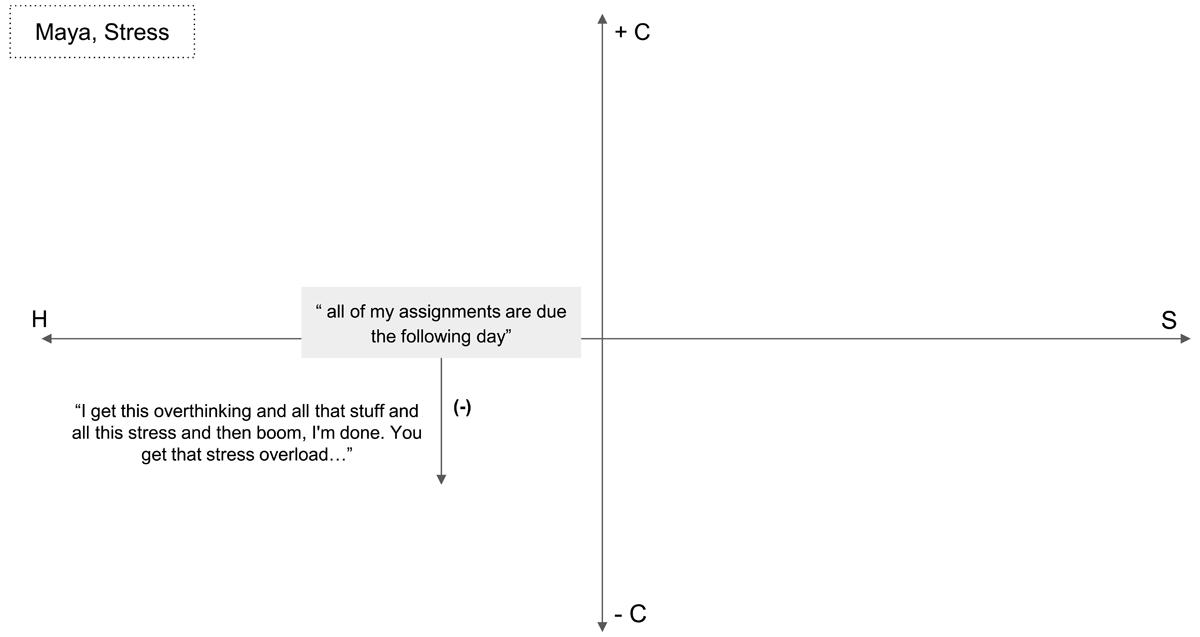
Figure 6
Maya’s experiences with stress mapped onto the JHCS.
In Figure 7, George had social support in many areas of his life, but there were common systems that prohibited his access to these supports. For example, distance and time prohibited his direct access to friends and involvement in clubs, while lack of a shared educational experience inhibited him from going to family for support.
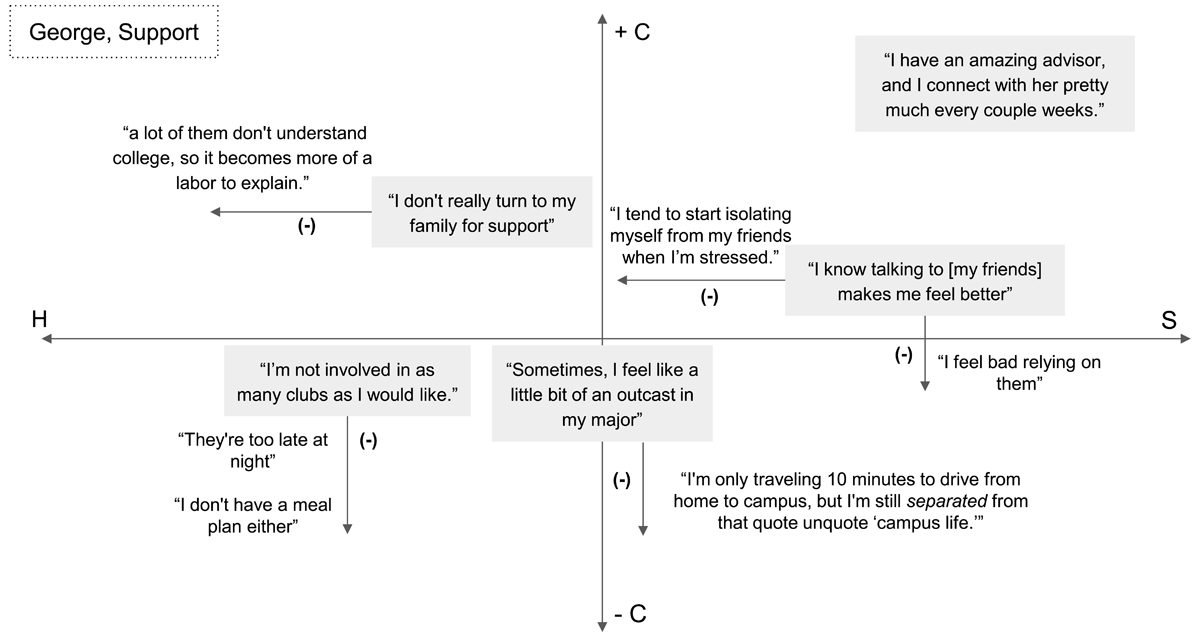
Figure 7
George’s experiences with social support mapped onto the JHCS.
We noted that Maya’s support, while less varied than George’s, described action in a positive direction towards less stress (Figure 8). As an inverse of George’s relationship, we noted that physical location once again arose as a key element of enabling support for Maya’s experience.
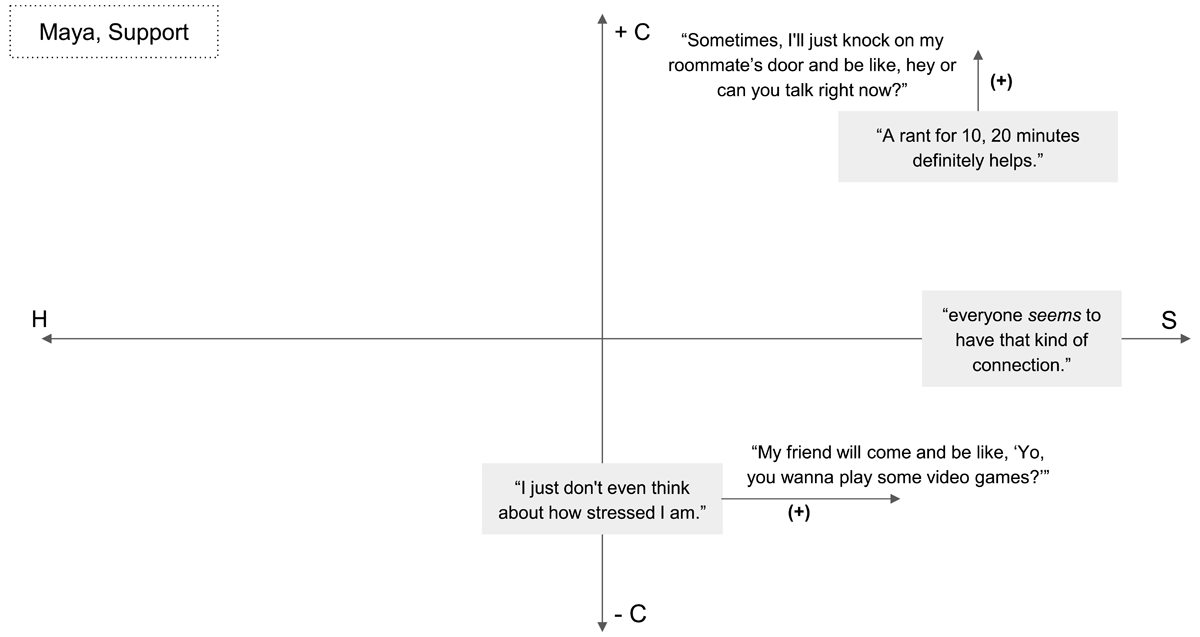
Figure 8
Maya’s experiences with social support mapped onto the JHCS.
Figure 9 supports the assumption of financial stability in engineering. This perspective, coupled with the feeling that a post-graduation job is “guaranteed,” was described as negatively contributing to stress, and thus likely supportive of student mental health.
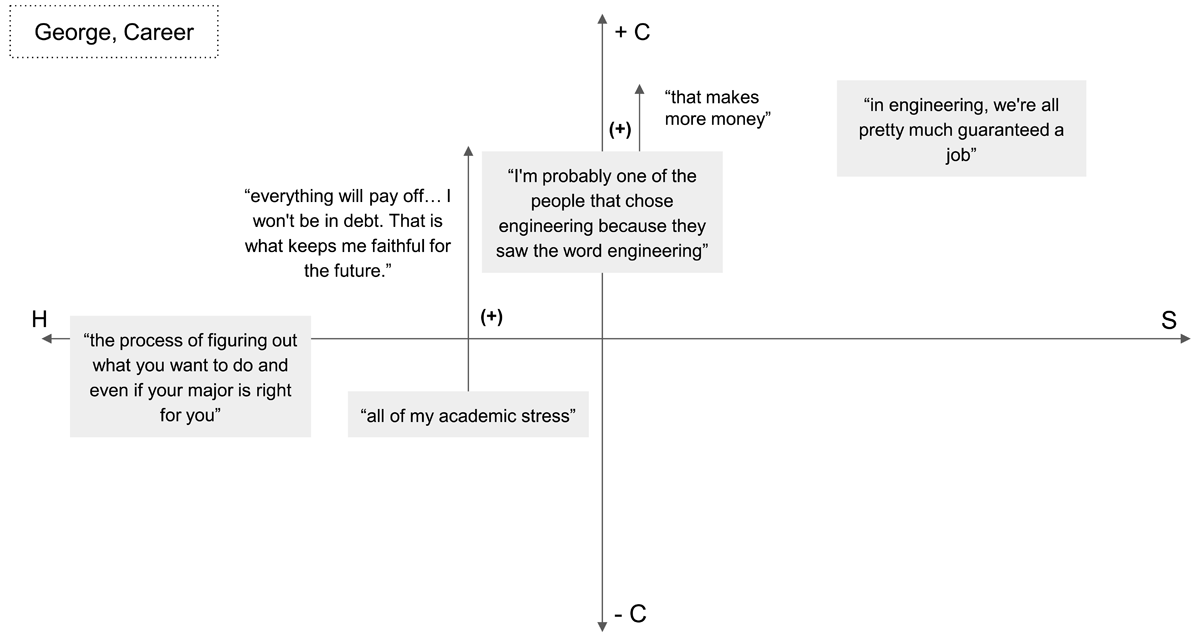
Figure 9
George’s experiences with career stresses mapped onto the JHCS.
Figure 10 shows Maya’s stress in networking as compounded by feeling like she is “on the less social side,” which is a common cultural descriptor for engineers (Ellestad, 2013).
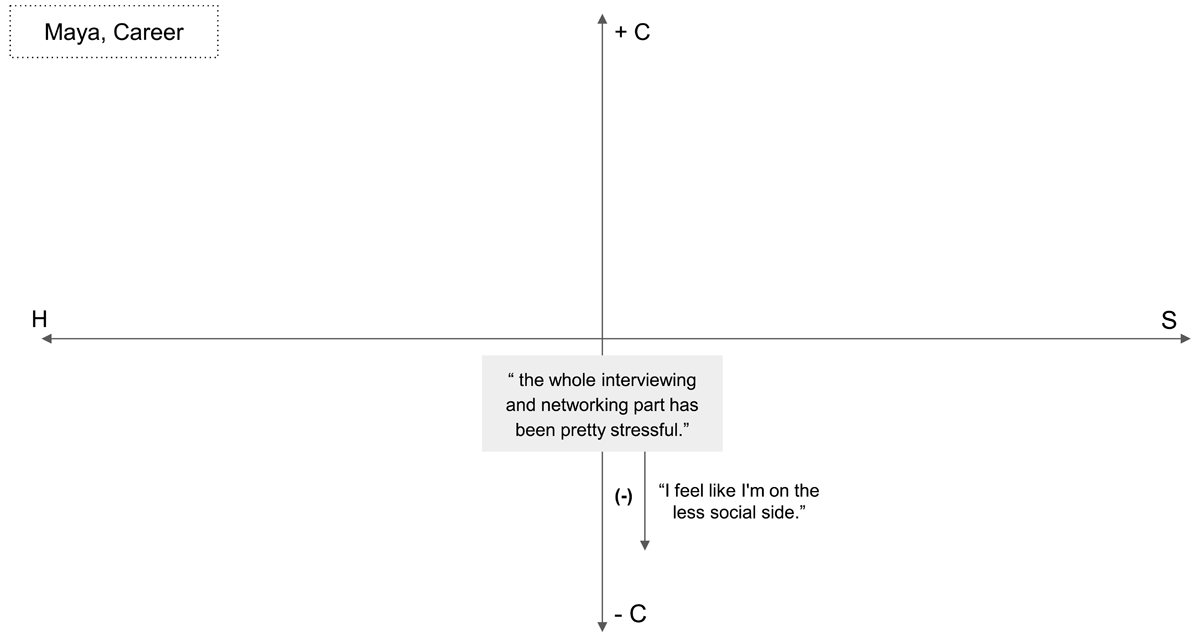
Figure 10
Maya’s experiences with career stresses mapped onto the JHCS.
Identifying Structural Elements
We identified four opportunities for structural change to support students’ stress reduction and thus their mental health. Of note, we were primarily focused on structural power as defined by Collins and Bilge (2016), which includes policies and policy-like practices that impact individuals differently. To do this, we examined the aggregated actions that moved George and Maya’s experiences towards or away from stress (i.e., arrows on the JHCS). These arrows corresponded to actions that either increased or decreased their stress. We developed this process of analysis specifically for our results. Next, we sorted these movements into related groups and identified overall structural elements that impacted these groupings. Table 1 summarizes the mapping from the JHCS maps in Figures 5, 10 to the corresponding structural elements. These structural elements included: physical proximity to resources, money, resources supporting time management, and resources supporting social-emotional regulation. The initials of G and M are included in parentheses to indicate whether these movements were from George or Maya’s narratives. These four elements are discussed in more detail, with implications for academia, in the following section.
Table 1
Synthesis of JHCS maps to identify potential for structural change.
| MOVEMENT ON THE JHCS MAP | STRUCTURAL ELEMENTS |
|---|---|
| Knock on roommate’s door, ask to talk (M) | Physical proximity to resources (friends, food, locations of interest) |
| Clubs too late at night (G) | |
| Don’t have a meal plan (G) | |
| Separated by travel time (G) | |
| Friend ask to play video games (M) | |
| Isolating from friends (G) | |
| Grinding, saving money (G) | Money |
| Career makes more money (G) | |
| Things will pay off (G) | |
| Using planner (G) | Support for time management |
| Overthinking, stress overload (M) | |
| Feel bad relying on friends (G) | Support for social-emotional regulation |
| I’m less social (M) | |
| Labor to explain college to family (M) | |
| Isolating from friends (G) |
Discussion and Implications
Students identified their feelings of control as significantly linked to their experiences with stress. We identified resulting structural elements—or potential areas that could increase students’ feelings of control and thus decrease stress—to lead to better outcomes for student mental health.
Significant Stress is Ubiquitous
George and Maya both described significant experiences with stress. George’s experiences of panic attacks surprised and frightened him. Importantly, some students whose narratives composed George’s story either did not or were reluctant to use the label “panic attack.” Research has shown engineering students are among the least likely to seek help, which is likely related to mental health stigma (Lipson et al., 2016; Wilson et al., 2022). The stories behind George’s narrative support these findings, and George’s and Maya’s narratives both highlight the significance of addressing systems to meaningfully enact change that reduce stress. This need for change echoes similar calls in engineering education literature to promote a culture of wellness (Jensen 2021; Jensen et al., 2021; Johnson et al., 2024).
Prior Qualitative Engineering Student Stress Experiences
As our methods in this study included a comprehensive cross-sectional analysis of interviews, we feel it is useful to briefly compare our findings with those of previous work on student stress. Asghar et al. (2023a) comprehensively reviewed mental health and wellbeing of undergraduate students. Our study echoed findings from this review, identifying stress as a prevalent concern for engineering students. Literature published since this review has also supported a significant need for continued work to decrease student stress (Asghar et al., 2023b; Tait et al., 2023; Tormon et al., 2023) and reduce barriers to help seeking (Whitwer et al., 2025; Wright et al., 2023).
Previously, our team conducted a study that asked similar questions to undergraduate engineering students in a different university setting (Jensen et al., 2023c; Mirabelli et al., 2020, 2023b). The parallel nature of these studies allows for an interesting and nuanced comparison. This prior work interviewed students at R1 universities, where students were often White and continuing generation. Comparatively, students in this current study are from an R2 university that has more first-generation students. Engineering students in this current study’s engineering school are proportionally more White than the overall university population. When comparing the studies, the results presented in this manuscript described less within-major competition and potentially more varied social connections (e.g., including families and staff) than the prior work with student stressors at R1 universities. Both studies found a similar emphasis on peer support as key to combating academic stress, which was the most significant stressor for students in both this and our previous studies. However, students in prior research cited their in-major peers as a more primary source of support. Students in both studies described limited access to counseling services. Students in this study more often described financial stressors.
Structural Elements: Physical Proximity
Both George and Maya described elements of physical proximity to resources as increasing or decreasing their feelings of control over their situations. These resources included friends, food, and locations of interest such as campus or home. George’s location off-campus, even though he lived “only” 10 minutes from campus, impacted his access to other students. This is especially important since peer social support has been reported as one of the most frequent mechanisms that engineering students use to cope with stress (Jensen et al., 2023b). George, who lived off-campus with his family, was more likely to isolate himself from his friends when stressed. In stark comparison, Maya sometimes had her roommate reach out to help her destress before she even acknowledged she was stressed. This finding is supported by education literature discussing the challenges commuter students experience building social networks (Barnhart, 2023; Clark, 2006; Krause, 2007; Thomas & Jones, 2017), which is less studied in engineering education literature.
George also had less access to lower-cost food options such as the kitchen at his home. While packing “meals for campus” may be possible, packing meals is a barrier that on-campus students encounter less often, and this was a barrier that impacted George’s engagement with other students through clubs. Research links food insecurity on college campuses to limitations in time, transportation, housing, or stigma (Peterson & Freidus, 2020) in addition to money. Many of these not-directly-financial limitations are not included in current calculations for food insecurity (Peterson & Freidus, 2020), meaning that students like George may not be recognized by systems designed to support them.
We recognize that it may be tempting to focus efforts on increasing off-campus opportunities for control by bringing students like George to live on campus since on-campus students like Maya have more direct access to peer support and campus resources. However, George’s decision to live with his family may include responsibilities such as caring for family members. To support students like George, we should focus on changing the systems around them rather than changing the students themselves. We encourage future work to engage with these students to creatively overcome barriers imposed by systems that are often designed to assume students live on campus. We also recommend engaging with literature (e.g., Thomas & Jones, 2017) to find possible solutions that meet your students’ specific needs. Example actions include:
Engage administration to recognize and prioritize off-campus and commuter needs as complex and important (Quaye & Harper, 2014).
Engage students’ families in campus life (Biddix, 2015).
Encourage social connection with reoccurring in-class time (Thomas & Jones, 2017).
Eliminate class-related late penalties resulting from transportation delays (Thomas & Jones, 2017).
Offer reliable hotspots that can be checked out of the university library for the semester (Thomas & Jones, 2017).
Develop a commuter student community (Thomas & Jones, 2017).
Structural Elements: Money
Money appeared in George narratives in three ways: time required to apply for and a shortage of funds increased stress; lack of money as a barrier to accessing fundamental resources; and future money as a motivation to endure stress. This is juxtaposed with Maya, whose story did not mention any money-related stresses. Times of financial change, such as when tuition was due, were often higher stress for George. During these times, George’s fundamental needs such as food were also not fully met, which likely made it more difficult for him to engage with his classes. Students’ core needs (e.g., food, clothing, shelter, psychological safety, etc.) are critical to their success. Education literature supports financial stress as increasing student stress and potentially reducing student intention to remain (Britt et al., 2017; Hicks, 2021; Vaughn, 2013). However, research on engineering students has shown that low socioeconomic status students often seem to be ignored, and their experiences not addressed (Baillie et al., 2012), while other engineering literature describes financial support as beneficial to student well-being (Asghar et al., 2022). A few opportunities that may support student financial needs include:
Increased scholarships for low-socioeconomic students would directly help meet students’ (like George’s) needs.
Host workshops for money management and integrate these skills within engineering classes (Zhu & Shen, 2021).
This narrative of a payoff, especially one where students are “pretty much guaranteed a job,” also provides a motivation for students to persist in their chosen degree, which aligns with literature on motivation (Eccles et al., 1983; Eccles & Wigfield, 2002; Kirn et al., 2014). This narrative is also present in the public discourse on engineering (Sochacka et al., 2021). More problematically, it also provides a compelling narrative for students to prioritize their classwork over other needs, such as their well-being (Sanders et al., 2024). George observed that the pressure for first-generation students is particularly hard, echoed in (Cho, 2022; Rivas, 2023; Toyokawa, & DeWald, (2020). This additional pressure implies that the potential future reward is only available if these students persist through significant self-sacrifice, a common message in engineering (Blair-Loy & Cech, 2022; Sanders et al., 2023). Additionally, students who are “doing everything on [their] own” and “don’t have a backup” are in particularly precarious situations. Access to a safety net, such as financial support if something goes wrong, has been shown as an important factor in students’ likelihood of succeeding in their chosen career (Cech, 2021).
Structural Elements: Supporting Time Management
George and Maya’s experiences with time management were very different. George heavily relied on his planner to feel in control and meet deadlines. Conversely, Maya did not organize her time in this way, and she described feeling overwhelmed and unable to continue her work on a weekly basis. Though both students experienced extreme stress reactions, George’s occurred less frequently. Engineering literature reports that students’ perceived control of time is important in stress management (Adams & Blair, 2019; Asghar et al., 2022; Groen et al., 2019), which echoes Maya and George’s experience. Additionally, Maya describes herself as having ADHD, which may present increased challenges related to her perception of time and particularly time estimation (Mette, 2023). The following are a few examples of system changes that could support both Maya and George in their perceived control of their time management.
Scaffold assignments (Erdil, 2019). While it may be tempting to say that complete control over an assignment could take the form of a fully open prompt, students may find this overwhelming. As we saw with Maya, a sense of overwhelm reduced her feelings of control over her time.
Model our own time management strategies. Many staff and faculty who regularly interact with students may have opportunities to share personal examples of how they manage their time (Sanders et al., 2024). These tangible examples from a diverse range of individuals may provide opportunities to learn and ask questions for students with diverse needs and backgrounds. An example might be turning off email notifications and setting aside regular times to respond to emails.
Guaranteed no-questions assignment extension policy (Hills & Peacock, 2022). Multiple participants described that knowing that they would be able to extend an assignment deadline without explanation increased their feelings of control and reduced their stress.
Structural Elements: Supporting Social-Emotional Regulation
We found interactions with social-emotional competence, which are interactions relating to the ability to make and maintain supportive relationships (Denham, 2006), to be one of the factors that moved students’ experiences on the JHCS maps. This means that students’ ability to make and maintain supportive relationships is important in their capacity to adjust to external stressors. This is corroborated by research showing that peer support is key for engineering students’ stress management (Jensen et al., 2023b). Supporting students in their social-emotional competence is thus an area of importance for supporting their mental health. This claim is supported by findings in the broader education literature showing that adaptive emotional regulation abilities were associated with increased undergraduate student well-being (Finkelstein-Fox et al., 2018). The same study found that students skilled at mindfulness were uniquely protected against changes in depression. Similarly, Le et al. (2021) found that an increase in the number of students’ peer mentors was correlated with reduced depressive symptoms.
Engineering education literature explores the importance of understanding student experiences with emotions, looking at emotional reactivity, shame, emotional regulation in engineering leadership, and empathy (Balters & Steinert, 2017; Huff et al., 2016, 2021, p. 20; Sochacka et al., 2020; Sun et al., 2020; Walther et al., 2020). These studies have not connected social-emotional regulation as critical to student mental health and wellness as directly as we do in this publication.
An initial idea to support student social-emotional regulation might be to enact an emotional intelligence program for our students (Enríquez et al., 2017). It is also important to consider the environment that students exist within, and that interventions to support social-emotional learning applied equally will not impact students equitably (McCall et al., 2023). As Hoffman (2009, p. 548) shared:
In my view, changing the emotional climate of classrooms and schools in positive ways to cultivate experiences of caring, community, and belonging is much needed, but this is a different claim from seeing a need to teach emotional and behavioral management skills.
In addition to supporting student skill development in social-emotional regulation, we can also work to change the environment to support these skills. This might be lowering barriers to learning about social-emotional regulation through modeling and acknowledging the efforts of students displaying these skills. Some examples of this might include:
Faculty engagement with their own social-emotional learning (Schonert-Reichl, 2017).
Supporting social-emotional learning through examples in the Physical Proximity subsection such as supporting personal connections in class and engaging student families.
Increasing access to student communities such as affinity groups (McCall et al., 2023).
Limitations and Future Work
While this work engaged the interviewers in arts-based methods, our student participants were traditionally interviewed. Their interaction with making meaning of the data was limited to member checks that occurred after the narratives were composited. We encourage future research to consider alternative change models for research on equity in engineering education introduced by (Secules & McCall, 2023) for more equitable and participatory participant-centered methods. The arts-based memoing process was unplanned during the ideation phases of the larger study; however, we find potential in this method for future scholars in communicating trustworthiness in qualitative analyses. We encourage future researchers interested in arts-based processing to consider how these processing techniques could be part of documenting and communicating researchers’ own experiences, biases, emotional responses, and connections to participants and their experiences.
Additionally, limitations in our sample limit the potential transferability of our results. Because participants were recruited from one institution, the local culture, population, and resources of that institution likely led to characteristics that may not be present among students at other institutions. Participants were also recruited across a range of academic years and engineering majors. This merging of experience limits the year-specific and discipline-specific stressors that could be presented here. Future work could expand on the year-specific and discipline-specific stressors as well as the structural components highlighted in this study. This work could also be replicated at institutions of different sizes, types, and geographic regions.
Conclusion
We conducted qualitative interviews with fourteen undergraduate engineering students at a single institution in the United States. Results describe the composited stories of George and Maya, two undergraduate students experiencing significant stress along with social support during their engineering education. During the compositing process, we implemented a novel-to-engineering-education method of arts-based memoing by researchers/interviewers. We then examined George and Maya’s experiences with stress via the JHCS Model. This further synthesis was achieved by mapping the narratives onto the JHCS to identify key elements for potential change to support student mental health and wellness. Key opportunities identified for systems improvement include considerations of physical proximity, money, and support for time management and social-emotional regulation. Specific, bulleted actions are then recommended that encourage systems change to structural elements. These changes support student mental health by decreasing hindrance stressors and increasing student control and support.
Additional Files
The additional files for this article can be found as follows:
Supplementary Materials 4
Exemplar Narrative with Annotations. DOI: https://doi.org/10.21061/see.160.s4
Appendices
Appendix 1 – Arts-Based Memo Tabulation
Table 2
Intermediate step demonstrating resulting groupings from prong 2 of arts-based memos*.
| ID | DISPARATE CLUSTERS | INTERCONNECTED CLUSTERS/SOCIAL NETWORKS | YELLOW COINS AND BLACK LINES/MONEY STRESS | SPIRALS/WAVEY/WELLBEING/CENTEREDNESS |
|---|---|---|---|---|
| 1 | x | |||
| 2 | x | x | ||
| 3 | X | |||
| 4 | x? | x? | x | x |
| 5 | x | |||
| 6 | x | |||
| 7 | x | x | ||
| 8 | x | |||
| 9 | x | x | x | |
| 10 | x | |||
| 11 | x | |||
| 12 | x | lite | x | |
| 13 | X | x | ||
| 14 | x | x |
[i] *All arts-based memos are included in the supplementary materials.
Acknowledgements
We would like to thank our participants for sharing their stories and their time. Without them, this work would not have been possible. Janna Jobel and Yanfen Li were instrumental in supporting us through research contributions and discussion. We would also like to thank SJ Bork, Theo Hopper, and Sara Vohra for their integral help in protocol review, and Madeleine R. Eldridge for advice on methods. We would like to thank Mark Huerta and Julie Martin for their support with the JHCS axis model development. Our advisory board, Nicola Sochacka, Allison Godwin, and Jennifer Cromley supported this project. Mentorship from Nadia Kellam also normalized arts-based practices in engineering for the first author.
Competing Interests
The authors have no competing interests to declare.
Author Contributions
The first author led protocol development, conducted interviews, led data analysis, and wrote the first draft of the paper. All authors met regularly to check in on this project and participated in reviewing the protocol, data analysis, and manuscript.