
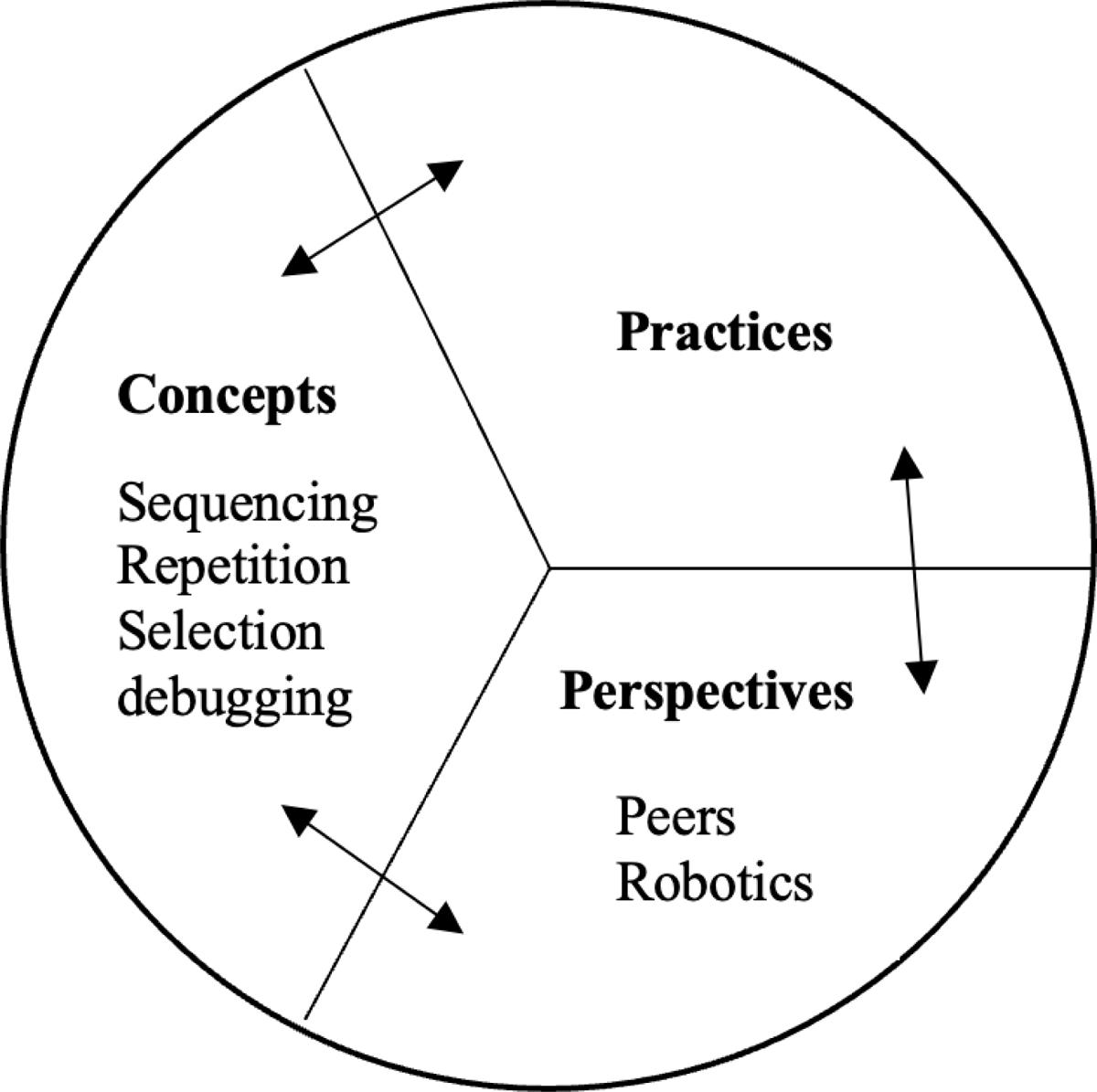
Figure 1
Three Dimensional Framework to Perceive Children’s Coding Abilities based on Brennan & Resnick, 2012a
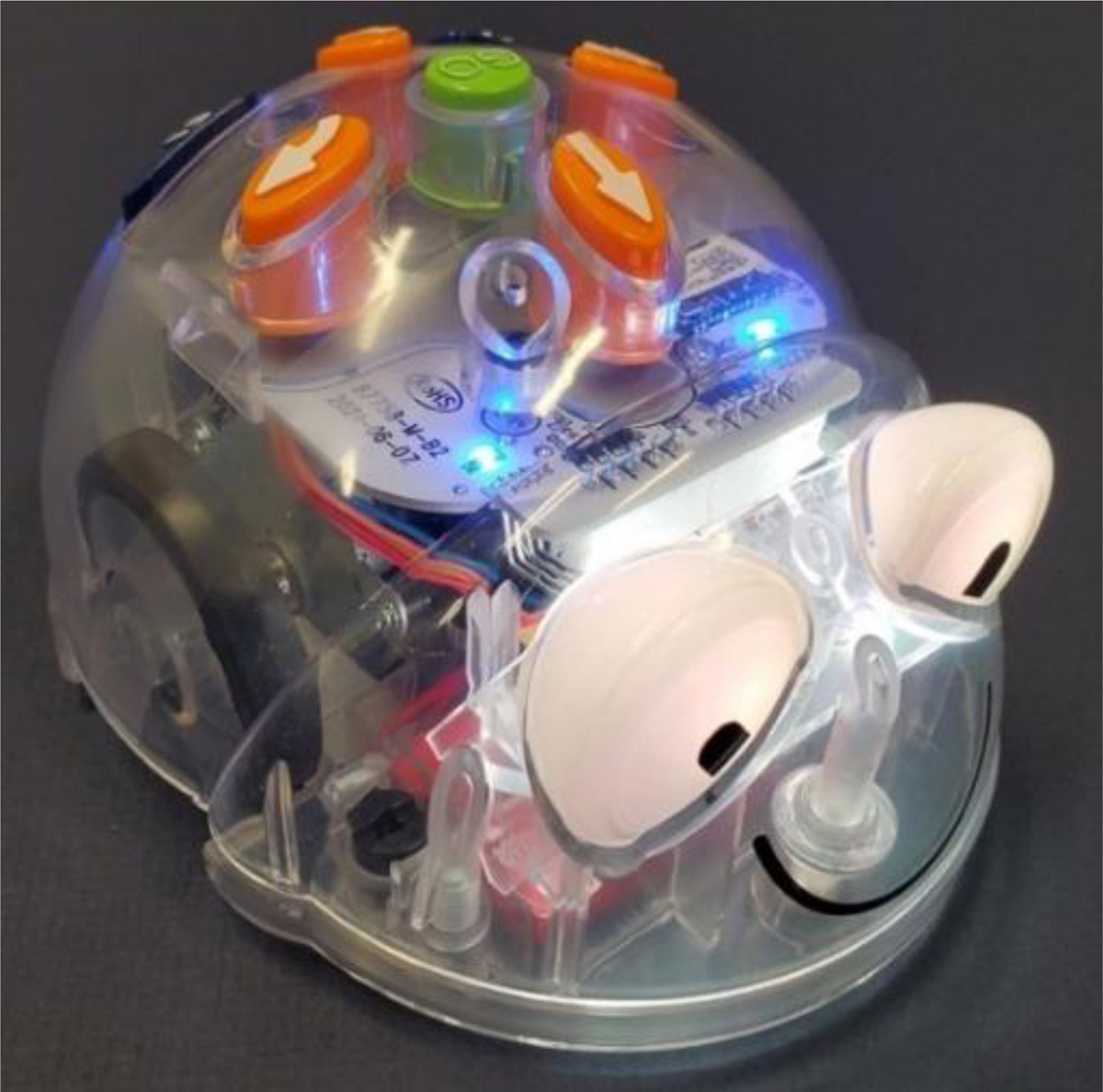
Figure 2
Blue-Dot® Programmable Floor Robot.
Table 1
Semi-structured interview protocol.
| Areas | Questions |
| Please describe how the children participate in coding activities with Blue-Bot® in your classrooms |
|
| In your opinion, how does using Blue-Bot® help kids develop a better understanding of different coding concepts, such as sequential, selection, debugging, and repetition |
|
| How do children view their relationships with peers and Blue-Bot®? |
|
| Please share your additional experiences and perceptions of using Blue-Bot® in your classrooms. |
|
Table 2
Coding protocol for analyzing teacher perceptions, based on three dimensions of children’s practices, concepts, and perspectives during coding activities
| Dimensions | Codes | Definitions |
| Practices | Skills and strategies | The strategies, behaviors, and skills children employed and displayed in controlling robot movement. |
| Difference | The difference among children when they code and control the robot movement. | |
| Challenges | The challenges children encountered when controlling robot movement. | |
| Concepts | Sequencing | How do children understand and apply the concept of sequencing to control robot movement? |
| Selection | How do children understand and apply the concepts of selection between different codes and strategies in controlling robot movement? | |
| Repetition | How children understand and apply the concept of repetition to make the robot repeat a specific pattern. | |
| Debugging | How children understand and apply the concept of debugging in debugging codes and problem-solving | |
| Perspectives | Peer interaction | How children interact with peers during coding activities. |
| Relationship with robot | How children understand and develop their relationships with the technological world |