
Introduction and Literature Review
Despite the increasing importance of computer science (CS) and computational thinking (CT) (henceforth “CS/CT” e.g., Grover & Pea, 2018) in K-12 education in the United States, research on these areas in elementary classrooms is emerging and there is much to be explored (NASEM, 2021; van der Meulen, 2021). What is known is that significant, enduring equity issues exist within CS/CT, and these issues begin to emerge early at the elementary level (e.g., El-Hamamsy et al., 2023; Salac & Franklin, 2019; Tsan et al., 2016). For example, gender gaps begin to emerge at the elementary level where boys are more likely to come to school with previous CS/CT experience, and are more often encouraged by parents and teachers to continue on in the field (Code.org et al., 2021). In addition to the gender gap in CS/CT, gaps around race, socioeconomic status, geography, language, and other areas are prevalent in the field (Code.org et al., 2021; 2023; NASEM, 2021; Wurman & Donovan, 2020). While there is growing research on equity in CS/CT at secondary, post-secondary, and professional levels, less is known about elementary classrooms (van der Meulen, 2021). Elementary school is a critical period where students begin to form their identities and perceptions of fit within certain fields (Master et al., 2017). For CS/CT to truly be a field for all (as espoused by numerous educators, researchers, policy makers, and other stakeholders), understanding and exploring equitable CS/CT experiences at the elementary level is a critical first step (Code.org et al., 2023; NASEM, 2021).
Aside from the underlying, foundational reason for addressing equity in CS/CT and providing all our students with joyful, engaging, relevant CS/CT experiences (e.g., Goldenberg et al., 2020; Jones & Melo, 2020; Vogel et al., 2017) stakeholders and researchers offer a variety of perspectives on the importance of equity. One of the most common rationales for equity in CS/CT is workforce development (e.g., Blikstein & Moghadam, 2019; Code.org et al., 2023; The White House, 2016). Policymakers and stakeholders argue that to fulfill United States (and global) workforce needs, more students need CS/CT education (The White House, 2016). Even fields outside CS/CT often require foundational CS/CT knowledge, and therefore, all students need some level of CS/CT experience to be successful in the workforce (Blikstein & Moghadam, 2019).
Others have argued this workforce rationale is reductive and ignores the other opportunities CS/CT offers students. For example, engaging in CS/CT experiences can support the development of fundamental Technology and Engineering Education (T&EE) skills such as problem-solving, critical thinking, creativity, and collaboration (Lee et al., 2022). The importance of these 21st century skills has been argued for across K-12 settings, and CS/CT experiences provide opportunities for students to learn and develop these skills (Yadav et al., 2016). Aside from their broad, civic importance, these 21st century skills are also directly tied to the Standards for Technological and Engineering Literacy (STEL) and crucial for success within T&EE fields (International Technology and Engineering Educators Association [ITEEA], 2020).
The development of these skills can also be supported by incorporating joyful learning approaches into educational experiences (Jeet & Pant, 2023). Typically, joyful learning involves components like excitement, exploration, deep engagement, curiosity, passion, accomplishment, and contentment (Conklin, 2014; Csikszentmihalyi, 1990; Elkin, 2007; Montessori, 1967; Ward & Dahlmeier, 2011). This type of joyful learning can often be seen in the minds-on/hands-on, creative problem-solving tasks and challenges that underpin the pedagogical practices in T&EE (ITEEA, 2020). In addition to supporting 21st century and T&EE skill development, joyful CS/CT experiences may also help build student confidence and persistence (Goldenberg et al., 2020; Scharber et al., 2021). Building confidence and persistence in CS/CT, particularly with underserved students, has also been linked to helping close equity and performance gaps (Buffum et al., 2016; Ying et al., 2021). In short, by bringing joyful experiences into CS/CT education, we can better support the development of T&EE skills, promote confidence, and address known equity gaps.
In addition to workforce and skill-centered rationales, researchers and stakeholders also put forward justice-centered rationales for more equitable engagement in CS/CT (Benjamin, 2019; Jones & Melo, 2020). We interact with technology daily, often in ways that can cause harm and perpetuate oppressive systems (Jones & Melo, 2020; Vakil, 2018). From sexist hiring algorithms, to racist sentencing artificial intelligence models, CS/CT is a non-neutral force that has potential to harm individuals and communities who are already marginalized (Benjamin, 2019). A knowledge of CS/CT is necessary not only to understand how it can perpetuate these issues, but how to actively work against them (Benjamin, 2019; Jones & Melo, 2020). To this end, equity-minded and culturally responsive pedagogical practices are recommended in support of engaging students in more equitable ways (Madkins et al., 2020).
Regardless of rationale, stakeholders agree on the importance of creating more equitable CS/CT experiences for students. However, until the gap of high-quality CS/CT experiences is closed, and CS/CT is offered in relevant, engaging, accessible, and culturally responsive ways across all schools and to all students, equity cannot be realized. One primary strategy to address this gap is through building CS/CT teacher capacity.
Building Teacher Capacity in CS/CT
There is currently a lack of highly qualified CS/CT teachers in K-12 schools, particularly in urban, rural, and low socioeconomic status settings (Code.org et al., 2021; NASEM, 2021; Ni et al., 2021). This is particularly problematic at the elementary level given most elementary teachers are generalists and unlikely to have received specific CS/CT training (ECEP Alliance, 2023). Numerous calls have been put forth to increase CS/CT teaching capacity, however, gaps remain (DeLyser et al, 2018; Yadav et al., 2021). Specifically, students in marginalized communities are significantly less likely to have access to CS/CT experiences due to a lack of highly qualified CS/CT teachers (Code.org et al., 2023; NASEM, 2021).
One way to address these equity issues in teacher capacity is by supporting professional development (PD) for inservice teachers who already teach in high need schools and communities (e.g., Warner et al., 2019). By supporting PD for teachers already in these schools, teachers with limited prior CS/CT training who are in areas of high need can begin to bring CS/CT classes and experiences to their students. Another way to address these equity gaps is through supporting PD for preservice teachers who plan to teach in areas of high CS/CT need (DeLyser et al., 2018). By incorporating CS/CT experiences and pedagogical training into preservice coursework, future teachers enter the classroom more prepared to teach and integrate CS (DeLyser et al., 2018; Dong et al., 2024; Yadav et al., 2021). This need for PD is especially true at the elementary level, where most educators do not receive significant CS/CT or technology education training (Pappa et al., 2024). When conducting this type of PD, teachers should be active partners not passive participants. Importantly, teachers’ expertise and knowledge of students, the school, and the community should be incorporated into PD that is developed in partnership with teachers, not just delivered to teachers (Juuti et al., 2021).
Teacher-Researcher Partnerships for Professional Development
The research presented was part of a larger Teacher-Researcher Partnership (TRP) (Juuti et al., 2021) that was established to support CS/CT co-design, implementation, and PD. In general, TRPs bring teachers and researchers together around a central problem of practice where both the practical knowledge of the teachers and academic knowledge of the researchers are combined and valued equally (Juuti et al., 2021). Typically, this is done through an iterative, co-design process where teachers and researchers work together as partners to support professional learning and inform educational improvements (Juuti et al., 2021).
For example, McGill and Reinking (2022) explored a TRP where teacher partners selected relevant equity-based problems of practice to address through collaborative work (e.g., gender equity, equity for English language learners, equity for marginalized students in general). Over a four-month period, with between two and three hours of meetings per week, the teachers and researchers worked to collaboratively define problems of practice, explore literature and models surrounding those problems, reflect on materials and problems, and move towards change in classroom teaching strategies, perspectives, and beliefs. The researchers found that a primary initial challenge to this work was feelings of fear and anxiety held by teachers regarding engaging in unknown, new work, as well as the fear of committing to potentially difficult time commitments and scheduling. These fears were addressed through initial scheduling, organizing, and alignment sessions to provide structure and clear expectations for the process. Additionally, the researchers noted that leveraging both intrinsic motivation (teachers’ desire to improve their practices and strategies) and extrinsic motivation (a stipend and free conference attendance) proved beneficial in helping make the partnership a success.
Specific to this study, our work focused on co-designing, implementing, and co-reflecting on new curricular activities, which were part of a minds-on/hands-on robotics and coding event. These activities were situated in shared, mutual goals and interests (Juuti et al., 2021). More specifically, the initial, agreed upon, teacher-driven and collective goal was to create an engaging, minds-on/hands-on computer science event that centered joyful learning and was accessible to all 4th grade students at the participating school (including students with disabilities) regardless of CS/CT experience level. This goal was expanded on and revised during previous, initial meetings with school administrators and teachers (Karlin, M., Stephany, C., & Reed, M. et al., 2023) and guided our work for this study.
Central to TRPs is the importance of co-design. Roschelle and Penuel (2006) describe co-designing as a “highly-facilitated, team-based process in which teachers, researchers, and developers work together in defined roles to design an educational innovation, realize the design in one or more prototypes, and evaluate each prototype’s significance for addressing a concrete educational need” (p. 606). Through co-design work (as opposed to traditional, lecture-based PD), teachers gain ownership over content, materials, activities, and resources. The expertise, creativity, and deep knowledge teachers possess regarding student needs and interests are relied upon as an educational intervention co-constructed to best meet those needs. In the case of this study, the educational need was the school-reported request for the integration of CS/CT into their existing elementary curriculum. Details regarding the specific roles held by teachers and researchers in the co-design process are discussed in the Method section.
Research Purpose and Guiding Questions
There is a stark need for additional CS/CT experiences within schools and districts that are historically underserved (Code.org et al., 2021). CS/CT experiences have been demonstrated to foster in students critical thinking, problem-solving, and other essential T&EE skills (Lee et al., 2022). However, these CS/CT experiences are not possible without teacher PD, and particularly so for elementary teachers who typically do not receive CS/CT or technology education preparation (Pappa et al., 2024; ECEP, 2023). By providing CS/CT PD within such underserved districts, teachers who already serve students in areas of high need can begin to bring CS/CT experiences to their students. More importantly, when that PD is co-designed, teachers are able to leverage their expertise and knowledge of students, the classroom, and the school, to have ownership and better support the implementation of educational interventions (Juuti et al., 2021). In spite of this, there remains a dearth of equity research on CS/CT at the elementary level (Code.org et al., 2021; NASEM, 2021; van der Meulen et al., 2021), and little is known about what effective PD approaches might look like, particularly within schools and communities of high need. It is within this PD context that the following research questions were used to guide this study:
What are 4th grade teachers’ experiences with co-designing a robotics and coding event?
What are 4th grade teachers’ experiences with implementing a robotics and coding event?
What are preservice teachers’ experiences with facilitating a robotics and coding event?
Method
To answer the guiding questions, an exploratory, descriptive single case study (Yin, 2017) was conducted. Qualitative data were generated across inservice co-design session recordings, inservice teacher interviews, designed artifacts for the CS/CT event, and anonymous preservice teacher reflections. Multiple data sources were used to increase trustworthiness and improve triangulation (Merriam, 1991; Stake, 1995). IRB and ethics approval was received from the local partner school district. Participation was voluntary and consent was provided for all data to be used for the purposes of research. Inservice teacher partners also served as co-authors on this article.
Context
This study occurred across two sites. On the university side, the researchers and preservice teachers were part of a College of Education (COE) at a large, Southern California university that is federally designated and categorized as a minority-serving and Hispanic-serving institution. At the time of the study, there were 1,393 preservice students enrolled in the COE, 69% of which were historically underserved students and 68% were first generation students. Upon graduation, preservice teachers primarily work in the surrounding districts of Compton Unified (80.78% Unduplicated Pupil Count [UPC, Students who are eligible for Free/Reduced Meals, English Language Learners, and/or Foster Youth]), Inglewood Unified (65.5% UPC), and Los Angeles Unified (62.3% UPC) the second largest school district in the nation. Within these school districts, teachers serve students who are historically marginalized within CS/CT education.
The 4th grade teacher partners in this study worked at Market Street Public Elementary (pseudonym) school in South Los Angeles, which serves approximately 700 K-5 students annually. The school demographics include 97% minority students (71% Hispanic/Latine, 16% Black, 5.6% Asian or Asian/Pacific Islander, 3.6% multiracial, 1.0% Native Hawaiian, 3.1% white), as well as 81% economically disadvantaged students. There were 33 full-time teachers at the school with a teacher to student ratio of 1:22. At the time of this study, the school did not offer a CS/CT course or any formal CS/CT experiences. While the relationship between the COE and Market Street Elementary had previously been established, the CS/CT-specific partnership began the previous year (Karlin, M., Stephany, C., & Reed, M. et al., 2023).
Study Members
Those participating in this study included 4th grade teachers at Market Street Elementary (and one school coordinator who was a former 4th grade teacher) as well as preservice teachers from the university. During the Spring semester, three co-design sessions occurred among the four 4th grade teacher partners and one school coordinator (Table 1).
Table 1
Inservice partner teacher demographics
| Name | Overview |
| Adan | Adan is a Mexican-American man with 17 years of experience teaching 4th grade at Market Street Elementary. He reported some self-taught CS/CT experience from watching videos and experimenting with CS/CT activities and curricula. |
| Desi | Desi is a Mexican/Chinese-American man with 7 years of preK and elementary teaching experiences. At the time of the study, Desi noted that he had no previous CS/CT experience. |
| Christine | Christine is a Korean-American woman who has spent 16 years teaching kindergarten, first, fourth, and fifth grade students at different schools. She currently teaches 4th grade students at Market Street Elementary. She has past CS/CT experience by using code.org’s hour of code activities in her classroom. |
| Sarah | Sarah is an Asian-American woman who has spent two years teaching 4th grade at Market Street Elementary. She reported having no CS/CT background or experience. |
| Claudia | Claudia is a Mexican-American woman who spent 17 years teaching 4th grade at Market Street Elementary and is now the Title 1 coordinator and TSP advisor (targeted student population). She reported having no CS/CT background or experience. |
The five partner teachers are henceforth referred to as the inservice teachers (n=5) inclusive of the school coordinator, a former 4th grade teacher of 17 years at the same school, who engaged with the process in the same way as did the classroom teachers. Inservice teachers were compensated for their participation in the co-design and implementation work, regardless of research participation. Finally, as noted in Table 1, three of the five teachers reported no prior CS/CT experience and two reported minimal prior CS/CT experience. No teachers considered themselves advanced or experts in CS/CT education.
Additionally, 30 undergraduate preservice teachers volunteered to co-facilitate the implementation of the CS/CT event that was co-designed with the inservice teachers. Of these, 14 (47%) participated in the research portion of this study by completing an anonymous reflection after the event. Of the 30 teachers who volunteered for co-facilitation, 94% were female, and racial demographics included 84% Hispanic/Latine, 8% Black, and 8% white. Specifically, the majority of preservice teacher participants belonged to historically marginalized identity groups in CS/CT education.
Data Sources
To improve trustworthiness and inform a more holistic understanding of preservice and inservice teacher experiences and perceptions, data were collected across the following four sources:
Co-design sessions (n=3). Three co-design sessions which occurred leading up to the CS/CT event were recorded and transcribed. These sessions were 60-90 minutes each and included all five inservice partner teachers. The goal of these sessions was to collaboratively design and construct the activities 4th grade students would engage with during the CS/CT event.
Co-designed artifacts (n=3). Throughout the co-design sessions, we created artifacts which would guide the students through the CS/CT event. These artifacts were created in collaboration between the researchers and teachers.
Reflective Interview (n=1). After the event was held, all five inservice partner teachers participated in a reflective focus group interview that lasted 48-minutes. The interview was transcribed and analyzed.
Anonymous preservice teacher reflections (n=14). After the event was held, all thirty preservice teacher co-facilitators were asked to complete an anonymous reflection sharing their experiences and perspectives on co-facilitating the event. Of those, 14 (47%) completed the anonymous reflection.
Data Analysis
Thematic analysis (Braun & Clarke, 2006) was used across all four data sources to find and uncover emergent themes aligned with our research questions. To begin, two researchers individually read through all co-design session transcripts, interview transcripts, designed artifacts, and anonymous preservice teacher reflections. Throughout this initial analysis, researchers individually identified trends and emergent themes, while creating initial coding tables (Braun & Clarke, 2006). The researchers then met to compare individual coding tables and discuss where overlap, alignment, and misalignment existed. When disagreement occurred, researchers engaged in arbitration until 100% agreement on all items was reached by both researchers (Saldaña, 2015).
At the conclusion of this step, a final coding table was established and the two researchers used the final coding table to analyze all remaining data. At the conclusion of this final round of analysis, the researchers and teachers met for member checking and to achieve 100% agreement on the major emergent themes as reported in the following section. Data sources 1, 2, and 3 related to the inservice teachers (1, 2, and 3 above) were analyzed separately from data sources 2 and 4 which are related to the preservice teachers. However, themes and commonalities from across both groups were also explored.
Role of the Researchers and Teacher-Partners
As researchers, former teachers, former administrators, current administrators, and current teachers, members of the research team came to this project with a wide range of experiences across diverse contexts. Four of the five members of the research team were also former K-12 teachers. Across the entire team, members came to this experience (and to this project) with significantly different backgrounds and perspectives. However, all members shared a central value and goal of co-creating joyful, engaging, accessible CS/CT learning experiences for the students.
Additionally, this study was built on previous partnership work between the researchers, teachers, administrators, and school (Karlin, M., Stephany, C., & Reed, M. et al., 2023). In the previous partnership work, central goals and problems of practice had been co-defined. However, during the existing partnership of the current research, this was the first time teachers had been actively involved in the CS/CT activity co-design, event implementation, and research process.
To enact the co-design process, monthly meetings were held with all teachers where they provided input and ideas. The overall structure of the CS/CT event and activities, along with the curricular connections were provided by the teachers. The research team created initial activity materials between meeting sessions, and assisted in connecting existing teacher curricular knowledge to CS/CT content knowledge. Teachers provided revisions on all created materials, and the entire team moved through various iterations together. Additionally, teachers created their own resources to use as they became more familiar with the CS/CT content and possibilities (details provided in the results section). The entire process was collaborative, iterative, and relied on knowledge and expertise from both the teacher-partners and research team.
Limitations and Acknowledgement of Potential Harm
The generalizability for single case studies is limited. However, attempts were made to mitigate this limitation through rich, thorough, detailed descriptive data to ensure readers can find connections and similarities within their own specific contexts. Additionally, as with all research it is important and necessary to identify and mitigate any potential impact to learning. As a result of the CS/CT event described in this study, students missed 90-minutes of instructional time from their typical day, and were disrupted in their normal routine. Teachers and researchers worked to mitigate these learning impacts by preparing students beforehand for the disruption, and conducting this event during a time in the school year where more flexibility was possible. In light of this, the overall research results, together with the benefits to students, practitioners, and scholarship, are believed to outweigh the potential impact on learning.
Results
The exploration of research results presented in the following sections are organized by research questions. The co-designed artifacts are presented first to provide added context. These artifacts were co-created with inservice teacher partners and represented the three activities in which students engaged during the CS/CT event. Student pairs had 30-minutes with each activity and rotated through all three over a 90-minute period. The three co-designed artifacts were:
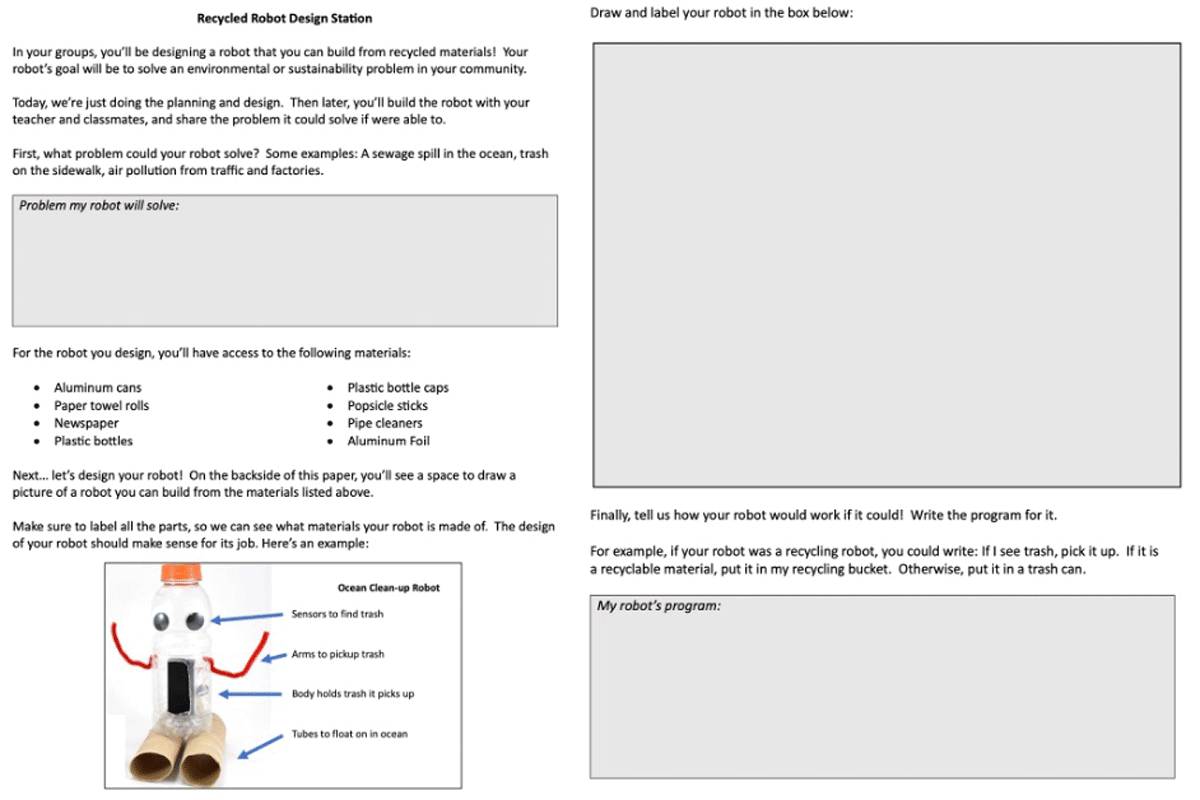
Figure 1
Co-designed artifact for the “Design a Recycled Robot” activity
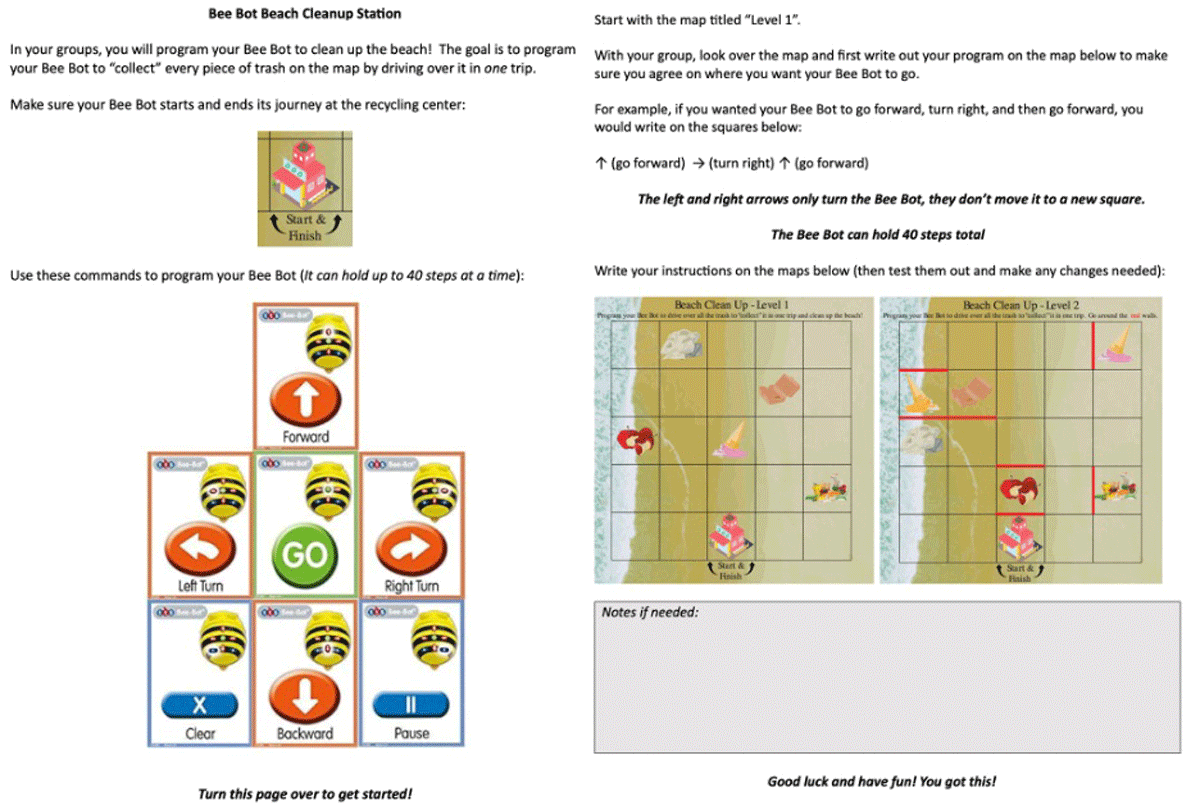
Figure 2
Co-designed artifact for the “Bee Bot Beach Cleanup” activity. Permission to use image granted by Bee-Bot®.
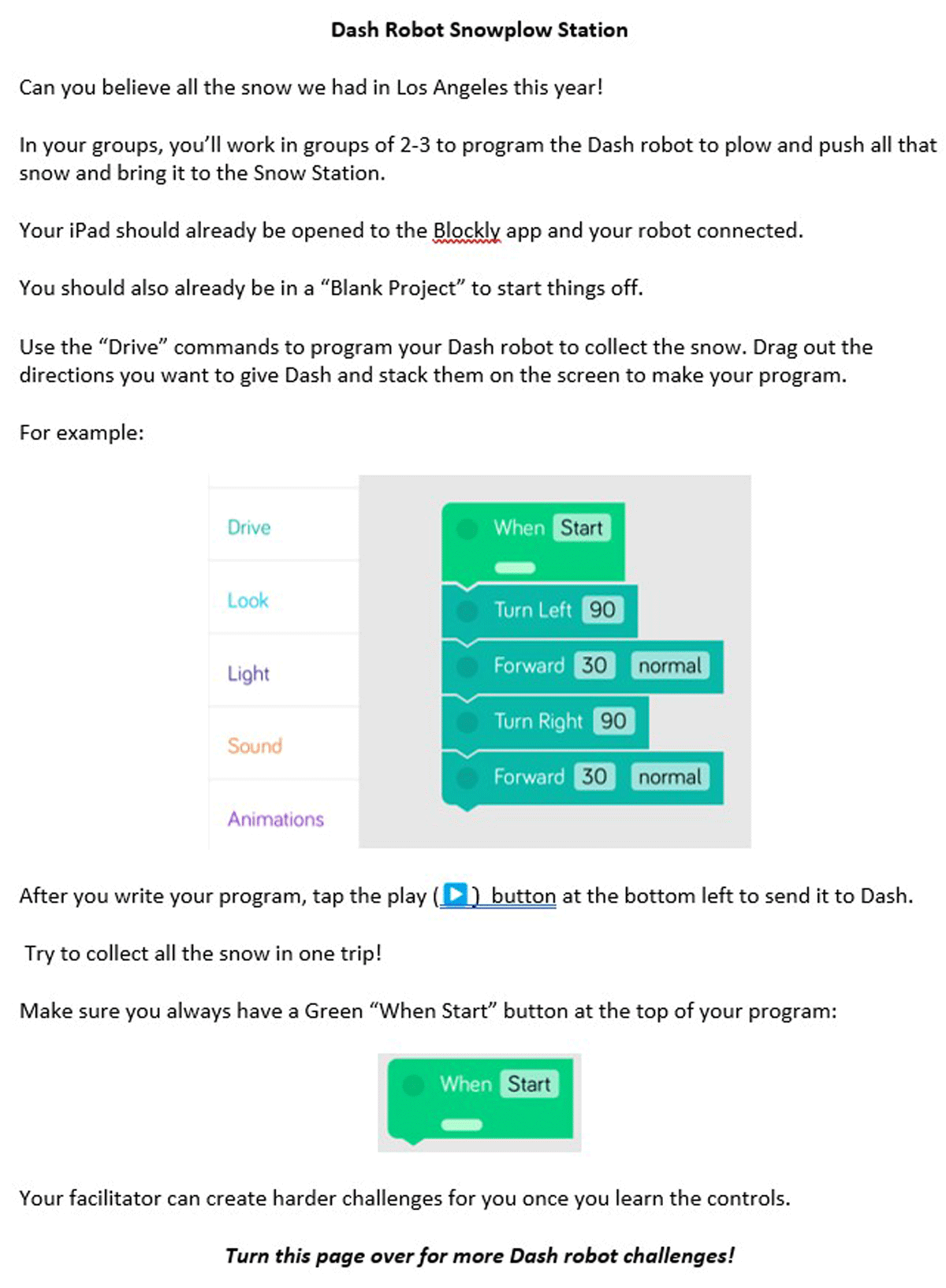
Figure 3
Co-designed artifact for the “Dash Bot Snow Shovel” activity
Preservice teacher co-facilitators introduced these documents to the 4th grade students and provided introductions to the basic CS/CT concepts and terminology used in the activities (e.g., algorithms, sequences, pseudocode, loops, etc). These documents are freely available at bit.ly/elementarycsprintables for anyone to use.
The overall impact of these stations, as well as student, inservice teacher, and preservice teacher experiences are described in the following sections under the relevant research question results.
RQ1: Teachers’ Experiences in Co-designing a Robotics and Coding Event
Theme 1: Hesitancy turned to excitement
When the co-designing experience began, all inservice teachers (n=5) reported being nervous and/or unsure about the experience. For example, at the end of the first co-design session, Adan reported: “I’m a little nervous, just because we’re stepping into your brain. But at the same time, that’s why you’re also reaching out to us because we know the kids, and we can come with their needs. So, at the same time it’s exciting.” Desi echoed this stance at the start of the sessions, reporting: “I do not think I am confident in teaching CS in the classroom due to my inexperience.”
By the end of the co-design sessions, all inservice teachers reported feeling more confident and engaged with the process. This was particularly evident as these teachers began making interdisciplinary and curricular connections between CS/CT to the work they were doing in the classroom. For example, Claudia described the process of making connections between CS/CT, their current environmentalism curriculum, and real-world examples:
So, we want to make this relevant. I’m thinking what do we have? What’s the problem now? And I always listen to…the news. And one of the things after this big storm that we just experienced, and we are still seeing the effects of it, especially in the mountains, is water not being captured. So how can we use everything that was mentioned to possibly have a solution to that? What can they build? What can be created? So, when we do have another storm like what we experienced to be able to solve that problem where we’re not dealing with a drought and we also have wildfires, how can we create something where it’s going to [address this].
It is important to note that, while everyone reported an increase in confidence, it was not necessarily a major increase. For example, Desi noted: “I would feel a bit more confident in teaching and integrating CS in the classroom after having observed the skills taught during the CS event and activities” emphasizing that while he did feel more confident from the co-design and implementation process, it was only a bit more than before. Overall, the co-design process began with notes of hesitation and nervousness from all participating teachers, but by the end, they reported feeling more confident, engaged, and excited.
Theme 2: Collaboration between teachers and research team
Overall, there was a reported importance placed on the collaboration between the research team and teachers. The researchers relied on the expertise of the inservice teachers, particularly in terms of logistics, subject matter and curricular connections, student knowledge, student experience, classroom and school contexts, details on the implementation, and grouping of the students.
For these inservice teachers, all reported limited or no background CS/CT knowledge knowledge, and all relied on the research team to bring CS/CT connections to the relevant curriculum. For example, Claudia shared in the final reflection:
I liked how you took all of our input, our suggestions, our strategies, the feedback we gave you, and then you came back the following meeting and said, “This is what we came up with based on our conversation.” I thought that was a plus for me because you really did listen.
Similarly, Desi reflected on how the co-design process felt beneficial and also helped make sure the activities were relevant and connected to existing and ongoing curriculum:
I really liked how your university team came and listened to our suggestions and then applied those ideas to your own ideas for CS activities. Co-designing the activities made the activities relevant to the students and thus encouraged active engagement from the students.
Adan also discussed the importance of collaborative efforts between the teachers and research team, exploring how the brainstorming and conversational process of the co-design sessions proved beneficial from his perspective:
We were able to get more bang for our buck [by having] the time to meet together and just throw our ideas back and forth. Being able to meet here and you brought certain knowledge, we brought certain knowledge, and just taking it all in, the experience itself was very beneficial to me and for an hour or so every couple of weeks. I think it was great.
As part of the collaboration process, Adan also created an accompanying workbook for the Design a Recycled Robot activity (see Figure 4). This workbook provided additional support and scaffolding for students as they used recycled materials to build a robot and write pseudocode that would address a relevant community-based problem.
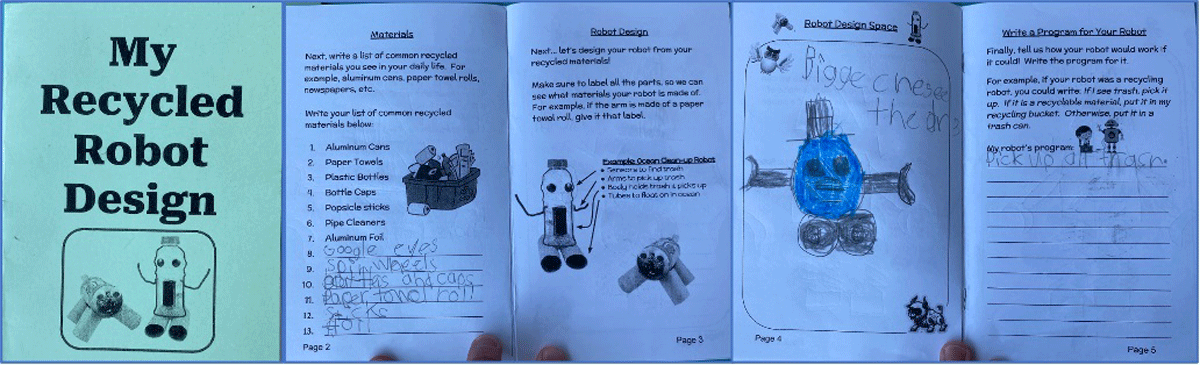
Figure 4
Teacher-designed Scaffolding Workbook for the Design a Recycled Robot Activity
RQ2: Teachers’ experiences with implementing a robotics and coding event
Theme 1: Implementation benefits for teachers
In addition to the changes in confidence around CS/CT integration reported by teachers and described above, all inservice teachers reported positive benefits around the implementation. For example, Desi shared his experience the day of the event:
My experience was overwhelmingly positive. Witnessing the engagement of the students, the teaching of the activities by the [preservice] teachers, and overall appeal of the activities was quite enjoyable to witness and be a part of.
Adan shared his experience as well, noting how this event was a helpful reminder of his personal, philosophical approach to teaching, and the importance of letting students have time and space for themselves to explore and solve challenges:
I was thinking that it’s hard sometimes …letting go as a teacher. We go in there and because sometimes because we’re limited with the amount of time, we need to get to this, we need to make sure that you hit this. But sometimes, we just need to let them go, let them explore, let them come up with their own method. It might not be what you were thinking about. But at the end, you’ll see the results like, “Oh my gosh. I didn’t even think about doing it that way.” So in computer science, allowing the kids to try to do something instead of saying, “No, no, no. You have to do it this way.” Instead, there’s no right or wrong answer. Being able to let go as a teacher and allow whatever happens to happen.
Finally, Claudia shared her experiences and noted the joy this experience brought to herself as an educator, and the importance of recognizing and celebrating these types of experiences in education:
As an educator…it was a joy to see our planning time come to fruit. The fruit of what we did came to life and…to see it actually happening, I thought that brought a lot of joy to me like, “Wow. We did it. This was done.” … and that brought a lot of joy, that we were able to present it to the students with the [preservice teachers] who were also very vital in this whole event. And just for me as an educator, it was a joyous day to see our planning come to life.
All teachers reported positive benefits from the implementation of the coding and robotics event. Many of these benefits were deeply rooted, such as inspiring joy in Claudia, or connecting with Adan’s personal philosophy and beliefs on the importance of these types of educational experiences.
Theme 2: Implementation benefits for students
Similarly, teachers reported positive benefits for their 4th grade students. These benefits ranged from engagement, to the development of problem-solving and critical thinking skills, to collaboration and joyfulness. Figure 5 shows a teacher-created collage from the day of the event that they reported captured the student experience (parental permission received to use all images in a publication).
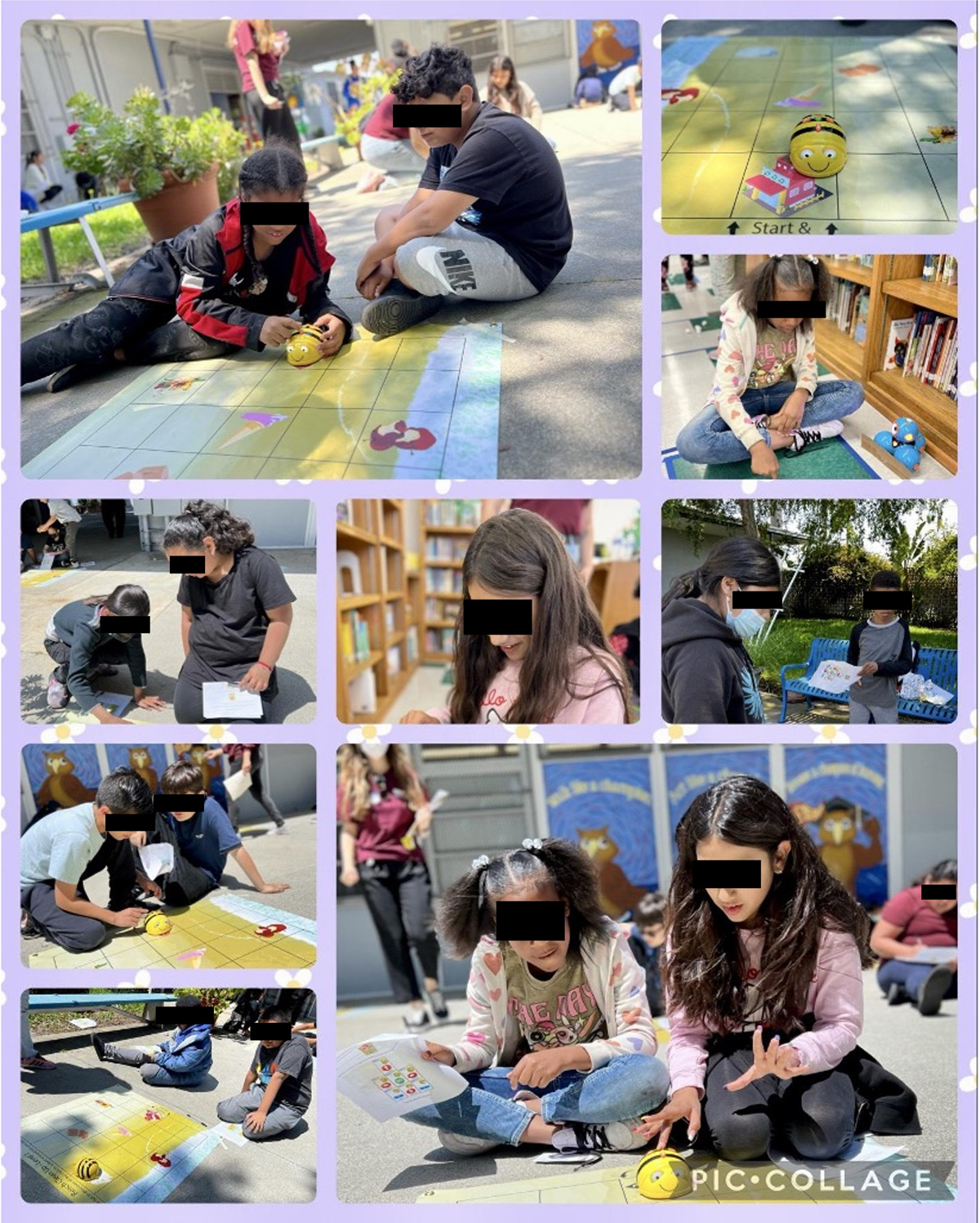
Figure 5
Teacher-created collage of students engaged in CS activities
Additionally, Christine described her observation of one student’s experience and how she perceived the day’s activities helped a student move into a more positive emotional space:
I think a lot of the kids had a lot of fun and that day too, I had one student who was just… There were problems at home and he had his hood on the whole entire day. He was crying. And so, when he was out here doing [the activities], he had his hood off, he was smiling, laughing with his partner so that was nice to see.
Sarah reported that the excitement from the day also led students to consider future possibilities in CS/CT:
I had a couple of students after we were done, they were like, “Oh, I want to do that when I grow up,” and I think it’s nice that they get to see something new. A lot of kids are like, “I want to be a doctor. I want to be a teacher,” and I think computer science is something that they’re not really familiar with so I think having them get this experience and them being hands on, they’re able to see, “Oh, I think I want to do that when I grow up.” And so, I think that’s important as well.
Finally, Claudia noted an overall increase in student confidence and self-esteem as a result of the CS/CT activities:
Seeing the students, especially some who are not as academically prone, I noticed there’s a boost in self-esteem in them that normally you don’t see in the classroom, because they don’t feel that confidence when they’re struggling in some areas. But that day [of the event], I saw those students bursting with self-esteem because it was tangible. They were using their hands and they were solving problems. There was a lot of problem solving involved…I saw our kiddos who struggle, I saw that self-esteem boost, they became problem solvers.
RQ3: Pre-Service Teachers’ Experiences with Facilitating a Robotics and Coding Event
All preservice teacher respondents (n=14) reported an increase in confidence and comfort in bringing CS/CT into their future classroom. For example, one preservice responded that before the event: “I had no experience teaching or integrating computer science with students, this made me a bit hesitant and unsure of my abilities to do so.” However, after the event, the same preservice teacher reported:
I do feel more comfortable and inspired to integrate computer science into my future lessons. I would love to continue using these fun and engaging activities for students to allow them to learn about computer sciences, like coding, in a unique and challenging way.
Similarly, 100% of participating preservice teachers also reported a positive, joyful experience when facilitating the event. For example, one preservice teacher reported, “I liked seeing students working together to figure out how to make robots work.” Another noted, “I had a great experience at the event. The flow of students at each station was good and students took to learning how to do the activities with enthusiasm.” Finally, a third said, “I honestly loved the event. Working with the kids helped me understand that they really do want to learn and are interested in what we talk about.”
Despite only four of the respondents having previous CS/CT experience, all 14 reported this being a positive learning and facilitation experience. However, two (14%) reported that additional time for training prior to the event would have been beneficial, and would have helped them feel more confident for the facilitation experience.
Discussion and Implications
CS/CT Professional Development: Importance of Shared Goals and Vision
A central component of TRPs for professional development is establishing shared goals, visions, and ownership across the teacher(s) and researcher(s) (Juuti et al., 2021). Once goal-setting was completed and a shared vision established (Karlin, M., Stephany, C., & Reed, M. et al., 2023), the co-design sessions lasted for several months. As evidenced in the results, this shared co-construction also acted as a form of professional development and led to increases in teacher confidence and comfort with the CS/CT material, despite the majority of teachers having no prior CS/CT experience. As discussed in the literature on CS/CT professional development, building these types of collaborative communities of practice around shared problems has been suggested as a crucial strategy for supporting growth (Ni et al., 2021). However, little empirical evidence has been presented regarding what this type of PD can look like when researchers, inservice teachers, and preservice teachers engage in this process collectively. We believe the current study provides empirical evidence of benefits from the unique PD approach employed. Furthermore, the holistic, integrative approach documented in this study may prove beneficial for T&EE researchers looking to explore PD approaches as a means of developing student skills related to problem-solving, critical thinking, CS/CT, problem-based learning, and/or design-based learning.
Perhaps one of the most important indicators of success for this TRP as a form of professional development occurred after the event and conclusion of the research project when, at the end of the year, teachers went on to offer students a final CS/CT-related activity without the researchers being present. Teachers held a showcase of the recycled robots that students created, and students shared their robots alongside their pseudocode (code written in English/Spanish that provided general directions for the robot). These recycled robots were also on display (Figure 6) during the end-of-the-year STEM festival held at the school.
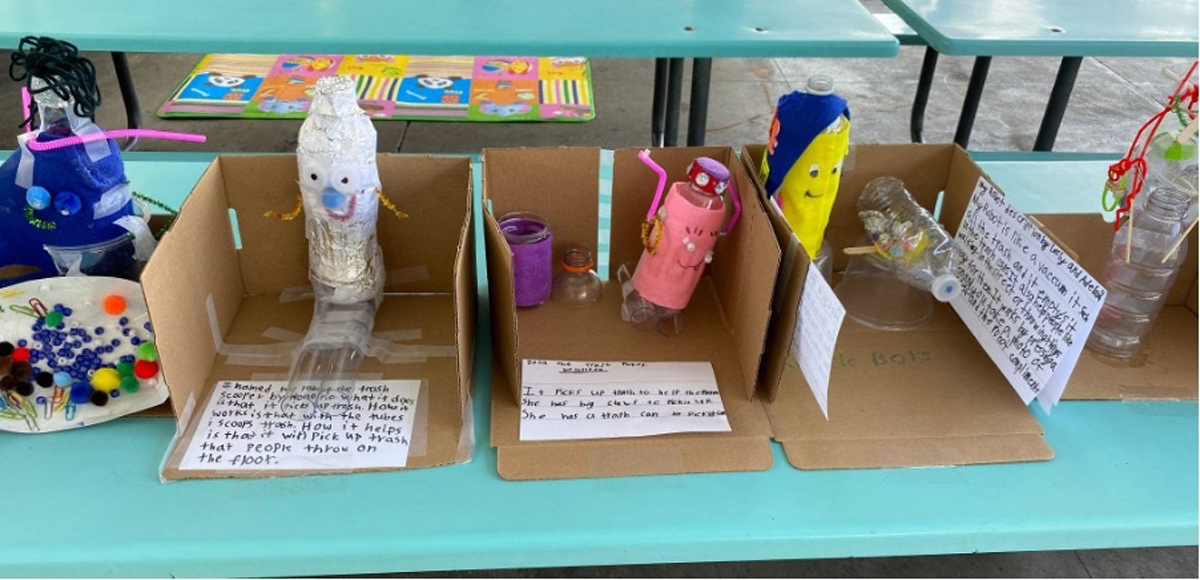
Figure 6
Student robots on display during the school’s STEM festival
As a result of participation in the shared ownership and co-design professional development process, teachers reported increased confidence regarding their CS/CT education, and were able to lead their own CS/CT-related activities in their classrooms without support from the research team.
Importance of Preservice CS/CT Professional Development Experiences
To address CS/CT capacity issues and the shortage of highly qualified teachers, there are increasing calls to integrate CS/CT within preservice teacher pathways (DeLyser et al., 2018; Dong et al., 2024; Yadav et al., 2021). To date however, little has been explored in terms of professional development with preservice teachers leading or integrating CS/CT activities in field experiences and teaching experiences. Other literature has examined what CS/CT integration might look like in higher education classrooms (e.g., Yadav et al., 2014), but currently only emerging research is being conducted on what these experiences look like when preservice teachers deliver CS/CT experiences in the field. For example, Margulieux et al. (2022) found that preservice teachers who implemented newly learned CS/CT activities during student teaching and practicum experiences reported additional benefits compared to those who only engaged in CS/CT activities through coursework.
Based on the results derived from this study, active types of field experiences, with preservice teachers leading and co-facilitating CS/CT activities, were shown to be beneficial. As described in the results section, preservice teachers reported increases in comfort and confidence around CS/CT and also discussed increased openness in integrating CS/CT in their future classrooms. This is not to suggest that a single event is enough to prepare preservice teachers for everything needed to teach or integrate CS/CT. One preservice student, for example, reported “I am excited to integrate computer science in my classroom. I need to learn more, but it is a fun area to explore. And will be helpful tools for students.” In spite of its limitations, the research results suggest that this type of active field experience was beneficial in shifting preservice teacher perceptions around CS/CT and opened the door for future integration possibilities.
As this is an emerging area of research, more work is needed to explore best practices around the design, scaffolding, and implementation of these types of active field experiences. For example, in Dong et al.’s 2024 review of 38 preservice CT-related studies, they found that preservice CT training and professional development supported the growth of preservice teachers’ own computational thinking skills. From this analysis, they recommend a model for preservice teacher training that explicitly incorporates the implementation of CT during internship and practicum experiences, alongside reflections on those practices (Figure 7).
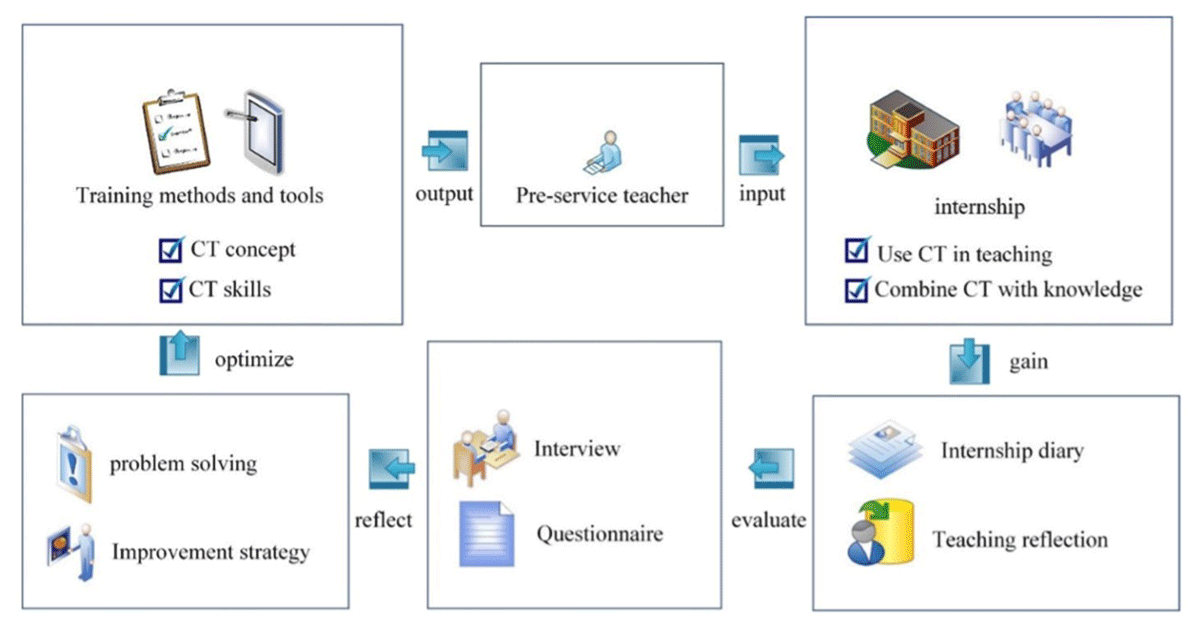
Figure 7
Dong et al.’s 2024 “New model for developing computational thinking” (p. 211).
The approach and findings from this study provide a unique example of what a portion of this model might look like in action. Furthermore, our findings support the validity of the model proposed by Don’t et al. (2024) by establishing the potential for these types of integrative experiences for building preservice teachers CS/CT knowledge and skills. Future T&EE research could explore what this model might look like in totality, including similar experiences to those described in this study, while also expanding that work to include other steps from the model such as interviews and improvement strategies.
Importance of Joyful Experiences
While CS/CT (and STEM education more broadly) can sometimes be focused on workforce development, calls for reimagining our education systems ask us to prioritize the importance of joyful experiences (e.g., Friere, 2021; hooks, 2014). Progressive education movements argue joy should be at the forefront of educational experiences, rather than an occasional byproduct. Centering joy can help connect with intrinsic motivation and have positive impacts on student learning experiences (Jeet & Pant, 2023; Lee & Hannafin, 2016). Additionally, emerging research has suggested potential links between centering joy and building student confidence in CS/CT (e.g., Goldenberg et al., 2020; Scharber et al., 2021). For example, Scharber et al. (2021) found that girls who engaged in the SciGirls Code program reported increased enjoyment (along with feelings of pride, accomplishment, and persistence) which then translated into increased confidence around CS/CT work. While suggesting causation for student experiences is well outside the scope of this work, both increased student joy and confidence were reported by teachers. Further research could work to explore more linkages between these two constructs and better determine if increasing joyful experiences leads to increases in student confidence.
As discussed in the results section, joyful engagement was consistently observed and reported throughout the study. Drawing on other literature, when STEM work centers and foregrounds ideas of joy and celebration, it can also be beneficial for building connection and community, and provide a sense of belonging within STEM spaces (Joseph et al., 2023). For CS/CT professional development efforts looking to address equity and broaden participation, these types of initiatives that are grounded in joy (as opposed to standards or workforce needs), can be one approach for beginning to address long standing equity gaps resulting from our exclusionary systems.
Specific to the field of T&EE, the STEL describe the importance of joy and enjoyment especially related to design processes. As a foundational computing and engineering practice, design is an iterative, creative, purposeful, and open-ended process (ITEEA, 2020, p. 56). Although examining causation is outside the scope of this study, all three activities described in this research involved students designing solutions to complex, authentic problems, and joyful engagement was consistently reported. These findings align with other T&EE research which has found similar results related to K-12 robotics design challenges as activities that can spark joy in students (Barak & Assal, 2018). Future research could further examine the causal link between joyful design experiences and the development of T&EE skills.
Importance of Connections to Technology and Engineering Education
Given the explicit focus on computer science education throughout the coding and robotics activities described in this research, clear connections exist between this work and the field of Technology and Engineering Education (T&EE). Specifically, the Standards for Technological and Engineering Literacy (STEL) describe how CS and CT fit within the Technology Education umbrella of T&EE. (ITEEA, 2020).
Within T&EE, CT is often connected to “programming physical devices, a process commonly referred to as physical computing” (ITEEA, 2020, p. 92). The types of collaborative physical computing and robotics programming challenges described as part of this research are directly tied to multiple T&EE practices, such as Technology and Engineering Practice Four (Critical Thinking) and Technology and Engineering Practice Six (Collaboration). Scholars within T&EE have argued that this type of CS/CT integration can be a beneficial way to bring computing practices into T&EE classrooms (e.g., Buckler, 2018). For practitioners looking to integrate CS/CT into a STEL-driven curriculum, the types of activities explored in this study (and available open-source) may be a good fit for their curriculum. As CT is often seen as a prerequisite skill for more advanced computing ideas, these types of foundational activities can also be built and expanded upon to bring emerging topics like Artificial Intelligence (AI) into the T&EE classroom (e.g., Asunda et al., 2023).
The findings from this study also support current T&EE literature on beneficial pedagogical practices for engaging students in computing and engineering activities. In addition to the focus on joyful learning as noted in this research, there was also an emphasis on collaborative and pair programming (e.g., Adams et al., 2004; Bjursten et al., 2023), incorporation of robotics (e.g., Barak & Assal, 2018), and designing solutions to authentic problems (e.g., Shanta & Wells, 2022). While other emerging research exists exploring how to support and implement these types of pedagogical practices in elementary education (e.g., Bjursten et al., 2023), this study provides a unique exploration of the combination of these pedagogical approaches, nested within PD activities for both inservice and preservice elementary teachers.
Conclusion
Through the exploration of this PD initiative, findings indicate that creating joyful, engaging, accessible CS/CT experiences was reported as beneficial by both inservice and preservice teachers. This type of PD is essential for bringing CS/CT experiences into elementary classrooms, particularly given that elementary educators do not often receive CS/CT and technology training (Pappa et al., 2023). As other emerging research has noted (e.g., Scharber et al., 2021), there is potential for these types of joyful learning experiences to lead to increases in student CS confidence. Joyful, minds-on/hands-on problem-solving experiences like the ones explored in this study are also recommended for developing foundational T&EE skills and dispositions (ITEEA, 2020). While examining these causation linkages is outside the scope of this work, future research could address such connections. Moreover, future work could address the long-term sustainability of projects like these to determine if students lose interest and engagement over time once the novelty has passed and these experiences become more routine. Broader research on technology integration in education has explored in detail how education initiatives might counter this novelty effect (e.g., Miguel-Alonso et al., 2023). However, in K-12 CS/CT education, researchers have suggested that the impact of these types of integration activities may be due at least in part to the novelty effect (e.g., Cheng et al., 2023).
Significant, entrenched equity issues exist within CS/CT education. Increasing the number of teachers capable of teaching and integrating CS/CT in engaging and relevant ways, particularly in schools of high need, is necessary if we are to create more equitable and accessible CS/CT pathways. Through the co-design of CS/CT activities between 4th grade teachers and researchers, and the co-facilitation of these activities with university preservice teachers, this work demonstrated one potential, unique solution for providing PD and building capacity for CS/CT teaching and integration in schools of high need. As noted in the literature, there is a stark need for expanding CS/CT teacher capacity at both the inservice and preservice level (DeLyser et al., 2018). The type of holistic, community-centered, local PD solution presented in this study represents a viable beneficial approach for supporting teacher CS/CT development. As such, it provides the opportunity for further exploration by T&EE researchers looking for viable PD approaches supporting teachers and students in their development of CS/CT, problem-solving, critical thinking, and other T&EE specific skills.
Funding
This work was made possible by support from the technology company Snap Inc. (https://snap.com/en-US).
Ethics
University IRB approval was received along with school district ethics committee approval. All photographs are used with permission. Consent was received from all participants.