
Introduction
Mental health and academic performance are interdependent (El Ansari & Stock, 2010; Deasy et al., 2014; Cuevas et al., 2017). Mental health challenges can hinder undergraduates’ classroom engagement, grades, social relationships, and graduation rates (Jorgensen et al., 2018; Newman, 2000). In the United States, it is estimated that 44% of university students experience depression, 37% struggle with anxiety, 30% feel isolated from others, 15% experience suicidal ideation, and 6% have had a suicide plan (Healthy Minds Network, 2022). Recognizing the value in supporting student wellbeing, many universities are increasing their professional services, such as expanding and diversifying clinical staff, launching marketing campaigns to increase awareness of campus services, and investing in peer-to-peer academic and mental health support programs (Hughes et al., 2018; Brown, 2016; Zhang & Bayley, 2019; de Pury & Dicks, 2020). However, a majority of undergraduates underutilize campus services for a variety of reasons. Students may disregard the severity of mental health struggles (Downs & Eisenberg, 2012; Alemu, 2014), are unaware of existing services (Ali et al., 2017; Hom et al., 2015; Pace et al., 2018), experience shame in large part due to perceived stigma (Carette et al., 2018; Clement et al., 2015; Pavalanathan & De Choudhury, 2015; Xiong & Yang, 2021), have financial concerns (Ali et al., 2017; Hom et al., 2015; Horwitz et al., 2020; Magaard et al., 2017), prefer self-reliance (Lipson & Eisenberg, 2018; Planey et al., 2019; Ubesie et al., 2020), believe they are too busy to seek help (Healthy Minds Network, 2022), and/or would rather receive informal support from peers (Byrom, 2018; Downs & Eisenberg, 2012; Jazaieri, 2018).
While expanding professional services and extracurricular initiatives is important, the underutilization of these resources indicates that other avenues of support are needed, specifically within the academic curriculum. However, classroom-based initiatives to promote wellbeing remain rare in higher education (Houghton & Anderson, 2017; Hughes & Spanner, 2019; Seppälä et al., 2020). In contrast, elementary and middle school teachers have pioneered the integration of wellbeing initiatives within the curriculum through social-emotional learning (SEL) programs. These programs focus on the development of various competencies, including empathy and compassion (Jazaieri, 2018). Neuroscience and psychology studies have shown that experiencing empathy (the act of perceiving and identifying another’s emotional struggle) and compassion (the intention to help another individual or group) can generate a greater sense of social connectedness, improved wellbeing, self-esteem, hopefulness, and resilience (Bradley et al., 2018; Buck & Ginsburg, 1991; Jazaieri, 2018; Mascaro et al., 2020; Ricard, 2015), along with physiological effects, such as the release of dopamine and oxytocin (Hammond, 2015; Lown, 2016). An individual’s capacity to empathize with and feel compassion for others within their own social network or community has also been shown to elevate compassion for others, including those of different cultures and lived experiences (Calloway-Thomas, 2018; Feshbach & Feshbach, 2009). SEL programs in schools have resulted in greater student engagement in class, improved social skills, higher standardized test scores, and more favorable perceptions of the classroom environment (Brock et al., 2008). These programs have been most effective when they are embedded within the curriculum and taught by students’ classroom teachers rather than as standalone extracurricular activities (Durlak et al., 2011; Kutcher et al., 2015).
The increasing awareness of SEL has led some universities and accreditation boards to include empathy-related skills within learning outcomes (Ludvik, 2018; Gilbert et al., 2018). For example, the Accreditation Board for Engineering and Technology requires that students develop “an ability to function effectively on a team whose members together provide leadership, [and] create a collaborative and inclusive environment” (ABET, 2019, pp. 5–6). Similarly, the Association of American Colleges & Universities calls for strengthening students’ development of empathy-related skills, such as intercultural communication and collective problem-solving (AAC&U, 2018). However, many faculty lack the knowledge and guidance to design, teach, and evaluate these skills (National Academies of Sciences, Engineering, and Medicine, 2017). Moreover, many faculty are reticent to broach social-emotional topics, such as mental health, with their students, particularly in STEM subjects (Lipson et al., 2021). When SEL interventions are present, they often involve standalone activities outside of the curriculum (Jazaieri, 2018).
Although scarce in the literature, compassion-based interventions have been reported in a range of undergraduate subjects, including medical and nursing education (Lown, 2016; Hofmeyer et al., 2018; Singer & Bolz, 2013), sociology (Godfrey et al., 2018), public policy and international development (Samuel, 2017), communication (Loftus, 2019), business (Gilbert et al., 2018), creative writing (Billbe, 2019), computer science (Gilbert et al., 2018), and psychology (Harvey et al., 2020). Underlying these efforts is the belief that requiring students to learn, practice, and demonstrate competency in compassion will enhance learning and mental health, and it will lead to positive long-term development (Gilbert et al., 2018; Lown, 2016; Shapiro et al., 2019). While several theories motivate compassion-based interventions, the predominant influences in the literature include liberation pedagogy (Freire, 1970), salutogenic theory of health (Antonovsky, 1987), relational caring (Noddings, 1984), and self-determination theory (Ryan & Deci, 2000). Each of these theories is distinct, yet what binds them together is the understanding of learning, growth, and wellbeing as requiring social connection.
Given that the corpus of SEL classroom-based interventions in higher education remains small, particularly in STEM subjects, this study contributes to the literature by presenting a compassion-based intervention in an engineering course. The intervention required first-year students to practice compassionate communication—sending help-offering messages to their peers—as part of their required coursework. Within the limited body of research examining students’ compassionate behavior, studies focus primarily on the recipients of help rather than those who offer help (Newman, 2000; Ali et al., 2017; Hom et al., 2015). Among the subset of studies that examine those who offer help, researchers focus on the motivations for and against offering help (e.g., Siem & Stürmer, 2019), the psychological benefits of helping others (e.g., Grant & Sonnentag, 2010), and to a much lesser extent, the responses of individuals when their help offer is accepted or rejected (e.g., Cheuk & Rosen, 1996). While these perspectives are useful, the students’ experience of compassionate communication—offering help to classmates and receiving offers of support from classmates—remains understudied. In turn, the primary aim of this study was to learn how, if at all, sending and receiving compassionate messages with peers, as part of a formal classroom assignment, impacted first-year undergraduates. A secondary goal was to understand how participating in the intervention impacted students’ technical coursework. Amidst a rise in psychiatric hospitalizations and mental health challenges among undergraduates (Downs & Eisenberg, 2012; Jazaieri, 2018; Roy & Braider, 2016), understanding how embedded compassion-based interventions influence undergraduates’ academic and emotional wellbeing is important (MacPhee et al., 2021).
The remainder of this article describes the mixed methods study design, the compassion-based intervention named the “Care Bear Connection,” and the survey and interview data collection tools. The article concludes with a discussion of the quantitative and qualitative results, the study limitations, and recommendations for future research.
Methods
This study employed a mixed methods design in which quantitative data (pre-post survey responses) and qualitative data (student-authored messages and post-intervention interviews) were collected sequentially (Figure 1).
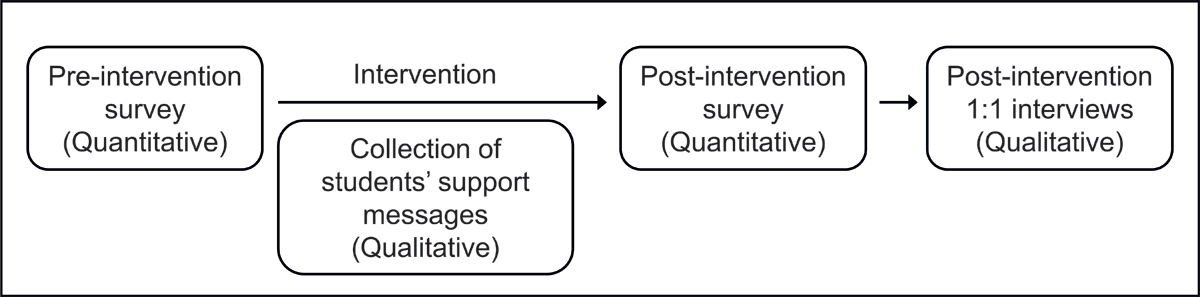
Figure 1
Overview of Mixed Methods Study Design.
Note. The pre- and post-intervention surveys were sent to students in both the intervention and comparison groups, while the collection of messages and interviews occurred with the intervention group only. Qualitative and quantitative data were analyzed independently and then compared to explore the study’s research questions.
The Intervention: “Care Bear Connection”
To embed compassion-based practices within the university classroom, an intervention named the “Care Bear Connection” (Appendix A) was designed and deployed in a first-year undergraduate engineering course. To participate in the intervention, each student was required to sign up for one week to serve as their team’s Care Bear, during which the sole requirement was to send an original message offering support to their teammates. The intervention’s focus on compassionate communication was inspired by studies that have shown positive psychosocial benefits of offering help to others, regardless of whether the offer is accepted or rejected (Bradley et al., 2018; Buck & Ginsburg, 1991; Jazaieri, 2018; Mascaro et al., 2020; Ricard, 2015). The intervention was introduced by the course faculty in lecture during the fifth week of the course. Since each student signed up for a different week to serve as Care Bear, there was a continuous flow of compassionate communication (Figure 2).
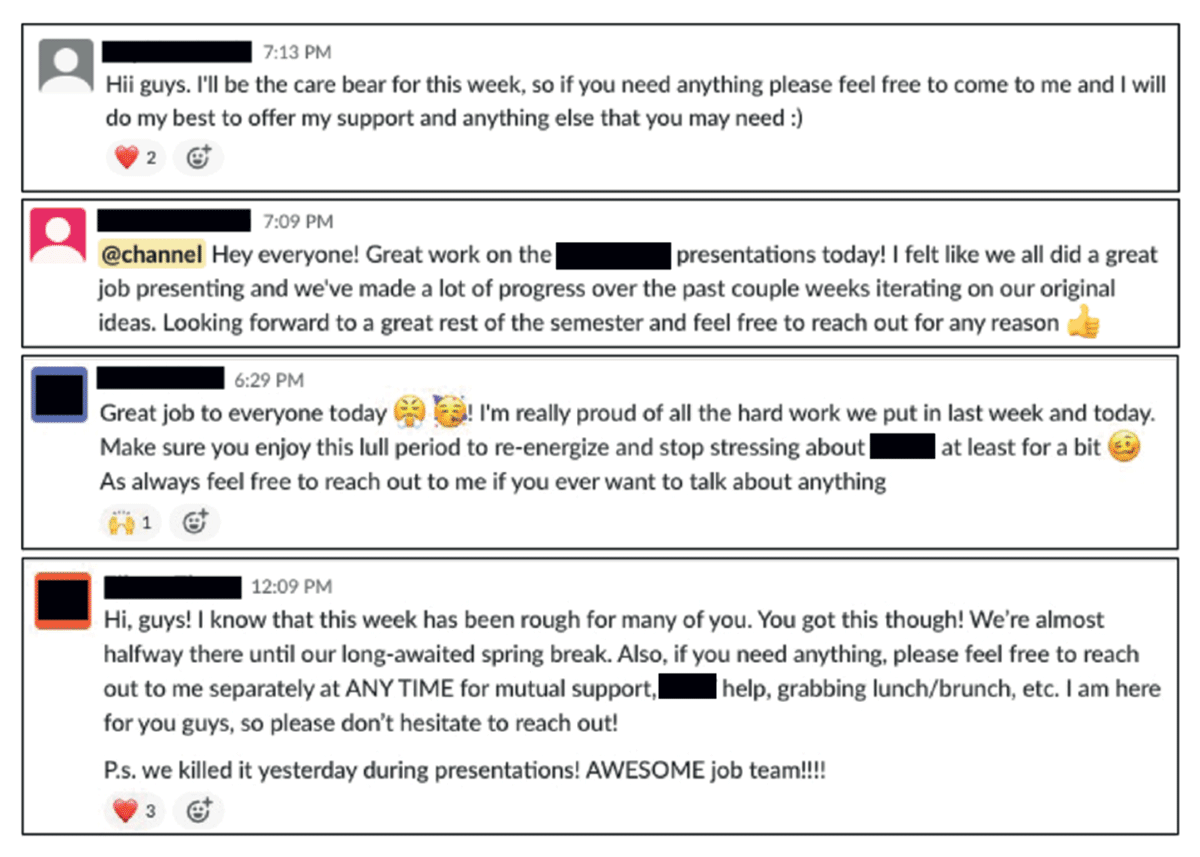
Figure 2
Examples of Students’ Slack Posts with Identifiers Redacted.
The intervention name—Care Bear Connection—was chosen to fit within the preexisting culture and content of the engineering course, in which students design and build prototypes of original toys. Care Bears® are a product line of plush toy bears with facial features and decorations on the stomach area associated with emotions. Although students were required to send a message, they were not required to respond to their peers’ messages. This choice stemmed from a pilot study in which students shared that forced responses were perceived as inauthentic, which hindered emotional expression and genuine relationship-building. To further promote authenticity, the assignment guidelines stated, “The content (words/images) and length of the post are entirely up to you.” Students sent their support message to their teammates via Slack, an online tool already in use in the engineering course, so students did not need additional training. Completion of the post contributed to each student’s overall participation grade.
The simplicity of the intervention—asking students to post a single message of support for their peers with no content requirements or granular grading criteria—was also intended to appeal to faculty. Requiring an instructor to re-envision their syllabus or seek funding for resources might inhibit experimentation and change, so this intervention was designed to fit seamlessly into a preexisting course. Developing a “plug-and-play” intervention that is customizable—i.e., the naming convention and logistics could be tailored to fit the subject content—could lower the barrier for faculty to integrate compassion-based interventions.
Participants and Setting
Studies have shown that first-year undergraduates are at greater risk for isolation and mental health struggles than students of later years (Conley et al., 2015) and may benefit from additional support. This study examined first-years in two engineering courses at a technical university in the northeast U.S. One course served as the intervention group, the other as the comparison group. Both courses were held in-person during the Spring 2022 term, open to all first-year undergraduates, and each comprised roughly 150 students working in teams on original design projects. The faculty of both courses granted permission to solicit students, and approval for the study was granted by the university’s Institutional Review Board. Of the 304 students invited to participate (intervention n = 153; comparison n = 151), 64 students completed the pre-intervention survey (intervention n = 40, comparison n = 24). Of the 64 students who completed the pre survey, 36 completed the post-intervention survey (intervention n = 24, comparison n = 12), which enabled individual pre-post comparisons. After the term ended, students from five different teams in the intervention group participated in interviews (N = 6).
Pre-Post Survey
Participants completed the pre survey four weeks into the term. This timing was chosen so that students would have adequate experience in their respective course to respond to the survey items prior to the launch of the intervention. Participants completed the post survey in the final week of the term. The survey borrowed and modified Likert statements from validated sources: the Peer Support Questionnaire (Alaei & Hosseinnezhad, 2020); Multidimensional Scale of Perceived Social Support (Zimet et al., 1988); Compassion Scale (Pommier, 2010); Relational Compassion Scale (Hacker, 2008); Compassionate Love Scale (Sprecher & Fehr, 2005); Teacher and Classmate Support Scale (Torsheim et al., 2000); Student Personal Perception of Classroom Climate (Rowe et al., 2010); Classroom Life Measure (Ghaith, 2002); and Healthy Minds Study (Healthy Minds Study, 2020). To make the survey accessible, Likert statements were direct without complex or discipline-specific terminology, and the instructions defined two key terms—support and struggles—used in many items. The Likert statements were grouped into categories related to psychosocial constructs associated with compassion (Table 1).
Table 1
Survey Variables and Corresponding Likert Items.
| SUBSCALE VARIABLE | ITEMS |
|---|---|
| Social connectedness among classmates | 1–6 |
| Compassion toward classmates | 7–11 |
| Compassion from classmates | 12–16 |
| Seeking support from classmates | 17–14 |
| Offering support to classmates | 25–31 |
| Classroom climate and compassion from instructor(s) | 32–35 |
| Future intentions to seek and offer support | 36–39 |
Several steps were taken to reduce the risk of participants’ survey responses reflecting social desirability bias, which is the tendency of individuals “to deny socially undesirable traits and to claim socially desirable ones” (Nederhof, 1985, p. 264). First, the survey instructions informed students that their responses would be analyzed after the term had ended and final grades had been submitted, so their responses could not impact their course grades in any way. Second, the instructions included an explicit statement encouraging students to be honest in their responses (Larson, 2019). Third, rather than administer the questionnaire in-person, or having students complete the survey in the classroom under the gaze of their instructor and peers, the survey was self-administered and web-based, a combination that has been shown to reduce social desirability effects (Kreuter et al., 2008). The survey was sent via email using Qualtrics XM.
The electronic consent form that preceded the survey items stated that students who chose to participate in the study would be asked to complete a survey early in the term and again at the end of the term. To examine how, if at all, participants’ responses changed over time, the pre-post survey responses were analyzed in SPSS (Version 28). Prior to analysis, pairwise deletion and listwise deletion were applied, respectively, for two participants who did not respond to all items. Outlier data were included in analysis. The summation of each participant’s pre and post item ratings, respectively, were computed for each category, with negative survey items reverse scored. The pre and post summative scores were used to identify pre-post changes—increases or decreases—for each participant.
Interviews
Individual 45-minute interviews were conducted with intervention group students (N = 6) on Zoom. During the interviews, each student was shown the message they had sent to their classmates as an elicitation tool to prompt them to share the intentions behind their communication choices (Ellison & Enriquez, 2021; Salmons, 2019). Member checking was performed, in which participants were asked periodically to affirm or revise the researcher’s understanding of their reported experiences, and saturation was reached. Recordings were transcribed and coded in NVivo, moving from the identification of significant statements to an abstraction of those statements for broader meaning, and ultimately a synthesis of themes present across the interviews (Saldaña, 2016). All names were converted to pseudonyms.
Results and Discussion
The following subsections present the statistical significance of the survey data, followed by an analysis of four key findings from the survey and interview data: an increase in social connectedness, a greater valuing of compassionate behavior in the classroom, a dramatic reduction in perceived stigma, and an improvement in team collaboration and decision-making.
No Significant Difference Between Groups Prior to the Intervention
An assessment of the pre-intervention scores was performed to determine a baseline from which pre-post changes could be analyzed. Table 2 shows the pre mean scores for each group, along with the results of an independent samples t test to assess differences across the two groups. For each variable, the scale refers to the range of possible summative scores based on the number of items in the given category and the Likert response options of 1 (Strongly disagree) through 5 (Strongly agree). The differences in means between the groups were not statistically significant, suggesting that both groups were roughly equivalent when the survey was administered four weeks into the term.
Table 2
Independent Samples t-Test of Pre Mean Scores.
| VARIABLE | SCALE | M | MD | t | p | Cohen’s d | |
|---|---|---|---|---|---|---|---|
| INTERVENTION | COMPARISON | ||||||
| Social connectedness | 6–30 | 19.83 | 18.67 | 1.16 | –0.79 | 0.44 | 4.20 |
| Compassion toward classmates | 5–25 | 20.67 | 20.83 | –0.16 | 0.16 | 0.88 | 2.99 |
| Compassion from classmates | 5–25 | 19.08 | 17.67 | 1.41 | –1.38 | 0.18 | 2.91 |
| Seeking support | 7–35 | 22 | 23.08 | –1.08 | 0.66 | 0.52 | 4.66 |
| Offering support | 6–30 | 20.71 | 20.92 | –0.21 | 0.15 | 0.88 | 3.90 |
| Classroom climate | 4–20 | 14.54 | 14.17 | 0.37 | –0.35 | 0.73 | 3.03 |
[i] Note. For all variables df = 34, n = 36 (Intervention, n = 24; Comparison, n = 12).
Significant Differences in Pre-Post Scores Among Intervention Group Only
To examine whether pre-post changes were statistically significant, a paired samples t test was performed for each group. In the comparison group, the pre-post changes for each of the six variables were not statistically significant. In the intervention group, the differences were statistically significant for four out of six variables: “Social connectedness” (MD = 2.84, SD = 4.02, t(23) = 3.46, p < .002), “Seeking support” (MD = 2.33, SD = 4.42, t(23) = 2.59, p < .017), “Offering support” (MD = 2.01, SD = 3.98, t(23) = 2.46, p < .022), and “Classroom climate” (MD = 1.38, SD = 2.73, t(23) = 2.47, p < .022) (Table 3). Since the differences in mean scores for the “Compassion toward classmates” and “Compassion from classmates” categories were not statistically significant, a paired samples t test was performed for items in those categories. In the comparison group, there were no statistically significant pre-post differences for any of the items. In the intervention group, the pre-post differences were significant for two items in the “Compassion toward classmates” category, and two items in the “Compassion from classmates” category (Table 3). Overall, the significant pre-post differences suggest that during the intervention, students felt an enhanced sense of social connectedness, perceived an increasingly compassionate classroom environment, and experienced greater compassion toward and from their classmates.
Table 3
Paired Samples t-Test of Pre and Post Mean Scores Within the Intervention Group.
| VARIABLE | SCALE | M | MD | t | p | Cohen’s d | |
|---|---|---|---|---|---|---|---|
| PRE | POST | ||||||
| Social connectedness | 6–30 | 19.83 | 22.67 | 2.84 | –3.46 | .002** | 4.02 |
| Seeking support | 8–40 | 22.00 | 24.33 | 2.33 | –2.59 | .017* | 4.42 |
| Offering support | 7–35 | 20.70 | 22.71 | 2.01 | –2.46 | .022* | 3.98 |
| Classroom climate | 4–20 | 14.54 | 15.92 | 1.38 | –2.47 | .022* | 2.73 |
| Compassion toward classmates | |||||||
| It’s not my place to try to support a classmate who is struggling, especially if I don’t know them well. | 1–5 | 2.13 | 3.88 | 1.75 | –6.16 | <.001** | 1.39 |
| It’s okay for friends to talk about their struggles, but classmates should avoid discussing personal issues. | 1–5 | 2.13 | 3.88 | 1.75 | –7.00 | <.001** | 1.23 |
| Compassion from classmates | |||||||
| I don’t care how my classmates treat me, as long we get the work done and get good grades. | 1–5 | 2.25 | 3.88 | 1.63 | –5.21 | <.001** | 1.53 |
| My classmates would think less of me if they were to find out that I was struggling. | 1–5 | 2.46 | 3.92 | 1.46 | –4.85 | <.001** | 1.48 |
[i] Note. For all variables, df = 23, n = 24.
* p < 0.05.
** p < 0.01.
Enhanced Social Connectedness and Valuing of Compassionate Classroom Behavior
In both the survey and interview data, participants reported an increase in meaningful interactions with their classmates during the study period. Prior to the intervention, 29.2% of students agreed or strongly agreed with the statement, “A classmate has shared something personal about themselves with me,” whereas after the intervention, 66.7% agreed or strongly agreed. Similarly, prior to the intervention, only 20.9% agreed or strongly agreed with the statement, “I have shared something personal about myself with a classmate,” whereas after the intervention, 58.3% agreed or strongly agreed. Beyond sharing personal information, students reported sharing struggles, specifically. In response to the statement, “Students in the class do not share their struggles with each other,” 66.6% agreed or strongly agreed prior to the intervention, whereas after the intervention, 66.7% disagreed or strongly disagreed. This dramatic reversal was accompanied by a pre-post shift involving help-offering behavior. In response to the statement, “I have reached out to a struggling classmate to offer my help,” prior to the intervention, 29.1% agreed or strongly agreed, whereas a majority (58.3%) agreed or strongly agreed after the intervention. Taken together, these pre-post changes suggest that during the intervention, a majority of students shared personal information, including struggles, with another classmate(s) and engaged in compassionate outreach.
From these meaningful interactions emerged feelings of greater connectedness with classmates. In response to the statement, “I feel disconnected from my classmates,” before the intervention only 37.5% of students disagreed or strongly disagreed, yet 62.5% disagreed after the intervention. This enhanced sense of social connectedness appears to have contributed to an upward shift in students’ valuing of compassionate classroom behavior. In the pre survey responses to the item, “I don’t care how my classmates treat me, as long as we get the work done and get good grades,” 70.8% of students agreed or strongly agreed, whereas in the post survey responses, 75% of students disagreed or strongly disagreed (Figure 3). This remarkable shift indicates a newfound appreciation of compassionate behavior amidst technical work in the classroom.
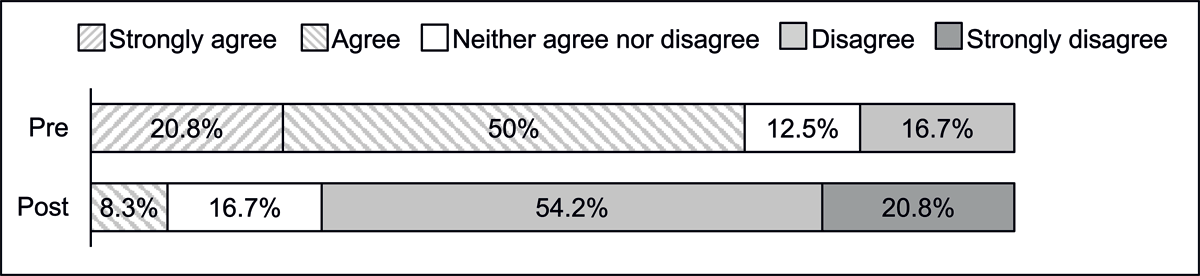
Figure 3
Intervention Group Pre and Post Responses for the Item “I don’t care how my classmates treat me, as long as we get the work done and get good grades.”
In parallel to students’ valuing compassion from others, students reported a shift in expectations regarding their own help-offering behavior. In response to the item, “It’s not my place to try to support a classmate who is struggling, especially if I don’t know them well,” 66.7% agreed or strongly agreed in the pre survey, whereas after the intervention, 70.8% disagreed or strongly disagreed (Figure 4). This striking reversal reflects students’ increased sense of responsibility for compassionate behavior during the intervention.
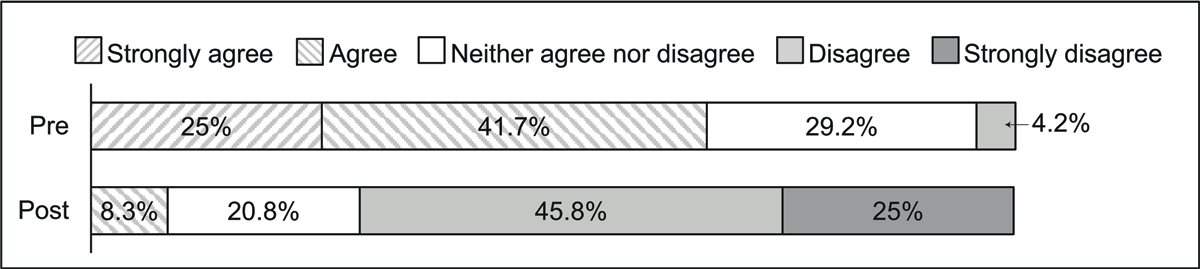
Figure 4
Intervention Group Pre and Post Responses for the Item “It’s not my place to try to support a classmate who is struggling, especially if I don’t know them well.”
In addition to reconsidering their role when peers are struggling, students’ attitudes for classroom conduct in general changed. In response to the item, “It’s okay for friends to talk about their struggles, but classmates should avoid discussing personal issues,” prior to the intervention, 70.9% of students agreed or strongly agreed with the statement, whereas after the intervention, 70.8% of students disagreed or strongly disagreed (Figure 5).
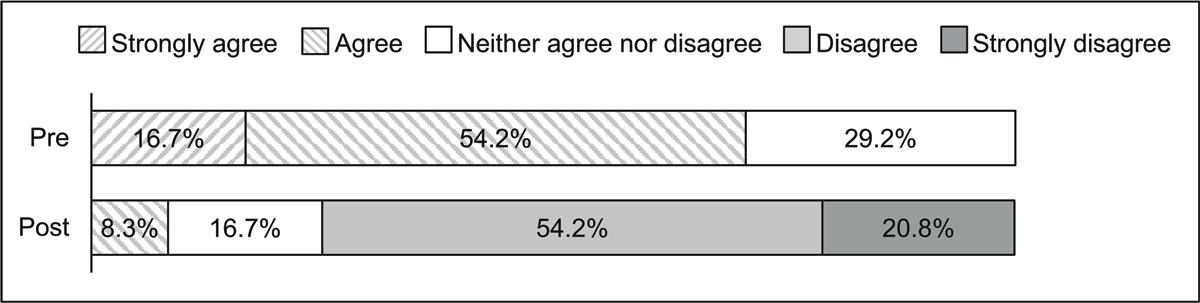
Figure 5
Intervention Group Pre and Post Responses for the Item “It’s okay for friends to talk about their struggles, but classmates should avoid discussing personal issues.”
This set of pre-post changes suggests that during the intervention students’ understanding of the engineering classroom was altered. A classroom where peers previously did not share struggles became a locus of vulnerability and prosocial behavior. Students’ newfound appreciation of compassionate interactions in the classroom runs counter to the prevailing taboo of emotional expression in many academic and professional settings (Barsade & O’Neill, 2016; Fiorini, 2019; Lown, 2016).
In line with the survey data, the interviewees characterized the intervention in terms of meaningful social connections. When asked about his experience during the Care Bear Connection, Darnell responded:
I think it was a nice introduction for people to get to know each other beyond the context of just working in lab hours together or just sitting in lecture. I really like that aspect of it, trying to build a social connection between our team, rather than just like, this is what we need to get done, so I really enjoyed that.
Darnell’s characterization of the intervention as facilitating social connections that otherwise might not occur during lab or lecture was echoed by others. Astrid reflected, “we reach out to each other and have valuable connections beyond just being strictly [a] ‘let’s get things done’ type of team. So I think it was nice that [the Care Bear Connection] provided a framework for those connections to be made.” Similarly, Tomas commented on how the intervention afforded social interactions:
I think that because the [Care Bear] experience is so unique, because it’s something that most people don’t ever have to do, I think that you see another side of people that you usually wouldn’t. And so I think that is nice.
For Tomas, the intervention enabled students to “see another side of people,” an emotional dimension that is typically hidden in the classroom. Tomas elaborated, “you’re so used to seeing people in a purely academic setting, so to see [a supportive message] coming from your teammate is very nice.”
Receiving messages that were beyond what is considered “academic” appeared to inspire students’ communication choices when crafting their own Slack posts. For example, when viewing his post during the interview, Darnell reflected:
I was being vulnerable, I would say. So there’s always some risk when you’re doing that to a group of people you aren’t necessarily close with. … I felt like I could just say how I was feeling. … I’m not going to try and pretend to be like anything else, or I’m not just trying to say what the professors want me to say. I was just sort of like, I really want to be the source of support for you guys.
As previously mentioned, the assignment guidelines were minimal, and students were not provided with a template. The lack of constraints seems to have empowered Darnell to be “vulnerable” and express his emotions. Similarly, Tabitha shared, “I felt like in the individual message, I could say whatever I wanted. I didn’t feel confined.” Likewise, Tomas reflected:
It wasn’t like, “Oh, I need to make this look really good so that the instructors like it.” It was just like I just sent a personalized message to my team. And that’s what everyone on our team did. It didn’t feel like anyone was trying to get a perfect script so that way [the instructors] liked it. It was just we’re going to be ourselves. And if you need help, then come to us.
The interviewees appreciated that the assignment gave them the freedom to communicate authentically, which appears to have strengthened their belief in the authenticity of others’ messages. For example, Nick described how sending his own message when serving as Care Bear directly shaped his belief that others’ offers of support were also genuine:
Usually, if someone offers help, the thing that comes to my mind is they’re just doing it to be nice, they don’t actually necessarily mean it. But when you’re the person reaching out, you realize you want people to reach out to you. So that means…next time, when I want to ask for help, I know that people who offer it are genuinely wanting to help. So it feels a lot easier to ask.
The perception of being in a classroom community of authentic help-offering influenced how Nick will interpret offers of support in the future, which in turn might motivate his own help-seeking behavior.
Several interviewees emerged with a desire to continue offering help to classmates in the future, using their Care Bear experience as a model. Astrid explained:
Not having to be like, “Oh, you can only have me or ask me for help if you have a really good question.” But being like, “You can just ask me for help, even if it’s a little thing.” I wouldn’t want to make it so that someone has to ask me for help if they have a really big question only, but rather to make it clear to them that like, “Feel free to ask me for help, even if it’s just like a little thing.”
When considering how to make an offer, Astrid shared that being a Care Bear was “an influence on how I might help people in the future, because I think I’ll be more likely to think, ‘Oh, what did I do when I was a Care Bear?’” By writing and reading original help-offering messages, Astrid and others were able to construct and refine their own “templates of empathetic literacy” (Calloway-Thomas, 2018, p. 496), which they can adapt in future academic, professional, and personal situations.
Taken together, the survey and interview data suggest that students developed an environment of relational caring, in which individuals care about others and believe that others care about them (Noddings, 1984). Sending and receiving Care Bear messages likely contributed to this environment, as prior studies have shown that when individuals make time for compassionate check-ins, members of their community perceive that they are cared for (Dickson & Summerville, 2018; Joseph & Sagy, 2017). Prior research also shows that offering and receiving compassion can strengthen relationships and enhance one’s sense of social connectedness (Downs & Eisenberg, 2012; Lillrank, 2013; Pace et al., 2018; Zumbrunn et al., 2014). The sense of being part of a caring community catalyzed additional pre-post changes, notably a decrease in perceived stigma.
Dramatic Reduction in Perceived Stigma
Personal stigma refers to how an individual stigmatizes themselves and/or others with mental health struggles, whereas perceived stigma refers to how an individual believes others stigmatize those with mental health struggles. A consistent finding across studies is that undergraduates’ perceived stigma is much greater than their personal stigma (Carette et al., 2018; Clement et al., 2015; Healthy Minds Network, 2022; Xiong & Yang, 2021). The pervasiveness of harmful stereotypes and rhetoric regarding mental health (Reaume, 2002) influences students and faculty alike in their decisions about whether to disclose struggles and seek help (Price, 2011).
The pre-post survey responses and interviews capture a dramatic decrease in perceived stigma during the intervention. In response to the statement “My classmates would think less of me if they were to find out that I was struggling,” a majority (54.2%) agreed or strongly agreed in the pre survey, whereas 75% of participants disagreed or strongly disagreed in the post survey (Figure 6).
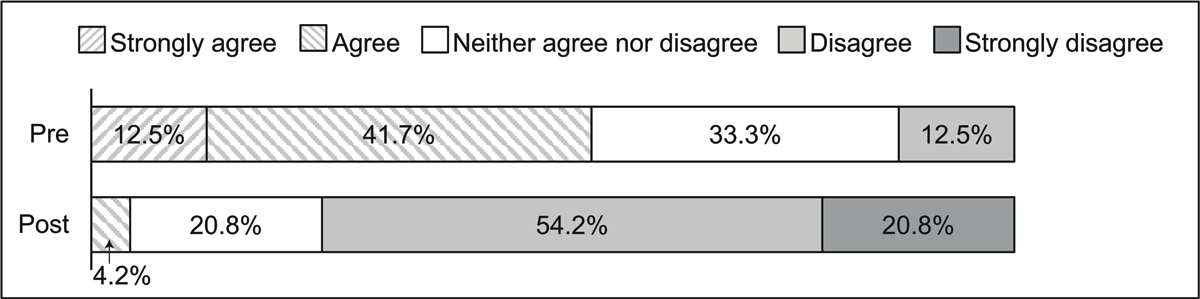
Figure 6
Intervention Group Pre and Post Responses for the Item “My classmates would think less of me if they were to find out that I was struggling.”
This change in perceived stigma is lower than nationwide data as well as internal data from the site university. In a nationwide survey, 40% of undergraduates agreed with the statement “Most people would think less of someone who has received mental health treatment” (Healthy Minds Network, 2022). Likewise, internal data from the site university showed that 47% of undergraduates agreed with the statement “Most people feel that receiving mental health treatment is a sign of personal failure.” In stark contrast, participants in this study reported a reduction in perceived stigma, which suggests that engaging in compassionate communication in the classroom can generate a powerful shift in attitudes. In turn, a reduction in perceived stigma could motivate help-seeking behavior (Pace et al., 2018).
The interviewees also shared a low level of perceived stigma, and this attitude was connected to their perception that the Care Bears on their team genuinely wanted to support them. Astrid reflected, “I think it’s just kind of reassuring…you do have someone who’s there. You have someone who if you really need it, you can fall back on them and talk things out with them. So it was comforting, reassuring.” Nick expressed a similar attitude:
Seeing people posting in the chat, just knowing that they were there to support you, and you also reaching out, I think it was really nice. You would see it was a post of someone just saying they’re there for you.
Similarly, Darnell stated:
Other members of the team were looking out for our wellbeing. I really appreciated that. It felt like they really cared about how we were doing and if everyone was OK. … [The Care Bear] offered support in a way that I didn’t know that I really needed, which was helpful.
Receiving weekly compassionate messages made interviewees feel that their peers’ willingness to help was genuine, which likely contributed to the newfound belief that their peers would not think less of them if they learned about their struggles. The correlation between increased social connection and decreased perceived stigma aligns with prior studies, which have shown that when undergraduates engage in classroom-based peer support activities, they embrace opportunities to communicate academic and personal struggles, which decreases their embarrassment at not understanding academic content (Bruno et al., 2016) and increases their feelings of trust and solidarity with classmates (Billbe, 2019). These findings reinforce how classroom-based peer support interventions have the potential to reduce academic and mental health stigma.
Improved Team Collaboration and Decision-Making
With regard to how, if at all, participating in the Care Bear Connection impacted students’ technical coursework, all of the interviewees specified improvements in team communication and collaboration. Astrid stated:
I think definitely having a Care Bear increased—I keep talking about connection—but it increased the way that we were close to each other and … felt more comfortable talking through [design] concepts and things like that.
These benefits were most pronounced during high-stress team meetings, in which students had to reach consensus about product concepts or design attributes at key stages in the course. Darnell recalled:
I’ll definitely say for the funneling down to the specific toy ideas that we were doing, that was a really stressful experience. But it was just nice having that reminder that OK, we’re all in this together. Things are going to be OK. We’re just trying to do what’s best for our team, and it’s OK.
Similarly, Tabitha shared:
The Care Bear [program] definitely helped just make us more comfortable with each other and just united us as a team. So then when we started discussing and debating, I guess, we all knew … it wasn’t personal.
The sense of mutual support, formed in part by compassionate interactions, strengthened trust among teams, which encouraged Tabitha to assume positive intentions from her peers. This unity helped reduce tension and avoid resentment during technical deliberations. These findings align with prior studies showing that when teammates feel safe and supported, they are likely to experience greater collaboration (Delizonna, 2017; Gilbert et al., 2018) as well as with studies showing positive impacts of psychosocial interventions on undergraduates’ academic performance (Solanki et al., 2020). Notably, while all of the interviewees shared how the intervention positively impacted their team meetings and collective decision-making, none of the interviewees believed that the intervention detracted from their technical work in any way. This finding suggests that embedding a social-emotional intervention within a preexisting course can enhance, rather than detract from, students’ technical work.
Study Limitations
Although the results were significant, the study had limitations primarily involving sample size and demographic data collection. The number of pre-post survey respondents and interviewees is low relative to the sizes of the comparison and intervention groups. A greater number of participants would have enhanced the diversity and generalizability of the qualitative data. Although not of primary interest to this study, the limited demographic data available prevented meaningful analysis of variable mean scores with regard to gender, race/ethnicity, sexual orientation, socioeconomic status, and first-generation status. The survey asked students to share demographic characteristics; however, these questions were optional, and few students provided this information.
Conclusion and Future Work
Through sending and receiving compassionate messages as part of their required coursework, first-year students reported an enhanced sense of connectedness, ascribed greater value to compassionate practices in the classroom, experienced a dramatic reduction in perceived stigma, and observed improved team communication and collaboration. Notably, these outcomes were achieved with minimal disruption to a preexisting engineering course, suggesting that “plug-and-play” compassion-based interventions that are customizable to fit the culture of a given discipline and classroom can improve students’ wellbeing and academic experience. Future studies would benefit from examining faculty perspectives, as well, such as the impacts of leading a compassion-based intervention on faculty perceptions of classroom climate, student engagement, and pedagogical worldview. This study shows that instructors, including those within STEM disciplines, have the power and opportunity to not only impart technical knowledge, but also to promote mental health and peer support in the classroom. Importantly, this study shows students’ willingness to embrace social-emotional activities within the curriculum.
Appendices
Appendix
Appendix A. Intervention instructions with university and course identifiers redacted.
Care Bear Connection
A team is a collection of individuals with varied skills, knowledge, resources, and life experiences. Being dependent on each other presents challenges as well as opportunities for collaboration, efficiency, and creativity. Studies suggest that when teammates feel safe and supported, they are likely to engage in more creative problem-solving, which can strengthen collaboration and innovation (Gilbert et al., 2018; Delizonna, 2017). In turn, a compassionate team environment may not only help improve wellbeing but may also make the design experience more innovative and successful. To help foster compassion, creativity, and success in your team, we invite you to be a  Care Bear!
What is a Care Bear?
Being a Care Bear means making yourself available to support your teammates. Each team member will serve as an official Care Bear for one week this term. This is an important part of the experience. Each Care Bear week starts at the beginning of a lab meeting.
How do I sign up for my Care Bear week?
During your lab on March 2–4, each team member will select a week. Be sure to add your selected week to your calendar.
What do I do as a Care Bear?
At the start of your week, after your lab, post a message of support for your teammates on your team’s Slack channel. The content (words/images) and length of the post are entirely up to you. Be sure to include “@channel” to make sure all your teammates see your post. After posting to Slack, a teammate might ask for your support. Whether they are experiencing academic or emotional struggles, you will likely not be able to solve their challenges, but you can listen, brainstorm together, and/or suggest resources on campus. If no one responds to your post, that’s okay too! They’ll know that you’re available, and hopefully your post will make them feel supported.
What if I don’t know my teammates very well?
You’ve been sitting together in lecture and working alongside each other for a few weeks, so you’re not total strangers! Although you might not know your teammates’ lived experiences, you’re going through a shared experience together at . This is an important connection, and there is strength in solidarity. Keep in mind that some of your teammates may be hesitant about reaching out to a teammate and sharing their struggles. This discomfort may also serve as a point of connection, as you might feel anxious about offering support to your teammates, particularly those you don’t know very well.
Helpful tips:
Being a Care Bear is all about you and your teammates; this is not about pleasing the instructors.
Be authentic in your Slack post; don’t be concerned with “academic” or “formal” language.
As with any electronic communication, assume that your post may be shared with others.
There is absolutely no requirement to respond to a Care Bear’s offer of support.
Questions?
If you have any questions about being a Care Bear, please contact your instructor for help.
Competing Interests
The author has no competing interests to declare.