
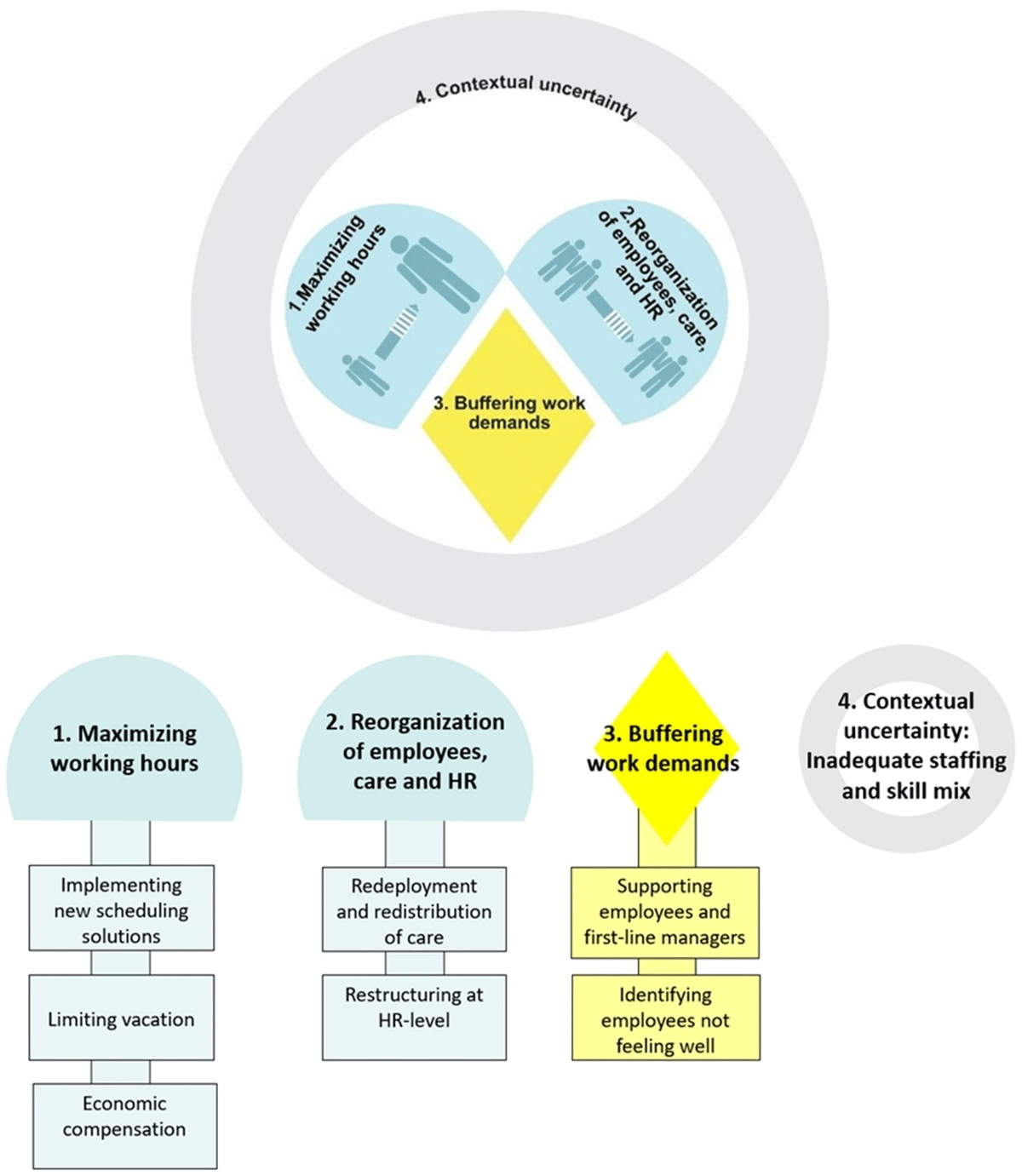
Figure 1
Management of working hours and staffing in Swedish healthcare during the COVID-19 pandemic, as described from the perspective of HR representatives.
Note: The inner objects represent the actions that were taken to manage the COVID-19 pandemic, namely maximizing and reorganizing resources, and actions towards employees in terms of buffering work demands. The ring symbolizes the contextual uncertainty in terms of inadequate staffing and skill mix, which influenced actions taken during the pandemic.
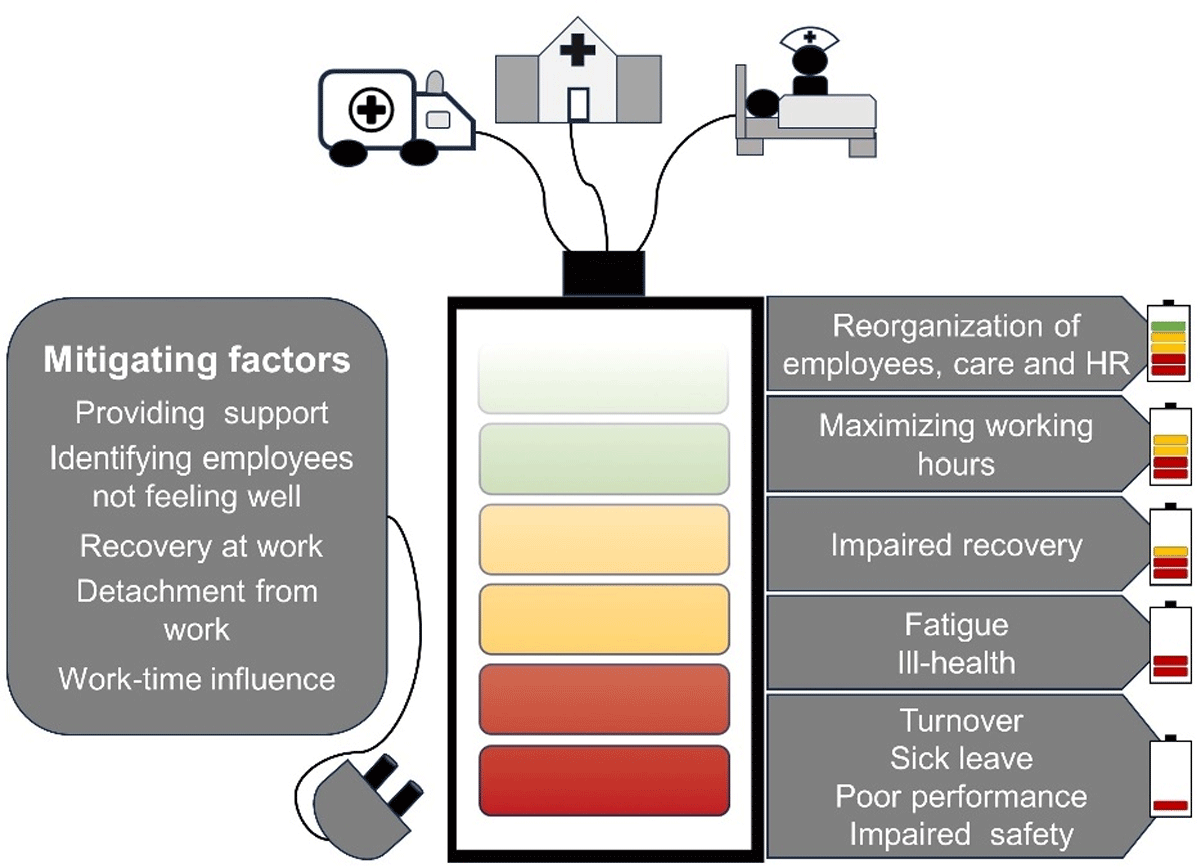
Figure 2
The organizational recovery paradox.
Note: The battery symbolizes the human capital within organizations, keeping operations up and running. While maximizing working hours and reorganization may solve the situation at hand, this can lead to the depletion of human capital within the organization, ultimately resulting in poor performance, safety, and the loss of human capital. Therefore, factors that deplete the human capital (drain the battery) must be considered, especially during periods of high pressure. Mitigating factors are needed to recharge the human capital within the organization.