
The spread of COVID-19 was declared a global pandemic by the World Health Organization (WHO) in March 2020. Since then, the pandemic has led to increased pressure on the healthcare sector and affected the work environment of healthcare workers, who have faced heavy workloads, understaffing, and demanding working hours (Djupedal et al. 2022; Escher et al. 2023). Nurses working in intensive care units (ICU’s) during the pandemic have experienced changes in their schedule on short notice, which has been considered a source of stress (Escher et al. 2023), and have reported working long and more frequent shifts, fewer days off between work periods, as well as increased night shifts and quick returns (<11 h between shifts) (Djupedal et al. 2022; Escher et al. 2023).
Previous research has shown that demanding working hours, such as long working hours, are associated with negative outcomes both at the individual and organizational level in terms of impaired employee health (Wong et al. 2019), increased risk of accidents, and poor patient safety (Wagstaff & Lie 2011; Trinkoff et al. 2011). Long working hours, quick returns, night work, and long spells of consecutive night shifts have been associated with increased sickness absence amongst nurses (Dall’Ora et al. 2019; Larsen et al. 2020) and may also impact their willingness to remain in their current profession. For example, recent findings suggest that nurses working ≥12 hours of overtime per week and experiencing increased long (>8 h) work shifts and quick returns during the COVID-19 pandemic reported higher turnover intention (Bae 2023; Djupedal et al. 2022). Poor sleep has been a suggested mechanism behind the increased risk to safety and employee health in relation to irregular work hours (Kecklund & Axelsson 2016). Thus, poor working hour arrangements may pose a risk to employee health, safety, and retention, impacting the organization’s human capital.
Working hours in the Swedish healthcare sector are regulated through legislation at national/EU-level and through collective agreements, which determine daily and weekly consecutive rest periods (e.g., 11 hours each 24-hour period), weekly working hours (max. 40 h/week), and overtime (max. 200 h/year). An additional 150 hours of overtime can be allowed if there are special grounds (Working Hours Act 1982). However, local exemptions have been made in collective agreements between unions and employer organizations such as the Swedish Association of Local Authorities and Regions (SALAR), which represents the Swedish municipalities and regions that are responsible for managing healthcare. During the COVID-19 pandemic, the crisis agreement, which was originally developed for firemen battling large wildfires in Sweden in 2019, has been in place for regulating working hours and economic compensation. The crisis agreement circumvents the Working Hours Act and increases weekly working hours from 40 to 48 hours, reduces the weekly consecutive rest minimum from 36 to 24 hours, and states that workers are compensated with an additional 120% of their monthly salary while working on the crisis agreement. The crisis agreement can be used for a maximum of four weeks for each employee but can be extended if needed (SALAR 2019). Further regulations state that Swedish workers are entitled to five weeks of vacation each year, including four consecutive weeks between June and August (Annual Leave Act 1977), and Swedish employers are required to ‘ensure that employees have the opportunity to rest and recover’ (Organizational and social work environment provisions) (AFS, 2015, p. 4). Thus, both working hours and opportunities for recovery fall under the responsibility of Swedish employers.
However, evidence suggests that the recovery of healthcare workers has been compromised during the pandemic, especially amongst those working with COVID-19 patients (Jonsdottir et al. 2021). Recovery is a restorative process involving sleep as well as recovery behaviors during work (e.g., rest breaks) and leisure time (e.g., resting, physical activity), and a key factor for preventing stress-related illness (Kecklund & Axelsson 2016; Geurts & Sonnentag 2006). Recovery during leisure can however be disrupted for example by extensive working hours (Geurts & Sonnentag 2006). Furthermore, recovery throughout the workday (i.e., by taking rest breaks) has been deemed important for preventing turnover amongst nurses, especially in relation to stressors such as understaffing (Wendsche et al. 2017), as well as for maintaining employee performance (Wendsche et al. 2016) and minimizing safety risks (Fischer et al. 2017). Findings from the pandemic have, however, shown that the opportunities for nurses to take rest breaks at work have been limited (Sagherian et al. 2022), posing a risk for higher turnover, especially if understaffing has been an issue (Wendsche et al. 2017), as well as poor patient safety and quality of care (Aiken et al. 2017; Unruh & Zhang 2012).
Altogether, this suggests that factors including demanding working hours, lack of recovery, and understaffing could lead to ill-health, poor performance, and loss of human capital in terms of turnover and sick leave. At the same time, organizations have been dependent on their human capital during the COVID-19 pandemic. While organizations may adopt strategies such as increasing work hours, limiting rest breaks, and calling employees in on short notice when under pressure, these strategies could ultimately deplete the human capital within the organization. We refer to this as an organizational recovery paradox. The recovery paradox at the individual level has previously been described by Sonnentag (2018), stating that high job stressors increase the need for recovery but can simultaneously impede recovery by disrupting sleep, hindering psychological detachment from work, and leaving less energy for recovery activities.
Previous research has highlighted how employee performance and well-being can be related to organizational-level human resource management (HRM) (Van de Voorde et al. 2012), and evidence from the healthcare sector suggests that HRM practices and policies have the potential to affect the performance of healthcare workers, which is ultimately related to patient safety (Harris et al. 2007). A recent systematic literature review concluded that stressors, including high workload and suboptimal shift length/patterns, can be buffered by practices such as utilizing family-friendly working practices, supportive management, and flexible working arrangements for nurses (Xiao et al. 2022). Swedish healthcare organizations have, in many cases, adopted a more flexible approach to working hours by allowing employees’ influence through participatory work-time scheduling (Epstein et al. 2023), which may serve as a potential buffer against the negative consequences of shift work (Nabe-Nielsen 2011). In other high-risk industries, an organizational approach for managing fatigue, which indicates insufficient recovery, and preventing subsequent adverse effects on alertness and performance has been to adopt a fatigue risk management system (FRMS). These systems often include systematic management of working hours to ensure time for sleep and recovery (Gander et al. 2011) and are likely to be effective in preventing fatigue-related risk (Sprajcer et al. 2022).
While organizational-level practices such as the management of working hours, recovery, and fatigue risk appear to be essential for maintaining a healthy and well-performing workforce, to our knowledge, little research has been dedicated to HRM practices aimed at working hours and supporting employees’ recovery in healthcare, especially within the unique context of the COVID-19 pandemic. Thus, the aim of the present study is to examine how working hours, staffing, and recovery have been managed at the organizational level in Swedish health care during the COVID-19 pandemic, studied from the perspective of HR representatives. This study is part of a larger research project and is guided by the following overall research questions:
What strategies has HR used to manage working hours, staffing, and the personnel’s recovery during the course of the pandemic, and what has been perceived as challenging compared to normal operations?
On a macro level, what different forms of solutions for scheduling have been used in different Swedish regions during the COVID-19 pandemic, and how have sustainable work schedules and employees’ possibilities for recovery been supported?
Method
Design
A qualitative descriptive design was chosen, which is suitable to describe people’s experiences and thoughts (Patton 2014). The themes in the present study relate primarily to actions that were taken in relation to nurses and assistant nurses, who will be referred to as ‘employees’. The Consolidated Criteria for Reporting Qualitative Research (COREQ) checklist was followed (Tong et al. 2007).
Participants
The participants were chosen by purposive sampling. The inclusion criteria were HR representatives at the regional or hospital level. Participants were sampled from the 21 Swedish regions, which have the main responsibility when it comes to Swedish healthcare. The participants had been involved in working hours, staffing, and recovery during the COVID-19 pandemic.
A total of 20 HR representatives from 17 out of 21 regions in Sweden were asked to participate, and they all agreed. The remaining four regions were contacted but did not respond to our request. One of the 20 respondents was excluded due to not meeting the inclusion criteria. A second respondent who did not hold a formal HR position was included due to having worked closely with HR in giving expert advice on issues regarding working hours and recovery, which was considered an informal HR role. The final sample consisted of 19 (17 female) respondents from 16 Swedish regions, working either at the regional level in roles such as HR strategist or HR specialist or at the hospital level in roles such as HR director or HR manager. Each had worked in their current role between three months and 19 years (M = 4 years) and within the field of HR between three and 20 years (M = 12 years). Twelve of the participants had formal education in fields such as human resources or labor law.
The Interview Guide
A semi-structured interview guide with open-ended questions was designed for the purpose of this study. The guide contained background questions, 10 main questions, follow-up questions, and probing questions. The main questions focused on the management of working hours during the pandemic, the scheduling practices used, guidelines for working hours, responsibilities for working hours in relation to health and safety, support provided to employees and first-line managers, and differences from before the pandemic (see Appendix A).
Data Collection
Data was collected between May and November 2021. All interviews were performed by the first (PhD-student) and the last (PhD) author. Data was collected via phone or video call, and the interviewees chose the place of the interview (i.e., being at their workplace or at home). The interviews were recorded with audio only and lasted between 34 minutes and 68 minutes (M = 54 minutes). A total of 17 hours and 12 minutes of interview data was recorded. The first interview was considered a test interview. The participant was asked if all the questions were understandable and whether the order of the questions appeared relevant. After the first interview, the research group deliberated on the interview guide and whether relevant answers were obtained using the questions in the guide. No changes were made to the interview guide after the test interview, and therefore the first interview was included in the data analysis. Each audio file was transcribed verbatim and pseudonymized by removing information such as individuals’ names and hospitals/regions, resulting in 316 pages of transcribed data.
Data Analysis
Data was analyzed using inductive thematic analysis according to the methodology suggested by Braun and Clarke (2006), a six-step analysis process. The first step included becoming familiar with data through reading transcripts and listening to audio files, as well as writing down notes and personal reflections. The second step was coding, reflecting together within the research group, and re-coding. The first author coded all data transcripts. Data was also divided between the second (PhD, RN) and the last author and coded separately. Thus, each interview was coded by two researchers independently. The coding structure and the analysis process were confirmed by the second and third (PhD, RN) authors, independent researchers with experience in qualitative research and no personal interest in the project. Throughout the process, there was an ongoing discussion regarding how the data had been coded to make sure that no relevant aspects were missed. The third step of the process included gathering all the codes and forming preliminary themes, and in the fourth step, the themes were revised and restructured. The interviews were read through once more, this time with the themes and subthemes in mind to ensure that they reflected the data. The fifth step of the analysis process included defining the final themes by identifying and describing their contents, and the sixth and final step included writing the results. For examples of data extracts, codes, and preliminary and final themes, see Table 1 in Appendix B. The themes presented in this article are the result of several discussions between the authors.
Ethical Considerations
This study was ethically approved by the Swedish Ethical Review Authority (dnr. 2020-04230). Participants were included in the study on a voluntary basis. Oral and written information about the purpose of the study was offered prior to the study, and written informed consent was collected prior to the interview. Participants were informed that they could withdraw their participation in the study without having to give a reason for doing so. The transcribed files were pseudonymized and handled by members of the research group only. No results were presented in a way that made the participants identifiable.
Results
Four main themes were identified: maximizing working hours; reorganization of employees, care, and HR; buffering work demands; and contextual uncertainty: inadequate staffing and skill mix. An overview of the main themes, subthemes, and relationships between them is demonstrated in Figure 1. For a summary of the content and example quotes relating to each subtheme, see Table 2 in Appendix C.
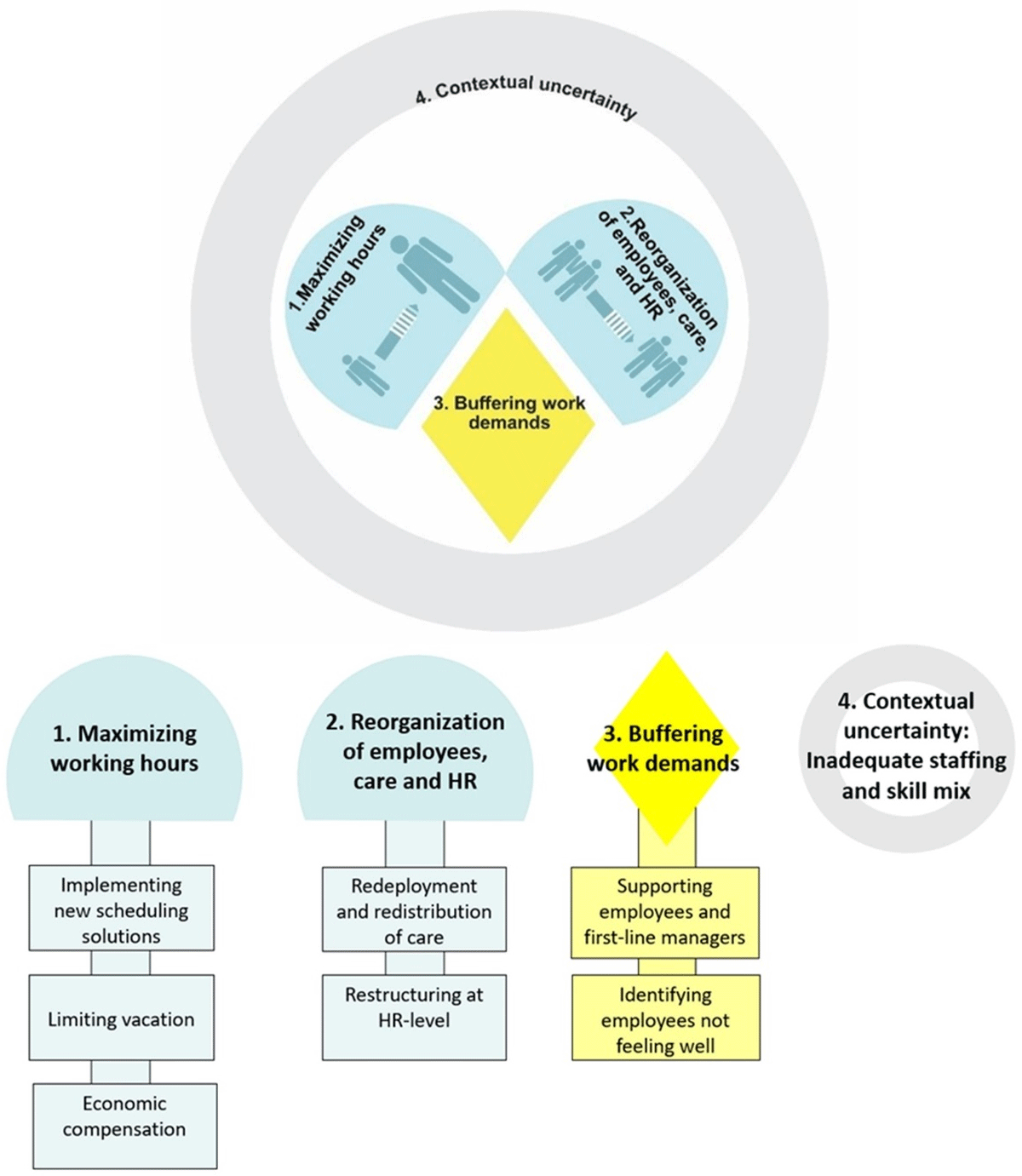
Figure 1
Management of working hours and staffing in Swedish healthcare during the COVID-19 pandemic, as described from the perspective of HR representatives.
Note: The inner objects represent the actions that were taken to manage the COVID-19 pandemic, namely maximizing and reorganizing resources, and actions towards employees in terms of buffering work demands. The ring symbolizes the contextual uncertainty in terms of inadequate staffing and skill mix, which influenced actions taken during the pandemic.
1. Maximizing Working Hours
HR representatives described that the high pressure on the healthcare system required employees to work more hours. While some regions maintained participatory working time scheduling (PWTS) throughout the pandemic, others implemented new ways of scheduling. It became more difficult to offer vacation leave, and economic compensation was used for increased work, demanding working hours, new scheduling solutions, and limited vacation.
1.1 Implementing New Scheduling Solutions
HR representatives described that the scheduling of work hours changed during the pandemic and that employees had to work more to meet the high demands. This resulted in longer working hours (e.g., 12.5-hour shifts), long weeks, or double shifts, which could extend the workday to 15 hours (7 a.m. to 10 p.m.).
‘They [the employees] are afraid they will have to stay after working the day shift and work the evening shift as well’. – Respondent 2
The limit for overtime was, in some cases, increased by negotiation between unions and employer organizations. Respondent 11 explained that ‘350 hours of overtime were exceeded by some employees’. According to HR representatives, unions pointed out that overtime had to be divided equally between employees, which proved difficult as not all employees coped with working overtime. Overtime was rather assigned to those who volunteered, and some employees carried a heavier load than others.
Some regions activated the crisis agreement for a few weeks up to six months or longer, increasing the weekly working hours from 40 to 48 hours per week for full-time employees. This resulted in 12- or 12.5-hour shifts. Shorter shifts were not possible, as it would entail having to work too many shifts per week.
‘There is no other way [than 12-hour shifts] to make it work if you are supposed to work 48 hours [per week]’. – Respondent 6
The working hours were unpredictable and could be decided on a day-to-day basis as the crisis agreement allowed scheduling changes on very short notice. In some cases, adaptations were made, for example, by providing schedules with longer notice, taking personal factors into account (e.g., having children), lowering weekly work hours to 42 h/week for night workers, and rotating the crisis agreement between employees. However, there was insufficient technical support to schedule employees working on the crisis agreement, as the software systems for scheduling were not designed to handle this type of scheduling practice. HR stated that scheduling would have been easier during the pandemic if the software systems had been better.
In other cases, fixed schedules were implemented and followed either a regular 3-shift pattern or a new pattern, such as two 12.5-hour shifts. One example was fixed ‘COVID-schedules’, where employees worked two day shifts, one evening shift, and one night shift, where every night shift was followed by two days off. Another solution was weekend duty, where some employees would work exclusively on weekends. In return, weekly working hours were heavily reduced.
Some regions implemented fixed scheduling, referred to as 4-2 schedules, with a clockwise rotation of two day shifts and two evening shifts, followed by two days off, which reduced weekly working hours to 87%. Night shifts were mostly covered by permanent night workers, working two nights followed by three days off. According to HR, 4-2 scheduling made it easier to plan staffing, move employees around without disrupting schedules, meet staffing demands, get an overview of competencies, support cohesive teams, and avoid overtime. According to HR, some employees were positive about 4-2 schedules, but many were not.
‘They [the employees] have been quite angry that we forced this [4-2 schedules] on them. But there have also been several employees who have chosen similar schedules [after 4-2], especially those working nights’. – Respondent 4
As employees requested more compressed work hours, 4-2 schedules were adjusted to a counterclockwise rotation, i.e., two evening shifts followed by two day shifts. An issue was, however, that the 4-2 scheduling pattern frequently placed shifts on either a Saturday or a Sunday. HR explained how some employees had expressed that weekend work made them miss out on time with their families and other social engagements. The issue regarding weekend work was mentioned as a reason why some regions chose not to implement 4-2 schedules. Fixed schedules (including 4-2) were also described as problematic in the sense that they took away employee influence over working hours and were implemented very quickly.
1.2 Limiting Vacation
The possibility for employees to take vacation leave was limited during the pandemic, especially during the summer, and many employees were not offered four consecutive weeks, which is otherwise a statutory right in Sweden. Some employees did not even get four weeks of vacation over a whole year. Vacation restrictions sometimes applied only to ICU workers, while other examples demonstrated that vacation was limited for all employees.
Vacations were approved with shorter notice (e.g., one rather than two months in advance), making them less predictable. The first year of the pandemic (i.e., 2020) was described as the most challenging when it came to vacations, and some organizations had to revoke vacations for their employees completely. However, for some organizations, the large amount of care to catch up on made it difficult to offer vacations during 2021 as well. To facilitate vacations, those who were on duty had to work more, either on demanding working time agreements (e.g., crisis agreement) or long working hours, extra shifts, and overtime. This was preferred over bringing in employees who were on vacation.
‘It was a giant chaos during summer vacation, and the same around Christmas. No one got any time off. That is why we understood that we had to use the crisis agreement to be able to offer four weeks during the summer’. – Respondent 7
Other strategies included bringing in external staff such as temporary agency workers, retired workers, or employees on parental leave, or offering vacation earlier or later than the normal summer vacation period.
1.3 Economic Compensation
Economic compensation was used to motivate employees to work overtime, extra shifts, uncomfortable working hours, and on the crisis agreement. Compensation could be very high; for example, working on the crisis agreement was compensated with 220% of one’s monthly salary. Employees were also compensated economically for being mandated to work more or for not being able to take vacation.
‘We added different types of compensation, because it was not possible to let people work less’. – Respondent 9
Working an extra shift or overtime could also be compensated with additional vacation days, although HR stated it was unclear if it would be possible to utilize those days in practice. During the summer, some organizations implemented high economic compensation for extra shifts, overtime, and taking less vacation, a practice referred to as ‘selling’ vacation weeks. Moving one week of vacation from summer to autumn could result in a compensation of 15,000 Swedish kronor (approx. 1,500 USD). Selling vacation weeks was a practice used prior to the pandemic as well, as staffing was often an issue during the summer period.
2. Reorganization of Employees, Care, and HR
Reorganization of employees was mainly directed towards units where demands increased the most, by redeploying employees, redistributing care (e.g., increasing the capacity of COVID-19 care while decreasing other care), as well as restructuring resources within HR to facilitate work in the organizations.
2.1 Redeployment and Redistribution of Care
Employees with certain competencies were redeployed to wards where COVID-19 patients were treated. Being redeployed was considered demanding with respect to the work environment, as employees faced new work groups, managers, and tasks. Redeployment occurred both on a voluntary and mandatory basis, according to HR. Respondent 19 emphasized that ‘it was not so successful if they [the employees] were not mentally prepared to be moved, the result did not turn out very well’. According to HR, nurses would sometimes take on the role of assistant nurses when being redeployed to an ICU due to feeling that they had insufficient experience to take on the responsibilities of an ICU nurse. The competencies within the organizations were, in some cases, insufficiently documented, which created challenges for staffing and resulted in a large amount of work being put into inventorying competencies during the pandemic.
Redeployment could drastically change the working hours. Some employees were redeployed to units with 24/7 operations, even if they normally worked only day shifts. To facilitate the transition, employees were, in some cases, allowed to keep their schedules when moved to an inpatient care unit. Those who did not adjust well to the new circumstances were returned to their original workplaces.
HR believed that long-term redeployment created better manager-employee relationships, more influence over working hours, and more secure workgroups in the new workplaces. Secure work groups were sometimes also obtained by redeploying entire teams instead of single employees. However, lending employees to another ward for an extended period of time could result in having to redeploy more employees to cover the vacancy.
Some organizations also had to downscale or redistribute care, which included moving patients to other care units or hospitals. Respondent 14 described that a plan was established for how to downscale the number of surgeries or close certain healthcare practices if needed. Downscaling of care provision was necessary, for example, in wards where employees had been redeployed to other units. This, however, resulted in care backlogs, which respondent 7 described in terms of having ‘a long queue for surgeries that will take a year or so to catch up with’.
2.2 Restructuring at HR-level
During the pandemic, HR became more operative and provided hands-on support to the organizations, which respondent 12 described as going ‘from working strategically to working operatively for 1.5 years’. Respondent 18 explained that their HR department was restructured into several small units providing different types of support. Some new work tasks mentioned by HR included working with staffing numbers, calculating how much staff would be needed in different scenarios, playing a crucial role in redeployments (e.g., by finding staff, coordinating, and assisting with logistics), and making new schedules to be used if needed. HR also worked closely with unions by having frequent meetings and negotiations on matters such as bending working hour rules, the work environment, and overtime. New scheduling solutions were discussed and approved by unions in some instances.
Other new work tasks included being part of crisis management, where HR was involved in processes such as planning and opening COVID-19 wards and communicating information relating to COVID-19. For example, HR put together information packages based on information from different authorities and screened the surroundings for information on how others were managing different aspects of the pandemic (e.g., scheduling solutions implemented in other regions). HR described having to work remotely as a challenge. Not meeting managers and employees in the workplace decreased access to spontaneous reflections or ideas for improvement and limited HR’s insight into day-to-day operations. Overall, HR expressed that their burden was high during the pandemic.
‘Everyone seeks your support. They sought comfort, they sought safety, they sought security. And that’s everyone from top management to employees […] We [HR] do not suffice’. – Respondent 5
HR was also responsible for making risk assessments in relation to working hours and staffing. Some of the risks identified by HR included lack of recovery and insufficient time to process work-related incidents, demanding working hours, a high workload, and the need to catch up on care. As the situation was constantly changing, multiple risk assessments were made.
3. Buffering Work Demands
Some actions were taken to prevent the negative effects of work during the pandemic.
3.1 Supporting Employees and First-line Managers
Several support functions were implemented or increased, including access to occupational health services and support functions in the workplace. Wards that were particularly affected by the pandemic had counselors or crisis support in the workplace, available almost around the clock. Employees were also offered private counseling or to talk to a priest through the hospital church. In some cases, recovery programs and/or lectures, webinars, and seminars were offered, and some implemented daily reflection sessions in the workplace. HR considered first-line managers, safety representatives, and colleagues to be important sources of support, with first-line managers being described as employees ‘primary support to turn to’ by respondent 15.
According to HR, employees requested different kinds of support to ease their work, including access to fruit and sandwiches in the lunchroom, as well as reclining chairs to rest in. However, HR mentioned some obstacles when it came to providing support to employees in the workplace. For example, counselors were sometimes hesitant to be physically present in the workplace due to the spread of COVID-19. Implementing reflection in the workplace was sometimes difficult in practice since the overlap between shifts was inadequate.
When it came to sources of support for first-line managers, functions such as hospital management, HR, staffing assistants, hospital strategists, and administrators were mentioned. Information about the pandemic, processes, and how to handle different matters was published on the intranet and made available to both first-line managers and employees. However, the support provided to first-line managers was not always considered sufficient by HR.
‘We must take better care of our managers and see them as employees […] Especially the first-line managers, have solved these daily problems they have faced. We have forgotten them a little along the way’. – Respondent 19
According to HR, first-line managers requested more support in matters such as working hours, providing sustainable schedules, better technical support for scheduling, and hands-on support from HR partners. This was not always possible due to a lack of capacity at the HR level. HR expressed feeling lonely in their role during the pandemic, and respondent 19 stated that ‘HR may not really have the skills that are needed to be able to support managers in this [optimizing/planning schedules]’. HR explained how they sometimes needed support from higher instances, such as the Swedish Association of Local Authorities and Regions (SALAR), and requested more cooperation between regions in these matters.
3.2 Identifying Employees Not Feeling Well
Actions were also taken to identify employees who were not feeling well. HR emphasized first-line management’s responsibility for monitoring employee well-being, especially through dialogue with employees. HR explained communicating with first-line management about being attentive towards their employees and addressing working hours and recovery in the workplace. HR was particularly engaged in promoting a continuous dialogue between managers and employees when working on the crisis agreement.
‘If they [employees] are not feeling well or have difficulties sleeping, it doesn’t work. Then they are not allowed to work on the crisis agreement. The managers have to be meticulous’. – Respondent 7
Other ways of identifying employees who were not feeling well included employee surveys, staff appraisals, and counselors in the workplace who could observe how employees were coping with working demanding hours. Respondent 5 explained that HR representatives had ‘been out there and said that you have to report it [fatigue, lack of recovery] as a work injury’.
Monitoring employee well-being was also described as a cooperation between first-line managers and other parties, such as union representatives, scheduling assistants, colleagues, and HR partners. Employees themselves were also considered responsible for speaking to their manager if they were experiencing issues, but HR thought that many employees worked even if they were tired. According to HR, there was very little or no follow-up on the sustainability of working hours at the organizational level, and most of the management of working hours was attributed to first-line management. HR stated that they sometimes monitored overtime hours but that this was often done in retrospect.
‘It takes quite a long time to get statistics if you look at overtime. Then 1.5 months have passed before we can see how much work has been done’. – Respondent 2
4. Contextual Uncertainty: Inadequate Staffing and Skill Mix
Inadequate staffing levels were considered as one of the biggest challenges when it came to staffing, providing sustainable working hours, and recovery from work. HR stated there was a lack of certain competencies (e.g., ICU nurses), which required employees with these competencies to work more. Respondent 9 described it as being ‘difficult to provide recovery when the resources are as they are, but the demand is only increasing’.
HR mentioned different ways in which the pandemic contributed to inadequate staffing. Caring for COVID-19 patients was overall very resource-demanding and required a high staffing level. Employees having to stay at home with even slight symptoms of illness or having to care for sick children resulted in major short-term absences and increased overtime and extra shifts. There was also an aspect of fear, as some employees did not want to work in COVID-19 wards or to be relocated to other hospitals, which created issues locally. In some cases, the pandemic also resulted in employee turnover.
There was also a lack of external staff to bring in, including locum tenens, temporary agency workers, and new staff to hire, as there were few applicants for the advertised positions. Testing for COVID-19 and vaccination also required resources, which put further strain on the healthcare system. Despite efforts to hire new staff, temporary agency workers, and hourly-based workers to assist with vaccinations, it was not sufficient in some cases.
‘I think the biggest challenge and our biggest competitor are the vaccinations, because you hire nurses to vaccinate, which means we don’t get them in inpatient care’. – Respondent 4
However, inadequate staffing and skill mix were not merely attributed to the pandemic. HR mentioned that there was a lack of nurses prior to the pandemic, especially ICU nurses.
Discussion
Our results confirm that Swedish healthcare organizations have been in the state of an organizational recovery paradox (Figure 2) during the COVID-19 pandemic. We have identified the use of short-term solutions (e.g., demanding working hours, limited vacation, redeployment) to meet increased production needs. While utilizing short-term solutions solved the situation at hand, these pose a risk of exhausting the human capital within organizations long-term and could have subsequent effects on performance, employee wellbeing, retention, and safety (Bae 2023; Larsen et al. 2020; Trinkoff et al. 2011; Wong et al. 2019).
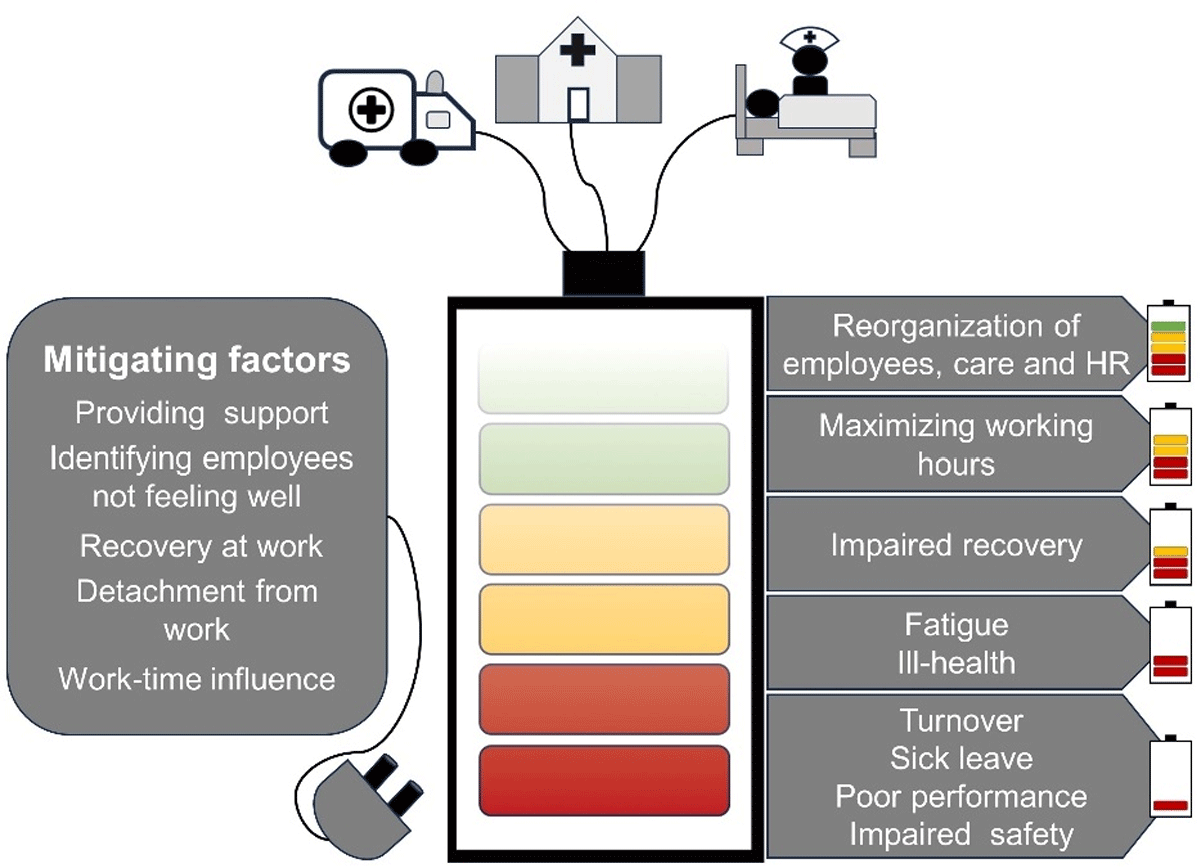
Figure 2
The organizational recovery paradox.
Note: The battery symbolizes the human capital within organizations, keeping operations up and running. While maximizing working hours and reorganization may solve the situation at hand, this can lead to the depletion of human capital within the organization, ultimately resulting in poor performance, safety, and the loss of human capital. Therefore, factors that deplete the human capital (drain the battery) must be considered, especially during periods of high pressure. Mitigating factors are needed to recharge the human capital within the organization.
Based on our findings, we will discuss factors that contribute to the organizational recovery paradox and potential mitigating factors. Firstly, maximizing working hours through long hours and overtime unfortunately introduced risk factors for health and safety (Wagstaff & Lie 2011; Wong et al. 2019), where impaired recovery is a potential mechanism (Kecklund & Axelsson 2016). Frequent and sudden changes in scheduling, which were highly prevalent in the crisis agreement, have been considered a source of stress amongst ICU workers (Escher et al. 2023). Some schedules (e.g., 4-2 schedules) inferred more weekend work, leading to dissatisfaction among employees as weekends constituted an opportune time for engaging in meaningful recovery activities. Thus, the maximization of working hours posed a risk of draining the human capital within organizations by impairing recovery on the individual level. Whether this has impacted safety within the organizations needs to be examined further.
An important finding was that vacation was enabled by the crisis agreement, long working hours, and overtime work, which compromised employees’ continuous recovery. While vacations offer an extended period of disconnection from job stressors and time for recovery activities, previous research has shown that positive effects on employee health and well-being diminish shortly after returning to work (de Bloom et al. 2013; Speth et al. 2023). This raises the question of how employee health and safety are affected when vacation is provided at the expense of continuous recovery and should be further investigated.
The results also indicate that employees lost their influence over working hours, which may be another aspect that contributes to the organizational recovery paradox. Influence over working hours serves as a potential protective factor against negative outcomes otherwise associated with demanding working hours (Nabe-Nielsen et al. 2011; Tucker et al. 2015) and can provide a better balance between work and private life (Wynendaele et al. 2021). Looking ahead to future crises, a key challenge is finding ways to maintain some level of employee influence over working hours, even when organizations take more central responsibility for scheduling.
Other measures were taken to address the immediate challenges, including the redeployment of staff and the redistribution of care. Page and colleagues (2023) described that healthcare organizations are constantly adapting when under pressure, for example by flexing staff (e.g., relocating staff between units, long work hours) and prioritizing workload (e.g., temporarily delaying some types of care). While adaptations are needed to meet increased demands, they can also create feedback loops (Page et al. 2023). Our results demonstrated some of these feedback loops, where measures such as pausing surgeries resulted in care backlogs and increased long-term production pressure, risking that organizations would have to make use of short-term solutions (e.g., demanding working hours) even after the pandemic-induced pressure subsided. This could further feed into the organizational recovery paradox. For future crises, it would be beneficial to explore how to meet staffing demands during a crisis without attenuating the human capital and to identify approaches to prioritizing care in a way that does not escalate long-term production pressure.
Several barriers to effectively managing working hours and staffing during the pandemic were identified. One such barrier was the software systems for scheduling, which proved insufficient for handling working hours during a crisis. For future crises, it is therefore strongly recommended that the software systems used for scheduling in Swedish healthcare be improved. Another barrier was the dilemma of allocating overtime evenly between employees or assigning it to those who volunteered. Previous research has highlighted that mandatory overtime is associated with more adverse health outcomes amongst nurses (Trinkoff et al. 2006). At the same time, excessive amounts of overtime can entail health and safety risks (Dall’Ora et al. 2016; Wong et al. 2019). Thus, both excessive and mandatory overtime can have a negative impact on the individual and organizational level, and further research is necessary to determine how to find a balance between avoiding mandatory overtime while also preventing excessive strain and risk for individuals who volunteer for overtime.
Similarly, mandatory redeployment was highlighted as problematic in terms of employee well-being. Redeployment has been considered a stressor during the COVID-19 pandemic (San Juan et al. 2022) and can thus further feed into the organizational recovery paradox. Making sure that redeployed staff get sufficient introduction and training, that the transferable skills of redeployed staff are maximized, and enabling support from more experienced colleagues have been deemed key features for successful redeployments (San Juan et al. 2022). However, our results demonstrated that employee competencies were not well documented and that there was a lack of experienced ICU nurses during the pandemic, possibly limiting access to support for redeployed staff. Thus, documenting competencies within organizations, enabling skill development and training, and developing a plan for how to introduce redeployed staff to new workplaces may be important forms of preparation for future crises.
Our results also show that redeployment resulted in day-time workers being moved to 24/7 wards. Some of these employees may have consciously avoided shift work due to poor shift work tolerance (Saksvik et al. 2011), and redeploying these individuals could thus amplify the risk of adverse health outcomes and/or turnover. Future studies are needed to examine the consequences of mandatory versus voluntary redeployment and how tolerance for shift work could be considered.
Our results also revealed minimal examples of follow-up on working hours at an organizational level, apart from retrospective observations on overtime. Organizational measures for monitoring, regulating, designing, and reviewing schedules in the healthcare sector would be in line with work practices used within fatigue risk management (Gander et al. 2011; Sprajcer et al. 2022). Developing the technical support systems so that they enable a real-time overview of working hours and overtime, as well as the simulation of work hour schedules for crisis situations, could be important measures to support this work and increase preparedness for the future. At the same time, HR described limited resources, capacity, and knowledge gaps, as well as having to prioritize operational tasks over strategic initiatives during the pandemic, which could have unknown long-term consequences. Altogether, these findings suggest that strengthening the position of HR is essential in order to avoid the organizational recovery paradox. This entails bolstering HR’s resources, expertise, and instrumental capabilities, as well as enhancing their executive authority. Moreover, on a national level, a support network for solutions related to the scheduling of work hours could be beneficial.
Lastly, we identified inadequate staffing and skill mix as an important contextual factor, which amplified the need to make use of short-term solutions such as demanding working hours, limited vacation, redeployments, and downscaling care provision. Inadequate staffing has been inherently associated with employee turnover, especially amongst staff with insufficient rest breaks during work shifts (Wendsche et al. 2017). Thus, inadequate staffing and skill mix could contribute to the organizational recovery paradox, especially in a work situation that is characterized by high demands. A nationwide investigation conducted shortly before the pandemic concluded that there was a shortage of nurses in 20 out of the 21 Swedish regions and that all regions reported a lack of specialist nurses (National Board of Health and Welfare 2019). This indicates that the levels of staffing and skill mix prior to the pandemic were suboptimal. Ensuring sufficient staffing and skill mix when there is no crisis is therefore an important first step to increasing preparedness for future crises. This likely requires long-term strategical efforts targeted towards areas such as working hours, workload, possibilities for career development, professional growth, and supervisory support, as a lack of these may be related to higher turnover amongst nurses (Halter et al. 2017). Within the Swedish healthcare context, nurses have reported that a lack of aspects such as leadership, influence over working conditions, and professional development, as well as poor work-life balance, influenced their decision to leave their job (Hörberg et al. 2023). Aside from working strategically to enhance staffing and skill mix, during a crisis, it can also be important to provide working-hour schedules that enable time for recovery outside work and oversee workload for employees. This may be especially important among those with key competencies, such as ICU nurses, who were in high demand and carried a heavy load during the pandemic. While our results show that managers carried a large responsibility when it came to aspects such as working hours, the work environment, support, and the wellbeing of employees, our respondents described that first-line management received insufficient support during the pandemic. Thus, supporting managers with these issues may be particularly important in order to mitigate the organizational recovery paradox. Furthermore, more research is needed to establish which recovery opportunities employees had at work during the COVID-19 pandemic, as this may also be related to turnover.
Taken together, it is evident that healthcare organizations have faced a major dilemma in meeting production needs and maintaining performance without draining their human capital. The organizational recovery paradox is a complex issue and demonstrates that avoiding the draining of human capital in situations of high pressure likely requires both strategic and reactive approaches on several systemic levels. Our findings suggest that scheduling and monitoring working hours, as well as providing opportunities for recovery, may be important to mitigate the organizational recovery paradox. Another potentially important aspect involves measures to support redeployment of staff during a crisis, including having an overview of employees’ competencies and skills, providing proper introduction and training, and ensuring that there are enough experienced employees who can provide support, which also requires sufficient levels of staffing and skill mix. Our results also showed some practical examples of measures that could potentially mitigate an organizational recovery paradox. For instance, offering recovery seminars, promoting open dialogue around recovery in the workplace, and introducing daily reflection sessions could be beneficial in facilitating recovery and detachment from work, which has been considered a key mechanism for recovery (Agolli & Holtz 2023). Such measures may also be important to minimize the negative health and safety effects of long and irregular work hours. However, how these measures were received by employees and whether they were sufficient have to be examined further.
Methodological Considerations
Trustworthiness (Nowell et al. 2017) was ensured using various strategies. To establish study credibility, multiple researchers conducted the analysis, employing researcher triangulation. Peer debriefing was also performed, allowing for an external check on the research process. Referential adequacy was examined by comparing the findings and interpretations against the raw data. Confirmability was achieved by providing a detailed description and justification of the theoretical, methodological, and analytical choices made. Quotations from the collected data were included to illustrate that the findings were derived from the data. The analysis process was carefully described, providing readers with the ability to assess the dependability of the study. Reflexivity was addressed by acknowledging the diverse expertise of all authors, who possessed different scientific knowledge and qualitative research experience. All authors were female and had knowledge in areas such as working hours, scheduling, recovery, and safety. The first author had not previously worked with qualitative research but took a methodology course prior to data analysis. The other authors had worked with and published qualitative studies. All authors also had previous knowledge from research on the healthcare sector, and the second and third authors had worked as healthcare professionals. Thus, all authors had some level of pre-understanding when it came to healthcare work. The authors frequently discussed their pre-understanding throughout the study.
Variation in data was obtained by including respondents from different regions with varying sizes. Overall, no new information was found after 17 interviews, but all 19 interviews were analyzed to reduce the risk of overlooking important information. It is important to note that five regions were not represented in this study, which can be considered a limitation as these regions could have provided additional insights. The data was, however, rich and repeated itself, indicating that the number of informants was sufficient.
The present study has contributed to new knowledge on the organizational level management of working hours, staffing, and recovery within the Swedish healthcare system during a crisis. Regarding the transferability of the results, it should be noted that the goal is not to generalize the results to a larger population or other countries. Instead, the aim is to provide in-depth insights about the phenomenon under study. Nonetheless, the results of the present study may still be valuable in similar settings or contexts.
Conclusions and Lessons Learned
In conclusion, our results showed that the increased demands during the COVID-19 pandemic led to the use of short-term solutions to manage the situation at hand. At the same time, to maintain care production and safety, organizations were highly dependent on their staff and employees performing at a high level. The short-term solutions applied by organizations pose a risk of exhausting the human capital in the organizations in the long term. We refer to this paradoxical relationship as an organizational recovery paradox. Based on the factors identified as contributing to or mitigating an organizational recovery paradox, as discussed above, we have identified the following recommendations for future crises.
Increase preparedness for managing work-hour scheduling by: simulating schedules for different scenarios using the scheduling software systems (which need improvement to manage scheduling during a crisis); developing a crisis agreement that is sustainable over longer periods of time; examining how to spread overtime without using mandatory overtime; exploring how to keep some level of employee influence over work hours during a crisis; developing scheduling solutions that offer more continuous recovery during a crisis; documenting competences within the organization; exploring how short-term vacancies can be managed without disrupting employee recovery; anchoring scheduling solutions for crises with employees; and developing central monitoring of fatigue as well as shifts and shift combinations known to be risk factors for ill health, poor performance, and accidents.
Strengthen contextual factors by: improving the management system for working hours and fatigue; strengthening HR’s resources, knowledge, and competence; setting up a national network for support with staffing and work hours during crises; increasing staffing levels; gaining a central overview of competences; and working strategically to create the skill mix needed during crises.
Develop mitigating strategies with a focus on: having routines in place for redeployments; developing practices to enhance recovery during demanding shifts (e.g., rest breaks); and developing support for first-line managers and identifying effective support actions for employee health and well-being.
Data Accessibility Statement
Data cannot be provided in the form of interviews as the participants have not given their consent to have their data shared in its entirety. For example quotes supporting the findings, see appendix C.
Additional File
The additional file for this article can be found as follows:
Acknowledgements
Thank you to professor Göran Kecklund, PhD, for valuable input and discussions on the organizational recovery paradox.
Funding information
This research was supported by a research grant from Afa Försäkring (200204).
Competing interests
The authors have no competing interests to declare.
Author contributions
All interviews were conducted by IH and AD. IH coded all interview transcripts and EA and AD half of the transcripts each. EA and AR overlooked the coding process. All authors were involved in discussions and formulating themes and sub-themes. All authors were involved in writing the manuscript and approved the final version of the manuscript.