
Table 1
Overview of L1-teams’ didactical designs.
| DIDACTICAL DESIGNS | CLASS LEVEL | NO. TEACHERS/RESEARCHERS | SUBJECT CONTENT (GOALS) | |||||||||
|---|---|---|---|---|---|---|---|---|---|---|---|---|
| DK | NO | SW | COMMUNICATE ORALLY & IN WRITING | ADAPT LANGUAGE TO PURPOSE, RECIPIENT, CONTEXT | CREATE TEXTS, USE DIFFERENT MODES | READ NORDIC TEXTS THAT ILLUSTRATE LIVING CONDITIONS & IDENTITY | SEARCH & VALUE INFORMATION OF NORDIC CONTENT | |||||
| Team | No. Researchers | 4 | 2 | 2 (4) | ||||||||
| Team A | 1. | Everyday Life in North | 5 | 3 | 1 | 1 | x | x | ||||
| 2. | World of Comics | 5 | 3 | 1 | 1 | x | x | x | ||||
| 3. | Poems in Nordic Mythology | 5 | 3 | 1 | 1 | x | x | x | ||||
| 4. | Setting Sketches | 5 | 1 | 1 | x | x | x | |||||
| 5. | Language Differences | 5 | 1 | 1 | x | x | ||||||
| Team B | 1. | Presenting School | 7 | 2 | 1 | x | x | |||||
| 2. | News in North | 7 | 2 | 1 | 1 | x | x | x | ||||
| 3. | Nordic Youth Writers | 8 | 2 | 1 | 1 | x | x | x | ||||
| 4. | Nordic Lyrics | 8 | 2 | 1 | x | x | x | |||||
| 5. | Telling by Movie | 9 | 2 | 1 | x | x | x | x | ||||
Table 2
Overview of the symbols used in the schematic models.
| ACTIVITY | SYMBOL | MEANING |
|---|---|---|
| initiation of a task |  | Introducing activities in the class |
| writing/reading |  | Producing written texts/post/presentations Reading written texts |
| talking/reading aloud/listening |  | Producing audio recordings talking/reading text Listening to audio-recorded talk/reading |
| writing and visually presenting |  | Producing multimodal representations combining writing and images |
| drawing/sketching/taking photographs |  | Producing visual and/or multimodal representations |
| filming/watching movie |  | Producing video recordings Watching films |
| sharing products |  | Sending documents etc. Uploading materials on a digital platform |
| discussing/asking |  | Synchronous face-to-face video talk Asynchronous interviews |
Table 3
Analysis of Team-A’s Didactical Designs (DDs).
| DD | 1. EVERYDAY LIFE IN NORTH | 2. WORLD OF COMICS | 3. POEMS IN NORDIC MYTHOLOGY | 4. SETTING SKETCHES | 5. LANGUAGE DIFFERENCES |
|---|---|---|---|---|---|
| I. | L: Gather, document and present facts in writing, film, pictures and/or music. L: Share presentation. L: Write and/or record feedback. C: Ask questions and give feedback. | L: Read and analyze comics. C: Decide on story’s plot, characters and setting. L: Create own comics – animate, write, use color. C: Give feedback. | L: Read and analyze Nordic poems; Create own poems in writing and record reading. L: Share poems. C: Read poems and give feedback. | L: Read setting descriptions; Write own description. L: Share description. L: Interpret peers’ description in drawing/sketches. C: Compare drawings/sketches with original description, talk about differences and similarities. | L: Prepare questions in writing. C: Interview in writing in social media. L: Present findings in writing. |
| II. | PowerPoint, VoiceThread, Skype | Pixton, Wiki, Adobe Connect | Google docs, Wiki, Adobe Connect | Google docs, Wiki, Minecraft, Adobe Connect | Twitter, Google docs |
| III. | 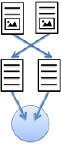 | 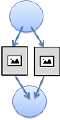 | 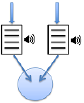 | 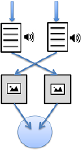 | 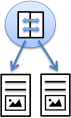 |
| IV. | Present – Share – Response – Co-evaluate | Co-plan – Compose – Co-evaluate | Compose – Share – Co-evaluate | Compose – Share – Sketch – Co-evaluate | Co-interview – Compile |
[i] (i) Intended teaching-learning outcomes and activities – local (L), cross-national (C); (ii) digital resources; (iii) sketch of DDs flow; (iv) design strategy.
Table 4
Team-A’s planning for Didactical Design 4. Setting sketches.
| Assignment: We will find similarities and differences in our Nordic languages by writing a setting description with a descriptive and explanatory text. The groups then exchange descriptions with each other and interpret/translate it by building it up in MinecraftEdu. We will then be able to compare the setting descriptions with the interpretations in a conversation in Adobe Connect. | |
Goal – core content years 4–6 (curricula):
| |
Assessment criteria – writing (curricula):
| Assessment criteria – language use (curricula):
|
Activities and preparation in respective classroom:
| Cross-national activities:
|
| Time plan: Week 1–2: The composition of setting descriptions. Week 3: Work with interpreting peer group’s 3D-sketches. Week 4: Synchronous meetings comparing house sketches with original descriptions. | Technologies, tools, and teaching resources:
|
Table 5
Analysis of Team-B’s Didactical Designs (DDs).
| DD | 1. PRESENTING SCHOOL | 2. NEWS IN NORTH | 3. NORDIC YOUTH WRITERS | 4. NORDIC LYRICS | 5. TELLING BY MOVIE |
|---|---|---|---|---|---|
| I. | L: Gather, present facts by taking photos, writing, reading aloud. L: Share presentation. C: Ask questions and give feedback. | L: Read, interpret and analyze news articles in Nordic languages; write own news articles. L: Send news articles to cross-class. | L: Read, interpret and analyze fiction from Nordic writers; write own fiction. L: Share fiction. C: Discuss fiction from Nordic perspective. | L: Read, interpret and analyze Nordic poems; write own poems. L: Share poems. C: Discuss poems from Nordic perspective. | L: View, interpret and analyze Nordic films; Write scripts; Create own films. L: Share films. C: Discuss films from Nordic perspective. |
| II. | Present.me, Skype | Newspapers online, Google docs, Email | Google docs, Wiki, Adobe Connect | Google docs, Wiki, Adobe Connect | Google docs, YouTube, Wiki, Adobe Connect |
| III. | 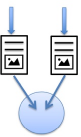 | 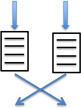 | 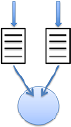 | 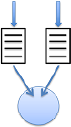 | 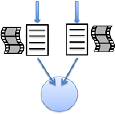 |
| IV. | Present – Send – Co-response | Compose – Send | Compose – Share – Co-evaluate | Compose – Share – Co-evaluate | Compose – Share – Co-evaluate |
[i] (i) Intended teaching-learning outcomes and activities – local (L), cross-national (C); (ii) digital resources; (iii) sketch of DDs flow; (iv) design strategy.
Table 6
Team-B’s planning for Didactical Design 3. Nordic youth writers.
| Goal – core content years 7–9 (curricula): We read fiction for youth by Nordic youth writers.
| |
Assessment criteria – reading (curricula):
| Assessment criteria – speaking, talking (curricula):
|
Activities and preparation in respective classroom:
| Cross-national activities:
|
| Time plan: Week 1–2: The classes prepare. Week 3: Work with the texts in the classes. Week 4: Synchronous meetings via Adobe Connect and evaluation. | Technologies, tools, and teaching resources:
|