
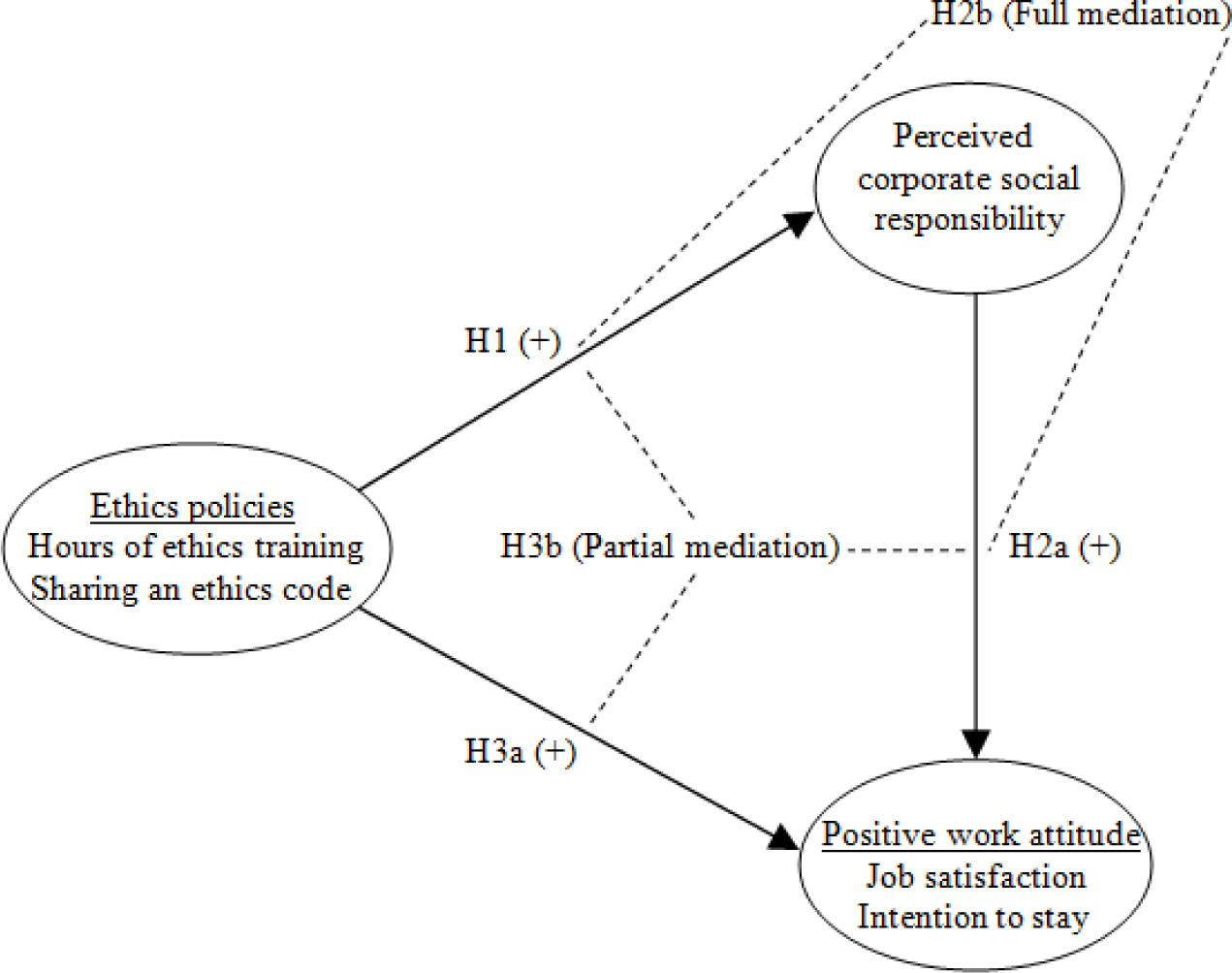
Figure 1
Hypothesised relationships
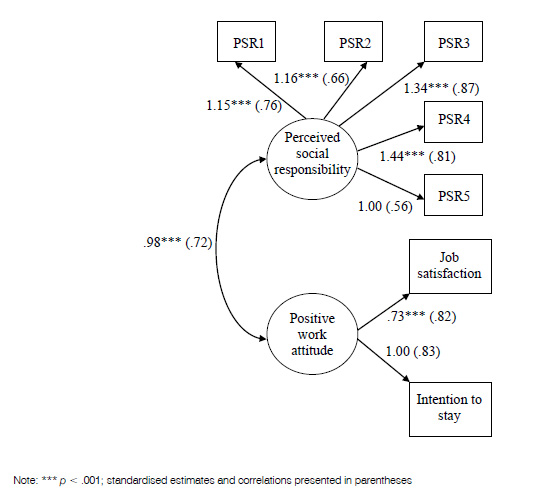
Figure 2
Confirmatory factor analysis
Table 1
Variable descriptive statistics and correlations
| Variable | M | SD | N | 1 | 2 | 3 | 4 | 5 | 6 | ||||
|---|---|---|---|---|---|---|---|---|---|---|---|---|---|
| 1.Hours of ethics training | 4.49 | 10.22 | 674 | -- | |||||||||
| 2.Sharing an ethics code | 1.76 | .43 | 744 | .12 | ** | -- | |||||||
| 3.Perceived social responsibility | 4.98 | 1.23 | 725 | .11 | ** | .22 | *** | -- | |||||
| 4.Job satisfaction | 5.53 | 1.30 | 772 | .08 | * | .16 | *** | .53 | *** | -- | |||
| 5.Intention to stay | 4.80 | 1.78 | 775 | .08 | * | .17 | *** | .55 | *** | .68 | *** | -- | |
| 6.Social desirability | 17.02 | 1.95 | 744 | .08 | * | .04 | .03 | .09 | * | .05 | -- |
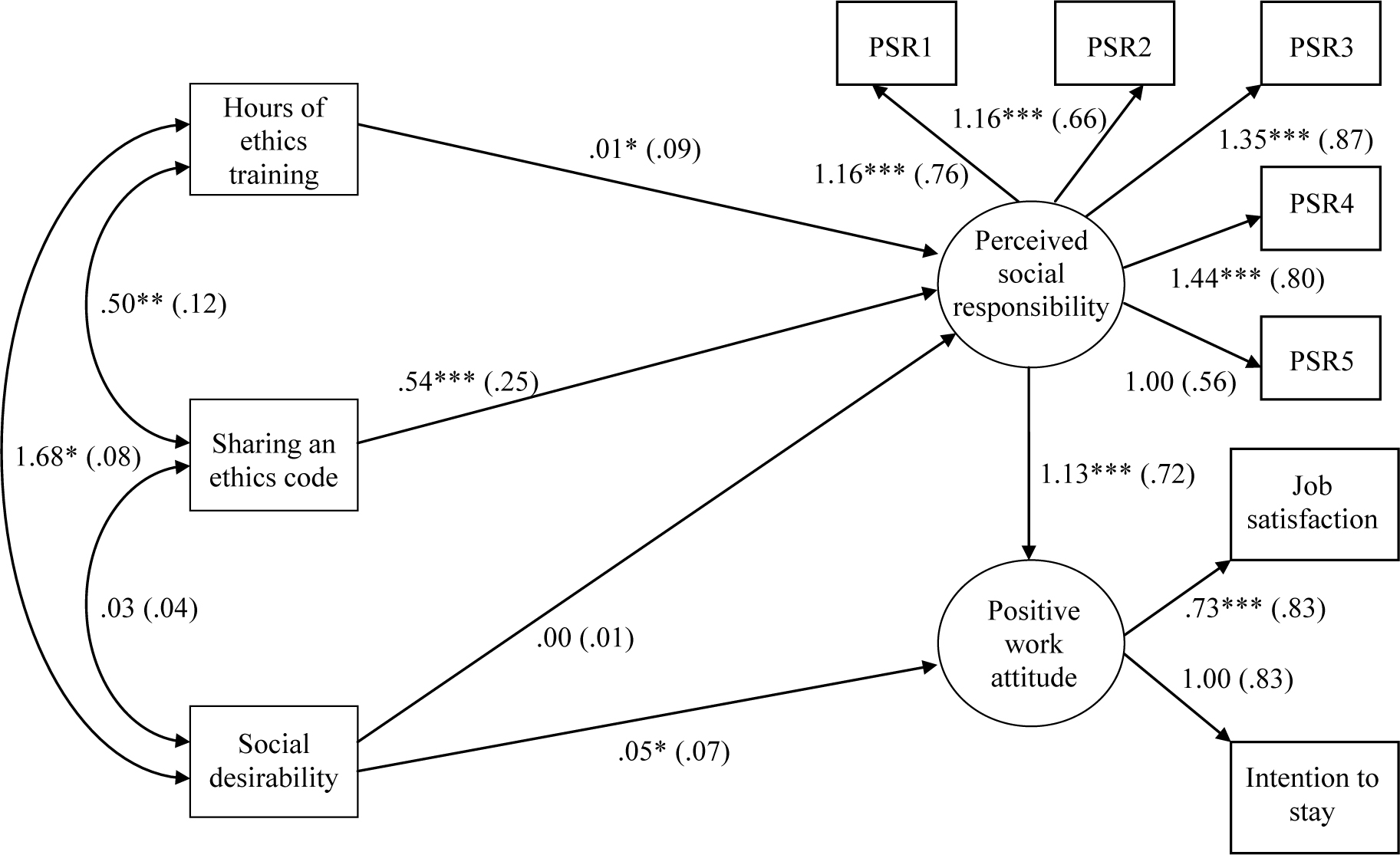
Figure 3
Full mediation model. Note: *** p < .001, ** p < .01, * p < .05; standardised estimates and correlations presented in parentheses
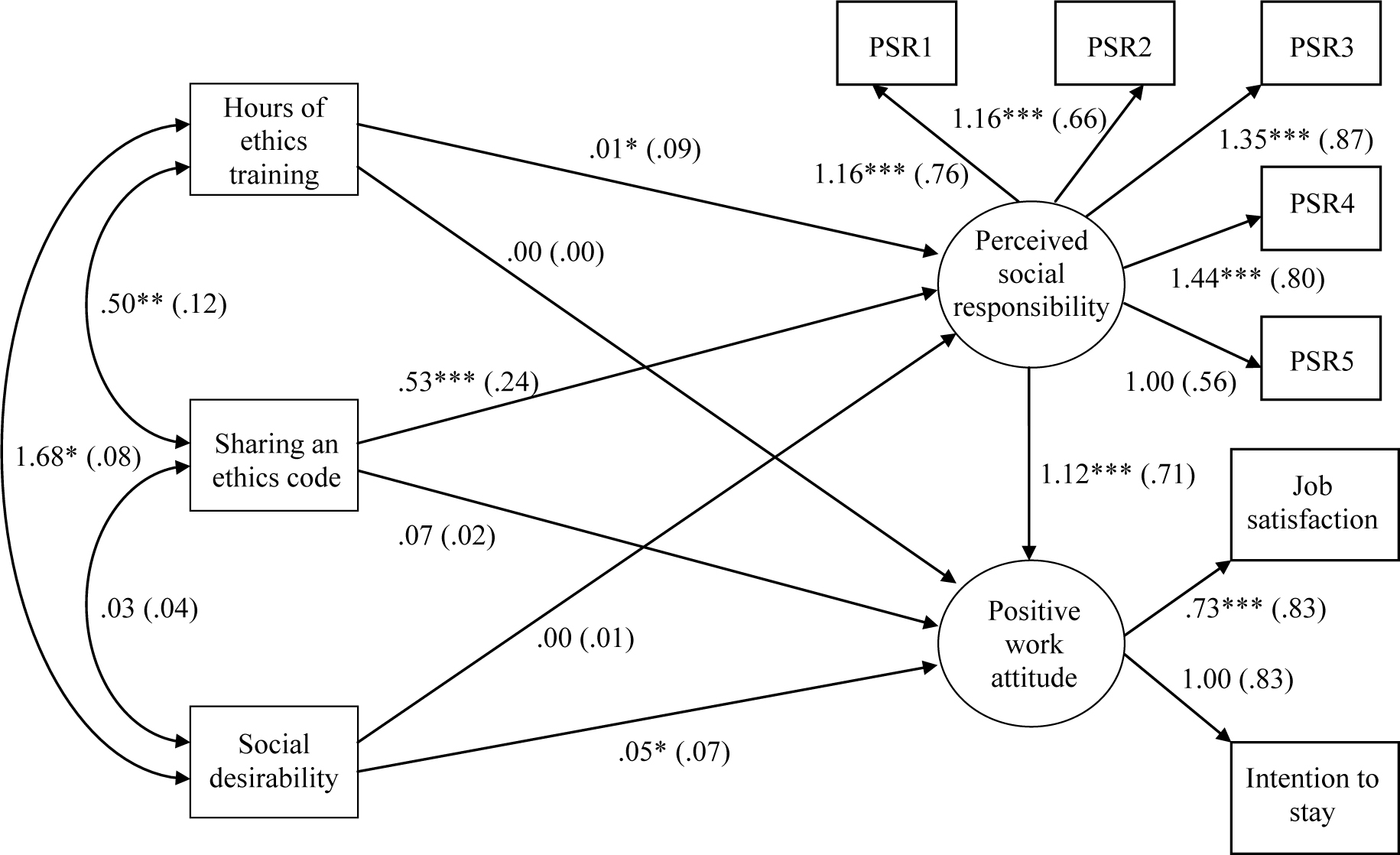
Figure 4
Partial mediation model. Note: *** p < .001, ** p < .01, * p < .05; standardised estimates and correlations presented in parentheses