
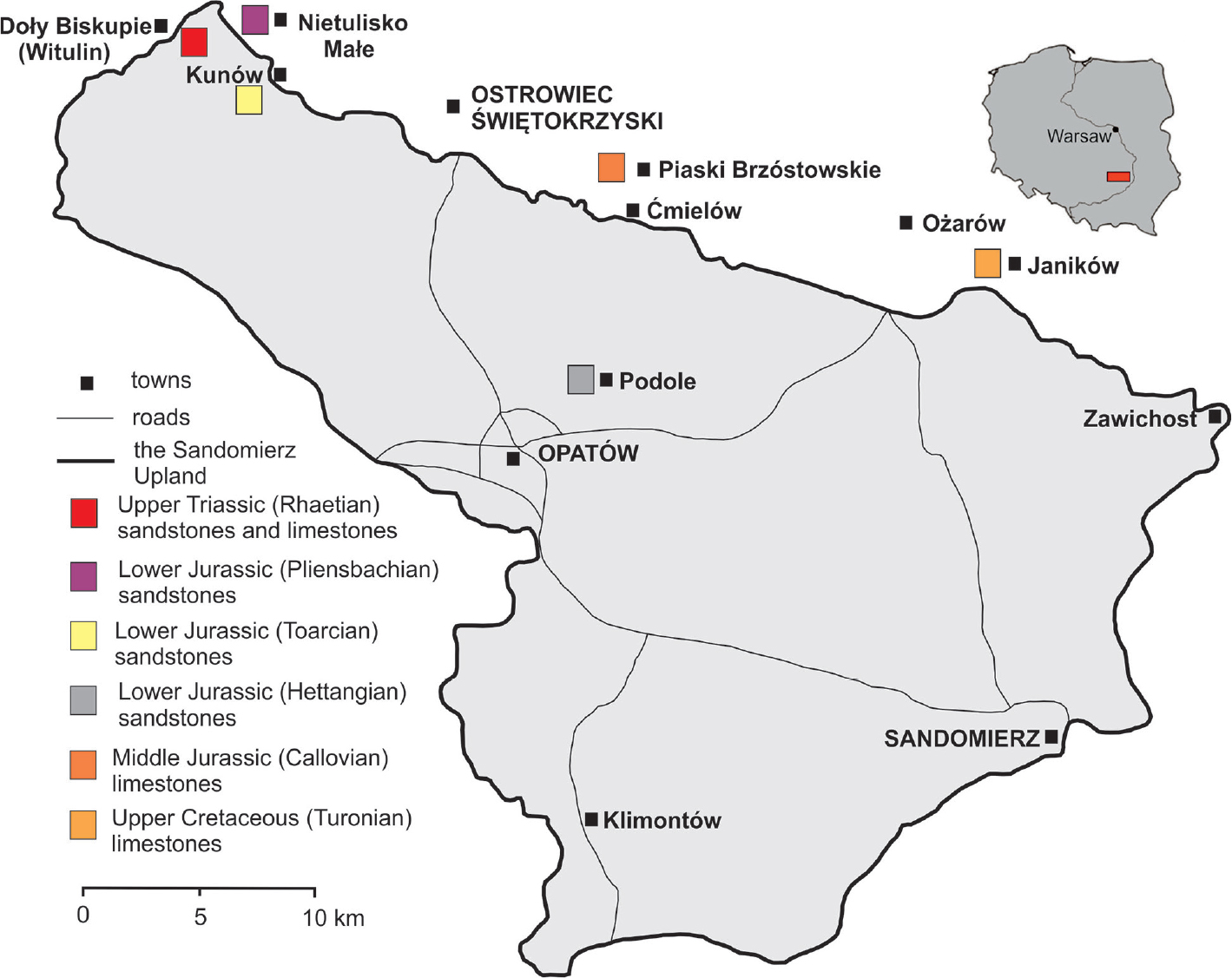
Fig. 1.
Location and geological structure of the historical quarries located within the north margin of the Sandomierz Upland.
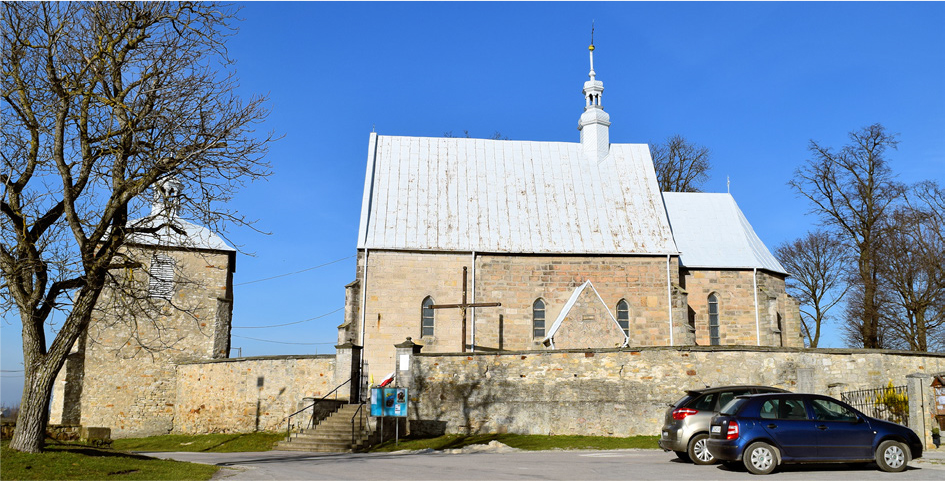
Fig. 2.
Fortified church in Ptkanów built of Jurassic sandstone from Podole.
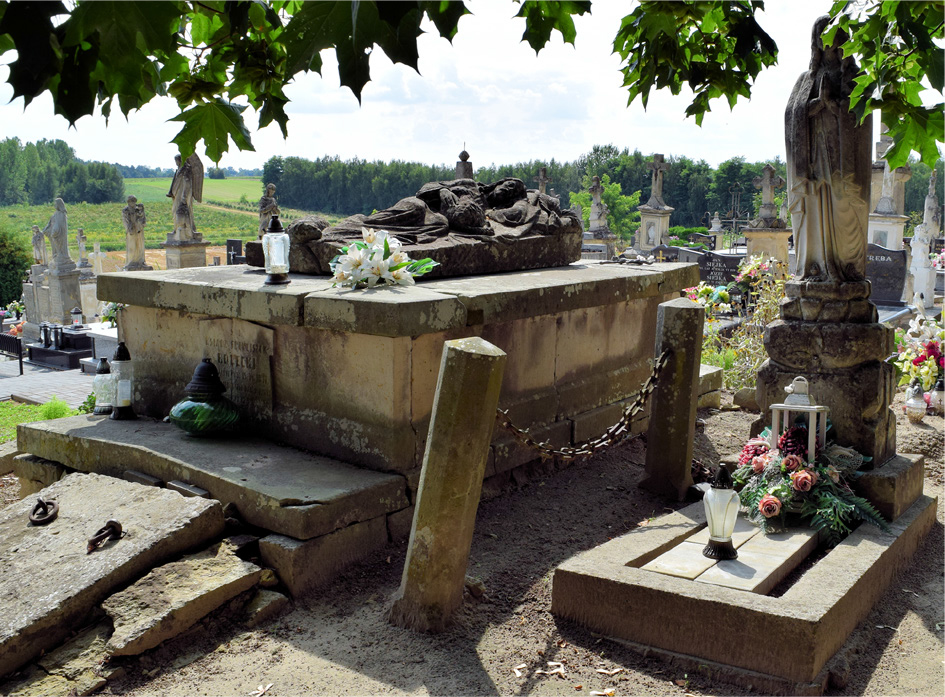
Fig. 3.
Sculptures in the graveyard in Janików carved in Upper Cretaceous limestone.
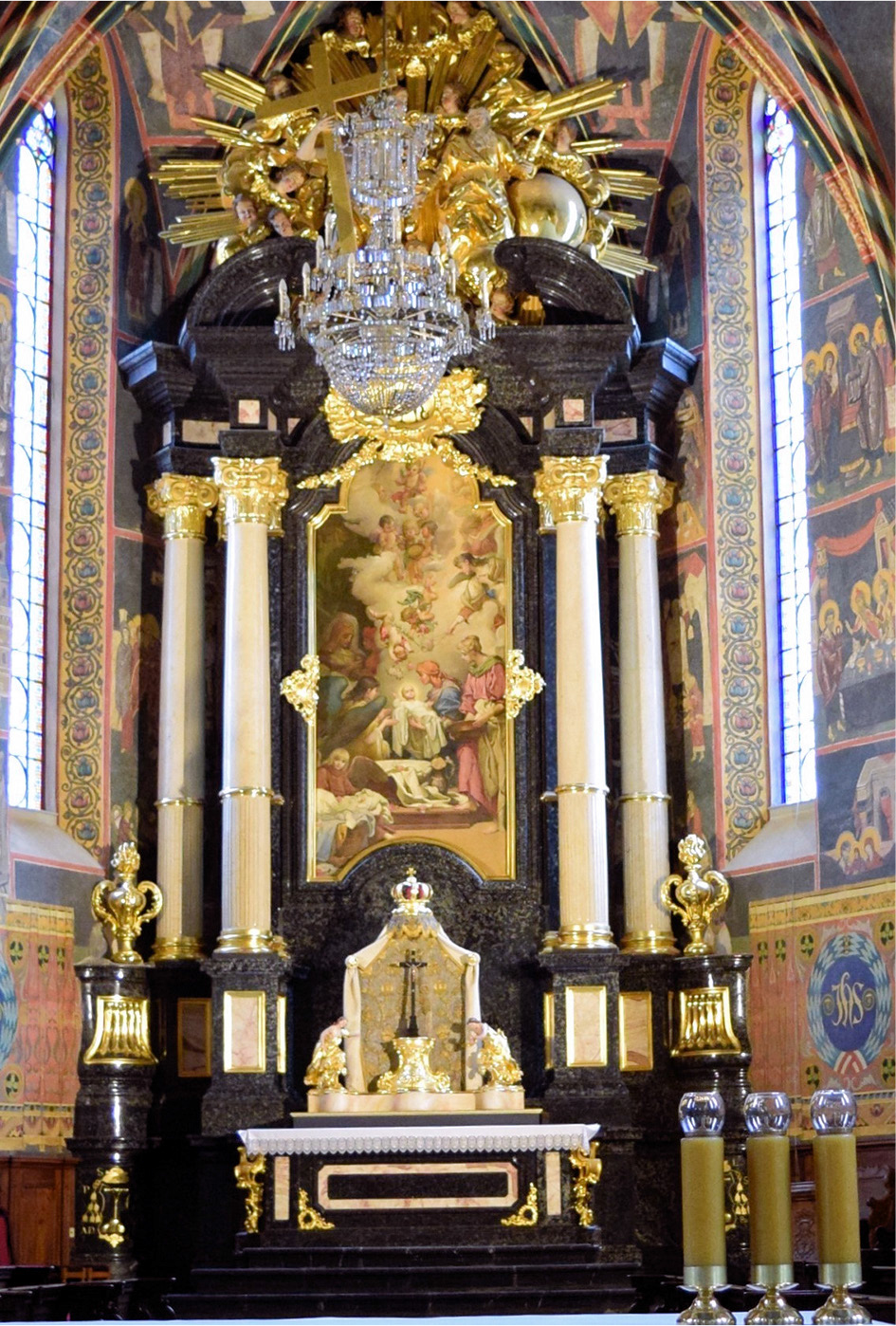
Fig. 4.
Blessed Salomea marble, Devonian Dębnik limestone, and rose-like Paczółtowice calcite applied in the main altar in the Sandomierz cathedral.
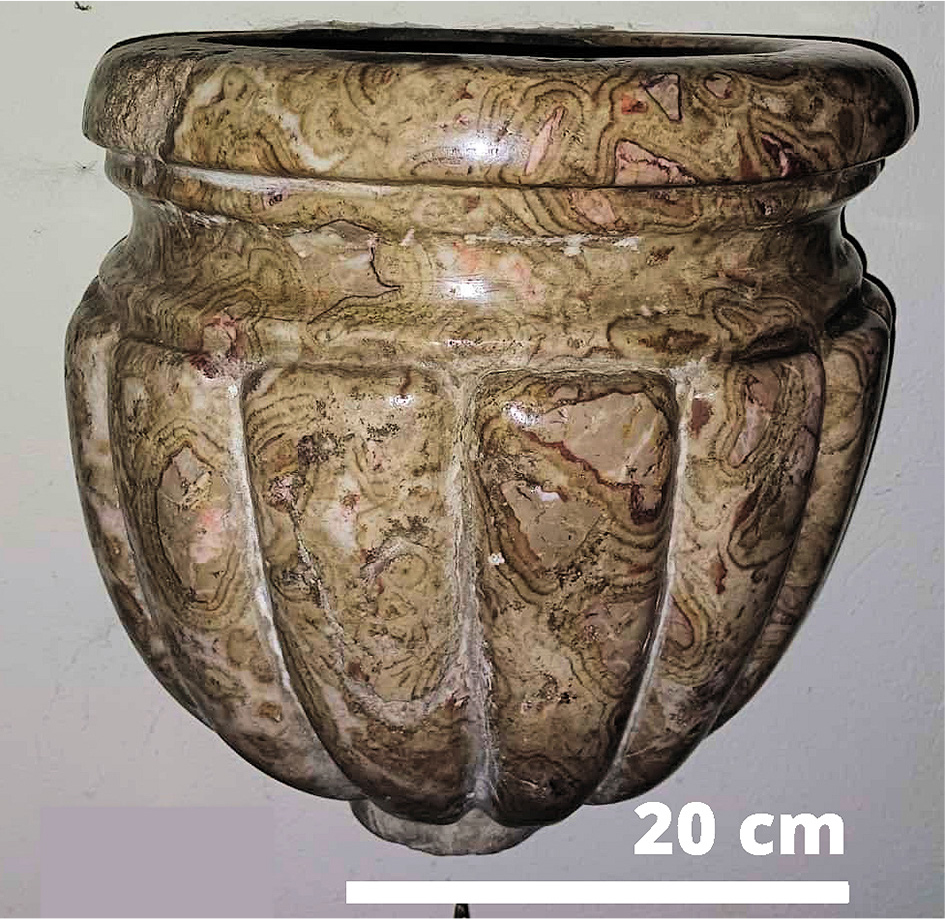
Fig. 5.
Stoup carved in rose-like Zelejowa calcite in Saint Paul’s conversion church in Sandomierz.
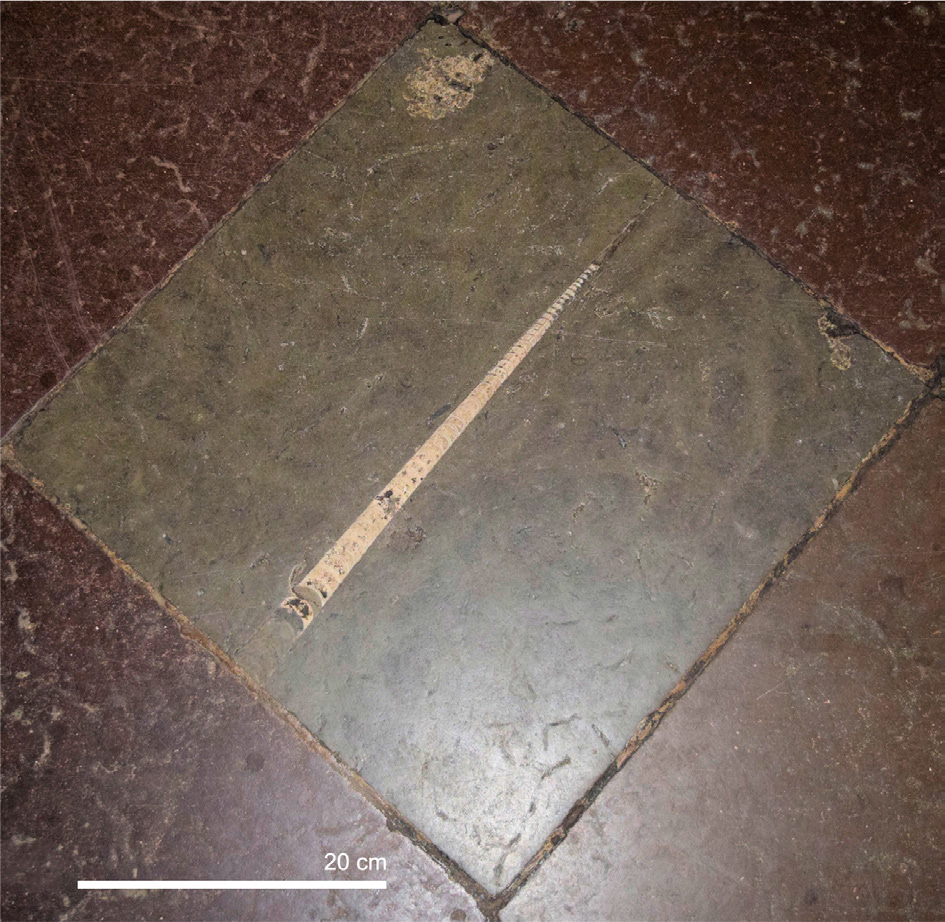
Fig. 6.
Ordovician limestones from Oland Island with orthoceratites fossils applied in the floor of the Saint James (Dominican’s) church in Sandomierz.
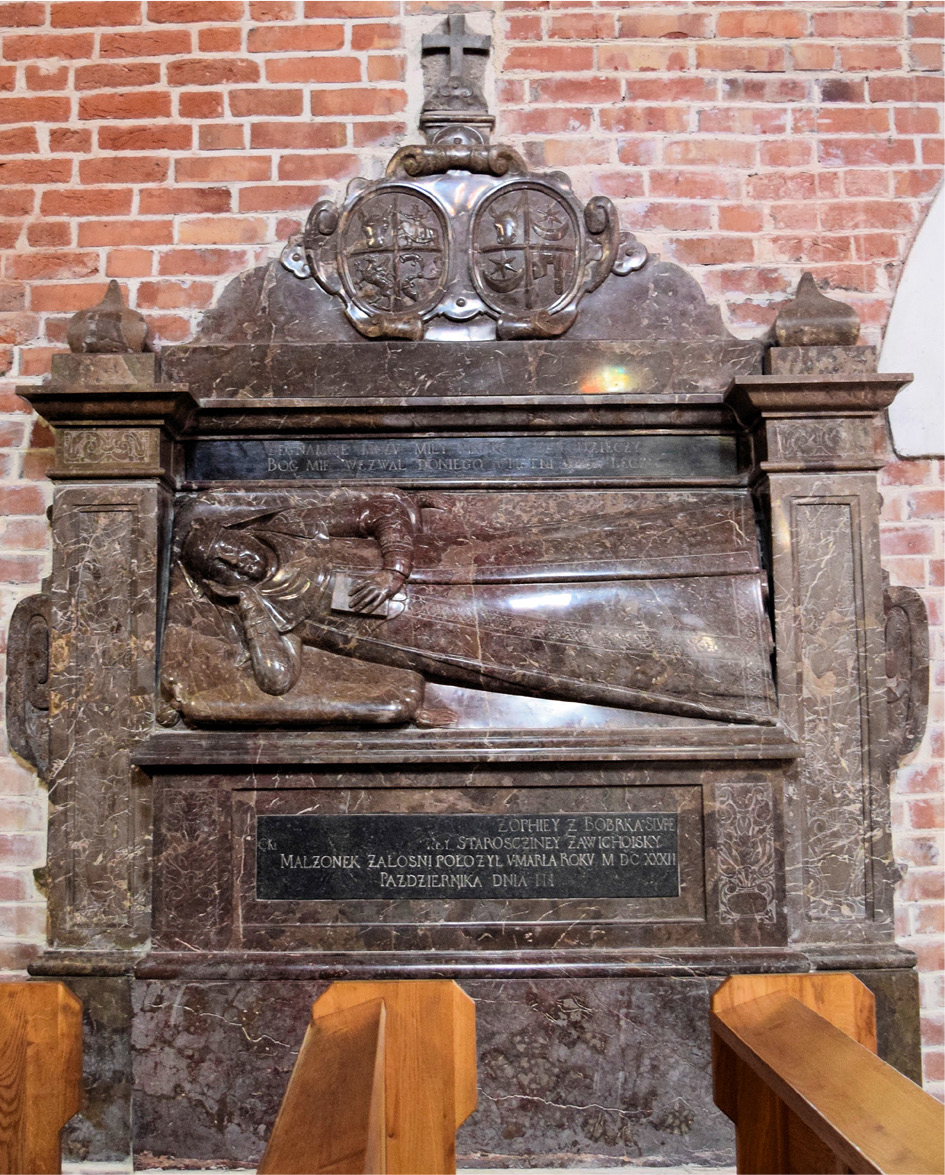
Fig. 7.
Effigy of Zofia of Bobrek Słupecka in the rectoral church of Saint John the Baptist in Zawichost made of Devonian Bolechowiece limestone.
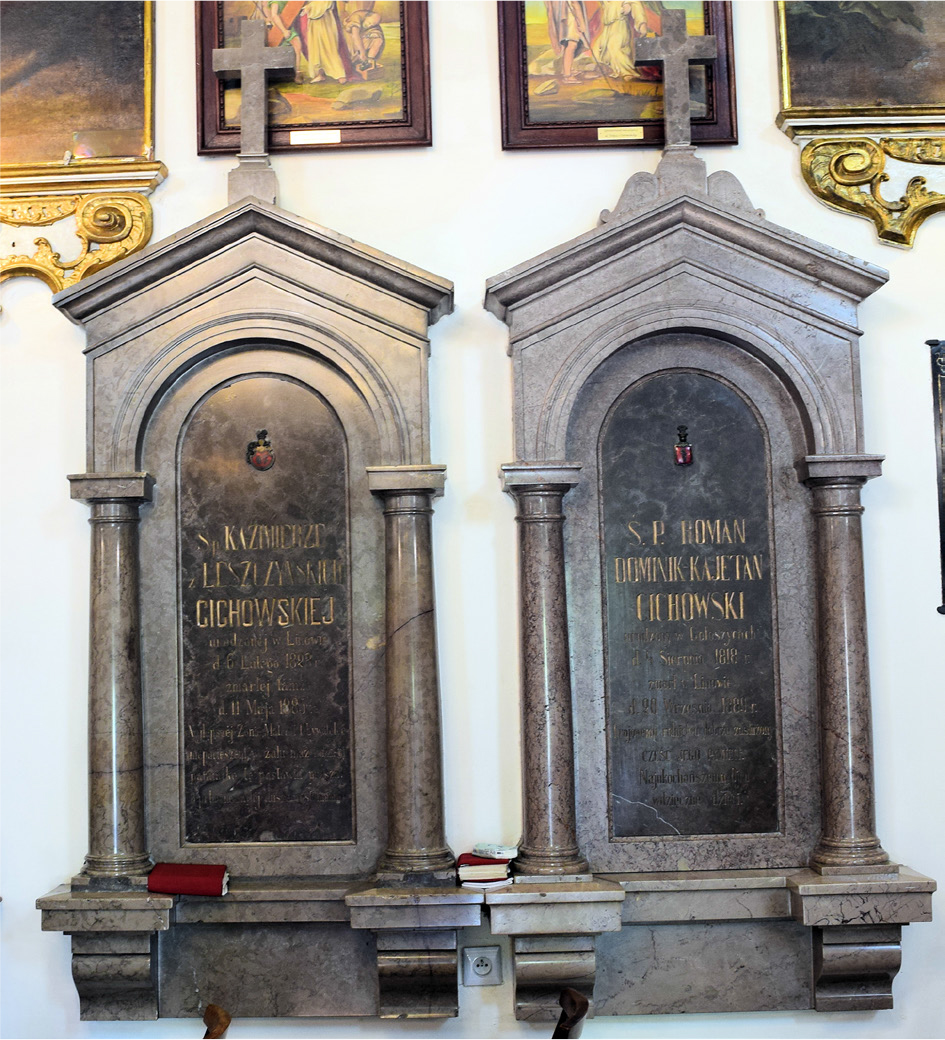
Fig. 8.
Epitaphs made of Devonian Bolechowice and Szewce limestones in the Holy Trinity church in Zawichost.
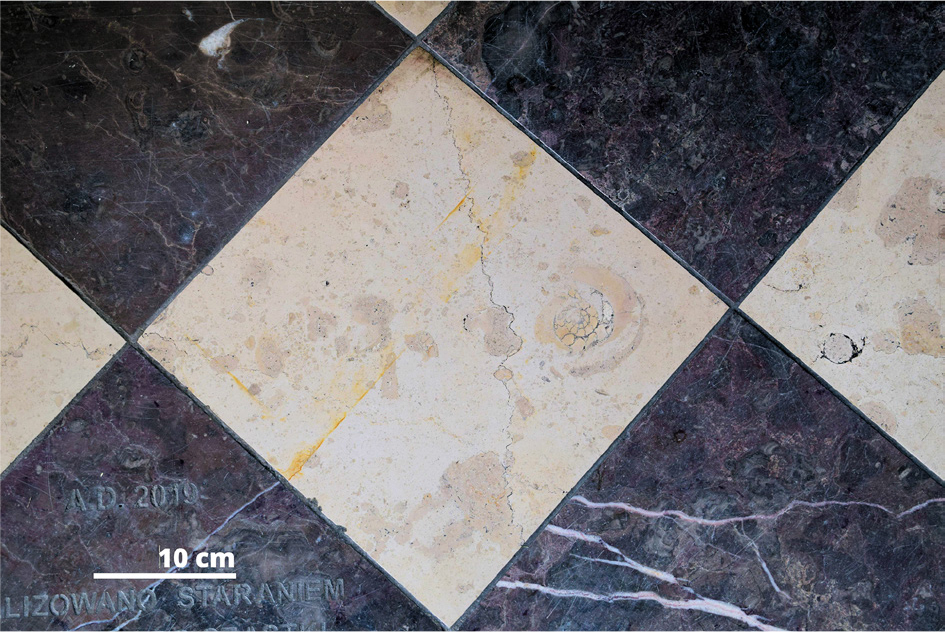
Fig. 9.
Floor in the Holy Trinity church in Zawichost made of Devonian Bolechowice limestones with calcite veins and Megalodon species and Jurassic limestones from Morawica with ammonite fossil, stylolithes and tuberoid spots.
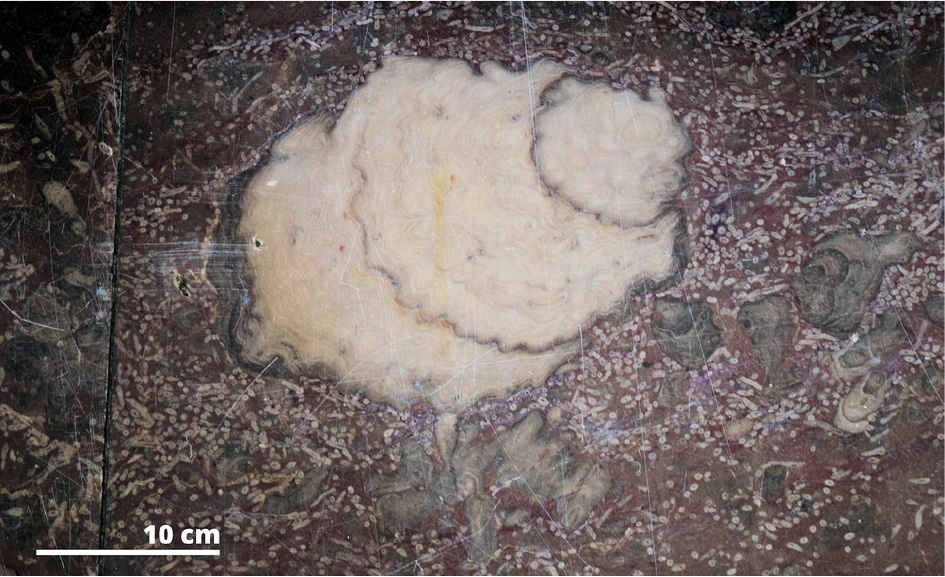
Fig. 10.
Bolechowice Devonian limestone with visible oval stromatopora and amphiporas in the church of the Assumption of the Blessed Virgin Mary in Zawichost.
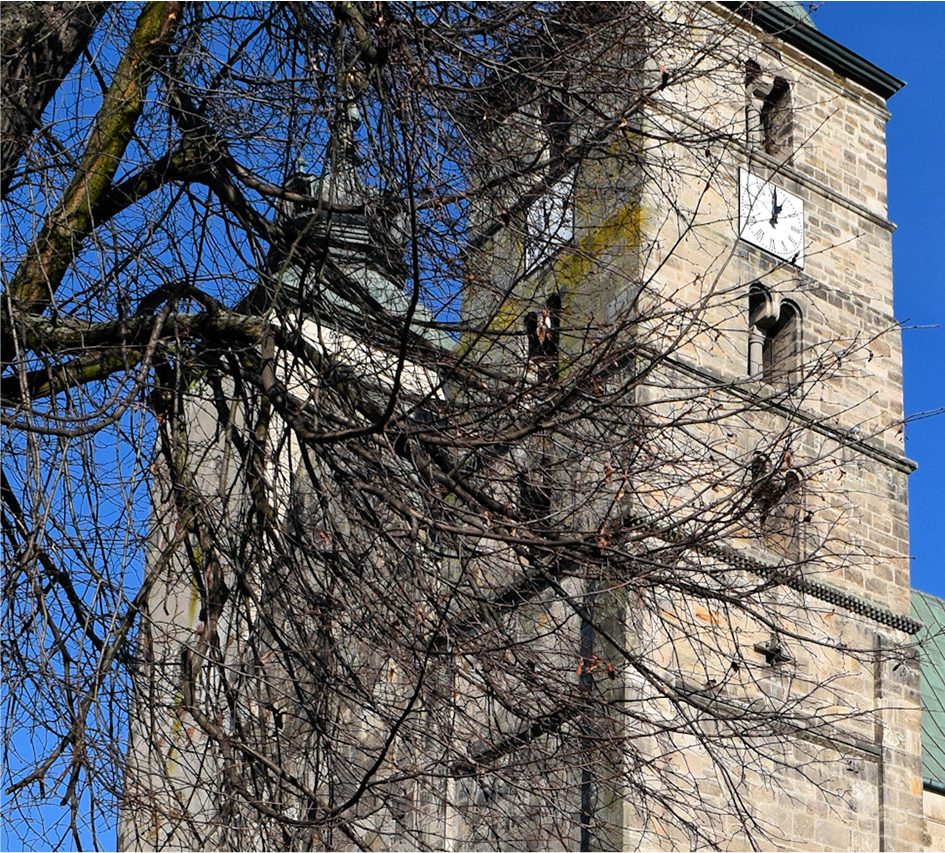
Fig. 11.
Walls of the Romanesque collegiate church of Saint Martin in Opatów built with the use of different kinds of local sandstones.
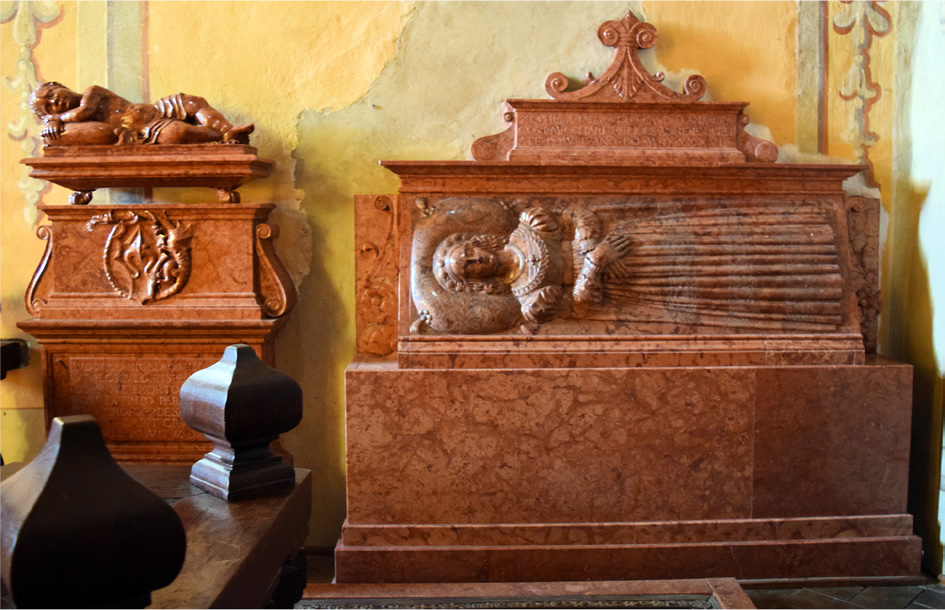
Fig. 12.
Zofia Szydłowiecka’s effigy made of Hungarian Tardos limestone in the Saint Martin collegiate in Opatów.
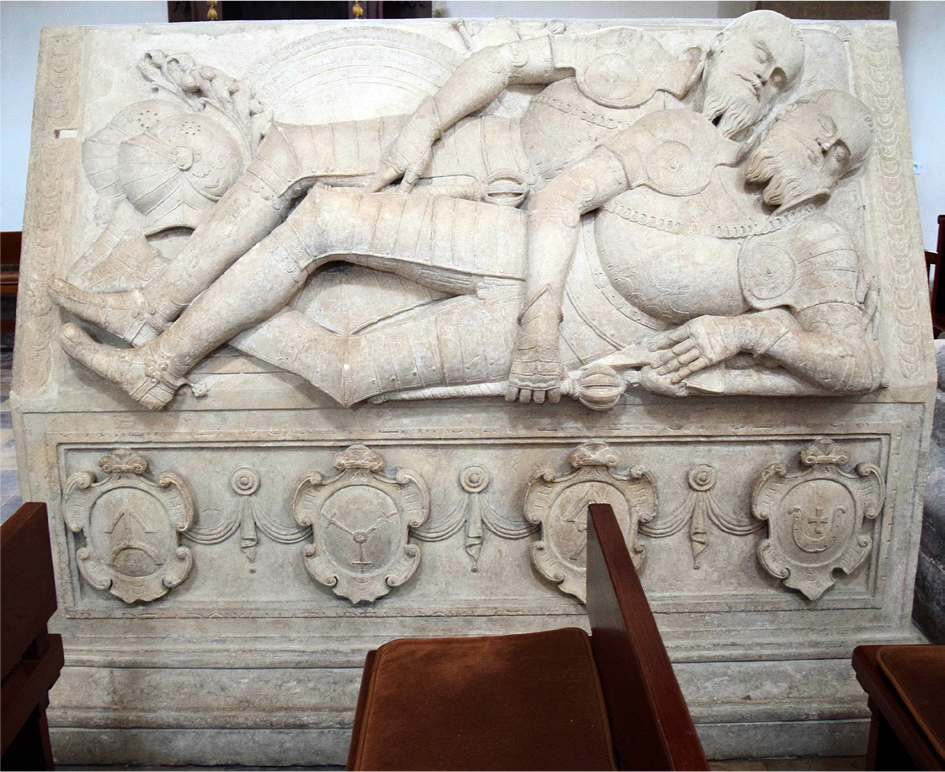
Fig. 13.
Miocene Pińczów limestone used in the tombstone of brothers Stanislaus and Martin Niedrzwiecki in the Cisterian Romanesque church of Saint Florian in Koprzywnica.
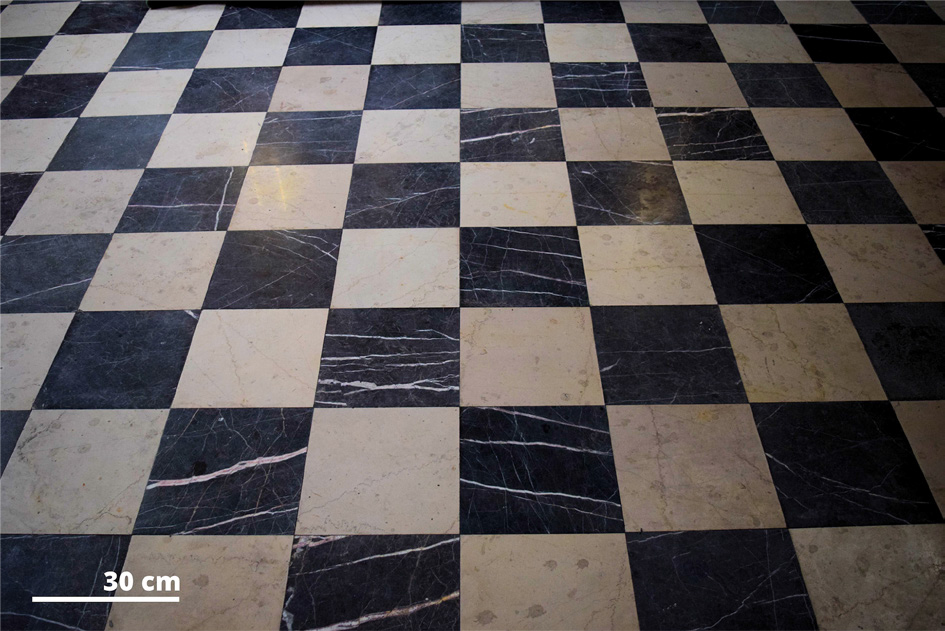
Fig. 14.
Floor of the side chapel in the Cisterian Romanesque church of Saint Florian in Koprzywnica made of Dębnik Devonian and Morawica Jurassic limestone with visible calcite veins and stylolithes.
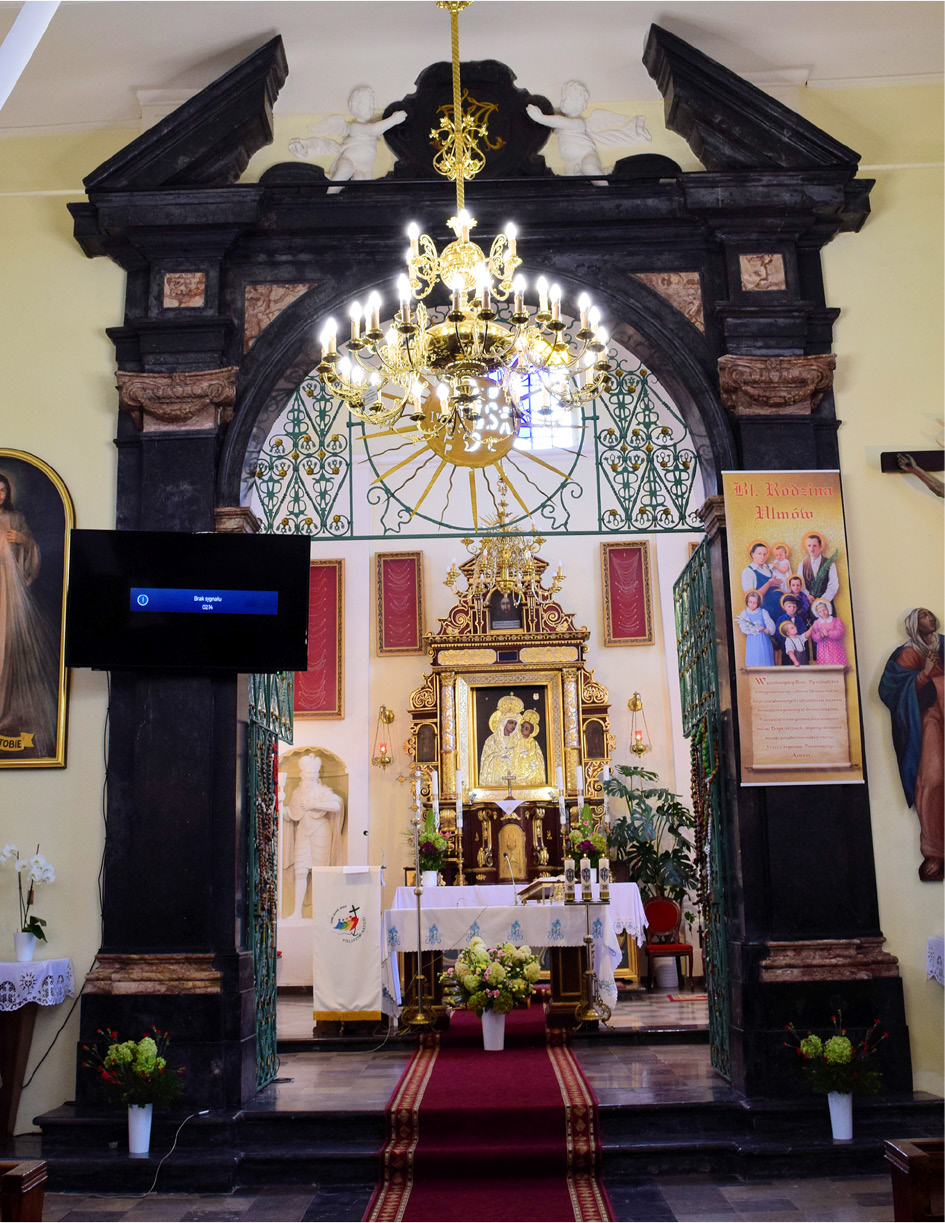
Fig. 15.
Portal in the Parish church of Our Lady of the Rosary in Koprzywnica, carved in Devonian Dębnik limestone and Paczółtowice rose-like calcite.
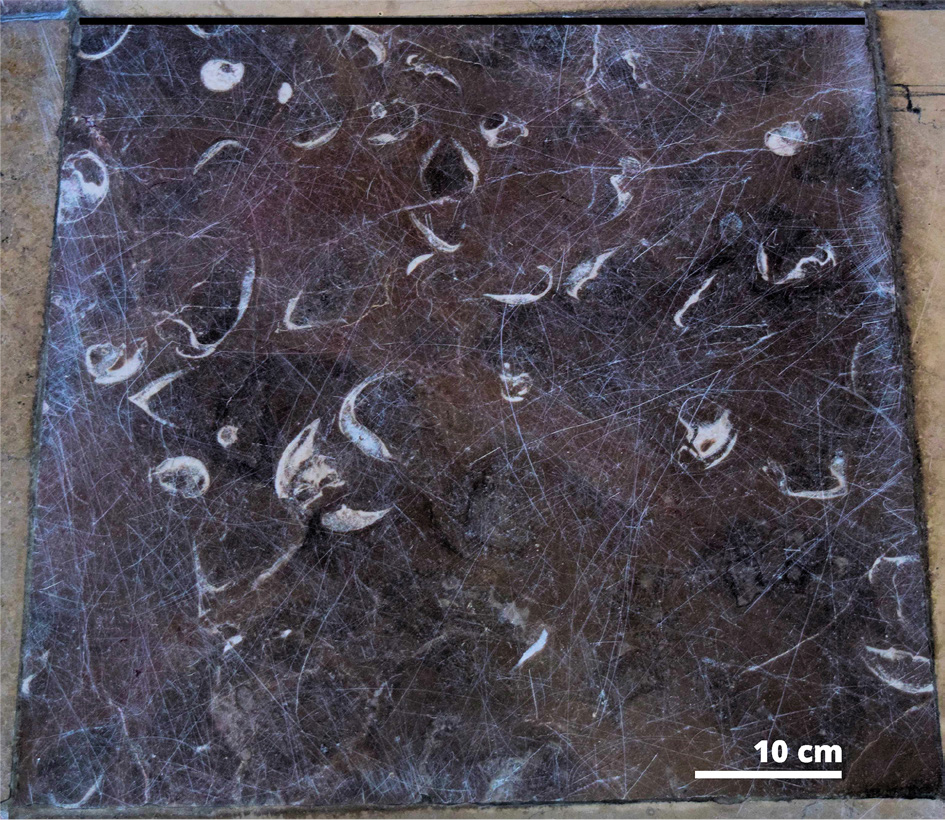
Fig. 16.
Cross-sections of Megalodon species visible within floor made of Devonian Bolechowice limestone in Saint Joseph Baroque church in Klimontów.
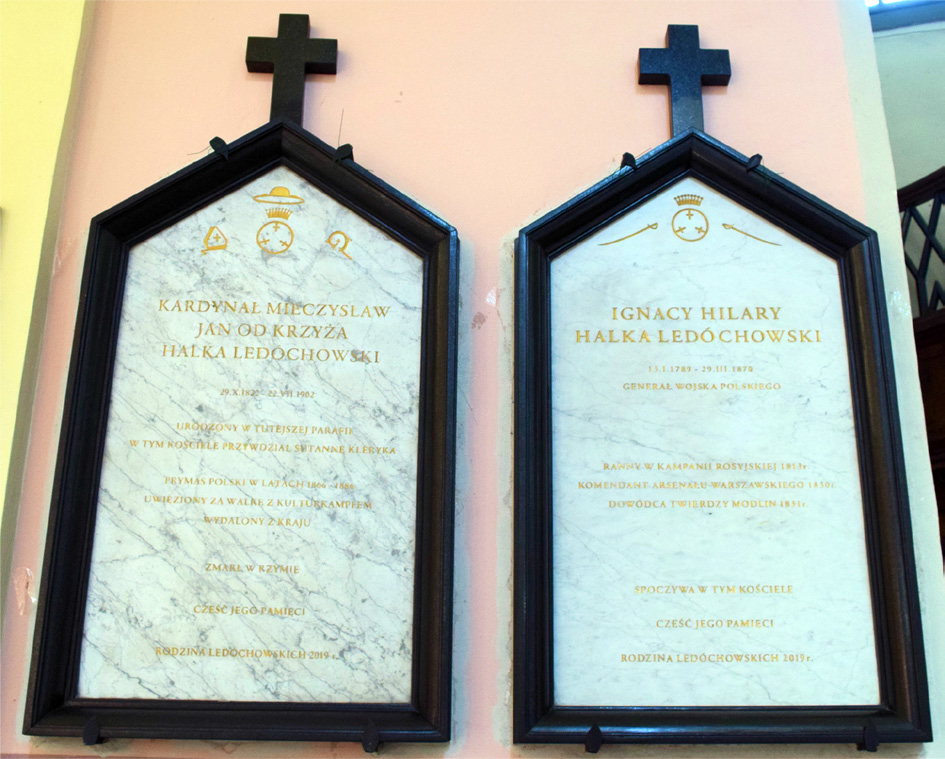
Fig. 17.
Epitaphs made of Jurassic Carrara marble in Saint Joseph Baroque church in Klimontów.
Table 1.
Tabular summary of the representative rock types used in secular and sacral architecture of the Sandomierz Upland (according to Matyja 1977, Urban, Gągol 1994, Złonkiewicz 1994, Rajchel 2008, Jędrychowski 2014, Bromowicz, Figarska-Warchoł 2016, Sermet et al. 2016, Gągol et al. 2020, Jewuła et al. 2022, Central Register of Geosites in Poland (CRGP).
| Quarring site | Rock type/name of stone | Geological period | Geological structures | Fossils | Physical and decorative properties | Examples of architectural use |
|---|---|---|---|---|---|---|
| Stronie Śląskie | White Marianna limestone | Proterozoic? – Cambrian | Medium and coarse-grained calcite marbles | None | High quality, excellent polish, physical properties, and aesthetic values, high frost resistance, compared with Carrara marble | Collegiate in Klimontów, parish church in Goźlice, the Assumption of the Blessed Virgin Mary church in Zawichost, parish churches in Ptkanów and Czyżów Szlachecki, the Saint Paul’s conversion church in Sandomierz, Saint Michel the Archangel church in Ostrowiec Świętokrzyski |
| Oland Island | Limestones | Ordovician | Differ in colour from the red varieties to brownish and grey, represents a proximal ramp tectonic setting | Orthoceratites | Aesthetic values connected with a mosaic of colours, numerous orthoceratites and other fossils, and bedding enables a very exploitable thickness of slabs | Cathedral in Sandomierz, Saint Joseph, Saint Michel the Archangel, and Saint James (Dominicans) churches in Sandomierz, Cisterian church in Koprzywnica, parish church in Skotniki, collegiate in Klimontów, Bernardine church in Opatów, parish church in Szewna |
| Sławniowice | Limestones, dolomites | Devonian | Beige, yellow, brown, white to light grey, light blue, blue-grey, brownish-purple, greenish-grey to dark grey coloured, coarse and medium grained | None | Very good technical properties connected with a high rate of recrystallisation, very resistant to weathering, high decorative values connected with a palette of colours and striped, spotted and folded patterns, excellent sculptor material, easy to process and polish | Parish church in Goźlice, parish church in Dwikozy |
| Dębnik | Limestones | Middle-Upper Devonian | Black to grey coloured, the thickness of the limestone beds usually ranges between 40 cm and 60 cm | Amphiporas, stromatoporas, corals, brachiopods, pelecypods, crinoids, and gastropods | Good physical and technical properties, suitable for being polished, resulting in glassy mirror-like surfaces, susceptible to weathering, presence of calcite veins, sparite calcite, and fossils | Cathedral church of the Nativity of the Blessed Virgin Mary in Sandomierz, Cisterian church and the parish church of Our Lady of the Rosary in Koprzywnica, the Saint Martin collegiate and Bernardine church in Opatów, churches in Klimontów, Szewna, Bidziny, the Saint James and the Saint Paul’s conversion churches in Sandomierz, parish churches in Gożlice, Kunów, Momina, Ptkanów, and Czyżów Szlachecki |
| Szewce | Limestones | Upper Devonian | Light beige and brown coloured with a pink hue, occur in the form of medium or coarse beds, formed in the lagoon of the forereef area | Cross-sections of Megalodon species, amphiporas, stromatoporas | Good physical and technical properties, suitable for polishing, high decorative values connected with the presence of violet calcite veins, stylolithes, and fossils, good resistance to atmospheric influence | The Saint Martin collegiate and Bernardine church in Opatów, the Holy Trinity and the Assumption of the Blessed Virgin Mary churches in Zawichost, Saint James church in Sandomierz, parish churches in Momina, and Kunów, collegiate in Klimontów, floor in the Sandomierz castle |
| Bolechowice | Limestones | Upper Devonian | Brown-chocolate coloured, formed in the lagoon of the fore-reef area | Amphiporas, stro-matoporas, cross-sections of Megalodon species, Tetracoralla corals, Lexonema gastropods | Excellent polish, physical properties, and aesthetic values, presence of white and pink calcite veins, fossils, and stylolithes, weak resistance to atmospheric influence resulted in grey colour | Cathedral church of the Nativity of the Blessed Virgin Mary, Saint Joseph, Saint Michel the Archangel, rectoral and Saint James churches in Sandomierz, Cisterian church and the Parish church of Our Lady of the Rosary in Koprzywnica, the Saint Martin collegiate and Bernardine church in Opatów, churches in Zawichost, Klimontów, Szewna, Gożlice, Włostów, Czyżów Szlachecki, Bidziny, Gierczyce, Wojciechowice, Ptkanów, Ćmielów, Denków, Ruszków, Momina, Kunów, Waśniów, Dwikozy, Ożarów, floor in the Sandomierz castle |
| Paczółtowice | Rose-like semicris-tallised vein calcite | Lower Carboniferous (Tournasian) | Veins filled with red, rose, and milk white (polish onyx) calcite, a locally red variety, have a breccia structure | None | High decorative values, excavated in the form of small blocks, used as cladding material and fillings in the form of mosaics, usually together with black Dębnik limestone | Cathedral church of the Nativity of the Blessed Virgin Mary in Sandomierz, the Parish church of Our Lady of the Rosary in Koprzywnica |
| Czerwona Góra | Sigismundus conglomerate | Upper Permian | Red marine nearshore delta fans sediments, red, pink, brown, and cream conglomerate, which consists of middle to very good coated, light gray and beige pebbles and crumbs of Devonian limestone carbonate rocks and dolomites, with clayey-carbonate-ferrous binding | Amphiporas, stromatoporas | Very high decorative values, conglomerate structure with a characteristic ‘brawn’ pattern and white and honey calcite veins, low abrasiveness and resistance to atmospheric influence, presence of fossils | The Holy Trinity and the Assumption of the Blessed Virgin Mary churches in Zawichost, parish churches in Klimontów, Denków, Ćmielów, Kunów, and the St. Paul’s conversion church in Sandomierz, Saint Michel the Archangel church in Ostrowiec Świętokrzyski |
| Zelejowa Mountain | Rose-like Zelejowa calcite | Permian-Triassic | White-rose and green hydrothermal coarse crystalline veined calcite | None | High decorative values, because of its fragility and low blockability, are seldom applied in figural sculptures, used as fillings in the form of mosaics | The St. Paul’s conversion church in Sandomierz, Saint James church in Sandomierz |
| The Holy Cross mountains region | Sandstones | Lower Triassic | River or eolian red sediments from Tumlin, Wąchock, and Suchedniów of delta and lagoon genesis | None | Thick-bedded, easy to process | Church in Kunów, Saint Martin collegiate in Opatów, Cisterian church in Koprzywnica, parish churches in Ćmielów, Koprzywnica, and Momina, Szewna, Ptkanów, Ćmielów, Stodoły-Wieś, Gierczyce as a graveyard, monument devoted to Polish writer Witold Gombrowicz in Małoszyce, monument devoted to Władysław Belina-Prażmowski in Ruszkowiec, monument in Ostrowiec Świętokrzyski devoted to all those who died in Katyń, war monument in Świątniki, stoups in Saint Joseph church as well as in crypts in cathedral in Sandomierz and the Assumption of the Blessed Virgin Mary church in Zawichost |
| Biskupie Doły (Witulin) | Sandstones and limestones | Upper Triassic (Rhaetian) | Light-cream coloured, medium-grained sea, inshore sediments arising in shallow, waving waters, in the lower part of the wall, coarse beds of Rhaetian sandstones are visible, in the upper part of the wall, there are complex limestones of the Lower, Middle, and the lowest part of the Upper Shell Limestone | Bivalves, brachiopods, shells of gastropods, cephalopods, and fish remnants. | Easy to process, good technical and physical properties | A complex of historical buildings, watermills, a paper mill, and a cardboard factory in Biskupie Doły |
| Kunów | Sandstones | Lower Jurassic (Toarcian) | Inshore (lagoonal) sediments, from shallow and quiet bodies of water, white, light grey, and yellowish, cream coloured with iron dripstones, fine and medium-grained with siliceous binding material, occur in the form of fine, medium, or coarse beds | None | Good block properties, good technical qualities, easy to process, exploit, and have good resistance to atmospheric influence | Church of Saint Władysław with sculptures of Saint Wojciech and Saint Stanisław and bas-reliefs, bell tower, stations of the cross, graveyard, monuments in the town square, private houses, numerous roadside shrines and crucifixes in Kunów, graveyards in nearby towns, cathedral church of the Nativity of the Blessed Virgin Mary in Sandomierz, collegiate in Klimontów, the Saint Martin collegiate in Opatów, Cisterian cloister in Koprzywnica, parish church in Goźlice, the Krzyżtopór Castle in Ujazd |
| Nietulisko | Sandstones | Lower Jurassic (Pliensbachian) | Similar properties to Kunów sandstones, but with clayey material binding | None | Good technical qualities – separateness, blockability, easy to process, exploit, have weak durability, and resistance to atmospheric influence | Elevation material for Warsaw’s destroyed Old Town and Warsaw’s Palace of Culture and Science as well as ripraps for the Marshal Residential District estate and the W – Z route in Warsaw |
| Podole | Sandstones | Lower Jurassic (Hettangian) | Thick-bedded, grey to light grey quartzitic sandstones of inshore and terrestrial genesis, with horizontal and diagonal bedding | Molluscs, traces of dinosaurs, fossil flora, and soils | Easy to exploit and process, it occurs in the form of blocks, with weak resistance to aggressive weathering factors | Fortified church in Ptkanów with a wall, bell tower, as well as sundial, the Saint Martin collegiate in Opatów, and local cellars in Podole |
| Carrara | Limestones | Lower Jurassic (Hettangian) (protolith) | Fine-grained and homogeneous with a compact texture, background colour can vary from off-white to light grey with dense dark grey/black veins | None | High water absorption, flexural and compressive strength, high resistance and density, good thermal conductivity, smooth and polished appearance with high aesthetic value connected with luster that gives it a bright, reflective quality, purity of the background, the presence or absence of veins, and their appearance | Epitaphs in Klimontów collegiate, collegiate in Opatów, Goźlice, Ćmielów, Szewna, Kunów, Ptkanów, and Momina parish churches, the church of the Mother of God, the Queen of Poland in Sandomierz |
| Szydłowiec | Sandstones | Lower Jurassic (Pliensbachian) | White and yellow coloured, fine-and medium-grained, formed in shallow water reservoirs near the mainland or islands, at the mouths of slowly flowing, calm rivers, with weak silica and silica-clayey binding material | None | Very good separateness, blockability, and frost resistance, high decorative values, covered with a grey patina layer | Cathedral church of the Nativity of the Blessed Virgin Mary in Sandomierz, two sandstone lions as a decorative part of the entrance gate to the Wielopolski Palace in the Częstocice district of Ostrowiec Świętokrzyski |
| Bánya-hegy near Tardos | Limestone | Lower Jurassic | Red compact limestone | Ammonites | Frost resistance, low water absorption, and high compressive strength, workability, and high decorative values | Szydłowiecki’s chapel in the Saint Martin collegiate in Opatów |
| Area between Denków and Ożarów within Iłża Foreland | Limestones | Middle Jurassic (Callovian) | Pelitic, rusty brown, medium and coarse bedded with admixture of quartzitic sand, presence of cherts in the lower parts of the profile | Ammonites, belemnites, bivalves, teeth of crocodiles, and fish | Low aesthetic values serve as an important building material, the presence of fossils | Houses, walls, and agricultural buildings in Denków, Bodzechów, Brzóstowa, Ćmielów, and Drygulec |
| Morawica | Limestones | Upper Jurassic (Middle and Upper Oxfordian) | Light-grey to darkbeige sparry and micritic limestones with rich organic remains, deposited on a carbonate platform | Ammonites, belemnites, sponges, bivalves, brachiopods, foraminifers, echinoids | Presence of stylolithic structures and fossils as well as flints, easy to process, recommended usage inside the objects because of small resistance to weathering processes, suitable for being polished | Rectoral Church of Saint John the Baptist, the Holy Trinity and the Assumption of the Blessed Virgin Mary churches in Zawichost, Cisterian church and the Parish church of Our Lady of the Rosary in Koprzywnica, collegiate in Klimontów, collegiate of Saint Martin and Bernardine church in Opatów, parish churches in Szewna, Kunów, Ruszków, Momina, Ptkanów, Ożarów, Włostów, Saint Michel the Archangel, Saint James, rectoral and St. Paul’s conversion churches in Sandomierz |
| Grodzisko Hill next to Skała | Limestones called Blessed Salomea marble | Upper Jurassic | White to yellow coloured, specific variety of rocky limestones with a large amount of micrite | Sponges, ammonites, gastropods, bryozoans, brachiopods | Ability to take polish, possibilities of cutting very large blocks, and ability to be carved for figural and ornamental sculpture resulted from the homogeneity caused by the large amount of micrite, the presence of stylolithes | Cathedral church of the Nativity of the Blessed Virgin Mary in Sandomierz |
| Orosei, Italy | Breccia Sarda | Jurassic-Cretaceous | Light beige with irregular veins, formed in warm, shallow seas | Shells | Used in sculptures and inlays, streaky structure similar to travertine, soft and absorbent material, presence of fossils, veins of calcite, and onyx foils | Parish churches in Ptkanów, Szewna, Ćmielów and Kunów |
| Janików | Limestones with black siliceous cherts | Upper Cretaceous (Lower Turonian) | Bedded limestones are divided by levels of black and brown cherts | Foraminifers, inoceramids, ammonites, bryozoans, echinoderms, molluscs (oysters), brachiopods | Very soft, easy to slice after excavation, similar to Pińczów limestone but rougher and sandier, both difficult to distinguish after covering by a patina layer | The Saint Anne’s church in Janików, surrounded by walls and a graveyard with unique stonework, walls and façade of the palace in Czyżów Szlachecki, parish church and bell tower in Wojciechowice, churches in Bidziny and Ożarów, the graveyards in Obrazów, Przybysławice, Stodoły, Bidziny, Gierczyce, Wojciechowice, the graveyard in Czyżów Plebański, column situated next to parish church in Ćmielów, Bernardine Church and collegiate in Opatów, rectoral Church of Saint John the Baptist and the Assumption of the Blessed Virgin Mary churches in Zawichost |
| Smerdyna near Staszów | Limestones | Middle Miocene (Sarmatian and Badenian) | Creamy and yellowish coarsegrained with high CaCO3 content, in the upper part organodetritic, thick-bedded and massive, in the lower part lithothamnium with diagonal bedding | Molluscs’ shells: oysters and scallops, coquina shells | Possess high porosity and absorption. After excavation are soft and fragile. After drying, the surface of limestone is covered by a hard patina layer, serving as a decorative element for building purposes, mainly walls | Parish church and bell tower in Goźlice, cholera graveyard in Kaliszany |
| Pińczów | Limestones | Middle Miocene (Lower Badenian) | Shallow-water detrital limestones, formed from accumulated detritus of the algae Lithothamnium sp. and fragmented calcareous skeletons of other marine organisms, with an admixture of quartz grains and clays | Gastropods, bryozoans, bivalves, brachiopods, anthozoans, echinoids, crinoids, crabs, fish, and shark teeth, bones of dolphins and whales | High porosity and low bulk density, frost resistance, light weight, and increased hardness after losing natural moisture, the ability to patinate, susceptibility to processing after extraction, during dressing it does not take polish | Cathedral church of the Nativity of the Blessed Virgin Mary in Sandomierz, Cisterian church in Koprzywnica, parish church in Goźlice |
Table 2.
Results of the valuation of quarry sites according to the methods of Kubalíková et al. (2020).
| Geosite/criteria | Janików | Kunów | Nietulisko | Podole | Piaski Brzóstowskie | Doły Biskupie |
|---|---|---|---|---|---|---|
| Scientific values | ||||||
| Integrity and current status | 1.00 | 1.00 | 1.00 | 1.00 | 1.00 | 1.00 |
| Diversity of the Earth science features | 1.00 | 0.75 | 0.50 | 1.00 | 0.50 | 0.75 |
| Rarity | 1.00 | 0.50 | 0.50 | 0.75 | 0.50 | 0.75 |
| Exemplarity and representativeness | 1.00 | 1.00 | 1.00 | 1.00 | 1.00 | 1.00 |
| Paleogeographical significance | 1.00 | 1.00 | 0.75 | 1.00 | 0.50 | 1.00 |
| Added values | ||||||
| Ecological aspect | 0.25 | 0.25 | 0.25 | 0.25 | 0.25 | 0.25 |
| Historical aspect | 1.00 | 1.00 | 1.00 | 0.50 | 0.50 | 1.00 |
| Diversity of other cultural aspects | 1.00 | 1.00 | 1.00 | 1.00 | 1.00 | 1.00 |
| Aesthetic aspect | 0.50 | 0.50 | 0.50 | 0.50 | 0.50 | 0.50 |
| Tourist values | ||||||
| Accessibility | 0.75 | 0.50 | 0.00 | 1.00 | 1.00 | 0.50 |
| Safety | 0.75 | 0.50 | 1.00 | 1.00 | 1.00 | 0.50 |
| Tourist infrastructure and facilities | 0.00 | 0.00 | 0.00 | 0.00 | 0.00 | 0.75 |
| Visibility of geodiversity features | 1.00 | 1.00 | 1.00 | 1.00 | 1.00 | 1.00 |
| Conservation values | ||||||
| Legislative protection | 0.00 | 0.00 | 0.00 | 0.00 | 0.00 | 1.00 |
| Current threats | 0.75 | 0.75 | 0.50 | 0.75 | 0.75 | 0.75 |
| Points | 11.00 | 9.75 | 9.00 | 10.75 | 9.50 | 11.75 |
Table 3.
Results of the valuation of the geocultural objects according to the methods of Kubalíková et al. (2020).
| Geosite/criteria | Cathedral in Sandomierz | Cisterian complex in Koprzywnica | Collegiate in Opatów | Collegiate in Klimontów | Parish church in Koprzywnica | Bernardine church in Opatów | Saint John the Baptist church in Zawichost | Assumption of the Blessed Virgin Mary church in Zawichost | Holy Trinity Church in Zawichost | Parish church in Goźlice | Parish church in Ptkanów | Parish church in Kunów | Parish church in Szewna | Dominican church in Sandomierz | Parish church in Ćmielów | Parish church in Momina | Parish church in Włostów |
|---|---|---|---|---|---|---|---|---|---|---|---|---|---|---|---|---|---|
| Scientific values | |||||||||||||||||
| Integrity and current status | 0.75 | 0.50 | 0.75 | 0.75 | 1.00 | 1.00 | 0.75 | 0.75 | 0.75 | 0.75 | 0.75 | 0.75 | 0.75 | 0.75 | 0.75 | 1.00 | 0.75 |
| Diversity of the Earth science features | 1.00 | 1.00 | 1.00 | 1.00 | 0.50 | 0.75 | 0.50 | 0.75 | 0.50 | 1.00 | 1.00 | 1.00 | 0.75 | 0.75 | 1.00 | 0.75 | 0.50 |
| Rarity | 1.00 | 0.75 | 1.00 | 0.75 | 0.75 | 0.75 | 0.50 | 0.75 | 0.50 | 1.00 | 0.75 | 0.75 | 0.75 | 0.75 | 0.75 | 0.75 | 1.00 |
| Exemplarity and representativeness | 1.00 | 1.00 | 1.00 | 1.00 | 1.00 | 1.00 | 1.00 | 1.00 | 1.00 | 1.00 | 1.00 | 1.00 | 1.00 | 1.00 | 1.00 | 1.00 | 1.00 |
| Paleogeographical significance | 1.00 | 1.00 | 1.00 | 1.00 | 0.75 | 1.00 | 0.75 | 1.00 | 0.75 | 1.00 | 1.00 | 1.00 | 0.75 | 1.00 | 0.75 | 1.00 | 0.50 |
| Added values | |||||||||||||||||
| Ecological aspect | 0.00 | 0.00 | 0.00 | 0.00 | 0.00 | 0.00 | 0.00 | 0.00 | 0.00 | 0.00 | 0.00 | 0.00 | 0.00 | 0.00 | 0.00 | 0.00 | 0.00 |
| Historical aspect | 1.00 | 1.00 | 1.00 | 1.00 | 0.50 | 0.75 | 1.00 | 0.50 | 0.50 | 0.75 | 0.50 | 0.50 | 0.75 | 1.00 | 0.50 | 0.75 | 1.00 |
| Diversity of other cultural aspects | 1.00 | 1.00 | 1.00 | 1.00 | 0.50 | 0.75 | 0.75 | 0.75 | 0.75 | 0.75 | 0.75 | 0.75 | 1.00 | 1.00 | 0.75 | 0.75 | 1.00 |
| Aestethic aspect | 1.00 | 0.75 | 1.00 | 0.75 | 1.00 | 1.00 | 1.00 | 0.75 | 0.75 | 0.75 | 1.00 | 0.75 | 0.75 | 0.75 | 1.00 | 1.00 | 1.00 |
| Tourists values | |||||||||||||||||
| Accessibility | 1.00 | 1.00 | 1.00 | 1.00 | 1.00 | 1.00 | 1.00 | 1.00 | 1.00 | 1.00 | 1.00 | 1.00 | 1.00 | 1.00 | 1.00 | 1.00 | 1.00 |
| Safety | 1.00 | 1.00 | 1.00 | 1.00 | 1.00 | 1.00 | 1.00 | 1.00 | 1.00 | 1.00 | 1.00 | 1.00 | 1.00 | 1.00 | 1.00 | 1.00 | 1.00 |
| Tourist infrastructure and facilities | 0.50 | 0.50 | 0.50 | 0.50 | 0.25 | 0.50 | 0.50 | 0.50 | 0.25 | 0.50 | 0.50 | 0.50 | 0.50 | 0.50 | 0.25 | 0.50 | 0.50 |
| Visibility of geodiversity features | 1.00 | 1.00 | 1.00 | 1.00 | 1.00 | 1.00 | 1.00 | 1.00 | 1.00 | 1.00 | 1.00 | 1.00 | 1.00 | 1.00 | 1.00 | 1.00 | 1.00 |
| Conservation values | |||||||||||||||||
| Legislative protection | 1.00 | 1.00 | 1.00 | 1.00 | 1.00 | 1.00 | 1.00 | 1.00 | 1.00 | 1.00 | 1.00 | 1.00 | 1.00 | 1.00 | 1.00 | 1.00 | 1.00 |
| Current threats | 0.75 | 1.00 | 1.00 | 1.00 | 1.00 | 1.00 | 1.00 | 1.00 | 1.00 | 1.00 | 0.50 | 1.00 | 1.00 | 1.00 | 1.00 | 1.00 | 1.00 |
| Points | 13.00 | 12.50 | 13.25 | 12.75 | 11.25 | 12.50 | 11.75 | 11.75 | 10.75 | 12.5 | 11.75 | 12.25 | 12.00 | 12.5 | 11.75 | 12.50 | 12.25 |