

1. Introduction
The end effector is a crucial component of a robotic system, enabling the execution of various operations and the handling of objects throughout the process. Nevertheless, the manipulation of fragile and flexible objects is one of the most significant challenges in robotics. Following advances in soft materials, soft grippers have attracted more interest among academics recently. Silicone rubber, elastomers, and thermoplastic polyurethanes (TPU) are predominantly utilized in soft gripper applications. The production of soft grippers utilizing these materials in additive manufacturing provides enhanced operational reliability and savings. Various forms of soft grippers have been designed and developed by various researchers that have used mechanical linkages, pneumatics, or magnets. When the mechanical linkages in the soft gripper are used, the force that is applied by the gripper is increased, which assists in the handling of heavy objects with more precision. In this way, the stability of the grasp on the object is improved, and the repeatability and reliability of the grip are improved as well. While mechanically-operated soft grippers offer numerous advantages, they also present several disadvantages, including challenges in control, increased wear and tear, limited compliance, and higher initial costs.
To address these limitations, researchers have designed and developed a novel type of pneumatically operated soft grippers and successfully tested them in various real-time applications. Pneumatic soft grippers are a type of gripper that utilizes high-pressure air to grasp objects of both regular and irregular shapes. These grippers are very flexible, lightweight, and cost-effective compared to other types of grippers. As a result of these advantageous aspects, the use of soft grippers has increasingly been considered for agricultural [1, 2], food processing [3, 4], and medical [5, 6] applications in the last few years. Various types of pneumatically-powered soft grippers are used in different fields. Fig. 1 illustrates many kinds of grippers and their applications.
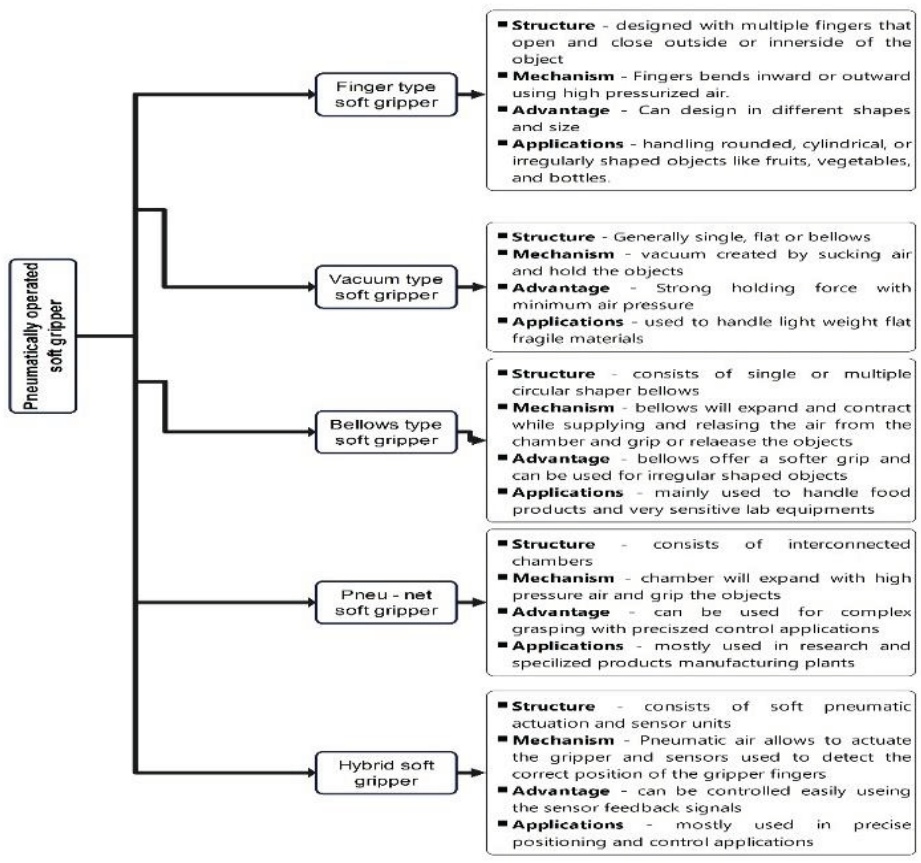
Figure 1.
Details of different types of soft gripper
An increasing number of studies have focused on the soft vacuum gripper due to its many advantages over other types of grippers, including its simplicity, low cost, and ease of use. Li et al. [7] designed a vacuum-operated soft gripper utilizing an origami magic ball and an elastic thin membrane. The experimental results demonstrated that the soft gripper generates substantial grasping force via vacuum, making it promising for various applications in the handling of heavy objects. Tawk et al. [8] created a 3D-printed, multifunctional soft gripper that utilizes a suction cup to grasp various items of differing weights, sizes, and shapes. That study’s findings indicated that a soft gripper equipped with a single suction cup generates a gripping force of about 30.35N within 94ms. By contrast, the multi-functional soft gripper produces a gripping force of 31.31N and a maximum payload-to-weight ratio of 7.06.
Maggi et al. [9] introduced an innovative gripper called POLYPUS that is designed to provide exceptional load-lifting capabilities for diverse products such as cardboard, glass, sheet metal, and plastic via the integration of under-actuation and vacuum-gripping techniques. The simulation results revealed that the POLYPUS gripper provided minimal suction force for handling various items. Jang et al. [10] introduced an innovative concept, inspired by air fuses, for creating a soft valve for a soft vacuum gripper, and examined its practicality via experimental methods. The study also developed analytical models to forecast pressure conservation and operational duration for the proposed valve, and to validate the experimental findings. The suggested soft vacuum gripper with a soft valve was successfully constructed and evaluated under various operating circumstances.
Tawk et al. [11] used 3D printing to develop innovative soft vacuum actuators inspired by the sporangium of ferns. The actuators were evaluated for several applications, including locomotion and hopping robots, and the system demonstrated versatility via multiple degrees of freedom and variable length, using a set of 3D-printed vacuum hinges.
Tahir et al. [12] developed the pneumatically powered silicone rubber gripper, termed PASCAV, and evaluated its grabbing efficacy on various items under diverse working circumstances. Their experimental research findings indicate that this gripper is more effective for flat, curved, and irregularly-shaped items, providing more grabbing power. The experimental results have been confirmed by finite element analysis (FEA) findings, demonstrating strong agreement. Numerous researchers have fabricated and studied different soft robotic grippers and tested them in different applications. [13,14,15,16]. Over the past several years, the field of medicine has witnessed consistent and rapid technological advancements in this regard, with one revolutionary step forward being when the Internet of Things (IoT) idea was first implemented in clinical settings [17].
The aforementioned literature clearly shows the potential of vacuum-driven soft grippers. Despite much study conducted on vacuum-operated soft grippers, there is significant potential to evaluate their effectiveness across many applications. This study thus undertook the design and fabrication of an innovative gripper made from soft material that operates using vacuum power. Its grabbing capability was evaluated by handling items of various shapes and sizes. Finite element analysis was conducted to confirm the experimental findings and examine the pressure distribution in the gripper.
2. Materials and Methods
In order to analyze the grasping capability of the soft gripper, a compact vacuum gripper was designed that was 43 mm in height and 65 mm in diameter, and capable of handling a maximum payload of 500 grams. The design of the proposed cylindrical bell-shaped vacuum soft robotic gripper is illustrated in Fig. 2. The required mold for the proposed cylindrical bell-shaped gripper was designed using SolidWorks software and fabricated using a 3D printer. The proposed gripper has a total height of 34 mm, consisting of a 3-mm-thick base flange and a 31-mm-tall vertical cylinder bell. The outside diameter of the base flange is maintained at 65mm to provide enough surface area for grasping the item. Likewise, the diameter of the top cylinder is presumed to be 42mm so that it can attach the gripper to the robotic manipulator effortlessly. To provide appropriate rigidity, the gripper was designed with an interior cavity diameter of 36mm and a wall thickness of 3mm. To create a vacuum, one 4-mm cylindrical hole is added to the top surface of the gripper and internal cavity. The vacuum pump sucks the air from the internal cavity through the 4-mm-diameter hole.
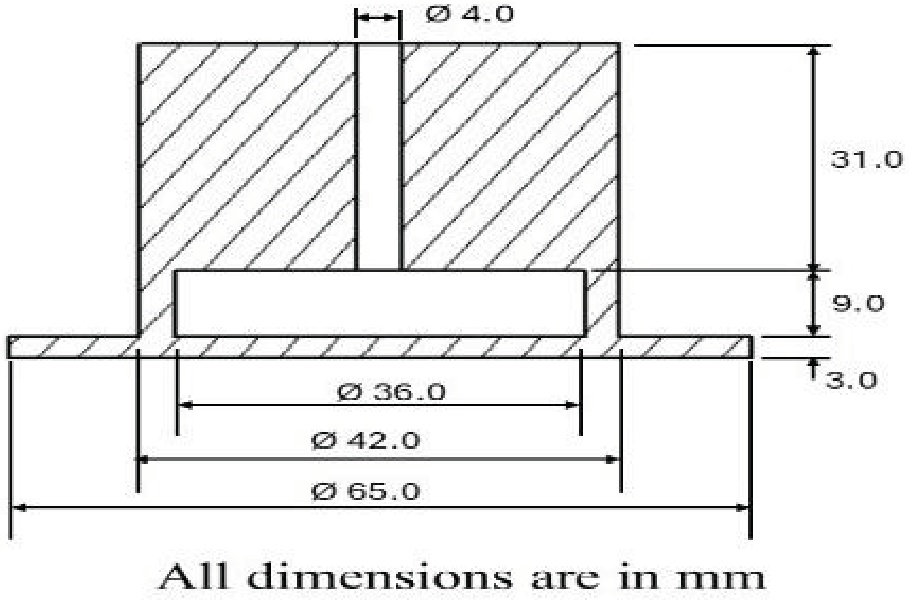
Figure 2.
Measurements of this study’s soft gripper
To fabricate the vacuum soft gripper’s mold was created using a Bambu lab P1S FDM 3D printer and WOL3D PLA filament. Fig. 3 is a photographic representation of the 3D-printed mold. Liquid silicone was poured into the mold and allowed to be cured for 8 hours. Because of its low viscosity, greater flexibility and good elongation, SILOCZEST advanced Liquid Silicone Rubber was used in this study. The hardened soft vacuum gripper was then taken out from the mold for further testing. Fig. 4 shows the resulting soft vacuum gripper. A schematic diagram of the step-by-step procedure adopted in this research is presented in Fig. 5.
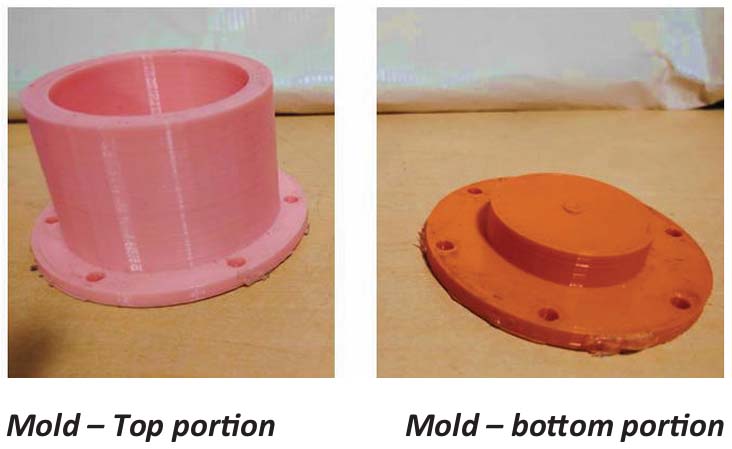
Figure 3.
Pictorial views of the top and bottom portions of the fabricated 3D-printed mold
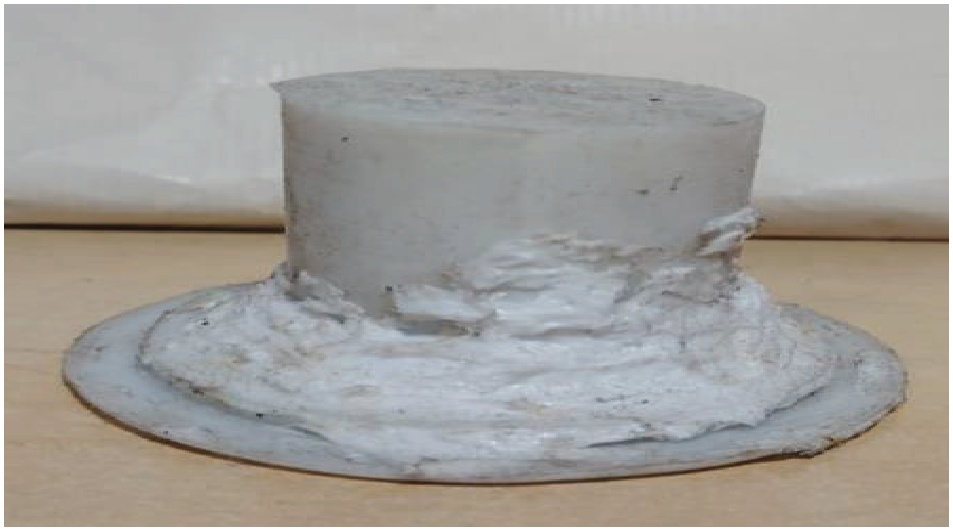
Figure 4.
Fabricated vacuum-actuated soft gripper
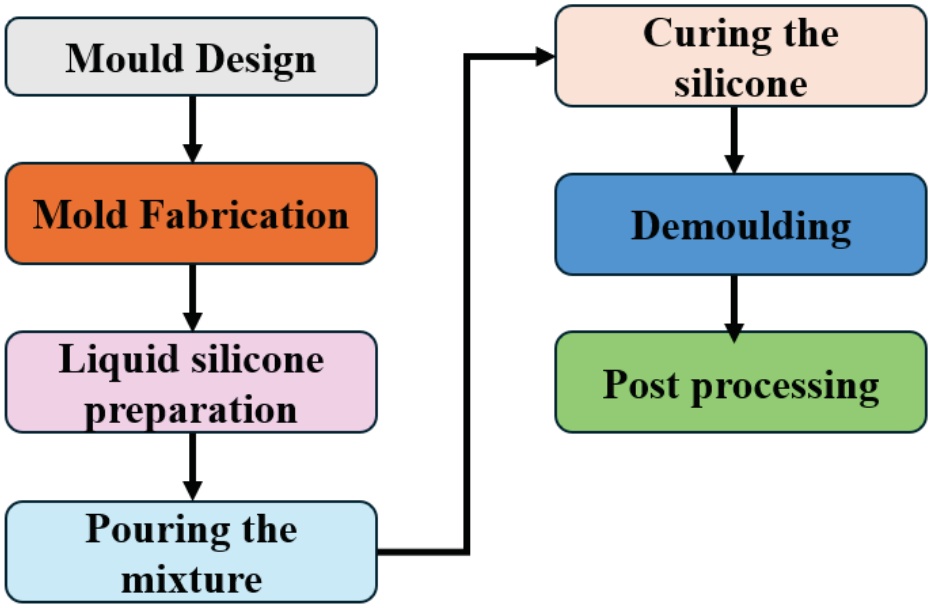
Figure 5.
Step-by-step procedure adopted to fabricate the soft gripper
3. Results and Discussion
Using the ANSYS software, analysis of different pressure variations in the deformation was performed. In order to obtain the most accurate results, the displacement in the outer cylinder surface was assumed to be zero. The model was created in the SolidWorks software, exported in .STEP format, and imported into the ANSYS software for further analysis. In this study, the pressure varied from 10 Pa to 1000 Pa, with increments of 10 Pa applied to the inside surface of the air chamber. Variations in the deformation with respect to pressure are depicted in Fig. 6, which indicates that the gripper surface undergoes nonlinear deflection in relation to pressure. During the first phase (up to 300 Pa), there is a significant rate of deformation with little variations in pressure. This signifies that the material has a soft nature within this pressure range. With an increase in pressure over 300 Pa, the material’s stiffening effect results in a reduced rate of deformation.
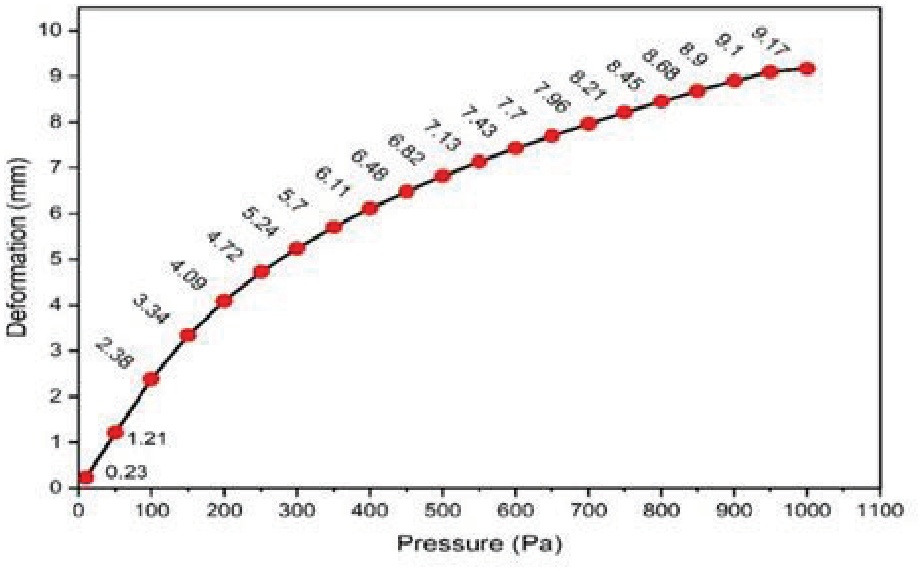
Figure 6.
Variations of deflection of the soft gripper surface with respect to pressure
To evaluate the variation in deflection of the proposed soft vacuum gripper, a simulation was conducted using ANSYS. The series of pictures shown in Fig. 7 illustrates the differences in deflection of the finite element model at different pressures, including 250 Pa, 500 Pa, 750 Pa, and 1000 Pa. The findings indicated that the largest deformation occurs at the middle of the gripper and progressively diminishes towards the edges. This is because the center section of the gripper exhibits significant flexibility relative to the areas adjacent to the vertical wall and the direct pressures exerted at this location. As a result, the maximal deformation is 0.71193 mm at 250 Pa, but it increases substantially to 9.170 mm at 1,000 Pa. When the pressure increases from 250 Pa to 500 Pa, the deformation also increases non linearly from 0.71193 mm to 6.818 mm. A small change in deformation was observed when the pressure increases from 750 Pa to 1000 Pa because of increased material stiffness. The trends of these results are in agreement with those obtained by Tahir et al. [12]
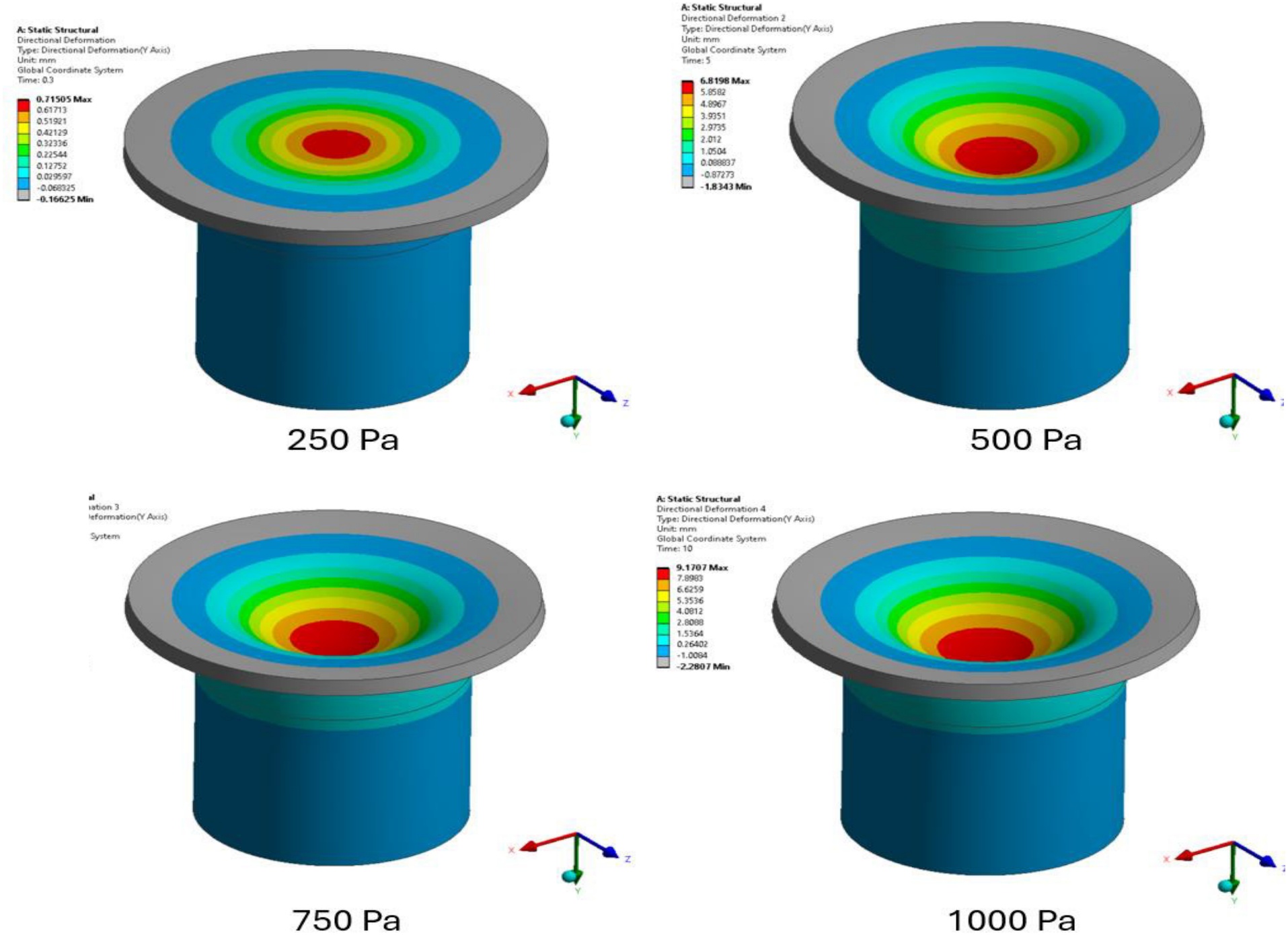
Figure 7.
The variations of deflection of the finite element model at 250Pa, 500Pa, 750 Pa and 1000 Pa
4. Applications of proposed soft gripper
To test the grasping capabilities of the proposed soft gripper, several experiments were conducted with differently shaped and sized objects. Fig. 8 illustrates the grasping capabilities of the designed vacuum gripper. Each image (from a to l) in these figures shows the proposed gripper’s lifting, holding and grasping abilities for the different items, including a water bottle, fruits, plastic plates and stainless-steel utensils. These figures provide the strong evidence of the gasping and holding capacity of the proposed vacuum soft gripper.
In subfigure (a), the vacuum gripper securely holds a plastic bottle (which has a curved surface and elliptical cross-section) for an adequate duration without causing damage to the item. A rectangular plastic bottle weighing about 100 gms was gripped in subfigure (b); the contact surface area of this item is much greater than that of the object seen in subfigure (a), and therefore the retention duration for this item is slightly higher.
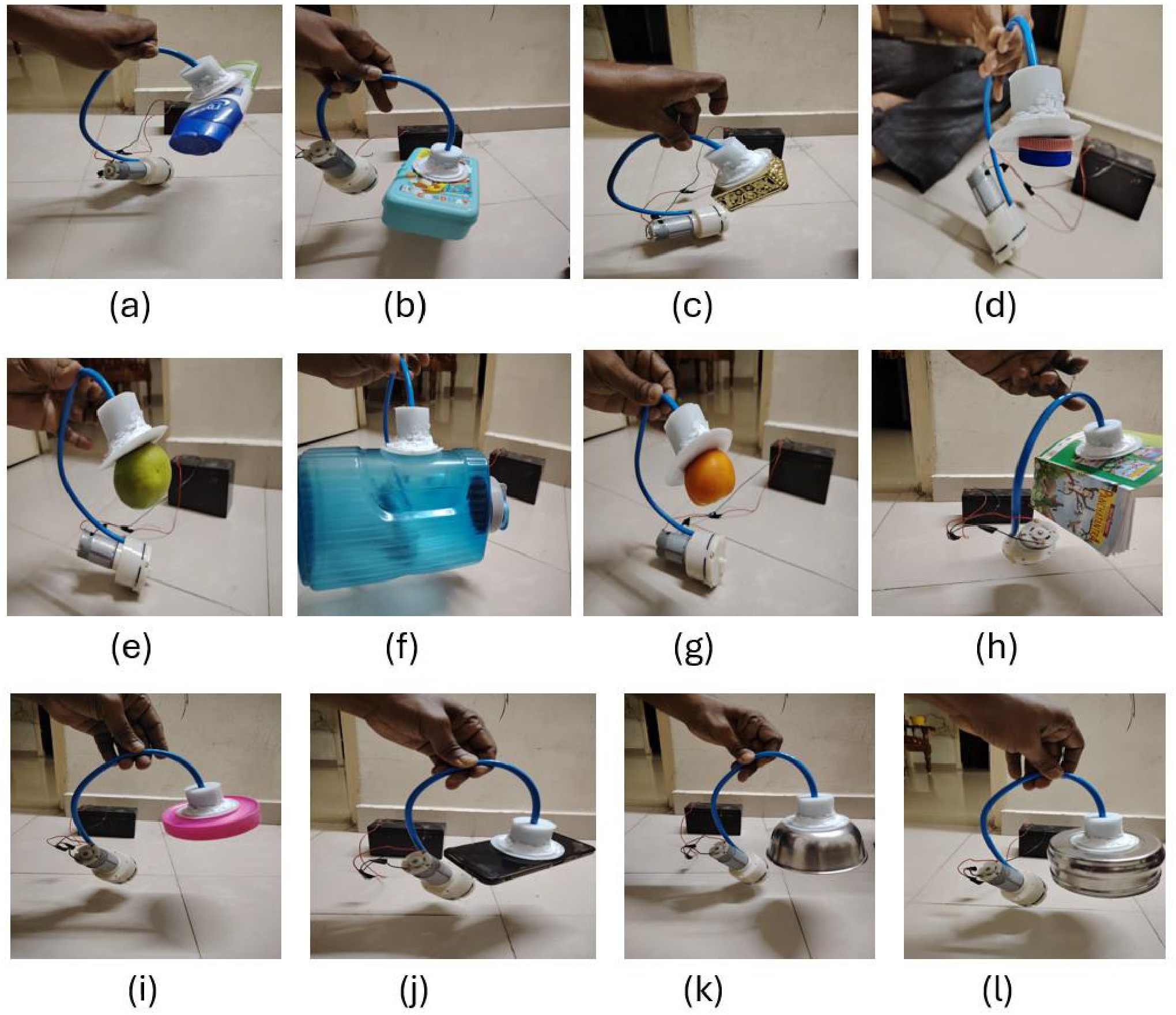
Figure 8.
Applications of the proposed vacuum soft gripper: (a) Grasping plastic bottle; (b) Grasping rectangular plastic box; (c) Grasping jewelry box; (d) Grasping medicine bottle; (e) Grasping mosambi fruit; (f) Graspin empty water bottle; (g) Grasping orange; (h) Grasping book; (i) Grasping plastic bottle cap; (j) Grasping mobile phone; (k) Grasping stainless steel cup; (l) Grasping stainless steel tiffin box
Subfigure (c) depicts the grasping of a textured item, highlighting the gripper’s ability to maintain airtightness despite surface irregularities. Subfigure (d) illustrates the manipulation of a tiny plastic cylindrical container with a flat top surface weighing about 10 gms. Subfigures (e) and (g) illustrate the gasping capabilities of the vacuum gripper for various fruits weighing 200 gms, demonstrating that the gripper securely grasps and retains the fruit using vacuum pressure without causing damage.
Similarly, subfigure (f) demonstrates the gripper’s potential to grasp large, irregularly shaped water bottles, thus confirming its holding stability. Subfigure (j) illustrates the grasping of a mobile phone with flat, smooth surfaces, clearly exhibiting the gripper’s flexibility even when total sealing is difficult. From these figures, it can be clearly understood that the vacuum gripper designed for this study can be used to grasp not only smaller sized objects, bigger-sized, irregularly-shaped objects as well. Hence, this kind of soft robotic gripper has a promising future in many automated industrial applications, where it could grasp objects without any physical damage.
5. Conclusions and Future Works
The main objective of this study was to design and develop a novel cylindrically-shaped vacuum actuated soft gripper using molding and casting fabrication methods. The fabricated gripper was tested in a real-time environment, and the major conclusions can be summarized as follows.
The cylindrically-shaped vacuum-actuated soft gripper was successfully designed using SolidWorks software and fabricated by pouring the liquid silicone and curing agent mixture into the mold cavity.
The designed gripper was analyzed using the ANSYS software, and the results confirmed its nonlinear characteristics under different pressures. In this study, the maximum deflections of about 0.71193 mm, 6.818mm and 9.170 mm were obtained for 250 Pa, 500 Pa and 1000 Pa pressure levels, respectively.
Experimental tests were carried out to validate the gripper’s grasping and holding abilities and to confirm that it can securely grasp the different irregularly-shaped objects without any physical damage.
Due to its compact design and enhanced material flexibility, the proposed gripper is suitable for handling fragile and delicate items, including glass, thin plastic components, lightweight consumer goods, and food and agricultural products, as well as electronic components such as PCBs and medical and surgical instruments. However, as the grasping and holding ability of the proposed vacuum actuated gripper successfully demonstrated, integrating the sensors is one of the most challenging tasks, and identification of another suitable method will be needed.
Future research may focus on improving the performance of this gripper using automated silicone mixing systems, vacuum degassing, multi material printing systems, etc.
ACKNOWLEDGEMENTS
This work was supported SRM Institute of Science and Technology, Kattankulathur, Tamil Nadu, India.
We would like to thank the Selective Research Initiative SERI-”2023”, SRMIST for their financial support