
Table 1.1
Main Components of Ballpoint Inks.31
| Ink Component | Characteristics | Function | Examples |
|---|---|---|---|
| Colorant Material: Dyes | Typically synthetic Soluble in vehicle Could be acidic, basic or solvent | colorant material | Phthalocyanines30 Victory Blue32 Methyl violet Crystal violet |
| Vehicle: Solvents | Glycol-based27 | Flow and drying characteristics | Ethylene glycols23 Glycol ethers Benzyl alcohol |
| Resins | Natural or synthetic high molecular weight | Viscosity adjusters30 Surface active agents | Polyester resins Phenolic resins32 |
| Oils | Drying or nondrying or a combination | Oleic acid23 | |
| Additives Materials | Contain a variety of materials | Optimizing certain properties such as brittleness, stability, wetting and flexibility of ink | Solvents inorganic salts hydrocarbon waxes |
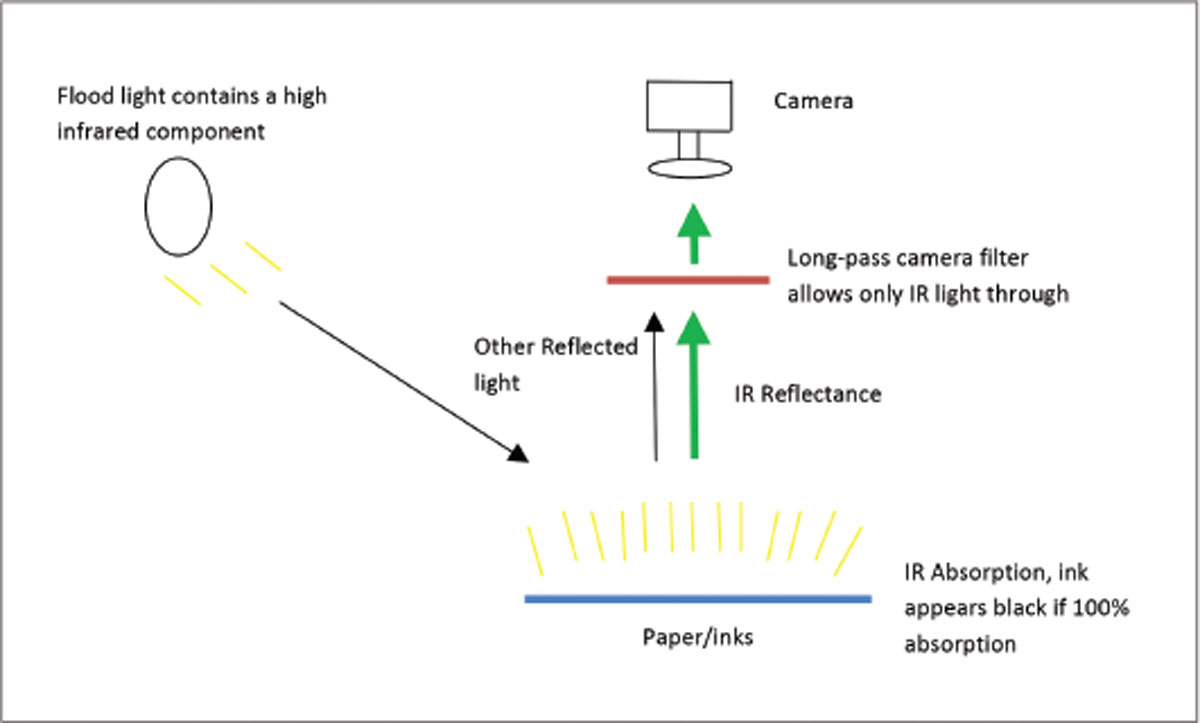
Figure 1.1.
Infrared Reflectance/absorbance.
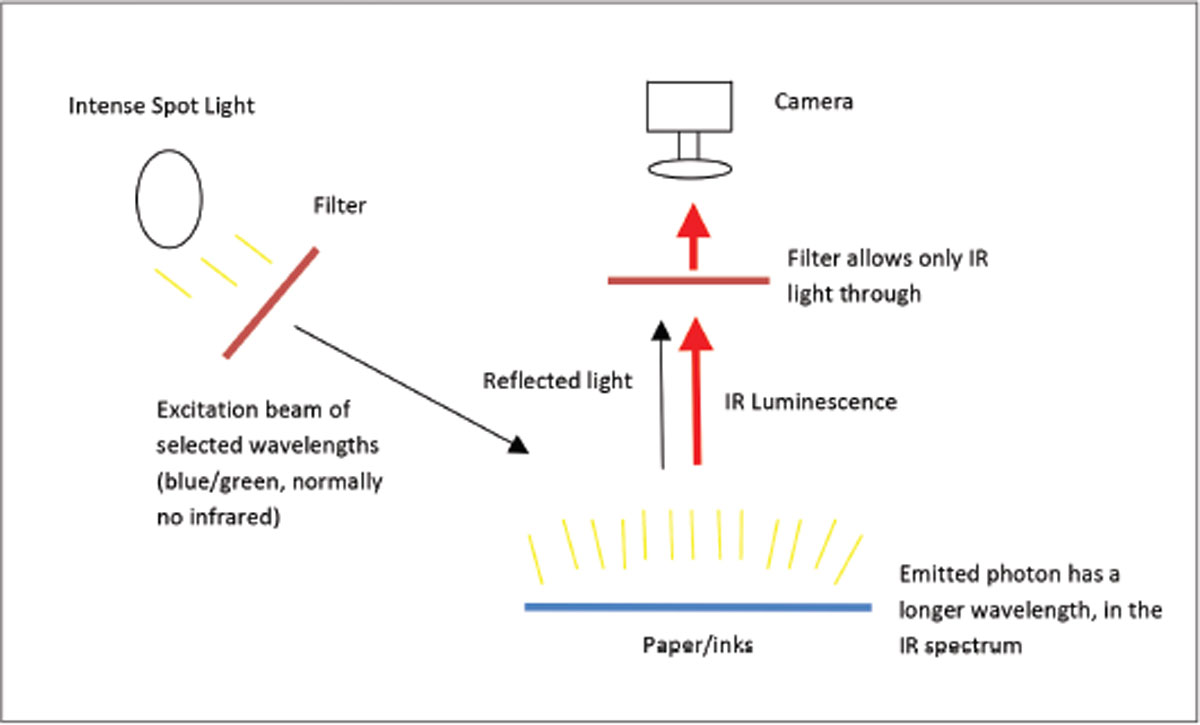
Figure 1.2.
Infrared Luminescence.
Table 2.1
Blue ballpoint pens used in the study.
| Pen Code | Description |
|---|---|
| bb1 | BIC ECOlutions Clic Stic Medium Blue BP |
| bb2 | Uni Power Tank Retract BP 1.0mm |
| bb3 | Papermate 4 Ball, Business RT BP 1mm |
| bb4 | BIC 4 Colour Ball Pen 1.0mm |
| bb5 | Papermate InkJoy 100RT 1.0 M |
| bb6 | Uni Laknock Ret BP 0.7mm Fine |
| bb7 | Pilot Supergrip Fine Blue |
| bb8 | Stabilo Liner 308 Ret BP Med |
| bb9 | BIC Cristal M |
| bb10 | Pilot Begreen 1.0mm |
| bb11 | BIC Yellow Barrel |
| bb12 | FBP Fashion Ballpens Display of 24 |
| bb13 | Pen Inspire Fashion Brights Asst Designs |
| bb14 | Uni Pen Power Tank Eco Blue Medium 1MM |
| bb15 | Stabilo liner 808 Fine |
| bb16 | Zebra Surari Emulsion 0.7mm |
| bb17 | Zebra Jim Knock ASST 0.7mm |
| bb18 | Impact retractable ASST 0.7mm |
| bb19 | Zebra Z-1 Cap 1.0mm |
| bb20 | Artline clix 4 1.0mm |
| bb21 | Artline Flow 1.0mm |
| bb22 | Staedtler 422 Click Ballpoint Pen |
| bb23 | Staedtler 432M Ballpoint TRI Pen BL |
| bb24 | RNZPC Training Services |
| bb25 | Bank of New Zealand |
| bb26 | Pentel BK 101M Superb G |
| bb27 | Kirk Motors |
| bb28 | Workplace New Zealand |
| bb29 | Mainzeal Interiors |
| bb30 | The Devon New Plymouth |
Table 2.2
Black ballpoint pens used in the study.
| Pen Code | Description |
|---|---|
| kb1 | Papermate InkJoy 700 RT 1.0 M |
| kb2 | Uni Power Tank 0.7 |
| kb3 | Papermate 4 Ball, Business RT BP 1mm |
| kb4 | BIC 4 Colour Ball Pen 1.0mm |
| kb5 | Papermate InkJoy 100RT 1.0 M |
| kb6 | Uni Laknock Ret BP 0.7mm Fine |
| kb7 | Pilot Super Grip M |
| kb8 | Stabilo Liner 308 Ret BP Med |
| kb9 | Papermate InkJoy 300 RT 1.0 M |
| kb10 | Pilot BPS-GP F |
| kb11 | BIC Click Med Gray Barrel |
| kb12 | Papermate FlexGrip Elite M |
| kb13 | Bic Wellington Parkroyal |
| kb14 | CENTRA Rally |
| kb15 | Stabilo liner 808 Fine |
| kb16 | Zebra Surari Emulsion 0.7mm |
| kb17 | Zebra Jim Knock ASST 0.7mm |
| kb18 | Impact retractable ASST 0.7mm |
| kb19 | Zebra Z-1 Cap 1.0mm |
| kb20 | Artline clix 4 1.0mm |
| kb21 | Thunder Bay Police Force |
| kb22 | Staedtler 422 Click |
| kb23 | Brink |
| kb24 | Securency International PTY LTD |
| kb25 | Bic Te Papa Our Place |
| kb26 | Pentel BK 101M Superb G |
| Kb27 | Dangerous Goods WTR |
| kb28 | Cleveland Indians TM |
| kb29 | US Postal Inspection service |
| kb30 | Cross |
Table 2.3
Paper substrates used in the paper substrate study.
| Brand | Make | Description |
|---|---|---|
| EXP | Green 50R | 50% recycled A4 80 GSM white copy paper |
| Officemax | Multipurpose plus | 80 GSM A4 white copy paper |
| APRIL Fine Paper | Excellent copy paper | A4 80 GSM white |
| REFLEX | Ultra white carbon neutral | A4 80 GSM white |
| Staples | Staples A4 copy paper | A4 80 GSM white |
| Sapphire offset | A4 copy paper | A4 150 GSM white paper |
| Mondi | Color copy | A4 160 GSM white paper |
| Mataura | Copier paper | A4 80 GSM yellow paper |
| Mataura | Copier paper | A4 80 GSM blue paper |
| Mataura | Copier paper | A4 80 GSM pink paper |
| Mataura | Copier paper | A4 80 GSM green paper |
Table 2.4
Selected spot light filters used and the corresponding default cut-off wavelength (camera filter).
| Spot Light Filter Excitation Wavelengths (nm) | Camera Filter Default Cut-off Wavelength (nm) |
|---|---|
| 400-485, 400-535, 445-570, 485-590, 485-610 | 645 |
| 515-640 | 695 |
| 545-675 | 725 |
| 585-720, 605-730, 645-800 | 830 |
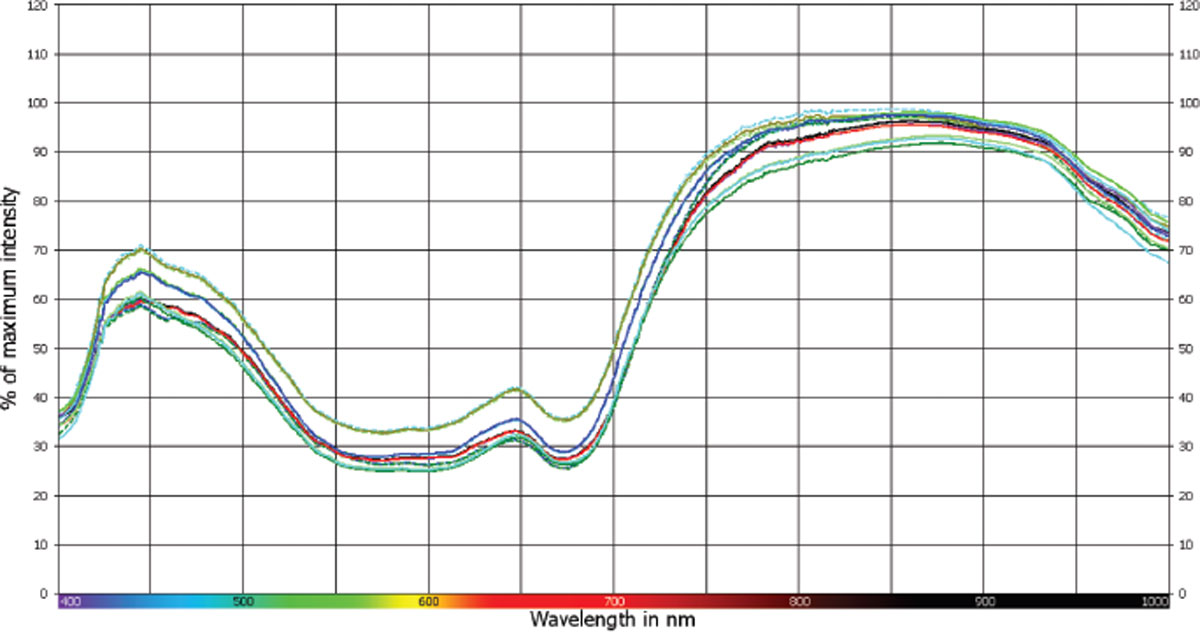
Figure 3.1
Triplicate reflectance spectra from 5 different areas of the same ink line (bb9).
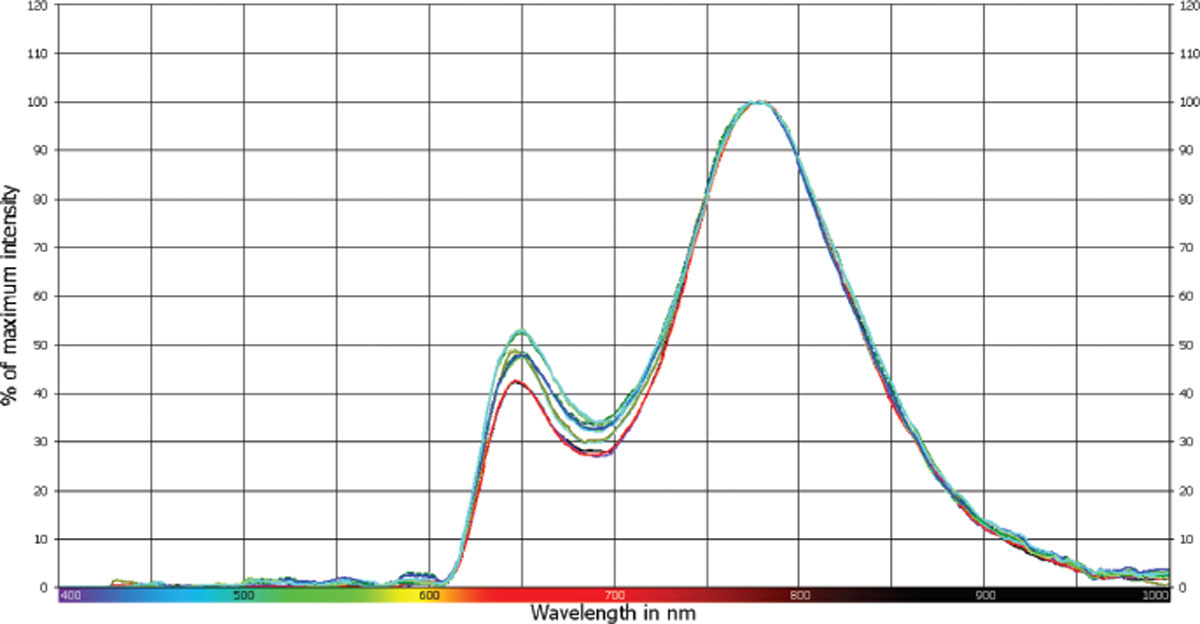
Figure 3.2
Triplicate infrared luminescence spectra from 5 different areas of the same ink line (bb11).
Table 3.1
Groups of blue ballpoint pens based on the visual assessment of luminescence behavior.
| Group | Pen Code (bb) | Luminescence Behavior as the excitation wavelengths increase |
|---|---|---|
| 1 | 4, 6, 9, 12, 13, 17, 18, 19, 20, 28, 29 | No Luminescence across the full range of the excitation wavelengths |
| 2 | 1, 3, 5, 8, 15, 21, 22, 24, 27, 30 | Strong Luminescence across the full range of the excitation wavelengths |
| 3 | 23, 25, 26 | Light luminescence across the full range of the excitation wavelengths |
| 4 | 2, 7, 10, 11, 14, 16 | Luminescence gradually increased |
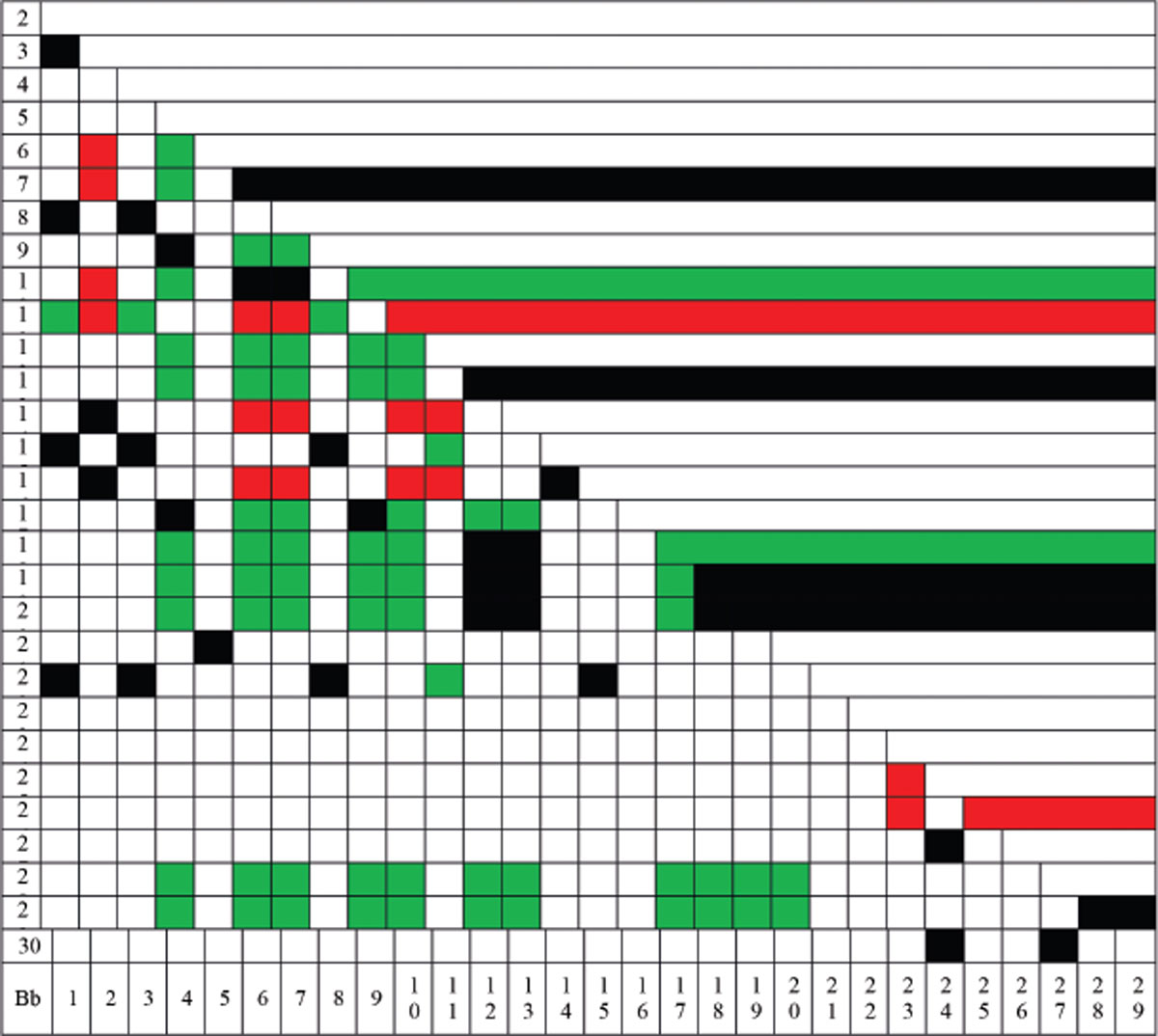
Figure 3.3
Differentiation of blue ballpoint by means of applied methods.
Table 3.2
Groups of blue ballpoint pens based on VSC6000HS reflectance and luminescence spectroscopy.
| Group | Pen Code (bb) |
|---|---|
| 1 | 1, 3, 8, 15, 22 |
| 2 | 4, 9, 17 |
| 3 | 6, 7, 10 |
| 4 | 2, 14, 16 |
| 5 | 11 |
| 6 | 23 |
| 7 | 25 |
| 8 | 26 |
| 9 | 5, 21 |
| 10 | 24, 27, 30 |
| 11 | 28, 29 |
| 12 | 12, 13, 18, 19, 20 |
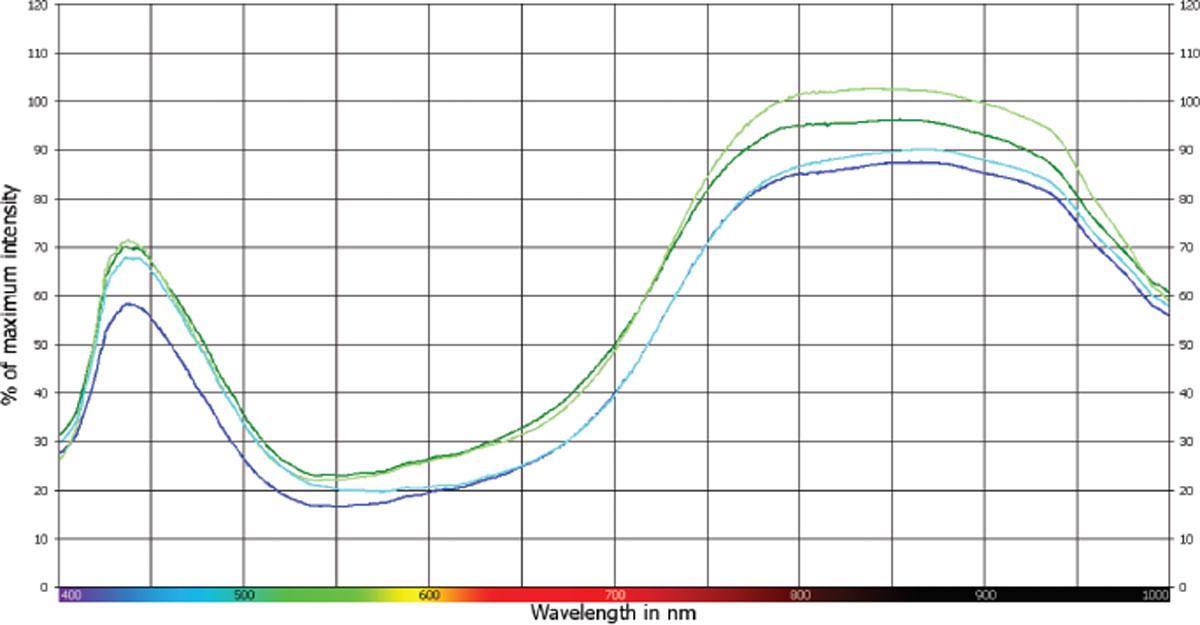
Figure 3.4
Reflectance spectra of bb1, 3, 8 and 15 (examples of undistinguishable pairs).
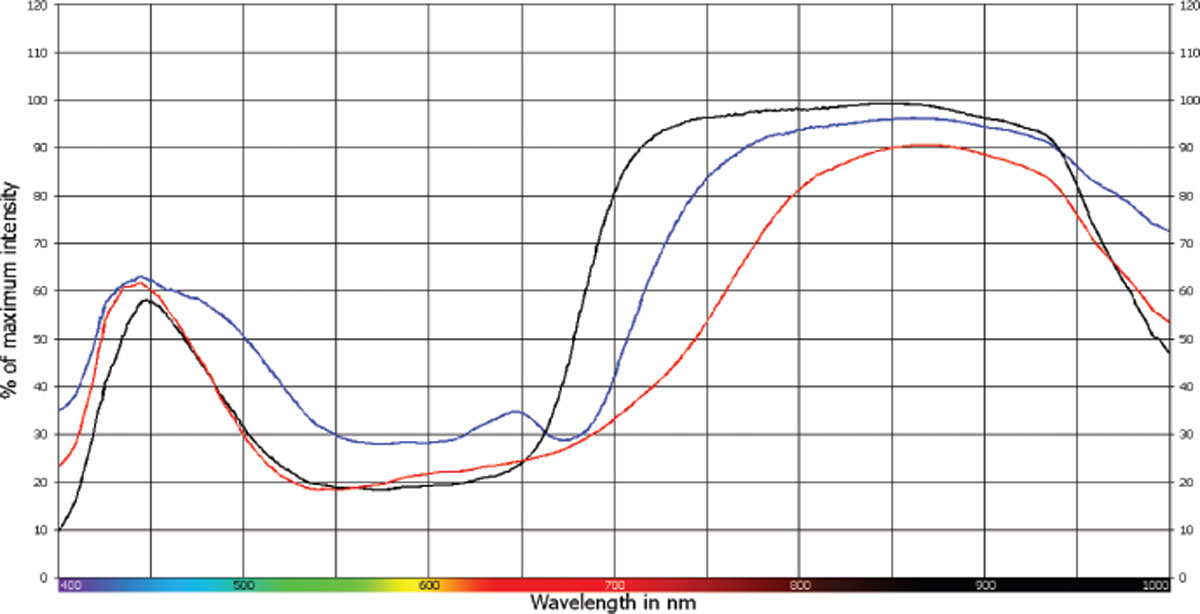
Figure 3.5
Reflectance spectra of bb2, 5 and 9 (an example of distinguishable pairs).
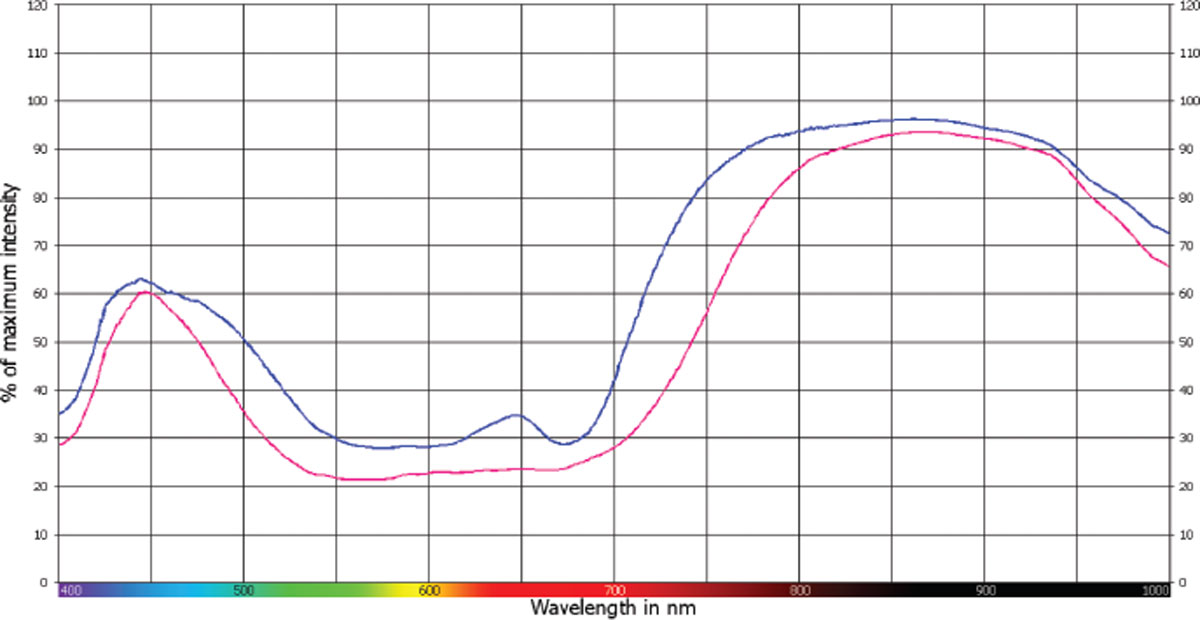
Figure 3.6
Reflectance spectra of bb6 and 9—ink lines that had no luminescence but were discriminated by reflectance spectroscopy.
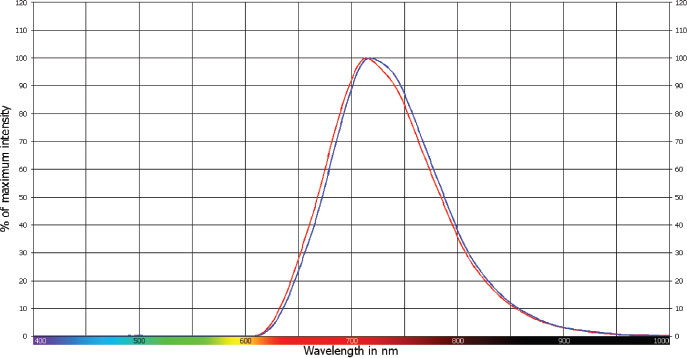
Figure 3.7
Luminescence spectra of bb24 and 27 (an example of undistinguishable pairs).
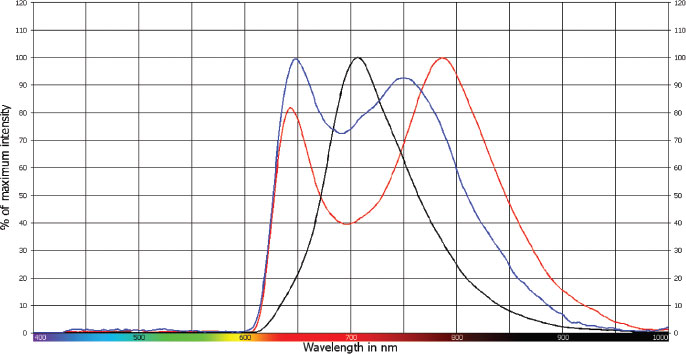
Figure 3.8
Luminescence spectra of bb14, 21 and 26 (an example of distinguishable pairs).
Table 3.3
Groups of black ballpoint pens based on luminescence Behavior.
| Group | Pen Code (kb) | Luminescence Behavior as the excitation wavelengths increase |
|---|---|---|
| 1 | 2, 3, 6, 7, 10, 17, 21, 29, 30 | No Luminescence across the full range of the excitation wavelengths |
| 2 | 11, 14, 18, 20 | Strong Luminescence across the full range of the excitation wavelengths |
| 3 | 26 | Light luminescence across the full range of the excitation wavelengths |
| 4 | 13, 19, 22, 23, 24, 28 | Luminescence gradually increases |
| 5 | 1, 4, 5, 8, 9, 12, 15, 16, 25, 27 | Irregular luminescence behavior as the wavelength increases |
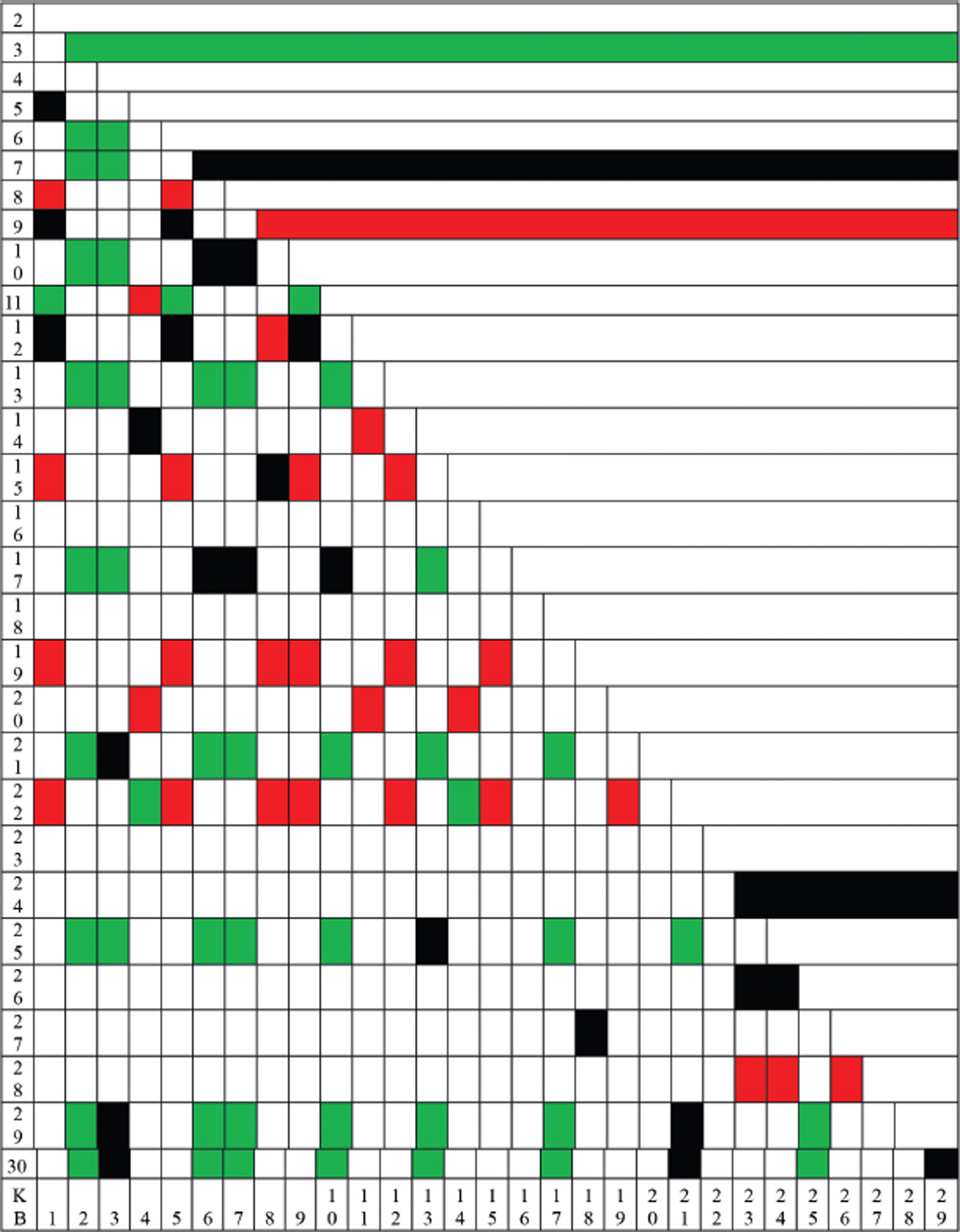
Figure 3.9
Differentiation of black ballpoint by means of applied methods.
Table 3.4
Groups of black ballpoint pens based on VSC6000HS reflectance and luminescence spectrometry.
| Group | Pen Code (kb) |
|---|---|
| 1 | 3, 21, 29, 30 |
| 2 | 2 |
| 3 | 13, 25 |
| 4 | 1, 5, 9, 12 |
| 5 | 8, 15 |
| 6 | 19 |
| 7 | 22 |
| 8 | 6, 7, 10, 17 |
| 9 | 11 |
| 10 | 4, 14 |
| 11 | 20 |
| 12 | 18, 27 |
| 13 | 23, 24, 26 |
| 14 | 28 |
| 15 | 16 |
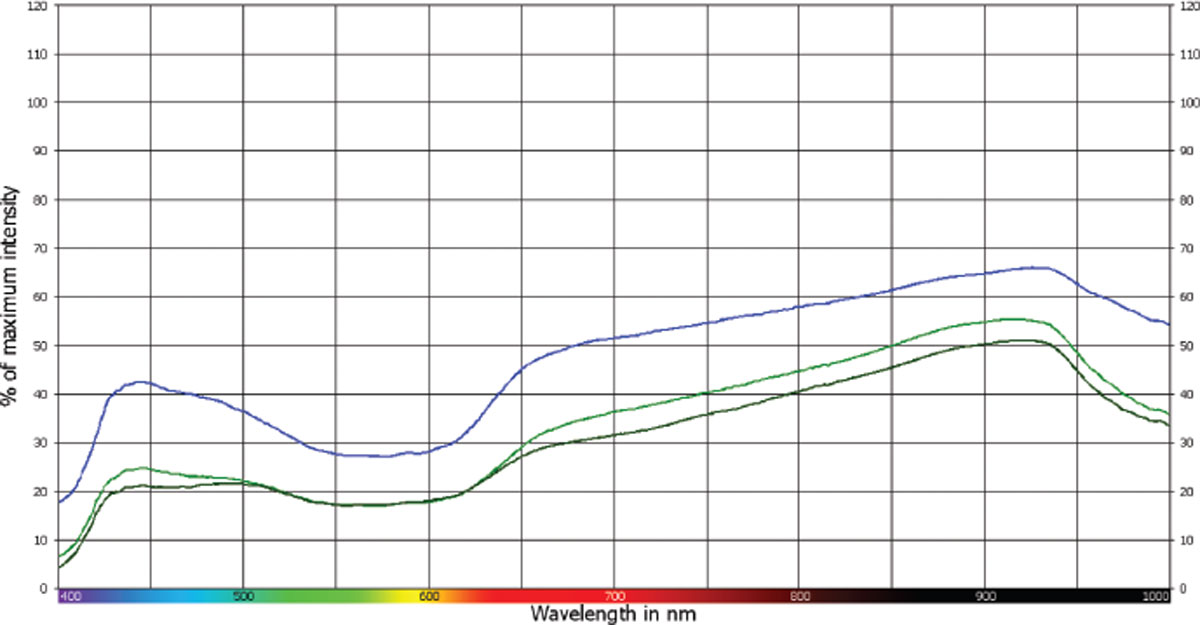
Figure 3.10
Reflectance spectra of kb21, 29 and 30 (an example of undistinguishable pairs).
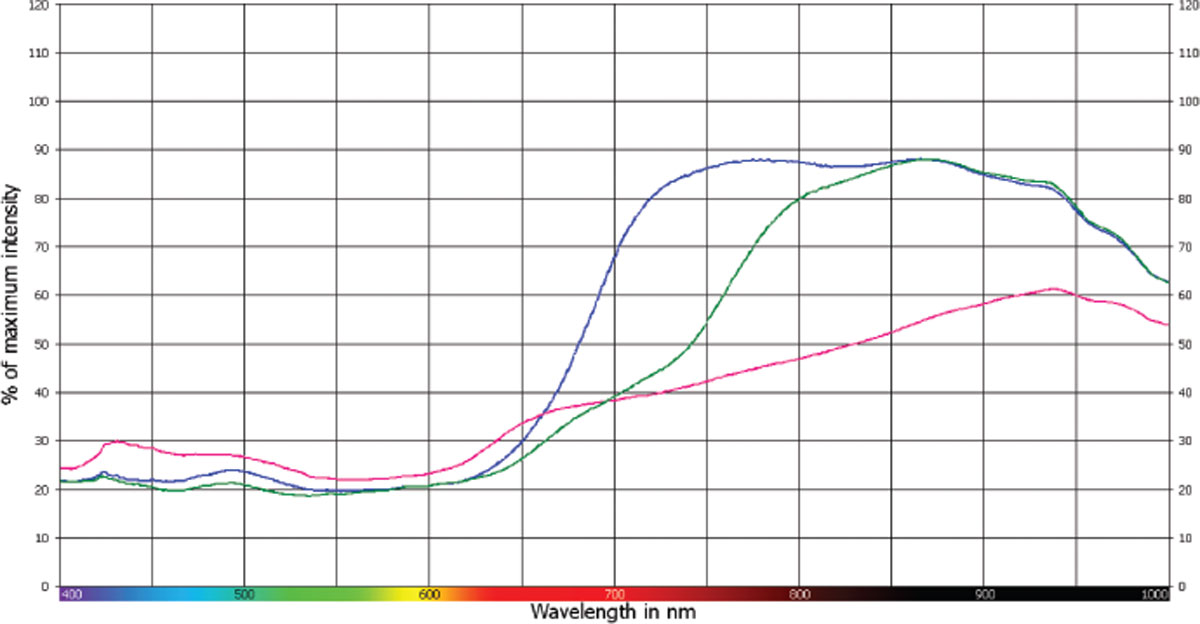
Figure 3.11
Reflectance spectra of kb2, 3 and 6 (an example of distinguishable pairs).
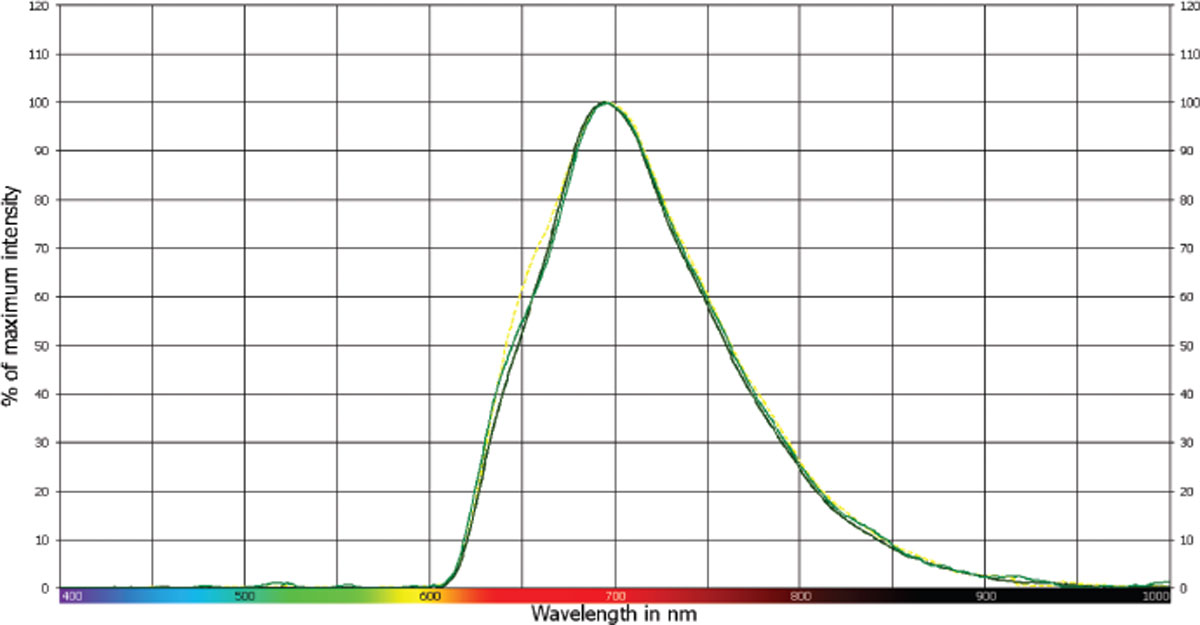
Figure 3.12
Luminescence spectra of kb4, 14 and 22 (an example of undistinguishable pairs).
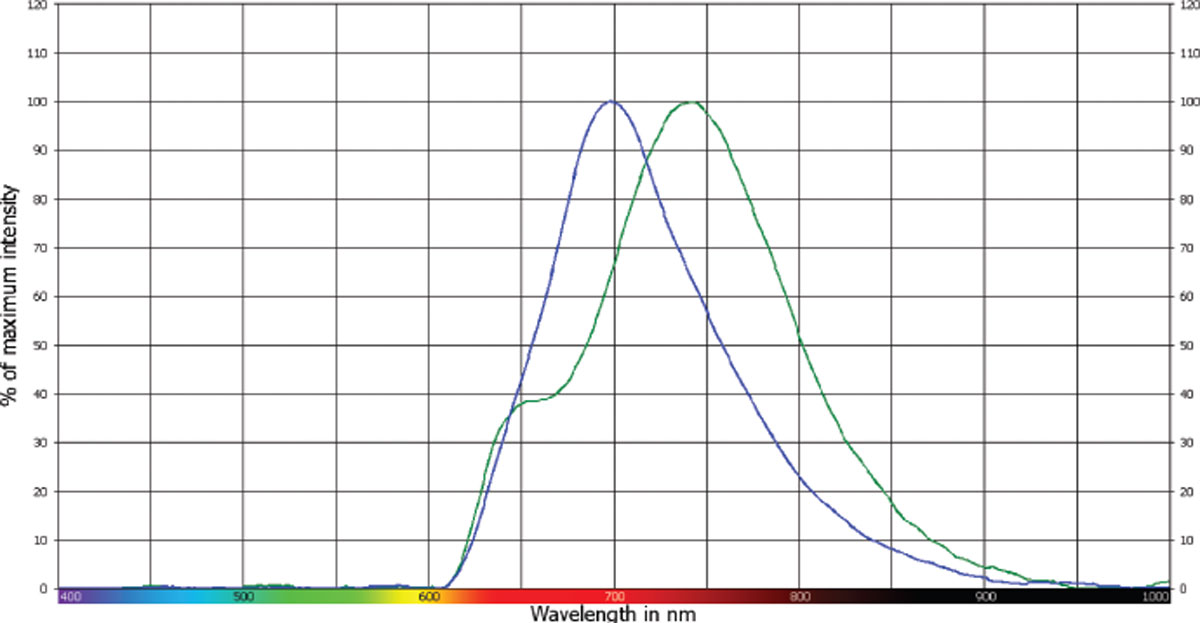
Figure 3.13
Luminescence spectra of kb11 and 18 (an example of distinguishable pairs).
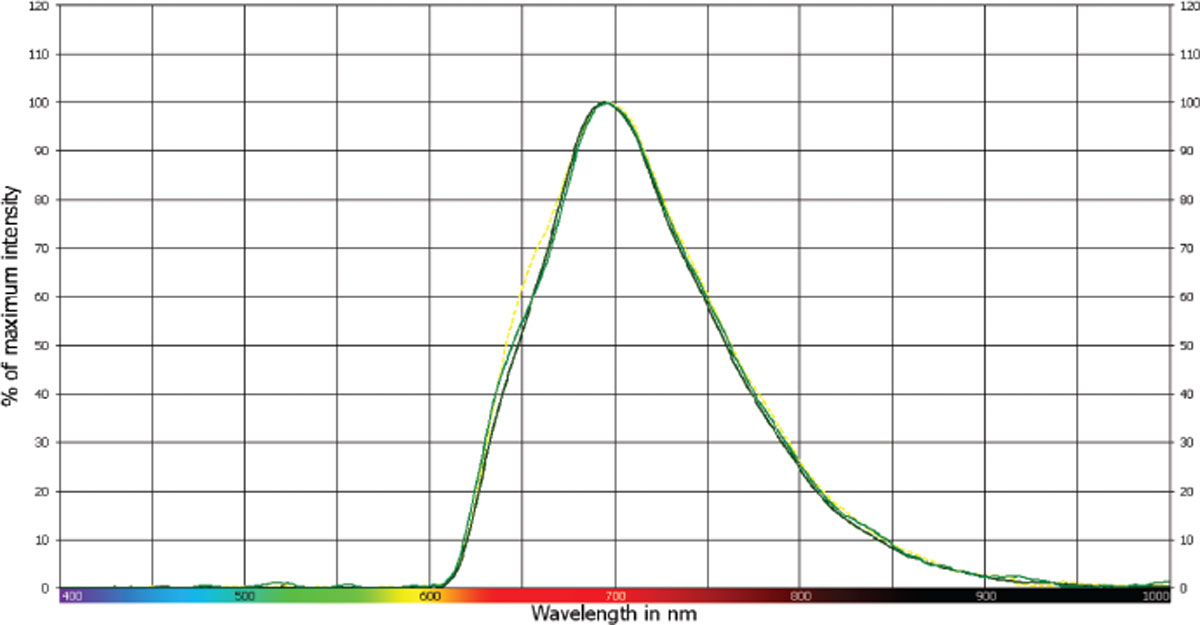
Figure 3.14
Reflectance spectra of a blue ink on two different white paper substrates (Mondi and EXP Green).
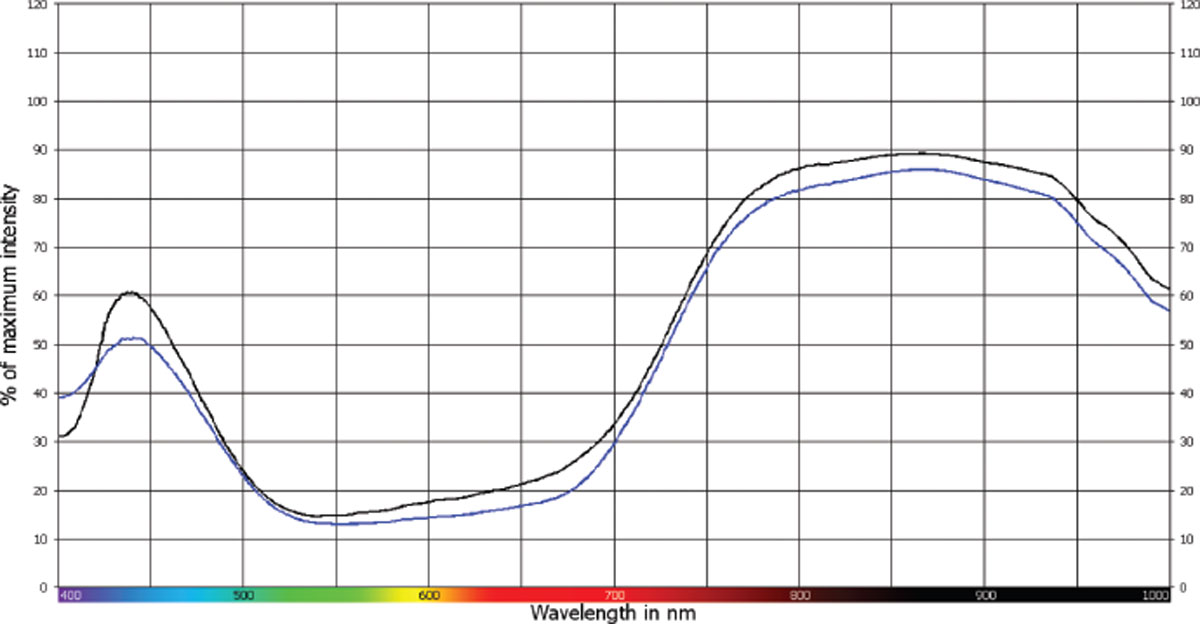
Figure 3.15
Reflectance spectra of the blue ink on a white paper substrate (black line) and a blue paper substrate (blue line).
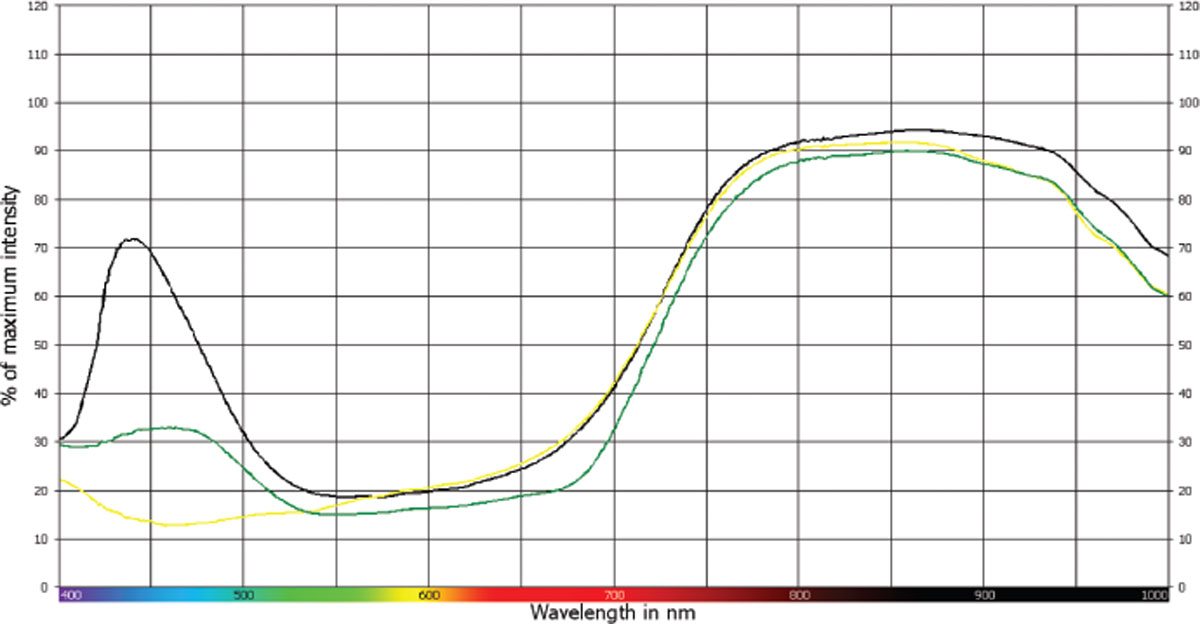
Figure 3.16
Reflectance spectra of the blue ink on a white paper substrate (black line), a yellow paper substrate (yellow line) and a green paper substrate (green).
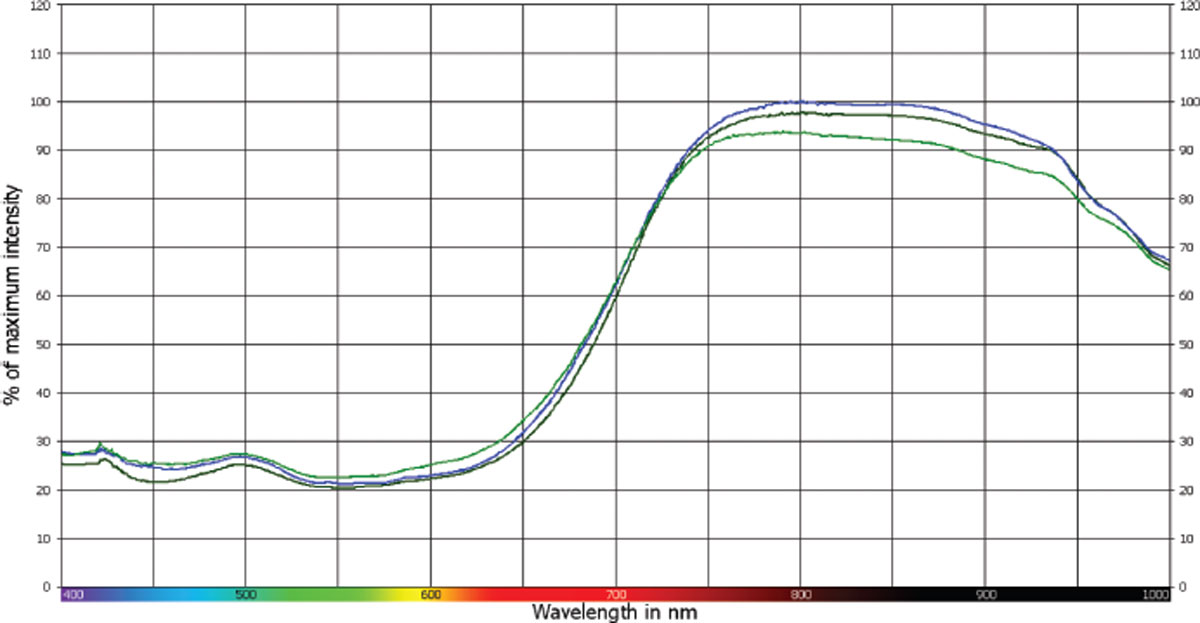
Figure 3.17
Reflectance spectra of the black ink on 3 different white paper substrates.
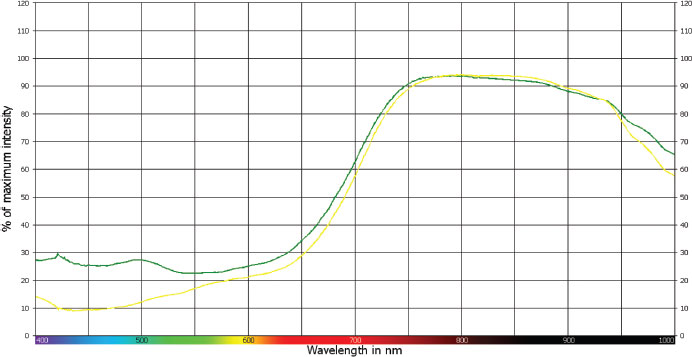
Figure 3.18
Reflectance spectra of the black ink on a white paper substrate (green line) and a yellow paper substrate (yellow line).
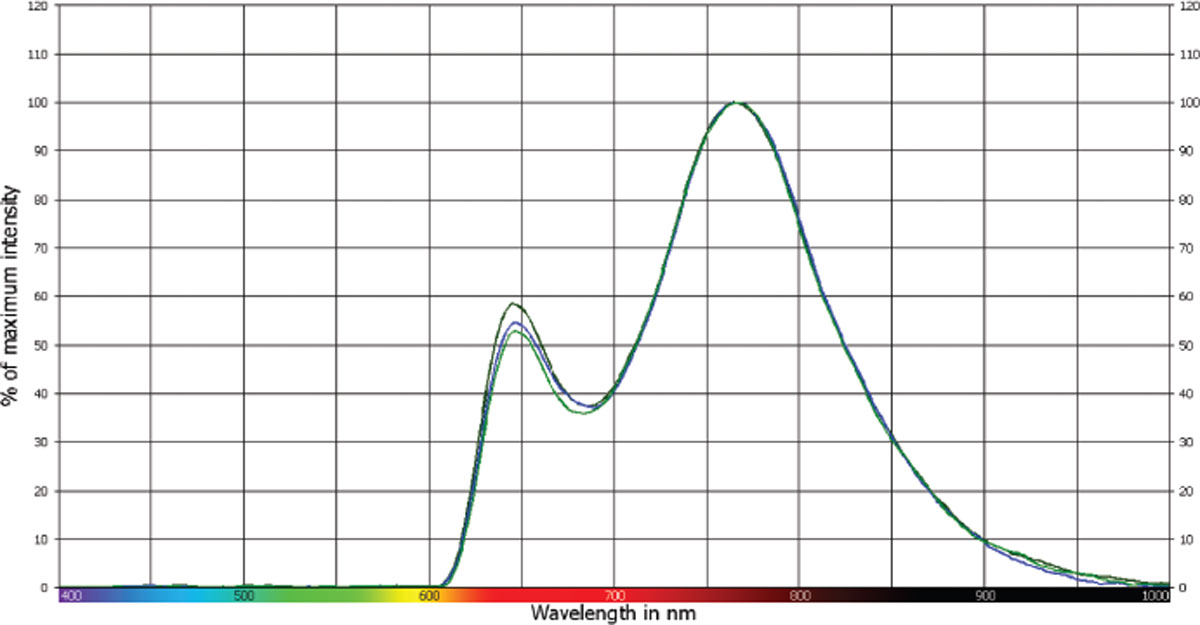
Figure 3.19
Luminescence spectra of the blue ink on 3 different white paper substrates.
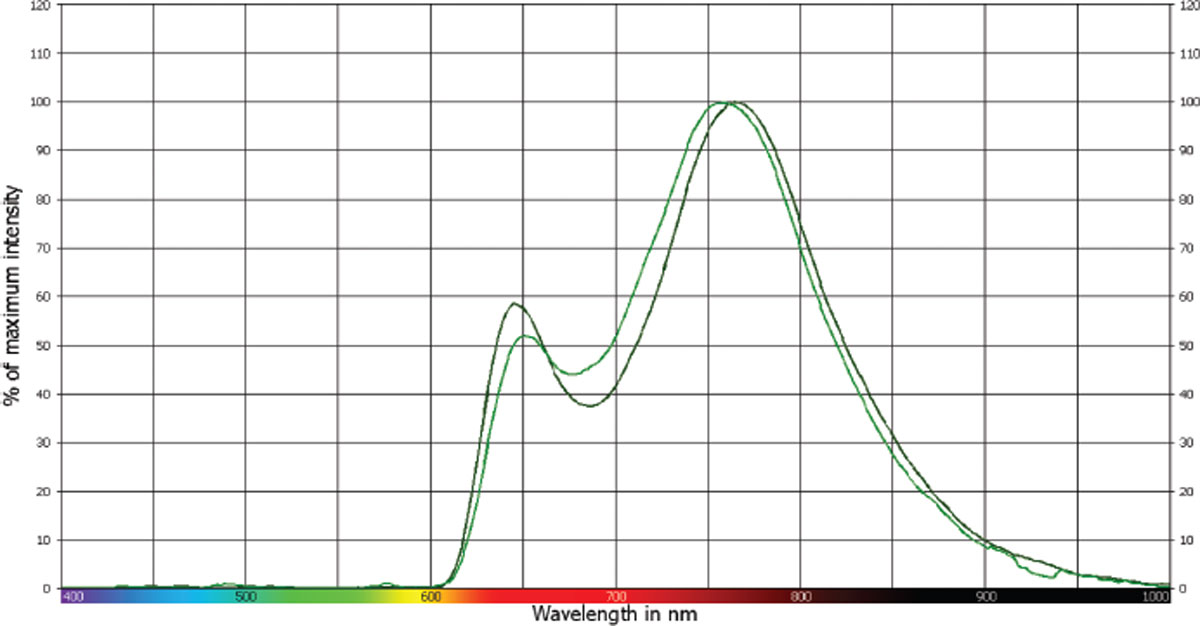
Figure 3.20
Luminescence spectra of the blue ink on “Staples” white paper substrate (black line) and “EXP Green” white paper substrate (green line).
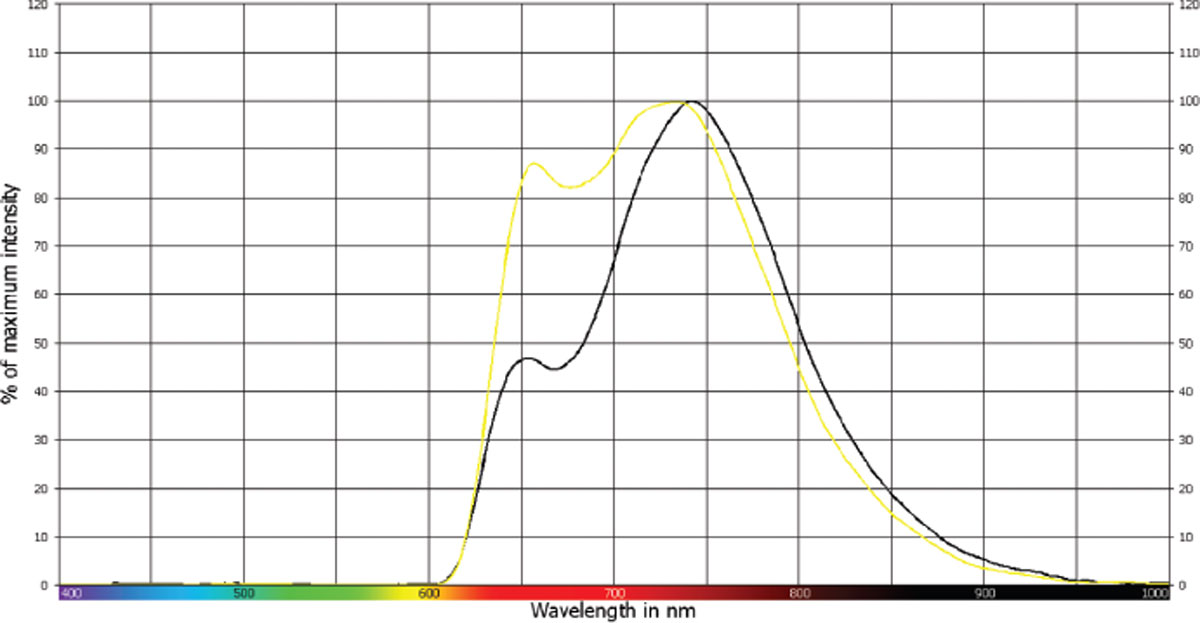
Figure 3.21
Luminescence spectra of the blue ink on a white paper substrate (black line) and a yellow paper substrate (yellow line).
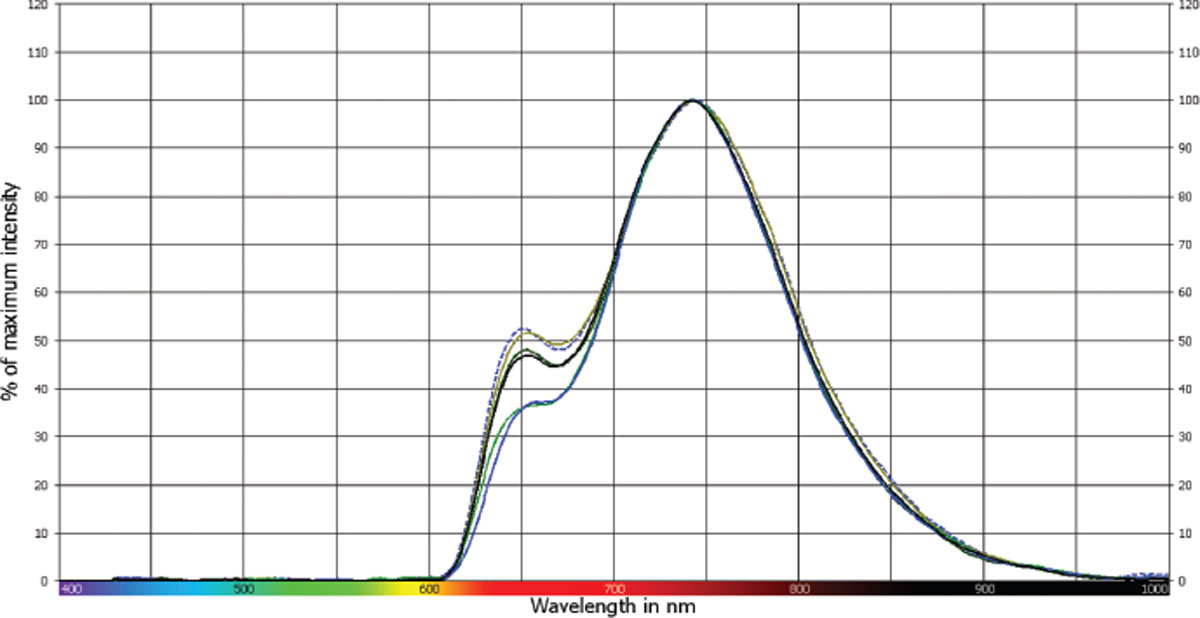
Figure 3.22
Luminescence spectra of the black ink on 6 different white paper substrates.
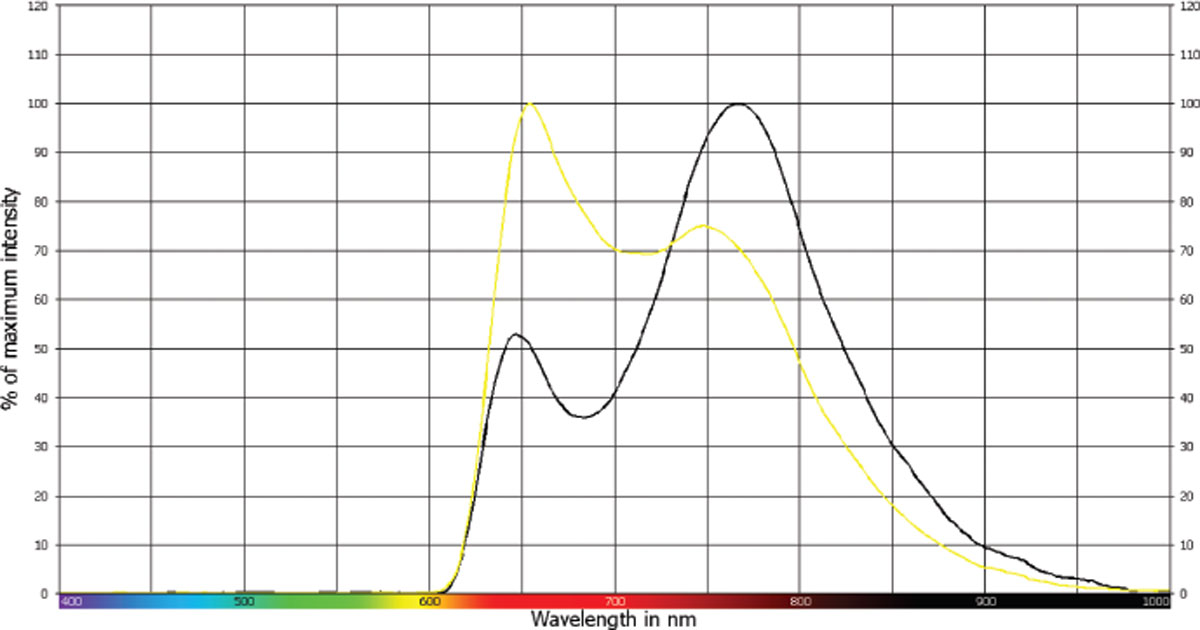
Figure 3.23
Luminescence spectra of the black ink on a white paper substrate (black line) and a yellow paper substrate (yellow line).
Table 3.7
A summary of the paper substrate study’s results. Did the paper type affect the spectra obtained in comparison to a standard white “Staples” A4 paper?
| Paper type | Reflectance spectra | Luminescence spectra | ||
|---|---|---|---|---|
| Blue ink line | Blue ink line | Blue ink line | Blue ink line | |
| EXP (50% recycled) | No | No | Yes | No |
| Officemax | No | No | No | No |
| APRIL Fine Paper | No | No | No | No |
| REFLEX | No | No | No | No |
| Staples | No | No | No | No |
| Sapphire offset | No | No | No | No |
| Mondi | No | No | No | No |
| Mataura (blue) | No | No | Yes | Yes |
| Mataura (pink) | No | No | Yes | Yes |
| Mataura (green) | Yes | No | Yes | Yes |
| Mataura (yellow) | Yes | Yes | Yes | Yes |