
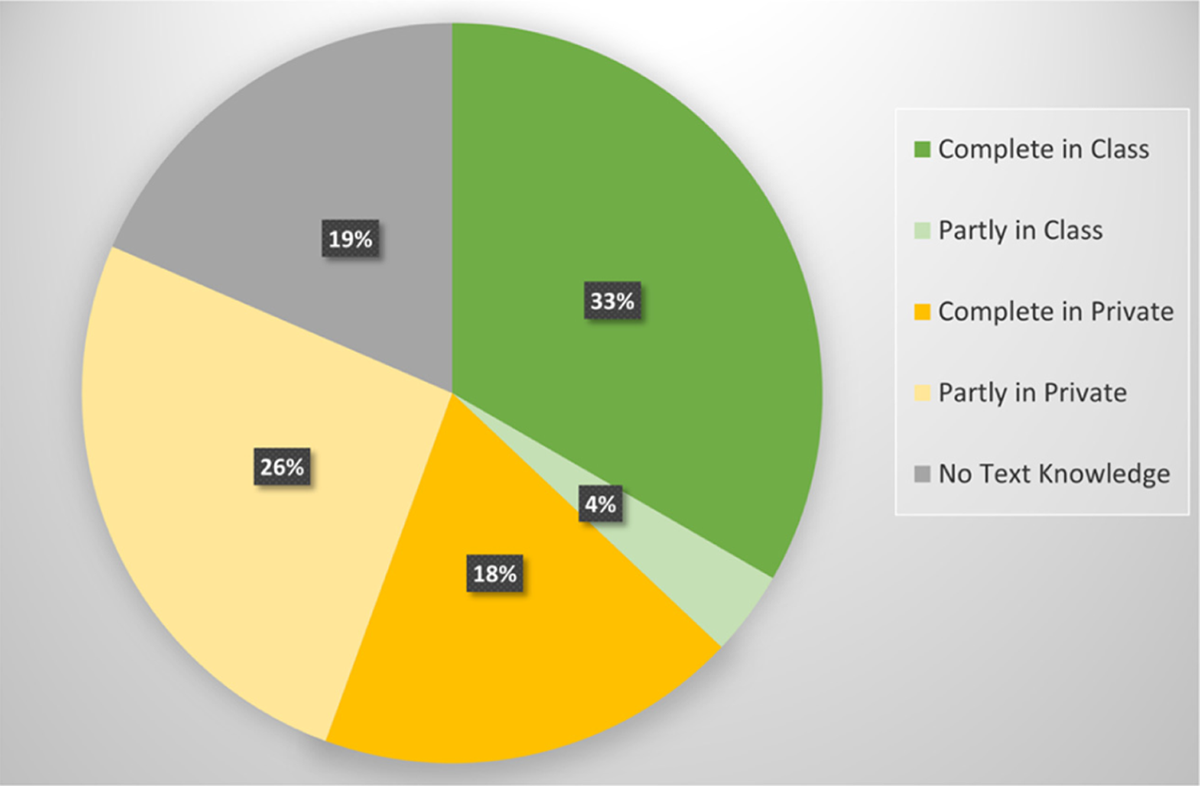
Figure 1
Proportions of Students per Text Engagement Group.
Table 1
Coding Instructions for Thematic Categories in Students’ Interpretations of the Textual Message.
| THEMATIC CATEGORIES | CODING INSTRUCTION |
|---|---|
| Historical classification | Select this option if the message provides a historical classification or a call to remember certain historical events. |
| Human psyche | Select this option if the message refers to human psychological mechanisms in general or to people’s internal processes. Exception: Trauma (this has its own category). |
| Trauma | Select this option if the message (explicitly/implicitly) refers to psychological disorders or trauma or addresses the psychological processing of negative life events. |
| Chess | Select this option if the message refers to the game of chess or chess players. |
| Worldly Wisdom | Select this option if the message is in the form of only slightly modified, very general platitudes. |
| No message | Select this option if the participant states that they cannot give a message or leaves the field blank. |
| Theme not message | Select this option if the statement is not a message, but at most names the topic or theme of the text. |
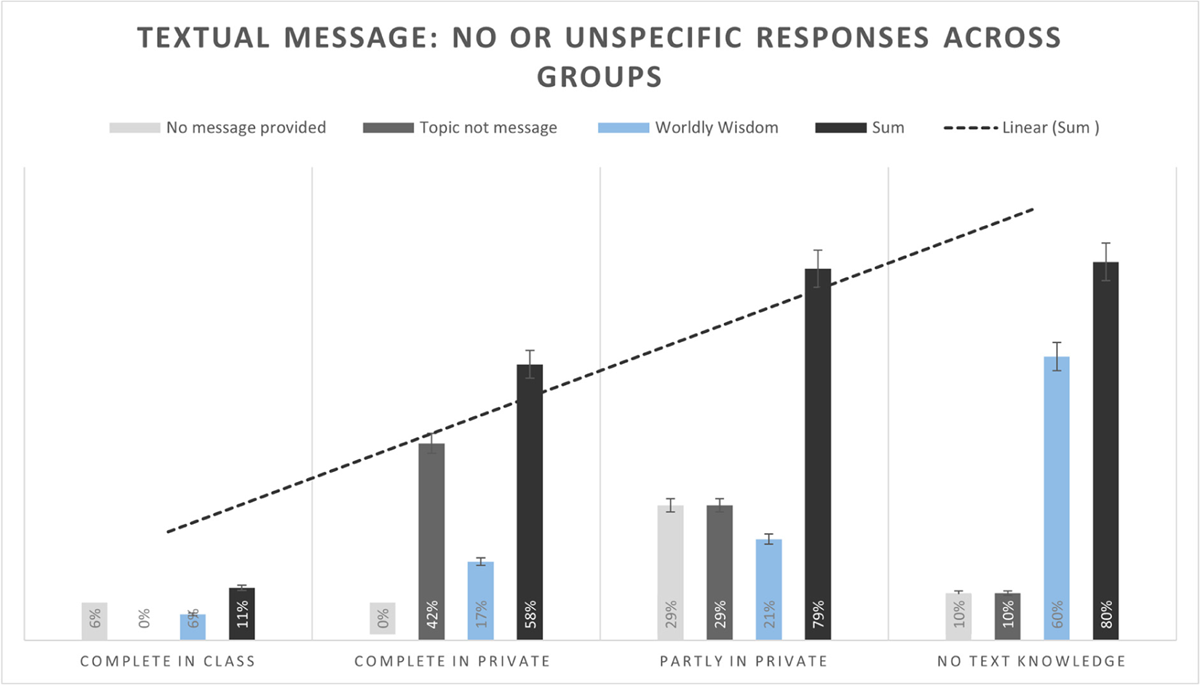
Figure 2
No or Unspecific Responses to the Question of Textual Message Across Text Engagement Groups.
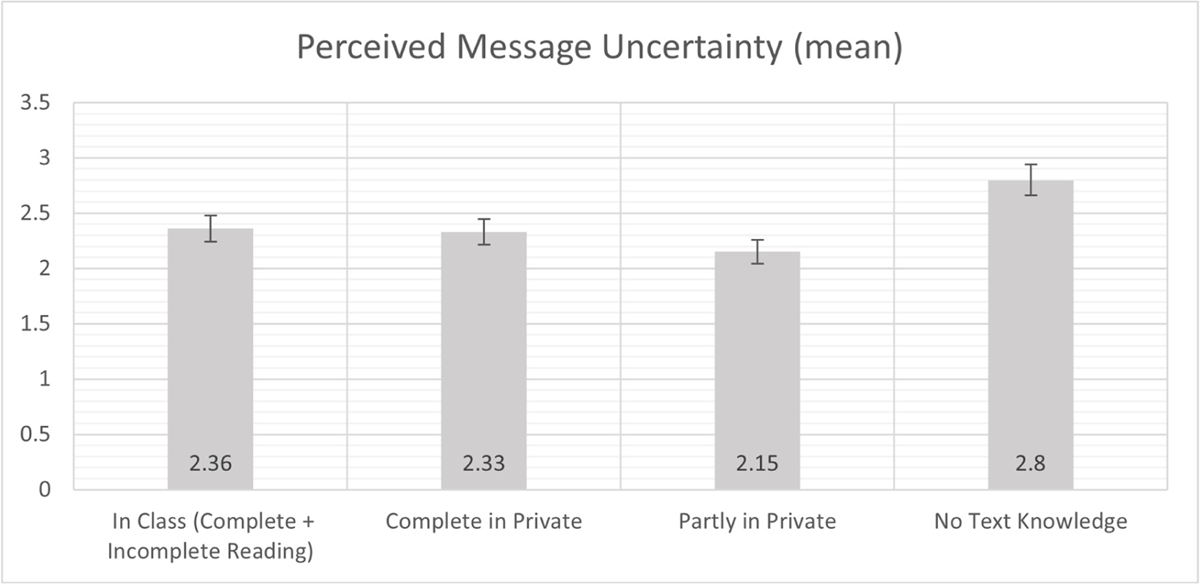
Figure 3
Perceived Message Uncertainty Across Text Engagement Groups.
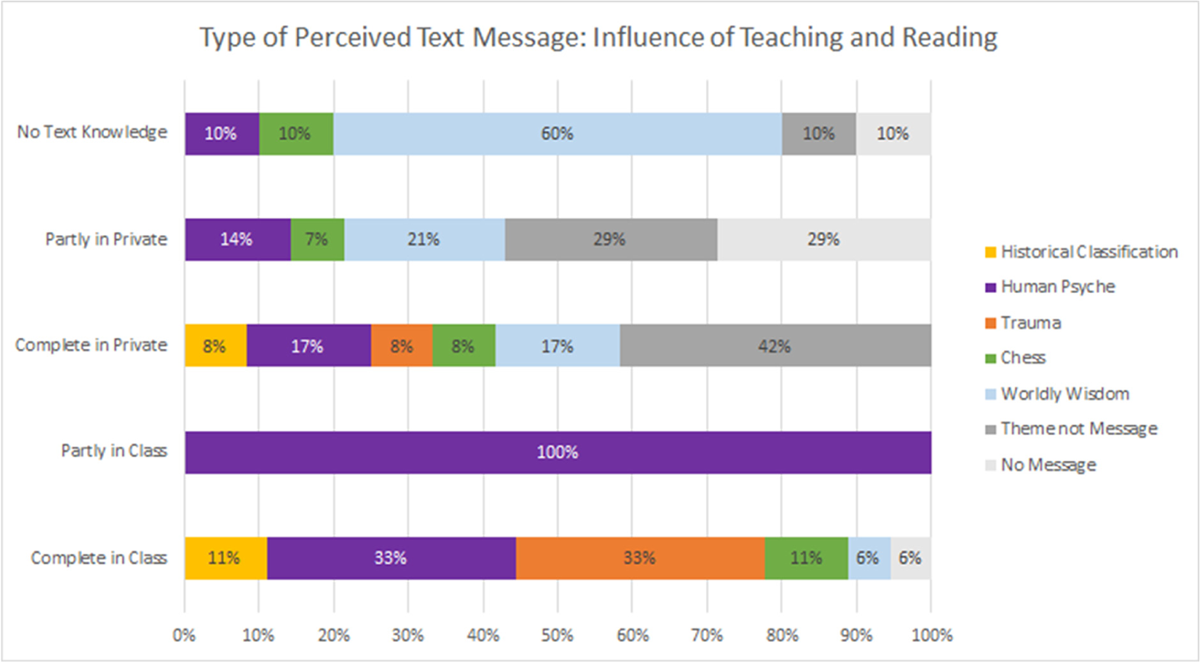
Figure 4
Type of Perceived Textual Message Across Text Engagement Groups.
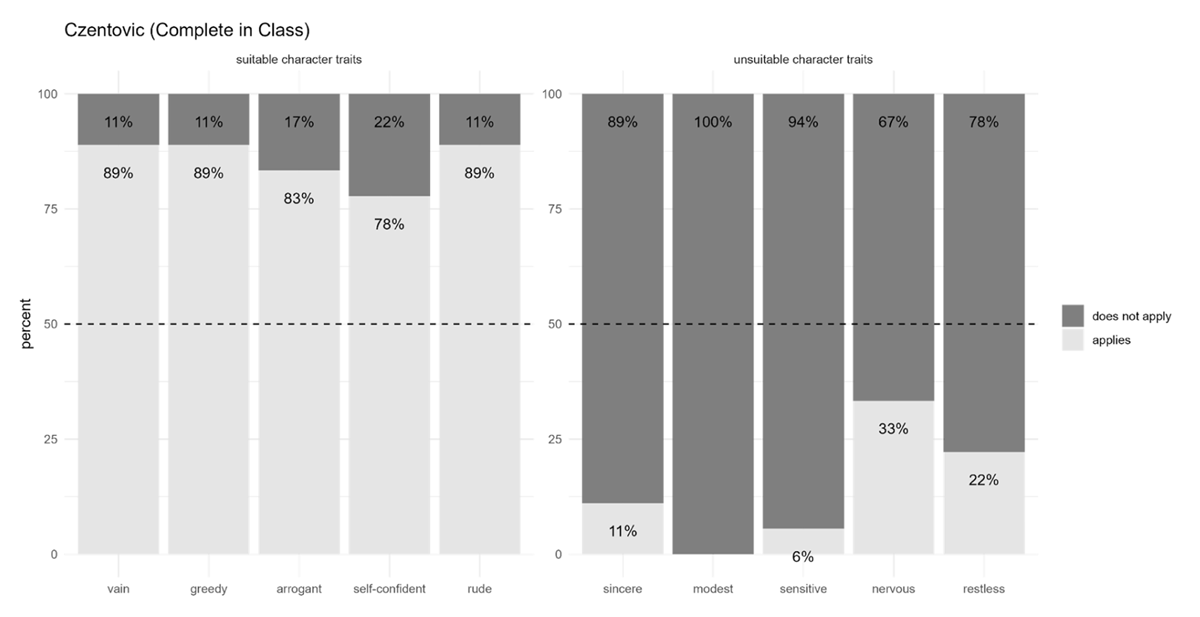
Figure 5
Results for the antagonist’s character traits of participants who read the whole text and discussed it in class. Correct answers in light grey on the left and dark grey on the right.
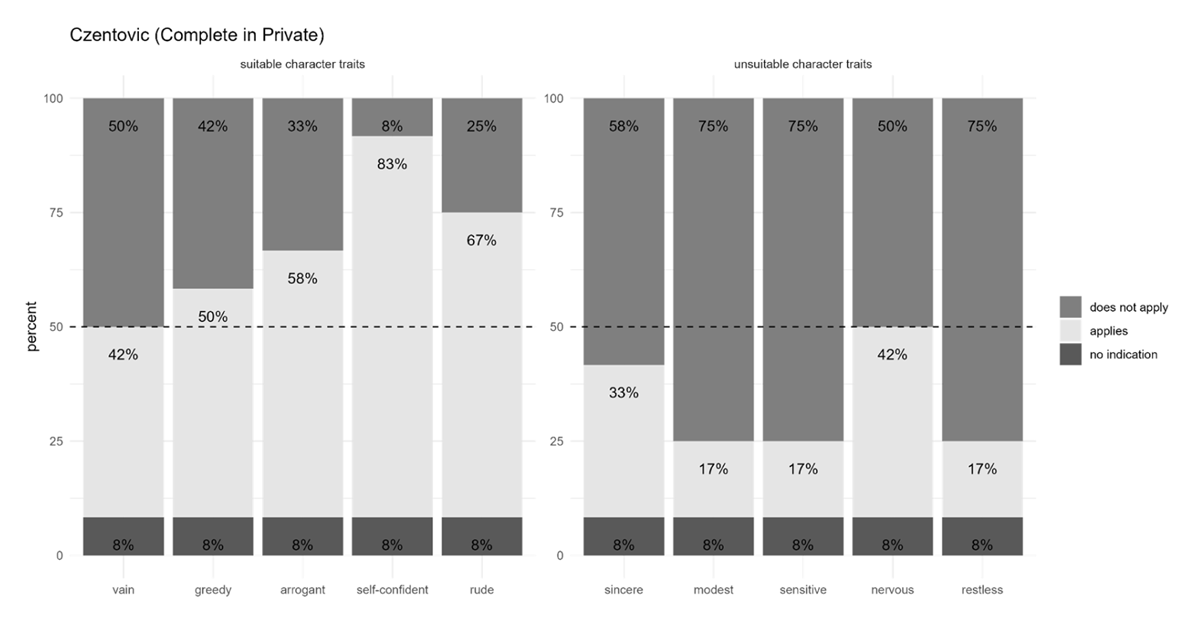
Figure 6
Results for the antagonist’s character traits of participants who read the whole text in private. Correct answers in light grey on the left and dark grey on the right.
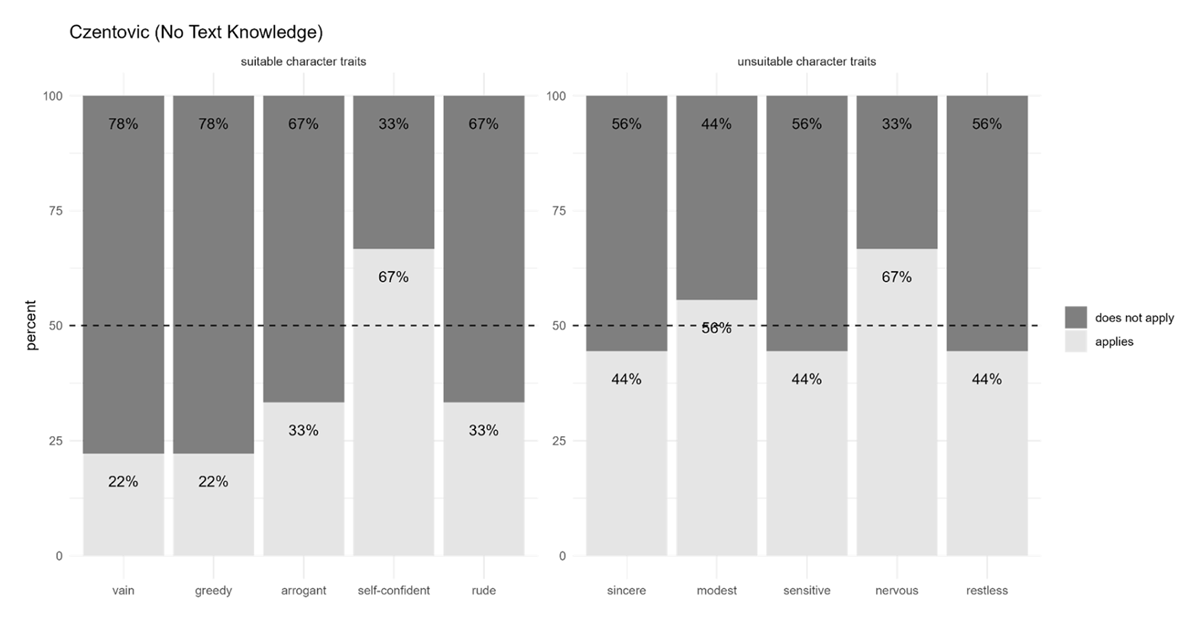
Figure 7
Results for the antagonist’s character traits of participants with no prior text knowledge. Correct answers in light grey on the left and dark grey on the right.
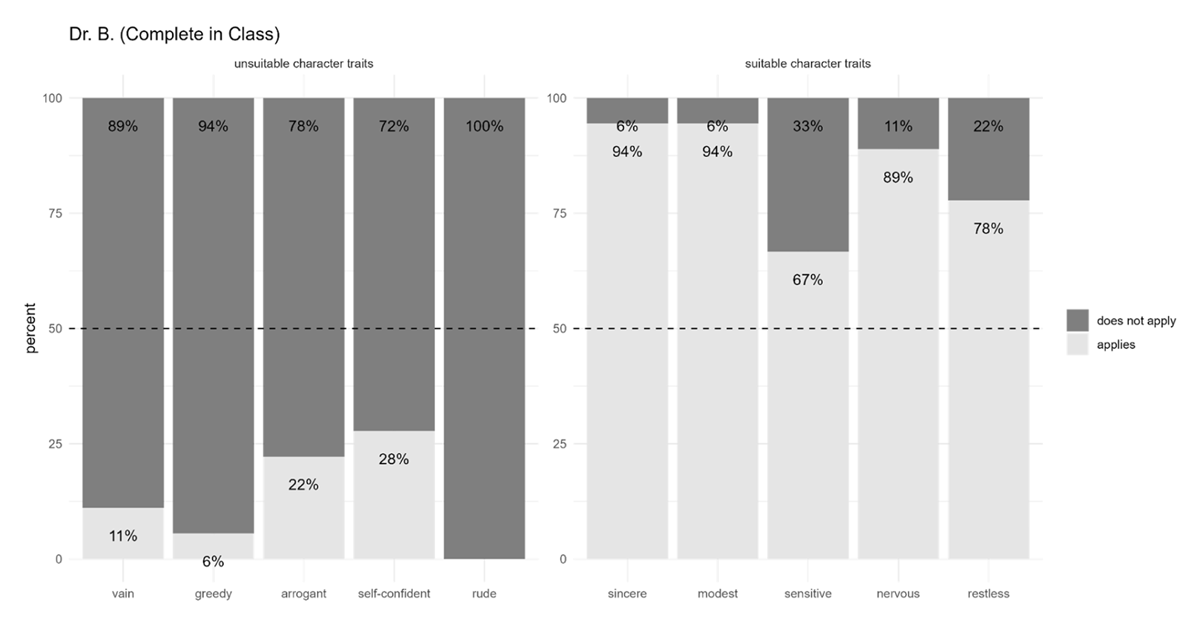
Figure 8
Results for the protagonist’s character traits of participants who read the whole text and discussed it in class. Correct answers in dark grey on the left and light grey on the right.
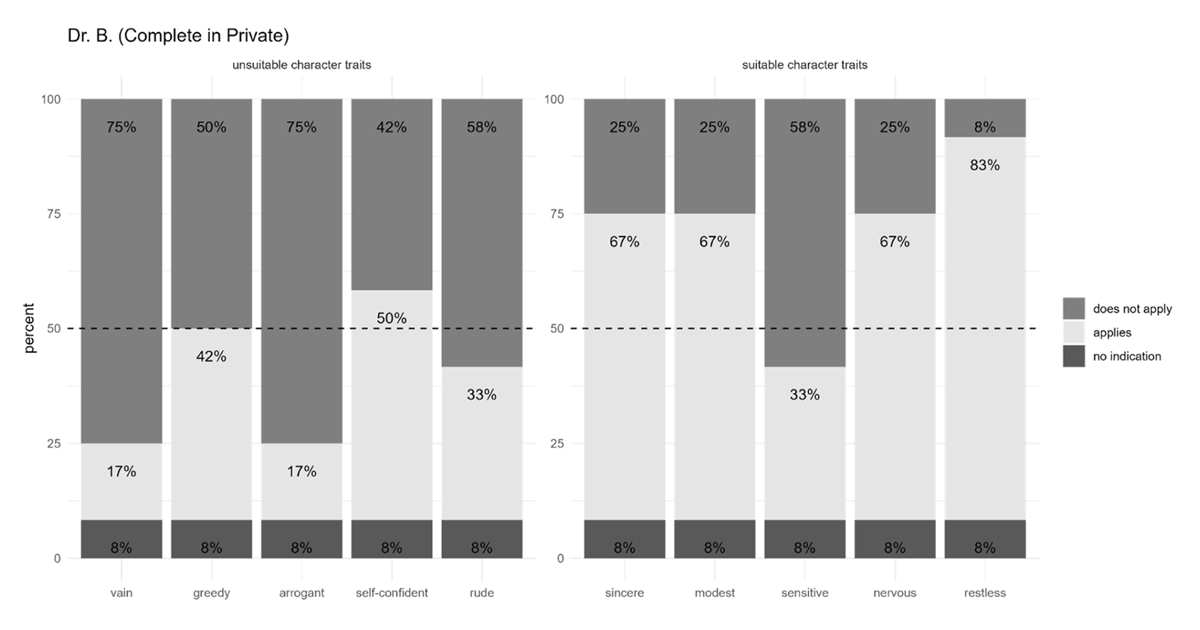
Figure 9
Results for the protagonist’s character traits of participants who read the whole text privately. Correct answers in dark grey on the left and light grey on the right.
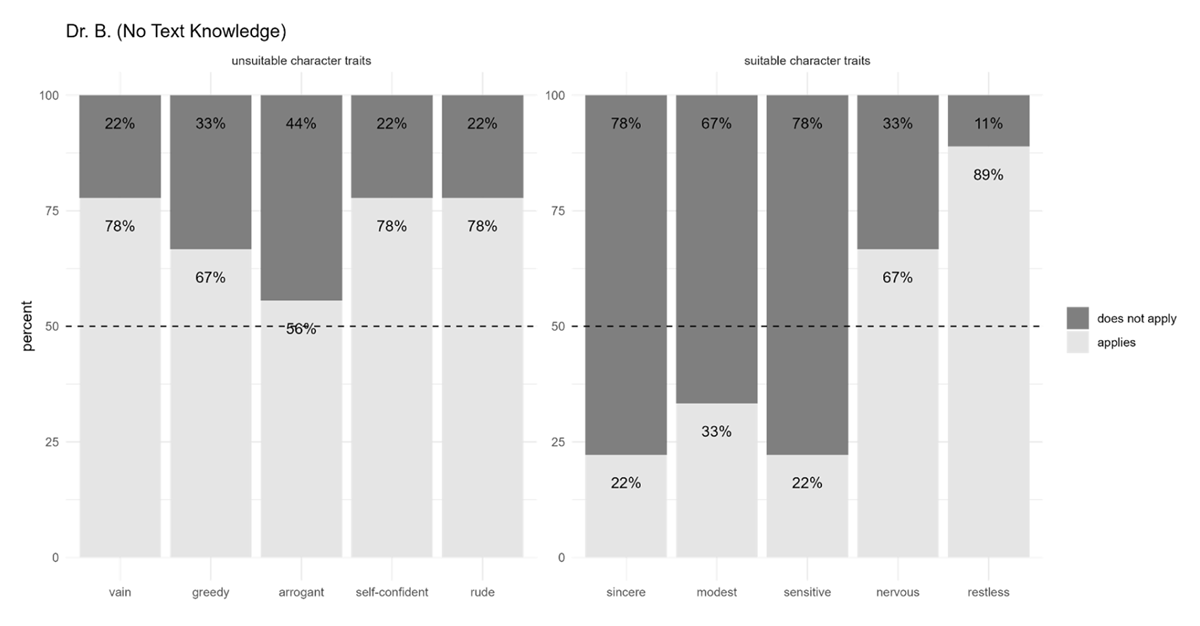
Figure 10
Results for the protagonist’s character traits of participants with no prior text knowledge. Correct answers in dark grey on the left and light grey on the right.
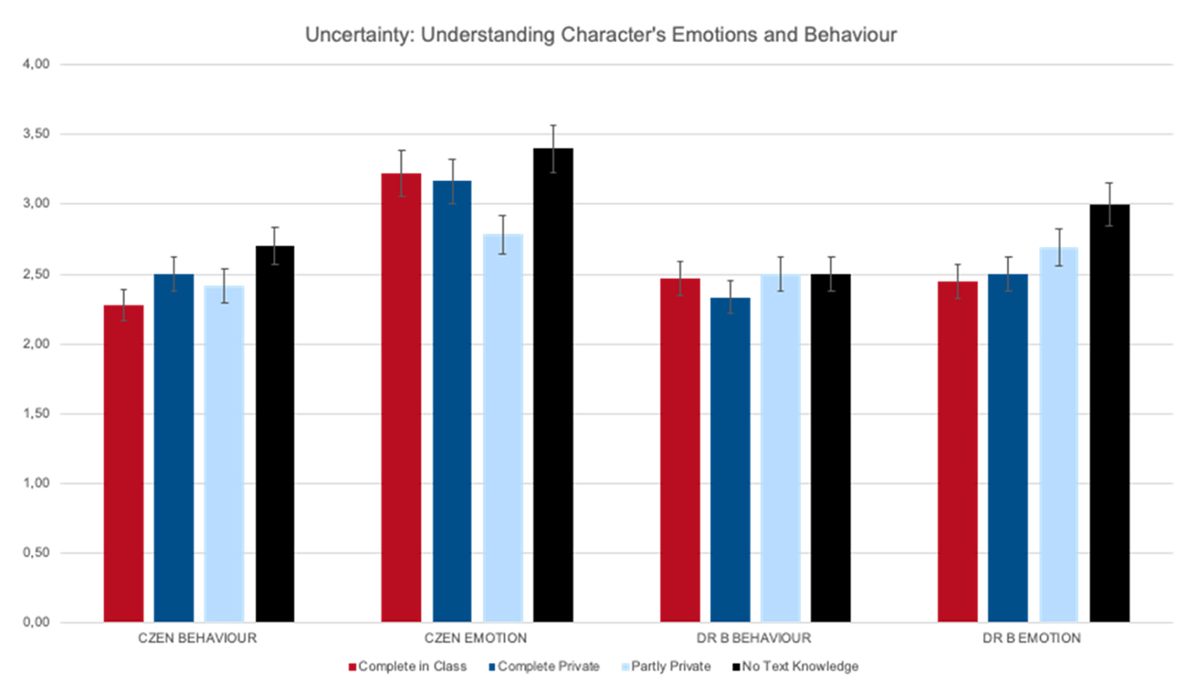
Figure 11
Differences in Text Engagement Groups: Feeling certain or uncertain regarding protagonist’s and antagonist’s emotions and behaviour. High bars indicate greater uncertainty of how someone like that character would act or feel.
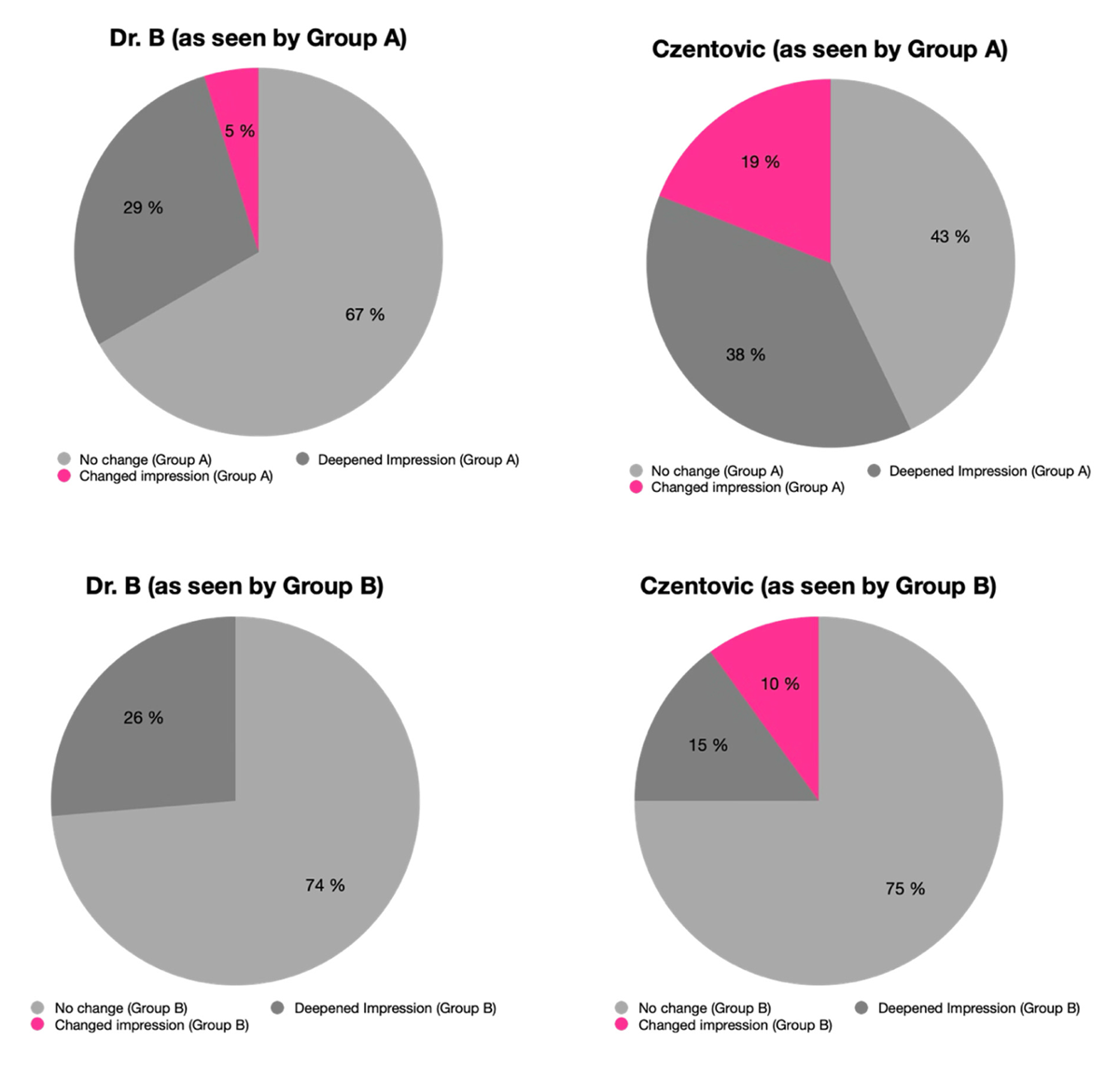
Figure 12
Changes in character perception per character (antagonist/protagonist) and Intervention Group (Group A-focus on Czentovic/Group B- focus on Dr. B.) after rereading.
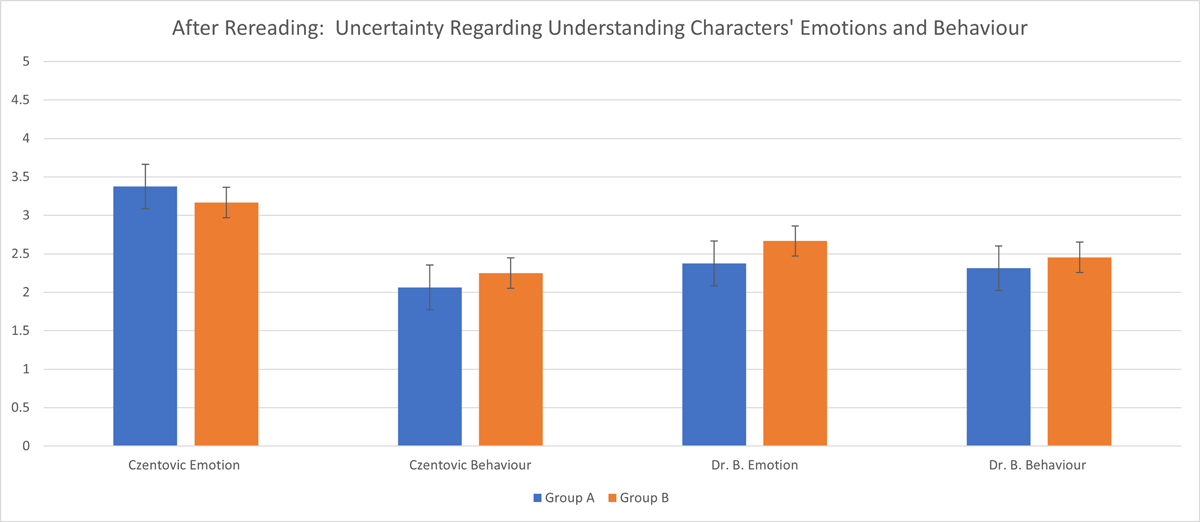
Figure 13
Uncertainty with regard to Czentovic’s and Dr. B.’s Emotions and Behaviour. Greater values indicate greater uncertainty.