
Introduction
Open and Distance Learning (ODL) has revolutionized education by offering unprecedented access to learning for individuals who face geographical, financial, or personal constraints. Its flexibility and inclusivity have made ODL particularly appealing to non-traditional students, such as working adults and those in remote areas. As the demand for lifelong learning intensifies alongside increasing global connectivity, ODL has become a cornerstone of modern education systems (Ushanov et al., 2021). However, despite its potential, ODL faces challenges in sustaining student engagement and fostering effective independent learning, which is critical for academic success in this context (Aljawarneh, 2020; Zuhairi et al., 2020).
The integration of digital technologies into ODL platforms has significantly transformed the educational landscape, enabling more interactive, personalized, and scalable learning experiences. Learning supports like Learning Management Systems (LMS), mobile applications, and video conferencing software have allowed educators to reach broader audiences and meet diverse learner needs. These technologies facilitate the use of multimedia content, simulations, and real-time feedback, which are instrumental in enhancing student engagement and improving learning outcomes (Gao, 2022; Liu et al., 2020). Yet, while these tools address many logistical and pedagogical challenges, they fall short of solving deeper issues related to sustained engagement and independent learning, necessitating more adaptive and innovative solutions.
AI has become a powerful catalyst for change in ODL, offering a range of tools and applications to address these persistent challenges. AI-driven technologies, including intelligent tutoring systems, adaptive learning platforms, and analytics-based interventions, are fundamentally transforming the modalities through which educational content is disseminated and engaged with. These tools can tailor learning experiences to individual student needs, provide instant feedback, and enable educators to identify and support at-risk learners more effectively (Altinpulluk et al., 2023; Rampelt et al., 2025). Moreover, AI-driven solutions like chatbots and virtual assistants offer immediate support and resources, enhancing the flexibility and accessibility of learning environments (Yunus & Bachtiar, 2025a). By personalizing instruction and automating administrative tasks, AI is reshaping both the efficiency and quality of ODL (C. Yang et al., 2020).
A key area where AI has a profound impact is in enhancing student engagement, which is essential for academic success. Engagement encompasses students’ interest, motivation, and active participation in their learning processes. Research indicates that high engagement levels correlate with improved academic performance, retention rates, and overall satisfaction with learning experiences (Atun et al., 2024). AI tools foster engagement through gamification, virtual reality simulations, and personalized learning paths, which align educational experiences with individual preferences and needs (Tapalova & Zhiyenbayeva, 2022). Through the customization of the educational experience to align with distinct preferences and requirements, AI is playing a pivotal role in fostering student motivation and promoting sustained engagement, which is crucial for the efficacy of ODL programs (Yu et al., 2017).
In parallel, AI supports self-regulated learning (SRL), a crucial skill for ODL students who often study independently. SRL involves learners actively managing and evaluating their own learning behaviors, goals, and outcomes (Edisherashvili et al., 2022). AI-enabled platforms enhance SRL by offering personalized feedback, real-time progress tracking, and adaptive content that aligns with students’ specific needs. For instance, AI systems can analyze individual learning patterns, helping students identify weaknesses and adjust their study strategies accordingly (Kumi-Yeboah et al., 2020; Pardo et al., 2017). These capabilities address the inherent challenges of ODL environments, where immediate guidance and feedback may be limited compared to traditional classroom settings (Ceron et al., 2021; Dinh & Phuong, 2025).
Despite its potential, integrating AI into ODL is not without challenges. Concerns around data privacy, the digital divide, and resource constraints pose significant barriers to widespread adoption. The collection and analysis of large datasets required by AI systems necessitate stringent data security measures to ensure ethical use and compliance with regulations (Mays, 2017; Nimavat et al., 2023). Additionally, unequal access to technology and reliable internet connectivity exacerbates educational inequalities, particularly in developing countries (Mayanja et al., 2019). The financial and infrastructural investments needed for effective AI implementation further hinder their adoption in resource-constrained settings (De Silva, 2020). Moreover, while the effectiveness of AI in improving learning outcomes is promising, empirical evidence on its long-term impact remains limited, underscoring the need for further research (Izham et al., 2022). Addressing these challenges is essential for the successful and equitable adoption of AI in ODL.
Existing research has highlighted the benefits of AI in increasing student engagement and supporting SRL (e.g. De Silva, 2020; Gao, 2022; Tapalova & Zhiyenbayeva, 2022). Nevertheless, there exists a significant lacuna in the scholarly discourse concerning the thorough comprehension of the methodologies through which these technologies may be optimally assimilated into ODL platforms to enhance their effect. Although a considerable body of literature exists regarding the application of AI in augmenting engagement and personalization within educational frameworks, there has been comparatively limited scholarly focus on its function in fostering SRL, especially within the domain of ODL. Additionally, the long-term impacts of AI-enhanced learning on student retention and academic performance are still not well understood. These gaps in knowledge represent a significant area for further research, particularly in exploring the specific AI tools and strategies that are most beneficial in different ODL contexts.
Furthermore, this study advances the AI-education literature by conceptualizing engagement and SRL as interconnected cognitive and affective dimensions of learner autonomy, examining how AI tools can jointly cultivate these competencies within open learning systems (Belawati & Prasetyo, 2025; Namaziandost & Rezai, 2024). By positioning engagement and SRL as co-evolving constructs rather than isolated outcomes, the study introduces a novel analytical lens that integrates motivation, metacognition, and behavioral persistence into a single framework for understanding learner agency in AI-mediated environments. This reconceptualization foregrounds how interventions that target one dimension (for example, adaptive feedback to support SRL) may produce cascading effects across others (such as increased emotional investment and sustained participation), thereby offering a more holistic basis for both theory and instructional design.
Methodologically, the study contributes to AI-education research through a convergent mixed-methods design that combines quantitative evidence from a substantive postgraduate sample with in-depth qualitative insights from purposively selected participants. This integration allows the research to validate measurement models (via CFA) while simultaneously unpacking the lived experiences and interpretive meanings students attach to AI features, producing results that are both statistically robust and contextually grounded. By deliberately situating this mixed-methods inquiry within a large public ODL institution, the study also tests the scalability and ethical implications of AI interventions in a real-world, resource-diverse context, thereby bridging efficacy research with questions of equity and practical implementation.
Given these complexities, this study seeks to bridge critical gaps in understanding the role of AI in enhancing student engagement and fostering SRL in ODL contexts. Specifically, the research aims to identify the most effective AI tools and strategies for these objectives, explore best practices for their integration into ODL platforms, and evaluate the substantial impacts of AI-enhanced learning on student engagement and academic achievement. By addressing these questions, this study contributes to the growing body of knowledge on the intersection of AI and education, offering valuable insights for educational institutions aiming to optimize their ODL offerings and create more inclusive, engaging, and effective learning environments. Accordingly, the following research questions guided the current study.
How do AI-powered tools influence student engagement in ODL environments?
In what ways do AI-driven technologies support self-regulated learning among postgraduate ODL students?
What strategies and implementation practices optimize the integration of AI tools to enhance engagement and self-regulated learning in ODL platforms?”
Literature
AI Integration in ODL: Pedagogical Transformations, Contextual Constraints, and Ethical Imperatives
The integration of AI into ODL reshapes core pedagogical affordances (i.e., scalability, adaptivity, and learner-centeredness) by enabling more responsive, individualized learning pathways. Empirical work on adaptive platforms, intelligent tutoring systems, and analytics-based interventions documents improved formative feedback and tailored trajectories that support engagement and mastery; however, these gains are heterogeneous and strongly moderated by context (Azevedo et al., 2022a; Bhatia et al., 2024). Synthesizing across studies shows a pattern: technological affordances produce pedagogical value when aligned with institutional capacity (bandwidth, faculty support) and learner readiness, but efficacy reported from pilots or technologically advantaged settings does not reliably translate to large, resource-constrained ODL systems.
Universitas Terbuka (UT) illustrates this alignment problem: its geographically dispersed, socioeconomically diverse learners expose how infrastructural disparities and variable digital literacy shape whether AI fosters inclusion or exclusion. Design choices (bandwidth sensitivity, offline modes, multilingual models) and institutional investments (faculty training, policy, learner supports) consistently emerge in the literature as the mediating mechanisms that convert AI’s scalability into equitable pedagogical outcomes (Mayanja et al., 2019; Yunus & Bachtiar, 2025b).
Critically, recent scholarship urges moving beyond efficacy narratives to confront three interlinked socio-technical risks: algorithmic fairness, explainability, and bias, which are central to whether AI can support equitable pedagogy. Fairness concerns appear when training data and model design systematically disadvantage learners from remote regions or non-dominant language backgrounds, producing skewed recommendations or assessment outputs that reproduce educational inequities (Homayouni et al., 2024; Namaziandost & Rezai, 2024). Opacity in algorithmic decisions further weakens pedagogical mediation: without explainability, instructors and learners cannot interpret or contest recommendations, undermining trust and corrective instructional action (Rezaei et al., 2024). Because these are governance as much as technical problems, the literature converges on the need for data provenance, accountability mechanisms, and participatory design that includes local stakeholders to ensure models are both valid and contextually legitimate (Nimavat et al., 2023; Shahriar et al., 2023).
In sum, an integrative, context-sensitive approach is required: effective AI in ODL combines measurable gains in engagement and self-regulated learning with explicit safeguards for fairness and interpretability. This study responds to that imperative by assessing AI’s dual pedagogical roles at a large public ODL institution, measuring engagement and SRL outcomes while examining learners’ and tutors’ experiences of transparency, fairness, and access.
Student Engagement in ODL Environments
Student engagement in ODL is a multidimensional construct, behavioral, emotional, and cognitive, that determines learning outcomes when face-to-face facilitation is limited (Atun et al., 2024; Belawati & Prasetyo, 2025). Synthesizing the literature shows that engagement gains attributed to AI (e.g., increased persistence, satisfaction, and adaptive feedback) depend less on the novelty of tools and more on how those tools interact with institutional capacity and learner readiness: when platforms align with pedagogical goals and infrastructural realities, adaptive mechanisms translate into meaningful behavioral and cognitive engagement; when they do not, reported benefits are fragile and context-bound (Bedi, 2023; Bhatia et al., 2024).
AI-powered affordances such as gamification, intelligent agents, and recommender systems can increase interactivity and timely feedback, but their effect on engagement must be read through a socio-technical lens. Crucially, algorithmic fairness, explainability, and bias directly mediate whether personalized recommendations actually support equitable engagement: biased training data or opaque recommendation logic can systematically disadvantage low-bandwidth learners or speakers of non-dominant languages, reducing trust and participation rather than enhancing it (Namaziandost & Rezai, 2024; M. Yang & Weng, 2023). Explainability matters for pedagogy; when instructors and learners can interpret algorithmic decisions, they can take corrective instructional actions, but opacity undermines remedial support and weakens emotional and cognitive engagement (Rezaei et al., 2024).
For large, diverse ODL institutions like UT, the implication is clear: research and design should move from pilot efficacy to granular, contextual evaluation that links tool features (bandwidth sensitivity, offline modes, multilingual support) and governance mechanisms (data provenance, participatory design, accountability) to measurable engagement outcomes. Only by integrating technical design with equity-focused governance can AI reliably foster sustained engagement across behavioral, emotional, and cognitive dimensions in resource-constrained ODL settings.
Self-regulated Learning and AI Support
SRL (self-regulated learning) denotes learners’ capacity to plan, monitor, and reflect on their learning using metacognitive, motivational, and behavioral strategies, and in ODL contexts, this capacity is not optional but foundational because learners held responsibility for progress and persistence (Álvarez et al., 2022; Khalil, Wasson, et al., 2024). Across studies, AI-mediated affordances (i.e., visualized learning analytics, adaptive goal-setting, and on-demand tutoring) are consistently associated with improved moment–to-moment monitoring and timely corrective feedback that can strengthen SRL behaviours. However, a synthetic reading shows these benefits are contingent: they depend on how analytics are presented (actionable vs. opaque), whether adaptive prompts foster internal strategy use or create dependency, and the institutional supports available to translate signals into pedagogy (Guan et al., 2024; Khalil, Wasson, et al., 2024).
Crucially, the literature points to three interrelated socio-technical risks that shape whether AI cultivates durable self-regulation or merely supplies reactive, surface-level assistance. First, algorithmic fairness matters because biased training data or evaluation metrics can misrepresent learners’ needs (e.g., under-estimating learners from low-bandwidth or multilingual backgrounds), producing recommendations that misguide goal-setting and feedback. Second, explainability is pedagogically central: when learners and tutors cannot interpret why an AI recommended a pathway or flagged performance, opportunities for metacognitive reflection and instructor scaffolding are lost. Third, systemic bias and governance gaps (data provenance, consent, local validation) raise ethical and validity concerns, especially in large, resource-constrained ODL institutions where contextual mismatch is likely. Together, these issues mean that future research must pair efficacy measures with investigations of transparency, fairness audits, and participatory design to determine whether AI supports lasting SRL across diverse socio-technical landscapes, particularly in the Global South, where evidence remains limited.
Personalized Learning Through AI Tools
Personalized learning, as enabled by AI, is increasingly positioned as a cornerstone of digital education. By leveraging learner-generated data, ranging from clickstream behavior to assessment patterns, AI systems can customize instructional content, recommend resources, and optimize feedback timing (Solorzano et al., 2024; Villegas-Ch et al., 2024). Technologies such as adaptive learning platforms and intelligent tutoring systems have proven effective in increasing learner satisfaction and improving academic success (Bachtiar, 2025; Wijanarko et al., 2023).
In ODL contexts, personalization is not simply a pedagogical luxury; it is a practical solution to overcoming the uniformity of content delivery. For institutions like UT, where student profiles are highly diverse, personalized AI tools can bridge learning gaps and offer targeted interventions. However, the benefits of personalization are not unqualified. Concerns persist regarding algorithmic opacity, over-reliance on automation, and the marginalization of educators in the personalization loop (Yunus & Bachtiar, 2025b). Effective integration requires human-in-the-loop designs that empower educators to mediate, contextualize, and ethically oversee AI-generated decisions.
In addition, personalization must be ethically grounded and technologically inclusive. Data privacy, algorithmic bias, and opaque decision-making processes pose serious risks, particularly in systems that collect and analyze sensitive learner data. These issues are especially acute in developing countries, where data protection policies may be underdeveloped or poorly enforced (Namaziandost & Rezai, 2024; Rezaei et al., 2024).
At UT, infrastructural challenges such as low internet bandwidth for many students, limited device availability, and digital illiteracy compound the barriers to equitable AI adoption. While the literature acknowledges the importance of ethical design and digital inclusion, few studies interrogate how these issues unfold at scale in public ODL institutions. Addressing these gaps demands a multi-stakeholder strategy (i.e., encompassing policy reform, institutional capacity building, and participatory design) that situates AI as a culturally responsive and context-aware pedagogical partner.
Methods
Research Design
This study employed a convergent parallel mixed-methods design to investigate how AI-powered tools influence student engagement and self-regulated learning (SRL) in an open and distance learning (ODL) environment. Quantitative and qualitative data were collected concurrently, analyzed independently, and then integrated at the interpretation stage. This design was selected to capture both the measurable outcomes of AI-supported learning and the nuanced perspectives of students as ODL learners within a large, diverse institution.
Participants and sampling rationale
Participants were postgraduate students from five study programs at Universitas Terbuka (UT): Master of Elementary Education, Master of English Education, Master of Mathematics Education, Master of Management, and Master of Public Administration. A total of 112 students completed the online survey (see Figure 1). The sampling was purposive, aiming to ensure proportional representation from all five programs and to capture diversity in academic discipline, gender, and regional background. Invitations were distributed through program administrators and institutional email to reach students across Indonesia. Each invitation included a Google Form (G-Form) link accompanied by a clear explanation of the study’s objectives, procedures, and confidentiality assurances. The use of the G-Form format enabled wide coverage and easy access for students in different regions, ensuring minimal technical barriers to participation. Participation was entirely voluntary, and respondents provided informed consent before completing the survey. They were also informed that they could withdraw from the study at any time without penalty or academic consequence.
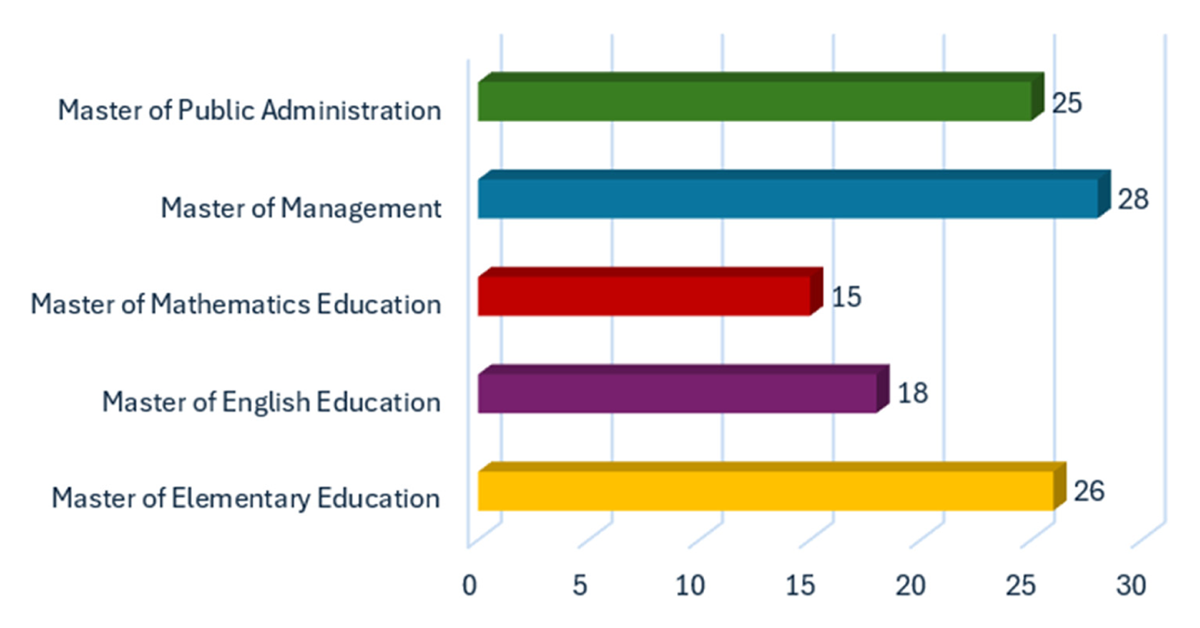
Figure 1
Distribution of questionnaire participants by academic program.
For the qualitative strand, 12 students were selected using purposive, maximum-variation sampling to capture a range of disciplinary backgrounds, study progress, gender, and self-reported familiarity with AI tools (Table 1). Selection criteria for interview participants were: (a) current enrolment in one of the five programs; (b) active use or exposure to AI-enabled features in one or more UT courses; and (c) willingness to participate in an in-depth interview. Although the design does not rely on probability sampling, purposeful recruitment across multiple programs and stratification by key demographics support reasonable breadth and transferability of findings across the UT postgraduate population.
Research Instrument and Procedure of Data Collection
Two types of research instruments were implemented: questionnaires and semi-structured interviews. For the quantitative data, a structured questionnaire was employed to measure student engagement, SRL, and technological application experiences. The questionnaire included items on the Student Engagement Questionnaire (SEQ), the Self-Regulated Learning Questionnaire (SRLQ), and the Digital Tools Questionnaire (DTQ). Each instrument was adapted from previously validated measures and refined for the ODL context. Adaptation steps included: (1) item selection and alignment with the study’s conceptual definitions; (2) expert review by three content specialists (ODL pedagogy, educational measurement, and AI in education) to assess content validity; (3) cognitive pre-testing with a small pilot group (n ≈ 15–25) to check item clarity and face validity; and (4) minor wording revisions based on pilot feedback.
Psychometric evaluation proceeded in two stages. First, internal consistency was assessed using Cronbach’s alpha and composite reliability (CR) for each subscale; thresholds of α and CR ≥ 0.70 were used to indicate acceptable reliability. Second, construct validity was assessed using confirmatory factor analysis (CFA) (see below). Item-level diagnostics (item-total correlations, communalities) and deletion criteria were applied conservatively to preserve content coverage while improving scale parsimony. Detailed reliability coefficients and item statistics are reported in the Results section.
Questionnaires were administered online (Google Forms) during the designated data-collection window. Data were screened for completeness and response quality; respondents with >50% missing data on key scales were excluded. Missingness patterns were examined; where appropriate, CFA analyses employed full-information maximum likelihood (FIML) to handle item-level missingness under the missing-at-random assumption.
For the qualitative data, semi-structured interviews (n = 12) were conducted face-to-face and lasted approximately 45–60 minutes. Interviews followed an interview guide aligned with the research questions (experiences of AI tools, perceived effects on engagement and SRL, and concerns about fairness and transparency). All interviews were audio-recorded and transcribed verbatim.
Thematic analysis was conducted in an iterative, team-based process. Two researchers independently coded an initial subset of transcripts to develop a codebook; coding discrepancies were resolved through discussion and consensus. The full dataset was then coded using the established codebook, and higher-order themes were generated through axial coding and constant comparison. Intercoder reliability was monitored during coding rounds, and discrepancies were reconciled; substantive agreement on the final theme set was reached through consensus meetings.
Saturation was explicitly monitored using a saturation grid: after each successive interview, the research team recorded newly emerging codes. No new substantive codes emerged after the tenth interview; two additional interviews were conducted to confirm redundancy, after which data collection ceased. Thus, thematic saturation was achieved and documented.
Ethical Considerations
Ethical clearance was obtained from the Universitas Terbuka Research Ethics Committee. All participants received an information sheet describing the study’s purpose, data use, and confidentiality assurances. Informed consent was obtained prior to participation. Data were anonymized, securely stored, and used exclusively for research purposes. Participants were free to withdraw at any stage without penalty.
Data Analysis
The quantitative data collected in this study were analyzed using Confirmatory Factor Analysis (CFA) to validate the constructs and assess the relationships between variables. CFA was chosen for its robust capability to test hypothesized models and evaluate the alignment between theoretical constructs and observed data. This approach ensures a precise assessment of the effectiveness of AI-powered tools on student engagement and self-regulation within ODL environments. The statistical rigour of CFA provides a comprehensive framework for confirming construct validity and reliability, enabling the identification of key factors that significantly influence the long-term impact of AI integration on academic outcomes.
For the qualitative data, thematic analysis was employed as a rigorous method to identify and interpret patterns and themes within the dataset. This approach was selected due to its ability to uncover deep insights into the nuanced impacts of AI-powered tools on student engagement, self-regulation, and personalized learning in ODL. By systematically examining the data, thematic analysis ensured the reliability and contextual depth of the findings (Bachtiar et al., 2024), offering a comprehensive understanding of the transformative role of AI in shaping ODL experiences and outcomes.
To enhance the credibility of the qualitative findings, triangulation was employed by cross-validating interview data with the quantitative results. Additionally, participants were invited to review the interview transcripts and initial findings as part of a member checking process. This allowed them to verify the accuracy of the interpretations and offer further insights if needed. Such validation strategies enhanced the credibility and reliability of the qualitative analysis.
The integration of quantitative and qualitative data was achieved during the interpretation phase, where findings from both datasets were compared and contrasted. This mixed-methods approach provided a holistic understanding of the impact of technology-driven tools on student engagement and SRL, ensuring the study’s conclusions were grounded in robust evidence. By employing this meticulous and integrative methodology, the study offers reliable and valid insights into the role of AI in revolutionizing ODL, thereby contributing valuable knowledge to inform future educational practices.
Findings and Discussion
Findings
The following section outlines the five key findings of this study, emphasizing the crucial role of technology (AI) in enhancing the learning experience within ODL. The first finding discusses the impact of digital platforms and AI-driven resources on student engagement. The second focuses on the role of AI in supporting more effective SRL. The third finding explores digital tools that enhance tutor support and academic achievement. The fourth addresses the challenges and opportunities in integrating AI into ODL. Lastly, strategic recommendations for enhancing ODL through technology will be thoroughly examined. These five themes reveal how technology (AI) can be a driving force in creating more inclusive and effective learning experiences.
Impact of Digital Platforms and AI-driven Resources on Student Engagement
This section presents a thorough analysis of the impact of digital platforms and AI-driven resources on student engagement in ODL environments. The focus is on how these technological tools influence students’ interaction with course content, their motivation to persist in their studies, and their overall engagement with the learning process. By examining these aspects, we aim to understand the effectiveness of AI in enhancing student participation and the depth of their learning experiences. The results of the Confirmatory Factor Analysis (CFA) are presented in Table 1 and Figure 2, which illustrates the loading values for each indicator of student engagement.
Table 1
The participants involved in the interviews.
| NO | STUDY PROGRAM | MALE | FEMALE | TOTAL |
|---|---|---|---|---|
| 1 | Master of Public Administration (MPA) | 1 | 1 | 2 |
| 2 | Master of Management (MM) | 1 | 2 | 3 |
| 3 | Master of Mathematics Education (MME) | 1 | 1 | 1 |
| 4 | Master of English Education (MEE) | 1 | 1 | 2 |
| 5 | Master of Basic Education (MBE) | 1 | 2 | 3 |
| Total | 5 | 7 | 12 |
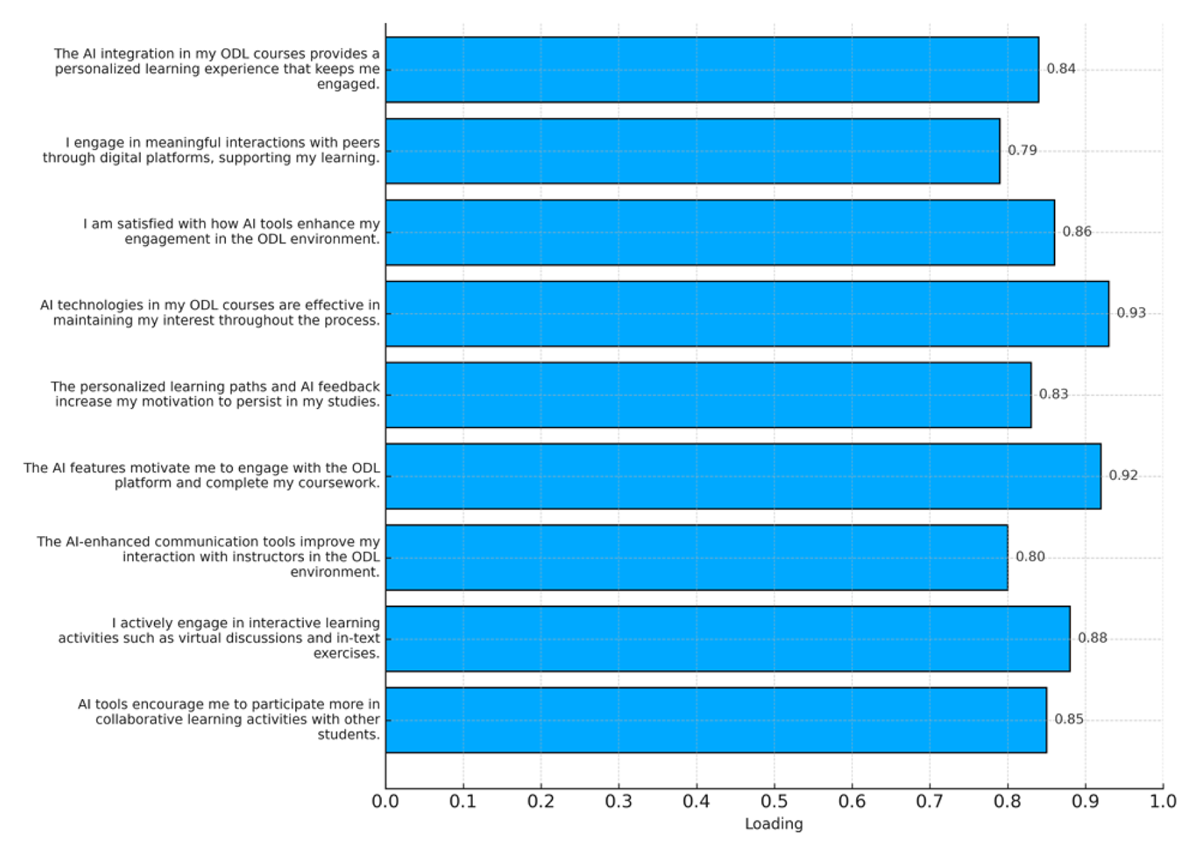
Figure 2
Loading Values of the Impact of Digital Platforms on Student Engagement.
Table 2 and Figure 2 present the confirmatory factor analysis (CFA) results for the ‘Student Engagement’ construct. All items demonstrated high standardized loadings, ranging from 0.79 to 0.93 (p < 0.01), indicating strong relationships between AI-driven features and students’ engagement levels. The highest loading was observed for the item “AI technologies in my ODL courses are effective” (λ = 0.93), followed by items related to personalized learning paths, interactive activities, and enhanced communication tools. These results confirm that AI-based platforms constitute an essential component of engagement in ODL contexts.
Table 2
Confirmatory Factor Loading for Student Engagement.
| NO | ITEM | LOADING | SE | T-VALUE | P-VALUE |
|---|---|---|---|---|---|
| 1. | AI tools encourage me to participate more in collaborative learning activities with other students. | 0.85 | 0.05 | 17.00 | 0.00 |
| 2. | I actively engage in interactive learning activities such as virtual discussions and in-text exercises to enhance my understanding. | 0.88 | 0.04 | 22.00 | 0.00 |
| 3. | The AI-enhanced communication tools improve my interaction with instructors in the ODL environment. | 0.80 | 0.05 | 16.00 | 0.00 |
| 4. | The AI features motivate me to engage with the ODL platform and complete my coursework consistently. | 0.92 | 0.03 | 30.67 | 0.00 |
| 5. | The personalized learning paths and AI feedback increase my motivation to persist in my studies even when faced with challenges. | 0.83 | 0.05 | 16.60 | 0.00 |
| 6. | AI technologies in my ODL courses are effective in maintaining my interest throughout the learning process. | 0.93 | 0.03 | 31.00 | 0.00 |
| 7. | I am satisfied with how AI tools enhance my engagement in the ODL environment. | 0.86 | 0.04 | 21.50 | 0.00 |
| 8. | I engage in meaningful interactions with peers through digital platforms, which support my learning and help me achieve my goals. | 0.79 | 0.05 | 15.80 | 0.00 |
| 9. | The AI integration in my ODL courses provides a personalized learning experience that keeps me engaged. | 0.84 | 0.04 | 21.00 | 0.00 |
Qualitative data provided additional evidence supporting these quantitative results. Students emphasized how AI-supported personalization and interactive features helped them stay focused and actively involved in coursework. One participant stated, “The AI-based personalized paths made me more involved with the materials and peers” (Int.P04). Other participants described similar experiences of increased motivation and stronger connections to course materials facilitated by digital interaction tools.
Further, adaptive learning systems were reported to sustain engagement by tailoring content difficulty to individual performance levels, ensuring that learners were neither over- nor under-challenged. As one respondent explained, “Adaptive learning systems that tailor content delivery based on individual performance play an important role in maintaining engagement” (Int.P03). Mobile learning applications also supported flexible study habits, particularly for working students who integrated learning into their daily routines. “Mobile learning apps significantly reduce barriers to engagement by offering flexibility,” noted another participant (Int.P10).
A broader pattern emerged regarding differences in engagement intensity across academic programs and digital readiness levels. Students from programs with higher exposure to technology (such as Management and English Education) reported greater ease in interacting with AI-driven platforms and maintaining active engagement, whereas those from non-technical programs, including Elementary Education and Public Administration, expressed initial hesitation in navigating adaptive learning systems. Similarly, participants with stronger digital literacy skills tended to engage more consistently in interactive learning activities and utilize AI feedback features more extensively. Despite these variations, most respondents acknowledged that the use of digital and AI-based platforms enhanced their participation and sense of connectedness within the ODL environment.
Role of AI in Supporting Self-Regulated Learning
The results highlight various aspects of AI integration, including the utilization of AI-driven tools for planning, monitoring, and reflecting on learning activities. This discussion aims to provide a comprehensive understanding of how learners are adopting these technologies and their effectiveness in enhancing educational outcomes. Table 2 presents the CFA results of the role of AI in supporting SRL within ODL environments.
Table 3 and Figure 3 present the confirmatory factor analysis (CFA) results for the Self-Regulated Learning (SRL) construct. All items demonstrated strong standardized loadings, ranging from 0.82 to 0.92 (p < 0.01), indicating robust relationships between AI-enabled features and students reported SRL behaviours. The highest-loading item: “I regularly set specific goals for my learning tasks” (λ = 0.92) – reflects the centrality of goal-setting in students’ regulation processes. These quantitative findings suggest that AI-powered planning tools, progress dashboards, and feedback systems are closely associated with learners’ ability to monitor performance and adapt study strategies effectively.
Table 3
The Questionnaire Items of the Impact of AI on Self-Regulated Learning.
| NO | ITEM | LOADING | SE | T-VALUE | P-VALUE |
|---|---|---|---|---|---|
| 1. | The AI-driven content recommendations and resources provided in my ODL courses are relevant to my learning needs. | 0.90 | 0.03 | 30.00 | 0.00 |
| 2. | I use AI features within the ODL platform to plan, monitor, and reflect on my learning activities. | 0.85 | 0.04 | 21.25 | 0.00 |
| 3. | I actively utilize AI-enabled learning tools (e.g., chatbots, virtual tutors) to monitor my understanding and adjust my learning strategies during my ODL sessions. | 0.88 | 0.04 | 22.00 | 0.00 |
| 4. | I regularly set specific goals for my learning tasks in the ODL environment. | 0.92 | 0.03 | 30.67 | 0.00 |
| 5. | I frequently monitor my progress toward my learning goals using AI-driven tools provided by the platform. | 0.86 | 0.04 | 21.50 | 0.00 |
| 6. | I often evaluate my performance and understanding of the course material through the feedback provided by AI systems. | 0.89 | 0.04 | 22.25 | 0.00 |
| 7. | I adapt my study strategies based on the feedback and progress reports generated by AI tools. | 0.84 | 0.05 | 16.80 | 0.00 |
| 8. | The AI tools in the ODL platform helped me identify the most effective learning strategies based on my previous study patterns. | 0.87 | 0.04 | 21.75 | 0.00 |
| 9. | I effectively manage my study time, balancing my learning activities with other commitments. | 0.82 | 0.05 | 16.40 | 0.00 |
| 10 | The flexibility of the ODL environment allows me to take greater control over my learning processes. | 0.91 | 0.03 | 30.33 | 0.00 |
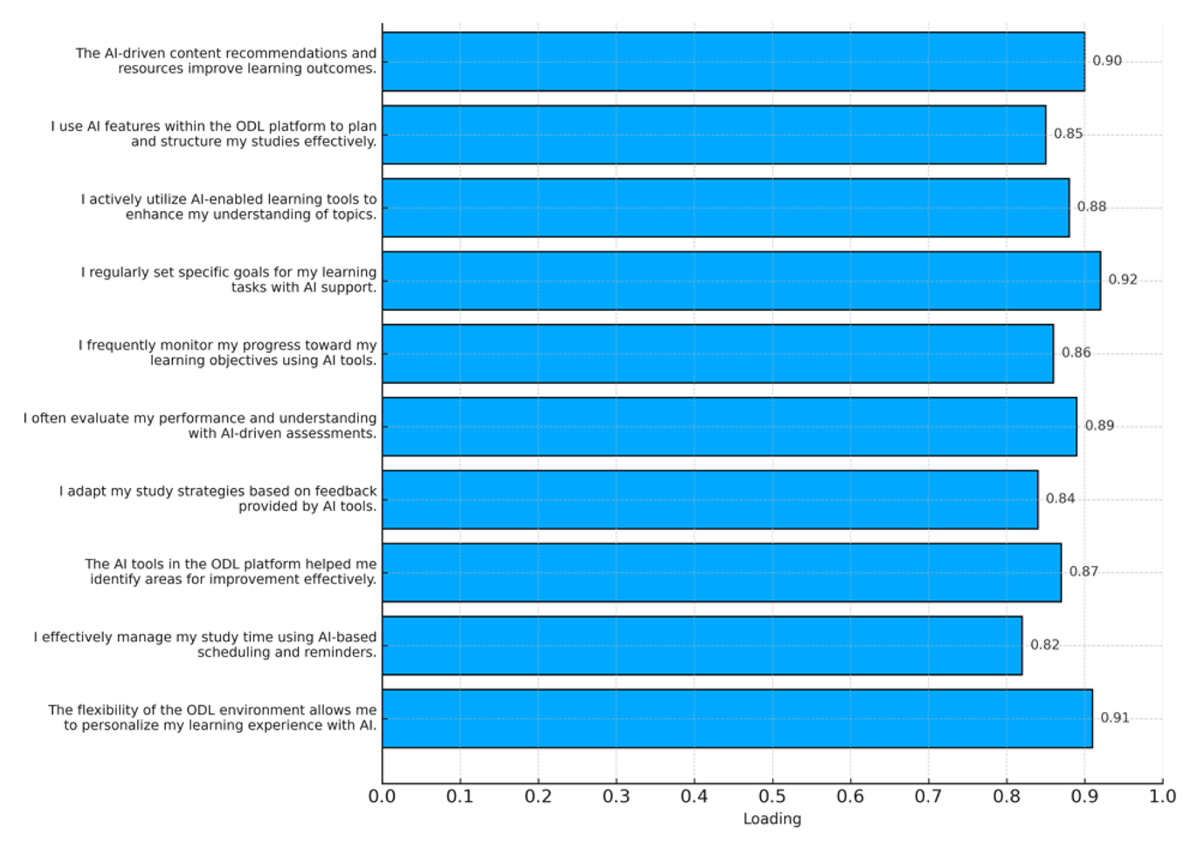
Figure 3
Loading Values of the Impact of AI on Self-Regulated Learning.
Qualitative data provided supporting evidence for these patterns. Students described how adaptive AI tools, which tailored content difficulty and provided targeted feedback, enabled them to plan, monitor, and adjust their learning independently. Many participants noted that such systems allowed them to study at their own pace and track progress more efficiently. As one participant explained, “AI helps students set clear goals and monitor their progress… it really supports self-regulated learning” (Int.P05). Another student shared a similar view, emphasizing that adaptive feedback kept them focused and aware of their performance improvements.
Flexibility and accessibility emerged as additional factors that facilitated SRL development. Students reported that mobile learning applications enabled continuous access to course materials and encouraged the integration of study activities into their daily routines. These tools were particularly helpful for working learners, who valued the ability to manage time autonomously. One participant noted, “Mobile learning apps significantly support self-paced learning by offering ongoing opportunities to interact with materials at our own pace” (Int.P01). Collectively, these results demonstrate that AI-enabled personalization and flexibility are key contributors to students’ capacity for effective self-regulation in ODL contexts.
A further pattern observed across the data relates to differences in students’ SRL engagement based on their digital proficiency. Participants with higher digital literacy reported greater ease in utilizing AI features for planning and self-monitoring, whereas those less familiar with technology tended to rely more heavily on structured prompts and tutor guidance. This variation suggests that while AI tools facilitate SRL across learners, the extent of their effectiveness may depend on students’ initial comfort with digital platforms and their ability to interpret automated feedback. Several respondents highlighted that clear system interfaces and tutorial guidance improved their confidence and encouraged more consistent self-regulatory behaviour.
Digital Tools Enhancing Tutor Support and Academic Achievement
The following analysis delves into the impact of AI-driven digital tools on enhancing tutor support and academic achievement within an Open and Distance Learning (ODL) environment. The data presented aims to illustrate how these tools facilitate personalized learning experiences, improve the quality of learning materials, and foster meaningful interactions between students and tutors. Table 4 and Figure 4 visualize the CFA loading values for tutor support and academic achievement indicators.
Table 4
The Questionnaire Items of the Digital Tools on Tutor Support and Academic Achievement.
| NO | ITEMS | LOADING | SE | T-VALUE | P-VALUE |
|---|---|---|---|---|---|
| 1. | The use of AI-driven tools and feedback has positively impacted my academic performance and overall learning experience. | 0.80 | 0.05 | 16.00 | 0.00 |
| 2. | AI-integrated digital platforms provide timely feedback from tutors, helping me improve my academic performance. | 0.75 | 0.04 | 18.75 | 0.00 |
| 3. | AI tools help tutors find where I need extra support to improve my learning. | 0.70 | 0.06 | 11.67 | 0.00 |
| 4. | AI-driven tools enable tutors to monitor my progress more effectively, ensuring that I stay on track with my academic goals. | 0.85 | 0.05 | 17.00 | 0.00 |
| 5. | AI-based platforms allow tutors to personalize the learning experience based on student’s academic performance and needs. | 0.78 | 0.04 | 19.50 | 0.00 |
| 6. | The use of AI tools by tutors enhances the quality of the learning materials and resources provided to students. | 0.88 | 0.05 | 17.60 | 0.00 |
| 7. | AI tools in the ODL environment enable tutors to create more engaging and interactive learning activities, which positively impact students’ academic achievement. | 0.90 | 0.03 | 30.00 | 0.00 |
| 8. | The AI-enhanced scheduling tools help me coordinate with my tutors more effectively, ensuring the timely completion of assignments. | 0.82 | 0.04 | 20.50 | 0.00 |
| 9. | I utilize available digital tools and AI resources to support my learning effectively. | 0.88 | 0.05 | 17.75 | 0.00 |
| 10 | AI features in the ODL platform help facilitate meaningful interaction with my peers. | 0.78 | 0.05 | 18.75 | 0.00 |
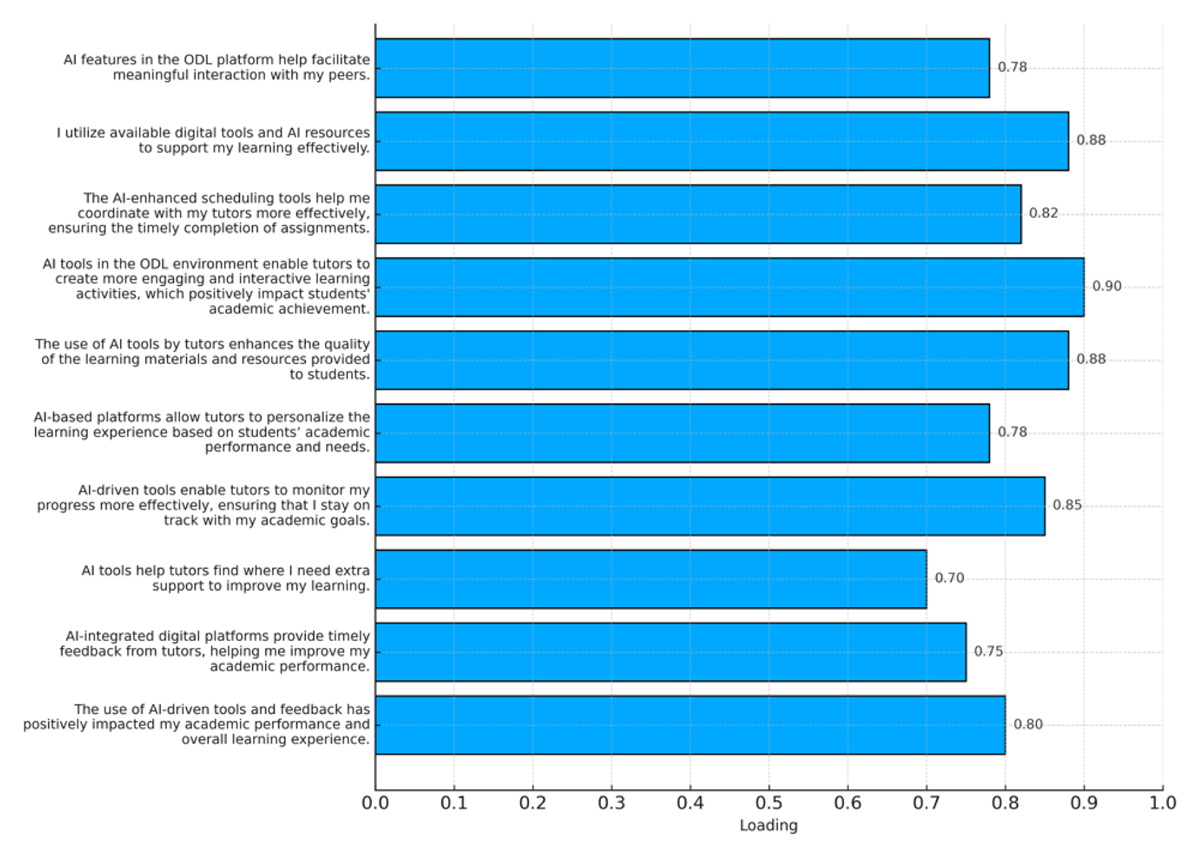
Figure 4
Loading Values of the Digital Tools on Tutor Support and Academic Achievement.
Table 4 and Figure 4 present the confirmatory factor analysis (CFA) results for the Tutor Support and Digital Tools construct. All items demonstrated strong standardized loadings ranging from 0.70 to 0.90 (p < 0.01), confirming robust relationships between AI-assisted tutoring features and perceived instructional support. The highest-loading item: “AI tools in the ODL environment enable tutors to create adaptive and student-centred learning experiences” (λ = 0.90)—highlights the association between digital tools and tutors’ capacity to personalize instruction. These quantitative results indicate that AI integration is closely related to improved feedback delivery, individualized support, and timely identification of learning needs in ODL contexts.
Qualitative data further illustrated how AI-supported tutoring enhanced the quality of tutor-student interactions. Participants described that AI-driven systems helped tutors provide personalized and efficient feedback, enabling students to better grasp complex concepts and apply them in their coursework. As one student explained, “AI-assisted tutoring made it easier to find where I needed extra support and improved my coursework performance” (Int.P07). Others echoed that these systems increased their confidence and satisfaction with the learning process, as tutors could promptly address learning gaps through data-informed interventions.
Another prominent theme emerging from the qualitative analysis concerned the social dimension of AI-assisted learning. Students reported that digital collaboration features supported by AI helped build a stronger sense of community in ODL settings. Participants noted that these tools facilitated communication with peers and tutors, reducing feelings of isolation and strengthening their sense of belonging. As one participant described, “Learning processes, such as case methods assisted by AI, contribute to a feeling of togetherness and improve real-time connectivity with peers and tutors” (Int.P08). These findings suggest that AI-enhanced communication plays an important role in sustaining engagement by creating interactive and connected learning spaces.
A further pattern was observed across study programs and levels of digital readiness. Students from programs with heavier quantitative or analytical content, such as Management and Mathematics Education, tended to value AI-supported tutoring for its ability to visualize performance data and pinpoint learning difficulties. Meanwhile, those from language- and education-oriented programs emphasized the benefit of AI tools in supporting formative feedback and facilitating communication with tutors. Participants with higher digital literacy reported using automated feedback systems more confidently, while that less experienced preferred human mediation to interpret AI-generated recommendations. Despite these differences, respondents across all programs viewed ongoing tutor support through AI platforms as essential to maintaining motivation and improving academic achievement in ODL environments.
Finally, the results highlight the importance of ongoing, timely feedback and continuous support. Students who received prompt, personalized responses from tutors via digital platforms reported higher engagement and stronger academic outcomes. Participants emphasized that immediate feedback helped them identify weaknesses and adjust their study strategies effectively. One student explained, “Prompt feedback supported by digital tools keeps me on track with my learning goals and helps me quickly improve areas where I struggle” (Int.P02). Across the dataset, continuous feedback and tutor availability were identified as key factors that helped students remain motivated, complete assignments on time, and perform successfully in their courses.
Challenges and Opportunities in Integrating AI into ODL
The findings reveal that integrating AI into ODL environments presents both significant challenges and emerging opportunities. One of the most prominent concerns expressed by participants was related to data privacy and ethical issues. Several respondents emphasized the importance of protecting student information and ensuring transparency in the use of AI algorithms. Participants noted uncertainty about how their data were collected, stored, and analyzed, suggesting that a lack of clear institutional guidelines may hinder trust and willingness to use AI-supported learning systems.
Another major challenge identified was the digital divide and unequal access to technology, which continues to affect students’ participation and learning outcomes. Respondents from rural or economically disadvantaged regions reported difficulties in maintaining reliable internet connections and accessing devices capable of running AI-supported applications. As one participant explained, “The disparities in access to technology and stable internet connections significantly impact student learning outcomes, especially for those in rural areas” (Int.P03). These barriers were seen as limiting students’ ability to engage fully in AI-enhanced ODL activities, reinforcing existing educational inequalities.
The results also highlight concerns regarding technological infrastructure and faculty readiness. Many participants indicated that insufficient institutional resources and limited staff training were major constraints on effective AI integration. Respondents reported that tutors often lacked adequate support or knowledge to leverage AI tools for instructional purposes. Participants emphasized that without sustained institutional investment in both infrastructure and professional development, the potential benefits of AI may remain underutilized across ODL programs.
Despite these challenges, participants recognized several opportunities for improving learning and engagement through AI. Students described AI as a promising resource for facilitating personalized and flexible learning. They appreciated features that recommended content, provided real-time feedback, and supported individualized study plans. One participant observed, “AI tools can enhance the learning experience by providing tailored learning pathways that improve motivation and engagement” (Int.P05). These perceptions suggest that, while infrastructural and ethical challenges persist, learners and educators view AI as a valuable complement to existing ODL systems, particularly for promoting autonomy and sustained participation.
Strategic Recommendations for Enhancing ODL Through Technology
The findings reveal several strategic directions for strengthening ODL through the integration of AI and digital technologies. Participants emphasized that AI-based tools can provide personalized and scalable learning experiences that accommodate diverse learner needs. Features such as adaptive learning pathways, predictive analytics, and progress dashboards were perceived to enhance engagement and support SRL. Students explained that these systems helped them organize study plans, monitor achievements, and sustain motivation, particularly in asynchronous learning contexts where autonomy is essential.
Participants also highlighted the need for institutional readiness as a prerequisite for effective AI adoption. Limited digital infrastructure and insufficient technical training were identified as key constraints in implementing AI within ODL programs. Respondents noted that tutors often faced challenges in interpreting and applying AI-generated feedback due to limited exposure to these tools. Consequently, the findings suggest that sustained institutional investment in digital capacity and faculty development is necessary to ensure that educators can effectively mediate and contextualize AI-supported learning processes.
Issues of equity and access also emerged prominently from the data. Disparities in internet connectivity, device ownership, and digital literacy were viewed as critical barriers that hinder the inclusive deployment of AI technologies. Students from rural and economically disadvantaged areas described difficulty engaging with AI-enabled systems due to unreliable infrastructure. Many participants stressed that addressing these accessibility challenges is vital to ensuring that AI integration supports, not amplifies, existing inequalities in ODL participation and achievement.
Finally, the findings indicate that both students and faculty perceive AI as a promising avenue for improving educational quality and sustainability in the long term. Respondents recognized the potential of AI-driven platforms to strengthen learner retention, academic performance, and ongoing engagement. Several participants expressed interest in future research examining how prolonged exposure to AI-supported learning environments influences cognitive development and self-regulation. Collectively, these insights suggest that while infrastructural and pedagogical readiness remain ongoing challenges, the thoughtful integration of AI offers a feasible pathway toward more adaptive, equitable, and learner-centred ODL systems.
Discussion
The findings demonstrate that AI-driven platforms substantially enhanced student engagement and self-regulated learning in ODL contexts. Rather than merely extending traditional digital tools, AI systems reshaped the way learners interacted with content, tutors, and peers by personalizing pathways and offering continuous feedback loops. This personalization enabled students to sustain attention and autonomy despite geographical separation and asynchronous study modes, features typical of ODL. These results align with Hafezy (2023) and Pan et al. (2024), who found that AI systems foster interaction and collaborative learning across dispersed cohorts. However, in the present study, this engagement emerged not only from increased interactivity but also from the visibility of learning progress, students could monitor their performance and receive immediate feedback, which made learning more transparent and motivating.
The enhancement of SRL observed in this study can be understood through three interrelated mechanisms. First, AI-supported autonomy: adaptive systems adjusted content and task difficulty, enabling learners to plan and pace their studies independently, a critical skill in ODL settings with limited direct supervision. Second, metacognitive scaffolding: analytics dashboards and predictive feedback prompted students to reflect on their learning strategies, reinforcing metacognitive awareness. Third, feedback immediacy: instant responses from AI tools reduced cognitive load and helped students correct misconceptions before they accumulated. These mechanisms explain why AI features particularly benefited SRL in this context, extending Khalil et al. (2024) and Azevedo et al.’s (2022b), who identified adaptive scaffolding as a catalyst for self-directed learning. Unlike studies in well-resourced institutions, the current findings underscore that even in bandwidth-limited ODL systems, minimal yet consistent adaptive feedback can significantly strengthen SRL behaviours.
Students’ reports of improved time management and study strategies reflect AI’s role as a regulatory partner in the learning process. Rather than functioning as an external tutor, AI tools acted as cognitive companions that provide structure, reminders, and formative cues that supported sustained engagement. Similar to the findings of Lee et al. (2019) and Wei’s (2023) contexts, this study shows that metacognitive aids embedded in AI platforms promote iterative goal-setting and self-evaluation. Yet, what distinguishes the Indonesian ODL context is the interplay between flexibility and cultural expectations: students appreciated AI’s non-judgmental feedback, which allowed private self-assessment in an educational culture that often emphasizes teacher authority. This cultural compatibility may explain the strong SRL gains reported here compared to earlier research conducted in face-to-face or Western learning environments.
The study also found that AI systems augmented tutor support and instructional quality by enabling personalized, data-informed feedback. These systems bridged the temporal gap typical of ODL, where asynchronous communication often delays instructor responses. AI-generated analytics allowed tutors to identify struggling students early, improving intervention timing and relevance. This echoes the “human-in-the-loop” approach, where technology amplifies rather than replaces teacher agency (Dinh & Phuong, 2025; Rampelt et al., 2025). By turning data into actionable insight, tutors could deliver more focused guidance, strengthening both performance and learner trust. These results extend previous findings by Mozer et al. (2019), showing that specificity and immediacy of AI feedback are central to engagement and persistence.
Despite these advantages, participants also identified barriers and ethical concerns that temper AI’s promise. Unequal access to devices and stable internet continues to marginalize learners in remote or low-income areas, limiting the inclusivity of AI-enhanced ODL. This digital divide remains one of the most persistent challenges in implementing technology-mediated learning (Boztaş et al., 2025; Irasuti & Bachtiar, 2024; Pullenayegem et al., 2020). Moreover, several students expressed uncertainty about how their learning data were collected and used, revealing limited transparency and trust. These concerns resonate with Homayouni et al. (2024), who argue that algorithmic opacity can undermine learner agency. Addressing such issues requires more than infrastructural upgrades, it calls for transparent data policies, explainable AI interfaces, and capacity-building initiatives that empower learners to interpret and question algorithmic decisions.
A final point relates to the sustainability of AI adoption in education. The study’s findings suggest that long-term engagement with AI tools could reinforce SRL skills and foster a culture of reflective learning. However, the extent of these benefits depends on institutional readiness, including faculty competence, ethical governance, and equitable infrastructure. Without these foundations, personalization risks deepening inequalities rather than bridging them. The transformative potential of AI in ODL thus lies not only in technology itself but in how institutions orchestrate human, pedagogical, and ethical dimensions around it (Bhatia et al., 2024; Pardo et al., 2017).
Several limitations should be acknowledged. The data were derived from self-reported perceptions, which may be influenced by social desirability bias and overestimation of learning gains. The sample was also drawn from a single open university, which limits generalizability to other institutional or cultural contexts. Moreover, the cross-sectional design captures associations rather than causal effects. Future studies should triangulate self-reports with learning analytics and performance data, employ longitudinal designs to track behavioural change over time, and compare multiple ODL systems to assess contextual variations. Despite these limitations, the convergence of quantitative and qualitative data provides credible evidence that AI-supported learning environments can meaningfully enhance engagement and SRL when aligned with learners’ autonomy and institutional readiness.
Conclusion, Implications and Suggestions
This study underscores the pivotal role of AI-powered tools in transforming ODL environments by enhancing student engagement and fostering self-regulated learning. Key findings demonstrate that adaptive learning systems, personalized feedback, and mobile-based technologies not only sustain learners’ motivation but also promote autonomy in managing learning processes. These tools provide targeted support that empowers students to plan, monitor, and reflect on their learning more effectively.
In addition to benefits for learners, the study reveals that AI facilitates more responsive and personalized tutor support, thereby strengthening the quality of instructional delivery and reducing the sense of isolation often experienced in ODL. Collectively, these findings affirm the value of AI as a driver for inclusive, student-centered, and scalable learning experiences in distance education settings. However, successful AI integration requires addressing persistent challenges, including data privacy, the digital divide, and the need for institutional investment in infrastructure and faculty development. Guaranteeing fair access to AI-supported learning experiences is crucial for advancing educational equity and preventing the widening of current inequalities.
For practitioners, this study suggests incorporating AI-driven tools that support personalization, timely feedback, and mobile access to promote active learning and SRL. Institutions should prioritize digital literacy training for both students and faculty to ensure effective tool adoption. From a policy perspective, targeted investments in digital infrastructure, particularly in underserved regions, are vital to enable equitable AI deployment. Moreover, ethical frameworks must be established to safeguard data privacy, transparency, and algorithmic fairness in AI applications. Collaborative efforts among governments, technology providers, and educational institutions are necessary to create sustainable ecosystems that support innovation without compromising access or inclusivity.
Given the study’s cross-sectional design and institution-specific context, further longitudinal and multi-site research is recommended to investigate the sustained effects of AI in enhancing academic retention and achievement. Additionally, exploring the effect of specific AI tools across different cultural and disciplinary contexts will deepen our understanding of scalable and context-sensitive implementation strategies in ODL.
Data Accessibility Statement
The datasets used and/or analysed during the current study are available from the corresponding author on reasonable request.
Sustainable Development Goals (SDGs)
This study is linked to the following SDGs: Quality education (SDG 4), innovation and infrastructure (SDG 9), and reduced inequalities (SDG 10).
Ethics and Consent
Informed consent was obtained for the questionnaires and interviews described in this article. All collected data were anonymised, and participants participated voluntarily. All procedures were performed in compliance with relevant data protection regulations and institutional guidelines.
Competing Interests
The authors have no competing interests to declare.
Author Contributions (CRediT)
Bachtiar: Conceptualization, methodology, formal analysis, investigation, data curation, visualization, project administration, writing – original draft, writing – review and editing; Sylvia: Conceptualization, methodology, formal analysis, investigation, data curation, visualization, writing – original draft, writing – review and editing. All authors have read and agreed to the published version of the manuscript.
Author Notes
Based on Academic Integrity and Transparency in AI-assisted Research and Specification Framework (Bozkurt, 2024), authors acknowledge that this paper was proofread, edited, and refined with the assistance of GPT4.0 and Quillbot, complementing the human editorial process. The human authors critically assessed and validated the content to maintain academic rigor. The final version of the paper is the sole responsibility of the human authors.