
Introduction
Blended learning (BL) has increasingly been discussed not only as a flexible instructional model but also as a means to advance equity, diversity, and inclusion (EDI) in education. By integrating face-to-face and online modalities, BL can expand access, reduce barriers, and create more inclusive learning opportunities for diverse groups of students. BL is a versatile learning model that combines traditional face-to-face instruction with online learning experiences to cater to students’ individual learning needs. This model allows educators to combine online and face-to-face teaching methods in line with specific pedagogical goals (Hrastinski, 2019). BL has the potential to enhance students’ independent learning skills, boost academic success, and encourage greater student engagement (Kumar et al., 2021; Topping et al., 2022).
While there are various definitions and concepts of blended learning, including hybrid learning (HL), flipped learning (FL), in this study we define BL in general terms as a model where traditional face-to-face instruction is supported with online components to enhance the student engagement and learning experience. BL is particularly important for providing access and flexibility (Divjak et al., 2022). This model allows students to access learning materials and activities anytime and anywhere. Especially since the COVID-19 pandemic, the role of BL in ensuring learning continuity has been widely accepted (Adedoyin & Soykan, 2023; Divjak et al., 2022). BL has been found to be more effective compared to online learning alone, and under certain conditions even more effective than face-to-face learning (Topping et al., 2022). In BL students have the opportunity to both develop their digital skills and enrich their learning processes through access to various learning activities. Additionally, BL provides students with the potential to develop self-regulated learning skills thanks to the flexibility of tasks and student autonomy (Rienties et al., 2019; Topping et al., 2022). In addition, educators can increase interaction and make course content more inclusive by using digital tools in a BL environment (Divjak et al., 2022).
In the context of EDI, or Diversity, Equity and Inclusion (DEI) in mostly American contexts, BL has the potential to create equal opportunities in education (Kaspar, 2018), especially for those facing barriers to access. EDI has gained importance as part of efforts to make higher education more equitable, accessible, and inclusive for learners (Bayer et al., 2024; Kbaier et al., 2024; Nguyen et al., 2020). BL not only may benefit learners from diverse backgrounds, but also incorporates measures to support diversity and create a learning environment that embraces diversity. When BL activities are appropriately designed, students can learn at their own pace and participate in educational processes regardless of geographical or economic barriers (Topping et al., 2022). Blended learning approaches are being used to broaden access to education, making it more inclusive for diverse groups of learners who might otherwise face barriers such as geographical location or time constraints (Nguyen et al., 2020).
Although BL can create a positive environment and impression within the scope of the concepts of equity, diversity, and inclusion, this model may also have some limitations or adverse effects. For example, while blended learning environments stand out as powerful tools for overcoming geographical and economic barriers, design deficiencies in these environments can create new inequalities, such as digital divide (Iniesto & Bossu, 2023), social isolation (Wei et al., 2012), and sense of belonging (Dulfer et al., 2024). For this reason, it is crucial to examine who participates in BL and EDI studies, which methods and theoretical frameworks are used, and which related themes and global research networks dominate the field. Clarifying these aspects justifies the research questions and demonstrates how the study contributes to addressing inequalities in blended learning environments. Therefore, in this systematic literature review we aim to explore what the themes in academic literature at the intersection of BL and EDI are, and how do these themes vary in terms of theoretical/conceptual frameworks, research methods, and data collection tools.
Equality, Diversity and Inclusion (EDI)
The use of digital tools in education can exacerbate inequalities, especially for students lacking access to technology or internet infrastructure, such as those in rural areas. These disparities can prevent full participation in online learning. Additionally, online education’s flexibility may lead to decreased motivation and social isolation due to limited interpersonal interaction, weakening students’ sense of belonging and negatively impacting learning experiences (Dulfer et al., 2024; Wei et al., 2012). Therefore, ensuring digital access and optimizing user experience are essential in designing blended learning (BL) environments.
EDI consists of three interconnected dimensions that collectively aim to foster equitable learning: equality, diversity and inclusion. Equality focuses on eliminating barriers faced by disadvantaged groups in accessing educational resources. Open educational resources (OERs) are often highlighted as tools to enhance equality. However, technological barriers, like the digital divide, persist. Iniesto and Bossu’s (2023) note that while the principle of equality is theoretically addressed, practical issues like access limitations remain. Similarly, Lapum et al. (2022) emphasize that digital tools and thoughtful learning designs are crucial to promoting equal educational opportunities.
Diversity centers on representation within educational environments, highlighting the underrepresentation of certain groups. Studies such as Wolbring and Lillywhite’s (2021) and Meng (2024) reveal systemic barriers that limit participation by individuals with disabilities, women, and ethnic minorities. Addressing these gaps is critical to fostering diversity in education.
Inclusion emphasizes creating environments where all learners can actively participate. However, inclusion often remains superficial, as Ely (2021) shows in their analysis of diversity statements, and frequently lack concrete implementation. This aligns with findings from Bakhshi et al. (2020) and Haug (2017), which argue that inclusivity needs actionable strategies to move beyond rhetoric.
Although systematic reviews (e.g., Georgiadou, 2016; Rossi & Brischetto, 2024; Wolbring & Nguyen, 2023) have explored EDI in various contexts, they have not systematically addressed its connection to blended learning (BL). Most rely on content analysis, with limited application of bibliometric methods. Bibliometric analysis identifies academic trends, key contributors, and research collaborations, offering insights into the development and impact of a field (Aria & Cuccurullo, 2017). This method analyzes the pace of development and level of impact of a particular field, revealing how research connections in the field are shaped in a broader context. Content analysis examines themes and research methods, highlighting gaps and future research needs (Elo & Kyngäs, 2008). Combining these methods provides a comprehensive approach to understanding the interplay between EDI and BL, addressing the multidimensional aspects of both concepts (Passas, 2024; Topal et al., 2020).
Literature Review
In the field, there is a substantial body of systematic reviews, bibliometric analyses, and scoping reviews focusing on BL, HL and FL. While many of these reviews address the topic from a general educational perspective, others concentrate on specific domains such as mathematics education, English language learning, nursing education, etc. To provide a broader overview and avoid excessive detail, this section highlights general reviews rather than subject-specific ones. A summary of the literature is presented in Table 1 below.
Table 1
Literature Review Studies about Blended Learning.
| TITLE | NP | DBS | PY | HIGHLIGHTS |
|---|---|---|---|---|
| Self-regulation strategies in blended learning environments in higher education: A systematic review (Eggers et al., 2021) | 21 | ERIC, PsycINFO, WoS, Scopus | 2013–2019 | Studies mainly addressed metacognitive strategies, with tool-based methods and peer collaboration shown as effective; motivational and management strategies remain underexplored. Instructor support and targeted SRL scaffolds (planning/monitoring) are key to reducing access gaps and fostering inclusion in BL contexts. |
| Blended learning in higher education for the development of intrinsic motivation: a systematic review(Alonso et al., 2025) | 15 | PubMed, Scopus, WoS, ProQuest | 2020–2024 | BL interventions generally boosted intrinsic motivation by fostering autonomy, competence, relatedness—through supportive environments, instructor presence, personalization, gamification, and diverse tools. |
| The effectiveness of self-regulated learning strategies in higher education blended learning: A five years systematic review (Luo & Zhou, 2024) | 15 | EBSCO, ERIC, WoS, Scopus, ProQuest, PubMed | 2019–2023 | SRLS studies mainly focused on resource management, motivational beliefs, and metacognitive knowledge, showing strong positive effects on academic success; cognitive strategies and task-value beliefs remain underexplored. |
| Motivate students for better academic achievement: A systematic review of blended innovative teaching and its impact on learning (Daniel et al., 2024) | 47 | ERIC, PsycINFO, Scopus, WoS | 2009–2023 | Innovative BL strategies generally boosted motivation, engagement, and achievement—especially when supported by clear instructor guidance and scaffolding. While these methods foster autonomy and belonging, their success depends on equity factors such as digital readiness, infrastructure, and manageable teacher workload. |
| Self-regulated learning strategies and non-academic outcomes in higher education blended learning environments: A one decade review (Anthonysamy et al., 2020) | 14 | ScienceDirect, SpringerLink, Emerald, ERIC | 1999–2019 | Research mainly highlighted positive links between non-academic outcomes (satisfaction, engagement, perceived learning) and motivational beliefs (self-efficacy, goal orientation) as well as metacognitive strategies (planning, monitoring, reflection), while cognitive strategies remained underexplored. |
| Synthesizing research evidence on self-regulated learning and academic achievement in online and blended learning environments: A scoping review (Xu et al., 2023) | 163 | ERIC, PsycINFO | 2011–2022 | SRL research has expanded rapidly post-COVID, mostly in higher education, and Asia-Pacific/US contexts, with quantitative dominance and frequent use of modified self-report scales; however, studies often relied on small samples, underexplored planning and emotion regulation phases, and made very limited use of behavioral data. Findings show generally positive effects on achievement, but highlight urgent gaps in K–12 contexts and emotional dimensions. |
| Defining an effective approach to blended learning in higher education: A systematic review (McCarthy & Palmer, 2023) | 23 | WoS, Scopus, ERIC | 2001–2021 | Research mostly addressed conceptual clarity in blended learning, with fewer studies on frameworks and very limited attention to institutional implementation; key factors include curriculum, pedagogy, technology, and roles of students, teachers, and institutions, yet challenges remain such as lack of a universal definition and difficulty scaling strategies beyond the course level. |
| Strategies for enhancing online flipped learning: a systematic review of empirical studies during the COVID-19 pandemic (Lo, 2023) | 70 | 11 DBs | 2020–2021 | Challenges of flipped learning fall into three categories: student-related (overload, low participation, anxiety), faculty-related (workload, management difficulties), and operational (technical issues, IT skill gaps, limited real practice, weak communication). |
| Blended Learning Adoption and Implementation in Higher Education: A Theoretical and Systematic Review (Anthony et al., 2022) | 94 | ScienceDirect, Emerald, IEEE, Sage, Taylor & Francis, Springer, Wiley | 2004–2020 | Blended learning research has been dominated by quantitative surveys, focused mainly on students, with Malaysia, USA, Australia, and the UK as leading contexts. Findings stress that successful BL adoption requires more than pedagogy and technology—it depends on institutional strategies, governance, infrastructure, and policy alignment, highlighting the need for stronger multi-stakeholder engagement. |
| Bibliographic Review of the Flipped Classroom Model in High School: A Look from the Technological Tools (María Pastes Urbano et al., 2020) | 61 | WoS, Scopus | 1999–2019 | Flipped classroom studies were concentrated in mainly China, USA, Spain, covering diverse subjects and using tools like Moodle, Google Classroom, Khan Academy, Edpuzzle, and even QR codes, GoPro videos, and video games; benefits included stronger self-regulated learning, motivation, and academic performance. |
| Challenges in the online component of blended learning: A systematic review (Rasheed et al., 2020) | 30 | WoS, ScienceDirect | 2014–2018 | Challenges in blended learning span students (self-regulation, tech skills, isolation, access, tool complexity), teachers (tech literacy, workload, skepticism, video production), and institutions (costs, insufficient training, limited support staff), showing systemic barriers to effective implementation. |
| A Systematic Review of Critical Success Factors in Blended Learning (Min & Yu, 2023) | 82 | WoS | 2008–2022 | Six CSF domains (learner, instructor, course, design, technology, environment) shape BL outcomes, with self-efficacy, teacher attitudes, and design quality emerging as the strongest predictors of student satisfaction and performance, while infrastructure effects remain inconsistent. |
| Unleashing the potential of flipped learning in K–12: A review of experimental studies (Kaya & Çebi, 2025) | 29 | WoS, Scopus | up to 2023 | Flipped learning studies across diverse countries and subjects generally reported positive effects on achievement, motivation, and engagement, often outperforming other pedagogies; common activities included short, interactive videos outside class and collaborative/active learning tasks in class. Effective implementation requires careful design—visually rich, age-appropriate videos, teacher collaboration, parental monitoring, and use of familiar tools. |
| Role of AI in Blended Learning: A Systematic Literature Review (Park & Doo, 2024) | 30 | ERIC, WoS | 2007–2023 | AI in blended learning mainly supports asynchronous, individualized learning through personalization, automated feedback, and analytics, with roles as direct mediator, assistant, or new agent; however, K–12 contexts and affective outcomes remain underexplored, and generative AI is only emerging. |
| A Systematic Review on the Flipped Classroom Model as a Promoter of Curriculum Innovation (Lencastre et al., 2020) | 11 | WoS, ERIC | 2010–2019 | Flipped classroom supports student-centered, constructivist practices, but most evidence comes from short-term studies focusing on achievement, engagement, and critical thinking; adoption is influenced by teacher beliefs, exam pressures, and cultural context, with gaps in European research. |
| A Review of Integrating AI-Based Chatbots into Flipped Learning: New Possibilities and Challenges (Lo & Hew, 2023) | 10 | 11 DBs | –2023 | Chatbots in blended learning, mostly implemented in higher education and built via Dialogflow, Watson, or messaging apps, were used for learning, assistance, and mentoring. Reported benefits include immediate feedback, stronger pre-class preparation, confidence gains, and teacher insights through analytics, though technical limitations and low authenticity remain challenges. Despite limited and mostly self-report evidence, chatbots show potential to enhance equity through 24/7 adaptive support. |
| Flipped Learning in Higher Education for the Development of Intrinsic Motivation: A Systematic Review (Alonso et al., 2023) | 17 | WoS, PubMed, Scopus, ProQuest | –2023 | Most flipped learning interventions enhanced intrinsic motivation by supporting autonomy, competence, and relatedness; effective designs used clear preparation, interactive/gamified activities, strong teacher support, varied materials, and peer collaboration, with gamification often boosting engagement further. |
| The Link Between Flipped and Active Learning: A Scoping Review (Li et al., 2023) | 155 | ERIC, WoS, Scopus | 2000–2019 | Flipped learning research is eclectic and under-theorized, with ~65% of studies lacking explicit frameworks; when applied, constructivism dominates, alongside SRL, SDT, and Bloom’s taxonomy. Most studies are small-scale, STEM/health-focused, and methodologically varied, generally showing positive effects on grades, critical thinking, teamwork, and motivation, though challenges include workload and student resistance. |
| Design Principles for Supporting Self-Regulated Learning in Flipped Classrooms: A Systematic Review (Liu et al., 2024) | 22 | ACM DL, IEEE, ProQuest, PubMed, ScienceDirect, Scopus, WoS, EBSCO | –2021 | Most SRL-support interventions in blended learning were in higher education, focusing on out-of-class activities like reflective reports, feedback (including dashboards), prompts, and forums. |
| Flipped Classroom in Higher Education: A Systematic Literature Review and Research Challenges (Baig & Yadegaridehkordi, 2023) | 30 | ScienceDirect, Taylor & Francis, MDPI, Sage, SpringerLink, Wiley, IEEE | 2014–2023 | Flipped classroom implementations use diverse technologies (video tools, LMSs, repositories, collaboration platforms, assessment apps) and discipline-specific pedagogical activities (e.g., case-solving in management, simulations in engineering, debates in medical/science). Challenges include time-intensive prep, low student motivation, and tech/resource gaps; solutions emphasize short high-quality videos, gamification, graded pre-class tasks, online Q&A, and training. Equity depends on ensuring access, balanced workload, and inclusive digital supports. |
| A Systematic Review of the Use of Gamification in Flipped Learning (Ekici, 2021) | 22 | WoS, Scopus, Wiley, ERIC, ScienceDirect | 2010–2019 | Gamified flipped learning studies (mainly in higher education and STEM) showed overall positive effects on achievement, motivation, engagement, and perceptions, using tools like Moodle, Kahoot, and Socrative with game elements such as points, badges, and leaderboards; however, most studies were short-term, small-scale, and novelty effects limited generalizability. |
| Flipped Classroom in Teacher Education: A Scoping Review (Han & Røkenes, 2020) | 33 | ERIC, WoS | 2014–2019 | Flipped classroom research in teacher education (mainly USA, Turkey, Spain) is dominated by mixed-methods studies with pre-service teachers, focusing on perceptions (attitudes, environment, engagement) and academic performance, which showed mixed but often positive outcomes. |
| Learning Analytics in Flipped Classrooms: A Scoping Review (Algayres & Triantafyllou, 2020) | 49 | Scopus, ProQuest, WoS, JSTOR | 2009–2019 | Learning analytics in flipped classrooms, mostly in higher education STEM fields, relied heavily on LMS and video traces, using clustering, sequential analysis, and predictive models. Findings showed links between online engagement and grades, learner profiling, SRL gains through feedback, motivation boosts, and early warning for at-risk students, though engagement measures were often superficial. While LA holds promise for personalization and equity, current research is limited in scope, theory, and diversity. |
| Bibliometric analysis of the flipped classroom pedagogical model: Trends and strategic lines of study (Del Arco et al., 2022) | 2,194 | WoS | 2007–2021 | Flipped classroom research has grown exponentially since 2013, with strong contributions from the USA, China, and Spain, and leading outlets in education and STEM fields. Bibliometric trends highlight clusters around teacher/student roles, innovation (analytics, SRL), pandemic-driven blended learning, collaboration, and instructional design, with major authors like Hwang, Hew, and McLaughlin shaping the field. Evidence points to improved motivation, satisfaction, and relative performance, but proof of long-term learning and broader disciplinary/generalizability remains weak. |
| A Retro Perspective on Blended/Hybrid Learning: Systematic Review, Mapping and Visualization of the Scholarly Landscape (Bozkurt, 2022) | 1,986 | Scopus | 2019–2021 | Blended learning publications surged during 2019–2021, especially in social sciences, with strong interdisciplinary links to technology and applied fields. Thematic patterns include comparisons of onsite vs. online learning, technology-mediated BL, teacher training, and performance-focused research, with conceptual evolution from theory and ICT integration to COVID-19 flexibility. |
| Mapping of Scientific Production on Blended Learning in Higher Education (Castro-Rodríguez et al., 2021) | 508 | Scopus, WoS | 2010–2020 | Bibliometric analysis shows growth peaking in 2019 with strong author networks (e.g., Graham/BYU) and high-impact venues like Computers & Education. Findings confirm classic bibliometric laws and report consistent positive effects of BL on motivation, autonomy, achievement, and higher-order thinking, though outcomes remain context-dependent on culture, access, and institutional factors. Key equity gaps include the digital divide, geographic underrepresentation (Africa, Central/South America), lack of socio-demographic analysis beyond age/gender. Recommendations stress teacher digital skills, methodological diversity, platform personalization, and systematic EDI tracking. |
As illustrated in Table 1, research on BL and flipped learning FL has grown significantly over the last two decades, particularly after the COVID-19 pandemic (Bozkurt, 2022; Lo, 2023). The reviews collectively emphasize recurring themes such as self-regulated learning strategies, student motivation, institutional readiness, and technological integration (Eggers et al., 2021; Alonso et al., 2025; Anthony et al., 2022), while also drawing attention to persistent challenges like equity gaps, digital skills, and workload concerns (Rasheed et al., 2020; Min & Yu, 2023). Although the majority of studies report positive effects on academic achievement, engagement, and intrinsic motivation (Daniel et al., 2024; Alonso et al., 2023; Kaya & Çebi, 2025), they also highlight methodological limitations, including small sample sizes, overreliance on self-reports, and a lack of cross-disciplinary and K–12 research (Xu et al., 2023; Li et al., 2023). Furthermore, bibliometric reviews reveal a concentration of studies in higher education and STEM contexts, with relatively limited exploration in underrepresented regions and disciplines (Castro-Rodríguez et al., 2021; Del Arco et al., 2022). Overall, the literature suggests that while BL and FL hold strong potential for improving learning outcomes, their success is contingent upon careful design, institutional support, and context-sensitive implementation (McCarthy & Palmer, 2023; Anthony et al., 2022). However, no review study has been identified that directly addresses BL within the explicit framework of EDI.
Our study aims to fill these gaps by bringing together content and bibliometric analysis methods. This study aims to reveal the impact of BL in the context of EDI and the research trends in this field. In particular, systematically examining how BL may support EDI and how thematic trends in the literature are shaped in this context will allow for a deeper understanding of this field. In this context, the research questions of this study can be listed as follows:
In terms of the identified literature at the intersection of blended learning (BL) and Equality, Diversity and Inclusion (EDI), what are the main groups of participants (e.g., undergraduate, K12, staff), methods used (e.g., quantitative, experimental), and theoretical frameworks (e.g., constructivism, self-regulated learning) used
Which themes are prominent in the academic literature at the intersection of BL EDI?
Which countries, institutions, authors, and journals contribute to the literature on BL and EDI, and what is the structure of academic interactions and keyword trends in this context?
Methods
Identification of Studies
In line with recommendations from Costa et al. (2023), a systematic approach was undertaken to identify relevant studies for this research, combining content analysis and bibliometric analysis methods to ensure a comprehensive exploration of the literature. Identifying appropriate keywords was one of the most critical stages of the process. The Web of Science (WoS) database was used as the primary source for data collection, as it is widely recognized as a highly esteemed and comprehensive research platform covering multiple disciplines (Durak et al., 2024). Using WoS ensured access to high-quality, peer-reviewed publications, offered robust citation tracking to trace the impact and evolution of research trends, and provided a credible and reliable overview of the research landscape. A systematic data collection process was carried out following the PRISMA methodology (Page et al., 2021), ensuring transparency and rigor in the selection and analysis stages. This process has been visualized in Figure 1 in alignment with the PRISMA methodology.
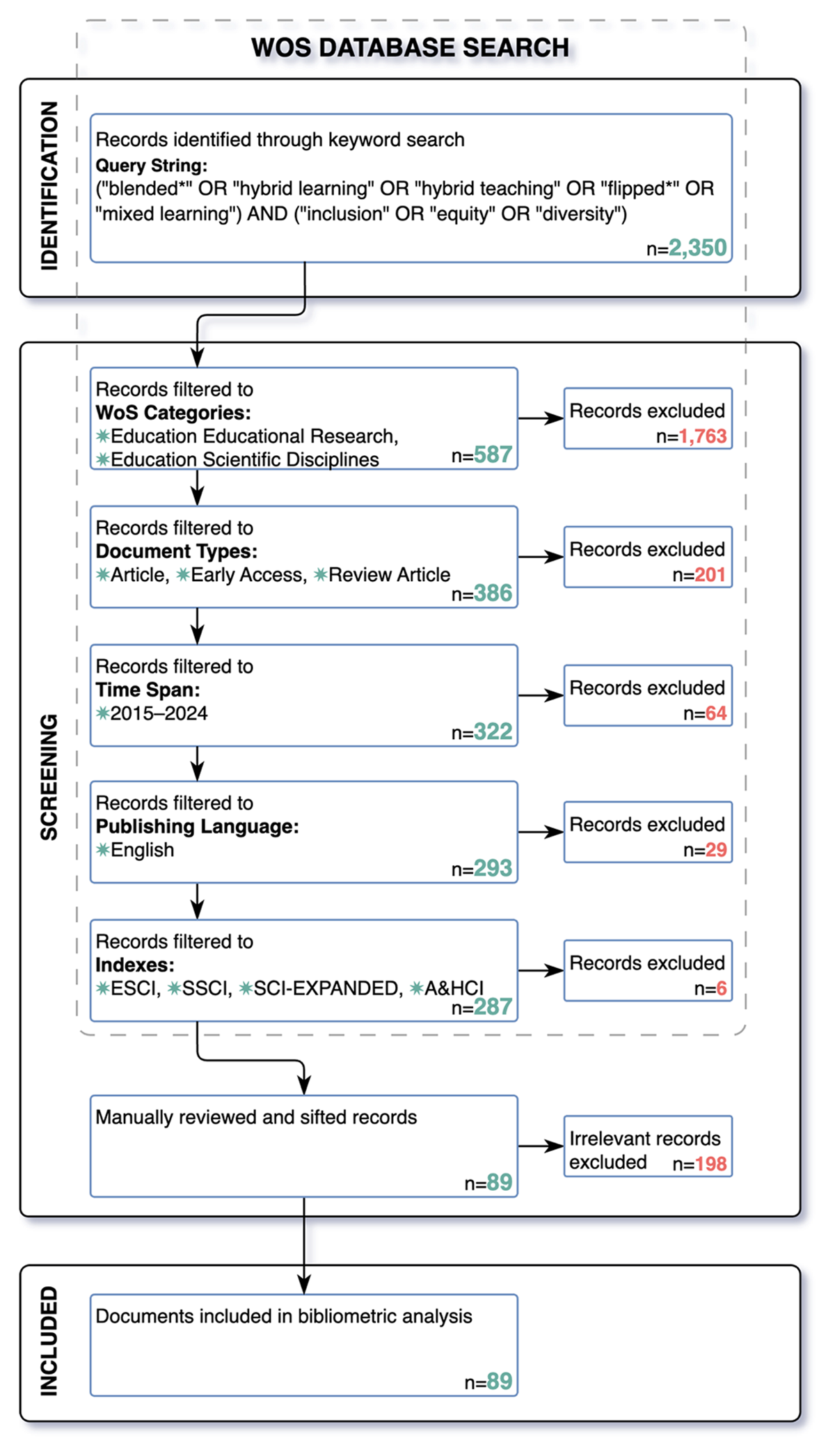
Figure 1
PRISMA flowchart for outlining the procedures of the bibliometric analysis in this study.
In bibliometric analyses, the robustness of inclusion and exclusion criteria is crucial (Patino & Ferreira, 2018). This study ensured that these criteria were clearly defined and strictly applied, allowing only studies directly relevant to the research questions to be included. This rigorous selection process excluded studies that were irrelevant to the EDI concept or utilized in unrelated contexts, ensuring the reliability and focus of the analysis.
For the analysis, frequently used terms in the context of blended learning were scanned, and expressions such as blended learning, hybrid learning, hybrid teaching, flipped learning, and mixed learning were included in the keyword set. In the context of EDI, these keywords were combined with terms like equity, diversity, and inclusion using the conjunction AND to create a comprehensive search strategy. Publications retrieved through this systematic search were manually reviewed by three researchers to assess their relevance to the study’s scope. As shown in Figure 1, our initial search revealed 2350 publications through the WoS database. From an initial pool of 287 articles, manual evaluations identified 89 relevant studies.
Data Analysis
Content analysis focused on examining the theoretical frameworks, research methods, and data collection tools used in the reviewed studies. Following Erlingsson and Brysiewicz (2017) method, a coding scheme was developed, and articles were independently evaluated by three researchers. The inter-rater reliability for the second round of coding was calculated as κ = .917, indicating a “very good” level of agreement (Strijbos et al., 2006). The coding process was finalized after achieving consensus on all findings. To enhance transparency, an Excel-based coding matrix was developed in which each article was systematically coded under predefined categories: Article Title, Source Title, Publication Year, Research Methods, Research Designs/Models, Data Collection Tools, Variables, Participants, and Participant Size. This structured template allowed for consistent recording and comparison across studies, ensuring traceability from raw article information to thematic findings. Themes identified during the analysis were further grouped into overarching categories, with explicit rationale provided for merging related codes into broader themes.
The bibliometric analysis was conducted using tools such as VOSviewer and R Studio to generate illustrative graphs and visualizations through three key analysis networks:
Citation Analysis: Identifying the most frequently referenced journals, providing insights into key sources shaping the scholarly conversation on BL and EDI.
Co-Citation Analysis: Highlighting frequently co-cited studies to map the interconnectedness of influential research.
Co-Occurrence Analysis: Selecting and classifying keywords from relevant articles to visually represent the most prevalent themes and their interrelationships in the context of BL and EDI.
For bibliometric mapping, thresholds were applied to ensure interpretability: for example, keywords had to appear at least five times to be included in co-occurrence networks, and co-citation clusters were interpreted only when links exceeded a minimum strength value. These criteria provided a consistent and rigorous basis for drawing conclusions from the visualizations.
Results
Content Analysis
In terms of RQ1, this section explored trends in research methods and models/designs, participants, data collection tools, variables, and patterns in keywords in studies focused on the studies. Figure 2 illustrates the distribution of the 89 articles by year.
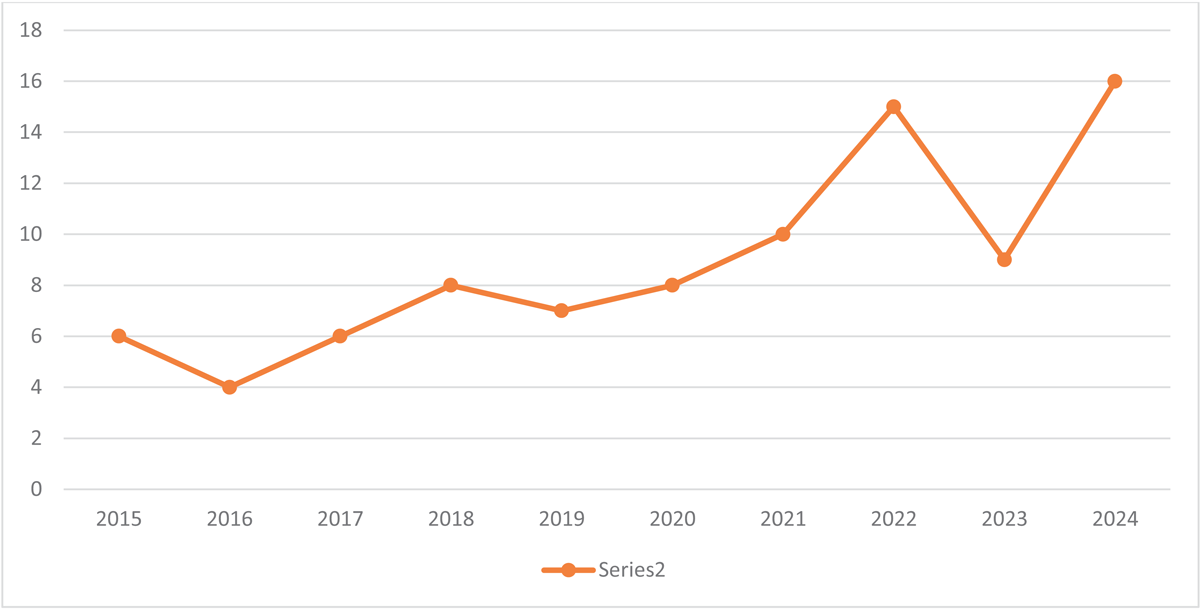
Figure 2
Number of publications by year.
According to Figure 2, the highest number of articles on BL and EDI was published in 2024, with a total of 16 publications. From 2016 onward, there was a gradual increase in the number of articles, reflecting a growing interest in the topic. This growth pattern may continue in the next years as more institutions prioritize inclusivity and innovative learning approaches.
Participants
According to Table 2, it became evident that undergraduate students were the most frequently studied group, appearing in 20 studies. Academics and staff followed closely, being featured in 13 studies. Graduate students were the focus of 9 studies, while. K12 students appeared in 8 studies. This distribution demonstrated a strong focus on higher education students, particularly undergraduates, while also reflecting a growing interest in diverse groups such as K12 students. In the online Appendix we have illustrated the detailed findings of the content analysis of participants, data collection tools, variables of interest, methods of design, and theoretical frameworks.
Data Collection Tools
According to Table 3, it was clear that questionnaires/surveys were the most frequently used data collection tools, appearing in 30 studies. This indicated a strong emphasis on collecting direct responses from participants to understand their perspectives and experiences. Interviews followed as the second most common method, used in 24 studies, reflecting the importance of in-depth qualitative insights in exploring research questions. Document analysis was employed in 20 studies, followed by other more qualitative approaches.
Variables/Research Interests
According to Table 4, the most frequently studied variable was Engagement, which was used in 16 studies, reflecting a strong emphasis on understanding how learners interact with and participate in educational activities. This was followed by Academic Outcome, examined in 5 studies. Similarly, Motivation appeared in 4 studies, underscoring the importance of exploring factors that drive learners to engage and succeed. Collaboration/Communication was analyzed in 3 studies, showing a moderate interest in group dynamics and interpersonal interactions within learning environments. Variables such as Technological Use were examined in 2 studies, reflecting emerging but less dominant themes. It was observed that some studies had multiple dependent variables, while others had none.
Research Methods and Designs
According to Table 5, qualitative methods were the most commonly used, with a frequency of 23, were largely represented by Case Studies (16 studies), emphasizing in-depth contextual analysis.
Table 5
Frequencies of methods and models/designs.
| RESEARCH METHODS | f | RESEARCH DESIGNS/MODELS | f |
|---|---|---|---|
| Quantitative | 15 | Survey | 9 |
| Experimental | 7 | ||
| Correlational | 4 | ||
| Qualitative | 23 | Case Study | 16 |
| Descriptive | 5 | ||
| Narrative | 2 | ||
| Content Analysis | 1 | ||
| Discourse Analysis | 1 | ||
| Phenomenology | 1 | ||
| Mixed/Triangulation | 20 | Convergent parallel | 15 |
| Explanatory sequential | 3 | ||
| Embedded | 2 | ||
| Other/Theoretical/Descriptive | 11 | Systematic review | 7 |
| Position paper | 2 | ||
| Comparative | 1 | ||
| Report | 1 | ||
| Network analytics/Digital/Innovative | 3 | Learning analytics | 3 |
| Practice Based | 4 | Design-based research | 3 |
| Action research | 1 |
[i] *One study may employ more than one research design/model.
Mixed/triangulation methods appeared in 20 studies were largely represented by Convergent Parallel designs appeared in 15 studies, followed by Explanatory Sequential in 3, reflecting a preference for combining qualitative and quantitative approaches for comprehensive insights. Quantitative methods, used in 15 studies, predominantly employed Survey designs (9 studies) and Experimental designs (7 studies), indicating a focus on data-driven measurements and causal relationships.
Thematic Analysis
In terms of RQ2, a thematic analysis of the selected 89 studies provided a more nuanced understanding of how BL intersected with EDI. Five primary themes emerged: Digital Accessibility and Equity, Cultural and Gender Diversity, Inclusive Pedagogical Practices, Hybrid Learning and Inclusion, and Technology Integration for EDI. Each theme delved into specific challenges and opportunities, with insights supported by examples from the reviewed articles. Again in the Online Appendix we have provided an overview of how the 89 studies link to these five primary themes. While these themes are presented individually for clarity, they are also deeply interconnected
Digital Accessibility and Equity
This theme examined the extent to which BL environments could bridge or potentially worsen digital divides. While such models promise broader access to education, they also may risk reinforcing inequalities if infrastructure and resources are not equitably distributed. For example, Richwine et al. (2022) underscored the transformative potential of online and blended Master of Social Work programs in facilitating educational access for marginalized groups. By expanding opportunities for older, working adults and individuals in rural areas, these programs addressed the barriers posed by traditional, location-bound education models. The authors emphasized the role of such programs in increasing workforce diversity and suggest targeted policy interventions to sustain these gains. Similarly, Pearson et al. (2019) delved into the importance of embedding inclusive practices in STEM BL. Their findings revealed that inclusive approaches, such as accessible digital resources and tailored curriculum designs, not only enhanced learning for disabled students but also promoted broader equity. These examples highlight the intersection of technological innovation and equitable education, paving the way for more inclusive academic landscapes. These findings indicate that digital equity is not an isolated issue but interacts with cultural and institutional factors, shaping who benefits from BL opportunities.
Cultural and Gender Diversity
BL models can foster cultural and gender diversity by accommodating the needs of underrepresented groups and promoting inclusivity in learning experiences. For example, Vincent-Ruz et al. (2024) highlighted how applying QuantCrit principles in General Chemistry classrooms revealed a more nuanced understanding of the challenges faced by Black and Latino students. Participation disparities were influenced by systemic factors, such as classroom attendance policies, rather than individual deficits. By advocating for equitable teaching practices that account for cultural contexts, this research supported the idea that BL models can address cultural diversity more effectively. Sanusi (2022) explored the role of BL in creating inclusive environments for international MBA students. By analyzing the acceptance and use of technology among a culturally diverse cohort, the study underscores the importance of designing learning experiences that cater to diverse cultural needs. The findings suggest that inclusive BL practices can foster equity in participation and improve engagement across demographic groups. Patte et al. (2024) indicated how the COVID-19 pandemic exacerbated gender disparities in educational experiences, with female students reporting more significant declines in school connectedness compared to males.
Inclusive Pedagogical Practices
This theme explored how BL environments could support inclusive teaching strategies that address the needs of diverse learners. By combining digital and face-to-face methods, educators can create flexible and adaptive learning experiences. For example, Konijn et al. (2018) illustrated how flipped classroom models could effectively address diversity in higher education. By delivering lecture materials online and devoting in-class time to active problem-solving, educators created flexible learning environments that catered to varying student needs. Similarly, Andujar and Nadif (2022) illustrated how a flipped learning model could promote inclusivity in classrooms for English as a Foreign Language. Their study showed how incorporating features such as captions, text, and sign language into video materials allowed learners with disabilities to engage effectively with the content. The use of adaptive strategies ensured that all students, regardless of their abilities, could participate and succeed in the learning process. These examples underscore the potential of BL models to create inclusive and adaptive educational experiences. However, the success of these practices depends not only on their design but also on broader conditions such as access to technology and cultural acceptance of learner-centered pedagogy. In many cases, inclusive pedagogy overlaps with digital accessibility and cultural diversity, illustrating the cross-cutting nature of BL × EDI challenges.
Hybrid Learning and Inclusion
Blended and hybrid learning models inherently combine online and offline modalities, offering unique opportunities to promote inclusion. This theme explored how these models could create equitable and supportive environments for all learners, regardless of their circumstances or situations. Fabian et al. (2024) explored how synchronous hybrid learning models accommodated diverse student preferences by offering both online and face-to-face participation options. The study revealed that hybrid learning enabled students to balance personal circumstances with educational goals, creating an inclusive environment that supported flexibility and equity. However, the research also noted the importance of addressing collaboration challenges to maximize engagement. Similarly, Thomas and Bryson (2021) examined real-time hybrid learning approaches developed during the pandemic. Their study emphasized the value of flexible classroom layouts, technological enhancements, and inclusive communication strategies in ensuring equitable learning experiences. By bridging the gap between proximate and online students, the dual-mode teaching model fostered inclusion and supports diverse learner needs. These examples underscore the potential of hybrid learning to provide supportive, adaptable, and inclusive educational environments.
Technology Integration for EDI
The fifth and final theme, the integration of advanced technologies such as AI and virtual reality, into BL systems has the potential to transform educational practices, making them more inclusive and equitable. For example, Bond and Cawood (2021) illustrated the potential of virtual outcrop models in BL environments, particularly in geoscience education. By providing a digital alternative to fieldwork, these models made education more accessible to students who faced physical, financial, or logistical challenges. Frampton et al. (2023) explored how technology-enhanced, arts-based approaches in BL programs could create inclusive and equitable learning experiences. Their study emphasized the importance of integrating non-verbal and creative communication techniques, enabled by technology, to foster deeper intercultural understanding and inclusivity in international classrooms. This innovative use of blended intensive programs highlighted the potential of combining technology with creative pedagogies for inclusive education.
Bibliometric Analysis
Overview of the Current State of Research
In terms of RQ3, the research on BL and EDI comprised 89 studies published across 63 journals, reflecting an annual growth rate of 11%. Each document received an average of 17.88 citations (range 0 to 158), indicating some substantial academic influence. A total of 297 authors contributed to these studies, with only 16 single-authored works, emphasizing the collaborative and interdisciplinary nature of research in this field. The average number of co-authors per document was 3.4, and 13% of the studies involved international co-authorship, reflecting a modest level of international collaboration in BL and EDI research.
As indicated in the Online Appendix Table 1 research on BL and EDI is predominantly led by Anglo-Saxon countries like the USA, Australia, and the UK. The prominence of these countries aligns with their established policies and cultural focus on equity and diversity, which are central to the EDI concept. Emerging contributions from China and Spain reflect increasing recognition of these issues globally, highlighting a growing commitment to addressing inclusion and diversity in educational systems across different cultural contexts.
Leading Journals, Institutions and Authors
In terms of leading journals, as indicated in the Online Appendix Figure 2 Computers & Education (n = 5), Education and Information Technologies (n = 5), and Education Sciences (n = 5) each published the same number of articles, making them the top contributors in terms of publication count, while in terms of citations Computers & Education (n = 307) was the most cited journal, followed by Internet and Higher Education (n = 183).
Figure 3 highlights the most cited articles in BL and EDI research, showcasing their total citation counts and average citations per year. The article by Darling-Hammond et al. (2020) stands out with the highest total citations, reflecting its substantial impact in the field. In the Online Appendix Figures 4 and 5, we illustrated the co-citation network of key studies and thematic mapping in BL and EDI research.
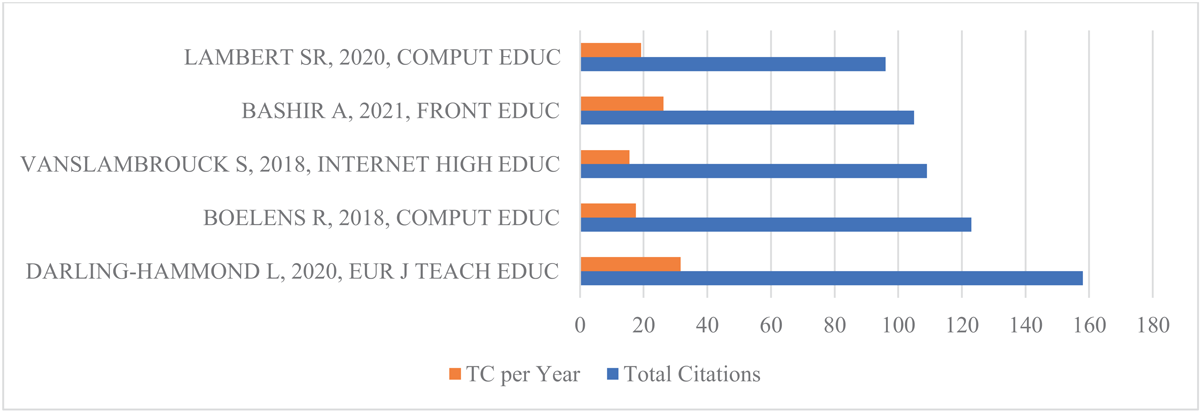
Figure 3
Most cited articles in BL and EDI research.
Analysis of Keywords
Figure 4 presents a keyword co-occurrence analysis for research on BL and EDI. The analysis highlighted the most commonly used terms and their interconnections, providing insights into the thematic focus of the field.
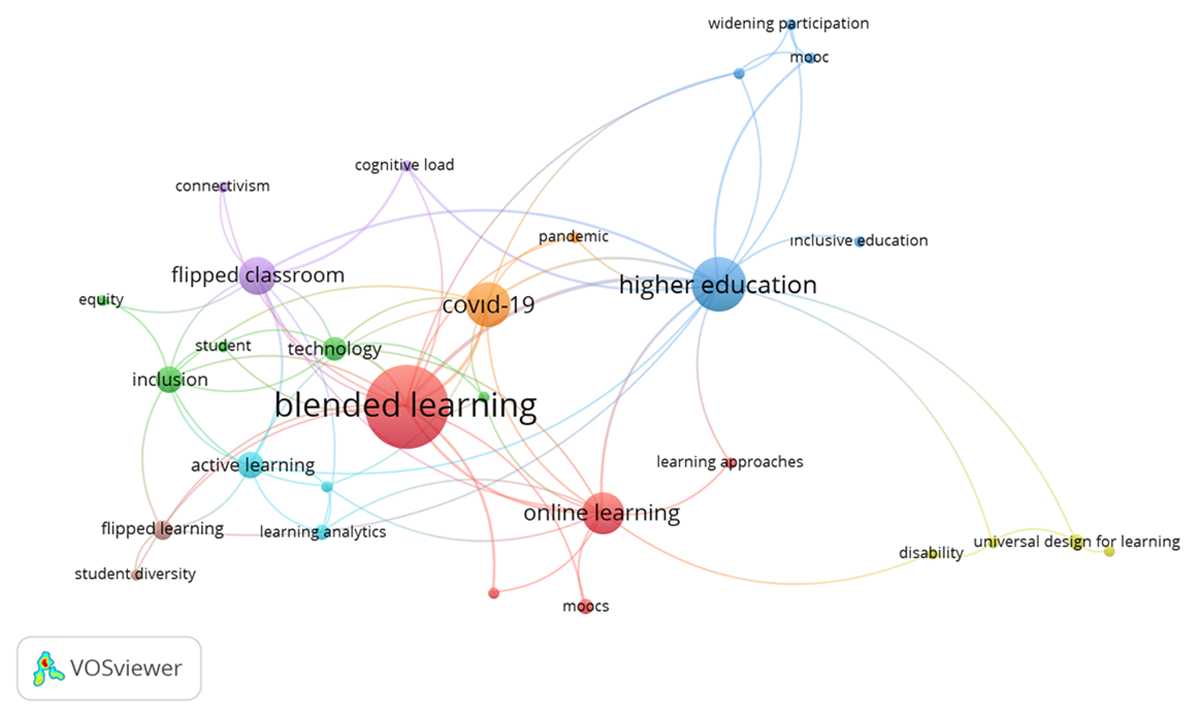
Figure 4
Analysis of keywords.
BL, higher education, and online learning are central terms, reflecting the primary focus of research in the field. Keywords such as inclusion, student diversity, and equity demonstrate the integration of EDI concepts into BL studies. The presence of COVID-19 as a significant node indicated the influence of the pandemic in shaping recent research priorities, particularly in exploring blended and online learning approaches. Additionally, terms like flipped classroom, learning analytics, and universal design for learning highlight methodological and pedagogical considerations, while active learning and technology showcase the emphasis on innovative practices in education.
Conclusion and Discussion
This study makes a unique contribution by being among the first to systematically analyze the intersection of BL and EDI using bibliometric and content analysis. The identification of 89 studies in this emerging field highlights its developmental stage, limiting comparisons and generalizations with existing literature.
In terms of RQ1, the content analysis revealed several critical trends in BL and EDI research, emphasizing the diversity of participants and methods employed in the studies. Studies predominantly target higher education undergraduates, reflecting accessibility and relevance in this context (Anthony et al., 2019). The inclusion of special needs groups and K12 students, though less frequent, suggests a growing recognition of the need to address inclusivity and diversity across broader educational contexts. Yet, this concentration on higher education raises questions about whether current research sufficiently captures the realities of learners in less-resourced or marginalized schooling contexts.
The reliance on questionnaires, surveys, and interviews highlights a focus on participant perspectives and experiences, reflecting the exploratory nature of BL and EDI research. However, the limited use of innovative tools like video or data analytics suggests a need for methodological diversification to capture real-time interactions in BL environments. This methodological gap signals an area of debate, as reliance on self-reported perceptions may overlook the more complex, and sometimes contradictory, dynamics of inclusion in practice.
In terms of variables, the focus on engagement and academic outcomes as key variables reflects researchers’ priorities in understanding how BL fosters participation, performance, and equity. The lower emphasis on collaboration, communication, and professional development highlights an opportunity for future research to delve deeper into group dynamics and educator training, crucial for creating inclusive learning environments. From a practical perspective, this finding suggests that professional development for educators should not only focus on technical BL design but also on cultivating inclusive communication and collaborative skills.
The methodological findings reveal a balanced use of mixed, qualitative, and quantitative approaches, showcasing the interdisciplinary nature of BL and EDI research. The frequent use of mixed methods reflects the need to capture both broad trends and detailed insights (Creswell & Plano Clark, 2017). The dominance of case studies in qualitative research aligns with Merriam’s (2010) emphasis on contextual understanding in education.
In terms of RQ2, the thematic analysis underscores the pivotal role of BL in advancing EDI while exposing persistent challenges. Digital Accessibility and Equity reveals BL’s potential to enhance educational access for disadvantaged groups through digital resources and innovative program designs (e.g., Richwine et al., 2022). However, disparities in infrastructure and uneven access to technology continue to hinder its transformative potential, necessitating targeted policy reforms and equitable resource allocation. Similarly, Cultural and Gender Diversity highlights the value of integrating inclusive practices, such as equitable representation in course content and sensitivity to systemic disparities, as demonstrated in studies addressing diverse student cohorts (e.g., Vincent-Ruz et al., 2024).
The findings on Inclusive Pedagogical Practices emphasize adaptive strategies, such as flipped classrooms and multimedia-rich learning materials, which cater to diverse learning needs (e.g., Andujar & Nadif, 2022). However, effective implementation requires robust institutional support and enhanced educator training. Furthermore, Hybrid Learning and Inclusion showcases the unique flexibility of combining online and face-to-face modalities, enabling broader participation while highlighting the need for strategies to overcome collaboration challenges in hybrid environments (e.g., Fabian et al., 2024). Lastly, Technology Integration for EDI demonstrates the potential of emerging technologies, including virtual reality and AI-enhanced tools, to transform learning environments by addressing physical and logistical barriers (e.g., Bond & Cawood, 2021). However, ethical considerations and equitable access remain critical areas for further exploration. The findings highlight the potential of BL in supporting EDI while also pointing to the efforts needed to create more inclusive and effective learning environments. While BL models offer significant opportunities to implement inclusive strategies and foster equitable educational settings, realizing this potential fully requires careful planning, innovative policy development, and sustained research efforts. The flexibility and adaptability of BL can serve as a powerful tool to advance diversity and inclusion goals in education, but addressing existing limitations and challenges will require ongoing commitment and targeted interventions.
In terms of RQ3, the relatively small number of publications on BL and EDI suggests that this field is still emerging, potentially due to the relatively recent recognition of the importance of integrating these concepts and the challenges of addressing EDI within the BL context. The predominance of contributions from mostly Anglo-Saxon countries highlight the need for greater global engagement. Expanding international collaborations could enhance the diversity of perspectives and provide richer insights into how BL and EDI are implemented across various cultural and educational contexts, addressing challenges such as varying educational policies, technological infrastructure, and cultural approaches to equity and diversity. Future comparative work across regions with differing resources would be especially valuable to test the transferability of BL × EDI practices and to reveal context-specific challenges.
The thematic mapping created with R Studio highlights foundational themes like “flipped classroom” and “online learning,” which serve as key building blocks for BL and EDI research. Emerging themes such as “equity” and “resources” suggest new avenues for exploration, emphasizing the field’s evolving nature. Keyword analysis identifies core terms like “blended learning,” “higher education,” and “inclusion,” with the prominence of “COVID-19” reflecting the pandemic’s impact on advancing blended and online learning practices.
The study offers valuable insights but is constrained by the limited number of publications, which narrows the scope of the bibliometric analysis. Future research could expand the dataset, explore deeper connections among themes, and utilize advanced network analysis to map collaborations among authors, institutions, and countries. Longitudinal studies could reveal the evolution of BL and EDI themes over time, while comparative analyses across cultural and educational contexts could identify global best practices for equity and inclusion. Equally, drawing on critical perspectives that question the assumed inclusivity of BL would sharpen future debates. Integrating practitioner perspectives and fostering cross-sector collaboration would further bridge the gap between theory and practice, enhancing the study’s relevance to academic and practical stakeholders.
Data Accessibility Statement
The datasets used and/or analysed during the current study are available from the corresponding author on reasonable request.
Sustainable Development Goals (SDGs)
This study is linked to the following SDG(s): Quality education (SDG 4), Gender equality (SDG 5), and Reduced inequalities (SDG 10).
Additional File
The additional file for this article can be found as follows:
Author Notes
Based on Academic Integrity and Transparency in AI-assisted Research and Specification Framework (Bozkurt, 2024), the authors of this paper acknowledge that the paper was reviewed, edited, and refined with the assistance of ChatGPT 4o, complementing the human editorial process. The human authors critically assessed and validated the content to maintain academic rigor. The authors also assessed and addressed potential biases inherent in the AI-generated content. The final version of the paper is the sole responsibility of the human authors.
Ethics and Consent
Ethical approval was not applicable for this study, as it involved the analysis of previously published literature and did not include human participants, personal data, or any intervention requiring ethical review.
Competing Interests
The authors have no competing interests to declare.
Author Contributions (CRediT)
Gürhan Durak: Conceptualization, methodology, investigation, data curation, formal analysis, visualization, writing – original draft preparation, writing – review and editing. Serkan Çankaya: Methodology, investigation, validation, writing – original draft preparation, writing – review and editing. Semiral Öncü: Data curation, investigation, formal analysis, writing – review and editing. Bart Rienties: Supervision, conceptualization, project administration, writing – review and editing. All authors have read and agreed to the published version of the manuscript.