
Introduction
When the interaction between technological factors and change is examined; technological factors are at the beginning and basis of the reasons for the acceleration of the change process. The proliferation of the Internet, the fact that events taking place anywhere in the world instantly affect the whole world, and the acceleration and expansion of communication also affect organisations (Pousttchi et al., 2019). The widespread and high performance of computers and machines at every stage of organisations from production to distribution with various technologies has been a great source of change for organisations (Foerster-Metz et al., 2018).
With the rapid development and changes in technology, solutions are produced with information technologies to meet social and sectoral needs and digital transformation process is experienced in a cyclical structure. In the face of this technological change process defined under the concept of digital transformation, sectors and fields have to adapt to it and change and transform in many ways (Van Veldhoven & Vanthienen, 2022). Digital transformation is defined as the process of transition to a new way of doing business and thinking by using digital, social, mobile and new technologies to keep up with the digital age. This change and transformation is seen in every conceivable field such as education, health, industry, agriculture and finance (Rodríguez-Abitia & Bribiesca-Correa, 2021).
With the changes taking place in the world and the accompanying globalisation, the borders of countries have disappeared and everything that happens in countries is felt all over the world. The effect of inhibiting cultural factors has decreased and the importance of information and technology has increased. All these developments have forced organisations to change their functions, strategies, structures, objectives and many other characteristics. This rapid change in science and technology has affected and connected all people. The concept of world citizenship has evolved from national citizenship to world citizenship and a single world market has started to emerge. Therefore, this change has directly affected education (Bilyalova, 2020; Mitroulis & Kitsios, 2019).
Digital transformation has been a significant driver of change across various sectors, including education. The integration of digital technologies in educational settings has revolutionized the way learning is delivered and experienced. This study aims to explore the intersection of digital transformation and e-learning within the educational context, employing a bibliometric approach to provide a detailed analysis of current research trends, key themes, and gaps in the literature.
Digital Transformation
Digital transformation is more about strategy than technology. Digital strategy includes being open to change, understanding customer focus, being willing to learn, continuously generating innovative ideas and solutions, agility, the ability to share information, and valuing collaboration (Schwertner, 2017). The basis of strategy and development is based on a situation analysis. Situation analysis is a type of analysis in which the company’s strengths, weaknesses, as well as opportunities and threats within the industry are identified. It is mainly used to determine the competitive position of the company and to develop strategic plans. It is vital for organisations to develop a digital transformation strategy for both those who develop and implement the strategy and those who are affected by it (Ziyadin et al., 2020).
A digital transformation strategy that holistically addresses the opportunities and risks associated with emerging digital technologies needs to be aligned with other operational or functional strategies (Hess et al., 2016). It is obvious that organisations cannot make all these strategic moves at the same time; strategies should be prioritised according to their importance or programmed according to their level of achievability. If there is not enough budget for new product and service strategy, digitalisation can start with customer experience (Al-Moaid & Almarhdi, 2024).
A holistic view and approach within the organisation is a crucial element for strategy implementation. Companies should create activities to help them introduce new tools and quickly integrate them into employees’ daily tasks. In this way, organizations can ensure that employees are well-informed and better prepared, which may help minimize potential resistance and challenges typically associated with digital transformation processes. When the digital transformation strategy is clear and understandable, employees will understand that the fact that the company is constantly changing is not a negative thing, on the contrary, it is in an agile state that can respond quickly to changes. Finally, businesses should trust their strategies and take risks when they need to take risks (Saleh & Awny, 2020).
Digital Transformation in Education
Since educational organisations train the manpower of all organisations in the society, they are among the organisations that need planned and purposeful change the most. In the transition from industrial society to information society, universal changes in science and technology have deeply affected the education system as in many other fields. With these changes, fundamental changes have occurred in the content and transfer of curricula, teaching methods and techniques, and the roles of teachers and students (Bogdandy, 2020).
Education systems, which are responsible for the training of qualified manpower required for the functioning of social systems, are affected by changes in various fields such as scientific and technological developments, globalisation, inter-country economic and political formations as well as the social dynamics of the countries themselves. Therefore, each country endeavours to adapt its education system to these changes in various fields. Our age is an age of change. Rapid scientific and technological developments accelerate the process of change and force organisations to innovate. This phenomenon closely affects the education management system, which is a social institution, and school organisations, which are formed to fulfil certain tasks within this system (Balkin & Sonnevend, 2016; Veckalne & Tambovceva, 2022).
The world continues to develop and change with the development of technology and the beginning of the fourth industrial revolution. Digital transformation, which affects many sectors, also affects the education sector (Gurcan et al., 2023). As the education sector becomes more competitive, digital transformation is now becoming a necessary tool for survival as the new digital world requires educators to adapt and adopt digital technologies, methodologies and mindsets (Oliveira & De Souza, 2022). After the COVID-19 Pandemic, which caused school closures in countless countries around the world, many schools and teachers have turned to digital technology to help educational life continue (Timotheou et al., 2023). After the COVID-19 Pandemic, people started to realise the far-reaching power of education-focused technology. The digital world requires educators to find new ways to integrate technology into teaching practices. Schools that manage this well naturally stand out from the rest (McCarthy et al., 2023).
As much of the digital transformation in the education sector is quite recent, many still do not fully realise how educational technologies are changing the face of education forever (Mohamed Hashim et al., 2022). Internet and broadband connectivity have great potential to close educational gaps. The internet can provide innovative ways to reach students, including those belonging to minority or disadvantaged groups and those with special needs. Internet connectivity increases access to information and educational resources, helping to equip students with many of the skills they need to succeed in the digital age (Rego et al., 2024; Kopp et al., 2019).
Digital transformation is an important process to integrate digital solutions into daily life. Education is a sector that covers a large part of daily life and has only recently started to digitalise. Digital solutions in education are divided into two as hardware or software resources. Hardware-based solutions refer to tablets, smartphones and interactive smart boards to enhance the learning process, while software-based solutions refer to learning management systems that bring students and teachers together on certain platforms and transform the learning process (Torres-Ruiz & Moreno-Ibarra, 2019; Qarkaxhja et al., 2021).
E-Learning and Beyond: Modalities in Digital Education
In today’s educational landscape, digital learning rarely exists in a single, isolated form. Instead, it spans a continuum that includes fully online (e-learning), blended (hybrid), distance, and mobile learning formats. While this section focuses primarily on e-learning, it is important to acknowledge that these modalities increasingly interact and overlap with each other, shaping a more dynamic and flexible digital education ecosystem.
E-learning is a learning model that uses technology to make the process of acquiring knowledge and learning independent of time and space (Maatuk et al., 2022). E-learning is based on the idea of using options in time, space and learning and bringing innovation to the concept of learning. It is an educational technology in which computers and communication technologies are used and teachers and students are not actually in the same environment. The main difference between e-learning and classroom-based learning is the environment in which education is delivered. In traditional learning, teachers can take full control by adapting to the learning environment and making changes when necessary. In traditional learning, the teacher’s ability, personality, quality, adaptability to learning, and production of curriculum materials will affect the learning and teaching performance (Valverde-Berrocoso et al., 2020; O’Neill, 2024). However, in practice, the lines between traditional classroom learning and e-learning are increasingly blurred, especially with the rise of hybrid and blended models that combine face-to-face and online components.
E-learning can be based on synchronous or asynchronous communication. In synchronous e-learning, teachers and students meet in a computer environment at a predetermined time and carry out educational activities. Since this method allows instant communication over the internet, it creates a two-way interactive education environment. In asynchronous e-learning, students can use hardware methods or log in to the teaching system to access pre-prepared course content (Amiti, 2020).
The advantages of e-learning are listed as follows. It allows education regardless of time and place, since it supports learning with audio and video content, productivity can be increased, the content is easily accessible and no physical material is needed, learning materials can be updated quickly against possible negativities, and it provides the opportunity to access the content in the e-learning environment repeatedly. It also provides cost advantages and e-learners can customise the learning materials according to their needs. This allows learners to better control the learning process and at the same time, it is stated that it offers the possibility to learn materials better and faster than instructor-led learning methods (Akhter et al., 2021; Stecuła & Wolniak, 2022).
E-learning has disadvantages as well as advantages. It is clear that if any of these disadvantages occur, the efficiency of education will decrease. It is stated that the fact that educational institutions and students do not have sufficient knowledge about the technical parts (computer, internet, etc.) or do not have sufficient facilities reduces the quality of education (Malik & Rana, 2020). In order for e-learning to be beneficial, equal opportunities and technical support must be provided to everyone. When these criteria are met, a much more suitable environment will be created for educational institutions and students and may enable the quality of education to increase. Taken together, e-learning, distance education, and mobile learning represent not mutually exclusive models, but complementary tools in the broader framework of digital transformation in education. Effective implementation increasingly depends on the ability to orchestrate these models into adaptive, inclusive, and context-sensitive learning strategies.
Method
Research Methodology and Data Collection
Bibliometric analysis is an approach aimed at identifying the current dynamics and future trends of research fields by utilizing various methods. This approach helps to detect the relationships among academic studies through the most influential researchers, countries, publications, and, most importantly, keywords within disciplines. Due to its advantages such as being effective, rapid, and easy to implement, bibliometric analysis is frequently used (Berigel et al., 2024; Boztaş et al., 2023).
Statistical bibliography is the ability to explain the process of written communication, the nature of the discipline and its development through written communication by listing and analysing various aspects of written communication (Donthu et al., 2021). Statistical bibliographies are used to ‘combine and interpret statistics on books and periodicals, to show historical movements, to determine national or general research use of books and periodicals, and to determine the general use of books and periodicals in many places’. Bibliometrics provides the opportunity to evaluate scientific research in the field of science, to reveal its current status and to make future decisions based on the information obtained (Passas, 2024). In addition to having descriptive features, bibliometrics also has evaluative features that reveal how it affects subsequent research through citation analysis (Passas, 2024). Bibliometrics is the evaluation of scientific research in the field of science, revealing its current status and based on the information obtained. Visual maps used in bibliometric studies are created by digitising bibliographic data. In this way, bibliometric diagrams allow us to easily see the relationships in the study area. By providing the researcher with an overview of the data as a whole, the subject can be examined from different perspectives. For this reason, it is more appropriate to conduct bibliometric studies on subjects with extensive literature. Through bibliometric research, it is possible to evaluate the questions and related terms belonging to the research subject rather than the research subject itself. In bibliometric research, technical issues such as authors, journals, articles, keywords, documents are usually analysed (Donthu et al., 2021; Ozkose & Gencer, 2017).
In this study, the Scopus bibliographic database, known for its extensive collection of high-quality publications, was chosen. Accordingly, a search was conducted in the Scopus database using the following query string to create the experimental dataset for the study.
TITLE-ABS-KEY(“e-learning”) OR TITLE-ABS-KEY(“open learning”) OR TITLE-ABS-KEY(“distance education”) OR TITLE-ABS-KEY (“distance learning”) OR TITLE-ABS-KEY(“m-learning”) OR TITLE-ABS-KEY(“mobile learning”) AND TITLE-ABS-KEY(“digital transformation”) AND TITLE-ABS-KEY(“education”)).
The PRISMA flow diagram, used to clearly outline the details of the dataset creation process, is presented in Figure 1.
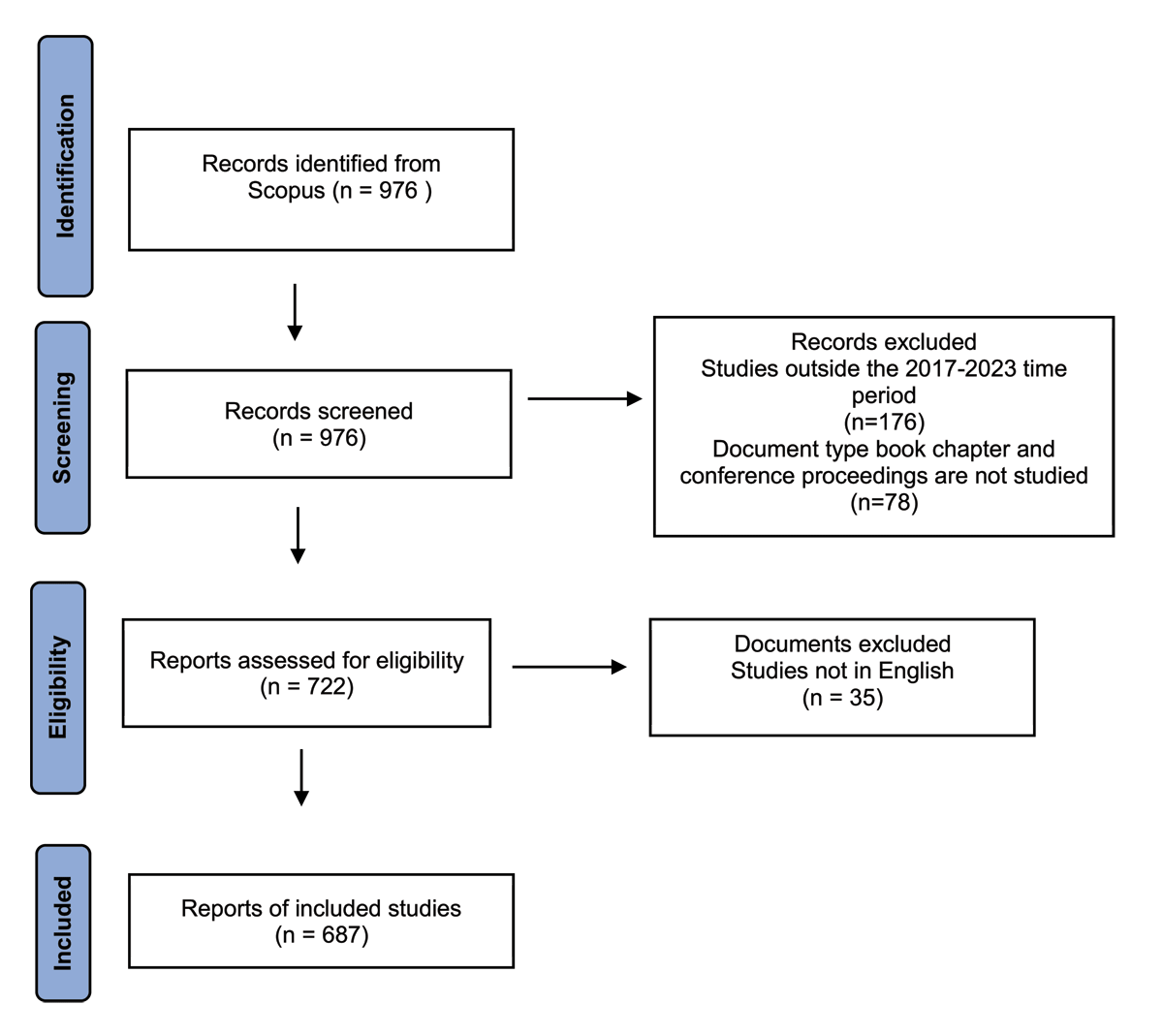
Figure 1
The dataset creation process.
As shown in Figure 1, the initial search identified 976 studies. The scope of the study includes peer-reviewed journal articles and conference proceedings published in English between 2017 and 2023. The analysis proceeded with 687 studies that met these criteria.
Data Preprocessing and Data Analysis
Data preprocessing is a critical step to ensure reliable results from the study. During this phase, keywords to be used in temporal modeling were reviewed, and necessary adjustments were made by identifying singular-plural forms, abbreviations, synonyms, and stopwords. Subsequently, to examine the evolution of distance education within the scope of digital transformation in education, the 687 scientific studies were divided into three periods: pre-Covid-19 (2017–2019), during Covid-19 (2020–2021), and post-Covid-19 (2022–2023). Both data preprocessing and data analysis were conducted using the R “bibliometrix” package through the web-based interface “Biblioshiny”. To ensure that the analysis focused on more prominent concepts, it was limited to keywords that appeared in at least five studies.
Following the preprocessing step, a trend topic analysis was conducted to identify which keywords stood out on a yearly basis within the study’s scope. Trend topic analysis involves tracking the frequency of keywords over time to detect emerging and popular trends. This type of analysis is valuable for uncovering the current trends in the research area for each examined year.
The defined periods were visualized using strategic diagrams, following the approach proposed by Callon et al. (1991). Strategic diagrams classify identified themes along two dimensions: centrality (x-axis) and density (y-axis). Here, centrality reflects the strength of a theme’s connections with other themes, while density indicates the theme’s internal development and maturity (Callon et al., 1991; Cobo et al., 2011).
Based on these two measures, strategic diagrams group themes into four categories: motor themes, basic themes, emerging or declining themes, and niche themes. Motor themes exhibit both high centrality and high density, representing key topics and driving trends within the research area. Basic themes, although marked by high centrality, display low density; this suggests they are not yet fully developed but hold potential to shape significant trends in the future. Emerging or declining themes rank low on both centrality and density, reflecting topics that are either newly surfacing or gradually fading from the research focus. Lastly, niche themes show low centrality but high density, indicating that while these topics are well-developed internally, they are considered less critical to the broader research domain (Cobo et al., 2011; Martínez et al., 2015). These diagrams play a vital role in understanding the importance of each theme and the specific contributions they make to the field. The thematic map allows for the observation of how topics converge or diverge (Aria & Cuccurullo, 2020).
Results
Performance Analysis
The graph depicting the annual trends of distance education studies within the scope of digital transformation in education is presented in Figure 2.
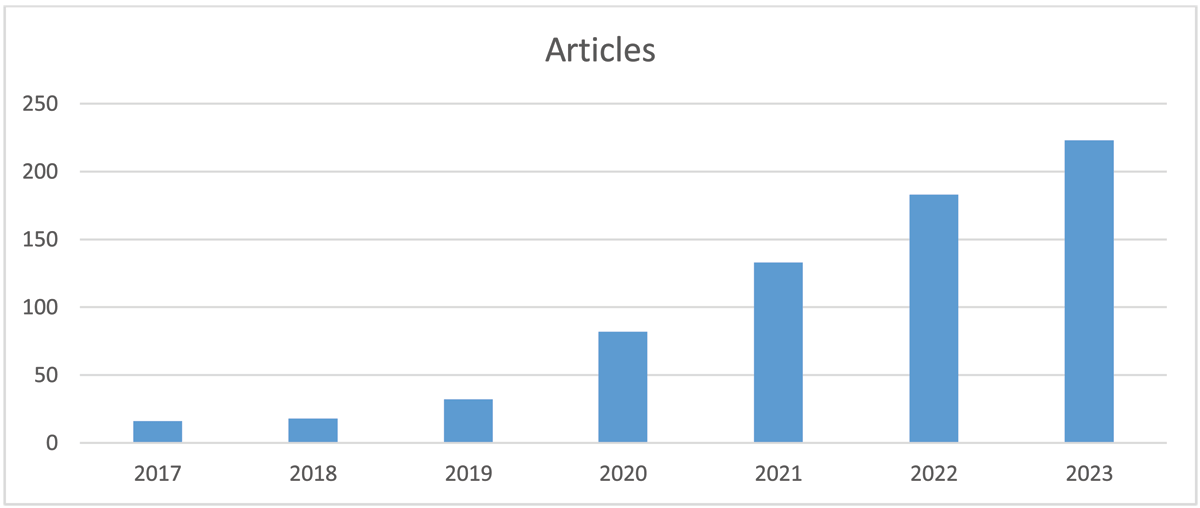
Figure 2
Research numbers by year.
As demonstrated in Figure 2, distance education studies within the scope of digital transformation in education have shown a steady increase over time. It is evident that the fewest studies were conducted during the 2017–2019 period (n = 66, f = 9.61%). During the 2020–2021 period (n = 215, f = 31.3%), this topic garnered greater attention, likely influenced by the impact of Covid-19. However, in the post-Covid-19 period of 2022–2023 (n = 406, f = 59.1%), distance education studies experienced a significant rise, exceeding the combined total of the previous two periods.
Trends over the Years
An analysis was conducted to identify trend topics in distance education studies within the scope of digital transformation in education based on their frequency over the years. The analysis revealed 17 keyword that appeared in at least five studies. The distribution of these trend keyword across years is presented in Figure 3.
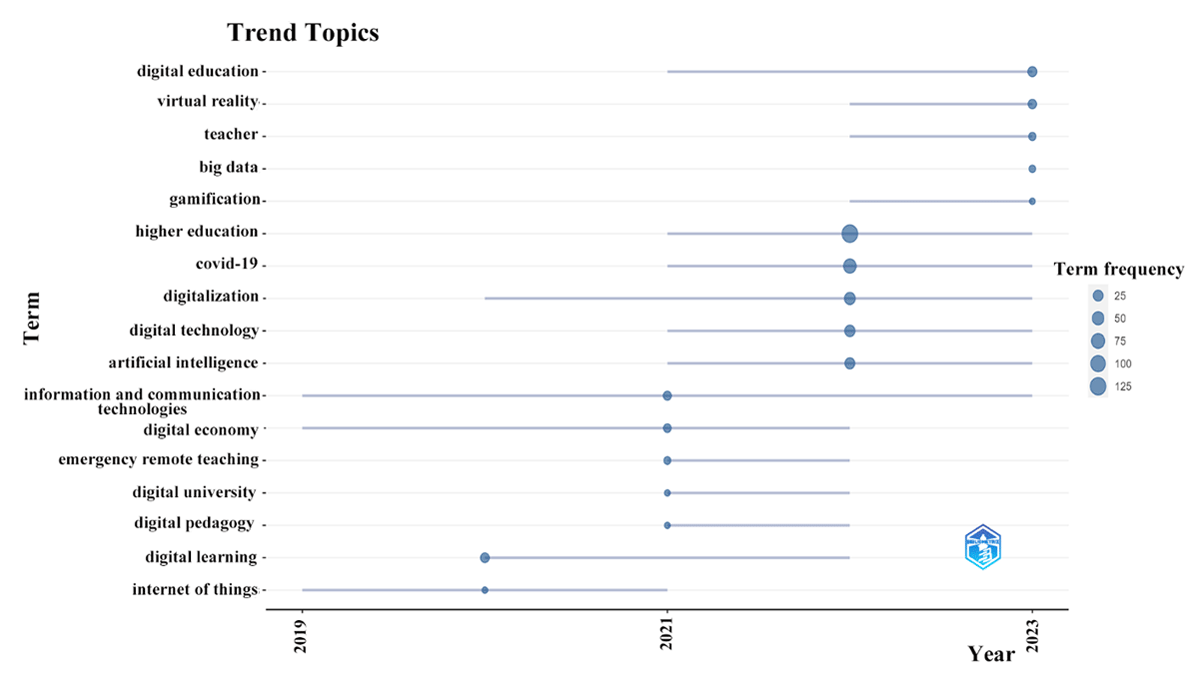
Figure 3
Trend topic distribution over the years.
An examination of Figure 3 reveals that the keyword “digitalization,” a significant keyword in the field, first emerged in 2020 but was studied more frequently in 2022. Similarly, the keyword “artificial intelligence,” which began to appear in 2021, became one of the most prominent keyword in 2022. Keyword such as “virtual reality” and “gamification” were notable during the 2022–2023 period. The keyword “big data,” on the other hand, emerged exclusively in 2023, marking it as the most recent focus of research.
Temporal Analysis of the Research Field
The temporal evolution of trends in distance education within the scope of digital transformation in education is illustrated through the strategic diagrams presented in Figures 4, 5, and 6. Additionally, the cluster contents of motor themes for each respective sub-period are provided in Tables 1, 2, and 3.
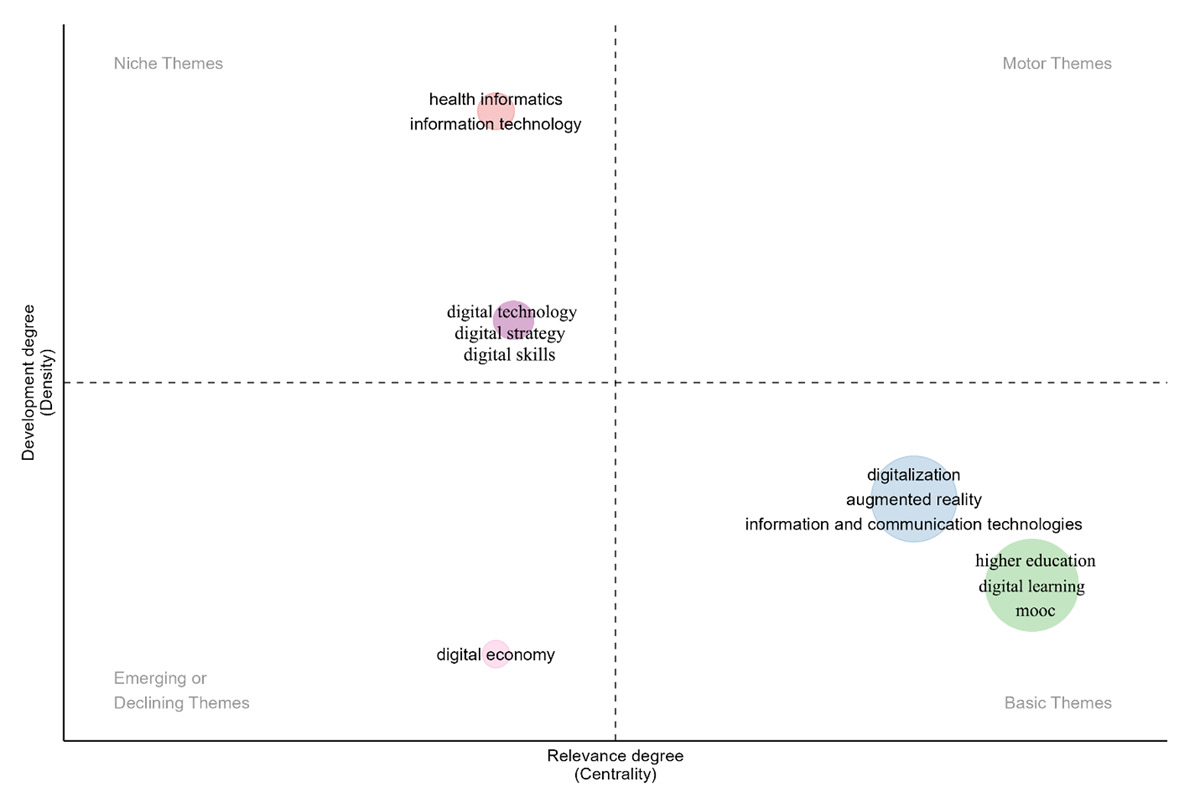
Figure 4
Pre-Covid-19 Sub-Period (2017–2019).
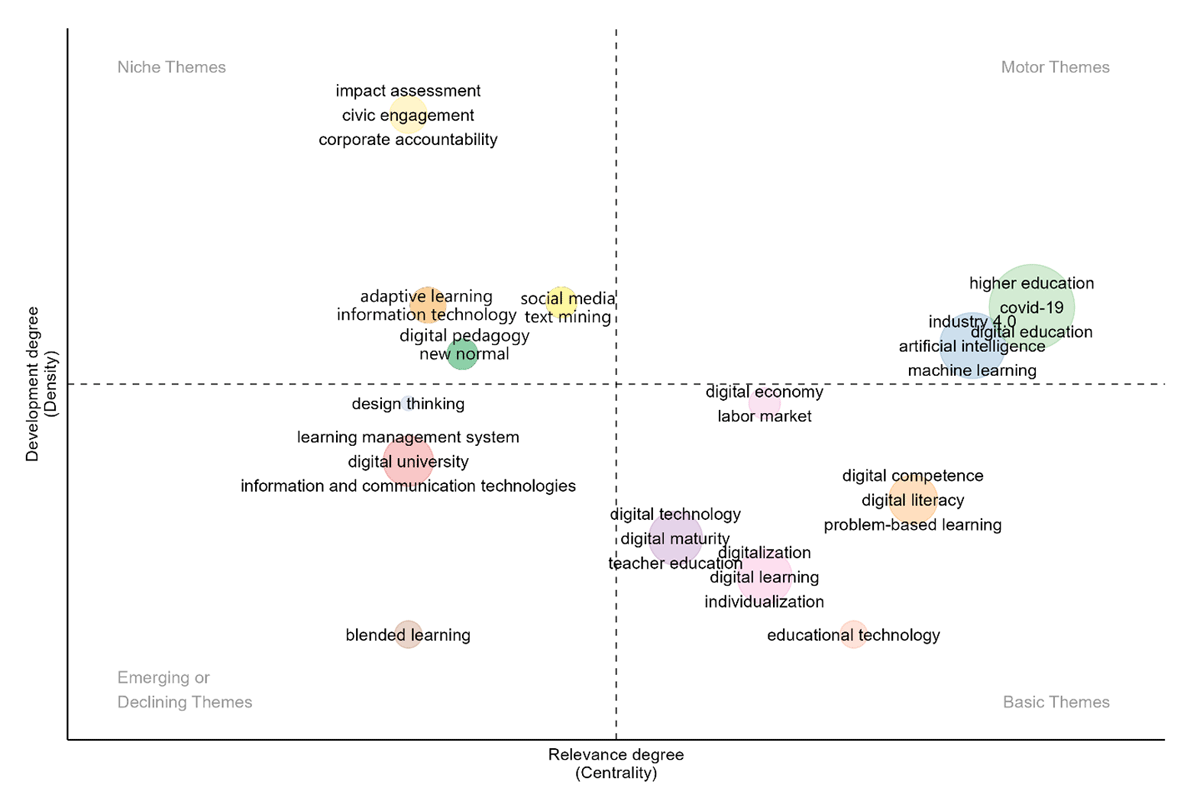
Figure 5
Covid-19 Period Sub-Phase (2020–2021).
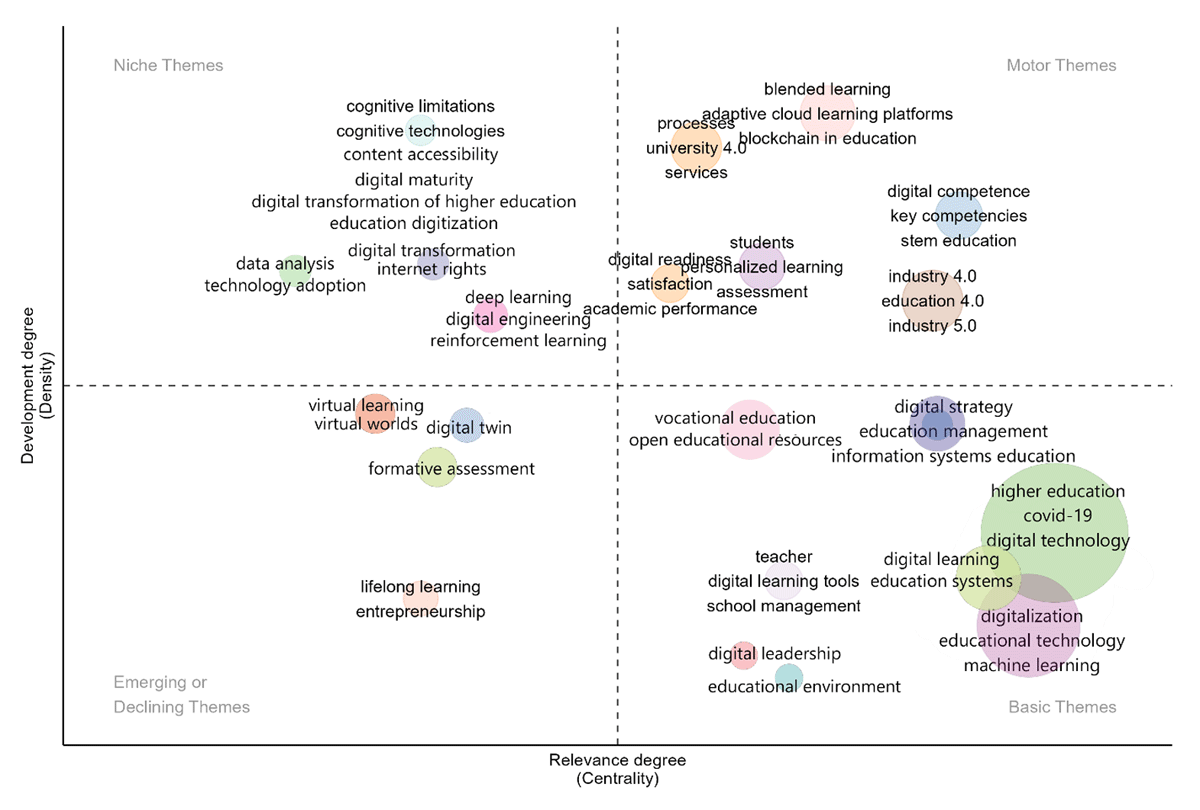
Figure 6
Post-Covid-19 Sub-Period (2022–2023).
Table 1
Basic themes emerging during the pre-Covid-19 period (2017–2019).
| TOPIC | KEYWORDS DEFINING THE TOPIC |
|---|---|
| Digital Education Ecosystem in Higher Education | higher education, digital learning, mooc |
| Digital Transformation and Innovative Approaches in Education | digitalization, augmented reality, information and communication technologies, artificial intelligence, experiential learning |
Table 2
Motor Themes Emerging During the Covid-19 Period (2020–2021).
| TOPIC | KEYWORDS DEFINING THE TOPIC |
|---|---|
| Educational Approaches in Higher Education During the COVID-19 Period | higher education, covid-19, digital education, emergency remote teaching, collaborative learning, educational innovation, entrepreneurship, student perception, challenge-based learning, digitization, entrepreneurial skills, learning analytics, virtual campus, virtual learning environment |
| Industry 4.0 and Sustainable Education | industry 4.0, artificial intelligence, machine learning, sustainable development, education 4.0 |
Table 3
Motor Themes Emerging After the Covid-19 Period (2022–2023).
| TOPIC | KEYWORDS DEFINING THE TOPIC |
|---|---|
| Smart Technologies in Education | blended learning, adaptive cloud learning platforms, blockchain in education, cloud-based ai education applications, cloud-based e-learning platforms, cloud-based learning environments, competency-based education platforms, educational data mining, emotion ai immersive technology applications in education smart campus technologies, social analytics in education, tools and services |
| Smart Campus and Digital University | processes, university 4.0, services, digital smart university, digital university, electronic educational environment, smart university, society 5.0 |
| STEM and Digital Competence Development | digital competence, key competencies, stem education, digital resources, entrepreneurship education, vocational high school |
| Digital Access in Higher Education | Students, personalized learning, assessment, authentication, digital divide, digital environment, security, digital twin |
| Digital Satisfaction and Performance | digital readiness, satisfaction, academic performance, computer anxiety |
| Digital Transformation in Education and Industry 4.0 | industry 4.0, education 4.0, industry 5.0, gamification, education 5.0, learning analytics digital education ecosystem, digital era, digital teaching methods, ethics, game-based learning, simulation games, soft skills |
As evident from Table 1 and Figure 4, no distinct motor themes are present in this sub-period. Therefore, the pre-Covid-19 sub-period will be evaluated based on basic themes. Two basic themes have been identified for this period, leading to the formation of the topics “Digital Education Ecosystem in Higher Education” and “Digital Transformation and Innovative Approaches in Education.
An analysis of Table 2 and Figure 5 reveals two motor themes identified for the Covid-19 period sub-phase based on their development status: “Educational Approaches in Higher Education During the COVID-19 Period” and “Industry 4.0 and Sustainable Education”.
An examination of Table 3 and Figure 6 reveals that the increase in the number of studies post-Covid has resulted in the emergence of more motor themes. When these motor themes are analyzed in terms of their development, the top two themes are “Smart Technologies in Education” and “Smart Campus and Digital University.” These are followed by the themes “STEM and Digital Competence Development,” “Digital Access in Higher Education,” “Digital Satisfaction and Performance,” and “Digital Transformation in Education and Industry 4.0,” respectively.
The thematic evolution map, created to examine all three periods—pre-Covid-19, during Covid-19, and post-Covid-19—as a whole, is presented in Figure 7.
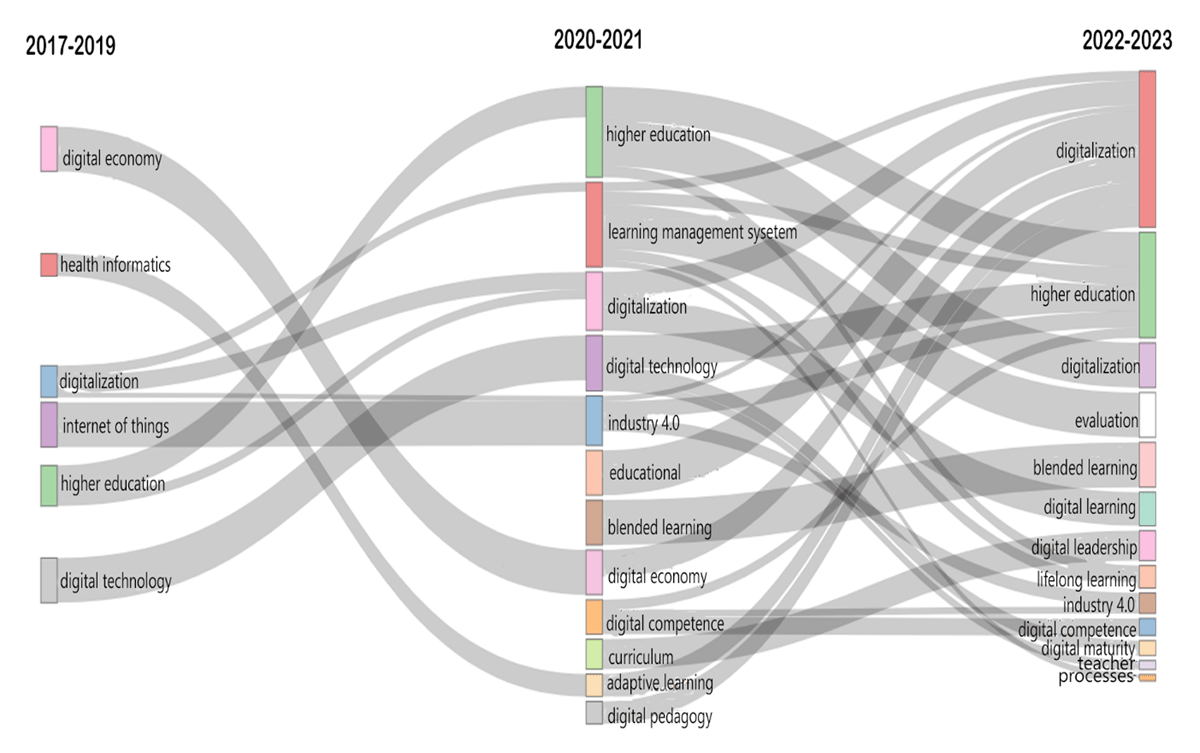
Figure 7
Thematic Evolution Map Across Periods.
An analysis of Figure 7 reveals that, while research themes generally differ across periods, some themes remain consistent. The themes “digitalization” and “higher education” persist across all three periods. During the pandemic period (2020–2021), new themes such as “educational technology,” “blended learning,” “digital competence,” “curriculum,” and “digital pedagogy” emerged. In the post-pandemic period (2022–2023), some themes continued from the previous period. The newly formed clusters in this period appear to have resulted from the splitting or merging of themes present during the pandemic period (2020–2021). For instance, the “evaluation” theme emerged from the splitting of the “learning management systems” theme, while the “lifelong learning” theme resulted from the merging of the “higher education” and “learning management systems” themes.
Discussion
Distance education studies within the scope of digital transformation in education have shown a steady increase over time. The least work was carried out in the 2017–2019 period, and the subject received more attention in the 2020–2021 periods, probably due to the impact of Covid-19. In addition to the immediate shift to online platforms, this growth can also be attributed to a broader institutional realization of the long-term value of digital infrastructure, as well as increased digital competence among educators and students. However, distance education studies have experienced a significant increase in the 2022–2023 periods after Covid-19, exceeding the total of the previous two periods. Gurcan et al. (2022) revealed in their research that e-learning studies increased after the pandemic. It is predicted that the reason for this is the increase in the use of e-learning platforms with Covid-19.
It is revealed that the subject of “digitalization”, which is an important theme in distance education studies within the scope of digital transformation in education, first emerged in 2020 but was studied more frequently in 2022. Similarly, the subject of “artificial intelligence”, which started to emerge in 2021, became one of the most prominent themes in 2022. Topics such as “virtual reality” and “gamification” were notable in the 2022–2023 periods. On the other hand, it was determined that the subject of “big data” emerged in 2023. Behl et al. (2022) revealed in their research that gamification and visualization are frequently used methods in e-learning and are examined by researchers in this regard. The research findings are parallel in this direction.
Although this study divides the analyzed publications into three temporal phases based on the year of publication, we acknowledge that the actual data collection and writing processes may have preceded the publication year particularly for works published in 2020 and 2021. Therefore, while the timeline is a useful heuristic for observing trends, interpretations about cause and effect should be made cautiously. This periodization was selected based on widely accepted global disruptions in education systems related to COVID-19, as reflected in the literature surge and thematic shifts during those years.
It reveals that the increase in the number of studies after Covid has caused more motor themes to emerge. This diversification of motor themes signals a maturation of the field, where digital education is no longer viewed as a temporary or emergency solution, but rather as a core component of long-term educational strategy and reform. When these motor themes are analyzed in terms of their development, the first two themes are “Smart Technologies in Education” and “Smart Campus and Digital University”, which aligns with global discussions on digitally responsive education systems (Huang et al., 2024). It has been determined that these are followed by the themes “STEM and Digital Competence Development”, “Digital Access in Higher Education”, “Digital Satisfaction and Performance” and “Digital Transformation in Education and Industry 4.0”, respectively. It reveals that although the research themes generally differ between the periods, some themes remain consistent. The themes of “Digitalization” and “Higher Education” continue to exist in all three periods. During the pandemic period, new themes such as “educational technology”, “blended learning”, “digital competence”, “curriculum” and “digital pedagogy” have emerged. It has been concluded that some themes continue from the previous period in the post-pandemic period.
Conclusion and Suggestions
This bibliometric study provides a comprehensive overview of the current research landscape at the intersection of digital transformation and e-learning, building on recent trend-mapping efforts in the open and distance education domain (Bozkurt, et.al, 2025). By examining trends across three distinct periods, the study highlights how digital transformation has reshaped distance education, particularly in response to the COVID-19 pandemic.
The insights gained from this analysis can inform future research directions and policy decisions, ensuring that digital transformation continues to enhance educational outcomes in a sustainable and inclusive manner. Future studies could also investigate how institutional readiness, digital equity, and policy frameworks mediate the impact of these technological transformations. For policymakers, the findings stress the importance of sustaining investment in teacher training, infrastructure, and evidence-based digital pedagogies.
Data Accessibility Statement
The datasets generated and/or analyzed during the current study are available from the corresponding author upon reasonable request.
Sustainable Development Goals
This study is linked to the following SDG(s): Quality education (SDG 4 Reduced Inequalities (SDG 10), Industry, Innovation, and Infrastructure (SDG 9) and Decent Work and Economic Growth (SDG 8).
Ethics and Consent
The dataset used in this study was obtained from the publicly available Scopus database. No data was collected directly from individual participants within the scope of the study, therefore, no ethics committee approval was required within the scope of relevant ethical issues.
Competing Interests
The authors have no competing interests to declare.
Author Contributions
Gizem Dilan Boztaş: Conceptualization, methodology, formal analysis, investigation, data curation, visualization, writing—original draft preparation, writing—review and editing; Muhammet Berigel: Conceptualization, methodology, formal analysis, investigation, writing—original draft preparation; Fahriye Altınay: Conceptualization, formal analysis, investigation, writing—original draft preparation, writing—review and editing; Zehra Altınay: Conceptualization, formal analysis, investigation, writing—original draft preparation, writing—review and editing. All authors have read and agreed to the published version of the manuscript.