
Introduction
Constructivism is a learning theory that suggests that knowledge is actively constructed by individuals based on their experiences and interactions and not passively received (Abha, 2019; Brau, 2020). This paradigm emphasises that students actively construct knowledge and meaning from their experiences rather than passively receiving information (Bada & Olusegun, 2015). In this way, students are encouraged to be more self-directed, to take control of their own learning and to understand how they learn best (Roche, 2020). The existence of this situation has shifted the focus of today’s teaching activities from the teacher to the student (Juvova et al., 2015). However, some disadvantages, such as crowded classrooms in existing systems or an intensive curriculum, make it difficult to implement a structural approach. The reduction in time allocated to students, especially in crowded classes, may require students to take on their learning responsibilities, giving greater emphasis to extra-curricular activities and practices (Boyraz, 2014). At this point, technological developments such as the widespread use of the internet and mobile devices have made significant contributions to solving classroom time management problems. It allows students to continue their education outside of school. This flexibility provided by technology offers opportunities to solve the negative situation mentioned above. In this context, since the concept of “flip” was introduced by Baker in 2000, the flipped classroom has gained popularity worldwide (Li & Peng, 2022).
Bishop and Verleger (2013) define flipped classroom practice as a student-centred approach in contrast to face-to-face teaching methods (Wu & Wang, 2021). In face-to-face education approaches, students typically encounter learning content within the classroom, while practice and activities are conducted outside the classroom through homework assignments. In flipped classroom practice, students are introduced to the learning content outside the classroom with the help of videos or articles. At the same time, discussions and activities are carried out with their classmates in the classroom (Sheppard et al., 2017). This allows students to allocate more time to learning tasks than physical classroom environments (McLean et al., 2016).
Compared to physical classrooms, flipped classrooms, which have been increasingly preferred in higher education in recent years (Montuori et al., 2021), have advantages such as efficient use of time in school (Cole & Kritzer, 2009), ensuring active participation (Demski, 2013), increasing interaction (Danker, 2015), appealing to different learning styles (Gallagher, 2009) and providing reflective learning (Du & Wang, 2014). These advantages can improve the learning experience and outcomes (Lo & Hew, 2017). However, it also comes with problems and challenges, such as some students not participating in pre-lesson activities being dissatisfied with these preparations and increasing the teachers’ workload (Lo & Hew, 2017).
Educators have adopted engaging and technology-based educational approaches such as game-based learning (Molins Ruano et al., 2014) and mobile learning (Huang et al., 2016) to increase students’ intrinsic motivation and improve learning outcomes. Similarly, mobile-based (Haerazi, 2023), web-based (Silva & Rosales, 2022) and ICT-supported (Qiu, 2018; Zhang et al., 2015) methods are used in flipped classroom applications. Today, AI-supported applications are frequently preferred to improve educational outcomes (Duarte, 2023). AI, defined by John McCarthy in 1956, is an interdisciplinary research field that aims to develop systems that mimic human intelligence (Dobrev, 2012). AI is used in a wide range of fields from engineering to healthcare, from education to humanities (Bellido-Valdiviezo et al., 2023). The impact of AI is also increasing in the education sector (Zawacki-Richter et al., 2019). In particular, the impact of AI has become evident in areas such as personalised learning, intelligent assessment systems and learning analytics (Chanthiran et al., 2022). Again, considering the contributions it can provide in online environments (Baidya & Kumar, 2024; Tonbuloğlu, 2023; Wills, 2024), it is known that teachers prefer AI to create personalised learning experiences, content creation, provide feedback, and make data-driven decisions (Grace et al., 2023; Rampelt et al., 2025) such as identifying students at risk of academic failure (Du & Gao, 2022; Hwang et al., 2020; Renz & Hilbig, 2020; Oh & Ahn, 2024). As a result, in flipped classroom applications, artificial intelligence technologies can make significant contributions to the solution of difficulties such as students’ inadequate examination of the materials before the lesson, inability to receive immediate feedback, differences in individual learning speeds and unpreparedness for classroom activities (Lin, 2021; Zharmukhanbetov & Singh, 2023). For example, AI-supported adaptive learning systems can provide personalised content by analysing students ‘individual learning needs and increase students’ level of preparation (Li & Peng, 2022). In addition, AI-based chatbots can support the learning process by instantly answering students’ questions about the materials before the lesson and help students better prepare for in-class activities (Hsiao et al., 2023). In this way, it can improve students’ learning experiences by increasing the effectiveness of the flipped classroom model. In other words, it can be argued that it can be used especially in solving student-related problems (Suwardika et al., 2024). Studies on the use of AI applications in flipped classroom applications have clearly revealed that it helps to build students’ internal motivation (Diwanji et al., 2018) and has a stimulating effect in the context of teaching activities (Wu & Wang, 2021).
When the literature is examined, there are studies on artificial intelligence-supported flipped classroom applications. However, it is noteworthy that the number of studies is not very high, and the application is carried out especially in foreign language and curriculum education. Dung (2024) and Li and Peng (2022) examined the effectiveness of AI-supported flipped classroom within the scope of foreign language teaching. Lin and Mubarok (2021) used artificial intelligence to implement in-class and out-of-class activities in flipped learning. Wu and Wang (2021) and Jiang et al. (2023) examined the effect of AI-supported flipped classroom on students’ listening and speaking skills. In another study, Hu (2021) was interested in making a flipped language classroom intelligent using artificial intelligence. In the context of programming education, Calsin et al. (2023) and Huang et al. (2023) and in the context of karate education, Ye et al. (2022) investigated the effectiveness and student outcomes of an AI-supported flipped classroom. Neto et al. (2018) used a multi-agent system to support flipped classroom implementation, while Montuori et al. (2021) used AI to enhance flipped classroom implementation with just-in-time instruction. Finally, Lo and Hew (2023), López-Villanueva et al. (2024) and Ray and Sikdar (2024) conducted a qualitative study on the impact of AI-supported flipped classroom applications on educational environments. When the studies are evaluated, more experimental research is needed to causally reveal the effects of AI-supported flipped-face model. In addition, most studies focus on short-term results; long-term learning gains or retention effects are not sufficiently examined. Finally, many studies have focused on specific AI tools such as chatbots. However, the use of AI in different dimensions such as assessment, content creation or real-time learner analytics is also open to research. There is a lack of studies that address applications where AI is integrated more deeply into in-class and out-of-class learning processes, or even where different AI technologies are used together.
The flipped classroom model is an effective pedagogical approach that aims to devote class time to interactive and in-depth learning activities by encouraging students to come to class prepared. However, several problems arise in the implementation of this model, such as students’ inadequate review of pre-lesson materials, differences in individual learning speeds, and teachers’ difficulties in providing personalized feedback. Artificial intelligence technologies, which have become increasingly widespread in the field of education in recent years, have the potential to offer important opportunities to overcome such challenges. Artificial intelligence integration in education has a high potential to increase the effectiveness of the flipped classroom model and improve students’ learning experiences and offers opportunities that can contribute to the creation of a more effective and interactive learning environment in educational processes. Determining student experiences regarding this integration is critical for the sustainability of this integration. In this context, the findings of the study can contribute to filling the gaps in the existing literature by providing an in-depth understanding of the effects of AI-supported flipped classroom applications on perception, AI literacy and learning experiences. It is important to determine the effects of this integration on artificial intelligence literacy (Bozkurt, 2024) as an indicator of more effective use of artificial intelligence technologies. Because revealing the extent to which basic knowledge, skills and attitudes about artificial intelligence have developed in individuals will contribute to the restructuring of educational processes and strategies in this direction. In addition, by providing concrete suggestions on how artificial intelligence-based tools can be used more effectively in educational environments, it can provide an evidence-based basis for shaping educational policies and disseminating artificial intelligence-supported applications in educational systems. Accordingly, the study aims to determine the impact of AI-supported flipped classroom applications on students’ AI literacy and their experiences and perceptions towards these applications. In line with this purpose, the following research questions will be answered during the study:
Do AI-supported flipped classroom practices have an effect on students’ AI literacy levels?
Do AI-supported flipped classroom applications have an effect on students’ perceptions of flipped learning?
What are the students’ experiences regarding AI-supported flipped classroom practices?
Methods
Explanatory sequential mixed design was used as the method in the study. In this method, the study starts with the quantitative phase and then continues with the qualitative phase to explain the quantitative results (Creswell, 2019). In this context, in the quantitative phase of the study, a one-group pretest-posttest design from the weak experimental design was used to determine students’ perceptions of flipped learning and AI literacy levels. In this design, the effect of the experimental procedure is tested with a single group study (Büyüköztürk et al., 2018). In the qualitative phase of the study, a case study was used to determine students’ views on learning experiences. The case study was preferred to give a comprehensive analysis of the characteristics of the current scenario. Indeed, in-depth examination and analysis of an event is its key component (Yin, 1994).
Sample
Thirty-three students enrolled in a state university’s associate degree program in “Web Design and Coding” make up the study’s sample. The research group was selected using a non-random selection method called the convenience sample approach. In contrast, the convenience sampling approach allows the researcher to pick a convenient setting to hasten the research process. Using this sampling technique, the groups to be sampled are chosen without depending on the randomness principle (Büyüköztürk et al., 2018; Gravetter & Forzano, 2012). We performed the study with the students in the classes that they taught; thus, we had to employ this sample strategy. In addition, the study conducted interviews with 17 of the 33 students who volunteered to participate in the application to get the students’ AI-supported flipped classroom experiences. To test current approaches, a sample size of about 24 participants per group is recommended, while simulation-based training research usually recommends a sample size of 30 participants. In general, the determination of sample size depends on the specific research design, statistical technique and study objectives, with no universal formula applicable to all situations (Besekar et al., 2024).
Data collection tools
The study utilized three different data collection tools. The first is the scale Ersoy et al. (2023) developed to determine students’ perceptions of flipped learning. Consisting of 22 items and three factors (learning readiness, learning support, and motivational interaction), the internal consistency coefficient of this scale is excellent at .93. The reliability coefficients for the first, second, and third factors were found to be 0.86, 0.86, and 0.89. The second data collection tool used in the study is the students’ AI literacy scale. The scale was developed by Wang et al. (2023) and adapted into Turkish by Polatgil and Güler (2023). The internal consistency coefficient of the scale consists of four factors (awareness, use, evaluation, and ethics) and 12 items, which is 0.93. The coefficients of the factors were calculated as 0.94, 0.98, 0.98, 0.98, and 0.86, respectively. Three reversed items (items 2, 5, and 11) in this scale, with a Cronbach’s alpha coefficient above 0.70, indicate that the reliability level is sufficient (Kline, 2015). Hence, the reliability values obtained for both scales and their factors demonstrate that they are reliable data collection instruments. Finally, the third data collection tool was a semi-structured interview form to determine students’ learning experiences. This form, developed by the researchers, consists of six questions. This form developed by the researchers consists of six questions. The questions were determined with the help of literature review in parallel with the purpose of the study. While determining the questions, the questions deemed appropriate to be in the form were decided with the help of another field expert. Then, the form was applied to five people as a pilot study. As a result of the application, linguistic corrections were made in questions that were not understood. The form was finalised in line with the opinions of language and subject matter experts.
Data analysis
Quantitative data within the scope of the research were analysed using descriptive (frequency, mean, and standard deviation) and predictive (dependent groups t-test) statistical tools (Holcomb, 2016). As a result of the analysis, the dependent group’s t-test, one of the parametric tests, was used since the groups showed normal distribution. Data collected via Microsoft Forms was analysed with SPSS. In the flipped learning perception scale, the options were scored on a 5-point Likert type as Strongly Disagree (1), Disagree (2), Undecided (3), Agree (4) and Strongly Agree (5). On the AI literacy scale, the options are 7-point: Strongly Disagree (1), Disagree (2), Partially Disagree (3), Undecided (4), Partially Agree (5), Agree (6), and Strongly Agree (7). Strongly agree indicates that the participant has an extremely positive attitude and will receive the highest item score. At the same time, strongly disagree indicates that the participant has a negative attitude and will receive the lowest item score.
Google Forms were used to gather qualitative data. Using methods including coding, categorization, and theme extraction, the acquired qualitative data were analysed using the content analysis approach (McMillan & Schumacher, 2010). While analysing the data obtained within the scope of the study, first, the interview records conducted one-on-one with the participants were transcribed in digital media. In the first stage of the analysis, meaningful codes were determined within the scope of the research purpose of the transcribed data. In the second stage, codes with common characteristics were categorized. In the last stage, the categories and themes were organised. Qualitative data were evaluated by establishing a logical relationship with the themes determined for the subject and purpose of the research. Consensus was achieved while determining the themes. Furthermore, the viewpoints of certain individuals were showcased by direct quotations from the pertinent subjects.
Research process
This study was conducted in a three-hour “Open and Distance Learning” course for first-year Web design and coding students. Within the scope of the course, lessons were carried out with the flipped learning model. In these 14-week-long courses, a syllabus was prepared to carry out the activities in a planned manner. Within the scope of the program, in-class and extracurricular activities were included. Bloom’s taxonomy (Anderson et al., 2010) was used to determine the activities. Out of class activities included lecture presentations, videos and weekly readings prepared by the teachers. These activities, which correspond to the recall and comprehension stages of Bloom’s taxonomy, were aimed at helping students learn the subject.
Within the scope of in-class activities, students who came to the classroom having learnt the subject were involved in active learning activities such as application, discussion and problem solving under the guidance of the teacher, which are at higher levels (application, analysing, evaluating and creating) in the bloom taxonomy (Arshad & Imran, 2013; Rutkowski & Moscinska, 2013). In general, after the question-answer and discussion activities on the topic learnt at home, students were made to prepare presentations, videos, posters, graphics and reports using various AI tools (such as ChatGPT, Bard, Deepl, Typeset, Notion, Rawgraphs, Scholarcy, Assemblyai, Synthesia, Canva and Gamma). In addition, the content prepared within the scope of the course was uploaded to the LMS and weekly discussion topics were opened on the LMS every week. In this way, an interactive environment was created. A sample LMS screen is shown in Figure 1.
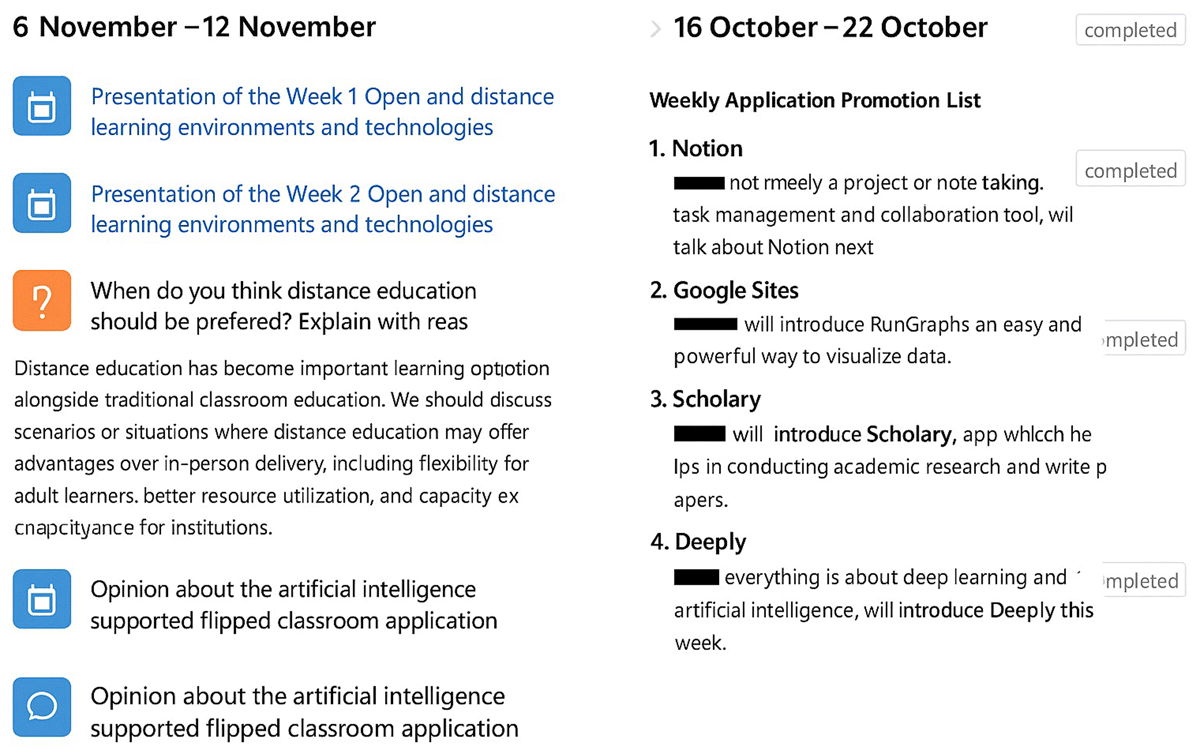
Figure 1
Example LMS screen.
Within out-of-class activities, AI tools were mostly used to overcome the lack of interaction and feedback in flipped classroom applications. In addition, students who wanted to do more research on the subject were encouraged to use AI tools. Within the scope of in-class activities, AI tools were mostly used to increase motivation and collaboration. The AI tools used within the scope of the study, their purposes of use and information about the activities in which they were used are given in Table 1.
Table 1
AI tools used in the study.
| AI TOOLS | EVENT/TASK | PURPOSE OF USE | BLOOM’S TAXONOMY | IN-CLASS | OUT OF CLASS |
|---|---|---|---|---|---|
| Assemblyai | Reporting audio data | Motivation, Interaction | Apply | x | |
| Bard | Research, Summarize | Individualized learning | Understand, Remember | x | x |
| Canva | Content creation (video, poster) | Motivation, Cooperation | Create | x | |
| ChatGPT | Research, Summarize | Individualized learning | Understand, Remember | x | x |
| Deepl | Translate | Interaction, Feedback | Understand, Remember | x | x |
| Gamma | Content creation (Presentation) | Motivation, Interaction | Create | x | |
| Notion | Content creation | Motivation, Cooperation | Create | x | |
| Rawgraphs | Visualization | Motivation, Interaction | Create | x | |
| Scholarcy | Literature review, synthesizing | Interaction, Feedback | Analyse, Evaluate | x | x |
| Synthesia | Content creation (Video) | Motivation, Interaction | Create | x | |
| Typeset | Literature review | Interaction, Feedback | Understand, Remember | x | x |
Before and after the 14-week implementation, the AI literacy scale was applied to the students as pre-test and post-test. In addition, semi-structured interviews were conducted after the implementation to reveal students’ experiences during the course. Again, at the end of the application, the flipped learning perception scale was applied to obtain students’ experiences of the flipped learning model. A summary of the research process is shown in Figure 2.
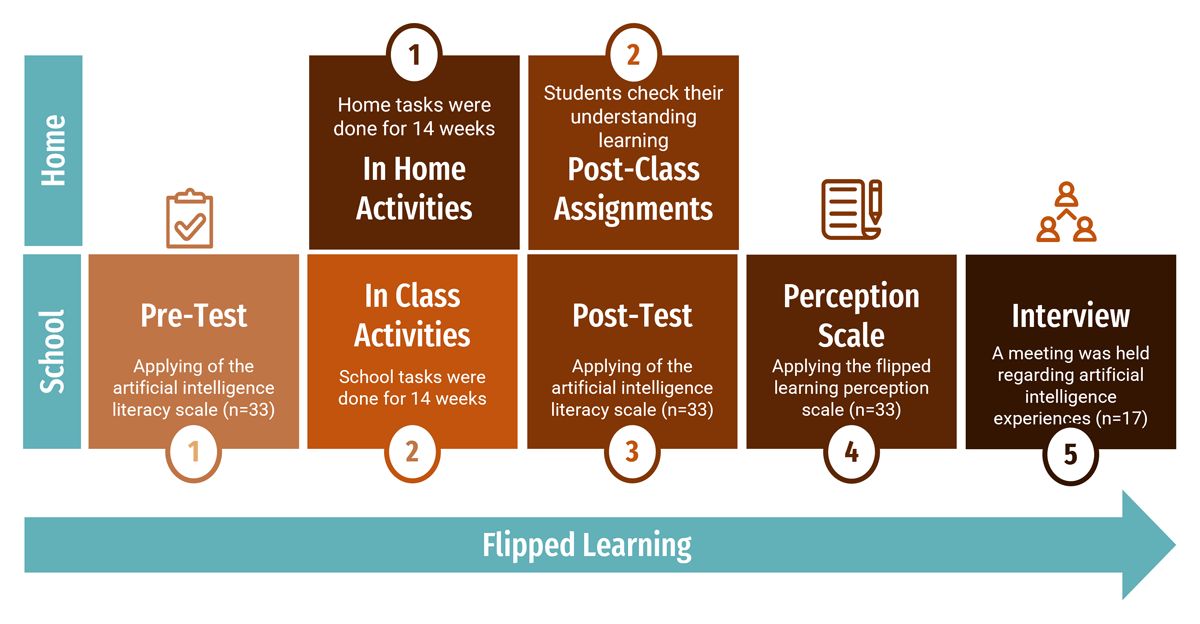
Figure 2
Research process.
Ethics
Within the scope of the research, ethical permission was obtained from Bingöl University Scientific Research and Publication Ethics Committee on 14/03/2024 with the number 33117789/100/148017. All the rules specified to be followed within the scope of this research from planning, implementation, data collection to data analysis were followed. None of the actions specified under the second section of the directive, “Actions Contrary to Scientific Research and Publication Ethics”, were carried out. In the writing process of this research, scientific, ethical and citation rules were followed; no falsification was made on the collected data. This study has not been sent to any other academic publication environment for evaluation.
Results
This study aims to determine the effects of AI-supported flipped classroom applications on students’ AI literacy and their experiences and perceptions towards these applications. The findings are discussed in parallel with the research questions. First, the AI literacy levels of the students were discussed. Then, 17 students who volunteered to participate in the study were interviewed. In the interviews, student views on AI and flipped learning were analysed. Finally, students’ perceptions of flipped learning were measured.
RQ1. The effect of AI-supported flipped classroom applications on students’ AI literacy level
Within the scope of the research, the AI literacy scale was applied as pre-test and post-test to determine the AI literacy levels of the students. The pre-test and post-test scores of the scale items are given in Table 2.
Table 2
AI literacy scale results.
| AWARENESS | PRE-TEST | POST-TEST | ||||
|---|---|---|---|---|---|---|
| N | MEAN | Sd | MEAN | Sd | ||
| 1. | I can distinguish between smart devices and non-smart devices. | 33 | 6.09 | 0.91 | 6.54 | 0.66 |
| 2. | I do not know how AI technology can help me. R | 33 | 2.72 | 2.12 | 4.45 | 2.18 |
| 3. | I can identify the AI technology employed in my applications and products. | 33 | 3.45 | 1.90 | 4.36 | 1.69 |
| Mean | 4.09 | 1.64 | 5.12 | 1.51 | ||
| Usage | ||||||
| 4. | I can skillfully use AI applications or products to help with my daily work. | 33 | 3.09 | 2.09 | 4.90 | 1.70 |
| 5. | Learning to use a new AI application or product is usually hard for me. R | 33 | 3.27 | 2.25 | 5.27 | 1.56 |
| 6. | I can use AI applications or products to improve my work efficiency. | 33 | 3.72 | 2.16 | 4.81 | 1.92 |
| Mean | 3.36 | 2.17 | 4.99 | 1.73 | ||
| Evaluation | ||||||
| 7. | After using it for a while, I can evaluate the capabilities and limitations of an AI application or product. | 33 | 5.36 | 0.99 | 5.00 | 1.43 |
| 8. | I can choose a proper solution from various solutions provided by a smart agent. | 33 | 4.81 | 2.11 | 4.81 | 1.60 |
| 9. | I can choose the most appropriate AI application or product from a variety for a particular task | 33 | 4.63 | 1.63 | 4.54 | 1.52 |
| Mean | 4.93 | 1.58 | 4.78 | 1.52 | ||
| Ethics | ||||||
| 10. | I always comply with ethical principles when using AI applications or products. | 33 | 4.54 | 1.75 | 5.27 | 1.56 |
| 11. | I am never alert to privacy and information security issues when using AI applications or products. R | 33 | 3.27 | 2.25 | 4.63 | 2.17 |
| 12. | I am always alert to the abuse of AI technology. | 33 | 5.90 | 0.91 | 5.36 | 1.63 |
| Mean | 4.57 | 1.64 | 5.09 | 1.79 | ||
| Overall Mean | 4.24 | .66 | 5.00 | .89 | ||
[i] R Indicates that item is in reverse form.
When Table 2 is examined, it is seen that the post-test mean score (M = 5.00 ± .89) is higher than the pre-test mean score (M = 4.24 ± .66). In the pre-test, the factor with the highest mean was “Evaluation” (M = 4.93) and the factor with the lowest mean was “Usage” (M = 3.36). In the post-test, the factor with the highest mean was “Awareness” (M = 5.12), and the factor with the lowest mean was “Evaluation” (M = 4.78). However, normality test was performed first to determine whether there was a significant difference between the pre-test and post-test scores. Since the number of participants was below 50, the Shapiro-Wilk normality test was applied.
As seen in Table 3, since there was no significant difference in the pre-test and post-test results of the AI literacy scale applied to the group according to the normality test (S-WPre p = 0.20, p > .05; S-WPost p = 0.10, p > .05), it was accepted that the results were normally distributed. Then, dependent groups t test was performed to determine whether the difference between the pre-test and post-test scores was significant. The result of the analysis is as shown in Table 4.
Table 3
Students’ AI literacy normality test results.
| SHAPIRO-WILK | |||
|---|---|---|---|
| STATISTIC | df | SIG. | |
| Pre-Test | .10 | 33 | .20 |
| Post-Test | .13 | 33 | .10 |
Table 4
Students’ AI literacy dependent groups t test results.
| N | PRE-TEST | POST-TEST | |||||||
|---|---|---|---|---|---|---|---|---|---|
| MEAN | Sd | MEAN | Sd | df | t | p | d | ||
| Awareness | 33 | 4.09 | 1.64 | 5.12 | 1.51 | 32 | –3.34 | .00 | 0.58 |
| Usage | 33 | 3.36 | 2.17 | 4.99 | 1.73 | 32 | –5.01 | .00 | 0.87 |
| Evaluation | 33 | 4.93 | 1.58 | 4.78 | 1.52 | 32 | .37 | .71 | - |
| Ethics | 33 | 4.57 | 1.64 | 5.09 | 1.79 | 32 | –1.37 | .17 | - |
| Overall | 33 | 4.24 | .66 | 5.00 | .89 | 32 | –3.60 | .00 | 0.63 |
Dependent groups t-test was used to compare students’ AI literacy levels before and after the application. There was a statistically significant difference between the pre-test and post-test scores of the students [t(32) = –3.60, p < .05, d = 0.63]. The Cohen’s d statistic shows that the applied AI literacy has a moderate effect size on students (d = 0.63). Similarly, significant differences were examined between pre-test and post-test scores in the context of the four factors in the scale. Firstly, a significant difference was observed between the pre-test (M = 4.09 ± 1.64) and post-test (M = 5.12 ± 1.51) scores in the context of the “Awareness” factor [t(32) = –3.34, p < .05, d = 0.58]. Cohen’s d statistics show that the Awareness factor in the scale used moderately affects students (d = 0.58). In the context of the second factor “Usage”, a significant difference was observed between the pre-test (M = 3.36 ± 2.17) and post-test (M = 4.99 ± 1.73) scores [t(32) = –5.01, p < .05, d = 0.87]. Again, Cohen’s d statistic shows that the Usage factor of the scale has a high effect size on students (d = 0.87). In the context of the Evaluation factor, no significant difference was observed between the pre-test (M = 4.93 ± 1.58) and post-test (M = 4.78 ± 1.52) scores [t(32) = .37, p > .05]. Finally, no significant difference was observed between the pre-test (M = 4.57 ± 1.64) and post-test (M = 5.09 ± 1.79) scores of the “Ethics” factor [t(32) = 1.37, p > .05].
RQ2. The effect of AI-supported flipped classroom applications on students’ perceptions of flipped learning
Students’ perceptions towards the AI-supported flipped learning model were determined within the third research question. The results of the analysis of the data obtained from the scale used in this context are given in Table 5.
Table 5
Flipped learning model perception scale test results.
| LEARNING READINESS, | N | MEAN | Sd | |
|---|---|---|---|---|
| 1. | Ready-made tutorial videos on the related topics make my study easier. | 33 | 3.87 | .59 |
| 2. | Pre-class watched tutorial videos help me to learn at the class session. | 33 | 4.12 | .33 |
| 3. | Pre-shared tutorial videos motivate me to participate in the planned learning activities at the class. | 33 | 3.87 | .59 |
| 4. | Pre-shared tutorial videos motivate me to read and research more about the related topics. | 33 | 3.75 | .66 |
| 5. | Pre-shared handouts and tutorial videos allow me to be prepared for the class. | 33 | 4.24 | .43 |
| Mean | 3.97 | 0.52 | ||
| Learning support, | ||||
| 6. | Every activity is designed to have a purpose. | 33 | 3.84 | .61 |
| 7. | Necessary information (course structure, grading system, etc.) is given to complete the course successfully. | 33 | 3.63 | .99 |
| 8. | To complete the course successfully, necessary resources (presentation, document, video, etc.) are provided. | 33 | 4.27 | .67 |
| 9. | A learner-centered environment is provided. | 33 | 3.90 | .80 |
| 10. | In-class activities support the learning process. | 33 | 3.63 | .69 |
| 11. | The general structure of the course facilitates learning. | 33 | 4.12 | .59 |
| 12. | Lecturer meets my learning needs. | 33 | 4.15 | .93 |
| 13. | Given feedback gives me direction on how to improve myself. | 33 | 4.00 | .70 |
| 14. | My expectations from a university-level course are met. | 33 | 3.03 | .72 |
| Mean | 3.84 | 0.74 | ||
| Motivational interaction, | ||||
| 15. | Contributes to my creative thinking skills. | 33 | 3.87 | .78 |
| 16. | Makes me feel more confident. | 33 | 3.36 | .48 |
| 17. | Provides a better learning experience than traditional courses. | 33 | 3.51 | .50 |
| 18. | Makes me more active in class. | 33 | 3.87 | .33 |
| 19. | Increases my interaction with the instructor. | 33 | 4.39 | .49 |
| 20. | Increases my interaction with my friends. | 33 | 3.63 | 1.11 |
| 21. | Makes the course more enjoyable. | 33 | 4.00 | .70 |
| 22. | Encourages me to enroll in other flipped courses. | 33 | 3.21 | .85 |
| Mean | 3,73 | 0,66 | ||
| Overall Mean | 3.84 | 0.66 | ||
When Table 5 is examined, it is seen that students’ perceptions towards the AI-supported flipped learning model are above average (M = 3.84 ± .66). When the averages of the three factors in the scale were analysed, it was observed that the highest mean (M = 3.97 ± 0.52) was in the “learning readiness” factor. The lowest mean (M = 3.73 ± .66) was in the “motivational interaction” factor. On item basis, the items with the highest mean were “Increases my interaction with the instructor” (M = 4.39), “Necessary resources (presentation, document, video, etc.) are provided to complete the course successfully” (M = 4.27) and “Pre-shared handouts and tutorial videos allow me to be prepared for the class” (M = 4.24). The items with the lowest mean were “My expectations from a university-level course are met” (M = 3.03), “Encourages me to enroll in other flipped courses” (M = 3.21) and “Makes me feel more confident” (M = 3.36).
RQ3. Student experiences with AI-supported flipped classroom applications
Within the scope of the study’s second research question, it was tried to determine the experiences of higher education students about the AI-supported flipped classroom applications. The themes and categories obtained because of the analysis of the data obtained through semi-structured interviews are given in Table 6.
Table 6
Analysis of students’ experiences on AI-supported flipped classroom.
| THEMES | CATEGORIES | CODES |
|---|---|---|
| Affective | Increased Motivation and Interest in Learning | Increased individual control of learning Increased in-class interaction Increased attractiveness of the courses Being ready and motivated for the lesson Taking an active role |
| Teacher-Student Interaction | Classroom interactive activities Teacher guidance Student active participation Impact of pre-prepared materials | |
| Cooperation and Interaction | Collaboration and interaction between students Impact of course materials and activities The role of online platforms | |
| Cognitive | Individualized Learning Experience | Materials can be used according to personal needs More focus on personal interests Progress at own learning pace |
| Development of Critical Thinking and Problem-Solving Skills | Impact of course materials Impact of teacher collaboration and interaction The impact of individual development and participation | |
| Time Management Challenges | Time management challenges related to pre-prepared materials Time management challenges related to classroom activities General time management challenges | |
| Development of AI Literacy Skills | Learning basic concepts and raising awareness Developing AI literacy skills Increased motivation and interest Access to resources and development of research skills |
As seen in Table 6, the analysis of participants’ views on AI-supported flipped classroom practices consists of two themes and seven categories. These are listed as “increased motivation and interest in learning, individualized learning experience, teacher-student interaction, development of critical thinking and problem-solving skills, collaboration and interaction, time management challenges, and development of AI literacy skills”. Participants emphasize that this model increases learning motivation, provides students with individualized learning experience, strengthens teacher-student interaction, and improves critical thinking and problem-solving skills. They also emphasize the challenges of collaboration, interaction, time management, and the importance of developing AI literacy skills.
1. Affective Theme
The Affective theme is the first theme obtained because of the analysis of student opinions. Three categories were prepared accordingly. In addition, the codes belonging to the relevant category and the supporting student opinions are given in order under this heading.
• Increased motivation and interest in learning
This study, which evaluates students’ experiences with AI-supported flipped classroom applications, reveals that students expressed various views on learning motivation and increased interest in the course. The prominent views in the data obtained are that with the opportunity to access the materials beforehand, opportunities such as preparing for the lesson, being motivated, making the lesson more interesting, progressing at their own pace and increasing in-class participation are offered. Sample participant views are given below.
P1. “Access to course materials beforehand allowed me to participate in class more prepared and motivated. Consequently, my desire to learn the topics in depth increased, and I became more interested in the classes.”
P4. “I gained the opportunity to learn at my own pace and to understand the topics I learned more deeply. This increased my confidence in the learning process and helped me gain more motivation. Now, I participate in classes more eagerly and enthusiastically.”
P3. “Being able to interact more in class and process learning materials at my own pace made my learning experience much more positive.”
• Teacher-student interaction
Within the scope of the content analysis, it is observed that various views were expressed regarding teacher-student interaction in students’ learning. The views evident in the data obtained are that it provides more opportunities for discussion and interaction in the classroom, more guidance from the teacher, more questions to the teacher and more active role in classroom activities. Sample participant views are given below.
P10. “Students can participate in class more prepared and knowledgeable, allowing for a tighter interaction with teachers.”
P9. “Teachers can identify topics students do not understand in the classroom and provide more guidance. Additionally, students can interact more by asking more questions during class.”
P11. “Group activities in classes have enabled students to interact better with each other and their teachers.”
• Cooperation and interaction
Within the scope of the findings obtained, it is observed that students expressed various opinions about cooperation and interaction in learning processes. The prominent views in the data obtained are that this method increases cooperation and interaction. The model allows students to do group work and learn from each other by discussing pre-prepared materials. Forums or group chats were expressed as enabling students to exchange ideas about topics and to support each other. Sample views of the participants on this theme are given below.
P3. “I can confidently say that student collaboration and interaction have significantly increased with this method. Students can learn from each other by discussing pre-prepared materials and engaging in group work.”
P10. “Teaching classes in this way has increased collaboration and interaction. Students interact more because they can review and discuss course materials.”
P17. “Through interactive activities and group work in the classroom, students interact more with each other. This provides opportunities for collaborative learning and mutual support among students.”
2. Cognitive Theme
The second theme obtained because of the analysis of student opinions is the Cognitive theme. Four categories were prepared accordingly. In addition, the codes belonging to the relevant category and the supporting student opinions are given in order under this heading.
• Individualized learning experience
Within the scope of the study, it is observed that students expressed various opinions regarding the individualized learning experience in their learning. The views evident in the data obtained are that students are offered opportunities such as accessing the content in advance and at their own pace, focusing more on personal interests, enriching the learning process, and organizing the course content according to my needs. Sample participant views are given below.
P8. “Accessing course content at my own pace has made my learning process more effective.”
P12. “Accessing course content beforehand and working at my own pace while focusing more on my areas of interest have positively influenced my learning process.”
• Development of critical thinking and problem-solving skills
According to another finding obtained within the scope of the study, it is observed that various opinions were expressed regarding the development of critical thinking and problem-solving skills in students’ learning processes. Students’ participation in the class by examining the course materials beforehand enables them to engage in more in-depth discussions and analysis. In addition, diversified course materials and group work strengthen students’ critical thinking and problem-solving skills. Participants indicated that in-class discussions and collaborative activities can be important in developing these skills. Sample participant views are given below.
P1. “By preparing for class content in advance, I had the opportunity to participate in deeper discussions and analyses.”
P10. “It enhanced my critical thinking and problem-solving skills.”
P11. “The discussions held in class strengthened my problem-solving skills.”
• Time management challenges
According to another finding, it is observed that students expressed various opinions about time management difficulties in their learning processes. The views evident in the data obtained are that there are some difficulties in planning for the balanced use of time for studying pre-prepared materials and interactive activities in the classroom. Again, difficulties such as more planning for reviewing course materials and completing assignments were also mentioned. Sample participant views are given below.
P16. “I struggled with scheduling time to review pre-prepared materials and be more active in class.”
P3. “It was sometimes challenging to allocate time to follow the materials and be more active in class. It requires more planning to review course materials and complete assignments.”
• Development of AI literacy skills
According to the last finding obtained within the scope of this study, it is observed that various opinions were expressed regarding the development of AI literacy skills in students’ learning processes. The views evident in the data obtained are that the method improves AI literacy skills. It was stated that it enabled learning the basic concepts of AI and provided more awareness about how AI can be used daily. Views such as problem-solving, data analysis, and understanding how complex algorithms work were expressed. Sample participant views are given below.
P8. “The method has enhanced my AI literacy skills. I now feel more equipped to understand complex algorithms and utilize AI technologies more effectively.”
P6. “I didn’t know much about AI before, but this method has sparked my interest. My AI literacy skills, especially in problem-solving and data analysis, have improved significantly.”
P13. “AI-supported education has increased my access to resources related to AI and further fueled my curiosity in this area.”
Discussion and conclusion
The study’s findings, which aimed to determine the effects of AI-supported flipped classroom applications on students’ AI literacy and their experiences and perceptions towards these applications, are discussed in this section in parallel with the research questions.
According to the findings obtained in the study, AI-supported flipped classroom applications increase learners’ motivation and interest in the course. Results from studies by Huang et al. (2023), Li and Peng (2022), and Wu and Wang (2021) support the findings of this study, indicating that AI-supported flipped classroom applications have a positive impact on learners’ confidence and motivation. However, Diwanji et al. (2018) suggested that AI and data analysis-based applications can intrinsically motivate students in the flipped classroom approach. In addition, it has been stated that AI-supported flipped classroom increases student engagement, interest and attitude by enhancing learning outcomes (Ray & Sikdar, 2024; Ye et al., 2022).
According to other findings obtained in the study, AI-supported flipped classroom applications enhance students’ personalized learning experiences. They allow students to progress at their own pace, focus more on personal interests, and enrich their learning processes. Additionally, they enable students to organize course content according to their needs. Features such as dynamic conversations, instant feedback, and the ability to present different learning content for students may be the main reasons for this result (Thimmanna et al., 2024). Similar findings regarding personalized learning experiences as those obtained in this study were also identified in studies conducted by Li and Peng (2022) and Montuori et al. (2021). It was also stated that this model significantly improved the ability of self-management within the scope of individualised learning (Wu & Wang, 2021).
Within the scope of the study, it is seen that AI-supported flipped classroom applications provide more opportunities for discussion, interaction and collaboration. In this direction, students’ learning the subject through out-of-class activities may have led them to spend more time on in-class discussion activities. In addition, students’ support for learning opportunities from each other can be explained by exchanging ideas and supporting each other in environments such as forums or group chats (Li & Peng, 2022). Again, within the scope of student and technology interaction, it can be stated that the ability of AI-supported chatbots to respond quickly to students enables them to interact with students (Maderer, 2017). In the literature, it is emphasized that the integration of AI applications into flipped classrooms can increase collaboration and engagement among students (Hwang et al., 2023; Li & Peng, 2022) and increase students’ interaction with learning content and improve classroom readiness (Laupichler et al., 2022; Lo & Hew, 2023). Zhang and Wu (2016) also emphasized the importance of student-teacher interaction in flipped classrooms and the need for effective communication. Increased interaction between teachers and students allowed teachers to provide more guidance and students to be more active in classroom activities.
It was revealed that the AI-supported flipped classroom model used in the study strengthened students’ critical thinking and problem-solving skills. In a study by Syafruddin et al. (2023), it is argued that AI-supported flipped classroom models significantly enhance students’ critical thinking skills by providing structured and active learning opportunities. Nugraheni et al. (2022) state that flipped classrooms can be integrated with other learning methods and various technologies can be utilized to increase their effectiveness in developing students’ critical thinking skills. Ward et al. (2018) state that AI-supported flipped classrooms enhance student engagement and active participation, which are critical for developing critical thinking and problem-solving skills. Finally, Kim et al. (2023), Ye et al. (2022) stated that the model improved students’ analysis and problem-solving skills.
In AI-supported flipped classroom applications, participants stated they had time management problems. In Li and Peng’s (2022) study, it can be stated that teachers and students using traditional teaching methods spend more time than in flipped classroom applications, which may cause difficulties in time management. Again, teachers and students may have experienced problems in integrating new technology such as AI into educational activities (Fahimirad & Kotamjani, 2018). On the other hand, Montuori et al. (2021) stated that the AI-supported flipped classroom model eased teachers’ workload. In this case, it can be said that the AI-supported flipped classroom model can facilitate time management. This situation contrasts with the results obtained in this study.
In the study’s findings, it can be said that the model improved AI literacy skills. In this context, AI-supported flipped classroom applications allowed students to learn the basic concepts of AI and helped them be more aware of how AI can be used in daily life. In this way, students’ literacy in this direction may have increased. Han (2020) and Kim et al. (2023) found that a flipped classroom course on AI increased students’ perceived readiness for AI and AI literacy. The results obtained in this study are like the findings of these studies.
Students have positive perceptions of AI-supported flipped classroom practice. One of the reasons for this positive perception may be the use of AI technology. This is clear in the student opinions collected within the scope of qualitative data. The study by Hwang et al. (2023) supports this finding. However, in some studies in literature (Yavuz & Karaman, 2021; Martínez-Jiménez et al., 2022), it is seen that students have positive perceptions only for the flipped classroom application. Therefore, to determine the source of students’ positive perceptions, more studies such as Huang et al. (2023) are needed to compare the AI-supported flipped classroom model with the flipped classroom model only.
Conclusion and Recommendations
As a result, it was experienced by the students that the AI literacy levels of higher education students were above average, AI-supported flipped classroom practices increased students’ engagement and motivation, strengthened their critical thinking and problem-solving skills, increased collaboration among students, and had an overall positive perception despite some difficulties in time management. These results emphasized the integration of face-to-face classroom teaching with AI-supported flipped learning to create a coherent and supportive learning environment. It also highlighted the potential benefits of integrating AI with traditional teaching methods in flipped classrooms to improve learning outcomes. In particular, the integration of AI tools that can deliver content tailored to students’ individual learning pace has the potential to provide solutions to problems such as “learner isolation” and “lack of feedback” that are often encountered in open and distance learning.
It is also recommended to test the study on a larger scale in different learning environments and courses and examine supportive strategies to improve students’ time management skills. It is also recommended to design a design-based classroom environment in AI-supported flipped classroom applications and observe its effect. Again, in higher education, AI-supported flipped classroom may be preferred to provide real-time personalized feedback to students by integrating advanced AI technologies, providing an interactive and collaborative learning experience, and guiding deeper understanding and engagement with the course content. Qualitative studies focusing particularly on the time management difficulties experienced by students should be conducted; the underlying causes of these challenges and possible solutions should be explored in depth. Finally, studies comparing the AI-supported flipped classroom model with the flipped classroom model alone are needed to determine the source of the positive perception that emerged in the study.
Limitations
Under this heading, the limitations identified by the researchers for the study are given. It would be more useful to consider these limitations when evaluating the results obtained within the scope of the study. First, the study is limited to first-year students at a state university in Türkiye. The study sample is limited to 33 participants and may not be sufficient to obtain reliable and valid research findings in any empirical study. Accordingly, the effect size of the statistical test is reported. In addition, the application was carried out in the “Open and Distance Learning” course and was limited to 14 weeks. Again, the AI tools used by the students within the scope of the application were limited to the tools determined by the researchers.
Data Accessibility Statement
The datasets used and/or analysed during the current study are available from the corresponding author on reasonable request.
Sustainable Development Goals (SDGs)
This study is linked to the following SDG(s): Quality education (SDG 4) and Reduced inequalities (SDG 10).
Appendices
Appendix-1
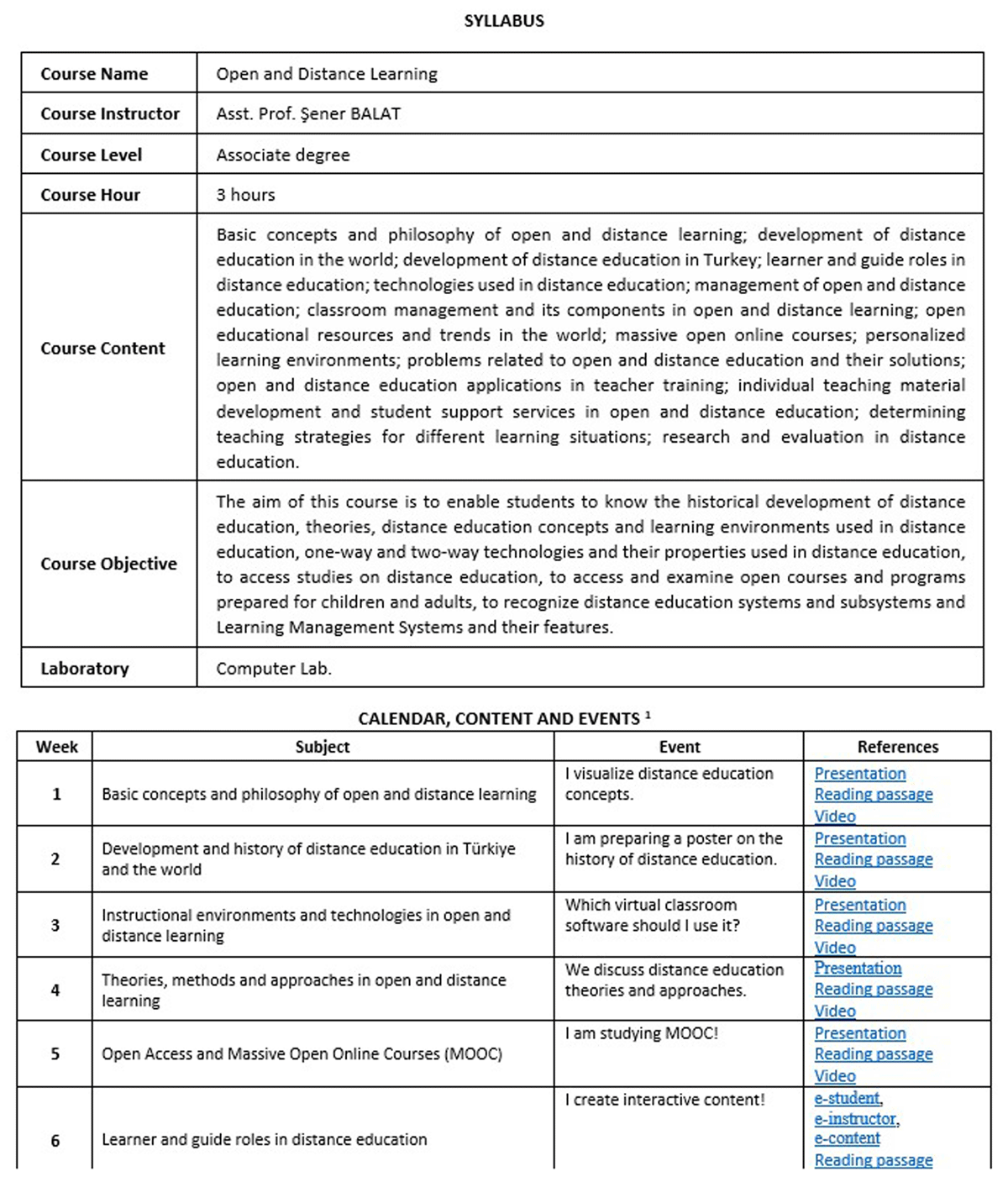
Ethics and Consent
Ethics approval was obtained from the ethics committee of the Bingöl University institution.
Competing Interests
The authors have no competing interests to declare.
Author Contributions (CRediT)
Mehmet Yavuz: Conceptualization, formal analysis, investigation, data curation, visualization, writing—original draft preparation, journal selection and corresponding author; Şener Balat: Conceptualization, methodology, analysis, writing—review and editing; Bünyami Kayalı: Visualization, methodology, writing—original draft preparation, writing—review and editing. All authors have read and agreed to the published version of the manuscript.
Author Notes
Based on Academic Integrity and Transparency in AI-assisted Research and Specification Framework (Bozkurt, 2024), the authors of this paper acknowledge that for the translation and localization of content, ChatGPT 4o was employed. Human translators subsequently reviewed and adjusted the translations to ensure accuracy, cultural appropriateness, and contextual relevance. The final text was thoroughly reviewed and approved by the authors to ensure it accurately reflects the intended research outcomes and ethical standards. The authors also assessed and addressed potential biases inherent in the AI-generated content. The final version of the paper is the sole responsibility of the human authors.