
Table 4–1
Indicators list of smart education.
| PRIMARY INDICATOR | SUB-INDICATOR | ||
|---|---|---|---|
| PF1 | Beneficial Approach to Student-centered Learning | PF1.1 | Efficacy of Technology in Educational Settings |
| PF1.2 | Strategies of Active Learning and Creativity Development | ||
| PF1.3 | Student Agency in Diverse Educational Settings | ||
| PF2 | Evidence-based Assessment for Comprehensive Student Development | PF2.1 | Comprehensiveness of Assessing Student Performance |
| PF2.2 | Impact of Assessment for Learning | ||
| PF3 | Ubiquitous Trustworthy Learning Environments | PF3.1 | Seamless and Quality Connectivity in different schools |
| PF3.2 | Provision of Personalized Digital Learning Resources | ||
| PF3.3 | Availability of Trustworthy Digital Devices for teaching and learning | ||
| PF4 | Sustainability of School Improvement with Digital Technology | PF4.1 | School-Level E-Leadership and Evidence-based Decision-making |
| PF4.2 | Effectiveness of Differentiated Teacher Professional Development | ||
| PF4.3 | Forward-thinking Responsible Consideration for Navigating School Challenges | ||
| PF5 | Commitment to Inclusion and Equity in Education | PF5.1 | Humanistic Approaches for Supporting Students with Special Needs |
| PF5.2 | Effectiveness of Promoting Gender Equality beyond Schools | ||
| PF5.3 | Accessibility of Supportive Learning Environment beyond Schools for All | ||
| PF5.4 | Distribution of Educational Resources among Regions | ||
| CF1 | Social Learning and Emotional Development for Students | CF1.1 | Technology Engagement for Cultural Education and Diversity |
| CF1.2 | Social Networking Involvement for Emotional Skills Development | ||
| CF1.3 | Student Digital Literacy Contributions to Social Community | ||
| CF2 | Responsible Digital Technology in Education | CF2.1 | Privacy Protection for All Students and Teachers |
| CF2.2 | Data Security Level for Learning and Educational Systems | ||
| CF3 | Prioritization of Teacher Professional Development | CF3.1 | Holistic Capacity Building for Teachers |
| CF3.2 | Digital Competency of pre-service teachers | ||
| CF3.3 | Digital Competency of teachers | ||
| CF4 | National-level Policy Sustainability of Educational Digital Transformation | CF4.1 | Long-term Funding for Educational Digitalized Infrastructure |
| CF4.2 | Performance-oriented Digital Learning and Educational Resource Development | ||
| CF4.3 | Evidence-based Innovation and Technology Adoption | ||
| CF4.4 | Educational Funding and Initiatives at National Level | ||
| CF5 | Effective Collaboration among Multi-sector Stakeholders in Education | CF5.1 | Activeness of E-Participation Engagement for Decision-making |
| CF5.2 | Accessibility to Government Online Services | ||
| CF5.3 | Effectiveness of Regulated data sharing across multiple sectors |
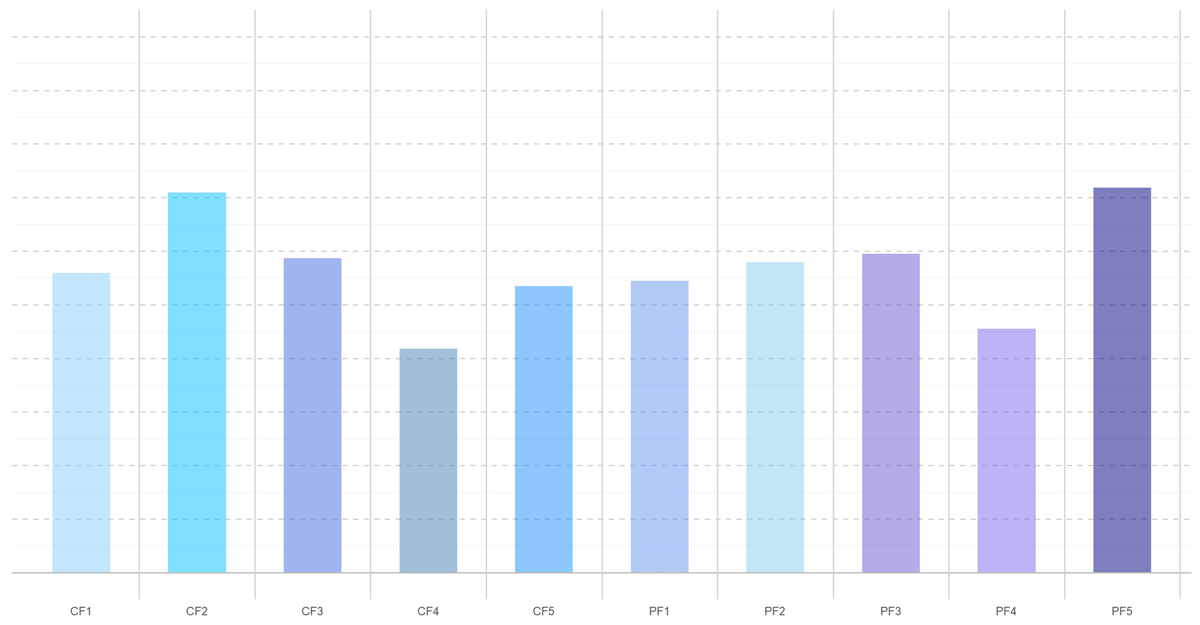
Figure 4–1
Overall development of 10 indicators for smart education.
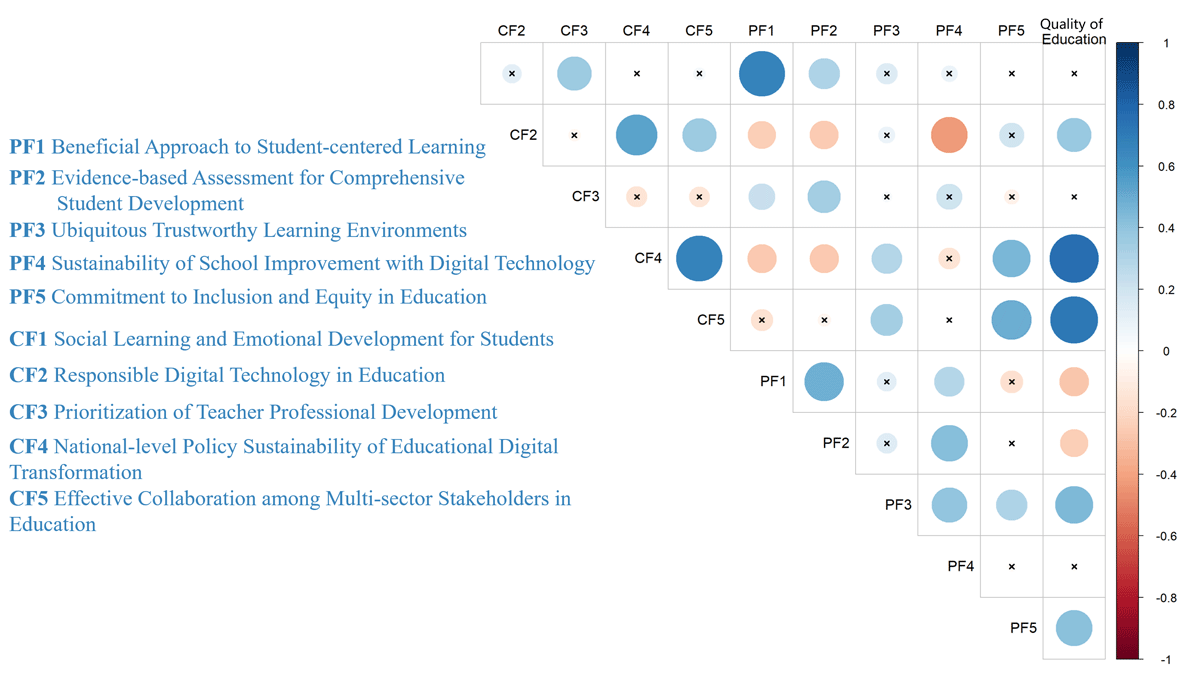
Figure 4–2
Relationships among performative, constructive features and quality of education.
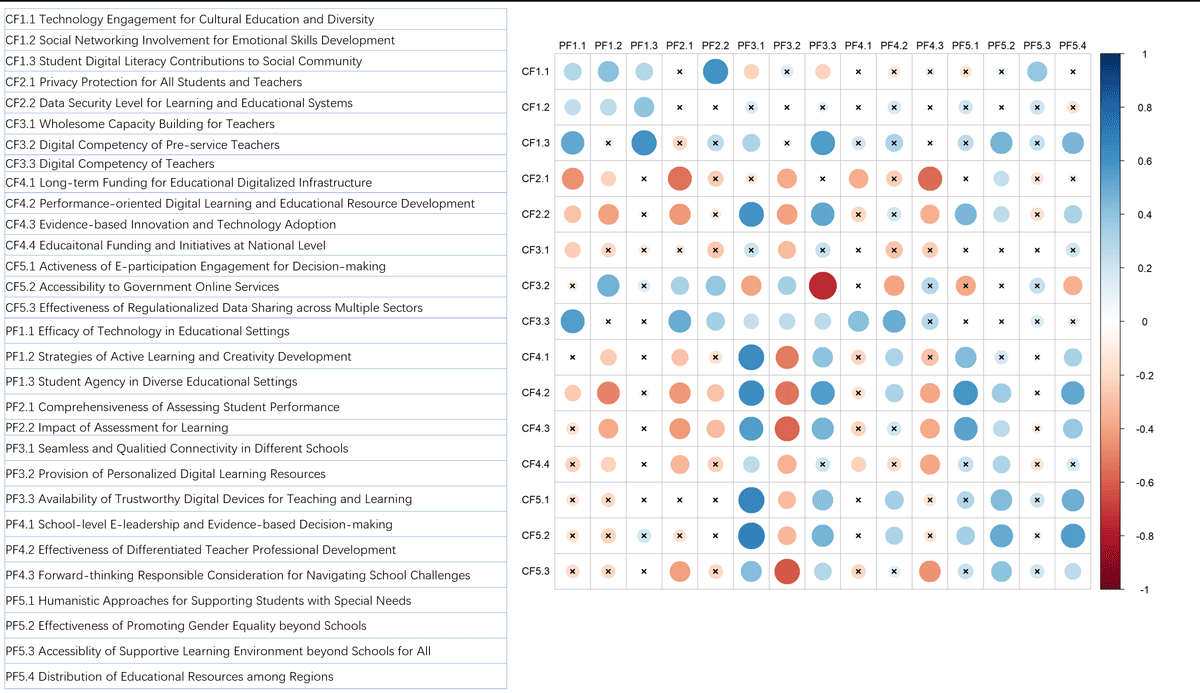
Figure 4–3
Relationships among sub-indicators of performative and constructive features.