
1. Introduction
The United Nations Sustainable Development Goal 4 (SDG4) focuses on ensuring inclusive and equitable quality education and promoting lifelong learning opportunities for all (UN, 2015). The United Nations highlighted the importance of harnessing the digital revolution to benefit public education (UN, 2022). Consequently, many countries are placing significant emphasis on digital education, actively developing national-level policy frameworks that utilize next-generation digital technologies to transform educational practices. In this context, smart education has emerged as a key component in national planning documents, aiming to promote educational equity and enhance the quality of education.
Following the joint UNESCO project on Rethinking and Redesigning National Smart Education Strategy (SmartEDU) initiated by UNESCO Institute for Information Technologies in Education (UNESCO IITE), Commonwealth of Learning (COL), International Society for Technology in Education (ISTE), Higher School of Economics (HSE), Beijing Normal University (BNU) since August 2020, this report aims to consolidate the global understanding of smart education in the context of digital transformation (UNESCO IITE, 2020). Researchers aim to investigate diverse perspectives from different countries and regions to build a global consensus, pinpoint the key areas of digital education policies for the advancement of smart education worldwide, illustrate the state of smart education through public datasets, and promote inclusiveness and equity within the realm of smart education.
On August 18, Beijing time, during the opening ceremony and plenary session of the “2024 Global Smart Education Conference”, Professor Huang Ronghuai, Co-Dean of the Smart Learning Institute at Beijing Normal University, together with Professor Zhan Tao, Director of the UNESCO Institute for Information Technologies in Education, represented the Global Smart Education Network (GSENet) in releasing the research report titled “Global Understanding of Smart Education in the Context of Digital Transformation” (China Education and Research Network, 2024).
Director Zhan Tao mentioned that since its inception two years ago, GSENet has attracted over 50 members from around the world and continues to be open to all, looking forward to everyone’s efforts in pursuing a vision for sustainable development and creating a new world. Professor Huang Ronghuai introduced the report as the latest research outcome of GSENet “National Smart Education Strategy Joint Research Program”. He stated that the research team extensively surveyed educators, policymakers, and scholars globally, analyzed the digital education policies of 48 countries, and the contribution of smart education to enhancing the quality of education. The team also invited more than ten countries to participate in discussions on the inclusivity and equity of smart education and continuously conducted related case studies. The release of this significant report by GSENet is instrumental in strengthening the international understanding of smart education, deepening the global digital transformation in education, and is of great importance to launch the inaugural year of smart education.
2. Common Understanding and Regional Adoption of Smart Education From a Global Perspective
The rapid development of digital technology, especially generative artificial intelligence, has had a revolutionary impact on educational digital transformation. Smart education aligns with the goal of digital transformation and emerges as a viable choice for promoting equitable, inclusive, and high-quality education. The concept of smart education remains fluid, dynamic, and contested, taking on various meanings across different spatial, institutional, and national contexts. This variability leads to divergent strategies in its adoption and implementation.
2.1 Global Understanding of Smart Education
2.1.1 Investigation of Smart Education across the Five Regions
Participants
The investigation encompassed 92 participants from 41 countries, covering regions including Asia & the Pacific, Western Europe and North America, Eastern Europe, Africa, Latin America and the Caribbean, aiming to consolidate the diverse perspectives on smart education across various regions. The participants were categorized into stakeholder groups based on their institutions and affiliations, including prominent academics, renowned researchers, influential non-profit leaders, key policymakers, and officials from regional and international organizations.
Common Awareness of Smart Education
Smart education, often perceived as an enhancement of current educational practices, is regarded as synonymous with both good education and future education. As a term, smart education is continuously evolving, reflecting the dynamic nature of educational advancements over the past decades. This term aligns with the United Nations’ vision of the future of education.
Smart education is perceived by participants as an enhancement of current educational practices and regarded as synonymous with good education. Smart education reflects and responds to the core concerns of the future of education which relate to promoting a human-centered integration of technology with the educational process.
Smart education systems can be depicted from two key perspectives: the performative features, which represent the vision of future education, and constructive features, which provide actionable steps towards realizing this vision. Through an analysis of experts’ discourse and the responses to open-ended questions, the performative and constructive features of smart education can each be categorized into five key points.
2.1.2 Performative Features: Smart Education as the Shared Vision of Education
The performative features of smart education depict the ideal educational blueprint, where student-centered learning, comprehensive learning assessment, a smart and ubiquitous learning environment, a culture of continuous improvement, and commitment to inclusion and equity in education are the norm rather than exceptions.
2.1.3 Constructive Features: Sustainable Pathways to Achieve Smart Education
The constructive features of smart education outline the actionable pathways to achieve smart education, by creating social learning communities, promoting the ethical adoption of ICT in education, prioritizing teacher professional development, developing sustainable plans for educational reform, and facilitating multi-sectoral collaboration.
2.2 Focus of Smart Education Across Regions
The Asia-Pacific region places great emphasis on building technological infrastructure and fostering partnerships between educational institutions and technology companies but faces challenges in providing teacher professional development and building capacity in technology adoption. The region is committed to creating interactive, technology-enriched learning environments to meet the diverse needs of students while relying on comprehensive policy support and sustainable development.
Western European and North American regions prioritize gender and cultural equity, enhancing professional development through global practices and cross-cultural exchanges. The regions focus on creating dynamic, personalized learning environments and improving teaching capacity. Key challenges include technology dependency, the digital divide, resource limitations, and addressing ethical issues.
The Eastern Europe region prioritizes the alignment of policy and practice in smart education, supporting its development through meaningful integration, as well as continuous professional training. However, some countries face challenges such as inadequate infrastructure, deeply ingrained traditional teaching methods, and the high costs associated with educational technology. Additionally, convincing educators, administrators, and parents to embrace educational reform remains a significant challenge, requiring further consensus and support for long-term sustainability.
The African regions face significant challenges in implementing smart education due to complex factors. Limited funding and resource allocation hinder investments in technology and infrastructure, while teacher training is crucial to bridging the skills gap. However, the digital divide, high infrastructure costs, data privacy and cybersecurity concerns, and resistance to change within the system further complicate the adoption of smart education.
The Latin America and Caribbean region are reshaping education by aligning curricula with societal needs. However, challenges include high technology costs, inadequate infrastructure, traditional teaching methods, and resistance to digital literacy. Overcoming these challenges requires continuous professional development and strong technical support to change the mindset and build essential skills.
3. Digital Education Policies to Achieve Smart Education Worldwide
3.1 Policies of Digital Education Coinciding With Smart Education
Countries place significant emphasis on digital education, actively developing national-level policy frameworks that leverage next-generation digital technologies to transform digital education. Meanwhile, smart education appeared in some planning documents at the national level to promote educational equity and improve educational quality. Smart education represents a bidirectional interface of technology and education, adapting to the evolving demands of the era, to meet the needs of transforming education.
3.2 Inspection of Digital Education Policies for Smart Education
Various regions and countries have implemented digital education policies, focusing on macro considerations such as educational vision, equity, and culture, which form the central pathway towards smart education. Researchers collected and analyzed 48 digital education policies from different countries.
3.2.1 Collecting National Digital Education Policies
Researchers systematically gathered policies related to digital education and AI for education by searching for keywords such as “smart education”, “digital education”, “digital transformation”, “digitalization”, “educational technology policy”, “Artificial Intelligence”, and “Generative Artificial Intelligence” on official websites worldwide. A total of 48 policy documents were collected from 48 different countries.
3.2.2 Analyzing Digital Education Policies from Six Considerations of Smart Education
The first, “Develop a National Vision and Plan” refers to government leaders committing to a shared vision that underscores the crucial role of technology in ensuring students’ future success and improving the nation’s social and economic equity. The second consideration “Build Infrastructure Capacity” is a fundamental requirement for the development of smart education. The establishment of a smart learning environment encompasses six aspects: ubiquitous network access, appropriate learning spaces, trustworthy learning tools, adaptive learning resources, reliable digital terminals, and a secure online environment. “Invest in Human Capacity” includes government leaders funding educators’ preparation, professional development, coaching, and mentoring opportunities to build broad human capacity around digital pedagogy. “Inclusion and equity” form the cornerstone of high-quality learning, meeting the needs of both students and educators. Tailored instruction for students with special needs promotes their participation in mainstream classes. “Continuous Improvement Culture” means educators and leaders collaborate with stakeholders to continuously collect and evaluate information on educational experiences to enhance quality. “Muti-Sector Cooperation and Partnerships” refer to a coalition of public enterprises, higher education institutions, and research organizations to collaborate closely to establish effective strategic partnerships.
3.3 Characteristics of Digital Education Policies in Terms of Smart Education
3.3.1 The Critical Stages of Digital Education
In the age of AI, the digital transformation of education progresses through three distinct stages. Digitization is marked by the foundational setup of information technologies and the initial application of such technologies, which focuses on acquiring smart devices, developing digital resources, constructing informational platforms, and experimenting with the use of various media. Cyberization centers on leveraging data to empower educational reform, through fully integrated information platforms that support teaching, learning, administration, assessment, and evaluation. Intelligentization involves the comprehensive reshaping of educational structures and processes using artificial intelligence, towards achieving smart education.
3.3.2 The Key Characteristics of Digital Education Policies at Different Stages
Through the analysis of policy texts, it has been observed that the development of digital education towards smart education exhibits characteristics across three distinct stages. For example, in the consideration of “Develop a National Vision and Plan”, digitization emphasizes the application of technology in learning environments and the establishment of online learning environments to support remote learning technologies; cyberization manifests in comprehensive intelligent platforms and data-driven educational environments, which support seamless learning, continuously improving information and communication technology infrastructure and systems to support teaching in both schools and homes; intelligentization toward a high-performing digital education ecosystem, integrating cross-departmental resources and technologies to deliver top-quality global education services.
3.4 Regional Focus on Digital Education Policies
Creating a high-quality, inclusive, and sustainable digital education ecosystem is the main concern in digital education policy vision and plan. Infrastructure development and human capacity are also integral to digital education policies.
Although most countries have integrated digital technologies into education, the realization of digital education is still constrained by technology and resources. Strongly enhancing infrastructure construction and investing in human resources is crucial for achieving high-quality digital education. Digital education emphasizes the use of digital technology to establish an educational ecosystem where anyone can learn anytime and anywhere. The vision and plan aim to optimize educational data to support all students with digital resources and achieve learner-centered educational reform.
Additionally, digital education is advancing towards an equitable and inclusive learning environment by narrowing the divides of digital access, digital design, and digital use. Furthermore, countries need to establish specialized agencies to oversee, monitor and assess the implementation of digital education, regularly updating digital education policies to promote the sustainable development of smart education.
4. Status of Smart Education Through the Lens of Public Datasets
Across the globe, organizations and nations have been investing in the digital transformation of education, evidenced by the development of digital learning platforms, strategic investments in human resources, and the implementation of comprehensive educational governance frameworks. The proliferation of survey data on digital education in recent years highlights an emerging need for a more analytical approach. To this end, this section is committed to constructing an indicator framework for smart education, grounded in the five performative and five constructive features, and establishing a GSE dataset, which is compiled with public data sources worldwide. The subsequent analysis will cfocus on tracking the current state of smart education and the interplay among the various features and indicators.
4.1 Key Indicators of Smart Education at the National Level
The comprehensive consensus reached among leading experts on the performative and constructive features that define smart education, was followed by a series of rigorous group deliberations and a meticulous cross-validation process. This methodological approach culminated in the formulation of a Framework for Tracking Smart Education (see Table 4–1). The connection between the key features of smart education and measurable operational indicators was established by identifying and translating these features into actionable metrics. The resulting indicators are systematically classified into ten distinct categories, each corresponding to one of the ten key features of smart education. These categories serve to encapsulate the multifaceted dimensions of smart education, proposing a comprehensive and nuanced tracking framework.
Table 4–1
Indicators list of smart education.
| PRIMARY INDICATOR | SUB-INDICATOR | ||
|---|---|---|---|
| PF1 | Beneficial Approach to Student-centered Learning | PF1.1 | Efficacy of Technology in Educational Settings |
| PF1.2 | Strategies of Active Learning and Creativity Development | ||
| PF1.3 | Student Agency in Diverse Educational Settings | ||
| PF2 | Evidence-based Assessment for Comprehensive Student Development | PF2.1 | Comprehensiveness of Assessing Student Performance |
| PF2.2 | Impact of Assessment for Learning | ||
| PF3 | Ubiquitous Trustworthy Learning Environments | PF3.1 | Seamless and Quality Connectivity in different schools |
| PF3.2 | Provision of Personalized Digital Learning Resources | ||
| PF3.3 | Availability of Trustworthy Digital Devices for teaching and learning | ||
| PF4 | Sustainability of School Improvement with Digital Technology | PF4.1 | School-Level E-Leadership and Evidence-based Decision-making |
| PF4.2 | Effectiveness of Differentiated Teacher Professional Development | ||
| PF4.3 | Forward-thinking Responsible Consideration for Navigating School Challenges | ||
| PF5 | Commitment to Inclusion and Equity in Education | PF5.1 | Humanistic Approaches for Supporting Students with Special Needs |
| PF5.2 | Effectiveness of Promoting Gender Equality beyond Schools | ||
| PF5.3 | Accessibility of Supportive Learning Environment beyond Schools for All | ||
| PF5.4 | Distribution of Educational Resources among Regions | ||
| CF1 | Social Learning and Emotional Development for Students | CF1.1 | Technology Engagement for Cultural Education and Diversity |
| CF1.2 | Social Networking Involvement for Emotional Skills Development | ||
| CF1.3 | Student Digital Literacy Contributions to Social Community | ||
| CF2 | Responsible Digital Technology in Education | CF2.1 | Privacy Protection for All Students and Teachers |
| CF2.2 | Data Security Level for Learning and Educational Systems | ||
| CF3 | Prioritization of Teacher Professional Development | CF3.1 | Holistic Capacity Building for Teachers |
| CF3.2 | Digital Competency of pre-service teachers | ||
| CF3.3 | Digital Competency of teachers | ||
| CF4 | National-level Policy Sustainability of Educational Digital Transformation | CF4.1 | Long-term Funding for Educational Digitalized Infrastructure |
| CF4.2 | Performance-oriented Digital Learning and Educational Resource Development | ||
| CF4.3 | Evidence-based Innovation and Technology Adoption | ||
| CF4.4 | Educational Funding and Initiatives at National Level | ||
| CF5 | Effective Collaboration among Multi-sector Stakeholders in Education | CF5.1 | Activeness of E-Participation Engagement for Decision-making |
| CF5.2 | Accessibility to Government Online Services | ||
| CF5.3 | Effectiveness of Regulated data sharing across multiple sectors |
To evaluate the “Student-centered teaching and learning” feature, the PF1 indicator will focus on how effectively a country or region implements the integration of technology in educational settings, promotes active learning, fosters creativity, and empowers student agency, ensuring that each learner takes an active role in their educational journey.
For the “Learning assessment for whole education” feature, the PF2 indicator will evaluate the comprehensiveness of assessing student performance, combined with the utilization of assessment for learning strategies, and provide targeted feedback that supports holistic growth.
The “Ubiquitous and Smart Learning Environment” feature is closely tied to the PF3 indicator, which evaluates reliable digital tools and seamless connectivity in learning environments to ensure continuous, personalized, and secure access to learning resources.
The “Culture of Continuous Improvement” feature is intrinsically linked to the PF4 indicator which evaluates how effectively schools navigate challenges through the effective integration of digital tools and practices, supported by strong leadership, data-driven decision-making, and continuous professional development.
“Commitment to Inclusion and Equity in Education” is directly aligned with the PF5 indicator, which is specifically designed to evaluate how effectively educational systems are fostering an inclusive and equitable environment for all students regardless of backgrounds, abilities, or gender.
The “Social Learning Communities” dimension is closely connected to the CF1 indicator, Social Learning and Emotional Development for Students, which describes how students use technology to interact effectively with others, manage their emotions, and build healthy relationships, enhancing their social learning and emotional growth in a connected, digital environment.
“Ethical Adoption of ICT in Education” aligns closely with the CF2 indicator which assesses how well a secure environment is provided for students to use technology, ensuring the protection of their privacy and the security of educational data, while supporting ethical and effective learning practices.
The “Prioritization of Teacher Professional Development” feature is directly reflected in the CF3 indicator, which evaluates the extent to which educational systems prioritize and support the continuous learning and skills enhancement for both pre-service teachers and in-service teachers.
“Sustainable Plan for Education Reform” is intrinsically connected to the CF4 indicator. Government policies provide consistent and long-term financial investment to support the ongoing transformation and development of education.
The “Effective Multi-sectoral Collaboration” feature aligns with the CF5 indicator, Effective Collaboration among Multisector Stakeholders in Education, which assesses how well educational systems facilitate and sustain cooperation among various sectors, including government, private industry, academia, and non-governmental organizations.
4.2 Public Data Sources for Tracking Smart Education Worldwide
A global framework for tracking smart education encompassing 10 indicators and 30 sub-indicators was identified which coincides well with the GSE dataset covering 58 observing data points. These observing points serve as critical reference metrics, enabling stakeholders to assess the progress, challenges, and overall impact of smart education initiatives across different contexts and regions. This framework comprises 10 primary dimensions, each meticulously aligned with one of the ten key features that define smart education. To ensure a thorough and nuanced analysis, these primary dimensions are further subdivided into 30 sub-indicators, providing a more granular perspective on specific aspects of smart education.
Data collection for this framework is both rigorous and methodical, drawing on publicly available and reliable sources. The data is aggregated from internationally recognized surveys and databases, ensuring that the indicators are grounded in widely accepted and credible information. The data is from multiple reports or webpages related to the digital transformation of education from organizations such as OECD, UNESCO, Portulans Institute, The International Telecommunication Union, and the World Bank. These include reports such as PISA Results 2022, SDG4 data, The Network Readiness Index 2023, World Bank Open Data, ITU DataHub, and TALIS Results 2018.
4.3 Current Status of Smart Education From Different Countries
Figure 4–1 shows the status of ten indicators of the performative and constructive features of smart education highlighting their strengths and the need for their improvement in some educational contexts. It can be observed there are fluctuations in the scores of the subdimensions of the performative and constructive features of smart education with some points showing higher or lower levels of development. For example, PF5 (Commitment to Inclusion and Equity in Education) and CF2 (Responsible Digital Technology in Education) appear to score better than CF4 (National-level Policy Sustainability of Educational Digital Transformation).
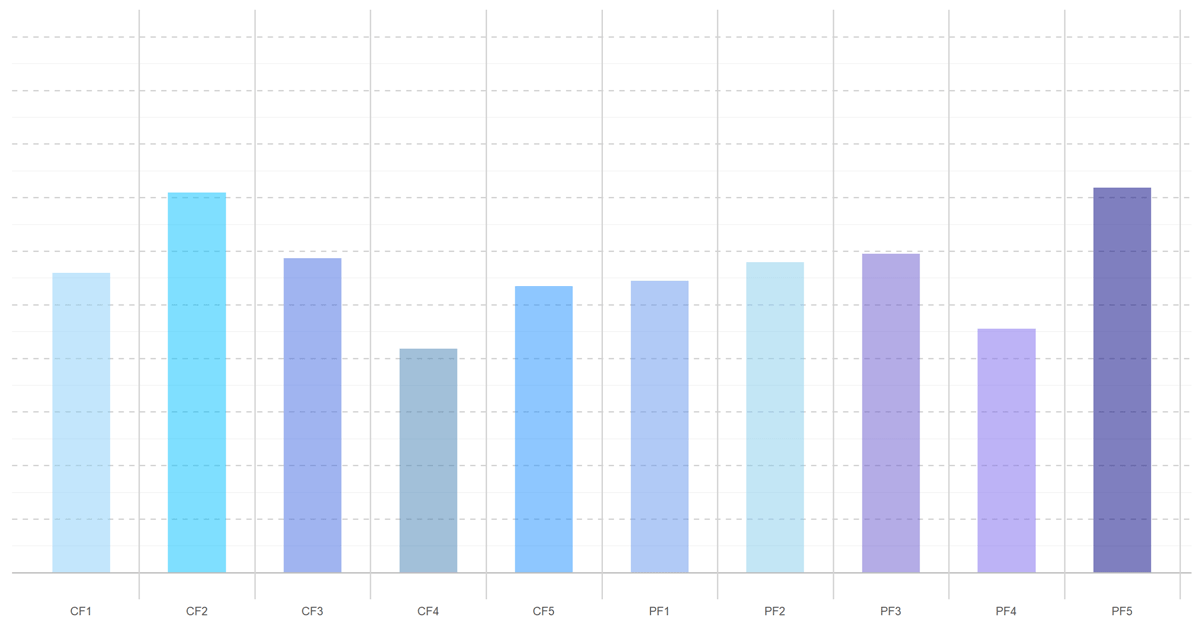
Figure 4–1
Overall development of 10 indicators for smart education.
Among 81 countries and regions, overall, various countries generally emphasize equitable, inclusive, and quality education, as well as the achievement of SDG benchmarks. In the information age, countries also focus on the responsible integration of information technology into teaching to promote the digital transformation of education. However, the sustainability of school improvement with digital technology and national-level policy for the sustainability of educational digital transformation will remain key areas of focus for all countries.
Educational systems should also pay heed to areas where they observed low scores such as “National-Level Policy Sustainability of Educational Digital Transformation”. Establishing a consensus on a sustainable development vision aimed at the digital transformation of education is critical for setting the strategic direction of educational initiatives. This vision should incorporate innovative green technologies, green curriculum and green skills a outline long-term goals for creating an environmentally sustainable and educationally effective system. Engaging stakeholders, including educators, policymakers, and community members, in the development of this vision, ensures that the goals are comprehensive and widely supported. This unified approach not only aligns efforts across different sectors but also fosters a shared commitment to sustainable practices and educational excellence. Thus, there is a need for effective educational governance and policy.
4.4 Relationships Among Performative, Constructive Features and Quality of Education
The quality of education indicator is a combination of the SDG4 Benchmark indicators, PISA scores and the average of each country’s rankings in the top three universities in the QS University Rankings.
Through the analysis of the correlation between the performative, constructive features and the variable of the quality of education (see Figure 4-2), it was found that two performative features CF4 (National-level Policy Sustainability of Educational Digital Transformation) and CF5 (Effective Collaboration among Multi-sector Stakeholders in Education) are significantly correlated with the Quality of Education, with correlation coefficients above 0.7, indicating a strong positive relationship. Both coefficients have passed the significance test, and under a 0.01 confidence level, we can consider this correlation to be statistically significant. In addition, the other three variables, namely PF3 (Ubiquitous Trustworthy Learning Environments), PF5 (Commitment to Inclusion and Equity in Education), and CF2 (Responsible Digital Technology in Education), also show a significant moderate correlation with the Quality of Education. The correlation coefficients are about or higher than 0.4 with the significance at the 0.01 level, indicating that their relationship with the quality of education is statistically significant.
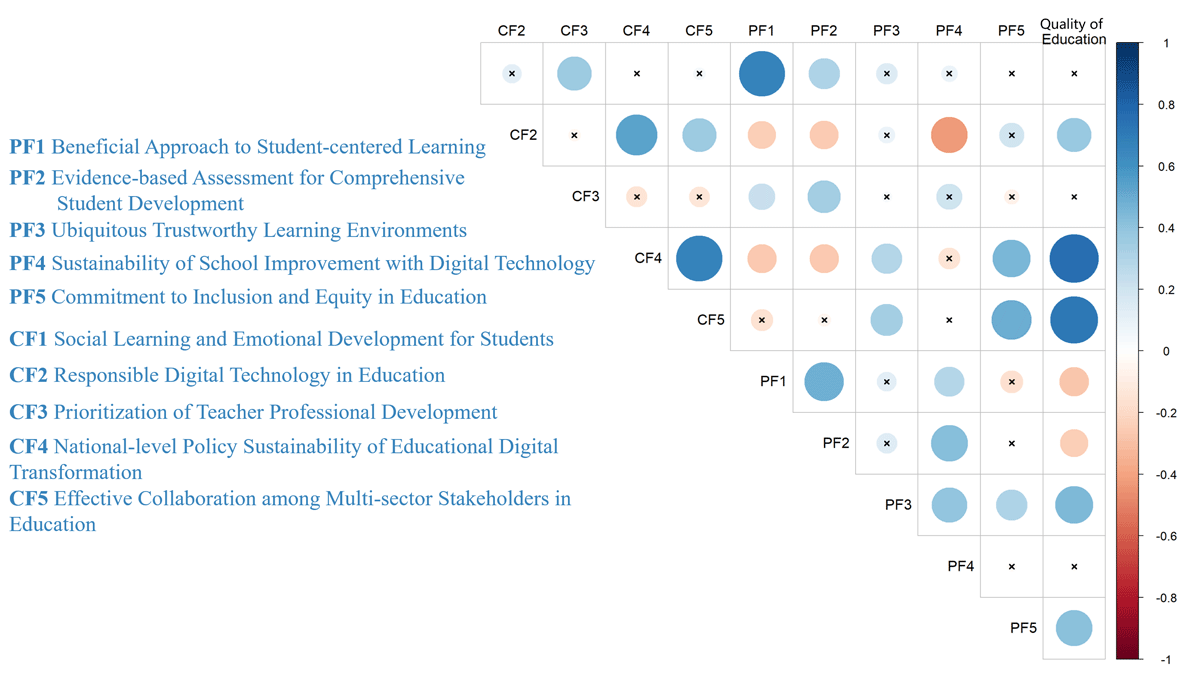
Figure 4–2
Relationships among performative, constructive features and quality of education.
The strong correlation suggests that CF4 (National-level Policy Sustainability of Educational Digital Transformation) and CF5 (Effective Collaboration among Multi-sector Stakeholders in Education) may be key factors affecting the quality of education, while the moderate correlation of the other variables, although less influential, still plays an important role in promoting the quality of education. We should consider the potential impact of these features and explore their specific mechanisms of action relating to the quality of education.
The matrix also displays the interrelations between subdimensions of the constructive features of smart education (CF1 to CF5) and how they relate to specific subdimensions of performative features of smart education (PF1 to PF5) and vice versa. The interrelations have specific correlation values to indicate the strength and direction of the relationship. For example, strong positive relationships include PF1 (Beneficial Approach to Student-centered Learning) with PF2 (Evidence-based Assessment for Comprehensive Student Development) and PF2 (Evidence-based Assessment for Comprehensive Student Development) with PF4 (Sustainability of School Improvement with Digital Technology). Strong Negative Correlations include PF4 (Sustainability of School Improvement with Digital Technology) with CF2 (Responsible Digital Technology in Education). This implies that a beneficial approach to student-centered teaching and learning results in effective data-driven learning assessment for comprehensive student development and this ultimately results in the sustainability of school improvement with digital technology. A culture of continuous school improvement with digital technology allows principals and school management team members to engage in educational leadership by ensuring that teachers take responsibility for teaching skills and student outcomes, informing parents or guardians about school and student performance, and developing a professional development plan for the school.
Sustainability of school improvement with digital technology is shown to negatively affect the responsible digital technology in education. Thus, a strong culture which prioritises results over responsible and equitable technology integration may overlook the responsible or ethical adoption of digital technology in education. Upon a detailed analysis of the correlational patterns between the sub-indicators of the performative and constructive features, it is obvious that inclusion, equity and quality of education, seamless and qualified connectivity have become the common consideration.
4.5 Relationships Among Sub-indicators of Performative and Constructive Features
Specifically, Figure 4–3 shows the relationships among sub-indicators of performative and constructive features. Looking at key sub-indicators from the same category (performative features) that are interconnected, it can be observed that CF4.1 (Long-Term Funding for Educational Digitalized Infrastructure) is strongly and positively related to CF4.2 (Performance-oriented Digital Learning and Educational Resource Development) and CF4.3 (Evidence-based Innovation and Technology Adoption). This implies that adequate continuous financial investment in digital infrastructure in education tends to enhance the development of educational resources for higher performance and promote effective and novel ways of infusing technology into education. And CF5.2 (Accessibility to Government Online Services) is positively related to CF1.3 (Student Digital Literacy Contributions to Social Community). That is, when governments make digital resources available and accessible to the general public, especially students, it increases their digital competencies to bring about social development in their respective communities.
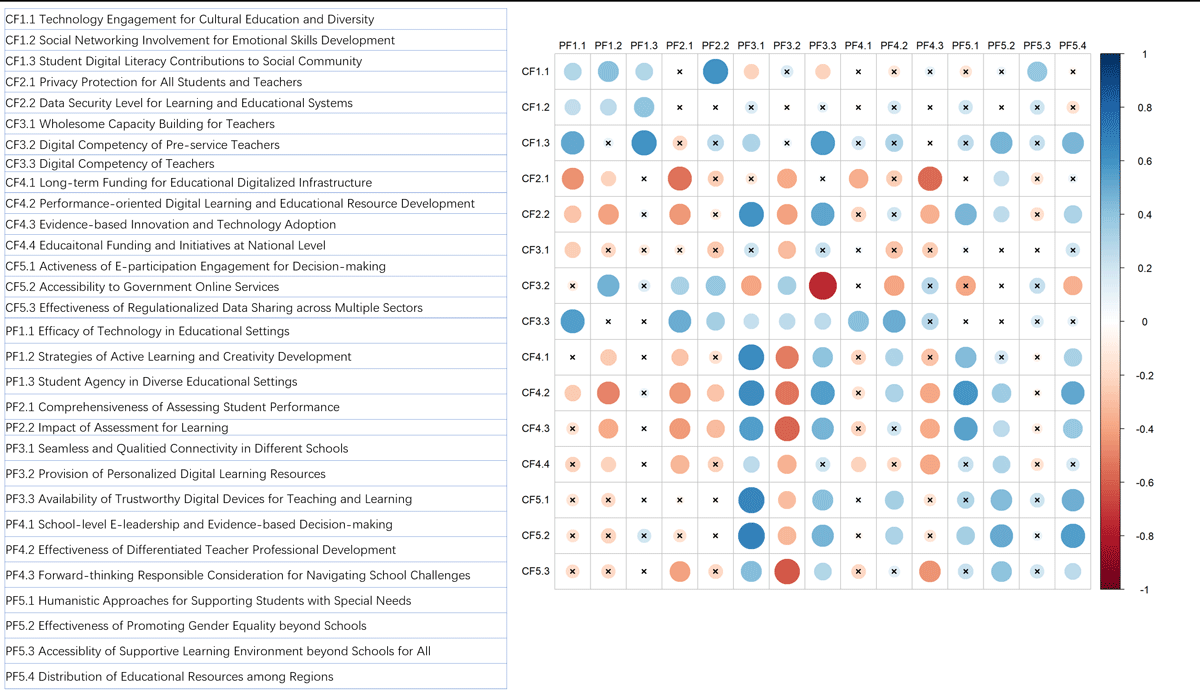
Figure 4–3
Relationships among sub-indicators of performative and constructive features.
A look at the relationships between sub-indicators of performative features also shows that PF1.1 (Efficacy of Technology in Educational Settings) is positively related to PF2.1 (Comprehensiveness of Assessing Student Performance) and PF2.2 (Impact of Assessment for Learning). This means that appropriate technologies in the school learning environment foster authentic assessment strategies for effective learning to be achieved. Diverse countries and regions should prioritize procuring the right technologies that can lead to the enhancement of learning. This also calls for educators/teachers to possess the technical abilities to integrate technology into teaching and learning and develop comprehensive assessment strategies that enhance learning experiences and lead to quality education.
An analysis of the interrelationships between specific sub-indicators of performative and constructive features of smart education demonstrates that CF1.1 (Technology Engagement for Cultural Education and Diversity) has a significant correlation with PF2.2 (Impact of Assessment for Learning) and PF5.3 (Accessibility of Supportive Learning Environment beyond Schools for All). It can be deduced that technology use in multicultural classrooms to promote diversity improves overall learning assessment and encourages easy access to supportive systems/mechanisms in and out of the confines of school for all regardless of their background. A holistic approach to technology integration for the digital transformation of education suggests that it is crucial to also consider cultural elements and the creation of supportive learning environments that extend beyond traditional classroom settings to reach diverse learners. This coincides with the call for providing lifelong learning opportunities for all people in different countries and regions of the world. In the same light, it can be seen that PF3.3 (Availability of Trustworthy Digital Devices for Teaching and Learning) has a positive relationship with CF2.2 (Data Security Level for Learning and Educational Systems). This suggests that trustworthy digital devices safeguard the privacy and digital information of participants from unauthorized access and use by third parties. Trustworthy digital devices foster transparency regarding how data is collected, stored, and used.
The correlation matrix highlights strong positive relationships among sub-indicators within the same category of performative and constructive features in smart education, indicating that investments in digital infrastructure enhance educational resource development and performance. Additionally, the availability of government online services boosts student digital literacy, fostering social development. The effective use of technology in educational settings supports comprehensive assessment strategies, emphasizing the need for educators to integrate technology effectively. However, a negative correlation between the availability of trustworthy digital devices and the digital competency of pre-service teachers suggests that simply having access to devices does not guarantee the development of essential skills and responsible use.
5. Fostering Inclusiveness and Equity in Smart Education
The concept of “inclusiveness” involves creating an education system that is open to all individuals, adapts to diverse needs, and is capable of promoting sustainable development. This section highlights the concept, key features, strategies, and practices that promote smart education, within the context of developments in technology, the needs of special groups, and unexpected disasters and emergencies.
5.1 The Philosophy of Promoting Inclusiveness in Smart Education
5.1.1 The Concept of Inclusiveness in the Age of AI
While different disciplines approach the study of “inclusiveness” with varied backgrounds and themes, overall “inclusiveness” emphasizes compatibility, equality, participation, and sharing. The core concerns across different fields regarding “inclusiveness” primarily converge on three aspects: focusing on marginalized groups to promote equal opportunities; addressing complex socio-ecological issues to build a resilient ecosystem; and delving into the deep integration of technological, economic, and social issues to foster sustainable development. Inclusiveness involves ensuring equitable access to resources, services and opportunities regardless of geographical location or social status.
5.1.2 Identifying the Key Features of AI Technology-Driven Inclusiveness
Diversity
The concept of diversity encompasses acceptance and respect. The issue of diversity should be examined within the framework of fundamental educational questions.
Inclusion and digital inclusion
In education, inclusion means real learning opportunities for groups who have traditionally been excluded. Inclusive education allows students of all backgrounds to learn and grow side by side, to the benefit of all. Digital inclusion refers to the active engagement of individuals and communities in the digital world, ensuring that everyone has the access, resources, skills, and support needed to fully participate in a society that is increasingly dependent on digital technologies.
Equity
To promote equity in education, UNICEF is calling on governments to provide children and persons with disabilities equal opportunities, and consider the full range of disabilities (UNICEF, 2021).
Access
Distance modalities have been used to expand access across the education system. The youth bulge and the growing number of NEETs signal the urgency to expand opportunities, especially for women, persons with disabilities, and those who are geographically and economically unable to participate in education.
Efficiency
Efficiency in terms of costs and ensuring human capacity building in marginalized and hard-to-reach communities. The efficiency ratio shows distance programmes are more efficient in terms of cost but need to improve retention and throughput.
Quality
Depending on the development of digital and textual resources, as well as the training of facilitators, the success of educational programs or initiatives hinges on having well-prepared materials and competent individuals who can guide the learning process effectively.
5.2 Essential Components of Smart Education Promotes Educational Inclusiveness
Based on a survey from 10+ countries and regions, it was found that assistive technologies for learners with special needs, internet access for remote areas, and reliable social mechanisms for gender equity, play a crucial role in promoting inclusiveness and equity, essential components of smart education.
Adaptive technologies and specialized software can significantly enhance the learning experience for students with disabilities, allowing them to access educational materials and participate in classroom activities on an equal footing with their peers. Bridging the digital divide by providing internet connectivity to underserved and remote regions ensures that students in these areas have the same opportunities to learn and engage with digital resources as their peers in urban centers. Establishing robust mechanisms to promote gender equality in education is essential. This includes ensuring that both boys and girls have equal access to education and that gender stereotypes do not hinder educational opportunities.
These findings align closely with the core principles of smart education, which seek to integrate technology into educational policies and practices in a way that promotes inclusiveness in the era of artificial intelligence (AI). Smart education aims to leverage technological advancements to improve educational outcomes while ensuring that they are accessible to all learners regardless of their background or abilities.
By working collaboratively, stakeholders can establish guidelines, standards, and frameworks that prioritize equity, accessibility, and quality in education. This ensures that the digital transformation of education benefits every learner, contributing to a more equitable and inclusive society.
5.3 Recommendation on Promoting Inclusiveness in Smart Education
From the perspective of digital transformation, it is confirmed from case studies that “girls if given the opportunity, can perform better” and it is crucial to address the structural barriers to women and girls reaching their full potential. For example, in the mountainous region of Ningxia, China, girls are provided digital education on an equal footing with boys. This addresses the challenges of low enrollment rates, high dropout rates, and lower educational outcomes compared to other regions. The use of digital technology played a transformative role in empowering girls and improving their performance.
Regional partnerships and collaborations are essential in addressing resource scarcity and enhancing the impact of development initiatives, especially in regions like the South Pacific where there might be a significant gender gap in accessing digital technologies. This disparity can limit women’s ability to benefit from advancements in areas such as information sharing, education, healthcare, and economic opportunities. By fostering collaboration among countries and organizations within the region, resources can be pooled together to create more effective programs and services that cater to the specific needs of women and girls.
To further these goals, regional partnerships can facilitate the exchange of best practices, technology, and funding, which are critical for sustainable development. Collaborative efforts can also lead to the creation of regional standards and policies that ensure equitable access to digital technologies and education across different communities.
6. Conclusion
Experts widely agree that smart education represents a shared strategic vision among nations to address the key challenges of the artificial intelligence era and achieve the goal of high-quality education. The characteristics of smart education are manifested in the performative and constructive features of national or regional smart education ecosystems. By conducting a thorough analysis of expert perspectives and smart education cases from various countries, it becomes clear that different regions demonstrate unique characteristics and face distinct challenges in promoting the development of smart education. The Asia-Pacific region is committed to creating interactive, technology-enriched learning environments to meet the diverse needs of students while relying on comprehensive policy support and sustainable development. Western European and North American regions prioritize gender and cultural equity, enhancing professional development through global practices and cross-cultural exchanges. The Eastern Europe region prioritizes the alignment of policy and practice in smart education, supporting its development through meaningful integration, as well as continuous professional training. African regions face significant challenges in implementing smart education due to complex factors. Limited funding and resource allocation hinder investments in technology and infrastructure, while teacher training is crucial to bridging the skills gap. The Latin America and Caribbean region are reshaping education by aligning curricula with societal needs. However, challenges include high technology costs, inadequate infrastructure, and resistance to digital literacy.
The six dimensions of the National Smart Education Framework include “Develop a National Vision and Plan”, “Build Infrastructure Capacity”, “Invest in Human Capacity”, “Inclusion and Equity”, “Continuous Improvement Culture”, and “Multi-Sector Cooperation and Partnerships”. The planning of digital education policies embodies three critical stages: Digitization, Cyberization, and Intelligentization. Each stage respectively demonstrates the deep integration of digital technologies, the full manifestation of data elements, and the effective adoption of intelligent technologies as key aspects of the planning process. Through conducting categorical coding and statistical analysis of policies from the European Region, American Region, Asia-Pacific, and African Region, it was observed that countries at the same stage of digital education planning exhibit some common characteristics and highlights within the six aspects of smart education. Overall, digital education policies to attain smart education should emphasize robust infrastructure, prioritize capacity building, and create a high-quality, inclusive, sustainable digital education ecosystem.
Data analysis revealed that national-level policy development and effective collaboration among multi-sector stakeholders had a significant impact on the overall educational quality. Similarly, commitment to equity and inclusion, responsible uses of technology and trustworthy learning environments positively influence educational quality. However, issues such as accessibility of supportive learning environments beyond schools, e-leadership in schools and forward-thinking planning for addressing future challenges have not received sufficient attention in this process. Based on a survey from 10+ countries and regions, it was found that assistive technologies for learners with special needs, internet access for remote areas, and reliable social mechanisms for gender equity, play a crucial role in promoting inclusiveness and equity, essential components of smart education.
Overall, this study provided an in-depth explanation of the key takeaways:
The concept of smart education is gradually being demystified across several countries and regions within the context of diverse cultures, technological adoption, and pedagogical practices.
Performative features (learning, assessment, infrastructure, sustainability, equity) and constructive features (students, teachers, digital technology, policy, partnership) of smart education depict the ideal blueprint for quality education.
Digital education policies to attain smart education should emphasize the need for robust infrastructure, prioritize capacity building, and create a high-quality, inclusive, sustainable digital education ecosystem.
Across different countries and regions, access to digital technology beyond schools, E-leadership training in schools, adaptive learning resources and forward-responsible thinking should be fully emphasized to achieve the Education Agenda 2030.
Data Accessibility Statement
The data that support the findings of this study are available from Global Smart Education Network but restrictions apply to the availability of these data, which were used under license for the current study, and so are not publicly available. Data are however available from the authors upon reasonable request and with permission of Global Smart Education Network.
Ethics and Consent
Ethical approval was obtained for the work described in this article.
Funding Information
This work is supported by the Global Smart Education Network (GSENet) and the Beijing Normal University ‘Research and Practice of Smart Learning Theory’ project, Project No. 27800-230200002.
Competing Interests
The authors have no competing interests to declare.
Author Contributions (CRediT)
Ronghuai Huang, Dejian Liu, Asha Singh Kanwar, Tao Zhan: Supervision, Project Administration, Funding Acquisition, Conceptualization. Junfeng Yang: Methodology, Formal Analysis, Investigation, Supervision, Writing—review and editing. Rongxia Zhuang, Mengyu Liu, Zhisheng Li: Methodology, Data Curation, Visualization, Writing—Original Draft Preparation, Writing—review and editing. Michael Adarkwah: Writing—review and editing. All authors have read and agreed to the published version of the manuscript.