
Introduction
In their ‘Recommendations on Open Educational Resources’, UNESCO (2019) defines Open Educational Resources (OER) as ‘learning, teaching and research materials in any format and medium that reside in the public domain or are under copyright that have been released under an open license, that permit no-cost access, re-use, re-purpose, adaptation and redistribution by others’ (p. 5). They see the potential for OER to contribute to innovative, high-quality, participatory education and recommend the member states ‘to strategically plan and support OER capacity building, awareness raising, use, creation and sharing at the institutional and national levels, targeting all education sectors and levels’ (p. 6). In Germany, one of the member states and country of focus in this paper, several policy publications mirror these recommendations: On the state level, the Standing Conference of the Ministers of Education and Cultural Affairs (KMK) issued the ‘Strategy ‘Education in a Digital World’’ (2017) in which the potential of OER is seen in several educational sectors, especially in Higher Education. The Standing Scientific Commission (SWK) connected to the KMK reported similar recommendations as the KMK, but also a lack of adoption despite the perceived potentials (SWK, 2022). A heightened sense of relevance and potential of OER is reflected in the publication of the ‘OER Strategy’ (2022) by the Federal Ministry of Education and Research (BMBF). One of the core aims of this strategy is to create incentives for the creation and use of OER. For example, on the school level, the BMBF has funded community-led events for over 10 years as a venue for promoting OER awareness and readiness. Also, there are several publicly funded repositories.
The potential of OER at the K-12 level is not only seen by policymakers and researchers (e.g., Heimstädt & Dobusch, 2017; Mollenhauer et al., 2017) but also those educators who are familiar with the concept (Otto, 2021; Schmid et al., 2017a). However, this group of OER-informed educators is still comparably small (Bedenlier & Marín, 2022). In fact, only about a third of teachers working in vocational education were familiar with the concept of OER (Grimm & Rödel, 2020). The question remains as to why the adoption of OER is still low, despite consensus on its potential benefits among policymakers and informed practitioners. Therefore, this paper aims to contribute insights into the enablers and barriers to the adoption of OER in the context of primary and secondary education in Germany. More specifically, there is a need to establish which common enablers and barriers are the main drivers of OER adoption so that policies like the OER Strategy issued by the BMBF can be evidence-based.
Barriers and Enablers for OER Adoption
Existing research does not give us enough basis to single out the main drivers of OER adoption. ‘Adoption’ here refers to the use, reuse, adaptation, or creation of OER. On the Higher Education level, there is ample research on barriers and to some extent also on enablers. While there are structural differences between Higher Education (HE) and K-12 education, the kinds of barriers and enablers that are relevant should show some overlap (Blomgren, 2018). For example, in order to (re)use or create OER, educators need permission to do so as well as the basic technical infrastructure. Educators need to be aware of the concept and they need certain skills. There need to be perceived benefits to OER and educators need to have enough time to work with OER. So, if there were an established ranking of how important such enablers or barriers to OER adoption are in Higher Education, this would provide a hypothesis to investigate whether the same ranking pertains to K-12 education. However, even in the field of HE, where there is more research on OER barriers and enablers, no clear picture emerges.
A varying list of common barriers has been the result and subject of research, including a lack of supportive policies, a lack of awareness of open licenses, a lack of time, a lack of high-quality, accessible, and relevant OER as well as a lack of motivation. (Cox & Trotter, 2017; Luo et al., 2019) Although some of these factors are singled out as the main barriers in several studies, these are not seen as barriers in other studies, so the results are inconclusive on a hierarchy of these factors. For example, a lack of time to find, create or remix OER was found as a main barrier by Guo et al. (2015), Henderson and Ostahewsky (2018), and Rodes et al. (2019), while Nkuyubwatsi (2017) found it not to be a main barrier. Results are clearer for some factors, for example, a lack of awareness, especially concerning the difference between openly licensed material and freely available material (Belikov & Bodily, 2016; Luo et al., 2019; Reed, 2012), and a lack of supportive policies (Rodes, 2019; Schuwer & Janssen, 2018) are identified as main barriers, while a general willingness to share is observed in several studies (Rodes, 2019; Rolfe, 2012).
Cultural differences between countries or institutions and educational sectors might explain some of the variations (Jung & Lee, 2020; Tang & Bao, 2020), so we will now take a look at K-12 at the international level followed by empirical studies on OER in German K-12 education.
Concerning enablers for OER adoption, there is evidence that teachers see the potential to provide more up-to-date material that is tailored to their students’ needs (Kimmons, 2015). In a large qualitative study by Kimmons (2016), US teachers saw a lack of time for personal planning and collaboration as a major barrier next to a lack of legislative support. A lack of high-quality material was seen as a minor (46%) or major (44%) barrier. Half of the 101 respondents did not consider personal barriers, such as financial or competitive losses from OER, to be substantial. A lack of time as a main barrier has also been identified by Tang and Bao (2021) as well as Ozdemir and Bonk (2017). Furthermore, Tang and Bao (2021) identified the lack of high-quality OER as a main challenge for half of the UK teachers. This has also been identified as a main challenge by Cai et al. (2023) who surveyed 1398 Chinese teachers. In this study, self-efficacy emerges as an important factor, highlighting the need for OER-related skills.
OER Adoption in German K-12 Education
For German primary and secondary education, there is limited empirical data. Teachers are permitted and encouraged to use and create OER (BMBF, 2022). Teachers are generally not restricted to using textbooks provided by the school so they could, in theory, use OER as the core material. While there are ongoing grassroots OER initiatives and publicly funded support structures, it is unclear how widespread awareness of OER actually is.
Empirical results on awareness of OER are mixed which might be due to differences in survey instruments: In 2017, 542 teachers in primary and secondary education responded to a survey on digitalization in the educational sector (Schmid et al., 2017a). Four items were concerned with OER and a definition of OER was given. The majority (70%) of the teachers did not find it difficult to judge the quality of OER and only 10% stated that they would not find relevant OER, although about half (49%) stated that it would be too time-consuming to search for relevant OER. It is noteworthy, that the definition of OER presented there speaks of ‘cost-free and freely available resources’ and ‘license-free’ material (Schmid et al., 2017b), which is a misnomer for material under a Creative Commons license. Therefore, it is questionable whether teachers had OER in mind – as, according to the UNESCO definition, resources under a CC license or public domain – or whether they had freely available online resources in mind. This is a limitation found in several studies in Higher Education (Belikov & Bodily, 2016; Guo et al., 2015) or K-12 Education (Ozdemir & Bonk, 2017). A clearer picture of awareness is provided by a study that surveyed 972 teachers and administrative staff in vocational education conducted by Grimm and Rödel (2020). Here, only 30.9% of the respondents stated that they were familiar with the concept of OER, and only about 2% of the teachers in vocational education create OER, and 8% reuse OER. While other factors than mere awareness likely play a role, it is plausible to assume that the overall creation or reuse of OER could increase if more teachers knew about OER and OER platforms.
In the study from Grimm and Rödel (2020), when asked about specific challenges to OER adoption, barriers were perceived strongly, especially a lack of time, a lack of OER-related skills, and a lack of high-quality OER. Lack of time is difficult to interpret: it could be seen as a lack of capacity to find and create OER efficiently, but also as a lack of readily available quality OER and OER creation tools, or as a lack of motivation to invest time into OER reuse and creation. When asked about the potential they see in OER, the teachers in the study by Grimm and Rödel (2020) show overall strong agreement.
Similar results were obtained by Otto (2021). He deliberately took those educational practitioners into focus who are already familiar with the concept of OER, in order to gain insights into which individual factors are the main drivers of OER adoption on the individual level. The respondents showed strong agreement with statements about the potential benefits of OER. Concerning the more structural or external barriers, no barrier was predominant: time (54%), legal uncertainty (50%), search for material (43%), technical barriers (37%), and lack of acceptance (36%). Otto (2021) concluded that while knowledge is a necessary condition for OER adoption, a positive affective stance towards OER is a main enabler. This conversely indicates that motivation likely is not a barrier to OER adoption for German teachers.
Taking together these results, we suggest that awareness of OER in K-12 education in Germany is low but the attitude toward sharing material is positive. Barriers such as lack of time, legal uncertainty, lack of OER-related skills, or lack of high-quality material are felt moderately to strongly while no single structural barrier sticks out. However, this is based on only two studies in Germany, and results on the main barriers in the international context are mixed. Therefore, in this study, we look at the most common barriers to OER adoption in order to find a hierarchy between these.
Furthermore, we look at the teachers’ level of cooperation and local sharing concerning material in general, as an additional factor that we expect to be related to OER adoption. Local sharing here means the sharing within the context of the teacher’s own school. Pirkkalainen et al. (2017) point out that the trust and the feeling of being in a community with known peers enable the sharing of resources. K-12 teachers likely experience different levels of community at their schools. In Germany, especially in schools leading to a higher school-leaving qualification, the level of cooperation is low (Kunze & Reh, 2020). Such differences in environments could plausibly affect individual behaviour, even if reusing and sharing online material happens at a different level.
Research Questions
In this study, we aim to answer the following question: Which common enablers and barriers of OER reuse and OER creation are the main predictors for OER adoption among K-12 teachers in Germany? As there is no single established model of OER adoption, we selected common barriers from the literature as described earlier: awareness of OER, lack of time, skill, lack of high-quality material. As enablers, we look at reasons for sharing (e.g., reciprocity, recognition) as well as cooperation and local sharing behaviour as a predictor of OER reuse and OER creation. We, therefore, arrive at the model depicted in Figure 1. The order of the predictors does not suggest a hierarchy.
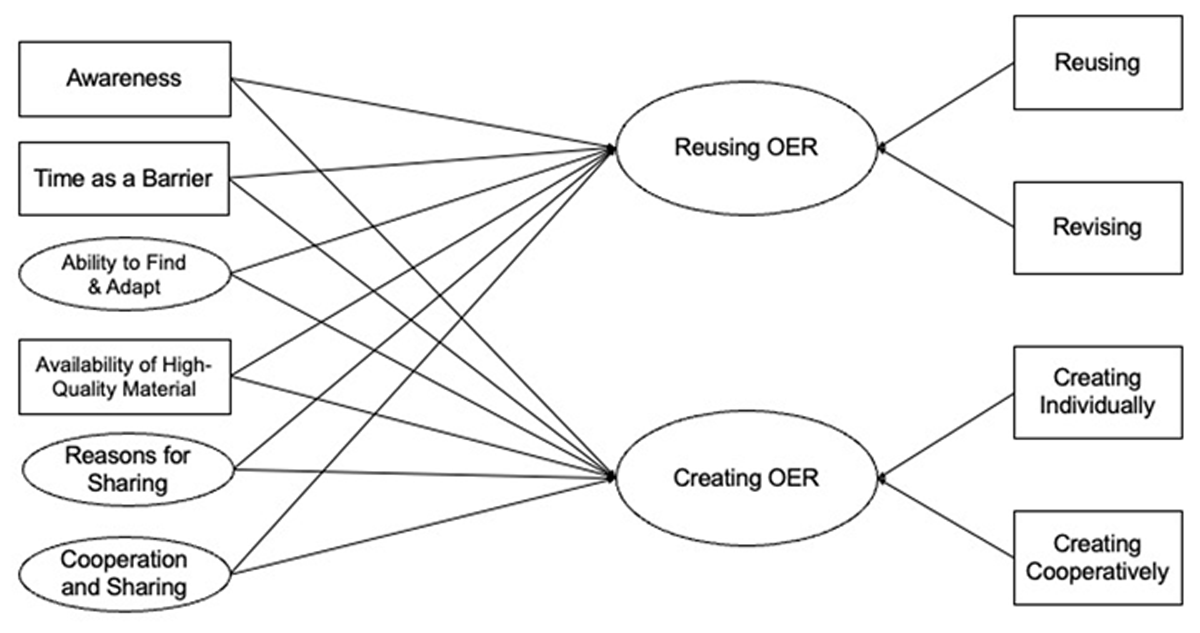
Figure 1
OER Adoption Model.
Hypotheses:
Higher awareness is related to more frequent reuse/creation of OER.
Higher awareness of OER during internet search is a stronger predictor of OER reuse than awareness of OER licenses.
Higher awareness of OER licenses is a stronger predictor of OER creation than awareness of OER during internet searches.
A stronger perception of a lack of time is related to less frequent reuse/creation of OER.
Stronger perceived OER-related skills are related to more frequent reuse/creation of OER.
Higher perceived availability of high-quality material is related to more frequent reuse/creation of OER.
Higher agreement to reasons for sharing is related to more frequent reuse/creation of OER.
More frequent cooperation during the development of material and material-sharing behaviour is related to more frequent reuse/creation of OER.
Hypotheses 1a and 1b are proposed due to the fact that, in our study, two items cover different aspects of awareness. We assume that the creation of OER needs more detailed awareness of licenses. Mere awareness of OER during an internet search for material is probably related, too, but expected to be present in OER reusers as well. Reuse of OER does not need as detailed awareness of licenses and therefore variation of this is not expected to predict the reuse of OER as strongly as a broader awareness of OER licenses during internet search.
For OER policies it is relevant to know whether different barriers are at play in different stages of OER adoption. It might be the case that, for example, a lack of awareness is a main barrier for whether OER are reused or created at all, while other barriers, such as a lack of time or motivation, are barriers for how often it is reused or created. Therefore, we looked at these two stages independently for both OER reuse and OER creation:
Which are the main predictors of whether teachers reuse OER?
Which are the main predictors of whether teachers create OER?
Which are the main predictors of how often teachers reuse OER?
Which are the main predictors of how often teachers create OER?
Each question uses the same base model as depicted in Figure 1 and the hypotheses remain the same.
Materials and Methods
Sample
To recruit participants for the study, emails were sent to 31,398 teachers in randomly selected cities throughout Germany, which were stratified by size and location. Of those contacted, 1,960 people (6.2%) gave informed consent and began to complete the questionnaire, while 1,693 (5.4%) finished it. Only the responses of those who had ever shared their teaching materials before (n = 1,571) were included in our analysis as this question was a filter question and only these teachers answered the full survey.
The participants are on average 43 years old (x¯ = 42.8, SD = 10.5). They are predominantly female (70.8%, n = 1112), while 28.1% state that they are male (n = 441), 0.7% state that they are genderqueer (n = 11), and 0.4% do not answer the question (n = 7). Figure 2 shows the distribution of different school types. Most of the teachers come from high and middle schools, with Table 1 showing the subjects they teach. Since multiple answers are possible here and teachers usually teach more than one subject, the proportion of co-occurrences is given. The main subjects are well represented, and the distribution of subjects is very diverse.
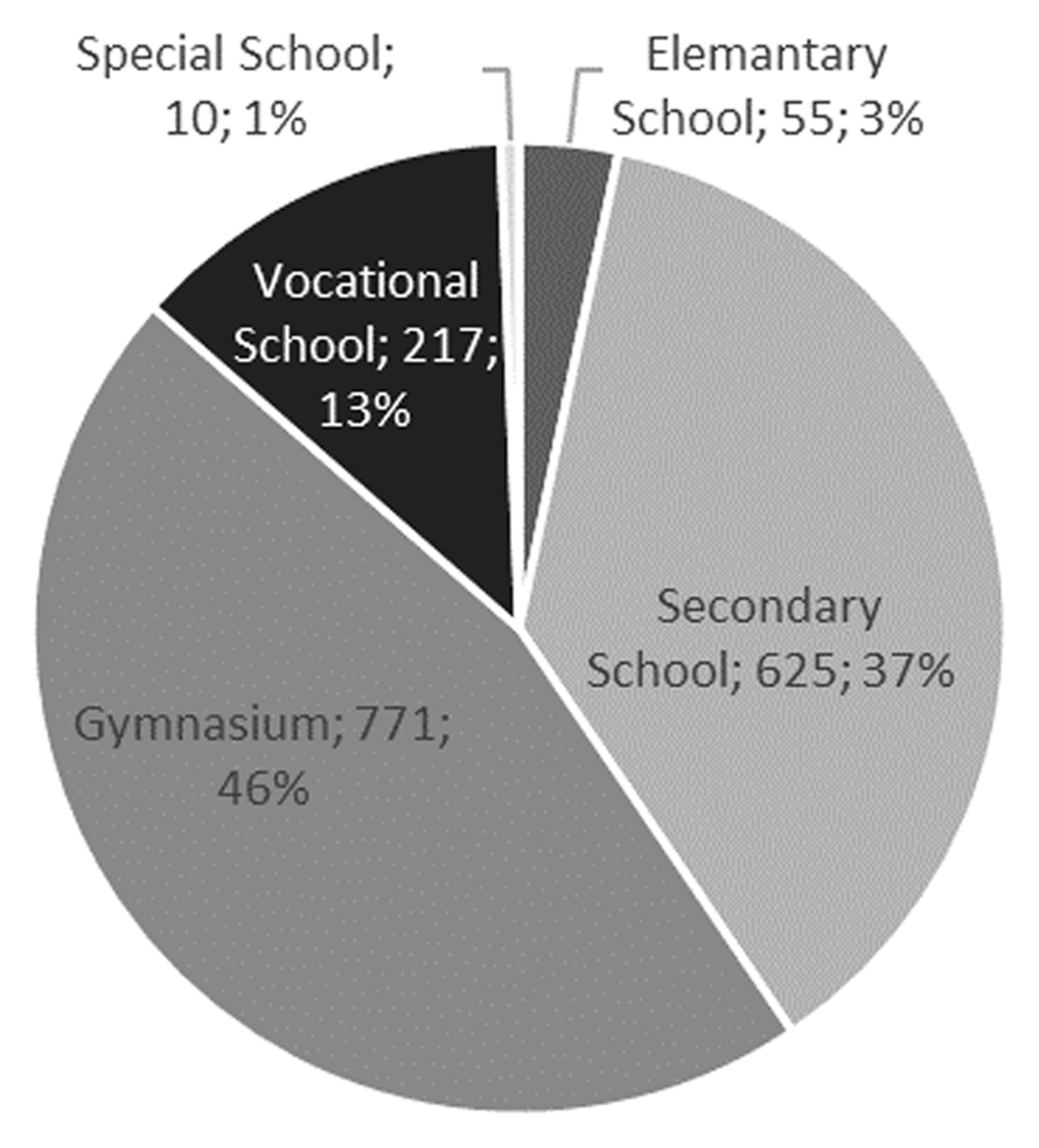
Figure 2
Proportion of school types.
(‘Gymnasium’ refers to an academic secondary school allowing admission to higher education).
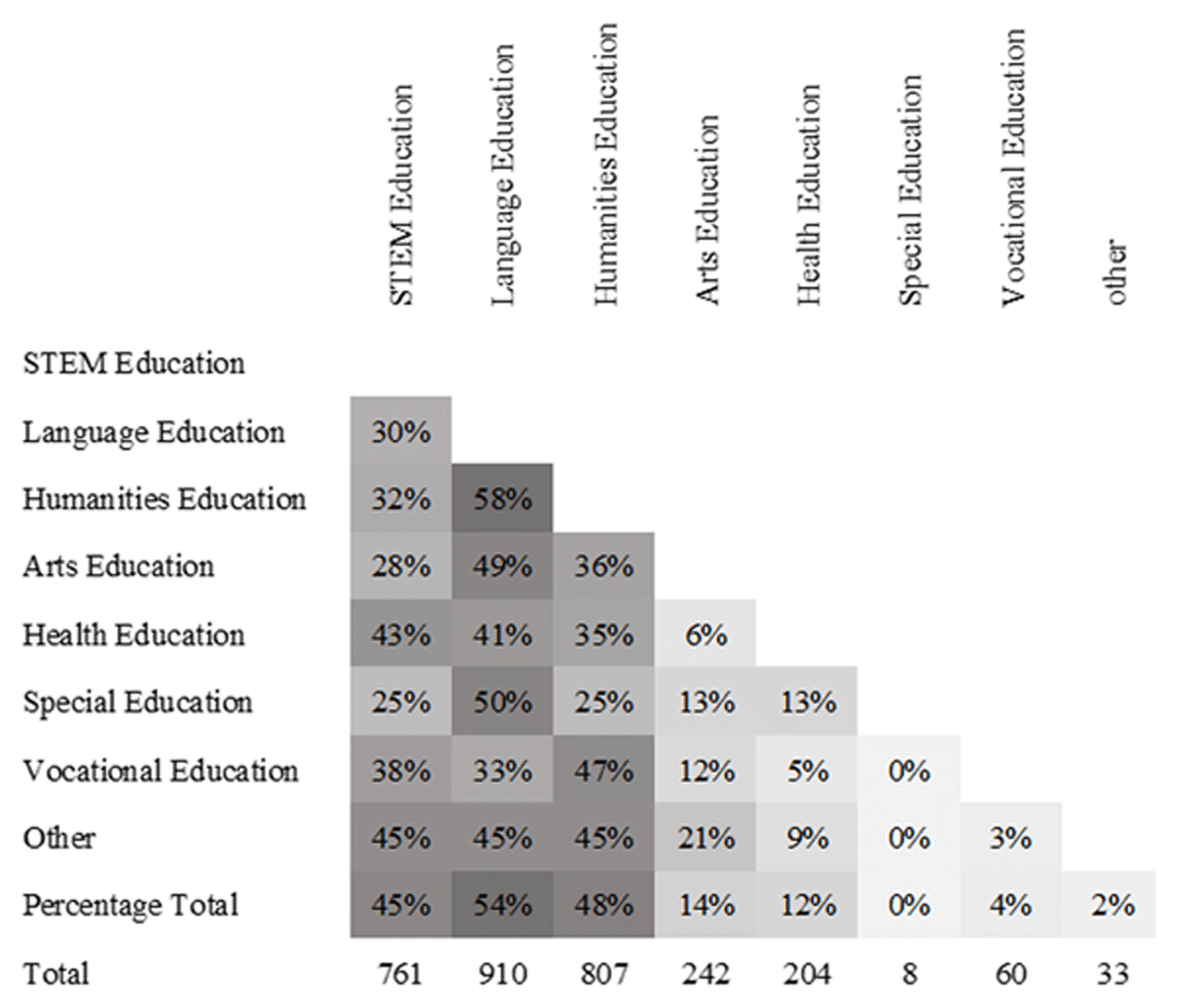
Table 1
Co-occurrences of school subjects.
Material
The teachers answered an extensive questionnaire. The topics covered can be summarized under the following aspects: (1) origin of the teaching materials used, (2) search strategies on the internet, (3) perceived hurdles in the use of internet resources, (4) organization/storage of teaching materials, (5) ways of sharing teaching materials, (6) use of licenses, (7) reuse and creation of Open Educational Resources, (8) use of a material repository at school, (9) collaboration in material creation, (10) motivational aspects and attitudes towards sharing.
The constructs listed in Table 2 were used for our analysis, as indicated in the model in Figure 1. Constructs consisting of multiple variables are based on an exploratory factor analysis. The items are in parts adapted from Grimm and Rödel (2020) as well as Otto (2021). The questions were presented in German and are shown in Table 2 in an English translation. The reliability of the latent constructs was calculated using McDonald’s ω.
Table 2
Constructs, items, McDonald’s ω, and scale formats.
| CONSTRUCT | ITEMS | MCDONALD’S ω | SCALE FORMAT |
|---|---|---|---|
| Cooperation and Local Sharing |
| ω = 0.77 | 1 = never; 2 = rarely; 3 = occasionally; 4 = often; 5 = very often |
| Ability to Find and Adapt |
| ω = 0.49 | 1 = strongly disagree; 2 = disagree; 3 = neither agree nor disagree; 4 = agree; 5 = strongly agree |
| Reasons for Sharing |
| ω = 0.80 | 1 = strongly disagree; … 5 = strongly agree |
| Awareness During Search |
| 1 = strongly disagree; … 5 = strongly agree | |
| Awareness of Licenses |
| 1 = strongly disagree; … 5 = strongly agree | |
| Time as a Barrier |
| 1 = strongly disagree; … 5 = strongly agree | |
| Lack of High-Quality Material |
| 1 = strongly disagree; … 5 = strongly agree | |
| Reuse of OER |
| Omega cannot be estimated because the number of items is less than three. | 1 = never; 2 = rarely; … 5 = very often |
| Creation of OER |
| Omega cannot be estimated because the number of items is less than three. | 1 = never; 2 = rarely; … 5 = very often |
Analysis
The scales were formed using factor analysis. Binary and multiple regressions were calculated with these scales and individual variables. The scales ‘Reuse of OER’ and ‘Creation of OER’ are the dependent variables. In the binary regressions, we looked at whether OER are reused or created. If respondents answered ‘never’ to both items in the scales ‘Reuse of OER’ and ‘Creation of OER’, then this was coded as not reused or not created. For each value greater than one, reused or created was coded. In the multiple regressions, we looked at how often OER are reused or created. Here, the mean value is taken. The prerequisites for the regressions were checked, and they are fulfilled in most cases, including the normal distribution and homoscedasticity of the residuals. Due to the large sample, however, no major distortions are otherwise to be expected.
Descriptive Results
The relevant scales and variables are reported in terms of univariate characteristics in Table 3.
Table 3
Descriptive statistics.
| SCALE | N | MIN | MAX | MEAN | SD | |
|---|---|---|---|---|---|---|
| Predictors | Cooperation and Local Sharing | 1560 | 1 | 5 | 2.85 | 0.67 |
| Ability to Find and Adapt | 1481 | 1 | 5 | 3.73 | 0.75 | |
| Reasons for Sharing | 1540 | 1 | 5 | 3.45 | 0.64 | |
| Awareness During Search | 1563 | 1 | 5 | 2.43 | 1.38 | |
| Awareness of Licenses | 1563 | 1 | 5 | 1.78 | 1.16 | |
| Time as a Barrier | 1559 | 1 | 5 | 3.67 | 1.04 | |
| Lack of High-Quality Material | 1558 | 1 | 5 | 2.62 | 1.03 | |
| Dependent Variable | Reuse of OER (only >1) | 1234 | 1.5 | 5 | 3.08 | 0.86 |
| Creation of OER (only >1) | 455 | 1.5 | 5 | 3.29 | 0.84 |
The binary distribution of the dependent variables is shown in Table 4. Here, we can see clear differences between the two dependent variables: A majority of participants (79.10%) have already reused OER while a majority have not created OER yet (70.10%).
Results
To answer the research questions, we investigate which predictors have a significant impact on the likelihood and intensity of creating or reusing OER. For each question, we address how well the overall model represented in Figure 1 performs.
Binary Regression for OER Reuse – What Predicts Whether Teachers Reuse OER?
The overall model is statistically significant, χ²(7) = 134.85, p < .05. The model has a Cox & Snell R-squared = 8.4% and Nagelkerke’s R-squared = 13.3%. Although the overall explanatory power of the model is relatively low, the significant chi-square value suggests that the model is a better fit than the null model.
Table 5 presents the results of the binary logistic regression analysis. In terms of the individual predictors, awareness during search significantly predicts OER reuse. The odds ratio of Exp(B) = 1.389) signifies that participants who selected one score higher on the awareness during search item were 1.389 times more likely to reuse OER than participants who reported a lower score. Similarly, awareness of licenses was a significant predictor of OER reuse. These results suggest that awareness of OER and its potential benefits can positively influence participants’ decision to reuse OER materials.
Table 5
Binary logistic regression analysis for OER reuse.
| REUSE OF OER | B | SE | WALD | df | p – VALUE | EXP(B) |
|---|---|---|---|---|---|---|
| Intercept | –0.74 | 0.64 | 1.32 | 1.00 | >0.05 | 0.48 |
| Awareness During Search | 0.33 | 0.09 | 13.50 | 1.00 | <0.05 | 1.39 |
| Awareness of Licenses | 0.41 | 0.06 | 42.13 | 1.00 | <0.05 | 1.50 |
| Time as a Barrier | 0.04 | 0.07 | 0.28 | 1.00 | >0.05 | 1.04 |
| Lack of High-Quality Material | –0.14 | 0.07 | 3.98 | 1.00 | <0.05 | 0.87 |
| Ability to Find and Adapt | 0.13 | 0.09 | 1.93 | 1.00 | >0.05 | 1.14 |
| Reasons for Sharing | 0.01 | 0.11 | 0.01 | 1.00 | >0.05 | 1.01 |
| Cooperation and Local Sharing | 0.16 | 0.11 | 1.86 | 1.00 | >0.05 | 1.17 |
Lack of high-quality material (‘I do not find high-quality material online.’) is also a significant predictor of OER reuse. In line with the hypothesis, for each unit increase in lack of high-quality material, the probability of subsequent reuse of OER decreases by approximately 13.4%. However, the effect is significantly smaller than for the two awareness variables. All other variables are not significant.
Binary Regression for OER Creation – What Predicts Whether Teachers Create OER?
The binary logistic regression predicting the creation of OER is also significant in the overall model χ²(7) = 206.50, p < .05. The model has a Cox & Snell R-squared = 12.7% and Nagelkerke’s R-squared = 13.3%. Thus, the explanatory power of the variables is higher than in the binary model on reuse.
Table 6 shows the results of this binary regression: The two awareness variables were both significant predictors of OER creation. Interestingly, contrary to hypotheses 1a and 1b, awareness during search is a stronger predictor of OER creation and awareness of licenses is a stronger predictor of OER reuse.
Table 6
Binary logistic regression analysis for OER creation.
| CREATION OF OER | B | SE | WALD | df | p – VALUE | EXP(B) |
|---|---|---|---|---|---|---|
| Intercept | –3.469 | 0.603 | 33.082 | 1 | <0.05 | 0.031 |
| Awareness During Search | 0.444 | 0.055 | 64.155 | 1 | <0.05 | 1.559 |
| Awareness of Licenses | 0.227 | 0.049 | 21.067 | 1 | <0.05 | 1.254 |
| Time as a Barrier | –0.139 | 0.066 | 4.514 | 1 | <0.05 | 0.87 |
| Lack of High-Quality Material | 0.063 | 0.066 | 0.92 | 1 | >0.05 | 1.065 |
| Ability to Find and Adapt | –0.019 | 0.089 | 0.046 | 1 | >0.05 | 0.981 |
| Reasons for Sharing | 0.226 | 0.107 | 4.481 | 1 | <0.05 | 1.253 |
| Cooperation and Local Sharing | 0.283 | 0.101 | 7.784 | 1 | <0.05 | 1.327 |
Time as a barrier is also a significant predictor of whether OER is created. The negative coefficient indicates that with a higher agreement on the variable time (‘It takes a lot of time to find suitable resources online.’), the probability of creating OER decreases by 13% per point (Exp(B) = 0.870), which is consistent with the hypothesis. The predictors reasons for sharing and cooperation and local sharing also have a significant influence, while lack of high-quality material and ability to find and adapt are not significant predictors in the model.
Multiple Linear Regression for OER Reuse – What Predicts how Often Teachers Reuse OER?
For those teachers who stated that they at least rarely reuse or create OER, we looked at what the strongest predictors are for how often they do so. The third model, therefore, tries to predict the frequency of OER reuse and is significant (F(7, 1211) = 15.488, p < .05). The proportion of variance explained by the model is R² = 8.2%. The corrected R² value is 7.7%. Given the large number of predictors, this is a rather small proportion of variance explanation.
Five of the seven individual predictors are significant (see Table 7). Awareness during search is, as in the two logistic regressions, a significant predictor of the reuse of OER. The results are different for awareness of licenses, where there is a virtual zero effect. Time as a barrier also has no significant influence. The predictor lack of high-quality material has a comparatively larger effect which conforms to the hypothesis. The three scales are significant predictors: the ability to find and adapt has the greatest influence, followed by cooperation and local sharing and reasons for sharing.
Table 7
Multiple regression analysis for OER reuse.
| REUSE OF OER | REGRESSION COEFFICIENT | SE | BETA | T | p–VALUE |
|---|---|---|---|---|---|
| Intercept | 1.746 | 0.235 | 7.431 | p < 0.05 | |
| Awareness During Search | 0.062 | 0.02 | 0.098 | 3.104 | p < 0.05 |
| Awareness of Licenses | –0.002 | 0.023 | –0.003 | –0.109 | p > 0.05 |
| Time as a Barrier | –0.019 | 0.026 | –0.022 | –0.723 | p > 0.05 |
| Lack of High-Quality Material | –0.054 | 0.026 | –0.062 | –2.071 | p < 0.05 |
| Ability to Find and Adapt | 0.18 | 0.035 | 0.151 | 5.099 | p < 0.05 |
| Reasons for Sharing | 0.085 | 0.042 | 0.061 | 2.005 | p < 0.05 |
| Cooperation and Local Sharing | 0.144 | 0.039 | 0.113 | 3.65 | p < 0.05 |
Multiple Linear Regression for OER Creation – What Predicts how Often Teachers Create OER?
As with the binary logistic regressions, we now look at the multiple regression that predicts the creation of OER. As for the logistic regressions, the explanatory power of this model on the OER creation is higher than that of the OER reuse model. The model is significant (F(7, 448) = 11, 196 p < 0.05). The proportion of variance explained is R² = 14.9%. The corrected R² value is 13.6%.
Interestingly, despite the better-fitting model, only two factors are significant (see Table 8) – which may of course be due to the small sample (n = 455). The two significant predictors are awareness of licenses and the scale cooperation and local sharing. The other items behave in accordance with the hypotheses at the descriptive level – except for the ability to find and adapt scale, where there is – like in the binary model – a comparatively small effect contrary to the hypothesized direction.
Table 8
Multiple regression analysis for OER creation.
| CREATION OF OER | REGRESSION COEFFICIENT | SE | BETA | T | p–VALUE |
|---|---|---|---|---|---|
| Intercept | 1.242 | 0.365 | 3.404 | <0.05 | |
| Awareness During Search | –0.041 | 0.033 | –0.064 | –1.258 | >0.05 |
| Awareness of Licenses | 0.11 | 0.034 | 0.171 | 3.266 | <0.05 |
| Time as a Barrier | –0.063 | 0.04 | –0.077 | –1.575 | >0.05 |
| Lack of High-Quality Material | 0.027 | 0.043 | 0.032 | 0.637 | >0.05 |
| Ability to Find and Adapt | –0.06 | 0.056 | –0.051 | –1.071 | >0.05 |
| Reasons for Sharing | 0.051 | 0.065 | 0.039 | 0.794 | >0.05 |
| Cooperation and Local Sharing | 0.386 | 0.062 | 0.312 | 6.224 | <0.05 |
Looking at all four models, we see that the models that try to predict the creation of OER have more explanatory power than the models that predict the reuse of OER. There are some clear trends in the predictors, but also some ambiguities. For three predictors, relative stability can be seen across all models. These are the two awareness variables and the cooperation and local sharing scale. It was hypothesized that awareness during search would be a stronger predictor of OER reuse while awareness of licenses would be a stronger predictor of OER creation. This is the case for models predicting the frequency of OER adoption but not for those predicting binary OER adoption. The single item time as a barrier and the reasons for sharing scale are hypothesis-compliant in three of the four models, but significant only once each. The single item lack of high-quality material and the ability to find and adapt scale, on the other hand, only conform to the hypothesis in the two models predicting OER reuse, not those predicting OER creation. One possible reason in the case of ability to find and adapt is that the scale shows low reliability.
Discussion
In this study, we looked for variables that predict whether and how often teachers reuse and create OER. We selected constructs that have been described as common enablers and barriers in the literature in order to test how well these predict OER adoption in the context of German K-12 education. All four models are significant but only show a low to moderate clarification despite the rather large number of predictors.
Empirical Implications
The explanatory power of the main enablers and barriers investigated here is stronger in the models for OER creation than in those for OER reuse. This could signify that we have a better understanding of OER adoption among those who are already somewhat familiar with OER than those who are not. In contrast, there is no clear pattern distinguishing the binary models (whether to reuse/create OER) from the linear models (how often to reuse/create OER), so we cannot single out enablers or barriers that bring teachers to (not) reuse or create OER in the first place.
Taking a closer look at the individual enablers and barriers, only a few are consistent predictors. Descriptively, awareness of licenses is low with a mean of 1.78 (SD = 1.16) which is in line with the low levels of awareness reported in Grimm and Rödel (2020). Indeed, especially for binary models, the two aspects of awareness are the strongest predictors, which indicates that a lack of awareness is a main barrier to reusing or creating OER at all but is less relevant for the intensity of OER adoption.
Cooperation and local sharing behaviour sticks out as another main enabler. The items subsumed under the scale refer to the cooperative creation and sharing of material in general, irrespective of the license of the material. Teachers who already engage in such behaviour or work in an environment where sharing is common, are more likely to reuse or create OER. This is interesting, as one could also assume that teachers who already have a stronger culture of sharing within their school do not need to engage in sharing behaviour outside of this community.
The agreement to a lack of time (‘Finding suitable materials on the internet requires a lot of time.’) is relatively high (3.67, SD = 1.04), but only in the binary model of OER creation it is a significant predictor and it is the weakest. This might be due to the fact that the item does not ask whether it requires too much time, and it is focused on finding rather than creating material. Additionally, as argued earlier, a ‘lack of time’ itself has little explanatory depth. Nevertheless, it is interesting to see that the often-lamented lack of time does not seem to be related to the frequency of OER reuse and creation.
There is a moderate-to-high agreement to reasons for sharing, which mirrors results obtained by Otto (2021) but, again, this predictor is only significant in one of the four models. We can conclude that a positive attitude toward sharing is not the main driver of OER adoption. The perceived lack of high-quality material leads to significantly less reuse of OER but to more frequent creation of OER, though the latter is not significant. This indicates that providing high-quality OER might encourage teachers to reuse OER but it might discourage them from creating their own OER.
Finally, OER-related skills turn out to be a particularly inconsistent predictor. While it is the strongest significant predictor of how often teachers reuse OER, it is not significant in all the other cases. This is interesting, as it would be plausible to assume that the skill to find and adapt OER is a necessary condition for the creation of OER.
Theoretical Implications
We can see that many commonly identified enablers and barriers do not consistently predict OER adoption in the German K-12 context. This could imply that models need to be further differentiated for different contexts. It is generally acknowledged that cultural differences affect OER adoption (Jung & Lee, 2020; Kalman, 2017), but this is not reflected in the models yet. There is a need for models that account for cultural differences, not only on the national but also institutional levels. For example, a reduction of costs to students is not a major benefit in Germany, neither in Higher Education nor in K-12 Education, while it is a significant incentive in the US Higher Education system (Annand & Jensen, 2017). Other culturally dependent factors such as multilingualism could both motivate and hinder the adoption of OER (Ganapathi, 2018). There are more fine-grained temporal adoption patterns such as those identified by Barker et al. (2018) and for each cultural or institutional context, enablers and barriers might work differently between such adoption patterns.
In the German K-12 context, an investigation into further potential enablers and barriers is worth considering. It might be the case, that in an environment where there is already a lot of content published by textbook publishers, demand for OER is overall lower than in other contexts. To address this gap, models could include an in-depth analysis of the problem that OER proposed to solve, for example, textbook costs, costs of supplemental material, quality, workload, or a lack of material for a certain subject or targeted at a specific subgroup of learners. For each of these problems, different enablers and barriers might come into play.
Practical Implications
A thorough analysis of the problem OER are supposed to solve would also help to develop more targeted policies. At the moment, the German policy papers mentioned earlier propose many desirable outcomes of an increased OER adoption. Based on the results of this study, only rather general recommendations can be concluded for such broad aims.
In view of awareness and sharing and cooperation as the most consistent enablers of OER adoption, policies that further support these two factors are worth considering. There are already awareness-raising initiatives in place, such as a national information platform on OER (OERinfo, 2023). In order to support sharing and cooperation among teachers, institutional support at the local level is needed, especially for school types that lead to a higher degree as cooperation levels are lower there (Kunze & Reh, 2020). Furthermore, digital cooperation might be supported by developing community-enhancing features of existing sharing platforms such as ‘edutags’, a social tagging system for educational resources (Kerres & Heinen, 2014), or ‘Wir-Lernen-Online’, a national repository for OER. Further development of such spaces of online cooperation should be informed by models of open educational practices (Hiebl et al., 2022) that enhance sharing and cooperative behaviour. Recently, a model for open educational practices has been published for Higher Education (Nascimbeni et al., 2024) and could be an inspiration for K-12. Finally, to understand the conditions for sharing and reusing educational resources, it will be essential to examine the informational ecosystems by which these materials are provided and how they support or hinder these practices (Otto & Kerres, 2022).
Limitations
Since there is no established instrument to measure OER readiness and common enablers or barriers to OER adoption, items have been adapted from similar studies in the German context (Grimm & Rödel, 2020; Otto, 2021), but no psychometric testing has been performed to assess the item quality. Furthermore, the constructs covered here are complex and some constructs could therefore only be covered by exemplary items. The phrasings of some items could only address some aspects of the phenomena, e.g., in the case of lack of time or lack of high-quality material. In the case of the factor ability to find and adapt, it has to be noted that the scale had a rather low reliability. One specific limitation concerning the wording of the items is shared with other studies in the field: Even though a brief definition of OER was provided, we cannot rule out that teachers had ‘free resources’ in mind when responding to OER-related items (e.g., Belikov & Bodily, 2016; Luo et al., 2019; Ozdemir & Bonk, 2017).
Conclusion
In conclusion, it can be said that the search for the greatest lever of OER adoption in German K-12 education is not over. This large-scale study has investigated common enablers and barriers in this context. While all models of OER reuse and OER adoption were significant, their predictive power is lower than expected given the larger number of predictors that had been previously identified both in international and national contexts. On the one hand, these findings provide empirical support for efforts to promote awareness of OER and a general culture of cooperation and sharing in education. On the other hand, they indicate that a further investigation into factors of OER adoption is needed.
Data Accessibility Statement
The datasets used and/or analysed during the current study are available from the corresponding author on reasonable request.
Funding Information
This research has received funding from DIPF | Leibniz Institute for Research and Information in Education.
Competing Interests
The authors have no competing interests to declare.
Author Contributions (CRediT)
Maria Klar: conceptualization, writing – original draft, writing – review & editing; Katja Buntins: conceptualization, methodology, visualization, writing – original draft; Daniel Diekmann: conceptualization, methodology, investigation, data curation; Marc Rittberger: conceptualization, resources, project administration; Michael Kerres: conceptualization, funding acquisition, controlling, supervision, writing – review & editing. All authors have read and agreed to the published version of the manuscript.