Have a personal or library account? Click to login
On the Way to a Data-Based Governance Model for Swiss Public Institutions – Focus Fields for Empowerment in Innovation and Identification Cover

On the Way to a Data-Based Governance Model for Swiss Public Institutions – Focus Fields for Empowerment in Innovation and Identification

Open Access
|Oct 2024

Figures & Tables

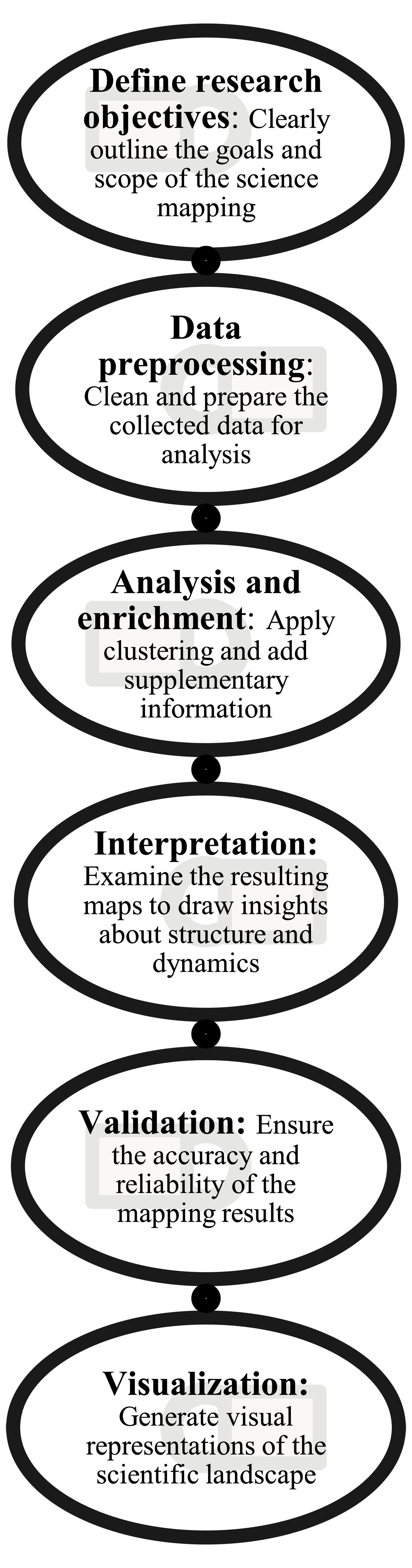
ssas-15-1-214-g1.png
Figure 1

Methodological design of science mapping.

Table 1

Basic structure of the SGMC.

NR.STUDYKEY ASPECTSVALIDATION BASIS
1Müller & Schmidt (2022)
  • – Public institutions are under increasing pressure to improve their funding and efficiency, hence increased interest in big data and its potential benefits for maintaining public services

  • – Focus on the use and exploitation of data

  • – Many institutions are already taking the first steps towards data-based business models such as selling data products or using data to optimize internal processes

  • – Challenges such as legal uncertainty, lack of data literacy and resistance in the workforce

  • – Targeted investments in data infrastructure, training and cultural change required

  • – Clarify legal framework conditions and take data protection aspects into account

  • – Success factors include strong leadership skills, fostering a data-driven mindset among employees, effective use of technology, and the use of appropriate governance structures

Qualitative, semi-structured interviews with executives from 15 public organizations in Germany
2Bauer & Meier (2020)
  • – Responsible handling of data and the development of appropriate governance structures as a priority

  • – Establish mindset: Data is becoming increasingly valuable

  • – Potentials are, for example, the improvement of decision-making processes, the optimization of workflows and the acquisition of new insights

  • – Opportunities: Increase transparency and improve communication with citizens

  • – Risks: Data breaches, cyber security threats, and ethical concerns

  • – Priority to-dos: Improve the skills and knowledge of employees in the field of data management and analysis and establish specialized roles, such as data scientists

Mixed methods survey with open and closed question types in an online survey in an iterative, semi-standardized survey design
3Schneider & Weber (2021)
  • – Investments in data infrastructure, training and cultural change are needed

  • – four primary dimensions of the barriers to implementation: strategic, operational, technological and legal challenges

  • – Six main factors for success: development of core competencies in the field of data analytics, the involvement of all business units in the implementation of DBGM, a clear understanding of customer expectations, early consideration of legal requirements, the involvement of partners and suppliers and continuous innovation

  • – Importance of a well-defined strategy proportionally high, as well as continuous investment in innovation measures

Quantitative questionnaire survey with companies dealing with the transition to the use of data based business models
4NTT DATA (2023)
  • – Opportunities and challenges of using data in public administration have not yet been fully recognized

  • – Need for a holistic solution that covers the entire data lifecycle from collection to usage

  • – Developing AI solutions, integrating new and existing data sources, and ensuring data security

  • – Data transparency and exploitation rights in a data policy as the first step of legally compliant regulation in every organization

Quantitative online survey of technical service providers on IT requirements management in the segment of public legal customers
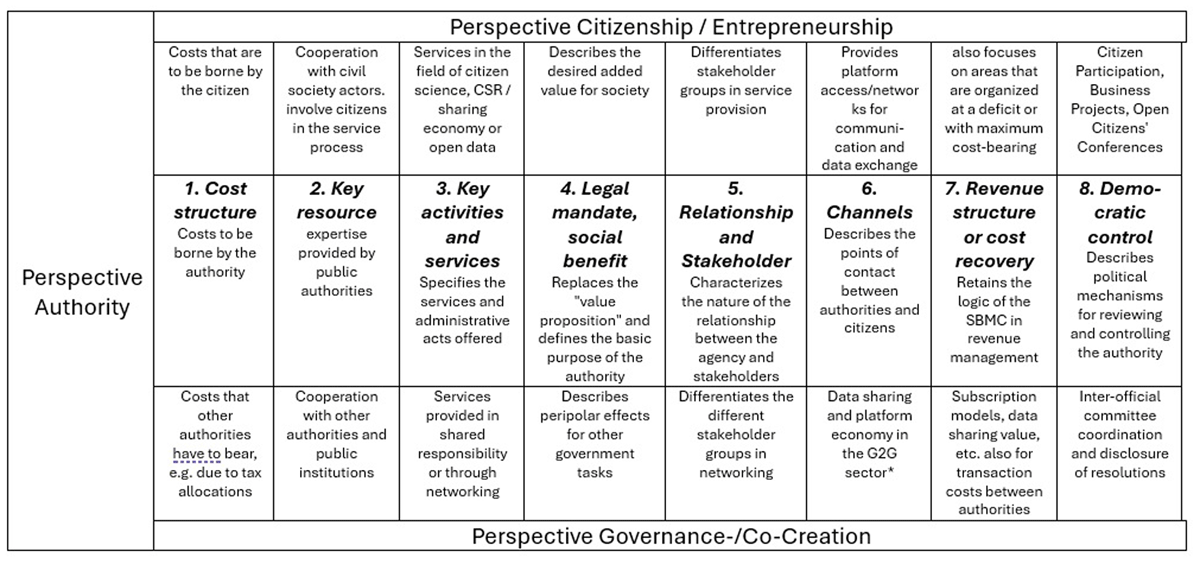
ssas-15-1-214-g2.png
Figure 2

Basic structure of the SGMC.

*G2G-Sector: Governance-to-Governance Areas of Responsibility.

DOI: https://doi.org/10.5334/ssas.214 | Journal eISSN: 2632-9255
Language: English
Submitted on: Aug 6, 2024
Accepted on: Oct 4, 2024
Published on: Oct 11, 2024
Published by: Ubiquity Press
In partnership with: Paradigm Publishing Services
Publication frequency: 1 issue per year

© 2024 Christian Schachtner, published by Ubiquity Press
This work is licensed under the Creative Commons Attribution 4.0 License.