
Introduction
Shared resource systems or common pool resources (CPRs) require time and appropriate conditions to replenish diminished resource units. Given the difficulty of having individual users contribute to conditions required for resources system replenishment and preventing them from appropriating units, CPRs pose governance challenges in avoiding under-provisioning and over-exploitation of the resource base (Ostrom, 1990).
This challenge is seen in forests around the world, but especially in the Global South. These resources provide essential ecosystem services including food, medicines, maintaining climate, nutrient cycling, etc. The people that most rely on these services to meet (part of) their daily and livelihood needs usually live in or near forests (Brockerhoff et al., 2017; Nunan, 2020). Often, these resources are de facto governed as CPRs. The vulnerability of these forests to over-exploitation makes the sustainable governance of such forests increasingly important.
Commons scholarship posits that CPRs can be sustainably managed through collective action of involved stakeholders (Ostrom, 1990). Mirroring this, forest management is becoming increasingly decentralized, especially in developing countries. Consequently, in many places, rights and responsibilities to manage forest resources is being transferred to local communities. This transfer is often sudden, and many communities find it challenging to collectively govern their CPRs (Persson & Prowse, 2017; Gupta et al., 2020). In response, NGOs1 work with communities to sustainably manage forests.
What do communities need to be able to collectively manage their CPRs? Commons researchers have attempted to identify conditions enabling successful management of shared resources. Wade (1989) posited 14 factors that facilitated successful management of irrigation CPRs in South India. Ostrom (1990) suggested eight design principles – essential conditions that help sustain CPRs – derived from 14 cases including irrigation systems, pastures and forests. Baland and Platteau (1996) compared different property regimes to further describe factors required for collective resource management. Agrawal (2001) combined these works to propose 35 enabling conditions for sustainable CPR management. Baggio et al. (2016) argue that both presence and configuration of design principles are key to sustainable CPR management. By addressing these principles, NGOs could potentially promote successful CPR governance (Jamila Haider et al., 2019).
A rich body of literature has corroborated the validity of design principles (e.g., Cox et al., 2010), including in forest CPRs (Gupta & Koontz, 2019; Gupta et al., 2020). However, few studies have explored the extent to which NGO interventions align with design principles (but see Barnes & van Laerhoven, 2015; Meinzen-Dick et al., 2021; Hasan et al., 2020). As Brass et al. (2018) suggest, this could be due to a paucity of case studies, and the difficulty of standardising and aggregating NGO cases that occur in a variety of different contexts. Thus, scientists may not be aware of how these principles can be utilised on the ground.
This disconnect may lead to two challenges. First, commons scholarship may not reflect the lessons that NGOs have learnt through practice in various contexts (Brass et al., 2018). This may reduce the salience of the information and advice scientists are able to provide practitioners seeking to sustainably manage CPRs. Second, NGOs might not be aware of the findings made in commons literature about CPR management, although they apply them unconsciously (Barnes, 2017). Hence, they may be missing out on different ways in which to approach collective action in forest-dependent communities. Both situations influence how CPR interventions are designed.
We thus aim to contribute to understanding an important gap between theory and practice of managing forest commons by directly connecting on-ground cases with principles outlined in scientific literature. However, design principles are derived from commonalities across numerous and diverse cases; they should not be seen as a panacea (Ostrom, 1990) but instead be used diagnostically rather than prescriptively (Ostrom & Cox, 2010). Attempting to bridge the gap highlights an interesting theoretical tension: how to generalise design principle application across many different contexts without resorting to prescriptive institutional panaceas.
Therefore, we ask: can design principles be applied by practitioners, NGOs in particular, in designing forest CPR interventions while avoiding institutional panaceas? We address this question by comparing NGO activities with some of the most accepted and corroborated design principles. We employ an explorative case study analysis with a particular focus on the Western Ghats, India.
Literature review
Recent work applies design principles diagnostically to forest CPRs. In Ethiopia, Gebreegziabher et al. (2021), found that successfully managed community forests reflected the design principles, but participation and benefit sharing were causes of concern. Baynes et al. (2015) found that socio-economic status, tenure rights, governance structures, government support and benefits to the community affect forest CPR management in Nepal, Mexico and Philippines. Persson and Prowse (2017) discovered that low participation, unfair benefit sharing, high enforcement costs and external pressures in Cambodia inhibit effective governance.
With regards to the role of NGOs in forest CPRs, Roy et al. (2018) illustrated how NGOs in Bangladesh build livelihood capacities of forest-dependent groups. Barnes and van Laerhoven (2015) suggest that NGOs can facilitate durable community institutions and ensure that their goals are fulfilled sustainably for the forest system. KimDung et al. (2016) argue that NGOs in Vietnam are bridging actors between governments and local communities, working through information spreading and education while refraining from conflict-management and community empowerment. In Tajikistan, Jamila Haider et al. (2019) showed how design principles are a helpful guide for practitioners seeking to promote collective action in CPRs. However, Wright and Andersson (2013) found that NGOs in Bolivia had no discernible effect on community institutions for collective forest governance. Notably, NGOs are often not aware of the design principles, although their activities may reflect them (Barnes et al., 2017).
Meinzen-Dick et al. (2021) highlighted NGOs as an important actors in governing CPRs in India. In the Central Himalayas, Gupta and Koontz (2019) showed how NGOs help communities access technical and financial support offered by the government to better manage forest resources. Gupta et al. (2020) found a distinct difference in awareness levels between villages with NGO interventions and those that had none. NGOs enabled market engagement and state responsiveness to secure the local community’s forest management rights. In Central India, NGO activities to help craft village institutions for forest management, secure livelihoods and enable collective forest management showed some congruence with design principles (Barnes & van Laerhoven, 2015; Barnes et al., 2017). Bawa et al. (2007) explored how NGOs enable community institutions to manage forest resources in the Western Ghats.
Although there seems to be some coherence between NGO actions and the design principles, few have studied NGO interventions in relation to design principles (but see Barnes et al., 2017; Gupta & Koontz, 2019; Meinzen-Dick et al., 2021). Such information is especially hard to find for regions like the Western Ghats, where forest CPRs directly and indirectly support millions of people but are considered threatened ecosystems (Kasturirangan et al., 2013). Studying such potential connections is important as scientists may be able to step away from over-generalizations and diagnosis, and instead provide more fine-tuned and context-sensitive recommendations based on practical experience. At the same time, NGOs may expand the range of their interventions based on a scientific evidence-base.
To analyse NGO interventions, we chose principles that have been well researched and applied in numerous cases (Ostrom, 1990; Cox et al., 2010) as well as those related to forest CPRs (Agrawal, 2001; Barnes & van Laerhoven, 2015). With the 10 original principles proposed by Cox et al. (2010), we combined the principles of ‘social capital’ and ‘community capacity and leadership’ (Table 1). These two principles are mentioned in literature on NGOs and forest CPRs (KimDung et al., 2016; Brass et al., 2018) and have been shown as important for NGOs to promote long term collective action (Hasan et al., 2020).
Table 1
Theoretical framework: Explanations and examples of how NGOs can apply design principles (adapted from Agrawal, 2001; Barnes & van Laerhoven, 2015; Brass et al., 2018; Cox et al., 2010; Hasan et al., 2020; Ostrom, 1990).
| NO. | DESIGN PRINCIPLES | EXPLANATION | RELATION TO NGO ACTIVITIES | EXAMPLES |
|---|---|---|---|---|
| 1A | Clearly defined harvesting rights | Clearly defined rights of individuals or households to withdraw resource units from the CPR | Any activity aimed at helping communities clearly define harvesting rights. | NGOs could provide low-cost exclusion technology based on context and availability |
| 1B | Clearly defined boundaries | The physical CPR boundaries must be well defined | Any activity aimed at helping communities clearly define resource boundaries. | NGOs could help with mapping or markers |
| 2A | Locally apt appropriation rules | Appropriation rules restricting time, place, technology, or quantity of resource units are related to local conditions | Any activity aimed at helping communities frame rules appropriate to local conditions. | This can be done by matching harvest restrictions to resource regeneration, easing rule enforcement or framing simple, understandable rules. NGOs may help by providing information and advice |
| 2B | Benefits proportional to inputs | The benefits obtained by users from a CPR are proportional to the amount of inputs (labour, material, or money) required | Any activity aimed at helping communities on ensuring fairness in benefit allocation | NGOs can help ensure fairness in benefit allocation through advice |
| 3 | Participation of most individuals | Most individuals affected by operational rules can participate in modifying the rules | Any activity aimed at facilitating decision-making, participation of all community members in resource management and helping the community align their interests | This can be done through locally devised rules and homogeneity of identities and interests. NGOs can advise and raise awareness. |
| 4 | Presence of monitors accountable to appropriators | Monitors are present and actively audit CPR conditions and appropriator behaviour. Additionally, these monitors should be users or be accountable to users | Any activity aimed at ensuring a) the presence of monitors or b) ensuring monitor accountability to other users | NGOs could offer advice on resource monitoring |
| 5 | Graduated sanctions | Users who violate operational rules are sanctioned depending on the seriousness and context of the offense by other users or monitors | Any activity aimed at advising communities on or implementing graduated sanctions for users who do not follow rules | NGOs could provide advice on graduated sanctions |
| 6 | Accessible conflict-resolution mechanisms | Users have rapid access to low-cost local arenas to resolve conflicts among appropriators or between appropriators and officials | Any activity aimed at offering low-cost conflict resolution support or matching local rules with existing external rules | NGOs could provide conflict resolution support like low cost adjudication or advice on matching local rules with external provisions or external sanctioning institutions. |
| 7 | External recognition of community rights | The rights of appropriators to devise their own institutions are not challenged by external governmental authorities | Activities that improve community sovereignty over the forest resource, ensuring external aid in exchange for mutually beneficial activities or external recognition of community rights to organise | NGOs may use advocacy and lobbying to ensure that external governments do not undermine local authority |
| 8 | Nested enterprises | All appropriation, provision, enforcement and governance activities are organized in multiple layers of nested enterprises | Activities that the involvement of the community at different levels and scales. | NGOs can help set up nested advices through advice |
| 9 | Others: Social capital | There are examples of past successful experiences of community forest management | Activities that NGOs use to build trust with communities or to showcase other locations where such interventions were successful. | NGOs may be able to help through showcasing previous activities |
| 10 | Others: Community capacity/leadership | Community capacity and appropriate leadership (young, familiar with changing external environment, connected to local traditional elite) is necessary to ensure durable CPR governance | Activities aimed at community capacity building including leadership training, skill building etc. | NGOs could provide leadership and capacity building trainings |
Methods
Study Area
The Western Ghats mountain range (Figure 1) is one of the world’s most populated biodiversity hotspots, composed of vastly different ecosystem types. Fifty million people live in the region, including tribal populations, farmers, plantation workers, and urban dwellers (Kasturirangan et al., 2013). Forest-agricultural landscape mosaics are dominated by smallholder farmers and, in some areas, coffee and tea plantations (Bawa et al., 2007). Communities rely on forests for multiple direct and indirect benefits, including subsistence through non-timber forest product (NTFP) collection) (Gadgil et al., 2011). These forests can be controlled by private individuals, communities or the government through provincial Forest Departments. However, community access to private and government-controlled forests depends on complex laws and community rules (Pratap, 2010).
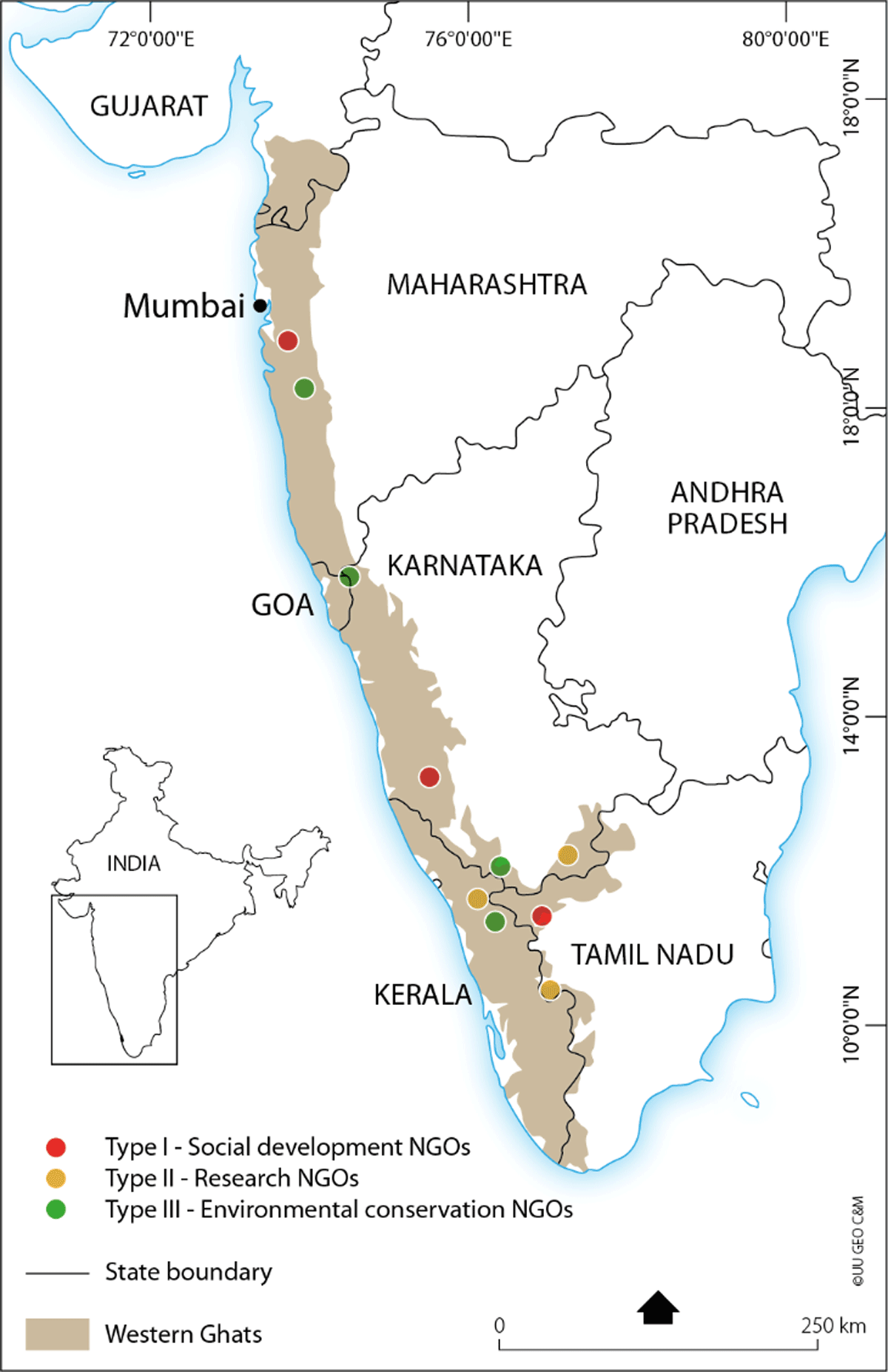
Figure 1
Map with locations of studied NGOs in the Western Ghats, India.
India has recently witnessed a strong trend of devolution of power over forests from governments to local communities (Gupta et al., 2020). While colonial policies and earlier laws sought to place forests in the hands of the government, latter policies like the Panchayats Extension to Scheduled Areas Act (PESA), 1996 and the Forest Rights Act (FRA), 2006 granted communities the right to organise and govern their own resources (Pratap, 2010). The increasing trend of community-managed forests in ecologically sensitive, culturally diverse and legally complex areas like the Western Ghats makes it vital to study the drivers of collective action in these landscapes (Bawa et al., 2007). NGO interventions to promote collective action have been analysed in other similar Indian landscapes (Barnes & van Laerhoven, 2015; Gupta et al., 2020), but the many NGOs and their activities in the region remain understudied. Choosing the Western Ghats thus allows us to compare NGOs across a diverse range of ecological and social settings that are governed under similar legal frameworks.
Sampling
We use explorative qualitative case study analysis with NGOs as the unit of analysis. Ten most-similar cases of local NGOs within the Western Ghats were identified, based on the following criteria: The cases contained a local NGO (whose offices are located in the region), which conducts activities directly related to forestry, and actively engages with and includes communities in their activities. The cases were strongly alike, except in factors potentially influencing NGO activities. In forest CPRs, these factors could include ecology, community characteristics and NGO objectives (Agrawal, 2001; Barnes, 2017; Gupta & Koontz, 2019). Examining ten cases within their own unique contexts allowed for maximal experiential variation while minimising uncontrolled spurious variables (Gerring, 2004). As no exhaustive list of Western Ghats NGOs is available, we used a snowball method for sampling. To increase sample diversity and reduce selection bias, NGOs were first identified and approached through different local experts. Thereafter, other NGOs were approached through the initial respondents. We were careful to select NGO cases in varied in geographic location (with different socio-ecological factors) (Figure 1).
Data collection
We collected data on NGO activities through interviews and document analysis. First, we approached NGO personnel for ten semi-structured telephonic interviews that lasted between 60 and 120 minutes. These interviews were conducted in English and took place between January and March 2021. To minimize reporting bias and capture all stages of an intervention, we initially asked NGOs to describe their activities in terms of outputs, outcomes, and impacts. Outputs referred to the goods and services NGOs provided, outcomes to the changes in community behaviour that NGOs aimed for or had achieved and impacts to the changes in the CPR that NGOs wished to see (Mayne, 2017). Then, we asked NGOs specific questions about activities that may have fulfilled each design principle, providing examples where needed. The interview questions can be found in Supplementary Materials.
We then triangulated interview data with document analysis. For NGOs who had publicly available documentation on their respective websites, we analysed 5 years’ (2015–2020) of annual reports. Where such reports were not available, we solicited NGO respondents for any documentation they could provide. If a low amount of documentation was available for a particular NGO (less than two documents), interviews were proportionally lengthened in order to collect more data and balance the sample.
Due to the global COVID-19 pandemic, we had to rely on remote data collection. This allowed us to cover a wider range of social-ecological contexts (Figure 1) but imposed some technological, time and resource constraints. To counter these, interviews were carefully prepared in advance to ensure participants could be contacted with steady internet connectivity. Video-conferencing was preferred where possible to capture non-verbal communication. An introduction to the research and any ethical considerations were verbally discussed at the start of the interview to set the respondent at ease and build rapport. These practices have since been recognised as good practices in remote data collection (Neris et al., 2023). The collected data was anonymised and handled in accordance with the GDPR and all relevant rules and regulations.
Data Analysis
Given the wide differences between NGOs, we created a typology of NGOs for better comparison. Through inductive reasoning over multiple rounds of data analysis, we classified NGOs into three types based on their stated objectives (Table 2). This typology appears to be in line with literature on classifying NGOs based on orientation (Vakil, 2018) or discourse (Partelow et al., 2020). Type I NGOs (NGOs 1–3) focused on development. They aim to improve quality and sustainability of life by fostering community capacities. Type II NGOs (NGOs 4–6) are concerned with research. These NGOs seek to study natural resources or the people dependent on them. They then use their findings to implement interventions to conserve these landscapes or support communities within them. Type III NGOs (NGOs 7–10) undertake activities to preserve landscapes (Vakil, 2018). There is some overlap in how individual NGOs fit into this typology. However, this can be explained by the fact that NGOs are constantly learning and expanding their activities, making it difficult to create a consistent classification (Vakil, 2018).
Table 2
Typology of NGOs.
| TYPE | NGOs | STATED OBJECTIVES |
|---|---|---|
| Type I | NGOs 1–3 | NGOs that are focussed mostly on improving community’s quality of life. |
| Type II | NGOs 4–6 | NGOs that are primarily concerned with research into the environment and local people there. |
| Type III | NGOs 7–10 | NGOs that work towards improving the quality of the environment. |
Through inductive classification, based on the way NGOs structured their documentation, we then identified the various sectors that NGOs were active in, and strategies they employed. Sectors that NGOs wished to impact are for example biodiversity, livelihoods, etc. Strategies were focus areas that NGOs addressed to realise their aims, e.g., advocacy or capacity building. Under these, NGOs undertook activities. Activities were coded and analysed using the framework in Table 1. If any aspect of a mentioned activity (output, outcome, or impact) matched a principle from Table 1, we considered that design principle to be present for that sector or strategy. For example, if an NGO helped communities frame sustainable harvest protocols (output) to conserve biodiversity (impact), sector Biodiversity management was assigned the principle Locally apt appropriation rules (2A). We then compared these against the responses NGOs gave when asked about their implementation of design principles in the interview (Figure 2). An overview of this coding can be found in Supplementary Materials.
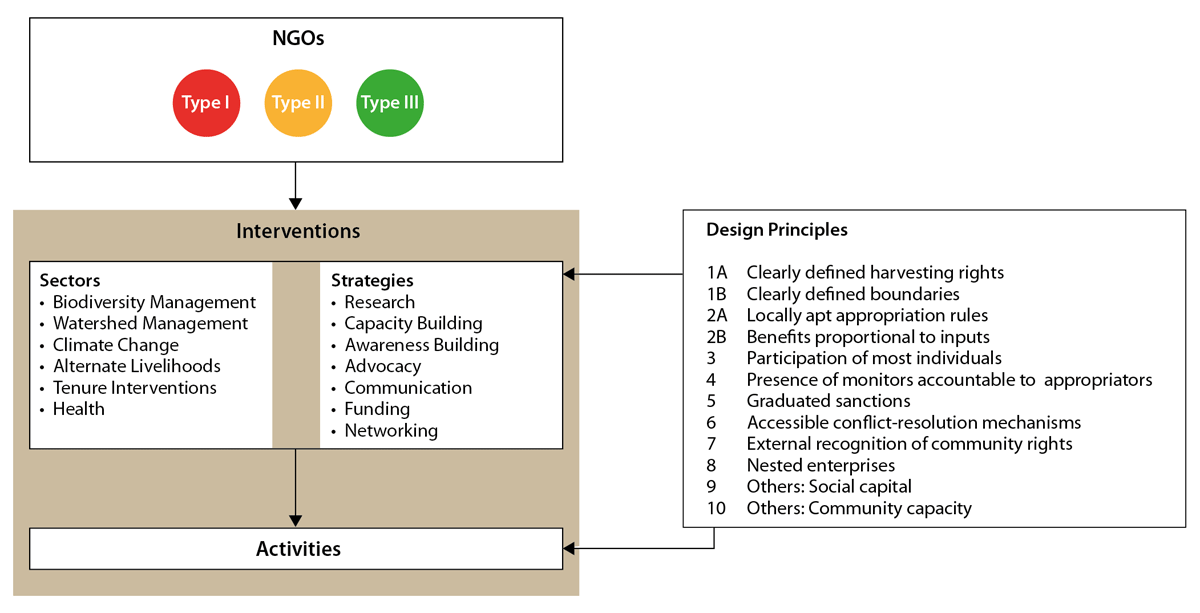
Figure 2
An overview of the framework used to analyse NGO interventions.
We could then make some inferences about the configurations in which design principles were present – their cooccurrence. If two or more principles were used by a single NGO, we considered them to co-occur (Ostrom, 1990; Baggio et al., 2016). This gave us further insights into the ways in which the work and reasoning of NGOs reflects the design principles and how the principles could potentially affect each other.
Results
Sectors and strategies
We first classified NGO interventions into sectors and strategies (Figure 3). Within sectors, all ten NGOs were active in Biodiversity Management. Nine NGOs also implemented activities in Alternate Livelihoods and Health. Biodiversity Management encompasses all the activities that NGOs take towards managing the forest resource base. Alternate Livelihoods and Health directly affect the community. The former encourages communities to pursue other livelihood options connected to forests or make their current activities more sustainable. The latter improves community health by bettering nutrition or providing alternate energy sources. Only Type I and II NGOs implemented Tenure Interventions. These were mostly related to securing community rights to manage forests. Watershed Management was addressed by mostly Type I and III NGOs and aimed at increasing community access to water while protecting the forests that affect water resource quality and quantity. Climate Change activities were mostly carried out by Type II NGOs, related to enabling community disaster management and climate mitigation.
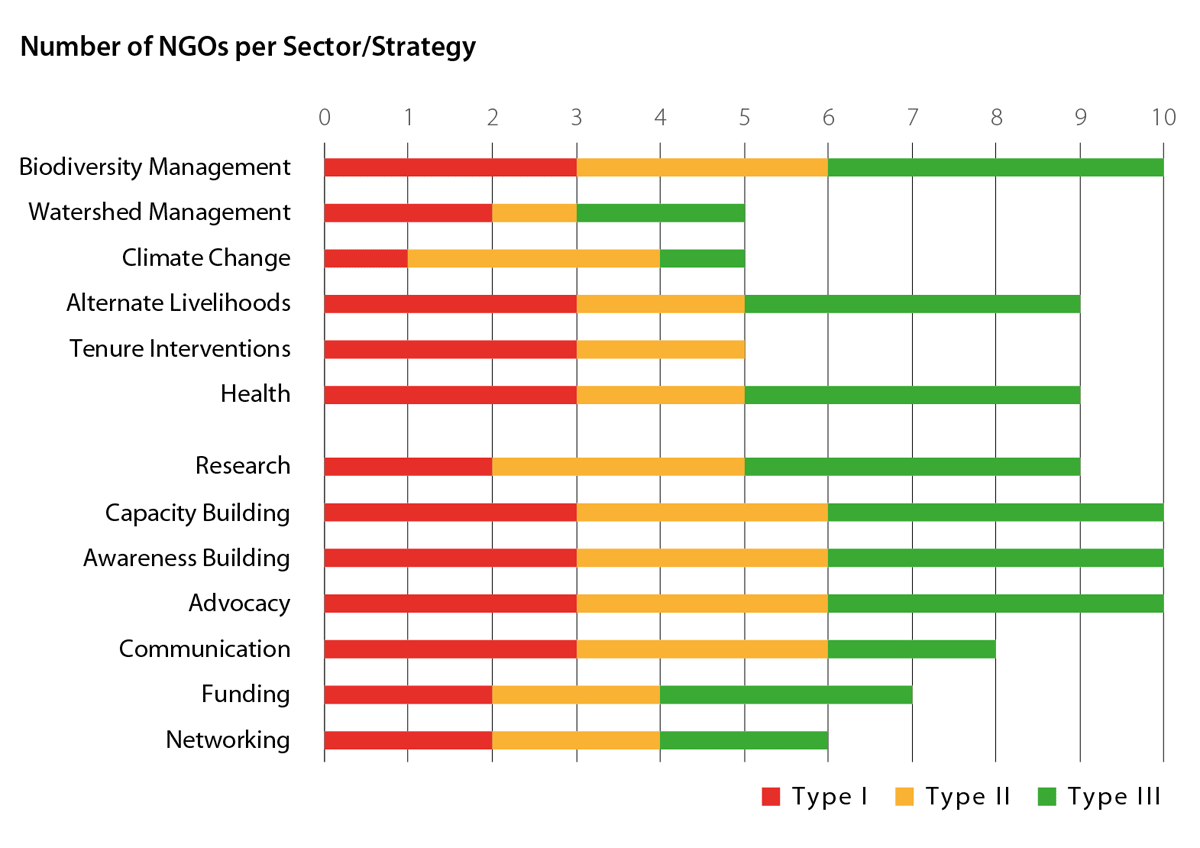
Figure 3
Sectors and strategies NGOs are active in.
With regard to strategies, Capacity and Awareness Building and Advocacy were utilised by all types and all NGOs. Capacity Building included trainings and other activities NGOs use to develop stakeholder skills. Awareness Building included all outreach activities and Advocacy included measures NGOs take to promote community and forest causes to the government. Research was mostly undertaken by Type II and III NGOs. NGOs conducted research into forest health, community traditional knowledge, etc. before utilising the findings to inform their other activities. Eight NGOs, mostly Type I and II, employed Communication Strategies to conserve communities’ traditional knowledge and build trust with communities. Seven NGOs mentioned Funding activities related to raising funds or providing communities direct financial assistance. Networking with other NGOs, knowledge institutions, government officials etc. was mentioned by six NGOs.
Sectors, Strategies, and design principles
We then matched NGO activities under each project area to the design principles (Figure 4). The number of design principles varied by NGO type and sector/strategy. Biodiversity Management had the most design principles when combined across all NGO types and Alternative Livelihood activities implemented by Type I NGOs had the most per type.
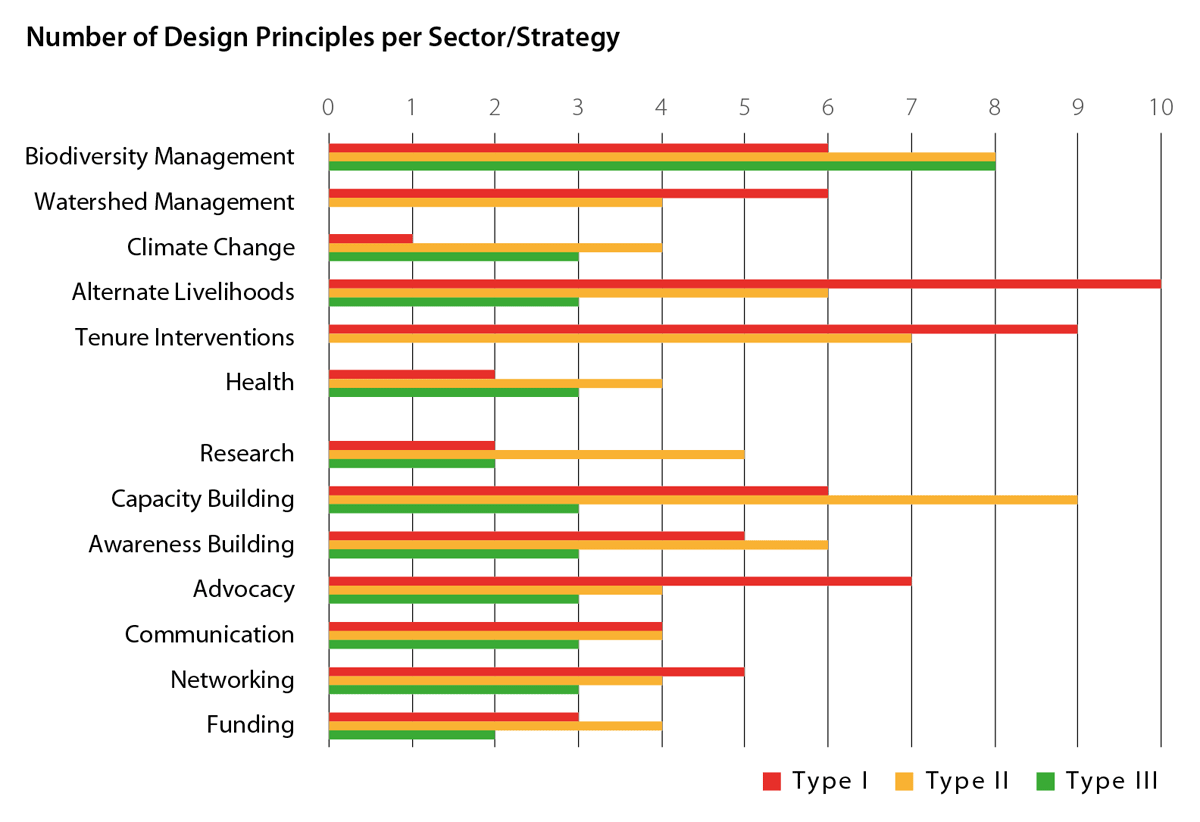
Figure 4
Number of design principles per sector and strategy.
Type I – Development NGOs
In Type I NGOs, Alternate Livelihoods and Tenure Interventions saw the most application of design principles while Health, Climate Change, Research, and Funding had the least (Table 3). The most common principles that Type I NGOs interventions matched with were Social Capital and Community Leadership. They did so through multiple awareness and outreach programmes as well as several types of trainings and workshops across almost all sectors and strategies.
Table 3
Design Principles per sector and strategy – Type I NGOs.
| 1A | 1B | 2A | 2B | 3 | 4 | 5 | 6 | 7 | 8 | 9 | 10 | |
|---|---|---|---|---|---|---|---|---|---|---|---|---|
| Biodiversity Management | – | – | 3 | – | – | 2 | 1 | – | 2 | – | 1 | 3 |
| Watershed Management | – | 1 | 1 | – | – | 1 | – | – | 1 | – | 2 | 1 |
| Climate Change | – | – | – | – | – | – | – | – | – | – | – | 1 |
| Alternate Livelihoods | 2 | 2 | 2 | 1 | 2 | – | 1 | – | 1 | 1 | 3 | 3 |
| Tenure Interventions | 3 | 3 | 3 | – | 2 | 1 | – | – | 2 | 1 | 3 | 2 |
| Health | – | – | – | – | – | – | – | – | – | – | 2 | 2 |
| Research | – | – | 2 | – | – | – | – | – | – | – | 2 | – |
| Capacity Building | – | – | 1 | – | 3 | – | – | – | 3 | 2 | 2 | 3 |
| Awareness Building | – | 1 | – | – | 1 | – | – | – | – | 1 | 2 | 3 |
| Advocacy | – | – | 2 | – | 1 | – | – | 1 | 3 | 1 | 3 | 3 |
| Communication | – | – | – | – | 1 | – | – | – | 1 | – | 2 | 3 |
| Networking | – | – | – | – | 1 | – | – | – | 1 | 2 | 2 | 1 |
| Funding | – | – | – | – | – | – | – | – | – | 1 | 1 | 1 |
| NGO interviewee response | 2 | 3 | 2 | – | 3 | 3 | 2 | 2 | 3 | 3 | 3 | 3 |
By helping communities frame rules and management plans, NGOs ensured that Local Appropriation Rules were present. However, one NGO did not feel that this was necessary as sustainable appropriation rules were already inherent within community culture. They attempted to increase Community Participation by strengthening village institutions, providing communities with discussion platforms and trainings specifically targeted at women and youth. NGOs prompted External Recognition of Community Rights by liaising with government officials and offering them training and support to meet community needs. Nested Enterprises were present as many NGO activities in different sectors and strategies took place across different levels. NGOs applied Clear Boundaries in only four sectors by providing mapping services and training communities to map their resources. They prompted Accountable Monitoring in three sectors by training community volunteers and organising joint patrolling with both the government and the community.
Harvesting Rights and Graduated Sanctions were present in two sectors and Proportional Benefits and Conflict Resolution in only one. NGOs secured community Harvesting Rights by filing claims under the FRA. They implemented Graduated Sanctions through conservation agreements. Proportional Benefits were provided through co-operative sale of NTFPs and farmer organisations while Conflict Resolution was addressed by providing the community communication channels. NGOs also felt that these principles were strongly grounded in community structures. While they could provide communities advice on them, they felt it best to allow communities to decide for themselves so as to avoid disruptions to their existing social fabric.
Type II – Research NGOs
Type II NGOs interventions showed the greatest alignment with design principles in sectors related to Capacity Building, closely followed by Biodiversity Management and Tenure Interventions (Table 4). NGOs built Social Capital by providing social and financial benefits (health camps, community income), sharing information, exposure visits and various outreach activities. To promote Community Capacity, they held workshops and trainings for different sections of the community (women, youth, etc.), helped set up village institutions, and enabled education through events and scholarships. NGOs encouraged Local Community Participation in resource governance by building marginalised groups’ capacities (women, youth), organising meetings, supporting village institutions, conducting outreach events, and including communities in scientific research. They helped communities craft Local Appropriate Rules by sharing research data, providing trainings, securing community resource rights, and framing sustainable management plans and wildlife conflict strategies. Nested Enterprises were promoted through networking and undertaking activities at multiple levels. Community members were encouraged to undertake Monitoring (trainings and securing monitoring rights), but NGOs felt that Accountability was difficult to guarantee.
Table 4
Design Principles per sector and strategy – Type II NGOs.
| 1A | 1B | 2A | 2B | 3 | 4 | 5 | 6 | 7 | 8 | 9 | 10 | |
|---|---|---|---|---|---|---|---|---|---|---|---|---|
| Biodiversity Management | – | 2 | 3 | – | 3 | 2 | – | – | 2 | 1 | 3 | 3 |
| Watershed Management | – | – | 1 | – | 1 | 1 | – | – | – | – | – | 1 |
| Climate Change | – | – | 1 | – | – | – | – | – | – | 1 | 2 | 2 |
| Alternate Livelihoods | – | – | 2 | 1 | 1 | – | – | – | – | 2 | 2 | 2 |
| Tenure Interventions | 2 | 2 | 1 | – | – | 1 | – | – | 2 | – | 1 | 1 |
| Health | – | 1 | – | – | 2 | – | – | – | – | – | 2 | 1 |
| Research | – | – | 3 | – | 1 | 1 | – | – | – | – | 1 | 1 |
| Capacity Building | 1 | 3 | 2 | – | 2 | 1 | – | – | 2 | 2 | 2 | 3 |
| Awareness Building | – | – | 1 | – | 2 | 1 | – | – | – | 1 | 3 | 3 |
| Advocacy | – | – | – | – | 1 | – | – | – | 1 | – | 1 | 1 |
| Communication | – | – | – | – | 1 | – | – | – | – | 1 | 3 | 3 |
| Networking | – | – | – | 1 | – | – | – | – | – | 2 | 1 | 1 |
| Funding | – | 1 | – | – | 1 | – | – | – | – | – | 1 | 1 |
| NGO interviewee response | 2 | 2 | 3 | – | 3 | 2 | – | 2 | 3 | 1 | 3 | 3 |
Resource Boundaries were secured through participatory mapping, fencing, and filing FRA claims. FRA claims were also used to secure Harvesting rights and gain External Recognition of Community Rights alongside liaising with government officials. NGOs tried to promote Proportional Benefit Sharing among community members by setting up cooperative organisations and village institutions but felt that this was best left to community and its leaders. However, NGOs sometimes could not secure enough funding to proceed with planned activities, impacting their implementation of these principles.
NGOs did not implement the principles Graduated Sanctions and Conflict Resolution. They wished to leave this to the community and not interfere in existing social structures.
Type III – Environmental NGOs
In Type III NGOs, true to their environmental conservation objectives, the most design principles were present in Biodiversity Management. In other sectors and strategies, they implemented two to three principles, except in Watershed Management, which had none (Table 5).
Table 5
Design Principles per sector and strategy – Type III NGOs.
| 1A | 1B | 2A | 2B | 3 | 4 | 5 | 6 | 7 | 8 | 9 | 10 | |
|---|---|---|---|---|---|---|---|---|---|---|---|---|
| Biodiversity Management | – | 4 | 3 | – | 1 | 3 | – | – | 1 | 1 | 4 | 3 |
| Watershed Management | – | – | – | – | – | – | – | – | – | – | – | – |
| Climate Change | – | – | 1 | – | 1 | – | – | – | – | – | 1 | – |
| Alternate Livelihoods | – | – | – | – | 2 | – | – | – | – | – | 2 | 4 |
| Tenure Interventions | – | – | – | – | – | – | – | – | – | – | – | – |
| Health | – | – | – | – | 1 | – | – | – | – | – | 4 | 1 |
| Research | – | 1 | – | – | – | – | – | – | – | – | 2 | – |
| Capacity Building | – | – | – | – | 2 | – | – | – | – | – | 3 | 4 |
| Awareness Building | – | – | – | – | 2 | – | – | – | – | – | 3 | 2 |
| Advocacy | – | 1 | – | – | – | – | – | – | 4 | – | 1 | – |
| Communication | – | – | – | – | 1 | – | – | – | – | – | 2 | 2 |
| Networking | – | – | – | – | 1 | – | – | – | – | 3 | 1 | 1 |
| Funding | – | – | – | – | – | – | – | – | – | – | 2 | 2 |
| NGO interviewee response | – | 2 | 4 | – | 3 | 2 | – | – | 1 | 1 | 4 | 4 |
These NGOs most often engaged principles related with Social Capital, Community Leadership and Participation. To gather Social Capital, NGOs undertook awareness building, income generation and trust-building activities. Community capacity for leadership was built through trainings and technical and monetary support. Participation was promoted through outreach and activities targeting specific community groups like women, youth, farmers, etc.
Local Appropriation Rules were supported by developing protocols, framing rules, and providing advice. Boundaries were cleared, mapped, and fenced but some NGOs felt this was unnecessary expenditure where lands were already family-owned. NGOs provided Monitoring by hiring local citizens as supervisors and providing training, but many thought it was too early to do so or that the community was unwilling to participate. External Recognition was secured by working together with the Forest Department and advocacy. Nested Enterprises were applied through networking and undertaking activities at different levels, but it was difficult to scale up due to factors like community unwillingness and financing.
The principles Harvesting Rights, Proportional Benefits, Graduated Sanctions, and Conflict-Resolution were not engaged at all. NGOs either felt that it was too early in the process to do so, or the community was not yet willing, or they did not wish to interfere in pre-existing community structures.
Comparing NGO types
It is possible to compare alignment of NGO interventions with design principles across individual NGOs and types. As seen in Figure 5, all three Type I NGOs engage nearly every identified design principle. However, while NGO 3 aligned with all design principles, NGO 1 did not consider Graduated Sanctions and NGO 2 did not target Graduated Sanctions or Proportional Benefits.
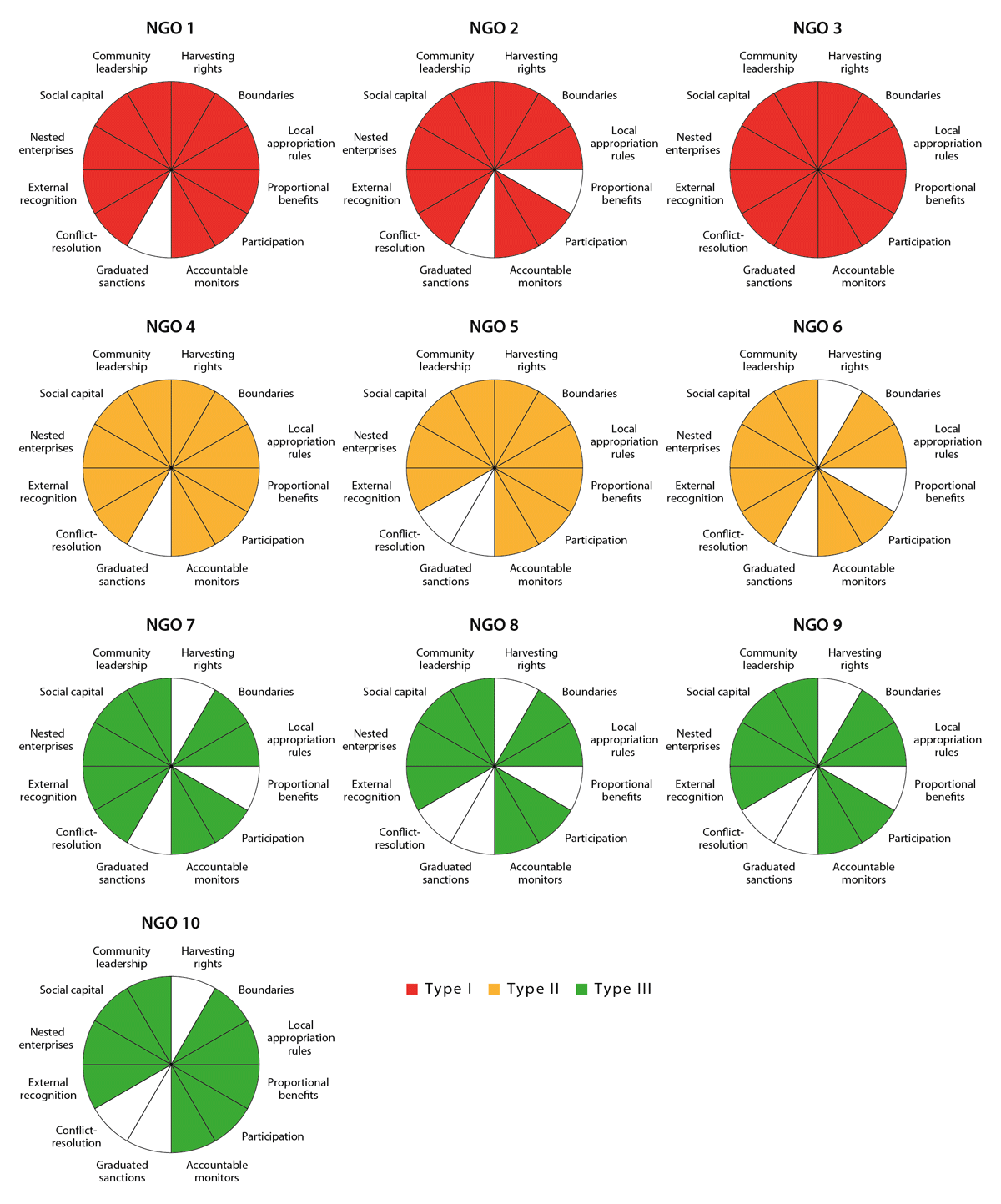
Figure 5
Design principles by NGO.
We can make some inferences about the co-occurrence. Within the three Type I NGOs, all principles co-occur with each other except for Proportional Benefits (co-occurs in two) and Graduated Sanctions (co-occurs in one).
These findings are in line with the Type I NGO objectives to help communities become self-reliant in managing their forest resources. Compared to other types, Type I NGOs collectively target the highest number of design principles together.
Type II NGOs applied almost all the design principles. However, NGO 4 did not use Graduated Sanctions, while NGO 5 does not use Graduated Sanctions and Conflict Resolution. While their mandate is mostly research, both these NGOs were interested in how communities and forests interact. They worked towards improving these interactions so that both communities and forests are benefitted.
On the other hand, NGO 6 focused on using research to conserve wildlife. They shared their findings with communities to decrease human impacts on forest resources. Thus, they used the least number of principles among the Type II NGOs. They did not address Harvesting Rights, Proportional Benefits and Graduated Sanctions. Interestingly, they did apply some form of Conflict Resolution – when there is conflict, the NGO sat down with the community to discuss how to better tailor their activities.
The differences between these NGOs could impact how principles co-occur across Type II. While almost all principles occur with each other, Graduated Sanctions did not occur with any other principles. Harvesting Rights, Proportional Benefits and Conflict Resolution were present with other principles in only two NGOs and with each other in one.
Type II NGOs tended to target design principles slightly less often compared to Type I, but much more than Type III NGOs. Type III NGOs collectively engaged the least number of design principles. No NGOs addressed Harvesting Rights or Graduated Sanctions, while only one NGO applied Proportional Benefits and Conflict Resolution measures. The other principles were used by all NGOs.
There were clear differences in design principles aimed at by individual NGOs. NGO 7 did not use Proportional Benefits, while NGO 10 did not use Conflict Resolution. NGOs 8 and 9 used the same principles and did not employ Harvesting Rights, Proportional Benefits, Graduated Sanctions or Conflict Resolution.
This was reflected in how the principles co-occurred within Type III NGOs. While most principles were again present with each other, Harvesting Rights and Graduated Sanctions were not present with any other principle. However, Proportional Benefits and Conflict Resolution occurred with every other principle in at least one NGO but did not co-occur together.
These results line up with Type III NGOs stated objectives ecological restoration and wildlife conservation. Their interventions are mostly focussed on decreasing negative community impact on wildlife and forests rather than promoting collective community governance.
Reasons and difficulties
The reasoning behind and difficulties faced by NGOs in planning activities can provide valuable insights into the context in which design principles are applied. Activities, and thus design principles, were informed by similar reasoning across NGOs. Therefore, we provide an overview of the main themes here (for more details, see Supplementary Materials).
Harvesting Rights were mostly connected to NTFPs. NTFPs are a common, traditional livelihood source in the Western Ghats. NGOs felt that communities with rights to collect NTFPs have a greater stake in, and can better manage, forests. However, in order to claim these rights, formally mapping traditional Boundaries is a pre-requisite under the FRA. Once Harvesting Rights were secured, NGOs could then promote sustainable harvests that protect key species while ensuring the same income for communities. Combining traditional knowledge and science, they helped communities frame Local Appropriation Rules and trained them in resource Monitoring.
These principles require the empowerment of certain groups and the whole community to participate in local governance decisions. NGOs often believed project success depended on Majority Participation of community members and worked closely with villagers and village institutions. Women and youth were specifically targeted to participate in local governance as they were often marginalized within the community. This was seen as a way of ensuring traditional knowledge preservation and continued collective action.
NGOs could also set up cooperative institutions to help Proportional Benefit sharing among community members. However, NGOs chose to leave the organization of benefit sharing, Graduated Sanctions and Conflict Resolution to communities themselves, as they did not want to interfere in existing community structures. Instead, Conflict Resolution activities focused on reducing the friction (where present) between communities and government organs (like the Forest Department). In combination with other activities like Tenure Interventions, this often led to External Recognition of Community Rights.
Finally, NGOs used activities connected to Nested Enterprises, Social Capital and Community Capacity to support the above principles. Nested interventions allowed NGOs to reach all relevant stakeholders and build networks to better mobilise resources. Social Capital between stakeholders and NGOs meant that communities were more willing to work with them and navigate the balance between traditional and modern ways of living. Lastly, building Community Capacity helps to hone skills and leadership the community needs to ensure (long-term) success of NGO interventions.
NGOs face multiple obstacles in implementing interventions. These were mainly related to securing funding, divisions with communities and between communities and other relevant stakeholders, and building trust with the community. Additionally, changing perspectives and the difficulty of demonstrating long term effects of successful collective action made it hard for NGOs to interest all community members in their interventions. Therefore, NGOs implemented activities and principles in different configurations, depending on their unique contexts and their objectives.
Discussion
So, how do NGO interventions within forest CPRs compare with scientific literature on successful collective action? We found that most NGOs applied almost all of the identified design principles (8 of 12). This suggests that framing interventions on the basis of design principles might be a good way for practitioners to promote sustainable management in forest CPRs (Jamila Haider et al., 2019). However, NGOs did not seem to consciously design their interventions to promote these principles (Barnes, 2017; Hasan et al., 2020). This points towards a potential disconnect between science and practice.
The most commonly applied design principles across all NGO types and activities were Social Capital and Community Leadership. Interestingly, these two principles are not present in the expanded list proposed by Cox et al. (2010). One possible explanation is that this list was meant to reflect conditions present within communities. However, NGOs are somewhat external actors and thus may need to apply extra effort in convincing communities to accept their interventions (Social Capital) (Gupta & Koontz, 2019; Hasan et al., 2020). This is supported by the focus interviewees placed on gathering support for their activities from within the community as well as incentivising communities to manage forests. NGOs then have to ensure that their impacts are long lasting, and communities become self-reliant in the management of their shared resources (Community Leadership) (Meinzen-Dick et al., 2021; Gupta et al., 2020). Thus, we feel that these principles should be considered important points to address for external actors who wish to intervene in CPRs.
Some design principles were targeted to a lesser extent as NGOs wanted to minimise their interference in pre-existing community structures. NGOs mostly refrained from targeting Proportional Benefits, Conflict Resolution and Graduated Sanctions because they felt that those were best decided by the community (Hasan et al., 2020). NGOs who did not promote Harvesting Rights often stated that it was outside their mandates or that it was too early in the intervention to do so. This suggests that scientists and NGOs should carefully consider existing community structures and contexts while deciding which design principles to promote.
It is also important to consider how design principles are addressed. We found that NGOs undertake activities in a wide range of sectors and strategies. However, their choice of intervention was highly influenced by their stated objective, leading to emergence of different NGO types. Many NGOs mentioned that they were not active in a particular sector or strategy because it fell outside the scope of their mandate. Some NGOs also felt that focus on particular area or principle (like biodiversity management or social capital) was needed to provide basic materials and build trust with the community before expanding their activities.
Consequently, the addressing of design principles varied based on NGO type and sectors and strategies. Most NGOs described similar reasoning for and obstacles in implementing activities towards a specific principle. However, depending on their context, NGOs also felt that different principles are needed at various intervention stages. For example, Clearly Defined Boundaries was overwhelmingly addressed by Type I NGOs and almost always as part of Tenure interventions. Only when this principle was achieved could these NGOs start work on securing Harvesting Rights. Type III NGOs, however, tended not to address these principles as it fell outside their mandates.
Further, all principles were present in combination with each other. Within a sector or strategy, principles were almost always present in combination with Social Capital and Community Leadership. This further highlights their importance. It was also clear that some principles could not be implemented without addressing others. Harvesting Rights, for example, were almost exclusively present when NGOs promoted the FRA under Tenure Interventions. Thus, this principle was always present in combination with Boundary Rights, Local Appropriation Rules and External Recognition which were necessary parts of securing tenure rights. Thus, it is necessary to consider the combinations in which they address design principles at different intervention stages, as the presence or absence of a certain principle may affect the implementation of the others (Baggio et al., 2016).
For both academics and practitioners, this suggests a need to tailor interventions to both NGO mandates and local contexts. Scientists should further consider all NGO actions in all spheres related to community and not just in conjunction with the forest CPRs. NGO interventions should also be studied over time to capture their effects throughout the system. For NGOs, this might mean the need to utilise multiple different activities to address all the design principles. It might have further implications for when a particular design principle should be promoted and its combination with other principles.
This begs the question: is it possible to avoid panaceas in designing potential interventions? We found that design principles seemed to be connected to similar activities. For example, Boundary Rights was almost always implemented through mapping activities. Given these parallels across NGO type and sectors and strategies, certain activities may be the most effective way of implementing a particular design principle. This suggests that it might be possible to generalise the design principles at the level of activities. Overgeneralisation could be avoided by combining these activities in different ways (Cox et al., 2010). Scientists may thus be able to build sets of potential interventions connected to different design principles that NGOs can then utilise (with adjustments to fit the local contexts) to enable better on-ground management of forest CPRs.
Some of our findings is comparable to other studies carried out in similar landscapes. As suggested by Brass et al. (2018), NGOs did attempt to foster accountability, defend community resource rights, democratise community governance and increase participation, promote autonomy and local identity ties and knowledge and create nested organisations. NGOs also addressed design principles while trying to counter the influences of several factors on forest CPR management. These included socio-economic status, low participation, tenure rights, governance structures, government support to the community, unfair benefit sharing, and external pressures (Baynes et al., 2015; Persson & Prowse, 2017; Gebreegziabher et al., 2021). Additionally, NGOs did not seem to consciously apply design principles (Barnes, 2017).
A number of limitations influenced our study. It was difficult to craft a representative sample as there is no complete typology or list of Western Ghats NGOs available. While snowball sampling allowed us to quickly build trust with NGO respondents and collect rich data, it may have introduced a selection bias. We sought to mitigate this by identifying NGOs through different local experts. However, it is necessary to recognise that other types of NGOs may also influence forest communities such as international NGOs, educational NGOs, etc. Further, NGOs had varied amounts of available documentation, which we attempted to balance by proportionally increasing the amount of interview time with those NGOs who had the least amount of written information. Additionally, we may have been biased in the coding design principles. Therefore, we provide an overview of the coding in the Supplementary Materials.
Technological, time and resource limitations mean we mostly relied on self-reported data from NGO respondents. The information is thus likely to be heavily biased in the NGOs’ favour, although we designed semi-structured interviews with a mix of open and closed questions to minimise this. Our results reflect forest CPR systems as NGOs perceive them to be, making it impossible to predict the impacts and success of NGO activities in reality. These considerations might mean that not all NGOs activities were reported. Combined with our focus on a single geographic area (although covering different forest types), these aspects render it difficult to make generalisations without further research. Thus, we refrain from making concrete recommendations.
Future research is required to address the limitations described above and deepen our understanding of NGO interventions. In-person fieldwork is necessary to confirm the success of these NGO interventions and complement our findings. Analysing NGO capacities in relation to their activities could also provide a more nuanced view of their effectiveness. Additionally, including more stakeholders – community members, donors, and government officials – may provide further insights into the effectiveness of NGO actions as well as clarify how these actors interact. Finally, widening the temporal and spatial scales of analysis might enable a deeper understanding of how NGOs apply design principles in different and changing circumstances. This could be done by considering all NGO activities from founding to the present or by increasing the number of cases under study.
Our work is simply a start on comparing practical, on-the-ground work to scientific literature to better merge the two. More work is required to study NGO activities in greater detail and to identify potential challenges in implementing design principles. We hope that such efforts might eventually lead to a database of practical information tied to concrete science that can be used by both scholars and NGO practitioners to better understand how best to manage forest common pool resources.
Conclusion
Can design principles be applied by practitioners, NGOs in particular, in designing forest CPR interventions while avoiding institutional panaceas? We found that the interventions of the NGOs considered in this study coincided with most of the design principles identified in the scientific literature, even when such interventions were never based on actual awareness of such (scientific) principles. Activities promoting design principles were not aimed exclusively at the connection between the community and the forest resource, but were influenced by NGO objective and context. Design principle implementation varied between sectors and strategies and NGO types, with distinctive design principles applied at different stages. Despite being employed in different combinations, design principles appeared to almost always be implemented through certain activities.
Thus, scientists and practitioners may be able to design potential interventions to sustainably manage forest CPRs based on fostering design principles but without resorting to panaceas. Design principles may be most effectively addressed by certain activities which could be collected into a database. By combining these activities in diverse ways based on local contexts and intervention stage, the concern about overgeneralisation of design principles could be avoided. Such a database may enable academics to provide NGOs with science-based advice on the best course to promote on-ground collective action and sustainable CPR management. NGOs could benefit by using the design principles to better structure their interventions to cover all aspects required for community management of forest resources. Practitioners could further interact with ideas from scientific literature to expand their range of activities. These expanded interventions may better enable communities to become more self-sufficient in sustainably managing their forest resources, secure their livelihoods in the long term and conserve the forest resource base.
Additional File
The additional file for this article can be found as follows:
Supplementary Material
Interview Guide, Coding Tables for Sectors, Strategies and Design Principles, and an overview of NGO Reasoning and Difficulties. DOI: https://doi.org/10.5334/ijc.1314.s1
Notes
[1] Here, the term ‘NGO’ refers to any non-governmental or “not-for profit, voluntary citizens’ group that is organized on a local, national or international level to address issues in support of the public good” (United Nations, n.d.).
Acknowledgements
We thank the two anonymous reviewers for their valuable comments that has helped us refine our paper. We would like to acknowledge Peter Driessen and Hita Unnikrishnan for their valuable comments at various stages of this study. Further, we would like to thank all research respondents for their participation.
Funding Information
This research was conducted as part of a programme funded by a scholarship from the Inlaks Shivdasani Foundation, Mumbai, India.
Competing Interests
Frank van Laerhoven is one of the editors of the International Journal of the Commons.