
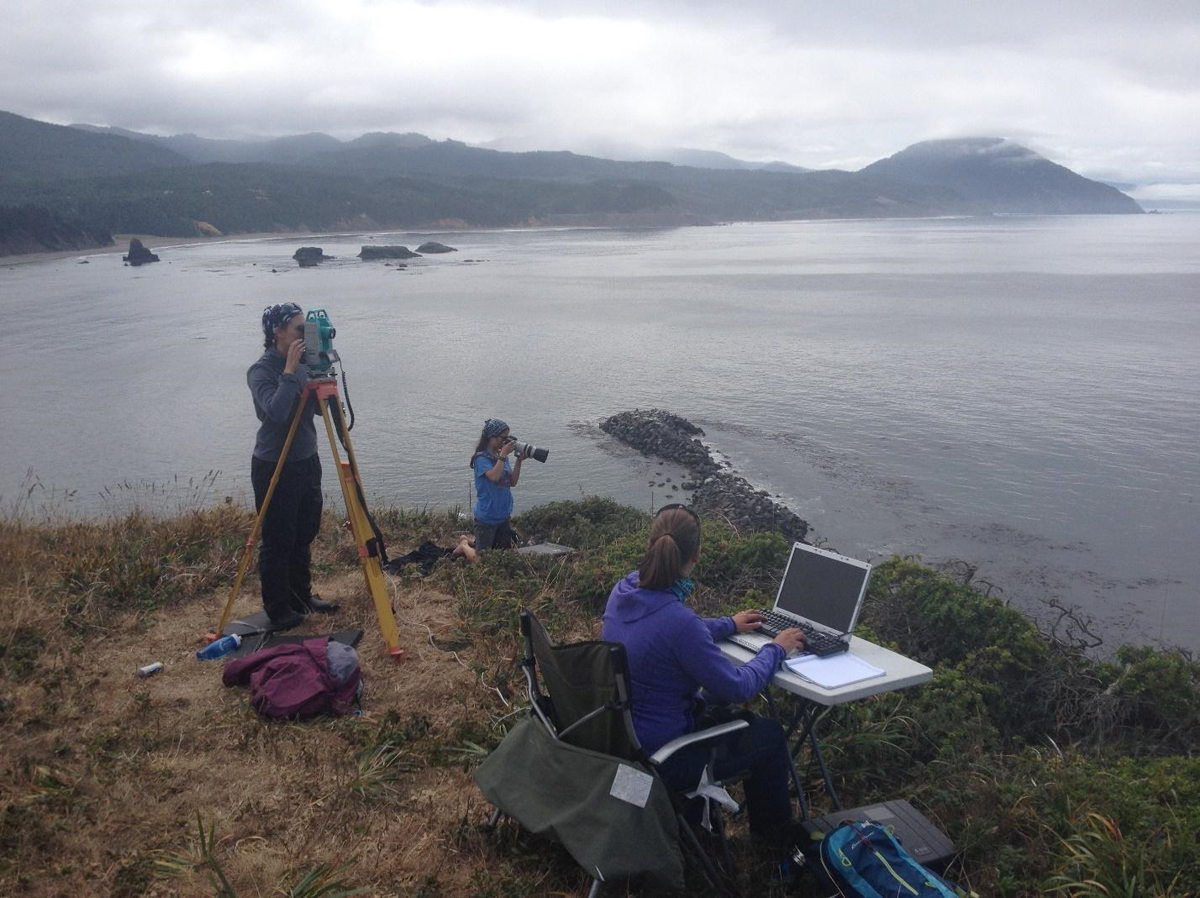
Figure 1
The team tracks a whale from a cliff top location in Port Orford using a camera for photo-identification of the whale and a theodolite (on tripod) connected to a laptop computer to track the whales’ movements. Photo: Tom Calvanese. Reproduced with permission of the photographer.
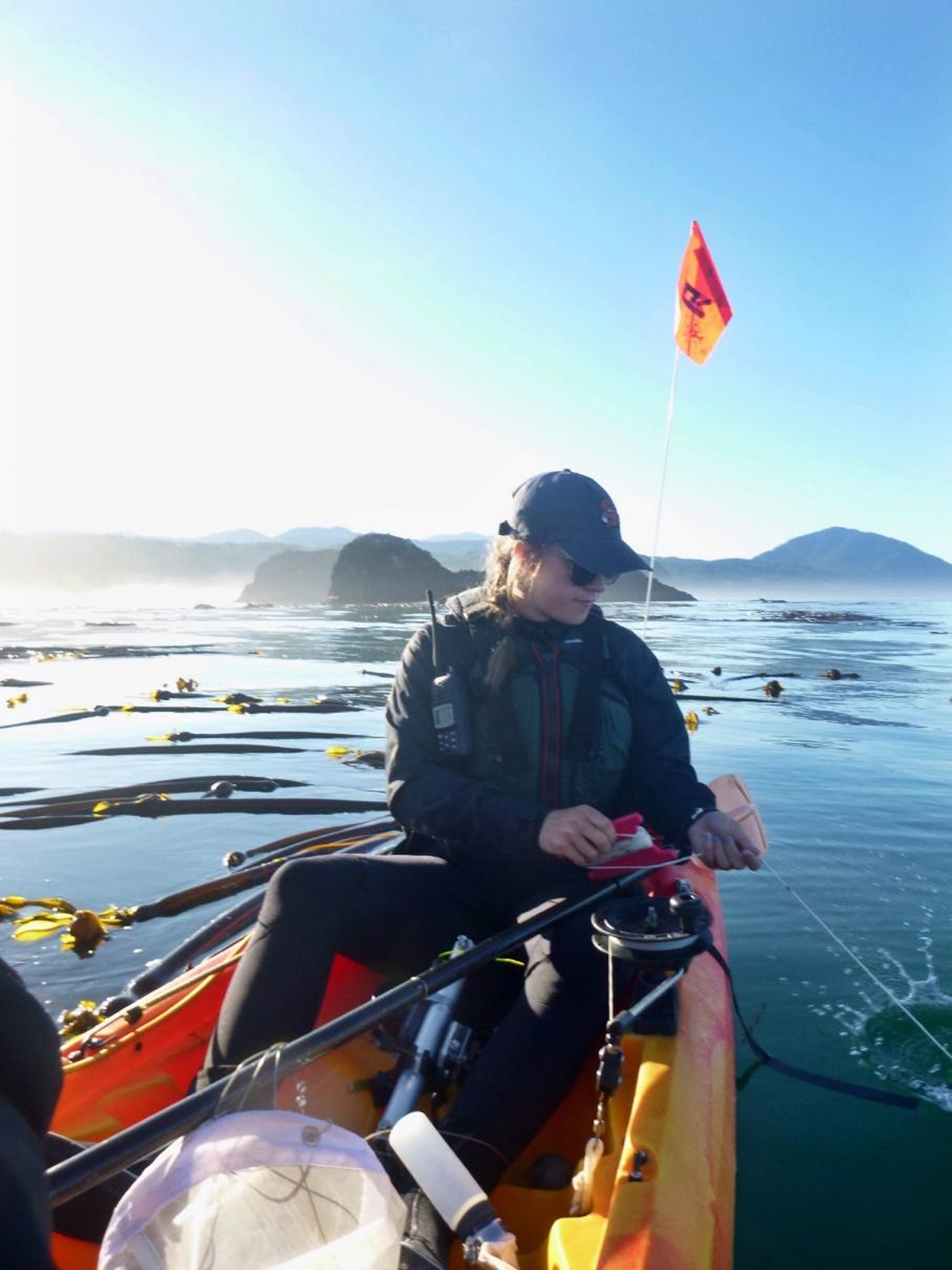
Figure 2
A student intern deploys instruments from the tandem kayak to collect data on zooplankton prey availability for whales. Photo: Robyn Norman. Reproduced with permission of the photographer.
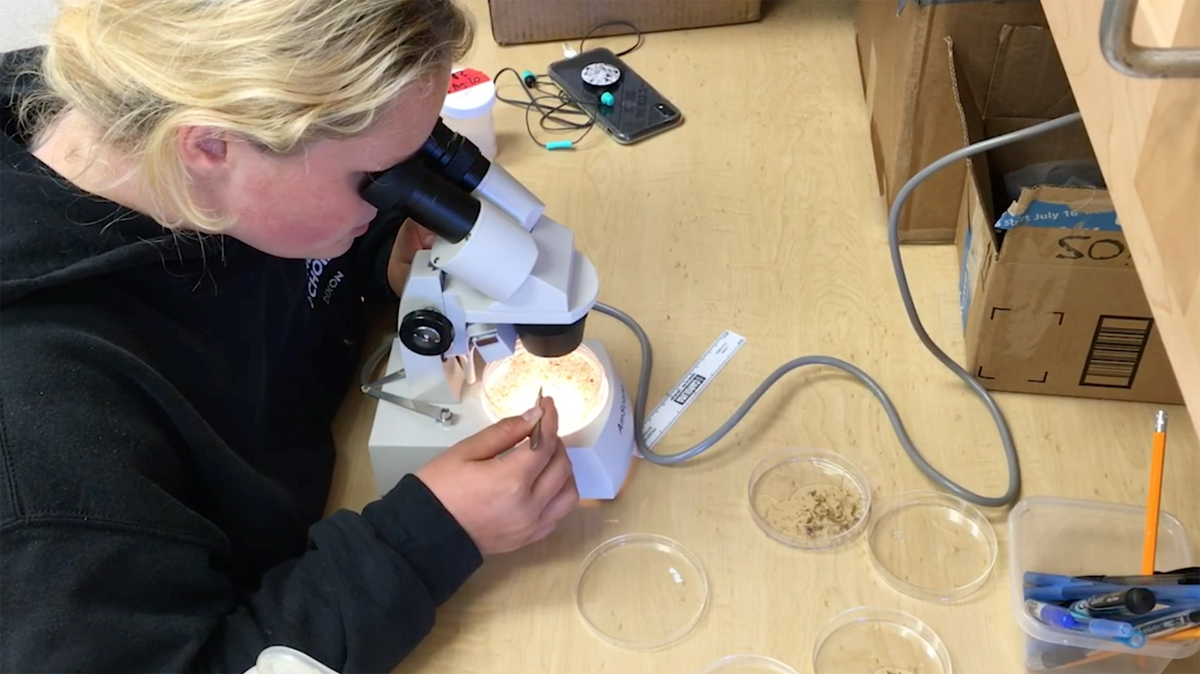
Figure 3
A student intern uses a microscope to identify zooplankton species and count individuals caught during the kayak sampling earlier in the day. Photo: Lisa Hildebrand. Reproduced with permission of the photographer.
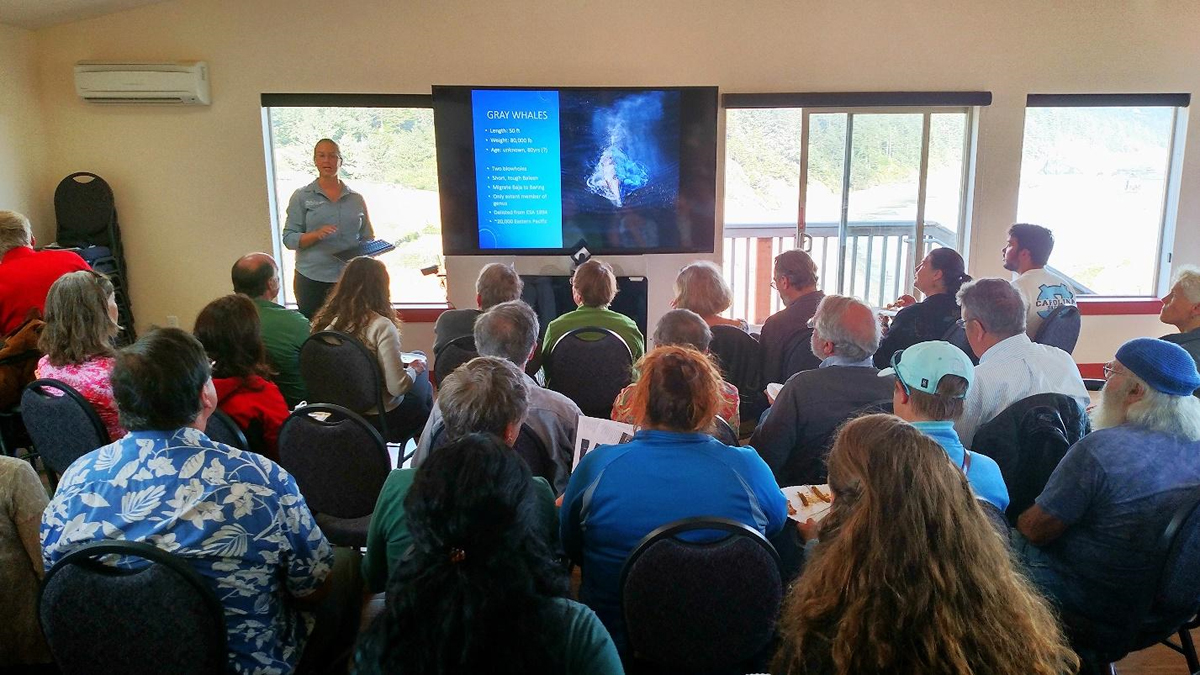
Figure 4
Community members attend the end-of-season presentation by the students at the OSU Port Orford Field Station. Photo: Tom Calvanese. Reproduced with permission of the photographer.
Table 1
JASPER/TOPAZ program goals and implementation methods divided into three broad areas of impact: student interns, community members, and science.
| PROGRAM GOAL | METHODS | |
|---|---|---|
| Student interns | Leadership skills | Opportunities to take “ownership” of project needs, large and small (e.g., cooking dinner, morale encouragement, exemplifying discipline and responsibility). |
| Marine ecology knowledge | Observing and learning firsthand about trophic connections between oceanography, zooplankton prey, and whale foraging ecology. Constant opportunities for questions, dialogue, and interpretation. | |
| Critical thinking skills | Multiple daily decisions the team is confronted with including gear malfunctions, weather forecasts, field team logistics, application of ecological theories to field observations in study system. | |
| Basic computer skills | Data entry into spreadsheets, communications between sensors and computers, word processing for blog writing, presentation development for community outreach. | |
| Technology skills | Learn basics of camera use, theodolite use (including trigonometry), GoPro cameras, oceanographic sensors and calibration, use of dissecting microscope for zooplankton ID. | |
| Communication and interpersonal skills | Close team living and working conditions requires clear, transparent, and frequent communication to avoid and resolve conflicts. | |
| Scientific communication skills | Formal opportunities: Each intern writes a blog related to project or experience that goes through review process with grad student and PI; Team develops and delivers community presentation on project. Informal opportunities frequently occur for interns to discuss project with community members and tourists on kayak tours and cliff site. | |
| Teamwork experience | Working together toward project objectives, learning task assignment and follow through, understand the value of patience and clear communication. | |
| STEM identity and confidence | The holistic experience provides opportunities for students to see themselves as scientists and gain confidence through their own success. | |
| Community members | Connect to local ocean | Recognize whales and other marine diversity near their community. |
| Ocean literacy | Through local interns and community presentation, learn ocean and ecology concepts. | |
| Recognition of field station and opportunities | Host presentation at field station where other opportunities are highlighted, such as information resources, workshops, seminars, and other research projects. | |
| Build trust in scientists | Provide opportunities for community members to see scientists as individuals. Open two-way dialogues about issues of concern (e.g., pollution, climate change, and fisheries). | |
| Connect with neighbors | Community members meet each other and share concerns, ideas, and histories; opportunities to expand networks. | |
| Science | Long-term data collection | Replicate use of standardized methods to collect data at same time and location over many years. |
| Produce new findings and manuscripts | Graduate students analyze datasets, generate and publish findings for dissemination to scientific communities. | |
| Develop a new generation of scientists | Experience impacts career trajectory through CV building, skill development, and hands-on experience of “science”. |
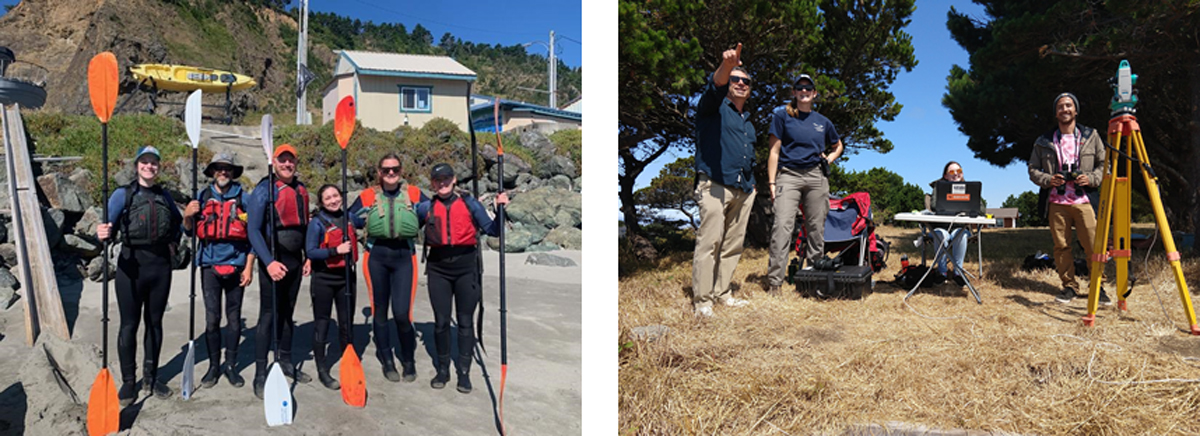
Figure 5
The student teams with community members during the six-week program. Left: The team with Dave Lacy, owner of South Coast Tours, LLC. Right: The team on the cliff looking for whales with Tom Calvanese, manager of the OSU Port Orford Field Station. Photo: Marcus Mayorga (left) and Leigh Torres (right). Reproduced with permission of the photographers.
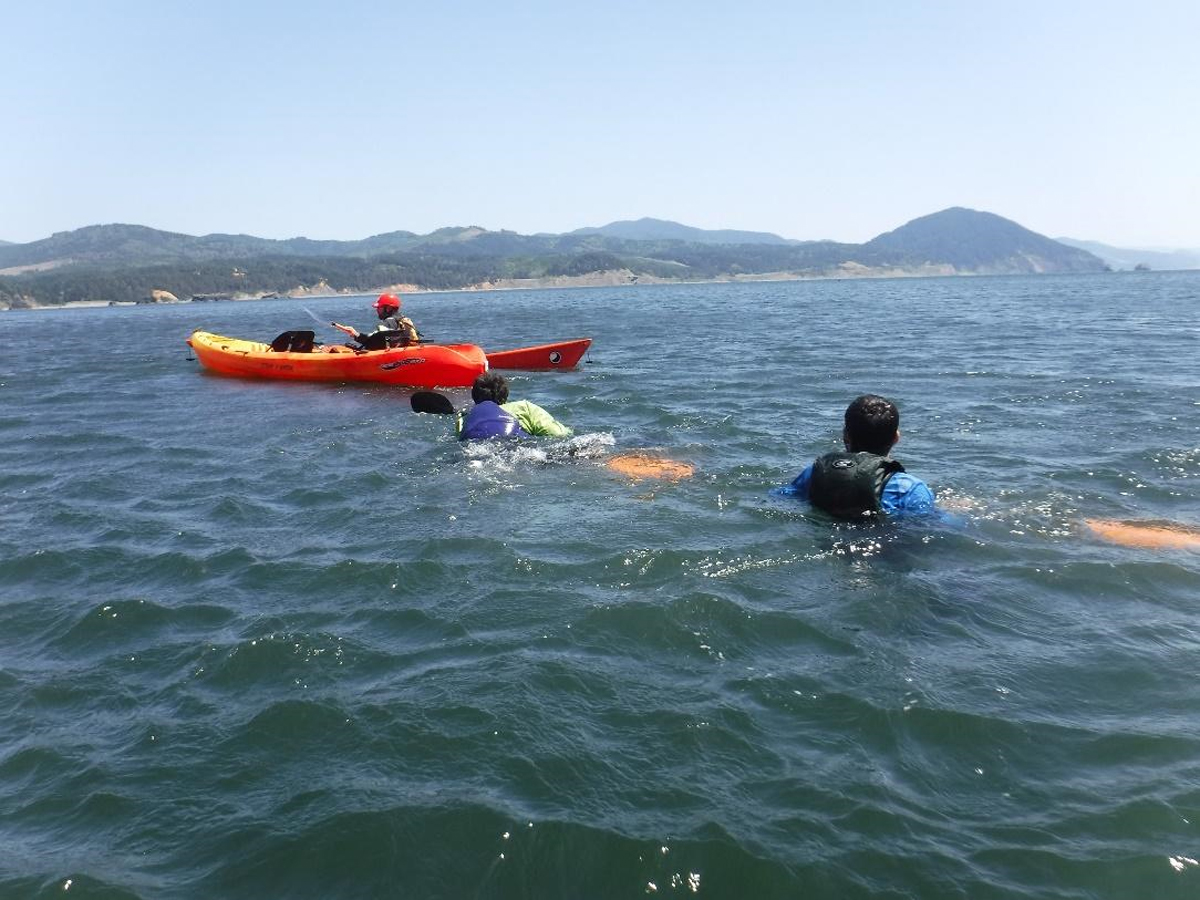
Figure 6
The team learns kayak safety, paddling methods, and self-rescue techniques (pictured here) during a kayak training course early in the six-week program. Photo: Florence Sullivan. Reproduced with permission of the photographer.
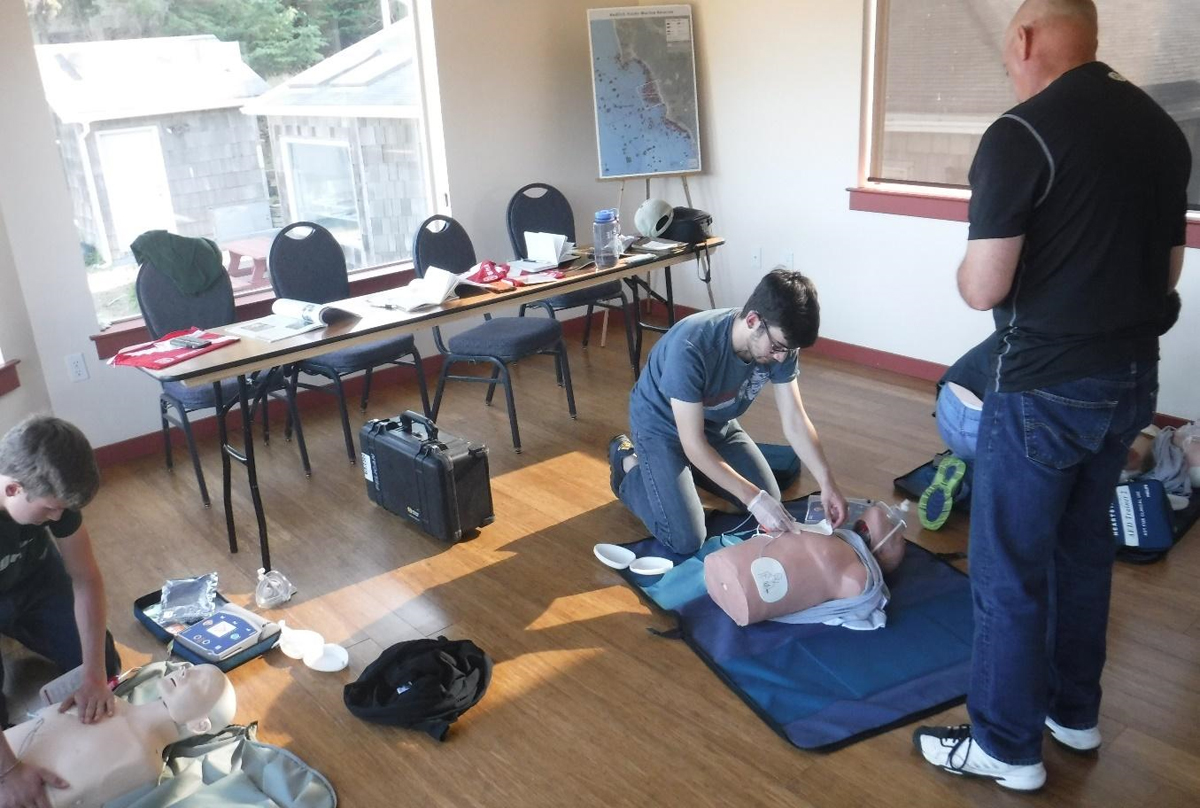
Figure 7
Student interns learn first response techniques during training from an instructor during the first week of the program. Photo: Florence Sullivan. Reproduced with permission of the photographer.
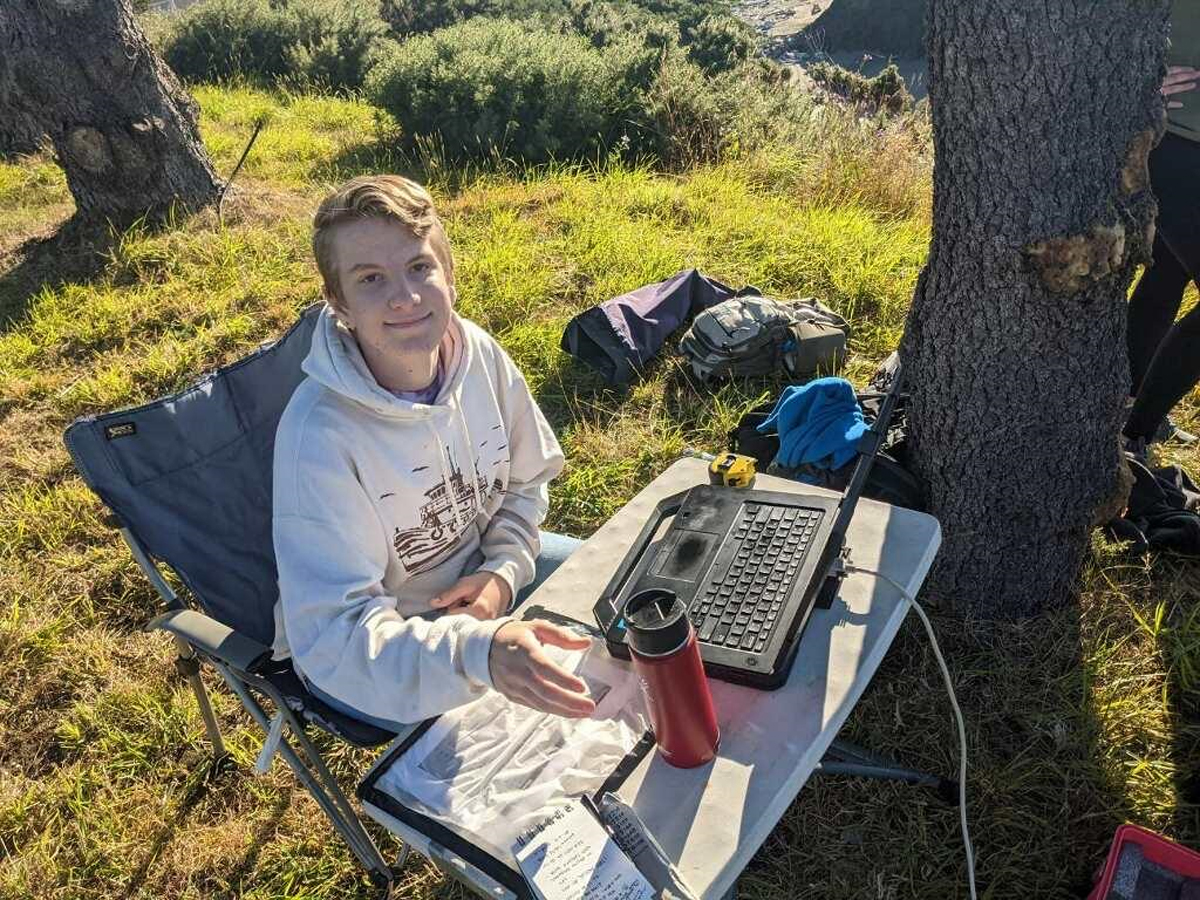
Figure 8
Student interns learn how to use computers for data collection and data management. Photo: Lisa Hildebrand. Reproduced with permission of the photographer.
Table 2
Quotes from former students who have participated in the JASPER/TOPAZ project categorized by program goals identified in Table 1. Position of student during internship and participation year are listed in parentheses after each quote. Student positions are abbreviated as follows: HS = high school student; UG = undergraduate student; MS = Master’s student.
| GOAL TO ENHANCE | QUOTES | |
|---|---|---|
| Student interns | Leadership skills |
|
| Marine ecology knowledge |
| |
| Critical thinking skills |
| |
| Basic computer skills |
| |
| Technology skills |
| |
| Communication and interpersonal skills |
| |
| Scientific communication skills |
| |
| Teamwork experience |
| |
| STEM identity and confidence |
| |
| Community members | Connect to local ocean |
|
| Ocean literacy |
| |
| Recognition of field station and opportunities |
| |
| Build trust in scientists |
| |
| Connect with neighbors |
| |
| Science | Long-term data collection |
|
| Produce new findings and manuscripts |
| |
| Develop a new generation of scientists |
|
Table 3
Where are they now? Of the 25 students that have participated in JASPER/TOPAZ program, 22 (88%) responded to our request for information on their current professional status, all of which are in STEM fields.
| POSITION DURING INTERNSHIP | AFTER INTERNSHIP |
|---|---|
| High school student (n = 6) |
|
| Undergraduate student (n = 14) |
|
| Master’s student (n = 5) |
|