

Figure 1
R-Urban Poplar Eco-Civic Hub 2021
Note: Located on a former carpark of the adjacent Teviot Housing Estate, the land is leased from Poplar HARCA, a housing association and social landlord.
Source: public works (with permission).
Table 1
R-Urban Poplar Eco-Civic Hub
| CATEGORY | DESCRIPTION |
|---|---|
| Hub size | 450 m2 |
| Hub governance | Informal polycentric governance model Five non-profit associations working with sustainability and/or social change missions 15+ resident food growers and citizen members |
| Hub users | 500+ annual participants/volunteers 50% within five-minute walking radius 50% across London, motivated by interest in workshop content |
| Hub infrastructures | Growing beds, kitchen, classroom, workshop, anaerobic digester, composting systems, compost toilet, mushroom farm, three studio/offices, material storage and harvesting |
| Hub learning programmes (2021–23) | Green skills training (weekly) Repair café workshops (bi-weekly) Community meals (monthly) |
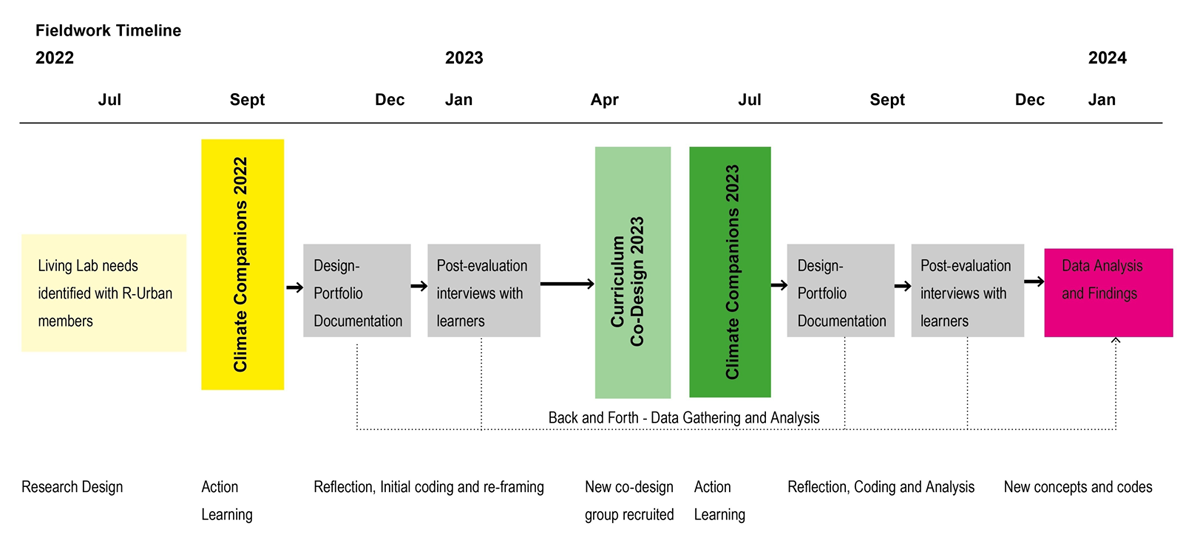
Figure 2
Climate Companions research design timeline showing iterative research cycles of design, action, reflection, co-design, action and reflection
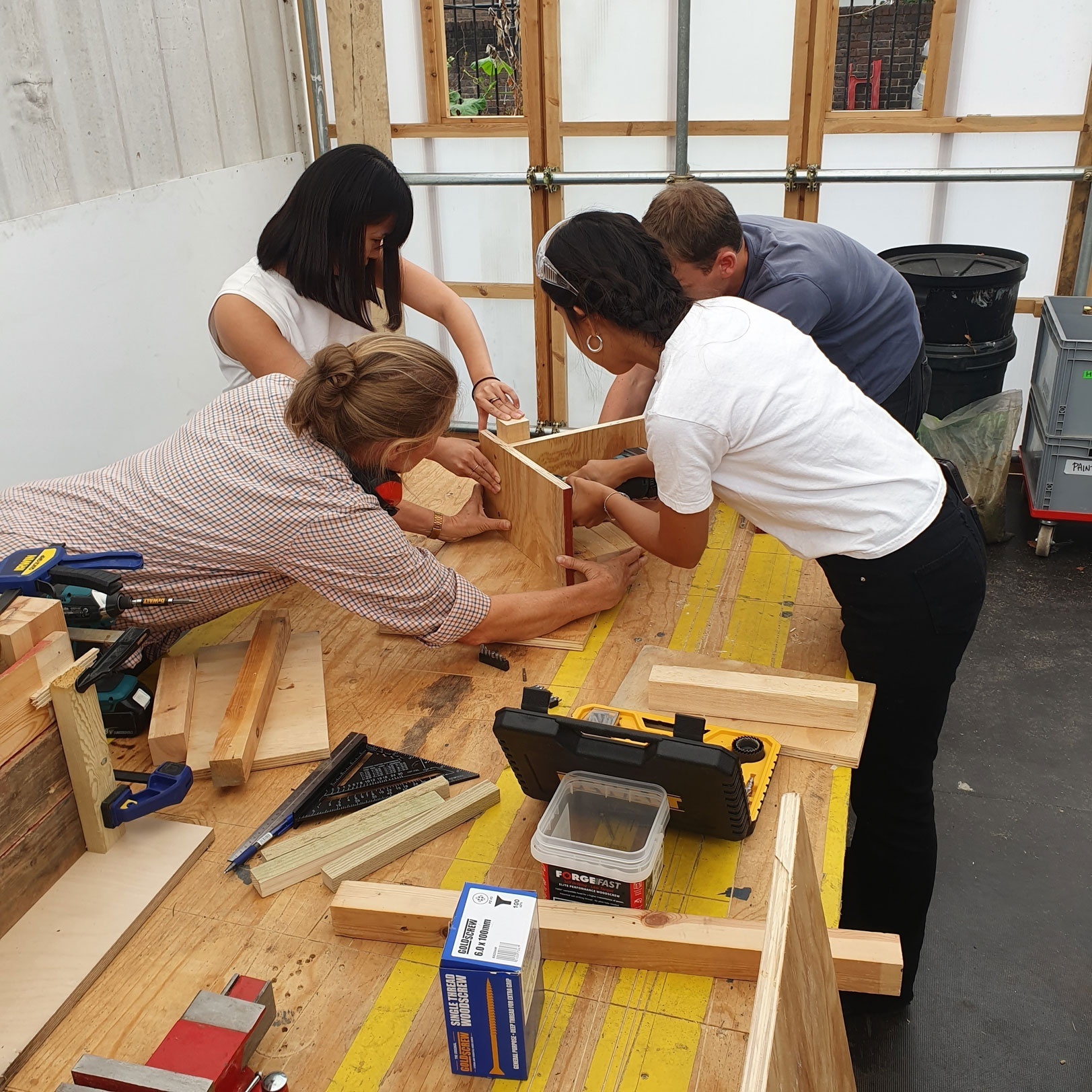
Figure 3
Learning by doing: participants working together in an eco-construction workshop to build formwork for the hempcrete casting
Source: Author.

Figure 4
Learning from place: a neighbourhood foraging walk led by a wild food expert explained how and when to harvest a variety of edible street foods
Source: Nana Maolini and public works.
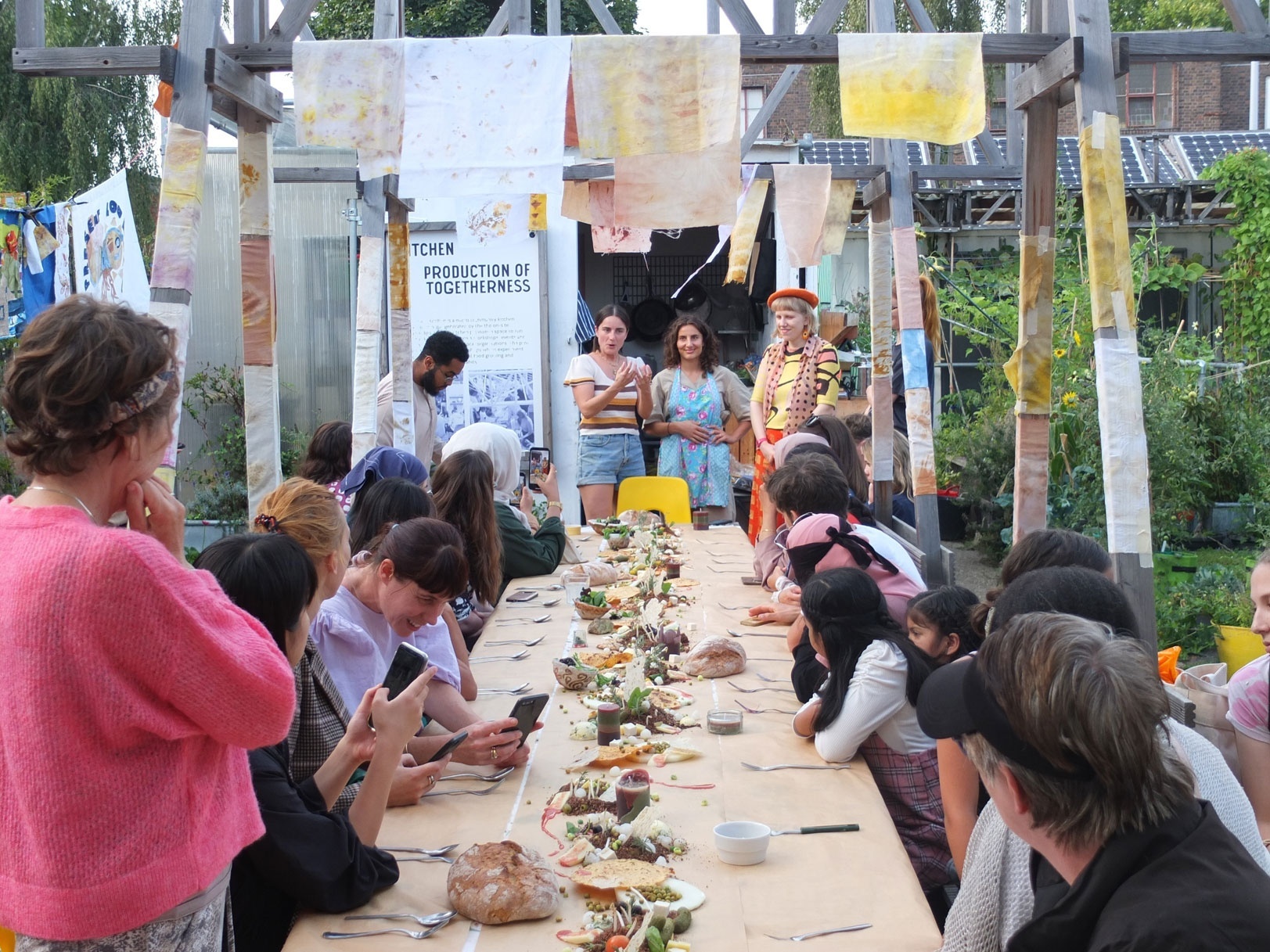
Figure 5
Learning through togetherness: ‘a discursive dinner feast’ in which the group reflected on the two-week curriculum and the knowledge learnt and built companionships
Source: Author.
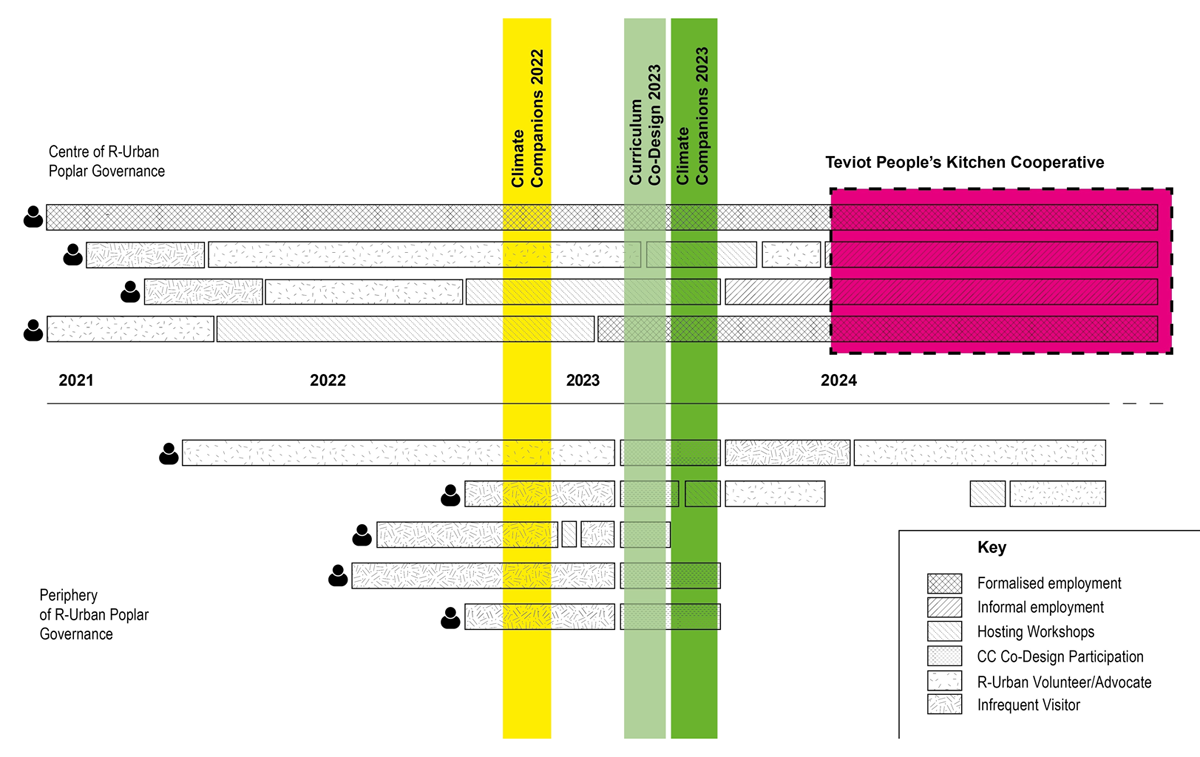
Figure 6
Evolving roles within R-Urban, moving from the periphery to the centre of hub decision-making
Note: Some participants became formalised through employment
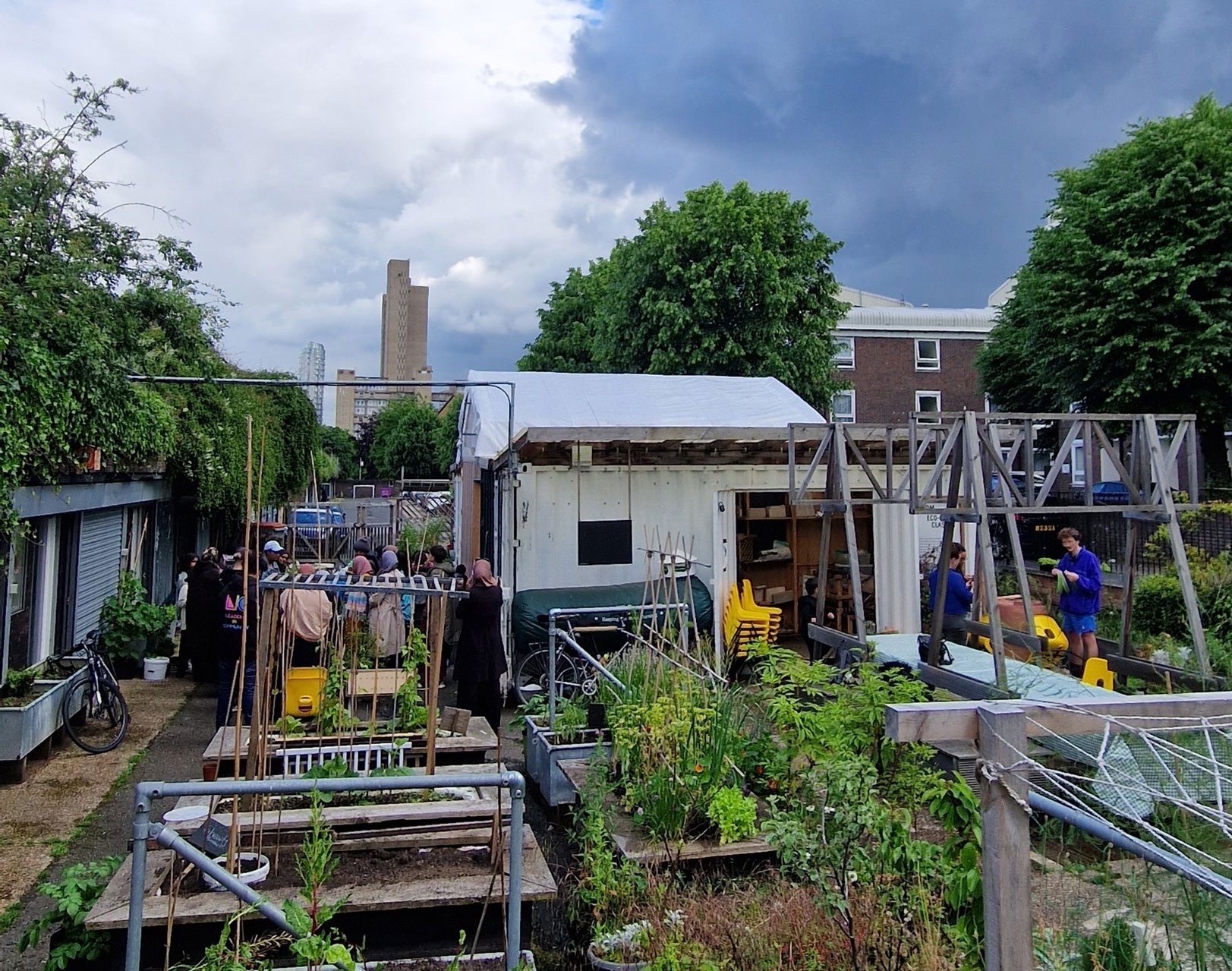
Figure 7
Teviot People’s Kitchen Launch Event in 2024
Source: Author.