
Table 1
Influence of active transport and urban forest strategies on achieving public health goals
| PUBLIC HEALTH GOAL | ACTIVE TRANSPORT | TREE CANOPY (URBAN FOREST) |
|---|---|---|
| Physical activity | Direct influence: promotes physical activity (Kelly et al.2014; Mizdrak et al.2019) | Indirect influence: aesthetic features that make the built environment more pleasant for walking and cycling (Wendel-Vos et al.2004; Zlot & Schmid 2005) |
| Urban heat mitigation | Direct influence: reduces anthropogenic heat from vehicles (Singh et al.2022). Indirect influence: a modal shift away from motor vehicles reduces greenhouse gas emissions, slowing warming in the long term (Rojas-Rueda et al.2011) | Direct influence: lower ambient heat through shading and evapotranspiration (Lungman et al.2023) |
Table 2
Policy analysis results
| PUBLIC HEALTH GOAL | HEALTH AND WELLBEING PLAN1 | TRANSPORT STRATEGY | URBAN FOREST STRATEGY |
|---|---|---|---|
| Social determinants of health | 3 | 1 | 1 |
| Air pollution risk | 3 | 3 | 1 |
| Air pollution measures | 0 | 1 | 1 |
| Physical inactivity risk | 3 | 3 | 3 |
| Physical inactivity measures | 2 | 3 | 1 |
| Urban heat risk | 3 | 1 | 3 |
| Urban heat measures | 3 | 2 | 3 |
[i] Note: 1The Health and Wellbeing Plan is published in two documents: the Council Plan 2021–2025 and the Health and Wellbeing Action Plan 2021–2025.
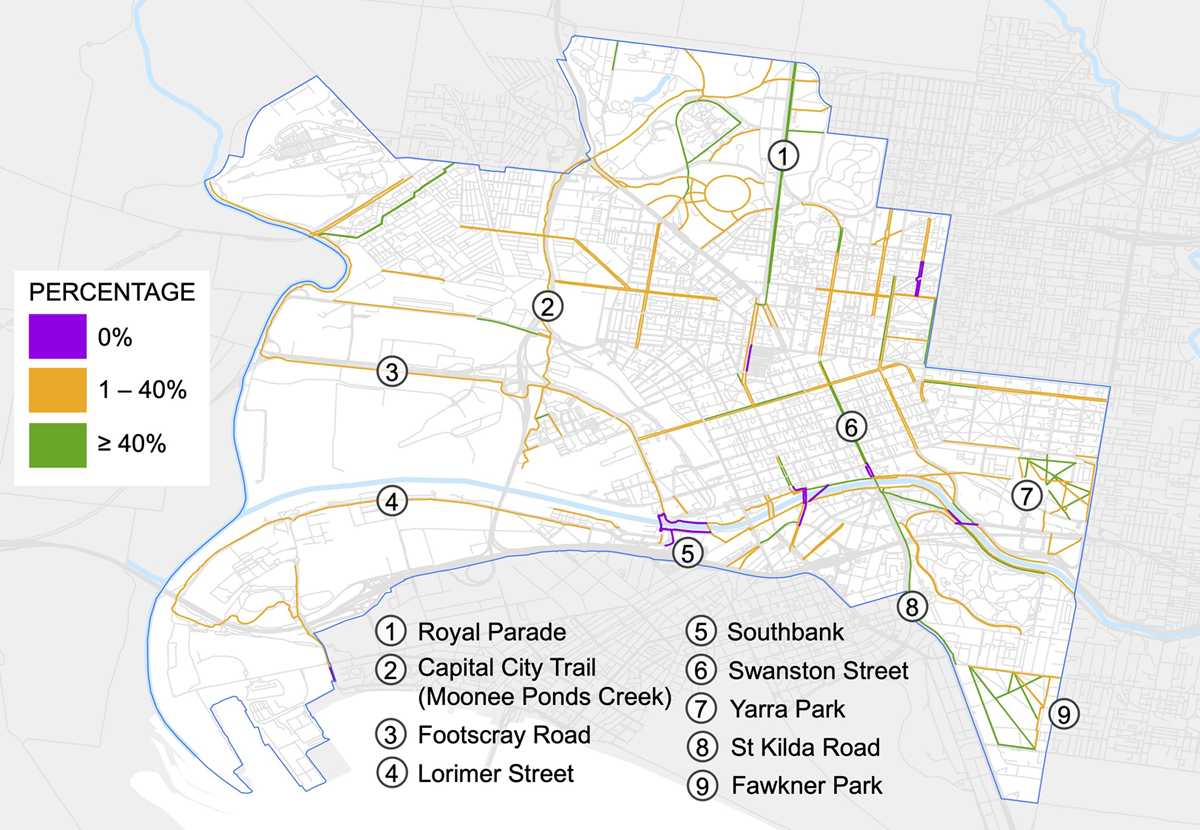
Figure 1
Tree canopy coverage (percentage) of existing bicycle lanes.
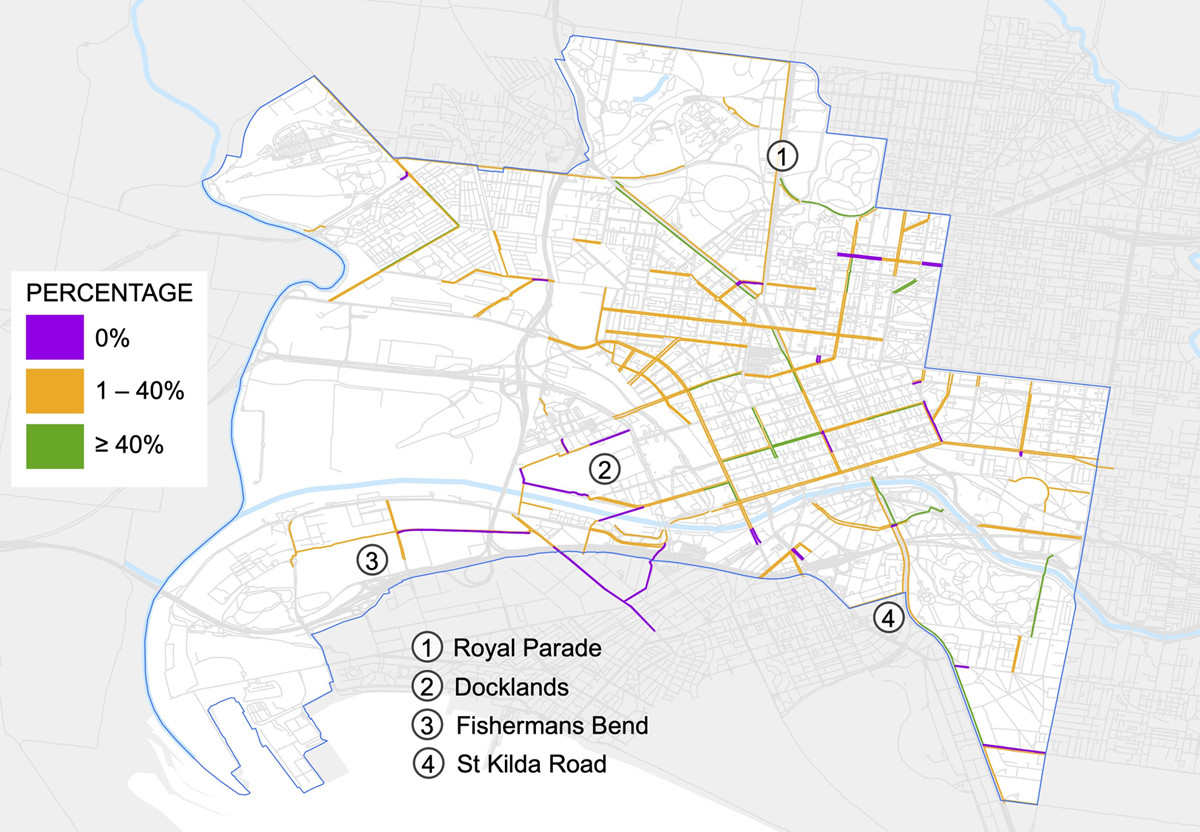
Figure 2
Tree canopy coverage (percentage) of proposed bicycle lanes.
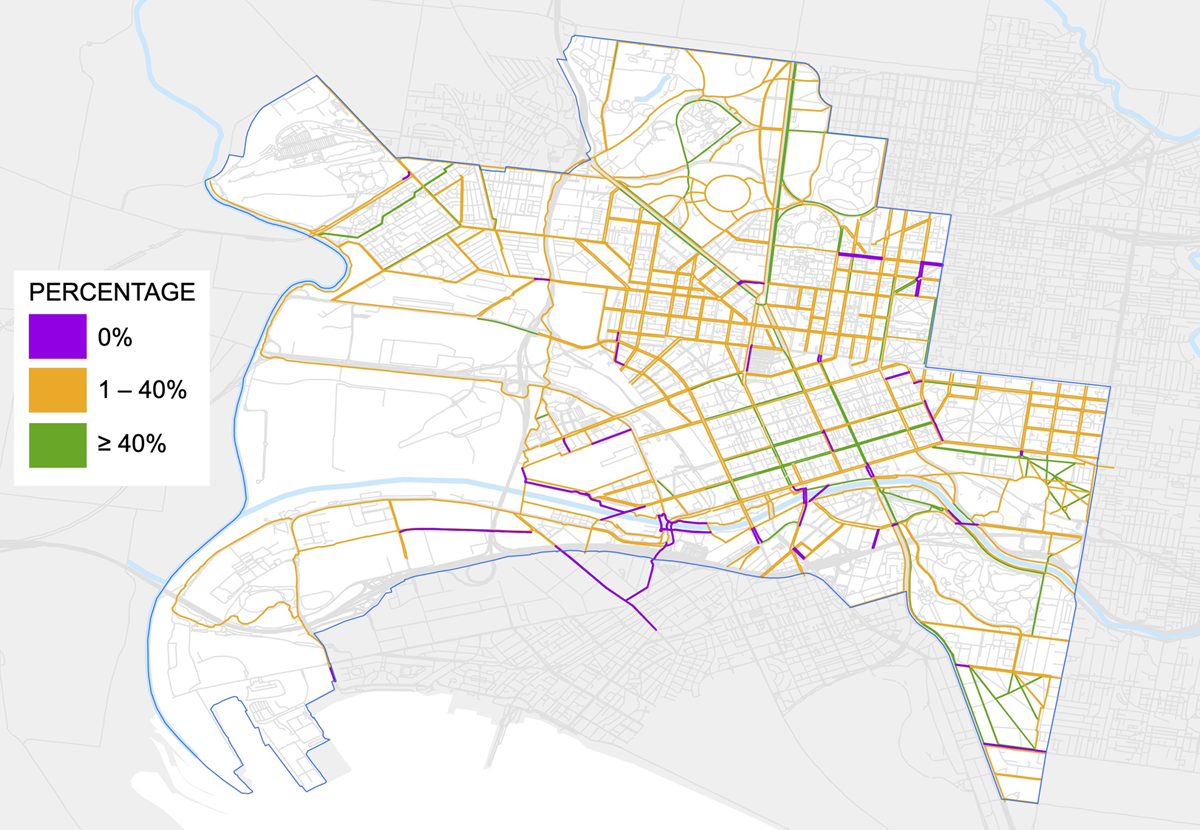
Figure 3
Tree canopy coverage (percentage) of ultimate bicycle network (current and future bicycle lanes).