
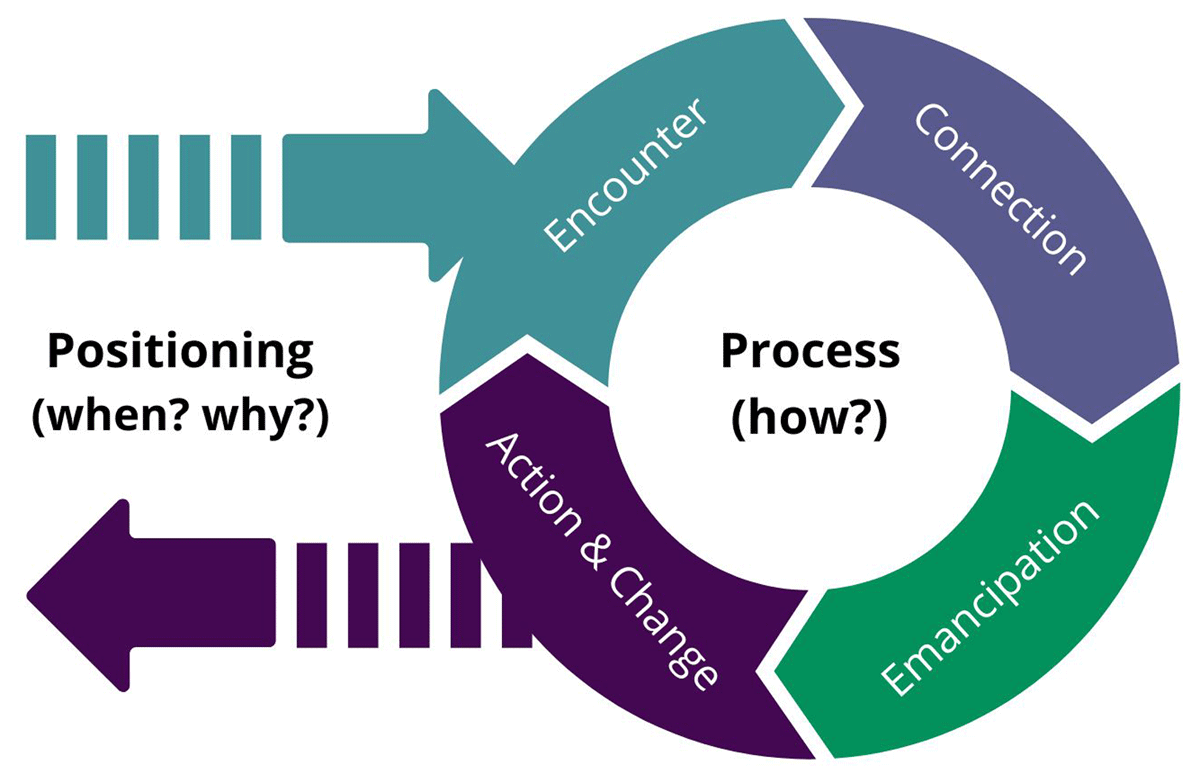
Figure 1
Encounter–Change Framework for evaluating the contributions of NFV.
Table 1
Examples of empirical indicators for an evaluation of NFV based on critical (urban) pedagogies
| COMPONENT | CRITICAL (URBAN) PEDAGOGIES | APPLICATIONS IN NFV |
|---|---|---|
| Encounters | New views and experiences, peripheral territories and marginalised urban knowledges, structural domination patterns. | Surfacing choices related to participation and inclusion (who is invited to imagine futures and why). |
| Connections | Across knowledges, between individual experience and social/collective consciousness, between dominant and marginalised practices. | Opening spaces for meaningful relationship building (e.g. between communities, scientists and decision makers), for sharing visions from collective lenses, and for understanding desires against trends and possibilities (connecting methods). |
| Emancipation | Through conflict and ‘unlearning’ of dominant views. New strategies for planning (e.g. from strict rationality to thinking-feeling, radical practices). | Empowering marginalised groups through visioning processes and outputs; surfacing values; fostering spaces where future assumptions, technical interpretations and dominant practices can be challenged. |
| Action and Change | Embodying learning and practising what is learnt. Increased capacities leading to concerted social action. Solidarity and urban citizenship performances practised. | Allowing spaces for strategising around impact on the basis of visions. Politicising visions and touching on the root causes and drivers of inequalities for critical adaptation practices. |
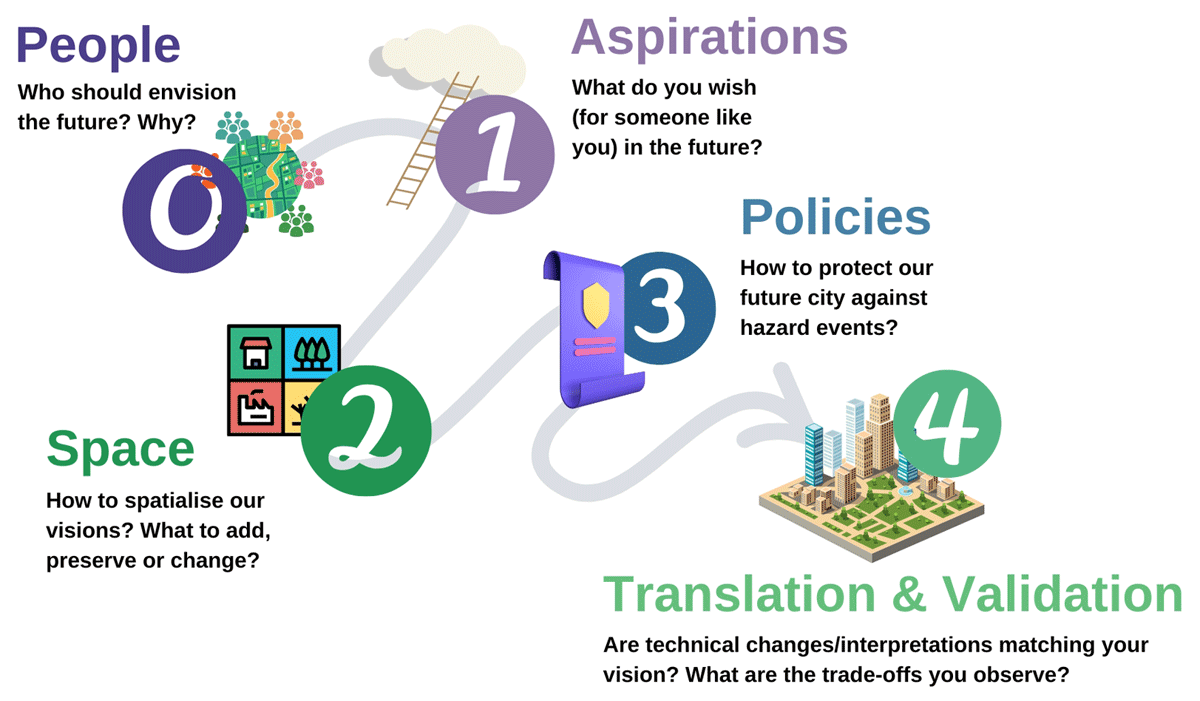
Figure 2
The Tomorrow’s Cities NFV approach.
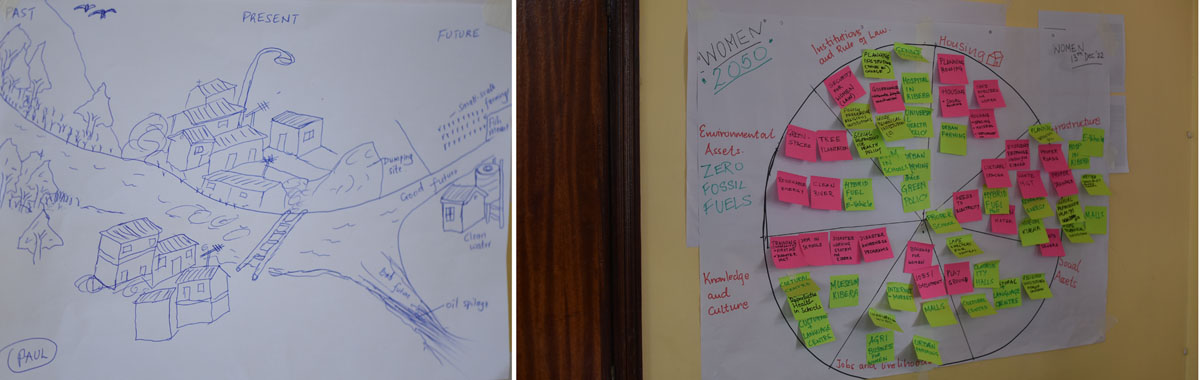
Figures 3 and 4
Individual life story and wheel of assets, Nairobi. Source: Tomorrow’s Cities archive.
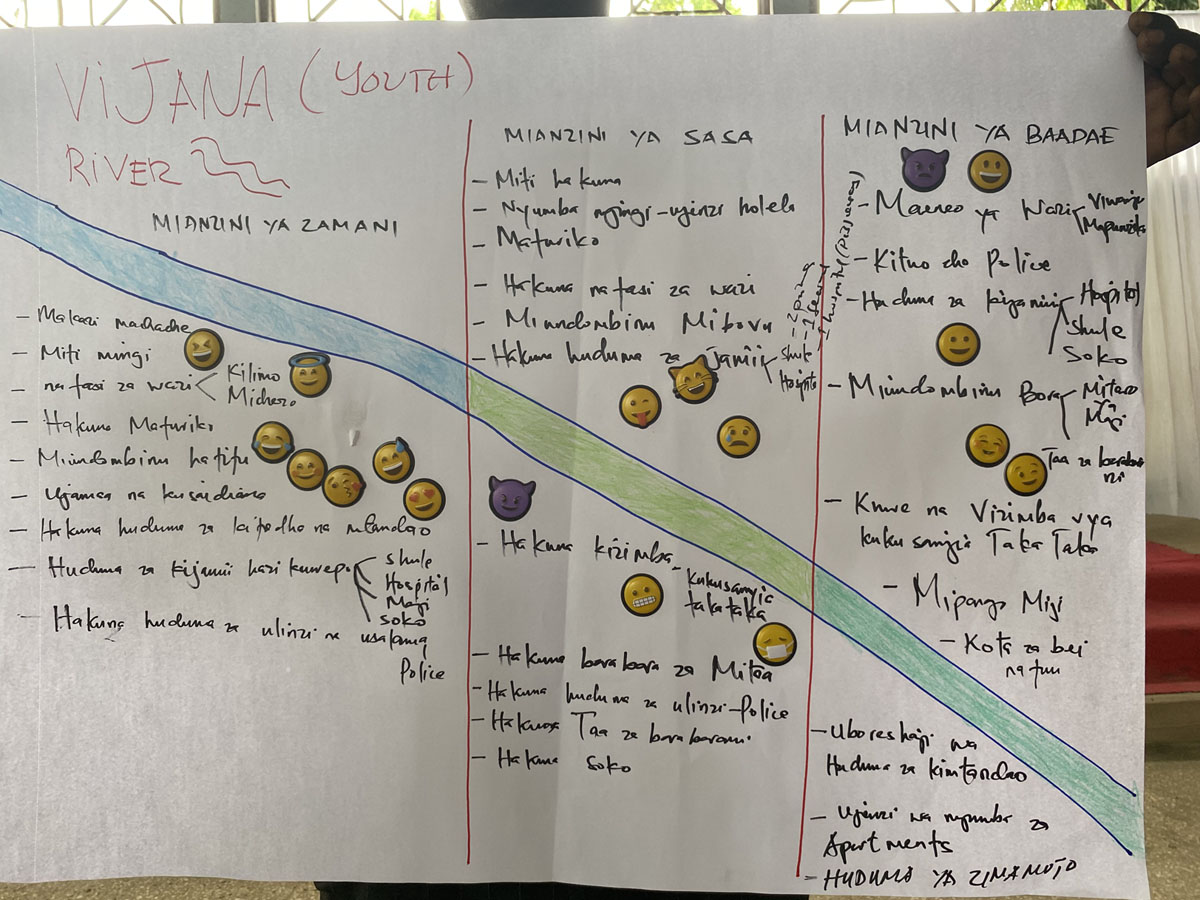
Figure 5
Collective storyline of youth group in Dar es Salaam.
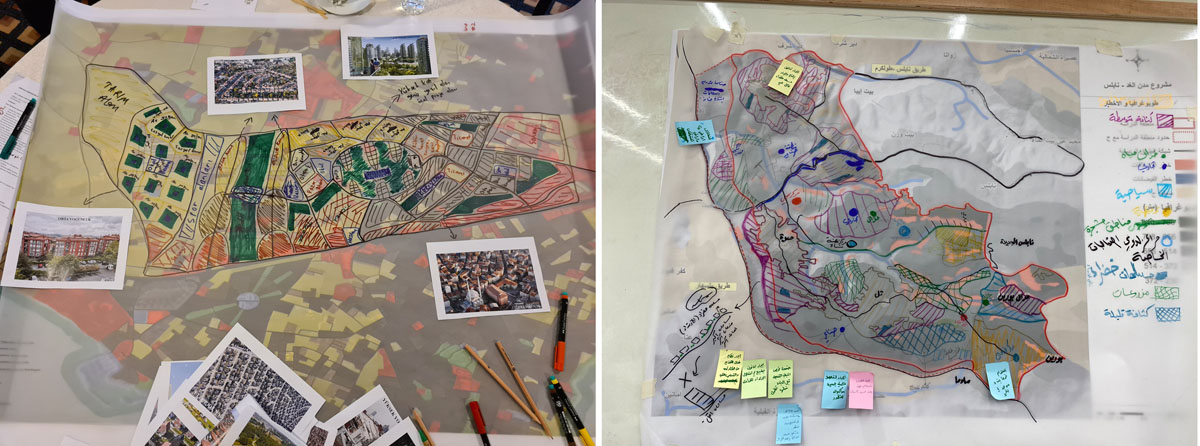
Figures 6 and 7
Examples of sketched land use plans in Istanbul (left) and Nablus (right).
Table 2
Evaluating the Tomorrow’s Cities NFV approach
| EVALUATIVE COMPONENT | WHAT/WHO IS ENCOUNTERED | WHAT/WHO IS CONNECTED | HOW EMANCIPATION HAPPENS | HOW DOES IT TRIGGER ACTION & CHANGE |
|---|---|---|---|---|
| People | Different experiences, knowledges and worldviews. Stakeholder disaggregation emphasises power asymmetries. | Contrasts and commonalities across visions surfaced. | Stakeholders producing future claims through collective identities. | Diverse groups recognising each other and working towards shared goals while recognising differences. |
| Aspirations | Different ways of expressing feelings, past experiences, and future hopes through creative methods. | Between individual and collective aspirations. Between past, present and future. | A cohesive and desired travel trajectory and set of aspirations (as assets) is produced. | Clarity in aspirations may catalyse or support concrete claims and struggles from marginalised groups. |
| Space | Local actors using planning tools and data that are usually not accessible. | Between valued/desired assets and specific lands. | Participants realising own local expertise and being recognised as peers by other stakeholders. | Future lens challenging assumptions about aspirations and priorities could lead to changed behaviours from institutions. |
| Policies | Diverse strategies to tackle future hazards and equity challenges through the exploration of different policy themes. | Spatialised aspirations and measures that could either support such as aspirations or mitigate its negative consequences. | Realised capacity to engage in problem framing and produce concrete solutions. | Concrete policy designs that connect different themes (housing, environment etc.) could help to activate specific actors for concerted action. |
| Translation and Validation | Science-informed representations of priorities for the future. | Local priorities balanced with scientific rigour and essential planning norms (trade-off thinking). | Allowing the language of science to enhance the legitimacy of local priorities. Realised capacity to dialogue and challenge future assumptions and projections. | Mutual understanding between local and scientific practitioners expanding the influence of NFV on policy. |