
Fig. 1.
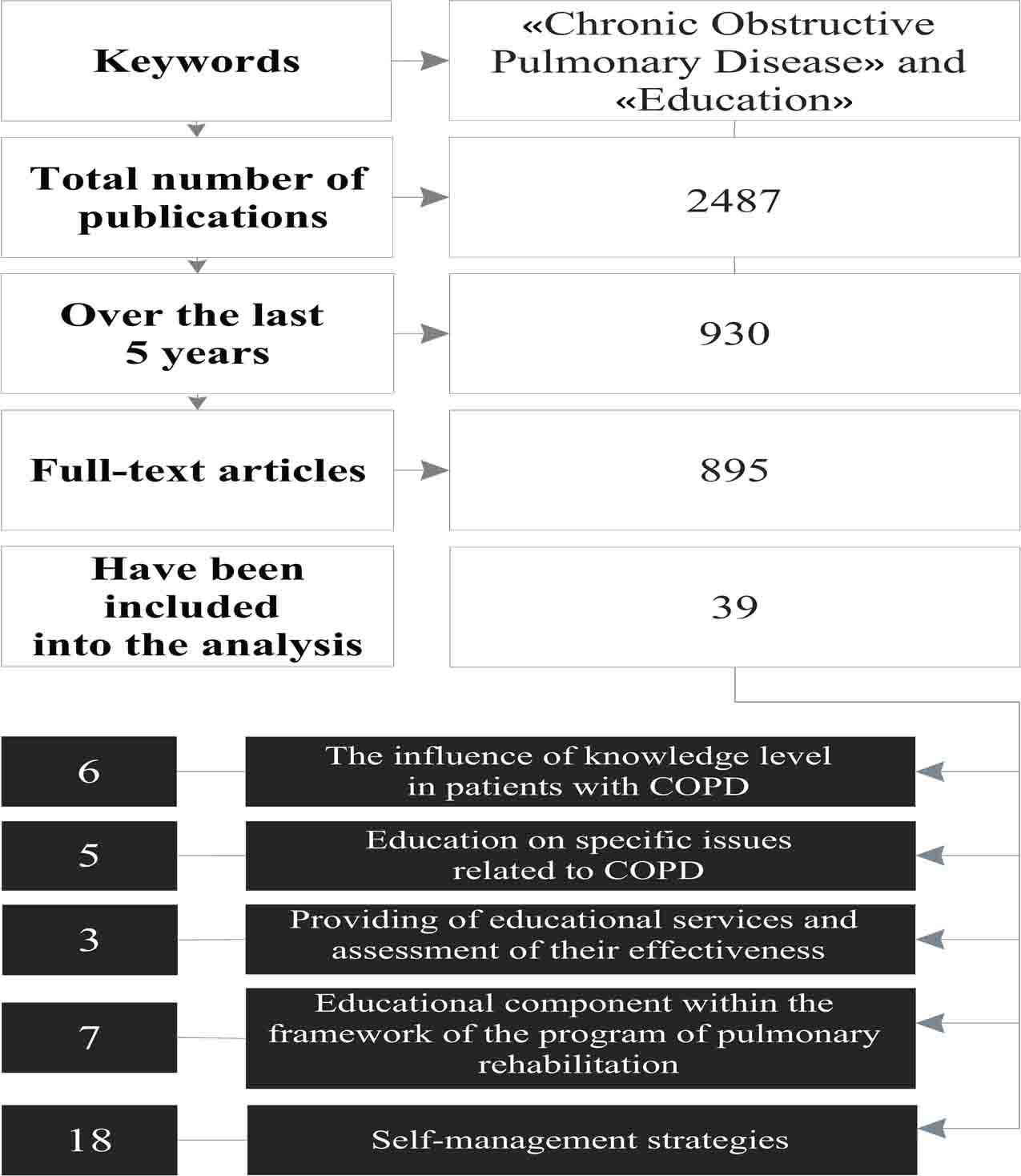
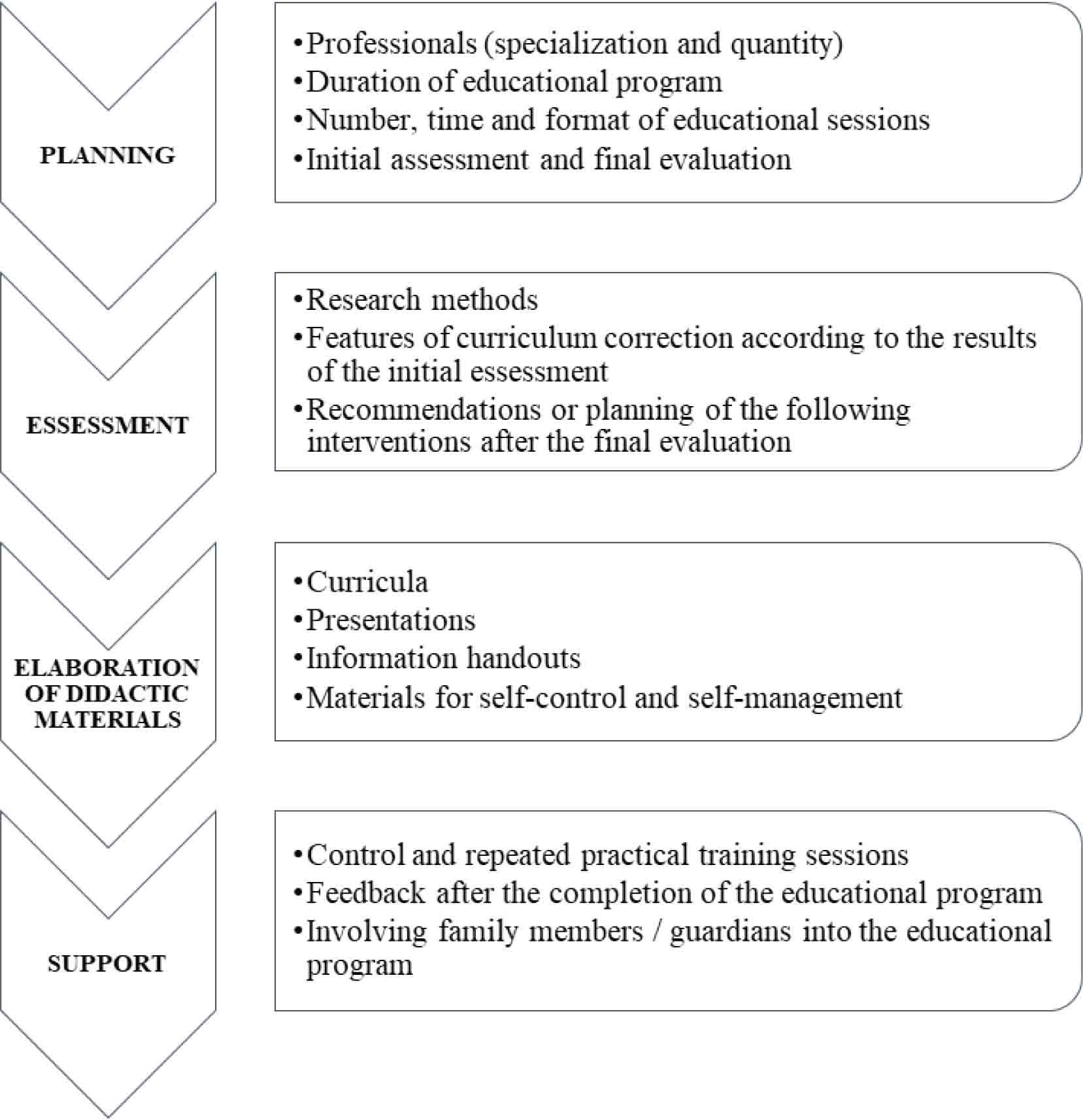
Fig. 2.
The results of selected educational issues related to COPD
| No. | Authors, year, country | Type of research/aim of research | Number of participants and sex; age (years old) | Research methods | Description of educational methodology |
|---|---|---|---|---|---|
| 1 | Windisch W. et al., 2018, Germany [13] | Randomized controlled trial/Compare the effectiveness of learning with the use of web video with individual instructions for the correct inhalation technique | 74♂ + 78♀; 66.6 (7.7)*–68.2 (9.1) | Checklists of the correct inhalation technique (https://www.atemwegsliga.de) | Individual instructions provided by the doctor. Web videos provided by Deutsche Atemwegsliga demonstrating proper inhalation techniques |
| 2 | Purohit A.N. et al., 2017, India [15] | Prospective, continuous, interventional, comparative study/Evaluate the impact of such training activities as a demonstration of a researcher’s technique and information sheets on the use of a metered-dose inhalers (MDI) | 65, ND; 49.47 (1.95)–44.70 (2.19) | WHO Guidebook | Demonstration of the technique of using the inhaler, cards with a graphic representation of the correct technique of using an inhalation device |
| 3 | Beatty C.R. et al., 2017, USA [14] | Prospective experimental study/To investigate the influence of the level of medical literacy on inhalation technique | 120, ND; 18–89 | Medical literacy questionnaire – REALM-SF. Checklist for a correct use of an inhaler | Specially designed handout material that takes into account the specific types of inhalers and the level of medical literacy, a standard handout that is used in hospitals |
| 4 | Takaku Y. et al., 2017, Japan [17] | Prospective study/Evaluate the number of instructions needed to minimize mistakes when using inhalers of different types | 74♂ + 7♀; 72 (7) | Checklists for assessing the correct use of the inhaler | Repetitive testing of practical skills, evaluation of the effectiveness of the acquired knowledge (2-5 times with intervals from 2 weeks up to 1 month until the maximum possible positive result is achieved), instructions |
| 5 | Bouwmeester C. et al., 2015, USA [16] | Observation/Assess the patient’s ability to demonstrate and maintain appropriate methods of administering inhaled medication after training provided by a pharmacist | 36, ND; 81 (10.05) | Hickey’s Pharmacies Inhaler Technique assessment | Training session with a pharmacist on the use of an inhaler, evaluation of its performance |
Provision and effectiveness of educational services for people with COPD
| No | Authors, year | Type of research / goal of research | Number of participants and sex; age (years old)/subject of study | Research methods | Organization of educational services or research findings |
|---|---|---|---|---|---|
| 1 | Ward S., Sewell L., Singh S., 2018, UK [20] | Comparative follow-up study/Evaluate the quality of providing educational services in the form of a DVD presentation | 64♂ + 59♀; 68.00 (10.04)*–71.26 (10.19) | BCKQ questionnaire | Conducted by: members of a multidisciplinary team (pulmonologist, occupational therapist, nurse of respiratory medicine, physical therapist, psychologist, dietician, and pharmacist). |
| 2 | Bhattacharyya P. et al., 2018, India [19] | Clinical study/Evaluate the effectiveness of self-study and intensive one-session training under the guidance of specialists based on a simple training program for patients | 62♂ + 28♀; 62 (9)–71.26 (10.19) | CAT | As part of one-day training camp. Themes: information on COPD and the importance of smoking cessation, pharmaceutical information, the correct use of inhaled medicines, the importance of treatment for COPD-related diseases, proper and appropriate food and hygienic interventions (including bronchial hygiene), general exercises and exercises with particular emphasis on walking and breathing |
| 3. | Stellefson M. et al., 2014 [21] | Heuristic evaluation/Analyze the content of video materials related to COPD and located on YouTube | 223 video materials | 3 experts who have experience in web design and health technology have estimated the functionality of the prototype of the COPDFlix Social Resource Center | The following main recommendations were given for eliminating barriers in using the website: use a simpler language for potential website users, include website map and highlight active hyperlinked items |
Recommendations on the implementation of the educational component in pulmonary rehabilitation programs based on the results of modern scientific researches
| No. | Recommendation | Implementation | Goal | |
|---|---|---|---|---|
| 1 | Attract professionals of different specialties for elaborating and implementing educational programs | Specialists |
| the involvement of professionals in certain specialties will enable the educational materials to be presented as efficiently as possible, and individual characteristics of patients with COPD should be considered |
| 2 | Additionally assess the knowledge level, self-management behavior, and psycho-emotional state before the implementation of the educational component of rehabilitation | Assessment |
| Definition of the initial level, elaboration of topics according to relevance for inclusion in the curriculum, the extraction of unnecessary or in-depth information from the curriculum, solving the issue with the method of training and providing training materials |
| 3 | Choose the most convenient for the patient methods and organization of training and ways to provide training materials | Educational methods |
| Cost-effective, result-oriented learning that reaches |
| Ways of providing learning materials |
| |||
| 4 | Provide patients with the opportunity to maintain the achieved level upon completion of the educational program | Methods |
| Achieving the maximum effect and availability of learning for each patient |
| 5 | Involve patients in choosing and planning strategies | Occurs at the stage of initial assessment and definition of curriculum purpose and objectives | Increase understanding and motivation, and patient’s active participation in the treatment, pulmonary rehabilitation, and self-management | |
| 6 | Operate the maximum amount of educational topics for a flexible choice according to patients’ needs | It is expedient to choose the subjects of studies after determining the knowledge level, and take into consideration the patient’s vision of the sphere where he/she is most in need of information | To improve the individual approach to the implementation of an educational component of a pulmonary rehabilitation program | |
| 7 | Include self-management strategy for improving efficiency | Main components |
| Increase the effectiveness of treatment and rehabilitation, prevent exacerbations, optimize financial savings |
Publications devoted to the educational component within the framework of a pulmonary rehabilitation program
| No. | Authors, year, country* | Type of research/goal of research | Number of participants and sex; age (years old)/subjects for study | Number of participants / Research methods | Content and organization of the educational component or research findings |
|---|---|---|---|---|---|
| 1 | Gardener A. C. et al., 2018 [25] | A systematic review of literature/Determine the full range of needs for the support of patients with COPD | 31 articles | The review was conducted in accordance with the PRISMA recommendations, publications from January 1996 to February 2016 were considered | a complex set of areas of necessary support for patients with COPD has been identified according to the patients’ views |
| 2 | Chaplin E. et al., 2017, UK [29] | Randomized controlled trial/Evaluate whether web-based pulmonary rehabilitation programs can be an alternative to conventional programs | 103 participants: 71♂ + 32♀; 66.1 (8.1)**–66.4 (10.1) | Physical performance has been assessed (ISWT and ESWT), chronic respiratory self-esteem from (CRQ-SR), anxiety and depression scale (HADS), evaluation of COPD manifestations (CAT), PR Adapted self-efficacy index (PRAISE), evaluation of COPD knowledge (BCKQ), quality of life(EQ-5D-5L), patient cost questionnaire | Duration of the program of pulmonary rehabilitation 6–8 weeks. |
| 3 | Garvey C. et al., 2018 [30] | Review/Describe the options for a home-based pulmonary rehabilitation program | Electronic databases MEDLINE, CINAHL, EMBASE, AMED, PubMed, Cochrane, PEDro | The search strategy applied in MEDLINE was adapted for other databases | The need for personalized, affordable, and effective pulmonary rehabilitation at COPD will stimulate the development of devices, platforms, and programs in order to meet these essential needs and gaps in treatment. |
| 4 | Wilson A.M. et al., 2015, UK [24] | Randomized controlled trial/Rate the support program after the completion of pulmonary rehabilitation | 148 participants: 91♂ + 57♀; 67.3 (15.1)–69.3 (8.9) | CRQ questionnaire, clinical test ESWT, EQ5D questionnaires, HADS, a diary of physical activity | The support program consisted of one session lasting 2 hours, held every 3 months, including 1 year of learning and 1 year of training |
| 5 | Kiongera G.M., Houde S.C., 2015, UK [27] | Clinical study/Evaluate the effectiveness of the in-patient program for pulmonary rehabilitation for patients with COPD in an institution of long-term care | 23 participants: 11♂ + 12♀; 68–72. | Physical performance (6MWD), dyspnea rate (Borg scale CR10), quality of life (SGRQ), satisfaction survey form | The 6–8 weeks program, which consisted of 24 series of activities. |
| 6 | Desveaux L. et al., 2015 [26] | Systematic review/To describe the international experience of providing pulmonary rehabilitation, and to compare its structure and indicators in different countries | 7 studies | The review was conducted in accordance with PRISMA recommendations, publications published before September 2013 were considered | The current availability of PR programs service less than 1.2% of individuals living with COPD across seven countries with wealthy economies |
| 7 | Marques A. et al., 2015, Portugal [28] | Randomized controlled trial/Study the effects of a family program of pulmonary rehabilitation on COPD management | 42 couples (a person with COPD and a family member): 28♂*** + 14♀; 65.9 (13.4)–68.8 (7.3) | Functional balance (“Get up and go” test), estimation of shin extensor’s force, quality of life (SGRQ) | Duration of the program of pulmonary rehabilitation – 12 weeks. The program consisted of training, psychological support, and education, conducted in primary care centers. Family members attended sessions of psychological support and training along with patients with COPD |
Analysis of articles devoted to the impact of knowledge level on various aspects of health and life
| No. | Authors, year, country | Type of research / goal of research | Number of participants ansd sex; age (years old) | Research methods | The content of the educational program or research results |
|---|---|---|---|---|---|
| 1 | Hua Yang et al., 2019, China [7] | Observation/Determination of the relationship between the knowledge level on the disease and the level of self-management | 246♂ + 100♀; 44–86 | COPD-Q and CSMS questionnaires | It was found that the knowledge level on COPD correlates with the level of self-management behavior. |
| 2 | Abdulsalim S. et al., 2018, India [9] | Randomized controlled clinical study/Evaluating the effectiveness of the pharmacist’s clinical intervention on the patient’s commitment to treatment | 194♂ + 12♀; 61.1. (8.4)*–60.6 (7.9) | MAQ questionnaire | Consultation sessions (15–20 min) and information leaflets on the following essential indications: adhere to medical therapy, measure out in doses and take medication on time, need to quit smoking, do exercises, use inhalers properly and detect illness rapidly |
| 3 | Collinsworth A.W. et al., 2018, USA [8] | Prospective randomized pilot study/Evaluate the feasibility of the developed educational program | 128♂ + 180♀;44–86; 70.9 (12.5)– 70.0 (11.9) | Patient Activation Measure and CAT questionnaires | An educational program is aimed at obtaining basic knowledge about COPD and participation in the planning of self-management activities (15–30 min) and planned telephone conversations. Participation in planning in collaboration with patients provided a common choice of patient’s most significant on their opinion strategies for preserving health and preventing exacerbations. |
| 4 | Schüz N. et al., 2015, Australia [11] | Randomized controlled study/Studying the effect of anxiety and depression in patients on the effectiveness of a rehabilitation program | 182; ND, >45 | Questionnaires by HADS, Partners in Health Scale; axonometry | 16 conversations over the phone for 12 months. The topics of conversations concerned 5 components of self-management. |
| 5 | Zhang Q. et al., 2014, China [10] | Cross-sectional study/Study the knowledge of COPD as a risk factor for anxiety and/or depression in patients with COPD, links between levels of knowledge, functionality, and quality of life | 327♂ + 32♀; 65.64 (7.60) | Dyspnea scale mMRC; HADS, CAT, BCKQ; 6MWD questionnaires | A higher score has been correlated by HADS with a lower COPD level. Critical issues of COPD that are a risk factor for anxiety and/or depression in patients with COPD are epidemiology, and infection |
| 6 | Nakken N. et al., 2017, Netherlands [12] | Cross-sectional study / Comparing the knowledge level of illness in patients and their guardians | 194** 102♂ + 92♀; 66.0 (8.7) | The questionnaire with 34 statements, formulated by a multidisciplinary group of pulmonary rehabilitation | Patients and their guardians have limited knowledge of COPD and overall health status. Patients should be educated with their guardians, which will be useful in terms of improving management strategies, strengthening relationships, and organizing behavioral changes. |