Have a personal or library account? Click to login
Viral Metagenomics of the Bharal (Pseudois nayaur) within the Qinghai-Tibet Plateau Revealed Diverse Viruses Cover

Viral Metagenomics of the Bharal (Pseudois nayaur) within the Qinghai-Tibet Plateau Revealed Diverse Viruses

Open Access
|Jun 2025

Figures & Tables

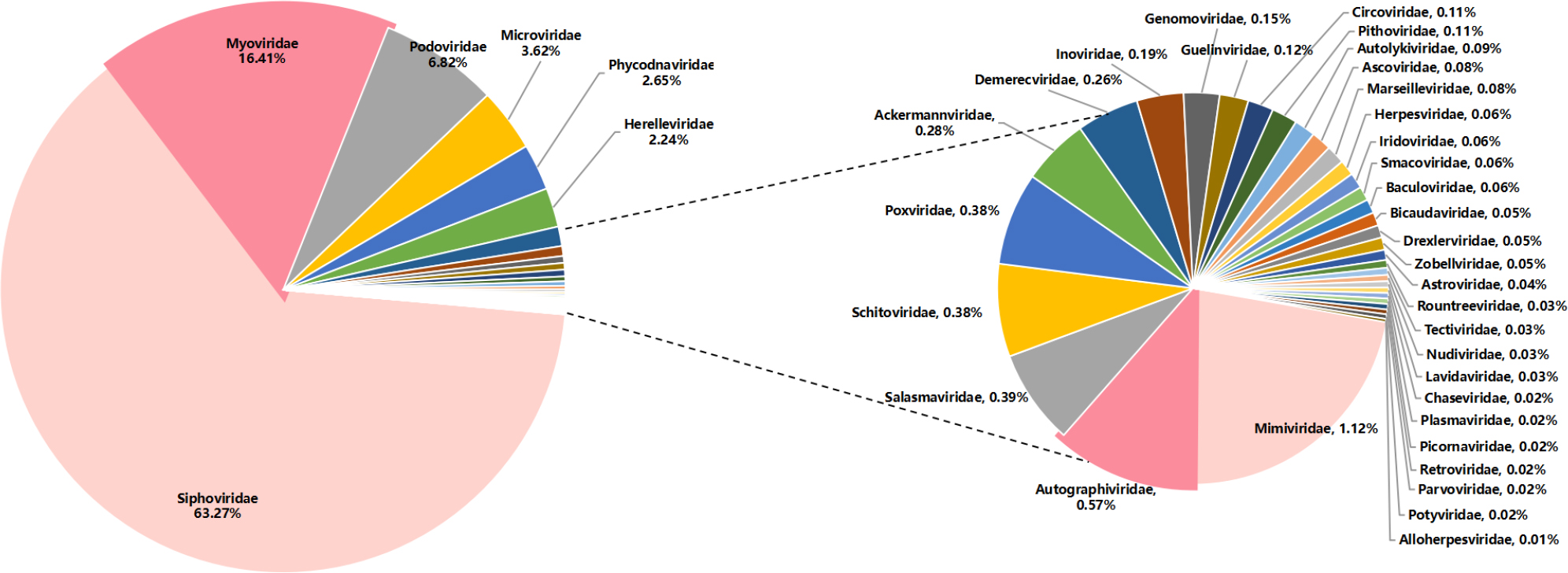
Fig. 1.

Viral composition of all libraries at the family level.
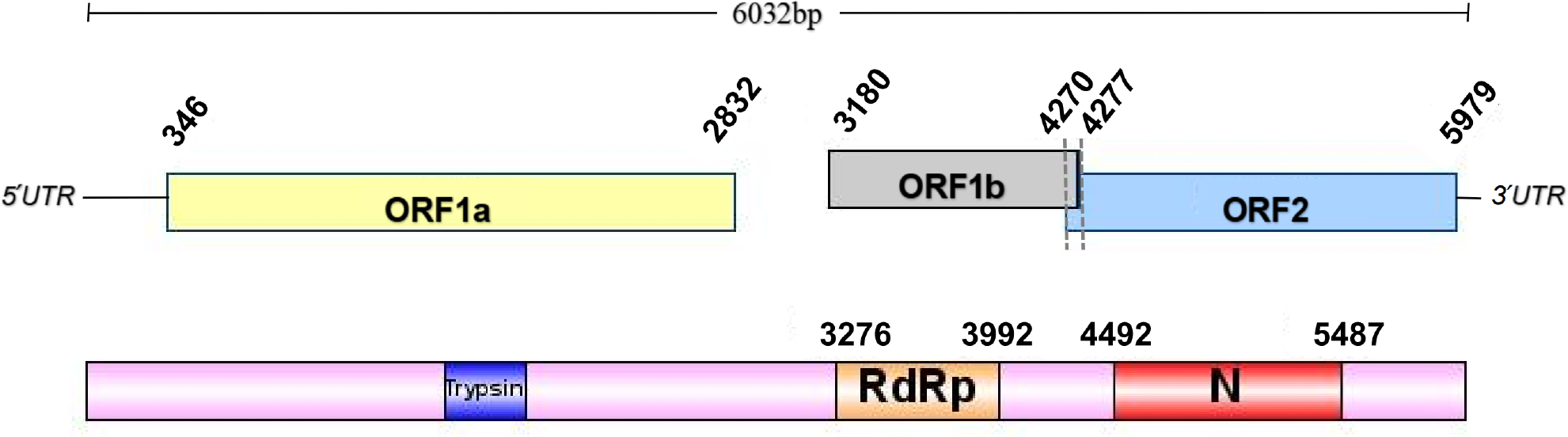

Fig. 2.

Genomic structure of QTPAstv. The conserved ribosomal frameshift site is marked.
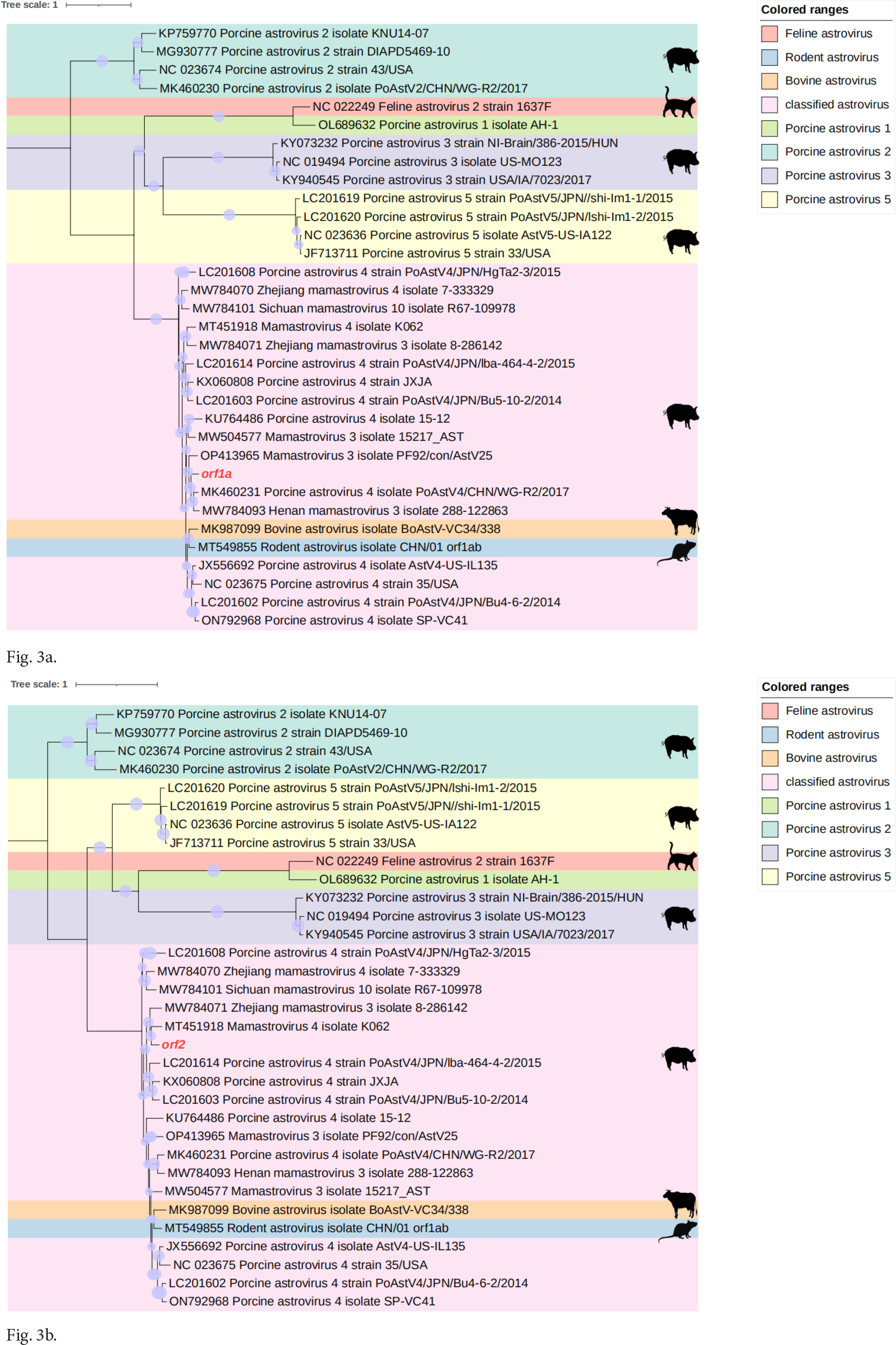

Fig. 3.

Phylogenetic analysis of QTPAstv. The maximum likelihood tree was constructed based on the nucleotide sequences of ORF1a and ORF2. Red branches represent the newly discovered viruses in this study.
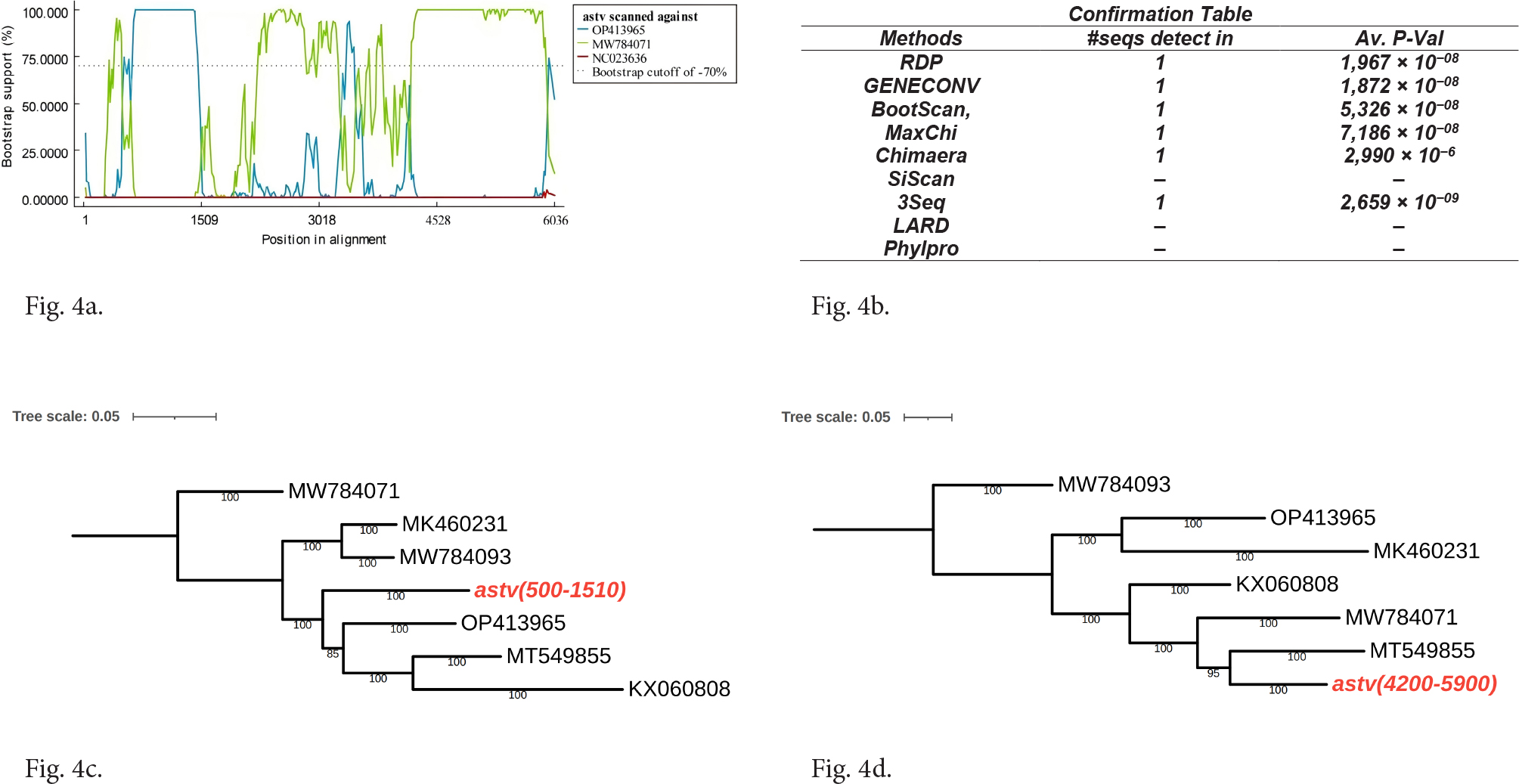

Fig. 4.

Recombination analysis of QTPAstv.
a) Manual BootScan methods on evidence of recombination events occurring with a window size of 200, a step size of 20, and a model of 100 Bootstrap replications. Manual BootScan methods selected QTPAstv as the query, NC023636 as the distantly related sequence, and OP413965 and MW784071 as the parents. b) The confirmation table shows the support obtained by the algorithms for the identified recombination events. c), d) Phylogenetic trees were constructed in the 500–1500 nt and 4200–5900 nt regions respectively.
Recombination analysis of QTPAstv. a) Manual BootScan methods on evidence of recombination events occurring with a window size of 200, a step size of 20, and a model of 100 Bootstrap replications. Manual BootScan methods selected QTPAstv as the query, NC023636 as the distantly related sequence, and OP413965 and MW784071 as the parents. b) The confirmation table shows the support obtained by the algorithms for the identified recombination events. c), d) Phylogenetic trees were constructed in the 500–1500 nt and 4200–5900 nt regions respectively.

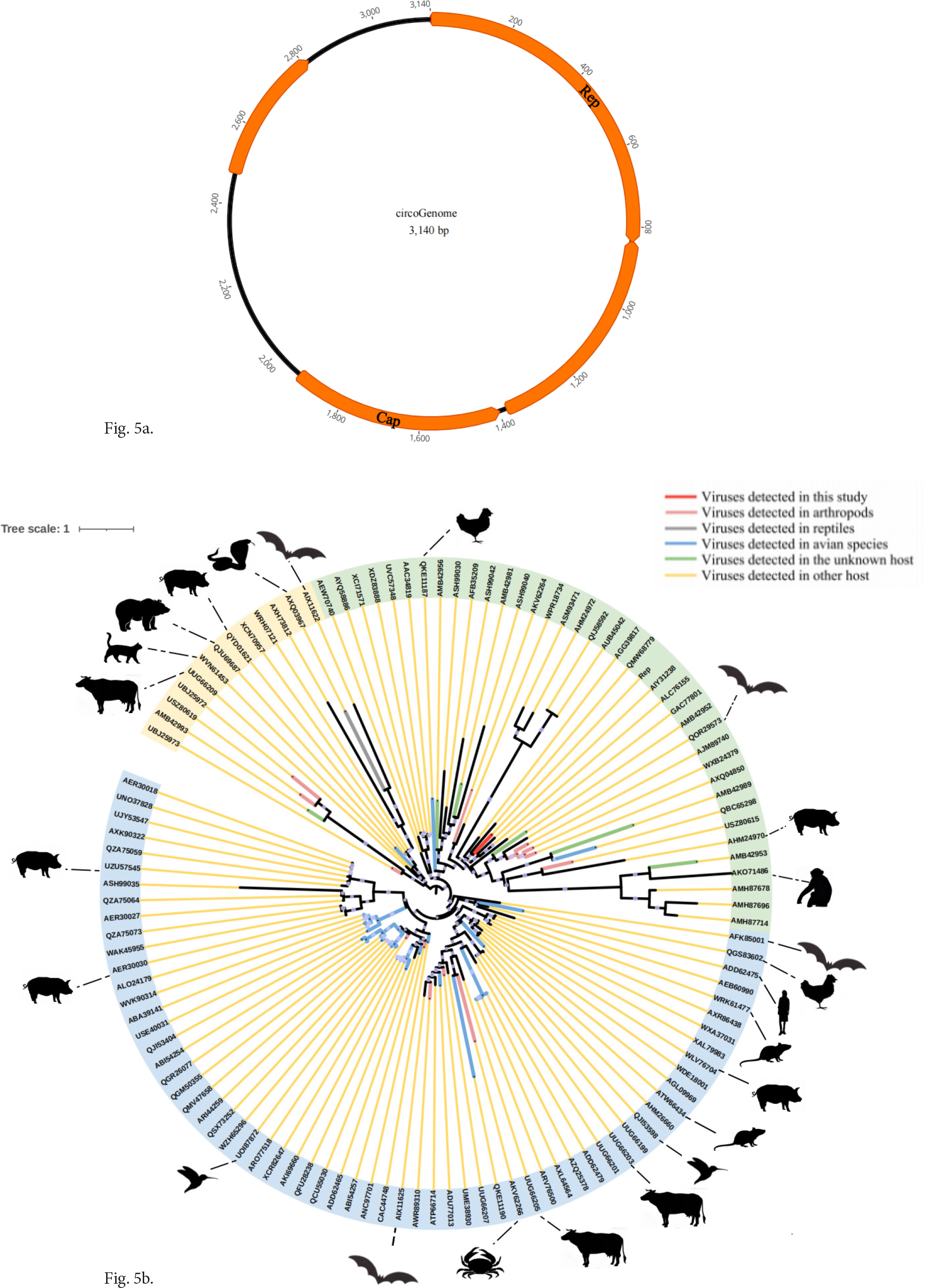
Fig. 5.

Novel circovirus identified in the feces of wild bharals.
a) Genome organization of circovirus. b) Identification and phylogenetic analysis of the Circoviridae family in the gut of the bharal. The Rep protein sequence of the Circoviridae family should be used to construct a maximum likelihood tree.
Novel circovirus identified in the feces of wild bharals. a) Genome organization of circovirus. b) Identification and phylogenetic analysis of the Circoviridae family in the gut of the bharal. The Rep protein sequence of the Circoviridae family should be used to construct a maximum likelihood tree.
DOI: https://doi.org/10.33073/pjm-2025-012 | Journal eISSN: 2544-4646 | Journal ISSN: 1733-1331
Language: English
Page range: 143 - 152
Submitted on: Nov 15, 2024
Accepted on: Apr 9, 2025
Published on: Jun 18, 2025
Published by: Polish Society of Microbiologists
In partnership with: Paradigm Publishing Services
Publication frequency: 4 issues per year

© 2025 ERCONG ZHANG, GA GONG, SHIYIN HUANG, YINGYING BAO, LIKAI JI, SHIXING YANG, QUAN SHEN, XIAOCHUN WANG, PING WU, YUWEI LIU, WEN ZHANG, published by Polish Society of Microbiologists
This work is licensed under the Creative Commons Attribution-NonCommercial-NoDerivatives 4.0 License.