Have a personal or library account? Click to login
Mechanisms of Rapid Bactericidal and Anti-Biofilm Alpha-Mangostin In Vitro Activity against Staphylococcus aureus Cover

Mechanisms of Rapid Bactericidal and Anti-Biofilm Alpha-Mangostin In Vitro Activity against Staphylococcus aureus

Open Access
|Jun 2023

Figures & Tables

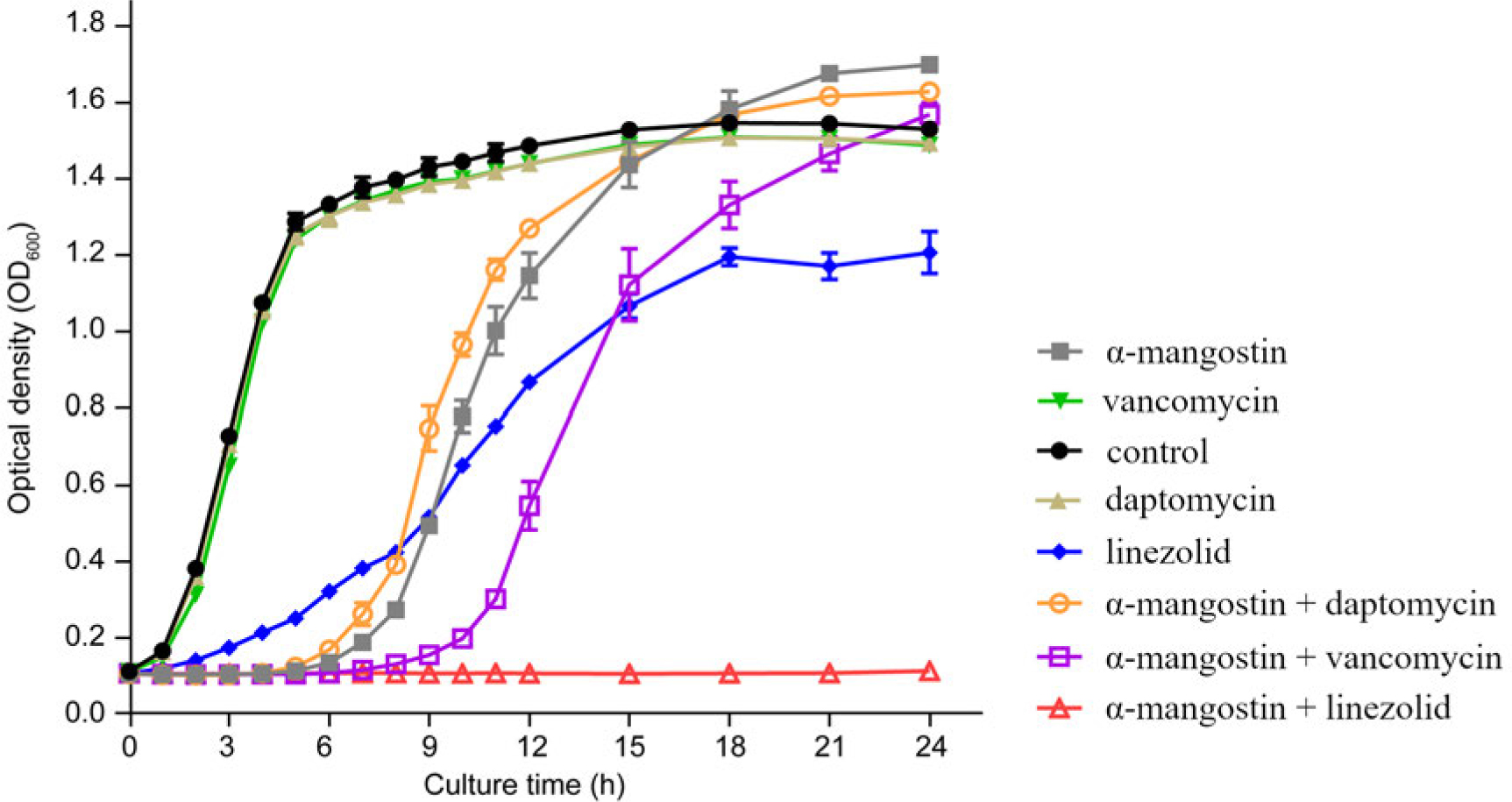
Fig. 1.

The effect of sub-MIC of α-mangostin on the growth of Staphylococcus aureus planktonic cells. S. aureus SA113 was treated with α-mangostin, daptomycin, vancomycin, linezolid, and their synergistic combinations (½ × MIC), and the growth of planktonic cells was detected by optical density at 600 nm (OD600). The data presented was the average of three independent experiments (mean ± SD). MIC, minimum inhibitory concentration.
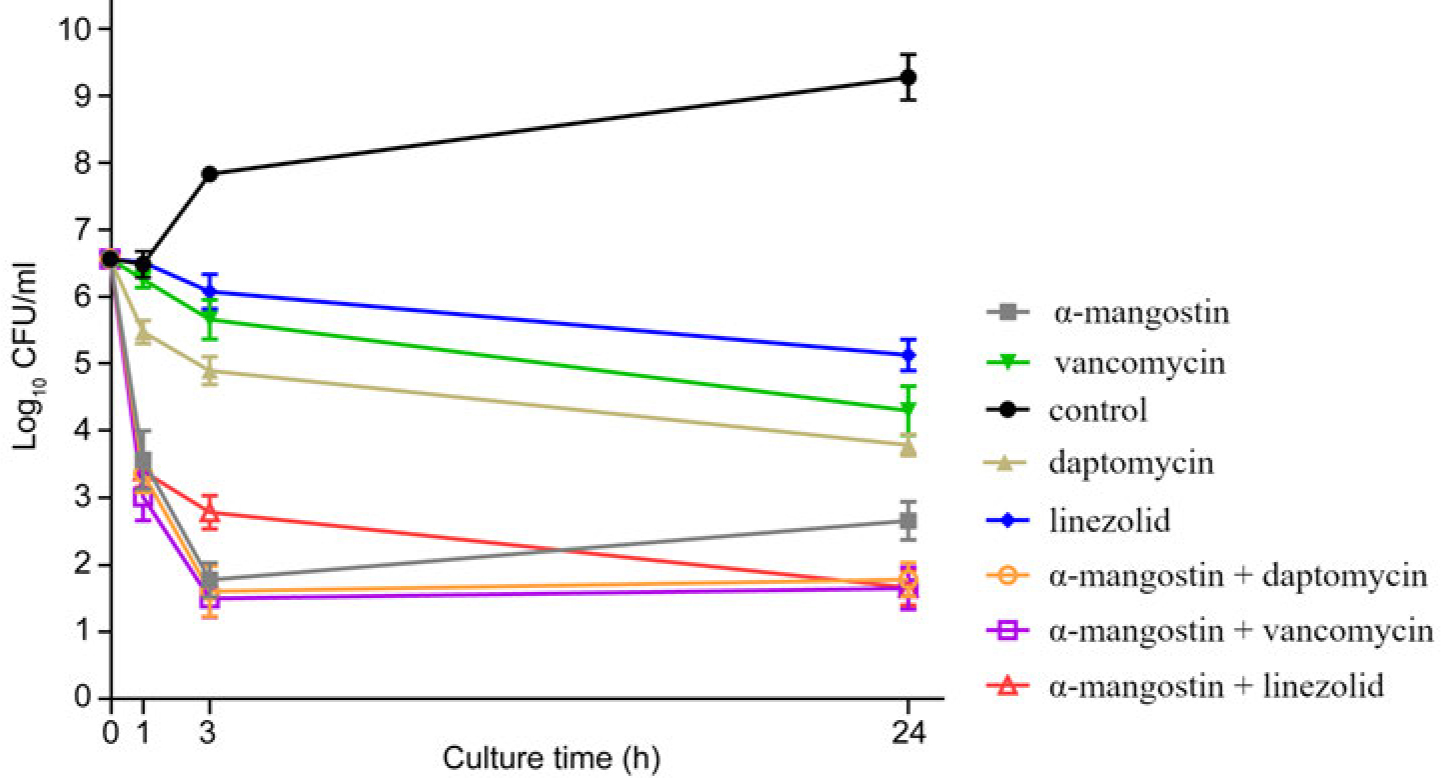
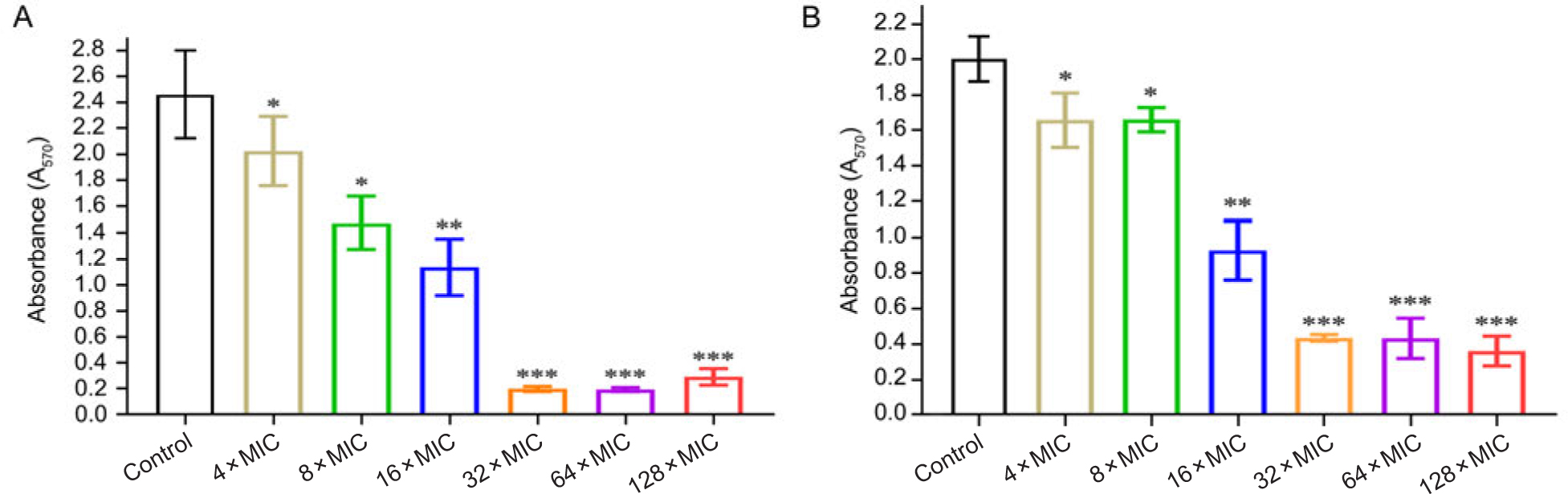
Fig. 2.

The antibacterial effect of α-mangostin on the planktonic cells of Staphylococcus aureus. S. aureus SA113 during logarithmic growth phase was treated with α-mangostin, daptomycin, vancomycin, linezolid, and their synergistic combinations (4 × MIC), the remaining planktonic cells were enumerated. The data presented was the average of three independent experiments (mean ± SD). MIC, minimum inhibitory concentration.

Fig. 3.

Effect of different concentrations of α-mangostin on Staphylococcus aureus biofilms.
A) S. aureus SA113 and B) YUSA145 formed mature biofilms, then were treated with different concentrations of α-mangostin for 24 h. The remaining biofilm biomass was determined by crystal violet staining. The data presented was the average of three independent experiments (mean ± SD). Compared with control: *p < 0.05; **p < 0.01; ***p < 0.001; Student’s t-test. MIC – minimum inhibitory concentration

Effect of different concentrations of α-mangostin on Staphylococcus aureus biofilms. A) S. aureus SA113 and B) YUSA145 formed mature biofilms, then were treated with different concentrations of α-mangostin for 24 h. The remaining biofilm biomass was determined by crystal violet staining. The data presented was the average of three independent experiments (mean ± SD). Compared with control: *p < 0.05; **p < 0.01; ***p < 0.001; Student’s t-test. MIC – minimum inhibitory concentration

Fig. 4.

Schematic illustration of the SNPs in the sarT gene of the α-mangostin non-sensitive Staphylococcus aureus isolate. There were 35 SNPs located on both sides of the sarT gene, 10 SNPs in the sarT gene included one non-synonymous mutation (in red) and nine synonymous mutations.
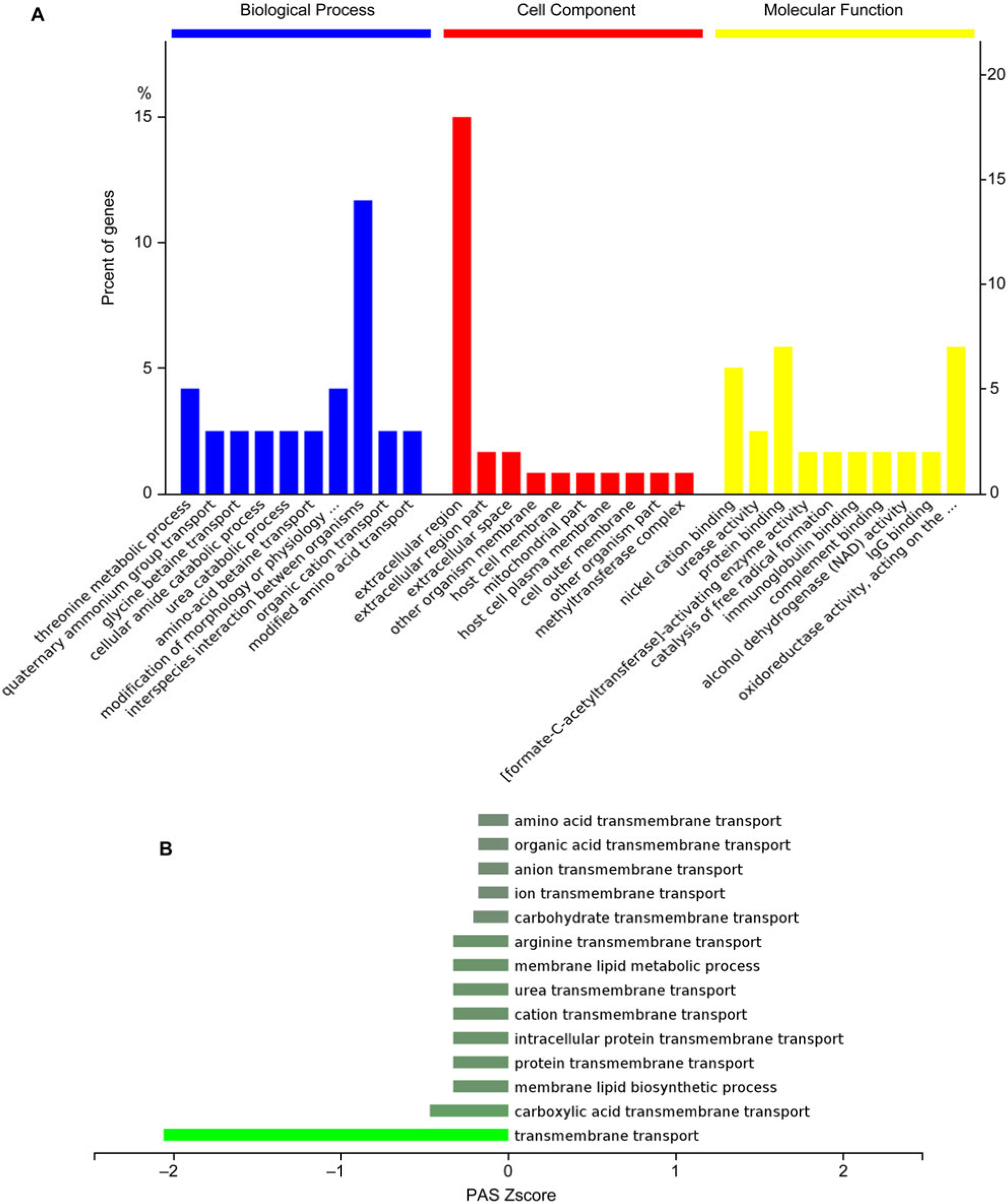

Fig. 5.

The different abundance proteins in-α-mangostin-treated Staphylococcus aureus isolate.
A) The molecular functions of different abundance proteins were classified by the GO analysis; B) different abundance proteins related to cell membrane synthesis and transport of biological process.
The different abundance proteins in-α-mangostin-treated Staphylococcus aureus isolate. A) The molecular functions of different abundance proteins were classified by the GO analysis; B) different abundance proteins related to cell membrane synthesis and transport of biological process.

Fig. 6.

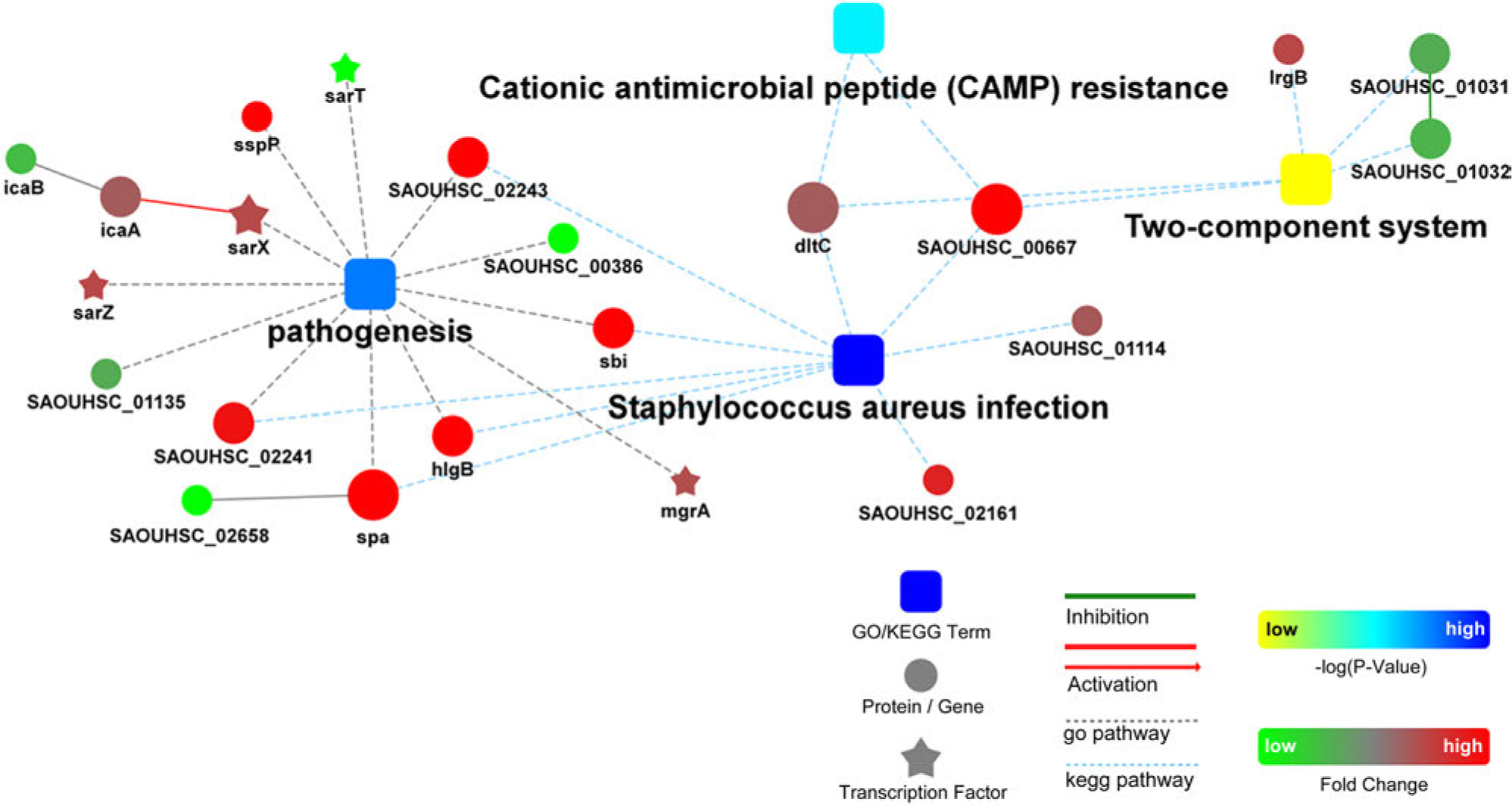
Protein-protein interaction network of different abundance proteins in α-mangostin-treated Staphylococcus aureus isolate. The protein-protein interaction network of different abundance proteins was analyzed through STRING database.
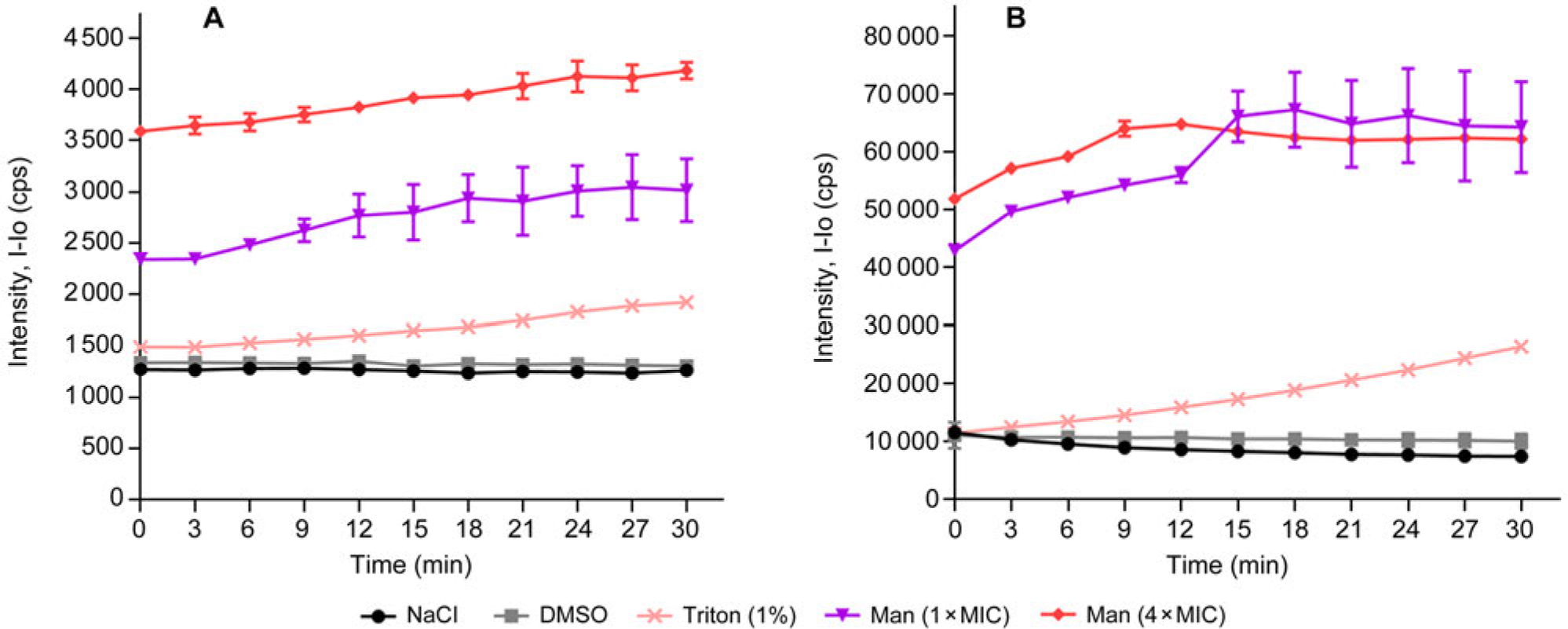

Fig. 7.

The fluorescence intensity was significantly increased in α-mangostin-treated Staphylococcus aureus isolate. S. aureus SA113 was treated with α-mangostin, and staining with A) propidium iodide or B) bis(1,3-dibutylbarbituric acid) trimethine oxonol to evaluate the integrity of S. aureus cell membrane. The results were expressed in a relative fluorescence units. The data presented was the average of three independent experiments (mean ± SD).

Staphylococcus aureus susceptibility to α-mangostin_

S. aureusThe MICs (μM) of α-mangostin
1.563.136.25MIC50/MIC90
MSSA (n = 190)16163113.13/3.13
MRSA (n = 138)13117  83.13/3.13
DOI: https://doi.org/10.33073/pjm-2023-021 | Journal eISSN: 2544-4646 | Journal ISSN: 1733-1331
Language: English
Page range: 199 - 208
Submitted on: Jan 27, 2023
|
Accepted on: Apr 16, 2023
|
Published on: Jun 14, 2023
In partnership with: Paradigm Publishing Services
Publication frequency: 4 issues per year

© 2023 Xiangbin Deng, Hongbo Xu, Duoyun Li, Jinlian Chen, Zhijian Yu, Qiwen Deng, Peiyu Li, Jinxin Zheng, Haigang Zhang, published by Polish Society of Microbiologists
This work is licensed under the Creative Commons Attribution-NonCommercial-NoDerivatives 4.0 License.