
This research is the culmination of collaborative efforts among three scientists and practitioners covering technical, economic, and multidisciplinary management fields. Together, they have delved into theories and explored existing practices to address a significant, yet concealed challenge faced by many countries, especially South Eastern European countries - an escalating percentage of penalties that must be repaid to the European Commission due to project failures. Researchers of this paper addressed burning challenges of project management leadership in digital world, themes like digital transformation, role of leadership in project management challenges and overall project success. The findings of this research demonstrate a deficiency in knowledge and education within the field of project management and specific knowledge related to EU funds. The effectiveness of project management and public leadership is intricately intertwined, with robust leadership being imperative for successful project management (see Figure 1). A public leader equipped with the requisite skills and knowledge significantly contributes to the timely completion of projects, adherence to budget constraints, and satisfaction of stakeholders. This entails not only possessing technical project management skills but also the ability to communicate effectively, mitigate project failures, address conflicts, and motivate teams towards organizational effectiveness (Zada et al., 2023). Project failures pose significant challenges for public sector organizations and their leaders, resulting in financial losses, reputational damage, and adverse impacts on public services. Understanding how to adeptly handle failure is crucial for public leaders, as it can minimize its impact on the organization and its stakeholders. For instance, a published report reveals that Pakistan incurred a $100 million fine from the Asian Development Bank (ADB) for falling short in executing a specific number of public projects over the preceding 15 years (Asian Development Bank, Asian Development Outlook (ADO, 2021). This underscores the importance of effective implementation of the project leader’s role. In Pakistan, poor leadership in implementing donor-funded projects has resulted in substantial financial penalties, amounting to about $100 million over the past 15 years, paid by different governments since 2006. Thus, public leadership assumes a pivotal role in aligning public projects, clearly defining goals, and enhancing project efficiency (Zada et al., 2023). Understanding how to adeptly handle failure is crucial for public leaders, as it can minimize its impact on the organization and its stakeholders. For example, a report by the European Court of Auditors from 2021 reveals that the error rate in EU budget expenditure for 2021 was 3.0%, highlighting the need for improved management of EU-funded projects (European Court of Auditors, 2021). Similarly, Bulgaria faced financial corrections of over €38 million in 2023 due to irregularities in the implementation of an EU-funded railway infrastructure project (European Anti-Fraud Office (OLAF), 2023). Another relevant case is Croatia, where challenges in project implementation within the environmental and transport sectors have impacted the efficient utilization of EU funds. A 2023 European Commission report highlights that the share of renewable energy in Croatia’s transport sector was only 7% in 2021, ranking among the lowest in the EU and significantly below the 14% target set for 2030. This suggests a need for better governance and strategic allocation of EU resources in key development areas (European Commission, 2023). Similarly, Hungary has received financial corrections exceeding €1,6 billion in the past decade, frequently due to non-transparent tendering processes and project mismanagement. A report by Transparency International Hungary (2015) found that many EU-funded projects were overpriced and subject to centralized control, raising concerns about inefficient spending and corruption risks (Transparency International Hungary, 2015). Furthermore, a 2021 European Commission report flagged concerns about judicial independence in Hungary, noting that weaknesses in legal oversight and accountability mechanisms may undermine the country’s ability to effectively manage EU funds (European Commission, 2021). Finally, Greece has also faced project suspensions and fund withdrawals, particularly in infrastructure development, due to non-compliance with EU regulations and inadequate project oversight. A European Commission report from 2020 identified challenges in the administration and implementation of EU-funded projects, stressing the importance of strengthening institutional capacity to prevent financial mismanagement European Commission (2020a). To meet the objectives of this work, we highlight the critical connection between project management effectiveness and public leadership, emphasizing the consequences of poor leadership on project outcomes. We provide relevant background information, steering clear of an exhaustive literature survey or summarizing results. Additionally, our research addresses the current gaps in understanding project management in the public sector, particularly concerning the role of digital transformation in enhancing project management effectiveness. By doing so, we contribute to the existing body of knowledge and shed light on aspects not fully explained by the current literature.

Theoretical model
Source: Zadaa et al (2023).
In the pursuit of effective project management in South-European countries and worldwide, stakeholders face myriad challenges. Alongside the mounting penalties imposed on countries for oversights in EU-funded projects, critical deficiencies in specific project management knowledge and persistently low motivation levels among public servants tasked with project delivery emerge as prominent concerns. The public service sphere is often characterized by perceived sluggishness, bureaucratic hurdles, and an atmosphere tinged with uncertainty (Nahod et al., 2023). In this intricate landscape, EU funds, while vital for development, introduce a layer of intricacy of their own. Numerous leadership theories exist. According to our research, two theories about leadership are closely linked with results of deep structural interviews. Digitalization in the public sector organization is necessary and, therefore, has to be driven by leaders whose behavior is described within the Situational Leadership Theory developed by Hersey et al. (2013). Situational Leadership Theory asserts that effective leadership is contingent on the situational context. It emphasizes that leaders should adapt their leadership style based on the readiness and maturity of their followers. This theory recognizes that different situations demand varying degrees of task and relationship-oriented leadership. Digitalization in the Public sector includes the transformation of work, requiring leaders who inspire and motivate their followers by encouraging creativity, innovation, and change that supports Transformational Leadership Theory (Bass, 1985). Transformational Leadership Theory focuses on the leader’s ability to inspire and motivate followers to exceed their own self-interests for the benefit of the organization. Transformational leaders are characterized by their vision, charisma, intellectual stimulation, and individualized consideration. This theory emphasizes the importance of leaders in shaping organizational culture and fostering innovation. Hambrick and Mason’s Upper Echelons Theory (UET) stand as one of the most influential perspectives in management research. Upper Echelons Theory, proposed by Hambrick and Mason, takes a cognitive perspective, suggesting that organizational outcomes are influenced by the background, experiences, and cognitive frames of top executives. It posits that leaders’ decisions are shaped by their unique interpretations of situations based on their individual characteristics, experiences, and perspectives. Namely, Upper Echelon Theory is a prominent framework in organizational behaviour and management that posits that the characteristics and attributes of top-level executives significantly influence organizational outcomes and decisions. Upper Echelon Theory underscores the pivotal role of top-level executives in driving the effectiveness of digital transformation projects in the public sector. Their beliefs, values, and decisions could shape the organizational environment, influencing how these initiatives are conceptualized, implemented, and managed. In the context of digital transformation and effective project management in the public sector, this theory holds relevance and importance. Here are several key ways in which Upper Echelon Theory is crucial here:
- ▪
Setting Organizational Goals and Objectives: The goals and objectives of digital transformation projects are often set by top-level executives. Their vision for the organization and understanding of the potential benefits of digital transformation drive the establishment of clear, measurable objectives.
- ▪
Strategic Decision-Making: Top-level executives, including senior managers and leaders in the public sector, play a pivotal role in making strategic decisions regarding the adoption and implementation of digital transformation initiatives. Their beliefs, experiences, and cognitive styles can shape the direction and focus of these initiatives.
- ▪
Resource Allocation: Executives are responsible for allocating resources, including budgets and personnel, for digital transformation projects. Their priorities and preferences influence the allocation decisions, determining the level of investment and attention given to these initiatives.
- ▪
Establishing a Culture of Innovation: Effective digital transformation requires a culture that embraces change and innovation. Top-level executives have the authority to shape organizational culture, and their commitment to and support for digital initiatives can foster an environment conducive to innovation.
- ▪
Risk-Taking and Adaptation: Digital transformation projects often involve a degree of risk. Executives’ risk tolerance, as well as their willingness to adapt to new technologies and methodologies, can significantly impact the organization’s approach to managing these projects.
- ▪
Influencing Stakeholder Perceptions: Top-level executives are often the public face of the organization. Their endorsement of digital transformation projects can enhance stakeholder confidence and legitimacy, which is crucial for garnering support and resources.
- ▪
Alignment with Organizational Strategy: The strategic direction set by top-level executives should guide the selection and prioritization of digital transformation projects. Ensuring that these initiatives align with the broader organizational strategy is essential for their success and integration into the overall mission.
- ▪
Overcoming Resistance to Change: Change management is a critical aspect of digital transformation. Executives’ ability to communicate the benefits of these initiatives, address concerns, and lead by example can help mitigate resistance from employees and stakeholders.
- ▪
Monitoring and Evaluation: Executives are responsible for overseeing the progress and outcomes of digital transformation projects. Their involvement in regular reviews and assessments ensures that projects stay on track and meet their intended objectives.
- ▪
Accountability and Responsibility: Ultimately, top-level executives are held accountable for the success or failure of digital transformation initiatives. Their commitment to these projects sends a strong signal about their organizational importance and priority.
This integrative approach provides a nuanced understanding of leadership effectiveness within organizations, considering both the situational and cognitive aspects that influence leadership dynamics (see Figure 2).
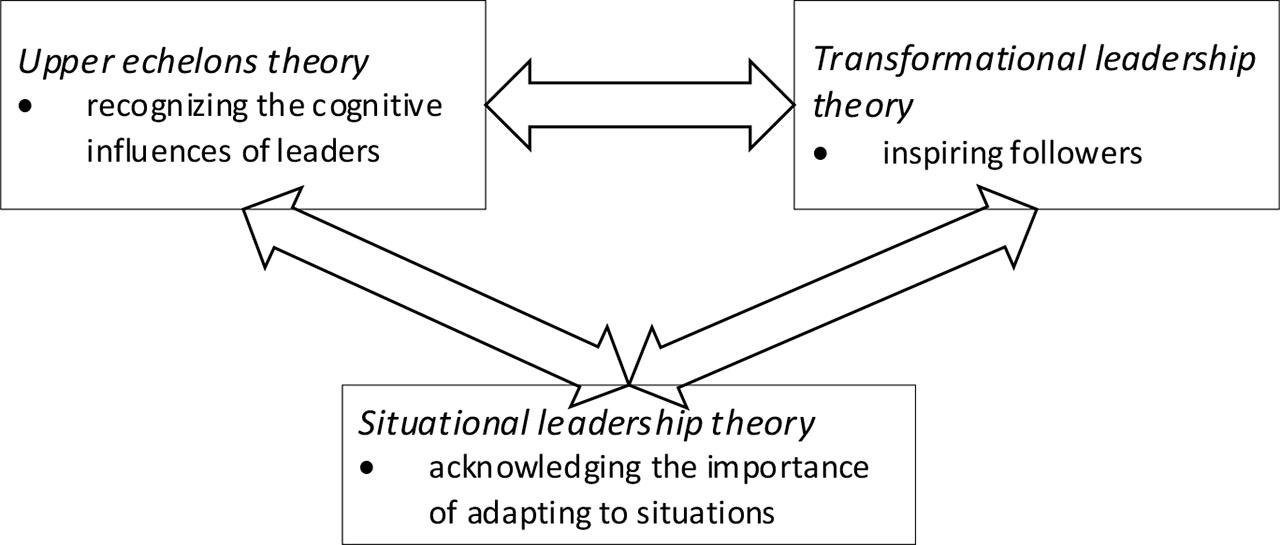
Dynamic nature of leadership
Source: Authors.
However, as the literature and its attendant reviews have become more numerous and specialized, discussion of the fundamental conceptual and methodological critiques levelled against research utilizing the UET perspective has grown fragmented (Brett et al., 2020). Moreover, the relationship between public leadership and goal clarity is moderated by top management support (Zada et al., 2023). Public leadership is crucial as it clarifies the stated, well-defined goals that improve the government and public organizations’ operations and tasks. Effective public leadership includes planning, efficiency, openness, and accountability, which are important contributing factors for project management effectiveness. Pakistan’s public sector, for example, spends a huge amount on developmental projects to improve the socio-economic conditions of societies. Most EU-financed projects have the same agenda: to develop the socio-economic state of society. Understanding what determines project management effectiveness is essential for public sector developmental projects. Complex and ill-defined problems require innovation and problem-solving competencies drawing upon an organizational knowledge base (Ruoslahti, 2020). However, the temporary and diverse nature of projects, pressure to complete, and a lack of incentive to improve project delivery make it difficult to create a culture of continuous innovation and knowledge flow. At the end of each project, employees are often moved on to the next project before analysing lessons learned from past experiences. The pressure on employees to deliver the project on time and within budget prevents them from making the necessary effort to meet and share the knowledge and experiences produced by previous projects (Love et al., 2005). Generally, there is a lack of literature about the connection between leadership and digital transformation in public sector organizations. Also, there is no clear definition of innovation in the literature. Taking into consideration a perspective of knowledge-based management, digitalization of the government is a milestone of innovation, better production, and transparency of public administration (Alvarenga et al, 2020). Public sector organizations differ from private sector organizations (Bejerot and Hasselbladh, 2013). Digital transformation of the public sector is linked to the aim of politicians to enhance transparency of their decisions and operations. Due to that, ambition to digitalize public services requires a set of managerial skills and services (Plesner et al., 2018). To enhance the digitalization of the public sector, one must be aware of the environment and build strong relationships between different stakeholders. Some private companies have faced the failure of their platform strategy when they underestimated the ecosystem’s value (Seo and Myeong, 2020). Moussa et al.’s findings increase understanding of the importance of enhancements of leadership in the Public sector organization and the influence of leadership on increasing the culture of innovation in the Public Sector organization (Moussa et al., 2018). Digital transformation in Public sector organization is necessary but not a smooth process. It is often associated with conflict and negative feedback (Di Giulio and Vecchi, 2023). Digital government transformation is considered as innovation, and innovation in public sector organizations is usually related to digital transformation. This process is important because it will help reshape governance to match societal needs (Sanina et al., 2023). According to the survey (Yücebalkan et al., 2018), with 4800 professional executives in 2015, digital transformation is more related to the development of strategy, culture, and leadership skills such as talent development opposite to technology. The main challenge is to keep up with the revolution of new technology. Results of the survey (Tolekiene et al., 2020) related to remote work (due to the pandemic) in one Lithuanian municipality imply that the supervisor has a key role in digitalization in Public sector initiative, implementing and supporting digitalization in public administration. Disruptive change such as digitalization requires leaders who will be open for change and highly motivate employees to accept the changes in the working process (Heiligenberg, 2020). Al-Khouri (2011) highlights the importance of strategic planning and leadership alignment in e-government transformations. Al-Khouri also identifies bureaucratic resistance and lack of leadership vision as major obstacles to effective e-government adoption. Alenezi (2022) argues that governments need to rethink traditional leadership approaches to successfully transition to digital governance models. Digital transformation in the public sector is not just about adopting new technologies but also about fostering organizational flexibility, innovation, and collaboration to create sustainable digital governance. This aligns with the findings of Yusuf et al. (2023), who emphasize that digital leadership has a positive and significant impact on digital transformation and, consequently, on organizational performance. Digitalization in public sector organizations and e-leadership can enhance transparency and offer citizens greater participation in local government decision-making (Nuryadin et al., 2023). Public sector organizations found themselves under high pressure from political leaders and citizens to do digitalization of their services and many initiatives of digitalization didn’t produce expected positive results (Jonathan, et al., 2020). Development of digitalization can be driven from two directions vertically and horizontally. Vertically through leadership of superiors of supervisions and horizontally through collaboration between colleagues. Vertical direction was not significant while working from home because supervisors couldn’t have direct contact with working team every day, thus the development of digital skills is more influenced by a horizontal approach (Zaenal, 2022). To address more effectively challenges of a need for digital transformation, leaders are required to develop a combination of human and digital skills. The focus must be on effective communication skills to foster digital initiatives and create better cohesion between geographically distant entities (Cortellazzo et al, 2019). Kearney (2023) highlights that successful digital transformations require a combination of top-down and bottom-up approaches. While top management sets the vision and strategy, employee engagement at all levels ensures the effective implementation of digital initiatives. This integration fosters a sense of ownership among employees, leading to higher engagement, efficiency, and innovation. Forbes (2019) emphasizes that digital transformation can be driven by a top-down approach, where leadership initiates changes, or a bottom-up approach, where employees at lower levels drive innovation. A combination of both approaches often results in a more successful transformation, as it provides strategic direction while simultaneously leveraging the creativity and initiative of employees. Leaders need to build the potential within the organization and external stakeholders with clarity of the vision and activities that will drive digital change of the organization. Digitalization of public administration will contribute more to the horizontal communication that refers to leadership of digitalization related to team effort within the organization and involving the surrounding stakeholders in a governance perspective (Kristensen and Andersen, 2023).
The research employs an interpretative methodological approach aimed at exploring the multifaceted role of leadership as an enabler of project success and digital transformation within public sector institutions. While a structured survey was administered among top- and middle-level public managers in Croatia to gather empirical insights into leadership effectiveness in EU-funded projects, this instrument functioned as a supportive component within a broader interpretative framework rather than as an independent quantitative design. Accordingly, the primary objective of the study is to understand and interpret leadership dynamics and managerial behaviour within the specific institutional and socio-economic context, rather than to perform purely statistical generalizations. During the analytical process, digital transformation emerged inductively as a significant contextual variable influencing leadership effectiveness and overall project performance. Although not initially conceptualized as a core construct, its recurrent prominence across managerial perceptions and theoretical interpretation warranted its explicit inclusion in the discussion and keyword taxonomy. This clarification ensures methodological coherence and conceptual alignment between the research aims, applied methods, and key findings, thereby strengthening the internal consistency of the study.
The researchers delved into the perceptions of stakeholders, recognizing that these perceptions inform future behaviour and actions. In order to explore managers’ perceptions of digital transformation and the success of EU-funded projects, thirty semi-structured interviews were conducted. The interviewees held roles most relevant to the nexus between digitalization and EU project management, including project managers, R&D managers, innovation managers, business improvement managers, and others in senior positions. Practitioners’ reflections on their experiences brought about a shift in their perspective and understandings. Examples of interview questions included: “Could you think of a few competences that are, in your private and professional opinion, important for the leader at the public service level?”, “What kind of support do you offer to your team?”, “How do you define leadership?”, “What are the biggest management challenges in the public sector?”, “In what way would you improve leadership in the public sector?”, “Could you please reflect on the extent to which you have the freedom to make radical changes in your department?”, and “Could you reflect on the rising percentage of penalties (year by year and it is growing) that country needs to give back to the European Commission? How can we improve? What do we need to change?” The interviews were conducted through an online survey. The analysis of the interviews involved a detailed examination of the answers, with a focus on noting and identifying patterns of common meaning. It included coding the textual material, identifying one or more passages that, in some sense, exemplify the same theoretical idea. The identified themes were cross-referenced across the interviews. The primary theme identified was the strong connection between Information Management (IM) and Knowledge Management (KM) in the ways practicing managers discussed their practices and experiences. The interview data were then analysed using the cognitive mapping technique, enabling an in-depth exploration of the identified themes. An interpretative methodology was employed in this research to assess the role of leadership as an enabler for digital transformation in the public service. This methodology considers value judgments and subjectivity provided in context. Additionally, Cognitive Mapping (CM) was utilized. CM, in this context, refers to one’s internal representation of the experienced world (Eden and Ackermann, 1998). It is a problem structuring method of the SODA (Strategic Options Development and Analysis) approach that has been developed through ‘JOURNEY Making’ (Jointly Understanding Reflecting and Negotiating strategy) (Eden and Ackermann, 1998). The idea of CM is based on Kelly’s (1991) personal construct theory, aiming to understand how people perceive their world by seeking to manage and control it (Eden, 2004). The objective of the analysis of the maps is to highlight the most important fields of concern from the perspectives of the key stakeholders. The content of a map can provide rich insights into the meaning of specific concepts and demonstrate the process of reflection on a specific issue. The technique helps map people’s tacit knowledge about a certain problem without reducing the complexity, allowing an exploration of how the concepts mentioned by the participants are interrelated.
Previous research that authors targeted as significant in the field would be the study by Value-Based Leadership in Public Partnering Projects: A Qualitative Study from Norway (2023) that investigates how soft-values (e.g., trust, collaboration) in leadership affect major public sector construction projects. That paper uses a qualitative design (nine interviews) to conclude that leadership style significantly moderates partner collaboration outcomes. This research extends this by integrating multiple leadership theories (Situational, Transformational, Upper Echelons) and explicitly focusing on top-management in public projects (especially in the Eastern European / EU-funding context). While the Norwegian study emphasises partnering in construction, this research broadens to governance, digital transformation and EU-fund-related knowledge. Thus, this work complements and expands the empirical context, focusing on the leadership-project management interplay in public institutions subject to EU-funding pressures. From a public leadership/governance perspective, the report “Leadership and Performance in Public Sector Networks” (2022) presents leadership within public-sector networks and examines integrative leadership across agencies rather than single projects. Whereas that work focuses on network governance and inter-agency collaboration, this research zeroes in on top-management leadership within public projects and EU-fund environments - thus bridging the gap between leadership theory in networks and practical project execution in public governance. Also, focus of this research lies on digital transformation and leadership in Eastern European contexts that offers a geographic and thematic specificity often missing in the broader public-leadership literature.
Despite its valuable insights into public leadership and project management challenges in the context of EU-funded initiatives, this research presents several methodological and conceptual limitations that should be acknowledged. The study relies primarily on three leadership frameworks - Situational Leadership, Transformational Leadership, and Upper Echelons Theory - to interpret leadership dynamics. While these models are well-established, their application may not fully capture the complex socio-political realities of public institutions in Eastern Europe. Consequently, the findings may have limited generalizability beyond the specific regional and institutional contexts studied. The study focuses primarily on leadership and digital transformation but gives limited attention to external structural or political factors, such as national regulatory frameworks, administrative capacity, or socio-economic disparities between EU member states. These omitted variables could significantly influence project success and leadership effectiveness. The research reflects challenges within a specific time frame and geopolitical region. Given the rapid evolution of digital governance and the changing EU funding landscape, the relevance of the identified challenges and leadership implications may diminish over time without periodic reassessment. Future research should incorporate cross-country comparisons and longitudinal analysis to strengthen the theoretical propositions and enhance practical applicability.
The researchers undertook the survey of the impact of public leaders on project management effectiveness in public sector developmental projects in Croatia. The research was conducted over the period from June 2023 to December 2023, encompassing the post-pandemic phase marked by intensified digital transformation initiatives in public institutions. This temporal scope was chosen to capture evolving leadership practices and project management challenges during a period of significant structural change and policy adaptation within Eastern European public sectors. Regarding the sample, the study included top and middle-level managers (project managers, R&D managers, innovation managers, business improvement managers, and others in senior positions) responsible for EU-funded and national public projects across medium and large public sector organizations operating in fields such as infrastructure, digital governance, and regional development. The organizations were selected based on their direct involvement in projects subject to European Commission performance assessments and funding regulations, making them representative of the key institutional environment under investigation. This selection ensures that the findings accurately reflect the leadership dynamics and managerial challenges most relevant to the study’s objectives.
The survey was motivated by two key factors: (1) insights gained from a survey conducted in 2023 (Zada et al., 2023), and (2) inspiration drawn from the approach advanced by Newell (2009), primarily grounded in research on innovation. Zada et al. conducted a study, the outcomes of which indicate that the efficacy of project management is influenced by the presence of clear goals, acting as a mediator between public leadership and project management outcomes. Furthermore, the results suggest that the connection between public leadership and goal clarity is subject to moderation by the level of support provided by top management - a consideration particularly pertinent to the current circumstances in South-eastern European countries such as Croatia. The approach embraced by Newell (2009), predominantly rooted in research on innovation, underscores that knowledge work relies chiefly on the attitudes, behaviors, and motivations of knowledge owners who undertake and manage it, rather than on the implementation of information systems. The questionnaire was compiled independently in the form of survey questions. The questionnaire consisted of four parts. First part examined respondent’s background with three basic questions. Second part addressed concept of upper echelon perspective in public sector with eight questions. Third part raised the topic of concept of effectiveness of project management in public sector with six questions in total. Fourth set of questions brought to the table concept of digital transformation with five questions that addressed the topic. The table below shows elements of the questionnaire.
Elements of the questionnaire
| No.1 | Section 1. About respondent |
|
| No. 2 | Section 2. Concept of the upper echelon perspective in public sector |
|
| No. 3 | Section 3. Concept of effectiveness of project management in public sector |
|
| No. 4 | Section 4. Concept of effectiveness of project management in public sector |
|
Source: Authors.
The discussion and results of our study are grounded in the constructs of distinct dimensions, encompassing variables such as public leadership, goal clarity, top management support, and project management effectiveness. The results reveal that the project manager’s ability to inspire trust, demonstrate competence, and exhibit integrity is pivotal for effective project management. It is noteworthy how these results, when integrated, closely align with the definition of credibility. Credibility, in this context, seems to foster smoother collaboration, enhance decision-making, and create an environment conducive to successful project execution. Furthermore, stakeholder confidence, encompassing the belief and trust stakeholders place in a project manager’s ability to deliver on promises and objectives, amplifies the positive effects of credibility. This confidence not only fosters cooperation and minimizes conflicts but also elevates overall project morale. It can be concluded that with credibility and confidence interwoven, project managers are better positioned to secure crucial EU funding. Their proven track record of successful project execution, backed by a foundation of trust, instils confidence in funding bodies, acting as a catalyst for attracting the necessary financial resources for project implementation. The development of credibility and confidence among stakeholders directly correlates with project success rates, creating a supportive and motivated project team. According to our analysis, all thirty respondents in managerial positions in the public sector in Croatia expressed support for digital transformation. They advocate for the introduction of innovative tools to expedite project management procedures, emphasizing the importance of education on digital transformation and regular updates on trends for public sector employees. However, they also highlighted the challenge posed by the older population, which has poor computer skills and struggles to adapt to changes. In the realm of project management, respondents unanimously agreed that digitization accelerates processes and ensures greater transparency, yet Croatia still faces challenges in fully digitizing business processes related to project management, with a significant amount of documentation being sent by mail. The perception emerges that navigating the intricate landscape of digital transformation is further enhanced by a solid foundation of credibility and trust. Stakeholder confidence in the project manager’s ability to lead digital transformation efforts encourages open communication, adaptability, and an eagerness to embrace change. This confidence proves instrumental in mitigating resistance to technological shifts, fostering an environment conducive to innovation. In the public sector, where complex hierarchies and bureaucratic structures prevail, establishing credibility is particularly crucial. Credible public sector leaders inspire confidence in decision-making, fostering a culture of trust and accountability essential for driving organizational change, especially in the face of transformative initiatives. Stakeholder confidence becomes the cornerstone of progressive policies and practices, ultimately enhancing public sector efficiency and effectiveness. Moreover, respondents emphasized the need for people with appropriate work experience in management positions within public administration. To attract such individuals, it is essential to ensure working conditions comparable to those offered by the private sector, including stimulations through salary, work-from-home options, flexible working hours, and reward systems for successful results. However, the public administration currently lacks such conditions, posing a significant challenge. The cognitive map that covers and structures the main points and results is shown in Figure 3.
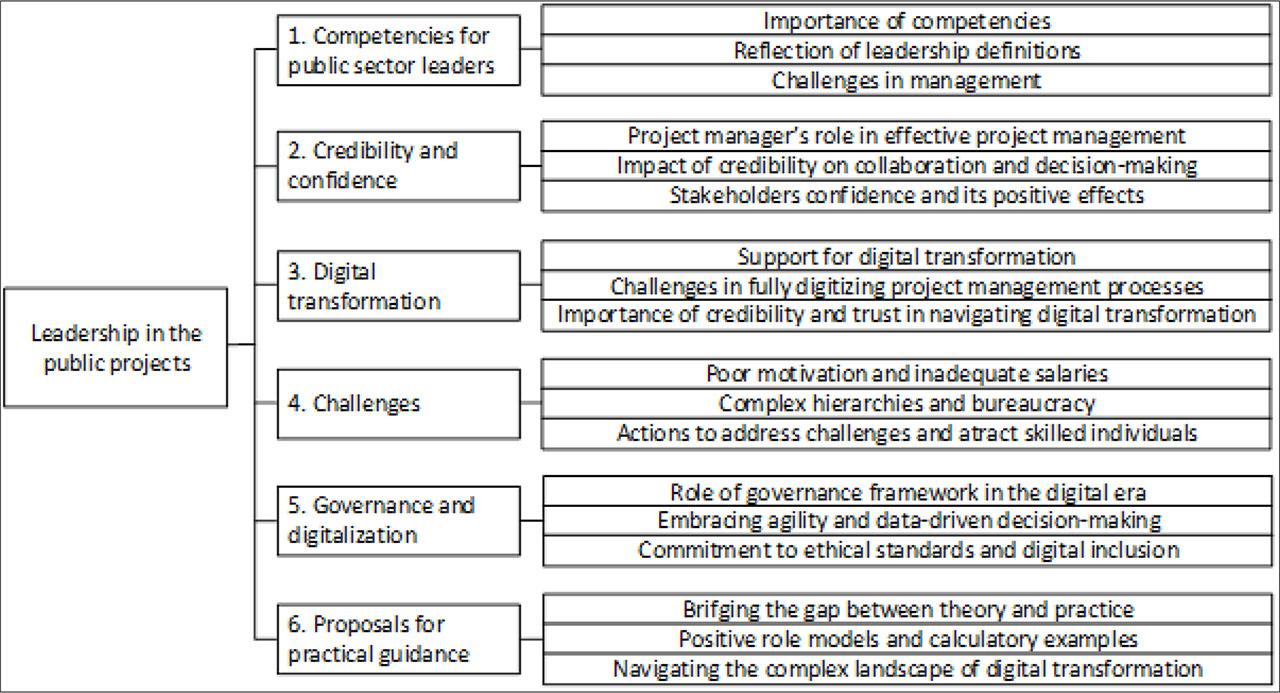
Research results through cognitive mapping
Source: Authors.
In summary, this research delves into the multifaceted relationship between essential elements, namely credibility and the cultivation of stakeholder confidence. The exploration of these elements has led to the selection of the Upper Echelon Theory as the basis for understanding the ongoing situations in projects and leadership.
Our findings emphasize the significance of trust in leadership, shared beliefs in EU-funded projects, and motivation to support digital transformation in the workplace within the public sector. Additionally, the research identifies key management challenges in the public sector, ranging from a lack of knowledge and education in project management to the necessity for suitable working conditions to attract qualified personnel. In the public sector, leadership is perceived as challenging, and the leadership role in public service faces hurdles like poor motivation, inadequate salaries, limited promotion options, lack of educational courses, bureaucracy, and a complex hierarchy that does not understand the necessities of workers. Personal traits and egos affect business decision-making. To address these challenges, concrete actions should be proposed, such as the development of transparent reward systems, the creation of supportive environments, and the introduction of fair reward systems based on results. Moreover, our research highlights the need for intensive training, a change in mindset, and the adoption of practices prevalent in the private sector to attract skilled individuals to public administration. Furthermore, we draw attention to the pressing issue of escalating penalties faced by countries in EU-funded projects due to oversights. The research suggests that enhancing knowledge and education in project management, coupled with improvements in working conditions, can mitigate this problem. Transitioning to the broader perspective of governance and digitalization, the paper underscores the crucial role of a robust governance framework in the digital era. It advocates for the reimagining of bureaucratic structures, embracing agility, and fostering data-driven decision-making. The architecture of governance and digitalization, according to our analysis, necessitates unwavering commitment to ethical standards, data privacy, security, and digital inclusion. Our collaborative research, incorporating both qualitative and quantitative methodologies, strives to bridge the gap between theory and practice. By presenting positive role models and cautionary examples, we aim to guide those committed to achieving comprehensive and positive results in public projects. The synthesis of art and science, along with a rejection of baseless conspiracy theories, positions this research as a valuable resource for leaders and practitioners aiming to navigate the complex landscape of digital transformation in the public sector. Future researchers may explore the relationships among different dimensions of the study variables to gain a deeper understanding of the phenomenon. Subsequent studies might employ a mixed-method approach to validate the results of the research model. Finally, we encourage researchers to investigate the relationships in other public project management contexts using samples of diverse respondents.