
Table 1
Geopolitical Types.
| HIGH VULNERABILITY TO A NUCLEAR ADVERSARY | LOW VULNERABILITY TO A NUCLEAR ADVERSARY | |
|---|---|---|
| High Relative Military Spending/Capacity | Frontliners | Influencers |
| Low Relative Military Spending/Capacity | Hedgers | Subordinates |
Table 2
Survey Respondent Pool Composition.
| STATE | NUMBER OF RESPONDENTS | TYPE |
|---|---|---|
| Belgium | 815 | Subordinate |
| Czech Republic | 819 | Subordinate |
| France | 1,136 | Influencer |
| Germany | 1,069 | Subordinate |
| Italy | 1,402 | Subordinate |
| Poland | 1,101 | Frontliner |
| Slovakia | 863 | Hedger |
| Sweden | 813 | Subordinate |
| Turkey | 1,088 | Influencer |
| United Kingdom | 1,378 | Influencer |
| Total | 10,484 |
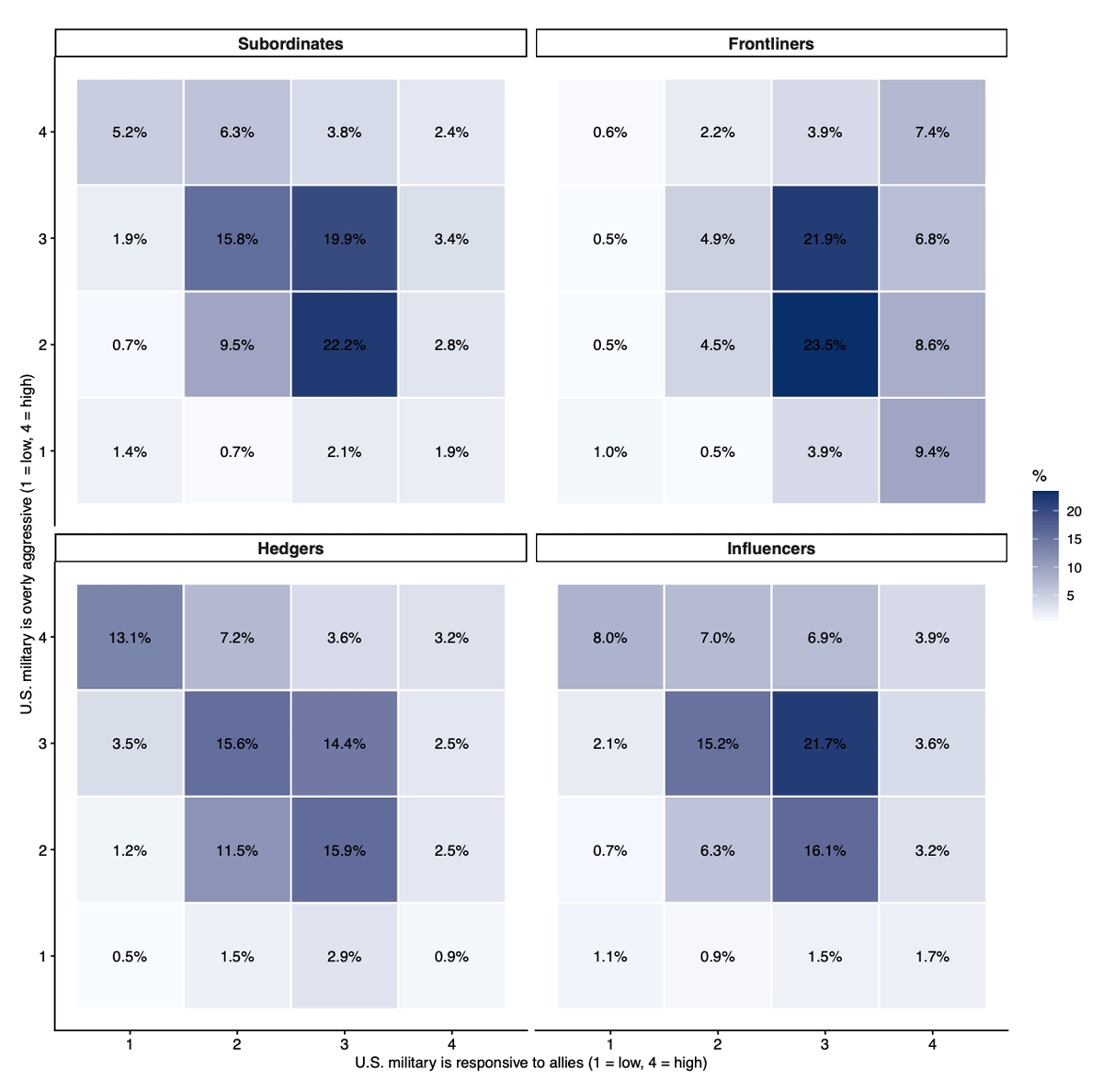
Figure 1
Views on U.S. Military by Geopolitical Type.
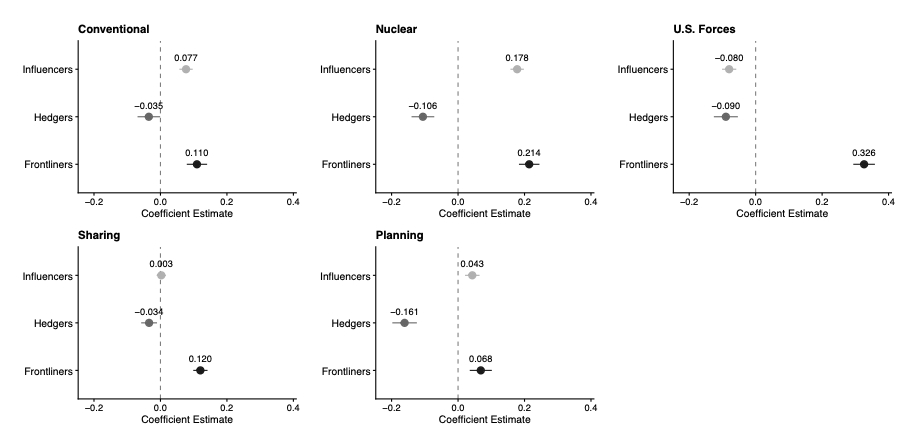
Figure 2
Alliance-Management Policies that Strengthen Deterrence.
Note: The figure shows coefficient estimates with 95% confidence intervals. The reference category is respondents in subordinate states. See Appendix C for full regression results.
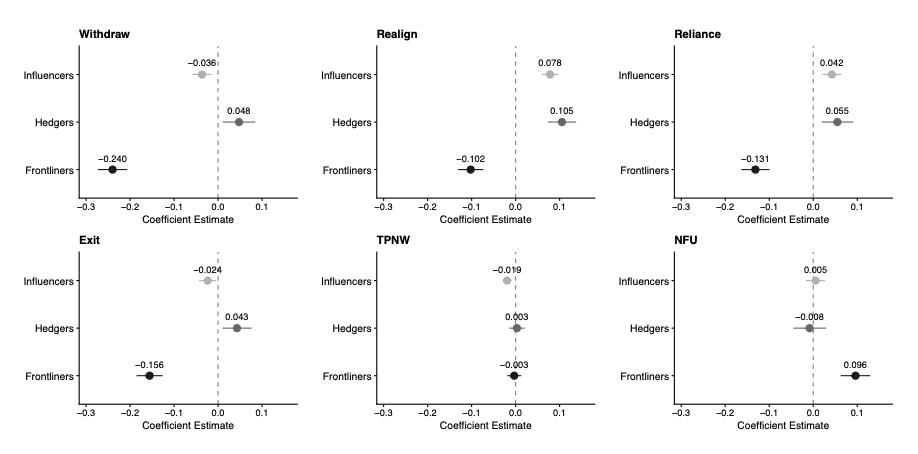
Figure 3
Alliance-Management Policies that Reduce Alliance and Nuclear Risks.
Note: The figure depicts coefficient estimates with 95% confidence intervals. The reference category is respondents in subordinate states. See Appendix C for full regression results.
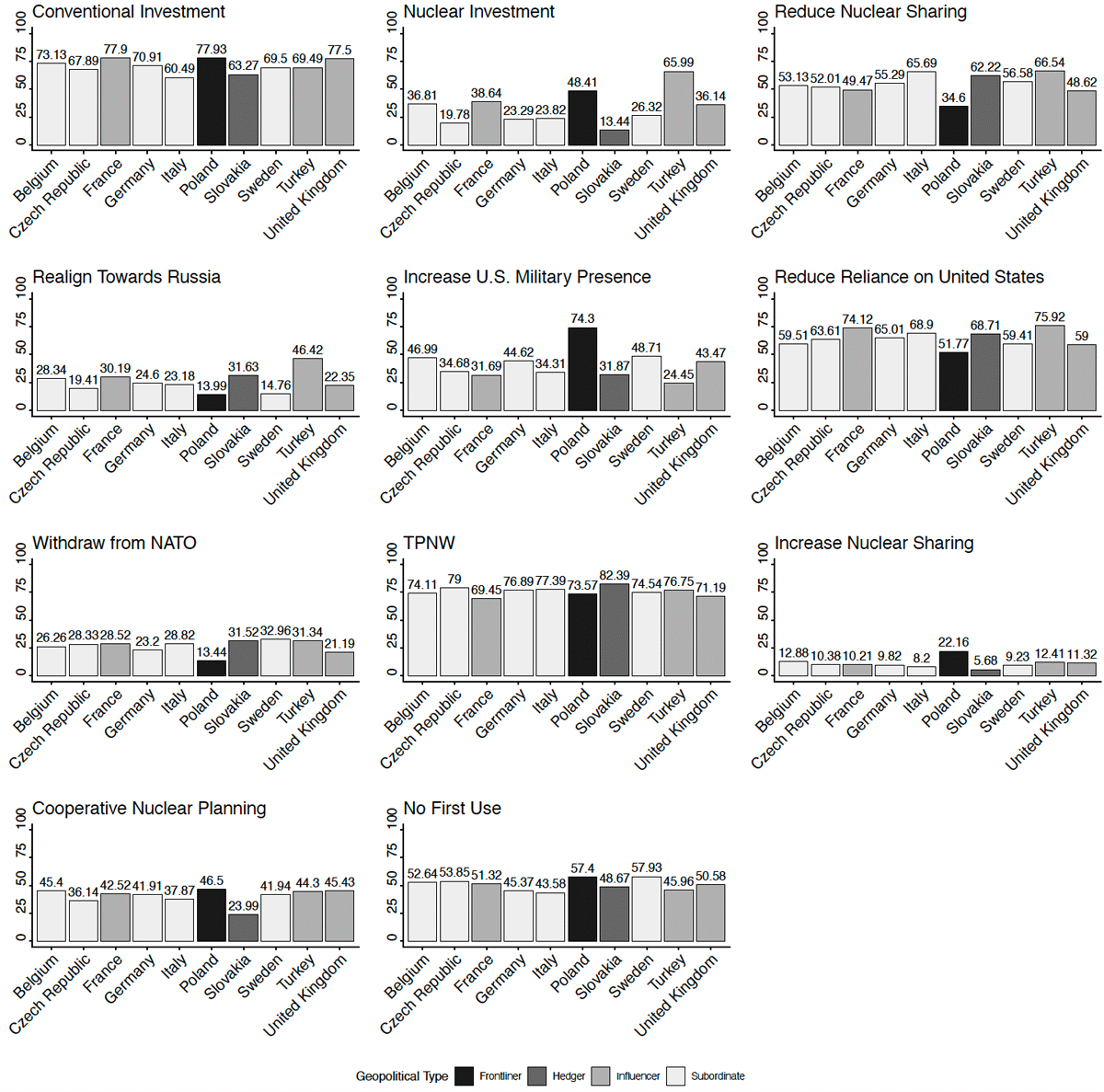
Figure 4
Percent Support for Policies to Manage Alliance and Nuclear Risks.
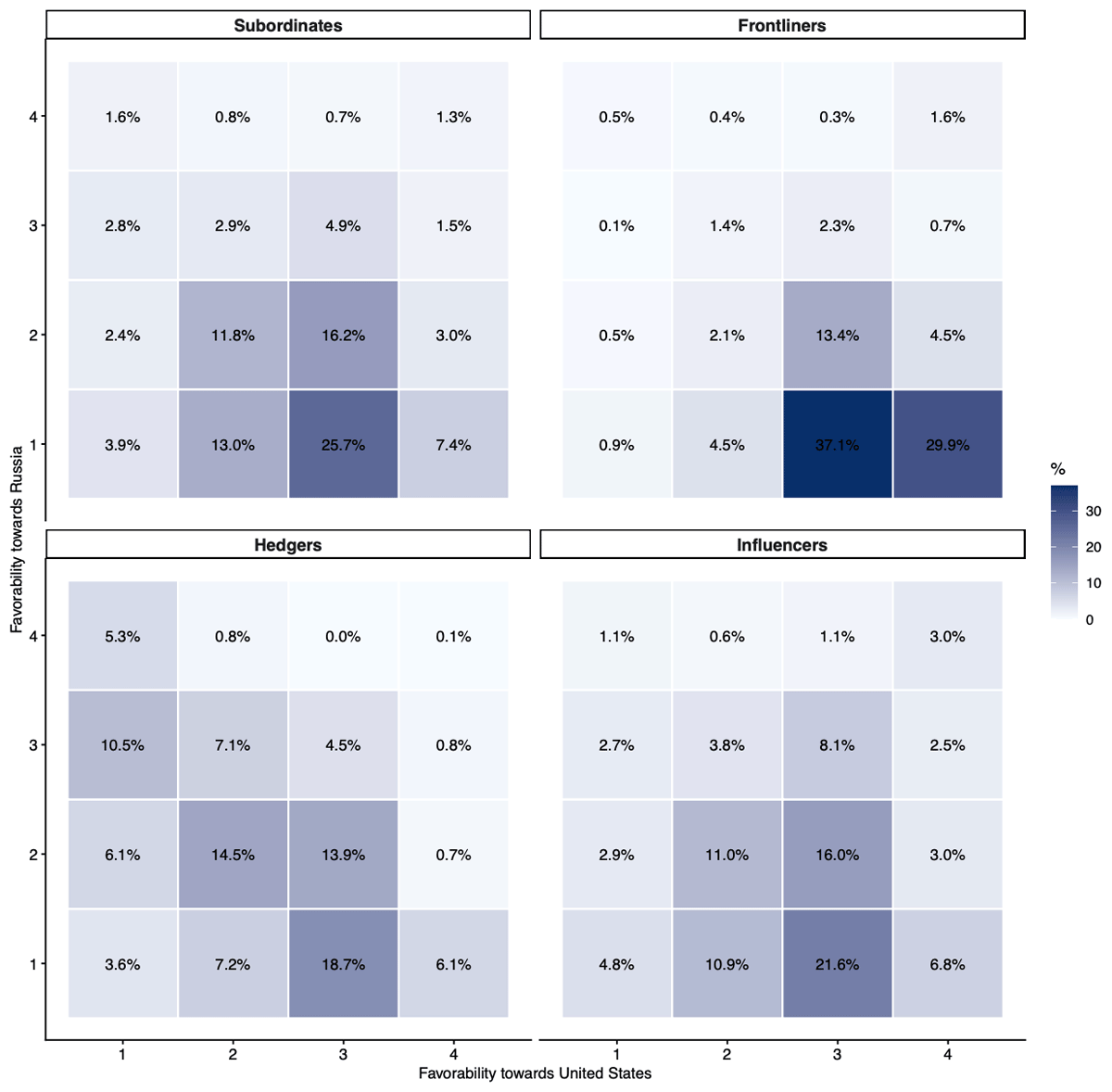
Figure 5
Geopolitical Alignment by Type.