
Introduction
Maritime security in the Western Indian Ocean (WIO) has become an increasingly complex and strategically significant policy arena over the past two decades. Stretching from Somalia to South Africa and encompassing the Indian Ocean islands of the Comoros, La Réunion (France), Madagascar, Mauritius, and the Seychelles, as shown in Figure 1, it forms one of the world’s most critical maritime corridors. As Indo-Pacific strategies (Chauhdry et al., 2025) and China’s expanding influence through the Belt and Road Initiative reshape the region, the WIO increasingly reflects the interplay of power relations (Pulipaka & Musaddi, 2021), economic interdependence, strategic communication, and information-driven influence activities.
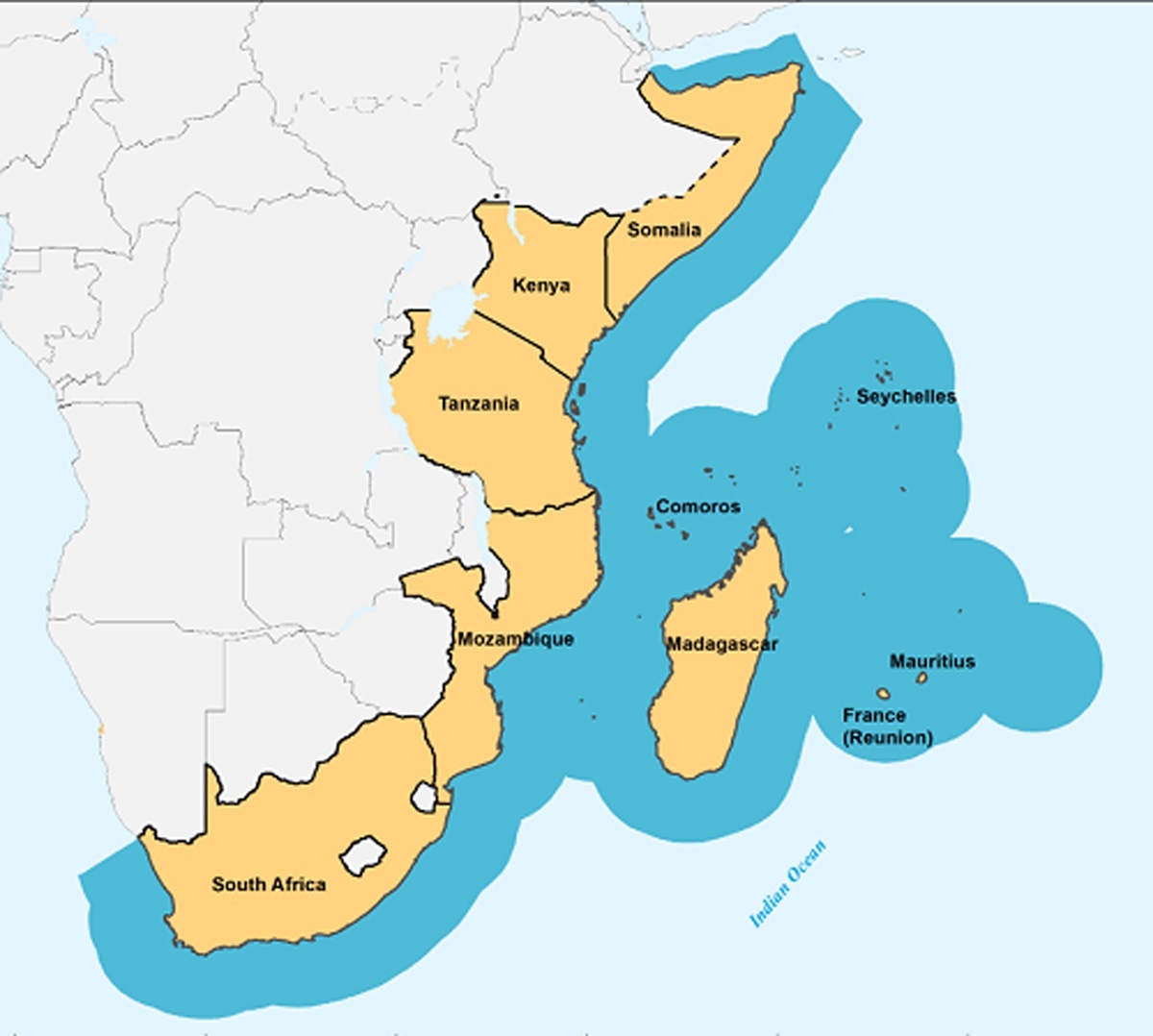
Figure 1
Map of Western Indian Ocean.
Note. UNEP/Nairobi Convention Secretariat, 2009.
In this struggle for strategic positioning and influence, where the ability to shape public narratives constitutes a form of discursive and agenda-setting power, marginalization stems largely from sea blindness – the tendency to overlook the maritime domain in political and strategic thinking (Bueger & Edmunds, 2017) – and wealth blindness (Ralby, 2017), understood as the limited recognition of the ocean’s economic value. Building on island studies scholarship (Stratford et al., 2011), this article introduces a third form of marginalization: island blindness:1 the tendency to underestimate the strategic role of small island developing states (SIDS), despite their extensive exclusive economic zones (EEZ), sovereign responsibilities, and central role in regional ocean governance. In WIO, island blindness reinforces sea and wealth blindness by marginalizing SIDS in strategic narratives, threat assessment and resource allocation. These forms of marginalization are further reinforced by weak political will and lack of human and material capabilities across regional states.
During the Somali piracy crisis of the 2000s, a proliferation of international and multilateral mechanisms emerged to address the escalating threat (Bueger, 2019). These included the Contact Group on Piracy off the Coast of Somalia (CGPCS), now the Contact Group on Illicit Maritime Activities (CGIMA); NATO’s Operation Ocean Shield (closed in 2016); the Shared Awareness and De-confliction (SHADE) forum, led by the European Union Naval Forces (EU NAVFOR) – Operation Atalanta; and the Combined Maritime Forces (CMF), as well as bilateral initiatives such as the European Union Capacity Building Mission in Somalia (EUCAP Somalia) (Bueger, 2024).
Established under successive United Nations Security Council resolutions, these initiatives aimed to suppress piracy and enhance collective security. While these externally driven responses were effective in sharply reducing piracy incidents at that time, they were largely designed and implemented without meaningful regional ownership. Consequently, despite short-term operational success, persistent gaps remained in coordination, information-sharing, trust-building, legal finish and shared ownership of security initiatives. These gaps constrained the ability to translate crisis-response mechanisms into durable institutional arrangements, limiting long-term capacity development, regional legitimacy, and sustainable maritime security governance once external engagement receded. The experience also highlighted the need for African coastal and island states to develop their own regional frameworks capable not only of coordinating responses but also of defining regional maritime security priorities and strengthening regional ownership.
Existing literature on maritime security governance in Eastern and Southern Africa and the Indian Ocean (ESA-IO) focuses largely on capacity building, naval operations, and institutional development. Studies on African regionalism similarly highlight the challenges of fragmented authority, overlapping mandates, and divergent state interests (Hartmann, 2016; Tieku, 2021; Bueger, 2015). Meanwhile, strategic communication and information-sharing have expanded significantly as areas of study within military and international relations scholarship, particularly in relation to digital diplomacy, persuasion and soft power (Nye, 2004), and public diplomacy (Bjola & Holmes, 2015; Cull, 2019). These literatures rarely intersect, however, with the communication dimension of maritime security cooperation. Consequently, limited attention has been paid to how African-led frameworks use strategic communication to shape regional maritime security narratives and strengthen African agency.
This article addresses this gap by examining how strategic communication functions as both a diplomatic and an enabling mechanism of regional maritime security governance. “Strategic communication” refers to the planning, coordination, and implementation of communication to achieve strategic objectives and ensure consistent information activities within and between organizations (Hallahan et al., 2007). It involves the deliberate use of messaging, narratives, and information-sharing, mobilising both online and offline communication instruments. The paper argues that strategic communication is not merely a support to policy but an enabling mechanism through which African coastal and island states strengthen cooperation, articulate shared maritime security priorities, influence perceptions, and progressively project African perspectives in regional and global maritime governance.
Strategic communication plays an enabling role in regional maritime security governance by operating at two interconnected levels. Internally, it enables African coastal and island states and regional organizations to develop a shared understanding of maritime threats, align priorities, build trust, and coordinate action despite differences in national interests, capacities, and capabilities. Externally, these shared understandings enable regional frameworks to articulate more coherent positions, engage external partners from a stronger collective basis, mobilize political and financial resources, and project African perspectives in regional and global maritime governance. Strategic communication therefore connects internal coordination with external representation, helping diverse actors increasingly to speak with a common regional voice while preserving their national interests.
The Regional Maritime Security Architecture for the WIO and the Djibouti Code of Conduct and its Jeddah Amendment provide a useful basis for examining strategic communication because they represent the two most influential, yet structurally distinct, African-led maritime security frameworks in the region (Alexandre et al., 2026; IMO, n.d.). Comparing them shows how different communication approaches shape African actors’ ability to articulate regional priorities and engage external partners.
The analysis is deliberately bound to strategic communication as a practice of regional maritime security governance in the WIO, focusing on the RMSA and the DCoC-JA between 2018 and 2025. It does not assess operational maritime security outcomes or broader institutional performance, except where these are directly relevant to communication.
To guide this analysis, the article addresses three core research questions:
How do African coastal and island states and regional organizations in the WIO use strategic communication to strengthen maritime security cooperation?
Assessed against the four criteria of narrative coherence, resonance and uptake, legitimacy signalling, and observable coordination outcomes, which communication strategies and techniques are most evident within the RMSA and DCoC-JA frameworks – and how effective have they been?
How does strategic communication influence regional agency, legitimacy, and ownership in WIO maritime security governance?
To answer these questions, the study adopts a comparative case study approach, combining analysis of publicly accessible documents including policy frameworks, communiqués, strategic documents, and official statements, with secondary analysis of media coverage and academic literature.
This methodology evaluates how the two frameworks use strategic communication to influence perception, coordinate actions, engage with external partners, strengthen legitimacy and regional ownership. It also examines how communication supports the articulation and projection of African maritime security priorities within broader governance processes.
The article makes three contributions. Theoretically, it integrates insights from strategic communication, regional security studies, and maritime governance, while introducing the concept of island blindness as a lens for examining how strategic communication can enhance visibility, legitimacy and narrative agency within regional maritime security governance. Empirically, it offers one of the first comparative assessments of communication strategies across African-led maritime frameworks in the WIO. Policy-wise, it identifies opportunities to strengthen communication-driven cooperation by improving the visibility, legitimacy, and uptake of key strategic instruments such as 2050 Africa’s Integrated Maritime Strategy (African Union, n.d.).
Strategic Communication and Dynamic Equilibrium in African Maritime Security Governance
Maritime security cooperation cannot be understood solely through material capabilities, institutional design, or legal frameworks. It is equally shaped by how threats are framed, legitimacy is constructed, and cooperation narrated and sustained over time. While these issues are often studied separately (Holtzhausen & Zerfass, 2015), this article brings them together through the conceptualization of strategic communication as a mechanism enabling regional maritime security governance. It argues that strategic communication not only strengthens cooperation but also helps African coastal and island states articulate shared maritime security priorities, assert regional agency and responsibility, while serving more effective engagement in regional and global maritime governance (Fan et al., 2022).
Regional maritime security cooperation in the WIO unfolds within a dynamic equilibrium: a continuously shifting balance between cooperation and competition we can term “coopetition2” (Walley, 2007); regional ownership and external influence; and institutional ambition and capacity constraints. Drawing implicitly on regional security and governance literature (Buzan & Wæver, 2003; Söderbaum, 2016), the term “dynamic equilibrium” reflects the reality that cooperation is neither static nor linear but continuously negotiated and adapted to changing geopolitical pressures, asymmetric capabilities, and evolving threats (Fan et al., 2022).
The WIO constitutes a vital global artery, linking strategic choke-points such as the Bab- el-Mandeb Strait and the Strait of Hormuz as well as major transit corridors including the Mozambique Channel. It is also shaped by competing geopolitical projects involving major powers including India’s SAGAR doctrine (Sullivan de Estrada, 2020; Germond, 2015), while regional state and organizational intervention remains comparatively limited. These overlapping interests generate competing narratives, governance models, and security priorities (O’Rourke, 2024). Maintaining cooperation in this context requires both operational coordination and a shared understanding of threats, roles, and legitimacy – the two reinforce each other, and each depends on the other. Strategic communication can support this process by enabling African-led frameworks to articulate regional priorities, build consensus among diverse stakeholders, and present these priorities as legitimate regional responses alongside external approaches.
The study of strategic communication came from military and organizational studies, where scholars sought to explain evidence that information and perceptions were as capable of shaping political and security outcomes as material power (Hallahan et al., 2007). In this article, strategic communication is not understood as any discrete, single event or coercive process of persuasion but as a cumulative and relational process through which cooperation is gradually built, maintained and adapted over time. Through repeated interaction, trust, mutual recognition and shared experiences, it can progressively strengthen confidence among participating actors. Communication instruments are, therefore, not ends in themselves, but expressions and mechanisms of these relationships. Ministerial meetings, communiqués, operational reporting, joint exercises and digital exchanges translate political commitments into sustained engagement, reinforce institutional memory, and help maintain the long-term relationships on which regional cooperation depends. Strategic communication thus contributes to the conditions under which regional maritime security governance can emerge and endure despite changing geopolitical dynamics and unequal capabilities.
Building on this understanding, the article identifies three governance functions of strategic communication. First, it shapes regional maritime narratives by framing shared threats and priorities from African perspectives, reducing uncertainty and enabling collective action. It allows African coastal and island states to articulate common maritime security priorities and exercise greater regional agency rather than relying solely on externally defined agendas; second, it strengthens institutional legitimacy, enhancing credibility and commitment among regional members and international partners, thereby helping to attract resources and political support (Suchman, 1995); third, it facilitates coordination by aligning expectations, building trust, and promoting cooperation.
In this paper, strategic communication therefore extends beyond public messaging to encompass the communication and information-sharing practices through which African coastal and island states coordinate actions, articulate maritime security priorities, strengthen institutional legitimacy, and engage regional and international partners.
These practices are operationalized through official communiqués; strategic, legally and non-legally binding documents; high-level meetings; operational reporting; capacity-building activities; diplomatic exchanges; and digital communication. The analysis focuses not on the instruments themselves but on the extent to which they perform the three governance functions identified above.
Given that strategic communication is understood to be a process of cumulative relationship-building, its effectiveness cannot be assessed solely through conventional communication metrics such as audience reach, media visibility or message recall. Nor can it be equated directly with maritime security outcomes, which depend on wider political, legal and operational conditions. Rather, this article assesses how, and the extent to which, strategic communication contributes to the three governance functions of constructing shared threat perceptions, strengthening institutional legitimacy, and facilitating coordination.
Assessing the effectiveness of strategic communication
Drawing on strategic communication (Hallahan et al., 2007; Zerfass et al., 2018), legitimacy (Suchman, 1995) and maritime governance scholarship (Bueger & Edmunds, 2017), the analysis is organized around four analytical dimensions listed below. Where the three governance functions set out above identify what strategic communication is expected to contribute, the following four analytical dimensions provide the empirical basis for assessing how and to what extent these contributions are reflected in practice:
Narrative coherence – the consistency with which regional maritime priorities, threats, mandates and institutional roles are articulated across audiences and over time.
Resonance and uptake – the extent to which these regional narratives are adopted or reflected by member states, external partners, donors, industry actors and the media.
Legitimacy signalling – recognition of the framework as a credible and regionally owned actor, reflected in observer status, partnerships, liaison officer postings and participation in external fora.
Observable coordination outcomes – evidence that communication facilitates cooperation including agreements, memoranda of understanding, liaison officer deployments, joint exercises, operations and sustained participation in regional mechanisms.
These dimensions are indicative rather than causal. Rather than assuming that communication produces cooperation, they assess whether it helps create conditions conducive to coordination and collective action. Together, they structure the comparative analysis presented in Table 2.
For African organizations such as the African Union (AU), the Indian Ocean Commission (IOC), the Common Market for Eastern and Southern Africa (COMESA), the Intergovernmental Authority on Development (IGAD), and the Southern African Development Community (SADC), strategic communication takes place within a challenging institutional and geographical environment (COMESA, n.d.; SADC, n.d.; IGAD, n.d.). African states and organizations have traditionally played a limited role in maritime security, constrained by weak political commitment, capacity gaps and persistent sea blindness. For the small island developing states of the Western Indian Ocean, this is compounded by island blindness: despite their vast maritime jurisdictions, their strategic importance is often overlooked.
These constraints can limit the ability of African-led institutions to establish credibility, articulate regional priorities and sustain regional ownership, particularly alongside better-resourced external actors. This is reflected in the slow uptake and delayed implementation of continental and regional instruments such as the 2050 AIM Strategy, the Lomé Charter3 and maritime security strategies within some regional economic communities (REC) such as SADC (Walker, 2025; Achieng’Aput et al., 2023). Dependence on external funding further complicates claims of regional ownership and leadership.
Maritime diplomacy and governance scholarship show that naval cooperation, joint patrols, and institutional meetings can build trust, and signal political commitment (Dutton et al., 2012) while maritime security increasingly involves multiple state and non-state actors operating across institutional and geographic boundaries (Bueger & Edmunds, 2017; Vreÿ, 2024). Digital diplomacy similarly expands the reach of African institutions narratives while exposing them to disinformation and external influence (Manor, 2019). Yet these strands of scholarship pay limited attention to how African-led maritime security frameworks use communication to construct regional narratives, establish legitimacy, and facilitate coordination across governance networks.
The blue economy further broadens the regional maritime narrative by linking security with sustainable development and economic growth (World Bank, 2017; Spamer, 2018). However, its interaction with strategic communication, institutional legitimacy and maritime security governance remains underexplored.
More broadly, although research examines African maritime governance and regional cooperation (Bueger & Edmunds, 2017; Stableseas, 2021), limited attention has been paid to strategic communication as an enabling mechanism through which African institutions build legitimacy, align disparate actors, assert regional agency and sustain cooperation under geopolitical competition. This paper addresses this gap by examining how it contributes to maritime security governance in African-led frameworks in the WIO, focusing on the RMSA and DCoC-JA.
Methodological Framework: Narratives, Relational Mapping, and Dynamic Equilibrium
Positionality
The perspective underpinning this paper derives from the professional trajectory of an author who has worked for more than 15 years on strategic communication and maritime security governance in the WIO and other African regions. While this direct engagement with the field informs the observations and interpretation presented in the article, providing familiarity with the practices, documents and language examined, it also creates a risk of proximity, particularly in interpreting regional architectures that emphasize African ownership.
Three measures were adopted to mitigate this risk. First, the analysis draws exclusively on publicly available and citable sources, allowing interpretations to be independently verified; no confidential material or internal deliberations are used. Second, institutional self-descriptions are treated as objects of analysis rather than evidence of effectiveness, and are assessed against observable evidence of coordination. Third, the same four analytical dimensions are applied to both cases, ensuring a consistent basis for comparison. The analysis therefore draws on professional experience and sustained observation of the field while remaining grounded in publicly verifiable evidence and a consistent comparative framework.
The study adopts a qualitative comparative design combining case studies, narrative analysis, and qualitative relational mapping. It examines two contrasting but influential regional maritime security frameworks in the WIO. Narrative analysis is used to examine how maritime threats, regional ownership and cooperation are constructed and communicated over time through official communiqués, policy documents, speeches, and digital communication. It identifies the dominant storylines, frames, and symbols through which actors define problems, legitimise institutions, and promote cooperation (Miskimmon et al., 2013).
Analytical Criteria
The four criteria set out in the theoretical section (as shown in Table 1) are operationalized as four analytical dimensions: communication orientation, narrative framing, institutional anchoring, and observable coordination outcomes. Applied consistently across both case studies, they provide a common basis for comparison and structure the analysis presented in Table 2.
Table 1
Table of Four Criteria Applied to the Comparative Analysis.
| CRITERIA | DETAILS |
|---|---|
| Communication orientation | Whether communication is primarily inward-facing, supporting cohesion, trust and coordination among members or outward-facing, supporting legitimacy, donor alignment and external recognition. This dimension captures the balance between internal coordination and external positioning. |
| Narrative framing | The main narratives through which threats, roles and ownership are constructed, particularly the balance between the “African solutions to African problems” register and the depoliticized shared-threat register. It examines how these narratives are communicated and reflected across framework outputs and by member states and partners. |
| Institutional anchoring | How communication is embedded in institutional structures, mandates, plans and resources, or treated as a secondary function. This indicates the extent to which communication is institutionally supported and linked to legitimacy. |
| Observable Coordination outcomes | Practical coordination effects associated with communication, including agreements, MoUs, liaison arrangements, joint exercises and operations, and sustained participation. These provide a counterweight to institutional self-description. |
Table 2
Comparative Analysis Table of RMSA and DCoC-JA.
| PARAMETERS | RMSA (REGIONAL MARITIME SECURITY ARCHITECTURE) | DCoC-JA (DJIBOUTI CODE OF CONDUCT/JEDDAH AMENDMENT) |
|---|---|---|
| Foundational purpose | A holistic, multi-dimensional framework designed to detect, deter, and respond to a broad range of illicit maritime activities and crimes across the WIO through coordinated information sharing, joint operations and African-led regional cooperation. | A regional framework designed to address piracy and a broad range of transnational maritime crimes across the WIO, GoA, and Red Sea through information sharing, capacity building, coordinated responses, and regional cooperation. |
| Geographical scope and membership | WIO (island and coastal states); seven signatory states with provision for expansion | WIO, GoA, and Red Sea: 21 signatory states (as of late 2025) across 3 sub-regions |
| Institutional anchor | IOC as implementer, Secretariat of the RMSA Steering Committee and normative anchor | IMO as Secretariat and normative anchor |
| Legal status/Institutional basis | Two binding regional agreements on information sharing and joint operations | Non-legally binding political commitment |
| Operational coordination mechanisms | RMIFC and RCOC, national maritime centres and ILOs | National Focal Points, Information Sharing Network, Capacity-Building Matrix, Working Groups |
| External support and partnerships | EU (primary donor), EU NAVFOR, IFC-IOR, IFC Singapore, UNODC, Interpol, IMO… bilateral partners (UK, India, United States, etc.). | EU, United States, Denmark, India, UNODC, UNITAR, industry actors and other international organisations. |
| Donor structure | Highly concentrated (primarily EU-funded). | Diversified support from EU, United States, Denmark, India, UNODC, UNITAR, industry and other partners. |
| Strategic communication orientation | Predominantly inward-facing: operational communication, trust-building and shared regional understanding, complemented by selective external communication. | Outward-facing and multi-level: internal consensus-building combined with external engagement, visibility and partner mobilization. |
| Communication modalities | Operational information exchange, exercises, workshops, ministerial conferences and reports; limited public communication through IOC/RMIFC channels. | Communiqués, engagement strategies, working groups, high-level meetings, donor forums, Communication and Visibility Plan, and digital communication. |
| Contribution to regional agency and legitimacy | Reinforces African agency through operational coordination and the central role of coastal and island States, while integrating external support without displacing regional leadership. | Balances regional ownership with international engagement, enabling diverse members to articulate shared priorities and engage collectively with external partners. |
| Internal/external communication | Internal communication builds trust, coordination and shared operational understanding; external communication projects African-led regional priorities and strengthens partnerships. | Developed communication architecture but comparatively weaker operational consolidation. |
| Communication and operations relationships | Strong operational coupling but limited external visibility. | Communication architecture more developed than operational implementation. |
| Overall equilibrium/Vulnerability | Relatively stable but fragile: rooted in operational practice, but constrained by fragmented communication and concentrated donor dependence. | More narratively robust but operationally fragile: supported by broad legitimacy and partnerships, but vulnerable to uneven implementation. |
[i] Note: Source: author.
Each dimension was operationalized through observable elements in the documentary and digital evidence, allowing the analysis to assess how strategic communication was structured, expressed and reflected in practice across the two cases.
Each dimension was assessed qualitatively against publicly available material, including the founding agreements of both frameworks; ministerial communiqués (2018–2025); RMIFC reports; strategic documents and institutional websites; press releases and media coverage; and statements from external partners. Each case was analysed separately and then compared using equivalent types of evidence, rather than the volume of material available.
The digital dimension was examined through qualitative relational mapping rather than formal social network analysis. Publicly available digital outputs, including websites, reports, communiqués, press releases, and official publications, were reviewed for hyperlinking, mutual citation, document hosting, and co-branding. This helped to identify how regional narratives circulate and how institutions reinforce one another’s communication. The study does not analyse platform-level metrics such as retweets, follower networks, or engagement, and therefore makes no claim about online centrality or influence. Formal social network analysis is left for future research.
The analysis also distinguishes between two interconnected narrative registers. The first is an internal narrative centred on ownership, legitimacy and African-led governance – “African solutions to African problems” (ISS, 2008) – which supports trust, coordination and a shared understanding among member states and organizations. The second is an external narrative through which African-led frameworks communicate regional priorities and engage external partners. These registers are treated as interconnected: internal communication helps construct a regional position, while external communication projects that position through engagement with partners. This approach reflects Obado’s (2021) observation that it is “not so much a question of excluding the rest of the world, but of Africans taking ownership of their destiny.”
Accordingly, the analysis does not treat communication itself as evidence of success. Its contribution is assessed through the four analytical dimensions above, with particular attention to whether communication supports regional cooperation, legitimacy, shared priorities and sustained engagement.
The Regional Maritime Security Architecture (RMSA)
Institutionalization and governance design
The Regional Maritime Security Architecture (RMSA) is an African-led framework in the WIO. It emphasizes regional ownership, information exchange and sharing, and joint operations through the Regional Maritime Information Fusion Centre (RMIFC) (RMIFC, n.d.), the Regional Coordination Operations Centre (RCOC), and the national centres of the signatory states, with support from external partners.
The RMSA was institutionalized in 2018 with the adoption of two binding regional agreements (Parliament of Kenya, 2019; Assemblée nationale française, 2023): (1) the Agreement for the setting up of a Regional Maritime Information Exchange and Sharing Mechanism in the WIO, and (2) the Regional Agreement on the Coordination of Operations at sea in the WIO. Signed by seven WIO states – Comoros, Djibouti, France (La Réunion), Kenya, Madagascar, Mauritius, and Seychelles – these agreements enable the signatories to share real-time information and intelligence and to mobilize aerial and maritime assets for coordinated operations at sea. The Architecture is open to other regional states and partners. Governance is provided by a Steering Committee representing the signatory states, while the IOC serves as secretariat and institutional anchor.
As shown in Figure 2, RMSA’s coordination is structured around two specialized regional centres. The RMIFC, based in Antananarivo, Madagascar, is responsible for the collection, fusion, verification, analysis, and dissemination of maritime information to signatory states as well as regional and international partners. By providing enhanced Maritime Domain Awareness (MDA), the RMIFC supports informed decision-making at both the national and regional levels. Complementing this function, the RCOC, located in Mahé, Seychelles, acts on intelligence generated by the RMIFC and signatory states to coordinate and support joint maritime operations at sea.4
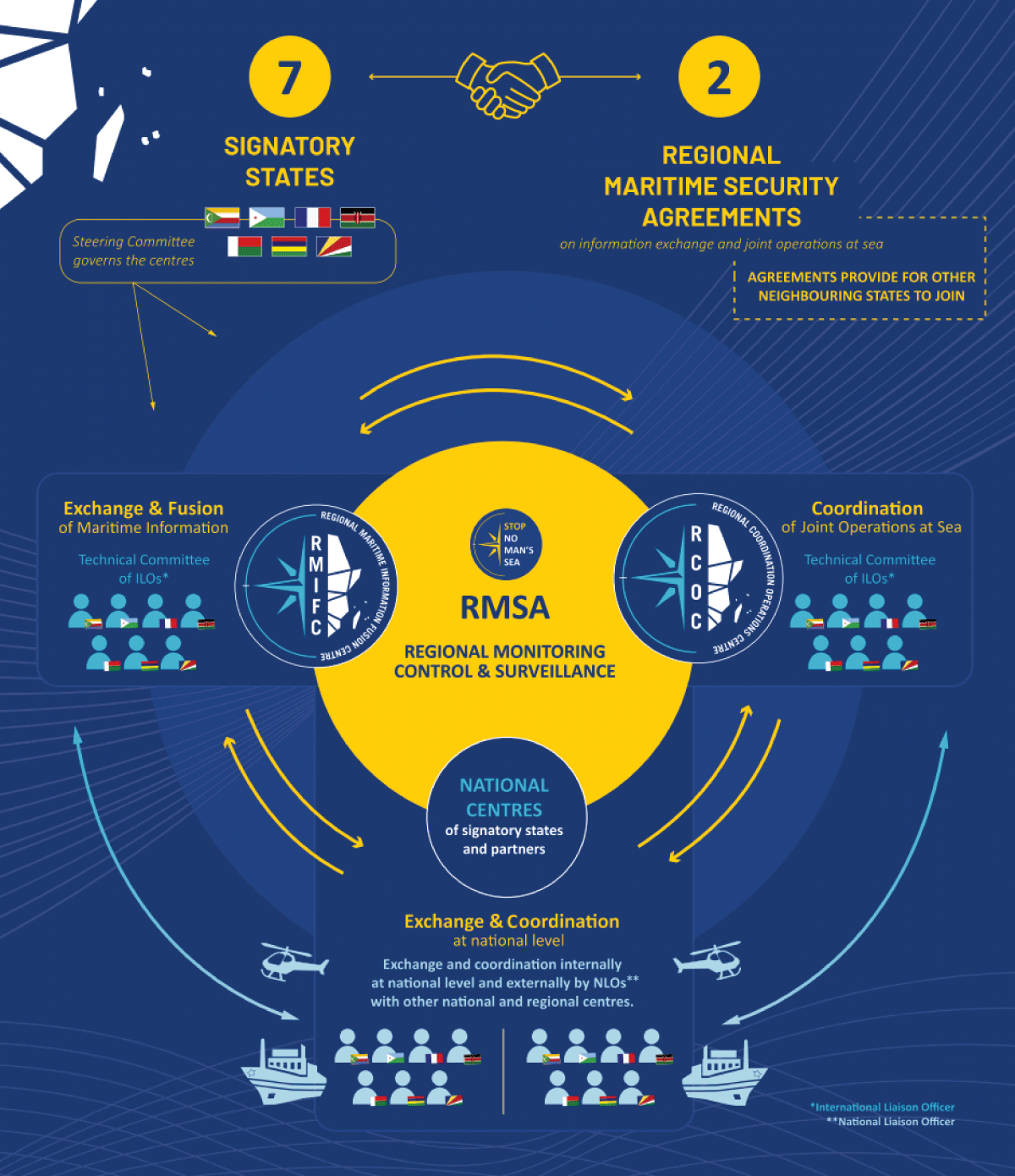
Figure 2
Overview of the Roles of the RMIFC and RCOC Within the Architecture.
Note. © Policy Brief: Strengthening maritime security in the Western Indian Ocean. Indian Ocean Commission. Mohabeer, R., & Sullivan de Estrada, K. (2019).
Daily coordination between national and regional levels is ensured through international liaison officers (ILOs) appointed by each signatory state; these officials interface continuously with national liaison officers (NLOs) based in national maritime security centres. The RMSA’s mission is to build the rudiments of the maritime capability required to safeguard national waters and the wider region. This system supports real-time vessel monitoring to detect vessels of interest (VOI), joint threat assessment, and coordinated joint operations.5
Communication within the RMSA operates on two complementary levels. Internally, it is mainly operational, involving routine information-sharing, alerts, fusion products, and coordination exchanges that support Maritime Domain Awareness (MDA) and daily operations. Externally, communication is led primarily by the RMIFC, which produces regular reports,6 situational briefs, and analytical products for partners and stakeholders. Its public website reinforces this outward-facing role, whereas the RCOC remains deliberately operational and non-public, reflecting its coordination mandate.
Strategic Communication and Regional ownership
The RMSA is supported by several EU funded programmes implemented by the IOC.7 Although the IOC is not formally recognized by the African Union as a regional economic community, it has become a pivotal diplomatic actor in maritime security governance extending its influence beyond formal geographical mandate and drawing on its convening power, perceived neutrality, and growing legitimacy.
The RMSA is one of the few institutional settings in which the concept of island blindness is actively challenged. The IOC – the only African intergovernmental organization composed of island states – provides its diplomatic anchor; the RMIFC is hosted in Madagascar and the RCOC in Seychelles; and four of the seven signatories are SIDS. By communicating these states as hosts, coordinators and providers of maritime security rather than recipients of security assistance, strategic communication transforms what is conventionally viewed as geographic marginality into institutional centrality. It enables island and coastal states to frame maritime security around their own responsibilities, priorities and leadership, while presenting external support as partnership that strengthens, rather than defines regional action.
At the same time, the Architecture is not exclusively an island initiative: Djibouti and Kenya are continental coastal states, while France participates through La Réunion. Communication therefore needs to remain relevant to both island and continental members, whose priorities range from coastal and port security to maritime administration and jurisdiction.
The RMSA was developed under the EU-funded Maritime Security Programme (MASE) (IOC, 2019; Ferras, 2019) and jointly implemented by the IOC and three RECs.8 After the MASE Programme came to an end, the EU-funded Safe Seas Africa Programme (…) took over in 2024, continuing to support the architecture’s (Ministry of Foreign Affairs, n.d.; Safe Seas Africa Programme, n.d.) consolidation, sustainability, and interoperability with broader continental and international maritime security initiatives.
The EU support has played an important enabling role through major funding instruments9 (Bomassi & Marangio, 2025), strengthening coordination, information-sharing, and capacity-building that would have been difficult to develop at the same scale or pace through regional resources alone. Programme documents nevertheless frame this support as enabling regional leadership rather than replacing it, describing its role as “supporting the regional states and organizations in progressing towards the United Nations Sustainable Development Goals (SDGs)” (EEAS, 2021). External support has therefore helped to address capacity and resource gaps while leaving space for African states and organizations to set priorities.
This reflects a central feature of WIO maritime governance: African leadership co-exists with dependence on external resources. Strategic communication helps frame this relationship as partnership rather than direction. As the IOC has repeatedly underlined, the RMSA is “an African-driven architecture supported by partners” rather than a partner-driven initiative implemented in the region (Alexandre et al., 2026).
Communication also supports internal consensus-building through ministerial meetings, operational exchanges, joint statements and collaborative planning, members develop shared priorities before presenting them collectively to external partners. Strategic communication therefore operates first as an internal process of consensus-building and only subsequently as an external diplomatic voice for the RMSA.
Thematic regional and international conferences and high-level meetings have served as instruments of strategic communication, supporting what this article conceptualizes as a dynamic equilibrium in regional maritime security cooperation. These platforms enable African actors to assert agency, articulate shared maritime security priorities, and shape agendas, while engaging with external partners whose resources are both essential and potentially disruptive.
Public communiqués and organizational reports consistently emphasize “shared responsibility, coordinated action, and regional leadership” as guiding principles of engagement (IOC, 2023a). Internally, these messages reinforce a common understanding of regional priorities among participating institutions. Externally, they communicate this shared position to partners and donors, presenting African-led maritime security governance as a coherent regional response.
The WIO Ministerial Conferences on Maritime Security held in 2018, 2019, and 2023 illustrate this role (EAC, 2018; NewsGov Mauritius, 2019; IOC, 2023b). Led by the IOC, the government of Mauritius, and other partners (mainly the EU), these meetings did not simply accompany institutional development; they actively shaped it. They also provided a platform through which African states collectively communicated their own understanding of regional maritime security and presented common priorities to international partners. These meetings illustrate how internal dialogue is progressively transformed into an external regional voice, allowing diverse national positions to be articulated collectively without replacing bilateral policies pursued outside the framework.
The public signing of the two MASE agreements in 2018 was explicitly framed as “a milestone in African-led maritime cooperation” and as evidence that “regional mechanisms are ready to coordinate security responses” (Onsiong, 2018; IOC, 2018). Subsequent memoranda of understanding with external partners further reinforced the legitimacy and visibility of African-led coordination, while providing those partners with a clear narrative framework through which to engage (Nairobi Convention, 2025; IOC, 2023c; Alexandre, 2025).
Similarly, the IOC’s expanding diplomatic role, particularly as Chair and later Secretariat of the Contact Group on Piracy off the Coast of Somalia (CGPCS), now the Contact Group on Illicit Maritime Activities (CGIMA), demonstrates how strategic communication operates across multiple governance levels (Cardiff, 2017; IOC, 2020; MFA Seychelles, 2025; Bueger & Edmunds, 2022). Through sustained participation in regional and international fora,10 the IOC, together with the regional centres and leading regional states,11 has been able to articulate regional priorities, demonstrate leadership, and attract external support (IOC, 2019; UNSC, 2019, 2021, 2025; ACSS, 2025; Midlen, 2025). At the same time, it has maintained a narrative that balances African-driven governance with blue economy perspectives12 and a more inclusive, globalized rhetoric, including the UN SDGs. As stated in IOC communications, the guiding narrative emphasizes that “collective solutions are needed to secure the vast ocean areas for the economic and social development of the region” (MCCI, 2018).
Taken together, these practices show that strategic communication has strengthened the RMSA’s institutional legitimacy and regional ownership by enabling African coastal and island states to develop and communicate a shared understanding of maritime security. Through sustained engagement, operations and consistent narratives, the two regional centres have gained recognition as credible African-led frameworks, supporting longer-term partnerships with external actors such as EU NAVFOR and the Information Fusion Centre – Indian Ocean Region (IFC-IOR) and bilateral partners including the deployment of a British ILO to the RCOC. Increasingly, partner statements describe the RMSA as an “important partner to enhance information sharing and analysis to cue actions at sea” rather than just a project-based initiative (Seychelles Nation, 2025; Press Information Bureau, 2023).
Operational visibility and external recognition
Operational visibility and strategic communication within the RMSA are reinforced through a wide range of thematic workshops, meetings, exercises, and operational activities organized under the EU-funded MASE and Safe Seas Africa programmes. These include regional maritime security seminars and coordination workshops, such as the IUU Fishing Conference, the 2024 WIO Drug Trafficking Conference, and conferences on Illegal Wildlife Trade (IWT). They bring together national maritime authorities, regional organizations, and international partners to share information, harmonise procedures, and strengthen interoperability. Official reports frame these activities as efforts to “connect existing mechanisms rather than creating parallel structures,” reducing institutional fragmentation and fostering a shared operational language across the region (RMIFC, 2025; National Drug Secretariat, 2024; Le Mauricien, 2024; ACSS, 2025).
The credibility of this coordination role is further reinforced through high-profile joint exercises. Regional exercises such as MASEPOLREX23 and MASEPOLREX25, focusing on marine pollution preparedness, brought together representatives from RMSA member states, the regional centres (RMIFC and RCOC), the Nairobi Convention Secretariat, and specialized agencies such as the International Tanker Owners Pollution Federation (ITOPF). Official press releases, post-exercise communiqués, and social media presented these exercises as evidence of “African-led coordination, collective responsibility, and operational readiness,” highlighting the testing of the updated regional contingency plan and strengthened inter-agency coordination (Témoignages, 2023; Petronia, 2025; IOC, 2025; Nairobi Convention, 2025; ITOPFL, n.d.).
Similarly, communication surrounding the RECOPORT-ESA 25 exercise, co-organized by the IOC and the Port Management Association of Eastern and Southern Africa (PMAESA), highlighted the information-fusion role of the RMIFC and the operational coordination function of the RCOC. Joint public statements and website updates described the exercise as a ”demonstration of regional interoperability and governance capacity” rather than a donor-driven initiative (PMAESA, 2025).
Operational visibility is further demonstrated through multinational maritime security exercises and operations. During Cutlass Express 2024, for example, the RCOC was formally integrated into the exercise planning and execution. The U.S. Navy publicly acknowledged that the RCOC “played a central role in coordinating regional responses and enhancing interoperability” recognising the RMSA as a key component of regional maritime security governance (Levardi, 2024). Such recognition strengthens the RMSA’s credibility with external partners, while reinforcing its position as an African-led framework. More broadly, it supports the cooperative dynamic equilibrium by strengthening partnership with wider maritime governance arrangements.
The Djibouti Code of Conduct and its Jeddah Amendment (DCoC-JA)
From piracy response to holistic maritime security governance
The Djibouti Code of Conduct and its Jeddah Amendment (DCoC-JA) is an IMO-led framework covering the WIO, the Gulf of Aden (GoA), and the Red Sea. Adopted in 2009, the Djibouti Code of Conduct represents one of the most significant institutional responses to piracy and armed robbery against ships in the WIO and the GoA. The framework was significantly expanded through the Jeddah Amendment (JA) in 2017 to address a broader spectrum of transnational organized crimes.13
Under the Jeddah Amendment, signatory states committed to cooperate in preventing and repressing transnational organized crime at sea (DCoC/JA SC, 2023). 14 This expansion reflects a shift from a piracy-centric model towards a broader approach to maritime security governance, recognizing maritime threats to be interconnected rather than isolated.
The DCoC-JA is a non-legally binding agreement whose membership (Figure 3) includes littoral and island states across the Western Indian Ocean, Gulf of Aden, and Red Sea, making it one of the world’s largest regional maritime security frameworks (DCoC/JA SC, 2023).15
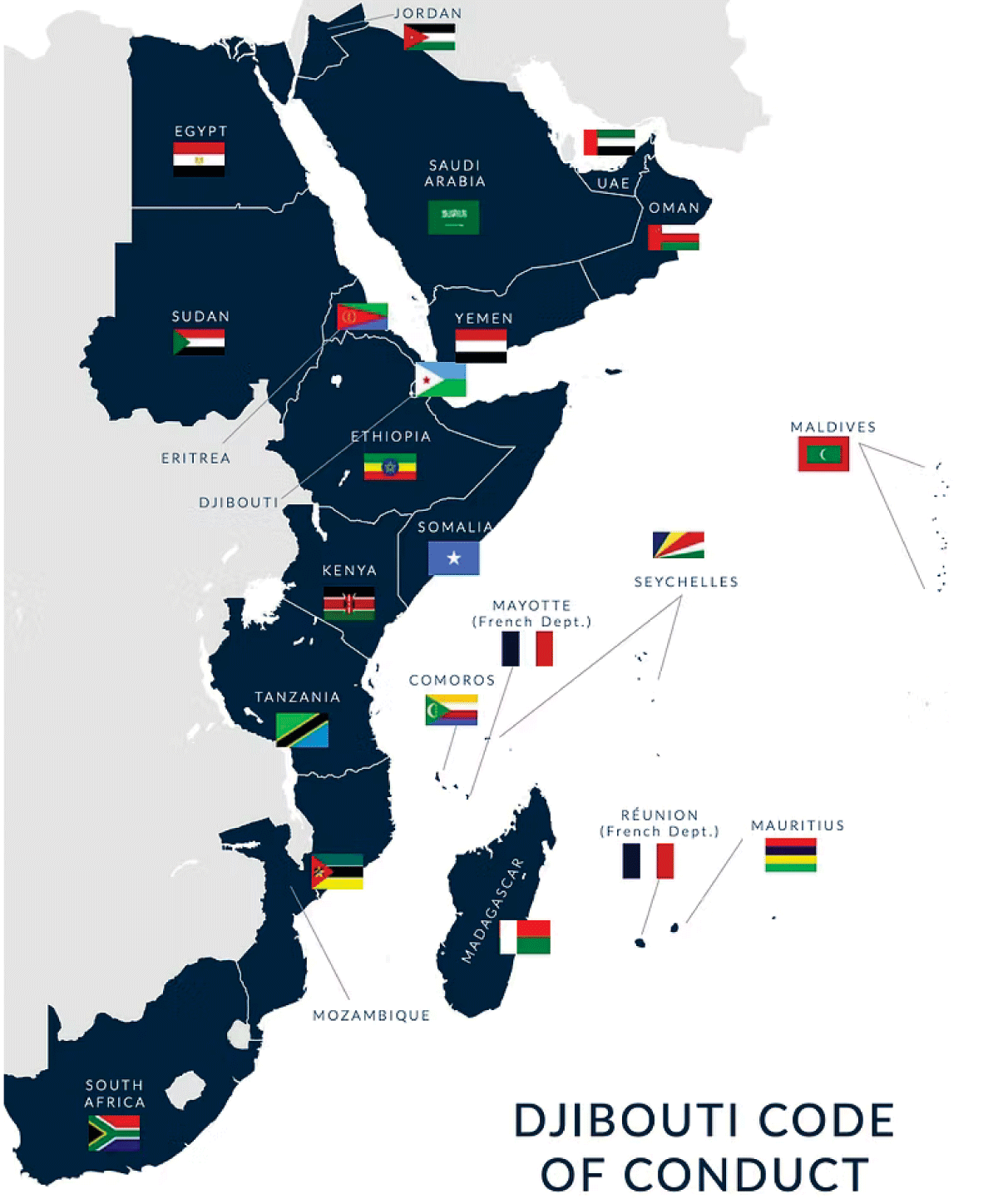
Figure 3
Map of DCoC Member States.
Note. © Stable Seas, 2020.
This broad geographical coverage, however, creates important communication challenges. Within 21 member states spanning the Red Sea, the Gulf of Aden and the WIO, attention naturally tends to focus on the northern maritime choke-points, where shipping traffic, naval deployments, and donor interest are concentrated. As a result, the vast and lightly monitored EEZ of the south-western Indian Ocean may receive less visibility. Unlike the RMSA, whose communication is centred on a shared WIO perspective, the DCoC-JA must accommodate a much broader set of regional priorities and geopolitical interests.
The DCoC-JA’s emphasis on sovereignty, inclusiveness and participation can therefore be understood, at least in part, as an attempt to manage this diversity. Its communication does not promote a single regional narrative but seeks to build consensus around shared principles while allowing members to pursue different national and sub-regional priorities. The framework brings together mainly African and Arabian coastal states with diverse concerns, including Somali coastal security, port and terminal protection, irregular migration, trafficking, and illegal, unreported and unregulated (IUU) fishing. Maintaining a sufficiently broad common narrative across these interests is therefore a central communication challenge. Through repeated high-level meetings, working groups, joint communiqués and capacity-building activities, member states can develop shared understandings and communicate common positions to external partners. Its MoU with the RMIFC and the RCOC also illustrate how the DCoC-JA connects its broader framework with regional institutions responsible for maritime coordination in the southern part of its area of responsibility outside its direct control.
The IMO remains central to the DCoC-JA as both its secretariat and its normative anchor. As a UN-affiliated agency, it provides neutrality, legal legitimacy, and continuity, particularly valuable in a region spanning multiple maritime security complexes and characterized by strong involvement from external naval and development partners. This institutional anchoring strengthens the framework’s legitimacy and provides continuity in translating diverse member priorities into a common framework for regional maritime cooperation.
Since its adoption, the DCoC-JA has established several institutional mechanisms as shown in Figure 4, including a network of National Focal Points, the DCoC Trust Fund, the Capacity Building Matrix, and the Information Sharing Network Strategy and Roadmap. These mechanisms, overseen through Working Groups 1 and 2, aim to coordinate donor engagement, align regional capacity-building priorities, and reduce duplication of effort.
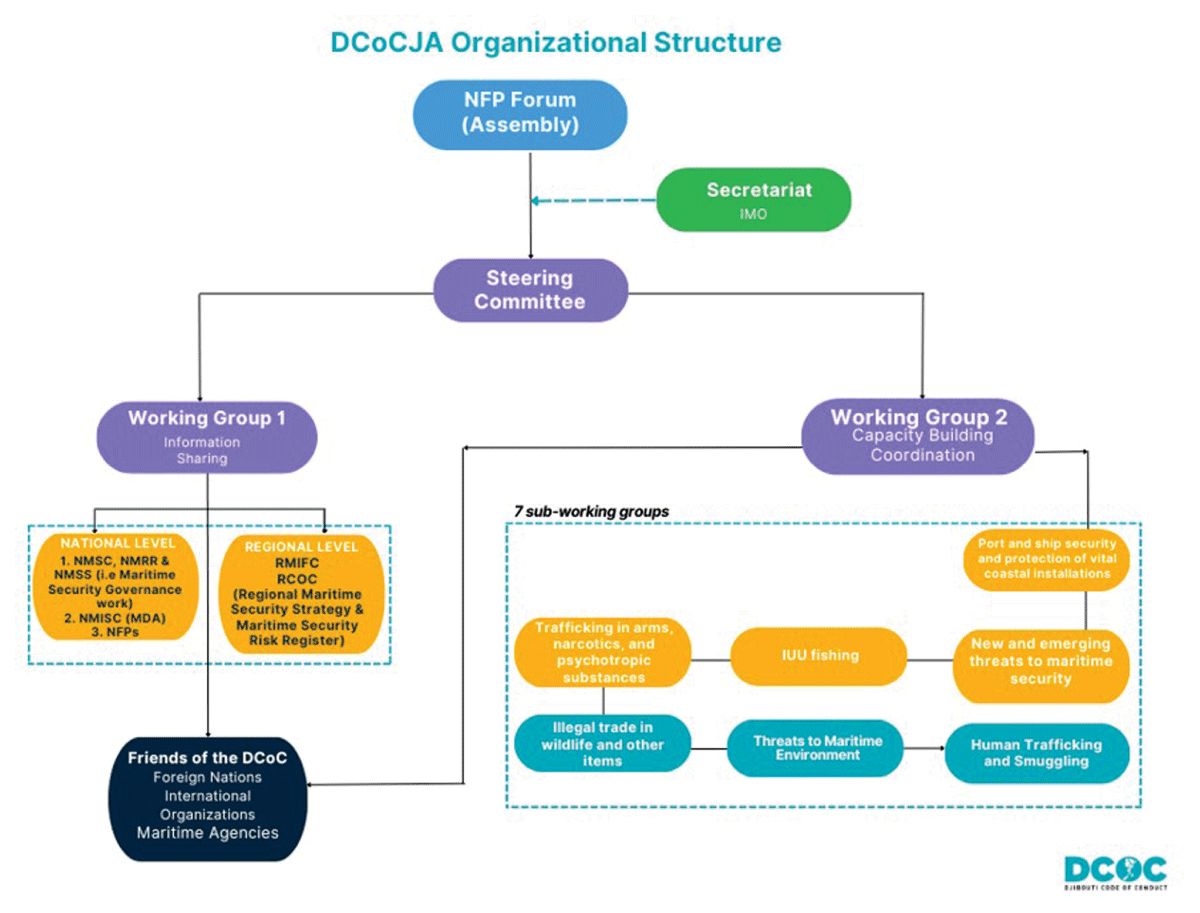
Figure 4
DCoC-JA Organizational Structure.
Note. © Doc Ref: DCoC(JA)-NFPs-HLM RSA 2023.
The establishment of Working Group 3 on Operational Cooperation and Coordination in November 2025 marks an important evolution from normative coordination towards greater operational cooperation. The organizational structure of the DCoC-JA (without WG3) is presented below.
Institutional learning, diffusion and coordination
From an institutional perspective, the DCoC-JA is more than a regional response to piracy, being the product of inter-regional institutional learning and policy transfer (Menzel, 2018). Its architects drew on existing maritime security cooperation models and selectively adopted institutional features perceived as effective and cost-efficient, rather than designing an entirely novel framework. As Menzel shows, “the Djibouti Code of Conduct drew heavily on counter-piracy experiences from Southeast Asia” (Menzel, 2018, p. 4), particularly the Regional Cooperation Agreement on Combating Piracy and Armed Robbery against Ships in Asia (ReCAAP).16
The DCoC explicitly acknowledges this influence, stating that it was “inspired by” ReCAAP (IMO, 2009, preamble). However, institutional borrowing was adapted to the political and operational realities of the WIO, GoA and Red Sea (Petrig & Geiß, 2011). This illustrates how institutional diffusion can coexist with regional ownership and contextualization rather than undermining it.
A similar logic is evident in the DCoC’s Memorandum of Understanding with the RMIFC and the RCOC (DCoC/JA-IOC, 2022; DCoC/JA, 2023). The agreements formalize mechanisms for information exchange, operational coordination, and mutual support, while seeking to avoid duplication among overlapping maritime security initiatives. Rather than creating parallel structures, the DCoC positions itself as a coordination platform building on the comparative advantages of existing regional institutions (Regional Maritime Information Centre, 2023).
Taken together, these developments support the article’s central argument. Strategic communication – through legal texts, institutional arrangements and diplomatic engagement – not only legitimizes institutional borrowing but helps build trust, strengthen institutional relationships and enable African and regional organizations to define and communicate common maritime security priorities. By combining institutional learning with functional differentiation, the DCoC strengthens both its legitimacy and effectiveness as a holistic governance framework. It therefore functions simultaneously as a whole-of-government approach, a regional maritime security instrument, and a node between inter-regional initiatives and wider global maritime governance. Furthermore, the DCoC-JA extends beyond the WIO to include the GoA and the Red Sea. This geographical scope reflects the recognition that maritime threats transcend regional boundaries and require coordinated responses across interconnected maritime spaces.
Strategic communication, ownership, and multi-level governance
In terms of strategic communication and institutional positioning, the DCoC-JA employs a multi-level communication approach combining internal consensus-building with external engagement. Externally, communication prioritizes a shared, depoliticized understanding of maritime threats as common challenges requiring coordinated responses.17 This framing aligns the interests of regional states with international partners such as the EU,18 the United States, Denmark and India, and is reflected in official communiqués, high-level meetings and donor-facing instruments including the DCoC Engagement Strategy (DCoC-JA, 2025a) and the seven strategic priorities of the draft Regional Maritime Security Strategy (Trelawny, 2024).19 As the Engagement Strategy states, “DCoC States lead, while partners, donors and industry support through coordinated mechanisms” (DCoC-JA Updated, 2025b).
Internally, these communication processes support dialogue and consensus-building across a diverse membership; externally they enable states to communicate agreed priorities through a common institutional platform without constraining their bilateral policies.
Communication within the DCOC-JA is embedded in institutional design rather than treated as a supporting activity. National Maritime Security Committees (NMSCs), National Maritime Information Sharing Centres (NMISCs), the Capacity-Building Matrix, the Donor’s Forum, the Friends of DCoC and the DCoC Trust Fund function both as technical mechanisms and as channels for information exchange, coordination and collective commitment.
At the regional level, threat narratives are complemented by an implicit discourse of African ownership centred on sovereignty, inclusiveness and partnerships, without relying heavily on the slogan “African solutions to African problems”, which could alienate internal and external partners. This balance reflects a pragmatic approach in which African agency is exercised through agenda-setting and coordination, while partnership provides access to legitimacy and resources.
In line with Working Group 1 on Information Sharing and the revised IMO Communications Strategy (May 2024), the DCoC-JA Communication and Visibility Plan seeks to enhance the framework’s visibility, disseminate regional achievements, promote the DCoC as a comprehensive governance model, and communicate cooperative commitments and operational priorities (DCoC/JA–Communiqué, 2024). During the Eighth High-Level meeting in 2025, members called for a shift “from frameworks to tangible, measurable results in maritime security and the blue economy” while avoiding duplication across regional mechanisms (DCoC/JA Communiqué, 2025).
Digital communication reinforces this positioning. Together, the DCoC website, meeting outcomes, capacity-building matrix, and targeted media engagement increase institutional visibility (under the Communications and Visibility Plan) and facilitate the circulation of regional priorities and achievements (DCoC/JA- Communication plan, 2024). The establishment of Working Group 3 also provides evidence of a shift towards greater operationalization, with support from partners including UNODC20 and UNITAR.21
Taken together, the evidence suggests that the DCoC-JA’s communication approach seeks to balance broad international engagement with regional ownership, using a shared-threat narrative to accommodate diverse interests while maintaining a common framework for cooperation.
Comparative Analysis: Strategic Communication and Implicit Dynamic Equilibrium
A comparative reading of the RMSA and the DCoC-JA reveals that, although neither framework explicitly articulates a theory of dynamic equilibrium, both use strategic communication to sustain cooperation amid asymmetries of power, capacity and interest. The key difference lies in how communication is resourced, institutionalized, and calibrated to distinct governance contexts and audiences. In both frameworks, communication helps build a shared regional understanding internally before projecting regional priorities externally.
Within the RMSA, strategic communication is primarily inward-looking and cohesion-oriented. Thematic exercises, technical workshops, ministerial conferences, and the operational information exchange among the RMIFC, the RCOC and national centres, build trust, normalize cooperation and support collective action among a relatively limited group of WIO states and partners.
This also enables African coastal and island states to define regional priorities such as IUU fishing, trafficking, environmental protection and the blue economy and present them collectively in wider maritime governance discussions. Despite reliance on a single donor, and without any dedicated communication platform, the RMSA has maintained a degree of regional agenda-setting. Its operational achievements remain, however, insufficiently communicated beyond the region, limiting wider visibility and influence.
The two frameworks also differ in how they address island blindness. Within the RMSA, SIDS are embedded as hosts, coordinators and central actors, making island agency visible through institutional practice. By contrast, the DCoC-JA relies more on narratives of inclusiveness, sovereignty, and participation, while operational attention remains concentrated on the northern maritime choke-points. This suggests that communication reflects institutional realities as much as institutional ambitions.
The IOC, as the diplomatic anchor of RMSA, has expanded beyond its original mandate through the MASE programme and related maritime, environmental, and blue economy initiatives, while the RMIFC and the RCOC have gained greater international recognition. Yet the absence of an architecture-wide communication platform fragments the RMSA’s visibility across IOC, RMIFC and EU programme channels, limiting its ability to translate operational credibility into sustained strategic influence.
By contrast, the DCoC-JA adopts a more outward-looking and layered communication approach, reflecting its broader membership, geographic scope, and normative role under IMO stewardship. It frames piracy, trafficking, IUU fishing, and environmental crime as shared maritime challenges requiring coordinated responses, supporting interoperability, donor alignment, and burden-sharing, while internally, emphasizing sovereignty, inclusiveness, and participation. Its engagement strategies, working groups, and high-level meetings and increasingly developed digital presence have strengthened its communication architecture. The establishment of Working Group 3 on Operational Cooperation further signals movement towards operationalization. However, communication has developed faster than implementation, making the framework’s equilibrium more dependent on narrative coherence and external legitimacy.
The mapping of cross-institutional digital references reinforces this contrast. The DCoC-JA functions as a relatively central digital hub, hosting its own outputs alongside materials from partners, including the RMIFC and the IOC, whereas RMSA communication remains dispersed across institutional and programme channels while the RCOC deliberately maintains a limited public profile.
Applied across the four analytical dimensions, this produces a clear asymmetry: the RMSA demonstrates stronger observable coordination outcomes but weaker external communication and visibility. Conversely, the DCoC-JA has a more developed communication architecture but fewer measurable coordination outcomes. Neither framework performs equally across all dimensions.
Overall, strategic communication does not constitute governance in itself, but enables the conditions in which regional maritime security cooperation can emerge and endure by strengthening shared understandings, trust, legitimacy and political dialogue. The two cases suggest that dynamic equilibrium is not formally designed but continuously negotiated through communication practices. The RMSA illustrates how relatively strong institutional coordination coexists with limited external projection, while the DCoC-JA shows how extensive communication and external legitimacy can co-exist with uneven implementation. Layered narratives help preserve cohesion across a large heterogeneous membership but cannot fully compensate for uneven implementation. Together, they demonstrate that strategic communication can reinforce regional agency by enabling actors to build consensus internally, articulate shared priorities externally, and sustain cooperation among actors with different interests and capabilities. The table below (Table 2) summarizes the main similarities and differences across the four analytical dimensions.
The comparative analysis addresses the three research questions by examining how strategic communication shapes maritime security cooperation in the WIO, comparing its approaches and effectiveness across RMSA and the DCoC-JA, and assessing its contribution to regional agency, legitimacy, and ownership. Strategic communication is understood not as a governance mechanism in itself, but as an enabler for governance supporting the dynamic equilibrium through which regional and external actors negotiate shared priorities and sustain cooperation.
Way Forward and Conclusion
Building on this comparative analysis, strategic communication should be embedded as a core function of regional maritime security governance rather than treated as a supporting activity. At the continental level, the African Union has a critical role to play in strengthening the implementation, visibility and strategic use of AIMS 2050 and the Lomé Charter. The Charter’s limited ratification continues to weaken its practical impact and its value as a common reference for cooperation. Stronger political commitment and sustained communication effort by continental, regional, and national actors could, however, strengthen its role as a unifying African framework for maritime security.
Closer institutional and communicative alignment between the AU, the RMSA/IOC, DCoC-JA/IMO and other African maritime security frameworks would improve policy coherence and reinforce African ownership. Formal AU recognition of the IOC as a regional economic community would further strengthen its institutional legitimacy and facilitate greater coherence between continental and regional (including islands) maritime agendas.
At the operational level, greater interoperability between RMSA and DCoC-JA should be pursued and extended beyond information sharing to include coordinated communication strategies, using the MoU as a base. Joint reporting of operational achievements, shared digital platforms and harmonized messaging could reduce fragmentation and enable African institutions to communicate a more coherent regional vision of maritime security. Communication should also become evidence-based, systematically demonstrating measurable operational and governance outcomes.
Perspectives in a Changing Geopolitical Environment
These recommendations must be considered against a rapidly evolving geopolitical environment redefining the nature of multilateral security cooperation. Escalating insecurity in the Red Sea, the Bab el-Mandeb Strait and the Persian Gulf has shifted strategic attention, naval deployment and financial resources further north, while divergence among major international partners – including the European Union and the United States over burden-sharing, regional engagement and wider security priorities – may contribute to more flexible, coalition-based and less coordinated security arrangements.
For the WIO, this situation may create uncertainty over future political support, funding and operational cooperation. The principal medium-term risk is not necessarily abrupt external disengagement, but gradual displacement of strategic attention from the WIO towards the northern maritime theatres. This could reinforce some forms of marginalization including island blindness and constrain the consolidation of regional frameworks precisely when sustained investment is needed to translate operational gains into durable governance.
Strategic communication, this is to say, can be understood as contributing to governance resilience. African maritime institutions will increasingly need to demonstrate operational relevance, communicate measurable results and maintain regional narratives to sustain political support, mobilize resources and preserve regional agency.
The digital dimension is particularly important. Official websites, online reporting and cross-institutional communication increasingly shape visibility and agenda-setting in an information environment dominated by extra-regional actors. Strengthening African digital presence should therefore form part of a broader strategy to maintain regional visibility and ensure that African perspectives are heard in global maritime governance debates.
This article has shown that strategic communication is not simply a communication tool. It is a mechanism enabling regional maritime security governance. The comparison of the RMSA and the DCoC-JA demonstrates that, despite different institutional and communication approaches, both frameworks use communication to develop shared understandings, align stakeholders, and sustain cooperation among actors with different interests, capacities, and external influence.
The findings suggest that its importance will increase as the international security environment becomes more fragmented and geopolitical competition reshapes external partnerships. Regional frameworks will therefore have greater importance in translating global maritime security challenges into responses that reflect African priorities while remaining open to international cooperation.
The WIO, therefore, constitutes an arena in which a dynamic equilibrium is continuously negotiated between regional ownership and external support, diverse priorities and shared interests, and institutional ambition and available capacity. Strategic communication helps sustain this equilibrium by enabling consensus-building, coordination, trust and external representation.
Embedding communication within governance structures, strengthening interoperability between African maritime frameworks, and systematically communicating operational results will therefore be critical to sustaining regional agency and institutional resilience. Strategic communication is thus not merely an enabler of regional governance; it is increasingly a means through which African institutions shape the terms of maritime security cooperation at both regional and global levels.
Notes
[2] The concept of island blindness introduced in this article is the author’s own conceptual contribution. It is grounded in island studies scholarship and in particular in the critique of the land/sea/and island/continent binaries through which islands are construed as bounded, isolated and defined in opposition to a mainland (Stratford et al., 2011) This article extends that critique in the maritime security governance, where the consequences of such framing are not only representational but strategic and material: they shape threat assessment, resource allocation and the perceived credibility of island-anchored institutions.
[3] Coopetition: a relationship between two structures that simultaneously involves competition and cooperation.
[4] The Lomé Charter (African Charter on Maritime Security, Safety and Development in Africa, 2016) is a legally binding treaty by African nations to secure maritime spaces, combat crime, protect resources, and foster the “blue economy” through cooperation, moving beyond soft-law approaches to create a comprehensive framework for sustainable maritime governance and development across the continent. The Charter has been ratified by 3 states out of 35 signatures (African Union, 2016).
[5] These include patrols, interdictions, and joint operational planning among participating states and partners.
[6] As of December 2025, RMSA’s member states have committed 43 surface and air assets and undertaken 45 operations.
[8] The only African intergovernmental organization composed entirely of island States, situated in the Indian Ocean: Comoros, France (Réunion), Madagascar, Mauritius and Seychelles.
[11] Such as SHADE, the Indian Ocean Naval Symposium (IONS), the 2018 Sustainable Blue Economy Conference in Kenya, and UN Security Council (UNSC) annual reports.
[14] The Djibouti Code of Conduct and its Jeddah Amendment is a 2017 agreement expanding the original DCoC to combat a wider range of illegal maritime activities like human trafficking, IUU fishing, and smuggling in the Western Indian Ocean and Gulf of Aden, focusing on regional cooperation, information sharing, and capacity building for sustainable maritime security beyond just piracy.
[15] This includes human trafficking and smuggling, illegal, unreported and unregulated (IUU) fishing, trafficking in narcotics, arms trafficking, illegal wildlife trade, and environmental crimes.
[16] As of late 2025, the membership of DCoC-JA includes 21 states; the most recent signatory is France (November 2025). The seven RMSA signatory states are also members of the DCoC-JA.
[17] The Regional Cooperation Agreement on Combating Piracy and Armed Robbery against Ships in Asia (ReCAAP) is a multilateral agreement between 16 countries in Asia, concluded in 2004. It includes the RECAAP Information Sharing Centre (ISC), an initiative for facilitating the dissemination of piracy-related information. To date, 21 countries in various parts of the world have ratified the ReCAAP agreement.
Acknowledgements
The author expresses sincere gratitude to the Royal Danish Defence College (RDDC) for the opportunity to participate in this initiative. The author is also grateful to the reviewers and editors for their constructive comments throughout successive rounds of revision, and to colleagues within the regional maritime security community for their valuable insights and discussions.
Data Accessibility Statement
This article draws exclusively on publicly available documentary sources: founding agreements and legal instruments of the two frameworks; ministerial and high-level communiqués (2018–2025); situational and institutional reports; strategy and planning documents; institutional and media websites; press releases and media coverage; and public statements by external partners. All sources are cited in the reference list, and no new, proprietary or restricted datasets were generated or analysed. The material underpinning the analysis can therefore be consulted directly through the cited public sources.