
Introduction
Selective serotonin reuptake inhibitors (SSRIs) are increasingly being prescribed for children and adolescents, and are among the most commonly used psychotropics in the pediatric population (1, 2). This is the first-line pharmacological treatment in children for major depressive disorder (MDD), anxiety disorders, and obsessive compulsive disorder (OCD) (3). Earlier studies reveal a cluster of adverse effects associated with SSRI treatment in children, (4,5,6). The side effects characterized by behavioral changes, increased activity, and restlessness, have received a variety of labels, such as manic switch, antidepressant-induced mania, mood switch, manic conversion, hypomanic switch, behavioral activation, activation syndrome, activation and drug-induced disinhibition, but without clear definitions or differentiations between them (1, 5, 7,8,9,10,11,12). However, the different labels can be grouped into two main categories: activation and manic/hypomanic switch.
Activation
The terms activation, behavioral activation, and activation syndrome have been used interchangeably in the literature (13,14,15). Activation represents a hyperarousal event - characterized by symptoms including motor restlessness, sleep disturbance, social disinhibition, and subjective sensation of excitation - which does not fit the category of a manic episode (16). The pathophysiology of activation is not known. It may be caused by higher serum SSRI concentration caused by decreased hepatic SSRI metabolism related to cytochrome P450 system polymorphism (14). This is confirmed by earlier studies that show higher concentration and higher increase of SSRI may lead to more activation symptoms compared to lower concentration (17,18,19). In addition, there are some other theories about the pathophysiology behind activation, one is that there is developmental sensitivity to sudden increases in serotonergic tone and/or that dose-dependent effects on amygdala reactivity may contribute to hyperarousal in vulnerable youth (14, 18, 19).
There is no consensus about how to delimit activation from activation syndrome, nor how activation is delimited from hypomania or mania. The research on activation is scarce (20). A previous review reported the prevalence of activation as 3–55% in six studies of antidepressive treatment in non-OCD patients (14). Meanwhile, other reviews have found it to be around 11% in children and 2% in adolescents (13, 21, 22). The large variation in prevalence could mirror differences in populations and probably varied definitions and assessments. However, large differences have been shown in activation symptoms between SSRI and placebo treatments, and a higher concentration of SSRI is related to more activation symptoms (6, 19), both supporting SSRI-causality. Despite clinical recognition, there are few assessment tools available to distinguish between the different symptoms of activation (14). However, one such instrument is the parent-reported “Treatment-Emergent Activation and Suicidality Assessment Profile” (TEASAP), which was developed to assess activation syndrome in antidepressant-treated pediatric patients. TEASAP consists of five domains/parts: Part A: Irritability; Part B: Akathisia, Hyperkinesis, and Somatic Anxiety; Part C: Disinhibition and Impulsivity; Part D: Mania; and Part E: Self-injury, Suicidality, and Harm to Others (23). TEASAP can help track and quantify SSRI-induced activation but does not separate it from mania (23).
Manic/hypomanic switch
“Switching” means direct transition from one mood polarity to another (24). However, there is no clear definition of manic/hypomanic switch, such as how many symptoms of mania/hypomania are required or for how long the symptoms should persist. Furthermore, manic/hypomanic switch is not clearly distinguished from manic/hypomanic episodes, even if the latter are clearly defined in the Diagnostic and Statistical Manual of mental disorders, 5:th ed. (DSM-5) (25). Epidemiological research shows a negative correlation between age and risk for antidepressant-induced mania, where the risk may be especially high in the population aged 14 years and younger (11). It is believed that, compared to adults, children and adolescents have a higher risk of developing manic/hypomanic symptoms while receiving antidepressants (26). In children aged 10–14 years, Martin et al. (2004) found a conversion prevalence to manic episodes of 13.1% among those treated with SSRIs (11). On the other hand, a previous review showed that antidepressant-induced mania (AIM) was generally low (<2%). However, based on case reports, mania ranged from 5.4 to 55% in pediatric patients demonstrating depression or anxiety without a diagnosis of bipolar disorder (5). There is an increased risk of SSRI-induced manic conversion in children with a family history of bipolar disorder (1, 27, 28). In order to avoid overdiagnosis of bipolar disorder, it is important to establish if the manic symptoms are a true manifestation of bipolar disorder or a temporary effect of the antidepressant. The DSM-5 diagnosis “substance-induced manic symptoms” could be used, which states that the diagnosis of bipolar disorder can only be established based on symptoms that remain once substances are no longer being used (25). Meanwhile, a previous review claims that conversion to mania fulfilling the DSM-5 criteria is rare, and a conversion might just coincide with medication (29). Moreover, misclassifying SSRI-induced aggressive behavior or irritability as mania or hypomania has been claimed to lead to an overdiagnosis of bipolar disorder (30, 31).
Delimitation between activation and manic/hypomanic switch
Studies have tried to differentiate behavioral activation from manic/hypomanic switch, and have described differences in onset, course, severity and specific symptoms (32). Breggin (2004) refers to their earlier findings that, on a stimulant continuum, antidepressant-induced stimulation was of a less severe degree whereas mania with psychosis was of a more severe degree. However, others claim that behavioral activation might represent subsyndromal manic symptoms or unrecognized bipolar disorder (1). The pathophysiology of activation might be considered a manic phase of bipolar disorder. However, it can also be a reaction caused by sensitivity to the increase of serotonergic tone associated with SSRI within arousal-regulating circuits (14). Nevertheless, the difficulty in assessing and defining activation symptoms and manic/hypomanic switch complicates diagnostic assessment, influencing therefore the treatment and thereby the outcome for affected children and adolescents. Despite this, to the best of our knowledge, there is no systematic review that has focused on the phenomenological differences between activation and manic/hypomanic switch, since previous reviews have examined efficacy, tolerability, and safety of SSRI in pediatric populations (3, 6, 17, 20).
In summary, adverse reactions to SSRI treatment in children and adolescents include behavioral activation; however, this term is not clearly defined and it is not clear how it is delimited from manic/hypomanic switch. It remains, therefore, crucial to explore the differences due to the impact of diagnosis, clinical decision-making, and management (33).
Purpose of this review
The aim of this systematic review was to explore how SSRI-induced activation and manic/hypomanic switch in children and adolescents are defined, delimited from each other, assessed, and diagnosed. This aim was addressed through the following research questions.
How are activation and mania/hypomania as side effects of SSRI defined in the literature?
How are activation and mania/hypomania as side effects of SSRI assessed/diagnosed?
How are activation and mania/hypomania as side effects of SSRI delimited from each other?
Material and Methods
The study protocol was published on Prospero 2023, CRD42023422133 available at [https://www.crd.york.ac.uk/prospero/display_record.php?ID=CRD42023422133] and the review followed the PRISMA guidelines for performing systematic reviews (34).
Eligibility criteria
Original studies, including case studies, published in English were eligible for inclusion. Letter and comments were excluded if they did not include a clear case description. Unpublished manuscripts and conference abstracts were excluded. Reviews were read and considered separately, but not included in the analysis. The population covered was children and/or adolescents aged between six to 18 years old. The patients had to be diagnosed with one or more psychiatric disorders for which SSRI treatment is indicated (MDD, anxiety disorders, OCD) or autism spectrum disorders where it is commonly used off-label. SSRI treatment of non-psychiatric disorders (genetic syndromes, organic brain disorders, pain) were excluded. Participants treated with SSRI combined with another pharmaceutical could only be included if the article had adjusted for, and accounted for, concomitant pharmaceuticals. If not, or in the case of SSRI intoxication, the articles were excluded. The outcome had to be activation or manic/hypomanic switch. Side effects/adverse effects in relation to SSRI use were also used for inclusion during the screening of abstracts and titles, but if there was no mention or report of activation or manic/hypomanic switch in the article it was excluded. If only somatic side-effects (blood pressure, heart symptoms, seizures) were mentioned, the article was excluded.
Information sources
A systematic literature search was conducted in the following electronic databases at the timepoints specified: Pubmed (NCIB) 2023-08-03, PsycINFO (EB-SCOhost) 2023-03-15, Cochrane Library (Wiley) 2023-03-08 and Scopus (Elsevier) 2023-03-10.
Search strategy
The MEDLINE strategy was used first and thereafter adapted to the other databases. No time limit was applied for article searches. The search used the following MeSH terms, both alone and in combination with other terms: ("Selective Serotonin Reuptake Inhibitors"[MeSH Terms] OR ("selective serotonin reuptake inhibitor*"[Title/Abstract] OR "ssri*"[Title/Abstract])) AND ("hypomani*"[Title/Abstract] OR "mani*"[Title/Abstract] OR "switch*"[Title/Abstract] OR "activati*"[Title/Abstract] OR "Mania"[MeSH Terms]) AND ("Child"[MeSH Terms] OR "Adolescent"[MeSH Terms] OR ("child*"[Title/Abstract] OR "adolescen*"[Title/Abstract] OR "teen"[Title/Abstract] OR "teens"[Title/Abstract] OR "teenager*"[Title/Abstract] OR "youth"[Title/Abstract])) and the English filter was used. See appendix 1 for adaption to other databases based on the Medline strategy.
Selection process
The search results (n = 747) from the databases were imported to rayyan.ai, which identified potential duplicates. Articles that had a similarity threshold exceeding 95% were automatically excluded (n = 251) (35,36). Those below the threshold (n =257) but close to 95% similarity were scrutinized manually by the first author to assess if they were duplicates that should be excluded (n = 40). Similarity was evaluated by checking to see if it was the same abstract, year of publication, and author; if it was the same article then the duplicate was excluded, resulting in a total of 291 duplicates.
The included articles (n = 456) were then blinded and reviewed systematically by two reviewers (AD and SvWP). Initial screening started with reading titles and abstracts to find articles that fulfilled the inclusion criteria. In the case of uncertainty or lack of agreement, the article was included during this screening phase. The excluded articles were categorized according to the following exclusion reasons: “wrong outcome” (n = 144), “wrong population” (n = 89), “wrong drug or polypharmacy” (n = 53), “non-relevant disorder” (n = 30) or “intoxication” (n = 4). Some articles had multiple exclusion reasons and, in these cases, the first author decided on the main exclusion reason.
After the screening of titles and abstracts, the included articles were sought for retrieval (n = 136) in full text. Five articles could not be found (37,38,39,40,41). The other articles were retrieved (n = 131), blinded, and screened systematically by the two reviewers (AD and SvWP) to see if they still fulfilled the inclusion criteria. The same exclusion criteria were applied as in the previous screening.
Any disagreement between the reviewers concerning inclusion of articles was solved by mutual discussion until agreement was reached; if agreement was not achieved the article was discussed with the third author (MR). After the final decision about inclusion, the remaining 55 articles were analyzed. During in-depth reading, 25 more articles were excluded for the following reasons: “not original article” (i.e., protocol, review) (n = 8), “wrong outcome” (n = 8), “wrong population” (n = 1) and “wrong drug or polypharmacy” (n = 8). Finally, 30 articles were included in the review and data were collected and analyzed.
Data collection process
Outcome data, see below, were recorded and collected, then blinded and added to excel spreadsheets by both reviewers (AD and SvWP). After subsequent discussion, the first author combined the two separate spreadsheets into one main excel spreadsheet.
Data items (outcomes)
To provide a comprehensive understanding, and to effectively address our research questions, data regarding the following were extracted from each study: Terminology: 1. What term/s were recorded for the adverse reaction? 2. Was any definition provided? 3. Was a reference for the definition presented? Assessment: 1. What kind of assessment tool was used for measurement of the adverse reaction? 2. Was a reference provided for the tool? Symptoms: What psychiatric symptoms were described in patients who developed mania/hypomania and what symptoms were described in patients who developed activation?
Data items (other variables)
Other variables extracted included descriptive data about study design, population (number of patients and their age), type of SSRI used (medication used and the relationship of adverse effect to start of medication or change of dose) and clinical diagnosis and comorbidities. When a specific SSRI trade name was used in a definition, the trade name was changed to “SSRI”. When standard deviation (SD) of age was not given, it was calculated manually. In case reports, the age of all cases was summed for calculating standard deviation. Given the variation in publication dates, different versions of DSM were used and disorders sometimes differed depending on the version. To address this, disorders were narrowed down into the following list: Major Depressive Disorder (MDD) and Dysthymia, Obsessive-Compulsive Disorder (OCD), Anxiety Disorders, Post-Traumatic Stress Disorder (PTSD), Bulimia Nervosa (BN), Pre-menstrual Syndrome (PMS) or Mixed (psychiatric symptoms consistent with the listed disorders, but with no diagnosis mentioned, and also including affective symptoms related to Autism Spectrum Disorder (ASD) where SSRI treatment may still be considered a treatment).
Study Risk of Bias assessment
The following criteria were assessed to evaluate quality (risk of bias): A clear definition of activation or manic/hypomanic switch was used; Diagnostic tools were used; and Inter-rater reliability was measured. Other substances that might cause the symptoms were controlled for. These criteria were evaluated and are presented in Tables 1 and 2. A further criterion: if a clear association in time between the symptoms and use of SSRI was provided, e.g., if an association with start or withdrawal of SSRI was evaluated and presented in the text.
TABLE 1.
Mania/hypomania
| Title, author, year | Study design | Participants (n) | Age years mean (SD) | Term/s used | Clear definition | Definition | Reference | Assessment instrument | Reference | Inter-rater/Test-re-test reliability |
|---|---|---|---|---|---|---|---|---|---|---|
| A randomised controlled trial of cognitive behavior therapy in adolescents with major depression treated by selective serotonin reuptake inhibitors. The ADAPT trial. Goodyer et al, 2008 | RCT | 208 | 14 (1.5) | Hypomania | No | N.A | No | No | No | N.A |
| SSRI-induced disinhibition syndrome | ||||||||||
| Age Effects on Antidepressant-Induced Manic Conversion. Martin et al, 2004 | Retrospective clinical study | 87 920 | a Range: 5–29 | Manic conversation | Yes | Patients treated with SSRI who received a new diagnosis of bipolar disorder or developed mania after two months of treatment. | No | No | No | N.A |
| Antidepressant-induced manic switching | ||||||||||
| An open study of the effects of sertraline on adolescent major depression. McConville et al, 1996 | Open trial | 13 | 15.1 (1.6) | SSRI-induced mania | No | N.A | No | No | No | N.A |
| Case report: Mixed mania—Apparent induction in an adolescent by a selective serotonin reuptake inhibitor antidepressant (SSRI). James, 1996 | Case reports | 1 | 15 | Mixed mania | No | N.A | No | No | No | N.A |
| Citalopram and mania. Pravin et al, 2004 | Case reports | 4 | 12.5 (3.8) | Developed mania | Yes | SSRI-induced manic symptoms according to DSM-IV. | DSM-IV | No | No | No |
| Developed hypomania | ||||||||||
| Drug-induced switch | ||||||||||
| SSRI-induced switch | ||||||||||
| Escitalopram-associated mania in a child. Kul et al, 2008 | Case reports | 1 | 11 | Developed mania | No | N.A | No | No | No | N.A |
| SSRI-induced mania | ||||||||||
| Fluoxetine-related mania in an adolescent girl diagnosed with selective mutism: A case report. Akaltun & Ayaydin, 2020 | Case reports | 1 | 16 | Mania symptoms | No | N.A | No | No | No | N.A |
| Developing hypomania/mania | ||||||||||
| SSRI-induced mania | ||||||||||
| Mania associated with fluoxetine treatment in adolescents. Venkataraman et al, 1992 | Case reports | 5 | 14.6 (0.5) | SSRI-induced hypomania/mania | No | N.A | No | No | No | N.A |
| Mania induced by sertraline in a prepubertal child Ghaziuddin, 1994 | Case reports | 1 | 7 | SSRI-induced mania | Yes | All features of a DSM-III-R manic episode. | DSM-III-R | No | No | No |
| Manic Symptoms as a Symptom of Antidepressant Discontinuation Syndrome in a Child Özcan et al, 2013 | Case reports | 1 | 12 | Antidepressant withdrawal/discontinuation hypomania/mania | Yes | 1. A manic state that starts after stopping or reducing the dose of an antidepressant. | Narayan and Haddad (2012) | No | No | N.A |
| 2. No pharmacological confounders are present that could account for the manic state. | ||||||||||
| 3. Continuous antidepressant treatment for at least 4 weeks before the manic state began. | ||||||||||
| 4. Symptoms began within 1 week of antidepressant stoppage or dose reduction. | ||||||||||
| More on SSRI-induced mania Kat, 1996 | Case reports | 2 | 15 (1.0) | SSRI-induced mania | No | N.A | No | No | No | N.A |
| Paroxetine induced mania Oldroyd, 1997 | Case reports | 1 | 16 | SSRI-induced mania | No | N.A | No | No | No | N.A |
| Paroxetine induced mania in pre-adolescence Sharkey & O’Donovan, 2004 | Case reports | 2 | 11.5 (0.5) | SSRI-induced mania | No | N.A | No | No | No | N.A |
| Paroxetine pharmacokinetics in depressed children and adolescents Findling et al, 1999 | Open trial | 30 | 11.2 (2.9) | Developed Hypomania | No | N.A | No | No | No | N.A |
| SSRI-induced mania Heimann & March, 1996 | Case reports | 1 | 15 | “Psychic akathisia”, drug-induced switching to mania, SSRI-induced mania or switching | No | N.A | No | No | No | N.A |
| SSRI-induced mania in obsessive-compulsive disorder Diler & Avci, 1999 | Case reports | 3 | 9.3 (0.5) | SSRI-induced mania | No | N.A | No | No | No | N.A |
| SSRI-induced mania: Comment Grubbs, 1997 | Case reports | 1 | 14 | SSRI-induced mania | No | N.A | No | No | No | N.A |
| The Effectiveness and Tolerability of Citalopram in a Turkish Sample of Children with Obsessive Compulsive Disorder Toros et al, 2002 | Open trial | 23 | 10.6 (2.5) | Hypomania, SSRI-induced hypomania | No | N.A | No | No | No | N.A |
Included articles (n= 18) describing mania/hypomania as adverse reactions to SSRI treatment. Information recorded from the articles: the term for mania/hypomania used, if a clear definition of the term was provided, and if so, if a reference for the definition was provided, if they used an assessment instrument to identify/diagnose the mania/hypomania, was a reference for the instrument provided, and finally if inter-rater reliability was provided.
TABLE 2.
Activation
| Article name and author | Study design | Participants (n) | Age (n = years) | Term used | Clear definition | Definition | Reference | Assessment instrument | Reference | Inter-rater/Test-re-test reliability |
|---|---|---|---|---|---|---|---|---|---|---|
| A pilot study of actigraphy as an objective measure of SSRI activation symptoms: results from a randomized placebo controlled psychopharmacological treatment study Bussing et al, 2015 | RCT | 44 | 11.8 (3.3) | Activation syndrome | Yes | Five symptom clusters, irritability, akathisia, disinhibition, mania, and self-harm. | (43) | TEASAP | (21) | No |
| Activation Adverse Events Induced by the Selective Serotonin Reuptake Inhibitor Fluvoxamine in Children and Adolescents Reinblatt et al, 2009 | RCT | 45 | 10.0 (2.4) b | Activation cluster adverse events | Yes | 1. Activation: Activated, disruptive, activation, animated; | No | Adverse Event questionnaire | No | Yes |
| 2. Disinhibition: Disinhibited, doing things they wouldn’t normally do, disinhibition, aggression or outburst; | ||||||||||
| 3. Hyperactivity: Hyper, hyperactivity, increased energy | ||||||||||
| Development and Psychometric Evaluation of the Treatment Emergent Activation and Suicidality Assessment Profile J. M. Reid et al, 2010 | Open trial | 30 | 12.1 (2.9) | Activation syndrome | Yes | Symptoms of behavioral activation by antidepressants can vary greatly, manifesting as any combination of the following: irritability, agitation, somatic symptoms of anxiety, panic attacks, restlessness, hostility, aggressiveness, insomnia, disinhibition, emotional lability, impulsivity, social withdrawal, restlessness, hypomania/mania, paranoia or other psychotic symptoms, or other unusual changes in behavior or mood. | Based upon review of the literature, and discussion among manuscript authors, as well as the FDA hearings in 2004. | TEASAP | N.A | Yes |
| Constructs initially selected as most congruent with activation syndrome “irritability;” “disinhibition/impulsivity;” and “akathisia.” | ||||||||||
| Low-Dose Fluvoxamine Treatment of Children and Adolescents with Pervasive Developmental Disorders: A Prospective, Open-Label Study Martin et al, 2003 | Open trial | 18 | 11.3 (3.6) | Behavioral activation | No | N.A | No | No | No | N.A |
| Paroxetine Open-Label Treatment of Pediatric Out patients With Obsessive-Compulsive Disorder Rosenberg et al, 1999 | Open trial | 20 | 11.1 (2.4) | Behavioral activation | No | N.A | No | No | No | N.A |
| Psychometric properties of the Treatment-Emergent Activation and Suicidality Assessment Profile (TEASAP) in youth with OCD Bussing et al, 2013 | RCT | 56 | 11.7 (3.3) | Activation | Yes | Five symptom clusters, irritability, akathisia, disinhibition, mania, and self-harm. | (43) | TEASAP | (43) | Yes |
| Behavioral activation | CGI-SA | (74) | ||||||||
| Selective Serotonin Reuptake Inhibitor-Induced Behavioral Activation in the PANDAS Subtype Murphy et al, 2006 | Case reports | 1 | 9 | Behavioral activation | No | N.A | No | No | No | N.A |
| Side-effects of SSRIs disrupt multimodal treatment for pediatric OCD in a randomized-controlled trial A. M. Reid et al, 2015 | RCT | 56 | 11.70 (3.30) | Activation syndrome | Yes | “irritability, akathisia, disinhibition, mania, and self-harm.” | (21) | TEASAP | (21) | No |
| SSRIs associated with behavioral activation and suicidal ideation Vorstman et al, 2001 | Case reports | 1 | 10 | Behavioral activation, | Yes | The occurrence of symptoms of restlessness, disinhibition, and irritability as a possible side effect of SSRI treatment has been differently named as (hypo)mania, psychic akathisia, and behavioral activation. | (75) | No | No | N.A |
| (Hypo)mania, psychic akathisia | ||||||||||
| Suicidal events in the Treatment for Adolescents With Depression Study (TADS). Vitiello et al, 2009 | RCT | 439 | 14.6 (1.5) | Behavioral activation | Yes | Anxiety, irritability, agitation, and insomnia | (76) | Adolescent Depression Scale | No | No |
| The SOFIA Study: Negative Multi-center Study of Low Dose Fluoxetine on Repetitive Behaviors in Children and Adolescents with Autistic Disorder Herscu et al, 2020 | RCT | 158 | b9.1 (3.3) | Activation syndrome | Yes | Activation symptoms were identified a priori and were grouped into four symptom categories: Mood alteration, changes in sleep, changes in reactivity, and changes in energy. If they showed two or more symptoms. | No | No | No | N.A |
| Tolerability of selective serotonin reuptake inhibitors in thirty-nine children under age seven: a retrospective chart review Zuckerman et al, 2007 | Retrospective clinical study | 39 | 5.9 (0.8) | Behavioral activation | No | N.A | No | No | No | N.A |
Included articles (n=12) describing activation as an adverse reaction to SSRI treatment. Information recorded from the articles: the term for activation used, if a clear definition for the term was provided, and if so, if a reference for the definition was provided, if they used an assessment instrument to identify/diagnose the mania/hypomania, was a reference for the instrument provided, and finally if inter-rater reliability was provided.
Synthesis methods
Activation, activation syndrome, and behavioral activation were consolidated into activation. Manic/hypomanic switch, SSRI-induced mania/hypomania, developed mania/hypomania, and manic/hypomanic state were first consolidated into two separate categories named mania and hypomania, and there-after merged into one single category mania/hypomania. The definitions of activation and mania/hypomania from the included articles were recorded.
All reported symptoms of activation and mania/hypomania were compiled in a list and counted, and similar symptoms with spelling variations were grouped together (see appendix 2). The symptoms were grouped into 12 descriptive categories by the two authors AD and SvWP, which were then discussed by all three authors until consensus was reached concerning categories and classification (see appendix 3). The categories were “Changes in mood and emotions”, “Behavioral Changes”, “Cognitive and Thought Process Alterations”, “Psychomotor Changes”, “Substance Use and Related Behaviors”, “Sleep Disturbances”, “Social and Interpersonal Changes”, “Anxiety and Panic Symptoms”, “Aggression and Hostility”, “Delusions and Hallucinations”, “Suicide and Self-harm” and “Miscellaneous Symptoms and Behaviors”. These categories were used for further analysis of the differences between activation and mania/hypomania. Percentages of reported symptoms within each symptom category in the included articles were calculated as number of reported symptoms in that category divided by all reported symptoms. This was carried out separately for activation and mania/hypomania. Thereafter, the differences between the percentages of each symptom category were compared between activation and mania/hypomania.
Results
Study selection
See Figure 1, Flow-diagram.
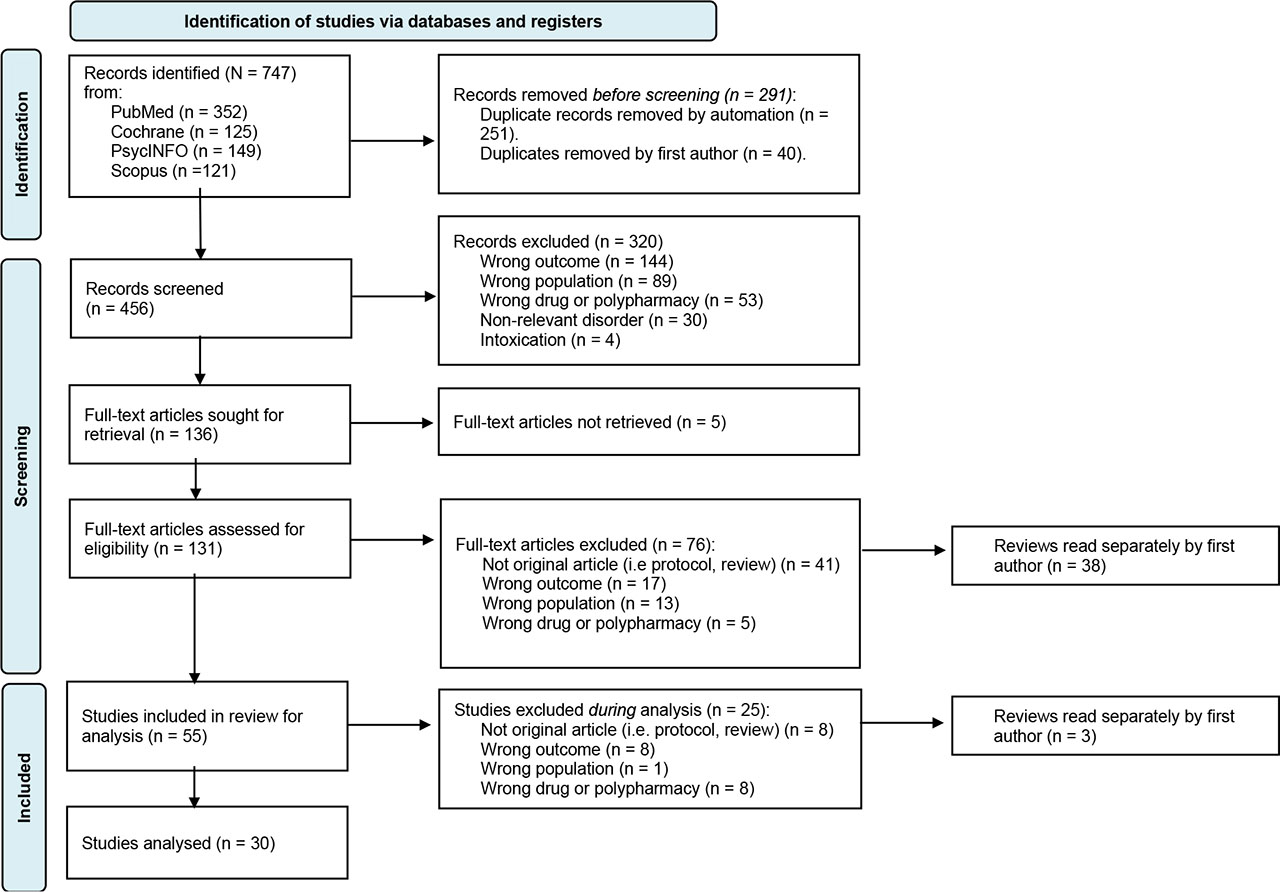
FIGURE 1.
Flow diagram of the selection process
A total of 30 articles were included in our study. Eighteen of the articles were classified as describing mania/hypomania and 12 articles as describing activation, see Tables 1 and 2 for the included articles.
Definitions of Activation and Mania/Hypomania as side effects of SSRI
Activation
Among the 12 articles categorized under activation (see Table 2), three terms were most frequently used: “activation” (n=2) (19, 23), “activation syndrome” (n=4) (42,43,44,45) and “behavioral activation” (n=7) (23,46,47,48,49,50,51). Other terms used were “activation cluster adverse events” (19), “(hypo)mania, psychic akathisia” (50) and “akathisia/agitation/behavioral activation” (46).
Among the 12 articles describing activation, eight presented clear definitions (19, 23, 42,43,44,45, 49, 50). Four articles defined activation by using the symptom clusters/domains - irritability, akathisia, disinhibition, mania and self-harm - created by Reid et al. (2010) (23, 42, 44, 45); see Table 2 for specific definitions in different articles. In the eight articles, the most common key words used for defining activation that provided a clear definition were irritability (n=6), akathisia (n=6), disinhibition (n=4), mania (n=3), self-harm (n=3) and hyperactivity (n=2).
Mania/Hypomania
A total of 18 articles were categorized as describing mania/hypomania as an adverse reaction to SSRI (see Table 1).
The most common term was “SSRI-induced ma-nia/hypomania” (n = 13) including antidepressant/sertraline/fluoxetine/citalopram/paroxetine-induced mania/hypomania (11, 26, 52,53,54,55,56,57,58,59,60,61,62,63). One article reported mania/hypomania one week after dis-continuation of SSRI (64). The term switch was mentioned in three articles (11, 55, 60). Other terms used were “psychic akathisia” (55) and “SSRI-induced dis-inhibition syndrome” (65); even though the latter had an unclear definition, it was evaluated as hypomania based on the description. Some articles used multiple terms (11, 55, 60, 65) (see Table 1)
However, only four of the 18 articles provided a clear definition of mania/hypomania (11, 53, 60, 64). Two of the articles used the definition of mania from DSM-III-R or DSM-IV (53, 60). One article used the outcome of bipolar diagnosis as a reference to manic conversion (11). One article had a definition of mania/hypomania after withdrawal of an antidepressant (64), referencing and applying the diagnostic criteria of mania during SSRI withdrawal by (66).
Assessment and diagnosis of Activation and Manic/Hypomanic switch
Activation
Assessment tools were used in six articles. Four used TEASAP (23, 42, 44, 45), one used an adverse event questionnaire (19), and one used the Adolescent Depression Scale (ADS) (49). One of the articles that used TEASAP also used the Clinical Global Impression-Severity of Activation (CGI-SA) (23). Three articles presented inter-rater/test-retest reliability (19, 23, 44). Two of these reported inter-rater reliability for the TEASAP and one for an adverse event questionnaire (19, 23, 44).
Mania/Hypomania
There were no assessment tools reported for mania/hypomania. Two articles stated that their diagnosis was based on DSM-III-R or DSM-IV (53, 60). One article stated that they used diagnostic criteria (64, 66). None of the articles reported inter-rater reliability.
Delimitation Between Activation and Mania/Hypomania
There were 188 different types of symptoms reported in the articles, 85 different symptoms from the activation group and 128 different symptoms from the mania/hypomania group. The total number of symptoms reported for activation was 181 and for mania/hypomania 206 (see appendix 2 and 4 for more details).
Symptoms overlapped to various degrees, except for ‘substance use and related behaviors’, which were only seen in mania/hypomania (1.5%). The following symptoms were more common in activation compared to mania/hypomania: ‘aggression and hostility’ (22.1% vs. 13.1%), ‘anxiety and panic symptoms’ (8.3% vs 1.5%), ‘suicide and self-harm’ (7.7% vs 1%), ‘psychomotor changes’ (9.4% vs 2.9%) and ‘behavioral changes’ (20.4% vs 16%). Mania/hypomania had more ‘cognitive and thought process alteration’ (17.5% vs 7.2%) ‘social and interpersonal changes’ (11.2% vs 3.9%) and ‘changes in mood and emotions’ (16.5% vs 10.5 %) compared to activation (See Figure 2 and appendix 4).
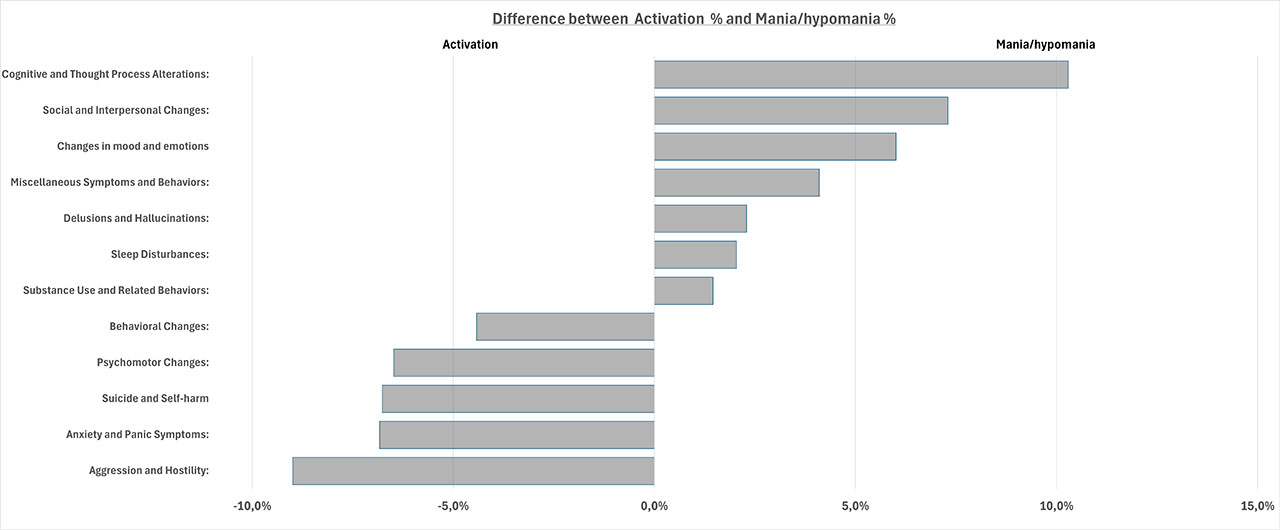
FIGURE 2.
Differences between symptoms reported for activation and for mania/hypomania.
Discussion
The purpose of this systematic review was to explore SSRI-induced activation and manic/hypomanic switch in children and adolescents with regard to their definitions, their mutual delimitation, and how they are assessed and diagnosed. In summary, vague definitions and inadequate assessments and diagnostic procedures were found. Moreover, there was an ambiguous overlap of the presented symptoms, even if some differences existed between SSRI-induced activation and manic/hypomanic switch. Data remain sparse, since most studies focused on SSRI treatment efficacy and did not systematically investigate side effects.
Activation
Interchangeable terms were used for activation. This review supports reports in earlier reviews regarding the lack of a clear definition that is comprehensively used (1, 14, 20, 33). The assessment tool TEASAP was used in four studies, where two of these described psychometric evaluation of the instrument (23, 44). However, TEASAP does not have a cut-off that provides diagnostic separation between activation and mania/hypomania. Among five articles excluded due to concomitant medications (18, 67,68,69,70), two did use clear definitions (67, 68). Garcia-Delgar et al., 2018 used the following definition “A worsening of a patient’s clinical presentation in one or more of five symptom domains: irritability, akathisia, disinhibition, mania, and self-harm” and used two assessment instruments: TEASAP and CGI-SA. Henry et al. (2006) also provided a clear definition of behavioral activation, including increased impulsivity, aggression, distractibility, hyperactivity, and sleep disturbance. These definitions could provide suggestions for common definitions in future studies.
Mania/hypomania
Multiple terms and interchangeable concepts were used to describe mania/hypomania. The majority of articles did not present a clear and operational definition (78%) despite the possibility to use criteria from common diagnostic classification systems. Among the four articles that provided a clear definition for mania/hypomania, two referred to DSM criteria (53, 60), one defined mania through the new bipolar ICD-9 diagnosis with explicit criteria (11), and another used the diagnostic criteria for mania caused by medicine withdrawal suggested by Narayan et al. (2012) (64). None of the reviewed articles reported using any instrument for assessment. This could mirror common practice in child and adolescent psychiatric services and compromises the ability to assess adverse drug reactions, which creates uncertainty about the reliability of the findings presented. No article presented any inter-rater reliability for the assessors of mania/hypomania. Children and adolescents might fulfill criteria for a manic/hypomanic episode except for the time criteria, since manic/hypomanic episodes in children that last seven and four days, respectively, are rare (29). The phenomenon of previously diagnosed primarily disruptive behavior being more often designated as bipolar disorder has led to a significant increase in the prevalence of bipolar disorder in children. An already difficult diagnosis in adults has been shown to be even more challenging to transpose to younger populations, and additional complexities arise when parsing clinical phenomenology from normative development changes in youth (71). The present study underpins the complexity of the increased diagnosis of bipolar disorder in childhood, and the relationship between the increased prescription of SSRIs and a lack of definition of the side effects. Future studies should present both fulfilled criteria and duration.
How are activation and mania/hypomania as side effects of SSRI delimited from each other?
In Figure 2 and Appendix 4 it is shown that symptoms of mania/hypomania and activation overlap. However, there were some differences, see Figure 2. That suicidality is more associated with activation is in line with earlier studies (13). The clear overlap of symptoms has clinical implications and activation has sometimes been claimed to be as severe as mania (72). In contrast, one earlier review reported that mania/hypomania both had a prolonged onset of symptoms and more severe symptoms (32). Keeton et al. (2009) speculate that anxious children might become braver and test boundaries through SSRI-reduced anxiety, and the new behavior might be considered an oppositional behavior incorrectly interpreted as activation or mania/hypomania (21). Some delimit activation as appearing earlier in SSRI treatment (during the first 2–4 weeks of SSRI treatment) and disappearing during medication withdrawal or dose reduction (1, 3, 9). The pathophysiology of activation seems to be associated with a sensitivity to sudden increase in serotonin levels, even if the mechanism is still poorly understood. It likely involves developmental differences in serotonergic function and hypersensitivity within arousal-regulating neural circuits (14). Meanwhile, some believe it represents subsyndromal bipolar disorder (1). However, the pathophysiology of manic switch in children is also poorly understood. Joseph et al. (2009) proposed several explanatory models that may explain the relationship between manic switch and antidepressants (30). These include turning on genes, latent bipolar diathesis or cause serotonergic–dopaminergic imbalance leading to mood destabilization (30). Activation is also considered dose-related and alleged to be more common in those who are low metabolizers. However, this needs further exploration and research needs to be more congruent regarding definitions and assessments.
Summary and clinical implications
There is a considerable risk of excessive arousal or activation or manic/hypomanic switch in children being treated with SSRIs (1). There was no consensus regarding the definition of activation in the literature. Hypomania or mania, on the other hand, are clearly defined by criteria in the diagnostic classification systems, but these criteria were rarely used to define SSRI-induced mania/hypomania. Diagnostic interviews were not used in the reviewed articles. The most commonly reported instrument for the assessment of activation was TEASAP, yet it was rarely used. There were some suggestions for delimitation between activation and manic/hypomanic switch but, in order to answer this question, future studies need to use common criteria and reliable instruments for assessment, and provide support for the reliability of assessors, e.g., present inter-rater reliability. These results, therefore, suggest the use of TEASAP for predicting activation and of DSM-5 criteria for mania/hypomania, assessed by trained and reliable assessors. For future differentiation between activation and mania/hypomania, observations of symptom severity, how quickly the symptoms occur, and how quickly the symptoms disappear when decreasing or withdrawing SSRI, could be beneficial. This study emphasizes the controversy of increased SSRI use in the pediatric population without clear definitions of the side effect profiles. The differences in symptoms between activation and mania/hypomania found in this review (Figure 2) should be replicated in more comprehensively conducted studies.
Limitations
This review has several limitations. A limited number of articles were included and many articles were excluded due to the use of polypharmacy, which could have affected the results (32). While data on SSRI dose, treatment duration, and concomitant medications were included in the analysis, these variables were not consistently reported across all studies. Therefore, it is a limitation that potential differences in activation risk related to dosage or concomitant medications could not be fully evaluated. Since the definitions of activation were mostly unclear, there might also have been some bias in how we have interpreted the descriptions. Moreover, in most studies the relation in time between treatment and symptoms was unclear, which increased the uncertainty about the connection between them. Finally, symptoms were not reported in a common structured way, which might result in false differences.
Notes
[7] Contributed by Contributions
Ali Dadfar: Conceptualization and design of the study, Methodology, Data curation, Formal analysis, Investigation, Methodology, Visualization, Writing – original draft.
Sara von Wallenberg Pachaly: Conceptualization and design of the study, Investigation, Methodology, Validation, Writing – review & editing.
Mia Ramklint: Conceptualization and design of the study, Investigation, Methodology, Resources, Supervision, Project administration, Funding acquisition, Writing – review & editing.