
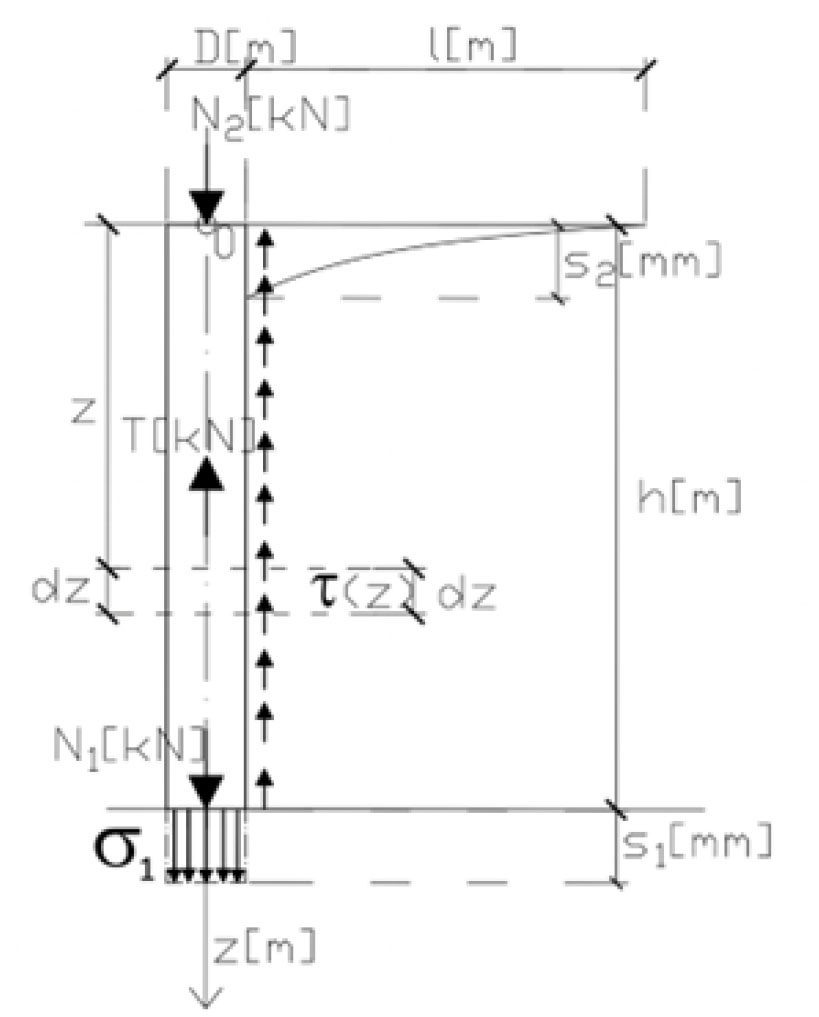
Figure 1:
Graphical description of the loads acting on a pile in the presented approach. D – Pile diameter [m]; h – Pile length [m]; N2 – Load acting on the head of the pile [N]; N1 – Soil reaction at the toe [N]; T – Pile skin resistance [N]; s2,1 – Settlement value of the head and base of the pile [mm]; σ1 – Stress under the base of the pile [Pa]; τ – Stress acting on the skin of the pile, representing the skin resistance [Pa]; l – Arm of the soil deformation according to Kirchhoff's principle [m].
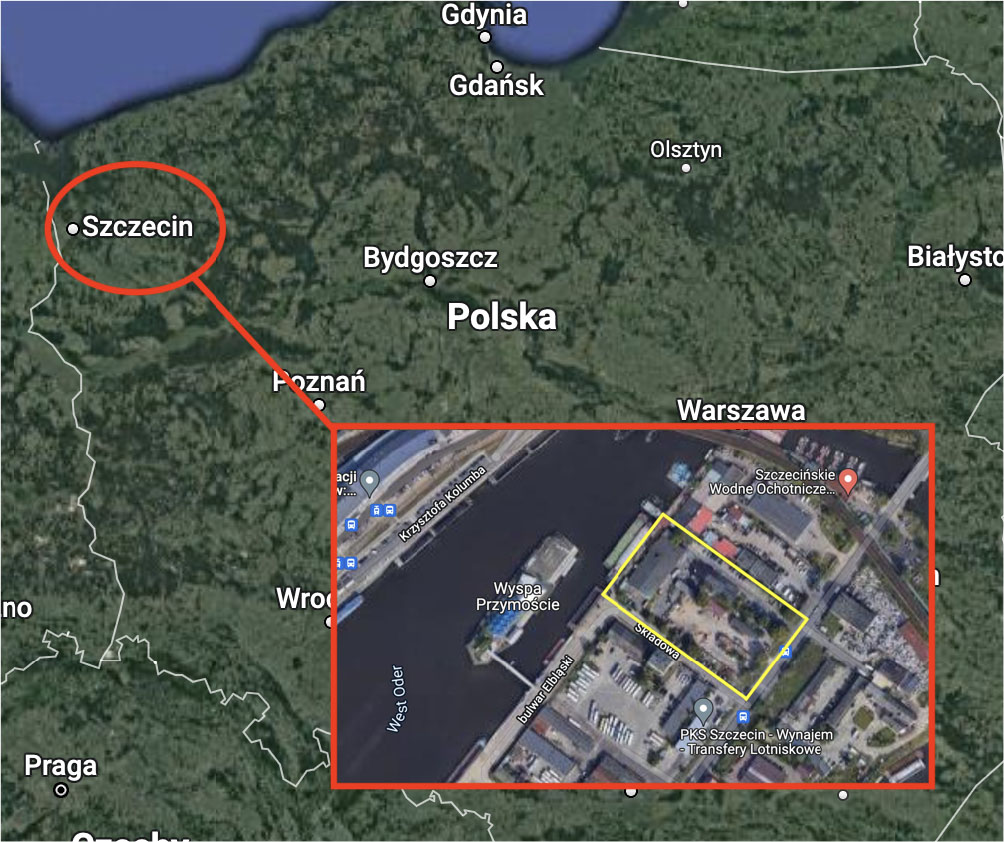
Figure 2:
Location of a static load test project in Northern Poland, Szczecin, Leona Heyki 3 street.
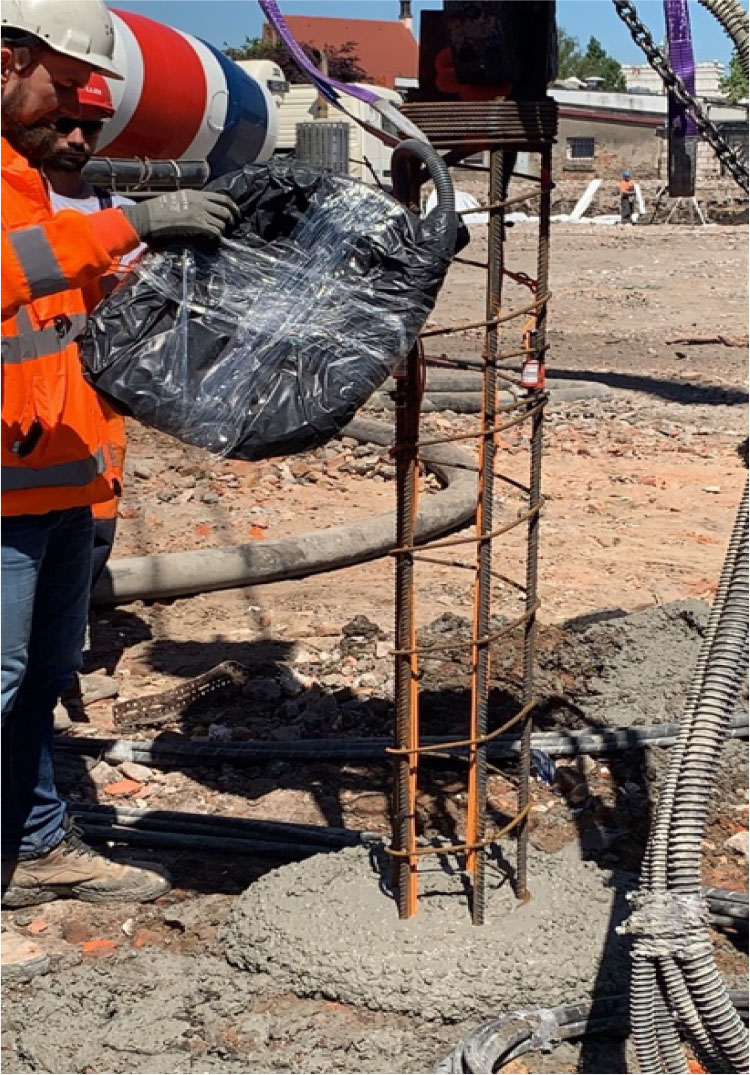
Figure 3:
Pile designed for testing with visible extensometers attached to the reinforcing steel while casting (image captured by the author).
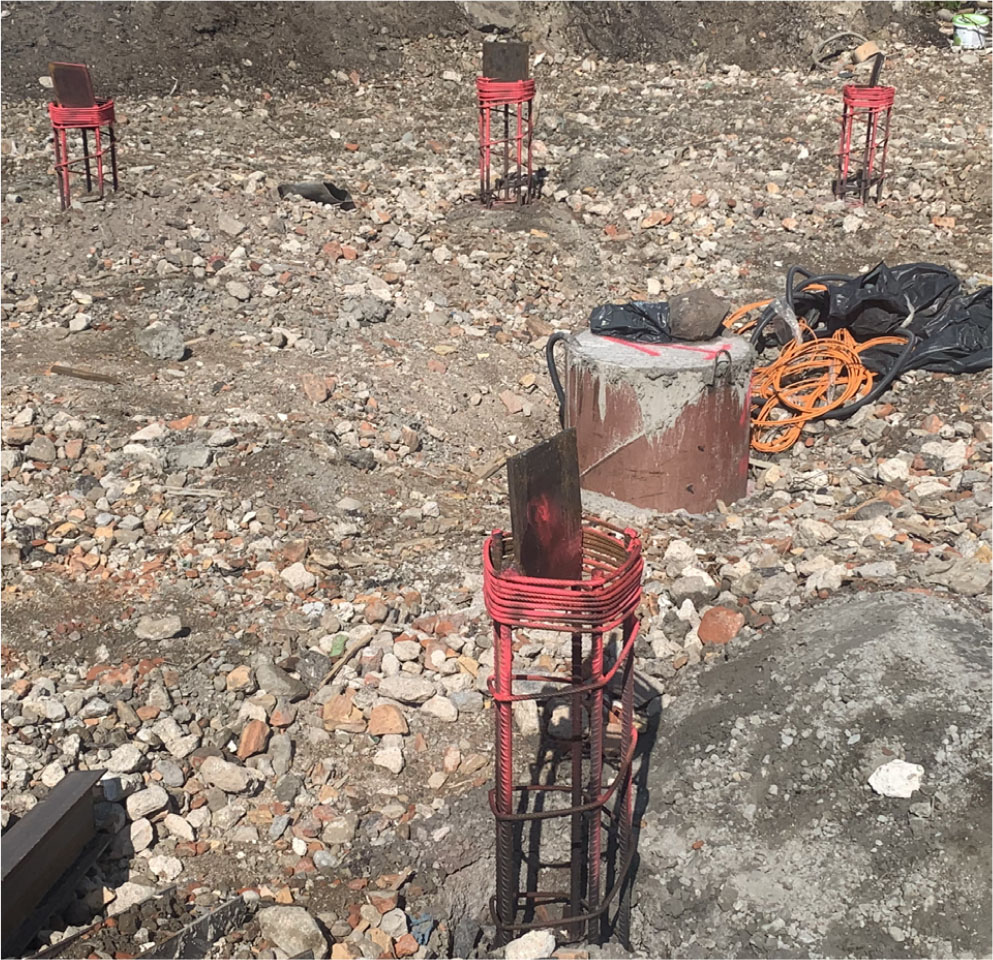
Figure 4:
Part of the site prepared for static load testing (image captured by the author).
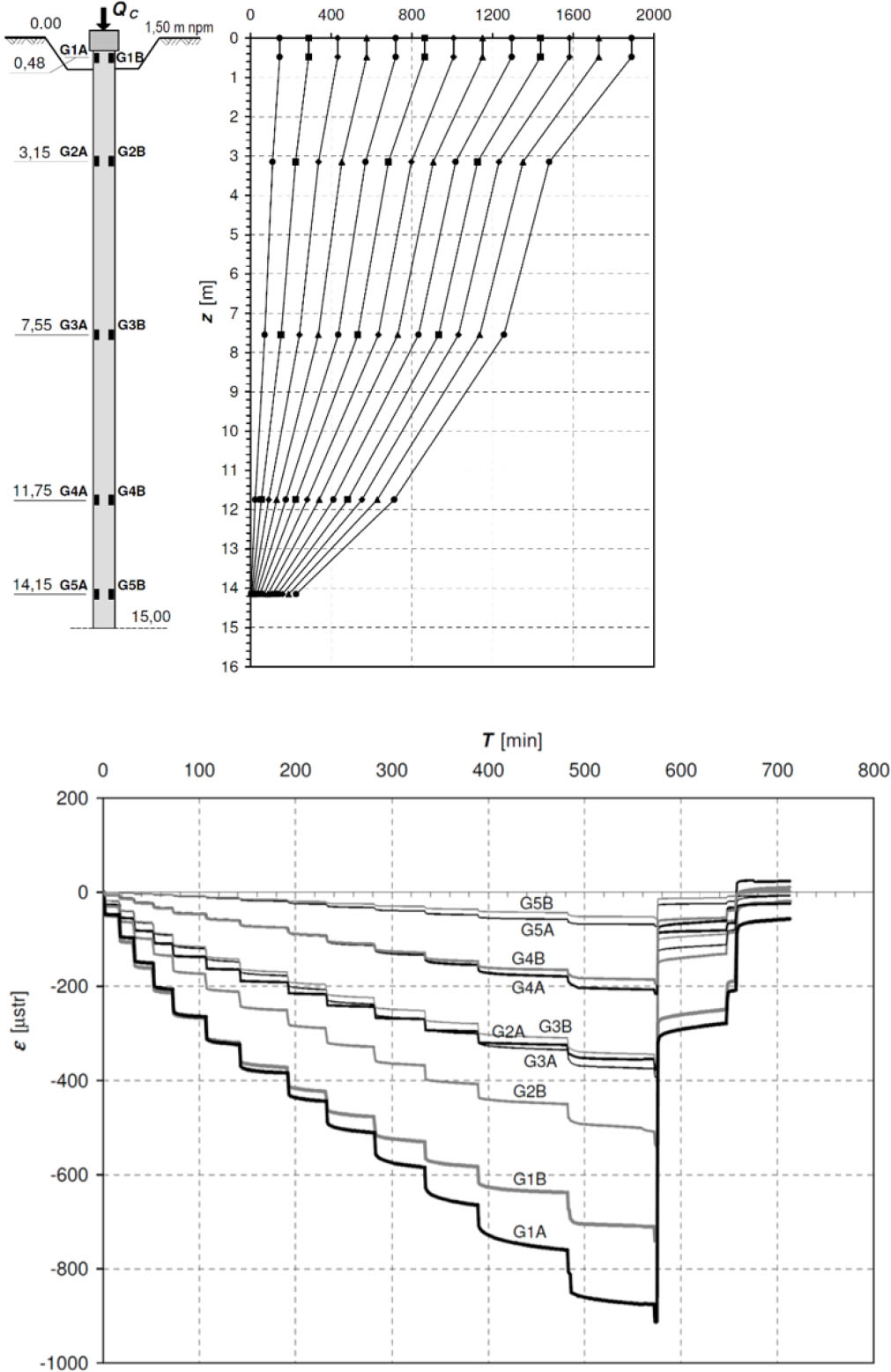
Figure 5:
Distribution of the axial force along the pile shaft and deformation of the pile shaft measured during the static load test with extensometers [36].
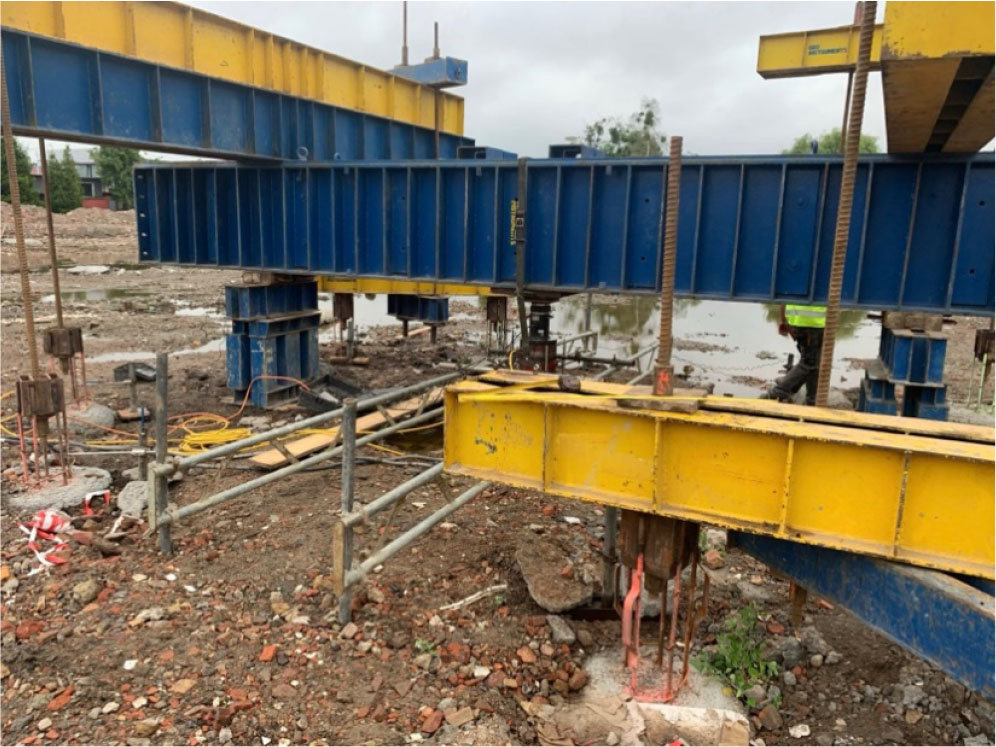
Figure 6:
Completed static load test site ready for testing (image obtained from authors' library).
Table 1:
Load–settlement values obtained from the static load test; Pile Heyki 1.
| N [kN] | 0 | 145 | 289 | 432 | 576 | 720 | 863 | 1007 | 1150 | 1295 | 1438 | 1581 | 1726 | 1890 |
|---|---|---|---|---|---|---|---|---|---|---|---|---|---|---|
| s [mm] | 0,00 | 0,57 | 1,14 | 1,86 | 2,64 | 3,69 | 4,82 | 6,54 | 8,38 | 10,83 | 13,38 | 16,41 | 20,28 | 26,08 |
Table 2:
Load–settlement values obtained from static load test for Pile Heyki 2.
| N [kN] | 0 | 145 | 293 | 431 | 575 | 720 | 864 | 1006 | 1151 | 1294 | 1438 | 1582 | 1726 | 1896 | 2013 | 2156 | 2300 |
|---|---|---|---|---|---|---|---|---|---|---|---|---|---|---|---|---|---|
| s [mm] | 0,00 | 0,71 | 1,27 | 1,88 | 2,57 | 3,49 | 4,48 | 6,04 | 7,77 | 10,24 | 13,24 | 16,13 | 19,59 | 23,20 | 27,14 | 31,73 | 36,42 |
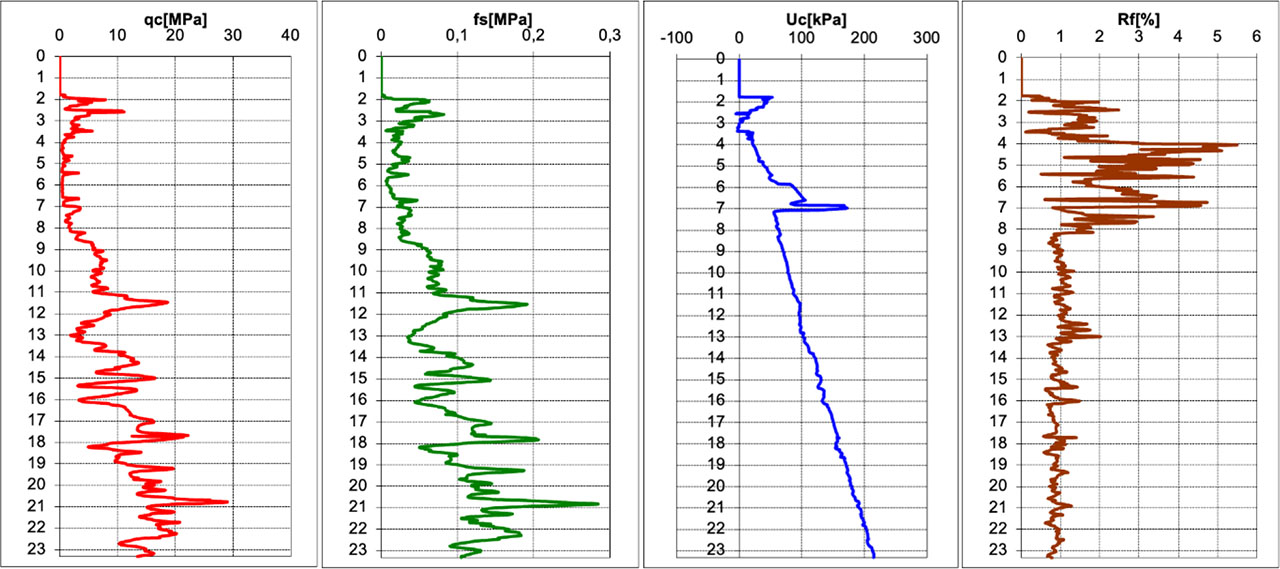
Figure 7:
CPTu investigation results for Pile 1 [27].
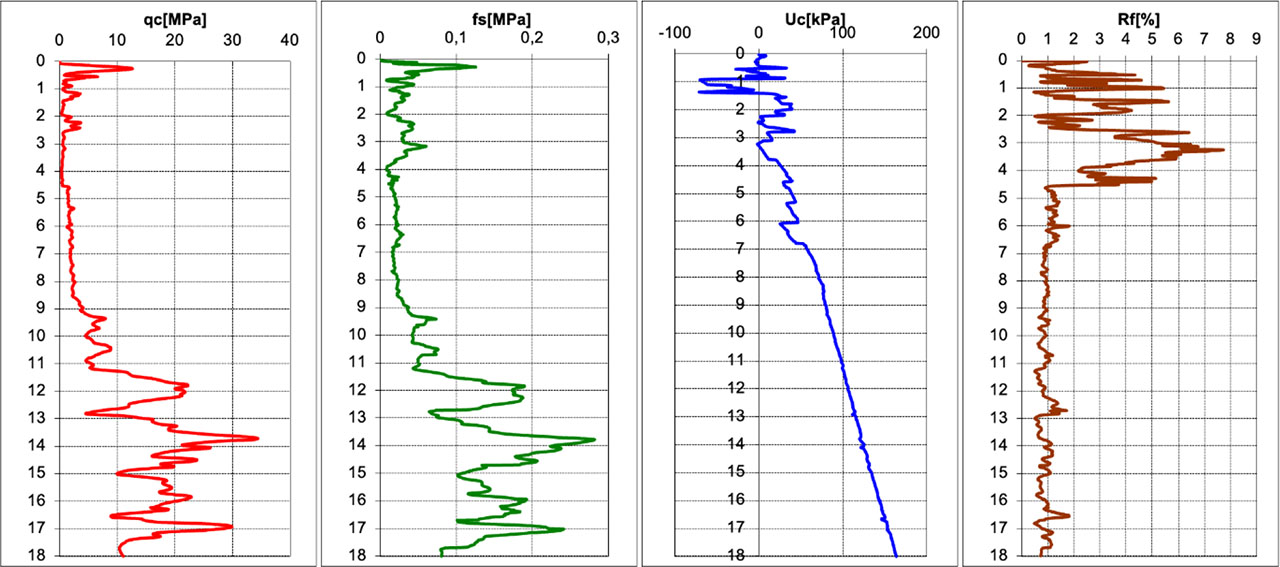
Figure 8:
CPTu investigation results for Pile 2 [27].
Table 3.
Geotechnical parameters of the soil profile [27].
| qc | svo | ID | Ic | qn | βq | Nm | Φ′ | C′ | Su(Cu) | M0 | |||
|---|---|---|---|---|---|---|---|---|---|---|---|---|---|
| [m] | [-] | [-] | [MPa] | [KPa] | [%] | [-] | [MPa] | [-] | [-] | [°] | [kPa] | [kPa] | [MPa] |
| 0,0 | |||||||||||||
| 1,8 | Mg(hgrcFSa) | nN(Pd+H+c+ż) | 2,20 | 35 | 20 | - | 2,19 | 0,02 | - | 29° 30′ | - | - | 9,5 |
| 2,3 | Mg(grchclSa) | nN(Pg+H+c+ż) | 1,30 | 42 | - | 0,54 | 1,27 | 0,01 | 11,1 | 22° 10′ | 6 | 98 | 9,2 |
| 2,5 | Mg(grchFSa) | nN(Pd+H+c+ż) | 2,20 | 57 | 15 | - | 2,14 | 0,00 | - | 29° | - | - | 9,4 |
| 3,8 | Or(Nm) | Nm | 0,45 | 92 | - | 0,50 | 0,38 | 0,04 | 3,7 | 13° 10′ | 3 | 20 | 1,1 |
| 6,6 | Or(Nm) | Nm | 0,65 | 117 | - | 0,60 | 0,58 | 0,12 | 5,1 | 15° 50′ | 4 | 31 | 2,5 |
| 7,0 | Or(Nmp)/HFSa | Nmp/PdH | 1,10 | 133 | - | 0,44 | 1,00 | 0,01 | 6,8 | 18° 50′ | 5 | 71 | 7,9 |
| 8,2 | FSa | Pd | 3,30 | 149 | 20 | - | 3,18 | 0,00 | - | 29° 20′ | - | - | 14,2 |
| 8,6 | FSa | Pd/Ps | 6,40 | 177 | 40 | - | 6,25 | 0,00 | - | 32° 10′ | - | - | 28,4 |
| 11,1 | FSa | Pd | 13,20 | 208 | 65 | - | 13,03 | 0,00 | - | 35° 10′ | - | - | 64,9 |
| 11,8 | FSa | Pd | 7,30 | 220 | 40 | - | 7,12 | 0,00 | - | 32° 20′ | - | - | 32,4 |
| 12,4 | saSi | Πp | 2,60 | 236 | - | 0,74 | 2,40 | 0,00 | 11,1 | 22° 10′ | 7 | 171 | 21,8 |
| 13,3 | FSa | Pd | 7,00 | 250 | 35 | - | 6,80 | 0,00 | - | 31° 50′ | - | - | 31,1 |
| 13,8 | FSa | Pd | 11,10 | 268 | 55 | - | 10,88 | 0,00 | - | 33° 50′ | - | - | 54,6 |
| 15,2 | saSi/siSa | Πp/Pπ | 3,40 | 292 | - | 0,82 | 3,17 | 0,00 | 12,2 | 22° 50′ | 7 | 226 | 28,5 |
| 16,2 | FSa/MSa | Pd/Ps | 14,00 | 320 | 60 | - | 13,74 | 0,00 | - | 34° 30′ | - | - | 70,3 |
| 18,0 | FSa | Pd | 7,00 | 342 | 30 | - | 6,73 | 0,00 | - | 31° | - | - | 31,2 |
| 18,4 | FSa | Pd | 10,50 | 353 | 45 | - | 10,22 | 0,00 | - | 33° | - | - | 51,8 |
| 19,1 | FSa/MSa | Pd/Ps | 15,40 | 400 | 60 | - | 15,08 | 0,00 | - | 34° 30′ | - | - | 75,9 |
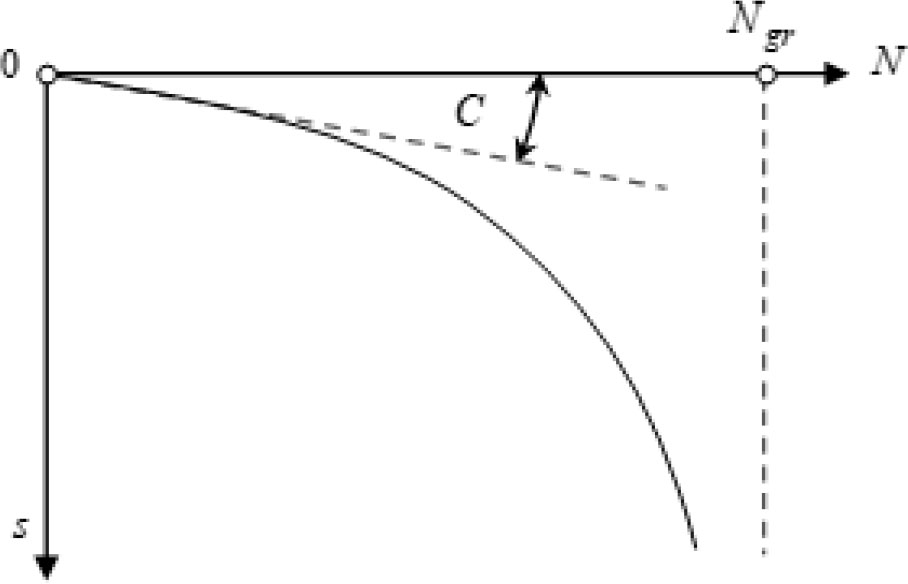
Figure 9:
Example of the M–K curve graph [20].
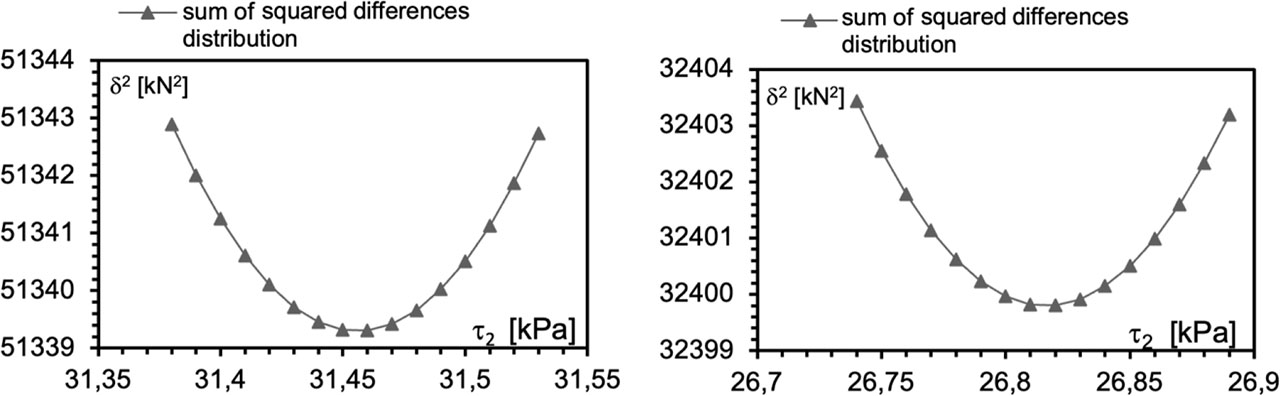
Figure 10:
Least-squares graphs of the results obtained for the analyzed piles.
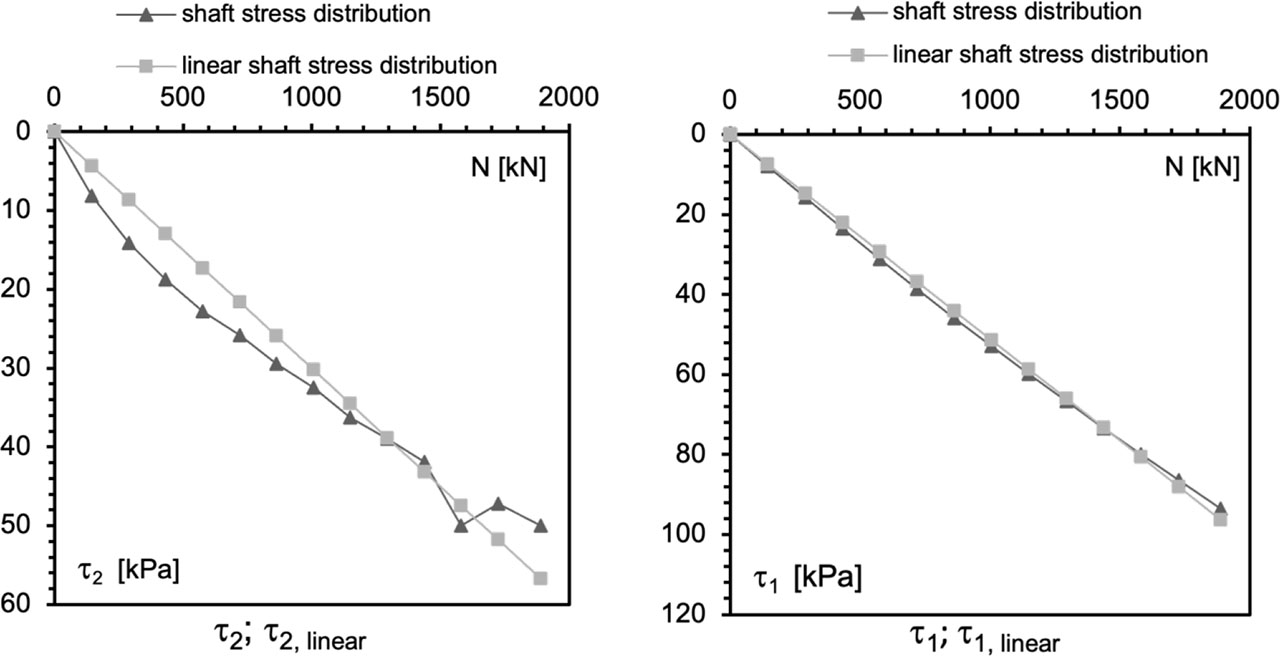
Figure 11:
Relationship between the load acting on the head of the pile and the shear stress at the head level (τ2) and base level (τ1) for the pile taken from Heyki 1 [by author].
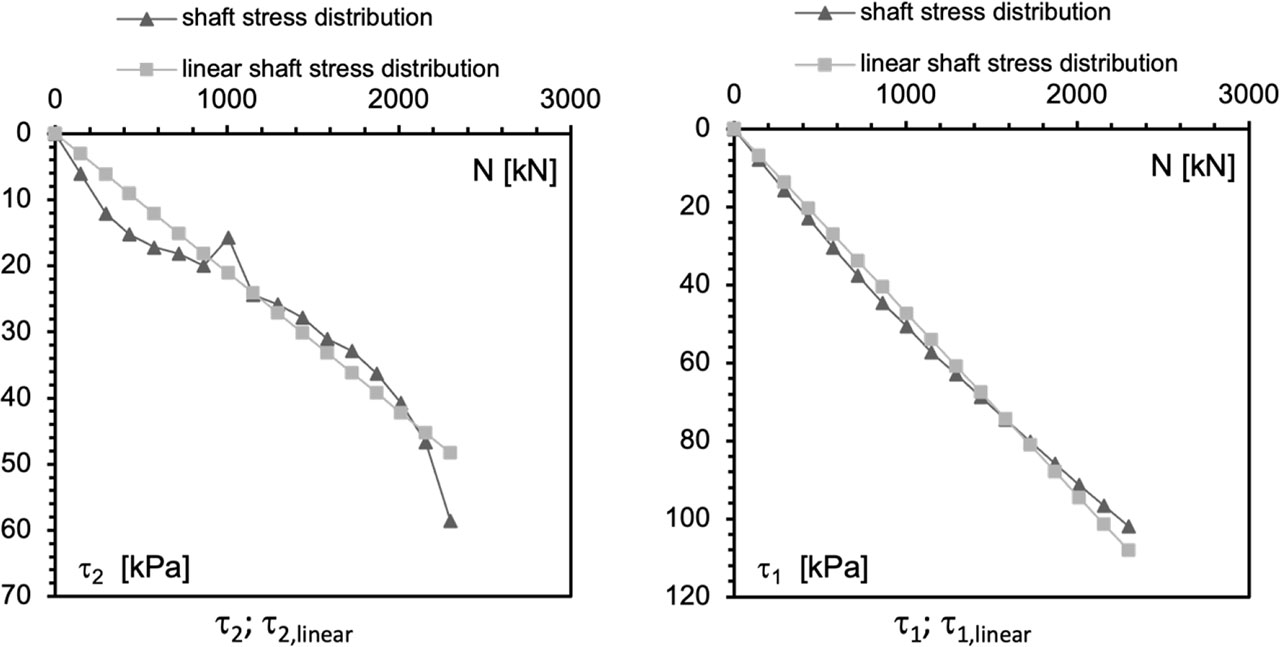
Figure 12:
Relationship between the load acting on the head of the pile and the shear stress at the head level (τ2) and base level (τ1) for the pile taken from Heyki 2 [by author].
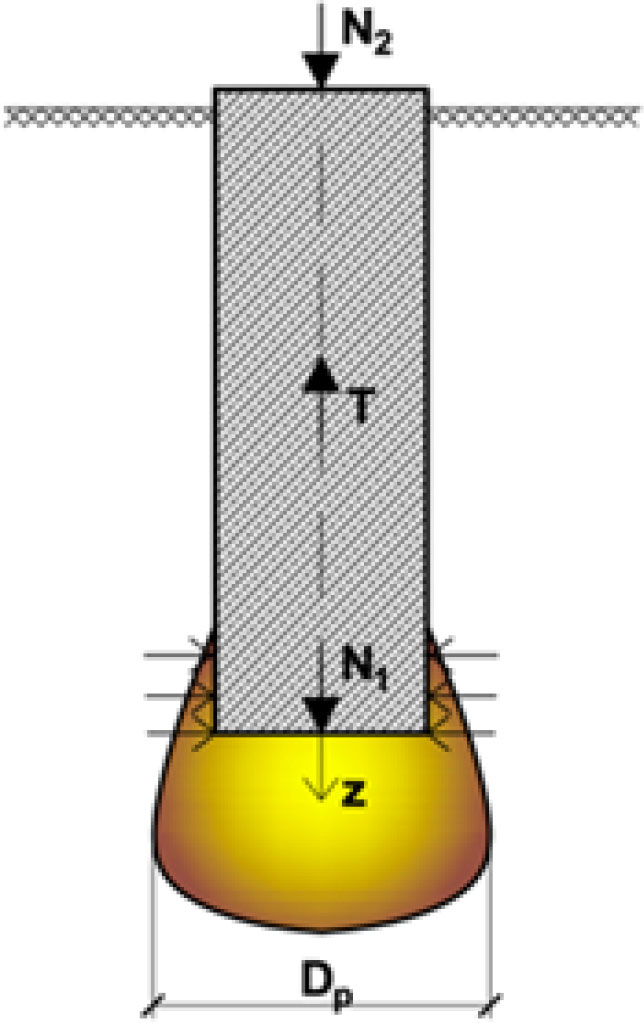
Figure 13:
Soil under and around the pile base forming a sphere, where the parameters vary significantly [22, 28].
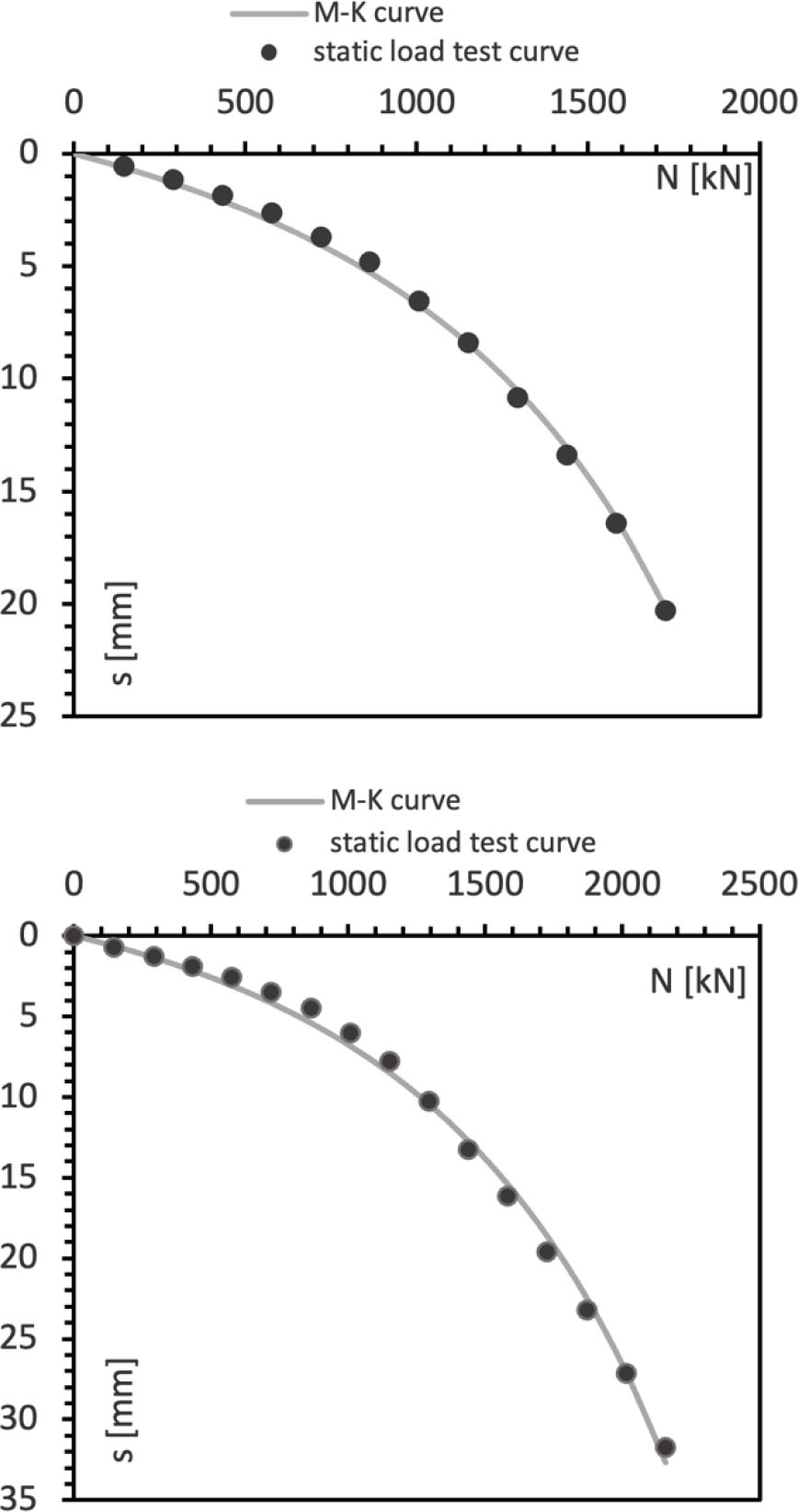
Figure 14:
M–K curve and static load test results compared for Pile 1 (left) and Pile 2 (right).