
1. Introduction
Pile–soil interactions have been discussed since the 1940s [2; 30]. The bearing capacity of piles can be estimated using various methods [1; 3; 8; 26; 32]. The most widely known are based on static load test results [4; 5; 18] and transformational functions [12; 13; 19]. The author of the present study developed a method based on the Meyer–Kowalów (M–K) curve [20], which includes the static load test results and allows the vertical distribution of the skin shear stress as a boundary condition in numerical solutions. In this approach, the following mathematical descriptions are applied:
Pile–soil interaction is described using Kirchhoff's principle [22] in accordance with the graph shown in Fig. 1.
The relationship between the pile rigidity and the soil elasticity modulus Es,v/Ec is represented by a constant a. For the convenience of further calculation, it is introduced in the mathematical calculations. The pile dimensions, pile material, and soil properties can be used to estimate the relevant values:
G – Shear modulus of the soil along the skin of the pile material [Pa]; Ec – Elastic modulus of the material [Pa]]; Es,v – Soil elasticity modulus along the pile skin [Pa]; ν – Poisson's coefficient of the soil along the skin of the pile [-]These assumptions can help determine the linear distribution of the pile skin resistance, which is presented later herein.
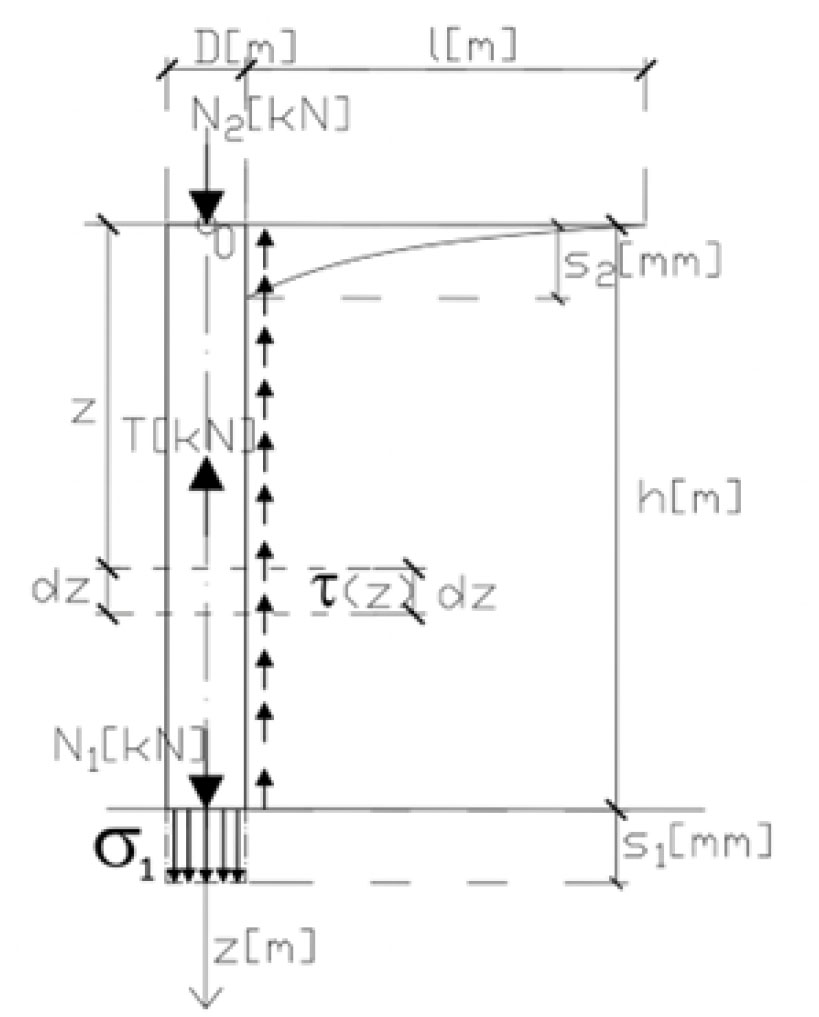
Figure 1:
Graphical description of the loads acting on a pile in the presented approach. D – Pile diameter [m]; h – Pile length [m]; N2 – Load acting on the head of the pile [N]; N1 – Soil reaction at the toe [N]; T – Pile skin resistance [N]; s2,1 – Settlement value of the head and base of the pile [mm]; σ1 – Stress under the base of the pile [Pa]; τ – Stress acting on the skin of the pile, representing the skin resistance [Pa]; l – Arm of the soil deformation according to Kirchhoff's principle [m].
In contrast to the approaches presented in literature, which discuss, for example, skin resistance calculations based on a centrifuge model [7], the method used in this study describes the mechanism of pile skin resistance mobilization as a result of the soil deformation under the load applied to the head of the pile and the axial force variation in the pile. Author intentionally decline to define the skin resistance as the result of the friction occurring between the pile and the soil. This friction is considered to occur after the boundary skin resistance value is surpassed when the soil starts to slide along the pile skin, which may decrease the actual pile-bearing capacity. It has been suggested that the residual stress should be included when calculating the pile-bearing capacity [6]. The omission of this effect is considered a mistake. This study did not directly use the force of the soil friction. Instead, it considered the mechanism of the bending of the soil space around the pile according to Kirchhoff's principle, which allowed to consider the entire soil body. An analysis of the experimental results showed that the applied mathematical description validates the presented approach [28]. The verification of the static load test results showed a positive correlation between the calculation and the field investigation results [22]. Multiple studies have been conducted on specific soil geotechnical parameters based on static load testing [9; 14; 15; 25; 33]. Piles technology affects the surface of pile skin, which should be considered in the design approach [29; 31].
Because the analysis is based on a set of piles, the research is extended to more field tests, including static load tests equipped with extensometers, to measure the pile-length shortening and verify the possibility of using the method in a wider range of cases. The piles that are considered have been the subjects of two notable studies [16; 17] and appear to be the most reliable for verification.
2. Description of Static Load Test Experiments and Results
The additional static load tests conducted were part of a project conducted in Northern Poland, Szczecin, Leona Heyki 3, near the Odra River. The approximate location is shown in Fig. 2.
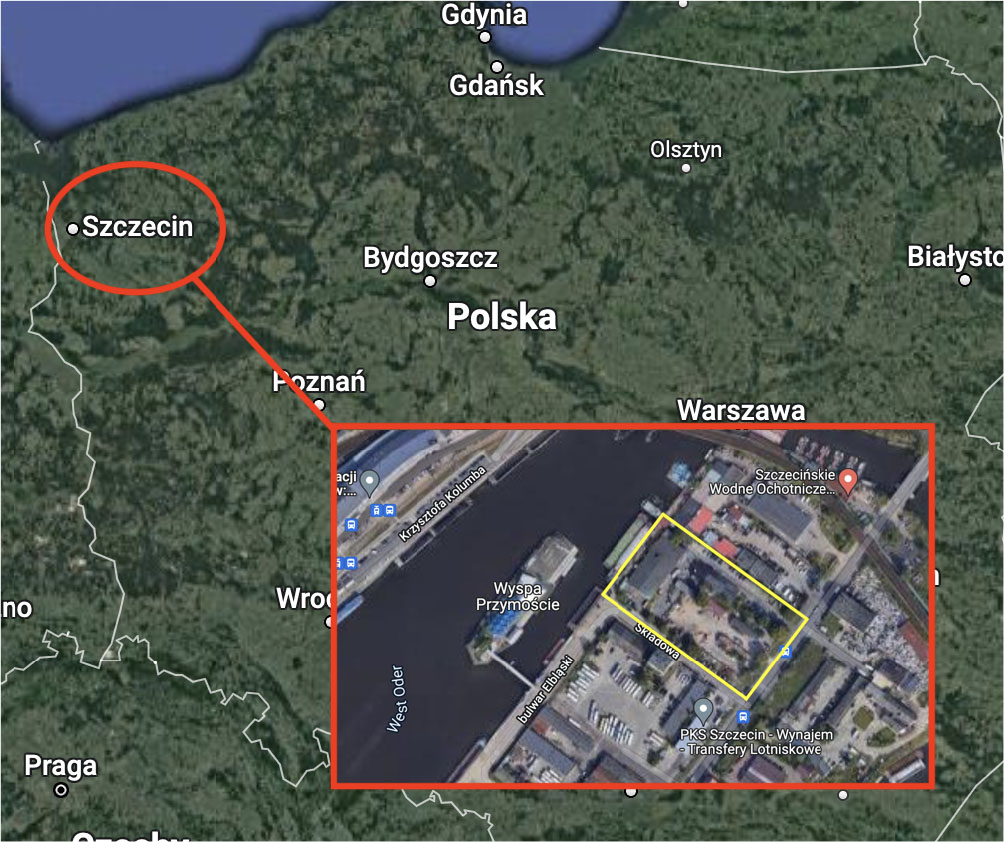
Figure 2:
Location of a static load test project in Northern Poland, Szczecin, Leona Heyki 3 street.
Static load tests were designed to determine the boundary-bearing capacity of the piles with an axial force distribution along the pile shaft. For this project, approximately 1,000 piles were ordered from a local developer [35]. Piles were designed with diameter D=0,4 [m] and length L=14,0–16,0 [m] depending on the placement in the area.
The test piles were equipped with extensometers to determine the axial distribution of the force N(z) under a load N2 applied to the pile head. Figure 3 shows the extensometer cables placed in the pile and the manner in which it is protected from damage.
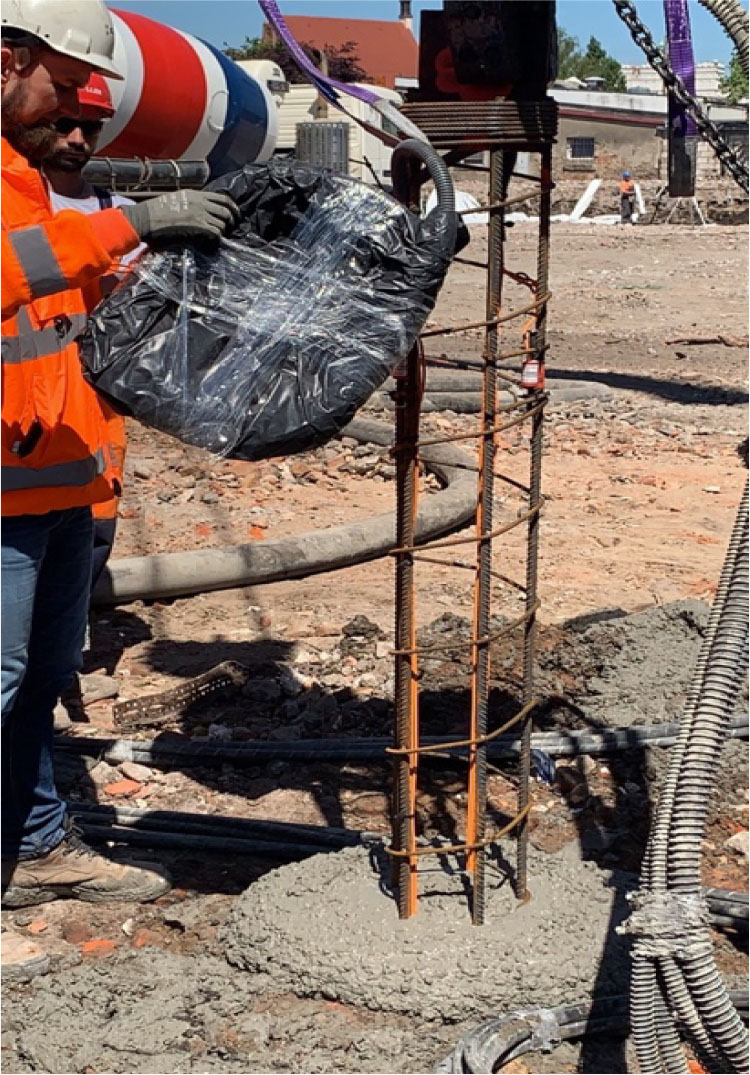
Figure 3:
Pile designed for testing with visible extensometers attached to the reinforcing steel while casting (image captured by the author).
Shown below are part of the results obtained during static load tests. Figure 5 presents the distribution of the axial force along the pile shaft and deformation measured during the static load test. In the scheme, there are placements of extensometers presented, along the reinforcement basket of the analyzed pile. Each of the analyzed pile had prefabricated reinforcement baskets with measurement devices attached, and they were placed in the pile after it was bored.
The author was present during the preparation period and static load process. I believe that performing natural-scale tests in field environments is the best way to verify the theoretical assumptions. Figure 4 shows one of the static load test stations after the casting of necessary piles to perform a single test. All the piles used to perform the tests needed to achieve their design before constructing the stand are shown in Fig. 6.
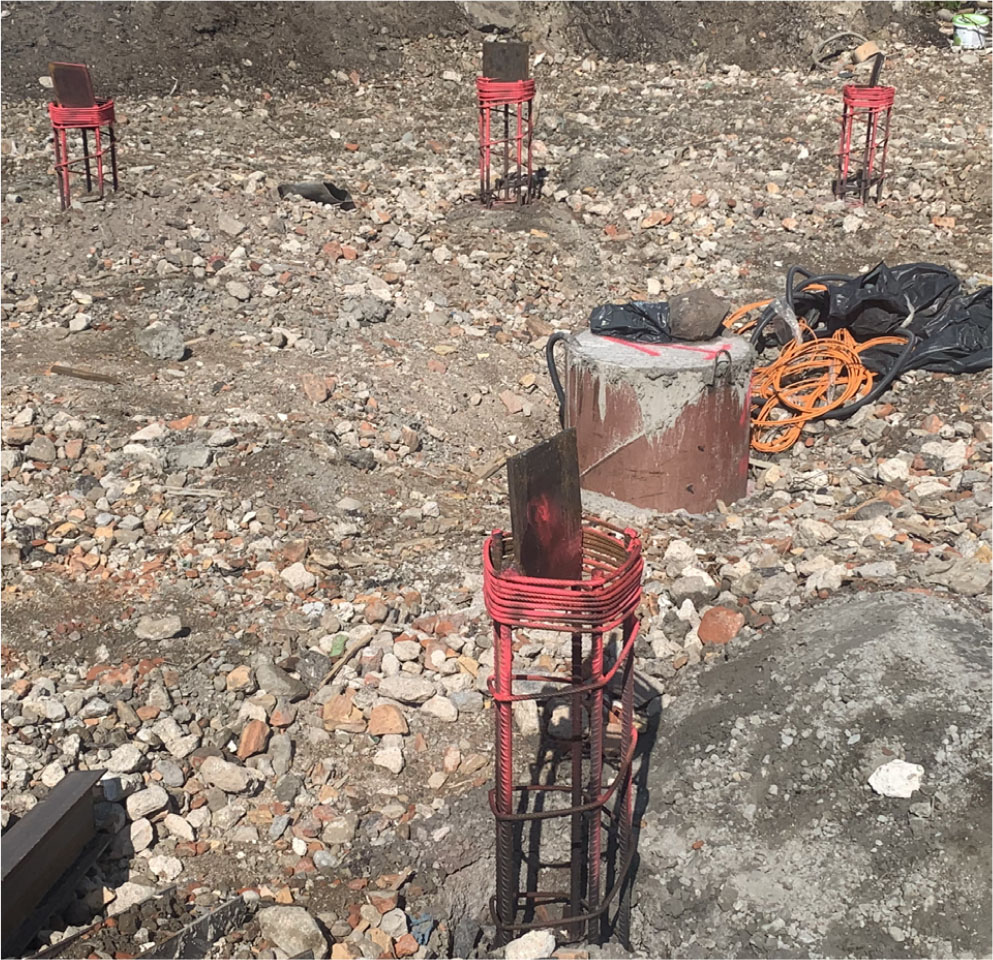
Figure 4:
Part of the site prepared for static load testing (image captured by the author).
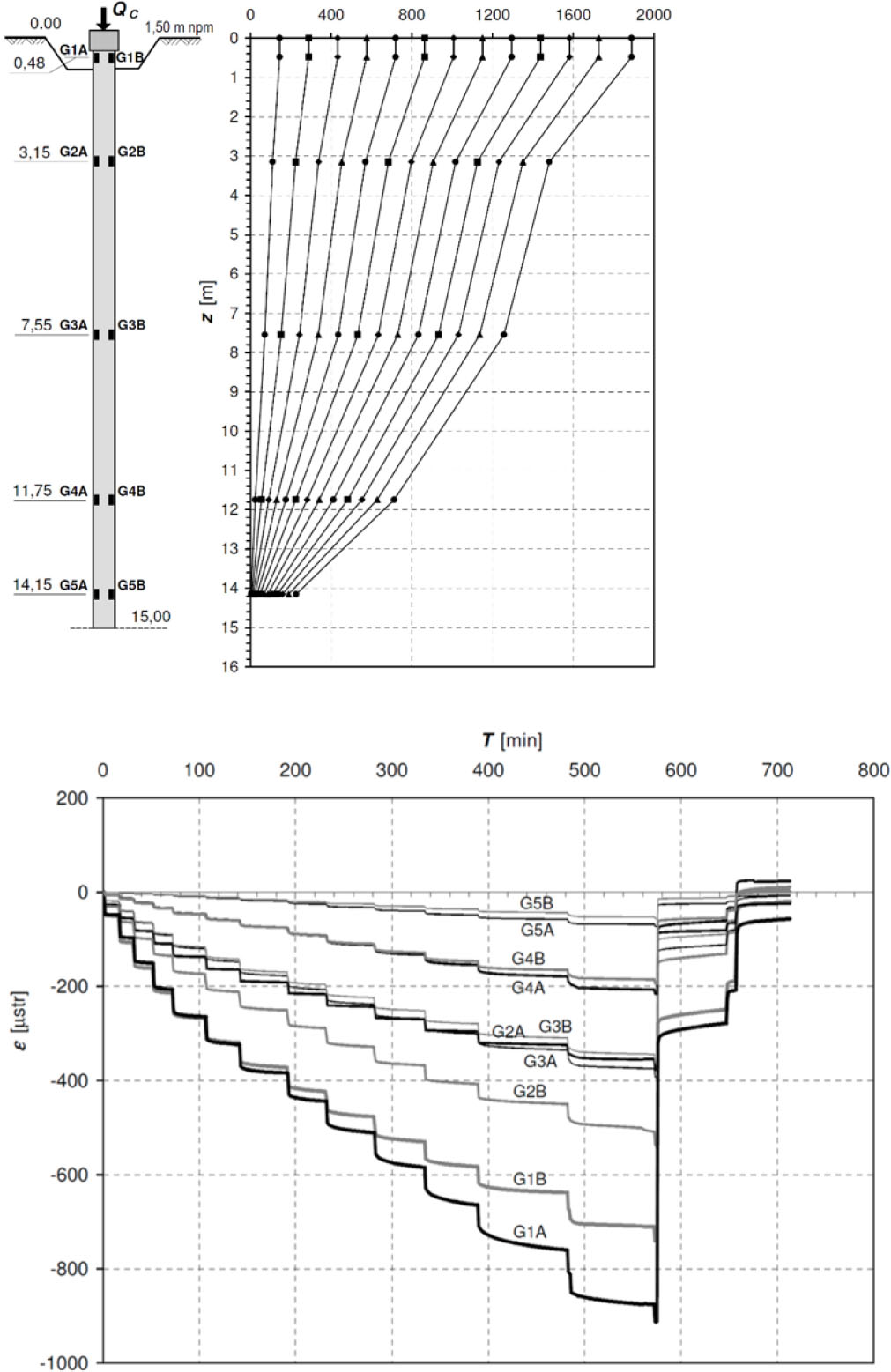
Figure 5:
Distribution of the axial force along the pile shaft and deformation of the pile shaft measured during the static load test with extensometers [36].
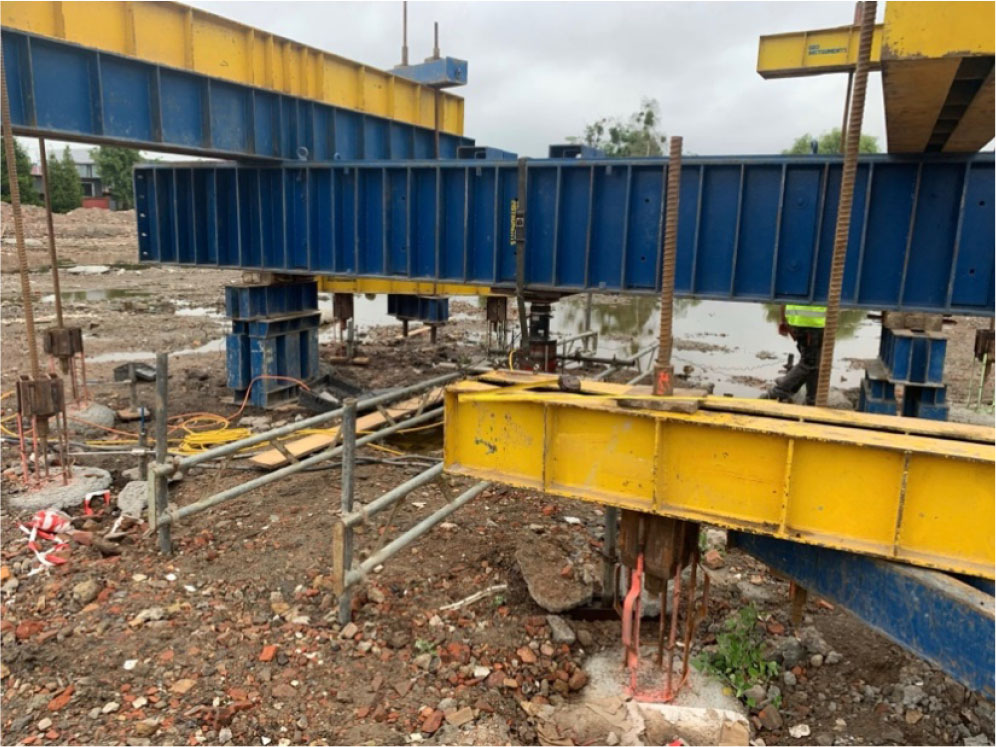
Figure 6:
Completed static load test site ready for testing (image obtained from authors' library).
Displacement piles were used to determine whether previous calculations could be applied to other piling technologies, as previous work focused on CFA piles [22]. Tables 1 and 2 present the static load test results. Figures 7 and 8 present the results of the CPTu investigation. Table 3 presents the geotechnical parameters of the soil profile.
Table 1:
Load–settlement values obtained from the static load test; Pile Heyki 1.
| N [kN] | 0 | 145 | 289 | 432 | 576 | 720 | 863 | 1007 | 1150 | 1295 | 1438 | 1581 | 1726 | 1890 |
|---|---|---|---|---|---|---|---|---|---|---|---|---|---|---|
| s [mm] | 0,00 | 0,57 | 1,14 | 1,86 | 2,64 | 3,69 | 4,82 | 6,54 | 8,38 | 10,83 | 13,38 | 16,41 | 20,28 | 26,08 |
Table 2:
Load–settlement values obtained from static load test for Pile Heyki 2.
| N [kN] | 0 | 145 | 293 | 431 | 575 | 720 | 864 | 1006 | 1151 | 1294 | 1438 | 1582 | 1726 | 1896 | 2013 | 2156 | 2300 |
|---|---|---|---|---|---|---|---|---|---|---|---|---|---|---|---|---|---|
| s [mm] | 0,00 | 0,71 | 1,27 | 1,88 | 2,57 | 3,49 | 4,48 | 6,04 | 7,77 | 10,24 | 13,24 | 16,13 | 19,59 | 23,20 | 27,14 | 31,73 | 36,42 |
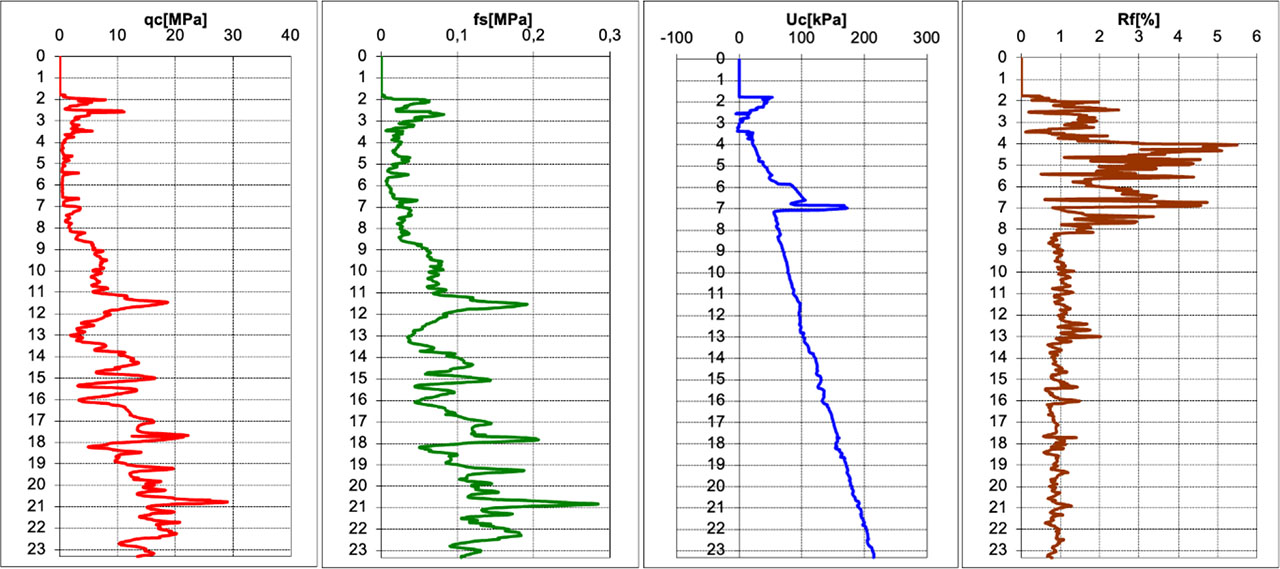
Figure 7:
CPTu investigation results for Pile 1 [27].
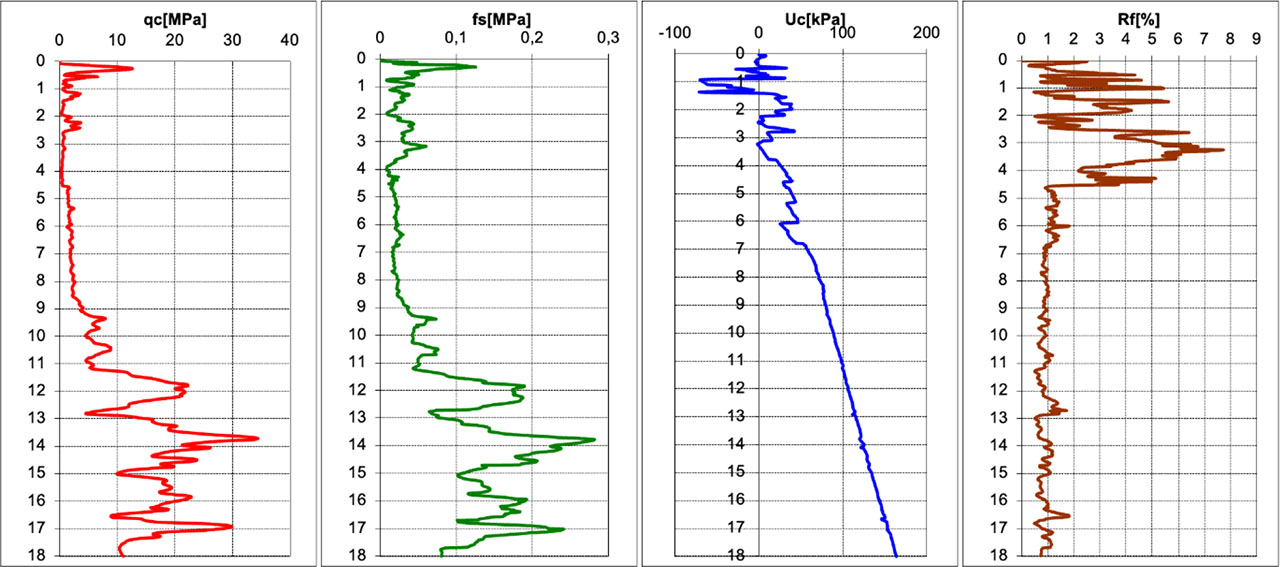
Figure 8:
CPTu investigation results for Pile 2 [27].
Table 3.
Geotechnical parameters of the soil profile [27].
| qc | svo | ID | Ic | qn | βq | Nm | Φ′ | C′ | Su(Cu) | M0 | |||
|---|---|---|---|---|---|---|---|---|---|---|---|---|---|
| [m] | [-] | [-] | [MPa] | [KPa] | [%] | [-] | [MPa] | [-] | [-] | [°] | [kPa] | [kPa] | [MPa] |
| 0,0 | |||||||||||||
| 1,8 | Mg(hgrcFSa) | nN(Pd+H+c+ż) | 2,20 | 35 | 20 | - | 2,19 | 0,02 | - | 29° 30′ | - | - | 9,5 |
| 2,3 | Mg(grchclSa) | nN(Pg+H+c+ż) | 1,30 | 42 | - | 0,54 | 1,27 | 0,01 | 11,1 | 22° 10′ | 6 | 98 | 9,2 |
| 2,5 | Mg(grchFSa) | nN(Pd+H+c+ż) | 2,20 | 57 | 15 | - | 2,14 | 0,00 | - | 29° | - | - | 9,4 |
| 3,8 | Or(Nm) | Nm | 0,45 | 92 | - | 0,50 | 0,38 | 0,04 | 3,7 | 13° 10′ | 3 | 20 | 1,1 |
| 6,6 | Or(Nm) | Nm | 0,65 | 117 | - | 0,60 | 0,58 | 0,12 | 5,1 | 15° 50′ | 4 | 31 | 2,5 |
| 7,0 | Or(Nmp)/HFSa | Nmp/PdH | 1,10 | 133 | - | 0,44 | 1,00 | 0,01 | 6,8 | 18° 50′ | 5 | 71 | 7,9 |
| 8,2 | FSa | Pd | 3,30 | 149 | 20 | - | 3,18 | 0,00 | - | 29° 20′ | - | - | 14,2 |
| 8,6 | FSa | Pd/Ps | 6,40 | 177 | 40 | - | 6,25 | 0,00 | - | 32° 10′ | - | - | 28,4 |
| 11,1 | FSa | Pd | 13,20 | 208 | 65 | - | 13,03 | 0,00 | - | 35° 10′ | - | - | 64,9 |
| 11,8 | FSa | Pd | 7,30 | 220 | 40 | - | 7,12 | 0,00 | - | 32° 20′ | - | - | 32,4 |
| 12,4 | saSi | Πp | 2,60 | 236 | - | 0,74 | 2,40 | 0,00 | 11,1 | 22° 10′ | 7 | 171 | 21,8 |
| 13,3 | FSa | Pd | 7,00 | 250 | 35 | - | 6,80 | 0,00 | - | 31° 50′ | - | - | 31,1 |
| 13,8 | FSa | Pd | 11,10 | 268 | 55 | - | 10,88 | 0,00 | - | 33° 50′ | - | - | 54,6 |
| 15,2 | saSi/siSa | Πp/Pπ | 3,40 | 292 | - | 0,82 | 3,17 | 0,00 | 12,2 | 22° 50′ | 7 | 226 | 28,5 |
| 16,2 | FSa/MSa | Pd/Ps | 14,00 | 320 | 60 | - | 13,74 | 0,00 | - | 34° 30′ | - | - | 70,3 |
| 18,0 | FSa | Pd | 7,00 | 342 | 30 | - | 6,73 | 0,00 | - | 31° | - | - | 31,2 |
| 18,4 | FSa | Pd | 10,50 | 353 | 45 | - | 10,22 | 0,00 | - | 33° | - | - | 51,8 |
| 19,1 | FSa/MSa | Pd/Ps | 15,40 | 400 | 60 | - | 15,08 | 0,00 | - | 34° 30′ | - | - | 75,9 |
3. Mathematical Description of the Problem
3.1. Meyer–Kowalów Curve Concept
The Meyer–Kowalów curve concept has been introduced and widely applied [20; 23; 24]. It is based on soil mechanics principles [10]. This method allows the extrapolation of a static load test curve to estimate the boundary-bearing capacity of the pile (Ngr). The curve can be described using C, Ngr2, and k. Parameter C is introduced as an aggregation of the toe and skin resistances during pile settlement. The following equation is used to extrapolate the static load test curve in the M–K method:
s – Settlement of the head of the pile [mm]; C – Reversed aggregated Winkler modulus [m/MN] [21]; Ngr – Axial force, M–K curve vertical asymptote [MN]; k – Parameter showing the proportions of base and shaft resistances [-]The M–K curve exhibits a vertical asymptote:
It can be proven that:
Figure 9 shows an example of the M–K curve graph.
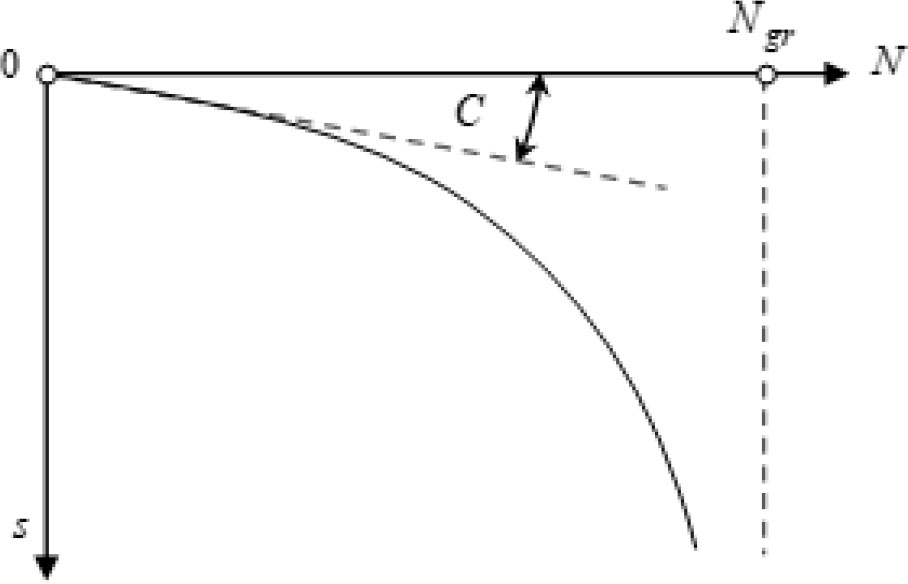
Figure 9:
Example of the M–K curve graph [20].
The M–K curve depicts the physical aspects of pile settlement as an effect of the axial load acting on the pile head. For N⟶0, a small displacement and linear characteristic of the load–settlement relationship could be observed. For N⟶Ngr, the settlement increased uncontrollably, and the pile lost its bearing capacity. The M–K curve parameters were estimated statistically using a set of load–settlement values {si; Ni}.
The principle behind the M–K curve approximation is the estimation of the Ngr value and the prediction of the mobilization of the pile base and shaft capacity. The curve presented by Chin [5] is a variation of the M–K curve, where κ = 1.
The M–K curve facilitated the estimation of the extreme value of the skin resistance of the pile. Briaud and Tucker [2] concluded that estimating the boundary resistance of a pile yields better results than predicting the settlement.
3.2. Pile toe and skin resistance formation
It is assumed that the skin resistance can be expressed using the shear stress τ(z), which is the result of the axial force acting on the head of the pile and its variation along the shaft.
This is the result of the equilibrium of the axial forces in the pile. The shear stress τ(z) in the soil around the pile is the result of bending the soil body in the range of “l” from the pile head caused by its settlement. Kirchhoff's principle can be expressed as follows:
G – Kirchhoff's modulus of the soil along the skin of pile [Pa]; Ec – Elasticity modulus of the concrete piles [Pa]; Es,v – Soil elasticity modulus along the pile skin [Pa]; ν – Poisson's coefficient for soil along the skin of the pile [-].Furthermore:
Another phenomenon that must be considered in the calculations is the pile-shortening effect caused by the axial force N(z) from a depth z=0 to z=h, assuming an elastic deformation of the pile:
It is assumed that pile–soil interaction can occur without soil slipping along the pile skin, which has been verified in previous research [21]:
Pile skin shear stress τ(z) is unrelated to the phenomenon of soil slipping along the pile shaft and the soil stress component perpendicular to the shaft. This depends on Kirchhoff's principle of the bending space around the pile.
Surpassing the maximal static friction between the skin of the pile and the soil results in a terminal skin resistance and soil-slipping effect. The proposed mathematical model is based on the following assumptions:
– Skin resistance is presented as the shear stress τ(z).
– Shear stress along the pile's skin is described using Kirchhoff's principle.
– Pile shortening is described as an elastic deformation process.
– There is no slipping effect of the soil along the pile's skin.
With these assumptions, a differential equation for the axial change in the shear stress against the vertical coordinate “z” can be obtained:
The a coefficient, defined in Eq. (2), yields:
The solution to this equation can be expressed as follows:
The boundary conditions of the solution are z=0; τ=τ2 and z=h; τ=τ1. A detailed analysis of the solution presented in previous research [22] showed that the influence of the a coefficient, expressed in (2), does not have a carryover effect on the shear stress distribution. This verification confirms the possibility of applying such a simplification. The author estimated the value of constant a in a practical environment, producing results close to 0.05 [1/m]. Considering these results, the linear distribution of τ(z) along the skin of the pile can be obtained as follows:
The axial change in N(z) can be expressed as follows:
This equation was used to verify the τ(z) axial distribution in the analyzed case and was applied to the experimental analysis of the field experiments. In previous studies [22; 28], it was important to determine if there is a possibility of omitting the influence of the a value and assuming a=const. The verification results showed that including the value constant a produced a good correlation with the graphs, where its influence was omitted. Meyer and Siemaszko [22] and Siemaszko [28] reported this correlation.
4. Analysis of the Field Static Load Test Results
Siemaszko [28] performed an essential analysis of the results obtained from static load testing based on (18). Least-squares graphs were obtained to verify whether the static load test results can be presented as a linear distribution. The general form of the least-squares method is as follows:
δ2 – Squared sum of the differences between the measured and calculated results—values of the load N(z) from the static load test and calculated using Eq. (18).
xi,m – Measured values [mm]
xi,c – Calculated value [mm]
In this study, the results of the least-squares method analysis showed extreme values and normal distributions, as shown in Fig. 10.
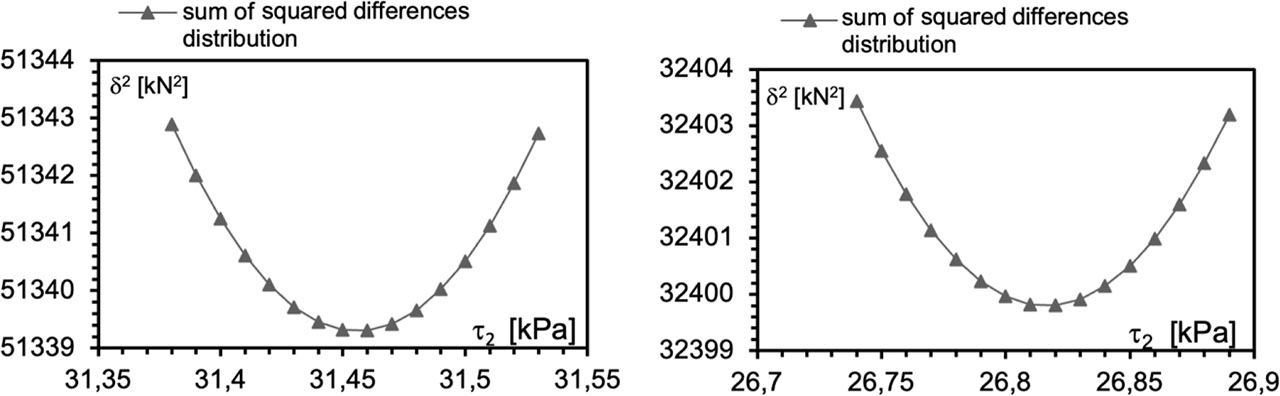
Figure 10:
Least-squares graphs of the results obtained for the analyzed piles.
This analysis allowed to draw graphs of the shear stress distribution using the mathematical approach presented by Siemaszko [28]. Figures 11 and 12 show the graphs obtained for the piles analyzed in this study.
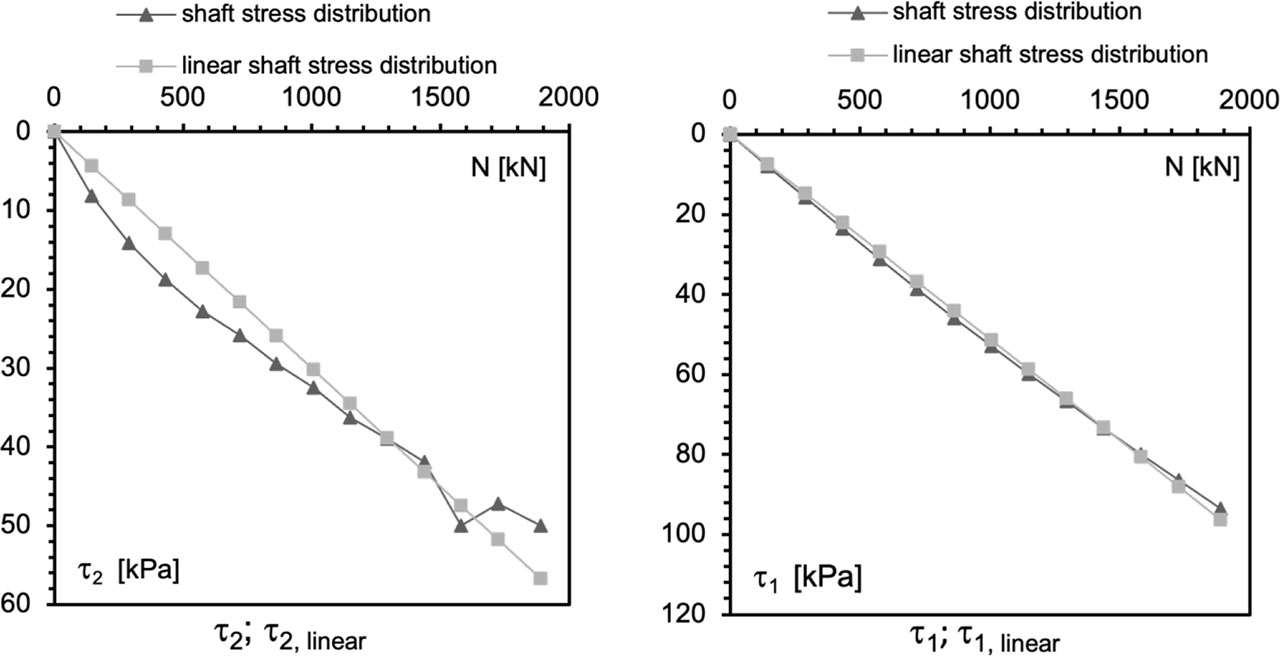
Figure 11:
Relationship between the load acting on the head of the pile and the shear stress at the head level (τ2) and base level (τ1) for the pile taken from Heyki 1 [by author].
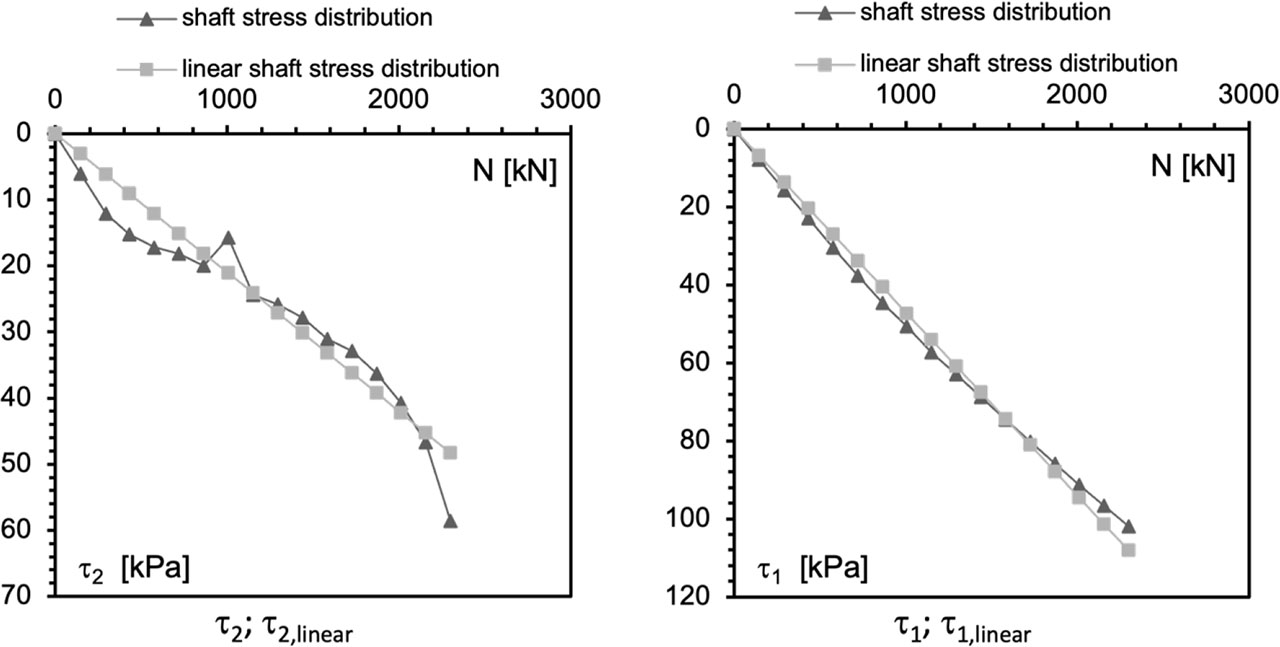
Figure 12:
Relationship between the load acting on the head of the pile and the shear stress at the head level (τ2) and base level (τ1) for the pile taken from Heyki 2 [by author].
4.1. Values of τ1(N2) and τ2(N2) estimated by practical calculations
The author proposed an equation for the practical calculations of τ1 and τ2. Following the shear stress τ1 calculations conducted in a previous experimental analysis by [11], the following equation is included:
In this equation, f is the kinematic friction coefficient, and ϕ is the internal friction angle of the soil in its natural state.
This analysis showed that influencing the force applied to the soil by the pile base results in changes within its structure, and therefore, its geotechnical properties. The changed properties can be represented as f⟶f* and ϕ⟶ϕ*.
This yields the following:
For the practical purpose of performing engineering calculations with sufficient accuracy, Equation (22) can be expressed as follows:
where ϕ* is in degrees.For the soil under the pile base, both the internal shear angle and the dynamic friction coefficient vary. With these changes applied, the following equation for the shear stress τ1 can be used:
The equation that includes both f⟶f* and ϕ⟶ϕ* can be presented as follows:
Equation (25) is the primary relationship, including the phenomena at the base of the pile with varying soil properties, as shown in Fig. 13.
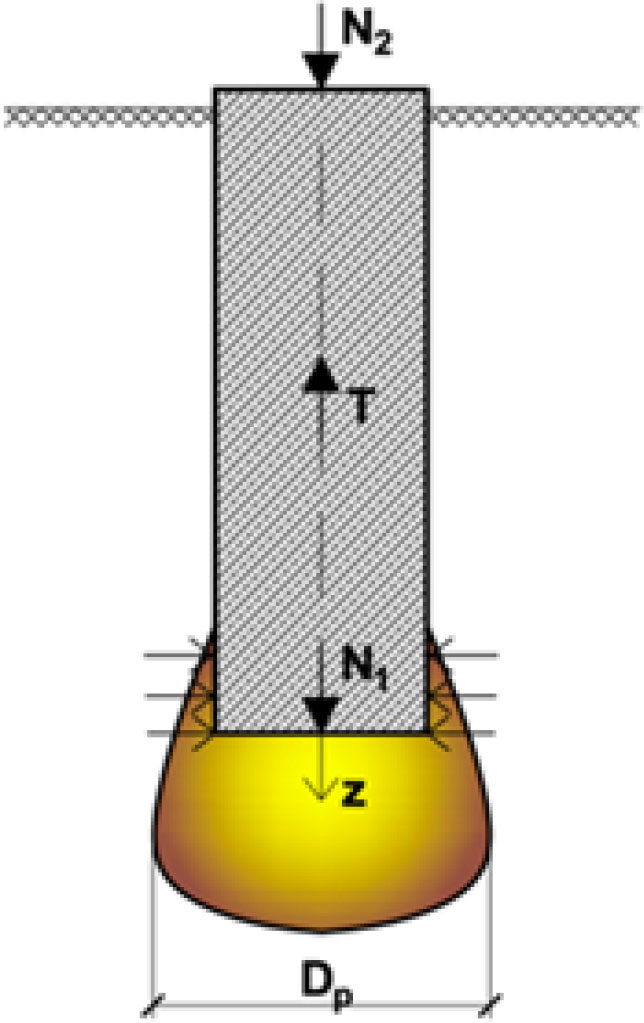
Figure 13:
Soil under and around the pile base forming a sphere, where the parameters vary significantly [22, 28].
Another calculated value is τ2, which is the shear stress at the head of the pile. The following boundary conditions were assumed: for z=0, there is τ(z)=τ2; for z=h, there is τ(z)=τ1. The vertical force equilibrium is expressed as follows:
From the linear distributions of the shear stress and pile skin resistance, the following can be assumed:
Using the M–K curve theory, the following relationships can be obtained for rough calculations:
For further analysis, the α coefficient is substituted into the equation:
The final equations for τ2 and τ1 are as follows:
Thus, the relationships presented above were verified. Figures 11 and 12 show the values of τ(z)=τ2 and τ(z)=τ1. As the distributions presented in the graphs suggest a linear correlation between τ2(N2) and τ1(N2), the following relationships can be applied:
The coefficients A1 and A2 were estimated using the least-squares method for both the piles. For both the piles, statistical calculations were performed to obtain the M–K curve parameters N2, C2, and κ2. The results of the Q-s curves obtained using the M–K curve method are shown through the graphs in Fig. 14.
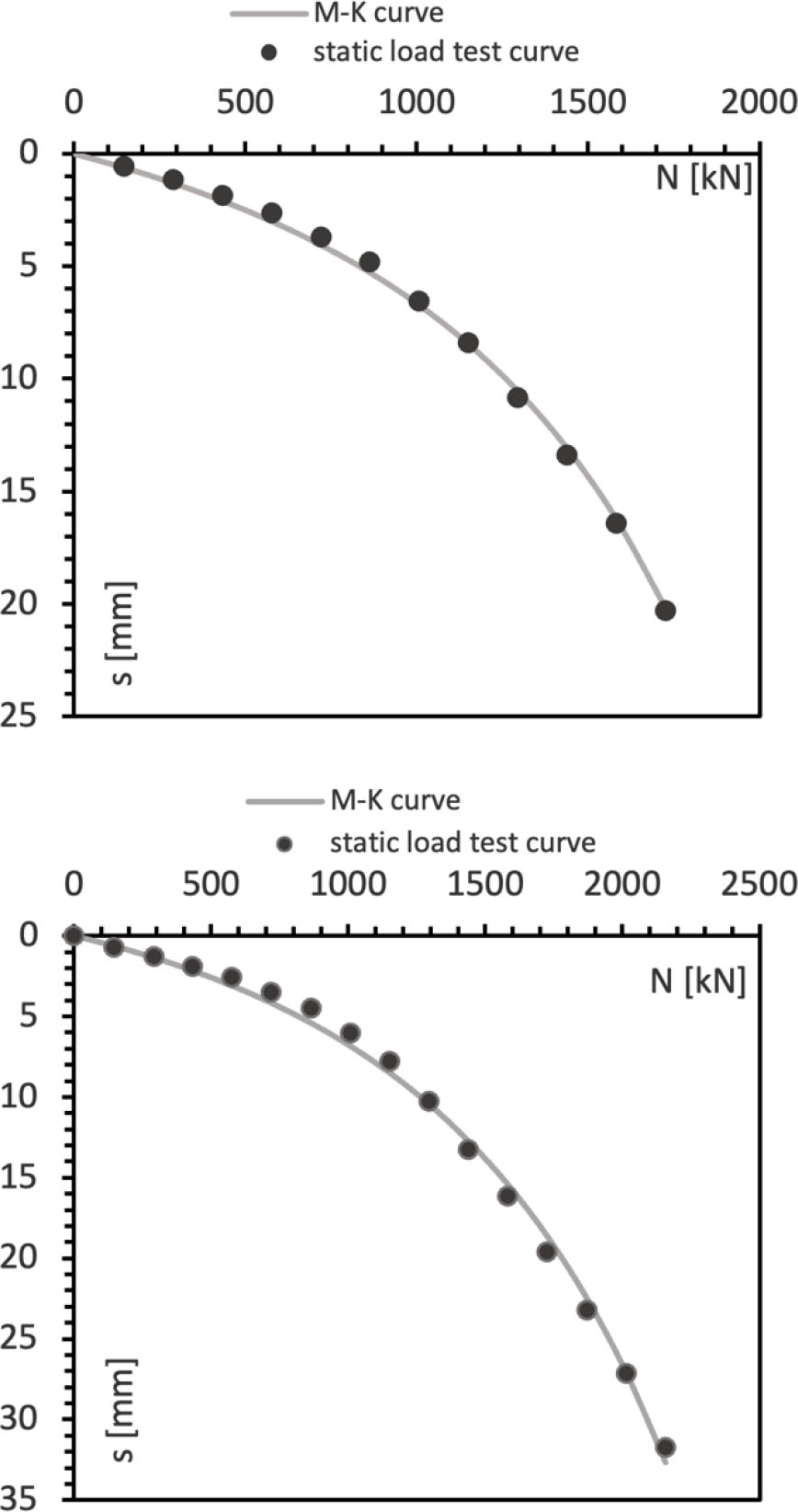
Figure 14:
M–K curve and static load test results compared for Pile 1 (left) and Pile 2 (right).
A comparison was made between the values A1 and A2 calculated from the experimental results obtained under natural conditions and the values obtained using the M–K curve method.
The experimental results can be described as follows:
4.2. Verification of the linear relationships τ1(N2) and τ2(N2)
The author attempted to verify the linear dependency between the head load N2 and the skin shear stresses τ1 and τ2. The following solutions were used based on the experimental field test results:
Here, A1; A1=const. As for the equilibrium of the axial forces, it is:
The equations include the linear characteristic of the shear stress acting on the skin of the pile τ(z), which represents the skin resistance [22]. Based on the analysis previously conducted based on the M–K theory, Eq. (28) is valid. This can be used to obtain the following relationship:
Therefore:
The values obtained for Piles 1 and 2 are presented in Table 4.
Table 4:
Equation (42) results, left side and right side.
| side EQ. (42) | Right side Eq.(42) | |
|---|---|---|
| Pile 1 | 0,83 | 0,803 |
| Pile 2 | 0,85 | 0,84 |
Using the above equation, the κ2 parameter value for the results can be verified, including the value of the pile-shortening effect. However, the value of the κ2 parameter may not be equal to κ2 derived from {si;Ni} obtained using statistical calculations. This suggests that the principles of earlier research [34] require further verification.
5. Conclusions
This study presents an analytical approach verified by conducting field experiments at a natural scale. Studies have focused on describing the mechanisms of the formation of skin resistance. Piles were designed and executed as soil-displacement piles. The study results confirmed that the pile-shortening effect may be applied to calculations, resulting in a linear shear stress distribution, which represents the pile skin resistance. The experimental research and analytical evaluation showed that τ1 and τ2 exhibited a linear dependency with the load acting at the head of the pile N2. This further led to the conclusion that the skin resistance, which is based on τ1 and τ2, is also linearly dependent on N2. Presented study results may be useful in solving geotechnical problems using numerical solution packages. Linear differential equations have been solved using the method proposed by Leibnitz in 1852. However, to solve these differential equations, the distribution of the function along the boundary of the figure of solution must be known. The linear distribution, which is the result of the research presented in this study, can be used as a boundary condition to solve the strain distribution problem using numerical methods. The analysis showed a positive correlation between the M–K method parameters, calculated statistically based on {si;Ni} values, and the approach based on the pile-shortening effect, which allows the determination of the shear stress along the pile skin. The research focused on verifying the applicability of a linear distribution of the shear stress to soil displacement piles, similar to that applied to CFA piles, which has been verified in previous research. The results of this study can be improved by analyzing a greater number of piles. The performance of static load tests until failure using additional measurement devices is financially demanding and limits the acquiring of sufficient amount of these results. Currently, there is ongoing preparation of a suitable construction methodology that will facilitate the conduction of static load tests close to the natural scale environments within a shorter time frame. Initial attempts have yielded promising results. Future work will be focused on the analysis of a greater number of piles to achieve a better understanding of the pile–soil interaction and further improve the developed calculus.