
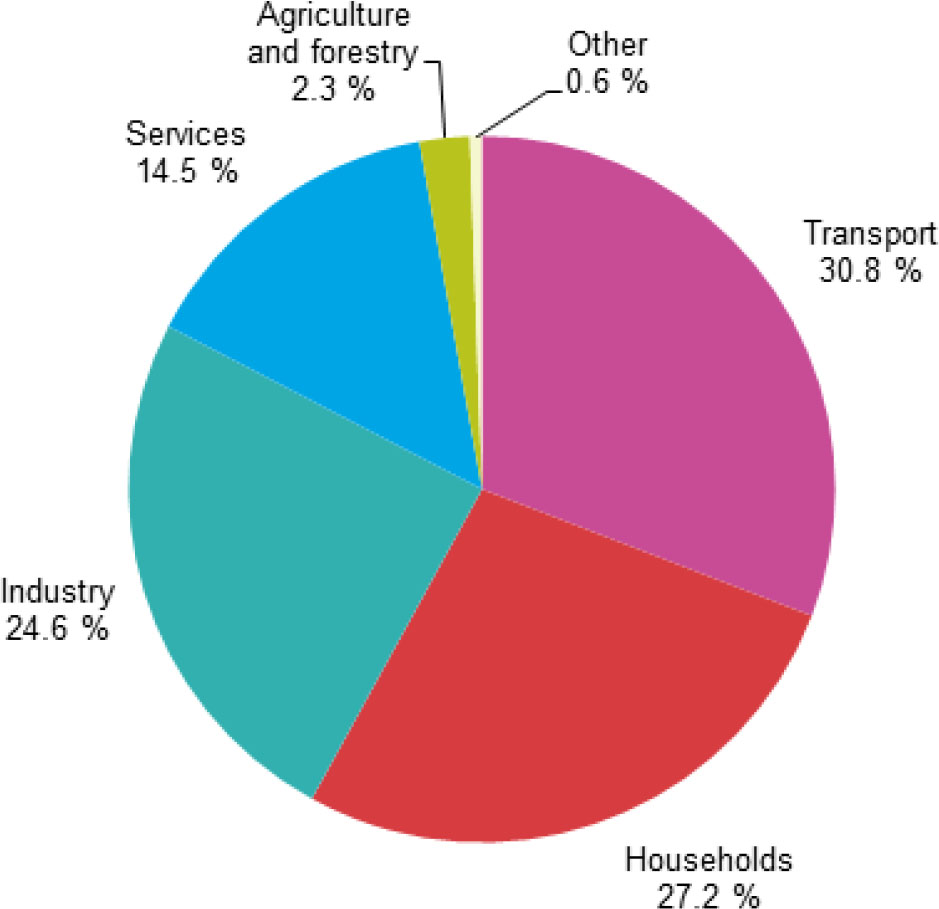
Figure 1
Final energy consumption by sectors (%) [13].
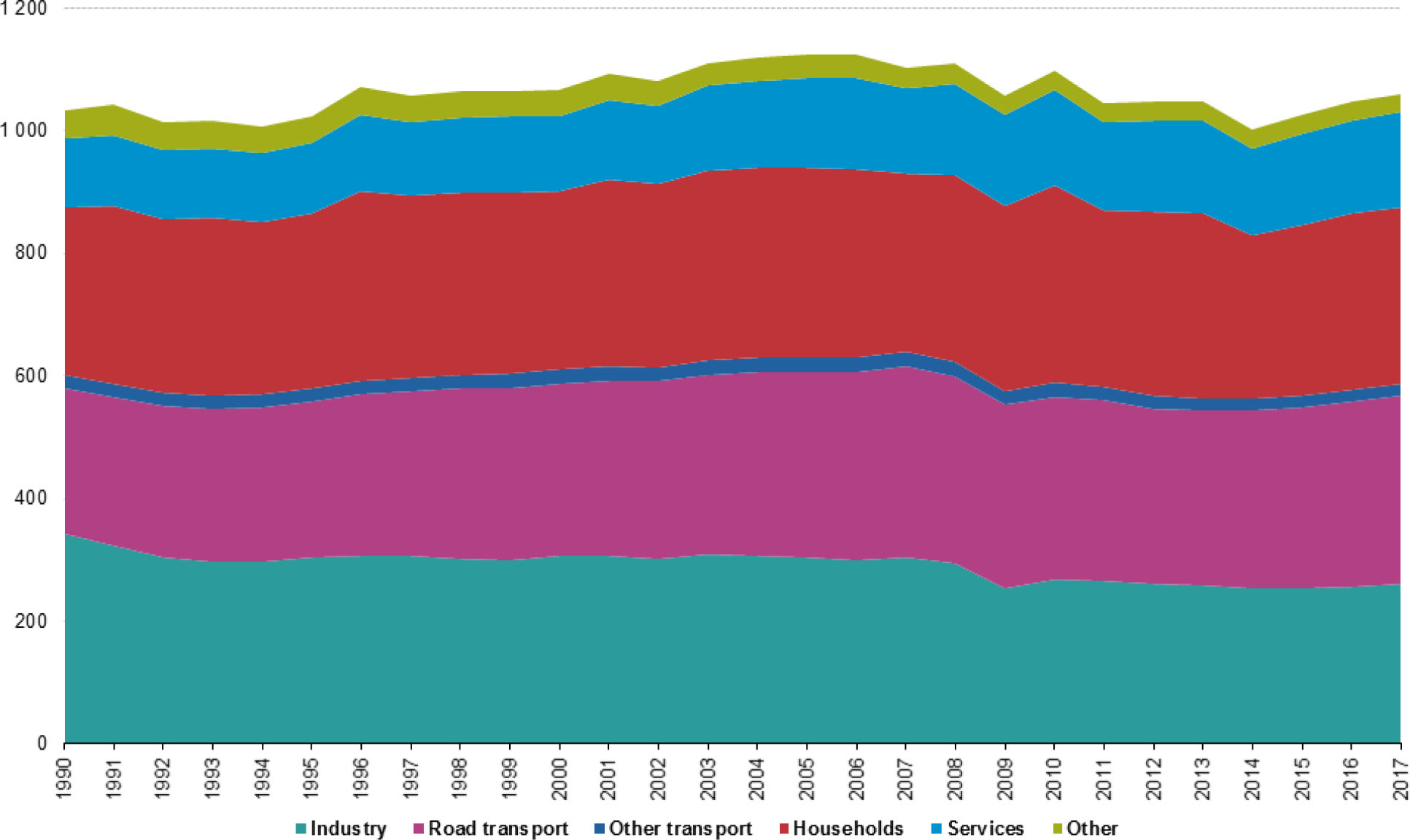
Figure 2
Final energy consumption by sector (million tonnes of oil equivalent) [13].
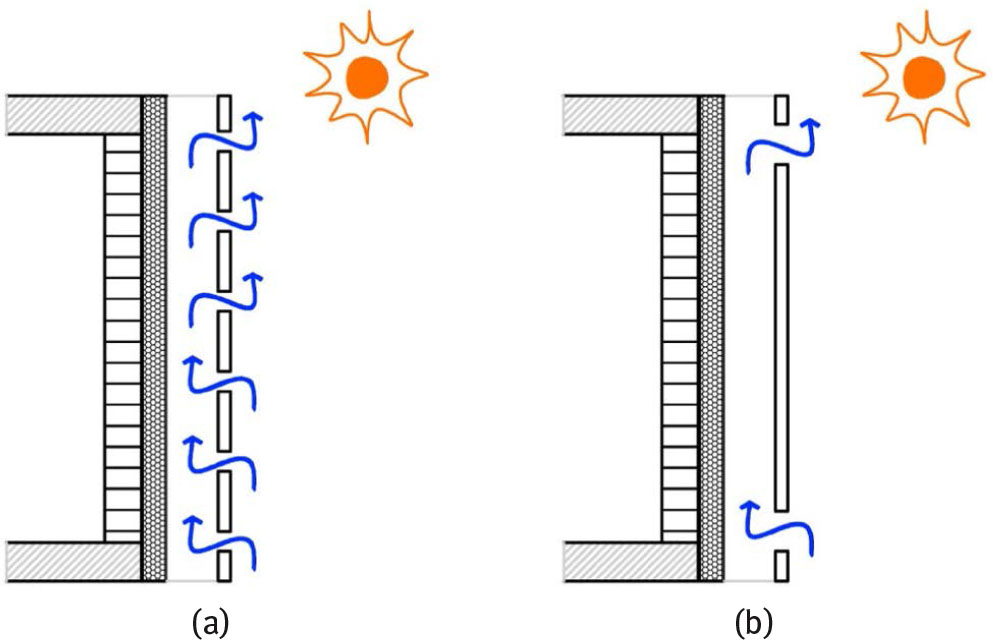
Figure 3
Types of ventilated facades: (a) open joint and (b) closed joint [14].
Table 1
Thermodynamic parameters of materials.
| Materials | Density (kg/m3) | Specific Heat (J/[kg·K]) | Thermal Conductivity (W/[m·K]) |
|---|---|---|---|
| Silicate blocks | 1900 | 880 | 0.800 |
| Polyurethane – insulation | 30 | 133 | 0.0207 |
| Fibre cement boards | 1800 | 920 | 0.400 |
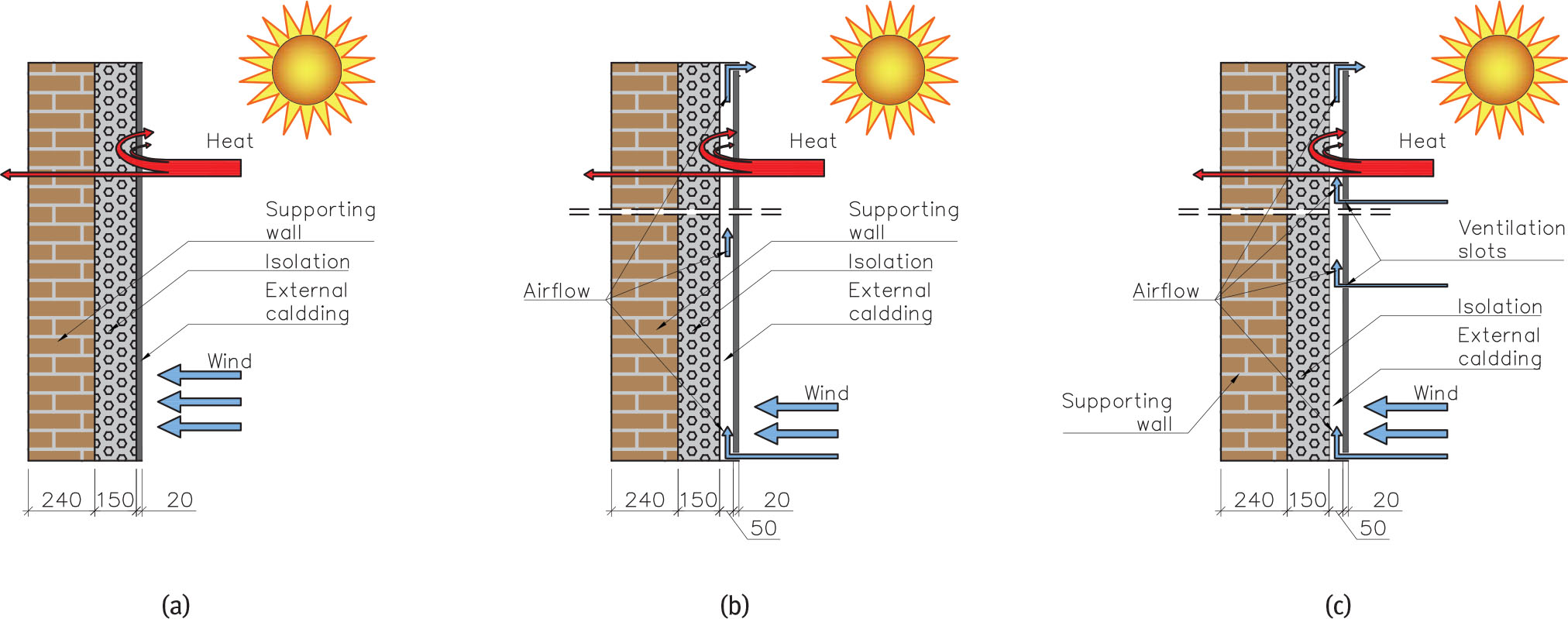
Figure 4
Facade diagrams for numerical simulations: (a) standard facade, (b) closed-joint ventilated facade and (c) open-joint ventilated facade.
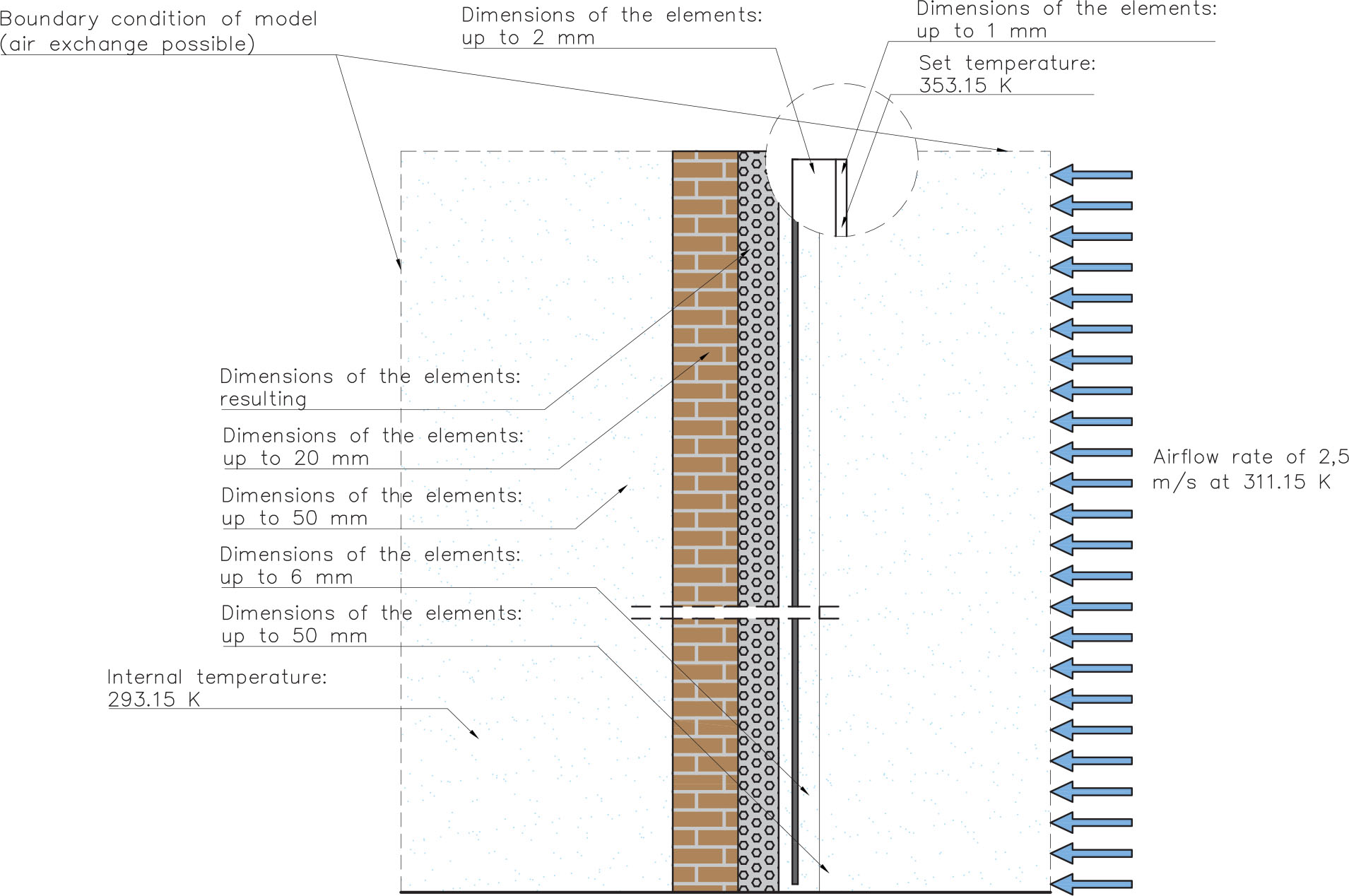
Figure 5
Numerical model of the closed-joint ventilated facade.
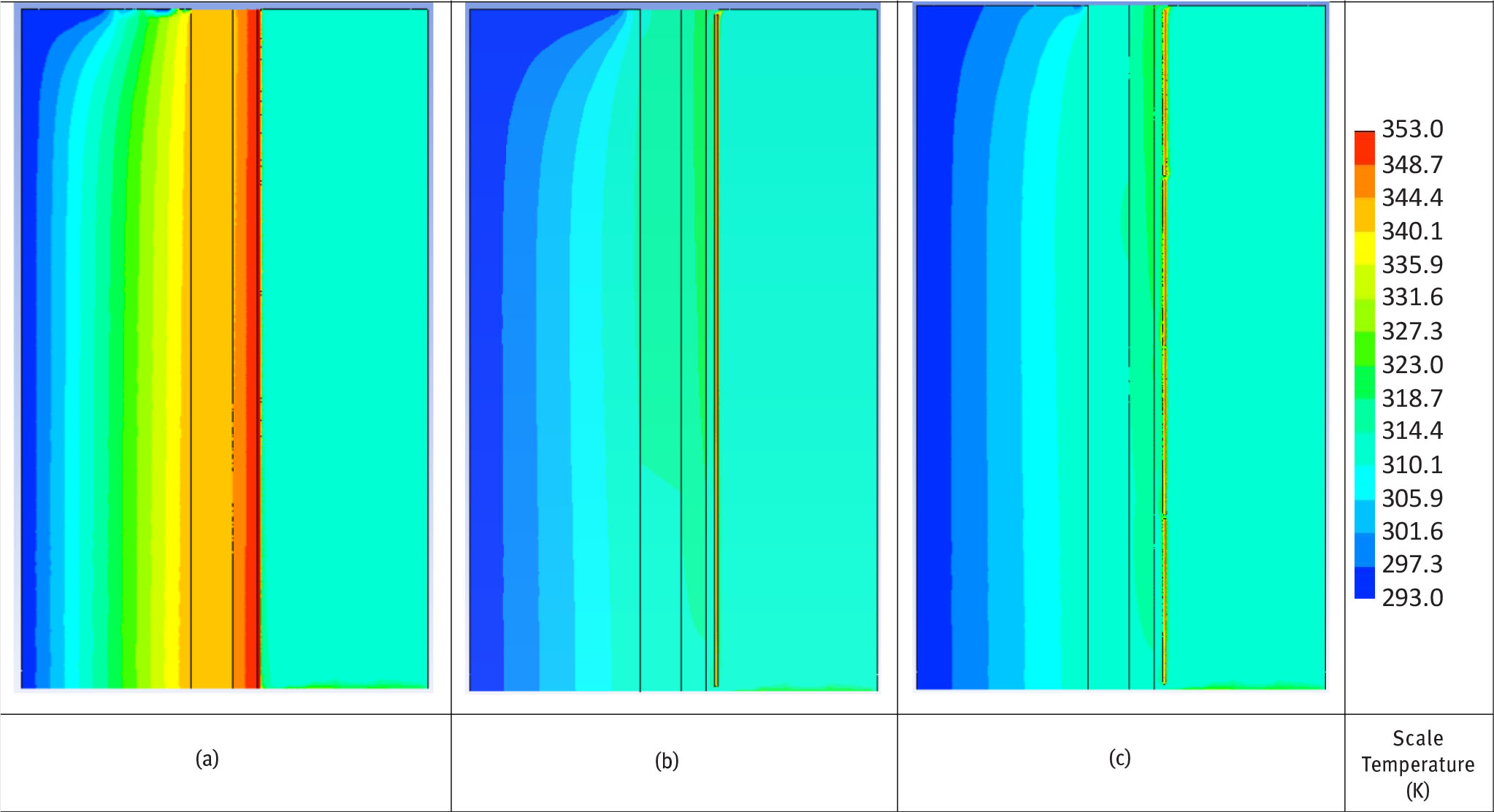
Figure 6
Temperature distribution maps of the facade obtained during numerical simulation: (a) standard facade, (b) closed-joint ventilated facade and (c) open-joint ventilated facade.
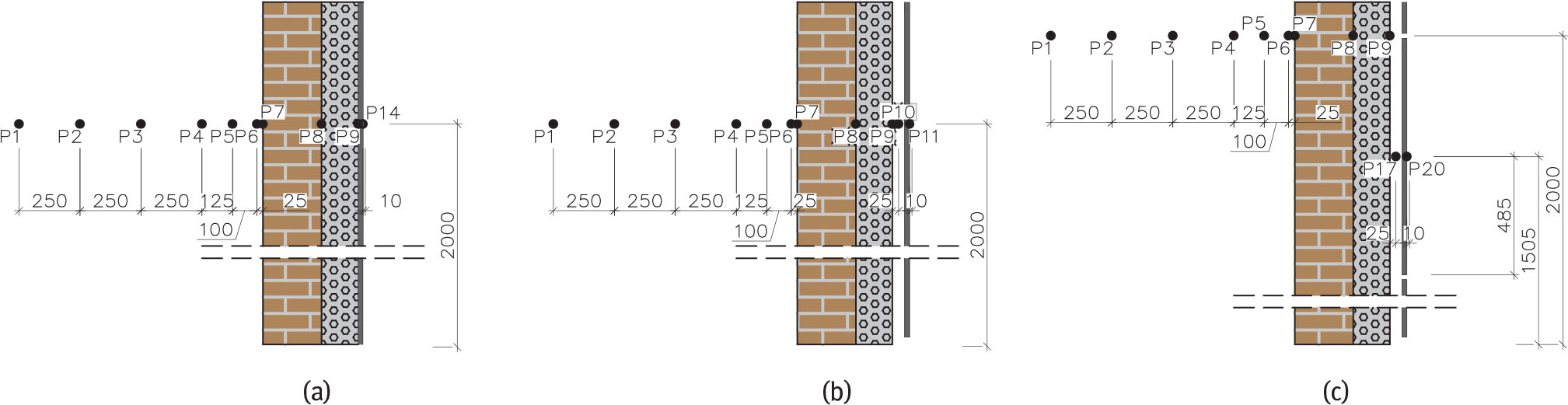
Figure 7
Location of temperature measurement points: (a) standard facade, (b) closed-joint ventilated facade and (c) open-joint ventilated facade.
Table 2
Characteristic values of temperature.
| P1 | P3 | P7 | P10/P17 | P11/P14/P20 | ||||||
|---|---|---|---|---|---|---|---|---|---|---|
| Localisation | Starting point | 40 cm from the wall | Internal edge of the | Air cavity | External edge of | |||||
| Standard facade | 293.15 K (20°C) | 100% | 319.07 K (45.92°C) | 100% | 342.73 K (69.58°C) | 100% | - | - | 341.51 K (68.36°C) | 100% |
| Closed-joint ventilated facade | 293.15 K (20°C) | 100% | 303.96 K (30.81°C) | 95,3% | 315.34 K (42.19°C) | 92.0% | 313.81 K (40.66°C) | 99.3% | 340.93 K (67.78°C) | 99.8% |
| Open-joint ventilated facade | 293.15 K (20°C) | 100% | 303.55 K (30.40°C) | 95,1% | 313.91 K (40.76°C) | 91.6% | 316.02 K (42.87°C) | 100% | 338.59 K (65.44°C) | 99.1% |
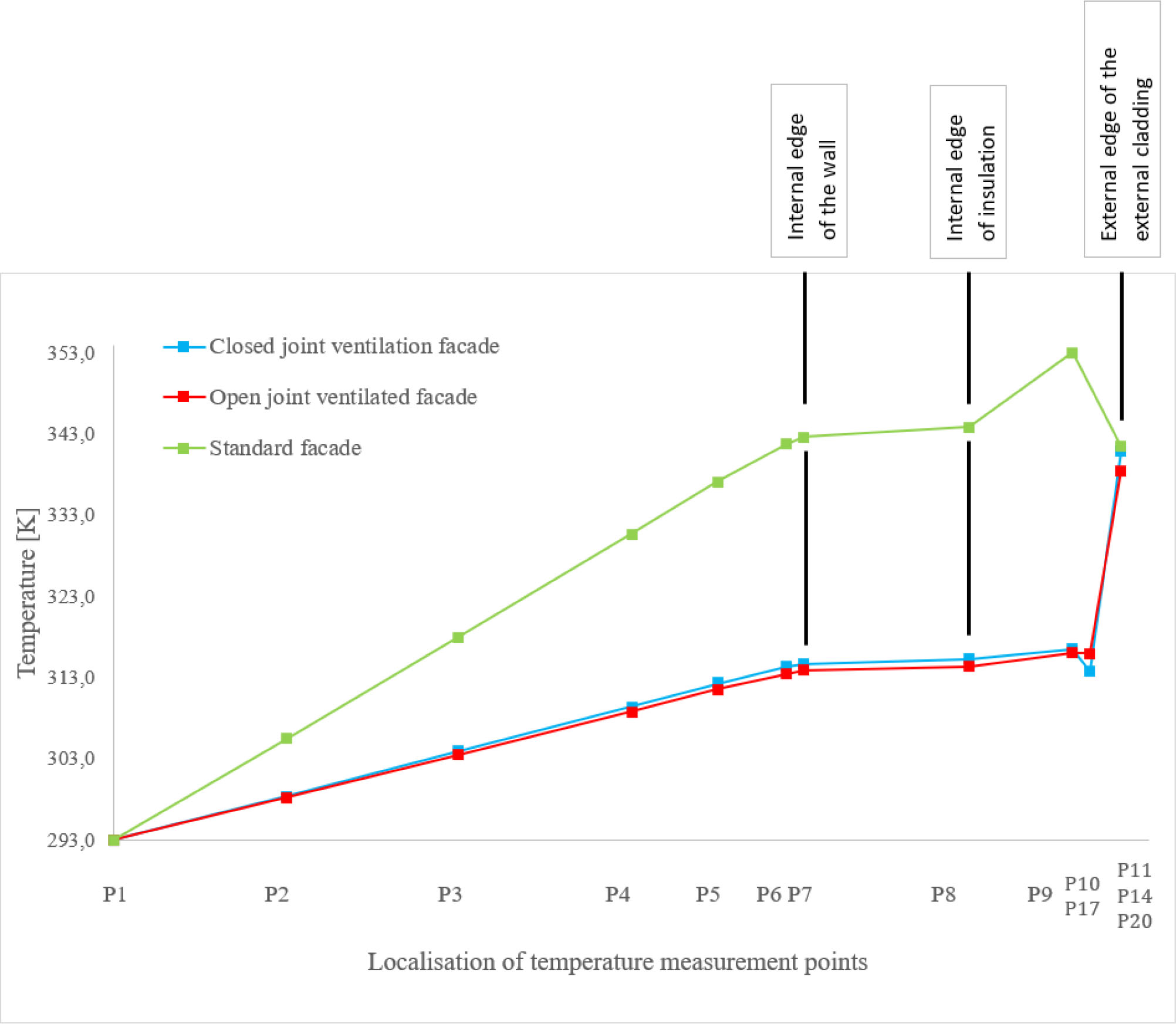
Chart 1
Temperature overview for the control points of the individual types of facade.