
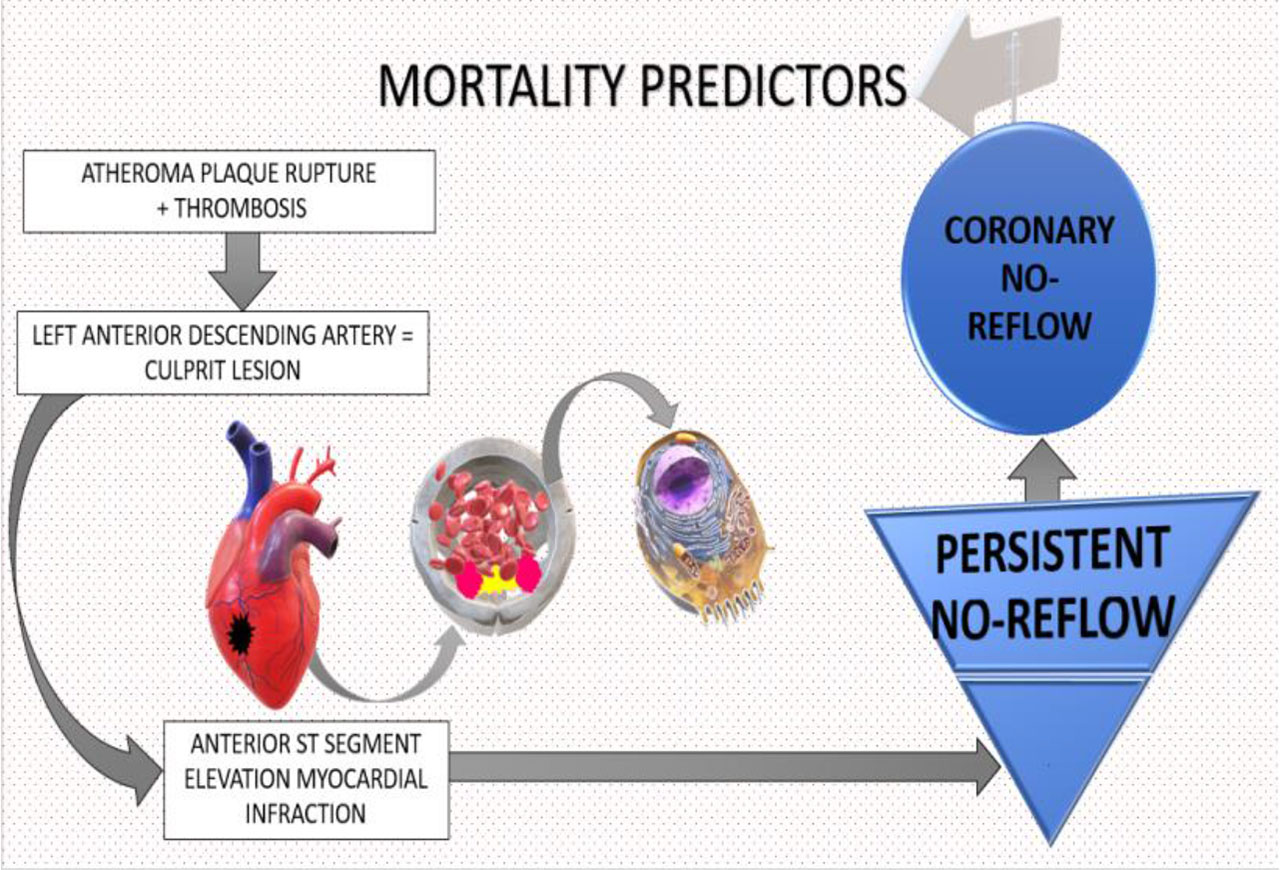
Figure 1.
Graphical abstract revealing the pathophysiology of atherosclerosis and mortality predictors in STEMI subjects with no-reflow phenomenon.
Table 1
Mortality rates by sex and age in our study
| Women | Years | No | Deaths |
| Under 50 yo | 3 | 0 | |
| 50–70 yo | 11 | 1 | |
| Over 70 yo | 18 | 3 | |
| Men | Under 50 yo | 15 | 0 |
| 50–70 yo | 32 | 4 | |
| Over 70 yo | 17 | 6 |
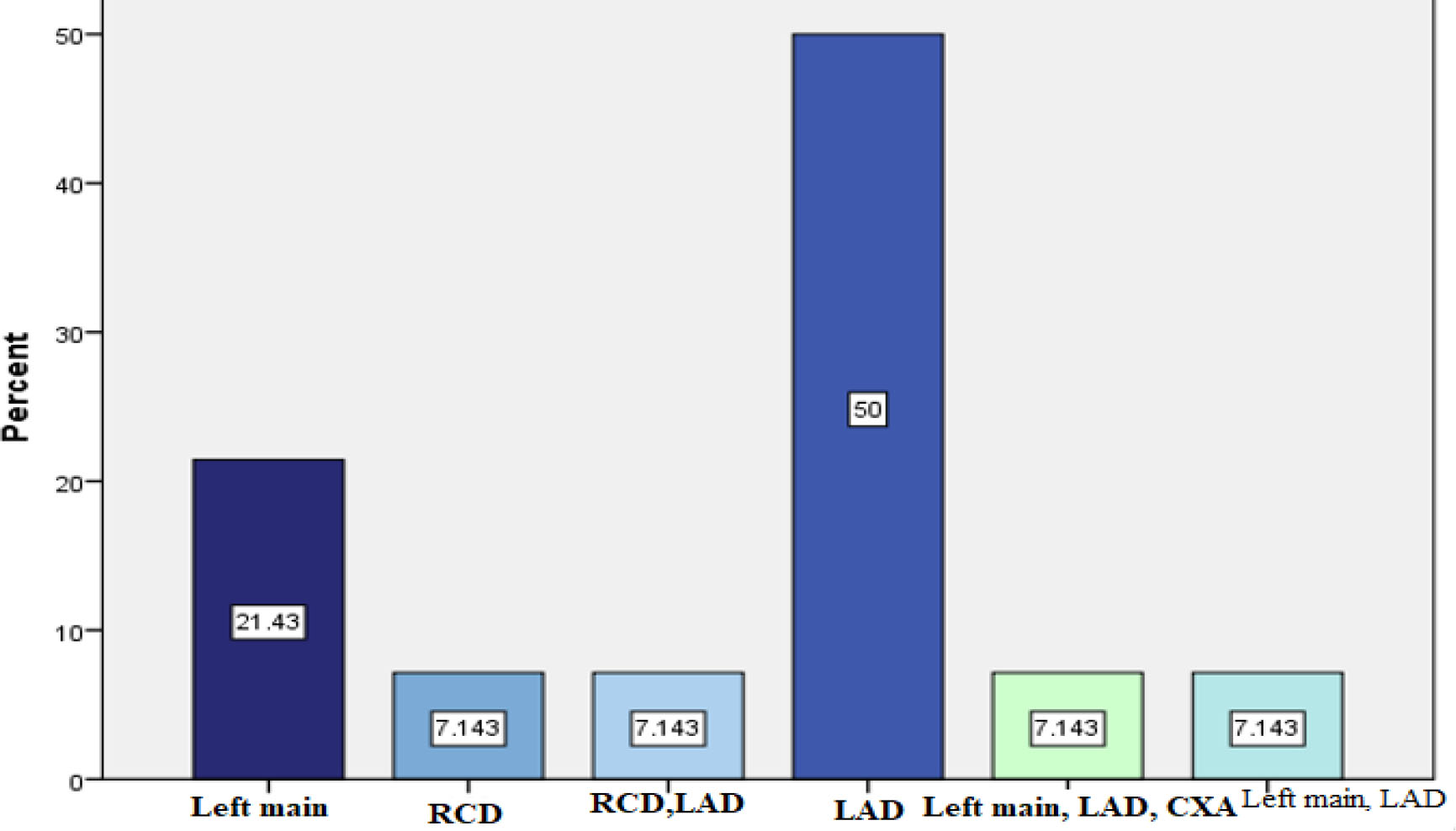
Figure 2.
Stent implantation in culprit lesions during PCI performed in STEMI subjects.
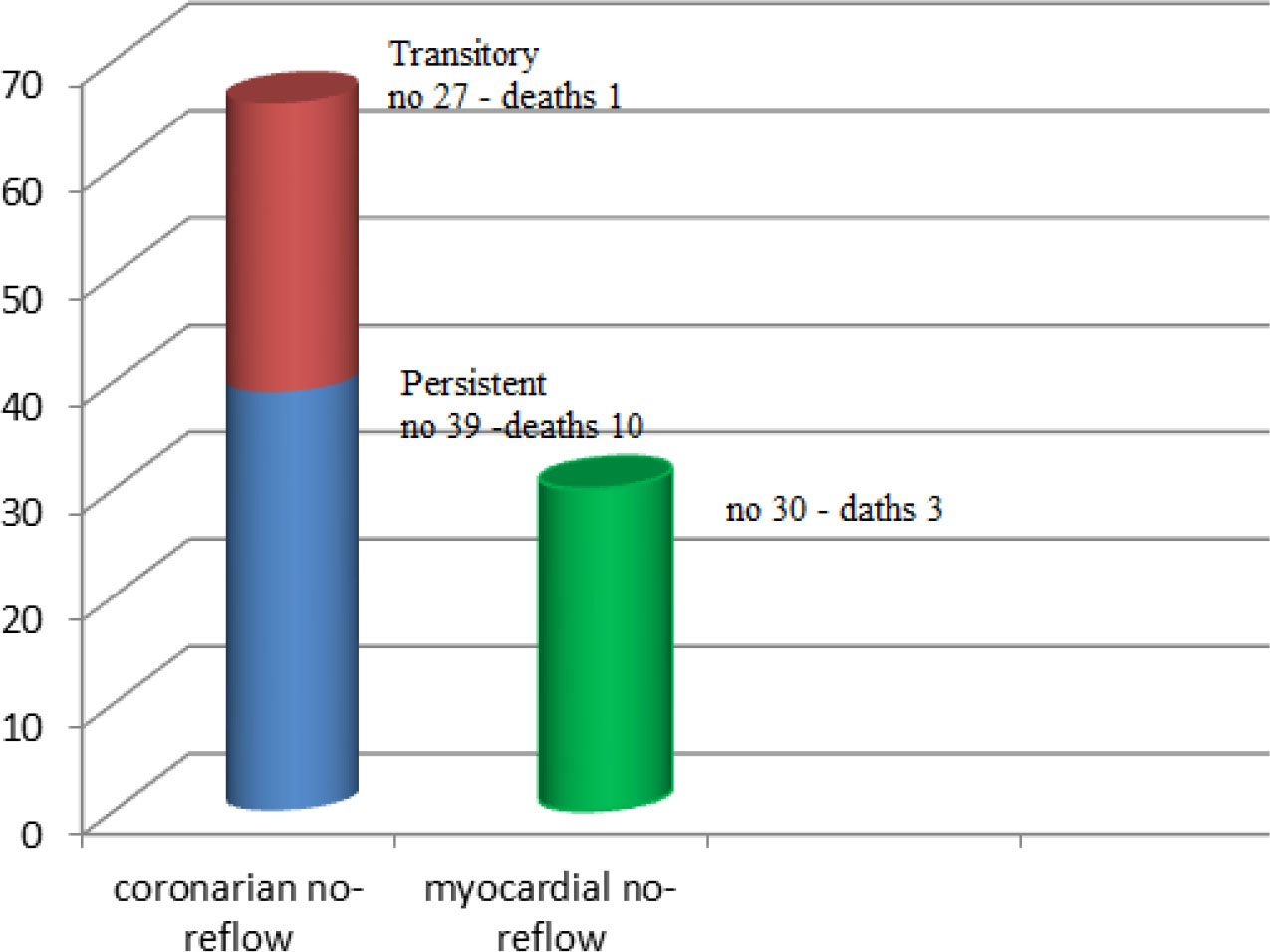
Figure 3.
In-hospital mortality predicted by the no-reflow phenomenon type.
Table 2
Complications after PCI found in STEMI patients with no-reflow phenomenon included in our study
| Complications | Number of patients | Deaths |
| Rhythm disorders | ||
| No | 75 | 11 |
| Yes | 21 | 3 |
| Acute pulmonary oedema | ||
| No | 91 | 10 |
| Yes | 5 | 4 |
| Left ventricular aneurysm | ||
| No | 92 | 13 |
| Yes | 4 | 1 |
| Cardiogenic shock | ||
| No | 80 | 9 |
| Yes | 16 | 5 |
| Myocardial rupture | ||
| No | 95 | 13 |
| Yes | 1 | 1 |
Table 3
Morphologic aspects of myocardial infarction in patients with STEMI and no-reflow phenomenon after primary PCI
| Coronary branch | Territory affected | Approximate age of lesion | Number of cases |
|---|---|---|---|
| Left anterior descending coronary artery | Anterior and interventricular septum | 24–120 hours | 2 |
| Left circumflex coronary artery | Lateral part of the left ventricle | 48–72 hours | 1 |
| Right coronary artery | Posterior part of the left ventricle | 24–96 hours | 2 |
Table 4
Gross and histological features in STEMI patients exhibiting the no-reflow phenomenon
| Macroscopy | |
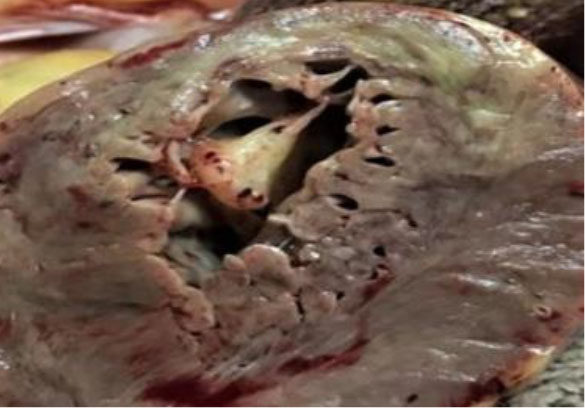 | 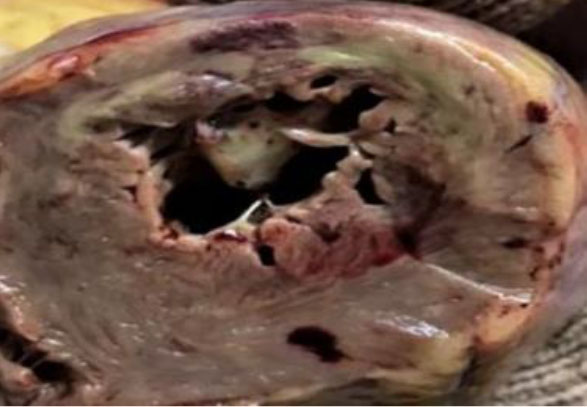 |
| Fig. 4.1. Posterior myocardial infarction (2–3 days old): Gross appearance with early transmural ischemic changes. | Fig. 4.2. Posterolateral myocardial infarction (4–5 days old): Full-thickness infarction observed during autopsy. |
| Microscopy | |
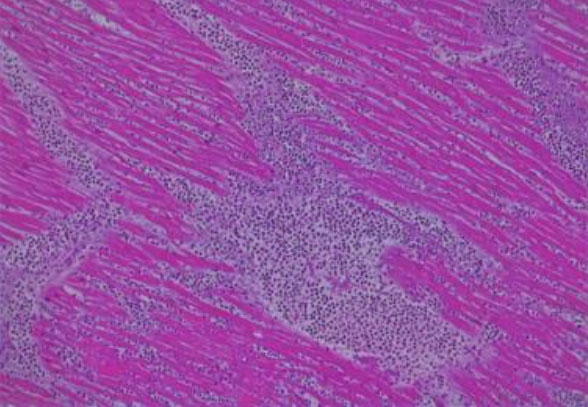 | 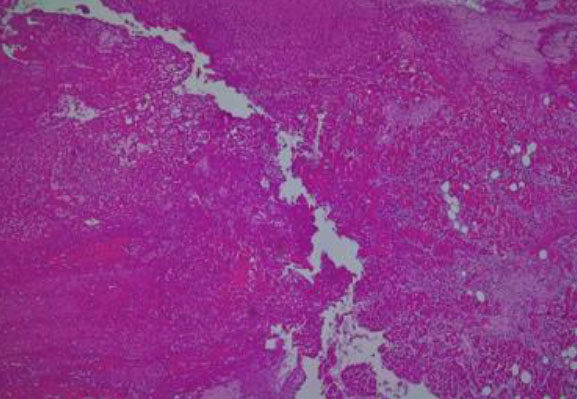 |
| Fig. 4.3. H&E stain, 10×: Transmural necrosis with prominent neutrophilic infiltration in the interstitial space. | Fig. 4.4. H&E stain, 4×: Myocardial rupture with disorganized tissue architecture and interstitial hemorrhage. |
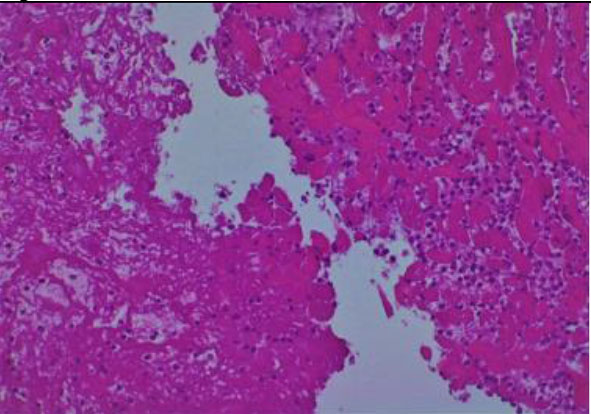 | 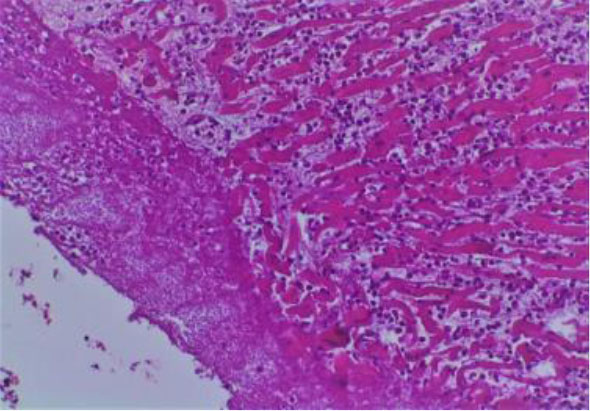 |
| Fig. 4.5. H&E stain, 20×: Detailed visualization of a fissure between necrotic myocardial fibers. | Fig. 4.6. H&E stain, 20×: Thrombosed myocardial region accompanied by inflammatory cell infiltration and necrosis. |