
Introduction
Heart failure (HF) is a leading cause of morbidity, mortality and hospitalisation worldwide, with a disproportionate burden in low-and middle-income countries [1]. Four drug classes (an angiotensin receptor-neprilysin inhibitor [ARNI] or ACE inhibitor/ARB, an evidence-based β-blocker, a mineralocorticoid receptor antagonist [MRA] and an SGLT2 inhibitor) reduce mortality and hospitalisation in HF with reduced ejection fraction (HFrEF) and form the basis of current guidelines [1,2]. Indian registries, however, repeatedly show that most eligible patients do not receive this therapy or receive it late and at low doses [2,3,4,5,6,7]. This gap is commonly attributed to therapeutic inertia, defined as failure to initiate or appropriately optimise evidence-based therapy in an eligible patient without a clear contraindication [8]. Registry data rarely separate inertia from clinically justified treatment limitation, and the stages at which treatment fails in India have received little systematic attention. This review, therefore, has four objectives: (i) to summarise Indian registry evidence on GDMT use and outcomes in order to define the size and structure of the implementation gap; (ii) to classify the stages and determinants of therapeutic inertia at patient, clinician, healthcare-system and policy levels; (iii) to appraise the strength of the evidence behind strategies to close the gap and (iv) to propose a multilevel framework and a minimum set of quality metrics for Indian practice. Because the Indian setting shares features with other resource-limited health systems, we also consider the relevance of the findings beyond India. The review is confined to HFrEF, where four-pillar GDMT is best established.
Search strategy and selection criteria
This is a narrative review. PubMed/MEDLINE, Scopus and Google Scholar were searched from January 2015 to September 2026 using combinations of the terms “heart failure”, “HFrEF”, “guideline-directed medical therapy”, “therapeutic inertia”, “India”, “registry”, “sacubitril/valsartan”, “SGLT2 inhibitor”, “multidisciplinary”, “pharmacist” and “telehealth”. Reference lists of relevant guidelines, consensus statements and registry reports were also hand-searched. We included Indian registries and cohort studies reporting GDMT use or outcomes in HF; international guidelines and consensus statements; landmark randomised trials of GDMT initiation, optimisation and implementation; and studies of implementation strategies. Conference abstracts without a peer-reviewed publication and case reports were excluded. Contemporary evidence was prioritised, and landmark trials were included where needed to establish the evidence base.
HF clinical burden and outcome in India
1. Epidemiology and clinical profile
HF carries substantial mortality, hospitalisation and healthcare use, with particularly important consequences in low- and middle-income countries where access to specialist cardiovascular care and evidence-based therapy may be limited [1]. Indian HF patients are often younger and more often rural than those in many Western cohorts. In the ICMR-NCDIR registry of 6018 hospitalised patients, more than 60% of participants lived in rural areas; 10.2% were aged 16–40 years, 53.3% were aged 41–64 years and 36.5% were aged 65 years or older, ischaemic heart disease was the predominant aetiology in all age groups, and 90-day mortality was 12.6%, 13.4% and 19.0% in the young, middle-aged and elderly groups, respectively [2]. The National Heart Failure Registry (NHFR) enrolled 10,851 consecutive patients with acute decompensated HF from 53 tertiary hospitals across 21 states; mean age was 59.9 years, 31% were women and ischaemic heart disease (72%) and dilated cardiomyopathy (18%) were the main aetiologies [3]. The Himachal Pradesh registry of non-ischaemic systolic HF illustrates the aetiological heterogeneity of Indian HF populations [9]. HF in India, therefore, affects patients during economically productive years and is managed largely in settings where specialist care is limited.
2. Indian registry evidence on GDMT use and outcomes
Six registries describe GDMT use and outcomes in India (Table 1 and Figures 1 and 2). Across registries, GDMT use in eligible HFrEF patients ranged from 24.99% to 47.5%: 47.5% in the NHFR [3], approximately 28% in the Cardiology Society of India-Kerala Acute Heart Failure Registry (CSI-KHFR) [5], 25% at discharge in the Trivandrum Heart Failure Registry [6] and 24.99% at discharge in the Indian College of Cardiology National Heart Failure Registry (ICCNHFR) [4]. ARNI use was particularly low (4.8% in the NHFR and 5.9–7.5% in the ICMR-NCDIR registry) [2,3]. In the ICCNHFR, only 23.72% of patients continued the prescribed GDMT combination during the first 30 days after discharge, indicating an early post-discharge adherence gap in addition to the prescribing gap [4]. A more recent tertiary-centre registry from eastern India reported that four-pillar GDMT adoption increased from 48.6% in the first half of 2022 to 76.3% in the second half of 2024, but sacubitril/valsartan target-dose attainment was only 20% [7]. Because the registries used different definitions of GDMT, enrolled different populations and, in several cases, predated routine SGLT2 inhibitor use, these figures are not directly comparable (Table 1).
Table 1
- Major Indian HF registries: population, GDMT use and outcomes.
| Registry (ref) | Population and setting | GDMT use | ARNI use | Mortality and readmission | Main limitation |
|---|---|---|---|---|---|
| NHFR [3,10,11] | 10,851 patients with acute decompensated HF; 53 tertiary hospitals, 21 states; period [add] | 47.5% of eligible HFrEF patients; definition [add] | 4.8% | 90-day mortality 14.2%, readmission 8.4%; 1-year mortality 22.1%, readmission 17.2% | Tertiary hospitals only; hospitalised patients |
| ICMR-NCDIR [2] | 6018 hospitalised patients; more than 60% rural; period [add] | Reported by drug class and age group [add summary figure] | 5.9%–7.5% | 90-day mortality 12.6% (young), 13.4% (middle-aged), 19.0% (elderly) | Hospitalised patients; class-wise rather than combined GDMT reporting [verify] |
| ICCNHFR [4] | Acute decompensated HF, multiple hospitals; N and period [add] | 24.99% on all guideline-based therapies at discharge; 23.72% continued the combination at 30 days | [add] | 30-day outcomes [add] | Short follow-up |
| CSI-KHFR [5] | Acute HF, Kerala; N and period [add] | About 28% of HFrEF patients | Low; less than β-blockers and MRAs [add%] | In-hospital mortality 7%; 90-day mortality 11.6% | Single state; acute HF |
| Trivandrum HF Registry [6,12] | Acute HF, Kerala; N and period [add] | 25% of HFrEF patients discharged on GDMT | [add] | 1-year mortality 30.8%, readmission 30.2%; 5-year mortality 59%; median survival about 3.1 years | Older cohort, pre-dating routine four-pillar therapy [verify] |
| Eastern India tertiary-centre registry [7] | HFrEF patients, single tertiary centre, 2019–2024; N [add] | Four-pillar GDMT 48.6% (first half 2022) rising to 76.3% (second half 2024) | Sacubitril/valsartan target dose reached in 20% | [add] | Single centre; specialist care |
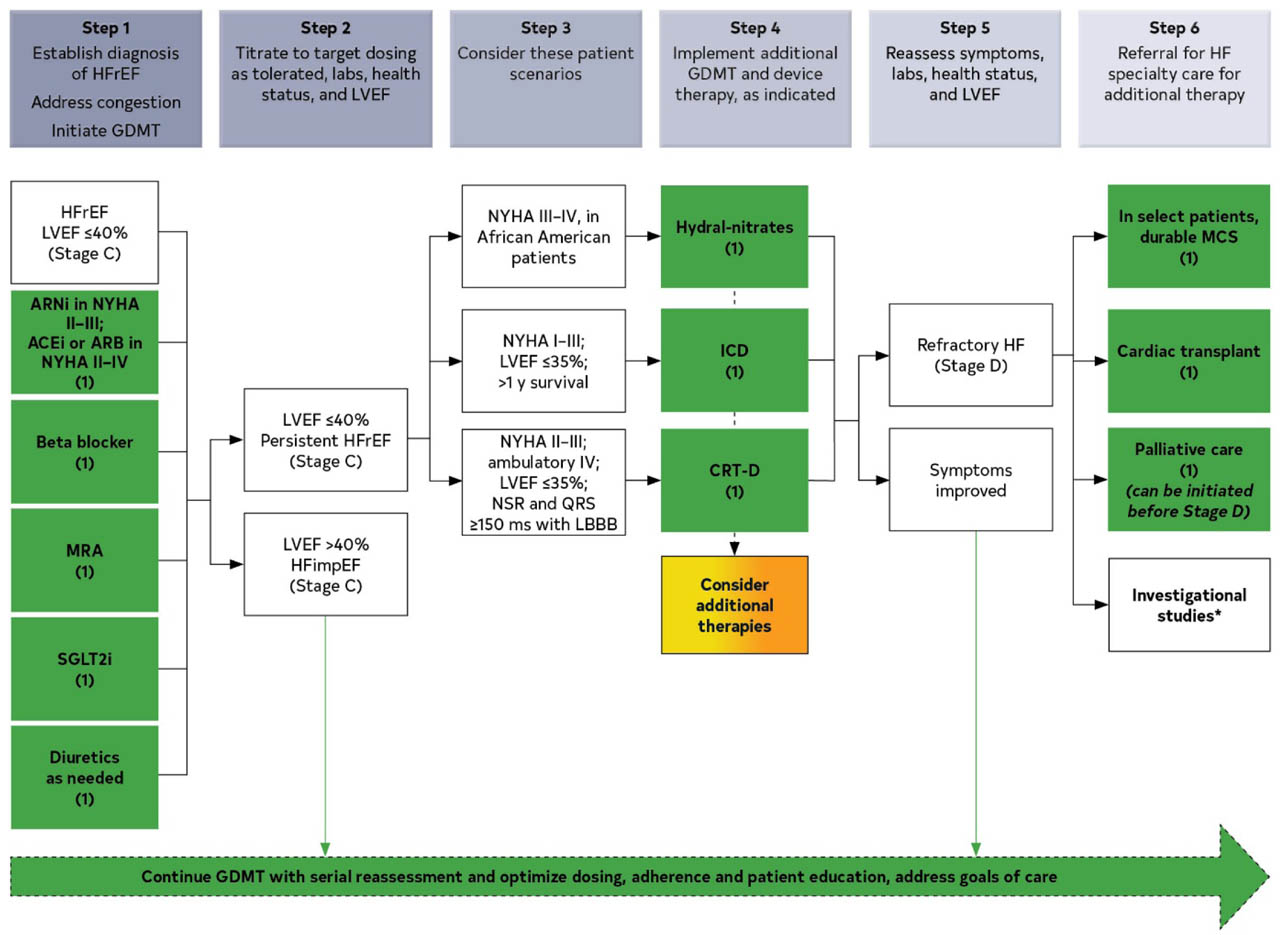
Figure 1
- Guideline-directed pharmacological treatment of patients with HFrEF. ARNI, angiotensin receptor-neprilysin inhibitor; GDMT, guideline-directed medical therapy; HF, heart failure; HFrEF, heart failure with reduced ejection fraction.
Table 1. GDMT was defined differently across registries and several registries predate routine use of SGLT2 inhibitors; GDMT use should, therefore, not be compared across rows as if the definitions were equivalent. The Himachal Pradesh registry [9] enrolled only non-ischaemic systolic HF and is not included.
ARNI, angiotensin receptor-neprilysin inhibitor; GDMT, guideline-directed medical therapy; HF, heart failure; HFrEF, heart failure with reduced ejection fraction; NHFR, National Heart Failure Registry.
Outcomes remain poor. In the NHFR, 90-day mortality was 14.2% and 90-day readmission 8.4% [3]; 1-year mortality was 22.1% and 1-year readmission 17.2% [11]. Patients with HFrEF and HFmrEF who did not receive GDMT had significantly poorer survival than those who did [3]. Mortality varied by aetiology, from 13.8 deaths per 100 person-years in peripartum cardiomyopathy to 92.9 per 100 person-years in infective endocarditis [11]. In the Trivandrum registry, 1-year all-cause mortality was 30.8%, with the highest risk in the first 3 months after hospitalisation, and 30.2% of patients were readmitted within 1 year [12]; 5-year mortality was 59% with a median survival of about 3.1 years, and discharge prescription of β-blockers, renin-angiotensin system blockers and MRAs was associated with lower long-term mortality [6]. The CSI-KHFR reported in-hospital mortality of 7% and 90-day mortality of 11.6% [5]. Together, these data show high mortality and rehospitalisation occurring alongside incomplete implementation of evidence-based therapy. Because treatment may fail at successive stages (prescription, initiation, titration and maintenance), prescribing rates alone understate the gap [8], as shown in Table 1.
Contemporary evidence and implementation of GDMT in HFrEF
1. Four pillars of GDMT
Contemporary HFrEF management is based on four foundational pharmacological classes consisting of an angiotensin receptor-neprilysin inhibitor or ACE inhibitor/ARB, an evidence-based β-blocker, an MRA and an SGLT2 inhibitor [13,14]. The addition of SGLT2 inhibitor to the established neurohormonal treatment framework transformed the conventional three-drug model into a four-pillar strategy [13]. The 2022 AHA/ACC/HFSA guideline formally incorporated SGLT2 inhibitors as one of the four major pharmacological classes for HFrEF [13]. The 2023 ESC focused update further strengthened the role of SGLT2 inhibition across the HF spectrum on the basis of subsequent randomised evidence [15].
Illustrates the contemporary four-pillar GDMT approach for HFrEF, including ARNI/ACEI/ARB, β-blocker, MRA and SGLT2 inhibitor therapy, with emphasis on early initiation and subsequent individualised dose optimisation. It is adapted from the 2022 AHA/ACC/HFSA Heart Failure Guideline [13].
2. ARNI/ACEI/ARB
Renin–angiotensin system inhibition remains a fundamental component of HFrEF therapy because neurohormonal activation contributes directly to ventricular remodelling and disease progression [16]. Sacubitril/Valsartan has become the preferred renin–angiotensin system strategy for many eligible patients because of evidence demonstrating superior clinical outcomes compared with ACE inhibition in HFrEF [16]. Indian consensus literature has emphasised that ARNI remains under-prescribed in India despite its established clinical benefits [16]. Indian experts have also highlighted the importance of early ARNI initiation and appropriate dose escalation rather than prolonged exposure to low doses without an active optimisation plan [16].
3. Evidence-based β-blockers
Evidence-based β-blockers remain one of the foundational therapies for HFrEF because they counter chronic sympathetic activation and reduce adverse ventricular remodelling [17]. Indian consensus recommendations emphasise the role of selective β1- blockade, including bisoprolol, particularly in patients with HF and common comorbidities [17]. The continued underuse or under-titration of β-blockers, therefore, represents a potentially modifiable component of therapeutic inertia [17].
4. MRA
MRA therapy forms the third foundational component of HFrEF treatment and provides mortality and hospitalisation benefits when used in appropriate patients [13]. Fear of hyperkalaemia and renal deterioration can lead to inappropriate retention or discontinuation of MRA therapy, making renal and electrolyte monitoring an important component of safe implementation [8].
5. SGLT2 inhibitors
Dapagliflozin and empagliflozin have demonstrated benefits in HFrEF irrespective of diabetes status and, therefore, should not be considered merely glucose-lowering therapies [18,19]. In DAPA-HF, dapagliflozin reduced the risk of worsening HF or cardiovascular death and retained benefit in patients receiving background sacubitril/valsartan [20]. In EMPEROR-Reduced empagliflozin reduced the combined risk of cardiovascular death or HF hospitalisation compared with placebo in patients with HFrEF [18]. The benefit of empagliflozin was observed across different background treatment combinations, supporting its use as an additive foundational therapy rather than requiring complete optimisation of other drug classes beforehand [21].
6. Clinical evidence and guideline recommendations
The contemporary treatment philosophy has shifted from sequential optimisation of drug classes at a time towards rapid establishment of all four foundational therapies at tolerable doses [8,22]. The rationale for rapid implementation is that each class provides partially independent biological and clinical benefit while delaying initiation exposes patients to preventable residual risk [22]. The STRONG-HF trial directly addressed the pace of GDMT optimisation and showed that an intensive strategy of rapid up-titration with close early follow-up after acute HF hospitalisation improved clinical outcomes compared with usual care, at the cost of more frequent adverse events during up-titration [23]. The trial was open-label, enrolled a largely non-Indian population in a trial setting, and its findings may not transfer directly to resource-limited Indian practice [23]. The trial supports structured early post-discharge monitoring rather than waiting for routine follow-up intervals before increasing evidence-based therapies [23].
The EMPULSE trial further demonstrated that empagliflozin could be initiated during hospitalisation for acute HF after clinical stabilisation, supporting earlier treatment initiation [24]. The TRANSITION study demonstrated that sacubitril/valsartan initiation before discharge or shortly after discharge was feasible in stabilised patients with HFrEF [25]. Approximately half of the patients in TRANSITION achieved the target sacubitril/valsartan dose within 10 weeks, illustrating that dose optimisation requires an active titration pathway rather than prescription alone [25]. These findings collectively support a treatment model in which initiation and optimisation are considered continuous processes beginning during hospitalisation or at the first eligible outpatient encounter [23,25].
7. Initiation, sequencing and dose optimisation
Traditional sequencing frequently involved starting an ACEI/ARB, followed by a β-blocker and MRA with subsequent introduction of newer therapies, potentially delaying complete disease-modifying treatment for several months [22]. Contemporary implementation strategies instead emphasise achieving all four foundational classes early, even when individual agents initially remain at low doses [22]. A rapid-sequencing strategy can, therefore, prioritise breadth of therapy before maximal dose escalation, provided the patient is clinically stable and contraindications are assessed [22]. The precise sequence should be individualised according to blood pressure, heart rate, renal function, serum potassium, congestion and other clinical characteristics [8]. Hypotension, hyperkalaemia and renal dysfunction are among the most frequently cited clinical barriers to GDMT implementation and should be managed rather than automatically interpreted as reasons for permanent treatment avoidance [22]. Indian expert consensus similarly recommends patient-profile-based implementation because a uniform titration sequence may not be appropriate for patients with different blood-pressure, renal and comorbidity profiles [26].
However, rapid optimisation should not be interpreted as indiscriminate titration; patient selection, tolerability and appropriate monitoring remain essential, particularly in resource-constrained settings.
The GDMT implementation gap in Indian HF
1. Real-world utilisation of GDMT
The Indian registry literature consistently demonstrates that evidence-based pharmacological therapy remains incompletely implemented despite the availability of effective treatment [3,5]. The severity of the gap differs according to registry, patient population, HF phenotype and healthcare setting, but the direction of the evidence is consistent [3,4]. The NHFR reported GDMT use in 47.5% of eligible HFrEF patients, whereas the ICCNHFR reported that complete GDMT prescription was only 24.99% of patients at discharge [3,4]. The CSI-KHFR reported that only 28% of patients with HFrEF received GDMT, further demonstrating substantial under-treatment in routine Indian practice [5]. The Trivandrum registry reported that only 25% of patients with HFrEF were discharged on GDMT, despite the long-term survival implications of disease-modifying treatment [6]. The persistence of these gaps across geographically distinct Indian registries suggests that therapeutic inertia is unlikely to be explained by a single institutional prescribing practice [3,6]. The more recent eastern Indian registry provides evidence that systematic specialist care can substantially improve four-pillar adoption, but even optimised tertiary care did not achieve universal treatment [7]. This finding suggests that improvements in clinician awareness and specialist access can reduce the gap but may not completely eliminate the structural, financial and clinical barriers that influence GDMT use [7,27].
2. Four-pillar therapy and target-dose gap
A major limitation of evaluating GDMT only as a binary prescribing variable is that prescription does not establish whether the patient received an evidence-based dose [28]. The CHAMP-HF registry demonstrated internationally that a large proportion of eligible HFrEF patients were not prescribed foundational therapies and that target-dose attainment was substantially lower than treatment initiation [28]. Only 1% of patients eligible for all three traditional classes in CHAMP-HF were receiving target doses of ACEI/ARB/ARNI, β-blockers, and MRA simultaneously [28]. Although CHAMP-HF was conducted outside India, its findings provide an important conceptual framework for interpreting Indian registry data because the Indian gap may similarly include both prescription and dose-optimisation failure [28].
The eastern Indian registry reported that four-pillar prescription increased to 76.3% by late 2024, but sacubitril/valsartan target-dose attainment remained only 20% [7]. The difference demonstrates that a high prescription rate can coexist with substantial therapeutic inertia at the dose-optimisation level [7,8]. Consequently, future Indian GDMT quality metrics should report at least four dimensions, that is, initiation, number of GDMT classes, dose attainment and persistence [8].
3. Association between GDMT use and clinical outcomes
Indian registry data consistently support an association between GDMT use and improved clinical outcomes [3,5]. In the NHFR, HFrEF and HFmrEF patients who did not receive GDMT had higher mortality than those receiving GDMT [3]. In the CSI-KHFR, prescription of individual GDMT components was independently associated with 90-day mortality [5]. In the Trivandrum registry, discharge β-blocker, RAS blocker and MRA prescription were associated with lower 5-year mortality risk [6]. These observational associations cannot establish causality because patients receiving GDMT may differ systematically from untreated patients in disease severity, healthcare access and clinical stability and because of indication bias (clinically stable patients are more likely to be prescribed GDMT) and survivor bias (patients must survive to discharge to receive a discharge prescription) [8]. However, the consistency between Indian observational evidence and randomised trials of foundational therapies strengthens the biological and clinical plausibility of the relationship [18,19].
4. Relevance beyond India
The Indian pattern is not unique. In the CHAMP-HF registry in the United States, many eligible patients were likewise not prescribed foundational therapy, and only 1% of patients eligible for all three traditional classes were receiving target doses of all three simultaneously [28]. What distinguishes India, and what is likely to apply to many low- and middle-income countries, is the combination of younger patients, a large rural population, concentration of specialist services in tertiary centres and high out-of-pocket spending [2,27,29]. A multicentre Indian study reported an average annual out-of-pocket expenditure of about INR 106,566 among HF patients and distress financing in 17.7% of households [27], and an analysis of low- and middle-income countries found wide variation in the availability, price and affordability of HF medicines [29]. The stage-wise classification of inertia, the four proposed quality metrics and the multilevel framework presented in this review are, therefore, intended as templates that other resource-constrained health systems can adapt, rather than as India-specific recommendations.
Therapeutic inertia – determinants of GDMT underuse
1. Definition and clinical significance
Therapeutic inertia in HFrEF can be conceptualised as failure to initiate or appropriately optimise evidence-based therapy when a patient is eligible and no clear contraindication prevents treatment [8]. Therapeutic inertia should be distinguished from therapeutic intolerance because a clinically justified decision to delay or reduce therapy due to hypotension, renal dysfunction, hyperkalaemia or other adverse effects is not equivalent to avoidable treatment delay [8]. Therapeutic inertia may occur at the level of treatment initiation, addition of subsequent GDMT classes, dose escalation, re-initiation after temporary interruption or continuation during follow-up [8]. The clinical importance of therapeutic inertia lies in the cumulative exposure to preventable risk created by each delay in implementing effective therapy [8]. The 2024 HFA-ESC scientific statement identifies clinical and organisational factors as major contributors to therapeutic inertia and emphasises structured care pathways, tailored initiation, digital interventions, education and quality registries as potential solutions [8]. For this review, we classify therapeutic inertia into four sequential stages, which also structure the registry data presented in Section “Heart Failure Clinical Burden and Outcome in India”: (1) failure to prescribe, in which therapy is not ordered for an eligible patient, (2) failure to initiate, in which therapy is ordered but delayed beyond the first eligible encounter or never started, including because the patient cannot obtain or afford it, (3) failure to titrate, in which a class remains below the target or maximum tolerated dose and (4) failure to maintain, in which therapy is stopped or not continued after discharge or after a temporary interruption [8] (Figure 3). The Indian registries reviewed here mainly capture stage 1 (prescription rates) and, to a limited extent, stages 3 and 4 (target-dose attainment and 30-day continuation); time to initiation (stage 2) is rarely reported [verify against the registries]. Not every shortfall at these stages represents inertia: clinically justified delay or dose reduction because of hypotension, hyperkalaemia, renal dysfunction or intolerance must be distinguished from avoidable delay [8].
2. Patient-related barriers
Patient-level barriers to GDMT include medication cost, limited health literacy, concerns regarding adverse effects, polypharmacy, difficulty attending repeated follow-up visits and poor continuity after discharge [29]. Financial barriers are particularly relevant in India because HF treatment may require lifelong medication, repeated laboratory investigations, clinical visits and hospitalisation [27]. A recent multicentre Indian study reported an average annual out-of-pocket expenditure of approximately INR 106,566 among HF patients, accounting for more than 90% of total health expenditure [27]. Major health spending was reported in 37.7% of households, while distress financing occurred in 17.7%, demonstrating the potential economic consequences of chronic HF management [27]. The same study found lower major expenditure among insured patients than uninsured patients, indicating that financial protection may influence the ability to sustain long-term HF care [27]. Medication affordability can, therefore, affect not only adherence but also the clinician's willingness to prescribe therapies perceived as financially difficult for patients to maintain [27,29].
3. Physician-related barriers
Physician-related contributors to therapeutic inertia include inadequate familiarity with newer therapies, unpredictability regarding a particular sequencing, fear of hypotension or renal deterioration and reluctance to intensify treatment in clinically complex patients [8]. Indian consensus documents specifically identify physician inertia, limited knowledge of titration and concerns regarding safety monitoring as barriers to optimal GDMT use [16,17]. Clinicians may also prioritise symptom control with diuretics over disease-modifying therapy because symptomatic improvement is immediate, whereas mortality and hospitalisation benefits of GDMT are less immediately visible [8]. Another contributor is the tendency to wait for an ideal clinical state before initiating therapy, even though current evidence supports low-dose initiation and subsequent titration in appropriate patients [22].
4. Healthcare-system-related barriers
Healthcare-system barriers include fragmented post-discharge care, inadequate HF specialist availability, lack of dedicated HF clinics, limited laboratory access, inconsistent medication availability and inadequate systems for identifying patients who remain undertreated [8,29]. These barriers are especially relevant in India because specialist HF services are concentrated in tertiary and metropolitan centres, whereas a substantial proportion of the population lives in rural or semi-urban settings [2]. The ICMR-NCDIR registry reported that more than 60% of participants were from rural areas, highlighting the need for treatment strategies that can function outside highly specialised urban centres [2]. In the CONNECT-HF trial, health-system performance in GDMT prescription remained limited even after quality-improvement interventions, while higher-performing sites were more likely to have multidisciplinary teams including pharmacists and social workers [30]. These findings indicate that therapeutic inertia cannot be corrected solely through physician education and requires changes in healthcare delivery systems [8,30].
Strategies to close the GDMT gap in India
1. Early initiation and rapid optimisation
The most direct strategy for reducing therapeutic inertia is to switch from passive prescription towards a predefined initiation-and-titration pathway [8]. The STONG-HF trial provides evidence that high-intensity treatment with early follow-up and rapid up-titration can improve implementation of GDMT after acute HF hospitalisation [23]. The recent approach should prioritise early exposure to all four foundational classes rather than waiting for complete target-dose achievement of one medication before introducing another [22]. A practical Indian approach may, therefore, use a low-dose four-pillar initiation model followed by frequent assessment of blood pressure, heart rate, renal function, potassium, volume status and symptoms [8,26]. The precise order should be individualised rather than rigid because patients with hypotension, renal dysfunction, hyperkalaemia, bradycardia or persistent congestion require different implementation strategies [26]. SGLT2 inhibitors are particularly attractive for early implementation because they generally require no conventional dose titration and provide HF benefits independent of diabetes status [18,19]. Early SGLT2 inhibitor initiation following stabilisation of acute HF is also supported by the EMPULSE trial [24].
A proposed stepwise pathway that adapts these principles to Indian practice is shown in Table 2.
Table 2
- Stepwise pathway for GDMT implementation.
| Level | Interventions | Metric to track |
|---|---|---|
| Patient | Cost assessment; education; fixed-dose combinations; written plan; early reporting of adverse effects | Adherence; affordability; persistence at 30 days, 90 days, 12 months |
| Clinician | Patient-profile-based algorithm; low-dose four-class initiation; documented reason when below target | Classes started (0–4); proportion at target or maximum tolerated dose |
| Healthcare system | Automatic early post-discharge follow-up; multidisciplinary or pharmacist-supported titration; telehealth where specialists are scarce | Time to initiation; time to optimisation |
| Policy | Generic and public-sector supply; essential medicines inclusion; insurance coverage; integration with chronic disease programs | Availability and price of four-pillar drugs; out-of-pocket spending |
2. Structured and multidisciplinary HF care
Structured HF clinics can convert GDMT optimisation from an opportunistic process into a scheduled clinical pathway with predefined treatment targets and follow-up intervals [31]. An Indian randomised trial of multidisciplinary HF management demonstrated the feasibility of establishing a multidisciplinary HF clinic and provides direct evidence supporting structured team-based care in the Indian setting [32]. Multidisciplinary models can incorporate cardiologists, clinical pharmacists, nurses, dietitians and other healthcare professionals according to local resources [30,32]. The HF-OPTIMIZE multidisciplinary clinic increased GDMT utilisation from 35.5% to 85.5% over six structured visits across 12 weeks, illustrating the potential impact of repeated medication review and active titration [31]. Pharmacist-led HF programs have similarly demonstrated improvement in GDMT optimisation, supporting the incorporation of clinical pharmacy services into HF care pathways [32]. Telehealth and pharmacist co-management may be particularly useful where specialist cardiology services are geographically limited [33]. A recent pharmacist telehealth co-management study demonstrated greater achievement of three or four GDMT classes and lower cardiac hospitalisation, supporting remote medication optimisation as a potential scalable strategy [33]. The strength of this evidence varies and should be interpreted cautiously (Table 3). HF-OPTIMIZE was a before-and-after study without a control group [31]; the pharmacist telehealth co-management study was non-randomised [33]; the remote titration clinic was a pilot quality-improvement study [34]; and DASH-HF is reported as a study design [35]. Evidence from India specifically on pharmacist-led and telehealth optimisation is limited. In addition, the cluster-randomised CONNECT-HF trial, which tested a quality-improvement intervention to improve GDMT prescribing in US hospitals and clinics, did not show a significant improvement in its primary outcome, indicating that quality-improvement programs need careful design and local adaptation rather than uncritical adoption [30].
Table 3
- Barriers to GDMT implementation, proposed interventions and the strength of supporting evidence.
| Level | Barrier | Intervention | Supporting evidence | Gap/quality |
|---|---|---|---|---|
| Patient | Cost; limited health literacy; polypharmacy; follow-up burden | Cost review at each visit; education on disease-modifying therapy; fixed-dose combinations; written medication plan | [8,27,29,36] | Observational or narrative; no Indian intervention trial identified |
| Clinician | Fear of hypotension, hyperkalaemia and renal dysfunction; unfamiliarity; preference for diuretics | Patient-profile-based algorithms; low-dose initiation of all four classes | [8,22,26] | Consensus-based; no outcome data from India |
| Clinician/hospital | Slow sequential titration | Early four-pillar initiation; rapid up-titration with early follow-up | [23,24,25] | Strong design, limited Indian applicability; more adverse events with intensive titration |
| Healthcare system | Fragmented post-discharge care; few HF specialists | Structured multidisciplinary HF clinic | [31,32] | Small or uncontrolled; Indian trial details to add |
| Healthcare system | Specialist access | Pharmacist-led clinics; telehealth co-management; remote titration | [33,34,35,37] | Mostly non-Indian, non-randomised or pilot |
| Healthcare system | Variable quality of care across sites | Quality-improvement programs; registries with inertia metrics | [30] | Cluster trial did not improve its primary outcome |
| Policy | Medicine affordability and availability; insurance coverage | Generic and public-sector procurement; essential medicines lists; insurance coverage; chronic disease programs | [27,29] | No evaluation of a policy intervention for HF medicines in India identified |
3. Improving adherence, affordability and access
Improving GDMT prescribing without addressing affordability produces an implementation gap between the medication prescribed and the medication actually taken [27]. Generic medicine, public-sector procurement and integration of essential HF medicine into reliable supply systems can potentially reduce financial barriers to treatment [29]. Evidence from low- and middle-income countries demonstrates substantial variation in availability, price and affordability of HF medicines, indicating that medication access is a health-system issue rather than solely a patient adherence problem [29]. Indian HF programs should, therefore, incorporate medication–cost assessment into routine clinical review, particularly for patients receiving multiple long-term therapies [27]. Patient education should explain the difference between symptom-relieving medicines and disease-modifying therapies so that patients understand the rationale for long-term GDMT continuation [8]. Simplifying dosing schedules using fixed-dose combinations where appropriate and providing written medication plans may further improve treatment persistence [8,36].
4. Quality improvement, clinical and research implications
Therapeutic inertia should be incorporated into HF quality-improvement programs as a measurable clinical performance outcome rather than treated solely as an individual clinician behaviour [8]. Indian registries should routinely report the proportion receiving all four classes, dose attainment, time to initiation, time to optimisation and treatment persistence [7,8]. Future Indian studies should distinguish true contraindications from potentially modifiable treatment delays because combining these categories can overestimate the apparent quality of prescribing [8]. Registry data should also capture socioeconomic variables, insurance status, medication cost, drug availability, distance to healthcare facilities and follow-up frequency because these factors may explain regional differences in GDMT implementation [27,29]. Future Indian implementation trials should compare structured rapid-titration programs with standard care using clinically meaningful outcomes such as four-pillar achievement, target-dose attainment, 90-day hospitalisation, mortality, adherence and treatment persistence [23,32]. Pragmatic studies in tier-2, tier-3 and semi-urban hospitals are particularly important because most existing evidence concerning rapid optimisation and multidisciplinary HF care originates from specialist centres or high-income healthcare systems [2,8]. Digital health platforms may provide a practical mechanism for monitoring blood pressure, heart rate, laboratory values, adverse effects and medication adherence between clinic visits [34,35]. A remote titration program has already demonstrated feasibility and improvements in GDMT score, suggesting potential applicability to geographically dispersed Indian population [34]. Quality-improvement programs should, therefore, move beyond measuring whether GDMT was prescribed and instead assess whether eligible patients received timely, sustained and adequately optimised treatment [8]. Clinical and research implications. We propose that Indian registries and HF clinics report four metrics for every eligible HFrEF patient: (1) initiation, the proportion started on each of the four classes and the time from diagnosis or discharge to initiation, (2) breadth, the number of GDMT classes (0–4) received, (3) dose, the proportion at target or maximum tolerated dose, with the reason documented when below target and (4) persistence, the proportion still on therapy at 30 days, 90 days and 12 months. Each metric should be reported alongside documented contraindications or intolerance, so that therapeutic inertia can be separated from appropriate treatment limitation [8]. For research, the priority is pragmatic implementation trials in tier-2, tier-3 and semi-urban hospitals that compare structured rapid-titration programs with usual care on four-pillar achievement, target-dose attainment, 90-day hospitalisation and mortality [23,32].
Proposed Indian framework to close the therapeutic inertia gap
The Indian evidence supports a multilevel framework in which therapeutic inertia is addressed simultaneously at the patient, clinician, healthcare-system and policy levels [8,26]. At the patient level, interventions should focus on affordability, education, adherence, early recognition of adverse effects and continuity of follow-up [27,29]. At the clinician level, simplified patient-profile-based algorithms should specify when to initiate each foundational therapy, what monitoring is required and when dose escalation should occur [26]. At the healthcare-system level, dedicated HF pathways should create automatic follow-up after discharge and establish responsibility for medication optimisation [8]. At the policy level, strategies should address medicine affordability, insurance coverage, essential medicine availability and integration of HF treatment into public-sector chronic disease programs [27,29]. Such a framework is particularly relevant to India because the country's HF burden spans tertiary metropolitan hospitals, district hospitals, private hospitals and resource-constrained outpatient settings [2].
Limitations
This review has several limitations. First, it is a narrative review without formal quality scoring or meta-analysis, and relevant studies may have been missed despite a structured search. Second, Indian registries used different definitions of GDMT, enrolled different populations (mostly hospitalised patients in tertiary centres) and were conducted in different periods, several before SGLT2 inhibitors were routinely used for HFrEF; reported rates are, therefore, not directly comparable and may not reflect outpatient or rural care. Third, registries describe prescribing, not eligibility. None directly measured therapeutic inertia or separated it from contraindication, intolerance or cost, so the gaps reported here should be read as an upper bound on inertia. Fourth, associations between GDMT use and outcomes are observational and subject to confounding, including indication and survivor bias [8]. Fifth, much of the evidence for implementation strategies comes from non-Indian, non-randomised or pilot studies (Table 2). Finally, the review focuses on HFrEF and the findings may not apply to HF with mildly reduced or preserved ejection fraction.
Conclusion
Indian registries show a persistent gap between guideline recommendations and the real-world use of GDMT in HFrEF. The gap occurs at four stages (prescription, initiation, titration and maintenance) and is only partly captured by prescribing rates, as shown by four-pillar adoption of 76.3% alongside sacubitril/valsartan target-dose attainment of only 20% in a recent eastern Indian tertiary-centre registry [7]. Mortality and readmission remain high, with the greatest risk soon after hospitalisation. Therapeutic inertia is a modifiable contributor to this gap, but it must be distinguished from clinically justified treatment limitation and has not been directly measured in Indian registries. Early introduction of all four classes at tolerable doses, followed by individualised rapid optimisation, is supported by trial evidence. Multidisciplinary clinics, pharmacist involvement, structured follow-up, telehealth and measures to improve affordability are promising but rest largely on non-randomised, pilot or non-Indian evidence. We propose a stage-wise classification of therapeutic inertia, four registry metrics (initiation, number of classes, dose attainment and persistence) and a multilevel framework that may be adapted to other resource-limited settings. Pragmatic implementation trials in tier-2 and tier-3 hospitals are the next priority, with the aim of replacing episodic prescribing with a structured longitudinal pathway in which every eligible patient is assessed, initiated, titrated and followed until the maximum tolerated evidence-based regimen is achieved.
Acknowledgement
I sincerely acknowledge Dr Smit Bharat Solanki for his continuous guidance, valuable support and dedicated efforts throughout the preparation of this manuscript.
Notes
[2] Ethics compliance
We confirm that the article was conducted in compliance with ethical guidelines.