
Introduction
Arterial hypertension remains a major preventable cause of cardiovascular morbidity and mortality and reflects interacting vascular, renal, autonomic, metabolic and inflammatory mechanisms [1,2]. This biological heterogeneity limits single-pathway explanations of blood-pressure regulation and supports more integrated models [1].
Serotonin (5-hydroxytryptamine [5-HT]) is particularly complex in this context because its cardiovascular effects vary according to anatomical compartment, receptor subtype, vascular territory, endothelial and platelet state, autonomic regulation and temporal context [3,4,5,6]. Experimental and clinical observations have therefore described both pressor and depressor responses, including vasoconstrictor, vasodilator and central autonomic effects [3,4,5].
In this review, the term ‘serotonin blood pressure paradox’ is used as an author-defined descriptive construct for these apparently opposing responses across central and peripheral compartments, receptor systems, vascular beds, physiological states and timescales. It is not intended to denote an established clinical entity or a single paradoxical mechanism.
Context-dependent serotonergic cardiovascular regulation is not a new concept. Earlier work established the importance of receptor heterogeneity, vascular-bed specificity, platelet serotonin, autonomic regulation, renal physiology and pharmacological context [3,4,5,6]. More recent research has extended this framework by identifying microbiota-dependent regulation of peripheral serotonin synthesis, intracellular serotonylation and population-dependent genetic modifiers [7,8,9]. However, the strength of evidence is uneven: direct human observations support several vascular, platelet, renal, genetic and pharmacological associations, whereas other mechanisms remain predominantly experimental or translational.
Accordingly, the novelty of this review lies not in proposing context dependence itself, but in integrating classical cardiovascular serotonin biology with these newer domains while explicitly distinguishing human systemic-hypertension evidence from preclinical mechanisms. We therefore aim to interpret, rather than definitively resolve, the serotonin blood pressure (BP) paradox using a framework based on biological compartment, context and time, with primary emphasis on peripheral serotonergic mechanisms relevant to systemic arterial hypertension.
Methodology and conceptual approach
This narrative review was based on a structured search of PubMed/MEDLINE, Scopus, Web of Science and Google Scholar, updated during revision with the final search completed on 19 August 2026. Searches used English-language terms; no formal language restriction was prespecified. Representative combinations included (serotonin OR 5-hydroxytryptamine) AND (hypertension OR blood pressure), together with targeted searches for endothelium, vascular smooth muscle, platelets/serotonin transporter (SERT), kidney/renin, gut microbiota, serotonylation, autonomic/baroreflex regulation, receptor subtypes, pharmacological interventions, genetic variants and serotonin measurement.
Studies were included when they directly addressed serotonergic synthesis, transport, receptor signalling, serotonylation, platelet, vascular/endothelial, renal, autonomic, microbial, genetic or pharmacological mechanisms relevant to cardiovascular function, BP or hypertension. Human studies were prioritised; animal and in vitro studies were used when clinically relevant mechanisms were insufficiently characterised in humans. Primary studies were preferred for quantitative, mechanistic or clinically specific claims, whereas systematic reviews, meta-analyses, major narrative reviews and authoritative guidance were used for broader context. Evidence from related conditions was not treated as direct evidence for systemic arterial hypertension unless explicitly identified as such.
Evidence was interpreted descriptively as human clinical, human translational/physiological, preclinical in vivo, in vitro mechanistic or hypothesis-generating/conceptual. No prospectively registered protocol, formal risk-of-bias assessment or quantitative meta-analysis was undertaken. Accordingly, the resulting framework is an evidence-informed interpretative synthesis rather than a formally validated causal systems model.
Biological basis of the serotonin BP paradox
The heterogeneous cardiovascular actions of serotonin reflect its compartmentalised biology rather than the behaviour of a single circulating vasoactive mediator [3,6]. Central and peripheral serotonergic systems are largely separated by the blood–brain barrier, although both influence cardiovascular regulation [3,6]. Serotonin synthesis is also compartment-specific: tryptophan hydroxylase 1 (TPH1) supports most peripheral synthesis, particularly in intestinal enterochromaffin cells, whereas tryptophan hydroxylase 2 (TPH2) mediates neuronal synthesis in the central nervous system [6,10].
Peripheral serotonin availability is strongly shaped by platelet handling. Platelets do not constitute a major site of serotonin synthesis; instead, they acquire circulating serotonin through the SERT, store it in dense granules and release it upon activation [6,11]. Serotonin subsequently acts through seven receptor families with distinct signalling properties and tissue distributions [3,10].
Cardiovascular responses are further modified by endothelial and renal state, intracellular serotonylation, microbial influences, inflammatory and metabolic conditions, and genetic background [7,8,9,10]. These mechanisms should neither be interpreted as a fixed causal sequence nor assigned equal evidentiary weight: receptor pharmacology, platelet handling and several vascular responses are supported by direct human observations, whereas microbiota-dependent serotonergic mechanisms and serotonylation remain less established in human systemic hypertension.
Peripheral serotonin synthesis, transport, storage, release, signalling, uptake and metabolism are summarised in Figure 2, while their broader cardiovascular interactions are integrated conceptually in the Central Illustration (Figure 1) as a hypothesis-generating framework rather than a validated causal hierarchy.
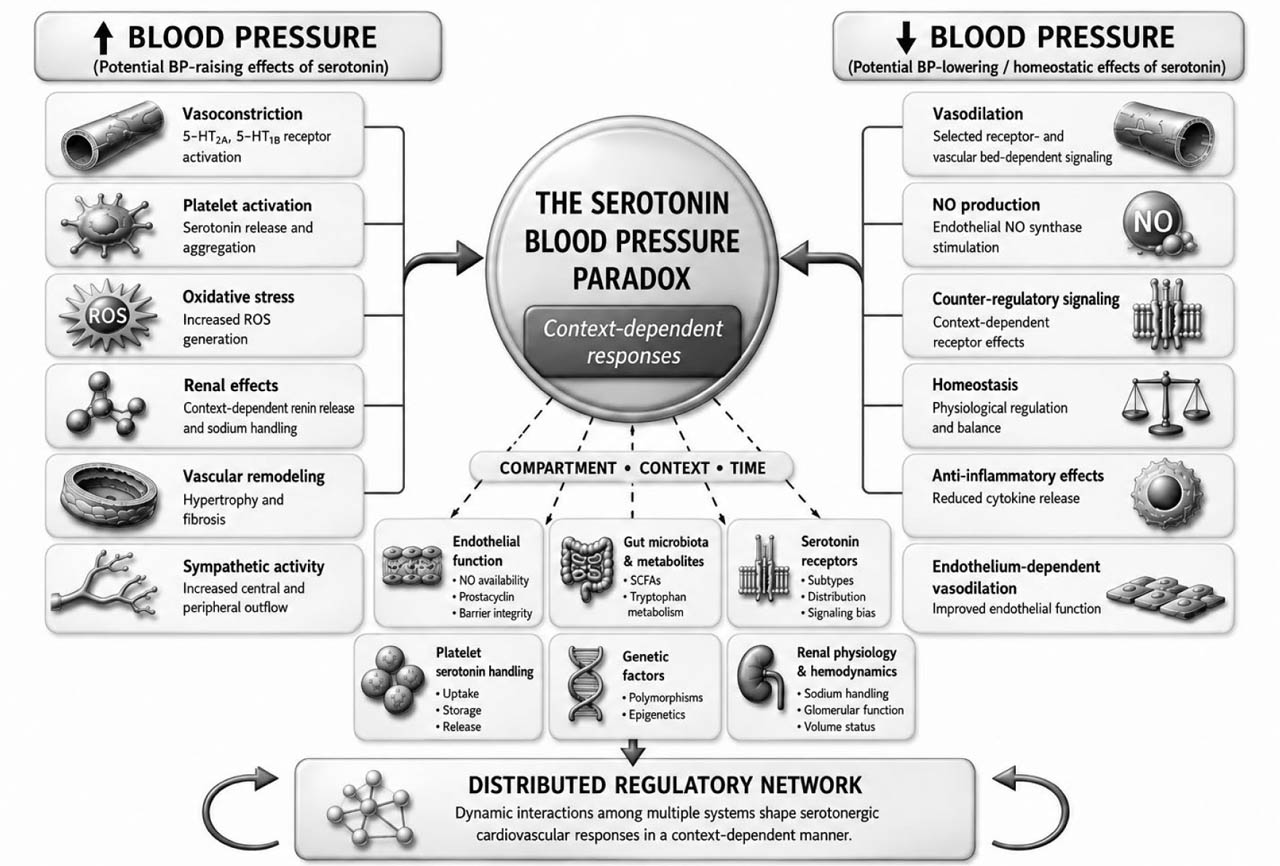
Figure 1-
Integrative framework for the serotonin BP paradox. Serotonergic responses emerge within a distributed network and vary by biological compartment, context and time. The framework is conceptual and does not imply a fixed causal hierarchy. BP, blood pressure; NO, nitric oxide.
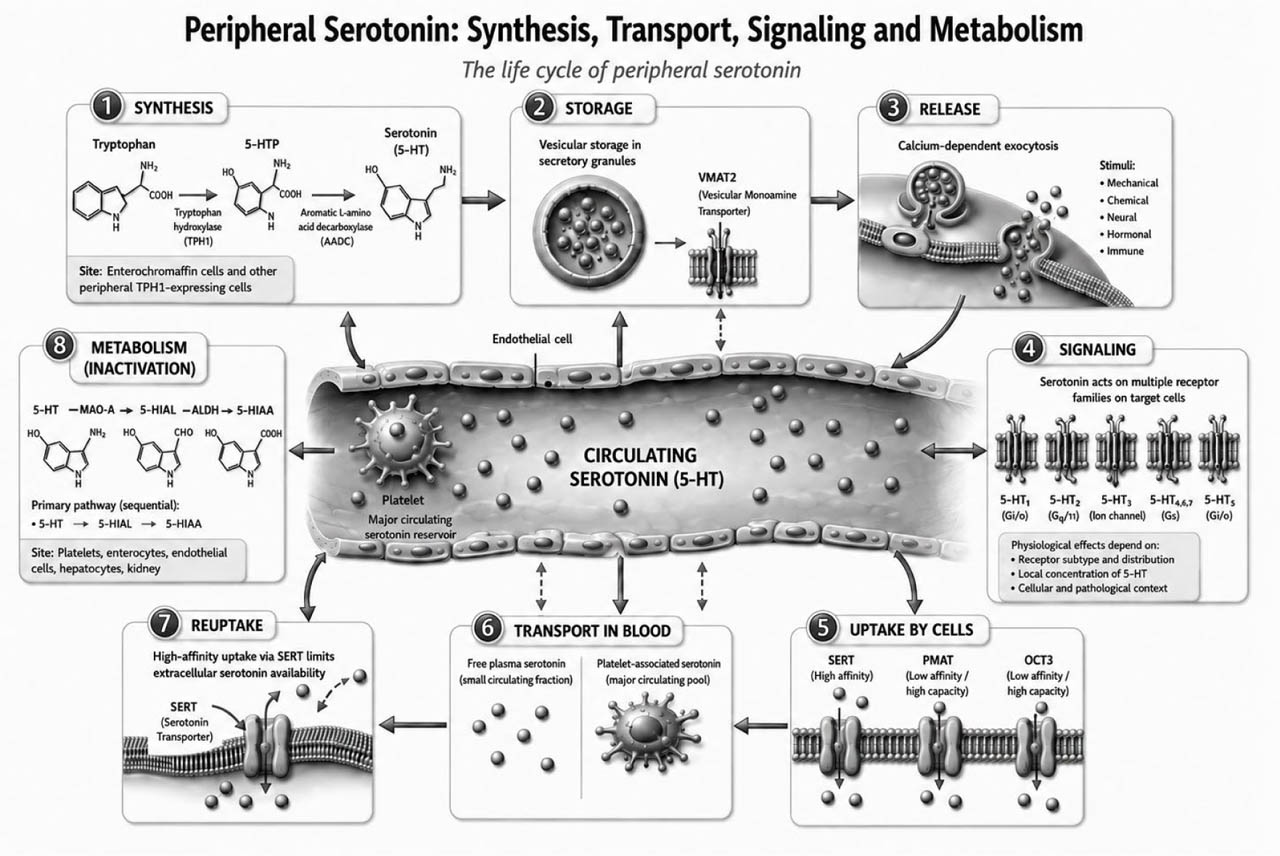
Figure 2-
Peripheral serotonin synthesis, transport, storage, release and metabolism. Intestinal synthesis, platelet uptake and storage, receptor signalling, cellular transport and metabolism create distinct serotonergic compartments whose biological and analytical significance should not be considered interchangeable. 5-HIAA, 5-hydroxyindoleacetic acid; 5-HT, 5-hydroxytryptamine; AADC, aromatic l-amino acid decarboxylase; PMAT, plasma membrane monoamine transporter; SERT, serotonin transporter.
Central and peripheral compartmentalisation of serotonergic BP regulation
Central and peripheral serotonergic systems are largely separated by the blood–brain barrier and regulated independently, although both can influence sympathetic activity, vascular resistance, heart rate and arterial pressure [3,6]. In this review, central mechanisms are considered primarily as mechanistic background because direct evidence linking specific serotonergic circuits to chronic human systemic hypertension remains limited.
Experimental studies demonstrate marked receptor- and site-specificity of central serotonergic cardiovascular effects. In the rostral ventrolateral medulla (RVLM), 5-HT1A receptor activation inhibits sympathoexcitatory neurons and lowers arterial pressure in rats [12]. Within the nucleus tractus solitarius (NTS), 5-HT2A receptor activation suppresses sympathetic activity [13], whereas 5-HT3 signalling can impair baroreflex function and modify arterial-pressure responses [14]. These findings illustrate that central receptor effects cannot be classified uniformly as pressor or depressor or extrapolated across neural regions.
Further preclinical support comes from serotonin-deficient rats, which develop elevated arterial pressure associated with increased sympathetic vascular tone and sex-dependent differences [15]. This finding supports biological plausibility but does not establish an analogous serotonin-deficiency phenotype in human hypertension.
Urapidil further illustrates the translational complexity. Experimental evidence supports a central hypotensive component mediated partly through 5-HT1A receptors [16] whereas its antihypertensive action in humans also depends substantially on peripheral alpha1-adrenoceptor blockade [17]. It therefore represents mixed pharmacology rather than direct validation of central serotonergic targeting.
Overall, central and peripheral serotonin represent distinct but functionally convergent compartments. Most detailed evidence for central serotonergic BP regulation remains preclinical; accordingly, the following sections focus primarily on peripheral mechanisms, for which direct human vascular and platelet evidence is stronger.
Receptor diversity as a determinant of serotonergic cardiovascular responses
Serotonin acts through seven receptor families (5-HT1-5-HT7) comprising multiple subtypes with distinct signalling properties and tissue distributions [3,10]. Except for the ligand-gated 5-HT3 receptor, all are G-protein-coupled receptors. This diversity contributes substantially to context-dependent cardiovascular responses but does not permit a simple classification into ‘pressor’ and ‘depressor’ receptors.
5-HT2A and 5-HT1B: human evidence for vascular contraction
The 5-HT2A receptor is prominent in vascular smooth muscle and platelets and signals predominantly through Gq/11-dependent pathways that increase intracellular Ca2+ and promote contraction [3,6,10]. However, serotonin-induced vasoconstriction is not exclusively 5-HT2A-mediated. In isolated human internal thoracic arteries, both 5-HT2A and 5-HT1B receptors contribute to contraction [18], illustrating the importance of vascular-bed-specific receptor expression.
In human platelets, 5-HT2A signalling also amplifies activation induced by agonists such as adenosine diphosphate (ADP) and thrombin [19]. Serotonin therefore acts more as a local enhancer of pro-aggregatory signalling than as a strong independent platelet agonist. These human findings establish functional vascular and platelet 5-HT2A signalling, but do not demonstrate chronic 5-HT2A activation as a causal mechanism of systemic hypertension.
Vasodilator responses and receptor attribution
Serotonin can also produce vasodilation. In the human forearm circulation, this response is nitric oxide-dependent [20]. Importantly, pharmacological analysis did not support a functional 5-HT1A contribution [20]. Endothelial serotonin-mediated vasodilation should therefore be distinguished from central 5-HT1A-mediated sympathoinhibition rather than incorporated into a generalised peripheral 5-HT1A vasodilator mechanism.
5-HT7 and other receptors
Preclinical studies indicate that 5-HT7 signalling may counteract serotonergic contraction in selected vascular beds; in rat vena cava, 5-HT7 activation restrained 5-HT2A-mediated contraction [21]. Comparable evidence in human systemic hypertension is lacking. 5-HT2B signalling has greater established relevance to pulmonary vascular remodelling than to systemic hypertension, while 5-HT4 receptors have recognised cardiac effects but no validated role in systemic hypertension; evidence for 5-HT5A and 5-HT6 remains limited [3,6].
Overall, receptor heterogeneity explains part, but not all, of the serotonin BP paradox. Cardiovascular effects depend on receptor repertoire, anatomical compartment, endothelial and platelet state, autonomic context and serotonin availability. The major receptor families and the evidence linking them to systemic hypertension are summarised in Table 1.
Table 1-
Serotonin receptor subtypes and cardiovascular relevance.
| Receptor | Major signalling | Principal cardiovascular localisation/function | Cardiovascular effects relevant to this review | Evidence relevant to systemic hypertension |
|---|---|---|---|---|
| 5-HT1A | Gi/o | Central autonomic nuclei; limited peripheral vascular role | Central sympathoinhibition and hypotensive responses in experimental models | Predominantly preclinical. RVLM 5-HT1A activation produces hypotension in rats [12] contributes experimentally to urapidil action [16]. Human relevance is not independently established. |
| 5-HT1B | Gi/o | Vascular smooth muscle | Vasoconstriction in selected vascular beds | Human vascular evidence. Contributes with 5-HT2A to serotonin-induced contraction in human internal thoracic artery [18]. Direct causal evidence in chronic systemic hypertension is lacking. |
| 5-HT1D | Gi/o | Vascular/neuronal tissues; prejunctional signalling | Modulation of neurotransmitter release and vascular responses | Limited evidence for systemic hypertension. Cardiovascular role is context- and vascular-bed-dependent [3,6]. |
| 5-HT2A | Gq/11 | Vascular smooth muscle; platelets; central cardiovascular circuits | Vascular contraction; amplification of platelet activation; region-specific central autonomic effects | Relatively strong functional evidence, but not a validated hypertension mechanism. Human vascular contraction [18], platelet amplification [19] central effects may be depressor depending on neural site [13]. Antagonist studies do not establish selective 5-HT2A blockade as an effective antihypertensive strategy [22,23,24]. |
| 5-HT2B | Gq/11 | Vascular and cardiac tissues | Proliferative/remodelling signalling; particularly relevant to pulmonary vascular biology | Evidence stronger in pulmonary than systemic vascular disease. No established causal role in human systemic hypertension [3,6]. |
| 5-HT3 | Ligand-gated cation channel | Autonomic and sensory pathways; NTS | Rapid neuronal signalling and modulation of cardiovascular reflexes | Predominantly preclinical. NTS 5-HT3 activation can inhibit baroreflex regulation and alter arterial-pressure responses [14]. |
| 5-HT4 | Gs | Heart; gastrointestinal and some vascular tissues | Positive chronotropic/inotropic signalling; tissue-specific effects | Human cardiac pharmacology exists, but no established role in systemic hypertension [6,10]. |
| 5-HT5A | Gi/o | Predominantly CNS | Poorly characterised cardiovascular actions | No established role in systemic hypertension [10]. |
| 5-HT6 | Gs | Predominantly CNS | Limited established peripheral cardiovascular function | No established role in systemic hypertension [10]. |
| 5-HT7 | Gs | Vascular smooth muscle and other tissues | Vasorelaxant/counter-regulatory responses in selected vascular beds | Predominantly preclinical. Can restrain 5-HT2A-mediated contraction in isolated rat vena cava [21] direct human systemic-hypertension evidence is lacking. |
[i] 5-HT, 5-hydroxytryptamine; CNS, central nervous system; Gi/o, inhibitory G-protein family; Gq/11, Gq/11 protein family; Gs, stimulatory G protein; NTS, nucleus tractus solitaries; RVLM, rostral ventrolateral medulla.
[ii] Note: Serotonin receptor effects are highly dependent on anatomical site, vascular bed, receptor co-expression, endothelial state and experimental conditions. The table summarises cardiovascular relevance rather than assigning individual receptors fixed ‘pressor’ or ‘depressor’ functions. Evidence from pulmonary vascular disease is not considered direct evidence for systemic arterial hypertension. 5-HT3 is an ionotropic receptor; the remaining receptor families are G-protein-coupled receptors [3,10].
Gut microbiota as an upstream modulator of peripheral serotonergic homeostasis
Peripheral serotonergic signalling is influenced by the intestinal environment, where enterochromaffin cells represent a major source of TPH1-dependent serotonin synthesis [6,7,10,25]. Experimental studies demonstrate that gut microbial communities and microbiota-derived metabolites, including short-chain fatty acids, can increase enterochromaffin-cell serotonin biosynthesis and TPH1 expression [7,25]. These findings establish the microbiota as a biologically relevant upstream modulator of peripheral serotonergic homeostasis.
Its relevance to BP regulation is less direct. Gut microbial composition and metabolites are associated with vascular, immune, autonomic, metabolic and renal pathways involved in BP control [26,27], and microbiota-dependent serotonergic signalling has been proposed as one potential link between the intestinal environment and cardiovascular regulation [28]. However, the evidence is uneven: microbiota-dependent regulation of intestinal serotonin is supported predominantly by mechanistic and preclinical data [7,25], whereas microbiota-BP associations include both experimental and growing human observational evidence [26,27]. A direct causal microbiota-serotonin-systemic hypertension pathway in humans has not been established.
Interpretation of human studies is further limited by variability in diet, age, geography, medication exposure, comorbidities, host genetics and microbiome methodology [26,27]. The gut microbiota should therefore be considered as one upstream modifier of peripheral serotonergic biology within a broader cardiovascular network rather than a principal regulator of the serotonin BP paradox. Prospective studies integrating microbiome profiling with standardised serotonin measurements and cardiovascular phenotyping are needed to clarify its independent contribution to human hypertension [26,27,28].
Platelets and the SERT: dynamic regulators of peripheral serotonergic homeostasis
Peripheral serotonin is strongly shaped by platelet uptake, storage and activation-dependent release. Platelets do not represent a meaningful site of serotonin synthesis; instead, they acquire extracellular serotonin through the high-affinity serotonin transporter (SERT, encoded by SLC6A4) and store it in dense granules [6,11,29]. Most serotonin measurable in circulating blood is therefore associated with the platelet compartment, whereas the freely circulating plasma fraction is comparatively small and analytically difficult to quantify [30].
This organisation gives platelets a dual regulatory role. Under resting conditions, SERT-dependent uptake limits extracellular serotonin availability, whereas platelet activation releases stored serotonin into a highly localised vascular microenvironment [11,29]. Consequently, systemic serotonin measurements may not reflect concentrations encountered by vascular cells at sites of platelet activation.
Serotonin is also better regarded as a local amplifier than as a strong independent platelet agonist. In human whole blood, it potentiates activation induced by ADP and thrombin through 5-HT2A-dependent mechanisms [19]. Platelet-derived serotonin therefore acts within a broader mixture of vasoactive and inflammatory mediators, influencing vascular smooth muscle, endothelial responses, platelet recruitment and remodelling [19,29].
Accordingly, altered platelet serotonin handling may modify local vascular responses without producing large or consistent changes in free circulating serotonin.
Measurement of circulating serotonin: a major methodological challenge
Interpretation of human studies is complicated by the use of biologically distinct matrices, including serum, whole blood, platelet serotonin and platelet-poor plasma (PPP) [30,31,32]. These measures are not interchangeable. Whole-blood serotonin largely reflects the platelet pool, whereas serum concentrations are strongly influenced by platelet release during coagulation. PPP more closely approximates extracellular serotonin but is highly sensitive to residual platelet contamination and ex vivo activation [30].
Pre-analytical factors – including centrifugation conditions, processing delays, specimen handling and platelet contamination – can substantially alter measured PPP serotonin concentrations [30,31]. Recent reassessments continue to identify implausibly high plasma serotonin values and inadequate control of platelet contamination in the literature [32].
Accordingly, numerical serotonin concentrations obtained using different matrices or processing protocols should not be compared uncritically. Some apparent inconsistencies in serotonin-hypertension associations may therefore reflect methodological heterogeneity as well as true biological variation.
Human evidence for altered platelet serotonin handling in essential hypertension
Human studies indicate that platelet serotonin handling may differ in essential hypertension, although findings are heterogeneous and do not establish a primary causal abnormality. Early studies reported reduced platelet serotonin uptake and content [33], whereas others found increased free plasma serotonin or enhanced release with less consistent changes in platelet content [34]. Alterations in serotonin uptake, storage and efflux were also subsequently described [35].
Comparative studies further emphasised interindividual variability. Impaired platelet serotonin uptake in essential hypertension differed according to age and sex [36], while cross-incubation experiments showed that circulating plasma factors could modify uptake and that abnormalities were partly reversible after BP control [37]. These observations suggest that altered platelet serotonin handling may represent a consequence or correlate of the hypertensive milieu rather than a fixed upstream defect.
Later studies also linked hypertension with changes in plasma serotonin, platelet serotonin content, uptakes and platelet-surface SERT density [38]. Collectively, these findings support an association between hypertension and altered platelet serotonergic homeostasis, but do not establish causality or clinical specificity.
Accordingly, platelet serotonin content, SERT activity and circulating serotonin remain research variables rather than validated biomarkers of systemic arterial hypertension, and their interpretation requires attention to phenotype, medication exposure, platelet activation, biological matrix and pre-analytical methodology [30,31,32,33,34,35,36,37,38]. Direct human evidence is summarised in Table 2.
Table 2-
Human evidence for serotonergic involvement in systemic arterial hypertension.
| Domain | Representative human evidence | Main findings | Nature of evidence | Interpretation and major limitations |
|---|---|---|---|---|
| Circulating and platelet serotonin | Kamal et al. [33] Biondi et al. [34] Nityanand et al. [35] | Altered platelet serotonin uptake/content and plasma or release-related measures reported in essential hypertension, but direction and magnitude differ among studies | Small human observational/physiological studies | Suggests altered serotonergic homeostasis but findings are heterogeneous; biological matrices and analytical methods differ; causality cannot be inferred |
| Platelet serotonin uptake/SERT | Fetkovska et al. [36] Jafri et al. [37] Brenner et al. [38] | Reduced platelet uptake and altered SERT-related measures reported; effects may depend on age/sex and can be influenced by circulating factors or BP control | Human mechanistic/observational | Relatively consistent signal of altered platelet handling, but reversibility argues against assuming a fixed primary SERT defect |
| Renal serotonergic physiology | Tomoda et al. [39] Hirose et al. [40] | Altered renal hemodynamic response to enhanced endogenous serotonin; associations between urinary serotonin-related measures, BP, and microalbuminuria | Small physiological study + observational clinical study | Directly relevant to human systemic hypertension, but sample sizes and observational design limit causal conclusions |
| SLC6A4 genetic variation | Williams et al. [9] | 5-HTTLPR associations with BP/hypertension differed across populations, including differences in direction of effect | Large human population studies | Supports genetic modification rather than a universal risk allele; substantial population/ancestry dependence |
| HTR2A genetic variation | Choi et al. [41] Liolitsa et al. [42] | Associations reported for HTR2A variants, with cohort- and sex-dependent patterns | Human cohort/case-control evidence | Associations are heterogeneous and do not establish a clinically predictive serotonergic genotype |
| 5-HT2 antagonism | Cameron et al. [22] Donnelly et al. [23] Hosie et al. [24] | Ketanserin lowers BP, but more selective ritanserin does not reproduce the same effect; ketanserin also has alpha1-adrenoceptor antagonist activity | Human pharmacological studies | Demonstrates pharmacological modulation but does not validate selective 5-HT2 blockade as an antihypertensive mechanism |
| SERT modulation/antidepressant exposure | Calvi et al. [43] Zhong et al. [44] Zhang et al. [45] Pillinger et al. [46] | SSRIs generally show little consistent BP reduction; cardiovascular effects vary among antidepressants and populations | Reviews/meta-analyses of clinical studies | SERT modulation does not generate a reproducible antihypertensive phenotype; drug-specific non-serotonergic effects complicate interpretation |
| Prospective serotonin-based prediction or treatment selection | No robust validated evidence identified among the studies included in this review | No established serotonin measure, SERT phenotype, receptor genotype, or serotonergic biomarker has been prospectively validated for hypertension prediction or treatment selection | Evidence gap | Serotonin-guided diagnosis or therapy remains investigational |
[i] 5-HTTLPR, serotonin transporter-linked polymorphic region; BP, blood pressure; SERT, serotonin transporter; SSRIs, selective serotonin reuptake inhibitor.
[ii] Note: This table summarises directly relevant human evidence for systemic arterial hypertension and is intended as a descriptive evidence map rather than a formal grading system. Animal and in vitro studies are excluded. Findings from pulmonary hypertension are not treated as direct evidence for systemic hypertension. Because this is a narrative review rather than a systematic review, the final row should be interpreted as an evidence gap identified within the literature included in the present synthesis, not as proof that no such study exists.
Intracellular serotonylation: extending serotonergic signalling beyond membrane receptors
Serotonergic signalling is not limited to cell-surface receptors. Serotonin can also undergo serotonylation, a transglutaminase-dependent post-translational modification in which serotonin is covalently attached to glutamine residues of intracellular proteins [8,47]. This mechanism was first characterised in platelets, where serotonylation of small GTPases contributes to alpha-granule release and secretory responses [47], and was later demonstrated in vascular cells [48].
Small GTPases illustrate the context-dependent nature of this process. In vascular smooth-muscle cells, transglutaminase-dependent serotonylation of RhoA initially promotes activation, but prolonged serotonin exposure is followed by ubiquitination and proteasomal depletion of activated RhoA [49]. Serotonylation should therefore not be interpreted as irreversible or persistently activating; its consequences depend on the target protein, cellular context and duration of exposure.
Potential vascular effects have been studied most extensively in the pulmonary circulation. Serotonin-dependent transamidation contributes to pulmonary artery smooth-muscle-cell proliferation and migration [50], while increased RhoA serotonylation and RhoA/Rho-kinase signalling have been demonstrated in pulmonary-hypertension tissues [51]. These findings establish serotonylation as a biologically relevant vascular mechanism.
However, pulmonary vascular disease cannot be considered as direct evidence for systemic arterial hypertension. Direct human data linking serotonylation to the development or severity of systemic hypertension remains limited, and no validated clinical biomarker of vascular serotonylation exists. Accordingly, serotonylation should be regarded as an experimentally established intracellular mechanism with plausible cardiovascular relevance, but currently hypothesis-generating rather than clinically validated significance for human systemic hypertension.
Genetic modifiers of serotonergic BP regulation
Genetic variation may contribute to interindividual differences in serotonergic cardiovascular responses, but serotonergic variants are more plausibly regarded as modifiers of transport, receptor signalling and biological responsiveness than as independent determinants of a complex polygenic disease such as hypertension.
SLC6A4 and serotonin transport
Variation in the SERT gene SLC6A4 could influence extracellular serotonin availability and platelet handling. However, population studies of the SERT-linked polymorphic region (5-HTTLPR) have reported associations with BP and hypertension that vary by population and ancestry, including differences in the direction of effect [9]. These findings argue against a universal hypertensive or protective SLC6A4 genotype.
HTR2A variability
Associations involving HTR2A are similarly heterogeneous. Several variants were associated with hypertension in two Korean community cohorts, but the specific patterns were not consistent across cohorts [41]. An earlier UK study linked the HTR2A T102C polymorphism with essential hypertension predominantly in women, suggesting possible sex-dependent effects [42].
Collectively, these observations support genetic modulation of serotonergic cardiovascular responses but not a simple single-variant explanation of hypertension. No serotonergic polymorphism currently provides clinically validated prediction of hypertension risk, treatment response or cardiovascular phenotype. Future work should integrate serotonergic variation with genome-wide and multiomic data and detailed cardiovascular phenotyping to determine whether reproducible hypertension subphenotypes can be identified [9,41,42].
Renal serotonergic signalling in long-term BP regulation
Long-term arterial-pressure regulation depends critically on renal control of sodium balance, extracellular volume, renal hemodynamics and neurohormonal signalling. The kidney should therefore be regarded as an important effector and modifying compartment in serotonergic cardiovascular regulation rather than as a final or hierarchically dominant integrator [3].
Experimental studies demonstrate that serotonin can be generated locally within the kidney and modify renal vascular and excretory responses. In isolated rat kidneys, enhanced serotonin formation increased renal vascular resistance [52], while in vivo experiments showed changes in glomerular filtration, renal plasma flow, urine output and sodium excretion [53]. These effects were context-dependent and cannot be reduced to a uniform natriuretic, antinatriuretic or systemic pressor action.
Direct human evidence is limited, but suggests altered renal serotonergic physiology in hypertension. Following tryptophan administration, patients with essential hypertension showed renal hemodynamic responses that differed from normotensive controls, including absence of the later vasodilator response observed in normotensive subjects [39]. In untreated hypertension, urinary serotonin metabolism was also associated with renal and BP variables, particularly in patients with microalbuminuria [40]. These findings indicate phenotypic differences but remain physiological or observational and do not establish a serotonin-dependent renal subtype of hypertension.
Experimental evidence also suggests interaction with renin secretion. Intrarenal serotonin stimulated renin release in denervated dog kidneys through a 5-HT2-sensitive mechanism [54]. However, this does not establish serotonin as a major physiological regulator of the renin-angiotensin-aldosterone system (RAAS) in humans or validate a serotonergic-RAAS axis in systemic hypertension.
Overall, renal serotonin can influence vascular, excretory and neurohormonal processes, but the direction and magnitude of these effects vary with experimental context, and direct human evidence remains limited [39,40,52,53,54]. The kidney is therefore best considered as a major downstream effector and modifying compartment within a distributed serotonergic cardiovascular network.
Endothelial dysfunction as a major integrative interface in serotonergic vascular regulation
The vascular effects of serotonin depend not only on receptor subtype and local serotonin availability but also on the functional state of the vessel wall. Endothelial dysfunction is increasingly understood as a multidimensional disturbance involving vascular tone, permeability, thromboregulation, inflammatory signalling, oxidative balance and structural adaptation rather than simply impaired nitric oxide (NO) bioavailability [55]. Within serotonergic cardiovascular regulation, the endothelium therefore represents one major vascular interface, but not a hierarchically dominant regulator of systemic BP.
Endothelial state and serotonergic vascular responses
Human studies demonstrate that the endothelial state can substantially alter vascular responses to serotonin. In the healthy forearm circulation, serotonin induces NO-dependent vasodilation [20], whereas diseased human coronary arteries can exhibit vasoconstrictor responses when normal endothelial vasodilator function is impaired [56]. Thus, serotonin cannot be classified as intrinsically vasodilatory, vasoconstrictive, endothelial-protective or endothelial-toxic; its effect depends on vascular territory, endothelial integrity, receptor distribution and the surrounding signalling environment [3,20,56].
Platelet–endothelium interactions and vascular remodeling
Serotonergic platelet-vascular signalling is similarly reciprocal rather than linear. Human coronary artery experiments show that endothelial integrity modifies vascular responses to mediators released from aggregating platelets [57]. Platelet-derived serotonin participates in this local environment and amplifies responses to other agonists [19,29], but acts alongside ADP, thromboxane, growth factors, inflammatory mediators and endothelial-derived signals. Current evidence therefore does not support a serotonin-specific platelet-endothelial cycle as an independent cause of human hypertension.
Serotonin may also interact with non-serotonergic pathways involved in vascular remodelling. Experimental studies demonstrate crosstalk with angiotensin II and endothelin-1-associated signalling that can enhance vascular smooth-muscle proliferation [58]. Such findings establish biological interaction but not serotonin as a dominant driver of remodelling in human systemic hypertension.
Overall, endothelial phenotype influences how serotonergic and platelet-derived signals are translated into vascular responses within a broader network that also includes vascular smooth muscle, autonomic regulation, renal physiology and other circulating and local mediators. This concept is summarised in Figure 3, which depicts the endothelium as a major integrative vascular interface rather than the central regulator of the serotonin BP paradox.
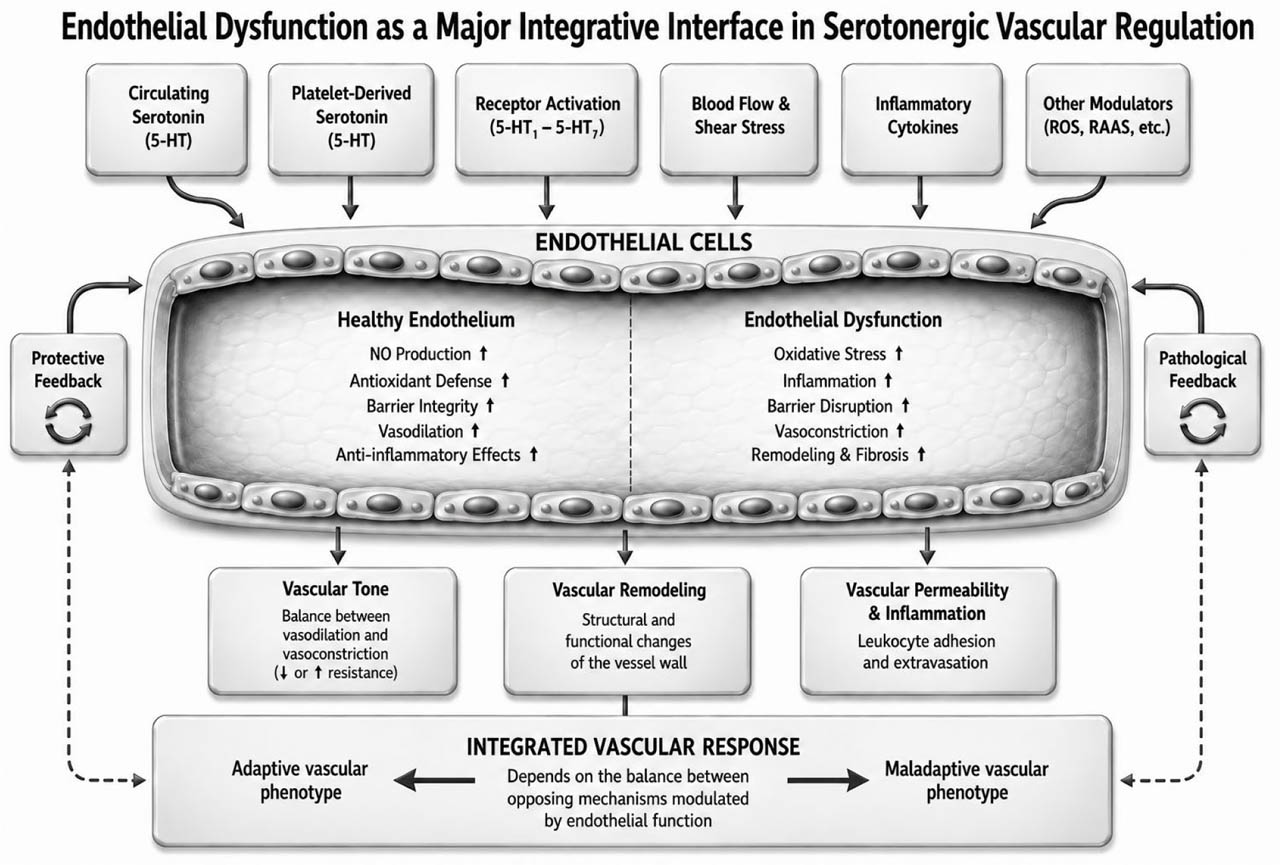
Figure 3-
Endothelial–vascular interface in serotonergic cardiovascular regulation. Endothelial state modifies responses to serotonergic, platelet-derived, inflammatory, hemodynamic and metabolic signals. The endothelium represents one major interface within a distributed network rather than a central integrator. 5-HT, 5-hydroxytryptamine; NO, nitric oxide; RAAS, renin-angiotensin-aldosterone system; ROS, reactive oxygen species.
An updated integrative framework for interpreting the serotonin BP paradox
The evidence reviewed above does not support a single linear serotonergic pathway leading consistently to either hypertension or hypotension. Instead, serotonergic cardiovascular regulation is better represented as a distributed network in which central autonomic pathways, vascular receptor signalling, platelet serotonin handling and SERT, endothelial function, renal physiology, gut microbiota, intracellular serotonylation and genetic background may operate in parallel and interact reciprocally [3,6,7,9,11,12,13,14,15,16,17,18,19,20,21,25,26,27,28,29,39,40,41,42,47,48,49,50,51,52,53,54,55,56,57,58].
These processes should not be interpreted as a fixed causal sequence. Gut-derived serotonin does not necessarily initiate a cascade progressing through platelets, receptors, endothelium and kidney, and no single compartment consistently occupies a dominant position within the network. Their cardiovascular consequences are better understood across three interacting dimensions: Compartment × Context × Time.
1. Compartment
Compartment refers to the biological location in which serotonergic signalling is generated, measured or acts. Central and peripheral serotonin pools are largely distinct [3,6], and even within the periphery, intestinal, platelet, endothelial, vascular smooth-muscle and renal compartments represent different signalling environments. Accordingly, a single circulating serotonin measurement cannot define global serotonergic activity [30,31,32].
2. Context
Context includes receptor expression, endothelial integrity, platelet activation, autonomic and renal state, inflammatory and metabolic conditions, genetic background and other vasoactive mediators [3,9,18,19,20,21,41,42,55,56,57,58]. These factors may alter both the direction and magnitude of serotonergic responses.
3. Time
Time distinguishes rapid receptor-, autonomic-, platelet- and vascular responses from slower changes in cellular phenotype, receptor expression, vascular remodelling, renal adaptation and intracellular signalling. These temporal categories overlap, and the relevance of individual mechanisms to chronic human hypertension remains incompletely defined.
Thus, apparently opposing serotonergic observations may reflect differences in compartment, biological context or temporal scale rather than a single paradoxical mechanism. However, the framework should not be overinterpreted: evidence is unequal across domains, with stronger human support for vascular, platelet, renal, genetic and pharmacological observations than for several microbiota-dependent and serotonylation mechanisms [7,25,26,27,28,47,48,49,50,51].
The proposed framework is therefore conceptual and hypothesis-generating, without quantitative weighting, causal hierarchy or the implication that serotonin is a dominant determinant of BP. It is summarised in the Central Illustration (Figure 1), while Table 3 compares potential BP-raising and BP-lowering/homeostatic mechanisms and their evidentiary context.
Table 3-
Mechanistic basis of context-dependent serotonergic BP responses.
| Regulatory domain | Potential BP-raising/maladaptive mechanisms | Potential BP-lowering/homeostatic mechanisms | Major context determinants | Evidence context | Representative references |
|---|---|---|---|---|---|
| Vascular receptor signalling | 5-HT2A/5-HT1B-mediated vascular smooth-muscle contraction | Vasodilator/counter-regulatory responses in selected vascular beds; 5-HT7-mediated restraint of contraction experimentally | Receptor repertoire; vascular bed; serotonin concentration; endothelial state | Human vascular + preclinical | [18,20,21] |
| Endothelial–vascular interface | Loss of endothelium-dependent buffering may expose or amplify vasoconstrictor responses | Intact endothelial signalling can support NO-dependent vasodilation and modify platelet-derived vasoactive responses | Endothelial integrity; oxidative/inflammatory state; vascular disease | Human physiological/ex vivo + conceptual | [20,55,56,57] |
| Platelet/SERT regulation | Platelet activation releases stored serotonin locally and can amplify vasoconstrictor/pro-aggregatory signalling | Resting SERT-dependent uptake limits extracellular serotonin availability; normal platelet handling contributes to peripheral homeostasis | Platelet activation; SERT density/activity; concomitant agonists; vascular injury | Human mechanistic/observational | [11,19,29,33,34,35,36,37,38] |
| Central autonomic regulation | Region-specific serotonergic signaling may facilitate sympathetic or baroreflex responses | 5-HT1A-mediated sympathoinhibition and other region-specific depressor mechanisms | Brain region; receptor subtype; autonomic state | Predominantly preclinical | [12,13,14,15,16,17] |
| Renal serotonergic physiology | Increased renal vascular resistance or context-dependent alterations in renal handling may favour BP elevation | Serotonergic effects can also modify renal perfusion, filtration, urine flow and sodium excretion in the opposite direction | Local serotonin formation; renal function; physiological state; receptor context | Preclinical + limited human physiological evidence | [39,40,52,53,54] |
| Gut microbiota-serotonin axis | Microbial changes may alter intestinal serotonin production and interact with pathways relevant to BP regulation | Normal microbial metabolism may contribute to physiological regulation of enterochromaffin-cell serotonin production | Microbial composition; diet; metabolites; host factors | Mechanistically strong preclinical evidence; human hypertension link largely associative | [7,25,26,27,28] |
| Intracellular serotonylation | Modification of intracellular proteins may influence contraction, cytoskeletal signalling, proliferation, or remodelling | Effects are protein- and time-dependent; serotonylation cannot be classified uniformly as maladaptive | Target protein; transglutaminase activity; cellular compartment; duration of exposure | Molecular/in vitro and preclinical; human evidence mainly pulmonary vascular | [47,48,49,50,51] |
| Genetic background | Certain variants may modify transporter or receptor function in ways associated with higher BP in specific populations | The same or related variants may show neutral or different effects in other populations | Ancestry; sex; environment; gene–gene and gene–environment interactions | Human association evidence | [9,41,42] |
[ii] Note: The mechanisms shown are not mutually exclusive and should not be interpreted as a causal sequence or as having equal evidentiary weight. ‘BP-raising’ and ‘BP-lowering/homeostatic’ describe potential context-dependent effects rather than predictable net effects in an individual patient. Inflammation, oxidative stress, metabolic status, medication exposure and disease stage are treated as cross-cutting contextual modifiers rather than independent serotonergic pathways.
Therapeutic targeting of serotonergic pathways in hypertension: lessons from clinical pharmacology
The involvement of serotonin in cardiovascular regulation has long stimulated interest in serotonergic pathways as therapeutic targets. Clinical pharmacology, however, provides a more cautious picture: drugs that modify serotonergic signalling can influence BP, but these effects have generally been inconsistent or pharmacologically non-selective and do not establish serotonin as an independent therapeutic target in systemic hypertension.
1. Lessons from serotonergic antagonists
Early interest focused on 5-HT2 receptor antagonism. Ketanserin lowered BP in patients with essential hypertension [22,23], but its interpretation is complicated by clinically relevant alpha1-adrenoceptor antagonism, making it impossible to attribute the antihypertensive effect exclusively to 5-HT2 blockade. This limitation became clearer when the more selective 5-HT2 antagonist ritanserin failed to produce a comparable antihypertensive response [24]. Selective 5-HT2 antagonism alone therefore does not appear to provide a robust antihypertensive mechanism.
Urapidil illustrates a similar problem. Experimental evidence supports a central 5-HT1A-mediated component of its hypotensive action [16], whereas human hemodynamic effects also depend importantly on peripheral alpha1-adrenoceptor blockade [17]. Its efficacy therefore represents mixed pharmacology rather than direct clinical validation of central serotonergic targeting.
Thus, pharmacological modulation of a serotonergic component and therapeutic validation of serotonin as a hypertension target are not equivalent.
2. SERT modulation and antidepressants
Selective serotonin reuptake inhibitors (SSRIs) provide an additional pharmacological perspective because they inhibit SERT centrally and peripherally, including in platelets [43,46]. Nevertheless, meta-analytic evidence indicates little or no consistent effect of SSRIs on arterial pressure compared with placebo [44], and studies in patients with cardiovascular disease and depression likewise show no uniform reduction in systolic or diastolic pressure [45]. Broader network meta-analysis further demonstrates substantial cardiovascular heterogeneity among individual antidepressants [46].
SSRIs therefore represent an imperfect ‘natural experiment’: pharmacological inhibition of serotonin transport does not produce a reproducible antihypertensive phenotype at the population level [43,44,45,46].
3. Implications for therapeutic research
These observations do not imply that serotonergic mechanisms are irrelevant to hypertension; rather, they suggest that their cardiovascular consequences are highly context-dependent. Future studies should investigate whether specific vascular, platelet, autonomic, renal or genetic phenotypes identify patients in whom a defined serotonergic mechanism contributes meaningfully to BP regulation. At present, however, no serotonergic receptor, transporter, metabolite or intracellular pathway has been prospectively validated as a treatment-selection marker or established therapeutic target for systemic arterial hypertension.
Clinical implications: from mechanistic heterogeneity to a research agenda
The clinical significance of the serotonin BP paradox is primarily conceptual rather than prescriptive. Contemporary hypertension research increasingly recognises that similar brachial BP values may arise from different combinations of cardiac output, vascular resistance, arterial stiffness, age, sex and other biological determinants [59,60,61]. Within this precision-hypertension framework, serotonergic variables could eventually be explored as components of multidimensional phenotyping rather than as stand-alone biomarkers.
Potential research variables include platelet serotonin handling, SERT expression or activity, receptor-related genetic variation and rigorously standardised circulating serotonin measurements. However, current evidence does not support routine serotonin measurement, classification of hypertension according to serotonergic status, use of platelet serotonin or SERT activity for treatment selection, serotonergic genetic testing for routine risk stratification, or serotonin-guided antihypertensive therapy.
Clinical translation would require several methodological advances. Serotonin measurements must distinguish serum, whole blood, platelet content and PPP using standardised pre-analytical procedures [30,31,32]. Candidate serotonergic variables should then be evaluated prospectively in well-characterised human cohorts with careful consideration of age, sex, medication exposure, renal and metabolic status, platelet activity and comorbidities. Their ability to predict incident hypertension, progression, reproducible phenotypes or treatment response should be tested beyond established clinical predictors.
Future studies should also integrate serotonergic variables with vascular, renal, autonomic, inflammatory, metabolic, genetic and multiomic phenotyping rather than examine them in isolation [59,60,61,62]. Until such prospective validation is available, serotonergic phenotyping should remain a research strategy rather than a basis for clinical diagnosis or treatment selection.
Discussion
The context dependence of serotonergic cardiovascular signalling has been recognised for decades. Classical and subsequent reviews established that serotonin can produce divergent cardiovascular effects according to receptor distribution, vascular territory, endothelial integrity, autonomic regulation, platelet biology and pharmacological context [3,4,5,6]. The present review therefore does not propose context dependence as a new biological principle. Its contribution is an updated integrative interpretation that combines this classical cardiovascular literature with newer evidence concerning microbiota-dependent peripheral serotonin regulation, intracellular serotonylation, contemporary genetic associations, methodological limitations of serotonin measurement and precision-hypertension phenotyping [7,8,9,25,26,27,28,29,30,31,32,41,42,47,48,49,50,51,59,60,61,62]. Accordingly, the ‘serotonin blood pressure paradox’ is used as an author-defined construct for organising apparently opposing observations rather than as a newly identified physiological contradiction.
The persistence of this apparent paradox reflects both biological and methodological heterogeneity. Serotonergic responses vary among central and peripheral compartments, receptor subtypes, vascular beds, endothelial and platelet states, renal physiology, genetic backgrounds and concomitant vasoactive signals [3,6,12,13,14,15,16,17,18,19,20,21,39,40,41,42,52,53,54,55,56,57,58]. At the same time, serum, whole blood, platelet serotonin and PPP represent different biological pools, and pre-analytical conditions can substantially affect measured concentrations [30,31,32]. Differences in species, experimental preparation, dose, route of administration, disease state, medication exposure and study duration further complicate comparisons. Apparently conflicting results may therefore reflect measurements of different serotonergic processes under different conditions rather than inconsistent biology.
The available evidence is more consistent with a distributed regulatory network than with a linear serotonergic cascade. Central autonomic circuits, vascular receptor signalling, platelet serotonin handling, endothelial phenotype, renal responses, genetic background and other modifiers can operate in parallel and interact reciprocally [3,6,11,12,13,14,15,16,17,18,19,20,21,38,39,40,41,42,52,53,54,55,56,57,58]. The endothelium represents one major vascular interface within this network, not a central hierarchical integrator, and the kidney is an important long-term effector rather than the terminal point of a serotonergic pathway. The proposed Compartment × Context × Time framework is therefore an organisational principle for interpreting where a serotonergic signal occurs, the biological environment in which it acts and the temporal scale over which its effects are observed.
A central limitation is the translational gap between mechanistic plausibility and human systemic hypertension. Direct human evidence supports several vascular responses [18,20,56], abnormalities of platelet serotonin handling and SERT [33,34,35,36,37,38], renal physiological differences [39,40], genetic associations [9,41,42] and pharmacological effects of drugs with serotonergic activity [22,23,24,43,44,45,46]. However, these findings are heterogeneous and often derive from small physiological studies, observational cohorts or pharmacologically non-selective interventions. Microbiota-dependent intestinal serotonin regulation is mechanistically well supported [7,25], and serotonylation is an established molecular mechanism with vascular relevance [47,48,49,50,51], but neither has been shown to constitute a causal pathway for human systemic arterial hypertension.
Thus, the framework is interpretative and hypothesis-generating rather than a validated causal systems model. It does not establish serotonin as a dominant determinant of BP, a validated biomarker or a specific therapeutic target. Its value lies in providing a coherent structure for future studies using standardised serotonin measurements, adequately powered and deeply phenotyped human cohorts, longitudinal designs and integration with established vascular, renal, autonomic, metabolic, inflammatory, genetic and multiomic determinants of hypertension [30,31,32,59,60,61,62].
Strengths and limitations
A major strength of this review is the cross-disciplinary integration of evidence from autonomic regulation, vascular receptor pharmacology, platelet serotonin handling, endothelial and renal physiology, gut microbiota, serotonylation, genetics and clinical pharmacology. Particular attention was given to distinguishing direct human evidence from human translational, preclinical in vivo, in vitro and hypothesis-generating observations. The review also explicitly addresses the analytical limitations of serotonin measurement and separately summarises human evidence relevant to systemic arterial hypertension in Table 3.
Several limitations should be acknowledged. First, this is a narrative review rather than a systematic review or meta-analysis. Although a structured literature search was undertaken, no prospectively registered protocol, formal risk-of-bias assessment+ or validated evidence-grading framework was used.
Second, the underlying literature is highly heterogeneous with respect to species, experimental preparation, vascular territory, serotonin exposure, receptor-selective pharmacology, patient characteristics, medication use, biological matrix and cardiovascular endpoints. These differences limit direct comparison and preclude quantitative weighting of individual mechanisms.
Third, the evidence base is uneven. Human data support several vascular, platelet/SERT, renal, genetic and pharmacological observations, whereas microbiota-dependent mechanisms and much of the evidence for serotonylation remain predominantly experimental or translational [7,25,26,27,28,47,48,49,50,51]. Findings from pulmonary vascular disease should not be extrapolated directly to systemic arterial hypertension.
Finally, circulating serotonin is difficult to characterise because different analytical matrices represent distinct biological compartments and are highly sensitive to pre-analytical conditions [30,31,32]. The proposed Compartment × Context × Time framework should therefore be regarded as an interpretative, hypothesis-generating synthesis rather than a validated causal or predictive model.
Conclusions
Serotonergic regulation of BP is heterogeneous across biological compartments, receptor systems, vascular territories, platelet and endothelial states, renal physiology and temporal scales. Apparently opposing cardiovascular effects of serotonin are therefore better interpreted as context-dependent responses within a distributed regulatory network than as manifestations of a single paradoxical mechanism.
The serotonin BP paradox provides an updated framework for integrating classical cardiovascular serotonin biology with emerging evidence concerning microbiota-dependent peripheral serotonin regulation, intracellular serotonylation, genetic variability and multidimensional hypertension phenotyping. However, the supporting evidence is uneven, and mechanistic plausibility should not be equated with causality in human systemic hypertension.
Current evidence does not establish serotonin as a dominant causal pathway, validated biomarker or specific therapeutic target in hypertension. Future progress will require standardised serotonergic measurements, larger and prospectively characterised human cohorts, and integration of serotonergic variables with established vascular, renal, autonomic, metabolic, inflammatory and genetic determinants of BP.
Accordingly, the principal value of the serotonin BP paradox remains interpretative rather than prescriptive: it organises heterogeneous observations and generates testable hypotheses without supporting serotonin-guided diagnosis or treatment at present.
Abbreviations
- 5-HT
5-hydroxytryptamine (serotonin)
- 5-HIAA
5-hydroxyindoleacetic acid
- 5-HTTLPR
serotonin transporter-linked polymorphic region
- AADC
aromatic l-amino acid decarboxylase
- ADP
adenosine diphosphate
- eNOS
endothelial nitric oxide synthase
- NO
nitric oxide
- NTS
nucleus tractus solitarius
- PMAT
plasma membrane monoamine transporter
- PPP
platelet-poor plasma
- RAAS
renin-angiotensin-aldosterone system
- ROS
reactive oxygen species
- RVLM
rostral ventrolateral medulla
- SCFA
short-chain fatty acid
- SERT
serotonin transporter (SLC6A4)
- SSRI
selective serotonin reuptake inhibitor
- TPH1
tryptophan hydroxylase 1
- TPH2
tryptophan hydroxylase 2
- VMAT2
vesicular monoamine transporter 2
Acknowledgements
None.
Notes
[7] Contributed by Author contributions
Conceptualisation – O.O., A.C.; Writing – original draft – Y.C., A.C.; Writing – review & editing – O.O., A.C.; Supervision – O.O.
[9] AI disclosure statement
During preparation of this manuscript, the authors used ChatGPT and Claude (Anthropic) to assist with language editing and refinement of the text, and ChatGPT-assisted workflows to develop conceptual illustrations (Figures 1–3). All AI-assisted output was reviewed, verified and edited by the authors, who take full responsibility for the accuracy, originality and scientific content of the manuscript.