
Figure 1
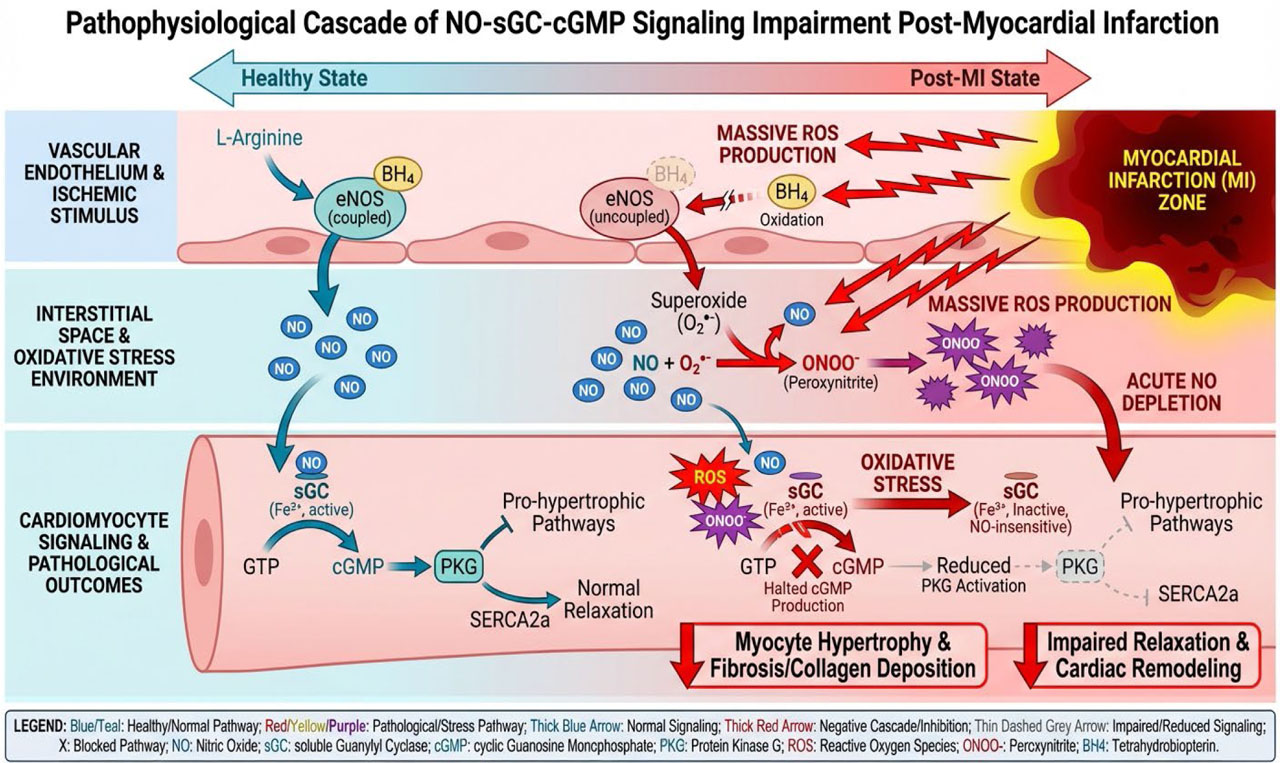
Pathophysiologic cascade for NO-sGC-cGMP signalling deficiency post MI. In the physiologic condition, NO is synthesised by eNOS from ʟ-arginine and induces sGC in the reduced (Fe2+) state to produce cGMP. Post MI, the generation of ROS leads to the uncoupling of eNOS and produces superoxide anion (O2−), which reacts with NO to generate ONOO−. It causes NO deficiency and oxidation of the sGC heme group to Fe3+, thereby rendering it inactive (NO-insensitive). Blue/Teal: Healthy/normal pathway; Red/Yellow/Purple: Pathological/stress pathway; Thick blue arrow: Normal signalling; Thick red arrow: Negative cascade/inhibition; Thin dashed grey arrow: Impaired/reduced signalling; X (cross mark): Blocked pathway; BH4, tetrahydrobiopterin; cGMP, cyclic guanosine monophosphate; eNOS, endothelial nitric oxide synthase; NO, nitric oxide; ONOO−, peroxynitrite; PKG, protein kinase G; ROS, reactive oxygen species; sGC, soluble guanylyl cyclase.
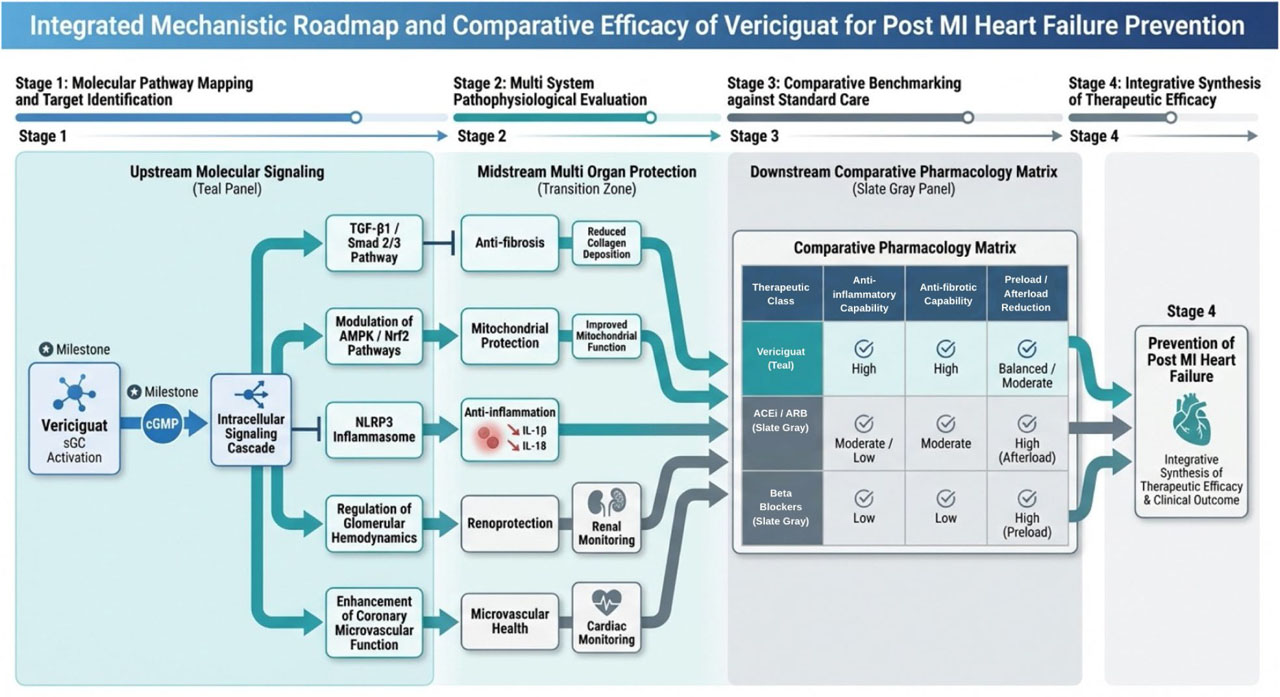
Figure 2
Mechanistic roadmap of vericiguat in post-MI HF prevention. Molecular pathway mapping of the disease modification potential in the upper panel is shown with special emphasis on vericiguat-mediated sGC activation as the key landmark to reestablish cGMP signalling. In the middle panel, there is evidence showing multi-organ pathophysiological regulation with anti-fibrotic actions (TGF-β1/Smad2/3), metabolic actions (AMPK/Nrf2), as well as microvascular and renal protection properties. The lower panel shows a comparative pharmacological matrix, where vericiguat (in teal) stands out compared with ACEi/ARB and beta-blockers with its anti-inflammatory and anti-fibrotic actions. cGMP, cyclic guanosine monophosphate; HF, heart failure; MI, myocardial infarction; sGC, soluble guanylate cyclase.
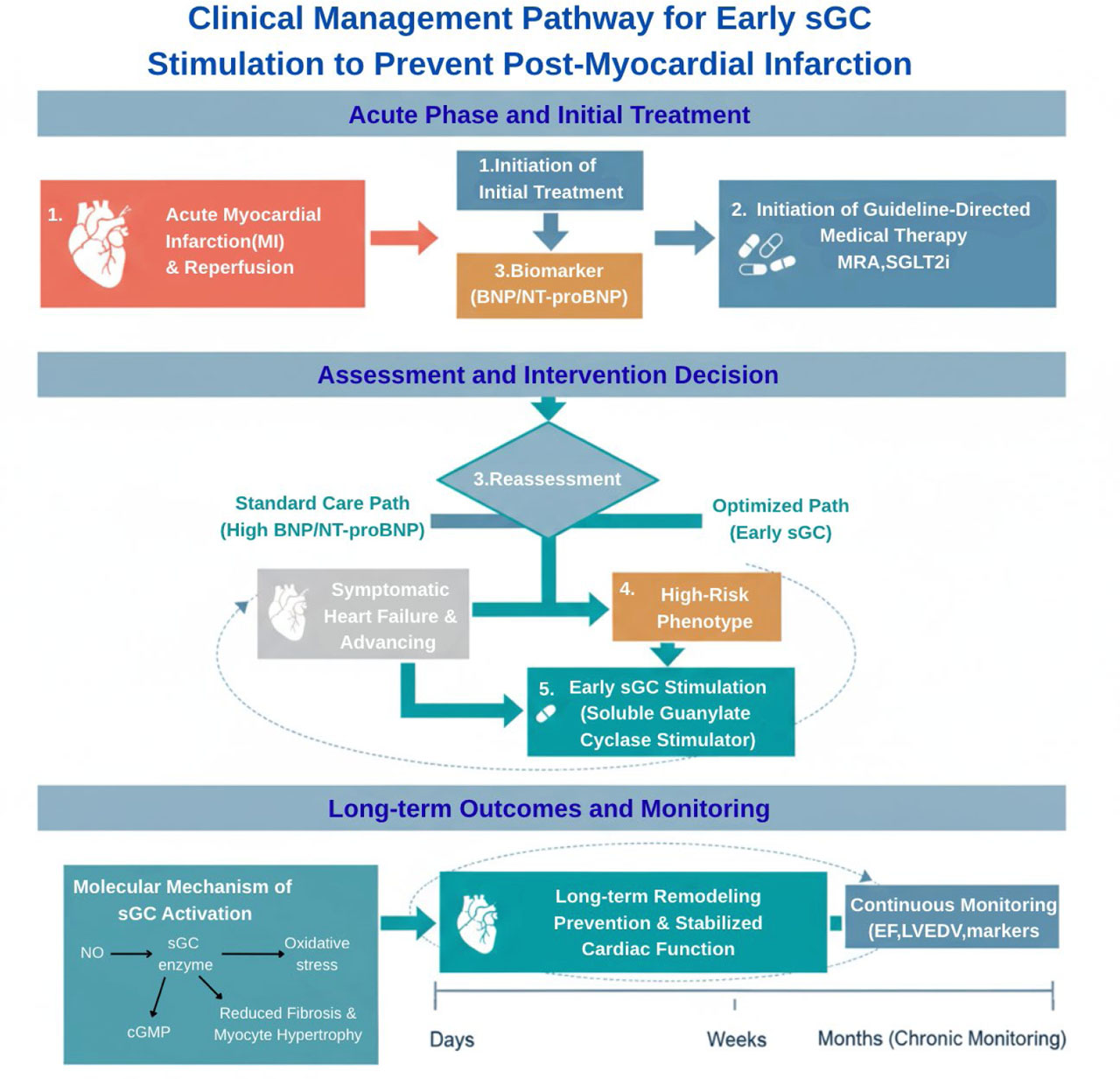
Figure 3
Early clinical management pathway of sGC stimulation to avoid post-MI HF. After MI with reperfusion, a treatment protocol according to guidelines, including MRA and SGLT2i, is started. For patients with high BNP/NT-proBNP levels (high-risk group), the next step would be early sGC stimulation with vericiguat in the critical phase of cardiac remodelling. The pathway is focused on the restoration of the NO-sGC-cGMP pathway and prevention of oxidative stress, fibrosis, and excessive growth of cardiomyocytes. The timeline shows the shift from the acute stage to the remodelling phase avoidance. cGMP, cyclic guanosine monophosphate; HF, heart failure; MI, myocardial infarction; NO, nitric oxide; sGC, soluble guanylate cyclase.