
Introduction
Myocardial infarction (MI) persists as one of the most prevalent medical conditions, which leads to death and illness across the globe, while ischemic heart diseases result in an overwhelming number of fatalities, creating a worldwide health crisis [1]. Ischemic heart diseases caused 9 million deaths and 250 million prevalent cases in 2021, which shows the global impact of this health issue [2]. The high prevalence of MI in the elderly, as shown in recent global statistics, demonstrates that more people now experience both MI and its related health issues [3]. Age-stratified global data show that older people face a greater risk of developing ischemic heart disease, which proves that this disease burden increases with advancing age [4]. The advancement of MI treatment through reperfusion therapies and medications has not eliminated the disease, since MI still serves as a major pathway, which leads to heart failure (HF), a condition that results in high rates of medical complications leading to death [5]. The process from MI to HF follows a complicated pathophysiological process [6]. The structural and molecular alterations lead to diminished cardiac function, which results in reduced cardiac output that produces the clinical symptoms of HF [7]. Post-MI HF is a significant cause of socioeconomic issues, leading to increased hospitalisations, health expenditure, and an increased strain on the national health infrastructure [8]. At the patient level, post-MI HF results in decreased physical activity, reduced quality of life, and an increased risk of mortality [9]. The current standard of care post-MI HF prevention requires medical professionals to perform early reperfusion procedures and administer antiplatelet drugs, statins, β-blockers, renin-angiotensin-aldosterone inhibitors, and mineralocorticoid receptor antagonists [10]. Treatment according to guidelines following MI is linked to improved survival rates and increased longevity among Medicare patients, but there is still considerable risk of developing HF [11]. The combination of endothelial dysfunction and oxidative stress, and nitric oxide signalling pathways leads to continuous myocardial damage and heart tissue remodelling in patients following guideline-based medical treatment [12]. The NO-soluble guanylate cyclase (sGC)-cyclic guanosine monophosphate (cGMP) signalling pathway controls cardiovascular homeostasis through its effects on vascular function, myocardial function, and inflammatory function, and fibrosis development [13]. The pathway has been demonstrated to play a vital role in the development of ventricular dysfunction and HF that occurs after ischemic injury [14]. Pharmacological stimulation of sGC currently serves as a promising treatment method, which restores cGMP signalling to prevent the development of pathological remodelling [15]. Vericiguat, an oral sGC stimulator, has demonstrated therapeutic effectiveness for patients suffering from worsening HF with reduced EF by decreasing their chances of cardiovascular death and HF hospitalisations thus validating the use of NO-sGC-cGMP pathway targeting for cardiovascular disease treatment [16]. The therapeutic rationale of targeting the NO-sGC-cGMP axis in cardiovascular disease management, however, remains to be established in the context of the prevention of HF following MI, thus underlining an important area of unmet clinical need [16,17]. The burden of post-MI HF remains a challenge in contemporary medicine, with increasing interest in molecularly targeted approaches to complement conventional neurohormonal blockade [18]. Hence, a critical synthesis of evidence from basic research and clinical studies is warranted to clarify the therapeutic rationale of targeting the NO-sGC-cGMP axis in the prevention of post-MI HF [19]. This review aims to integrate current knowledge on MI-induced pathophysiology, the pharmacology of vericiguat, and emerging clinical evidence to inform future translational strategies and optimise preventive care.
Pathophysiological mechanisms of post-MI progression to HF
MI triggers a series of complex structural, cellular, and molecular changes that finally lead to the development of adaptive repair responses or to detrimental remodelling and HF [20]. The process of pathophysiological transition from MI to HF occurs through the active interaction between five distinct factors, which include acute ischemic damage, inflammatory responses, neurohormonal activation, endothelial dysfunction, and chronic fibrotic remodelling [21].
1. Phases of MI: from acute injury to chronic remodelling
The initial stage of MI starts when blood circulation in the coronary arteries stops, which results in cardiomyocyte death through necrosis and apoptosis within the affected heart tissue [22]. The process results in a major inflammatory reaction, which brings immune cells to the site while dead cells are removed from the infarcted region [23]. The body produces an excessive inflammatory response, which causes both infarct growth and microvascular impairment that leads to harmful heart tissue changes [24].
The myocardium follows a healing process that starts with its first stage of repair work and lasts until complete recovery through the initiation of fibroblast activity, extracellular matrix production, and scar tissue formation [25]. The processes maintain structural integrity until persistent fibroblast activation leads to pathological changes, which result in ventricular enlargement, wall thinning, and contractility dysfunction [26]. This remodelling, which results in changes in geometry and function of the heart, and contributes to the pathophysiology of HF [27].
2. Pathological cascades driving HF progression
The process of remodelling after MI occurs through various intertwined pathological pathways, involve cell loss, hypertrophy of the surviving cells, disruption of the extracellular matrix, mitochondrial dysfunction, and activation of neurohormonal systems [28]. These pathways, though initially compensatory, eventually become adverse, hastening the process of ventricular dysfunction and progression of HF [29].
Inflammatory pathways maintain their essential functions in this process because of macrophage activation, and together with cytokine signalling, drive scar development, blood vessel formation, and tissue remodelling through fibrosis [30]. Neurohormonal systems, which include the renin-angiotensin-aldosterone system and the sympathetic nervous system, lead to cardiac remodelling by increasing wall tension and causing fibrosis and cardiomyocyte death [31].
Although progress in reperfusion strategies and pharmacological treatments, such as reperfusion therapies, has been made, a significant percentage of MI patients experience detrimental left ventricular remodelling, which is a major mechanistic link to the development of HF [32].
3. Focus on the NO pathway: endothelial dysfunction and oxidative stress
Endothelial dysfunction, which happens after MI causes negative effects on left ventricular remodelling. The study indicates that endothelial dysfunction serves as a significant factor that leads to HF because it disrupts vasodilatory signalling, thereby causing negative cardiovascular changes [33]. The process leads to endothelial nitric oxide synthase impairment, which results in decreased natural nitric oxide production. This effect blocks normal blood vessel operations [34].
The reduced nitric oxide signalling system results in dysfunction of coronary microcirculation and myocardial contractility and anti-fibrotic pathways which together drive negative heart remodelling [35]. The alteration of the NO-sGC-cGMP signalling axis compromises the function of cardiomyocytes, vascular tone, and relaxation [36].
In HF states, reduced endogenous NO production and subsequent cGMP signalling have been causally linked to endothelial dysfunction and progression of HF, emphasising the role of this signalling axis in post-MI pathophysiology [37].
4. Mechanistic cascade triggered by post-MI NO depletion
The body loses nitric oxide after MI, which begins a destructive process that decreases sGC activation and cGMP production while increasing oxidative damage and causing myocardium relaxation and blood flow problems [38]. This particular environment creates conditions that lead to inflammation and fibrosis while causing ventricular stiffness, which collectively drive the transition from compensated remodelling to overt HF (Figure 1) [39].
Mechanistic role of vericiguat in preventing post-MI HF
Patients with MI develop chronic HF because of sustained neurohormonal activation and endothelial impairment and inflammatory response and negative changes to their heart muscle structure [6]. The nitric oxide NO-sGC-cGMP signalling system experiences significant impairment because of these processes which are directly linked to its functioning [40]. Vericiguat functions as an oral sGC stimulator because it enables cGMP signalling restoration through two mechanisms: direct sGC stimulation and NO sensitivity enhancement [41]. The vericiguat drug increases intracellular cGMP levels which activate protein kinase G pathways that protect cells and control blood vessel function and heart structure changes after an ischemic event [42].
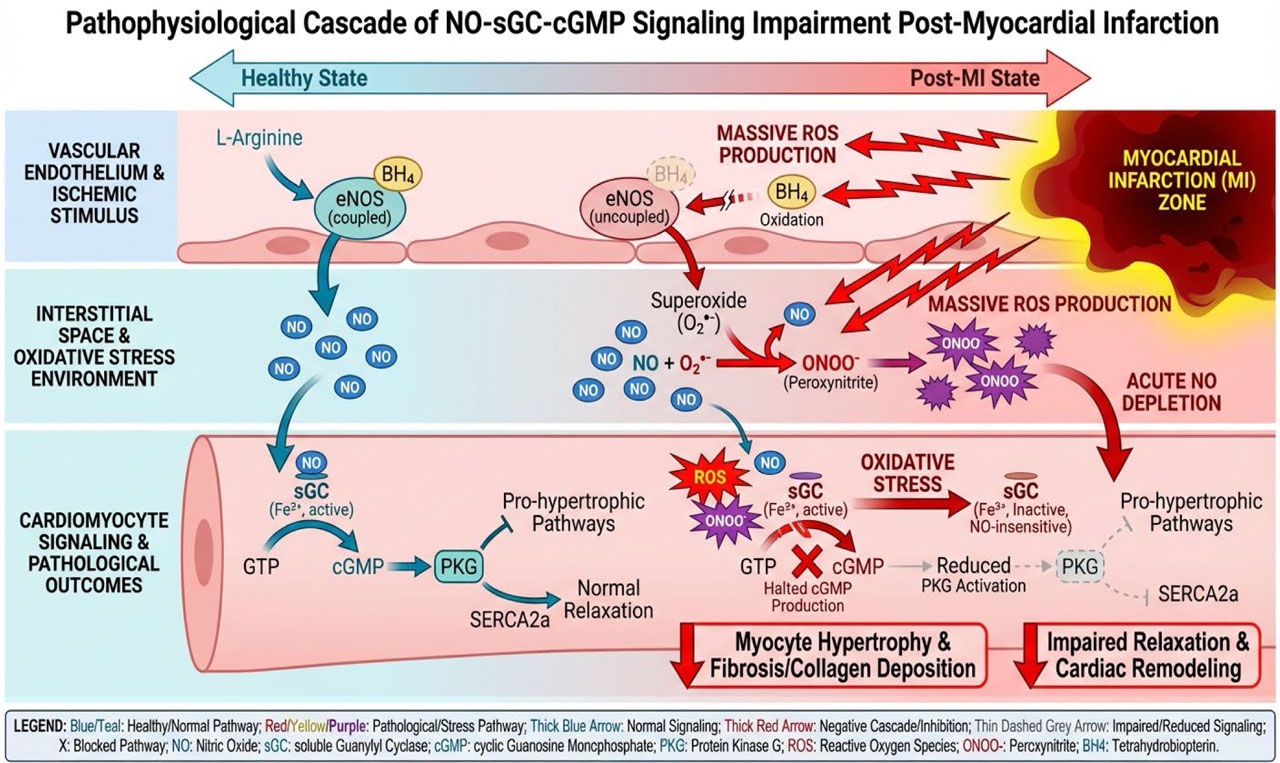
Figure 1
Pathophysiologic cascade for NO-sGC-cGMP signalling deficiency post MI. In the physiologic condition, NO is synthesised by eNOS from ʟ-arginine and induces sGC in the reduced (Fe2+) state to produce cGMP. Post MI, the generation of ROS leads to the uncoupling of eNOS and produces superoxide anion (O2−), which reacts with NO to generate ONOO−. It causes NO deficiency and oxidation of the sGC heme group to Fe3+, thereby rendering it inactive (NO-insensitive). Blue/Teal: Healthy/normal pathway; Red/Yellow/Purple: Pathological/stress pathway; Thick blue arrow: Normal signalling; Thick red arrow: Negative cascade/inhibition; Thin dashed grey arrow: Impaired/reduced signalling; X (cross mark): Blocked pathway; BH4, tetrahydrobiopterin; cGMP, cyclic guanosine monophosphate; eNOS, endothelial nitric oxide synthase; NO, nitric oxide; ONOO−, peroxynitrite; PKG, protein kinase G; ROS, reactive oxygen species; sGC, soluble guanylyl cyclase.
Vericiguat demonstrates multiple biological effects which extend beyond its regulation of blood flow because it affects essential biological mechanisms that drive post-MI HF development [43]. The experimental findings demonstrate that activation of the NO-sGC-cGMP pathway results in two cardiovascular benefits which include protection against oxidative damage and enhancement of endothelial performance while reducing heart muscle damage, thus establishing its mechanisms of cardioprotective effects during post-MI treatment [44].
5. Anti-fibrotic effects
Cardiac fibrosis is a central determinant of adverse ventricular remodelling after MI and it leads to progressive systolic and diastolic dysfunction [45]. The activation of cGMP-dependent signalling pathways prevents fibroblast growth and extracellular matrix production, which leads to decreased collagen buildup in the heart muscle [46]. The preclinical studies demonstrate that vericiguat decreases heart muscle fibrosis while it protects against structural changes that occur through its effects on TGF-β1/Smad2/3 profibrotic signalling pathways [47].
6. Metabolic optimisation and mitochondrial protection
Mitochondrial impairment together with energy metabolism disruption and heightened oxidative stress damages post-MI myocardial tissue, which results in cardiomyocyte death and ventricular impairment [48]. The preservation of mitochondrial integrity with vericiguat results from its ability to enhance mitochondrial quality through decreasing oxidative damage and mitochondrial impairment [49]. The research findings show that vericiguat activates the AMPK/Nrf2 pathway, which results in enhanced antioxidant protection together with increased cellular defence against oxidative damage and maintenance of mitochondrial balance in ischemic heart tissue [50]. Nrf2 signalling impairment has created links between oxidative stress and metabolic disruption, which affects HF patients, thus making sGC stimulation pathways vital for treatment development [51].
7. Anti-inflammatory actions
The process of inflammation functions as a key mechanism that drives both post-MI heart remodelling and HF development through its activation of inflammasome pathways, results in damage to heart muscle cells and the formation of scar tissue [52]. Vericiguat demonstrated its ability to block NLRP3 inflammasome activation while it simultaneously reduced pyroptotic signalling in studies examining cardiac damage in experimental models which showed its direct anti-inflammatory effect that operated independently from its effect [50]. The anti-inflammatory properties of these substances work to decrease unfavourable heart changes while they protect heart tissue from damage that occurs after ischemic events [53].
8. Renoprotective mechanisms
MI to HF progression connects to cardiorenal interactions, which include renal hypoperfusion and neurohormonal activation, and results in the progressive renal dysfunction that defines cardiorenal syndrome [54]. Vericiguat enhances sGC activity and increases cGMP bioavailability, which results in improved vascular function and restoration of endothelial function [41]. The NO-sGC-cGMP pathway controls renal vascular tone and glomerular haemodynamics, so its pathway modulation may help preserve kidney function in HF patients [55]. The research data from experimental and clinical studies demonstrate that sGC stimulation reduces renal inflammation and fibrotic signalling pathways; however, further studies need to investigate both mechanisms and outcomes to confirm vericiguat’s direct renoprotective and antifibrotic effects in humans [42,56].
9. Microvascular and endothelial benefits
Coronary microvascular dysfunction represents the key component of post-MI remodelling which leads to persistent ischemia and heart muscle damage and ventricles that do not function properly [57]. Vericiguat restores the NO-sGC-cGMP pathway, which leads to better endothelial function and microvascular blood flow resulting in improved heart muscle oxygen distribution and decreased oxidative damage [58]. The treatments provide microvascular advantages that function as essential components that help prevent localised heart damage from developing into complete HF [59]. The combination of microvascular and endothelial changes together with reductions in myocardial fibrosis and alterations to metabolic and structural remodelling processes demonstrates that vericiguat has the potential to function as a disease-modifying treatment for patients who experience post-MI HF (Figure 2) [60].
Clinical evidence and optimal timing of intervention
1. Trial insights: VICTORIA and SOCRATES
The clinical application of sGC stimulation research finds its basis in the results of the phase II SOCRATES study and the phase III VICTORIA trial, which assessed the effects of vericiguat on patients with HF across different clinical presentations and levels of clinical risk [61]. The SOCRATES-REDUCED trial showed that vericiguat caused changes in myocardial stress indicators, which included NT-proBNP and this connection established its role in the early stages of disease development [62]. The companion SOCRATES-PRESERVED trial suggested that sGC stimulation operates in patients who maintain their ejection fraction, with potential benefits in physical function and health status [63].
The VICTORIA trial provided clinical evidence that vericiguat decreases the risk of combined cardiovascular death and hospital admission for patients who exhibit worsening HF with reduced ejection fraction (HFrEF) [16]. Apart from VICTORIA, another study known as the VICTOR trial (Vericiguat Global Study in Participants with Chronic HF) aims to assess the benefits of vericiguat on patients suffering from HF, thus increasing the evidence base of sGC stimulation therapy among various groups of patients with HF [64]. This study focused on biomarkers for ventricular remodelling after MI, and how these help in determining the patients at risk of undergoing ventricular remodelling leading to HF. [65]. The results suggest that early treatment, which targets damaged NO-sGC-cGMP pathways, can prevent the progression from acute myocardial damage to chronic HF [66].
2. Clinical research synthesis: vericiguat and post-MI HF prevention
The current research framework has established limited large-scale randomised studies. It focuses on preventing HF after MI. Yet, in spite of the existing mechanistic and clinical research findings, it demonstrates that sGC stimulation reduces harmful ventricular remodelling that occurs after ischemic damage [67]. Vericiguat shows therapeutic potential through its ability to improve endothelial function together with its capacity to decrease fibrosis and enhance myocardial blood flow which determines patient outcomes after MI [68].Observational and biomarker analyses indicate that patients with elevated natriuretic peptide levels constitute a high-risk population suitable for evaluating sGC modulation strategies. [69].The research findings indicate that vericiguat functions as a preventive treatment because it treats existing HF yet may change the disease progression path which follows MI [70].
3. Target population stratification
Emerging evidence suggested that the clinical benefit of sGC stimulation may be greatest in specific high-risk subgroups which experience accelerated remodelling and ongoing myocardial stress [71]. Patients who sustain large anterior MIs present a higher risk of negative ventricular remodelling because of their widespread heart tissue damage and increased activation of neurohormonal systems [72].
Diabetes patients constitute a high-risk group because their metabolic dysregulation, endothelial dysfunction, and oxidative stress may worsen post-MI heart damage and HF progression [73]. Patients who show early elevations in natriuretic peptides but maintain their ejection fraction appear to show a transitional phenotype, which develops molecular dysfunction before they experience systolic impairment [74]. The identification of these subgroups may allow for targeted implementation of vericiguat and optimising decision making about benefits and risks [75].
4. Intervention windows: optimal timing (‘goldilocks zone’)
The timing of pharmacological intervention in patients with MI greatly influences the outcome, as a too early or delayed start of the treatment reduces its efficacy [76]. The early post-MI period presents an overwhelming inflammatory response, which, along with haemodynamic instability, renders patients unable to respond to vasodilatory agents [77]. The therapeutic efficacy of the drugs to influence the course of the disease is less if the start of the treatment follows the occurrence of structural changes [78].
A therapeutically relevant window might be identified during the transition from acute haemodynamic stabilisation to early remodelling, a time during which progressive endothelial dysfunction, along with impairment in the NO-sGC-cGMP cascade may occur [79]. Experimental and clinical evidence suggest that the impairment in the cGMP cascade precedes the onset of fixed structural fibrosis, leading to adverse remodelling in the heart [80]. Since vericiguat works by stimulating sGC, independently of the availability of NO, the time course at which the drug is active appears to be optimally positioned in an intermediate window [81]. This line of reasoning supports the idea that the initiation of vericiguat in the early remodelling phase, but not in the acute instability and not in the late fibrosis, might define the therapeutic window [82]. This framework aligns with conceptual strategies proposed for targeting specific phases of myocardial remodelling, where intervention is most likely to alter the progression towards chronic HF (Figure 3)[83].
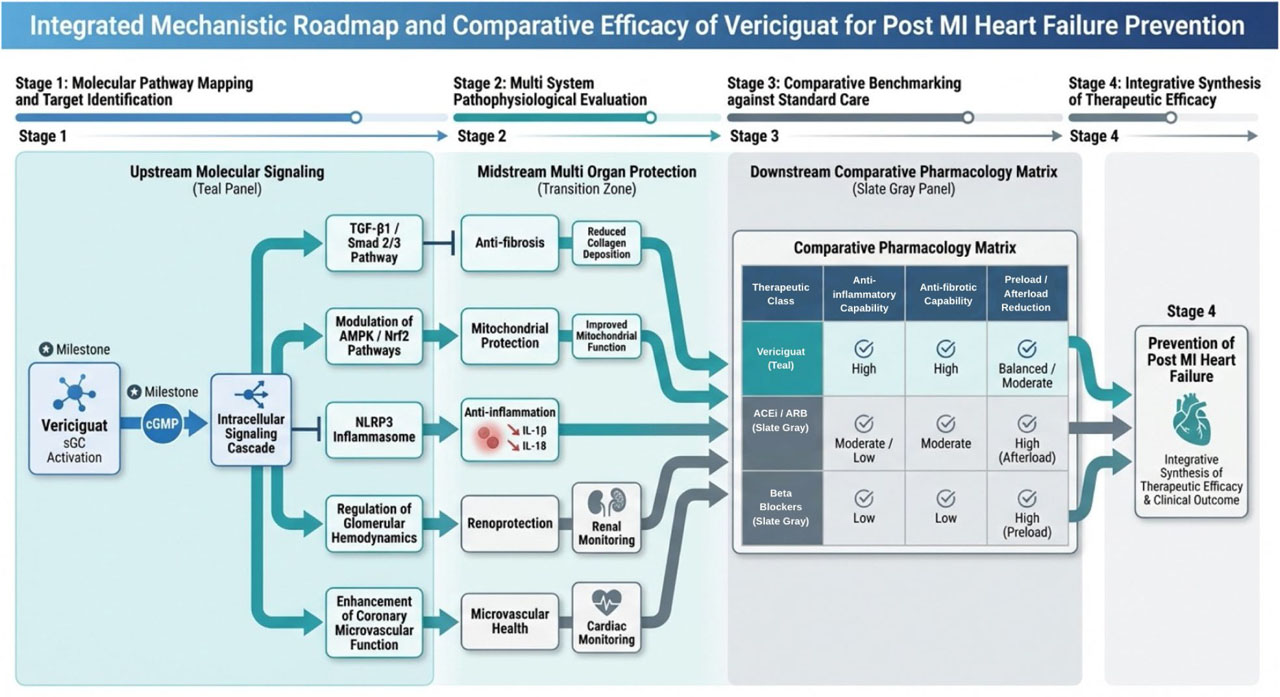
Figure 2
Mechanistic roadmap of vericiguat in post-MI HF prevention. Molecular pathway mapping of the disease modification potential in the upper panel is shown with special emphasis on vericiguat-mediated sGC activation as the key landmark to reestablish cGMP signalling. In the middle panel, there is evidence showing multi-organ pathophysiological regulation with anti-fibrotic actions (TGF-β1/Smad2/3), metabolic actions (AMPK/Nrf2), as well as microvascular and renal protection properties. The lower panel shows a comparative pharmacological matrix, where vericiguat (in teal) stands out compared with ACEi/ARB and beta-blockers with its anti-inflammatory and anti-fibrotic actions. cGMP, cyclic guanosine monophosphate; HF, heart failure; MI, myocardial infarction; sGC, soluble guanylate cyclase.
Challenges and future perspectives
The combination of mechanistic studies and clinical trials suggests sGC stimulation leads to promising results but researchers face scientific and translational challenges which remains unclear how vericiguat should be used to prevent HF after MI [84].The development of future cardiovascular treatments will depend on combination strategies that target multiple maladaptive pathways at the same time [85]. The use of personalised risk assessment together with biomarker-based treatment methods will improve both patient selection processes and treatment effectiveness according to research findings [86]. The development of precision medicine methods that treat patients during active periods of heart muscle remodelling will enable doctors to stop disease progression before patients develop symptoms of HF [87].
1. Synergistic potentials: combination strategies
The current state of HF treatment requires research to study how vericiguat interacts with different therapies that affect multiple biological systems [16]. The combination of vericiguat and sodium glucose cotransporter 2 inhibitors has shown promise, as SGLT2 inhibitors offer cardiovascular and renal protection through their capacity to induce sodium excretion, improve metabolic function, and decrease glomerular pressures [88]. The efficacy of SGLT2i in reducing hospitalisations for HF and cardiovascular death in a broad range of patients, with or without diabetes, has been established, making them a cornerstone of therapy [89].
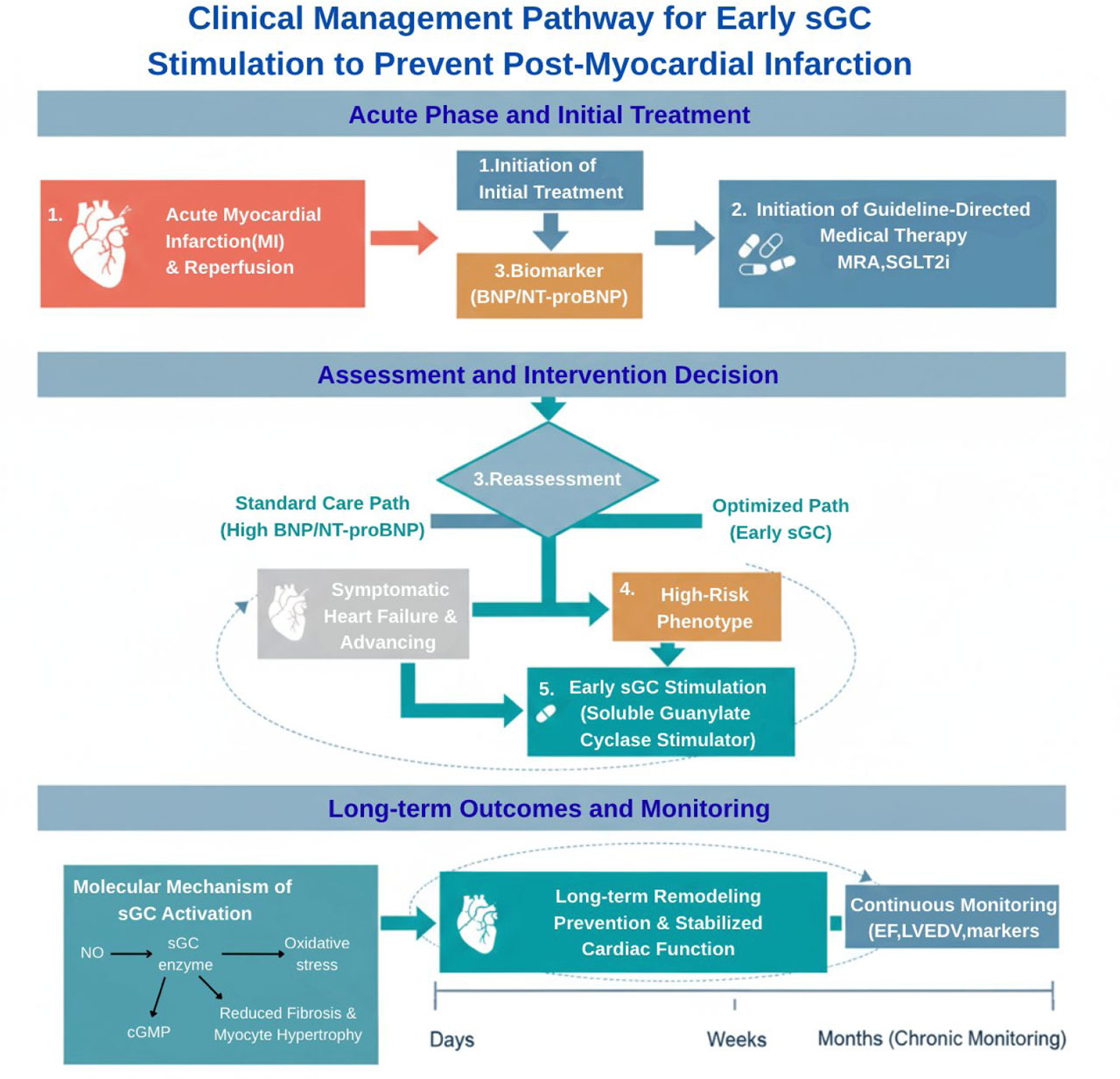
Figure 3
Early clinical management pathway of sGC stimulation to avoid post-MI HF. After MI with reperfusion, a treatment protocol according to guidelines, including MRA and SGLT2i, is started. For patients with high BNP/NT-proBNP levels (high-risk group), the next step would be early sGC stimulation with vericiguat in the critical phase of cardiac remodelling. The pathway is focused on the restoration of the NO-sGC-cGMP pathway and prevention of oxidative stress, fibrosis, and excessive growth of cardiomyocytes. The timeline shows the shift from the acute stage to the remodelling phase avoidance. cGMP, cyclic guanosine monophosphate; HF, heart failure; MI, myocardial infarction; NO, nitric oxide; sGC, soluble guanylate cyclase.
This dual approach of vericiguat, in combination with an SGLT2 inhibitor, appears to be promising, as indicated by the positive effects of the dual action of vericiguat in combination with an SGLT2 inhibitor on parameters of cardiac function and remodelling in the quadruple combination therapy approach [90]. The combination of vericiguat with ARNI treatment shows potential as a dual treatment method because it produces beneficial clinical outcomes through ARNI treatment, which affects natriuretic peptides, and through vericiguat’s impact on cGMP signalling [91]. The cGMP production process of sGC activation, together with the cGMP degradation process through neprilysin inhibition, is activated by vericiguat combined with ARNI, which produces a combined effect on the signalling pathways of vericiguat, including its anti-fibrotic, vasodilatory, and anti-remodelling properties [42]. Multiple mechanism treatments provide their highest value during the early post-MI period because this time period experiences rapid disease progression through neurohormonal activation, endothelial dysfunction, and oxidative stress [92].
Clinical hurdles
Vericiguat shows therapeutic potential, but several clinical considerations need resolution before its integration into post-MI prevention strategies [93]. The vasodilatory effects of the drug can cause hypotension as an adverse effect, which may restrict its use in patients who have unstable blood pressure or who are taking multiple vasodilators [94]. The process of patient selection should be conducted with precision, and medical professionals must begin treatment with low doses, which they should increase slowly to decrease risk factors and enhance patient compliance with the treatment plan [95].
Another challenge involves differentiating therapeutic effects across HF phenotypes, especially between HFrEF and HF with preserved ejection fraction (HFpEF), which differ substantially in their disease mechanisms and response to treatment [96]. The research showed that vericiguat provides benefits to HFrEF patients, but its effectiveness for HFpEF prevention remains unclear because there are different ways in which diastolic dysfunction and systemic inflammation develop [63].
Furthermore, the complexity of polypharmacy in contemporary cardiovascular care necessitates careful evaluation of drug interactions, cumulative haemodynamic effects, and patient-specific tolerability when implementing combination therapy [97].
1. Precision medicine and biomarker-guided therapy
The future of post-MI HF prevention might rely on precision medicine approaches to identify patients who are most likely to benefit from molecular-targeted therapies [98]. Biomarkers of myocardial stress, endothelial dysfunction, and cGMP signalling might help to identify maladaptive remodelling before the onset of clinical HF [99]. Among these, biomarkers related to the oxidation status of sGC and the impairment in NO signalling have shown potential as biomarkers in the responsiveness to sGC stimulation, providing a mechanistic basis for stratifying patients [100]. Natriuretic peptides, inflammatory biomarkers, and molecular imaging could further enhance the prediction and therapeutic time course [101].
In the future, new omics technology and systems biology approaches may help to identify which patients are most likely to benefit from vericiguat and other pathway-directed therapies, which might allow for a more individualised therapeutic approach (conceptual) [102]. Such approaches might eventually lead to a paradigm shift in the management of HF from a reactive to a proactive approach [103].
Collectively, addressing these challenges and leveraging combination strategies, biomarker-guided therapy, and precision medicine will be essential to fully realise the potential of vericiguat in preventing post-MI HF and optimising long-term cardiovascular outcomes [104].
Conclusion
HF after MI is a leading long-term outcome and a powerful predictor of death, even in the current therapeutic era with improved reperfusion strategies and guideline-adherent medical therapy. This is a consequence of the inability to halt the process of adverse remodelling, and the current therapeutic strategies only address the downstream effects of neurohormonal activation, not the upstream effects of the initial injury cascade.
In addition, recent understanding of the nitric oxide-sGC-cGMP signalling axis has significantly altered the current understanding of post-MI disease progression, with endothelial signalling, oxidative stress, and decreased bioavailability of cGMP being identified as major contributing factors to the decline in cardiac function and structure. Within this context, vericiguat may be more than a vasodilator; it is a drug with a unique mechanism of action that targets a range of pathophysiological processes, from fibrosis to inflammation, microvascular function, metabolic disturbances, and cardiorenal syndrome. Thus, a paradigm shift from a second-line adjunctive therapy for advanced HF to a potential first-line therapeutic strategy to prevent the process of remodelling in the early post-MI period, with the ultimate goal of preventing the transition from localised myocardial injury to global HF, appears to be justified. Such a therapeutic strategy would redefine prevention rather than treatment as the goal of vericiguat’s therapeutic action. The therapeutic implications of this paradigm shift are substantial. The incorporation of vericiguat into the early post-MI management of patients, especially those with large infarcts, metabolic disturbances, or early signs of remodelling, may provide an opportunity to prevent the process of remodelling before irreversible cardiac damage occurs.
Future research should be aimed at establishing the timing, identifying responder phenotypes, and understanding the role of sGC stimulation in different phenotypes of HF. Randomised trials, which are specifically designed for post-MI prevention, are the next steps required for translating the therapeutic promise into clinical guidelines. Ultimately, the dynamic evolution of the role of vericiguat represents a paradigm shift in the way cardiovascular medicine is practiced, from a reactive response to treating HF after it has developed to a proactive response aimed at preventing remodelling at its earliest stages of occurrence. This review, by integrating the underlying mechanisms, translational information, and emerging clinical data, emphasises the therapeutic opportunity of targeting the NO-sGC-cGMP axis as a novel therapeutic strategy for the prevention of post-MI HF and the ongoing need for innovation in the field of pathway-directed cardioprotection.